In this storyOpen index
Prince Leopold: Victoria’s Son Who Could Die from a Fall and Lived as a Prisoner of the Crown
Hemophilia restricted his body; the royal household sought to govern the rest of his life.
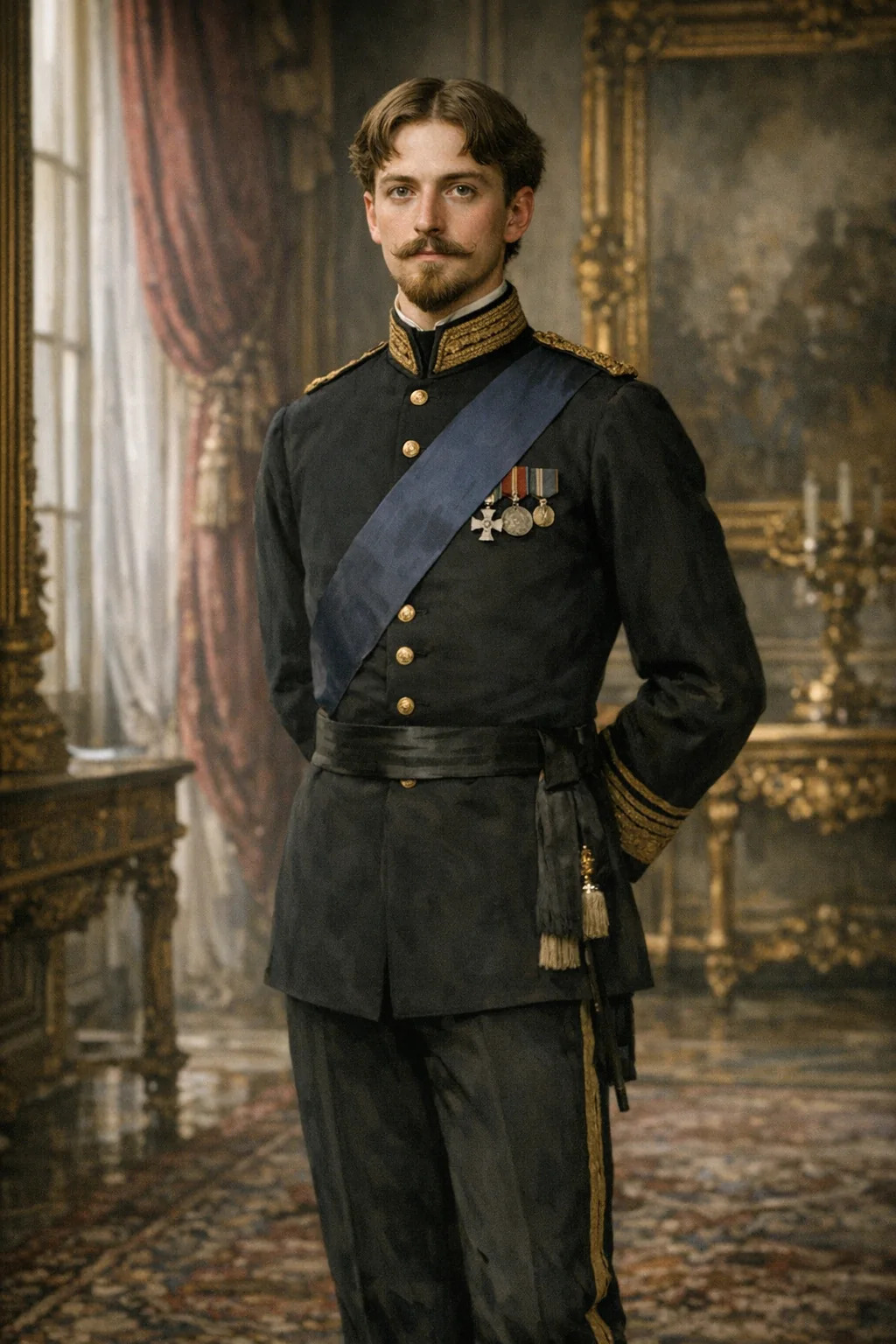
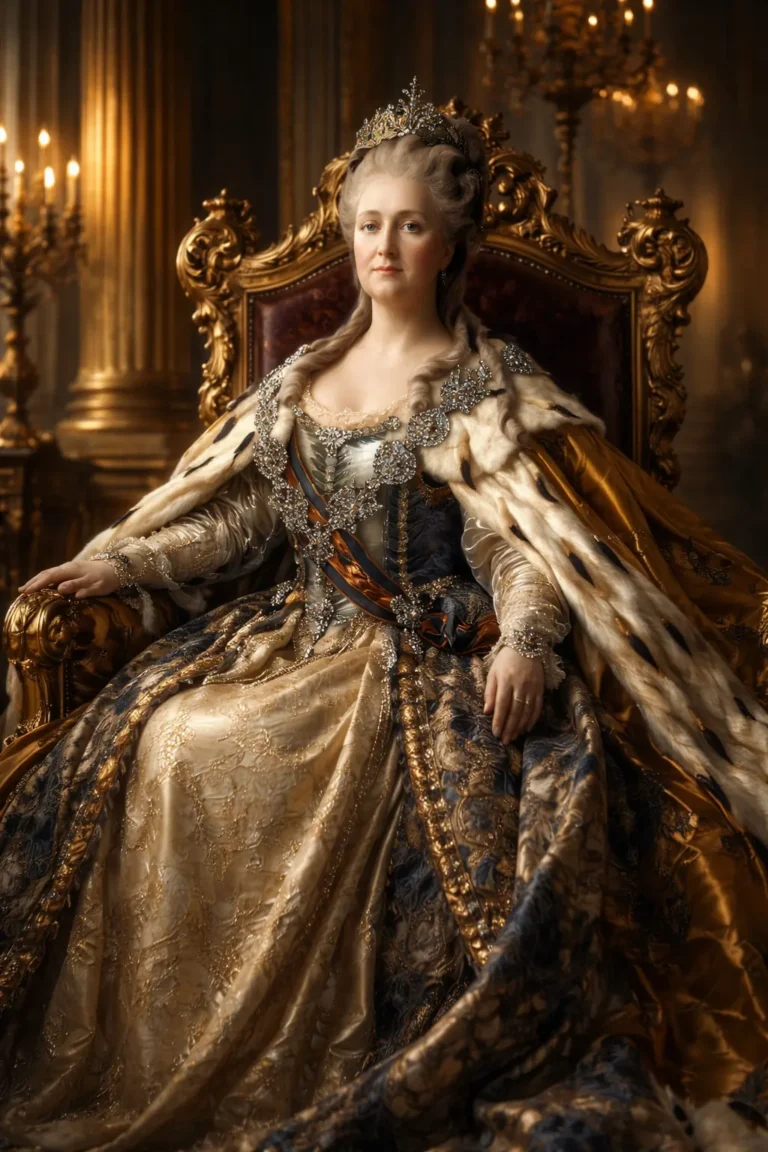
Prince Leopold was born into the most powerful family in the British Empire, but a blow against a table could end his life. While his brothers received military careers, travel, and public duties, he grew up surrounded by physicians, restrictions, and a mother convinced that protecting him meant deciding every aspect of his existence.
Leopold had hemophilia, a disorder that prevents blood from clotting properly. In the nineteenth century, safe transfusions, clotting-factor concentrates, and preventive treatments did not exist. A small wound could cause prolonged bleeding; a fall could produce invisible and fatal internal hemorrhage.
Even so, he refused to live only as Queen Victoria’s sick son. He studied at Oxford, supported the arts, worked as his mother’s secretary, traveled, sought political responsibilities, and fought for the right to marry. He achieved part of that independence but barely lived long enough to enjoy it.
He died at 30. His son was born four months later.
Prince Leopold
A life between protection and independence

A surviving portrait of Leopold
The National Portrait Gallery preserves portrait NPG x34166. The link opens its catalog record; this card uses an AI reconstruction.
The birth that brought chloroform into the royal household
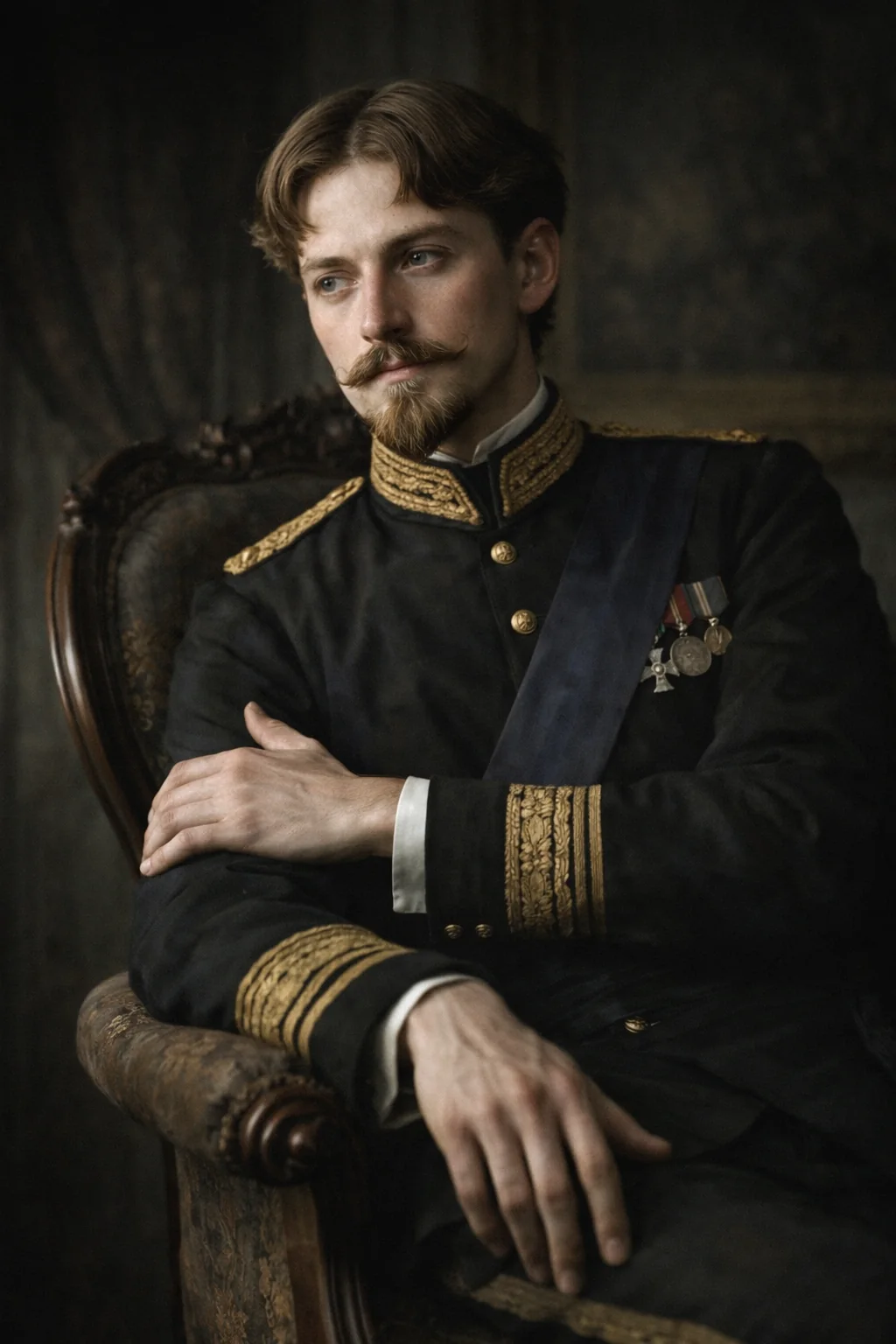
Leopold George Duncan Albert was born at Buckingham Palace on April 7, 1853. He was the eighth of the nine children of Queen Victoria and Prince Albert and their fourth and youngest son.
His birth became associated with a medical milestone. Victoria agreed to use chloroform to reduce the pain of childbirth, administered by physician John Snow. The queen’s decision helped legitimize obstetric anesthesia, which still encountered medical and religious resistance.
The irony was cruel. The prince who entered the world during an advance against pain would suffer from an illness for which the medicine of his age could offer no solution.
During his early years, observers noticed that he bruised easily and experienced episodes of bleeding and pain. Physicians eventually identified hemophilia. References also exist to seizures consistent with epilepsy, although the documentation for that second condition is less complete (Zeepvat, 1998).
The National Portrait Gallery describes Leopold as spending much of his childhood as a semi-invalid. His illness prevented an active military career and influenced nearly every decision made about his future.
The disease that appeared inside a dynasty

The most common inherited forms of hemophilia, A and B, are linked to the X chromosome. Males generally possess only one X chromosome; if it carries the disease-causing genetic variant, they can develop the disorder. Women carrying one altered copy are usually carriers, although some may also experience symptoms.
Queen Victoria was almost certainly a carrier. No clear cases of hemophilia are known among her immediate ancestors, so the variation may have emerged as a new mutation in her or in one of her parents’ reproductive cells. Without direct genetic material, the precise moment when it appeared cannot be reconstructed with certainty.
Victoria transmitted the variant to several descendants. Two daughters carried the condition into other European royal houses, while Leopold was the only one of her sons known to suffer from it.
Hemophilia subsequently appeared among descendants connected with the royal families of Spain, Germany, and Russia. It consequently became known as “the royal disease.” It was not, however, exclusive to crowned families. Its presence within a famous dynasty simply transformed it into international news.
Leopold played an important role in that transformation. His hemorrhagic attacks were discussed in medical publications beginning in the 1860s and later appeared in the general press. His illness helped turn a little-known disorder into a subject of public discussion in Victorian society (Rushton, 2012).
A childhood under surveillance

The prince’s daily life was organized around risk. Physical games, sports, horseback riding, and other activities considered normal for his brothers could prove dangerous for him. Blows caused painful swelling, bleeding into the joints, and long periods of forced rest.
Physicians could not replace the missing clotting factor. Treatments consisted of immobilization, rest, compresses, and medicines of limited effectiveness. Opiates might relieve pain but could not stop the bleeding.
Victoria referred to him as her “child of anxiety.” Her concern was understandable, but it became a form of control. Even after he reached adulthood, the queen continued treating his journeys, friendships, ambitions, and marriage prospects as medical problems she was responsible for managing (Zeepvat, 1998).
Prince Albert attempted to design an education suited to his son’s intellectual abilities. When Albert died in 1861, Leopold lost not only his father but also the man who might have created a distinctive role for him within the monarchy.
Victoria withdrew into mourning and kept her family within an atmosphere dominated by absence. For Leopold, the royal household became both refuge and prison.
Oxford and the possibility of a life of his own

In 1872, Leopold began residing at Christ Church, Oxford. He did not follow a conventional degree program based on examinations, but he studied several subjects, participated in intellectual life, and received an honorary doctorate in civil law in 1876.
Oxford allowed him to experience unfamiliar independence. He formed friendships, attended gatherings, developed his literary interests, and participated in the university chess club.
He could not construct an identity through the army as several princes of his time did. Instead, he sought a place within culture. He became an advocate for the arts and literature, supported educational institutions, and maintained relationships with writers, artists, and scholars.
His public speeches revealed a serious mind and an interest in social questions. He was not a revolutionary, but on some issues he expressed views more open than those generally associated with his mother’s court (Van der Kiste, 2003).
Illness had restricted the freedom of his body but not his desire to participate in public life.
The secretary who wanted something more
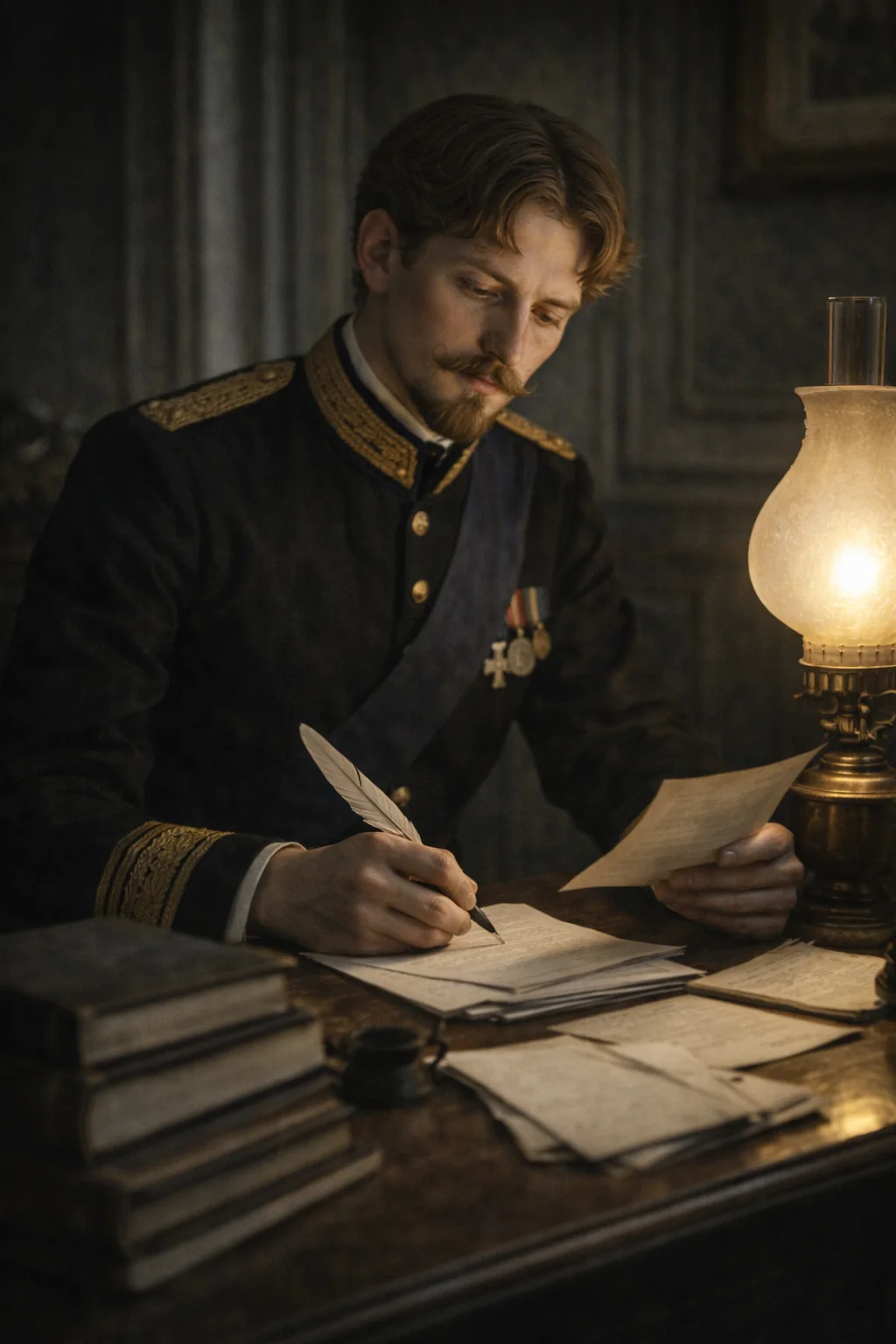
Leopold began assisting Victoria as an unofficial secretary. He reviewed documents, prepared replies, and acted as an intermediary in certain political matters. The queen valued his intelligence and trusted his ability to understand governmental questions.
The role brought him close to power without granting power of his own. He was still working within his mother’s world and under her supervision.
He wanted an appointment that would allow him to build an independent career. He considered viceregal offices in Canada and in the Australian colony of Victoria. His health, however, was used as an argument against both possibilities.
The concern was not entirely irrational. Long journeys and limited medical care could place him in danger. But every refusal reinforced the same message: he was capable enough to assist the queen but too fragile to represent the Crown away from her.
In 1880, he traveled through Canada and the United States. In Canada he visited his sister Louise and her husband, the Marquess of Lorne, then governor general. The tour demonstrated that he could perform public duties, but it did not lead to the permanent appointment he desired.
Marriage as a route of escape

For Victoria’s children, marriage was a dynastic question. For Leopold, it also represented a chance to establish his own household and partially escape maternal control.
Finding a wife proved difficult. His illness was known, raising concerns about his short life expectancy and the possibility of transmitting hemophilia to descendants. Victoria also rejected candidates whom she considered politically or socially unsuitable.
Leopold maintained friendships with several women and considered different marriage prospects. Stories romantically linking him with Alice Liddell—the girl who inspired Alice’s Adventures in Wonderland—have often been exaggerated. He knew the Liddell family during his years at Oxford and became godfather to one of Alice’s sons, but there is no conclusive evidence of a secret engagement between them.
He eventually met Princess Helen of Waldeck and Pyrmont. They married on April 27, 1882, at St. George’s Chapel, Windsor Castle. In 1881, Victoria created him Duke of Albany, Earl of Clarence, and Baron Arklow.
The marriage appears to have been affectionate. Their first child, Princess Alice, was born in February 1883. For Leopold, this meant more than dynastic continuation: for the first time, he possessed a family unit of his own.
The daughter who received the invisible inheritance
A man with hemophilia transmits his altered X chromosome to all his daughters and his Y chromosome to all his sons. Leopold’s daughters would therefore necessarily inherit the variant, while his sons would not receive it directly from him.
Princess Alice was a carrier. Years later, she passed hemophilia to her son Rupert, who died in 1928 after an automobile accident; his bleeding disorder aggravated its consequences.
Leopold knew nothing of chromosomes or the genetic rules that now explain this transmission. Gregor Mendel had already published his plant experiments, but the work had not yet been incorporated into medicine. The royal family understood the broad pattern through experience: women could transmit the disease, and males could suffer from it.
Leopold’s case helped physicians, journalists, and members of the royal family gradually recognize this hereditary pattern. The information began influencing the planning of later marriages within the family (Rushton, 2012).
The winter he did not want to leave England
Cold weather aggravated Leopold’s joint pain, so physicians recommended that he spend part of the winter in warmer climates. Early in 1884, he traveled to Cannes on the French Mediterranean coast.
He did not want to leave Helen, who was pregnant with their second child. She and his physicians nevertheless encouraged him to make the journey for the sake of his health.
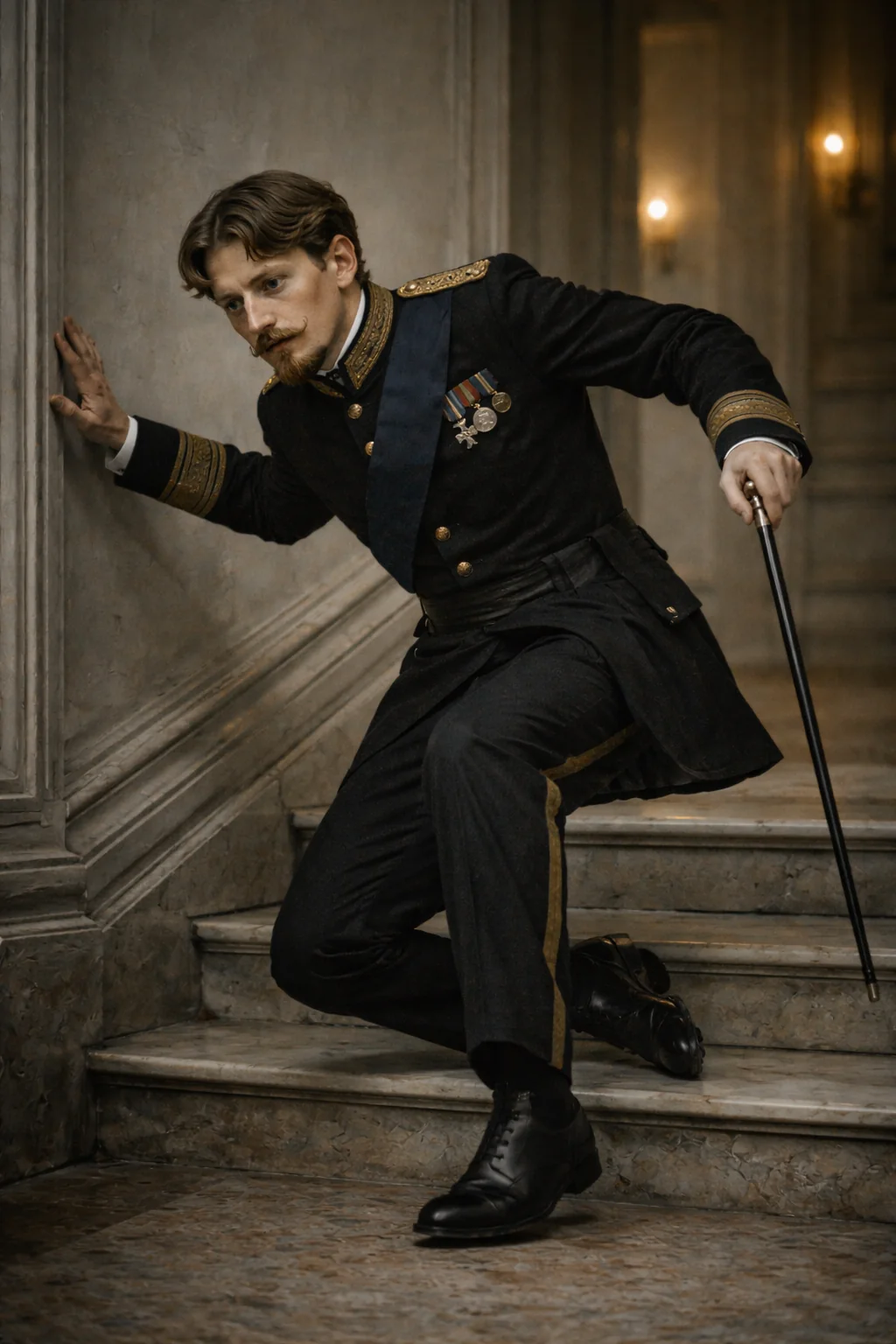
He stayed at the Villa Nevada. On March 27, he suffered a fall, injured his knee, and apparently struck his head. In a person with hemophilia, such trauma could initiate internal bleeding that contemporary medicine had no means of stopping.
Leopold died during the early hours of March 28, 1884. He was 30. His death is generally attributed to a cerebral hemorrhage after the fall, although historical accounts also mention a seizure and do not establish every clinical detail with certainty.
It required no battle, assassination, or spectacular disease. An ordinary domestic accident—the kind he had feared since childhood—was enough.
The son born after his death
Leopold’s body was returned to England and buried at Windsor. Queen Victoria was devastated by the loss of the son she had spent three decades attempting to protect.
On July 19, 1884, Helen gave birth to a boy, Charles Edward. He was born almost four months after his father’s death and immediately inherited the title Duke of Albany.
The child did not have hemophilia because he had received Leopold’s Y chromosome. His life, however, would take a deeply controversial political direction. He eventually inherited the German duchy of Saxe-Coburg and Gotha and, decades later, became closely associated with Nazism.
That future was not Leopold’s responsibility; he never knew his son. But it introduces a bitter dynastic irony: the prince who had struggled to build an independent life left an heir whose identity would be shaped by rival crowns, nationalism, and European war.
A crown that protected and confined
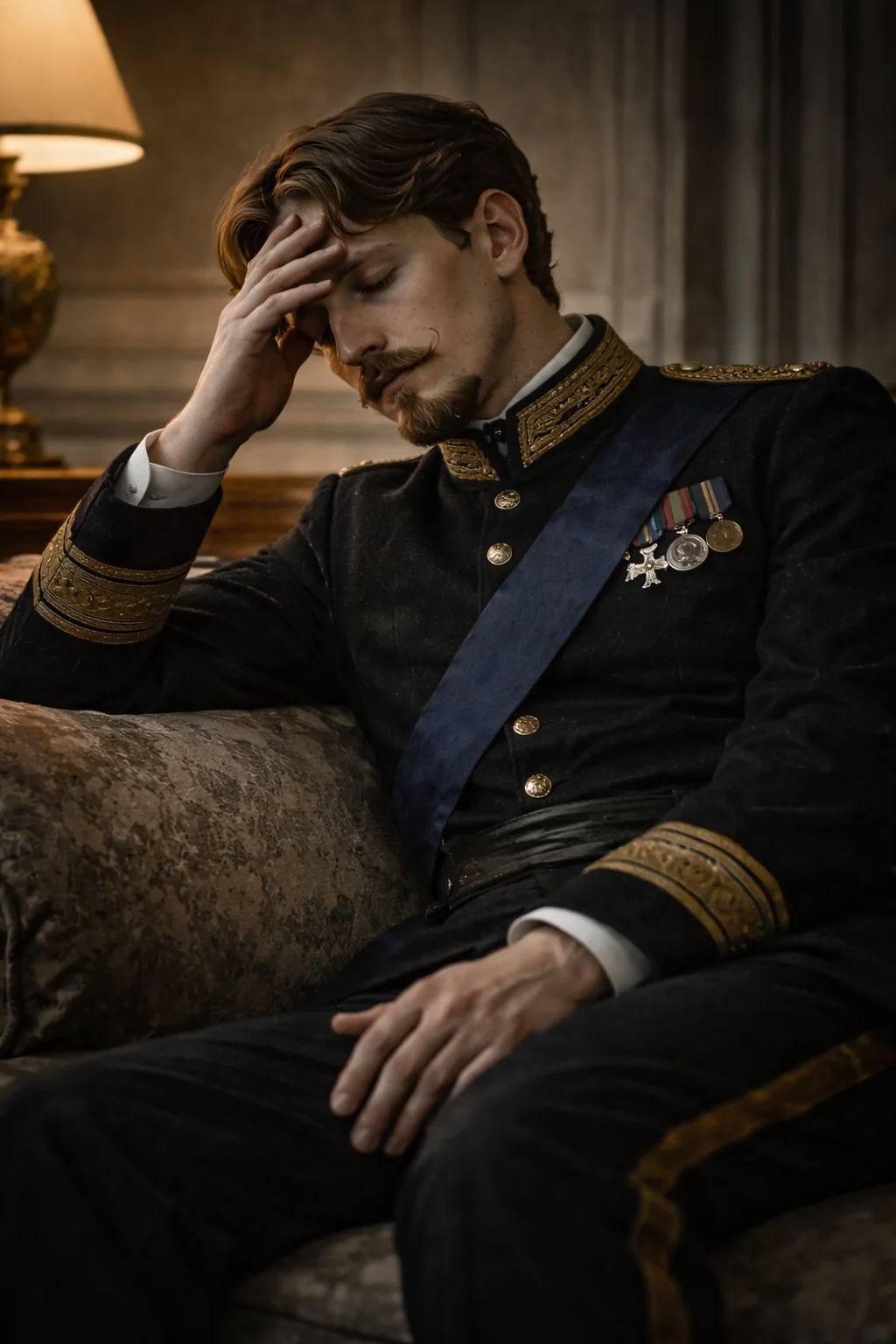
Leopold had physicians, residences, attendants, and resources unavailable to most people with hemophilia. His position provided privileged care and an exceptional education.
It also intensified his confinement.
Every illness became national news. Every journey required authorization. Every possible marriage had to be evaluated as a matter of state. His body never belonged entirely to him: he was simultaneously a son, patient, public symbol, and carrier of a dynastic risk.
His life challenges the idea that a crown eliminates vulnerability. In his case, it made vulnerability more visible. The empire could send armies across the world but could not stop a hemorrhage inside a prince’s body.
Leopold did not defeat the disease. In 1884, the clotting-factor replacement treatments developed in the twentieth century did not exist. His more modest and human victory was refusing to disappear behind it. He studied, worked, traveled, loved, and created a family within the narrow limits imposed by his blood and position.
He was born surrounded by power but lived knowing that his life could end with a blow. The crown weighed upon him because it promised protection while continually reminding him that he would never be free from fear.
References
- National Portrait Gallery. (n.d.). Prince Leopold, Duke of Albany (1853–1884). View source
- Packard, J. M. (1998). Victoria’s daughters. St. Martin’s Press. Find in library catalogue
- Rushton, A. R. (2008). Royal maladies: Inherited diseases in the ruling houses of Europe. Trafford Publishing. Find in library catalogue
- Rushton, A. R. (2012). Leopold: The “bleeder prince” and public knowledge about hemophilia in Victorian Britain. Journal of the History of Medicine and Allied Sciences, 67(3), 457–490. View source
- Van der Kiste, J. (2003). Queen Victoria’s children. Sutton Publishing. Find in library catalogue
- Zeepvat, C. (1998). Prince Leopold: The untold story of Queen Victoria’s youngest son. Sutton Publishing. Find in library catalogue
- The Old Operating Theatre Museum. (2016). John Snow, the First English Anaesthetist, Part 5: Anaesthetist to Queen Victoria. View source
- Malloch, R. (2025). Demise of the Crown: #15: Albert Memorial Chapel. The Gazette. View source
More from this collection
Nicholas II of Russia: The Man Who Mistook Duty for Refusing to Change
Read story →
Genghis Khan: The Man Who Conquered the World but Could Not Govern His Own Legend
Read story →