People change the world. Their stories explain how.
Minds That Created the Future is an independent bilingual cultural journal devoted to the human stories behind art, science, literature, music, architecture and history.
Beyond the monument, there was a person.
We recover the ambition, failures, obsessions, discoveries, injustices and contradictions behind the people who transformed their fields. The purpose is not to manufacture perfect heroes, but to understand the decisions and circumstances that shaped their legacy.
Explore the collections →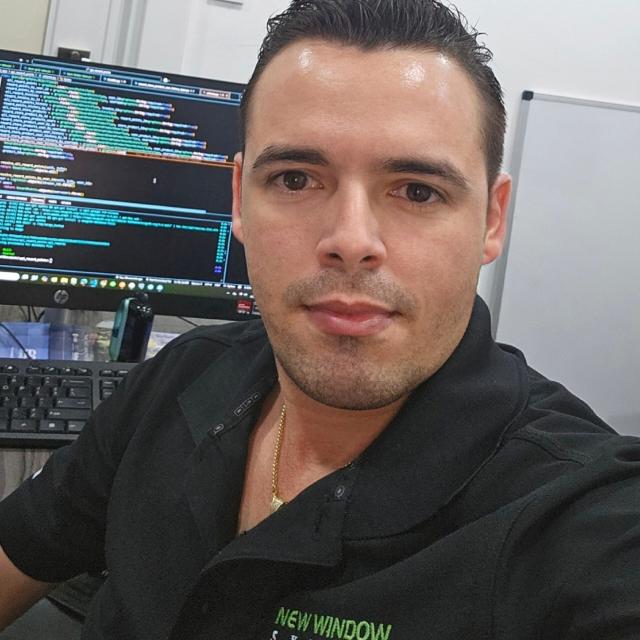
Roberto Carlos Gonzalez Reyes
Software Developer · Master of Science in Computer Science and Software Engineering
Cuban by birth and a resident of the United States, Roberto is a lifelong enthusiast of history and culture. He created this project to combine research, storytelling, technology and audiovisual communication in a space where complex lives can be explored with context and respect.
What began as historical content for social media has grown into a bilingual cultural journal supported by more than 350 videos published across YouTube, Facebook, Instagram and TikTok.
Read our editorial standards →How each story is built
Every article is prepared to distinguish documented facts from interpretations, legends and unresolved questions.
Research
Books, archives, museums, academic publications and institutional sources.
Verification
Dates, people, places and central claims are checked before publication.
Context
Events are explained within their historical and cultural circumstances.
Sources
Each long-form article concludes with a visible bibliography.
Rigor without losing the human voice.
- Accuracy before sensationalism.
- Context before simplification.
- Respect for people, victims and historical complexity.
- Transparent corrections when an error is identified.
- No Wikipedia or social networks used as bibliographic sources.
- Editorial independence.
Every story begins with a question.
Suggest a person, share an idea or join a community that still believes curiosity matters.