In this storyOpen index
Catherine the Great: The Foreign Empress Who Conquered Russia and Was Condemned by an Obscene Lie
The ruler who turned a disputed crown into an empire but could not control the lie that survived her death.
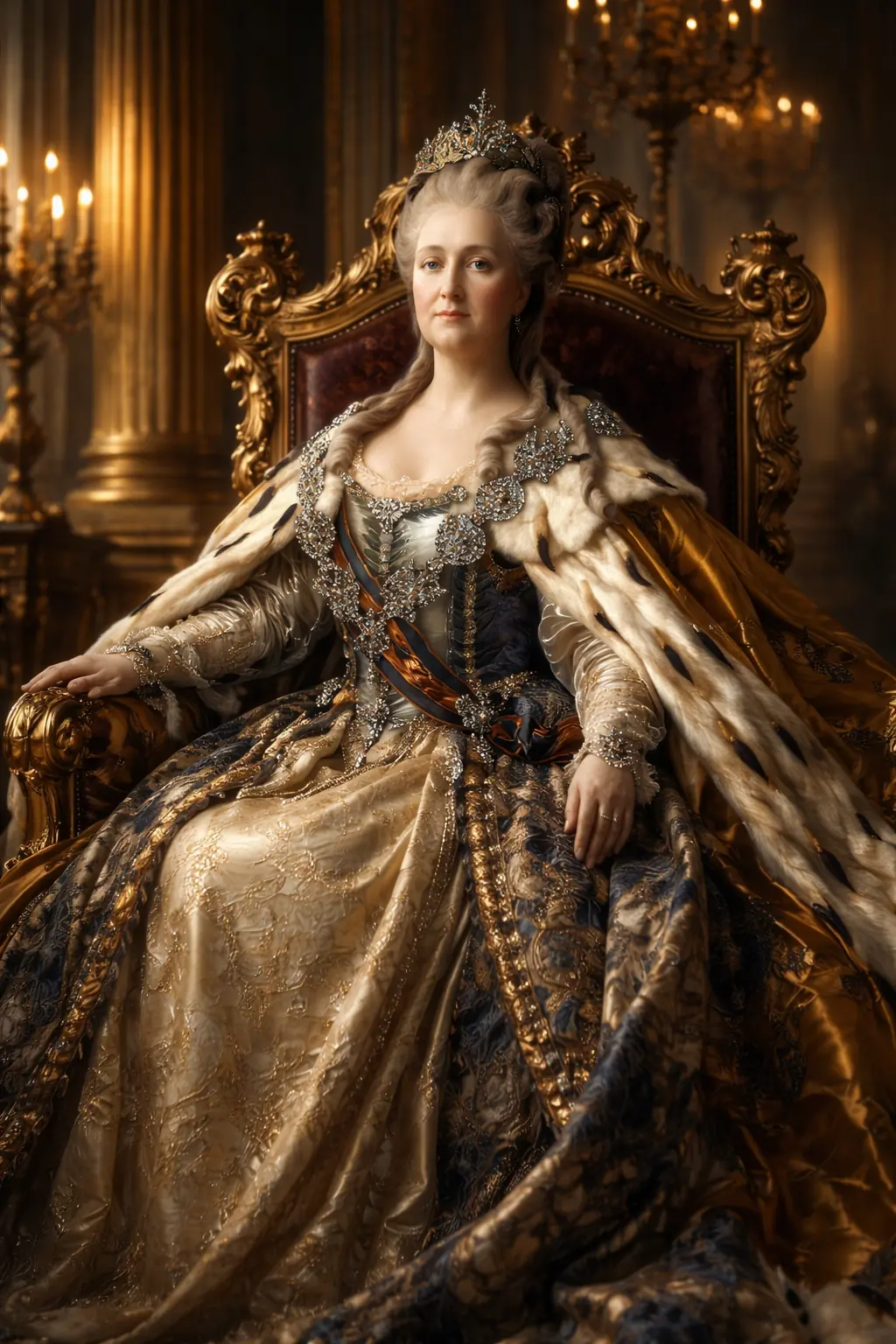
She arrived in Russia as a nearly unknown German princess, learned
the language of her new court, adopted its religion, and ultimately
seized the throne from her own husband. She ruled for thirty-four years,
expanded the empire’s borders, assembled one of Europe’s greatest art
collections, and corresponded with the leading thinkers of the
Enlightenment.
Yet entire generations came to know Catherine the Great through a
false story about a horse.
The lie was not an isolated detail. It belonged to a tradition that
transformed a woman’s political ambition into sexual disorder. The same
empress who discussed laws with philosophers, directed wars, and
administered immense territories was reduced to an obscene
caricature.
Catherine’s crown continued to weigh upon her even after death, when
she could no longer defend her name.
The empress and the lie that outlived her power
The rise, contradictions, and legacy of Catherine the Great.
A life told through places and decisive moments
Enter the archive
The Hermitage regards 1764 as its founding year, when Catherine II acquired a major collection of paintings from Berlin merchant Johann Ernst Gotzkowsky.
- Collection
- Western European painting
- Institution
- State Hermitage Museum
Institutional record on the founding of the Hermitage.
The Princess Who Had to Become Russian
Sophia Augusta Frederica of Anhalt-Zerbst was born on May 2, 1729, in
Stettin, then part of Prussia and now the Polish city of Szczecin. She
was the daughter of Prince Christian August of Anhalt-Zerbst and Johanna
Elisabeth of Holstein-Gottorp. Her family possessed a respectable title
but limited wealth and little political influence (Dixon, 2009).
In 1744, Empress Elizabeth of Russia selected her as a possible bride
for her nephew and heir, the future Peter III. Sophia entered a foreign
court where her survival depended on more than marriage. She studied
Russian, learned the customs of the nobility, and abandoned Lutheranism
for the Russian Orthodox Church. At her baptism, she received the name
Ekaterina Alekseyevna: Catherine.
She married Peter in 1745. Their union was unhappy, dominated by
incompatibility, estrangement, and court intrigue. Peter deeply admired
Frederick II of Prussia and openly disdained many Russian customs.
Catherine, by contrast, understood that she needed to present herself as
a defender of the country she hoped to govern (Alexander, 1989).
She was not born Russian. She learned to appear more Russian than the
man destined to inherit the empire.
A Marriage Transformed Into a Battlefield
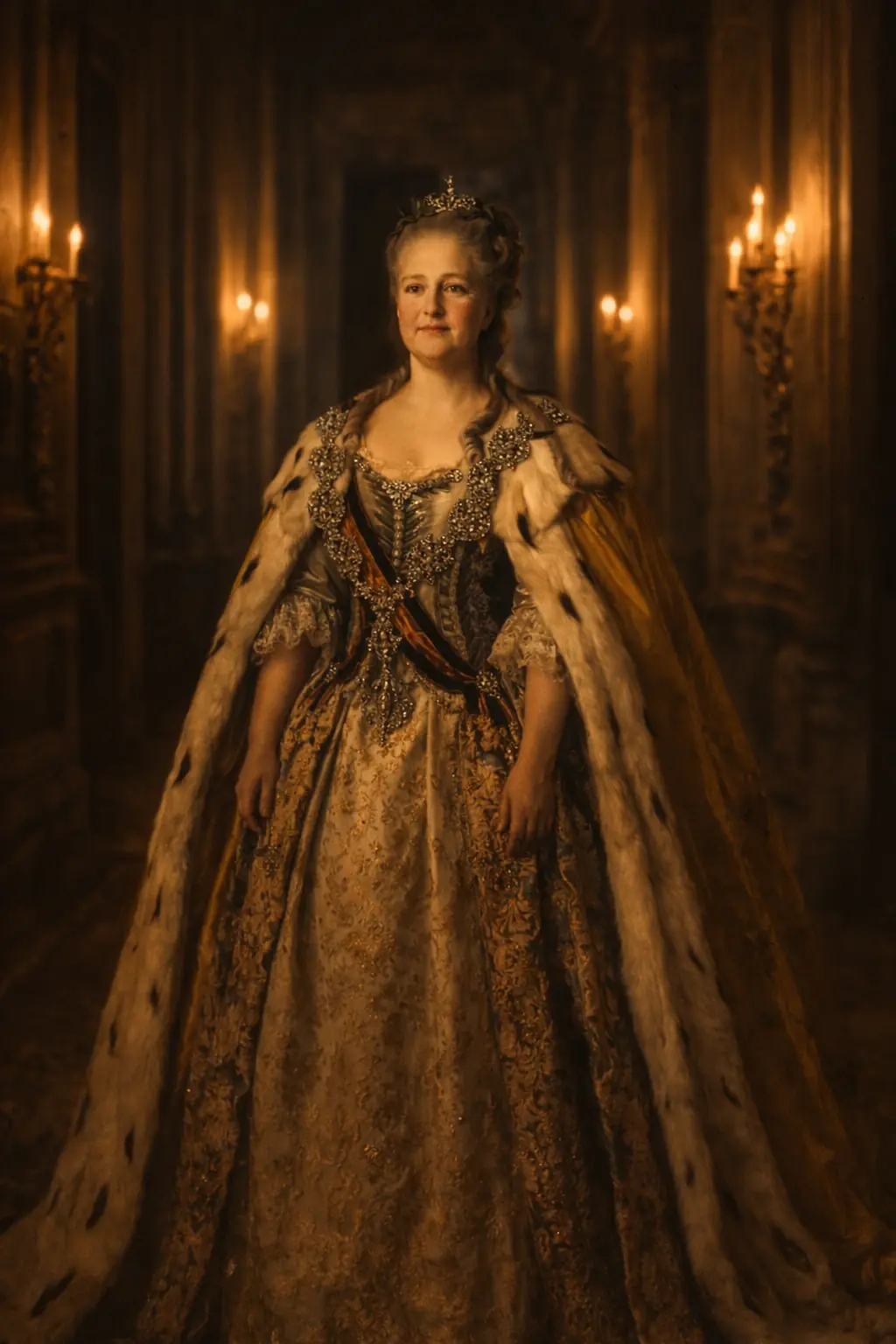
During the long years before Peter reached the throne, Catherine
lived under surveillance and with an uncertain position. Empress
Elizabeth took control of the upbringing of Catherine’s son Paul, born
in 1754, and kept the child away from his mother for much of his early
life.
Paul’s paternity has been debated because of Catherine’s extramarital
relationships, but no conclusive evidence establishes that Peter was not
his father. Catherine herself encouraged uncertainty through politically
motivated memoirs in which she portrayed her husband as incapable of
maintaining a normal married life (Massie, 2011).
Both spouses had lovers. Posterity, however, judged their behavior
very differently. Peter’s relationships were treated as the vices of an
inept monarch; Catherine’s became a simplified explanation for her
entire political career.
For Catherine, personal alliances were also instruments of survival.
In a court where access to power depended upon families, regiments, and
favors, intimacy could never remain completely separate from
politics.
The Coup That Made Her Empress
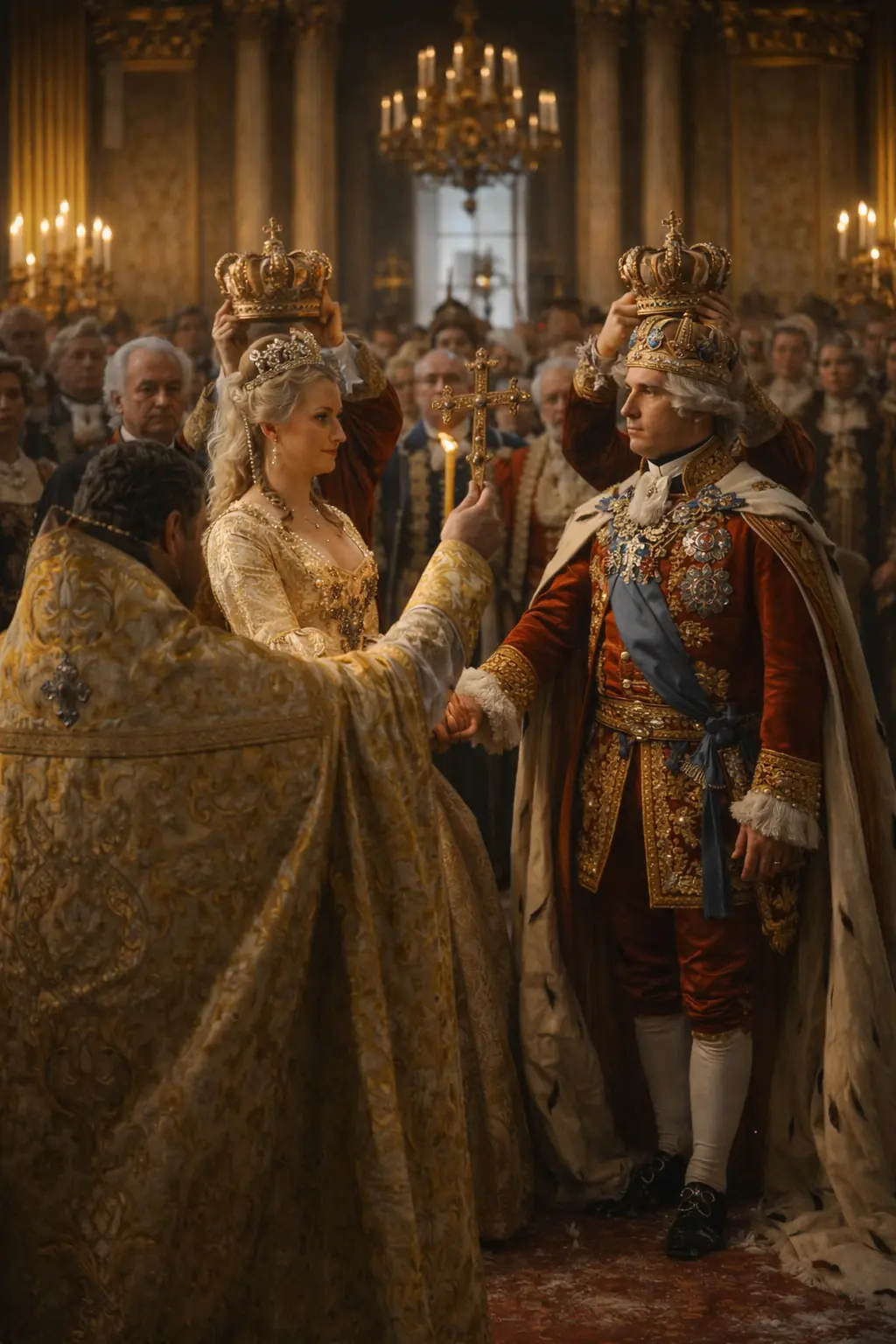
Peter III ascended the throne in January 1762 after Elizabeth’s
death. His reign lasted only six months. Some of his policies were
reformist, but he rapidly lost the support of essential sections of the
nobility, church, and army. His decision to withdraw Russia from the
Seven Years’ War and form an alliance with Prussia was especially
unpopular among officers who had spent years fighting Frederick II
(Dixon, 2009).
Catherine feared repudiation, imprisonment, or expulsion. Supported
by the Orlov brothers, officers of the Imperial Guard, and other court
allies, she led a coup in the summer of 1762. She appeared before the
troops, secured their oath of allegiance, and was proclaimed
sovereign.
Peter abdicated and was detained at Ropsha Palace. He died violently
a few days later under circumstances that have never been completely
resolved. The official explanation attributed his death to illness, but
he was probably killed by his guards. No conclusive evidence survives
proving that Catherine directly ordered his murder, although she
benefited from it and protected those involved (Alexander, 1989).
Her power was therefore born from a contradiction that could never be
erased: Catherine saved her position through a coup and began her reign
beneath the shadow of her husband’s corpse.
An Autocrat Who Read the Philosophers
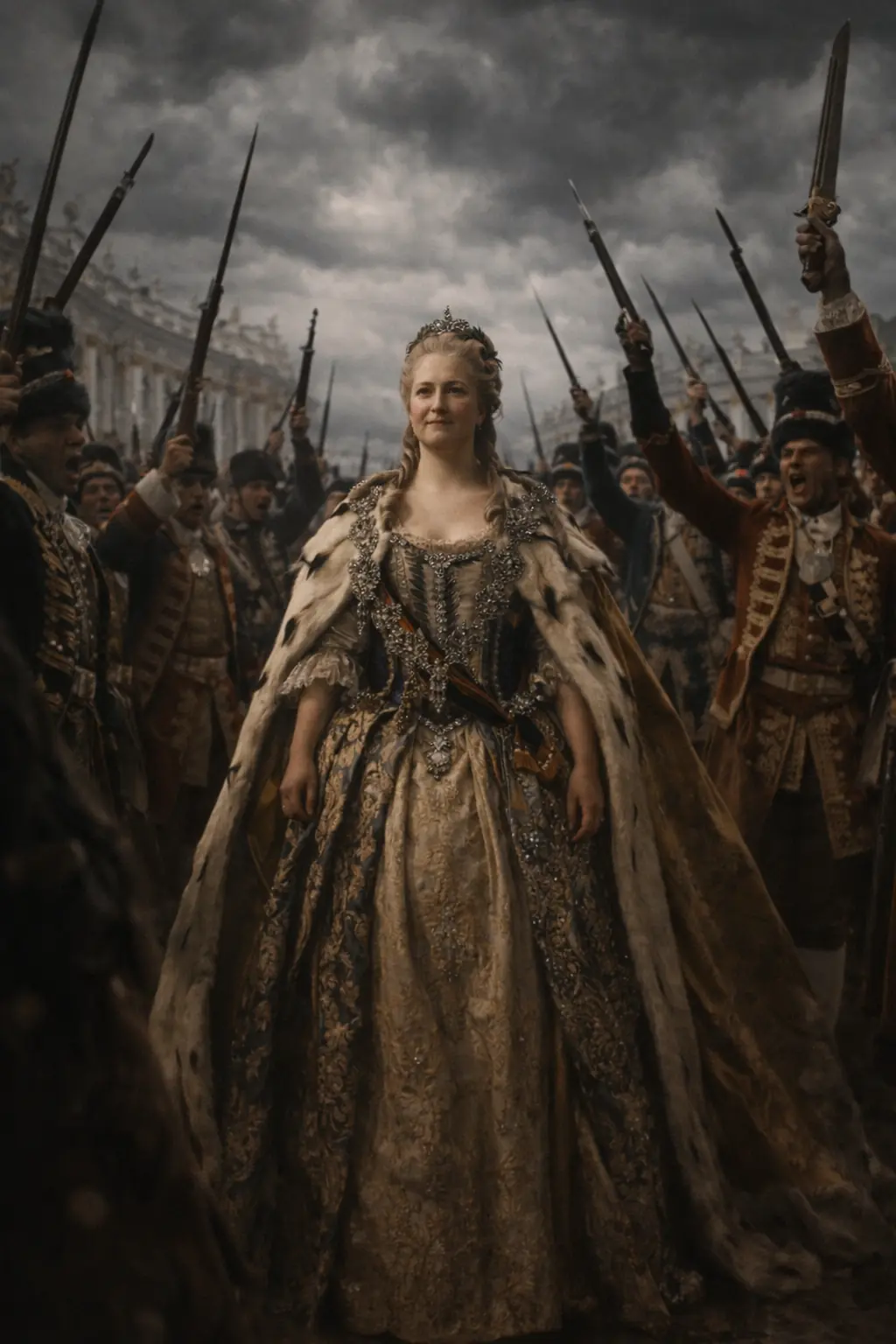
Catherine wanted recognition as an enlightened ruler. She read
Montesquieu, Voltaire, Diderot, and Beccaria, corresponded with European
intellectuals, and presented Russia as a power capable of participating
in the eighteenth century’s great cultural debates.
In 1767, she drafted the Instruction, or Nakaz, to
guide a commission charged with considering legal reform. The document
opposed torture, argued that punishments should prevent crime, and
stated that equality before the law was desirable. Many of its ideas
came from Montesquieu and Beccaria, adapted to the realities of absolute
monarchy (Madariaga, 1981).
The Legislative Commission brought together representatives of
different estates and regions of the empire, although serfs were
excluded as an independent political group. It failed to produce the new
legal code Catherine desired and eventually dissolved without
transforming Russia’s legal structure.
The episode reveals the central tension of her reign. Catherine
admired the language of reason and reform but would not weaken the
autocratic power that guaranteed her survival.
She could discuss liberty with philosophers while ruling millions of
people who did not possess it.
A Little-Known Fact: She Turned Her Own Body Into a Campaign Against Smallpox
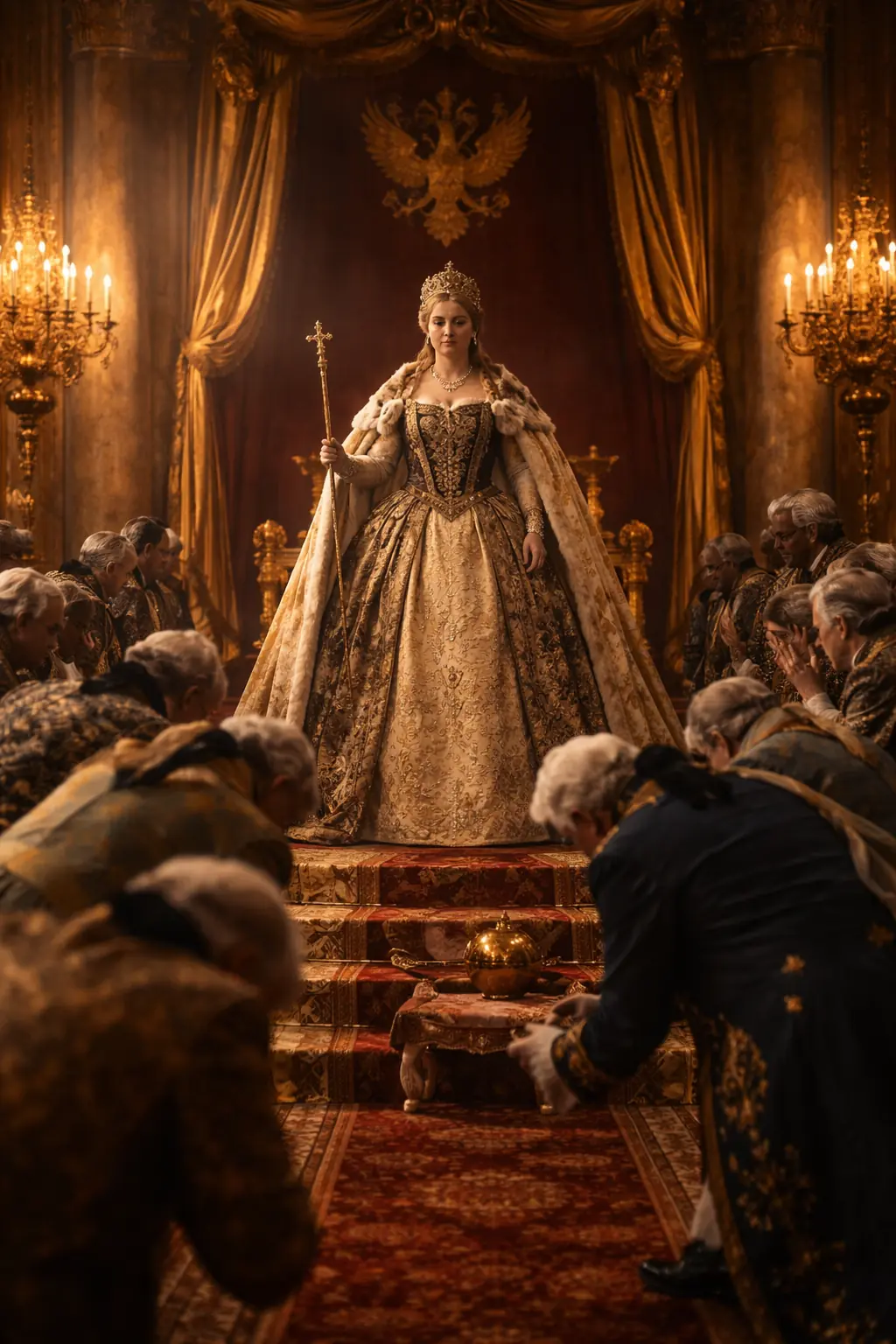
In the eighteenth century, smallpox killed, blinded, and disfigured
millions. Variolation—the deliberate introduction of material from a
mild case to induce immunity—could protect against the disease, but it
also carried substantial risks. In Russia, the practice inspired fear
and distrust.
In 1768, Catherine invited the English physician Thomas Dimsdale to
St. Petersburg and decided to undergo the procedure herself. It was
initially performed discreetly in case it failed and caused a political
crisis. Catherine recovered and later had her son Paul inoculated
(Dimsdale, 1769; Chorba, 2022).
She then transformed the successful result into a public event. She
rewarded Dimsdale generously, publicized the outcome, and used her
example to reduce fear among the aristocracy. Members of the court began
imitating her, and institutions were established to extend
inoculation.
This was not vaccination in the modern sense; Edward Jenner’s
smallpox vaccine would appear decades later. Variolation was more
dangerous and could spread the disease. Within the medical knowledge of
her time, however, Catherine’s decision was a calculated act of
public-health leadership.
The empress risked her own body because a decree alone would not have
conquered fear.
The Limit of Her Enlightenment: Serfdom
Catherine’s image as a reformer cannot be separated from the
worsening condition of many peasants. The empire’s economy and political
power rested upon serfdom. Nobles controlled the labor and much of the
lives of millions of people bound to rural estates.
Catherine depended upon that nobility, whose support had been
essential during the coup of 1762. Throughout her reign, she distributed
land and serfs to favorites and allies, reinforced aristocratic
privileges, and extended servile relationships into territories where
they had previously been less firmly established (Wirtschafter,
2008).
In 1785, she issued the Charter to the Nobility, confirming corporate
rights and exemptions for the elite. No equivalent charter protected the
peasants subject to their authority.
Catherine understood some of serfdom’s problems intellectually and
considered limited reforms, but retreated before the political risk.
Freeing the serfs would have required confronting the social class that
sustained her throne.
The crown was heavy, but its weight was ultimately transferred onto
those beneath it.
Pugachev and the Return of the Dead Husband
Between 1773 and 1775, the empire confronted an enormous rebellion
led by Yemelyan Pugachev, a Cossack who claimed to be Peter III,
miraculously still alive. Peasants, Cossacks, workers, and peoples
subjected to imperial rule joined a movement promising an end to abuses
and obligations (Madariaga, 1981).
The ease with which Pugachev could present himself as Catherine’s
dead husband exposed the fragility of her legitimacy. For many people
living far from court, the 1762 coup and Peter’s death remained
surrounded by suspicion.
Government forces crushed the rebellion. Pugachev was captured and
executed in Moscow in 1775. After the uprising, Catherine became more
cautious about social reform and reorganized provincial administration
to strengthen state control.
The rebellion demonstrated that the enlightened ideas discussed in
St. Petersburg barely reached the villages supporting the empire’s
wealth.
The Expansion of a Continental Power
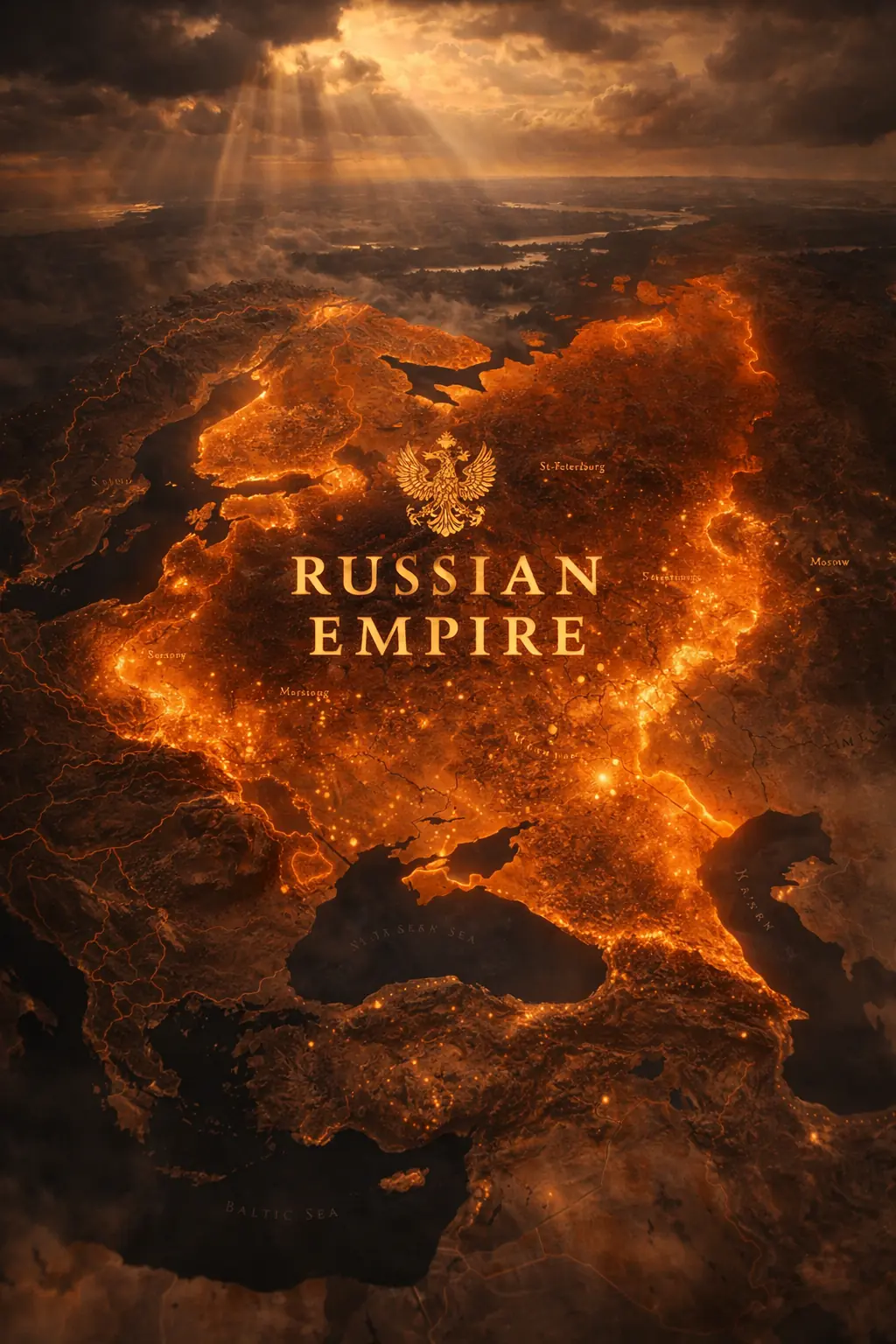
Catherine did not merely inherit a great power; she enlarged it.
During her reign, Russia fought two major wars against the Ottoman
Empire, secured strategic access to the Black Sea, and extended its
influence over regions north of it.
In 1783, she incorporated Crimea into the Russian Empire after a
process of political and military pressure upon the Crimean Khanate. The
annexation strengthened Russia’s southern position but also subjected
new populations and profoundly altered the regional balance (Dixon,
2009).
Russia also participated in the three partitions of the
Polish–Lithuanian Commonwealth, carried out in 1772, 1793, and 1795 with
Prussia and Austria. After the final partition, Poland disappeared as an
independent state for more than a century.
These conquests established Catherine’s reputation as “the Great,”
but carried considerable human and political costs. Her enlightened
project coexisted with imperial expansion, occupation, and the
suppression of neighboring sovereignties.
To her admirers, she had made Russia a dominant European power. To
those brought under her control, greatness meant something
different.
The Private Museum That Came to Belong to the World
Catherine used art as personal pleasure, an educational instrument,
and a declaration of power. In 1764, she acquired an important
collection of paintings assembled by the Berlin merchant Johann Ernst
Gotzkowsky. That purchase is regarded as the beginning of the Hermitage
collection.
Over the following decades, she purchased entire collections
belonging to European connoisseurs, including those of Heinrich von
Brühl, Pierre Crozat, and Robert Walpole. Agents and diplomats acquired
works by Rembrandt, Rubens, Van Dyck, and other masters on her behalf
(State Hermitage Museum, n.d.).
The name “Hermitage” originally referred to private rooms beside the
Winter Palace where Catherine received a select circle. It was not yet
the public museum that exists today. Her acquisitions nevertheless
formed the core of one of the world’s most important cultural
institutions.
She also promoted female education through the Smolny Institute for
Noble Maidens, founded in 1764. Although initially intended for a
privileged minority, it represented an early attempt to organize women’s
formal education under state responsibility (Madariaga, 1981).
Catherine understood that an empire was not legitimized through
armies alone. It also needed books, schools, paintings, and a narrative
about itself.
The Revolution That Transformed the Reformer
The French Revolution of 1789 profoundly changed Catherine’s
attitude. She had admired thinkers who criticized absolutism, but
watched with alarm as the French monarchy was overthrown and Louis XVI
executed.
During her final years, she tightened censorship and persecuted
Russian authors whose works she considered dangerous. Alexander
Radishchev was arrested for criticizing serfdom and autocracy in
Journey from St. Petersburg to Moscow. Nikolay Novikov, an
editor and Freemason, was also imprisoned (Dixon, 2009).
The enlightened sovereign discovered that ideas could cease to be
elegant conversations and become revolutions.
Her reaction was not merely hypocrisy. It expressed the fear of a
ruler who had seized power through a coup and knew that no throne was
invulnerable. Catherine had used reformist language to strengthen the
state; when that language threatened the state, she chose the crown.
The Real Death and the Lie About the Horse
On November 16, 1796, Catherine suffered a stroke and was found
unconscious in her private apartments. She never regained consciousness
and died the following day, November 17, at the age of sixty-seven. Her
son Paul succeeded her (Alexander, 1989).
She did not die beneath a horse during a sexual act. Nor was she
killed when a toilet seat collapsed. Both stories lack historical
foundation.
The horse legend emerged and spread as an extreme form of sexual
defamation. Catherine had several lovers, some considerably younger than
she was, but European courts accepted similar behavior from male
sovereigns without making it the central explanation of their
reigns.
For a woman who had deposed her husband, directed armies, and
addressed Europe’s most celebrated intellectuals as an equal, sexuality
became a posthumous weapon. The falsehood survived because it was more
scandalous and easier to remember than a legislative commission, an
inoculation campaign, or the complex administration of an empire.
A Crown Built Upon Contradictions
Catherine the Great was neither the progressive heroine imagined by
some admirers nor the sexual monster created by her enemies. She was an
exceptionally educated, ambitious, and pragmatic autocrat.
She defended education, patronized the arts, and promoted certain
legal reforms, but strengthened the nobility and did not free the serfs.
She confronted fear of smallpox but suppressed rebellion against her
government. She admired intellectual freedom until that freedom
threatened the stability of her throne. She modernized the empire while
extending its borders over other peoples.
Her life demonstrates that intelligence does not remove the cruelty
of power and that enlightened ideas can coexist with profoundly unjust
systems.
It also demonstrates how history punishes female rulers differently.
Catherine may be condemned for wars, annexations, repression, and
serfdom. There is no need to invent a horse.
The true burden of her crown lay neither in her lovers nor in lies
about her death. It lay in the distance between the rational world
described in her letters and the unequal empire she chose to
preserve.
References
Alexander, J. T. (1989). Catherine the Great: Life and
legend. Oxford University Press.
Chorba, T. (2022). A head of state leading by example: Catherine the
Great and smallpox inoculation. Emerging Infectious Diseases,
28(10), 2145–2148.
Dimsdale, T. (1769). The present method of inoculating for the
small-pox. W. Owen.
Dixon, S. (2009). Catherine the Great. HarperCollins.
Madariaga, I. de. (1981). Russia in the age of Catherine the
Great. Yale University Press.
Massie, R. K. (2011). Catherine the Great: Portrait of a
woman. Random House.
State Hermitage Museum. (n.d.). History of the Hermitage.
State Hermitage Museum.
Wirtschafter, E. K. (2008). Russia’s age of serfdom,
1649–1861. Blackwell.
More from this collection

Genghis Khan: The Man Who Conquered the World but Could Not Govern His Own Legend
Read story →
Peter the Great: The Tsar Who Rebuilt Russia Without Asking What It Would Cost
Read story →