In this storyOpen index
Elizabeth Báthory: The Woman Lost Behind the Blood Countess
The records speak of abuse and deaths, but not of blood baths. Between an irregular investigation and a later legend, the historical woman disappeared.
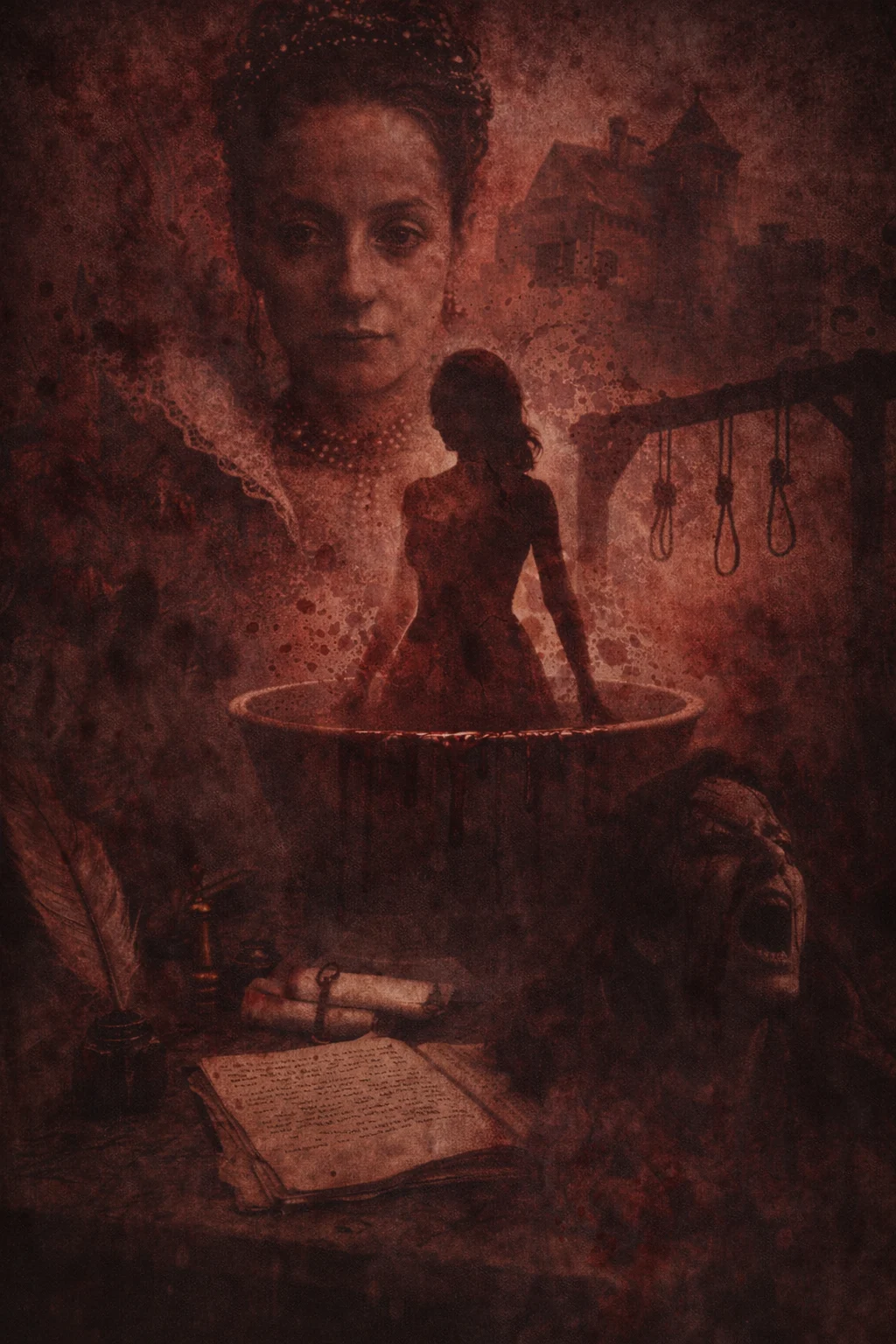
For centuries, it has been repeated that Elizabeth Báthory murdered hundreds of young women and bathed in their blood to preserve her youth. The image is unforgettable: an aristocrat secluded in a castle, surrounded by corpses and obsessed with defeating time. Yet the most famous episode in her story appears in none of the testimony collected against her in 1610 and 1611. The blood-bathing story was first published in 1729, more than a century after her death (Turóczi, 1729; Kord, 2009).
Báthory may have been responsible for terrible acts. She may also have been the target of an investigation shaped by political and financial interests. Both possibilities can coexist. Her history is not simply a contest between innocence and guilt, but between incomplete documents and a legend that eventually consumed them.
Elizabeth Báthory: The Woman Lost Behind the Blood Countess
Discover this story on our YouTube channel.
A life told through places and turning points
Enter the archive
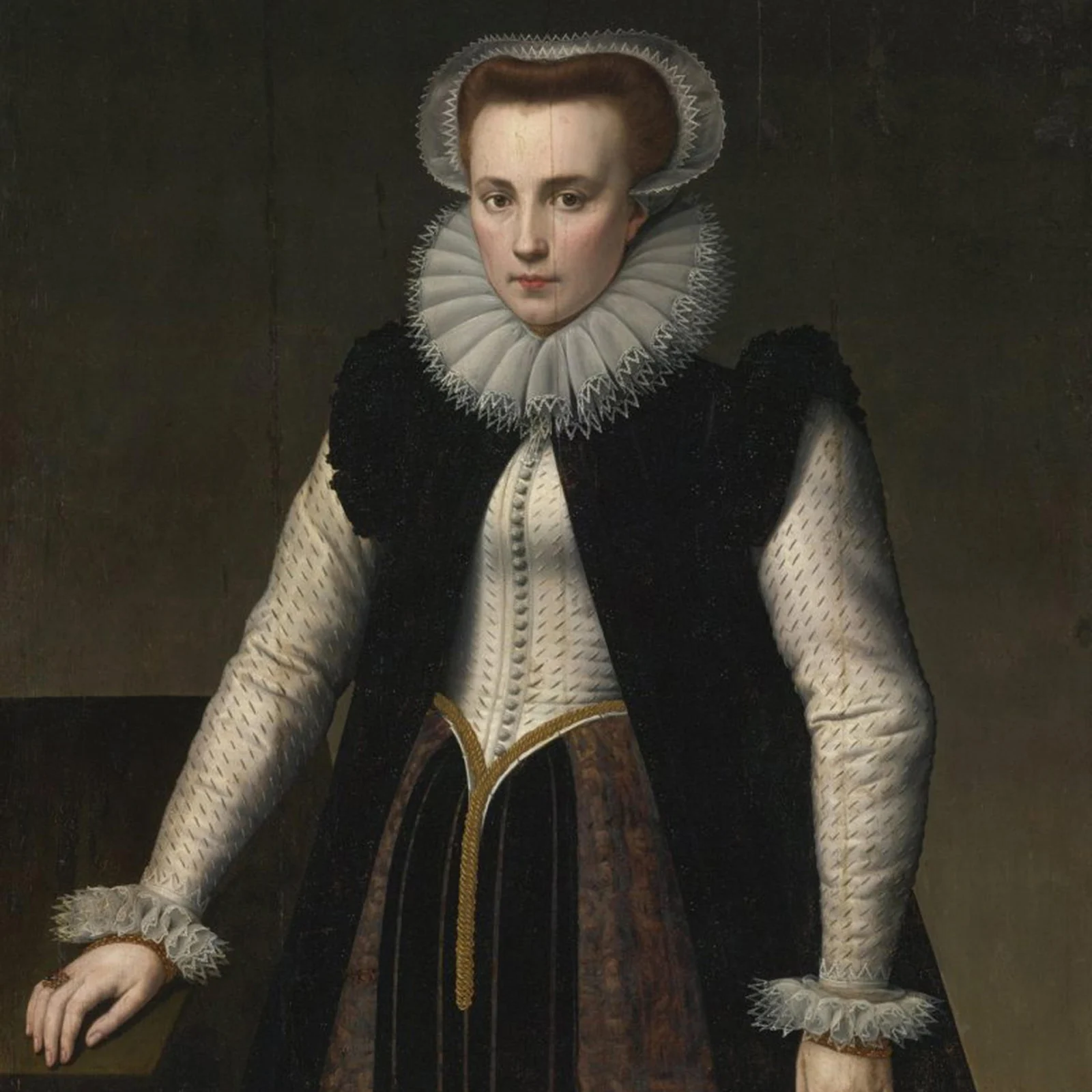
This traditional portrait shows how Báthory’s visual memory was fixed and reproduced for centuries, even as her history merged with legend.
- Catalog
- Hungarian National Museum
- Rights
- Public domain
The portrait’s exact identification and dating have been debated; it is presented as a traditional historical image, not documentary evidence from the proceedings.
A woman born into power
Erzsébet Báthory—known as Elizabeth Báthory in English—was born on August 7, 1560, in the Kingdom of Hungary. She belonged to one of the most powerful families in Central Europe. Her relatives included governors, military commanders, bishops, and princes of Transylvania. She grew up in a world dominated by religious conflict, dynastic rivalry, and almost continuous warfare with the Ottoman Empire (Kontler, 2002; Thorne, 1997).
In 1575, she married Ferenc Nádasdy, a member of another influential aristocratic family. Their marriage united two great fortunes and placed estates scattered across several parts of the kingdom under their control. Nádasdy spent long periods fighting the Ottomans, while Báthory managed the family properties, supervised officials, and dealt with economic and legal disputes (Thorne, 1997).
This detail is essential. Báthory was not an ornamental figure hidden inside a castle, but an educated landowner who exercised authority over numerous communities. She could write correspondence, manage debts, intervene in lawsuits, and influence the lives of those who worked or lived on her lands.
She also belonged to the Protestant nobility in a kingdom divided by the Reformation and Counter-Reformation. Her position offered protection, but it also placed her within a dangerous network of political, religious, and family rivalries (Kontler, 2002).
The rumors surrounding her estates
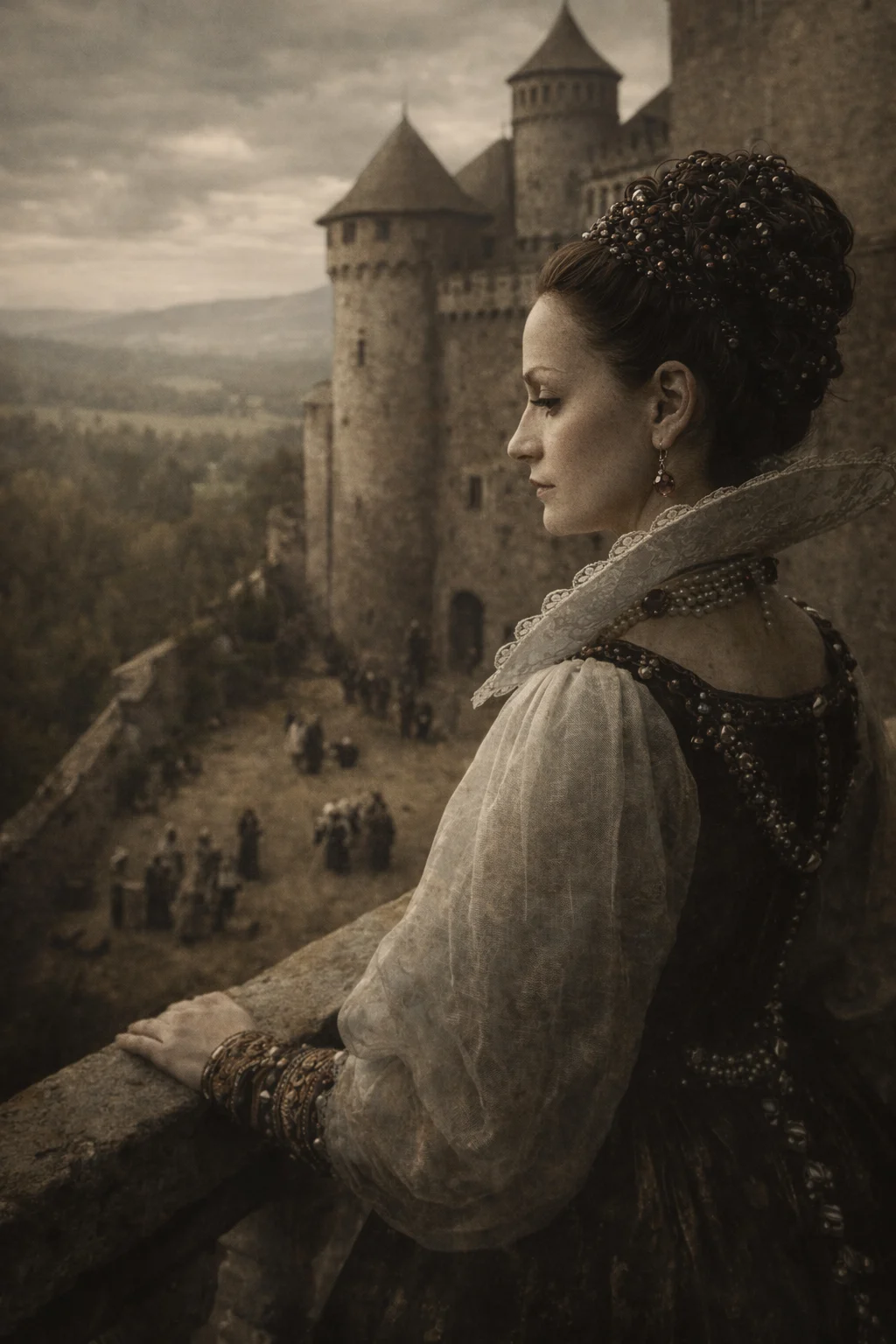
Ferenc Nádasdy died in 1604. Báthory was left a widow in control of a considerable fortune and extensive estates. During the following years, accusations began to circulate concerning young female servants who became ill, disappeared, or died inside her residences.
In that society, physical punishment of servants was common and rarely provoked an investigation of an aristocrat. The case assumed a different importance when the alleged victims were no longer exclusively peasant girls and complaints began to involve daughters of the lesser nobility (Thorne, 1997).
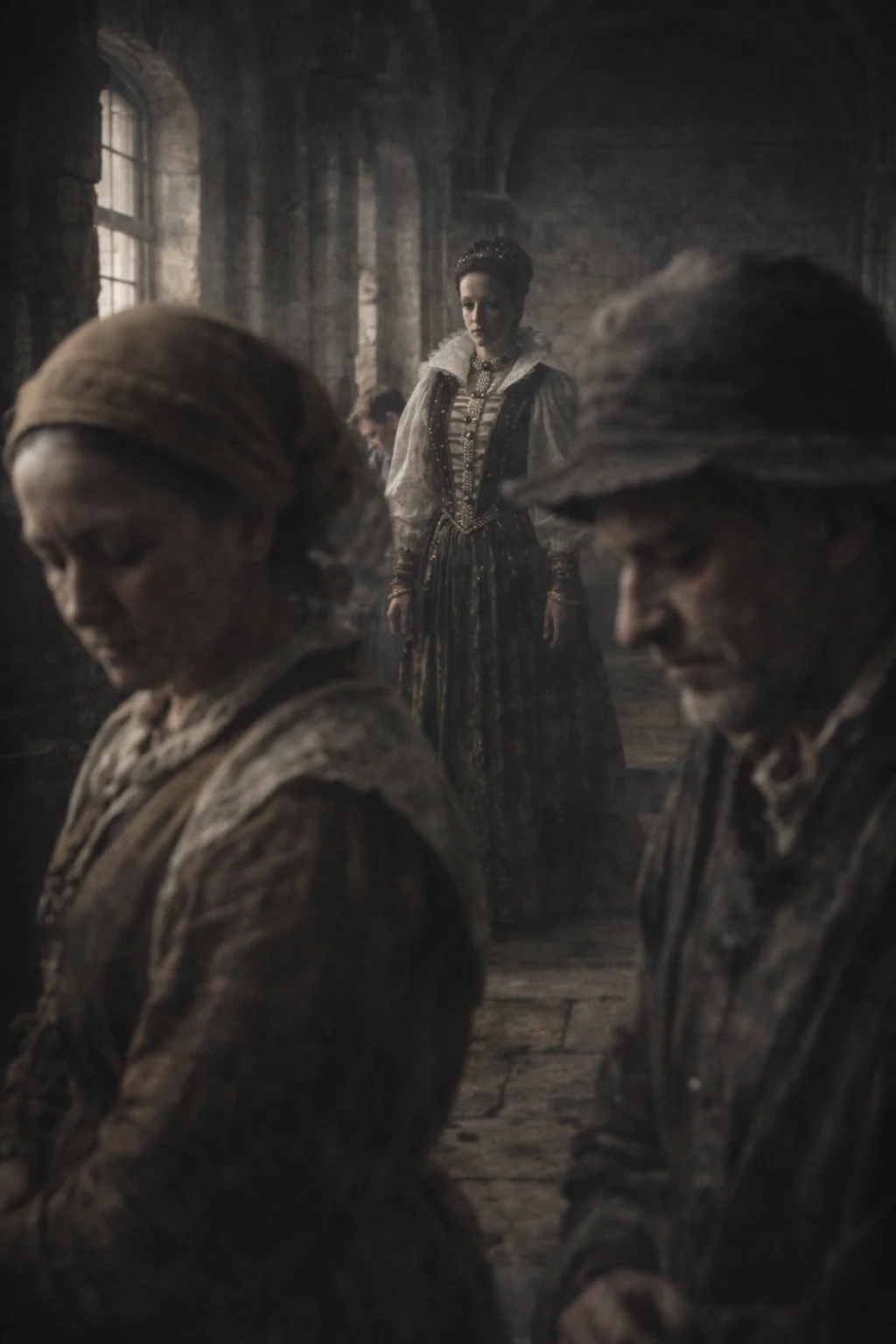
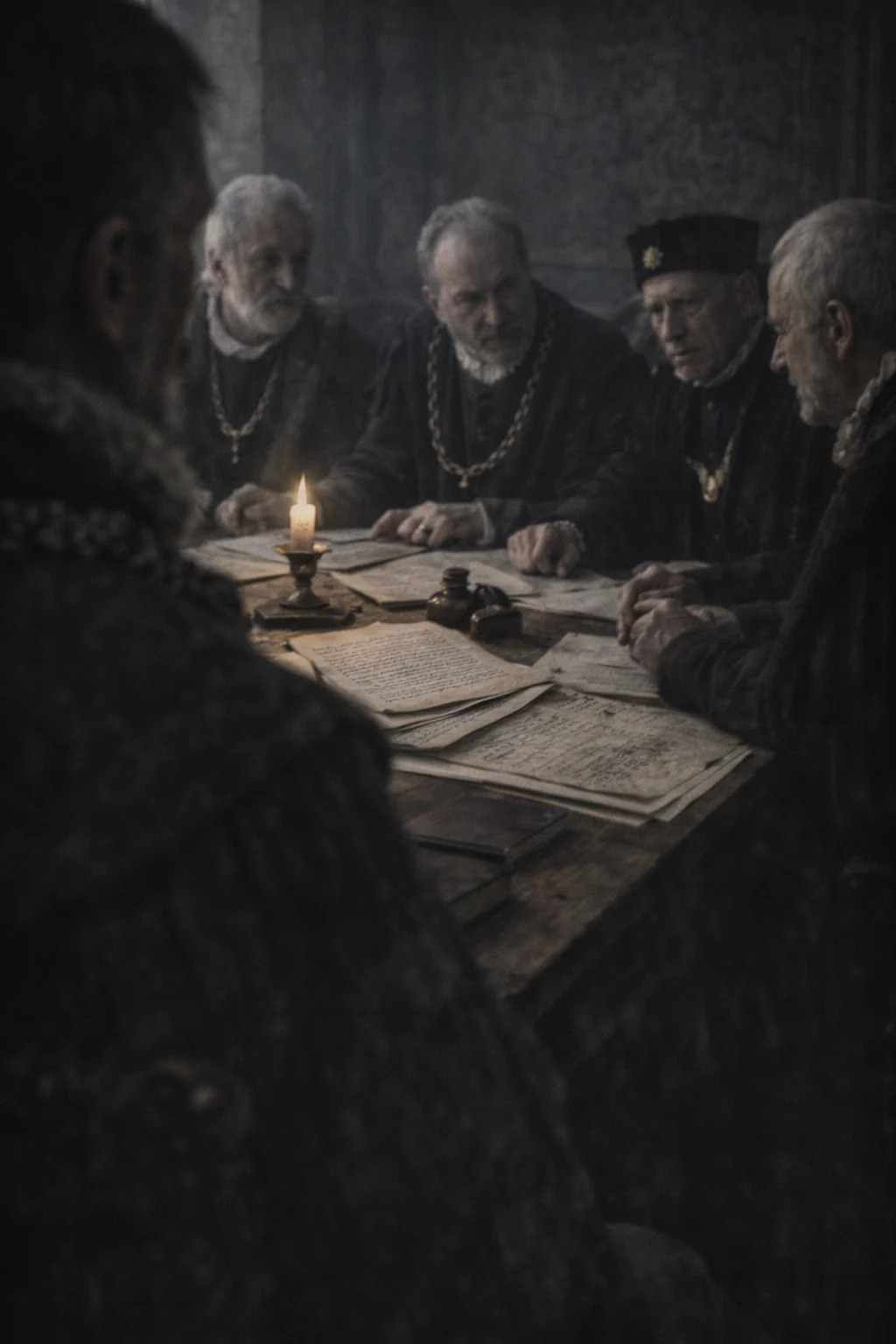
King Matthias II ordered an investigation. It was directed by György Thurzó, the palatine of Hungary, one of the kingdom’s highest officials and an acquaintance of the Báthory family. Between 1610 and 1611, his investigators collected hundreds of statements from servants, priests, noblemen, villagers, and estate employees (Craft, 2009; Farin, 1989).
The testimony described brutal punishments, injuries, deprivation, and deaths. Some witnesses claimed to have personally observed particular abuses; many others reported what they had heard from third parties. In several cases, witnesses knew of the alleged crimes through rumor or because they had seen bodies, but they could not identify who had caused the deaths (Craft, 2009).
That distinction is fundamental. The statements constitute historical evidence that serious accusations circulated and that some people claimed to have witnessed violence. They do not automatically prove every story true or allow the number of victims to be reconstructed accurately.
Detention without a trial
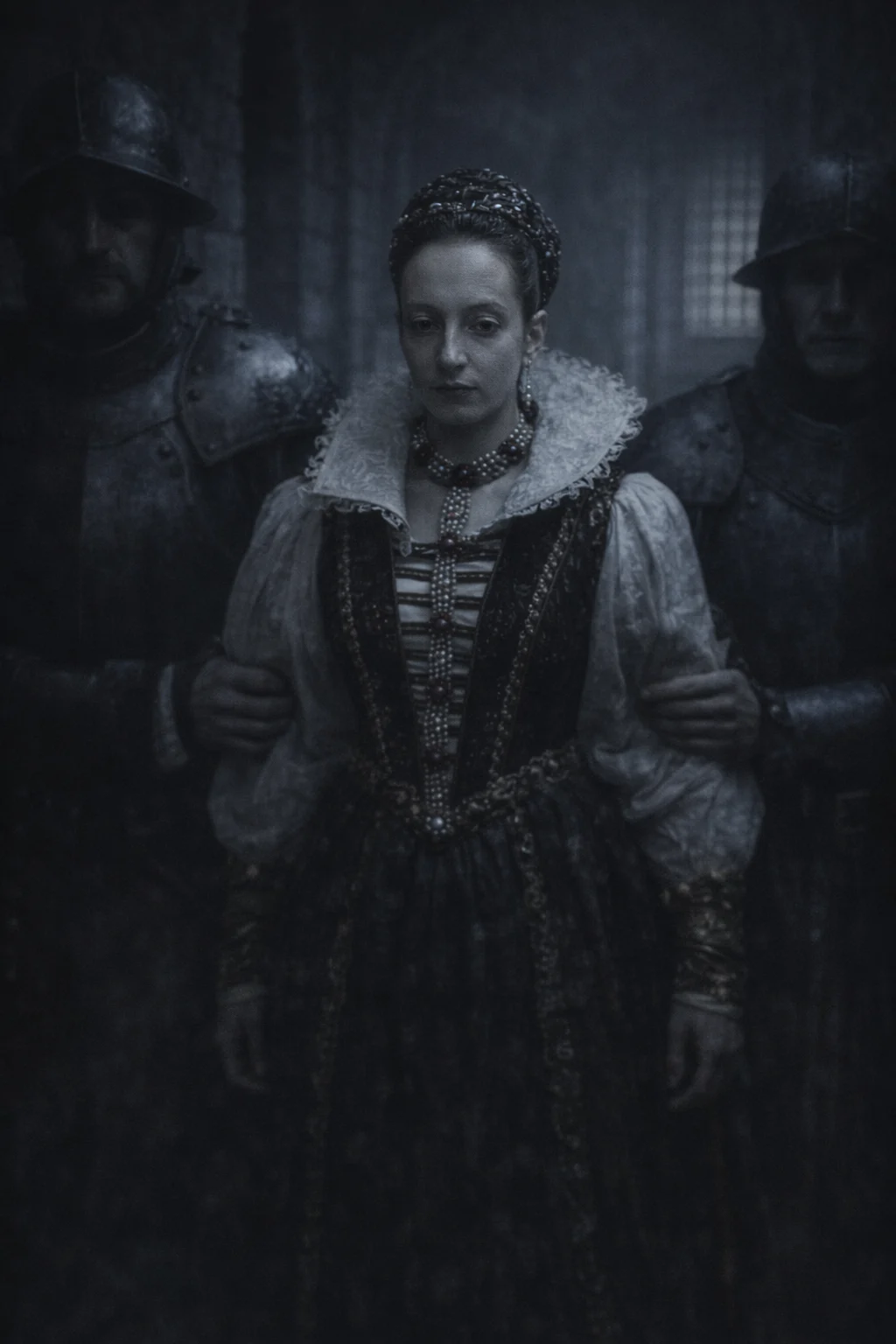
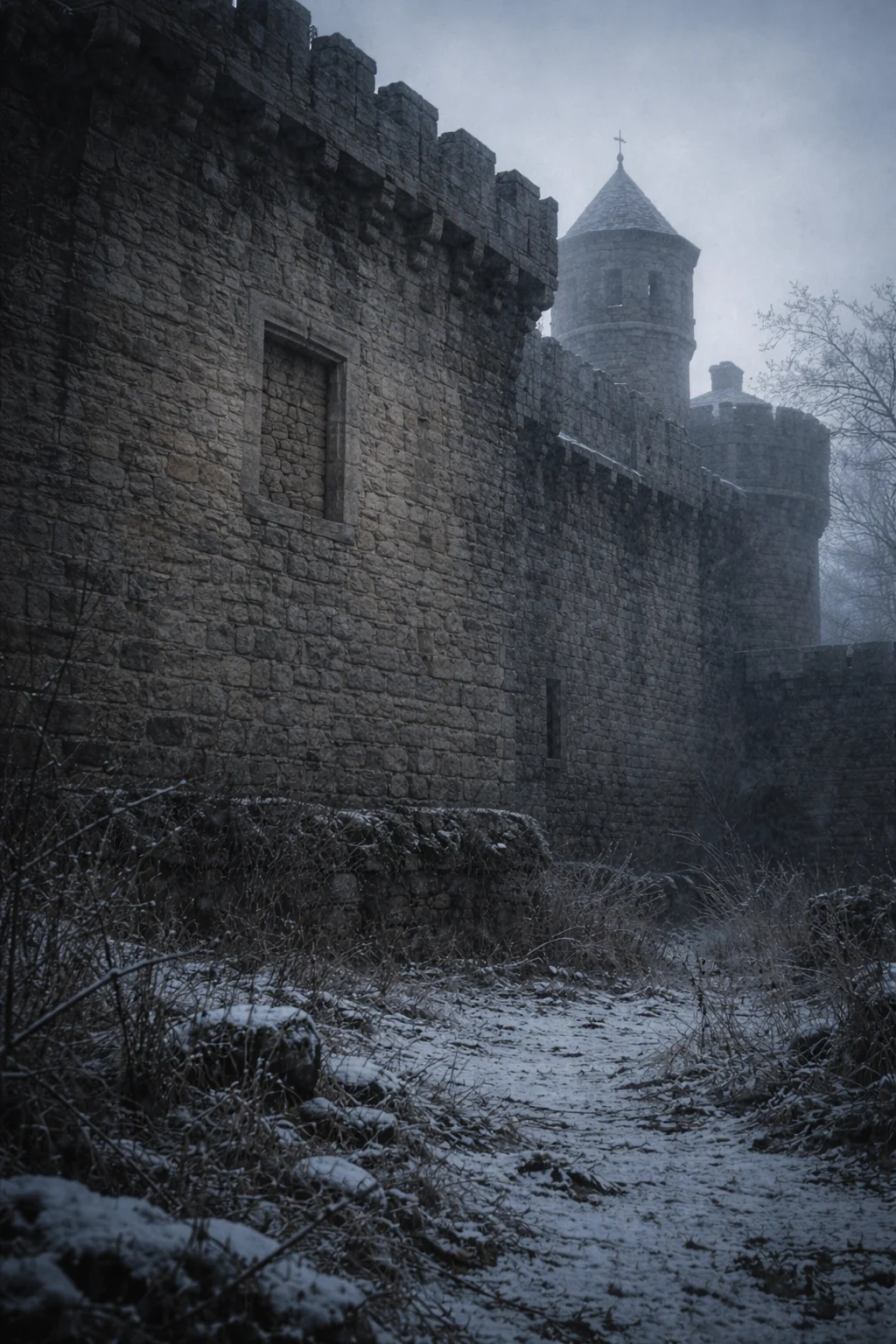
In late December 1610, Thurzó arrived at Čachtice, the castle later associated with the legend, and ordered the arrest of several members of the household. Báthory was placed under guard. The story that she was discovered covered in blood or personally murdering a girl belongs primarily to later retellings and cannot be treated as an established fact (Craft, 2009; Thorne, 1997).
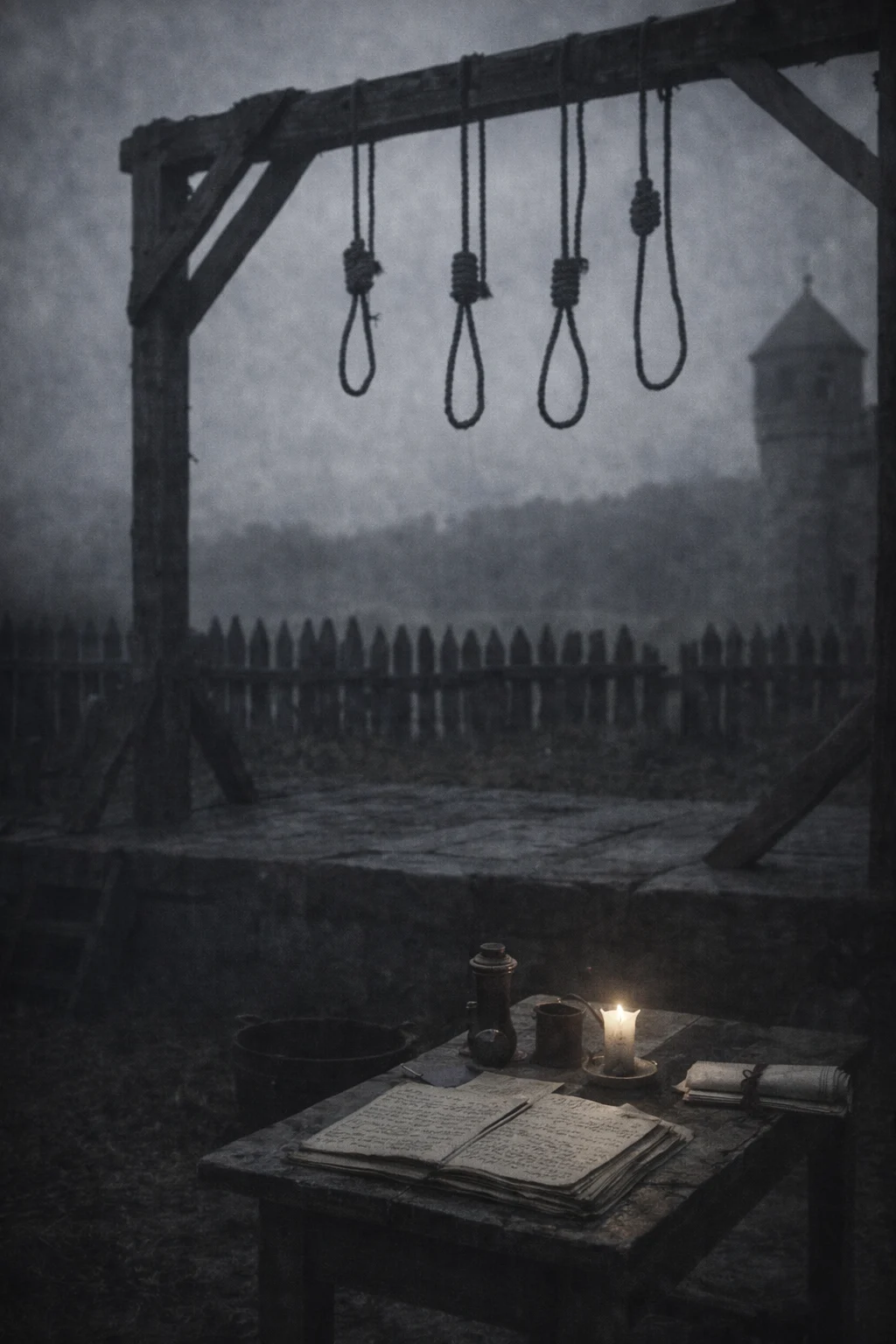
Four of her servants were brought before judges in January 1611. During the proceedings, some confessed to participating in the abuse or helping to conceal its consequences. These confessions were obtained under the judicial practices of the period, which included torture. Three defendants were executed, while one woman received a prison sentence (Craft, 2009).
Elizabeth Báthory herself, however, was never brought before a court to answer the accusations formally. She was never publicly questioned, confronted by the witnesses, or declared guilty in a judgment. She remained confined on her estates until her death on August 21, 1614 (Farin, 1989; Thorne, 1997).
It is therefore historically inaccurate to say that she was convicted of murdering hundreds of people. She was punished without a formal trial, while the judicial proceedings focused on her servants.
Her family had powerful reasons to prevent a public hearing. A trial could create a scandal, weaken family alliances, and endanger the inheritance intended for Báthory’s children. For the Crown, keeping her confined resolved the problem without openly confronting one of Hungary’s most influential families (Thorne, 1997).
The mysterious figure of 650 victims
The most frequently repeated claim is that Báthory killed 650 young women. The figure does not come from a register of bodies or an investigation that identified each victim. It arose from testimony claiming that one of Báthory’s associates had seen the number written in a book connected with the countess. The alleged register has not survived, and the person who mentioned it did not present a verifiable list to the court (Craft, 2009).
Other witnesses offered widely different figures, usually based on rumor. Some statements attributed dozens of deaths to Báthory’s household, but the surviving documents do not establish a definitive total.
This does not mean that there were no victims. The allegations of abuse are too numerous to dismiss outright. It means that presenting the number 650 as historical certainty confuses an indirect accusation with a proven fact.
The little-known fact: she was never accused of bathing in blood
The scene that transformed Báthory into a universal monster is absent from the contemporary records. Witnesses spoke of punishment, torture, and death, but they did not claim that the countess bathed in blood to preserve her beauty (Craft, 2009; Farin, 1989).
The story appeared in print in 1729, when the Jesuit scholar László Turóczi included an account of the case in his history of Hungary. By then, 115 years had passed since Báthory’s death. Later writers repeated and embellished the episode, eventually transforming an aristocrat accused of cruelty into a female precursor of the literary vampire (Turóczi, 1729; Kord, 2009).
Many other images associated with her are also later additions: the iron maiden, experiments intended to preserve youth, and imprisonment inside a completely bricked-up room. They belong to the expansion of the legend, not to what can be demonstrated from the proceedings.
Murderer or victim of a conspiracy?
Some authors have argued that Báthory was the victim of a conspiracy intended to seize her estates, cancel debts owed to her family by the Crown, or neutralize a Protestant widow who had become too powerful. The absence of a trial and the financial interests surrounding her confinement make this possibility worth examining (Thorne, 1997).
Yet the irregularities of the proceedings do not establish her innocence. Accusations existed before her detention, came from different places, and described a pattern of violence within her households. Even if parts of the case were exaggerated or manipulated, it is difficult to assume that hundreds of statements arose from a perfectly coordinated fabrication (Craft, 2009).
The most responsible conclusion lies between the extremes. Serious abuse and deaths probably occurred on Báthory’s estates, and she may have participated in them, ordered them, or allowed them to continue. The surviving evidence, however, cannot confirm the number of victims, reconstruct every crime, or support the supernatural scenes added in later centuries.

The woman who disappeared inside the myth
Elizabeth Báthory died without standing trial and became absolutely guilty in the popular imagination. History stopped seeing her as an aristocrat operating within the violent power structures of her period and began portraying her as an almost supernatural creature.
The legend produced a powerful story, but it also obscured the possible victims. The young women who died on those estates were reduced to a spectacular number, while the countess became the central figure in films, novels, and vampire tales.
Separating myth from documentation does not mean absolving her. It means recognizing that history demands a discipline horror does not require. Báthory may have crossed the line into cruelty and the abuse of power. Later centuries made her cross another boundary: the one separating a human being from an imagined monster.
Sources and further reading
References
Craft, K. L. (2009). Infamous lady: The true story of Countess Erzsébet Báthory. CreateSpace.
Farin, M. (Ed.). (1989). Heroine des Grauens: Wirken und Leben der Elisabeth Báthory in Briefen, Zeugenaussagen und Phantasiespielen. P. Kirchheim.
Kontler, L. (2002). A history of Hungary: Millennium in Central Europe. Palgrave Macmillan.
Kord, S. (2009). Murderesses in German writing, 1720–1860: Heroines of horror. Cambridge University Press.
Thorne, T. (1997). Countess Dracula: The life and times of Elisabeth Báthory, the Blood Countess. Bloomsbury.
Turóczi, L. (1729). Ungaria suis cum regibus compendio data. Typis Academicis Societatis Jesu.
More from this collection
Vlad the Impaler: The Prince Who Turned Terror Into Propaganda and Lent His Name to Dracula
Read story →