In this storyOpen index
Delmira Agustini: The Poet Who Turned Female Desire into an Insurrection
Before publishing the erotic poems that made her famous, Delmira Agustini began contributing to the magazine La Alborada while still a teenager. Under the pseudonym “Joujou,” she wrote profiles of women connected with Montevideo’s cultural and social life. The apparently docile young woman was already observing how other women attempted to occupy a public space that was still granted to them only with difficulty.
Society could accept a woman as a muse, a domestic angel, or the object of desire.
It was not prepared to accept a woman who desired.
Delmira Agustini crossed that boundary at the beginning of the twentieth century. In her poems, the female voice does not wait silently to be chosen: she imagines, demands, contemplates the male body, and transforms desire into a creative force.
That poetic freedom led some contemporaries to admire her, while others attempted to explain her as a strange creature who scarcely understood what she was writing. After her murder, fascination with her private life threatened to conceal the true magnitude of her work.
The poet who turned desire into an insurrection
The life and work of Delmira Agustini, a voice that changed who was allowed to speak of desire.
A life told through places and turning points

Enter the archive
An authentic object preserved by a cultural institution brings us closer to the world behind this life.
- Collection
- Wikimedia Commons
- Rights
- Public domain
https://novedadesbiblioteca.wordpress.com/2014/07/07/delmira-agustini-la-nena-100-anos-de-su-muerte/
A Girl Educated to Remain at Home
Delmira Agustini was born on October 24, 1886, in Montevideo, into an economically comfortable family (Silva, 1968; Varas, 2002). She was the daughter of Santiago Agustini and María Murtfeldt.
She was educated at home by private teachers. She studied French, music, painting, and other subjects considered appropriate for a bourgeois young woman. From childhood, she showed an aptitude for drawing, piano, and writing.
Her mother maintained close supervision over her life and accompanied her even after Delmira began moving within literary circles. Inside the family, she was called “la Nena”—the little girl—an affectionate name that also helped preserve the image of a protected, innocent, and obedient daughter (Silva, 1968).
Yet while those around her saw a reserved young woman, Delmira was privately creating an increasingly daring poetic voice.
The contrast between the family’s “Nena” and the author of erotic verse later fascinated her biographers. For too long, the two were presented as incompatible personalities. There were not two Delmiras, however. There was one woman forced to negotiate between social expectations and creative freedom.
Joujou Observes the Women of Montevideo
Delmira began publishing poems and prose during adolescence. From 1902 onward, she contributed to magazines including La Alborada, Rojo y Blanco, and later Apolo (Blixen et al., 2014).
In La Alborada, she participated in a section devoted to portraying women from cultural and social life. She signed some of these pieces “Joujou” (Blixen et al., 2014).
The pseudonym may have sounded playful and childish, but the profiles revealed her interest in women who had managed to enter intellectual life. Among them was the poet María Eugenia Vaz Ferreira, another of Uruguay’s major literary voices.
Before she was called a “priestess of Eros,” Agustini was already observing the barriers separating women from public recognition.
She also began carefully constructing her own literary presence. She submitted texts, maintained correspondence, and requested opinions from prestigious writers. She was not a girl producing extraordinary verse without understanding it. She was a self-aware author determined to find readers.
The Book of a Young Woman Who Did Not Intend to Remain Fragile
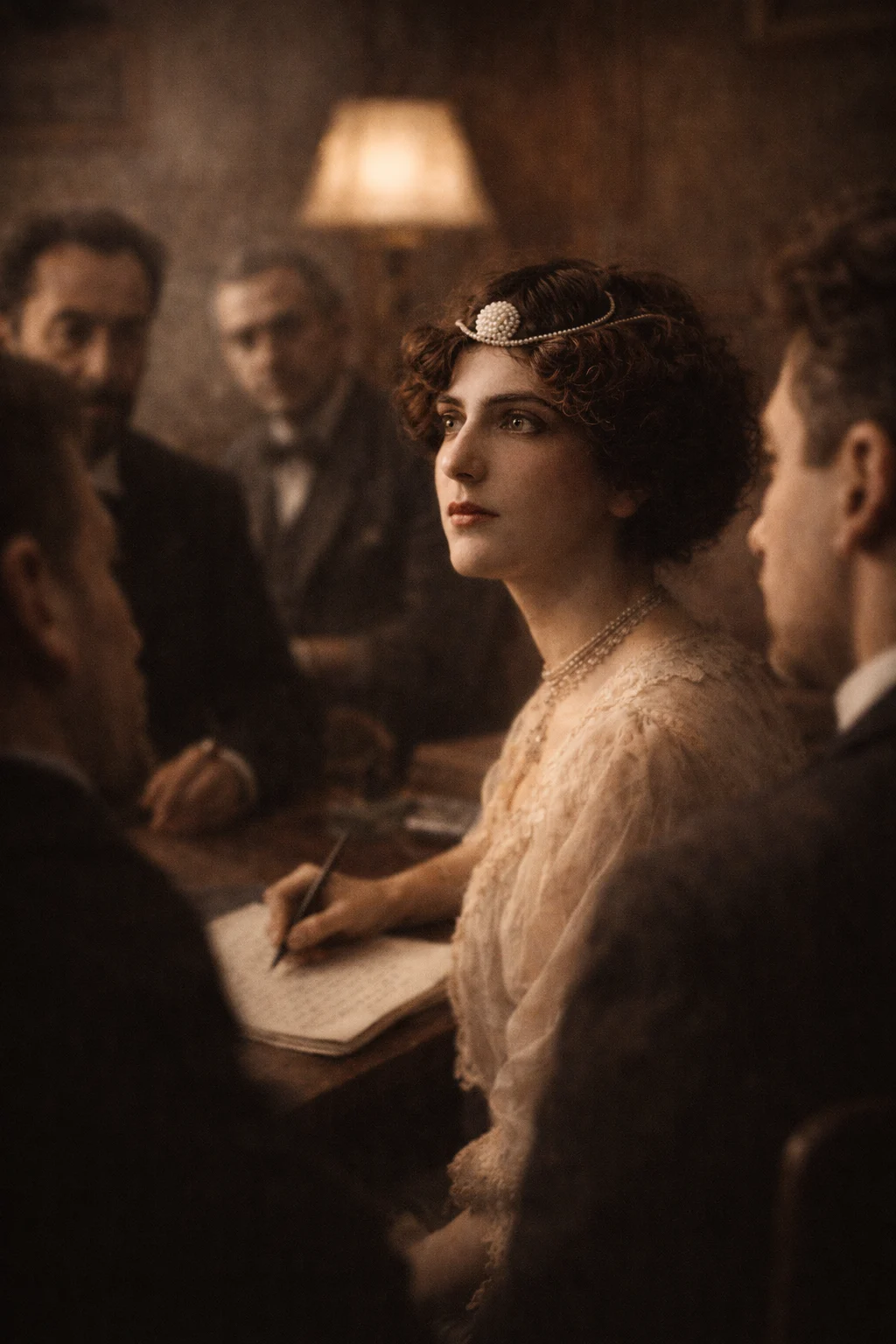
In 1907, she published her first poetry collection, El libro blanco (Frágil). She was twenty years old (Agustini, 2017).
The volume retained many elements of Modernismo: gardens, marble, swans, colors, precious stones, mythological figures, and refined settings. Rubén Darío had transformed Spanish-language poetry through this musical and sensory aesthetic, and his influence extended throughout Spanish America.
Agustini adopted that language but began changing it from within.
In much Modernista poetry, the woman appeared as a beautiful, distant figure observed by a man. In Agustini’s verse, the woman began becoming the subject of the gaze. She was not merely the desired body; she was the person who desired.
Critics praised her talent but frequently relied upon language that reduced her work to mysterious inspiration. They described her as a child prodigy, an angelic creature, or an instinctive voice. These labels appeared complimentary, but they avoided recognizing the study, ambition, and artistic control behind her poems.
A Voice That Stops Asking Permission
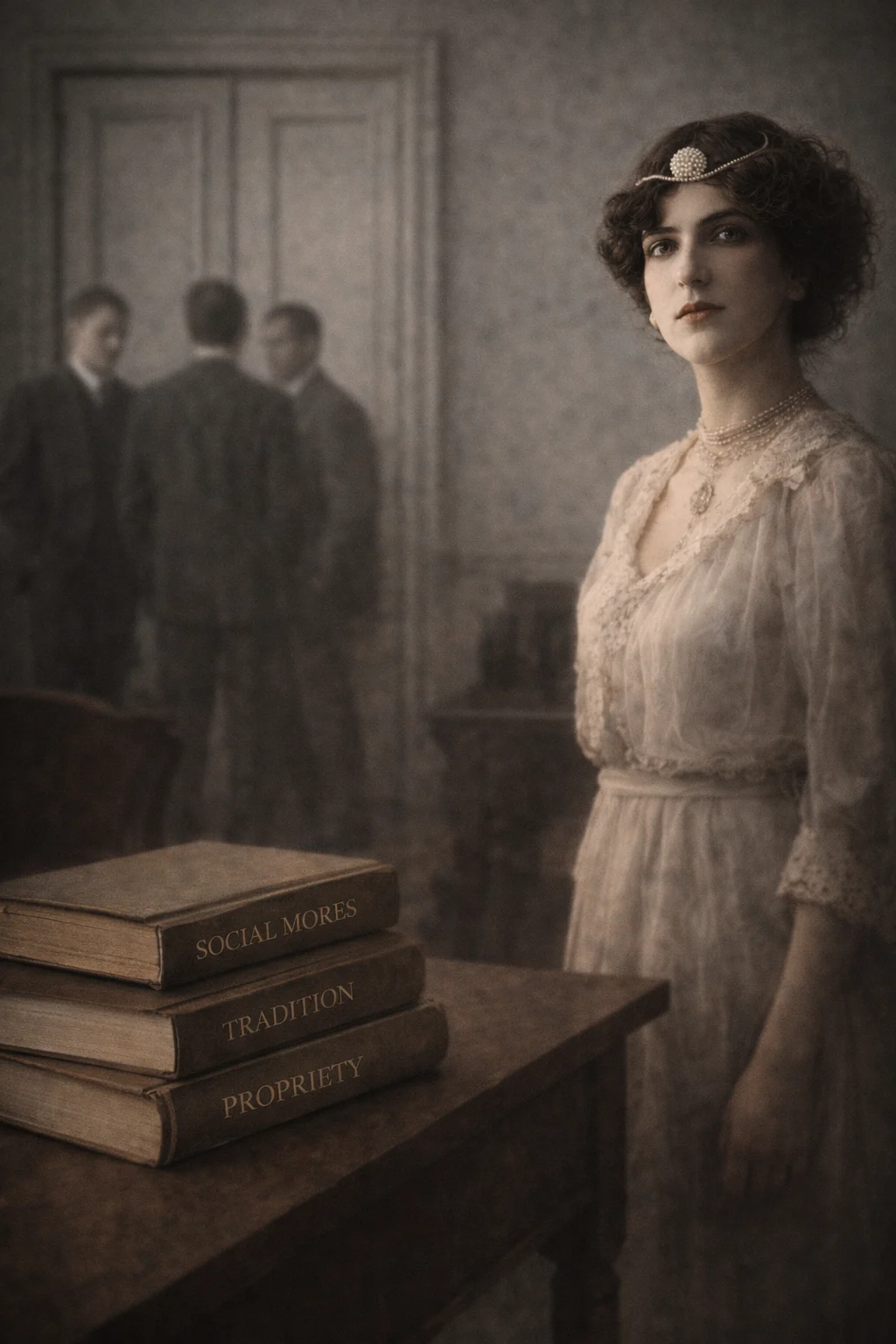
Cantos de la mañana appeared in 1910. Her poetry became more personal, intense, and assured. Love was no longer merely a delicate emotion. It could become fulfillment, hunger, symbolic violence, emptiness, and confrontation.
Literary tradition readily accepted men writing about bodies and desire. A woman doing the same had to be explained, watched, or treated as an exception.
Agustini did not write a political manifesto in the conventional sense. Her rebellion occurred inside the poem. By speaking from a female body that recognized its own impulses, she challenged an ancient distribution of roles: the man acted while the woman was observed; the man named desire while the woman was expected to inspire it without expressing it.
In poems such as “El intruso,” “Explosión,” “Íntima,” “Visión,” and “Otra estirpe,” eroticism is joined with images of life, death, mystery, and creation. The experience of love is neither simple nor purely romantic. It may offer liberation, but it can also produce anguish.
Rubén Darío Encounters an Unexpected Voice
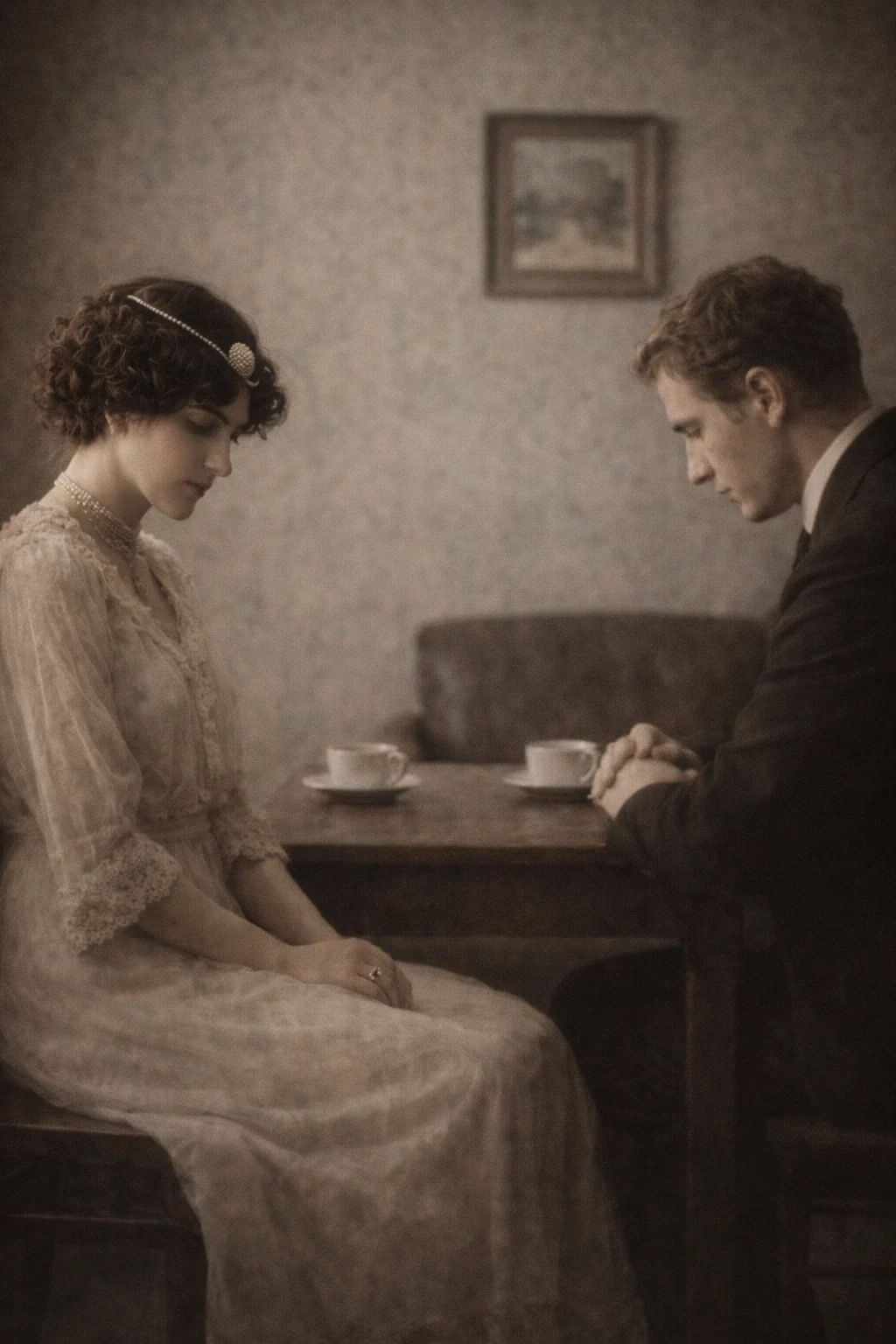
Rubén Darío visited Montevideo in 1912 and met Delmira. He was already the central figure of Hispanic Modernismo, and his opinion could shape the reception of a young writer.
Darío expressed extraordinary admiration for her work. In the text included in Los cálices vacíos, he compared her with Saint Teresa because of the force with which she expressed herself as a woman.
The praise was powerful, but it also demonstrated the difficulty of classifying her. To explain such an intense female voice, critics felt compelled to search for an exceptional, almost sacred precedent.
Agustini admired Darío, but her poetry was not simply an extension of her master’s work. She took Modernista symbols and changed their direction. The swan, Eros, the night, and the chalice ceased to function only as beautiful decorations; they became vehicles for a female consciousness exploring its own limits.
The Chalices That Could Not Be Filled
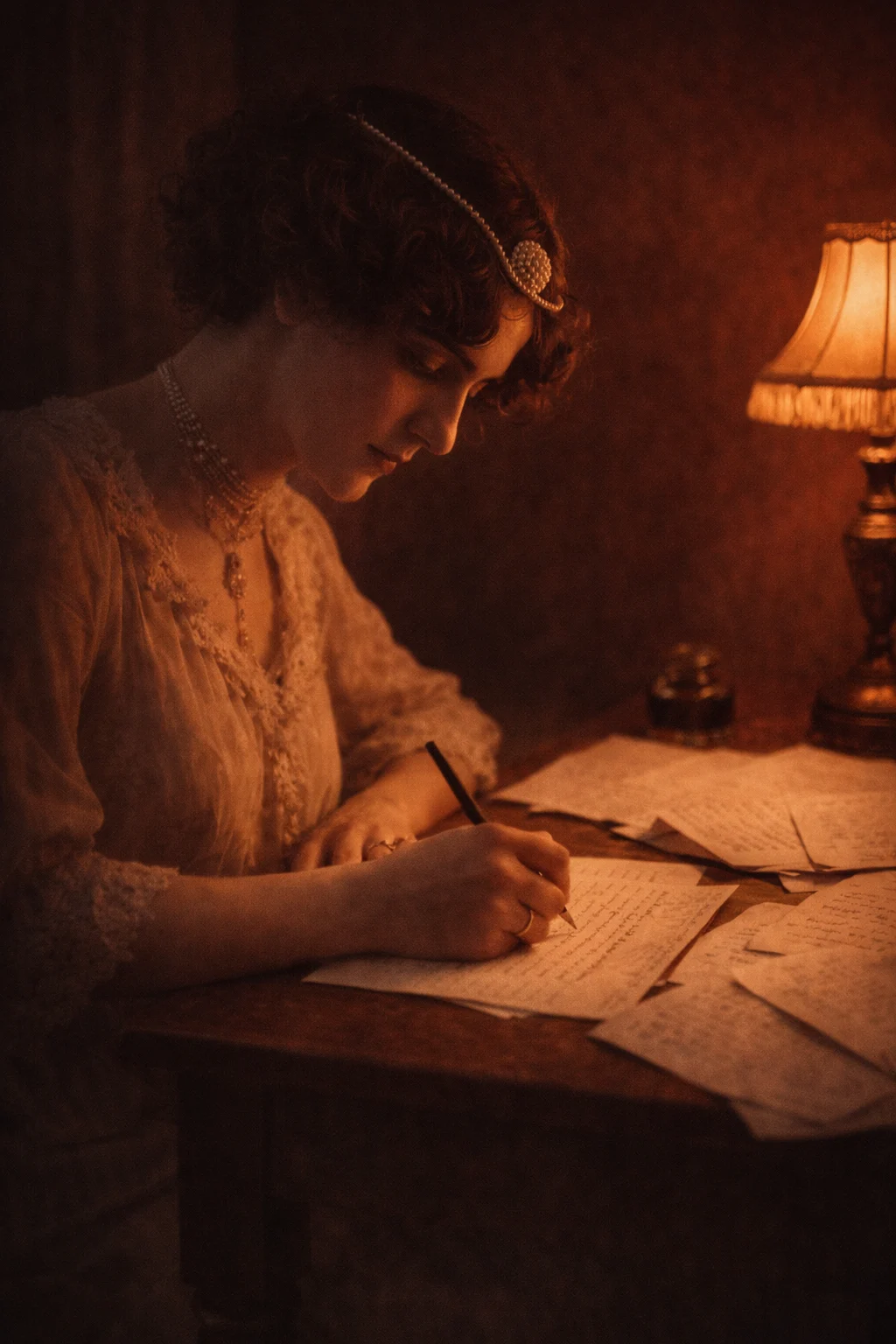
In 1913, she published Los cálices vacíos, the final book to appear during her lifetime (Agustini, 1913). It included new poems, the complete republication of Cantos de la mañana, and a revised selection from her first book.
This organization demonstrates something important: Agustini reread, selected, and corrected her work. She was not the purely instinctive writer imagined by certain critics. She was deliberately constructing a literary trajectory.
The title suggests vessels intended to receive something that can never completely fill them. In her poems, desire seeks a fulfillment that appears unattainable. The body promises knowledge but also reveals an absence.
Eros occupies a central position. He is not, however, merely the benevolent god of love. He can be luminous and dark, creative and destructive. The poet does not completely idealize desire; she recognizes its ability to lead toward both ecstasy and the abyss.
A Marriage That Lasted Less Than Two Months
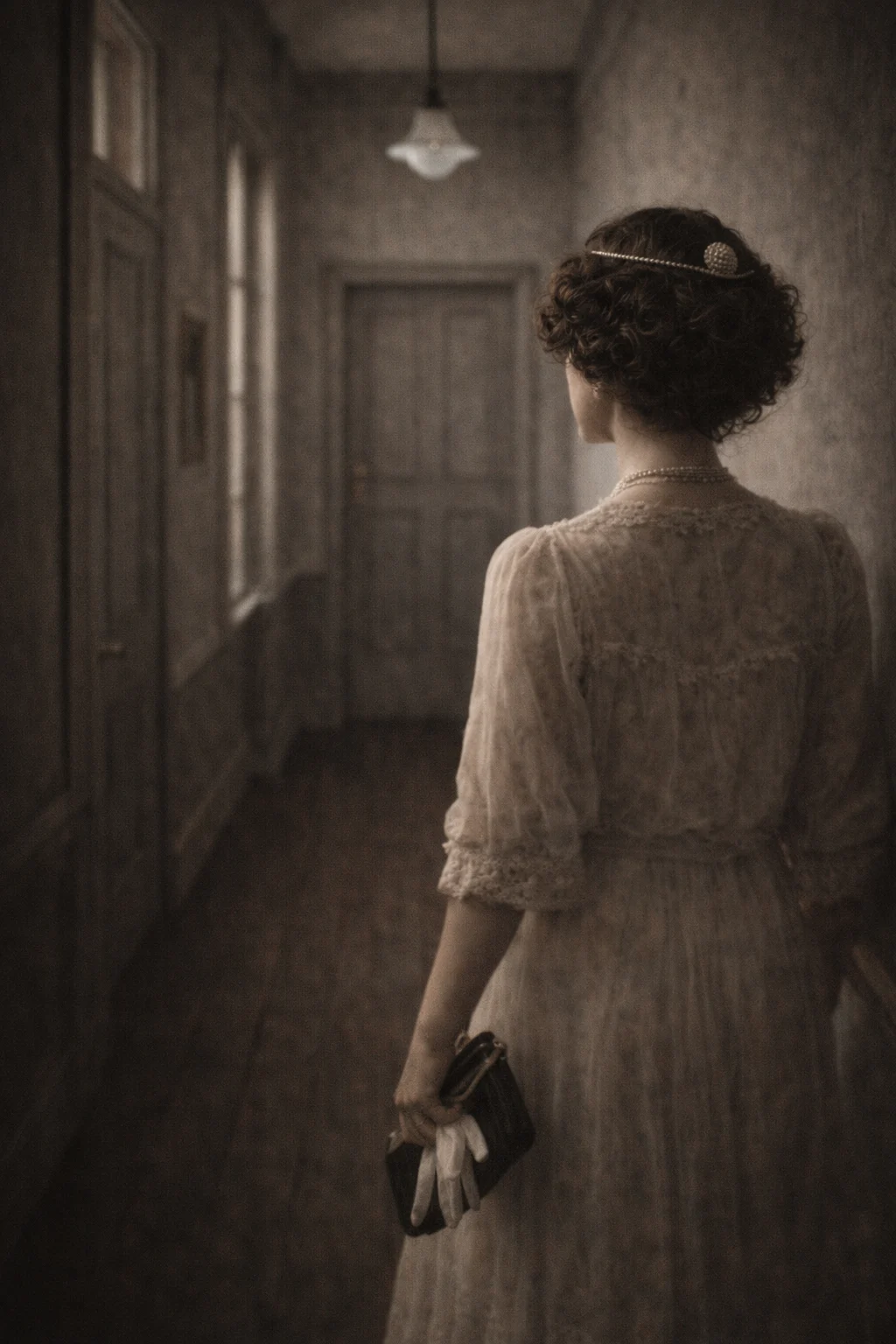
On August 14, 1913, Delmira married Enrique Job Reyes, a merchant whom she had courted for several years (Agustini, 2005; Silva, 1968).
Fifty-three days later, she left the marital home and returned to her parents’ house.
The exact reasons for the separation have been interpreted in different ways. The surviving letters and testimonies reveal a complex relationship but do not permit it to be reduced to a single cause. What is documented is that Delmira began the process of ending the marriage.
The divorce was granted on June 5, 1914 (Agustini, 2005; Varas, 2002). Uruguay was then among the Latin American countries that had advanced furthest in legislation governing marital dissolution, although a divorced woman still faced severe social judgment.
Following the separation, Delmira continued meeting Reyes. The reasons for those visits cannot be known completely either. Presenting them as proof of a fatal passion means interpreting her decisions from the perspective of the outcome and assigning her part of the responsibility for the violence committed against her.
A Murder Transformed into Romantic Legend

On July 6, 1914, only a month after the divorce, Delmira went to a room that Enrique Job Reyes had rented on Andes Street in Montevideo (Agustini, 2005; Silva, 1968).
Reyes shot her twice and then killed himself (Agustini, 2005; Varas, 2002).
Delmira was twenty-seven.
The press quickly transformed the murder into a romantic drama. Reports described lovers incapable of separating, a destructive passion, and a destiny supposedly foretold in her poems. Some narratives presented them as equal victims of an uncontrollable force of love.
That interpretation conceals an essential fact: Delmira was murdered by her former husband after obtaining a divorce.
Her poems did not predict her death. Her erotic writing did not cause the crime. Her visits to Reyes did not transform the murder into a pact or a shared tragedy.
The poetry belonged to her. The decision to fire the weapon belonged to him.
When Death Threatens to Devour the Work
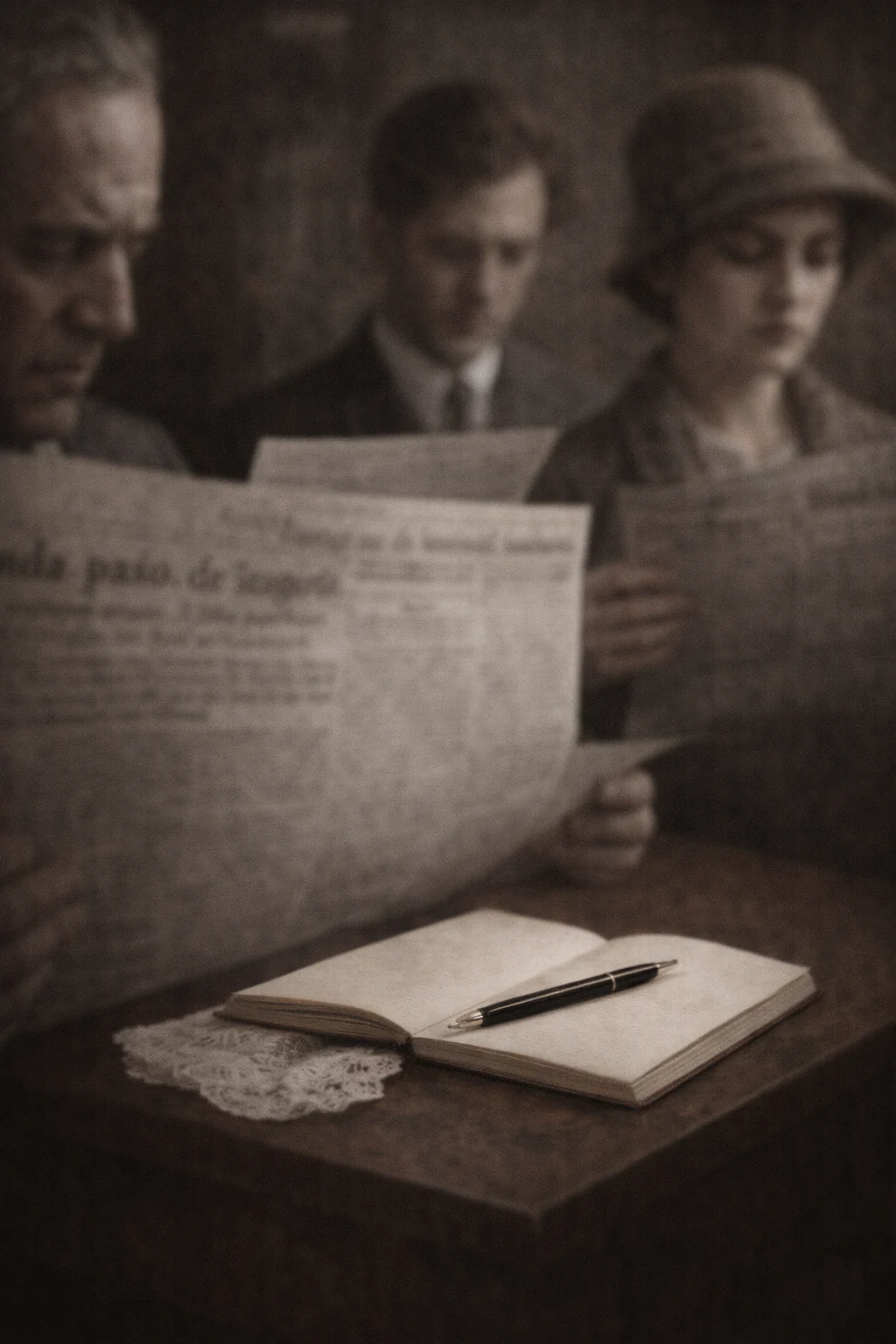
The murder turned Agustini into a legend, but legends can become another form of silencing. Her beauty, marriage, and death began occupying more space than her poems.
Critics constructed two masks: the innocent young woman who wrote without understanding and the priestess ruled by erotic forces. Both denied her intellectual labor. One turned her into a child; the other into an irrational creature.
Her notebooks and manuscripts reveal something different. They contain corrections, variants, drawings, selections, and reorganizations. They show a writer thinking about her work and revising the way she wished to present it.
After her death, additional texts appeared in volumes including El rosario de Eros and Los astros del abismo. Their posthumous publication expanded her legacy, although editorial decisions did not always correspond with the plans she had left behind.
The Woman Who Changed Who Could Speak of Desire
Delmira Agustini belongs to Uruguay’s Generation of 1900 and occupies a fundamental place in Spanish American Modernismo. Her work opened possibilities that later Latin American women poets would continue exploring.
She was not the first woman to write love poetry. Her rupture consisted of transforming the woman into an active subject of desire within a tradition that preferred to observe her from the outside.
She died before reaching twenty-eight and left only three books published during her lifetime. They were enough to alter the language available to women writing about the body, passion, and autonomy.
In 2014, a century after her murder, Montevideo installed a memorial at the site of the crime dedicated to Delmira and to victims of gender violence. The space changes the meaning of that address: it no longer commemorates a supposed legend of love, but a life interrupted by violence.
For decades, many readers asked how an apparently innocent young woman could have written those poems.
The correct question was different: why did a woman have to appear guilty before she could express her desire?
Sources and further reading
Sources and further reading
Agustini, D. (1913). Los cálices vacíos. O. M. Bertani.
Agustini, D. (2005). Cartas de amor y otra correspondencia íntima (A. I. Larre Borges, Ed.; I. Vilariño, Foreword). Cal y Canto.
Agustini, D. (2017). Poesías completas (A. Cáceres, Ed.). Ediciones de la Plaza.
Blixen, C., García Gutiérrez, R., Larre Borges, A. I., & others. (2014). Delmira Agustini en sus papeles. Biblioteca Nacional de Uruguay. https://bibliotecadigital.bibna.gub.uy/
Cáceres, A. (Ed. & Trans.). (2003). Selected poetry of Delmira Agustini: Poetics of Eros. Southern Illinois University Press.
Silva, C. (1968). Genio y figura de Delmira Agustini. Editorial Universitaria de Buenos Aires.
Varas, P. (2002). Las máscaras de Delmira Agustini. Vintén Editor.
More from this collection
Sara Montiel: The Woman Who Returned from Hollywood to Transform Desire in Spanish Cinema
Read story →
María Félix: The Woman Who Chose to Conquer Europe Rather Than Obey Hollywood
Read story →