In this storyOpen index
George Washington: The Man Who Surrendered Power but Could Not Escape His Contradictions
The founder who taught a republic to limit power while retaining inside his own household an authority others never consented to.
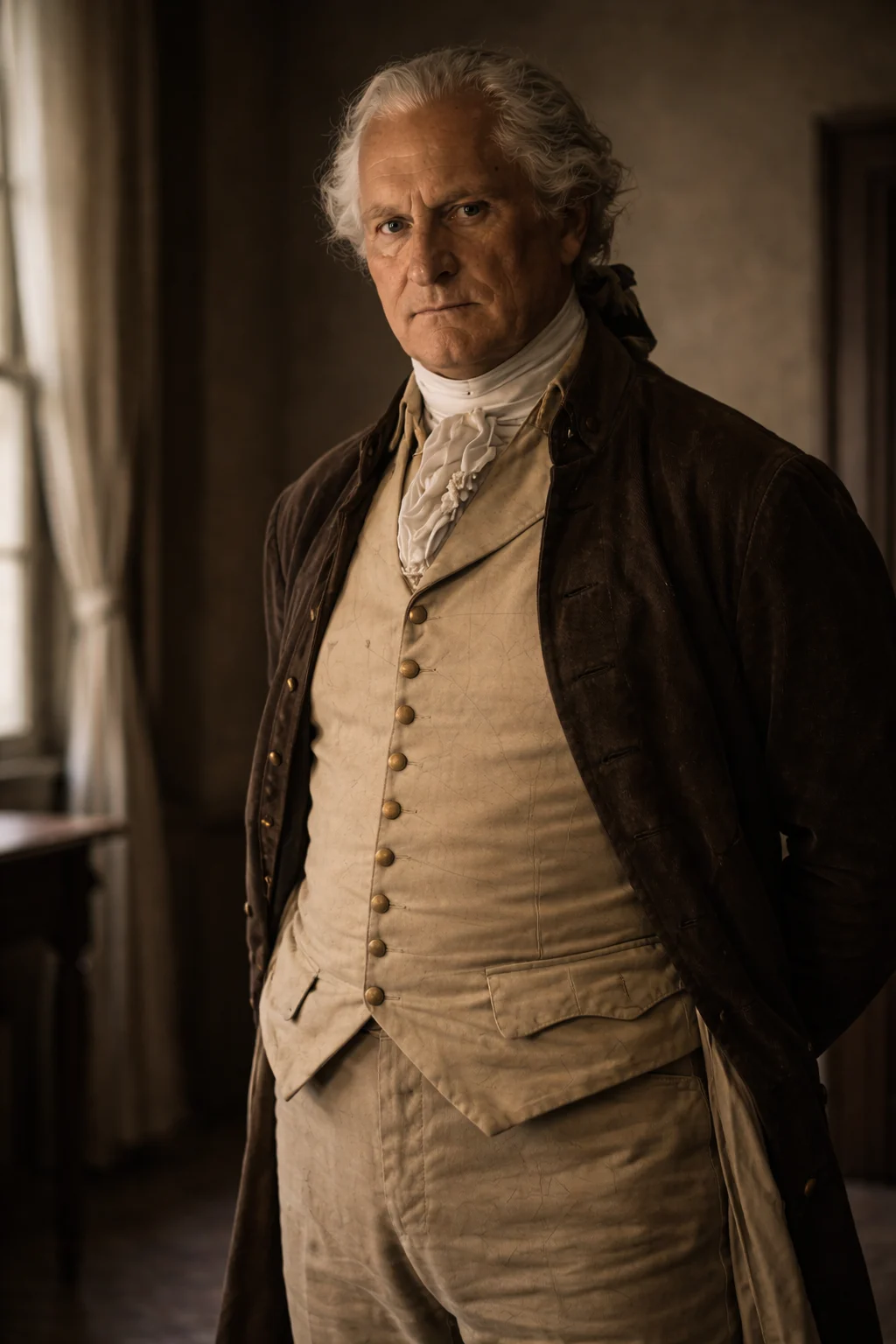
Featured historical fact: During his presidency, George Washington periodically moved some of the enslaved people working in his household outside Pennsylvania. This prevented them from remaining in the state for six continuous months and potentially claiming the freedom contemplated by its law. Washington requested that the practice be carried out discreetly so that it would not appear to be a deliberate attempt to evade the legislation (Dunbar, 2017; Wiencek, 2003).
He voluntarily surrendered command of a victorious army and, years later, left the presidency when he might have been able to retain it.
That decision turned him into a symbol of limited power.
The man who helped establish a republic founded upon liberty simultaneously governed a plantation sustained by enslaved people. Some escaped. Others were pursued. Most never possessed the opportunity to decide what independence meant.
George Washington understood that a nation could not live under a king.
He never fully accepted that no human being should live under the ownership of another.
George Washington: The Man Who Surrendered Power but Could Not Escape His Contradictions
Discover this story on our YouTube channel.
A life told through places and turning points
Enter the archive
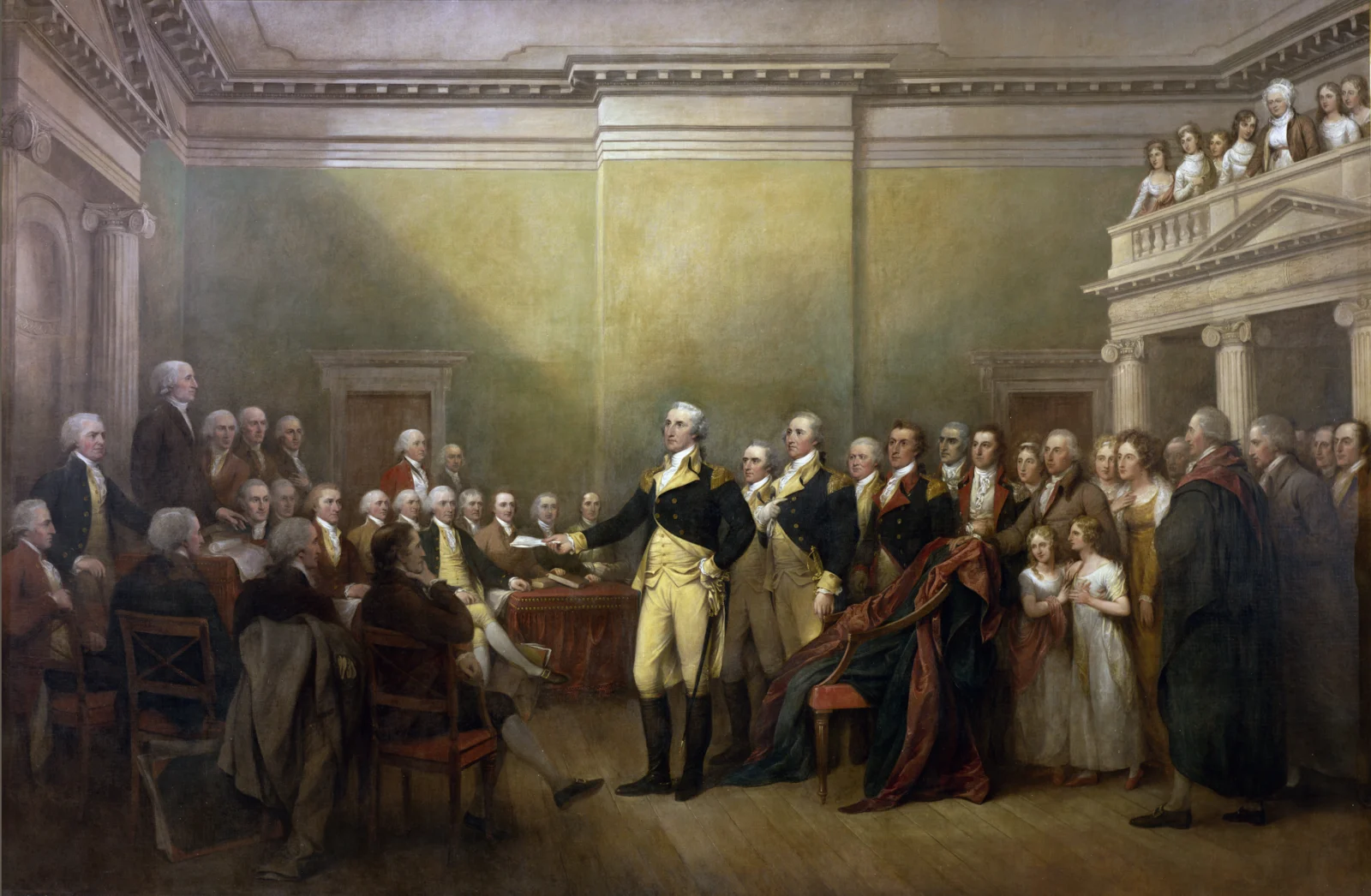
An authentic work preserved by a public institution brings us closer to the moment when Washington returned the military power entrusted to him.
- Collection
- Architect of the Capitol · United States Capitol Rotunda
- Rights
- Public domain
Commissioned by the United States Congress. Institutional source: Architect of the Capitol.
A Young Man Who Learned to Measure Land
George Washington was born on February 22, 1732, in Westmoreland County, Virginia, into a family of planters. His father, Augustine Washington, died when George was eleven, leaving property and enslaved people divided among his heirs.
Washington did not receive the extensive classical education enjoyed by several other revolutionary leaders, but he studied practical mathematics, surveying, and land management. During his adolescence, he worked as a surveyor in the Shenandoah Valley, an occupation that introduced him to the frontier and allowed him to begin acquiring property (Chernow, 2010).
Measuring land was not a neutral activity. The territories claimed by Virginia were connected with British interests, colonial speculation, and the displacement of Indigenous communities. From an early age, Washington learned that land meant wealth, influence, and power.
He also learned to construct his reputation carefully.
The familiar story of a boy cutting down a cherry tree and confessing because he could not tell a lie did not come from his childhood. It was created after his death by biographer Mason Locke Weems to provide the new nation with a morally perfect hero (Cunliffe, 1958).
The historical Washington was more interesting—and more contradictory—than that legend.
The Confrontation That Helped Ignite a Global War
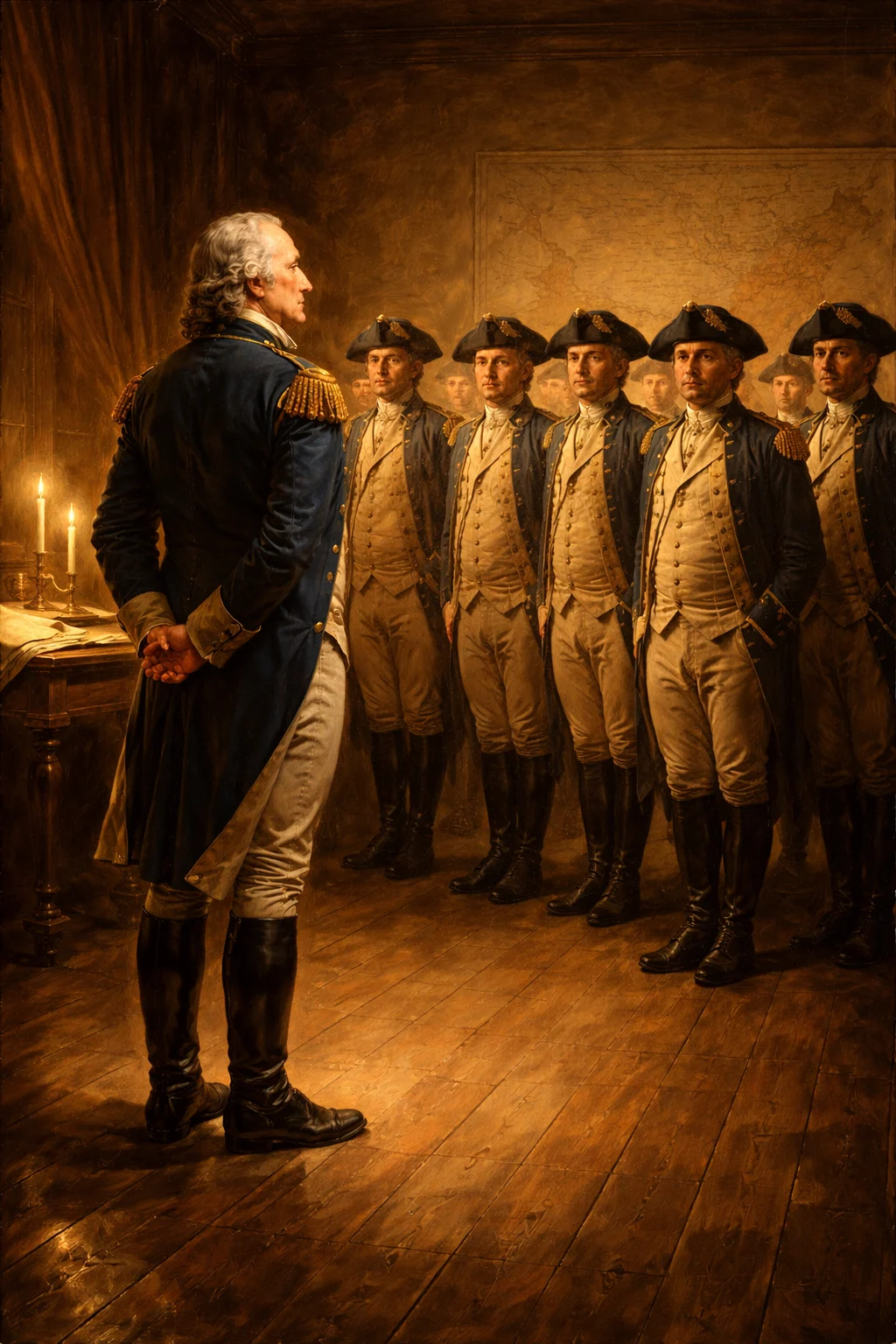
In 1753, Virginia’s governor sent the young Washington into the Ohio Country to demand that French forces withdraw from a region claimed by Britain.
He returned the following year as an officer. In May 1754, his men and Indigenous allies attacked a small French detachment at Jumonville Glen. French commander Joseph Coulon de Jumonville died under circumstances that remain disputed.
Washington later withdrew to an improvised fortification called Fort Necessity. He was defeated there and signed a French-language capitulation containing a reference to Jumonville’s “assassination.” Washington later maintained that he had not properly understood the word (Lengel, 2005).
The episode intensified the conflict between France and Britain in North America. That struggle ultimately became part of the Seven Years’ War, fought across Europe, the Americas, Africa, and Asia.
Before leading a revolution, Washington had participated in one of the incidents that helped trigger the first truly global war.
Defeats Before the Legend
Washington was not an invincible commander. During the war against France, he committed errors, suffered defeats, and experienced the chaos of battle.
In 1755, he accompanied British general Edward Braddock’s expedition against Fort Duquesne. The column was ambushed and suffered a devastating defeat. Washington helped organize the retreat while several horses were struck beneath him and bullets pierced his clothing. The episode strengthened his reputation for courage, although it was later embellished with nearly providential interpretations (Chernow, 2010).
After temporarily leaving military life, he married Martha Dandridge Custis, an extraordinarily wealthy widow, in 1759. The marriage increased his economic and social position. Washington came to manage Mount Vernon and a large community of enslaved workers belonging to different legal categories.
He also accumulated debts to British merchants and became frustrated with imperial restrictions. His personal economic interests do not fully explain his support for the Revolution, but they formed part of the material world in which his political beliefs developed (Ellis, 2004).
General of an Uncertain Revolution
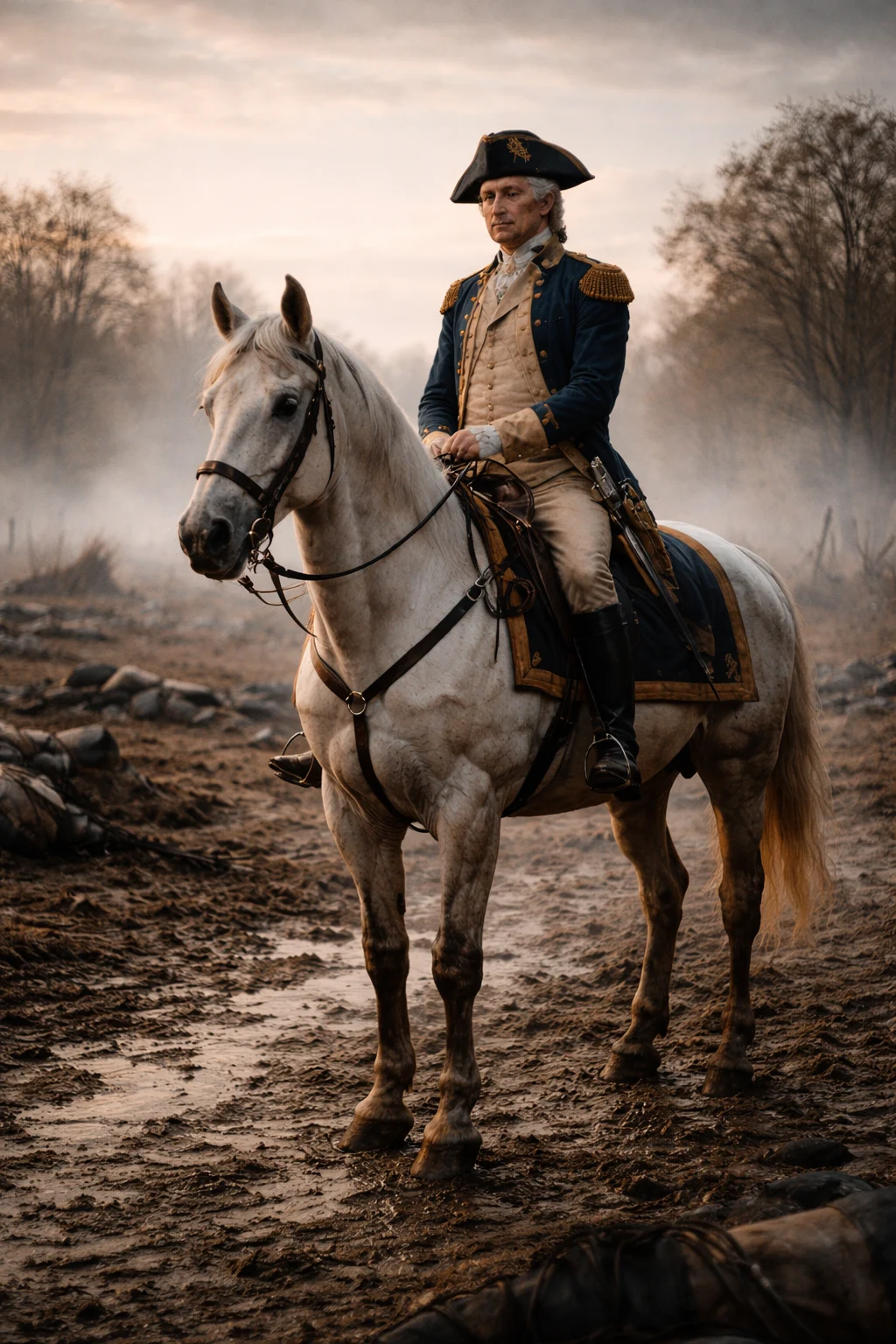
In June 1775, the Second Continental Congress appointed Washington commander in chief of the Continental Army. His Virginia background helped present the rebellion as the cause of several colonies rather than New England alone.
The army he received was poorly supplied, divided by regional loyalties, and composed largely of men serving limited enlistments. Washington had to construct a military institution while fighting one of the world’s most powerful empires (Lengel, 2005).
He suffered serious defeats in New York during 1776 but preserved the core of the army. The attacks at Trenton and Princeton restored part of the revolutionary morale. During the winter at Valley Forge, his troops endured hunger, disease, and inadequate clothing, although the traditional image of an army completely abandoned by an indifferent Congress simplifies a far more complicated logistical crisis.
Washington did not win the war through an uninterrupted sequence of victories. His principal achievement was preventing the army from disappearing.
He understood that as long as an organized Continental force survived, the Revolution could continue.
Spies, Information, and Deception
Washington paid extraordinary attention to espionage. He employed agents, informants, coded messages, and deception operations to learn British movements while concealing his own.
The Culper Ring, organized during the British occupation of New York, supplied information from one of the most difficult areas for the revolutionaries to penetrate. Some members used aliases, invisible ink, and numerical codes to protect their identities (Rose, 2006).
Before the Yorktown campaign, Washington helped preserve the impression that the Franco-American army would attack New York. While the British watched that possibility, the allied forces marched toward Virginia.
In 1781, Lord Cornwallis’s army became trapped at Yorktown between the land forces and the French fleet. His surrender did not immediately end the war, but it destroyed Britain’s political willingness to continue it under the same conditions.
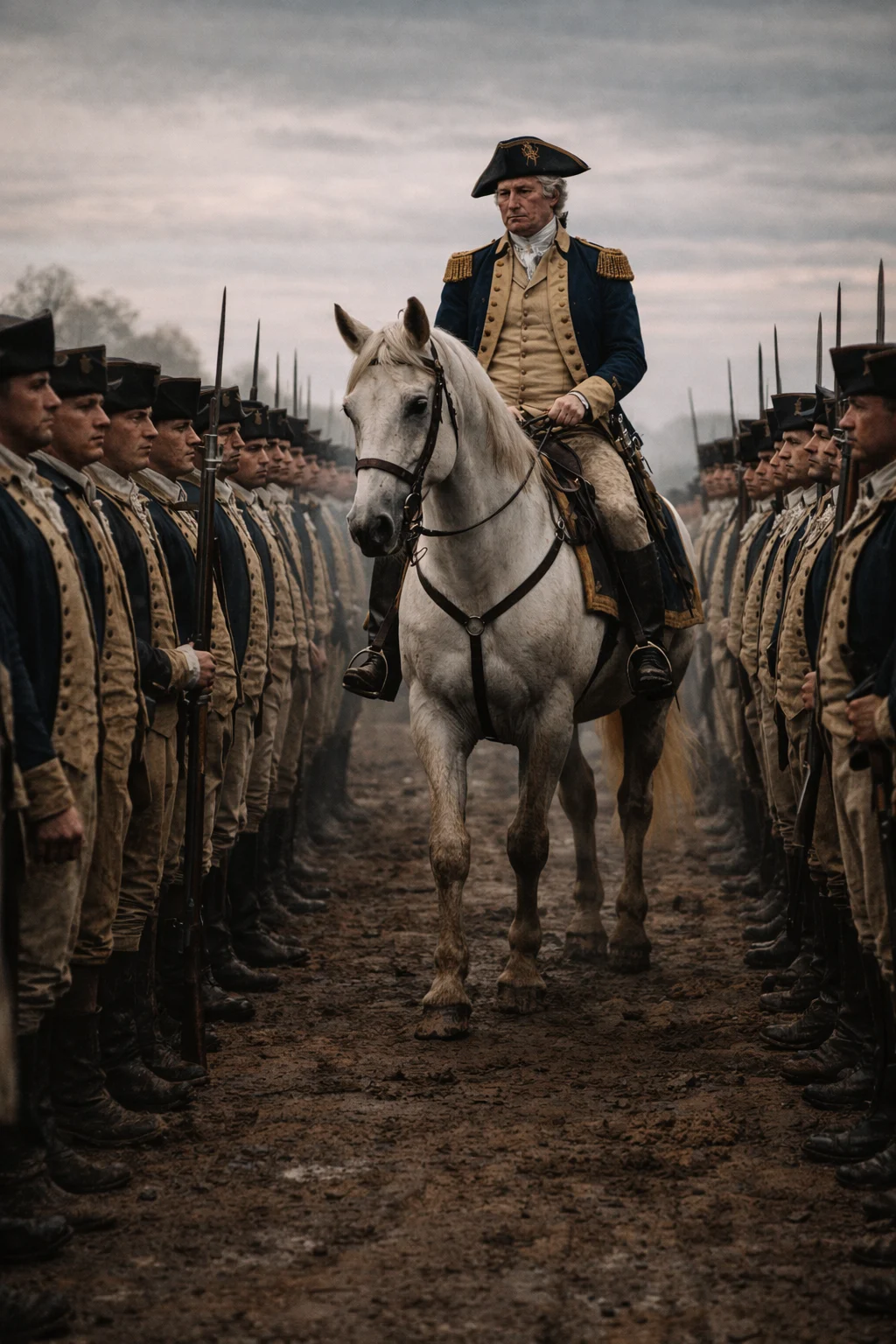
The man later depicted standing solemnly won part of his war through false information, intercepted letters, and movements the enemy was not supposed to understand.
The Spectacles That Stopped a Possible Rebellion
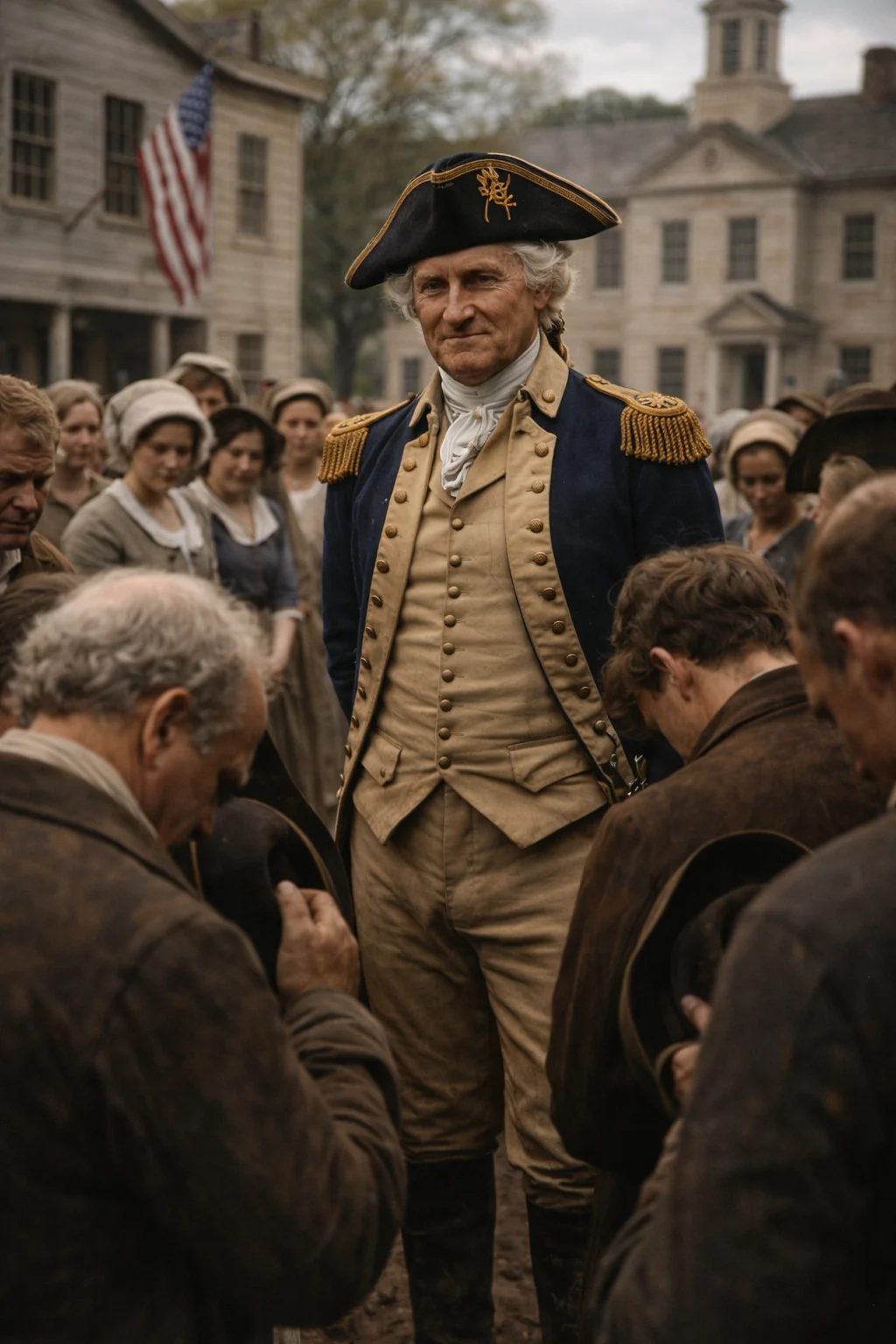
As the war ended, many officers were furious because Congress had failed to pay promised wages and pensions. In March 1783, a gathering at Newburgh threatened to become direct military pressure against the civilian government.
Washington appeared unexpectedly before the officers. He defended congressional authority and asked for patience. Near the end, he produced a pair of spectacles—a gesture many of his subordinates had never seen him make—and explained that he had grown old and partially blind in the country’s service.
The emotion of the moment helped defuse the crisis (Ellis, 2004).
The scene mattered because Washington did not offer to lead the military discontent. He used his prestige to prevent the victorious army from dominating the government it was supposed to protect.
A few months later, he performed an even more extraordinary act.
The General Who Returned His Sword
On December 23, 1783, Washington appeared before Congress in Annapolis and formally resigned his commission as commander in chief.
At a time when victorious generals might become dictators, kings, or lifelong rulers, Washington returned to Mount Vernon. The resignation impressed even European observers because it demonstrated that military authority could voluntarily submit to civilian power (Ellis, 2004).
He did not retire because he lacked ambition. He had spent years protecting his reputation and understood the historic value of the gesture. That was precisely why it proved so effective.
Washington knew that surrendering power could produce greater moral authority than retaining it.
His retirement did not last. The weaknesses of the Articles of Confederation, financial difficulties, and disputes among the states created momentum for a stronger federal government.
In 1787, he presided over the Constitutional Convention in Philadelphia.
A President Without a Manual
In 1789, Washington was unanimously elected the first president of the United States. No predecessor could demonstrate how the office should operate because it had just been created.
Every decision might become a precedent.
He formed a cabinet, established methods of communicating with Congress, and attempted to balance presidential dignity with the republican rejection of monarchical ceremony. During his administration, the executive departments were organized, Alexander Hamilton’s financial program was developed, and the authority of the new federal government was consolidated (Chernow, 2010).
Washington attempted to keep the United States out of the wars produced by the French Revolution. His Neutrality Proclamation of 1793 provoked criticism from those who believed the republic should support France.
The Jay Treaty with Britain generated even stronger opposition. Washington, accustomed to being treated as a symbol of unity, discovered that the presidency also meant becoming the target of newspapers, pamphlets, and political accusations.
The power he had accepted to unite the country helped create divisions he could no longer control.
The Whiskey Rebellion
In 1791, the federal government imposed an excise tax on distilled spirits. For many western farmers, whiskey was more than a drink: it allowed grain to be transformed into a product that was easier to transport and sell.
Resistance to the tax became violent in Pennsylvania. In 1794, Washington mobilized a militia force of approximately thirteen thousand men to demonstrate that the federal government could enforce its laws. The president personally accompanied the troops during part of their journey, becoming the only serving American president to participate in that manner in such an armed mobilization (Chernow, 2010).
The rebellion dissolved without a major battle.
For Washington, the operation confirmed that the new Constitution would not produce a government as weak as the Confederation.
To his critics, it showed that the hero of a revolution against authority could now deploy overwhelming force against citizens resisting a tax.
Power always appeared different after one possessed it.
Liberty Inside a Slaveholding Household
Washington’s deepest contradiction was not located in a battle or a treaty. It was present every day at Mount Vernon.
At the time of his death, more than three hundred enslaved people lived on the estate. Washington did not legally own all of them; many belonged to the Custis estate controlled through Martha. That legal distinction restricted his decisions, but it did not change the reality of those compelled to labor there (Morgan, 2000).
Washington privately expressed increasing discomfort with slavery and discussed the possibility of gradual emancipation. During his lifetime, however, he never undertook a public effort to end the institution. He continued depending upon enslaved labor and signed the Fugitive Slave Act of 1793, strengthening the mechanisms for recovering people who escaped (Wiencek, 2003).
During his presidency, he lived in Philadelphia, where state law might facilitate freedom for certain enslaved people after six months of continuous residence. Washington and his administrators arranged rotations to interrupt that period without openly revealing their purpose (Dunbar, 2017).
The republic proclaimed liberty while its president sought a method to prevent the law from freeing those who served inside his residence.
Ona Judge Decides Not to Return
Ona Judge was a young enslaved woman who worked as Martha Washington’s personal attendant. In May 1796, while the presidential family was preparing to give her as a gift to one of Martha’s granddaughters, Judge escaped from the Philadelphia residence.
She reached Portsmouth, New Hampshire, and began a new life.
Washington used personal contacts to locate her and attempted to secure her return without provoking a public legal process that might damage his reputation. Ona Judge refused to return unless her freedom was guaranteed, a condition Washington rejected. Another attempt to capture her occurred in 1799, but she was warned and escaped again (Dunbar, 2017).
Judge lived as a free woman until 1848, although she experienced poverty and outlived all three of her children.
Her story changes the traditional image of Washington. To him, the escape represented lost property and a challenge to his authority. To her, freedom was not a political declaration written by great men.
It was the concrete decision not to return.
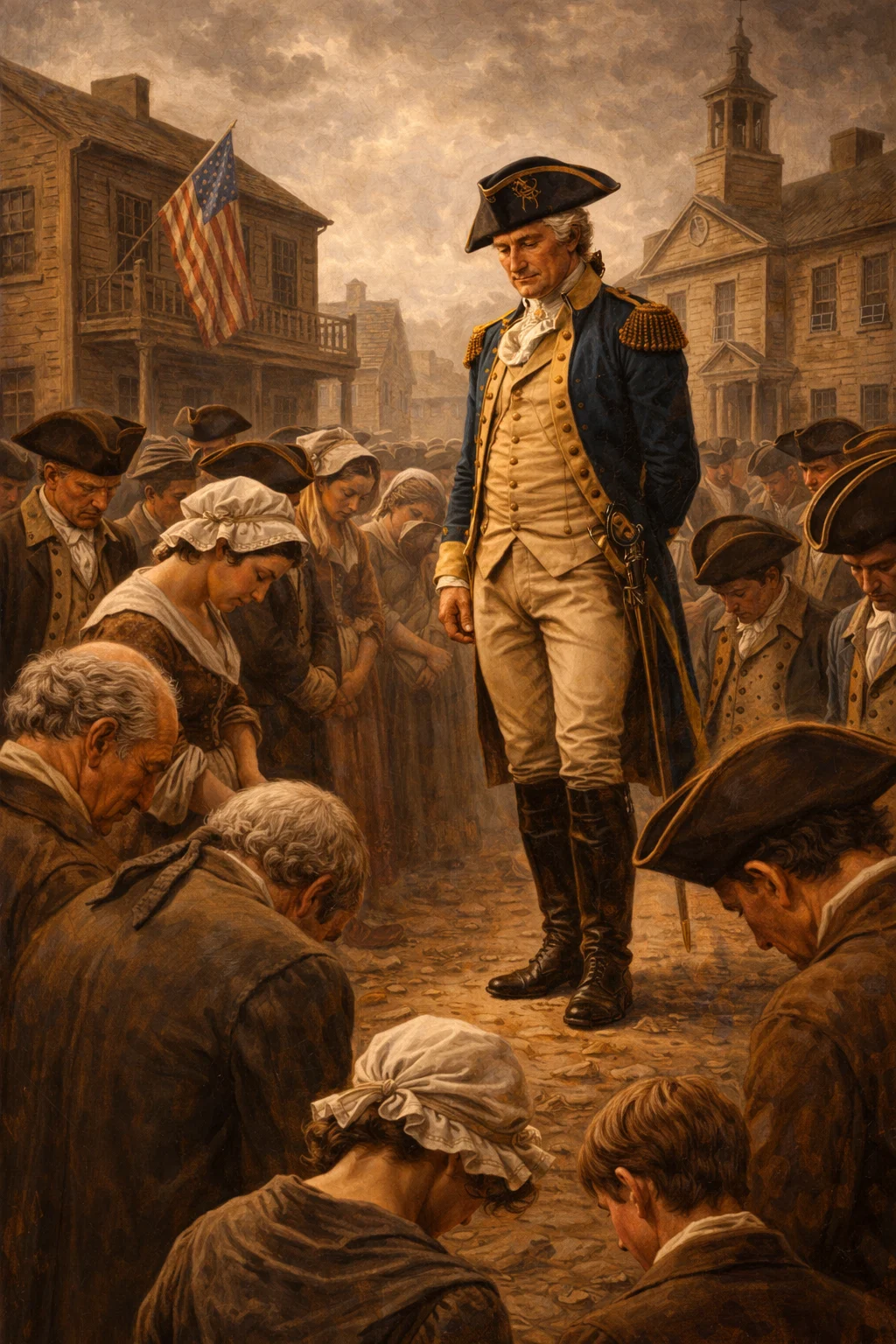
An Emancipation Postponed
In his will, Washington directed that the enslaved people he personally owned should be freed after Martha’s death. William Lee, who had accompanied him during the war, was to receive immediate freedom and financial support (Morgan, 2000).
Washington was the only one of the principal slaveholding founders who became president to order a general testamentary emancipation of the people he legally owned.
The decision had important limitations. He could not unilaterally free the dower enslaved people belonging to the Custis estate. He also postponed freedom for his own enslaved workers until after his wife’s death, prolonging the separation of families whose members belonged to different legal categories.
Martha Washington freed them on January 1, 1801, before her own death.
The provision in Washington’s will demonstrates that he understood the system’s moral injustice. It also demonstrates that he waited until he would not have to live with the economic and political consequences of dismantling it.
A Death Treated with Blood
On December 12, 1799, Washington rode around Mount Vernon in rain, snow, and freezing conditions. The following day, he developed severe throat pain and difficulty breathing.
His physicians applied the standard treatments of the period, including repeated bloodletting. Within hours, they removed a considerable quantity of blood, probably weakening him further. The precise diagnosis remains debated, although modern interpretations have suggested a severe throat infection or acute epiglottitis (Chernow, 2010).
Washington died on the night of December 14, 1799. He was sixty-seven years old.
The news produced mourning ceremonies across the country. Henry Lee famously described him as first in war, first in peace, and first in the hearts of his countrymen.
The nation required a founder without fractures.
History inherited a much more difficult man.
The Power to Surrender and the Power to Retain
George Washington established essential precedents. He subordinated the military to civilian government, accepted elections, endured criticism, and left the presidency after two terms when the Constitution did not yet require him to do so.
His example helped demonstrate that republican authority could be transferred without a death, coup, or hereditary succession.
His political greatness, however, coexisted with nearly absolute private authority over enslaved human beings. While publicly relinquishing command, he retained within his estate a form of power that others had never consented to.
That is the ghost accompanying his monument.
Washington understood earlier than many rulers that a republic needed leaders capable of leaving.
He did not understand with equal clarity that the liberty he claimed for a nation also belonged to those who escaped from his house.
Sources and further reading
References
Chernow, R. (2010). Washington: A life. Penguin Press.
Cunliffe, M. (1958). George Washington: Man and monument. Little, Brown and Company.
Dunbar, E. A. (2017). Never caught: The Washingtons’ relentless pursuit of their runaway slave, Ona Judge. Atria Books.
Ellis, J. J. (2004). His Excellency: George Washington. Alfred A. Knopf.
Lengel, E. G. (2005). General George Washington: A military life. Random House.
Morgan, K. (2000). George Washington and the problem of slavery. Journal of American Studies, 34(2), 279–301.
Rose, A. (2006). Washington’s spies: The story of America’s first spy ring. Bantam Books.
Wiencek, H. (2003). An imperfect God: George Washington, his slaves, and the creation of America. Farrar, Straus and Giroux.