In this storyOpen index
Frédéric Chopin: The Exile Who Returned to Poland Only with His Heart
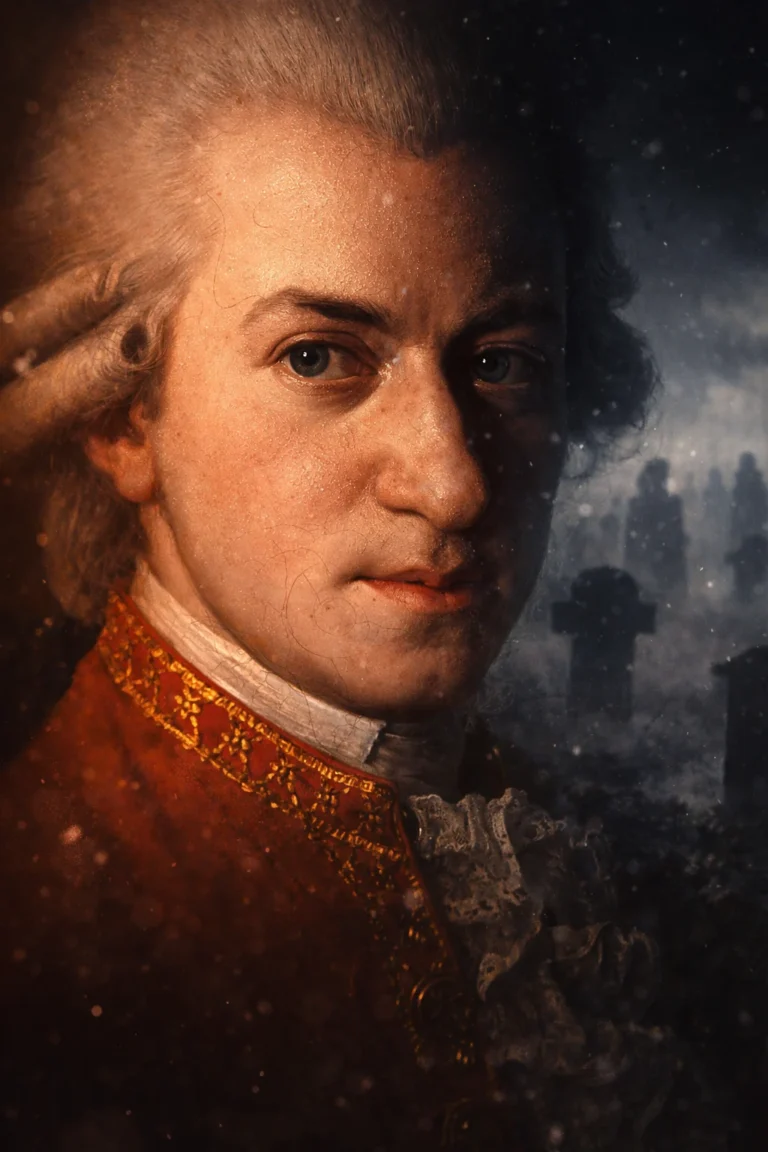
His body remained in France. His heart, however, found its way home to Poland.

Featured historical fact: Chopin died in Paris and was buried in France, but he asked for his heart to be taken to Poland. His sister Ludwika fulfilled his wish, carrying the organ preserved in alcohol to Warsaw, where it remains inside a pillar of the Holy Cross Church.
Frédéric Chopin left Poland as a young man filled with plans. He never imagined that he would not see it again.
He was twenty when he began a journey through Western Europe. A few weeks later, an uprising against Russian rule erupted, the borders became dangerous, and returning was no longer a simple decision. Chopin eventually built his career in Paris, surrounded by aristocrats, writers, and artists, but continued composing like a man carrying a lost country inside him.
His body would remain in France. His heart, however, would find its way home.
Chopin: the heart that returned to Poland
Discover this story on our YouTube channel.
A life told through places and turning points

Enter the archive
An authentic object preserved by a cultural institution brings us closer to the world behind this life.
- Collection
- Wikimedia Commons
- Rights
- Public domain
Ernst Burger: Frédéric Chopin. München 1990, S. 323
The child at the piano
Fryderyk Franciszek Chopin was born in Żelazowa Wola, near Warsaw, in 1810. His exact birth date presents a small historical mystery. His baptismal record gives February 22, while his family celebrated his birthday on March 1, the date traditionally accepted by the composer himself.
His father, Nicolas Chopin, was born in France but settled in Poland as a young man and deeply adopted the culture of his new country. His mother, Tekla Justyna Krzyżanowska, came from a family of minor Polish nobility and played the piano.
Soon after Fryderyk’s birth, the family moved to Warsaw. The child displayed extraordinary musical ability and received his first formal lessons from the pianist Wojciech Żywny. Before the age of eight, he had already performed in public and composed short pieces.
Warsaw society embraced him as a prodigy. He played in aristocratic homes and before prominent political figures, but his education was not limited to public display. He studied composition with Józef Elsner, director of the Warsaw Conservatory, who wrote a prophetic assessment of his student: “special aptitude, musical genius.”
Chopin absorbed the traditions of Bach and Mozart as well as the rhythms he heard in Polish songs and dances. Mazurkas, polonaises, and folk melodies would not be mere decorations in his work. They became a way of preserving an identity that he would soon have to experience from a distance.
A departure that became exile
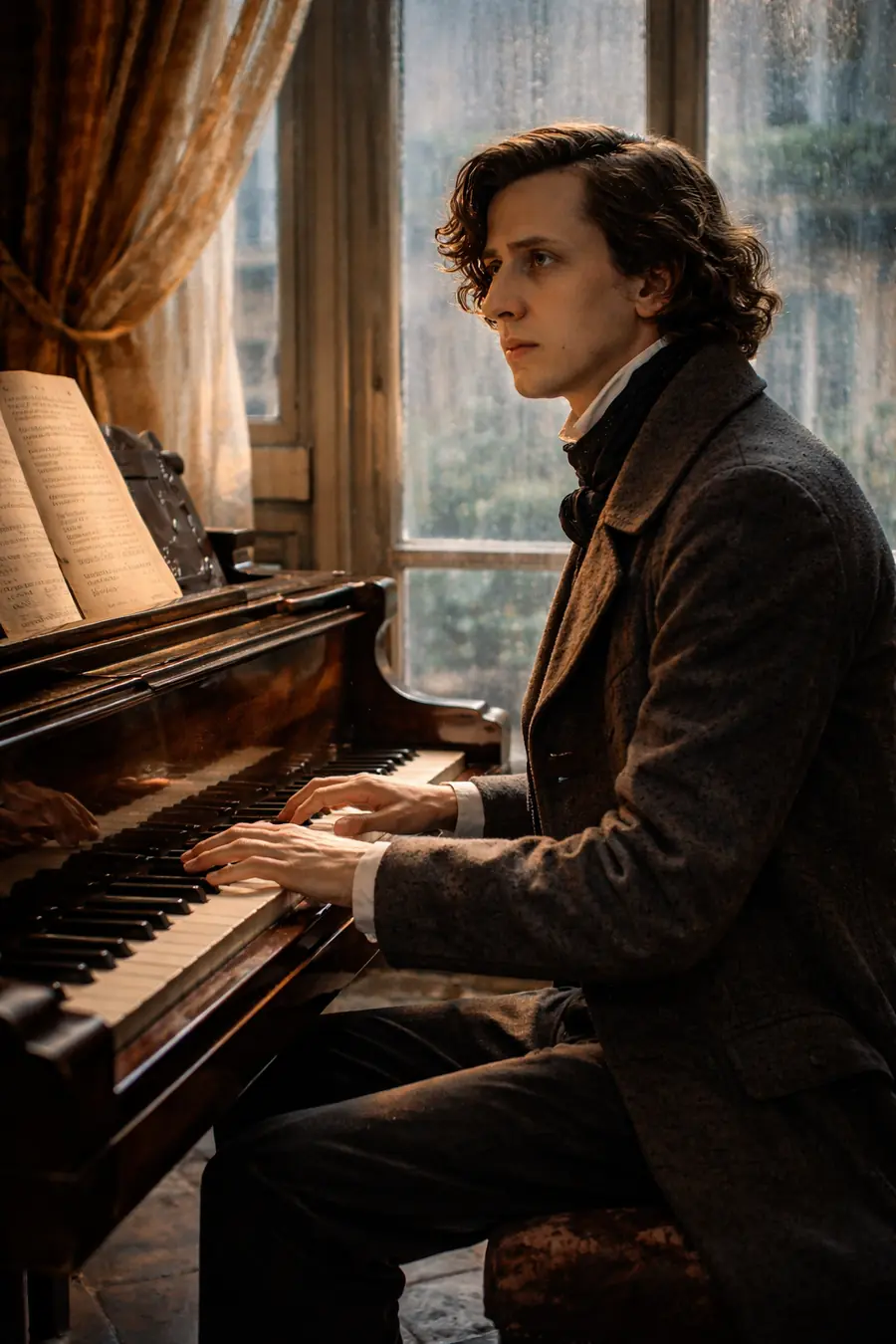
On November 2, 1830, Chopin left Warsaw to develop his career abroad. His friends held a farewell gathering and presented him with a silver cup containing Polish soil. The gesture seemed sentimental, but it would acquire a painful significance.
On November 29, the November Uprising against the Russian Empire began in Warsaw. Chopin was already outside the country. Although he considered returning, his family and friends persuaded him that he could better serve Poland by developing his talent in Europe.
The uprising was defeated in 1831. While passing through Stuttgart, Chopin learned about the fall of Warsaw and filled pages of his diary with anguish. He felt guilty for being far away while others fought and died.
His Étude in C minor, Op. 10, No. 12 later became known as the Revolutionary Étude and is commonly associated with this crisis. There is, however, no conclusive evidence that Chopin gave it that title or publicly described the piece as a direct depiction of the uprising.
He reached Paris later that year. The city offered him a new life, but also confirmed that his journey had become an exile.
The pianist who did not need to shout
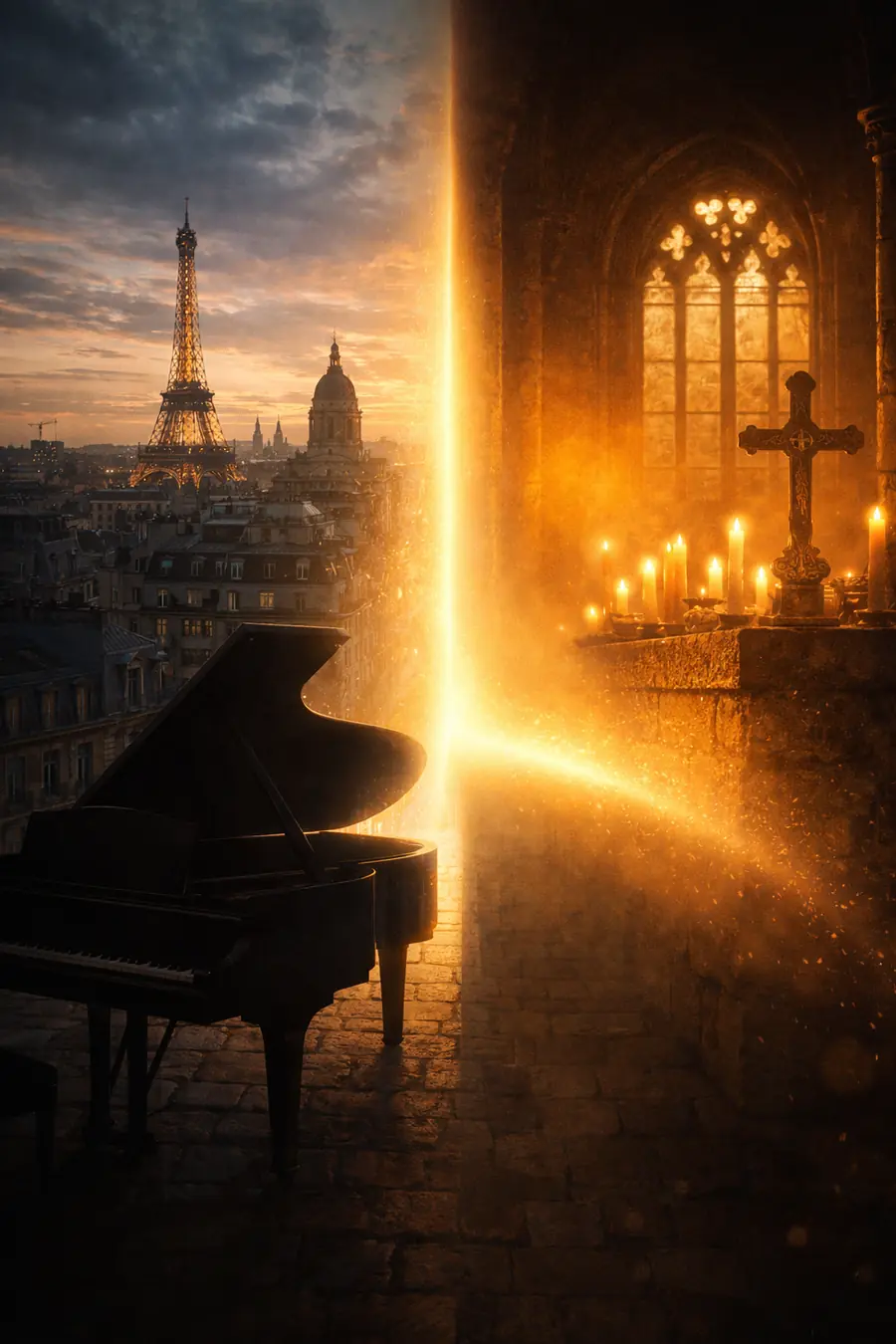
Chopin did not conquer Paris through grand spectacles. His sound was too delicate for some large halls, and his temperament found little pleasure in public exhibition. Unlike Franz Liszt, who could electrify enormous audiences, Chopin preferred intimate salons where every nuance could be heard.
He gave relatively few public concerts. Most of his income came from private lessons, particularly with students from wealthy families. He was a demanding teacher, but he did not impose a mechanical method. He sought flexibility, naturalness, and a way of making the piano “sing.”
His compositions transformed the instrument’s possibilities. In his nocturnes, ballades, études, preludes, and scherzos, technique ceased to be an athletic display and became an emotional language. Even his shortest pieces could contain an entire story.
Beneath that elegance, however, there was constant tension. Chopin was an émigré with no realistic opportunity to return home. He was also suffering from a respiratory illness that progressed slowly and that nineteenth-century medicine could not cure.
George Sand and the winter in Majorca
In Paris, he met Aurore Dupin, the novelist who published under the name George Sand. She was independent, famous, and unwilling to obey social conventions. Chopin was initially uncomfortable around her. They later began a relationship that lasted approximately nine years.
In 1838, they traveled to Majorca with Sand’s children. They hoped the Mediterranean climate would improve the health of both the composer and Sand’s son. The journey proved far less idyllic than expected.
The winter was cold and damp. Chopin’s coughing alarmed the islanders at a time when tuberculosis inspired profound fear. After experiencing difficulties finding accommodation, the family settled in the former Carthusian monastery at Valldemossa.
The Pleyel piano Chopin had ordered took weeks to arrive and was delayed by customs difficulties. In the meantime, he had to work with an inferior local instrument. Despite his isolation and deteriorating health, he completed or revised much of his 24 Preludes, Op. 28, there.
The image of the sick composer writing music beneath the Majorcan rain contributed to the Romantic legend. The reality was less poetic: Chopin was suffering, struggling to breathe, and increasingly dependent on Sand’s care.

A separation without a simple explanation
For several years, Chopin spent long periods at Nohant, George Sand’s country estate. There he found the stability needed to work and composed some of his most important music.
Their relationship gradually deteriorated through domestic conflicts, differences in temperament, and tensions involving Sand’s children. Chopin became caught in a family dispute and grew especially close to Solange, Sand’s daughter. In 1847, the relationship ended.
There is no single scene that can fully explain their separation. Nor can it be claimed that the breakup directly caused the composer’s death. It did, however, coincide with worsening health and a decline in his creative activity.
The following year, amid the revolutions of 1848, Chopin traveled to England and Scotland, largely at the invitation of Jane Stirling, a Scottish pupil devoted to him. The tour was intended to provide income and new opportunities, but it exhausted him.
Long journeys, social engagements, and performances were too demanding for his condition. His final public appearance took place in London on November 16, 1848, at a benefit for Polish refugees. He played to help other exiles after living almost eighteen years without being able to return home himself.
The fear of being buried alive
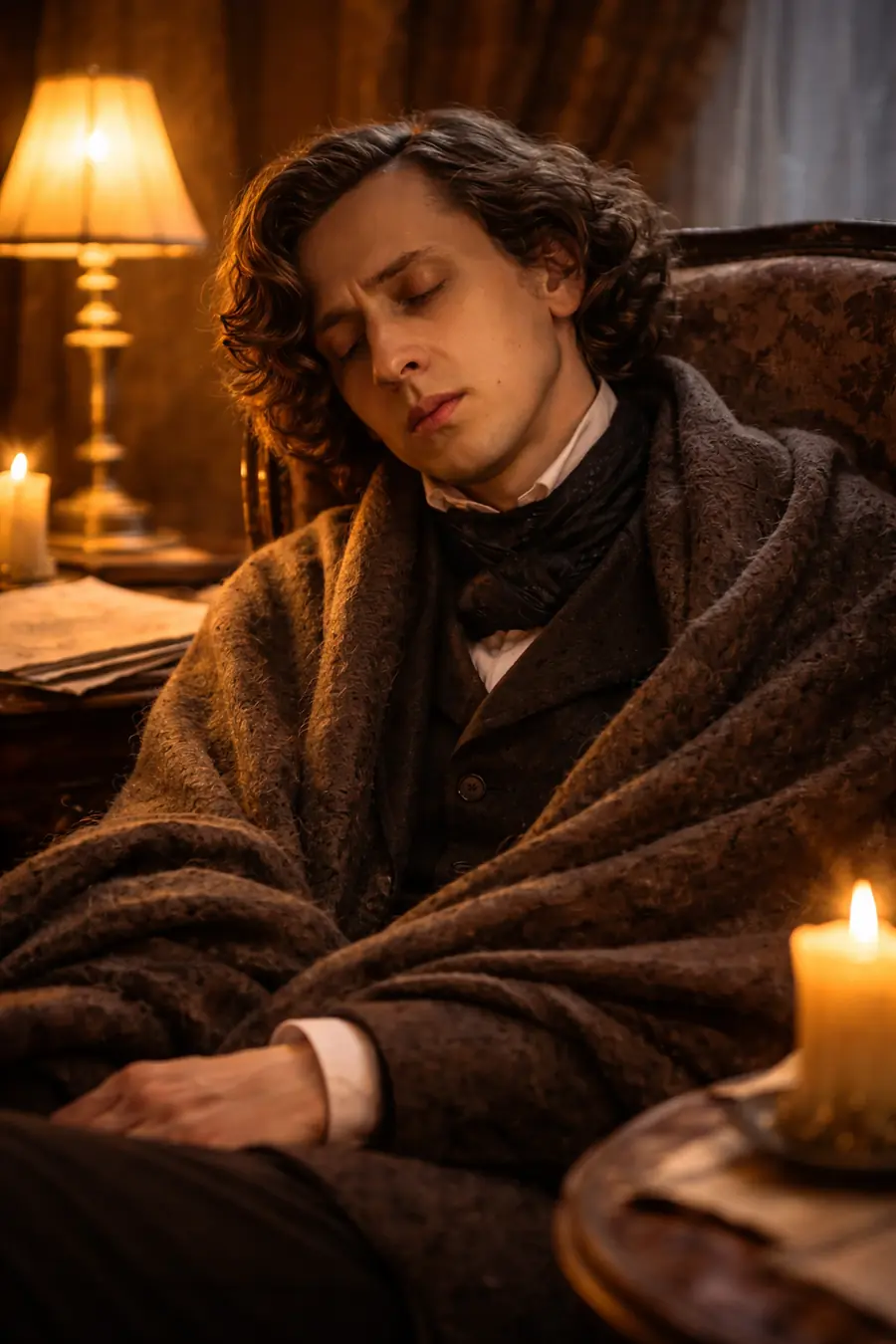
During his final months, Chopin was extremely weak. He suffered from coughing attacks, shortness of breath, and exhaustion so severe that he could barely climb stairs or play for extended periods.
The traditional diagnosis has been tuberculosis, the disease that had also killed his sister Emilia. Modern researchers have suggested that tuberculous pericarditis may have been the immediate complication, although absolute medical certainty is impossible.
Chopin had an intense fear of being buried alive, a relatively common concern in the nineteenth century because of medicine’s limitations in confirming death. According to surviving testimony, he asked for his body to be opened after he died.
He died in Paris on October 17, 1849. He was thirty-nine.
His funeral was held at the Church of the Madeleine on October 30. Mozart’s Requiem, a work Chopin admired and reportedly requested for the ceremony, was performed. He was buried in Père-Lachaise Cemetery, with Polish soil scattered over his grave.
One part of him, however, did not remain there.
The heart that crossed the border
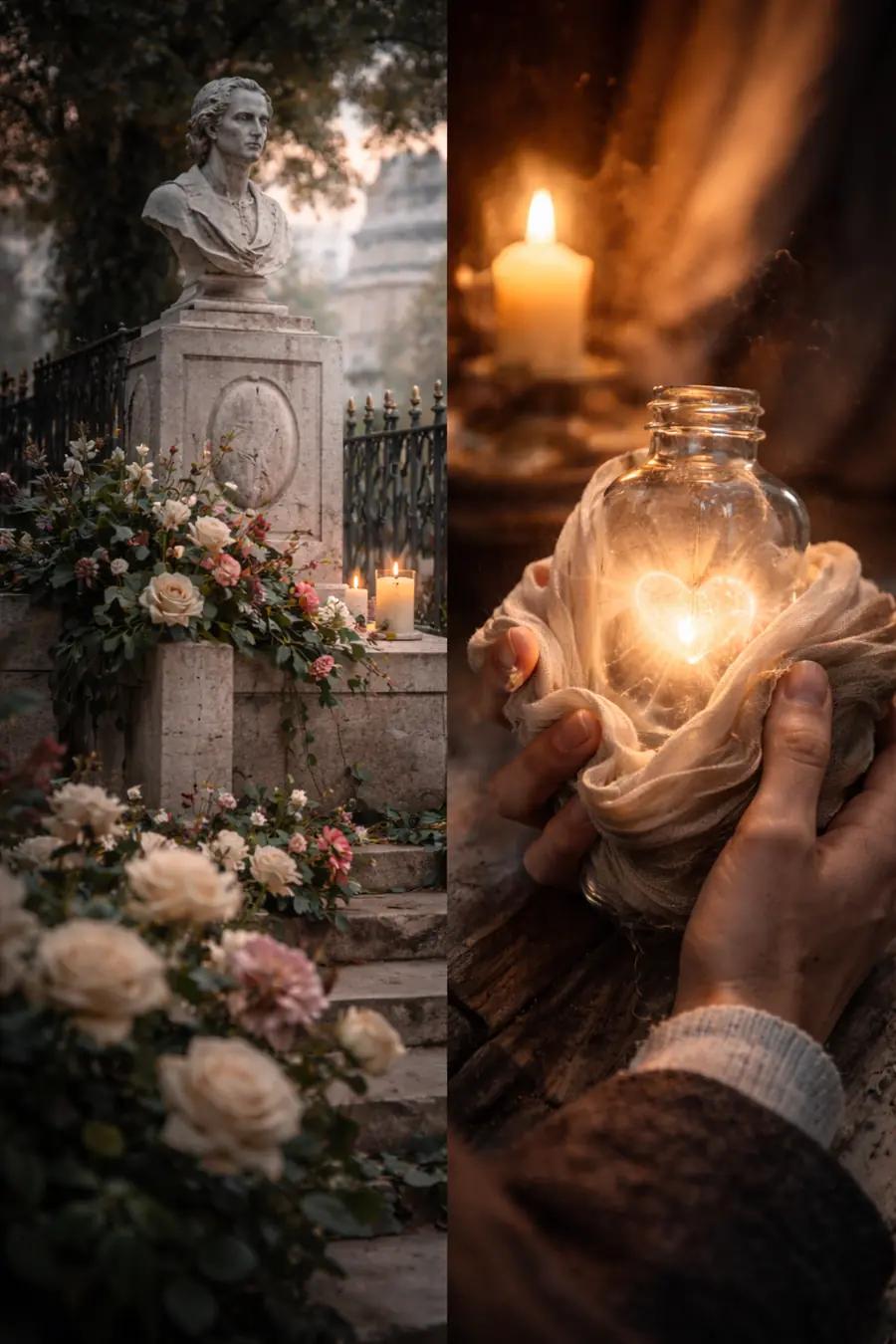
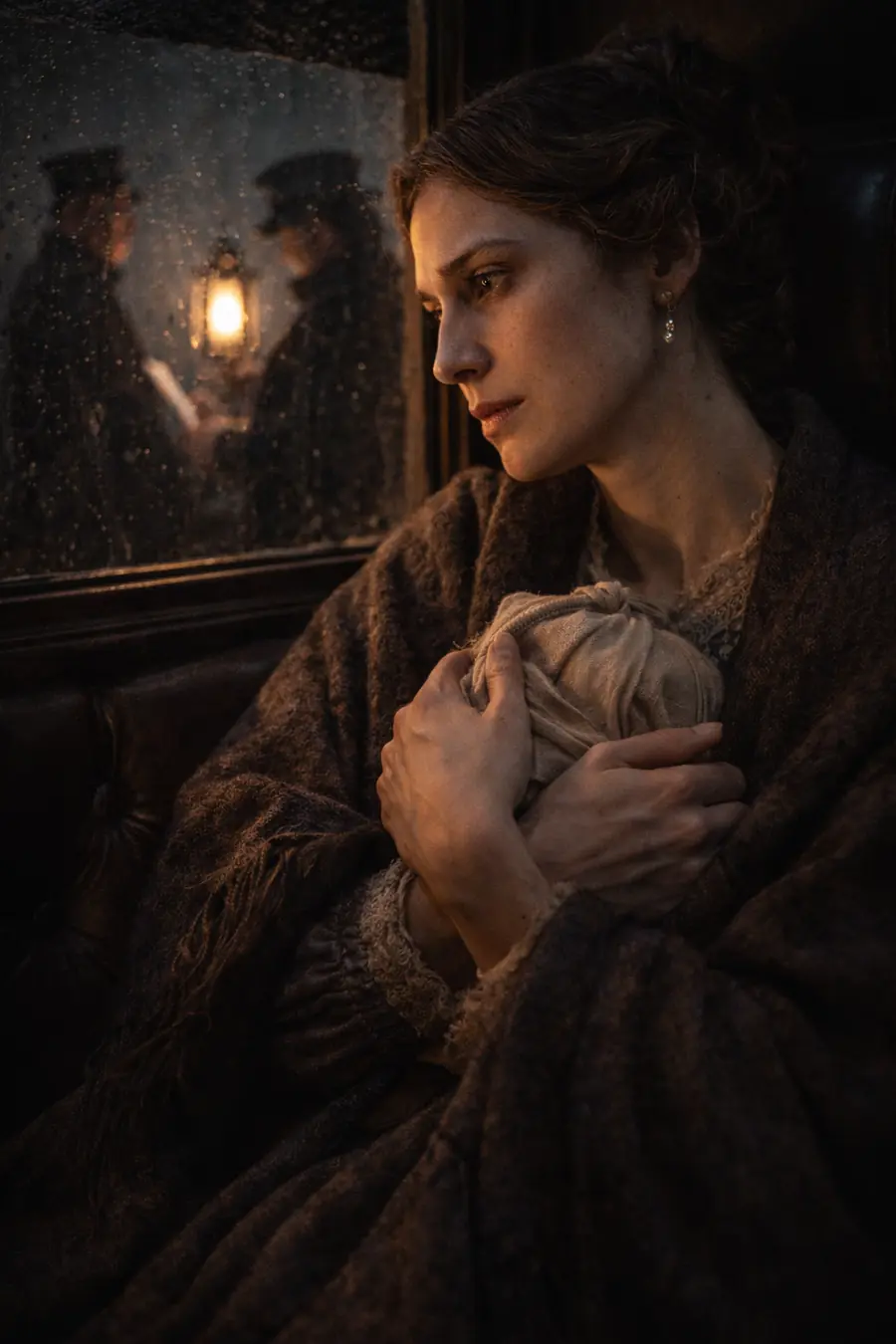
After Chopin’s death, his heart was removed and preserved in a container of alcohol, probably cognac or another strong spirit. His elder sister, Ludwika Jędrzejewicz, was responsible for taking it to Warsaw, then controlled by the Russian Empire.
Family tradition holds that Ludwika concealed the vessel beneath her clothing while crossing the border. Some details of the journey cannot be conclusively documented, but it is certain that she carried the heart to Poland and that it was eventually entrusted to the Holy Cross Church.
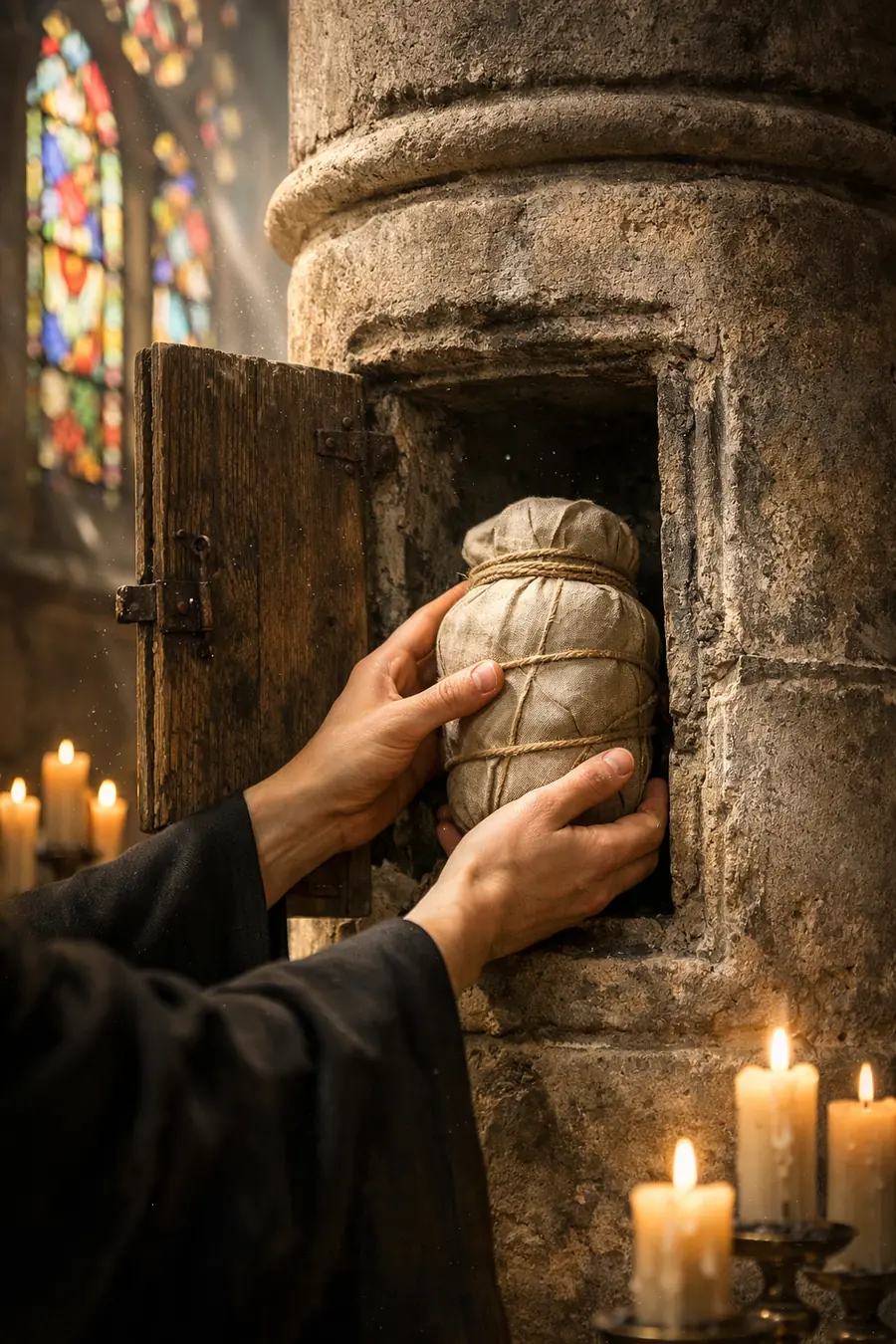
The vessel was placed inside one of the church’s pillars. A plaque was installed bearing a line from the Gospel of Matthew: “Where your treasure is, there will your heart be also.”
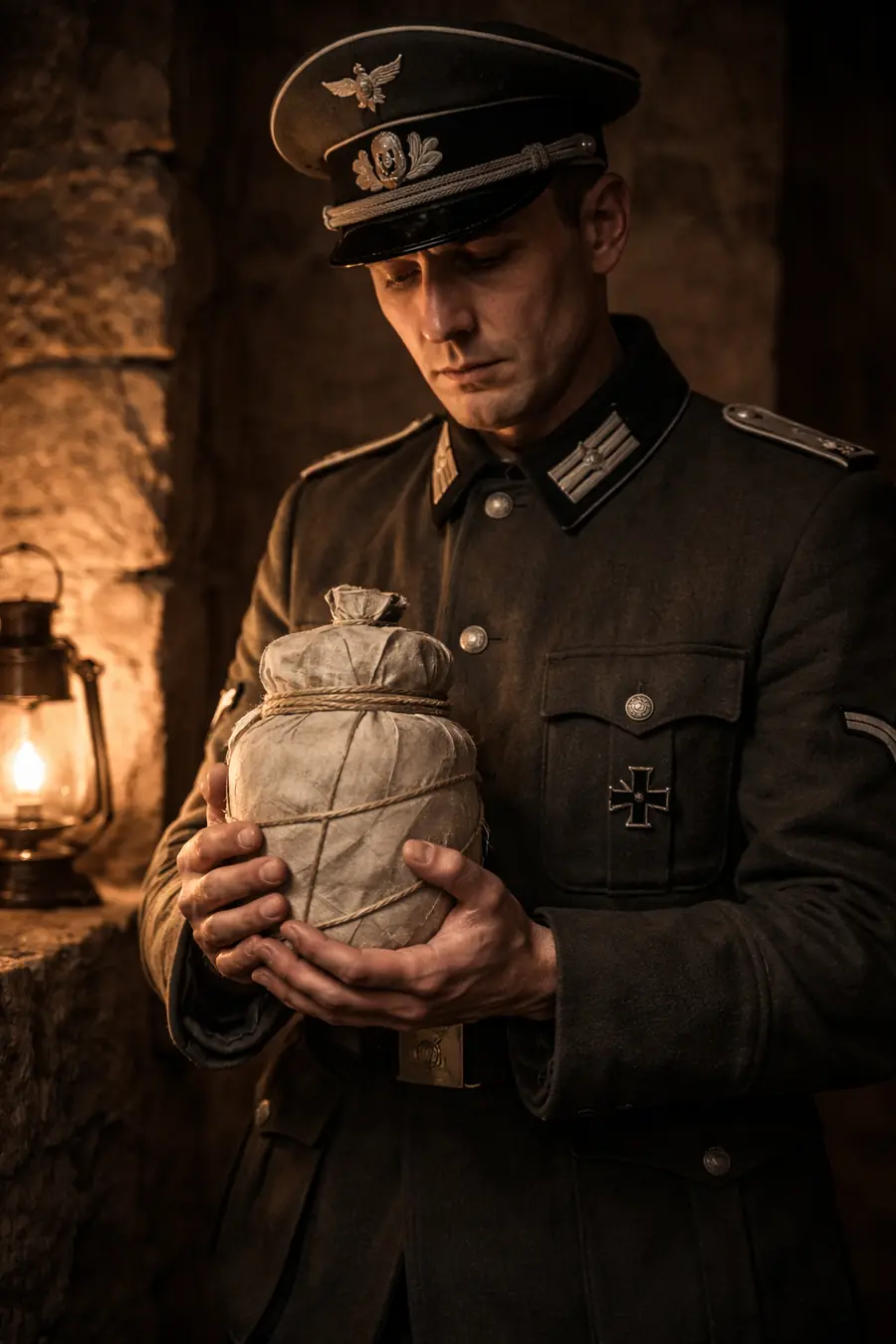
The story would have another extraordinary chapter. During the Warsaw Uprising of 1944, when much of the city was destroyed, the vessel was removed from the church for protection and later returned to the Polish clergy. On October 17, 1945, the heart was ceremonially restored to the Holy Cross Church.
In 2014, scientists and church authorities visually examined the vessel without opening it. Their observations supported the possibility that Chopin had suffered from tuberculosis and severe inflammation around the heart. No samples were taken, preserving the organ’s physical integrity.
A homeland transformed into music
Chopin was neither an armed revolutionary nor a writer of political manifestos. His resistance occurred at the keyboard. He elevated Polish dances such as the mazurka and polonaise into forms of national memory recognized throughout Europe.
Nor was he merely the fragile, melancholy musician popularized by Romantic legend. He possessed a relentless artistic will. He revised his works obsessively, refused to publish pieces he considered imperfect, and could spend weeks solving a few measures.
He lived far from his homeland, limited by illness and caught between the need to perform and the exhaustion every appearance caused him. Yet he created music that required no enormous orchestra to express uprootedness, pride, intimacy, or despair.
Frédéric Chopin never saw Warsaw again. But he achieved something more enduring than a physical return: he made Poland travel inside each of his mazurkas, polonaises, and ballades.
His body remains in Paris. His heart rests in Warsaw.
Between those two places lives his music—the work of a man divided between two countries, who transformed exile into a homeland that could be heard.
References
- Atwood, W. G. (1999). The Parisian worlds of Frédéric Chopin. Yale University Press.
- Eigeldinger, J.-J. (1986). Chopin: Pianist and teacher as seen by his pupils. Cambridge University Press.
- National Fryderyk Chopin Institute. (n.d.). Fryderyk Chopin: Life and work. chopin.nifc.pl
- Samson, J. (1996). Chopin. Oxford University Press.
- Walker, A. (2018). Fryderyk Chopin: A life and times. Farrar, Straus and Giroux.
- Witt, M., Szklener, A., Marchwica, W., & Dobosz, T. (2018). A closer look at Frédéric Chopin’s cause of death. The American Journal of Medicine, 131(4), 429–432.
- Zamoyski, A. (2010). Chopin: Prince of the Romantics. HarperPress.
More from this collection

Antonio Lucio Vivaldi: The Red Priest Who Made Storms Resound and Died in Silence
Read story →
Franz Schubert: The Musician Who Composed as Though Time Were Chasing Him
Read story →