In this storyOpen index
George S. Patton: The General Who Turned His Own Legend Into a Weapon of War
His reputation deceived Hitler, accelerated armies, and ultimately trapped the man who had built it.
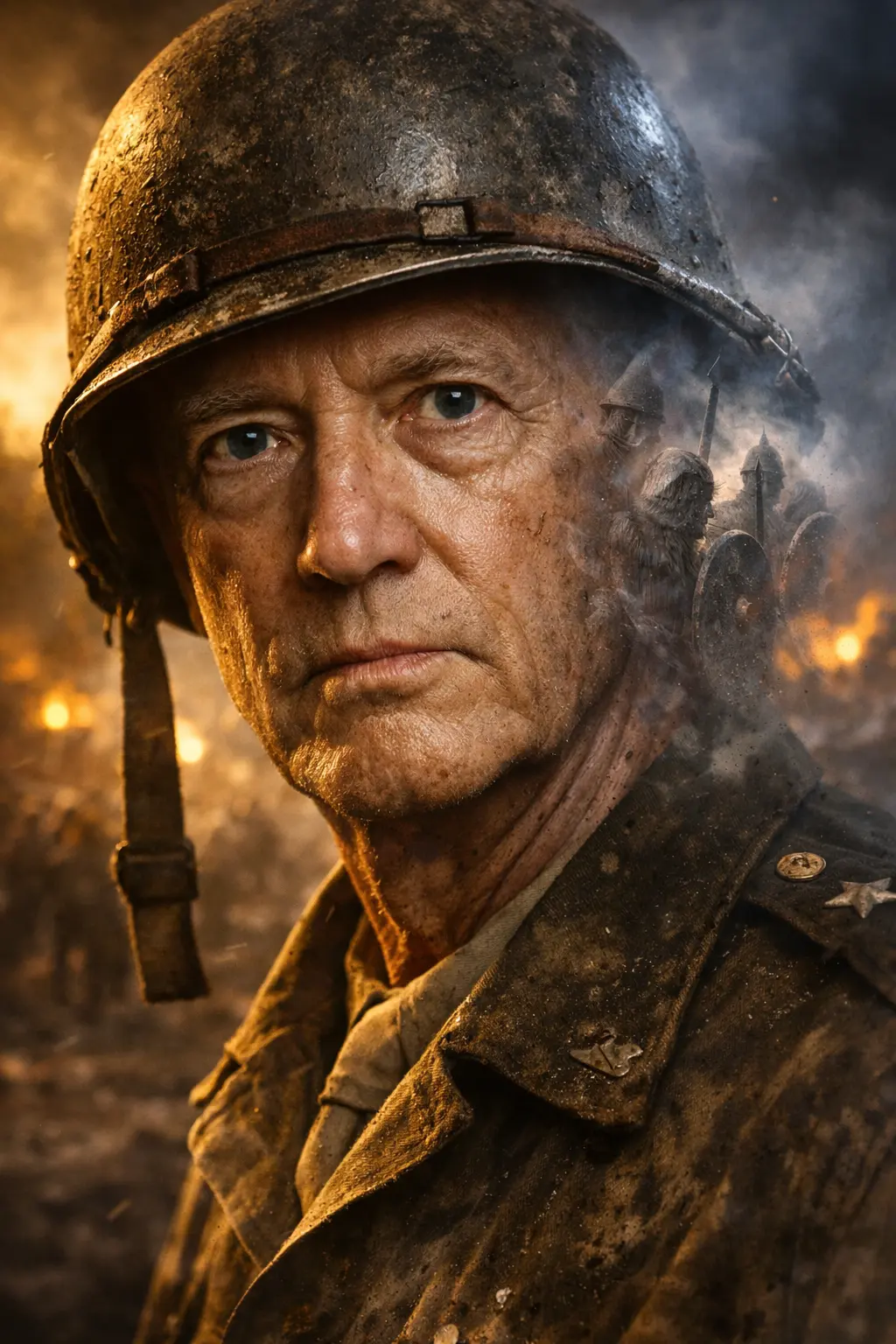
Before the Normandy landings, the Allies gave George S. Patton command of an army that did not exist. It possessed inflatable tanks, false radio transmissions, and camps designed to deceive German reconnaissance aircraft. The operation succeeded because Adolf Hitler and his generals were convinced that Patton would lead the main invasion of Europe.
His reputation became as powerful as his armored divisions.
Patton was one of the fastest and most aggressive commanders of the Second World War, but he was also a man who could not always control his words, prejudices, or temper. He struck traumatized soldiers, made statements that nearly destroyed his career, and ended the war at odds with the same military structure that had used his talent.
The character he created to intimidate the enemy eventually came to dominate the man behind it.
Patton and the Army That Never Existed
The military legend that became a weapon of deception.
A life told through places and decisive moments
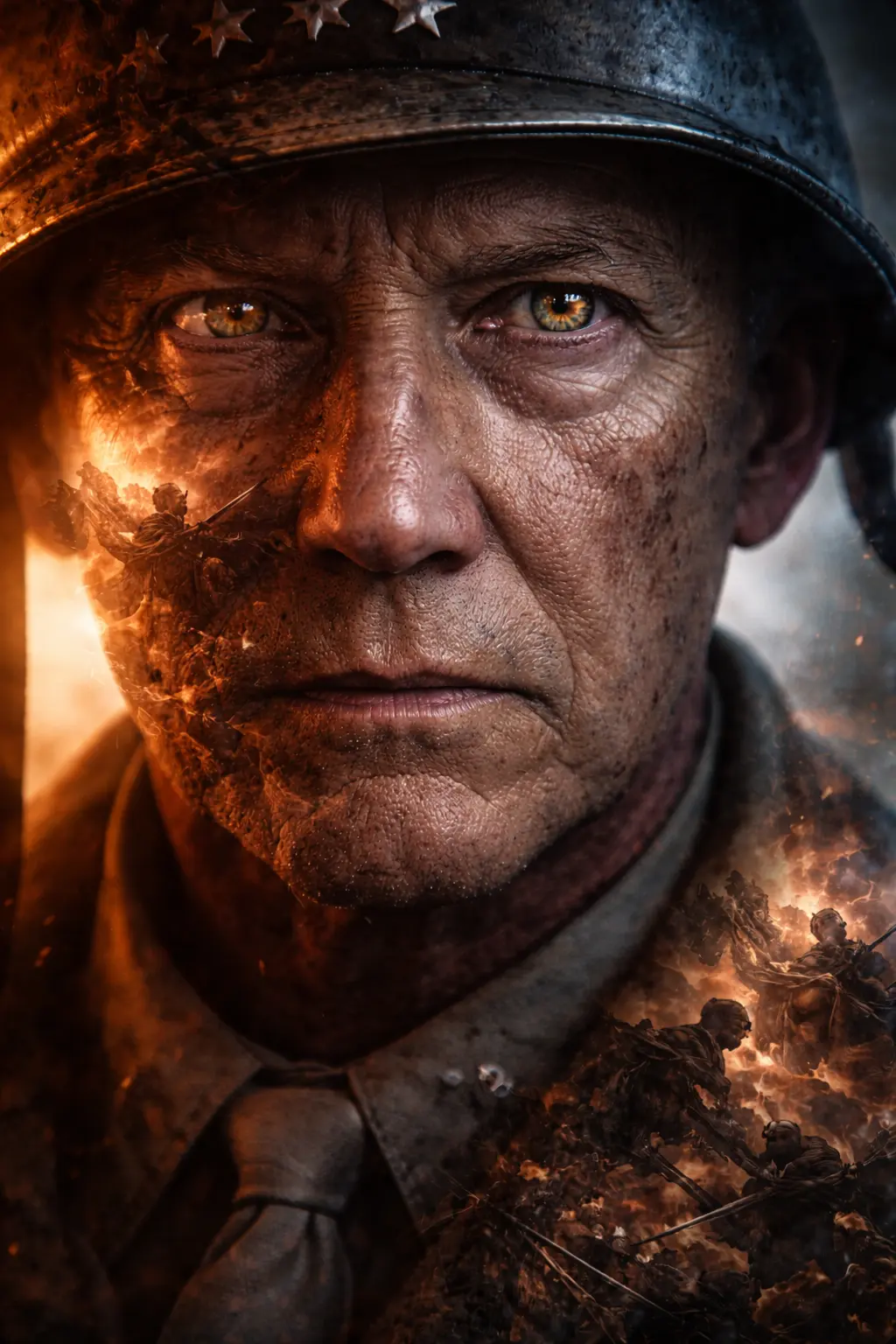
Enter the archive
The official U.S. Army museum preserves the pistols, uniforms, vehicles, and objects Patton turned into part of his public image.
- Collection
- Patton Collection
- Institution
- U.S. Army Museum Enterprise
Institutional record of the General George Patton Museum of Leadership.
A Boy Raised to Belong to History

George Smith Patton Jr. was born on November 11, 1885, in San Gabriel, California. He grew up in a family that revered military tradition. Several of his ancestors had fought for the Confederacy during the American Civil War, and stories of cavalry, honor, and death formed part of his education (D’Este, 1995).
From a young age, he developed the conviction that he was destined to achieve greatness on the battlefield. He read biographies of Alexander the Great, Julius Caesar, and Napoleon and studied military campaigns as though searching for a place reserved for him within that succession.
He first attended the Virginia Military Institute and later entered the United States Military Academy at West Point. Academic difficulties, especially in mathematics, forced him to repeat his first year. There is insufficient documentation to state with certainty that he had dyslexia, as some popular biographies have claimed. What can be established is that he required considerable effort to pass certain subjects and graduated in 1909 (Blumenson, 1972).
That insecurity coexisted with immense physical confidence. Patton was an excellent horseman, marksman, and swordsman. In an army still dominated by cavalry, he appeared to be preparing for an ancient war without realizing that he would become a symbol of mechanized warfare.
The Olympian Who Argued With the Target
In 1912, he represented the United States at the Stockholm Olympic Games in the first Olympic modern pentathlon. The event combined pistol shooting, swimming, fencing, equestrian jumping, and cross-country running—the skills that, according to Pierre de Coubertin’s concept, a military courier should possess.
Patton finished fifth. In the shooting event, he used a military pistol of larger caliber than the weapons carried by many competitors. One of his bullets did not appear clearly on the target. Patton maintained that it had passed through a hole made by another shot, but the judges recorded it as a miss (D’Este, 1995).
The episode summarizes a constant element of his personality: he could accept suffering, danger, and exhaustion, but found it much harder to accept another man’s judgment of his performance.
After the Games, he continued studying fencing in France and designed the U.S. Army’s Model 1913 cavalry saber. Its blade favored a direct thrust instead of the traditional cut. It was a weapon designed to advance into an opponent, not exchange blows from a defensive position.
Decades later, his approach to commanding tanks would follow the same logic.
Mexico and the Arrival of the Automobile in War
In 1916, Patton accompanied General John J. Pershing during the American expedition against Pancho Villa in Mexico. He led a raid using Dodge automobiles and participated in the encounter in which Julio Cárdenas, one of Villa’s officers, and two other men were killed.
Patton had the bodies transported tied to the vehicles, an act that increased his notoriety among American correspondents. The episode has sometimes been described as the first motorized attack by the United States Army, although that description oversimplifies the gradual development of military vehicles (Blumenson, 1972).
The important point was the lesson Patton drew from it: the engine offered speed, surprise, and concentration of force. While other officers still thought in terms of horses, he began to understand that future mobility would move on wheels and tracks.
The Tanks of the First World War
When the United States entered the First World War, Patton again served under Pershing. In France, he joined the emerging American Tank Corps, established a training center, and studied British and French armored operations.
In September 1918, he led tanks during the Saint-Mihiel offensive and later participated in the Meuse–Argonne campaign. On September 26, machine-gun fire struck him in the thigh while he advanced on foot near his vehicles. He remained exposed to fire until he could be evacuated (Blumenson, 1972).
The wound strengthened his conception of command. He believed a general should remain visible, share danger, and display almost theatrical courage. That presence could inspire soldiers, but it also led Patton to measure others against physical and emotional standards that not everyone could meet.
During the interwar years, he advocated the development of mobile armored forces. The American Army reduced its tank units and administratively returned armored vehicles to the infantry, but Patton continued studying mobility, communications, and mechanized warfare. Among his fellow officers was Dwight D. Eisenhower, with whom he discussed the possibilities of armor for years (D’Este, 1995).
Both would become essential in the next war: one would learn to coordinate an alliance; the other, to break an enemy line.
The Character With the Pistols and Polished Helmet
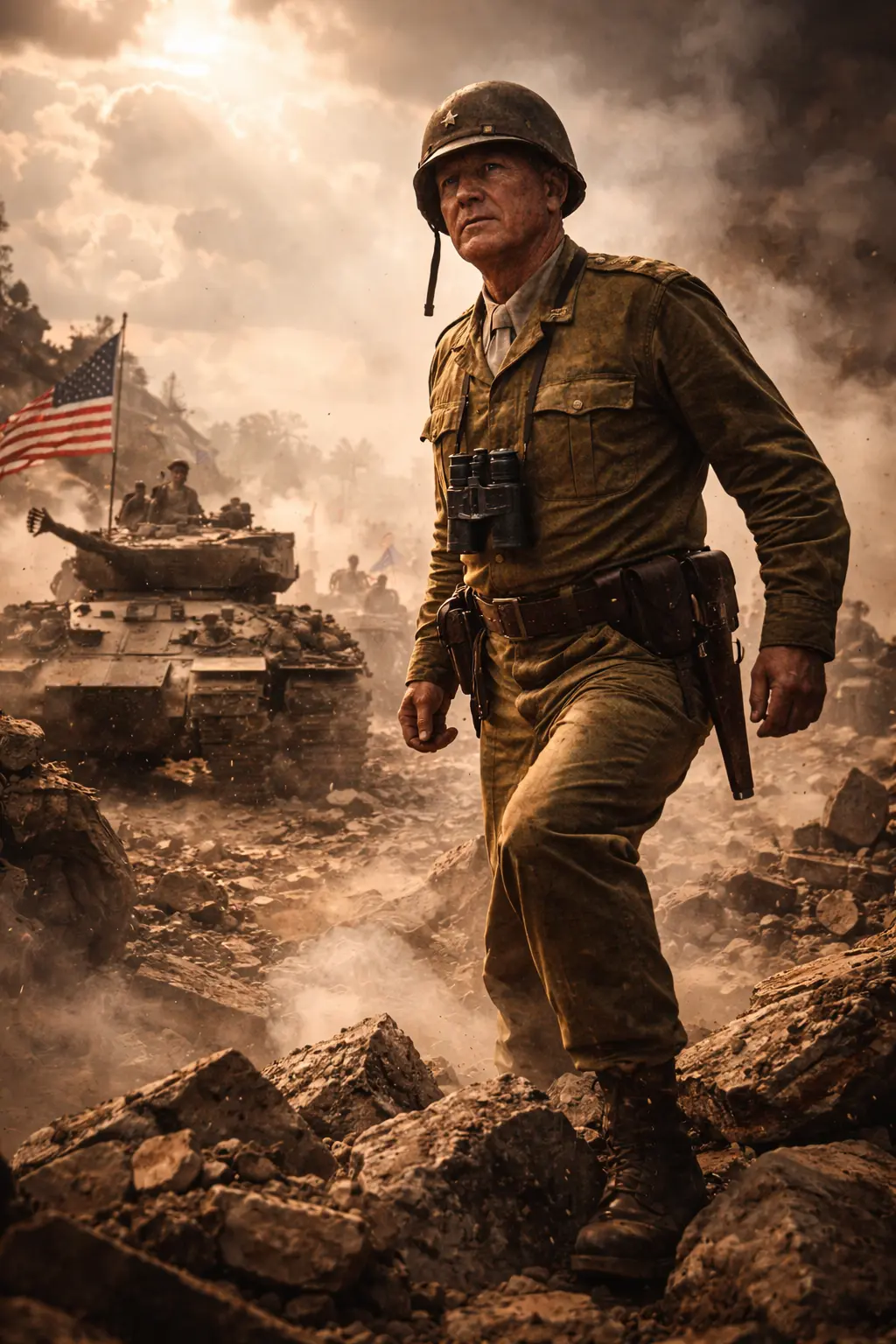
Patton did not wait for reputation to emerge naturally. He manufactured it. He wore a polished helmet, immaculate boots, riding breeches, and pistols with conspicuous grips. The famous weapon he frequently carried was a .45-caliber Colt revolver with ivory grips; he also used a Smith & Wesson .357.
He spoke with deliberate violence and filled speeches with profanity because he believed soldiers needed to hate the enemy and overcome their fear of killing. At the same time, he insisted upon discipline, personal appearance, vehicle maintenance, and continuous movement.
For Patton, appearance was not vanity separated from war. It was part of command. If his men believed he could not feel fear, perhaps they would control their own. If the enemy regarded him as unpredictable, he might force it to react before battle began.
The problem was that the mask required permanent intensity. Patton had created a general who could never appear tired, uncertain, or compassionate.
Africa, Sicily, and the Price of Speed
After the American defeat at Kasserine Pass in Tunisia, Patton assumed command of II Corps in March 1943. He rapidly imposed discipline and helped restore the confidence of troops that had just experienced their first major confrontation with the German army.
During the invasion of Sicily, he commanded the U.S. Seventh Army. His forces landed in July 1943, captured Palermo, and advanced toward Messina. Patton competed intensely with British General Bernard Montgomery. That rivalry encouraged daring movements but also contributed to hasty decisions and a narrative that exaggerated the personal race between the two men (Atkinson, 2007).
The campaign was also marked by crimes committed by American troops. In the Biscari massacres, soldiers of the 45th Division killed Italian and German prisoners and civilians. There is no evidence that Patton ordered the executions, but some defendants claimed they had interpreted his aggressive speeches as permission to deny quarter. When informed of one incident, Patton initially showed greater concern about the scandal than the victims, although military trials later took place (Atkinson, 2007).
Words used to harden an army could produce consequences the general no longer controlled.
The Slaps That Nearly Ended His Career
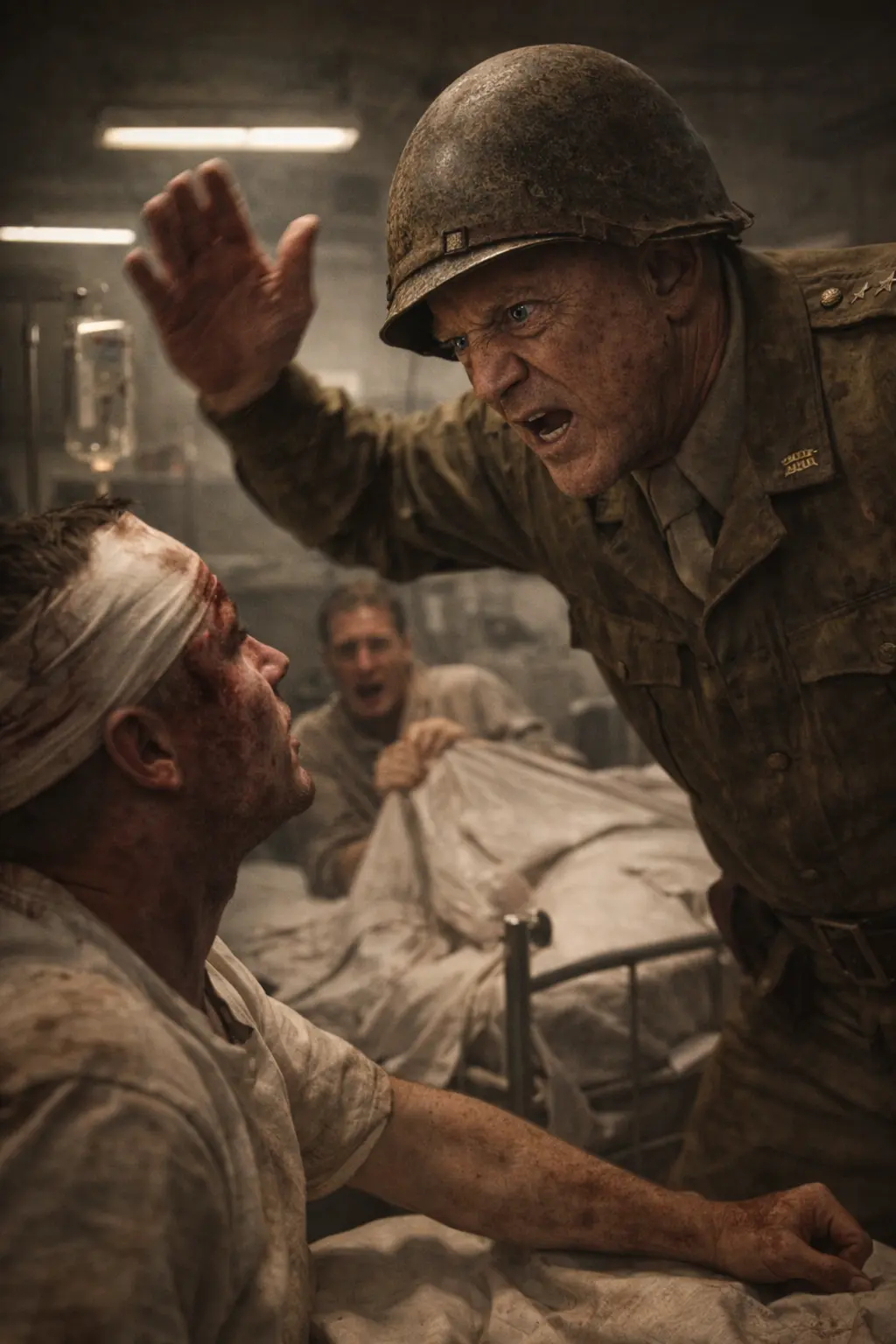
In August 1943, Patton visited military hospitals in Sicily. There he encountered two soldiers without visible physical wounds who had been diagnosed with battle exhaustion. Today, their symptoms would be associated with psychological trauma from combat.
On August 3, he struck and humiliated Private Charles Kuhl, who was suffering from fever and exhaustion. A week later, he assaulted Private Paul Bennett, who explained that he could no longer endure the shelling. Patton slapped him, insulted him, and threatened to send him back to the front (Blumenson, 1974).
Patton believed fear should be mastered through will and discipline. He did not adequately understand psychological collapse produced by combat and treated an illness as a moral failure.
The incidents were reported to Eisenhower and eventually reached the press. Patton was ordered to apologize to the soldiers, medical personnel, and several units. He was not immediately returned to the United States, but temporarily lost an important combat command.
His military talent saved him from expulsion. His behavior prevented him from commanding troops during the opening phase of the invasion of France.
The war needed his ability but could no longer ignore his danger.
A Little-Known Fact: His Most Important Army Before D-Day Did Not Exist
The Allies knew that Germany expected an invasion across the English Channel. To conceal the planned landing in Normandy, they developed Operation Fortitude as part of a much larger deception strategy.
In southeastern England, they created the appearance of the First United States Army Group, known as FUSAG. Simulated radio transmissions, fictional vehicles, false troop concentrations, and double agents helped convince German intelligence that a major force was preparing to attack the Pas-de-Calais (Holt, 2004).
Patton was presented as its commander.
The choice followed precise logic. The Germans regarded him as one of the Allies’ most aggressive and capable generals. They found it difficult to believe that Eisenhower would launch the decisive invasion without giving him a central role. Even after the June 6, 1944, landings, Hitler kept forces in the Calais region because he feared Normandy was merely a diversion.
Patton contributed to D-Day precisely through his absence from the battlefield. His fame was deployed as an invisible military unit.
Rarely had a commander been so useful while leading an imaginary army.
The Advance of the Third Army
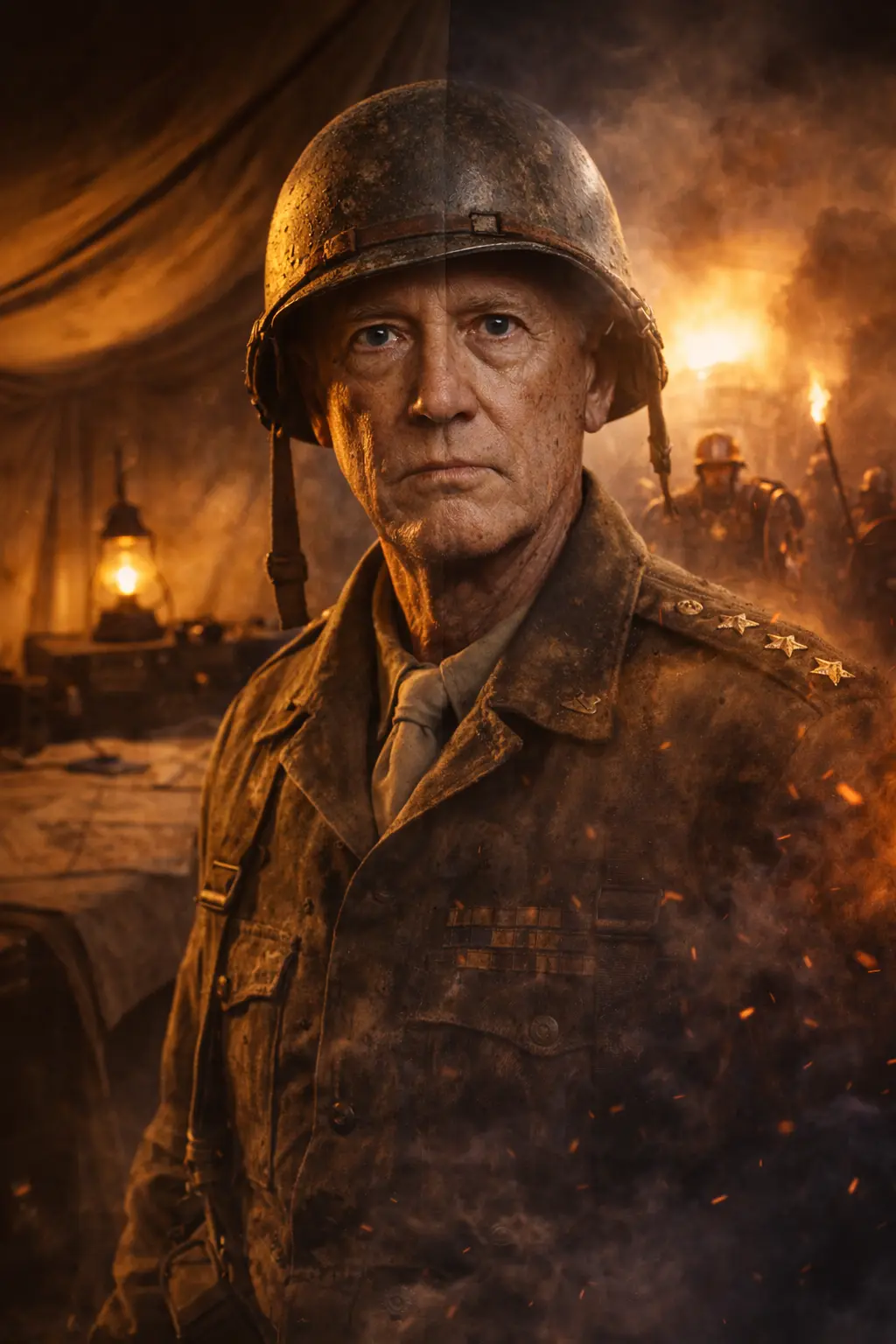
Patton finally received operational command of the Third Army, which entered combat in August 1944 after the Allied breakout from Normandy. His units advanced rapidly across France, exploiting gaps, bypassing static defenses when possible, and forcing the Germans backward before they could reorganize.
Speed depended upon far more than the general’s will. It required fuel, mechanics, engineers, maps, intelligence, bridges, and thousands of truck drivers. When supply lines lengthened and logistical priority shifted toward other Allied armies, Patton’s advance halted. The pause demonstrated that even the most aggressive commander remained limited by gasoline and roads (D’Este, 1995).
In December 1944, Germany launched its surprise offensive in the Ardennes. During a meeting with Eisenhower, Patton said that he could turn part of his army northward and attack the German flank. His officers had already studied similar options, allowing the movement to begin rapidly.
On December 26, Third Army forces broke the encirclement of Bastogne and established contact with the 101st Airborne Division. Patton did not single-handedly “save” the town: its defense belonged to the besieged soldiers, and the relief depended upon numerous units. His ability to reorient an army during an ongoing battle nevertheless confirmed his extraordinary operational command (MacDonald, 1984).
Hammelburg: When the War Became Personal
In March 1945, Patton authorized an armored raid behind German lines to reach the prisoner-of-war camp at Hammelburg. Among the captives was his son-in-law, Lieutenant Colonel John Waters.
The so-called Task Force Baum was too small for such a deep mission. It reached the camp but became isolated during the return. Most of its men were killed, wounded, or captured. Waters was wounded and failed to escape (D’Este, 1995).
Patton claimed that the objective possessed military value and later acknowledged the operation as a mistake. His son-in-law’s presence has made it impossible to avoid the suspicion that personal motives influenced the decision.
Hammelburg revealed the darker side of his confidence. The boldness that could break defensive lines could also become stubbornness when the general believed speed would compensate for inadequate planning.
The Ghosts Encountered After Victory
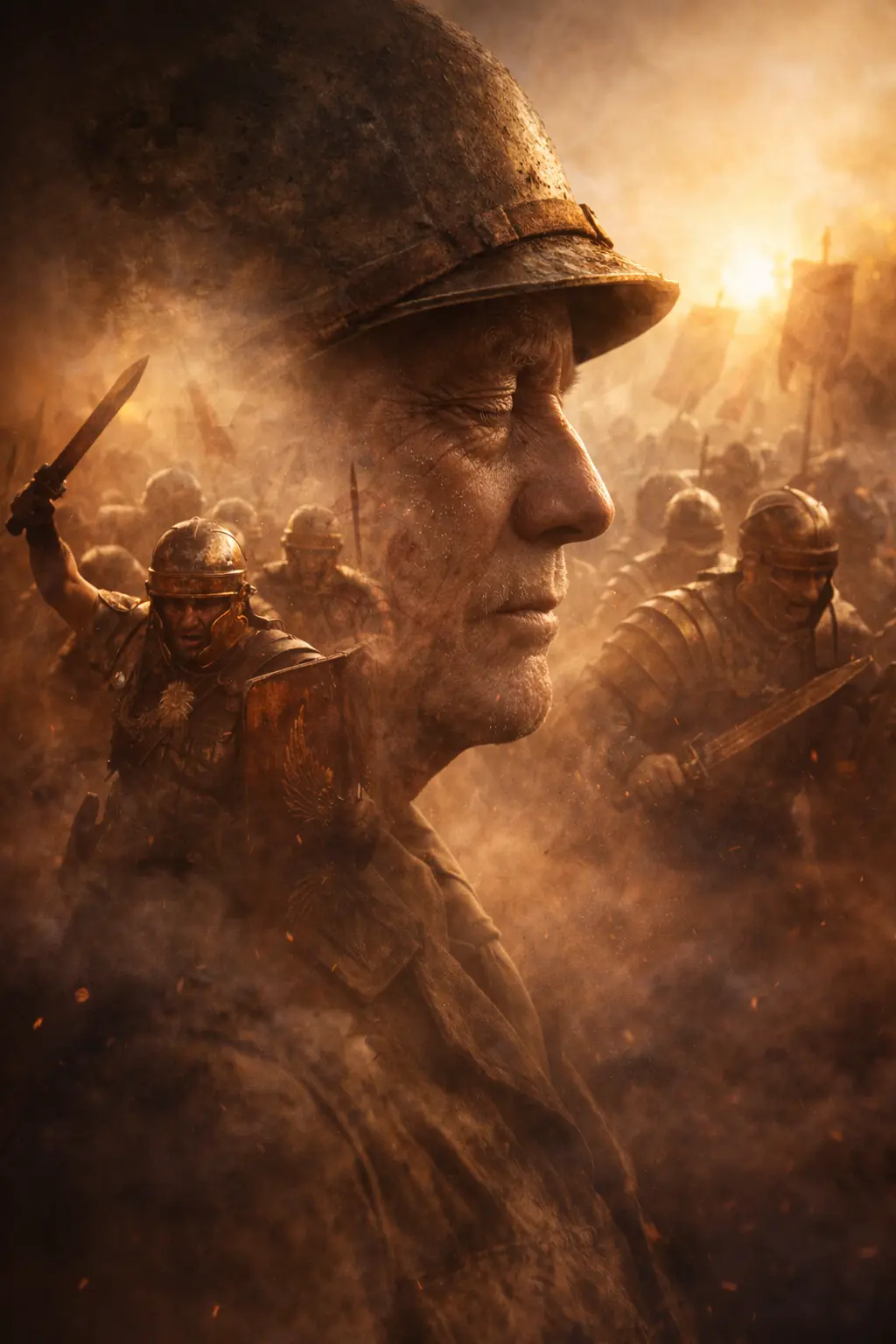
Patton appeared prepared for war but not for peace. After Germany’s surrender, he became military governor of Bavaria. There he was responsible for occupation, denazification, and the care of thousands of displaced people.
His diaries and letters reveal serious prejudices, including antisemitic language and dehumanizing remarks about some Jewish survivors. He also grew impatient with denazification and argued that many former Nazi Party members were needed to keep German administration operating (Blumenson, 1974).
In September 1945, he caused another crisis by comparing Nazi Party membership with belonging to the Democratic or Republican parties in the United States. Eisenhower removed him from command of the Third Army and assigned him to the Fifteenth Army, which was primarily preparing a history of the war.
These were not merely the “gaffes” of an outspoken man. They exposed profound moral and political limitations. Patton could understand the movement of an army with extraordinary clarity, but failed to grasp the responsibilities of an occupation built upon the ruins of the Holocaust.
He had defeated the military forces of the Nazi regime without freeing himself from prejudices belonging to the same world that had enabled its persecution.
The Accident and the Conspiracy That Could Never Be Proved
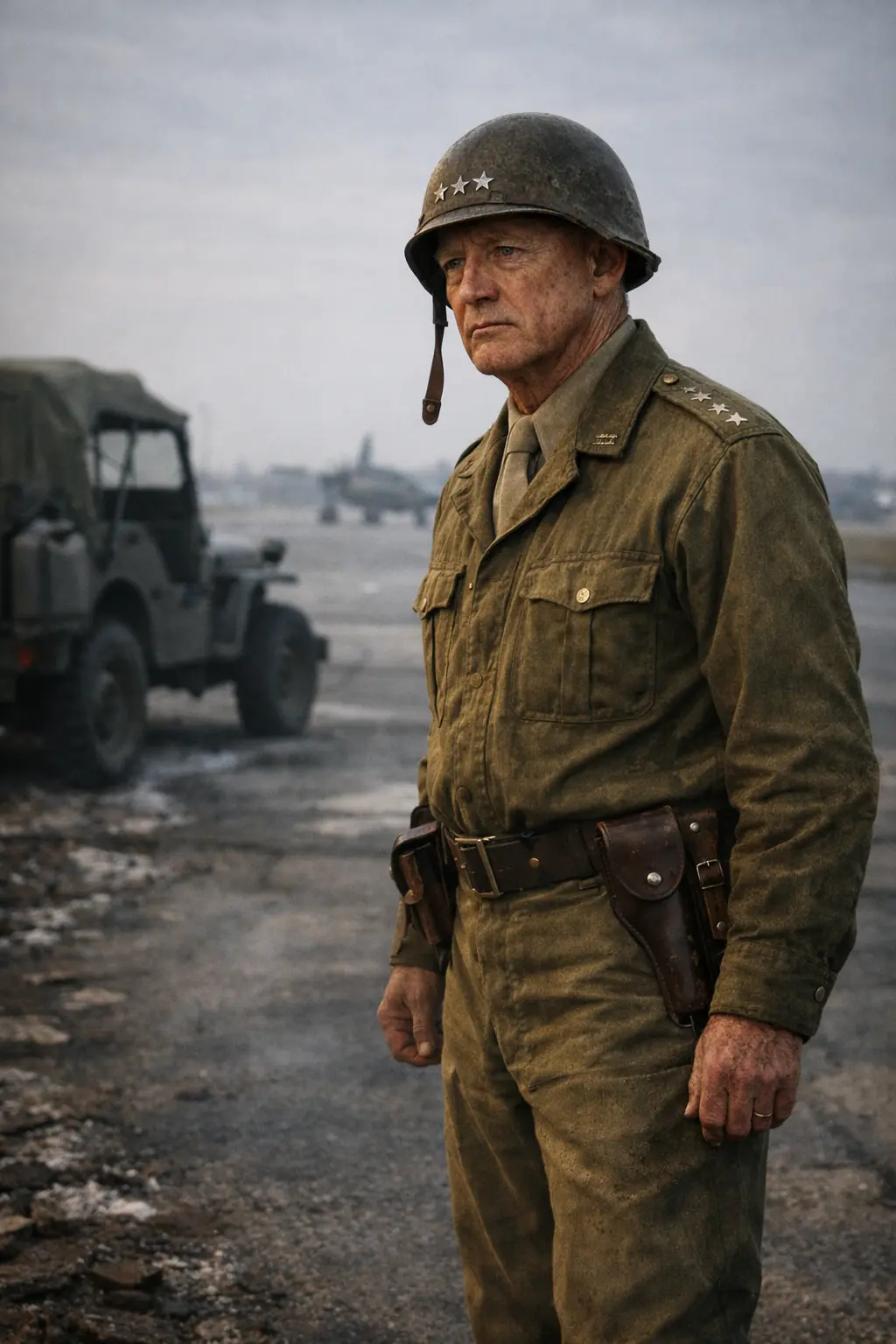
On December 9, 1945, Patton was traveling near Mannheim for a hunting excursion. The military automobile carrying him collided with a U.S. Army truck that turned across its path.
The other occupants suffered minor injuries, but Patton was thrown against part of the vehicle’s interior. He fractured cervical vertebrae and was paralyzed from the neck down. He was transported to a military hospital in Heidelberg, where his condition initially appeared relatively stable.
He died on December 21, 1945, from complications that included an embolism and pulmonary edema. He was buried at the Luxembourg American Cemetery alongside soldiers of the Third Army (National WWII Museum, 2020).
Theories later claimed that Soviet, British, or American agents had arranged the accident because Patton wanted to confront the Soviet Union. No historical investigation has produced verifiable evidence of assassination. Conspiracy accounts depend upon late testimony, contradictions, and speculation that cannot replace contemporary documentation (D’Este, 2022).
His death was remarkable because of a simple irony: he survived two world wars and suffered his fatal injury during an ordinary drive along a German road.
No conspiracy was required. An unexpected turn was enough.
The General and the Ghost He Created
George S. Patton was a commander of immense operational talent. He understood speed, concentration of force, pursuit, and the psychological effect of a continuous offensive. He also understood that reputation could alter an enemy’s decisions before a single gun was fired.
His legacy, however, cannot be reduced to tanks moving across Europe. It includes the soldiers he struck, the words that helped normalize brutality, the failure at Hammelburg, and the prejudices he expressed in the presence of survivors of racial persecution.
The film Patton, released in 1970, fixed in popular culture the image of the general standing before an enormous American flag. That image contained a truth: Patton transformed his existence into a monumental performance. It also concealed his contradictions.
He wanted to resemble the conquerors he had studied since childhood. He succeeded too well. Like them, he left victories that are difficult to separate from the suffering, ambition, and violence that made them possible.
Patton’s power lay in forcing others to believe that he never doubted. His ghost emerged when the world began mistaking that performance for the complete man.
References
Atkinson, R. (2007). The day of battle: The war in Sicily and Italy, 1943–1944. Henry Holt and Company.
Blumenson, M. (Ed.). (1972). The Patton papers: 1885–1940. Houghton Mifflin.
Blumenson, M. (Ed.). (1974). The Patton papers: 1940–1945. Houghton Mifflin.
D’Este, C. (1995). Patton: A genius for war. HarperCollins.
D’Este, C. (2022). Was Patton murdered? HistoryNet.
Holt, T. (2004). The deceivers: Allied military deception in the Second World War. Scribner.
MacDonald, C. B. (1984). A time for trumpets: The untold story of the Battle of the Bulge. William Morrow.
National WWII Museum. (2020). The death of a general: George S. Patton, Jr. National WWII Museum.