In this storyOpen index
Nicholas V: The Pope Who Tried to Rebuild the World with Stones and Books
The manuscripts he opened to scholars, the Rome he rebuilt and the bulls he granted to Portugal.
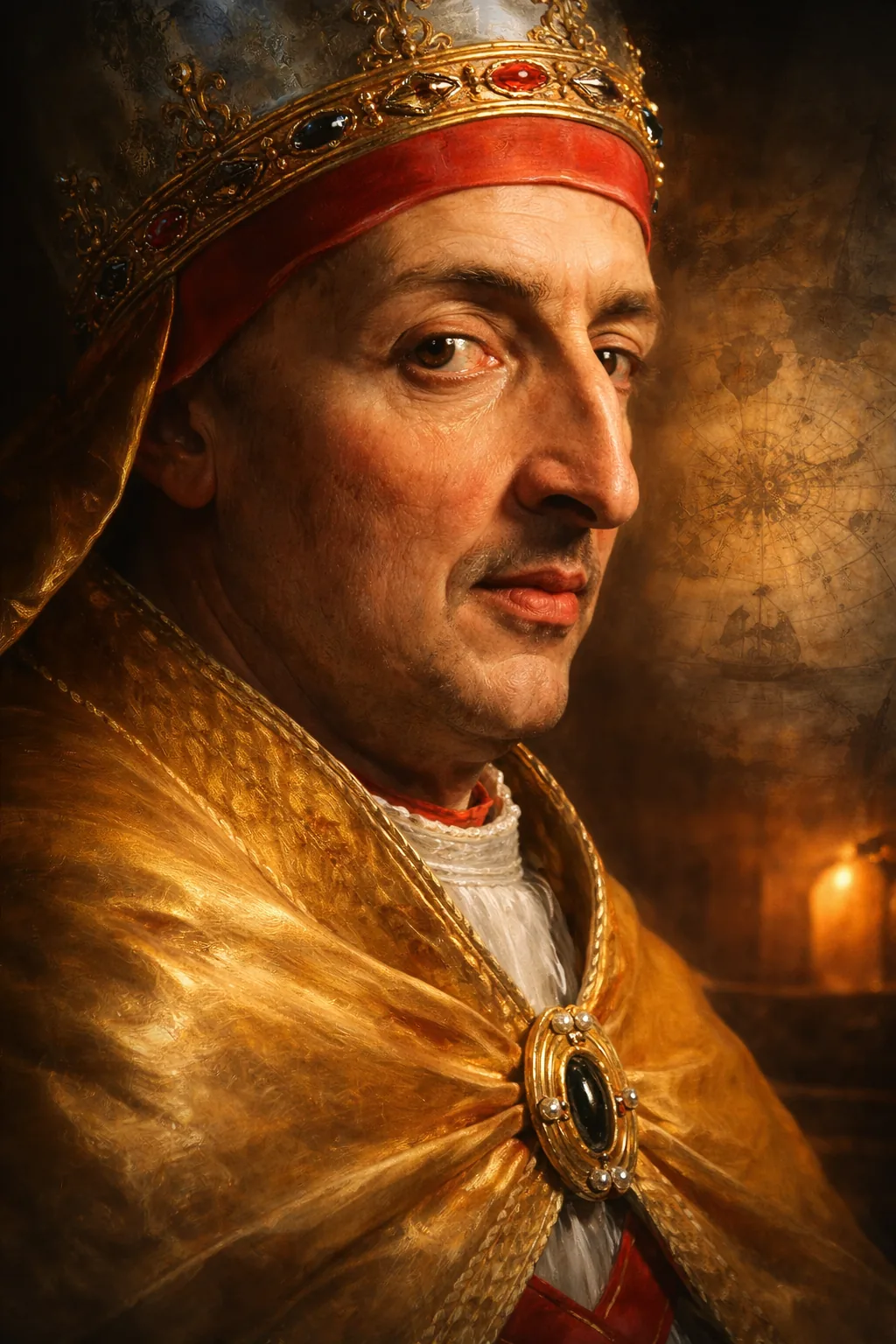
When Tommaso Parentucelli was elected pope in 1447, Rome still bore the scars of a long decline. Its streets were deteriorating, many buildings threatened to collapse, and papal authority was only beginning to recover from decades of division. The new pontiff, who took the name Nicholas V, believed that the Church needed more than sermons: it had to make its power visible.
He therefore raised buildings, collected manuscripts, and attracted some of the most important humanists of his age to Rome. During his pontificate, Renaissance Rome began to take shape. Behind that cultural dream, however, stood political repression, territorial ambition, and documents that helped legitimize the enslavement of non-Christian peoples.
Nicholas V wanted to illuminate the world through knowledge, but his power cast shadows that survived for centuries.
Nicholas V
A life told through manuscripts, buildings and bulls
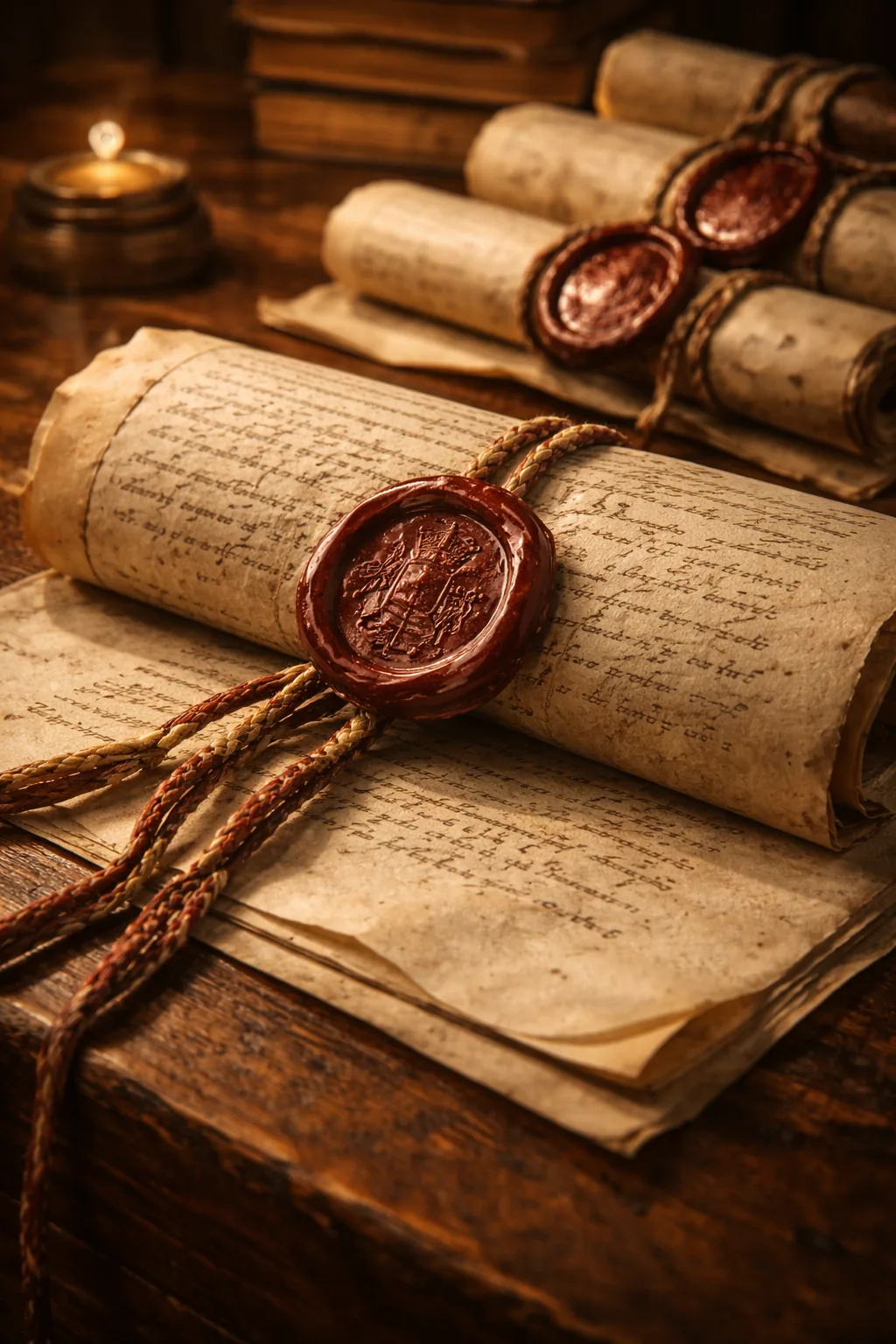
Romanus Pontifex · 1455
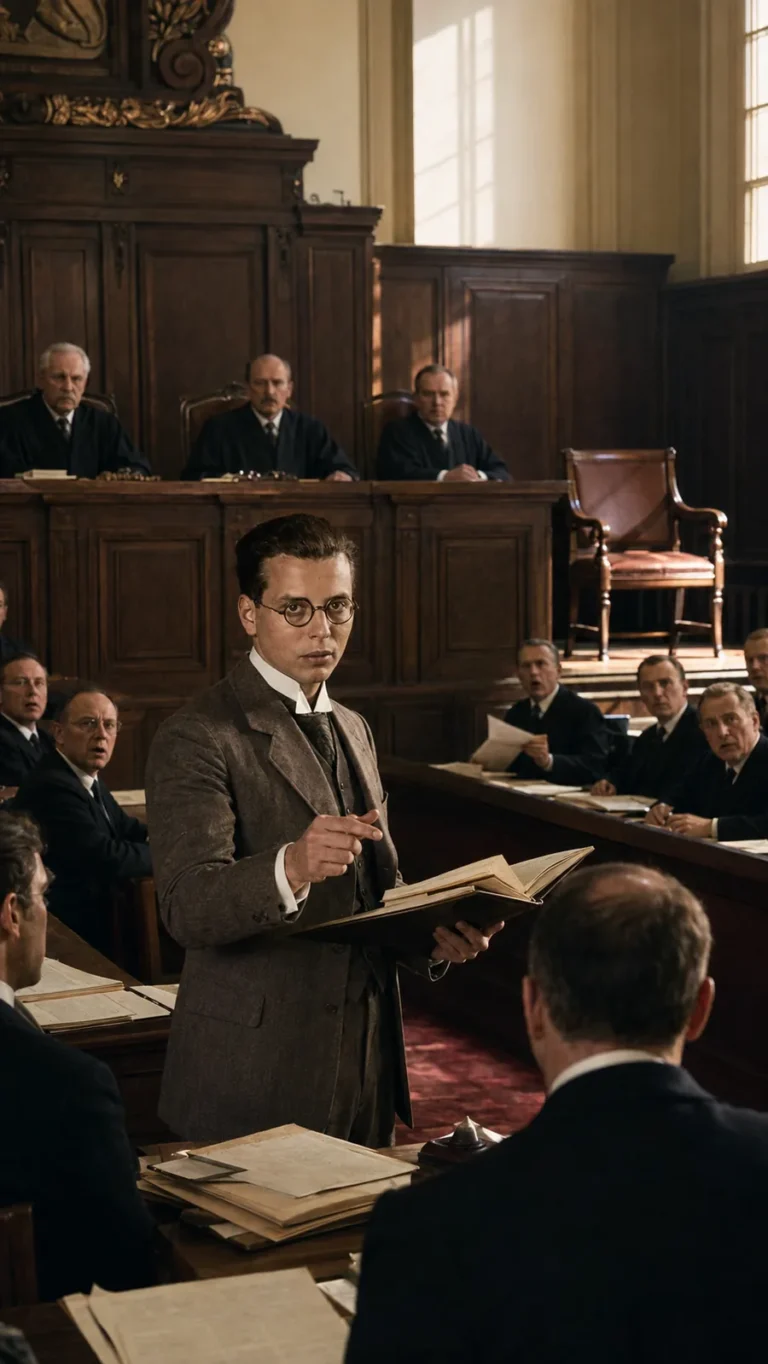
On 8 January 1455 Nicholas V confirmed Portuguese privileges in a bull addressed to Afonso V. Its wording preserves the earlier authorization to enslave. Read the English translation published in Frances Gardiner Davenport’s 1917 documentary collection; the illustration is not the original parchment.
The Boy Who Learned to Live Among Books
Tommaso Parentucelli was born on November 15, 1397, in Sarzana, a small Ligurian town. His father died while he was still young, and financial difficulties temporarily interrupted his studies at the University of Bologna.
To support himself, he worked as a tutor in the homes of Florentine families. The experience brought him into Florence’s intellectual world, where he encountered humanism—the movement that recovered Greek and Roman literature, philosophy, and art as instruments for understanding the present.
Parentucelli did not belong to a powerful aristocratic dynasty. His advancement resulted largely from his education, diplomatic ability, and the protection of Cardinal Niccolò Albergati, whom he accompanied on several European missions. After Albergati’s death, Pope Eugenius IV appointed Parentucelli bishop of Bologna and later made him a cardinal.
He was elected pope on March 6, 1447. He chose the name Nicholas in memory of Albergati, the man who had helped shape his career.
A Pontiff of Transition
Nicholas inherited the dispute between the papacy and the Council of Basel. In 1449 Felix V, the rival pope elected by the council, resigned. This ended the later Basel schism; the earlier Western Schism had been resolved in 1417.
The pontiff used the reconciliation to proclaim the Jubilee of 1450. Thousands of pilgrims traveled to Rome, strengthening the city’s religious prestige and providing significant income for the papal administration.
In December 1450, pilgrims returning across the Ponte Sant’Angelo found themselves pressed against its parapets. The barriers gave way. Some people died in the crush; others fell into the Tiber and drowned. The sources do not agree on an exact toll.
Nicholas subsequently ordered chapels to be built at the entrance to the bridge in memory of the victims. This rarely remembered episode exposed the fragility of the city he hoped to transform into the capital of Christendom.
Rome Had to Look Eternal
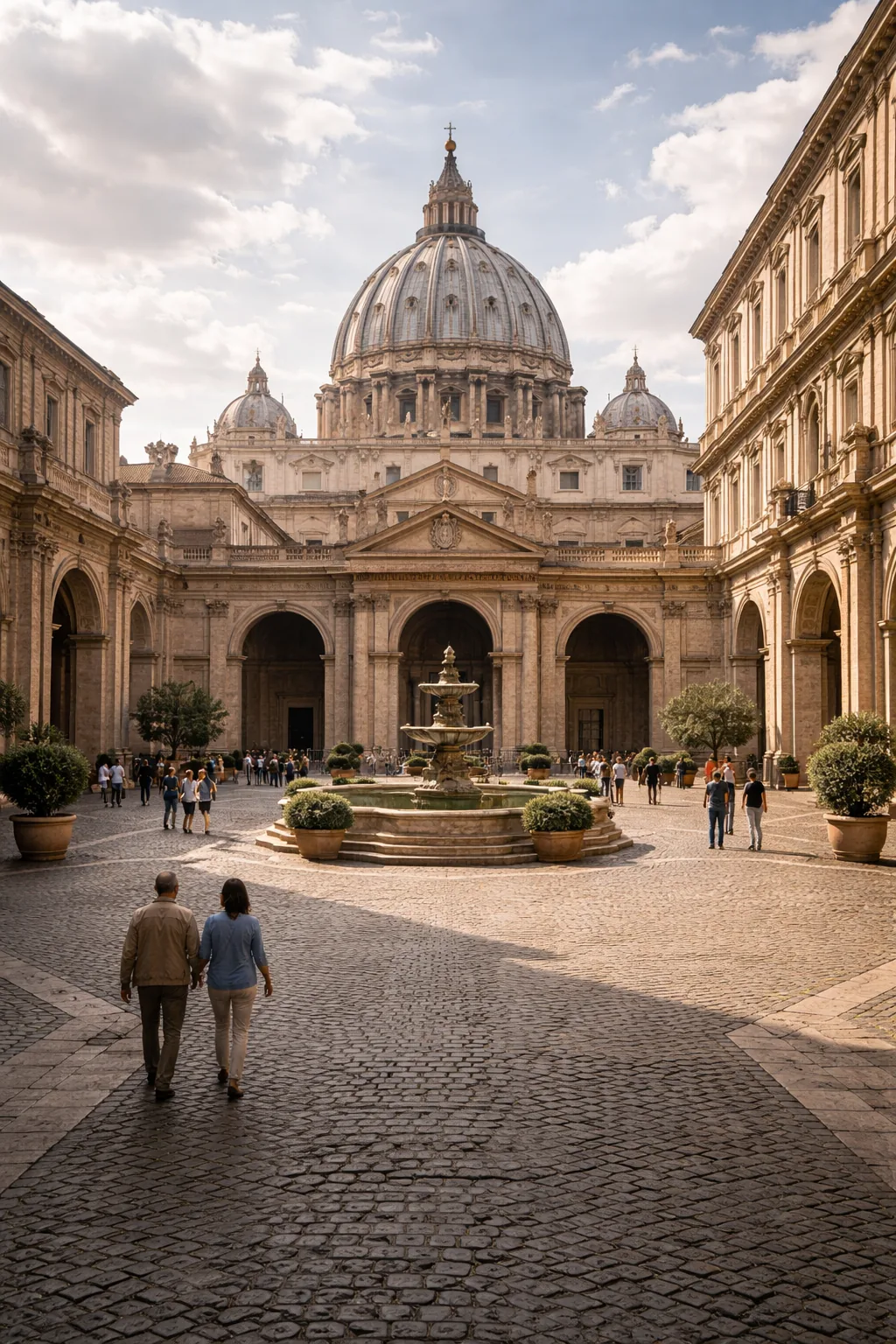
Nicholas V understood that architecture could operate as a political language. A monumental city would communicate the image of a stable, universal Church destined to endure.
Working with architects and humanists such as Leon Battista Alberti and Bernardo Rossellino, he promoted projects to restore walls, churches, palaces, aqueducts, and streets. He also began important renovations at the Vatican and conceived a radical transformation of the old Basilica of Saint Peter.
He completed only a fraction of his plans. Nevertheless, he established a principle later followed by numerous Renaissance popes: Rome should physically represent the spiritual and temporal power of the papacy.
Reconstruction was not merely an aesthetic concern. After years of instability, every restored building announced that the pope had returned to govern. Beauty became a form of authority.
A Library Meant to Contain the World
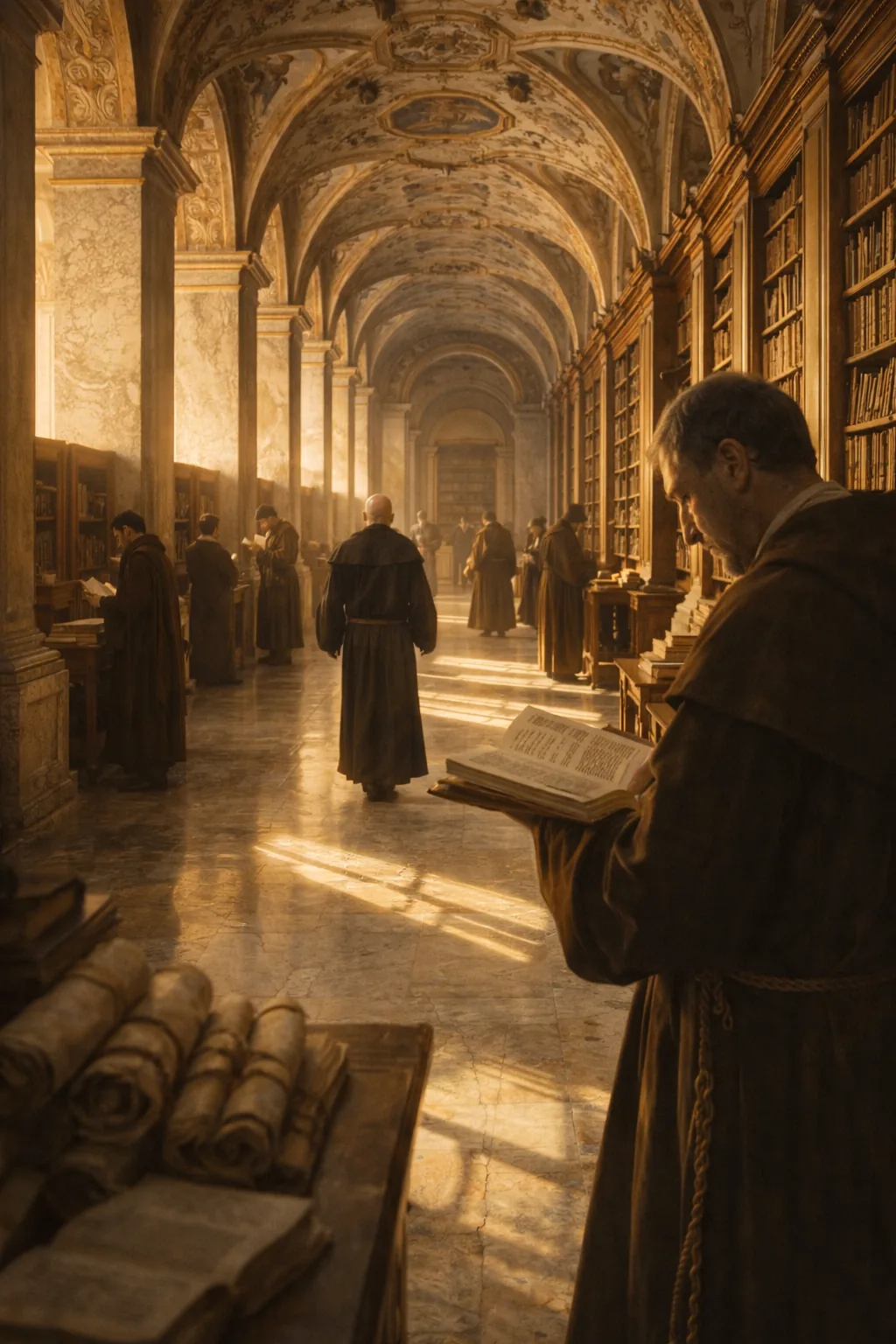
Nicholas’s deepest passion was not architecture but books. He commissioned translations of Greek authors, paid copyists, and sent agents to search for manuscripts throughout Europe and the Mediterranean.
During his pontificate, the papal collection grew from approximately 350 manuscripts to about 1,200. It included works in Latin, Greek, and Hebrew, and Nicholas intended scholars to be able to consult them (Vatican Apostolic Library, n.d.).
He is consequently often called the founder of the Vatican Library. The claim requires qualification. Nicholas conceived the scholarly library and assembled its central collection, but Sixtus IV formally organized the institution in 1475. The Library of Congress explains the distinction: Nicholas supplied the intellectual purpose and the books; Sixtus gave the library its permanent institutional form (Library of Congress, 1993).
One lesser-known aspect of Nicholas’s cultural program was the remarkable number of translations he sponsored. Homer, Thucydides, Herodotus, and other Greek writers became more widely available in Latin versions. Recovering antiquity did not, in his view, mean challenging Christianity. Ancient learning could be placed at the service of the Church.
The library was also a representation of power. The ruler who gathered the memory of the world could present himself as that memory’s heir and guardian.
A Conspiracy Inside Rome
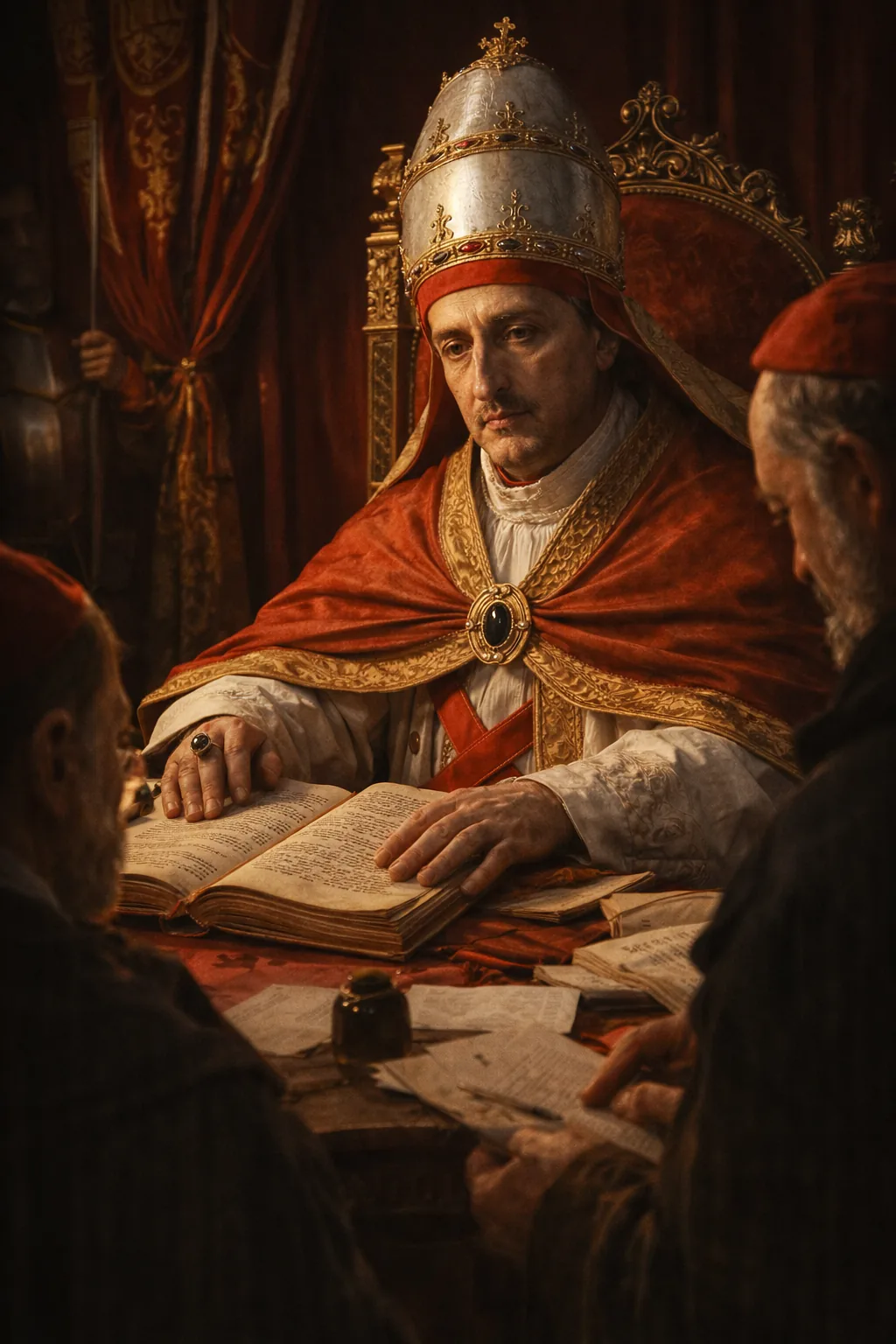
Not every Roman accepted the pontiff’s expanding temporal authority. Stefano Porcari, a humanist and politician inspired by the ancient Roman Republic, dreamed of ending papal government and restoring a republican regime.
After several attempts at political agitation, Porcari organized a conspiracy for January 1453. Authorities discovered the plan before it could be carried out. Porcari was captured, tried, and hanged together with several companions.
The conspiracy is largely forgotten outside specialist studies, but it exposed the central contradiction of Nicholas’s pontificate. He admired the republican culture of ancient Rome while ruling as a prince and punishing those who tried to turn classical ideals into a political program (Saquero Suárez-Somonte & González Rolán, 2008).
The Rome of books had clearly defined limits. Romans could read the ancient republicans, but they could not necessarily imitate them.
Constantinople: The Wound He Could Not Repair
On May 29, 1453, Constantinople fell to the Ottoman army of Mehmed II. The news shocked Europe and deeply affected Nicholas V.
The pope had attempted to organize military assistance for the Byzantines, but rivalry among Christian kingdoms made an effective response difficult. After the city fell, he called for a crusade, yet his appeals again failed to unite the European powers.
The paradox was painful. While Nicholas attempted to recover ancient Greek culture through manuscripts, the Byzantine Empire that had preserved much of that tradition disappeared.
The arrival of Greek scholars and manuscripts in Italy later contributed to the Renaissance, but it would be misleading to describe Constantinople’s fall as merely a cultural benefit. For the city’s inhabitants, it meant conquest, death, displacement, and loss. For Nicholas, it also demonstrated that his spiritual authority could not impose political unity upon Europe.
The Bulls That Cast a Long Shadow
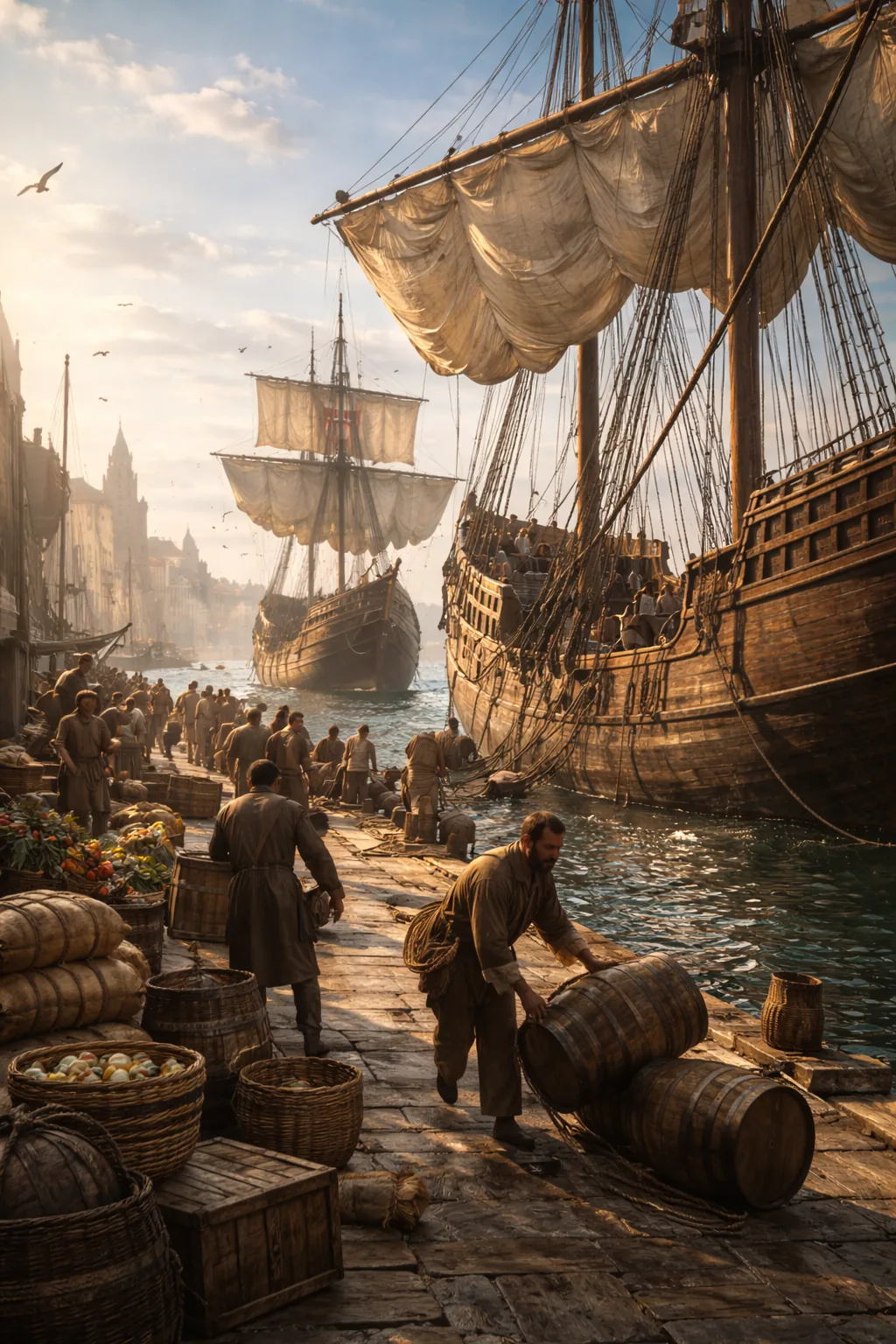
The darkest aspect of Nicholas’s legacy lies in the papal bulls he granted to the Portuguese Crown during its expansion along the African coast.
In 1452, through Dum Diversas, Nicholas authorized King Afonso V of Portugal to attack “Saracens,” pagans, and others regarded as enemies of Christianity, seize their lands, and reduce their inhabitants to perpetual servitude. In 1455, Romanus Pontifex confirmed broad Portuguese privileges over African territories and trade routes.
The text of Romanus Pontifex repeats the earlier grant and specifies what it meant for the people affected: the Portuguese king could claim their lands and reduce them to perpetual slavery. The distinction matters because the document did more than praise navigation or encourage conversion. It described coercion as a legitimate exercise of royal power (Nicholas V, 1455).
It would be inaccurate to claim that Nicholas alone created the transatlantic slave trade, which did not yet exist in its later form. It would be equally inaccurate to detach his decisions entirely from that development. His bulls provided spiritual legitimacy for the conquest and enslavement of non-Christian populations.
The protector of books also helped construct a language of domination.
The Ghost of His Power
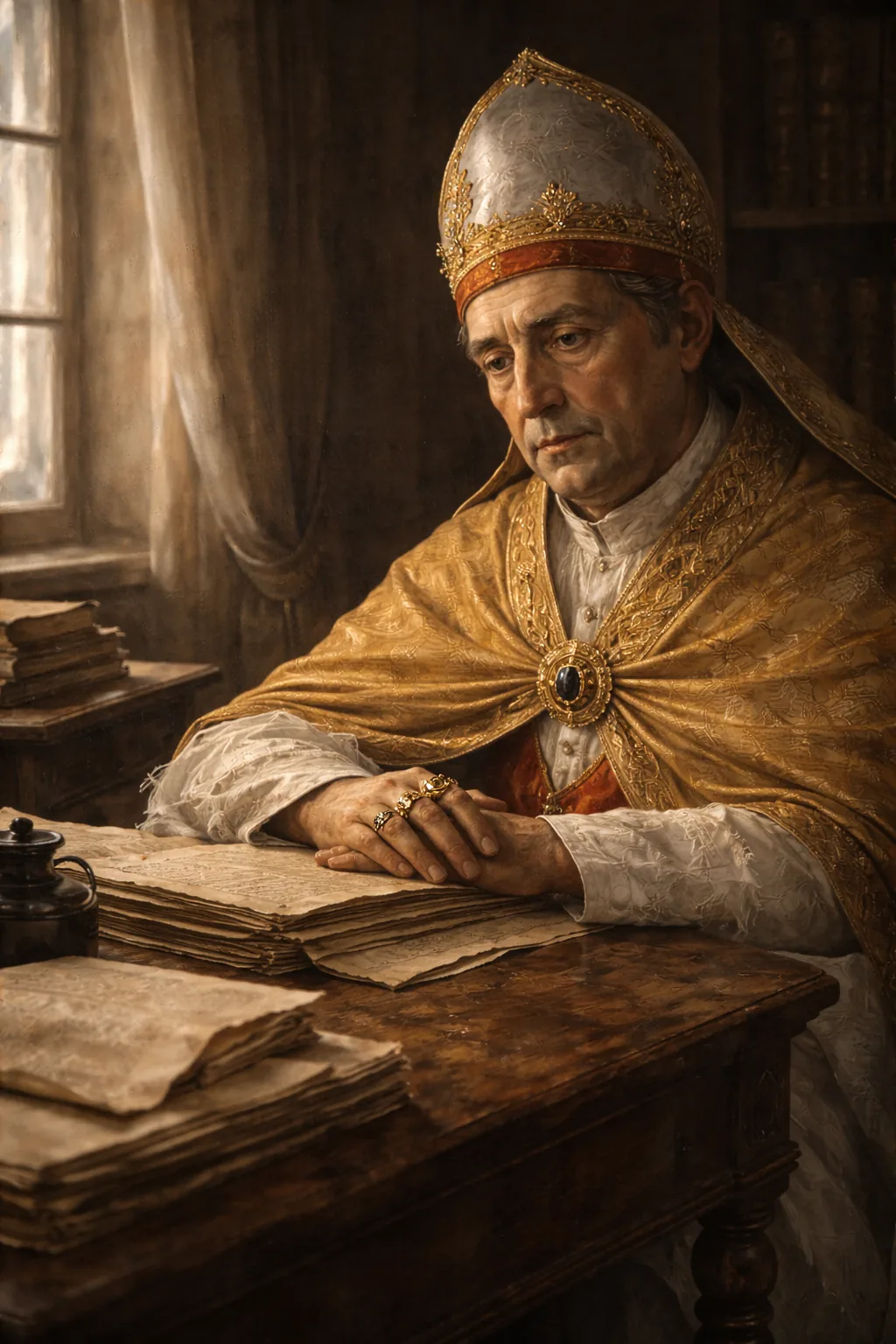
Nicholas V died in Rome on March 24, 1455. He was 57 years old and had governed for eight years.
He left unfinished architectural projects, an extraordinary manuscript collection, and a new vision of Rome as the cultural capital of Christendom. His successors expanded that vision until the city became one of the great centers of the Renaissance.
His life cannot be contained within the comforting image of the scholarly pope. He was a diplomat and patron, but also a monarch. He encouraged the study of the classical world while suppressing a republican conspiracy; sought to preserve Greek learning while proving unable to save Constantinople; imagined a library open to scholars while authorizing the perpetual servitude of other peoples.
His ghost survives within that contradiction. Nicholas V believed books, churches, and palaces could rebuild the Church’s authority. He was right. Yet every monument to power also preserves the memory of those excluded from its promise of civilization.
Sources
- Biblioteca Apostolica Vaticana (n.d.). History.
- Library of Congress (1993). Rome reborn: The Vatican Library & Renaissance culture.
- Nicholas V (1455). Romanus Pontifex. In F. G. Davenport (Ed.), European treaties bearing on the history of the United States and its dependencies to 1648 (1917). Carnegie Institution of Washington.
- Saquero Suárez-Somonte, P., & González Rolán, T. (2008). Sobre el «catilinarismo» en el siglo XV: un texto latino inédito (ms. 57 de Burgo de Osma) de la conjura de Stefano Porcari contra el Papa Nicolás V. Cuadernos de Filología Clásica. Estudios Latinos, 28(1), 75–94.
- Sovrintendenza Capitolina ai Beni Culturali (n.d.). Ponte Sant’Angelo.
- Holy See (n.d.). Nicholas V.
- Dicasteries for Culture and Education and for Promoting Integral Human Development (2023). Joint statement on the ‘Doctrine of Discovery’.