In this storyOpen index
Ferdinand Magellan: The Man Who Tried to Circle the World and Died Before He Could
History remembers him as the first man to sail around the world. Ferdinand Magellan, however, died while his expedition was still thousands of miles from completing the voyage.
History remembers him as the first man to sail around the world. Ferdinand Magellan, however, never returned to the port from which he had departed.
He died on a beach in the Philippines while his expedition was still thousands of miles from completing its voyage. He never saw Spain again, never received the honors he had been promised, and never learned that one of his five ships would succeed in closing the circle around the planet.
His achievement was different, although no less extraordinary. He conceived the route, crossed the waterway connecting the Atlantic to the unknown ocean, and commanded the expedition during its most uncertain stages. He also pushed his men beyond reasonable limits, crushed a mutiny with ruthless force, and became involved in a local conflict that cost him his life.
Magellan was one of history’s greatest navigators, but he was also a man who did not know when to stop.
Ferdinand Magellan: the voyage that changed the map of the world
Discover this story on our YouTube channel.
A life told through places and turning points
A Portuguese Captain Serving Spain
Ferdinand Magellan—Fernão de Magalhães in Portuguese—was born around 1480, probably in northern Portugal. The details of his childhood are not completely documented, but he belonged to a family of minor nobility and received an education connected to the royal court.
In 1505, he traveled to the Indian Ocean as part of Portugal’s overseas expeditions. He participated in military and commercial campaigns in India and was associated with the conquest of Malacca in 1511. These journeys introduced him to Asian trade routes and taught him the extraordinary value of spices.
Cloves, nutmeg, and other products from the Moluccas commanded enormous prices in Europe. Portugal controlled the eastern route that passed around Africa, crossed the Indian Ocean, and reached Southeast Asia.
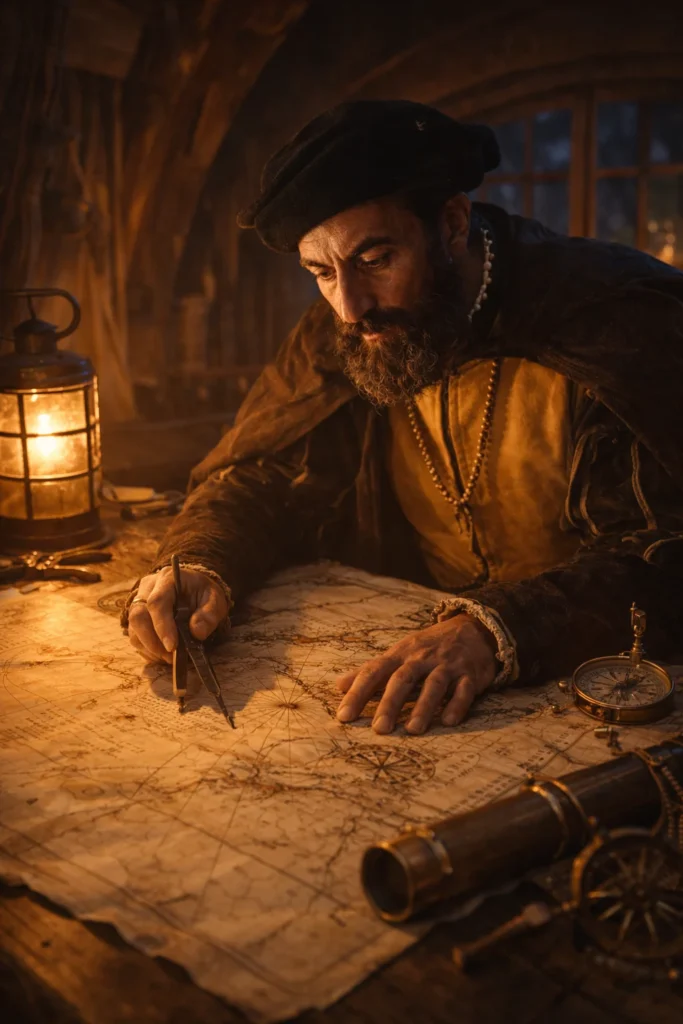
Magellan began imagining another possibility: reaching the Moluccas by sailing west.
When King Manuel I of Portugal rejected his requests for promotion and support, Magellan left his homeland and presented the project to the young King Charles I of Spain. He was not proposing to prove that Earth was round, since educated cosmographers already understood its shape. His objective was to find a passage through the American continent and reach the Spice Islands without entering the region assigned to Portugal under agreements between the two crowns.
In 1518, Charles approved the venture.
Five Ships Sailing into the Unknown
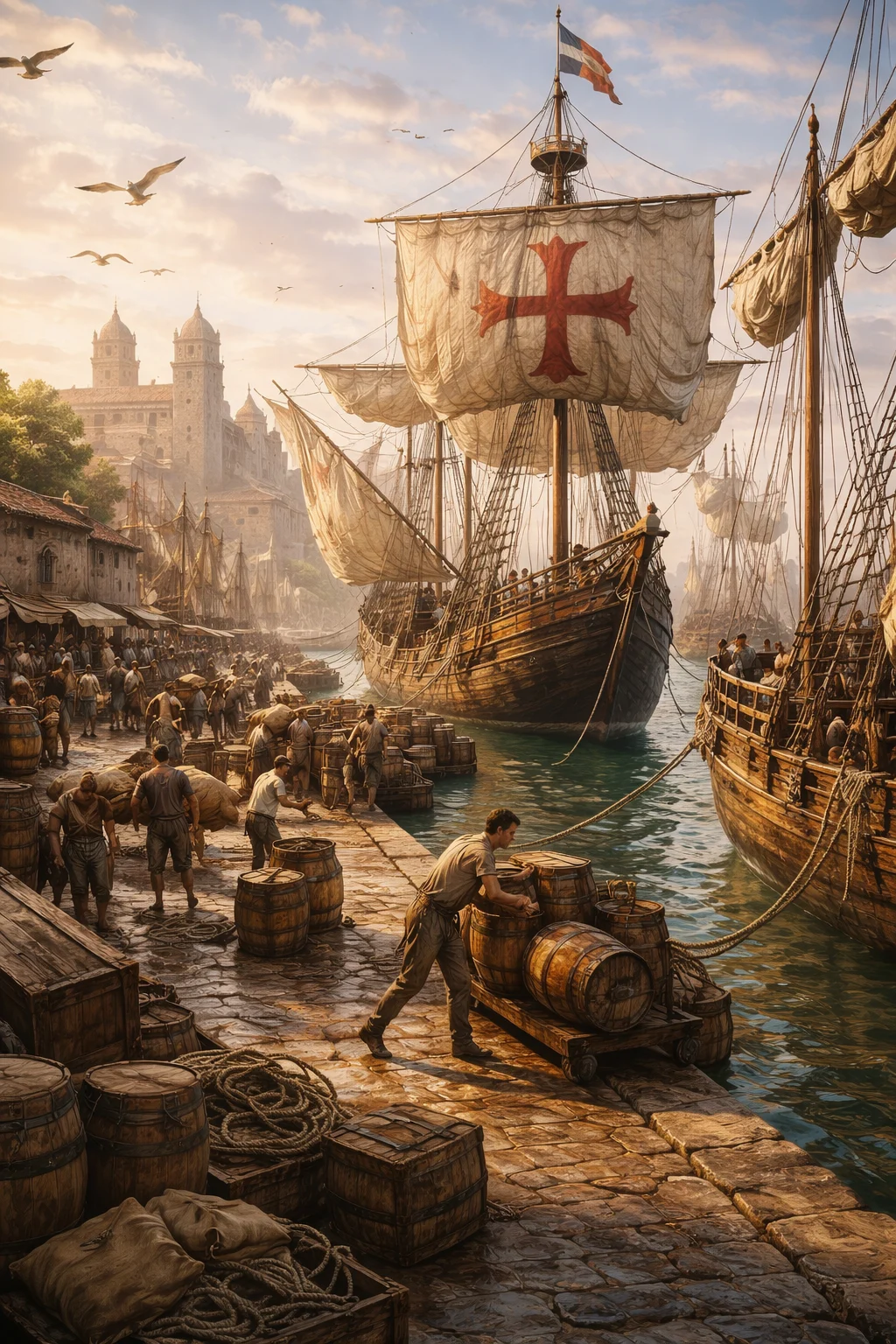
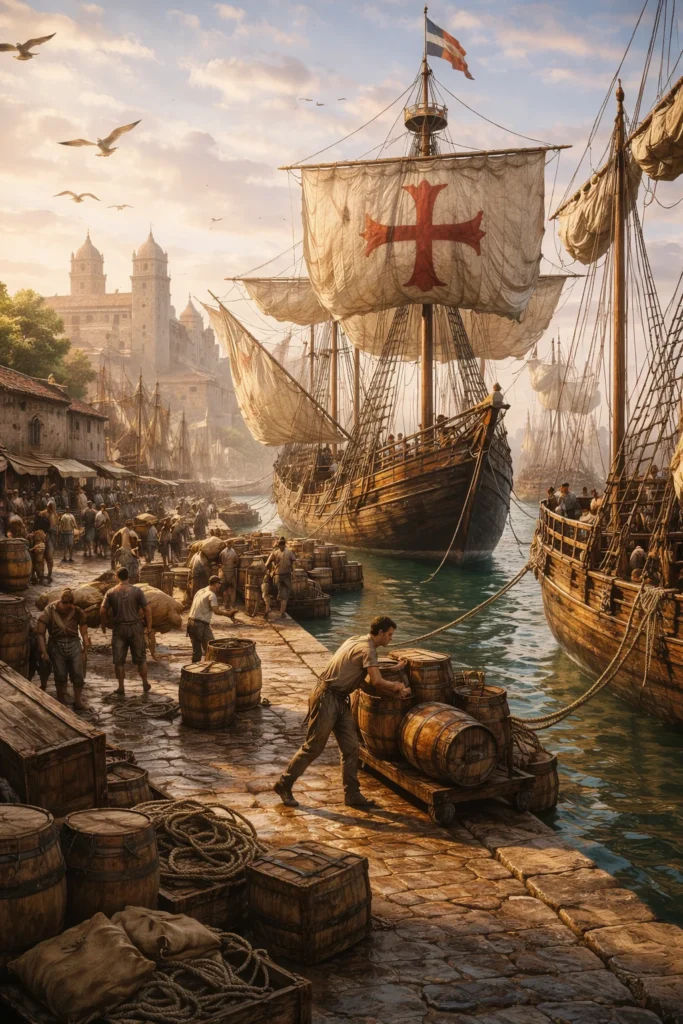
The expedition consisted of five vessels: the Trinidad, San Antonio, Concepción, Victoria, and Santiago. Their crews included Spaniards, Portuguese, Italians, Frenchmen, Greeks, Germans, Africans, and men of other origins.
That diversity reflected the international nature of sixteenth-century navigation, but it also created mistrust. Several Castilian captains resented taking orders from a Portuguese commander. Magellan, aware of their hostility, closely guarded his information and did not fully reveal his plans.
The fleet departed from Sanlúcar de Barrameda on September 20, 1519. After crossing the Atlantic, it traveled along the South American coast searching for an opening into the ocean beyond.
Every bay might have been the promised passage. Every river eventually became another disappointment.
As the southern winter approached, Magellan ordered the fleet to stop at Port Saint Julian in what is now Patagonia. Cold, diminishing supplies, and uncertainty increased discontent. During Holy Week in 1520, several captains rebelled.
Magellan responded quickly. Luis de Mendoza was killed as loyalists retook his ship; Gaspar de Quesada was executed and dismembered; Juan de Cartagena and a priest were abandoned on the coast. Magellan retained command, but made it clear that the expedition would continue even at the expense of his own men.
Soon afterward, the Santiago was wrecked during a reconnaissance mission. Its crew survived, but the fleet had lost its first ship.
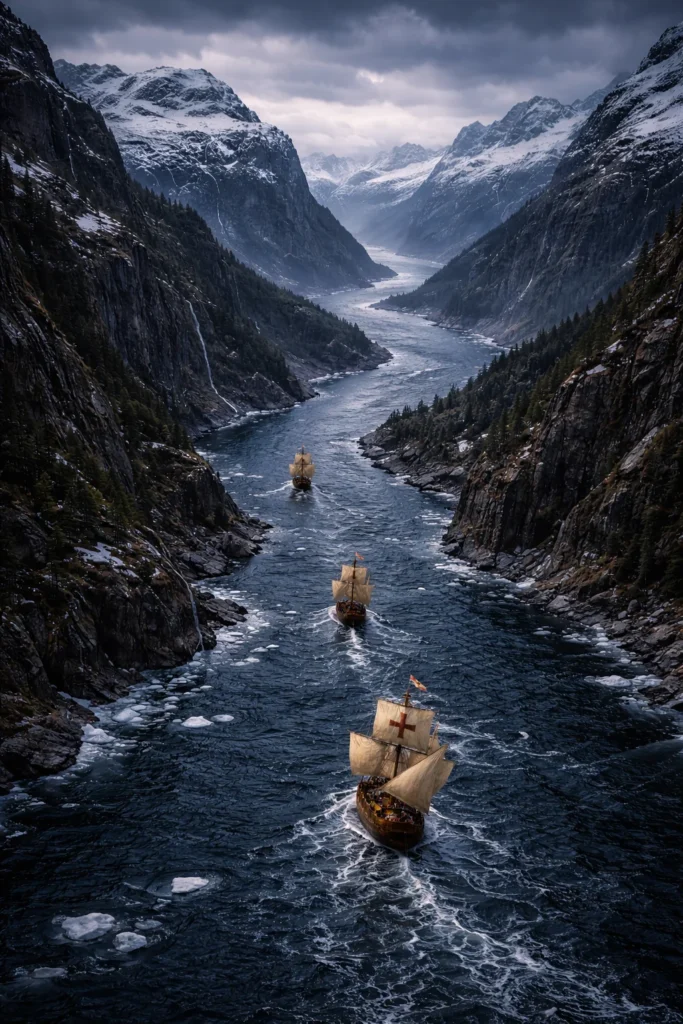
The Strait That Nearly Destroyed the Expedition
On October 21, 1520, the navigators found an opening in the coast. For weeks, they moved through a maze of channels, mountains, and dark waters, never knowing whether the route would lead to a closed gulf or to the ocean they were seeking.
The San Antonio, carrying more provisions than any other ship, deserted during the exploration and returned to Spain. Magellan continued with only three vessels.
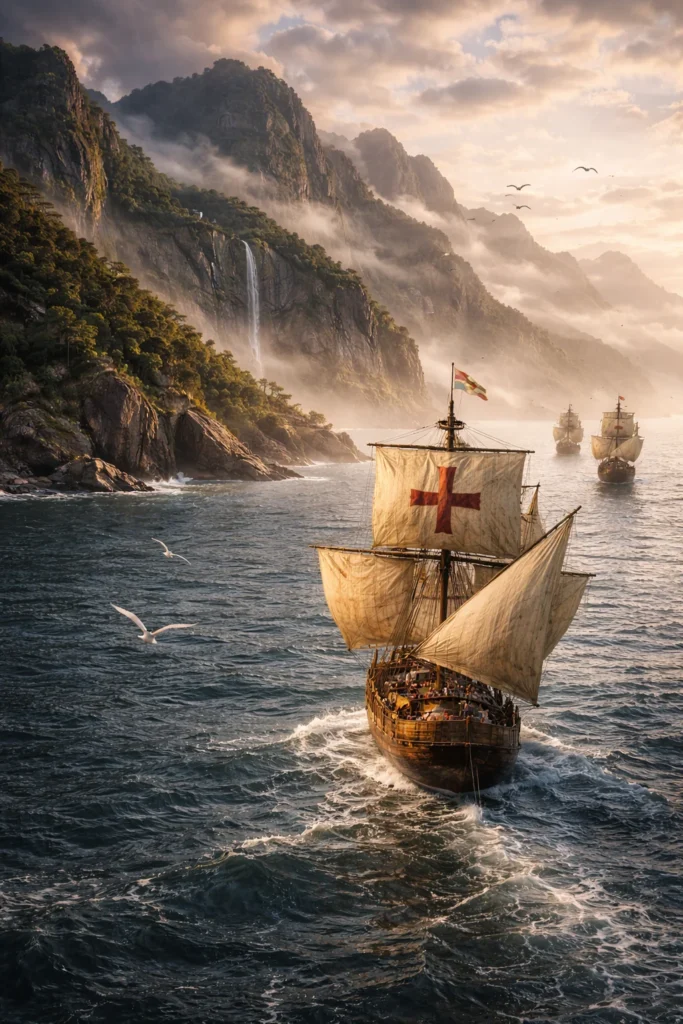
On November 28, 1520, the fleet finally emerged on the other side of the continent. The expedition had found the passage that now bears its commander’s name: the Strait of Magellan.
Before them stretched an ocean whose true dimensions were unknown to Europeans. Its waters initially appeared calm compared with the storms they had endured, and Magellan named it the Pacific.
The name would prove misleading.
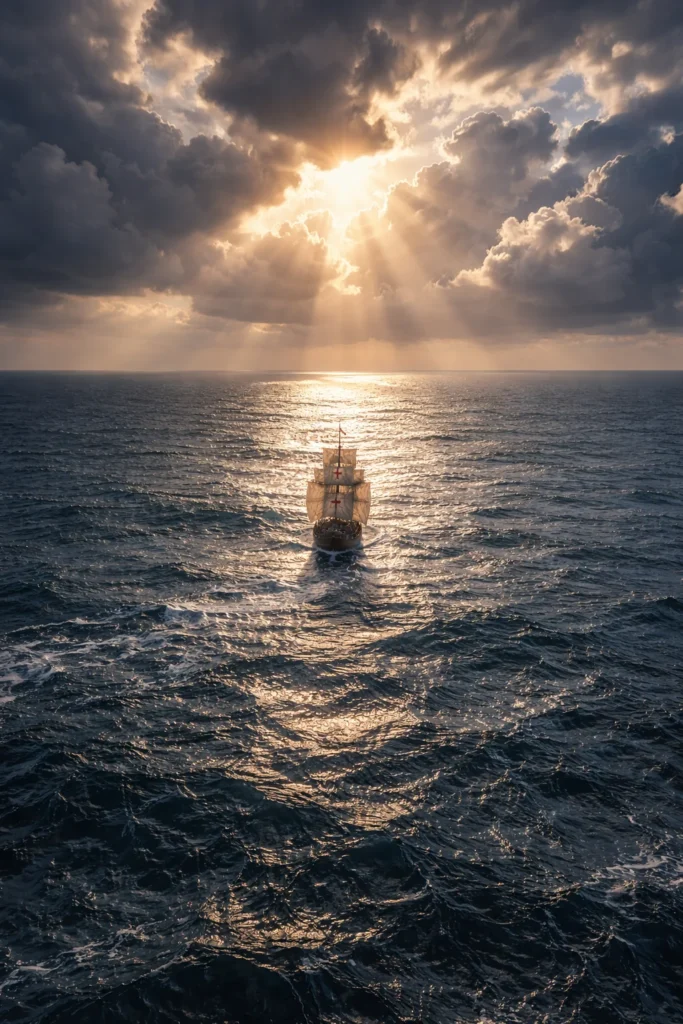
The Ocean Was Far Larger Than Expected
Magellan believed Asia was relatively close. Contemporary maps underestimated the width of the Pacific, and his ships did not carry enough provisions for such an immense crossing.
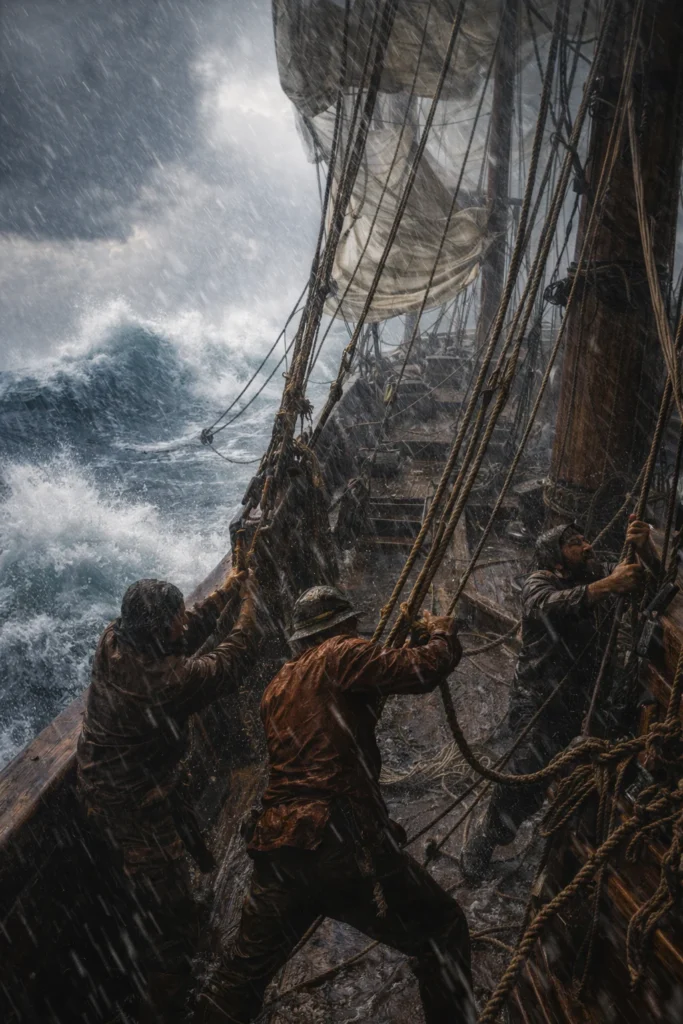
The voyage lasted more than three months. Fresh food disappeared. The water became foul. According to the expedition’s chronicler Antonio Pigafetta, the men consumed biscuit reduced to powder, leather softened in water, and even rats sold at extraordinary prices.
Scurvy began destroying their bodies. Gums swelled, teeth loosened, and sailors lost their strength. Several died during the crossing.
The expedition traveled thousands of miles without encountering the large landmasses Magellan expected. The ocean’s silence revealed something no European voyage had directly demonstrated: the planet was much larger than many existing maps suggested.
In March 1521, they reached the Mariana Islands and then the archipelago now known as the Philippines. They finally found food, fresh water, and communities willing to trade.
Magellan had crossed the Pacific.
He then made the decision that would end his life.
A War That Was Not His
On the island of Cebu, Magellan formed an alliance with a local ruler commonly known as Rajah Humabon. The leader and many of his subjects accepted Christian baptism. To Magellan, the conversions suggested that the expedition could do more than establish trade. It could also extend Spanish authority and Christianity.
Not every local leader recognized Humabon’s power. On the nearby island of Mactan, Lapulapu refused to submit.
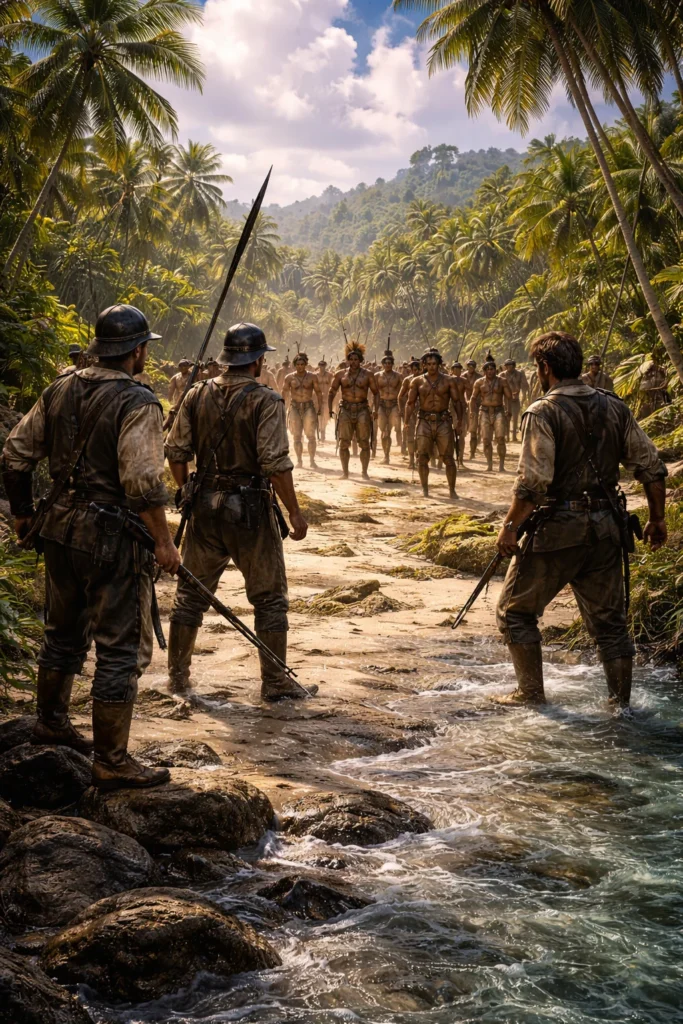
Magellan decided to intervene. He probably intended to demonstrate the power of European weapons and strengthen his new ally. He even rejected part of the military assistance Humabon offered, confident that a small European force would be enough.
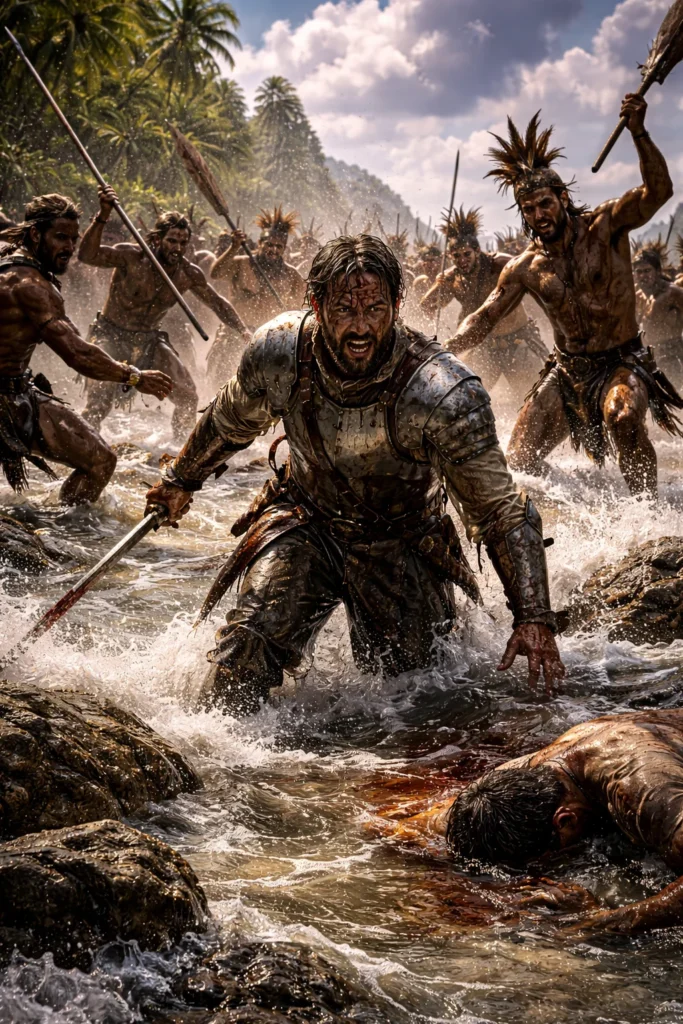
Before dawn on April 27, 1521, Magellan landed with approximately sixty men. Reefs prevented the ships from approaching the beach, leaving their artillery too far away to provide effective support. The Europeans had to wade toward land while being surrounded by a much larger force.
Pigafetta wrote that Magellan remained behind to cover his men’s retreat. He was repeatedly wounded and died on the shore. His body was never recovered.
He had survived oceans, storms, hunger, and mutiny. He died in a battle that was unnecessary to the search for the Spice Islands.
The Man Who May Have Circled the World First
Magellan traveled with an enslaved man named Enrique, whom he had acquired years earlier in Southeast Asia. Enrique spoke a Malay language and was able to communicate with some communities in the Philippine region.
His presence created one of the voyage’s most fascinating possibilities.
Enrique had been transported from Southeast Asia to Europe by traveling westward around Africa. He then returned to Asia with Magellan’s expedition, continuing westward across the Atlantic and Pacific. If he reached his homeland after Magellan’s death, he may have become the first person to complete a circumnavigation of Earth.
We do not know his exact birthplace, his final route, or what happened to him after 1521. It therefore cannot be stated as fact that he completed the circle. It remains an intriguing historical possibility.
Magellan’s will declared that Enrique was to be freed after his master’s death. The survivors, however, attempted to retain his services. Shortly afterward, Enrique disappeared from European records.
The Circumnavigation Another Captain Completed
After Magellan’s death, the expedition fell into disorder. Further attacks, deaths, and changes of command followed. With too few men remaining to operate three ships, the crew burned the Concepción.
The two surviving vessels finally reached the Moluccas. The Trinidad attempted to return to the Americas by crossing the Pacific again, but failed and was captured by the Portuguese.
The Victoria, commanded by Juan Sebastián Elcano, continued west. It crossed the Indian Ocean, rounded the Cape of Good Hope, and sailed north through the Atlantic while avoiding Portuguese-controlled ports.
On September 6, 1522, nearly three years after the expedition’s departure, the Victoria returned to Sanlúcar de Barrameda. Only eighteen of the men who had left with the fleet completed the entire voyage aboard the ship.
Magellan was not among them.
Elcano completed the first documented circumnavigation and fully understood that the ship had returned by continuing in the same direction around the planet. The voyagers also discovered that their calendar differed by one day from the calendar in Europe—a consequence of having traveled around the globe.
Going Too Far
Ferdinand Magellan was not the first man to circumnavigate the world. He was the architect and first commander of the expedition that achieved it.
The distinction matters because it reveals the voyage as a collective accomplishment. Pilots, sailors, interpreters, and men whose names barely survived endured starvation, disease, and the open ocean. Magellan found the strait and crossed the Pacific, but Elcano commanded the vessel that completed the circle.
The expedition transformed how people imagined the planet. It demonstrated in practice that the world’s oceans were connected and revealed the Pacific’s immense scale. It also opened new paths for imperial expansion, commercial competition, and colonial violence.
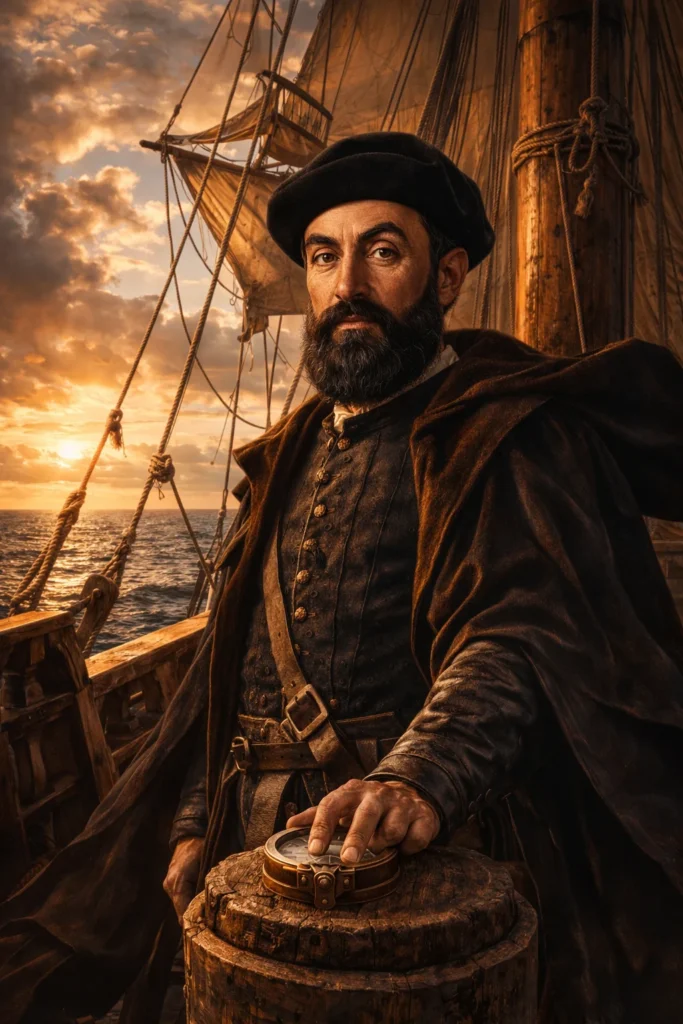
Magellan traveled farther than almost any European of his age, but at some point he confused determination with invulnerability. After overcoming what had seemed impossible, he believed he could also decide the outcome of someone else’s war.
He wanted to circle the world.
The world continued without him.
References
- Bergreen, L. (2003). Over the edge of the world: Magellan’s terrifying circumnavigation of the globe. William Morrow.
- Fernández-Armesto, F. (2022). Straits: Beyond the myth of Magellan. University of California Press.
- Joyner, T. (1992). Magellan. International Marine Publishing.
- Pigafetta, A. (2007). The first voyage around the world, 1519–1522: An account of Magellan’s expedition (T. J. Cachey Jr., Ed.). University of Toronto Press.
- Roditi, E. (1972). Magellan of the Pacific. Faber and Faber.
- Torodash, M. (1971). Magellan historiography. The Hispanic American Historical Review, 51(2), 313–335. https://doi.org/10.2307/2512478
- UNESCO. (n.d.). First circumnavigation of the world: Magellan-Elcano. Memory of the World Programme.
More from this collection
Antoine de Saint-Exupéry: The Writer Who Crossed Deserts, Wars, and Skies Until He Disappeared Into His Own Legend
Read story →
Amelia Earhart: The Woman Who Tried to Measure the World From the Air and Vanished at Her Final Frontier
Read story →