In this storyOpen index
Ibn Battuta: The Traveler Who Left for Mecca and Took Almost Thirty Years to Return
He left to complete a pilgrimage and traveled some 117,000 kilometers through courts, shipwrecks, and memories later dictated.

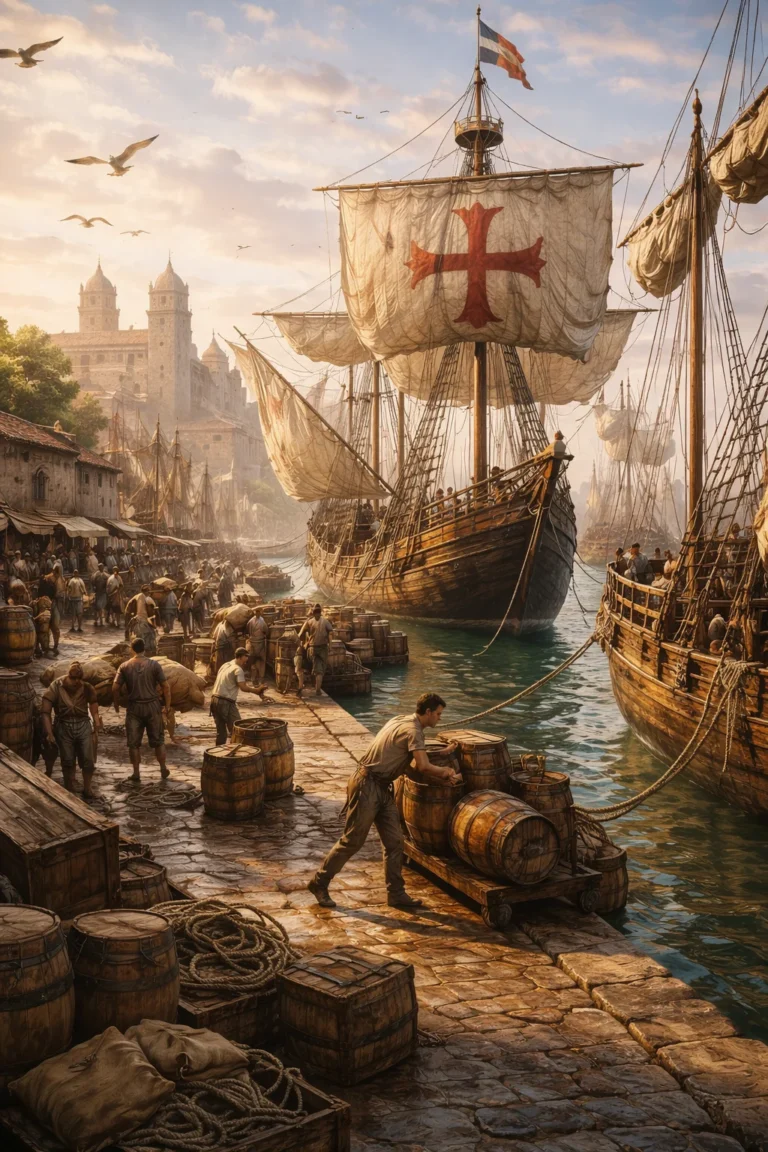
He departed intending to complete a pilgrimage and ended up traveling a distance that probably exceeded 117,000 kilometers. He crossed deserts, sailed through seas where storms could erase a ship without leaving a trace, worked for unpredictable rulers, and visited territories that are now part of dozens of countries.
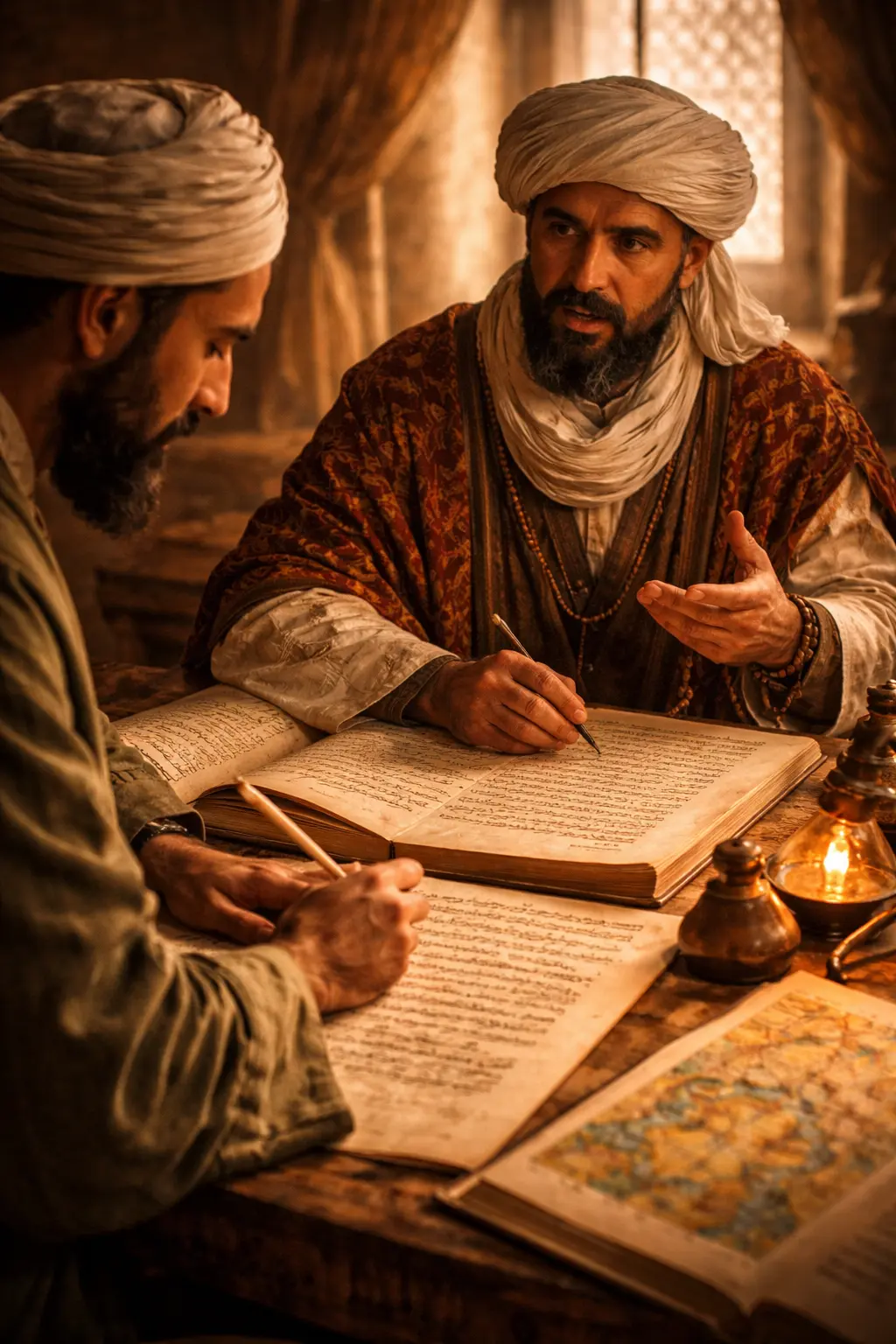
Yet one detail changes how his entire story must be read: Ibn Battuta did not keep a continuous journal throughout his travels. The account that made him one of the great travelers of the Middle Ages was dictated after his return and organized by another man. His work is therefore simultaneously an extraordinary historical document, a reconstruction from memory, and a literary narrative whose accuracy cannot always be accepted without reservation (Dunn, 2005; Waines, 2010).
Ibn Battuta on video
Discover this story on our YouTube channel.
A life told through places and decisive moments
Enter the archive
The Library of Congress preserves a digitized 1904 Arabic edition of the Rihla, the dictated account that transformed almost three decades of travel into written memory.
- Collection
- World Digital Library
- Institution
- Library of Congress
Digitized Arabic edition of Ibn Battuta’s Rihla preserved by the Library of Congress.
A journey that was supposed to end in Mecca
Abu Abdallah Muhammad ibn Abdallah al-Lawati al-Tanji, known as Ibn Battuta, was born in Tangier, Morocco, on February 24, 1304. He belonged to a family of Islamic jurists and was educated in Maliki law, the dominant school of jurisprudence in North Africa (Dunn, 2005).
In June 1325, at the age of 21, he left Tangier to perform the hajj, the pilgrimage to Mecca that every Muslim is expected to attempt if able to do so. He departed without his parents and, according to his own account, without a permanent traveling companion. He was not trying to discover unknown lands. His purpose was religious.
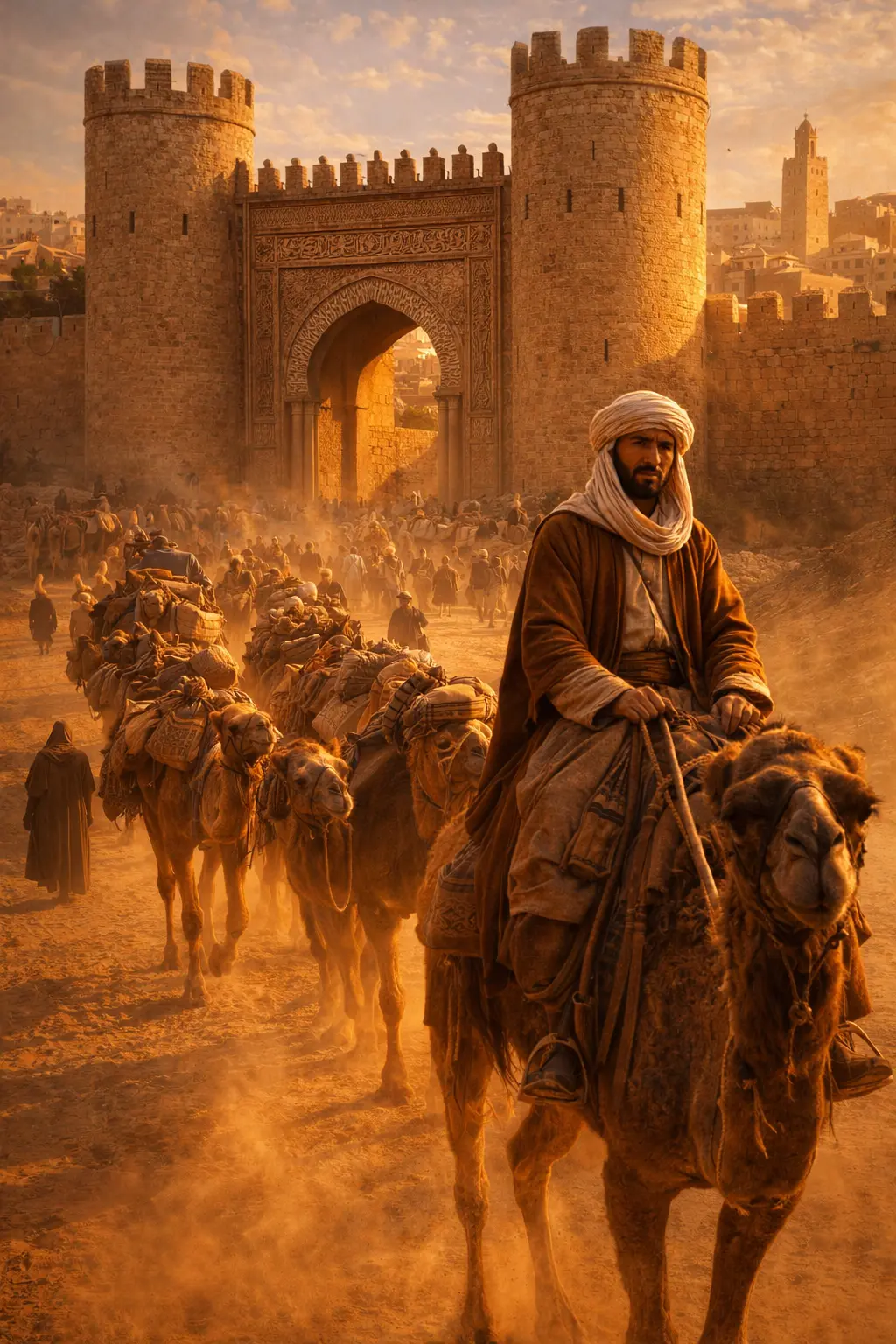
He moved across North Africa, joining caravans for protection and to reduce the danger of robbery. He passed through cities including Tlemcen, Tunis, and Tripoli before reaching Egypt. In Alexandria, he met religious men who, according to the Rihla, encouraged his desire to see distant places (Ibn Battuta, 1958–1994).
From Cairo, he attempted to reach the Red Sea, but a rebellion blocked his path. He was forced to turn back and find another route through Palestine and Syria. He visited Jerusalem, Damascus, and Medina before finally reaching Mecca in 1326.
He had completed the mission that justified his departure. He could have returned to Morocco. Instead, he continued traveling.
The networks that made his travels possible
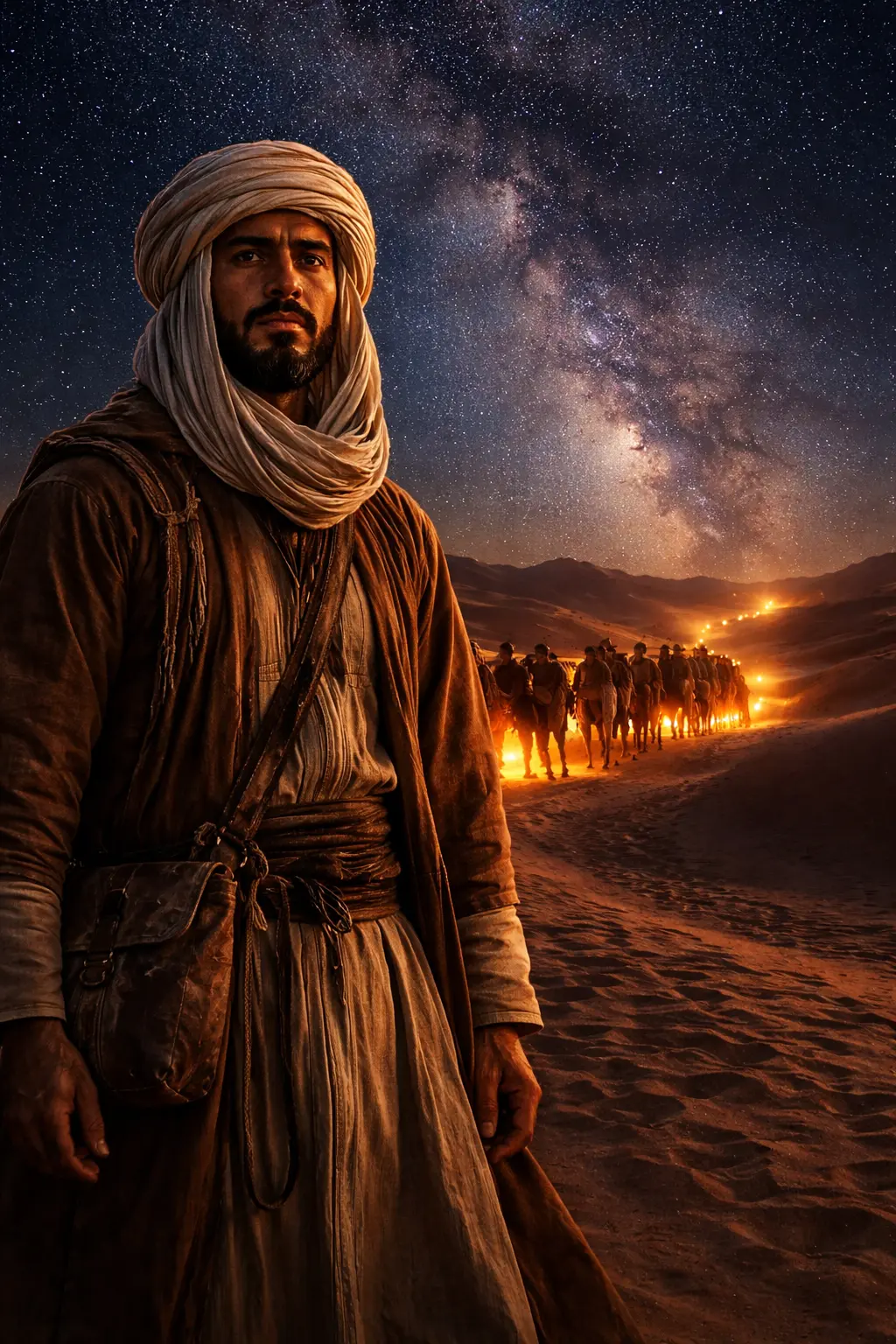
The scale of his journeys may create the impression that Ibn Battuta moved completely alone through an unknown world. The reality was different. Much of his travel occurred within the Dar al-Islam, an extensive network of Muslim societies connected by religion, trade, the Arabic language, and pilgrimage routes.
His legal education became a form of professional passport. In many places, he was welcomed by sultans, governors, judges, merchants, and religious communities. He received lodging, money, clothing, horses, and letters of introduction. On several occasions, he found employment as a judge or adviser (Dunn, 2005).
This system did not eliminate danger. He was robbed, repeatedly fell ill, survived shipwrecks, and lost possessions. But he was not traveling as a foreigner without resources. He belonged to an educated elite capable of moving between Islamic courts separated by enormous distances.
After his first pilgrimage, he traveled through parts of Iraq and Persia. He visited Baghdad less than a century after the Mongol invasion of 1258 had destroyed the power of the Abbasid caliphate. He returned to Mecca several times and later traveled through Yemen and along the eastern coast of Africa, where he described commercial cities such as Mogadishu and Kilwa (Ibn Battuta, 1958–1994; Waines, 2010).
His observations help reconstruct a medieval world far more interconnected than is often imagined. Gold, ivory, textiles, food, religious ideas, and enslaved people moved through those ports.
From the Black Sea to Constantinople
During a later stage, Ibn Battuta traveled through Anatolia and entered the territories of the Golden Horde, ruled by descendants of the Mongol conquerors. He reached the steppes north of the Black Sea and described the mobile court of Öz Beg Khan.
According to the Rihla, he accompanied one of the khan’s wives, a Byzantine princess, on a journey to Constantinople. There he saw the capital of the Byzantine Empire, visited some of its churches, and observed a Christian society from the perspective of a Muslim jurist (Ibn Battuta, 1958–1994).
The episode is fascinating, although some details of its route and chronology have raised questions. The same problem appears in different sections of the book: the central journey may be plausible, while particular conversations, dates, or descriptions seem to have been rearranged later for narrative purposes (Dunn, 2005; Waines, 2010).
Eight years under a dangerous sultan
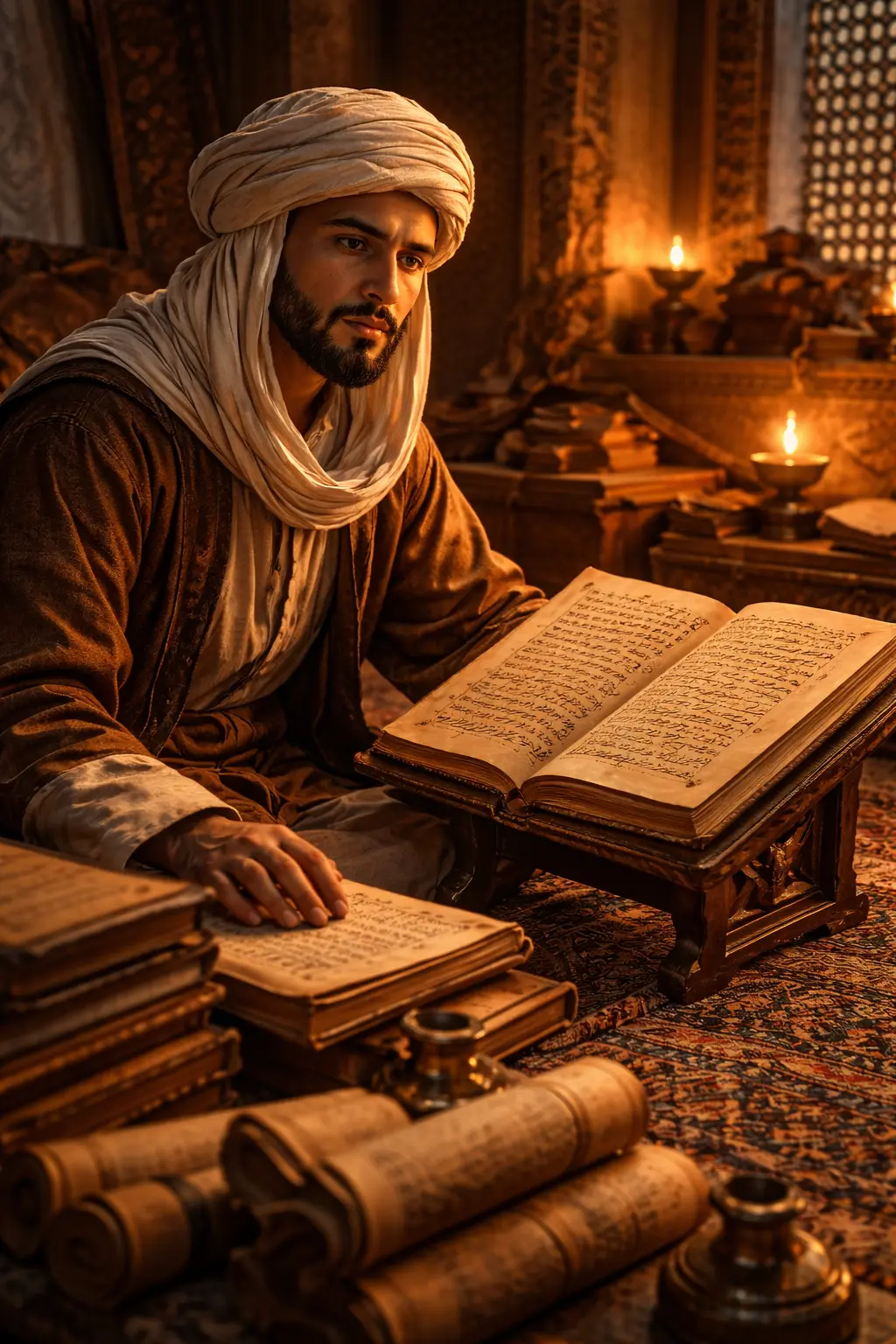
After crossing Central Asia and Afghanistan, Ibn Battuta reached India around 1333. His reputation as a foreign jurist allowed him to enter the service of Muhammad bin Tughluq, the sultan of Delhi.
The ruler was known for his intelligence, generosity, and extreme violence. He could reward a visitor with enormous wealth and order his punishment soon afterward. Ibn Battuta received a position as a judge, as well as property, gifts, and money, but he also accumulated debts and lived in constant fear of losing royal favor (Dunn, 2005).
He remained in India for approximately eight years. His position allowed him to observe the court from within, but it also made him part of a political system that relied on executions, confiscations, and punishment to preserve power.
The sultan eventually appointed him to an embassy destined for the Yuan court in China. It appeared to be an opportunity to escape Delhi honorably. The mission, however, became a succession of disasters. The delegation was attacked before reaching the coast, and one of the ships carrying the diplomatic gifts later sank near Calicut. Another vessel departed without him (Ibn Battuta, 1958–1994).
Ibn Battuta had lost the sultan’s gifts and could not return to Delhi without risking punishment. He decided to keep traveling.

The judge of the Maldives
After passing through southern India, he reached the Maldive Islands. He intended to remain only briefly, but his legal expertise was difficult to find in a recently Islamized sultanate. He was appointed chief judge and stayed for several months (Waines, 2010).
He attempted to impose strict interpretations of Islamic law, particularly regarding women’s dress and local social practices. His efforts created conflict with both the population and the rulers. He also contracted several marriages, establishing connections with influential families.
This period reveals a less romantic side of the traveler. Ibn Battuta was neither a neutral observer nor a modern defender of cultural diversity. He judged other societies according to his religious convictions and could react with disapproval when their customs differed from his own.
His account also refers casually to the purchase, possession, and receipt of enslaved people. This was part of the societies through which he traveled and of the privileges that made his way of life possible (Ibn Battuta, 1958–1994; Waines, 2010).

Did he really reach China?
After visiting Sri Lanka, Bengal, and Sumatra, Ibn Battuta claimed to have reached China under the Yuan dynasty. He described ports, cities, paper money, porcelain, and the efficiency of the imperial administration.
Most historians accept that he probably visited at least the southern Chinese coast. His movements farther inside the country, however, constitute the most disputed section of the Rihla. Some descriptions are vague, the chronology presents difficulties, and certain passages appear to rely upon information supplied by other travelers (Dunn, 2005; Waines, 2010).
The controversy does not necessarily prove that he invented the entire episode. Medieval authors combined personal experiences, stories they had heard, and passages from earlier works. Ibn Juzayy, the editor of the Rihla, also incorporated literary material from other writers, particularly when completing descriptions of particular cities (Ibn Battuta, 1958–1994).
The question, therefore, should not be reduced to whether Ibn Battuta always told the truth or lied. His book belongs to a tradition in which traveling and narrating a journey were different activities.
The return that did not end the journey
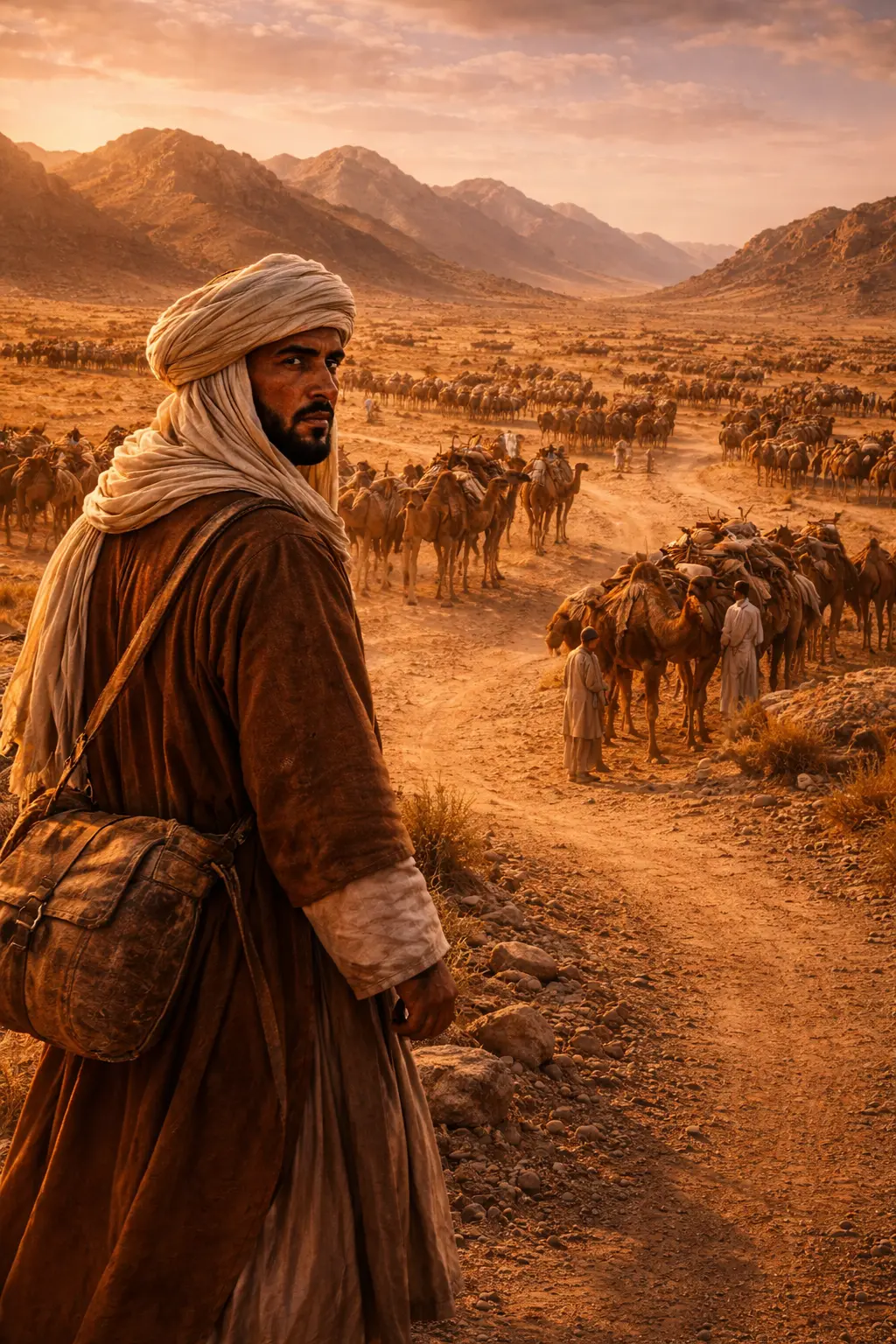
Ibn Battuta returned to Morocco around 1349. His father had died many years earlier, and his mother died shortly before he arrived. After traveling through a large part of the known world, he returned without finding the two people from whom he had parted in 1325 (Dunn, 2005).
Even then, he did not remain still. He traveled to al-Andalus while the Muslim territories of the Iberian Peninsula were under Christian military pressure. He later crossed the Sahara and visited the Mali Empire, one of West Africa’s major commercial powers.
In Mali, he observed the court of the mansa, the gold routes, and local customs. He praised certain aspects of public security but criticized others, particularly those concerning women’s social freedom. Once again, his pages reveal both the societies he visited and the prejudices of the man observing them (Ibn Battuta, 1958–1994).
He returned permanently to Morocco in 1354, almost twenty-nine years after his original departure.

The little-known fact: his book was dictated
The Marinid sultan Abu Inan Faris ordered his experiences to be preserved. Ibn Battuta related his memories to the Granadan writer Muhammad ibn Juzayy, who organized, embellished, and transformed them into a work titled A Gift to Those Who Contemplate the Wonders of Cities and the Marvels of Traveling, generally known simply as the Rihla, or The Journey (Dunn, 2005).
The work was completed around 1355 or 1356. It was not a transcription of notebooks preserved over three decades but a reconstruction created at the end of the travels. Ibn Juzayy contributed poetry, literary style, and descriptions drawn from other texts.
This helps explain some repetitions, impossible-to-arrange itineraries, and disputed passages. It also makes the work more interesting. The Rihla does not merely record where Ibn Battuta went; it shows how a medieval traveler wanted his life to be remembered.
Little is known with certainty about his final years. He probably served as a judge in Morocco and died sometime between 1368 and 1377, although the exact date remains uncertain (Dunn, 2005; Waines, 2010).
Ibn Battuta did not travel to prove that the world could be crossed or to become an explorer. He traveled because every arrival opened the possibility of another departure. He went too far not only in distance, but because he never found in returning a sufficient reason to stop.
References
Dunn, R. E. (2005). The adventures of Ibn Battuta: A Muslim traveler of the fourteenth century (Rev. ed.). University of California Press.
Ibn Battuta. (1958–1994). The travels of Ibn Battuta, A.D. 1325–1354 (H. A. R. Gibb & C. F. Beckingham, Trans.; Vols. 1–4). Hakluyt Society.
Waines, D. (2010). The odyssey of Ibn Battuta: Uncommon tales of a medieval adventurer. I.B. Tauris.
More from this collection

Antoine de Saint-Exupéry: The Writer Who Crossed Deserts, Wars, and Skies Until He Disappeared Into His Own Legend
Read story →
Amelia Earhart: The Woman Who Tried to Measure the World From the Air and Vanished at Her Final Frontier
Read story →