
In this storyOpen index
Harry Houdini: The Man Who Escaped Everything Except His Own Limit
The audience saw locks, water and chains. Bess and the stagehands knew the other half of the act: the work that made an escape possible.

He was chained inside boxes, submerged in rivers, and suspended upside down above crowds. Each time he appeared to have reached the limit, he invented a more dangerous prison.
Harry Houdini built his fame upon a simple promise: nothing could hold him. His escapes, however, were not miracles. Behind them stood training, flexibility, concealed tools, carefully studied locks, trusted assistants, and an extraordinary understanding of publicity.
The problem was that audiences were never permanently satisfied. To preserve their astonishment, Houdini had to increase the danger until his body became his principal stage. He eventually confronted even those who claimed to speak with the dead. When he died, he left one final experiment prepared: if a prison existed beyond life, he would try to escape from that as well.
Harry Houdini
A life told through trunks, posters and letters
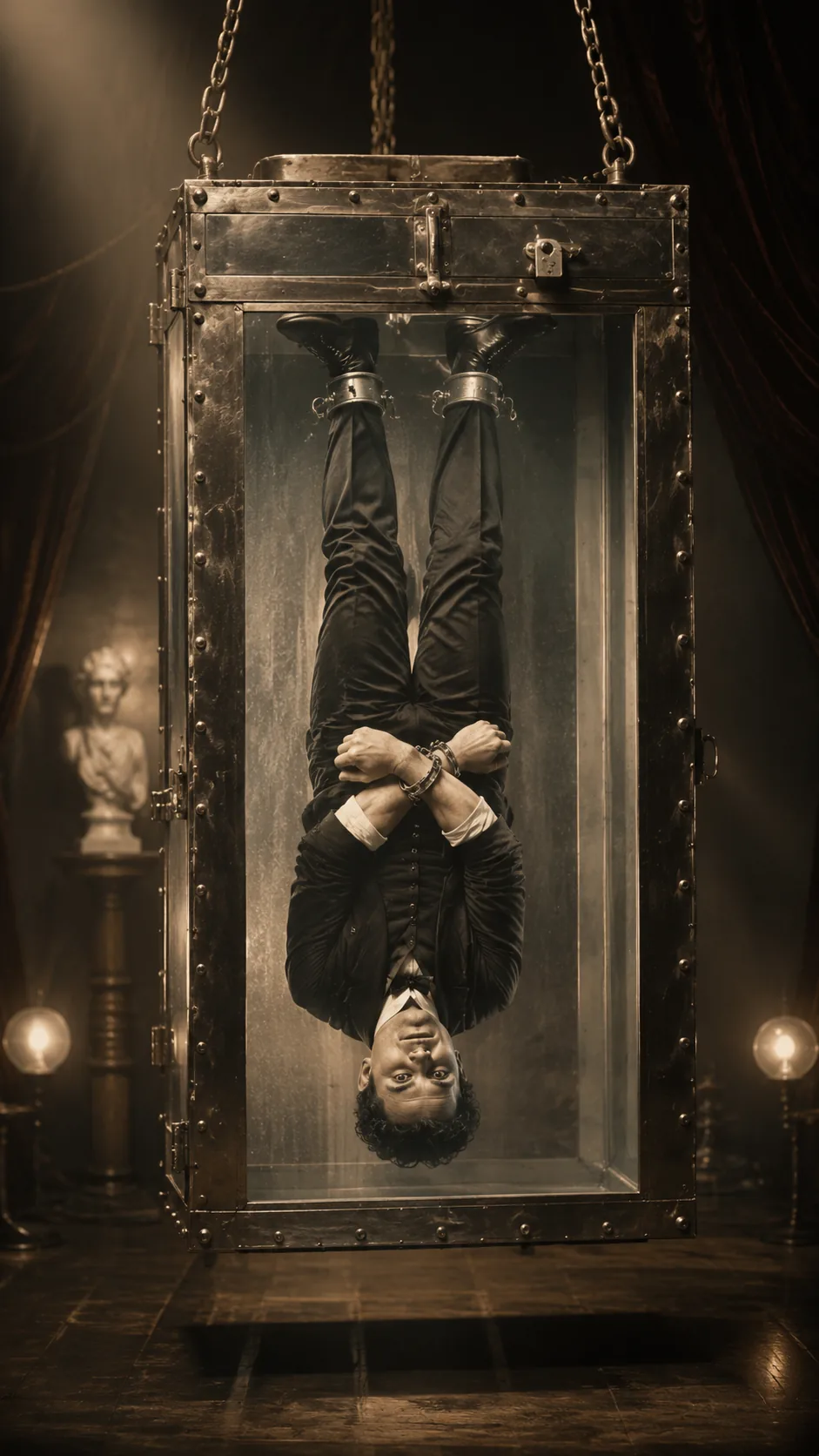
The water torture cell
The Library of Congress record lets you compare this illustration with a historical image of the apparatus. Look at the ankles: the stocks held Houdini as he was lowered into the tank.
The Immigrant Who Invented Himself

Houdini was born Erik Weisz on March 24, 1874, in Budapest, then part of the Austro-Hungarian Empire. He was the son of Rabbi Mayer Sámuel Weisz and Cecilia Steiner.
The family emigrated to the United States when he was a child and first settled in Appleton, Wisconsin, where his father served as a rabbi. They later moved to Milwaukee and New York. As happened with many immigrant families, the spelling of their names changed through official records and daily use: Erik became Ehrich Weiss.
He adopted the surname Houdini in tribute to French illusionist Jean-Eugène Robert-Houdin. The name Harry probably developed from his family nickname, Ehrie, adapted into English.
Bess and the Metamorphosis
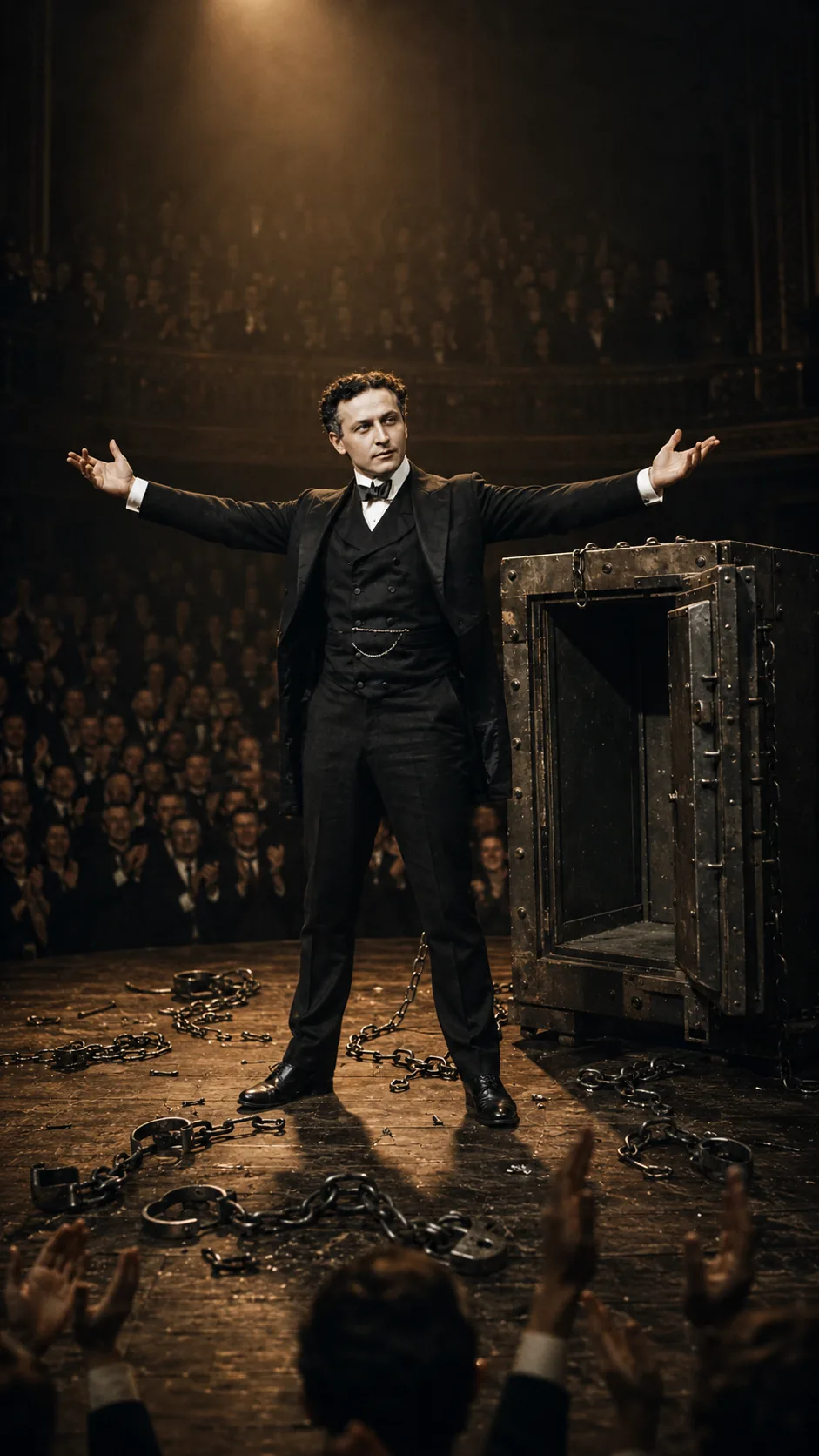
Houdini initially promoted himself as “Harry Houdini, King of Cards,” but his card magic attracted little attention. He performed with his brother Theodore, later known as Hardeen, under the name the Brothers Houdini.
In 1894, he met Wilhelmina Beatrice Rahner, called Bess, a young singer and dancer. They married within weeks, and she replaced Hardeen as his stage partner.
Together they perfected Metamorphosis, an illusion in which Houdini was tied, placed inside a sack, and locked inside a trunk. Bess stood on top of the box, raised a curtain, and within seconds the couple exchanged positions. Advertising preserved by the Library of Congress claimed that the transformation took only three seconds.
The illusion depended upon speed, coordination, and a secret mechanism. It also revealed something essential: Bess was not merely an accessory. During the difficult years, she performed, managed, and shared the risks of a career that produced very little money.
The Handcuff King

Before each appearance, Houdini visited police stations and challenged officers to confine him using their own restraints. Newspapers reported the event, and audiences came to the theater to see the man who had defeated the local police.
Manager Martin Beck recognized the act’s potential in 1899 and placed Houdini on the Orpheum vaudeville circuit. Soon afterward, Houdini traveled to Europe, where he repeated the formula: public challenges, invited journalists, skeptical police officers, and escapes carefully converted into news.
Not every challenge was completely spontaneous. Houdini studied locks, concealed keys or picks, and established conditions that protected his methods. Some handcuffs could be opened through known mechanisms or precisely applied force. On other occasions, he required a curtain so spectators could not see how he escaped.
In 1906, he escaped from a Washington jail cell that had once confined Charles Guiteau, President James Garfield’s assassin. The challenge confirmed his reputation as both a jail breaker and the “Handcuff King”.
Water as a Threat

In 1908, he introduced the Milk Can Escape. He was sealed inside an enormous metal container filled with water, its lid secured with locks. Advertising invited audiences to imagine how long he could hold his breath before drowning.
He later developed the Chinese Water Torture Cell. Suspended by his ankles, Houdini was lowered headfirst into a glass tank filled with water. The top was locked in place, and a curtain concealed the moment of escape.
The illusion combined genuine risk with controlled precautions. The tank and restraints were designed for the performance, assistants monitored the procedure, and Houdini rehearsed every movement. Nevertheless, working upside down while holding his breath underwater was not harmless.
He also escaped from straitjackets while suspended from buildings. These demonstrations attracted enormous crowds without the expense of renting a theater. Those watching from the street became potential customers for that evening’s performance.
The Aviator and Film Producer Audiences Forgot
Houdini attempted to expand his reputation beyond escape artistry. He became interested in aviation, purchased a Voisin biplane, and flew in Australia in 1910. For years he was celebrated as the first person to complete a controlled flight there, although later research suggested other aviators may have preceded him. The claim should therefore be treated as disputed, not as an unquestionable record.
He also wrote books, appeared in films, and established his own motion-picture company. He starred in serials and features including The Master Mystery and The Man from Beyond. His films exploited the familiar image of the man capable of escaping any trap, but they never achieved the enduring success of his live appearances.
His Mother’s Death and the False Spirits

Cecilia Weiss died in 1913. Houdini had been deeply attached to her and was devastated. For a time, he sought the possibility of communicating with her spirit, but his knowledge of stage methods allowed him to recognize the techniques used by fraudulent mediums.
Spiritualism had grown after World War I and the influenza pandemic. Millions of families longed for contact with the dead. Some mediums used manipulated tables, supposedly automatic writing, altered photographs, hidden sounds, and assistants who secretly investigated clients beforehand.
Houdini launched a public campaign against those who made money by exploiting grief. He attended séances in disguise, reproduced their effects through stage magic, and explained their methods during lectures.
Conan Doyle: A Friendship Broken by the Afterlife
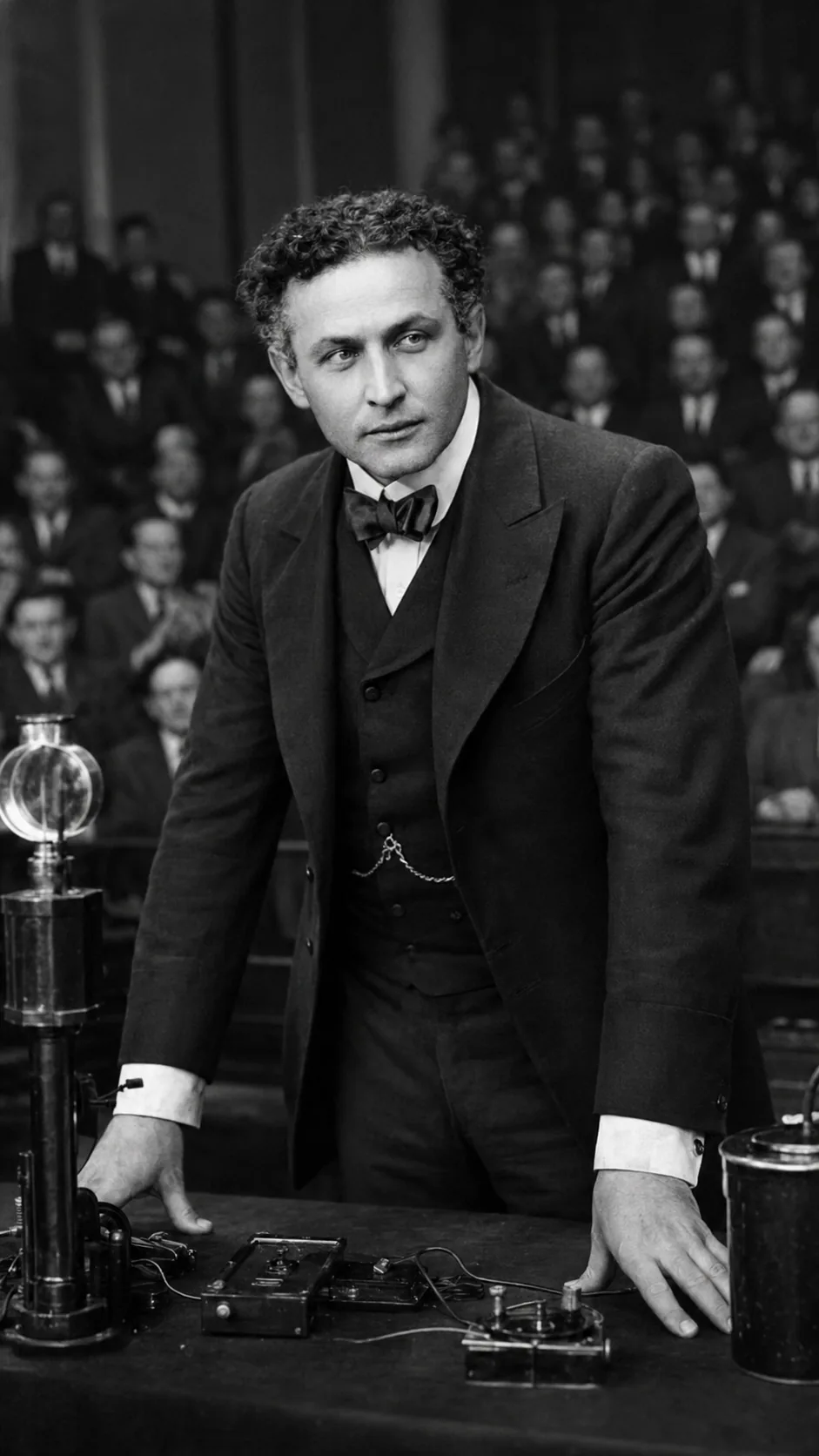
Arthur Conan Doyle, the creator of Sherlock Holmes, was a committed spiritualist. He and Houdini became friends despite their opposing convictions.
The break accelerated in 1922 when Lady Jean Conan Doyle conducted an automatic-writing session that supposedly produced a message from Houdini’s mother. The text was written in English, a language Cecilia spoke poorly; it began with a Christian cross even though she was Jewish; and it contained no convincing intimate information.
Houdini avoided directly accusing Lady Doyle of deliberate fraud but rejected the message as authentic. Conan Doyle eventually believed that Houdini’s own escapes might depend upon psychic powers, an interpretation the magician repeatedly denied.
His most celebrated confrontation involved Mina Crandon, known as Margery, a Boston medium examined by a Scientific American committee. Houdini designed devices to restrict her movements and denounced methods he considered fraudulent. The Library of Congress notes that he never conclusively exposed her under every condition, but he prevented her from receiving the scientific endorsement she sought.
A Library Built Against Superstition
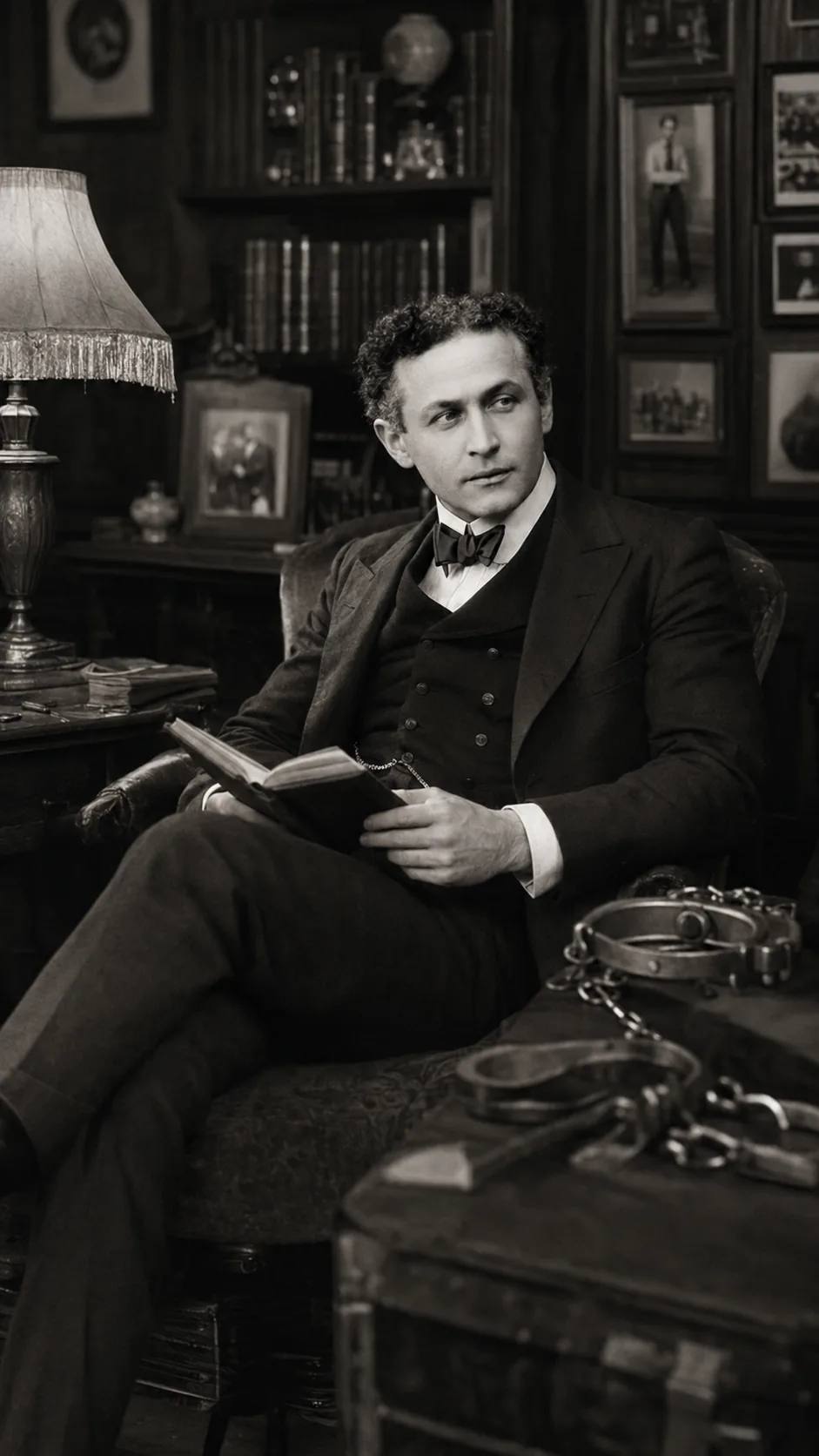
One of the least-known aspects of Houdini’s life was his obsession with books. He collected works on magic, spiritualism, witchcraft, demonology, hypnotism, and psychic phenomena. Some dated to the fifteenth century.
He did not collect merely from curiosity. He used the material to study the history of deception, compare testimony, and discover that supposedly modern miracles often repeated ancient techniques.
After his death, the Library of Congress received 3,988 volumes through his bequest. The collection contains books annotated by magicians, pamphlets, theatrical programs, and more than one hundred scrapbooks.
The Punches That Do Not Fully Explain His Death
On October 22, 1926, while Houdini was reclining in his dressing room at Montreal’s Princess Theatre, student J. Gordon Whitehead asked whether he could truly withstand blows to the abdomen. Before Houdini could properly prepare, Whitehead struck him several times.
Houdini went on to perform in Detroit on October 24 despite the pain. After that final show he was admitted to hospital and underwent surgery. His appendix had ruptured, and infection had spread through his abdominal cavity. He died of peritonitis on October 31, 1926.
The popular story claims that the punches burst his appendix. Their timing made the explanation seem obvious, but medical research has not established a causal connection. Appendicitis was probably already developing. The blows may have intensified his pain or confused his interpretation of the symptoms, but they cannot confidently be identified as the cause of the disease.
The Final Escape That Never Happened

Houdini and Bess had established a private code. If he died and discovered that communication with the dead was possible, he would attempt to send it through a medium. The key was based upon an old code the couple had used together onstage.
After his death, Bess participated in annual séances for a decade. On October 31, 1936, she conducted the final major public ceremony. No verifiable message arrived.
The failure was consistent with the escape artist’s life. He had challenged cells, restraints, water, air, and earth, but he never promised to accept false evidence merely to preserve his legend.
Sources
- Library of Congress. Houdini and the water torture cell.
- Library of Congress. Harry Houdini Collection.
- Library of Congress. Harry Houdini: Topics in Chronicling America.
- Michigan History Magazine (2000). Houdini in Detroit.
- American Experience (1999). Houdini.
More from this collection

Michael Rockefeller: The Heir Who Vanished at the Edge of New Guinea
Read story →
D. B. Cooper: The Man Who Jumped from an Airplane and Entered a Legend That May Never Have Belonged to Him
Read story →