In this storyOpen index
Michael Rockefeller: The Heir Who Vanished at the Edge of New Guinea
Photography, Asmat art and a disappearance in 1961: the documented record and the limits of theories about Michael Rockefeller.
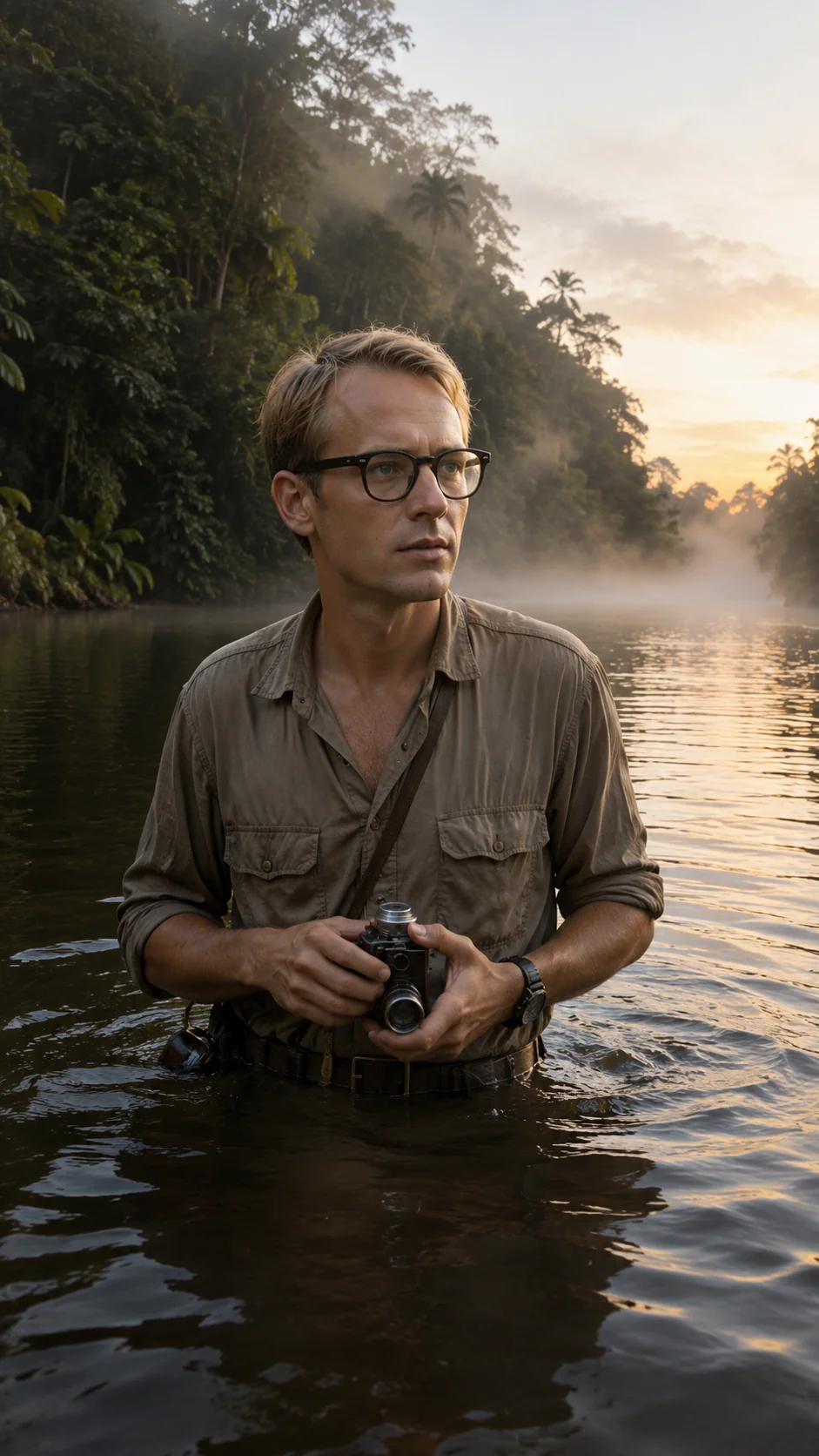
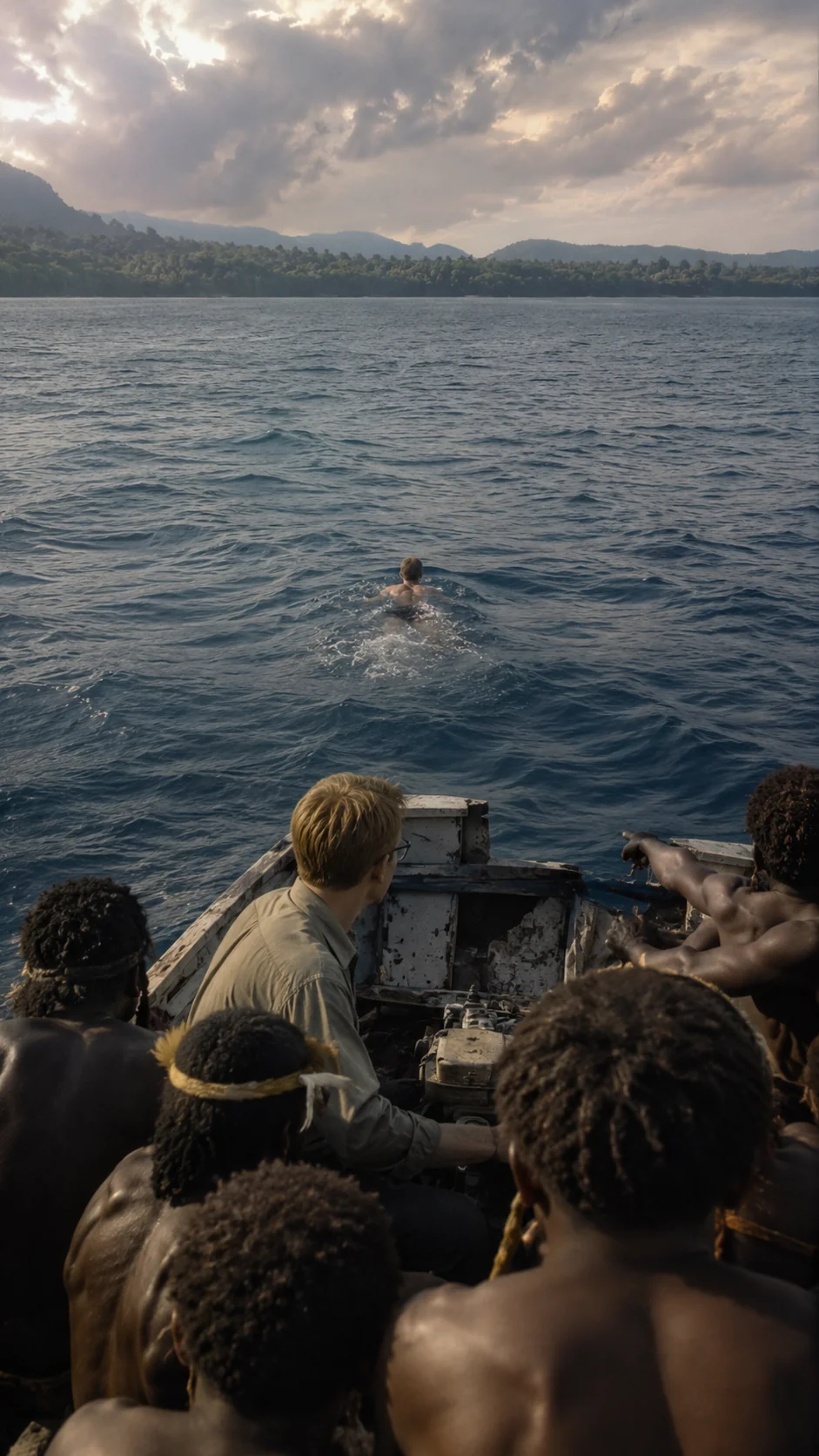
On the morning of November 19, 1961, a young American released his grip on the overturned boat to which he had clung for nearly two days. He tied two empty fuel cans around his waist for buoyancy and began swimming toward a coastline that was barely visible. Before leaving, he told his companion that he believed he could make it.
He was never verifiably seen again.
His name was Michael Clark Rockefeller. He was twenty-three years old and belonged to one of the most powerful families in the United States. His disappearance prompted searches by sea and air, colonial investigations, and decades of competing theories. Behind the mystery, however, was something more complex than the story of a millionaire lost in a distant land: a young photographer and collector fascinated by Asmat art, a society transformed by colonial expansion, and a tragedy whose ending remains unsupported by conclusive physical evidence.
Michael Rockefeller
The collector behind the mystery
Asmat Encounters
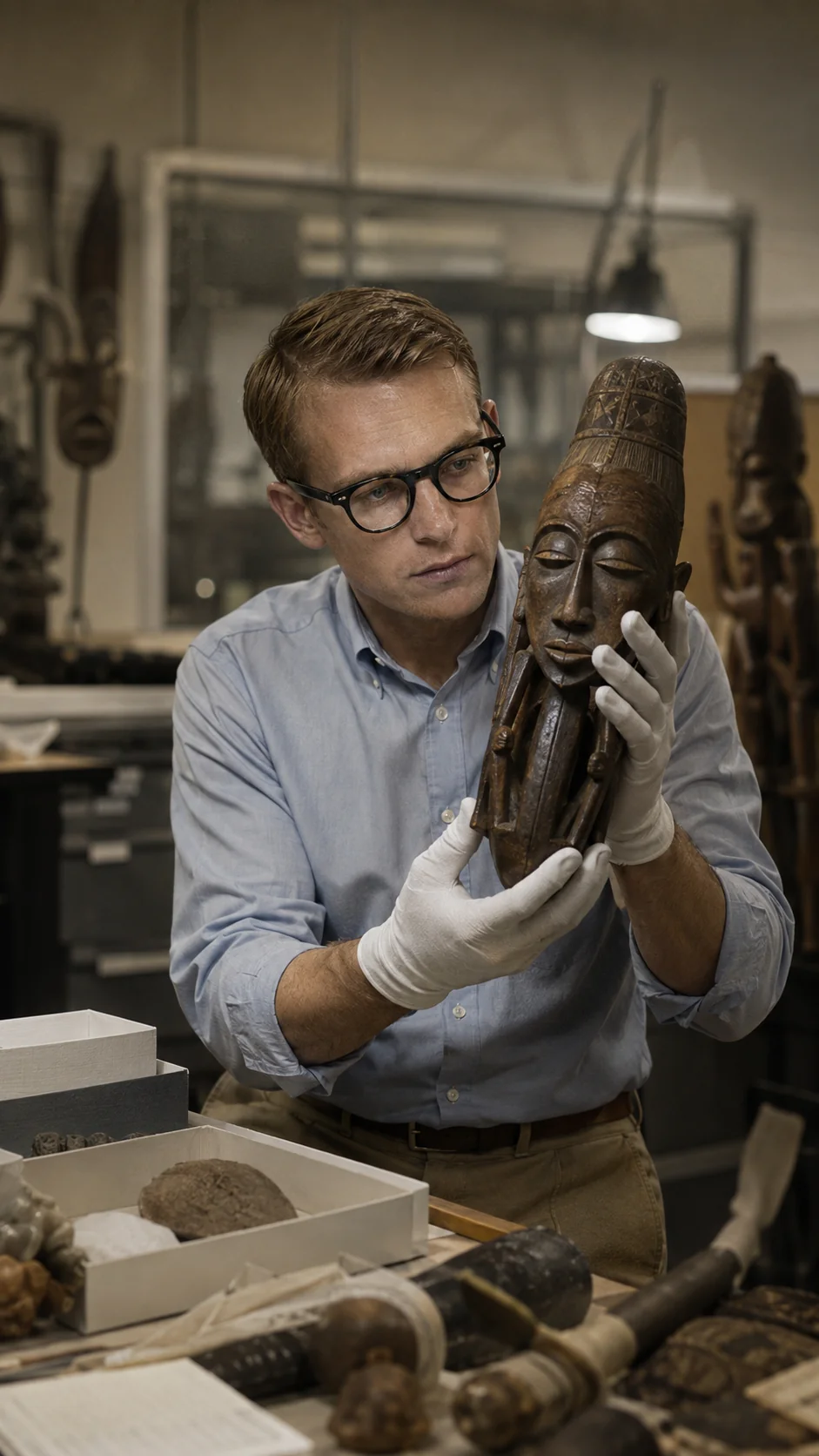
This Metropolitan Museum audiovisual resource connects Michael Rockefeller’s 1961 journeys with Asmat traditions still passed between generations. It combines archival photographs and field notes with contemporary footage from Papua. It also links to ancestor-pole records and identifies artists including Ajowmien and Jiem. The resource offers a way to learn about artworks and their creators without reducing their culture to the collector’s disappearance. The illustration accompanying this card is an artistic recreation.
A Rockefeller Searching for His Own Path
Michael was born in New York City on May 18, 1938. He was the son of Mary Todhunter Rockefeller and Nelson A. Rockefeller, already a prominent figure in American business, philanthropy, and politics. Nelson would become governor of New York and, years after Michael’s disappearance, vice president of the United States.
His surname guaranteed extraordinary privilege, but it also imposed expectations that were difficult to escape. Michael attended Phillips Exeter Academy and then Harvard University, graduating in 1960 with a degree in history and economics. He also completed a brief period of service in the United States Army.
His interest in other cultures was not simply the product of an improvised adventure. Nelson Rockefeller had established New York’s Museum of Primitive Art, an institution dedicated to works from Africa, Oceania, and the Americas that rarely received the artistic recognition granted to European traditions. The term “primitive art,” then routinely used by Western museums and collectors, is now considered inaccurate and burdened with colonial assumptions.
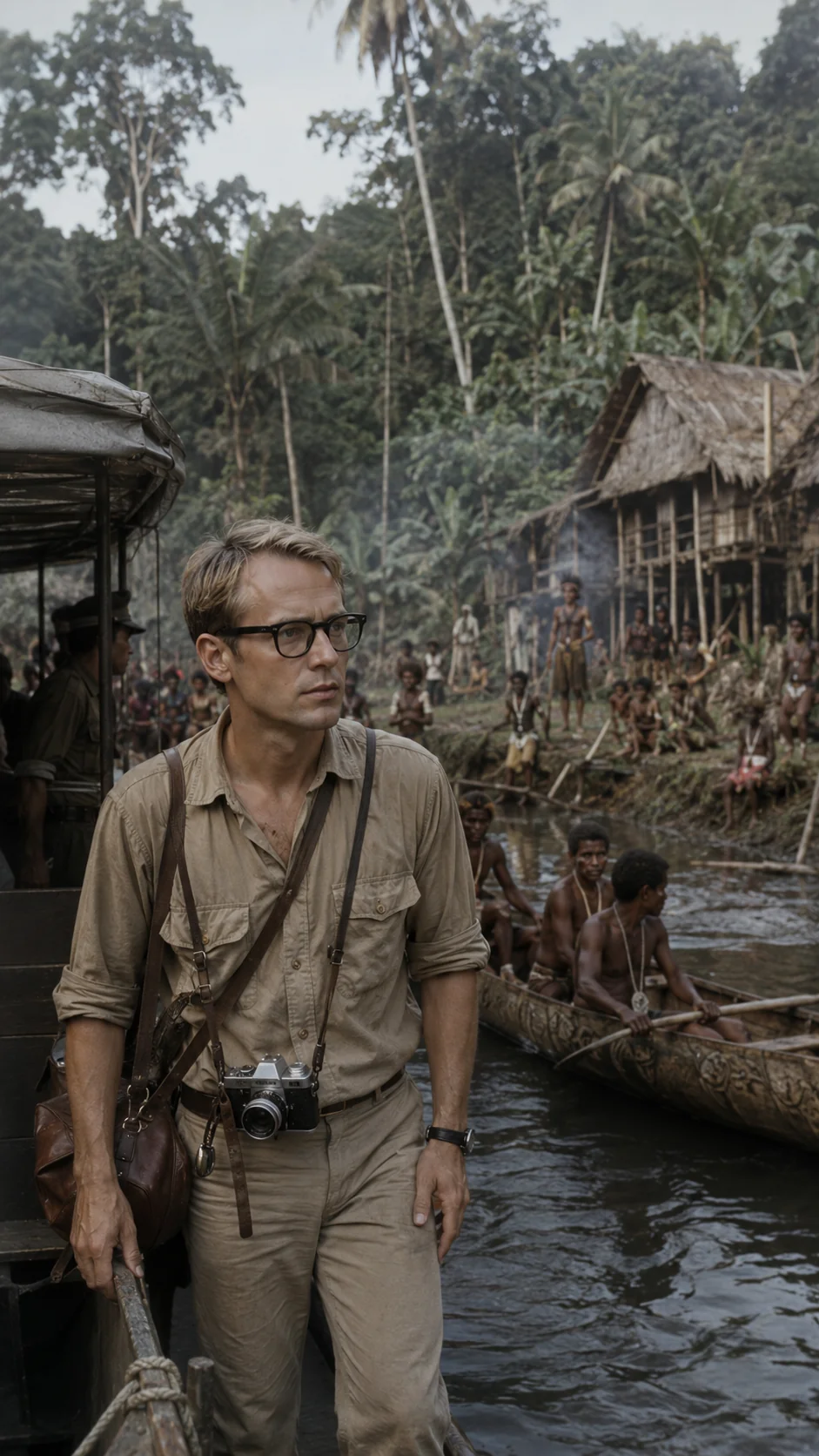
Michael wanted to participate in that world while also creating an identity that did not depend entirely upon his family’s wealth. In March 1961, he joined the Harvard-Peabody Expedition to New Guinea. He did not travel merely as a tourist. He worked as a photographer and sound recordist on filmmaker Robert Gardner’s research among the Dani people of the Baliem Valley (Peabody Museum of Archaeology and Ethnology, n.d.-a).
The expedition produced Dead Birds, one of the most influential and debated ethnographic films of its period. Michael recorded sound, took photographs, and documented daily activities. Many of those images are preserved at Harvard’s Peabody Museum and reveal a more disciplined observer than his later reputation as an “adventurous heir” might suggest (Harvard Gazette, 2006).
The Discovery of Asmat Art
During that first stay, Michael made a side trip with Sam Putnam to the Asmat region in southwestern New Guinea. The territory was then part of Netherlands New Guinea and stood in the middle of a political transition: the Netherlands was attempting to retain control while Indonesia claimed the region.
The Asmat inhabited a vast environment of mangroves, swamps, rivers, and tidal plains. Their communities possessed complex artistic and spiritual traditions. Wooden sculptures were not merely decorative objects. They could represent ancestors, express relationships between the living and the dead, and participate in ceremonies involving memory, identity, and social balance.
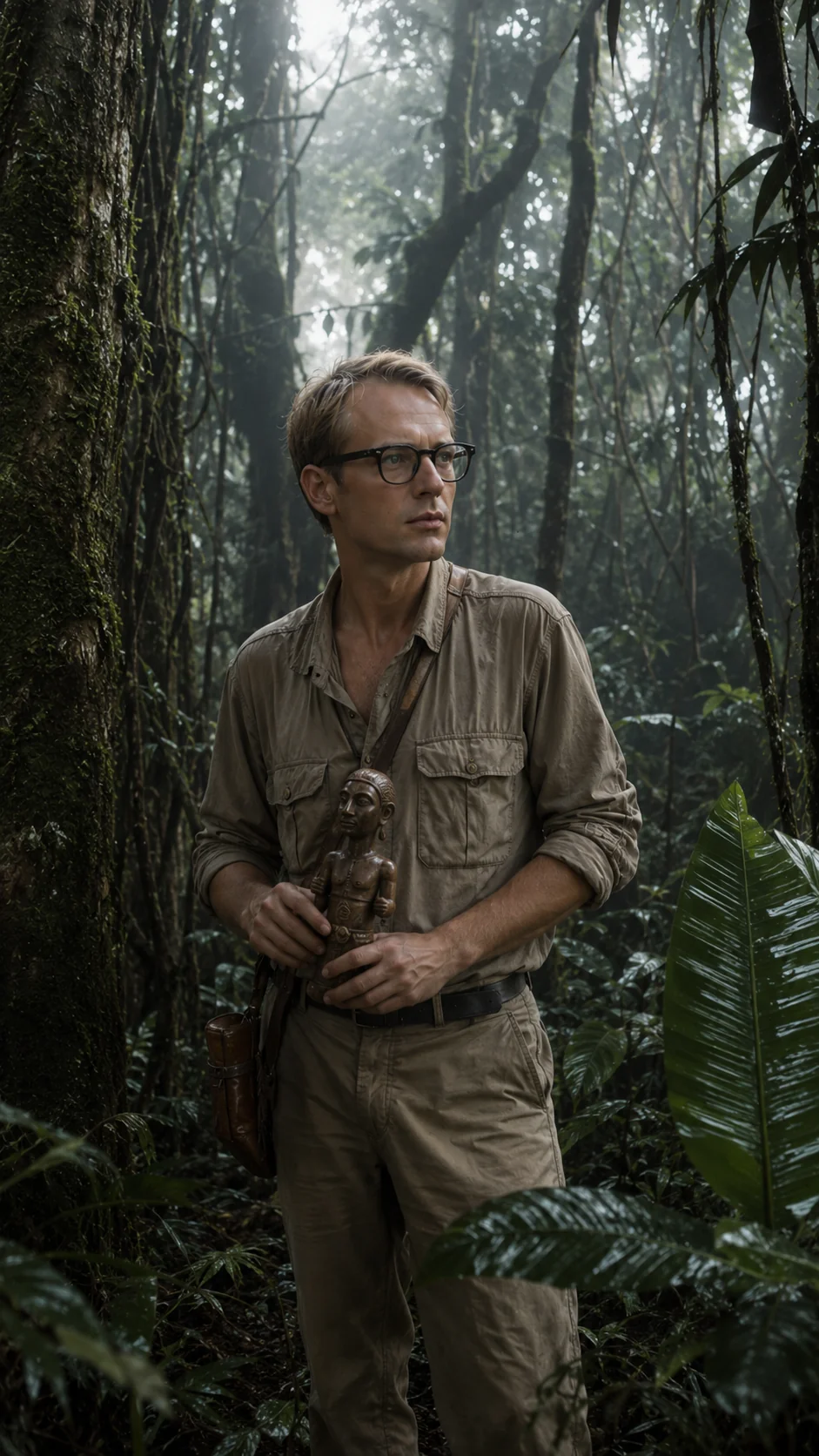
Michael was especially impressed by the bis poles, monumental ancestral sculptures carved from wood. He returned to New York, reviewed material from the expedition, and decided to go back later that same year. His purpose was to document artists, record ethnographic information, and acquire works for his father’s museum.
This work needs to be viewed from two perspectives. Michael demonstrated a genuine interest in learning the creators’ names, the origins of the objects, and their cultural functions. His collection of more than six hundred works is notable for its breadth and careful documentation (Metropolitan Museum of Art, n.d.). At the same time, he operated within a colonial structure and a Western market that moved objects away from their original communities and into foreign institutions. Recognizing his dedication does not require ignoring that imbalance.
The Second Journey
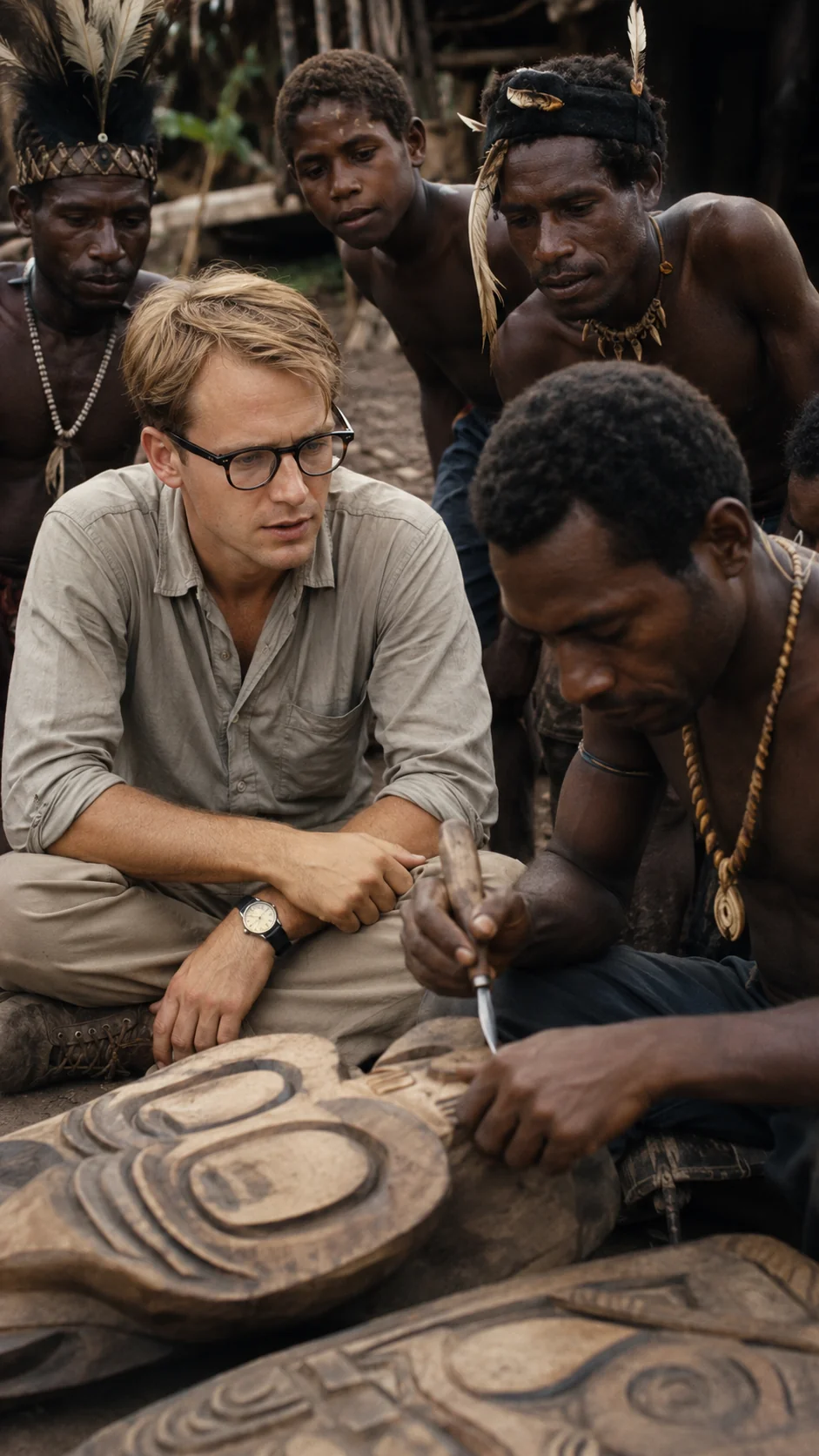
Later in 1961, Michael returned to New Guinea; he was back in the Asmat region in October. He was accompanied by René Wassing, a Dutch anthropologist employed by the colonial administration. They traveled between communities in a local boat and negotiated the acquisition of carvings, drums, shields, and ceremonial objects.
Rockefeller maintained journals, notes, and photographs. He was not merely assembling attractive pieces; he attempted to record who had made them, where he had obtained them, and what meanings they carried. The result became one of the best-documented collections of Asmat art assembled during that period.
The environment nevertheless presented serious dangers. Distances were immense, maps incomplete, and travel dependent upon rivers, tides, and small boats. Conditions in the Arafura Sea could change quickly, and available engines were not always dependable.
On November 17, Rockefeller and Wassing were traveling with two young Asmat men identified in the surviving accounts as Leo and Simon. Their craft was an improvised double canoe fitted with an outboard motor. A combination of waves, currents, and mechanical trouble left it drifting before it eventually overturned.
Leo and Simon decided to swim for help. They knew the waters and succeeded in reaching land, although returning with assistance took time. Michael and Wassing remained clinging to the overturned hull through the night and the following day.
“I Think I Can Make It”
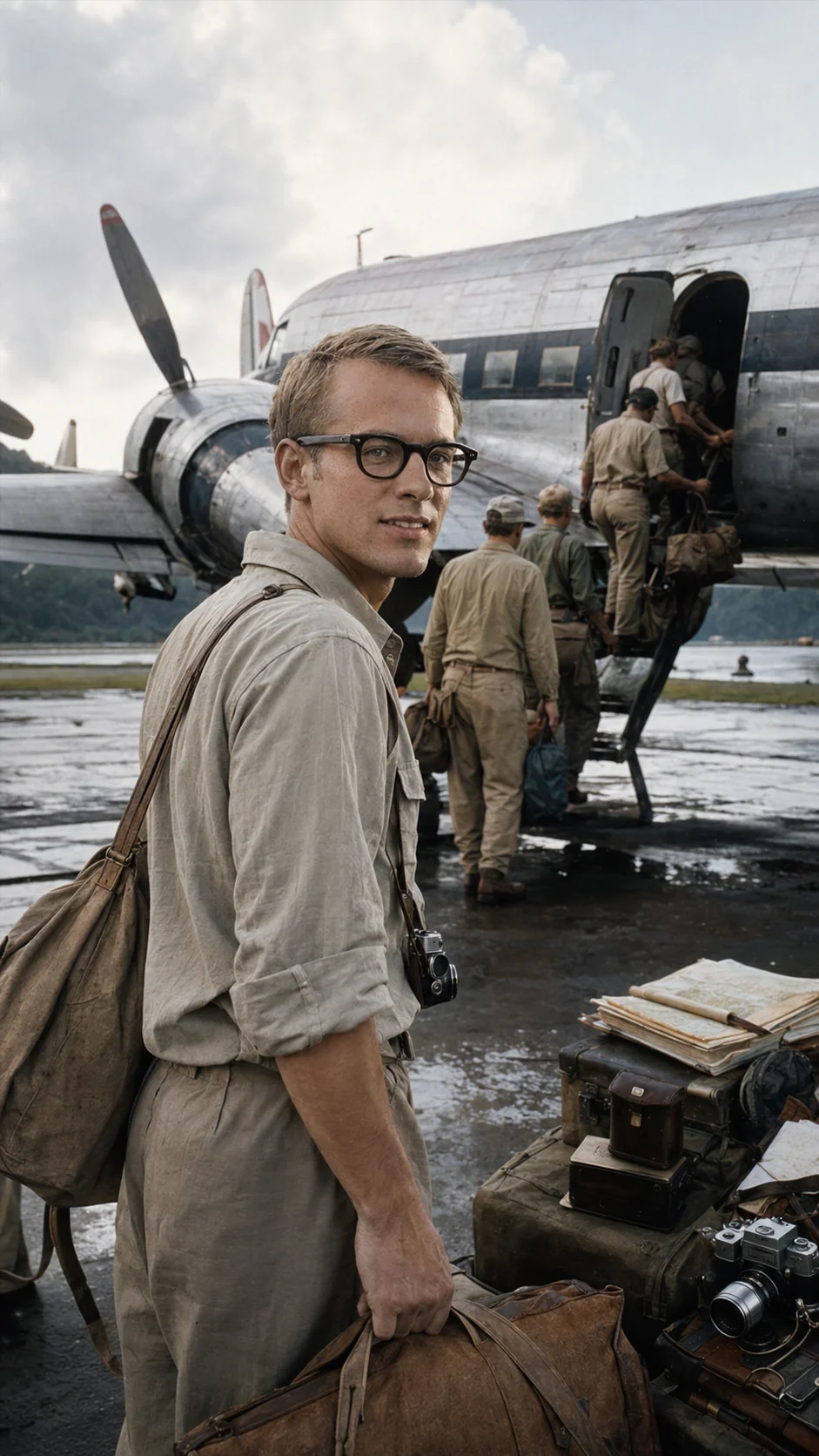
After spending a second night on the craft, Michael feared that the current would carry them into the open sea. On the morning of November 19, he made an extreme decision. He estimated that the shoreline was within swimming distance, although later estimates of the distance varied considerably.
He removed some of his clothing, tied two empty fuel cans around his waist as floats, and entered the water. According to Wassing’s later account, Michael’s final words expressed confidence that he could reach the shore (Hoffman, 2014).
Rockefeller was a capable swimmer, but he faced powerful currents, changing tides, exhaustion, exposure to the sun, and a distance that was nearly impossible to judge from water level. The cans provided flotation but may also have restricted his movement.
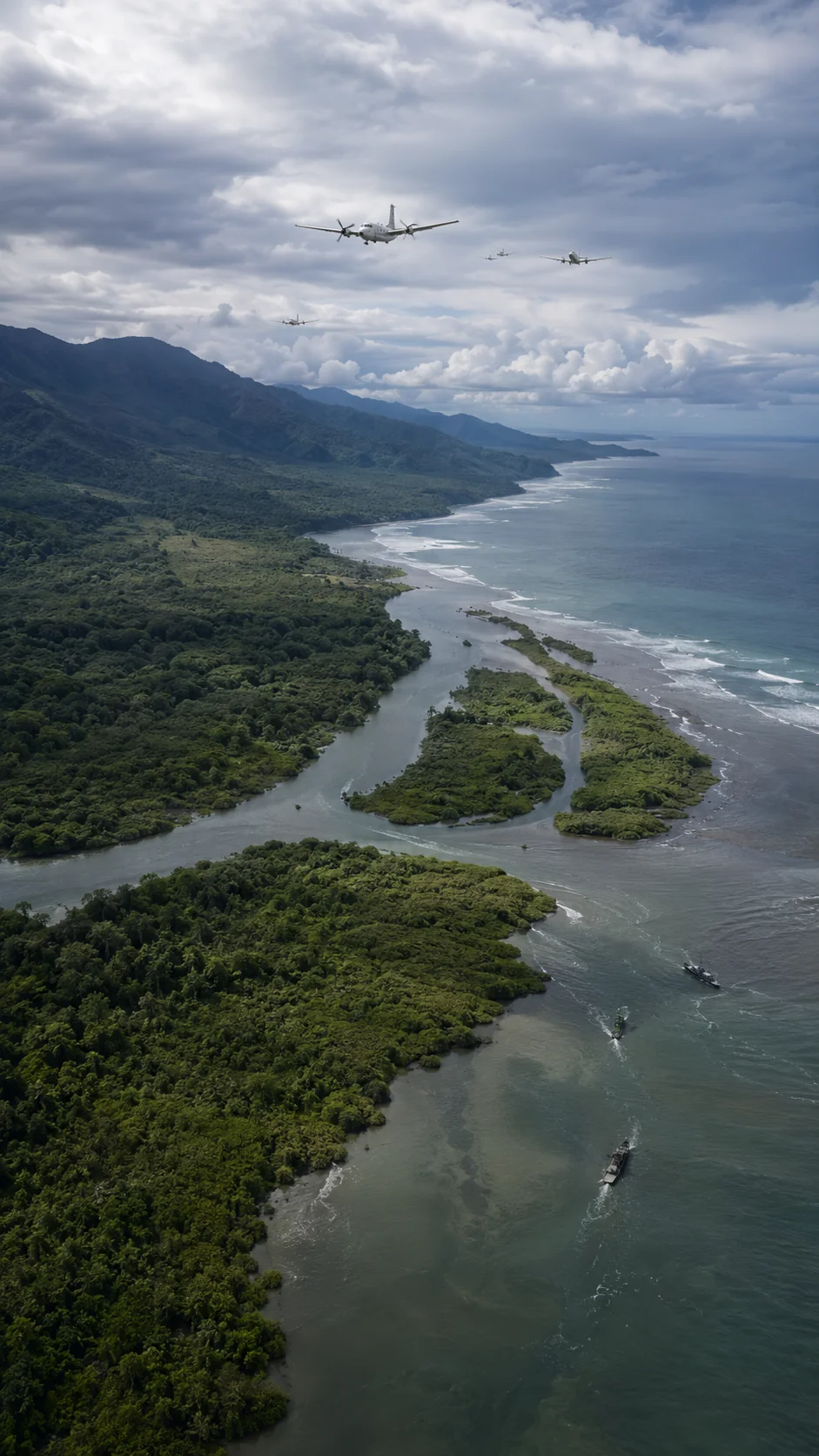
An aircraft located the boat, and Wassing was rescued on November 20. Once authorities learned that Michael had attempted to reach land, an enormous search began. Ships, aircraft, helicopters, missionaries, Dutch officials, and local residents participated. Nelson Rockefeller personally traveled to New Guinea to follow the operation.
They found no body, fuel cans, clothing, or other object that could establish Michael’s final movements with certainty.
The Simplest Explanation: The Sea
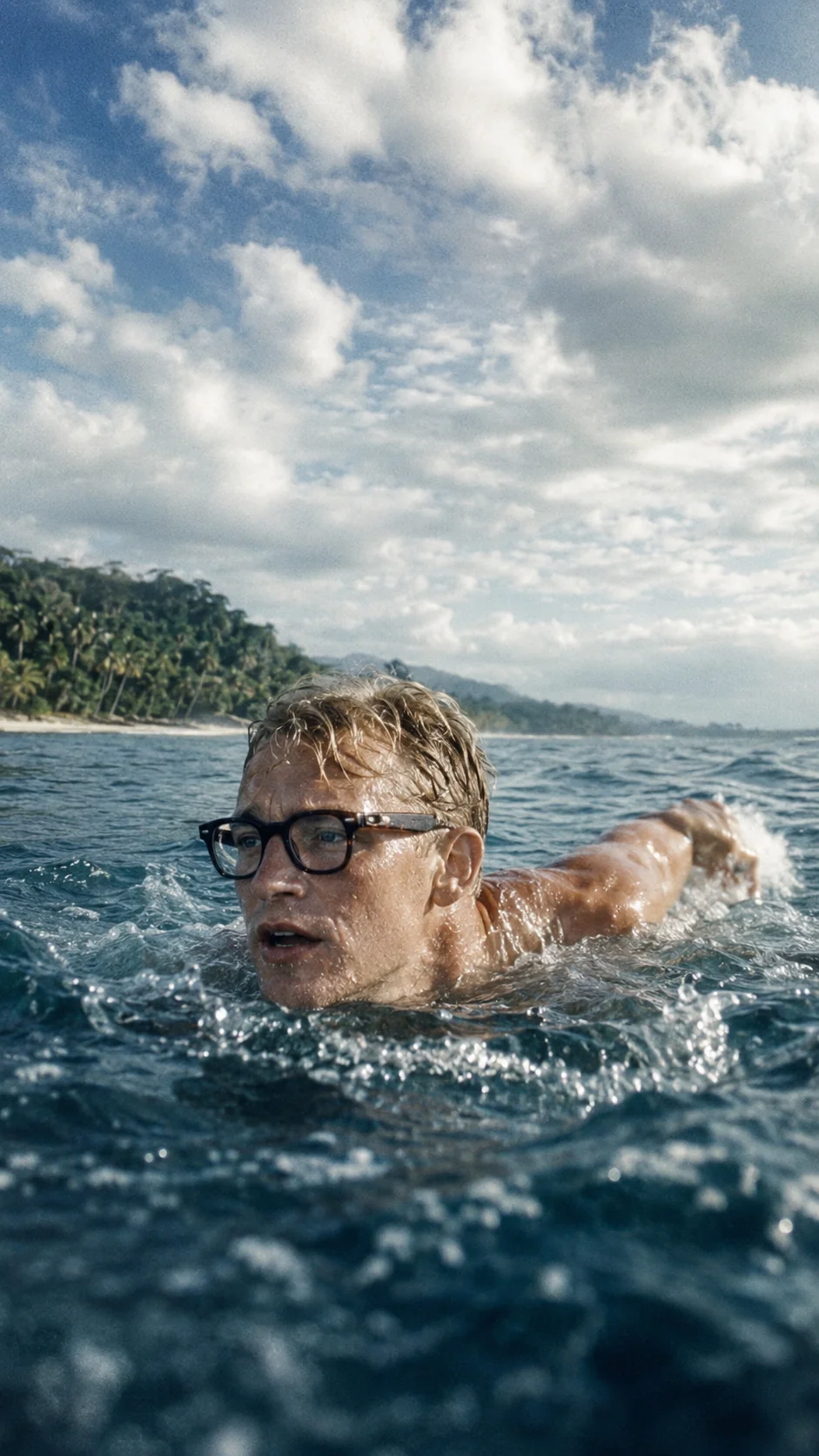
The original hypothesis was that Michael drowned before reaching land. It was a reasonable conclusion. The shore may have been considerably farther away than he believed, and the currents could have carried him off course. Exhaustion after nearly two days on the overturned hull would have reduced the chances of even an experienced swimmer.
Sharks and saltwater crocodiles were also mentioned, but no evidence confirmed an animal attack. The failure to recover a body was not unusual in a region of currents, estuaries, and mangrove swamps.
Michael Rockefeller was declared legally dead. The official explanation was drowning, but no remains were recovered to establish a cause of death through forensic examination (Hoffman, 2014).
His twin sister, Mary Rockefeller Morgan, has maintained that the most likely explanation is that he failed to complete the swim. She has also emphasized the central fact of the case: no one knows with certainty what happened after Michael left the boat.
The Otsjanep Account
The most controversial theory holds that Michael reached land near Otsjanep and was killed by men from that community. Some versions add that his body was consumed in accordance with ritual practices connected to warfare and revenge.
This hypothesis did not originate solely in sensational novels. Dutch missionaries familiar with the region’s languages and communities collected testimony shortly after the disappearance. According to those accounts, several men encountered an exhausted foreigner near the coast and killed him. Some of this information was passed to colonial officials but was not clearly released to the public (Hoffman, 2014).
There was also a historical background. In 1958, a Dutch colonial patrol had fired upon residents of Otsjanep during a confrontation, killing several important men. Within traditional cycles of retaliation, those deaths might have demanded a response. Had Michael reached the coast alone, he could have been perceived simply as another representative of the white colonial world.
Journalist Carl Hoffman reconstructed this theory from documents, missionary testimony, and interviews in his book Savage Harvest. His investigation argues that Dutch authorities had political reasons to avoid a scandal. An admission that the son of an American governor had been killed could have damaged their position while they were struggling to preserve influence over the territory (Hoffman, 2014).
Even so, the hypothesis does not amount to definitive proof. The testimony was indirect, some accounts were collected years later, and no human remains have been identified as Rockefeller’s. None of his personal possessions has been verifiably recovered.
The responsible way to tell the story is therefore to distinguish a theory supported by documentary indications from a proven event. Michael may have drowned. He may also have reached land and died there. The available evidence cannot close the case.
The Photograph That Proves Nothing
A story circulated for years claiming that a later photograph or film showed a white man living among the Asmat and that the man was Rockefeller. The image has repeatedly appeared without reliable context and is often presented as evidence that he survived.
There is no credible identification connecting the individual to Michael. Knowing where a film came from does not identify the person appearing in it: without corroborated identification, a visual resemblance does not demonstrate survival. The related theory—that Rockefeller abandoned his identity and voluntarily remained in the region—also lacks documentary support.
It demonstrates how a mystery without a body can transform images into “proof” simply because they satisfy the desire for an extraordinary answer.
The Work That Outlived the Man
The lesser-known historical fact about Michael Rockefeller concerns not his death but the scale of his work. In only a few months, he assembled more than six hundred Asmat works and produced photographs, recordings, and notes that remain subjects of study. The collection was first exhibited in 1962 and eventually entered the Metropolitan Museum of Art in New York (Metropolitan Museum of Art, n.d.).
The museum’s Michael C. Rockefeller Wing, opened in 1982 and reopened after renovation on May 31, 2025, bears his name. It houses monumental ancestral poles, masks, shields, and other works from Oceania, Africa, and the ancient Americas. Contemporary presentations seek to treat these pieces not as curiosities made by “primitive” peoples but as creations belonging to artists and cultures with histories of their own.
His legacy nevertheless raises unavoidable questions. Who has the right to possess another society’s ceremonial objects? What did “collecting” mean within a colonial territory? How much of those transactions constituted exchange, and how much was conditioned by inequality?
Michael appears to have begun understanding that behind each object stood a person, a lineage, and a history. He died—or disappeared—too early for anyone to know how he might have answered those questions later in life.
The Boundary Between Exploration and Obsession
Michael Rockefeller’s disappearance has endured because it contains every element of a modern myth: wealth, youth, remote geography, a powerful surname, and an unknown ending. Yet his story loses its depth when reduced to the sensational claim that he was “the heir eaten by cannibals.”
The Asmat cannot be reduced to monstrous supporting characters in a white man’s adventure. Their history includes art, spirituality, kinship, resistance, and the violent effects of colonialism. Even Michael’s possible death can only be understood within that wider context.
He went too far in a literal sense: he left the only structure still keeping him alive and swam toward a coastline whose true distance he could not know. But he crossed another boundary as well. He stepped outside the protected universe of one of America’s richest families and entered a place where his surname, money, and political connections could neither control the currents nor guarantee his safety.
His last verified act was not that of an heir, collector, or anthropologist. It was that of an exhausted young man who saw a dark line on the horizon and gambled his life on his ability to reach it.
More than six decades later, we still do not know whether that line offered him temporary salvation or remained a destination he never touched.
References
- Harvard Gazette. (2006, November 9). Never-before-seen Rockefeller photos at Peabody Museum. View source
- Hoffman, C. (2014). Savage harvest: A tale of cannibals, colonialism, and Michael Rockefeller’s tragic quest for primitive art. William Morrow.
- Hoffman, C. (2014, March). What really happened to Michael Rockefeller. Smithsonian Magazine. View source
- Metropolitan Museum of Art. (n.d.). The Nelson A. Rockefeller vision: In pursuit of the best in the arts of Africa, Oceania, and the Americas. View source
- Metropolitan Museum of Art. (2025, May 28). Asmat encounters [Video]. View source
- Metropolitan Museum of Art. (n.d.). The Michael C. Rockefeller Wing. View source
- Morgan, M. R. (2014). When grief calls forth the healing: A memoir of losing a twin. Open Road Integrated Media.
- Peabody Museum of Archaeology and Ethnology. (n.d.-a). Michael Rockefeller: New Guinea photographs, 1961. Harvard University. View source
More from this collection
Antoine de Saint-Exupéry: The Writer Who Crossed Deserts, Wars, and Skies Until He Disappeared Into His Own Legend
Read story →
Amelia Earhart: The Woman Who Tried to Measure the World From the Air and Vanished at Her Final Frontier
Read story →