In this storyOpen index
Tutankhamun: The Boy King Who Reached Eternity by Accident
From the restoration of Amun to the excavation of KV62: what the evidence tells us about Egypt’s boy king.
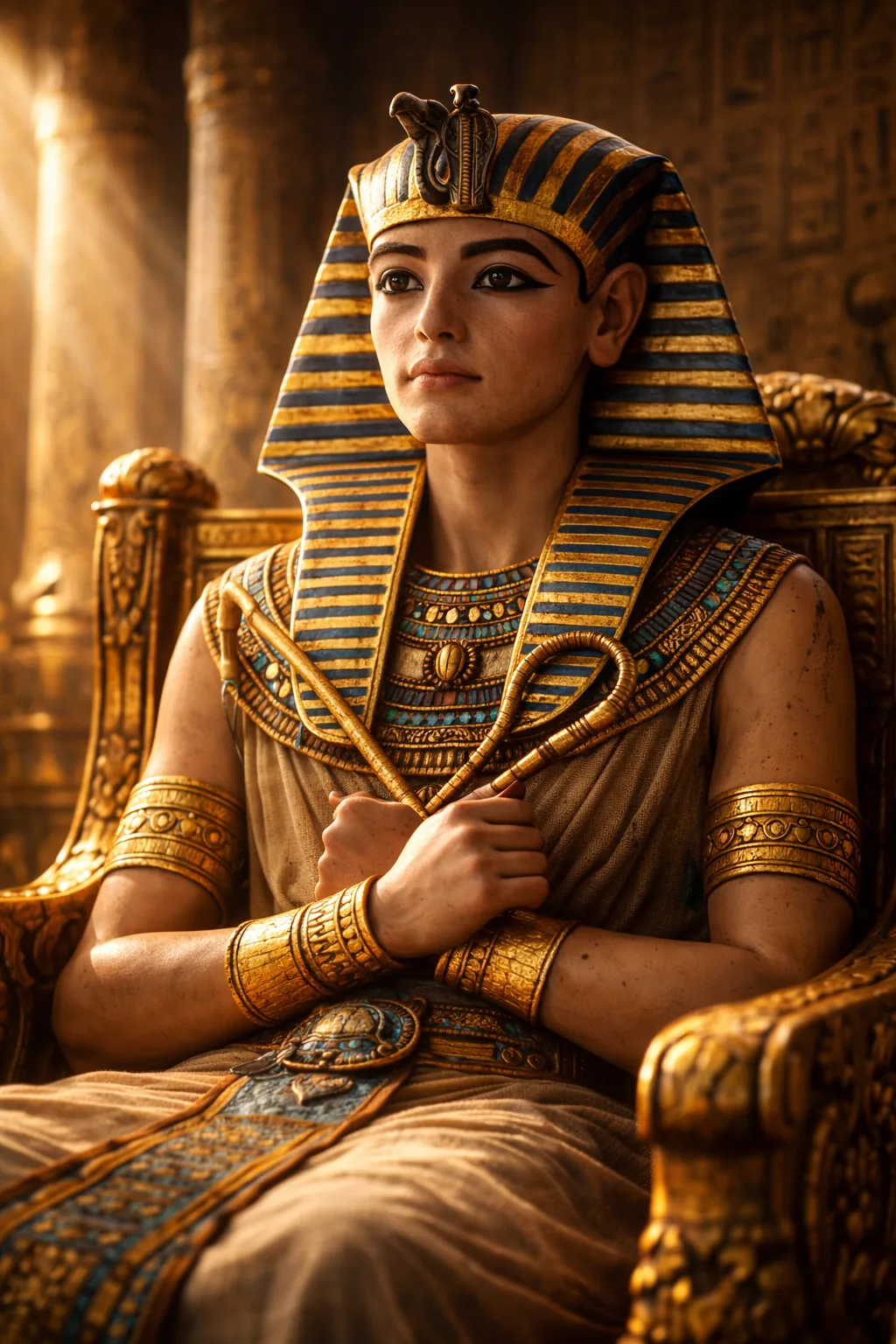
Tutankhamun ruled Egypt for less than a decade, died before reaching twenty, and was almost erased from history by his successors. He conquered no great territories and left no monuments comparable to those of Ramesses II.
Yet three thousand years after his death, his golden face became the most recognisable image of ancient Egypt.
The fame he never achieved during his reign arrived in 1922, when a concealed staircase led Howard Carter to a small, crowded tomb still protected by several seals. Inside were more than five thousand objects, a forgotten king, and enough questions to occupy generations of archaeologists.
Tutankhamun
A life told through a royal name, a tomb and a mask
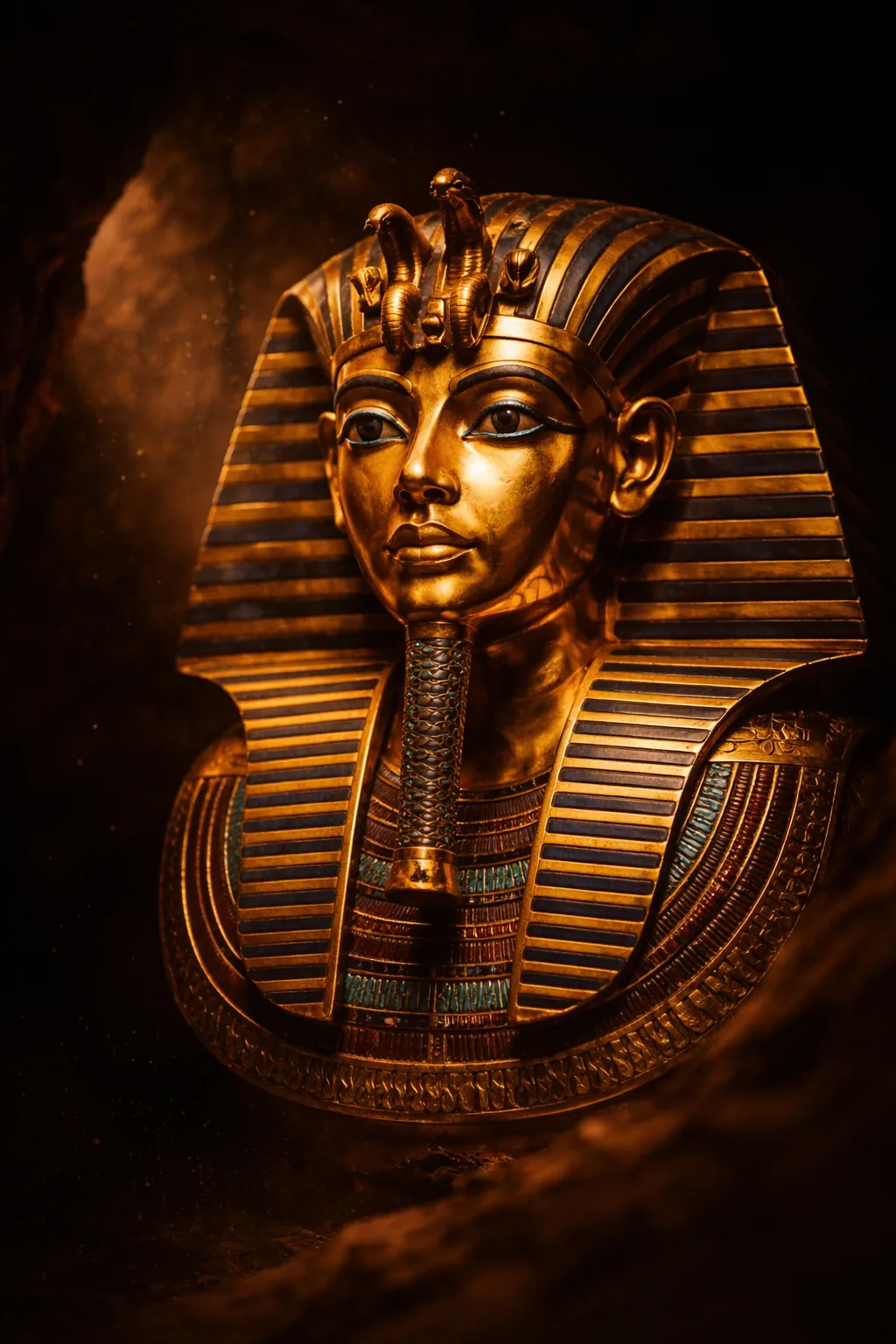
The gold mask: object 256.a
When the excavators first looked into the antechamber in 1922, the mask was still hidden inside the nested coffins. Harry Burton photographed it during the 1925–26 season. Compare the artistic reconstruction shown here with the original excavation negative preserved at Oxford.
The Son of a Revolution
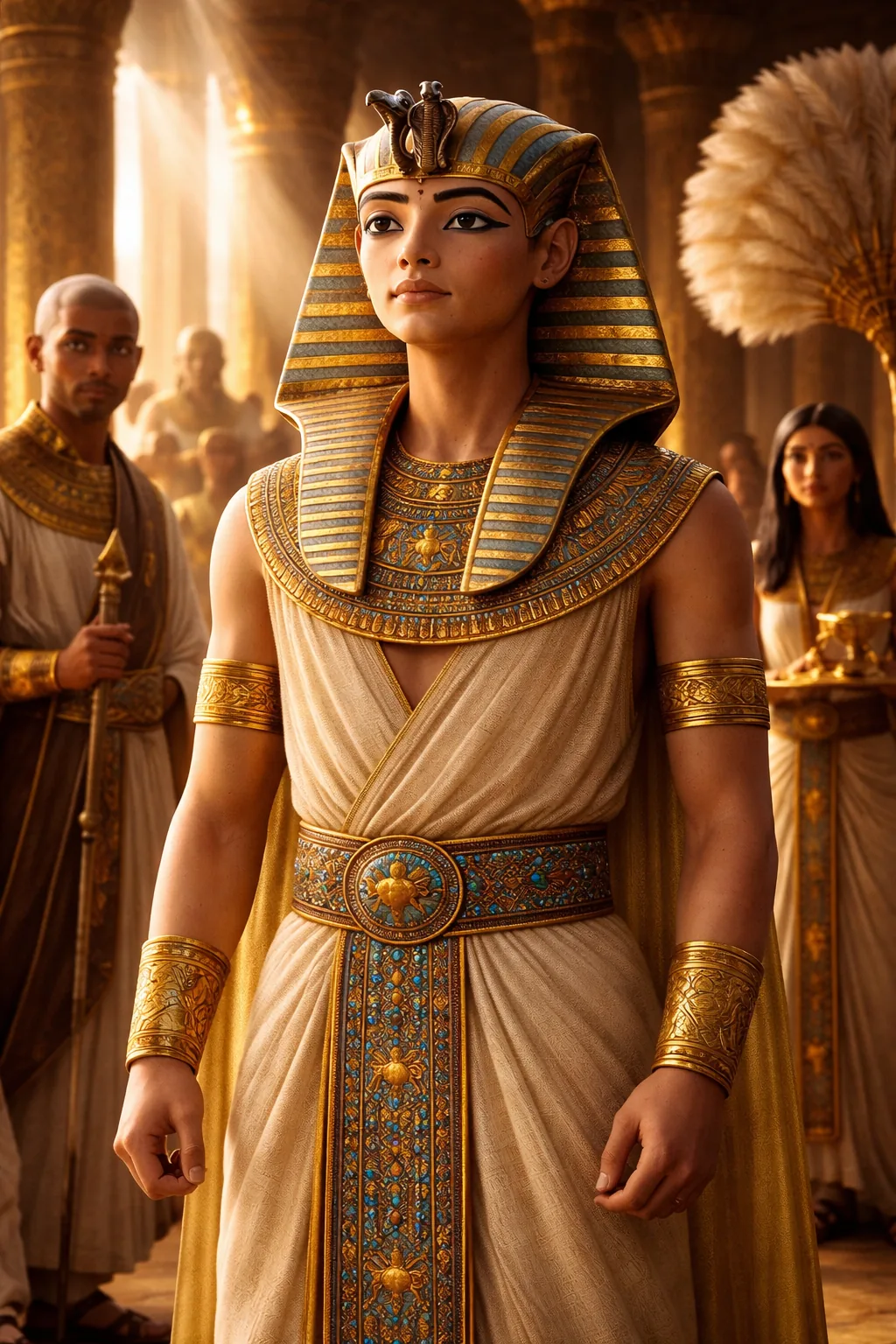
Tutankhamun was born around 1341 BCE during one of the most turbulent periods of Egypt’s Eighteenth Dynasty. His original name was Tutankhaten, “living image of Aten,” linking him to the religious transformation promoted by Pharaoh Akhenaten.
Akhenaten had elevated the cult of the solar disk Aten, reduced the power of the priesthood of Amun, and established a new capital, Akhetaten, at modern Amarna. Although he did not completely eliminate every other religious practice, his reforms profoundly altered institutions, temple economies, and traditional representations of royal power.
The exact identities of Tutankhamun’s parents remain debated. A genetic study published in 2010 concluded that the mummy from tomb KV55 was his father and that the so-called Younger Lady from KV35 was his mother. The analysis also indicated that his parents were siblings (Hawass et al., 2010).
The identification of the KV55 mummy as Akhenaten is widely accepted but not entirely undisputed. The Younger Lady’s personal identity has not been conclusively established either. It is therefore reasonable to regard Akhenaten as Tutankhamun’s most probable father without presenting every genealogical detail as settled fact.
A Crown for a Child
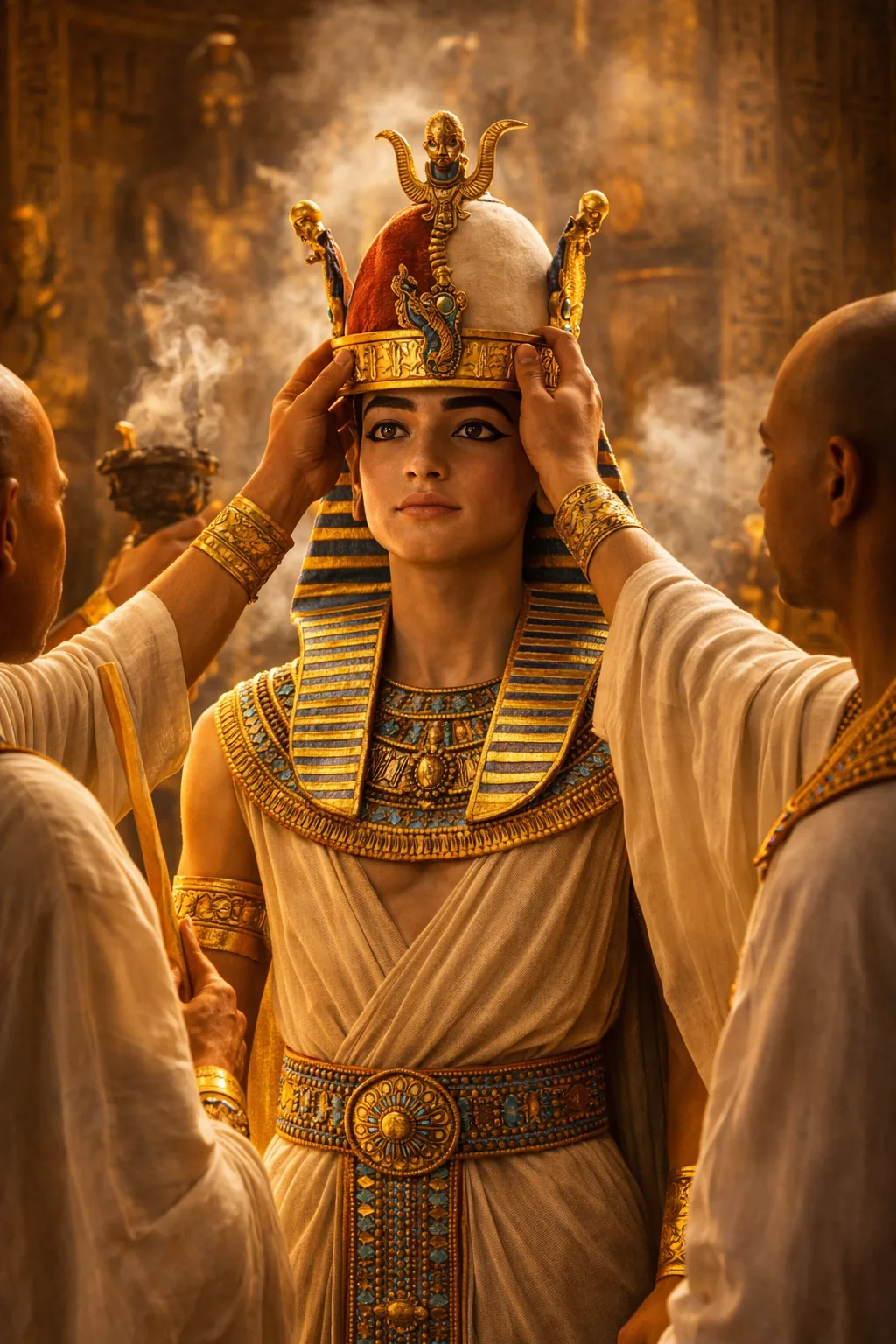
Tutankhaten came to the throne at approximately eight or nine years old, around 1332 BCE. A child of that age could not independently govern an empire stretching from Nubia to the eastern Mediterranean.
Experienced officials surrounded him. Ay, a senior court figure, was associated with royal decision-making and eventually succeeded the young king. Horemheb, the military commander, also accumulated power and later took the throne after Ay. It is impossible to determine precisely how much Tutankhamun decided personally and how much was directed by these men.
Soon after his accession, he married Ankhesenpaaten, a daughter of Akhenaten and Nefertiti who was probably his half-sister. As the religious restoration advanced, both changed their names: Tutankhaten became Tutankhamun, “living image of Amun,” while Ankhesenpaaten became Ankhesenamun.
Undoing His Father’s Work
During Tutankhamun’s reign, the cult of Amun and ceremonies dedicated to other traditional deities were restored. Temples recovered property and personnel, new statues were commissioned, and the court abandoned Akhetaten. Memphis again gained administrative importance, while Thebes regained religious centrality.
The so-called Restoration Stela describes abandoned temples, ruined sanctuaries, and gods who had ceased to respond. Its text proclaims that Tutankhamun repaired this condition and restored religious order (Digital Karnak, n.d.).
Like every royal inscription, the stela was propaganda. It exaggerated earlier chaos to glorify the restoration. Horemheb later usurped the monument and replaced several of Tutankhamun’s names with his own.
A Body That Did Not Match the Divine Image
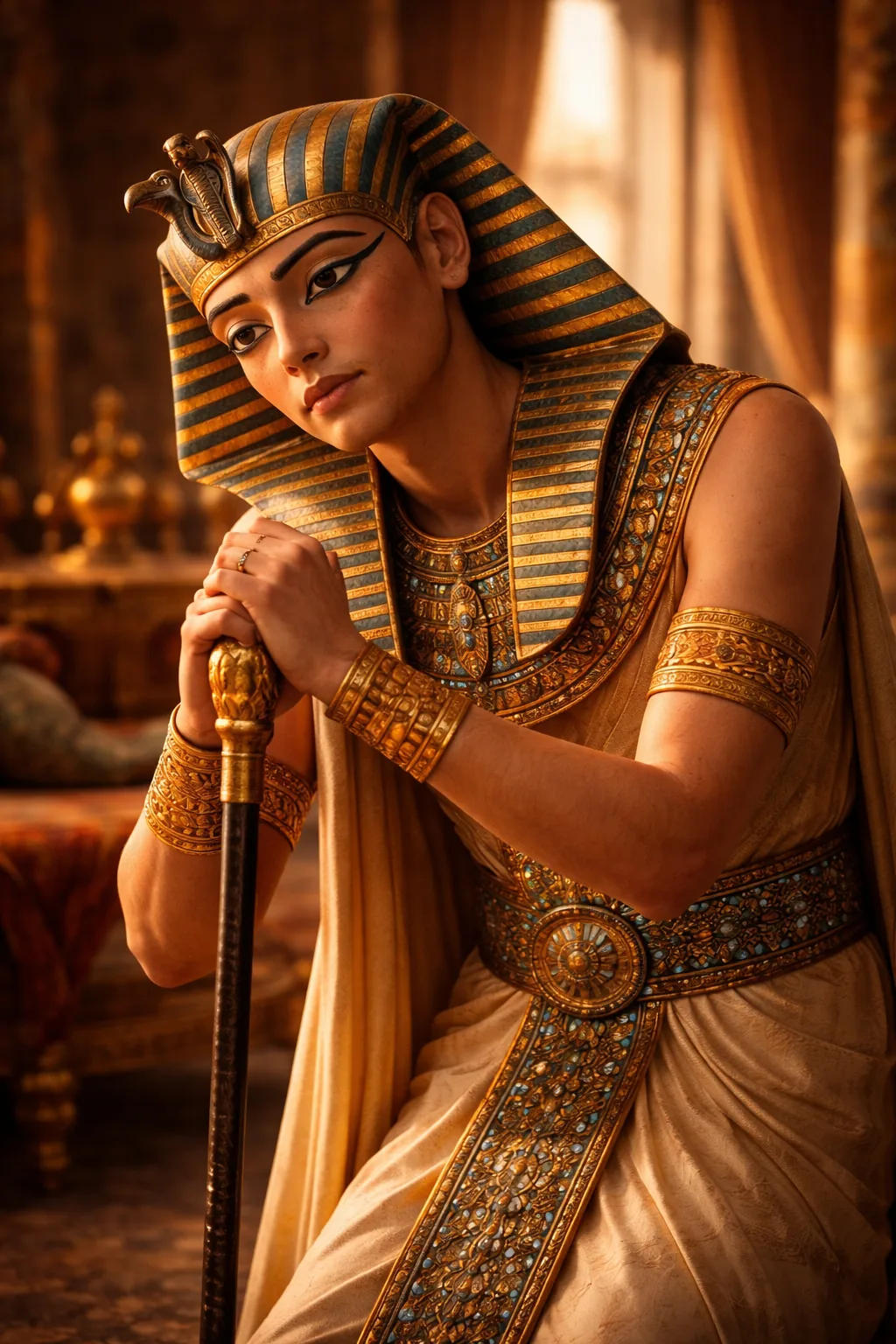
Studies of the mummy have identified a deformity of the left foot consistent with clubfoot and bone abnormalities that may have impaired his movement. More than one hundred walking sticks were found in the tomb, some showing signs of use, although not all necessarily served a practical purpose; some may have been ceremonial.
The 2010 genetic analysis detected material associated with Plasmodium falciparum, which causes severe malaria. The researchers proposed that malarial infection combined with bone necrosis may have contributed to his death (Hawass et al., 2010).
The old theory that a blow to the head killed him weakened after modern imaging indicated that some cranial damage probably occurred during mummification or later handling. Nor is there conclusive evidence that he died in a chariot crash.
The most accurate answer remains simple: Tutankhamun died young, but we do not know exactly why (Rühli & Ikram, 2014).
A Marriage Without an Heir
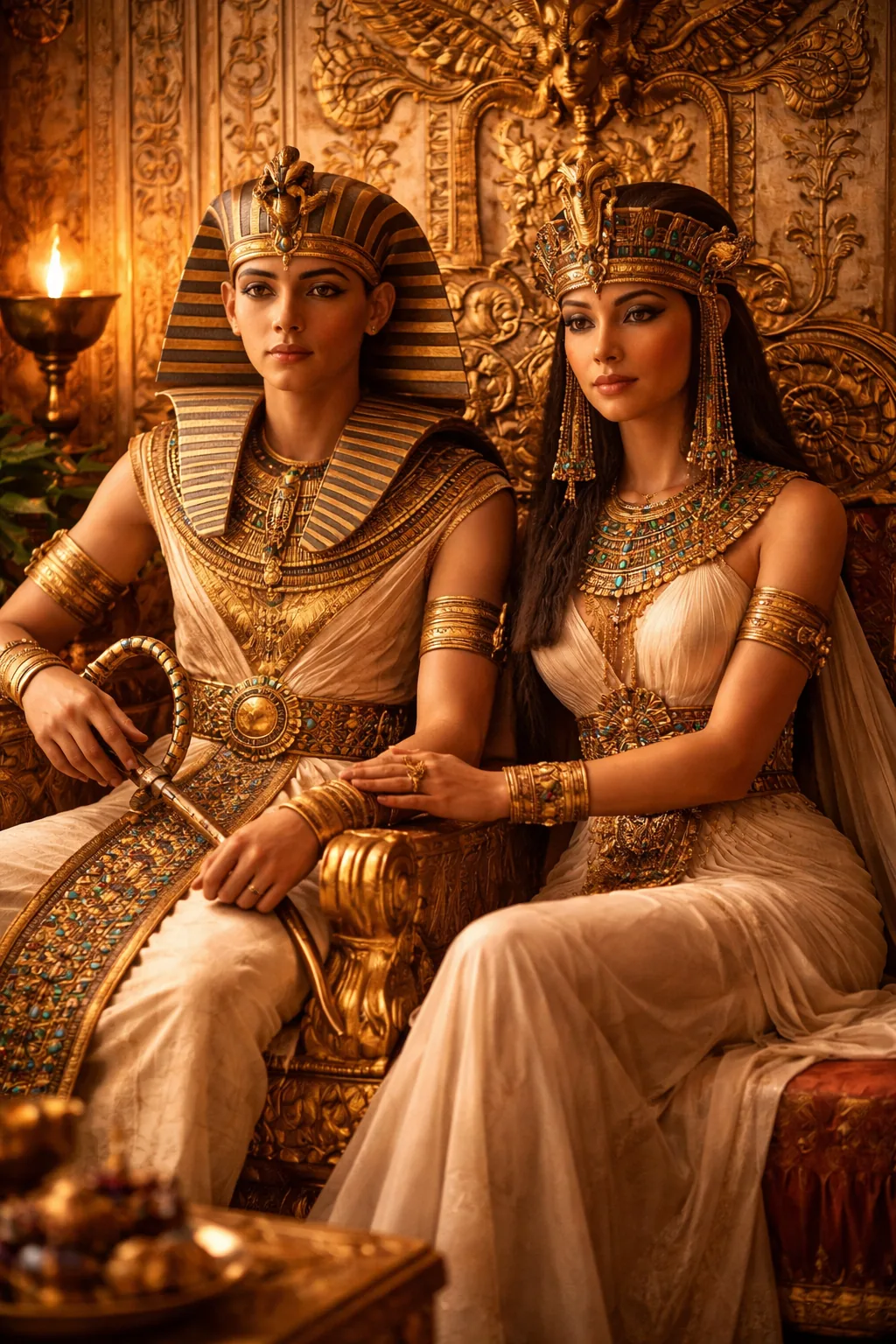
Tutankhamun and Ankhesenamun left no known surviving successor. Two small mummified bodies were discovered inside the tomb, generally interpreted as stillborn female fetuses and probably the couple’s daughters.
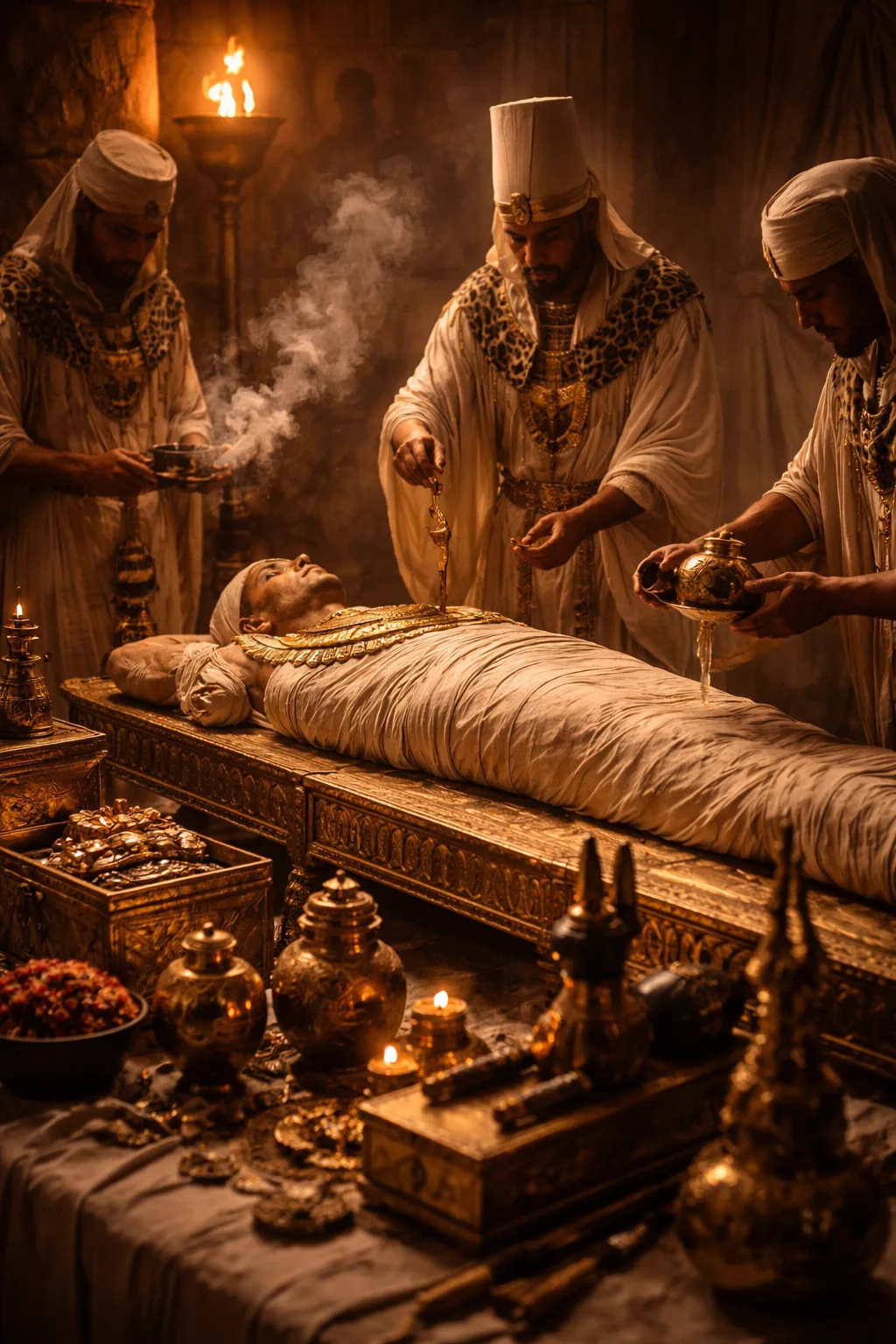
When he died around 1323 BCE, he was approximately eighteen or nineteen. Ay took the throne and performed the funerary ritual represented on the tomb wall. Horemheb later appropriated monuments of his predecessor. Subsequent king lists omitted several rulers of the period.
A Tomb Too Small
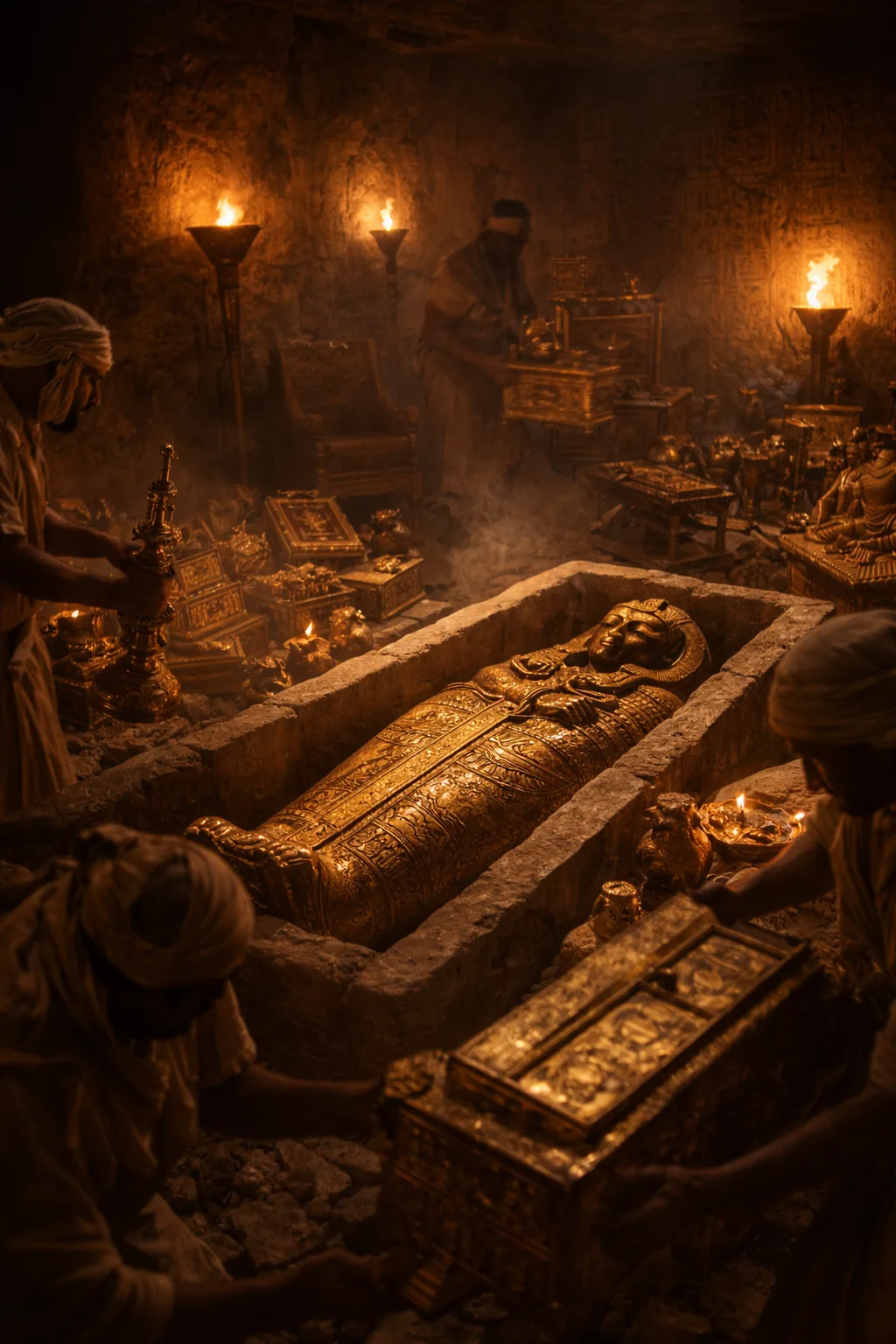
KV62 is modest compared with other royal burials in the Valley of the Kings. Only the burial chamber bears painted decoration, and its rooms appear inadequate for a pharaoh.
Death may have surprised the court before a larger royal tomb was ready. Some specialists believe KV62 was originally intended for another person and hastily adapted. Objects were stacked with extraordinary density: dismantled chariots, beds, boxes, statues, clothing, food, weapons, and furniture filled the chambers (Ministry of Tourism and Antiquities, n.d.).
The tomb was not completely intact. It had been entered and robbed at least twice in antiquity. Some objects were damaged or left in disorder, but the entrances were resealed and the burial chamber remained essentially unplundered (Griffith Institute, n.d.).
Debris and later construction concealed the entrance. While almost every grand royal tomb was emptied, that of the minor pharaoh remained beneath history’s feet.
The Step Beneath the Sand
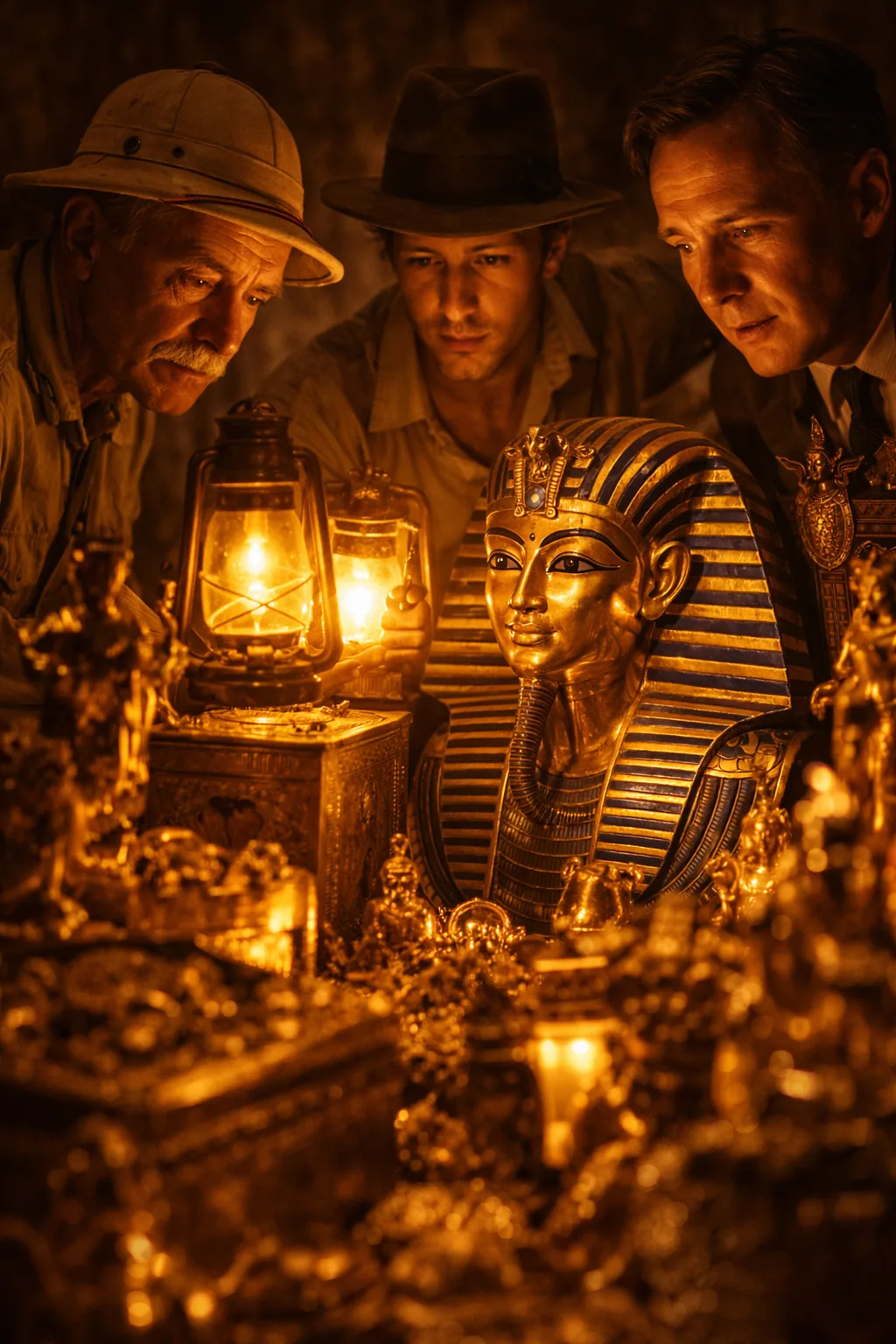
Howard Carter had excavated in the Valley of the Kings for years with financing from George Herbert, the fifth Earl of Carnarvon. By 1922, Carnarvon was considering ending the project because it had produced no major result. Carter secured one final season.
On 4 November, the excavation team found the first step of a staircase beneath ancient workers’ huts. A sealed doorway appeared the following day. Carter protected the site and sent a telegram to Carnarvon in England.
After Carnarvon arrived in Egypt, work resumed. On 26 November, Carter opened a small hole in the second doorway and looked inside by candlelight. Gilded furniture, sculpted animals, chariots, and piled objects appeared before him. When Carnarvon asked whether he could see anything, Carter later recalled describing “wonderful things” (Griffith Institute, n.d.).
The discovery was not the achievement of one archaeologist. Dozens of Egyptian workers, conservators, draughtsmen, photographers, and specialists participated. Harry Burton documented the chambers with extraordinary photographic precision. Without this team, the artefacts would have lost much of their context.
Excavation and conservation continued for approximately ten years (Griffith Institute, n.d.).
The Mask That Replaced the King
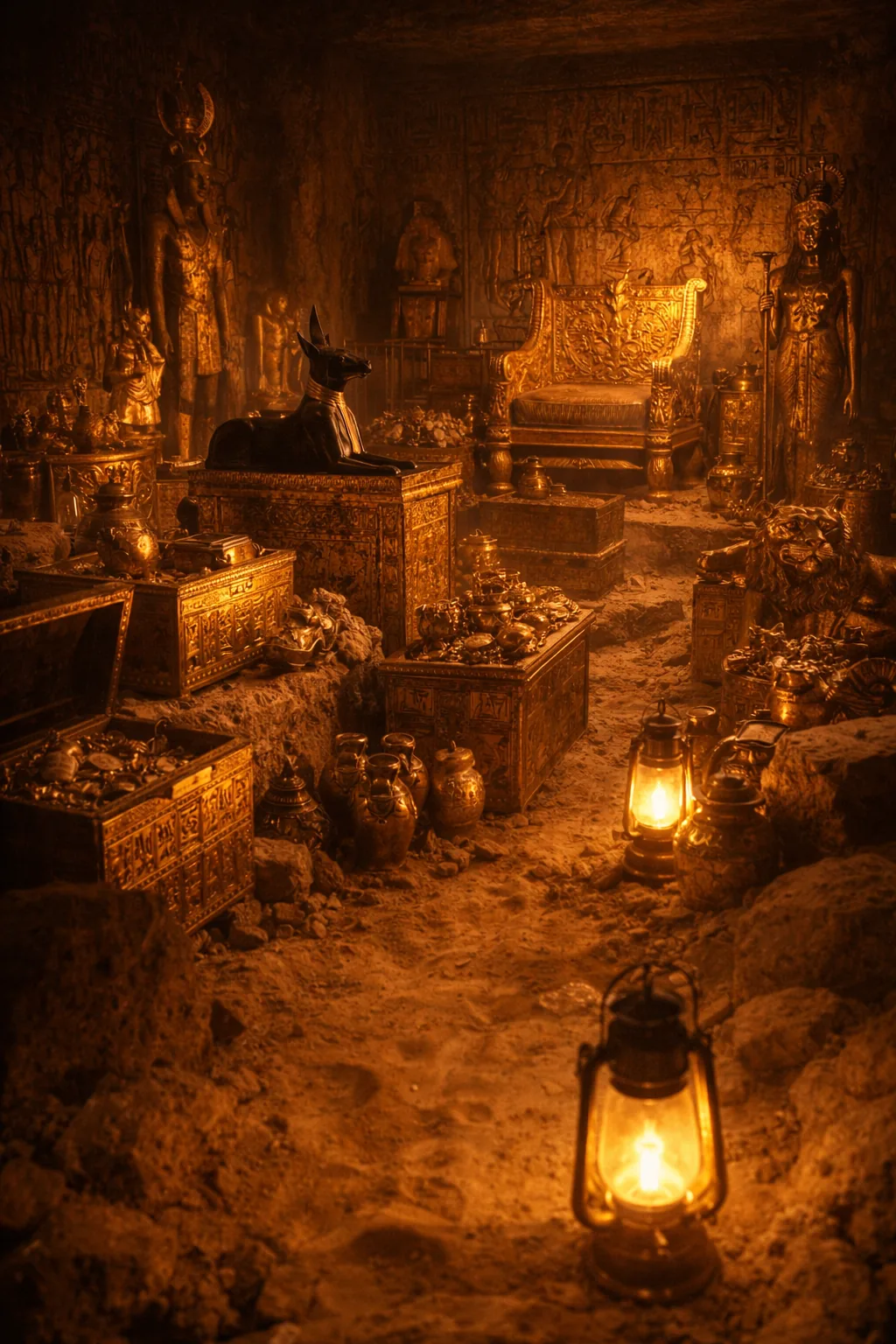
The golden funerary mask became the collection’s most famous object. It covered the mummy’s head and shoulders and presented the pharaoh wearing the nemes headdress, ceremonial beard, and idealised features.
It is not a photographic portrait. Like other Egyptian royal images, it combines possible individual characteristics with conventions intended to show the king transformed into an eternal being. Gold was associated with the flesh of the gods and did not decay like a human body.
A Lesser-Known Fact: He Carried a Weapon Made from Metal from the Sky
Carter discovered two daggers among the mummy’s wrappings. One had a gold blade. The other possessed an exceptionally well-preserved iron blade, made from a material still rare and valuable in Bronze Age Egypt.
In 2016, nondestructive X-ray fluorescence analysis detected approximately 10.8 percent nickel and 0.58 percent cobalt in the blade. This composition confirmed that the metal came from a meteorite (Comelli et al., 2016).
The dagger had been made from iron that fell from space long before regular iron smelting became widespread in Egypt. Its manufacture also demonstrates remarkable skill in working a difficult material.
The Curse Invented by Newspapers
Newspapers connected his death with a supposed pharaonic curse. Stories accumulated about extinguished lights in Cairo, howling dogs, and threatening inscriptions inside the tomb. No curse equivalent to the sensational phrases printed by the press was found in KV62.
Howard Carter lived until 1939, seventeen years after the discovery. A historical study of forty-four people connected with the opening found no significant reduction in survival among those exposed to the chambers compared with those who were not (Nelson, 2002).
The Crown After Death
Tutankhamun belongs among the crowns that weighed more than death because he received power before he could choose it, inherited the consequences of a religious revolution, and died before establishing an identity of his own.
Tutankhamun was not Egypt’s greatest pharaoh. He became something stranger: a minor ruler whose death allowed the daily life of a vanished court to cross thirty-three centuries.
The crown did not make him eternal. A forgotten tomb did.
Sources
- Comelli et al. (2016). The meteoritic origin of Tutankhamun’s iron dagger blade. Meteoritics & Planetary Science, 51(7), 1301–1309
- Digital Karnak. (n.d.). Restoration Stela of Tutankhamen.
- Griffith Institute. (n.d.). Tutankhamun: Anatomy of an excavation.
- Griffith Institute. (n.d.). Gold mask of the king (256.a): Negative TAA i.5.P0751.
- Hawass et al. (2010). Ancestry and pathology in King Tutankhamun’s family. JAMA, 303(7), 638–647
- Ministry of Tourism and Antiquities. (n.d.). Tomb of Tutankhamun.
- Nelson, M. R. (2002). The mummy’s curse: Historical cohort study. BMJ, 325, 1482–1484
- Rühli, F. J., & Ikram, S. (2014). Purported medical diagnoses of Pharaoh Tutankhamun, c. 1325 BC. HOMO, 65(1), 51–63
More from this collection
Nicholas II of Russia: The Man Who Mistook Duty for Refusing to Change
Read story →
Prince Leopold: Victoria’s Son Who Could Die from a Fall and Lived as a Prisoner of the Crown
Read story →