In this storyOpen index
Florence Nightingale: The Woman Behind the Lamp and the Numbers
Nursing, sanitation and statistics: the collective work behind an enduring symbol.
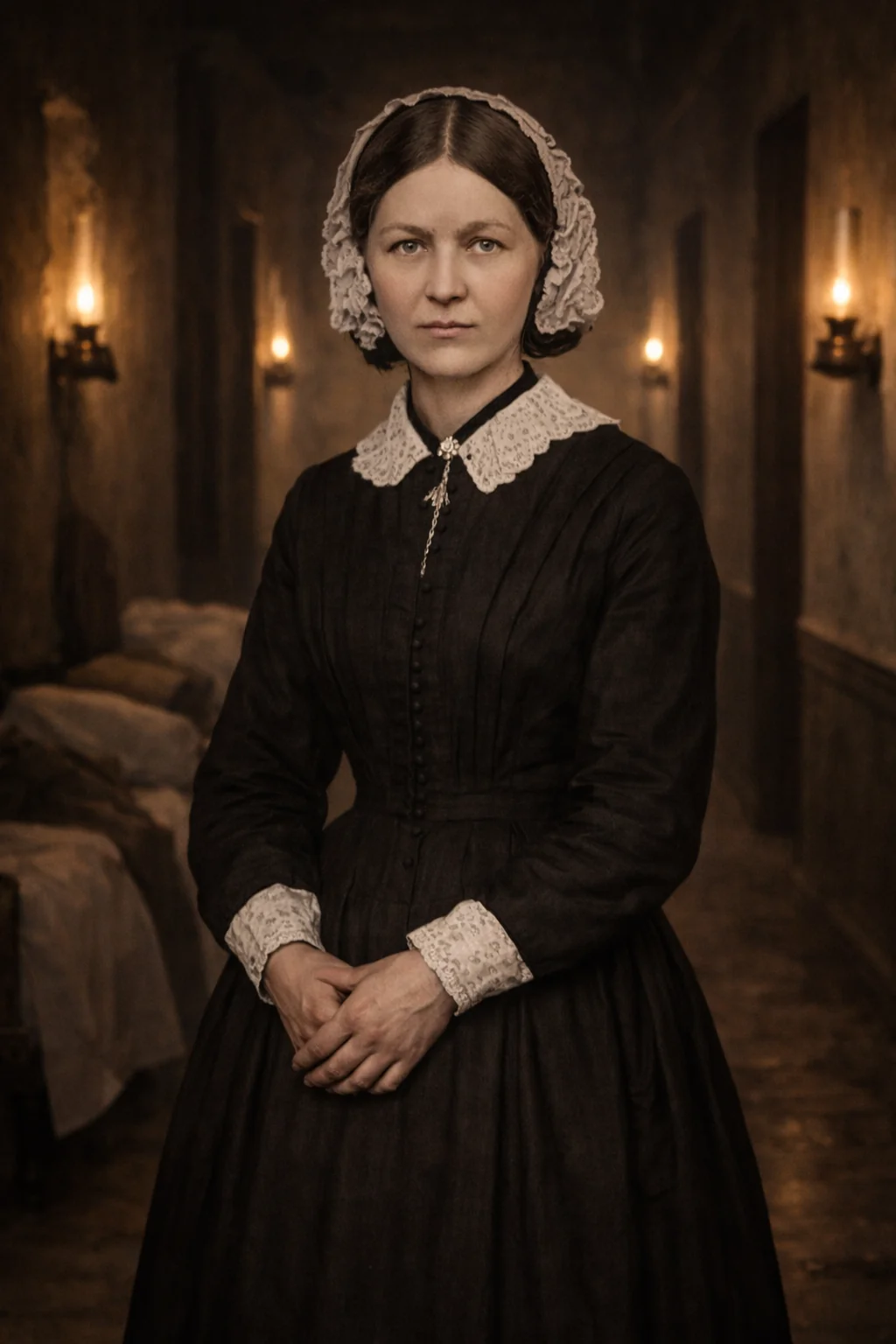
History turned Florence Nightingale into a silhouette walking through dark corridors with a lamp. The image was powerful, but it also reduced an entire life to one comforting scene.
Nightingale cared for soldiers, but her greatest influence did not come from bedside nursing alone. She organised personnel, analysed statistics, pressured governments, reformed hospitals, and transformed mortality data into political arguments. She understood that an institution could kill even when the people inside it were trying to heal.
She did not accomplish this alone. The reduction in Crimean mortality also depended on nurses, laundresses, cooks, doctors, labourers, and a Sanitary Commission that repaired drains and removed tonnes of waste. Recognising that collective effort does not diminish Nightingale. It clarifies what she actually achieved: turning scattered care into a system capable of learning from its own failures.
Florence Nightingale
A life between care and evidence
The sanitary history of the British army
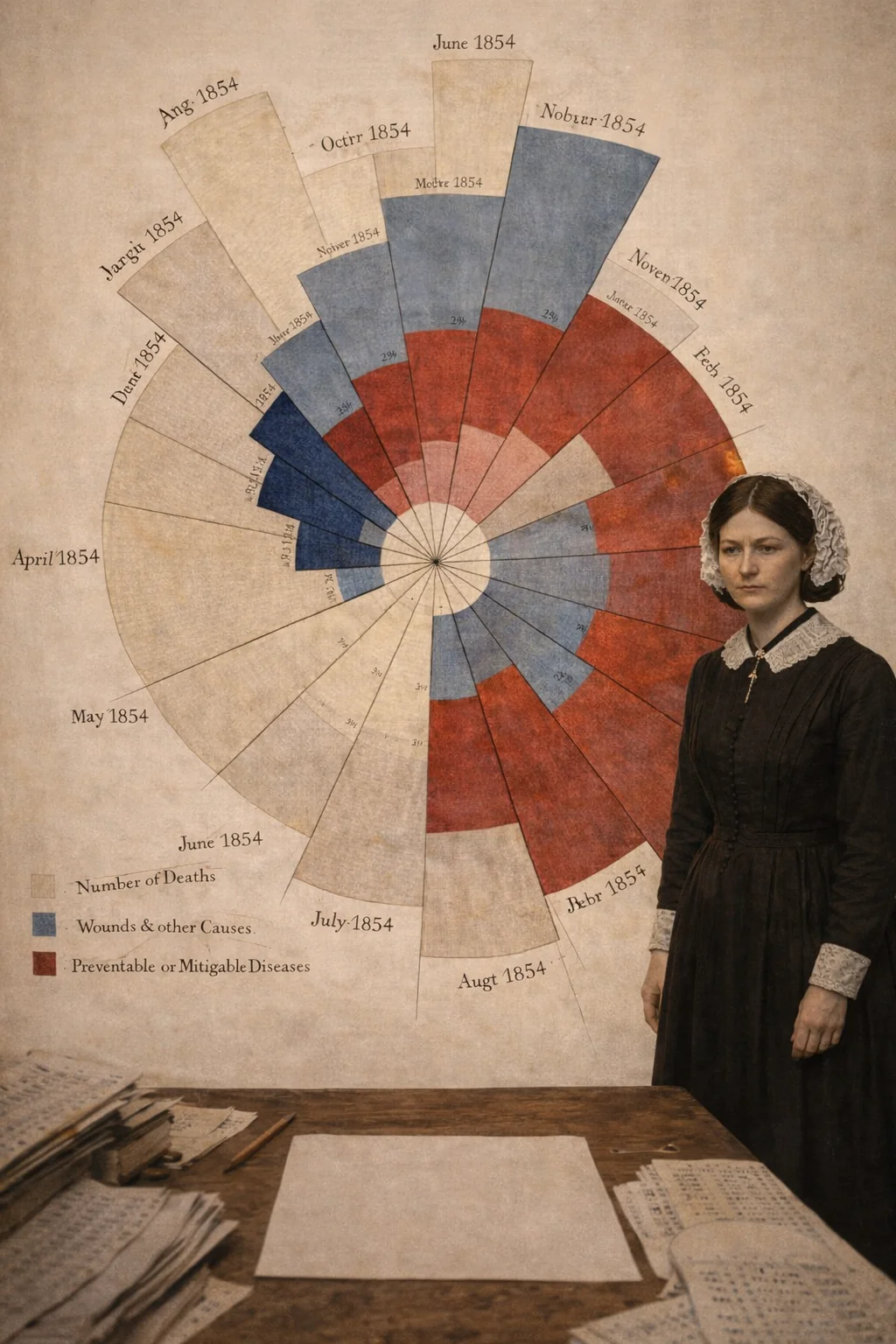
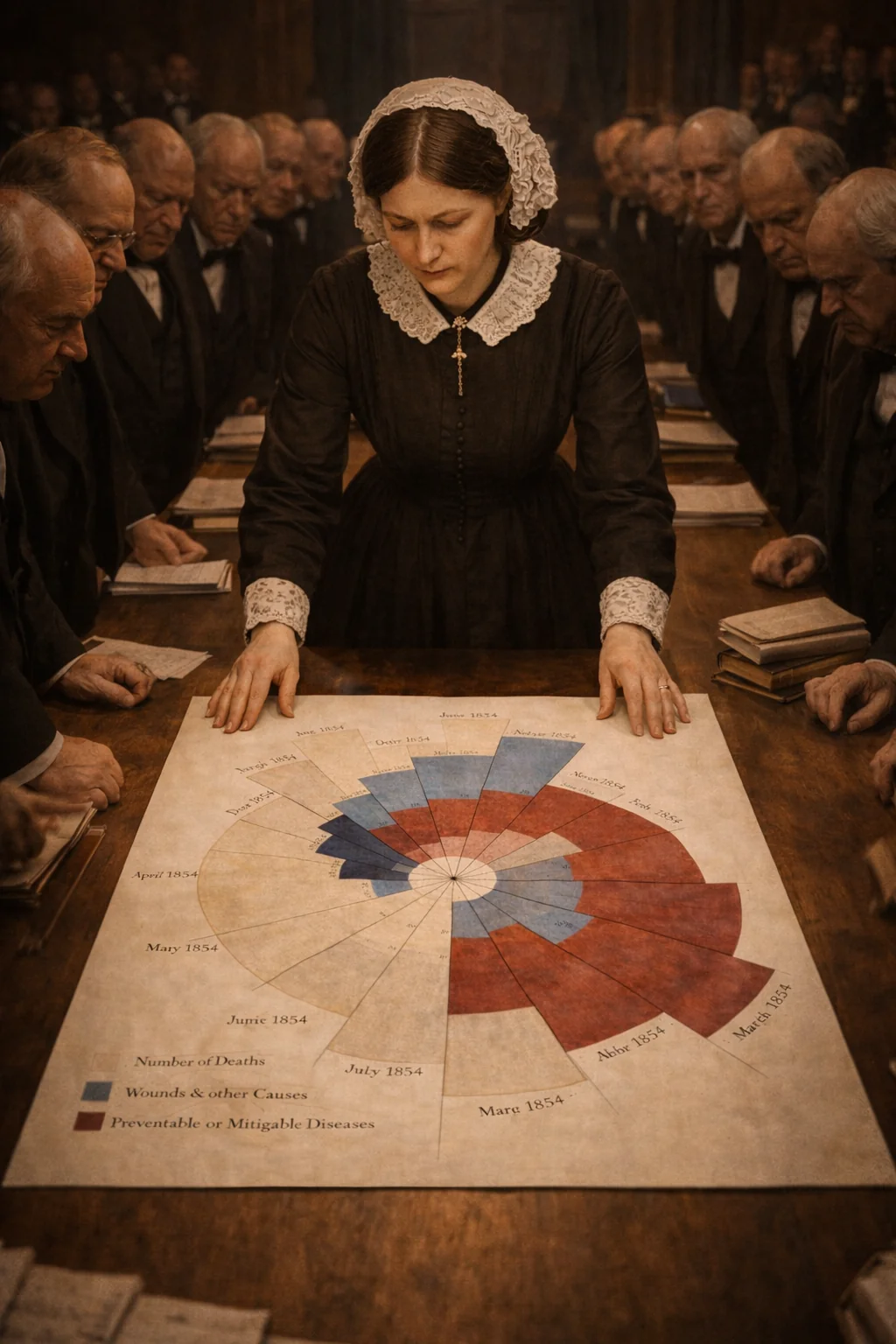
Wellcome Collection preserves the 1859 publication A contribution to the sanitary history of the British army during the late war with Russia, attributed to Florence Nightingale. The record includes three plates and offers access to historical material behind her campaign for reform. The accompanying image is an artistic illustration: consult the linked document for the original diagrams and their data.
A Young Woman Who Rejected Her Destiny
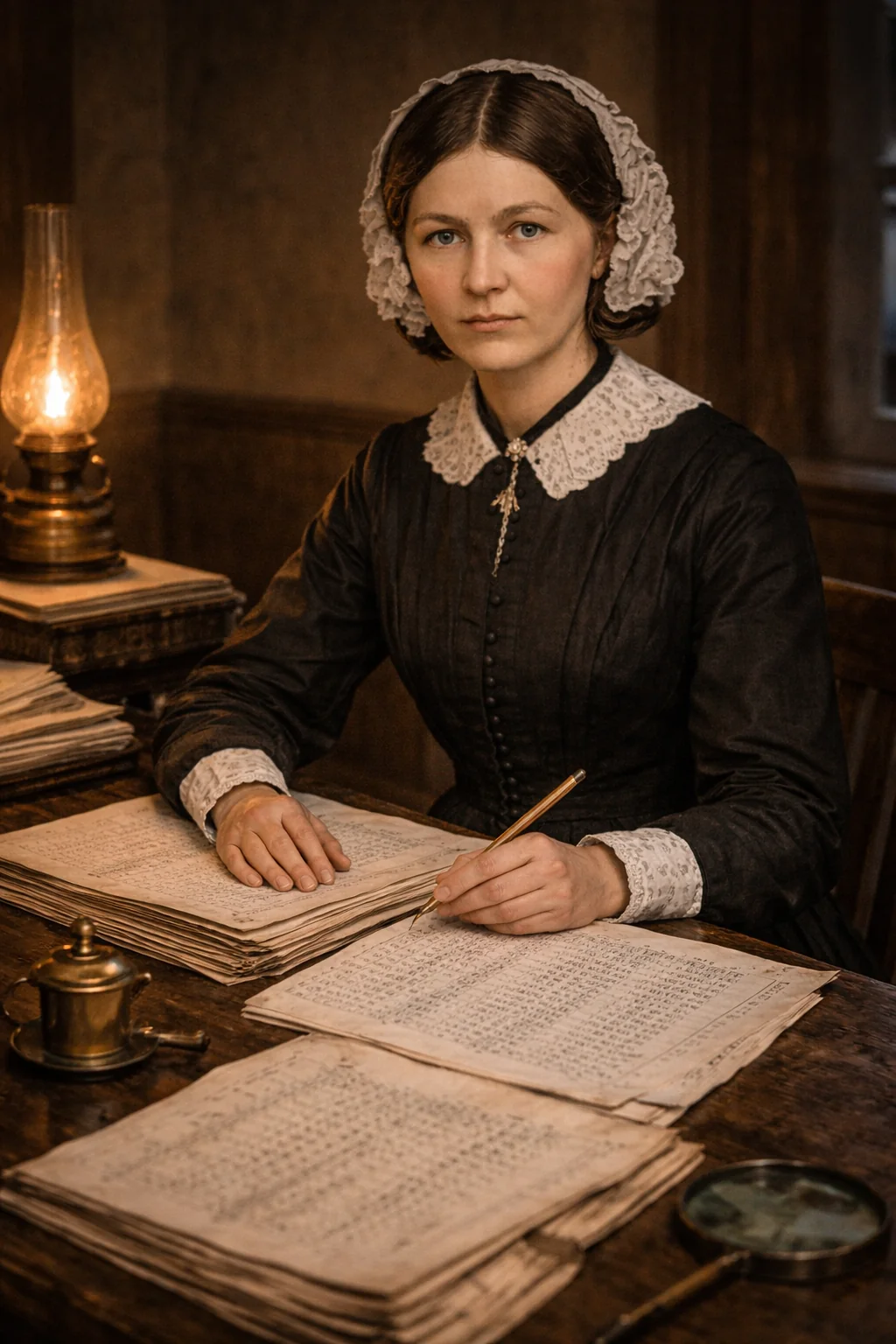
Florence Nightingale was born on 12 May 1820 in Florence, Italy, and was named after the city. She belonged to a wealthy British family that could provide an education unusual for a girl of her time. Her father taught her history, philosophy, languages, and mathematics.
Society expected her to marry and manage a household. She believed she had received a religious calling to serve others. Nursing, however, was not yet a respectable profession for a woman of her class. Many carers lacked formal training, worked in precarious conditions, and occupied a low social position.
Her family resisted for years. Nightingale rejected a marriage proposal and continued studying hospitals, mortality, and healthcare organisation. In 1851, she received practical training at the Protestant institution in Kaiserswerth, Germany. Two years later, she became superintendent of a London establishment for sick gentlewomen of limited means, demonstrating administrative ability as well as nursing knowledge (National Portrait Gallery, n.d.).
The Hospital Where Men Arrived to Die
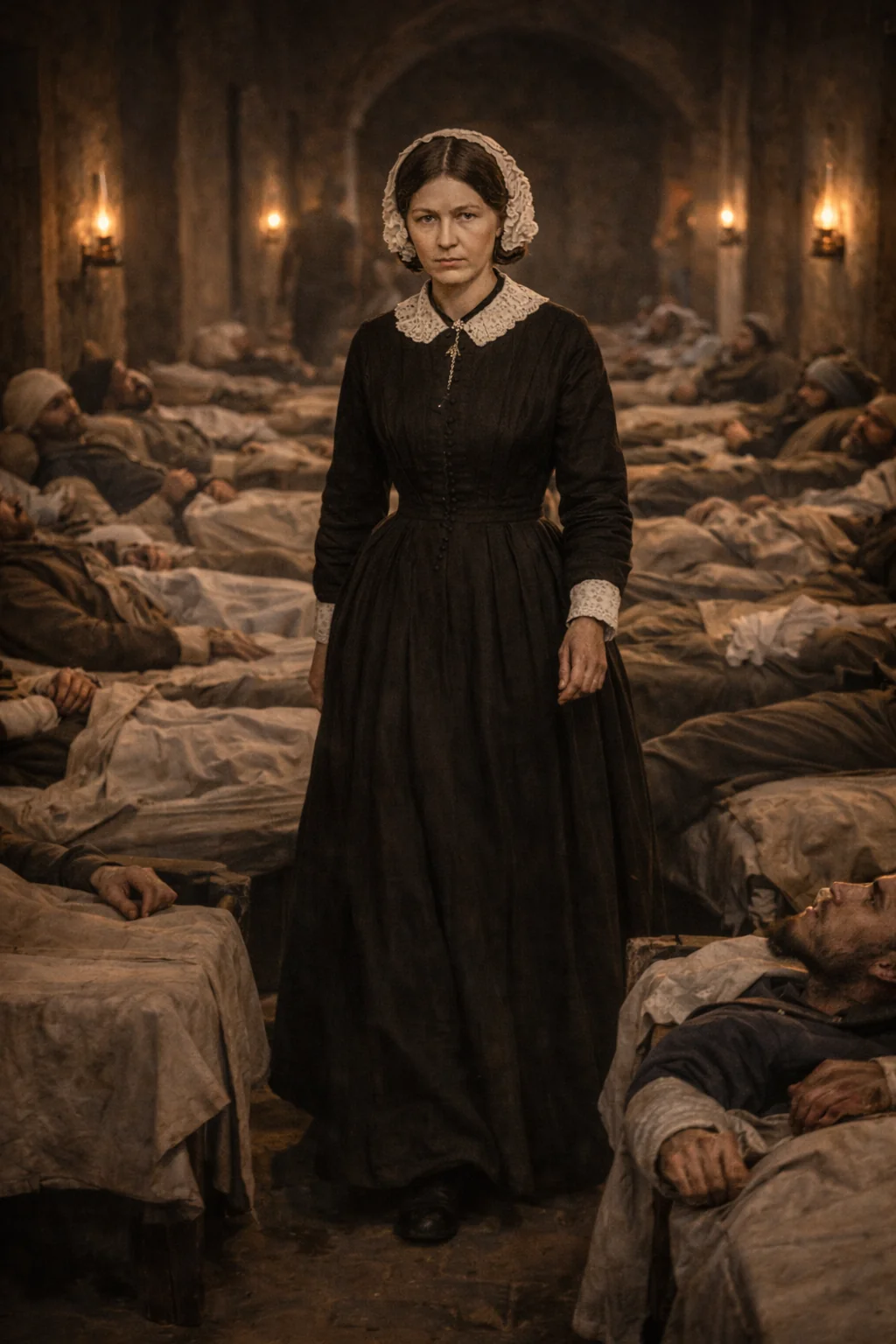
In 1854, during the Crimean War, British newspapers reported the appalling conditions in military hospitals. Secretary at War Sidney Herbert asked Nightingale to organise a group of nurses for the hospital at Scutari, on the Asian side of Constantinople.
She arrived on 4 November 1854 with thirty-eight nurses. They found overcrowding, filthy clothing, inadequate food, shortages of supplies, and seriously defective drainage and ventilation. Men with cholera, typhus, dysentery, and other infections shared an environment in which contamination spread rapidly (The National Archives, n.d.).
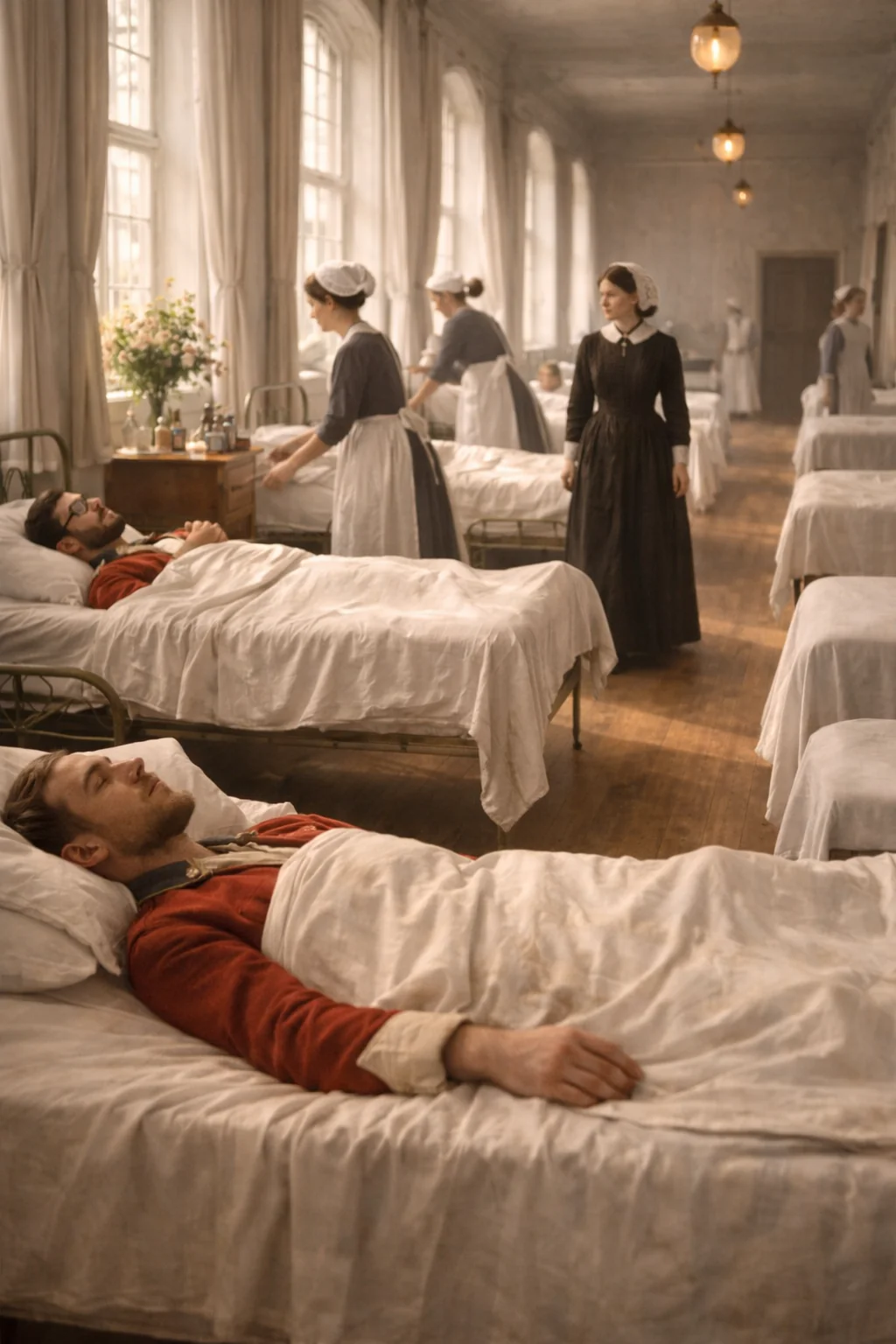
The nurses washed patients, prepared wounds for medical inspection, administered food, and monitored cleanliness. Nightingale established special kitchens, laundries, and systems for distributing clothing and supplies. She also negotiated with military doctors initially suspicious of women working inside the hospital.
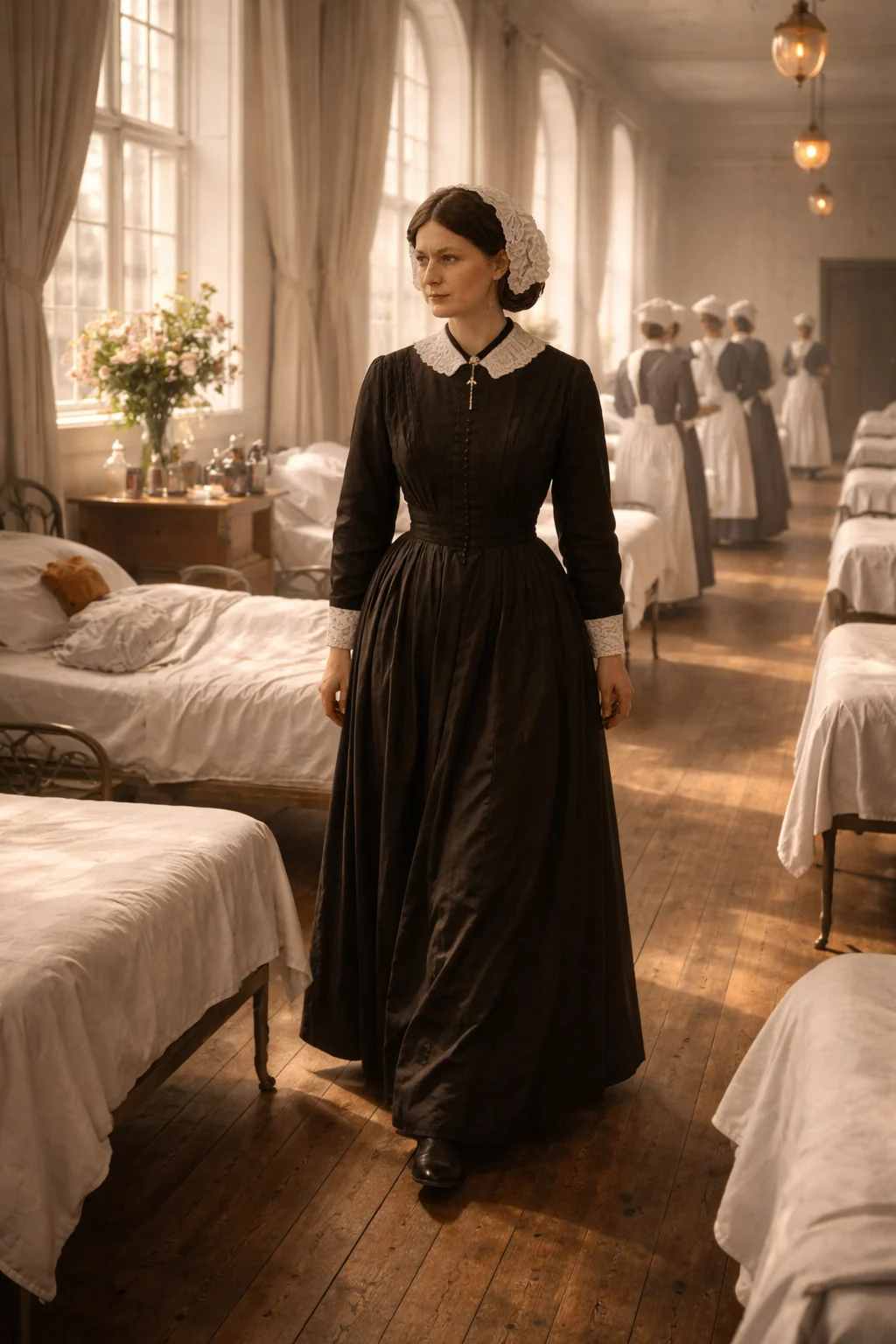
At night, she walked through the wards checking on patients. A report in The Times spread the image of a figure carrying a lamp, and the British public turned Nightingale into “the Lady with the Lamp.”
Daily reality was less romantic: inventories, administrative disputes, sewage, fever, and thousands of men crowded together.
Did She Reduce Mortality by Herself?
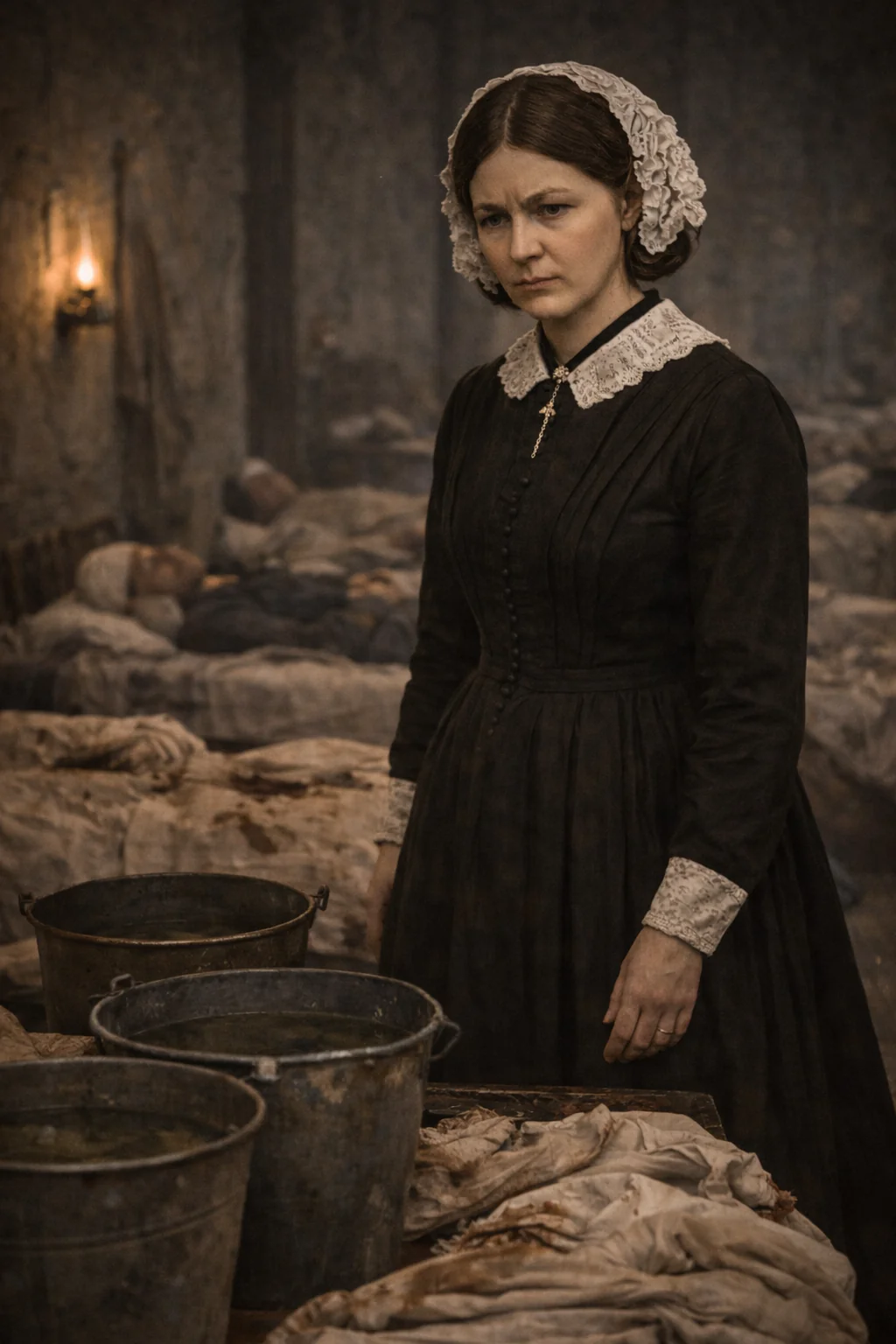
The historically accurate answer is no. Mortality in the Scutari hospitals reached terrible levels during the winter of 1854–1855 and peaked in February. Nightingale and her nurses improved food, personal cleanliness, and bedside care, but initially did not understand the full extent of the structural defects.
A government Sanitary Commission arrived in March 1855. Its members opened and cleaned sewers, improved ventilation, removed dead animals and enormous quantities of contaminated material, and reorganised essential systems. After these interventions—together with reduced pressure from new patients and better supplies—mortality fell dramatically (National Army Museum, n.d.).
It is therefore inaccurate to attribute the entire decline to one woman. It is equally wrong to conclude that Nightingale was irrelevant. She directed nursing, organised resources, exposed conditions, collected information, and used the experience after the war to demand permanent reform.
She also revised her initial interpretations. Nightingale came to understand that filth, overcrowding, poor ventilation, and defective drains had killed more men than many battlefield wounds.
The Women Erased Behind the Heroine
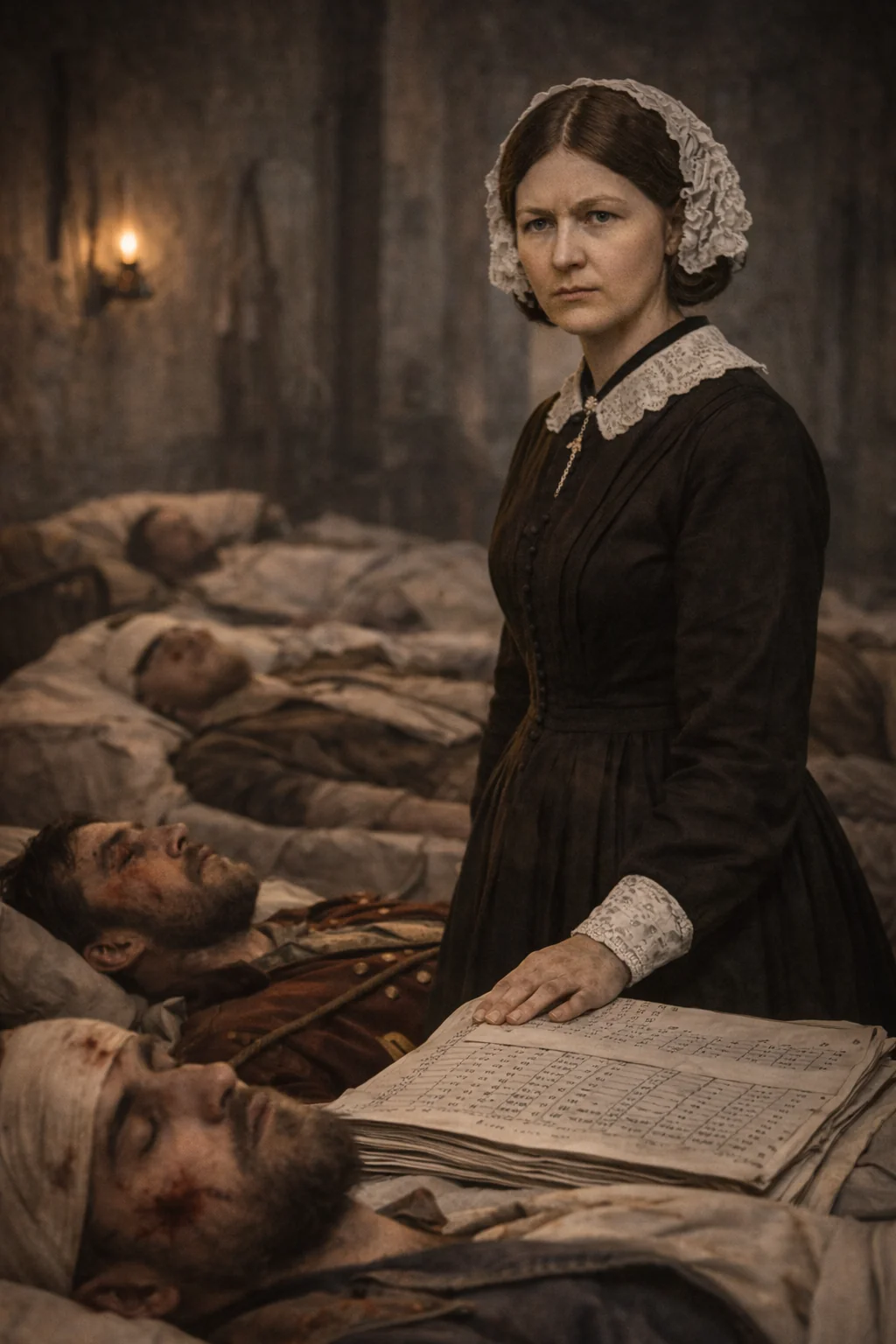
The concentration of public memory on Nightingale partially obscured other carers. The thirty-eight members of her first group included Anglican, Catholic, and secular nurses. Others arrived later and worked under extreme conditions.
Mary Seacole, a British-Jamaican woman with medical experience, travelled independently after various authorities rejected her offers of assistance. She established the British Hotel near the front, sold food and supplies, and treated sick and wounded soldiers. She did not work under Nightingale, and her contribution was different, but it remains part of the healthcare history of the Crimean War (Florence Nightingale Museum, n.d.).
The Sisters of Mercy, cooks, laundresses, and labourers also participated, and many of their names barely survived. Presenting Nightingale as a solitary saviour repeats the very problem she fought: ignoring the system and looking only at one visible individual.
Her real achievement lay in demonstrating that care depended upon an entire organisation.
Turning Deaths into Evidence
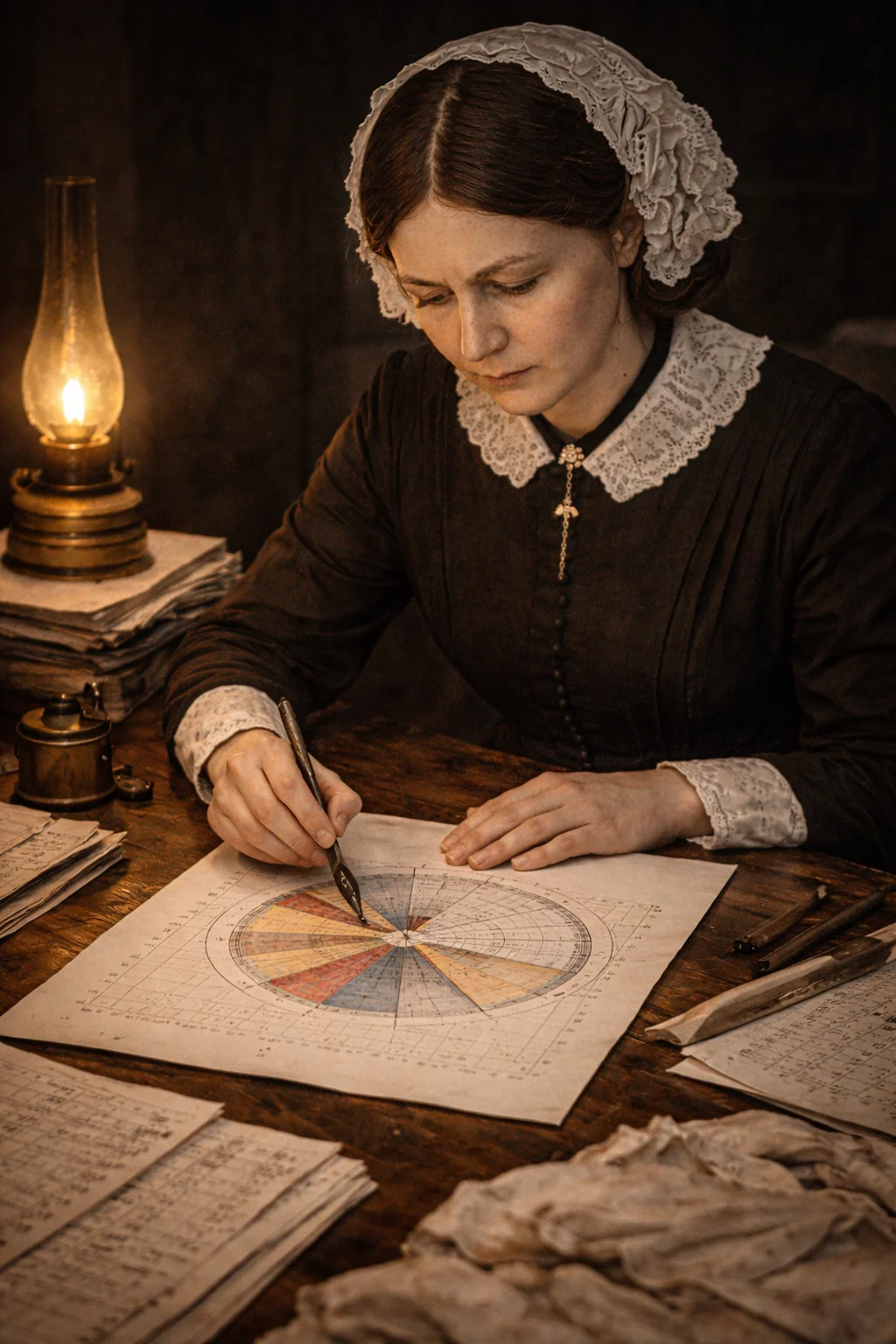
After quietly returning to Britain in 1856, Nightingale examined military records and worked with statistician William Farr. The data demonstrated that far more soldiers had died from preventable diseases than from combat wounds.
To make the evidence understandable, she used polar-area diagrams, popularly known as “rose diagrams.” Each sector represented a month, while the areas allowed mortality from different causes to be compared. Colour distinguished disease, wounds, and other factors.
Nightingale did not invent every principle of statistical visualisation or create the first circular chart. Her innovation lay in adapting graphic methods to communicate a complex public-health problem to politicians unlikely to study long numerical tables (McDonald, 2020).
The diagrams turned a list of deaths into a visible accusation: the men had not died inevitably because of war. Many had died because of administrative decisions.
In 1858, she became the first woman admitted to the Royal Statistical Society (Royal Statistical Society, 2021).
Reforming from a Room
Nightingale returned from Crimea with a prolonged illness. For decades, she experienced pain, exhaustion, and periods of incapacity that restricted her public life. Chronic brucellosis—then associated with “Crimean fever”—has been proposed, but a retrospective diagnosis cannot be established with certainty (Florence Nightingale Museum, n.d.).
Although she frequently worked from a bed or sofa, she produced reports, received politicians, answered correspondence, and assembled networks of experts. Physical isolation did not mean inactivity.
She helped initiate a Royal Commission on army health. Its recommendations contributed to reforms in barracks, hospitals, medical records, and healthcare training. In 1859, she published Notes on Nursing, written not only for professionals but for people caring for the sick at home. It stressed ventilation, light, cleanliness, nutrition, and close observation of the patient.
In 1860, the Nightingale Fund financed a nurse-training school at St Thomas’ Hospital in London. It was not the first nursing institution in history, but it played a decisive role in establishing disciplined, professional, and socially respected training (Florence Nightingale Museum, n.d.).
A Lesser-Known Fact: She Reformed Healthcare in a Country She Never Visited
One of the longest chapters of Nightingale’s work concerned British India. She never travelled there. Nevertheless, for approximately four decades, she studied reports on mortality, water supplies, drainage, hospitals, famine, housing, and conditions affecting soldiers and civilians.
She sent questionnaires, analysed statistics, and corresponded with officials, doctors, and reformers. Her interests expanded from the health of the colonial army to rural sanitation, irrigation, women’s education, and the economic causes of disease (Gourlay, 2003).
Her work was shaped by a British imperial perspective and should not be presented as though she understood India better than its inhabitants. Even so, she used the empire’s own official data to demonstrate that its administration tolerated preventable deaths.
The country she never saw occupied much of her intellectual life.
An Admired and Contradictory Figure
Nightingale could be authoritarian and held severe opinions about people she considered incompetent. Her relationships with other women reformers were sometimes difficult. Although she greatly expanded women’s opportunities in nursing, she did not participate in every campaign for women’s political rights in the same manner.
She also worked within military and colonial structures that require critical examination today. She was neither a contradiction-free saint nor the sole creator of modern healthcare.
She was something more interesting: an administrator who understood that compassion without organisation could fail and that a properly constructed table might save more lives than a sentimental speech.
In 1907, she became the first woman to receive Britain’s Order of Merit. She died in London on 13 August 1910 at the age of ninety. Her family declined an offer of burial in Westminster Abbey and respected her wish for a quiet funeral. She was buried at East Wellow in Hampshire.
Beyond the Lamp
Florence Nightingale belongs among the forgotten women who held history together because even such a famous woman has been incompletely remembered. The lamp preserved her image but concealed the statistician, strategist, and reformer.
It also obscured the other women and workers who sustained the hospitals beside her.
Her legacy is not the claim that one heroine single-handedly cleaned an institution and stopped death. It is a more demanding idea: care requires trained personnel, clean water, ventilation, food, reliable records, public accountability, and systems capable of correcting themselves.
The woman with the lamp accompanied the sick through the night. The woman with the numbers tried to prevent others from reaching those beds.
References
- Florence Nightingale Museum. (n.d.). Florence Nightingale. View source
- Florence Nightingale Museum. (n.d.). Origins. View source
- Gourlay, J. (2003). Florence Nightingale and the health of the Raj. Ashgate. View source
- McDonald, L. (2020). The real goods and the oversell. Significance, 17(2), 18–21. View source
- National Army Museum. (n.d.). Florence Nightingale: The Lady with the Lamp. View source
- National Portrait Gallery. (n.d.). Florence Nightingale (1820–1910). View source
- Nightingale, F. (1859). A contribution to the sanitary history of the British army during the late war with Russia. Harrison. Wellcome Collection. View source
- Royal Statistical Society. (2021). Pigeonholes and mustard seeds: Using data to improve health. View source
- The National Archives. (n.d.). Florence Nightingale. View source
More from this collection
Dolores del Río: The Star Who Conquered Hollywood and Returned to Mexico to Become an Actress
Read story →
Anna May Wong: A Leading Actress Facing Hollywood’s Racial Barriers
Read story →