
In this storyOpen index
Alois Alzheimer: The Doctor Who Found a Disease Inside Memory
Auguste Deter, the microscopic traces of a disease, and the researchers who helped explain it.
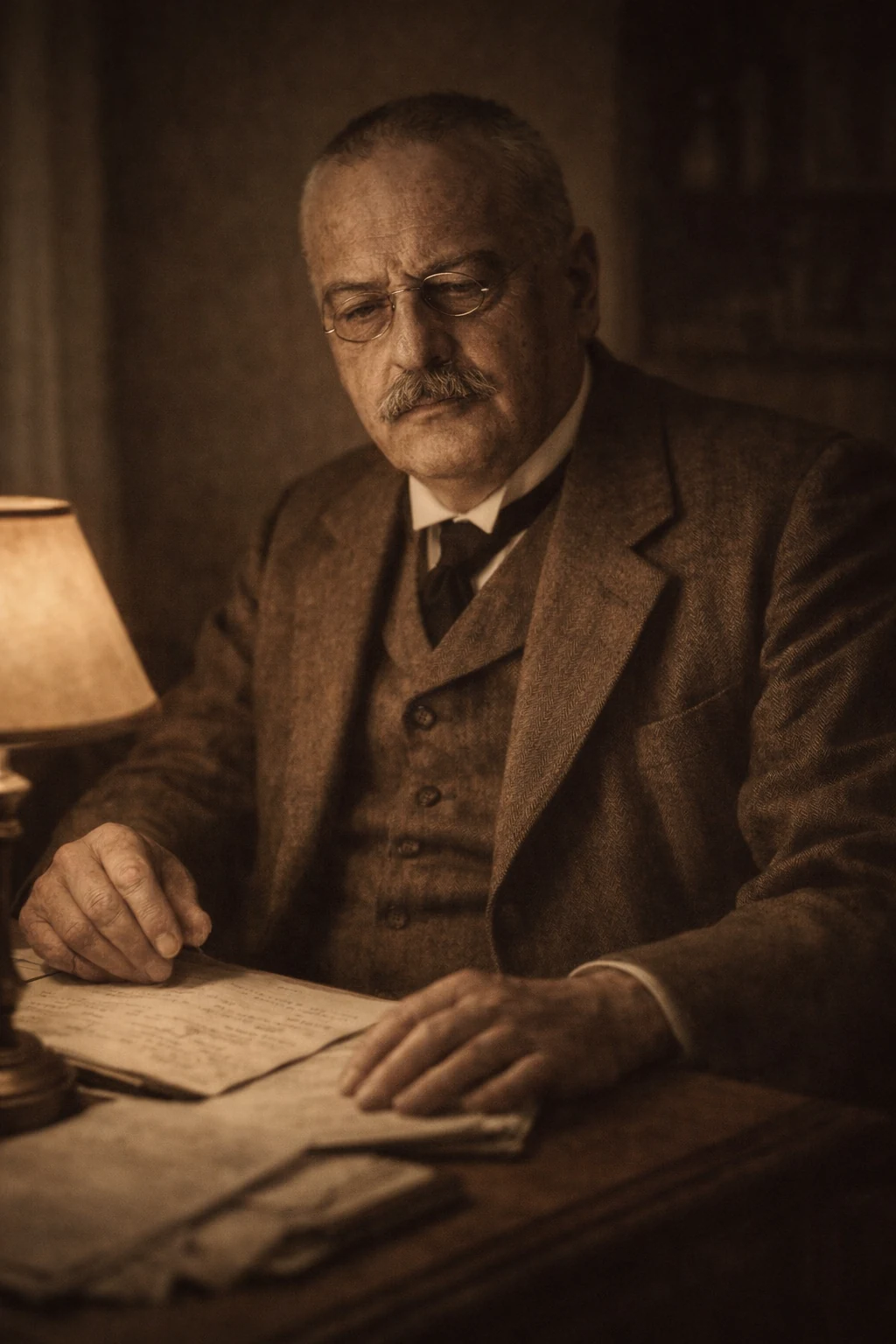
In 1906, a German physician showed his colleagues a decisive connection: the clinical history of a woman losing her memory and the microscopic lesions hidden inside her brain.
The presentation generated little interest. There was no memorable discussion or succession of questions. The next speaker was waiting, and the meeting moved on.
The physician was Alois Alzheimer. His discovery did not consist merely of recognizing that a person was forgetting. Memory disorders had been known since antiquity. His extraordinary achievement was demonstrating that particular changes in behavior, language, and orientation could correspond to specific physical alterations in brain tissue.
He observed what the medicine of his time did not yet know how to interpret. The disease, however, was not named by Alzheimer himself, and he was not the only scientist who came close to understanding it.
Alois Alzheimer
The person behind the diagnosis
Milestones in Alzheimer’s research
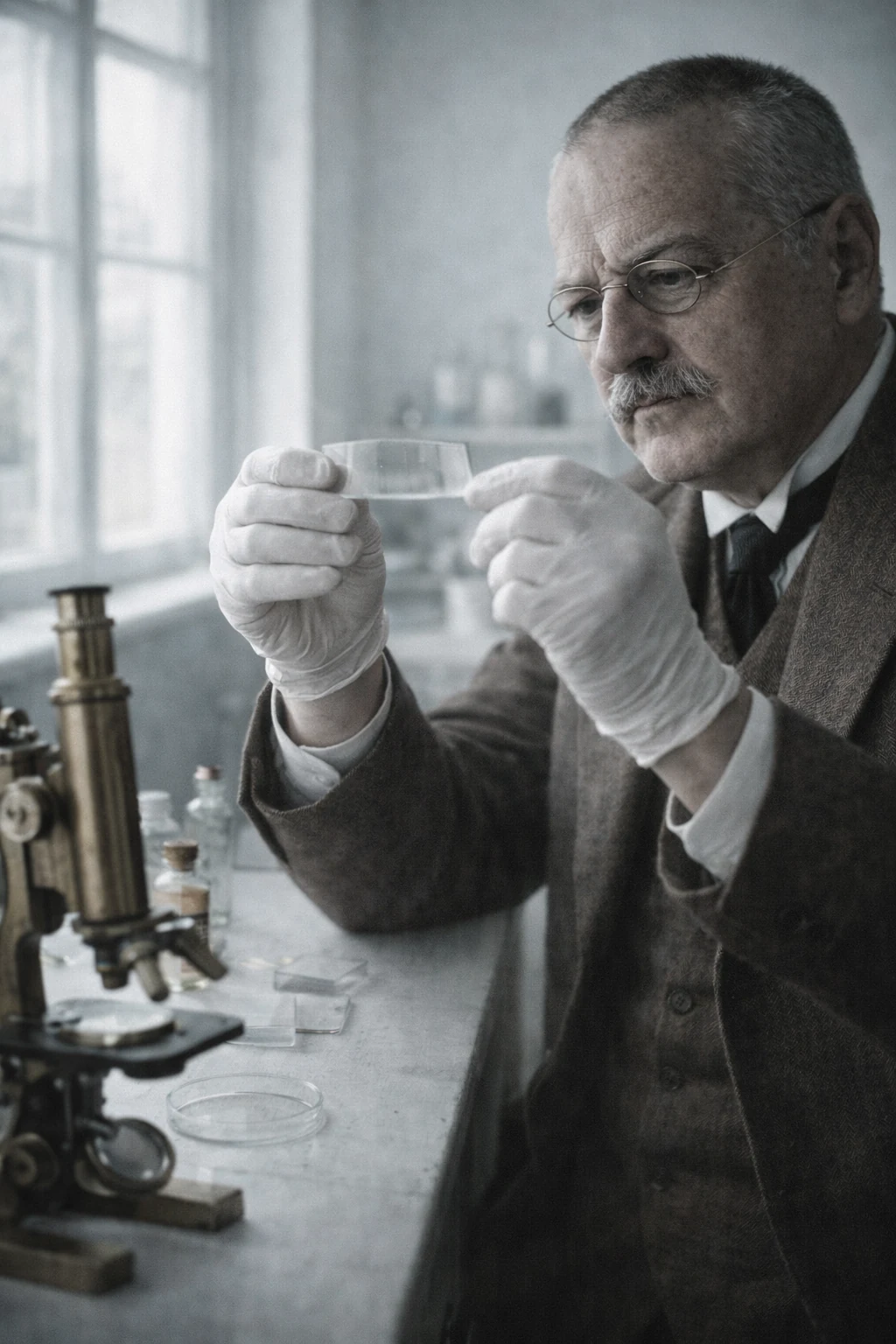
The Alzheimer’s Association places the 1906 presentation within a wider scientific timeline. Its chronology follows the naming of the disease in 1910 and later advances identifying components of plaques and tangles. The resource helps distinguish what Alzheimer observed under the microscope from what later generations could explain. The image is an artistic recreation, not an institutional photograph.
A Student Without a Defined Destination
Alois Alzheimer was born on June 14, 1864, in Marktbreit, a small Bavarian town. His father worked as a notary. The family was Catholic and belonged to a middle class that valued education.
While Alois was still young, the family moved to Aschaffenburg to improve the children’s educational opportunities. He began studying medicine in 1883. He attended the universities of Berlin and Tübingen before graduating from Würzburg in 1887.
His doctoral dissertation was not about memory or mental illness. It examined the ceruminous glands of the ear. Nothing yet suggested that his surname would become one of the most familiar medical words in the world.
In 1888, he accepted a position at Frankfurt’s Municipal Institution for the Mentally Ill and Epileptics. Psychiatric hospitals of the period were contradictory places. They could confine and isolate patients, but some physicians were beginning to transform them into centers of clinical observation and scientific research.
Alzheimer learned that describing a patient’s behavior was not enough. He wanted to understand what was happening within the nervous system.
Franz Nissl and the Brain Under the Microscope

In Frankfurt, Alzheimer met neuropathologist Franz Nissl, whose influence proved decisive. Nissl had perfected a staining method that allowed nerve cells to be observed more clearly. The dyes revealed structures that remained nearly invisible in untreated tissue.
The two physicians shared a conviction: many illnesses considered exclusively “mental” might have an observable organic basis. They worked with living patients during the day and later examined the brains of those who died.
That combination of clinical psychiatry and pathological anatomy was essential. A brain in isolation could not explain the person’s life. A list of symptoms did not necessarily reveal the biological damage. Alzheimer tried to connect both histories: what had happened while the patient was alive and what the tissue showed after death.
During his years in Frankfurt, he investigated epilepsy, general paralysis, cerebral arteriosclerosis, psychosis, and other neurological disorders. His scientific reputation did not yet depend upon a single disease. He was known as a careful investigator who avoided making claims greater than his evidence allowed (Hippius & Neundörfer, 2003).
Auguste Deter Enters the Hospital

On November 25, 1901, a fifty-one-year-old woman named Auguste Deter was admitted to the institution. Her husband, Karl, could no longer care for her at home.
Auguste had begun displaying intense jealousy toward her husband. Memory problems, disorientation, difficulty performing household tasks, language disturbances, fear, and episodes of agitation followed. At times, she believed someone intended to harm her.
Her age mattered. Severe loss of mental faculties was primarily associated with old age. Auguste was too young to fit comfortably within that explanation.
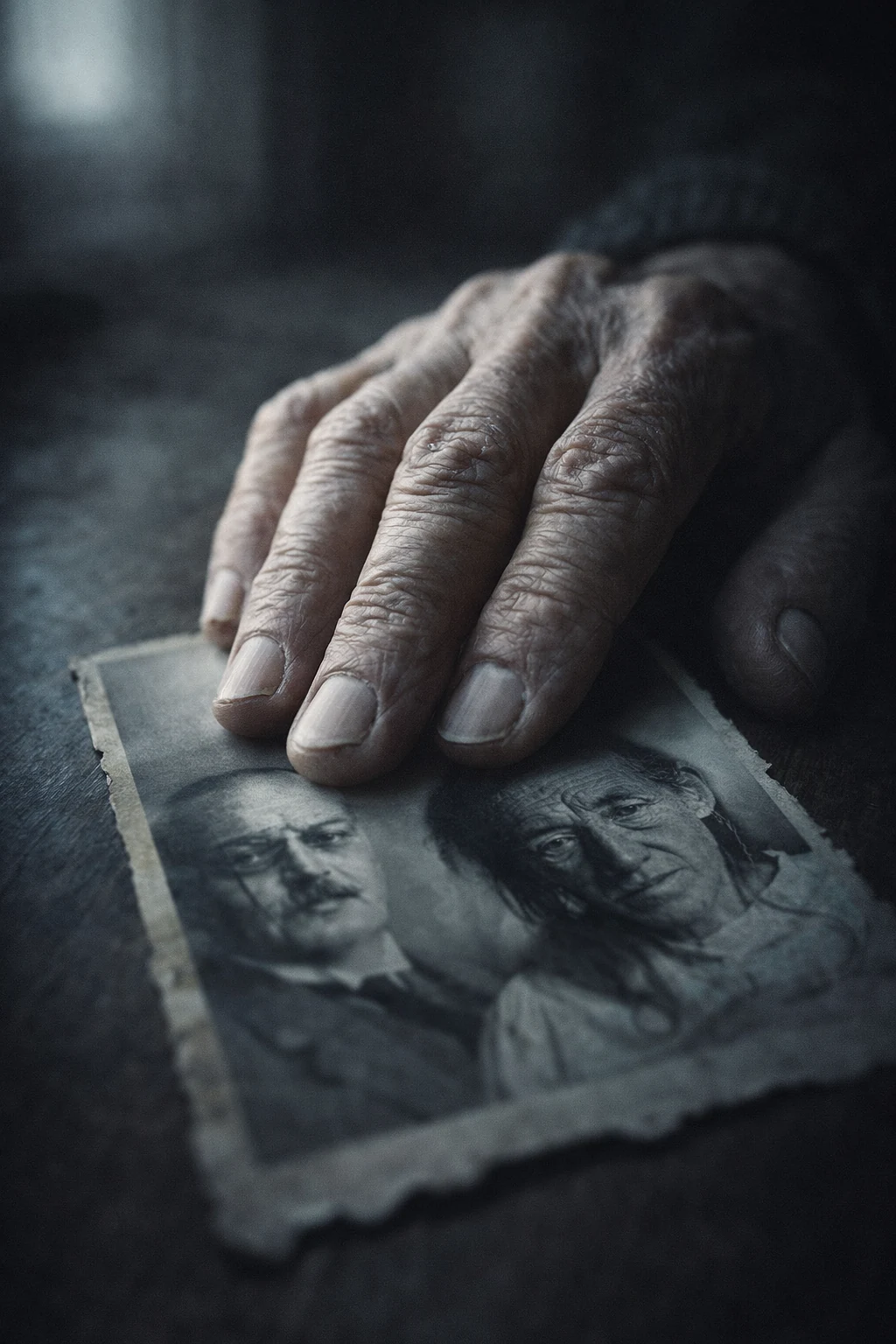
Alzheimer interviewed her and kept detailed notes. He asked her name, her husband’s name, where she was, and what objects he placed before her. She could answer correctly at one moment and lose the information seconds later. In a sentence preserved in her medical record, she unintentionally summarized her condition: “I have lost myself.”
This was not a poetic expression invented later. Alzheimer’s original notes recorded her responses, writing errors, and difficulties recognizing objects. Almost a century later, those documents would make it possible to reconstruct the case with remarkable precision.
The Physician Leaves but Does Not Forget His Patient

In 1902, Alzheimer left Frankfurt to work with Emil Kraepelin, one of the most influential figures in German psychiatry. After a brief period in Heidelberg, he joined the university clinic in Munich.
Kraepelin sought to classify mental illnesses according to their progression, symptoms, and possible biological causes. In contrast with exclusively psychological explanations, his school placed enormous value on brain research.
Alzheimer directed a pathological anatomy laboratory that attracted young researchers from several countries. One was Solomon Carter Fuller, an African American physician born in Liberia recognized as one of the first Black psychiatrists in the United States. Fuller conducted research in Alzheimer’s laboratory and published important studies of dementia, although his role appears far less frequently in popular accounts of this history (Alzheimer’s Association, n.d.).
Auguste Deter remained in Frankfurt. Alzheimer, however, asked to be notified when she died and requested that her brain and medical file be sent to him.
What Appeared After Death

Auguste died on April 8, 1906, at the age of fifty-five, after nearly five years in the institution. An infection was the immediate cause, but the process that had gradually destroyed her memory remained unexplained.
The Frankfurt physician sent the brain and requested documents to Munich. Alzheimer prepared extremely thin tissue samples, applied new staining techniques, and examined them under a microscope.
He found extensive nerve-cell loss and two fundamental abnormalities. Deposits appeared outside the neurons that are now associated with beta-amyloid protein. Inside many cells, he observed abnormal bundles of fibers, later identified as neurofibrillary tangles associated with tau protein.
Alzheimer did not know the molecular composition of these structures. Nor could he determine whether they were the initial cause of the disease, a consequence, or some combination of both processes. What he accomplished was connecting them with Auguste’s documented clinical decline.
An exceptionally detailed case linked progressive memory deterioration, language impairment, and personality changes with a specific microscopic pattern (Maurer et al., 1997).
A Lecture Almost No One Heard

On November 3, 1906, Alzheimer presented the case at the 37th Meeting of Southwest German Psychiatrists in Tübingen. His lecture was titled approximately “On a Peculiar Disease Process of the Cerebral Cortex.”
He explained Auguste’s symptoms and the abnormalities discovered in her brain. The presentation now considered historic produced almost no reaction. Records indicate that there were no questions or substantial comments. The meeting proceeded to the next subject (Hippius & Neundörfer, 2003).
In 1907, he published the case in a psychiatric journal. The article occupied only a few pages. The discovery eventually associated with millions of patients entered medical literature almost silently.
The Name Chosen by Another Man

Alzheimer did not call the disorder “Alzheimer’s disease.” Emil Kraepelin used the expression in 1910 in the eighth edition of his influential psychiatry textbook.
Kraepelin classified the case as a form of presenile dementia, distinguishing it from senile dementia associated with advanced age. Auguste’s youth seemed to indicate a distinct and exceptional disease.
Over time, the rigid division between presenile and senile dementia lost importance. Researchers discovered that the same fundamental characteristics could occur in older people. Today, early and late onset distinguish forms of presentation, but they do not create two entirely separate diseases.
Oskar Fischer, the Researcher Left at the Margins
While Alzheimer was studying Auguste, another physician was investigating similar changes in Prague. Oskar Fischer worked in psychiatrist Arnold Pick’s clinic.
In 1907, Fischer published a study of brains from patients with senile dementia. He identified neuritic plaques in twelve cases and provided an extensive description of their relationship to cognitive decline. His investigations were fundamental in defining the clinicopathological entity now called Alzheimer’s disease (Goedert, 2009).
Why was it not named Alzheimer-Fischer disease?
There is no single answer. Kraepelin possessed enormous influence over psychiatric classification and introduced his colleague’s name in a widely used textbook. Fischer worked within a different academic school, and his observations concentrated more heavily on dementia among older patients. Academic rivalries and institutional networks also determine which names history preserves.
Fischer’s later life was tragic. He was Jewish. After the Nazi occupation of Czechoslovakia, he was persecuted and sent to the Theresienstadt concentration camp, where he died in 1942.
Recognizing Fischer does not diminish Alzheimer’s achievement. It corrects the image of a discovery produced by a completely isolated genius. Science advanced through physicians, patients, technicians, staining methods, institutions, and observations developing simultaneously.
A Physician Interested in People
Photographs of Alzheimer usually show a severe-looking man with a heavy mustache and rigid expression. Accounts from colleagues and students provide a broader image. He was a demanding teacher but allowed young researchers to pursue their own ideas. He also supported relatively humane treatment of patients within the limitations of the psychiatry of his time.
In Frankfurt, he favored methods that reduced physical restraint, therapeutic activities, and more individualized observation. This should not turn him into a modern reformer outside his historical context. He worked in institutions that still exercised enormous control over the freedom of their residents. Nevertheless, he understood that seemingly incomprehensible behavior could possess a clinical history and a bodily cause.
In 1894, he married Cecilie Geisenheimer, a widow from a wealthy family. They had three children. Cecilie died in 1901, the same year Auguste Deter entered the Frankfurt institution. Alzheimer’s sister subsequently helped care for the children.
The personal loss coincided with the case that defined his career, but there is no basis for turning the two events into a direct psychological relationship.
The Final Professorship
In 1912, Alzheimer was appointed professor and director of the psychiatric clinic at the University of Breslau, now Wrocław in Poland. During the journey to his new position, he became seriously ill, probably from a streptococcal infection that produced cardiac and renal complications.
He never fully recovered. Even so, he continued working, teaching, and conducting research. He died on December 19, 1915, at only fifty-one—the same age Auguste Deter had been when she entered the hospital.
He was buried in Frankfurt beside his wife. He did not live to witness the global significance that the disease associated with his name would acquire.
For several decades, the diagnosis remained considered relatively rare because it was associated primarily with patients younger than sixty-five. As life expectancy increased and neurology and neuropathology advanced, researchers recognized that a large proportion of cases formerly labeled “senile dementia” shared the same lesions.
The Missing File

One of the story’s most surprising developments occurred long after Alzheimer’s death. For decades, Auguste Deter’s original medical file was believed lost.
In 1995, a team led by Konrad Maurer located it in the archives of the Frankfurt hospital. The folder contained thirty-two pages of medical notes, writing exercises, reports, and photographs of the patient (Maurer et al., 1997).
The discovery confirmed that the story repeated for almost ninety years largely corresponded with the original records. It also restored a voice to Auguste that the diagnostic label had obscured.
In 1992 and 1997, histological preparations connected with Alzheimer’s first cases were recovered in Munich. Modern analysis confirmed the presence of plaques and tangles, although some diagnostic and interpretive questions remain subjects of research (Graeber, 1999).
The story contains an obvious irony: the document that helped explain a disease of memory remained forgotten for almost a century in hospital archives.
What He Saw and What We Still Cannot See
Alzheimer observed two features that remain central to research: beta-amyloid plaques and tau tangles. Seeing those structures did not, however, solve the disease completely.
Researchers continue investigating how amyloid, tau protein, inflammation, glial cells, blood vessels, genetics, and other processes interact. Changes may begin many years before the first symptoms appear.
Not every loss of memory indicates Alzheimer’s disease, and not every dementia has the same cause. Dementia is a syndrome that can arise from different illnesses. Modern diagnosis combines medical history, cognitive assessment, laboratory analysis, brain imaging, and increasingly sophisticated biomarkers.
Alzheimer’s contribution was not the discovery of a final answer. It was the establishment of a way to search for one: listen to the patient, document the progression, and connect symptoms with verifiable biological changes.
The Man Behind the Surname
Whenever a family hears the word “Alzheimer’s,” the name of a nineteenth-century physician enters an intimate experience of fear, loss, and care. The surname has become so universal that the man has nearly disappeared behind it.
Alois Alzheimer did not discover a disease alone. Auguste Deter provided the clinical history and tissue that made recognition possible. Franz Nissl supplied microscopic methods and training. Emil Kraepelin circulated the name. Oskar Fischer systematically documented plaques in senile dementia. Researchers such as Solomon Carter Fuller extended and reconsidered the work.
Alzheimer saw the invisible because he knew how to bring together two realities medicine had kept separate: the person becoming lost during life and the marks the disease left within the brain.
His great discovery began with a woman who could no longer remember her surname correctly. More than a century later, science preserves the doctor’s name, but the history also requires us to remember hers: Auguste Deter.
References
- Alzheimer, A. (1907). Über eine eigenartige Erkrankung der Hirnrinde. Allgemeine Zeitschrift für Psychiatrie und Psychisch-Gerichtliche Medizin, 64, 146–148.
- Alzheimer’s Association. (n.d.). Alzheimer’s and brain research milestones. View source
- Alzheimer’s Association. (n.d.). Dr. Solomon Carter Fuller. View source
- Goedert, M. (2009). Oskar Fischer and the study of dementia. Brain, 132(4), 1102–1111. View source
- Graeber, M. B. (1999). No man alone: The rediscovery of Alois Alzheimer’s original cases. Brain Pathology, 9(2), 237–240. View source
- Hippius, H., & Neundörfer, G. (2003). The discovery of Alzheimer’s disease. Dialogues in Clinical Neuroscience, 5(1), 101–108. View source
- Maurer, K., Volk, S., & Gerbaldo, H. (1997). Auguste D and Alzheimer’s disease. The Lancet, 349(9064), 1546–1549. View source
More from this collection
Alexander Fleming: The Man Who Saw Medicine Where Others Would Have Seen Dirt
Read story →
Nicolaus Copernicus: The Man Who Moved the Earth Without a Telescope
Read story →