In this storyOpen index
Anthony Perkins: The Actor Who Never Escaped the Bates Motel
From theater and music to Norman Bates: a remarkable career, the weight of typecasting, and a private life under Hollywood’s pressure.
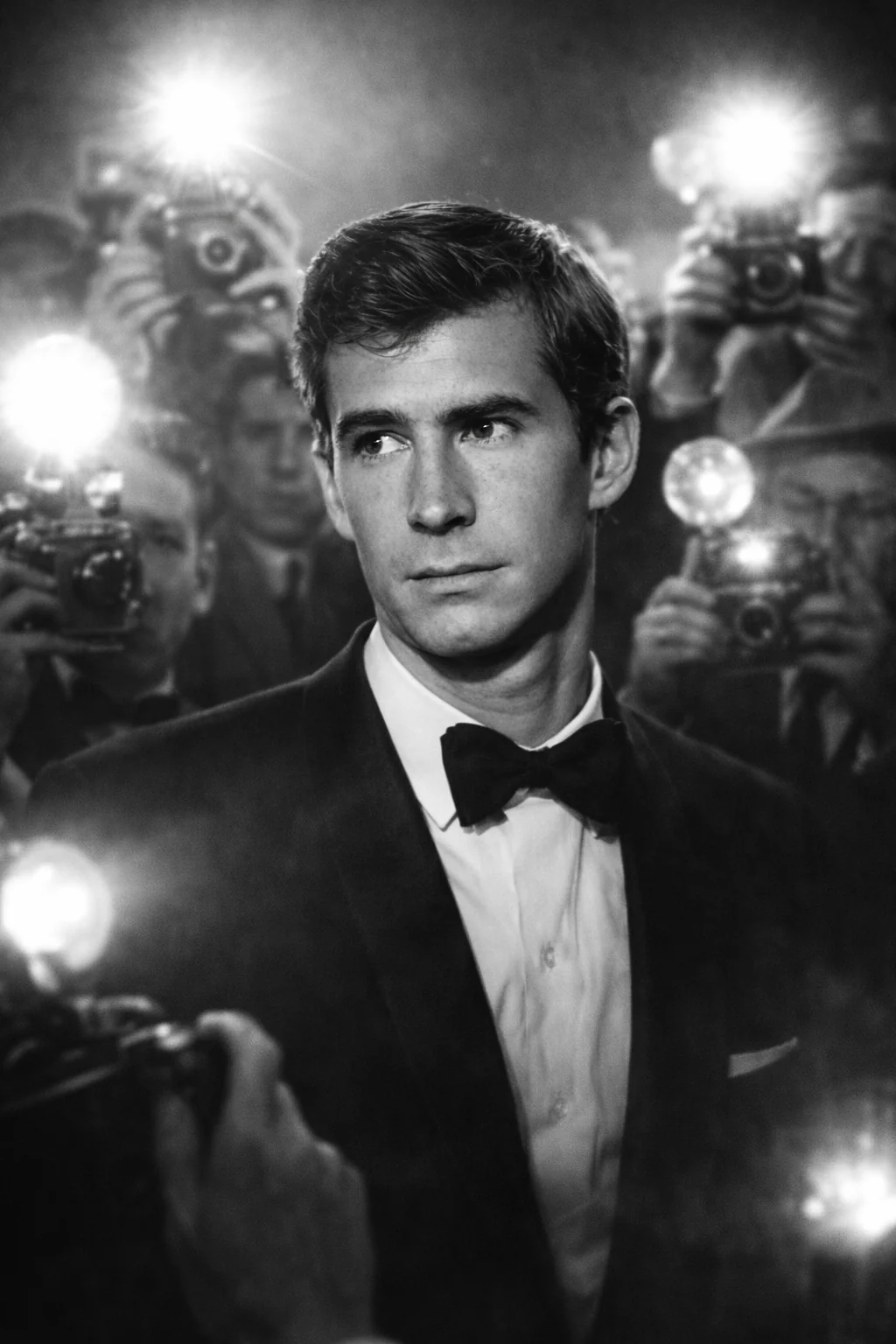
A single character can make an actor immortal while imprisoning him forever.
Before becoming Norman Bates, Anthony Perkins had been one of Hollywood’s most sensitive young prospects. He had received an Academy Award nomination, triumphed on Broadway, recorded popular music, and built an image as a shy young man seemingly destined for romantic drama. After Psycho, audiences began searching for a threat behind every one of his smiles.
The performance that made him unforgettable also became a shadow cast over every character that followed. Behind it was a man required to protect his private life within an industry that could destroy an actor’s career because of his sexual orientation and that, decades later, still treated AIDS through fear, silence, and sensational headlines.
Anthony Perkins
A life beyond Norman Bates
Cannes 1961: Perkins beyond Psycho
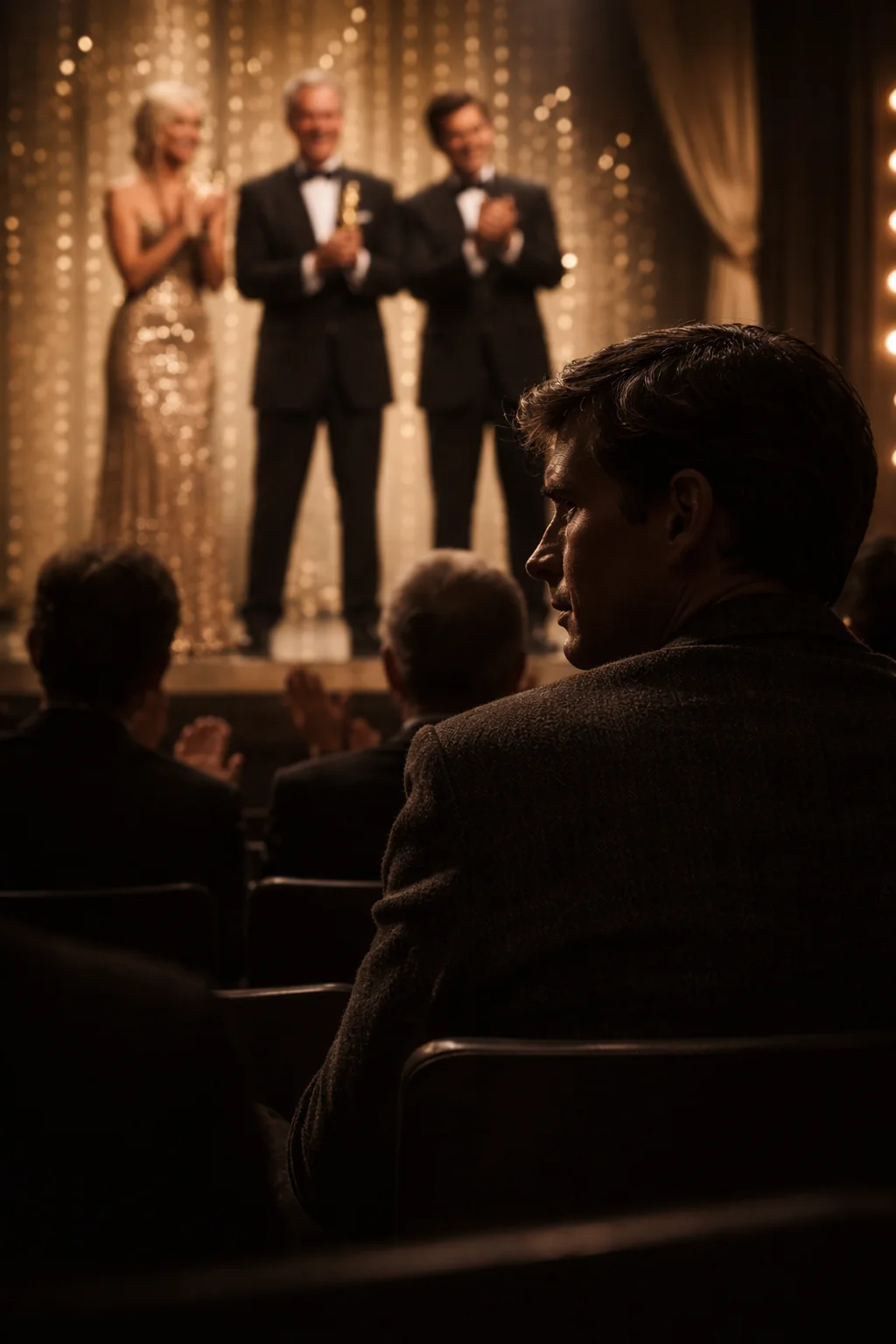
The official Cannes Film Festival awards record preserves Anthony Perkins’s Best Actor award for Aimez-vous Brahms? in 1961. It offers a perspective beyond the Bates Motel: just a year after Psycho’s release, his romantic performance alongside Ingrid Bergman received international recognition. This card’s image is an artistic recreation, not a photograph of the ceremony.
The Son of an Absent Actor
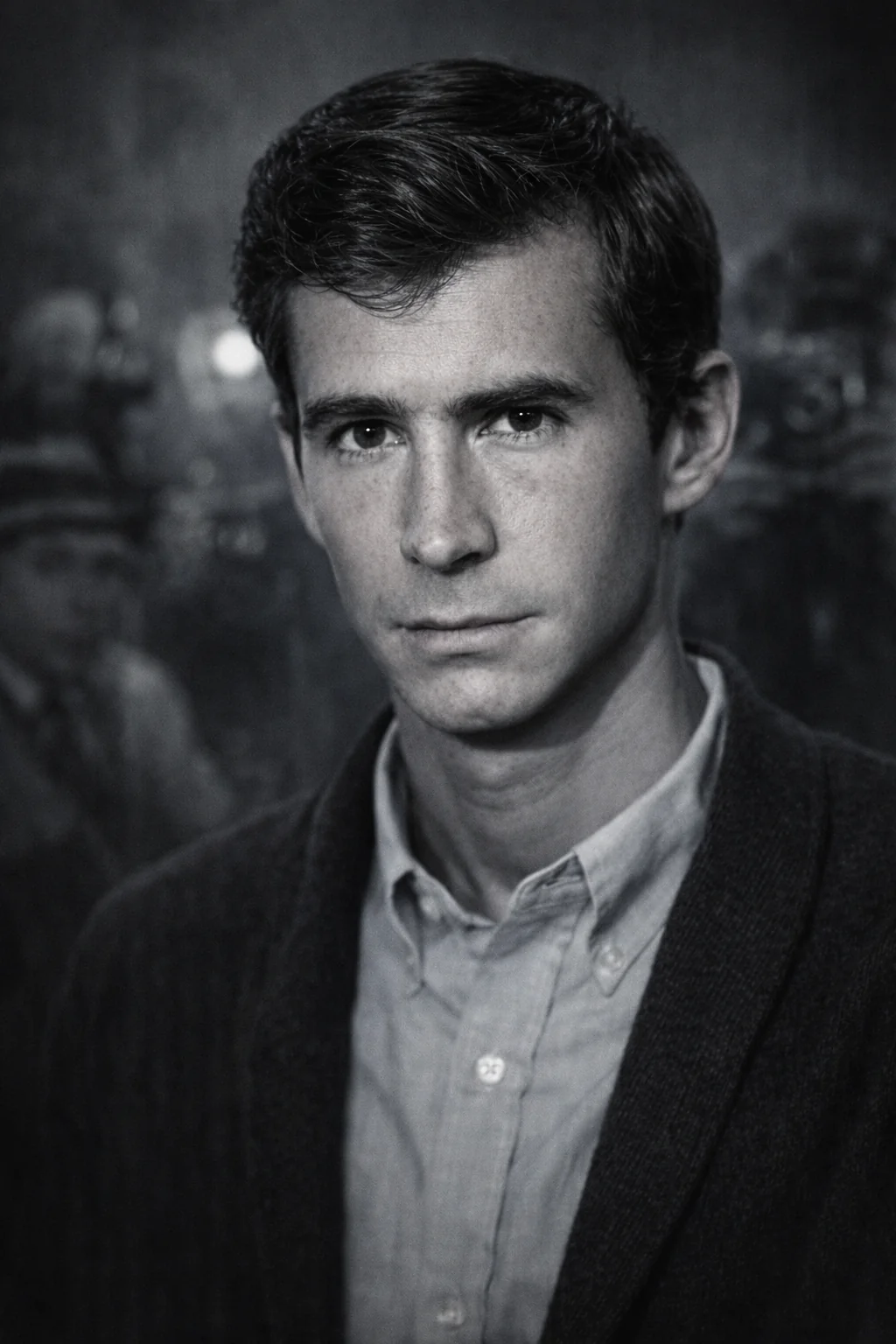
Anthony Perkins was born in New York City on April 4, 1932. His father, Osgood Perkins, was a respected stage and screen actor remembered, among other performances, for playing gangster Johnny Lovo in Howard Hawks’s Scarface (1932).
Osgood’s success also meant long absences. Anthony grew up primarily with his mother, Janet Esselstyn Rane Perkins, and a French nanny who helped him become fluent in the language. His relationship with his mother was intense and protective.
Osgood died suddenly of a heart attack in September 1937. Anthony was five. In later interviews, he said that as a child he had felt jealous whenever his father returned home and experienced irrational guilt after his death. That confession has too often been used to explain his casting as Norman Bates, as though Alfred Hitchcock had discovered a predestined psychological tragedy within him.
Reality is less orderly. Many children experience jealousy, fear, or guilt after a family death. Perkins became an actor because he had grown up close to the theater and possessed evident talent, not because his life was destined to reproduce the fiction of Psycho.
The Stage Before Hollywood
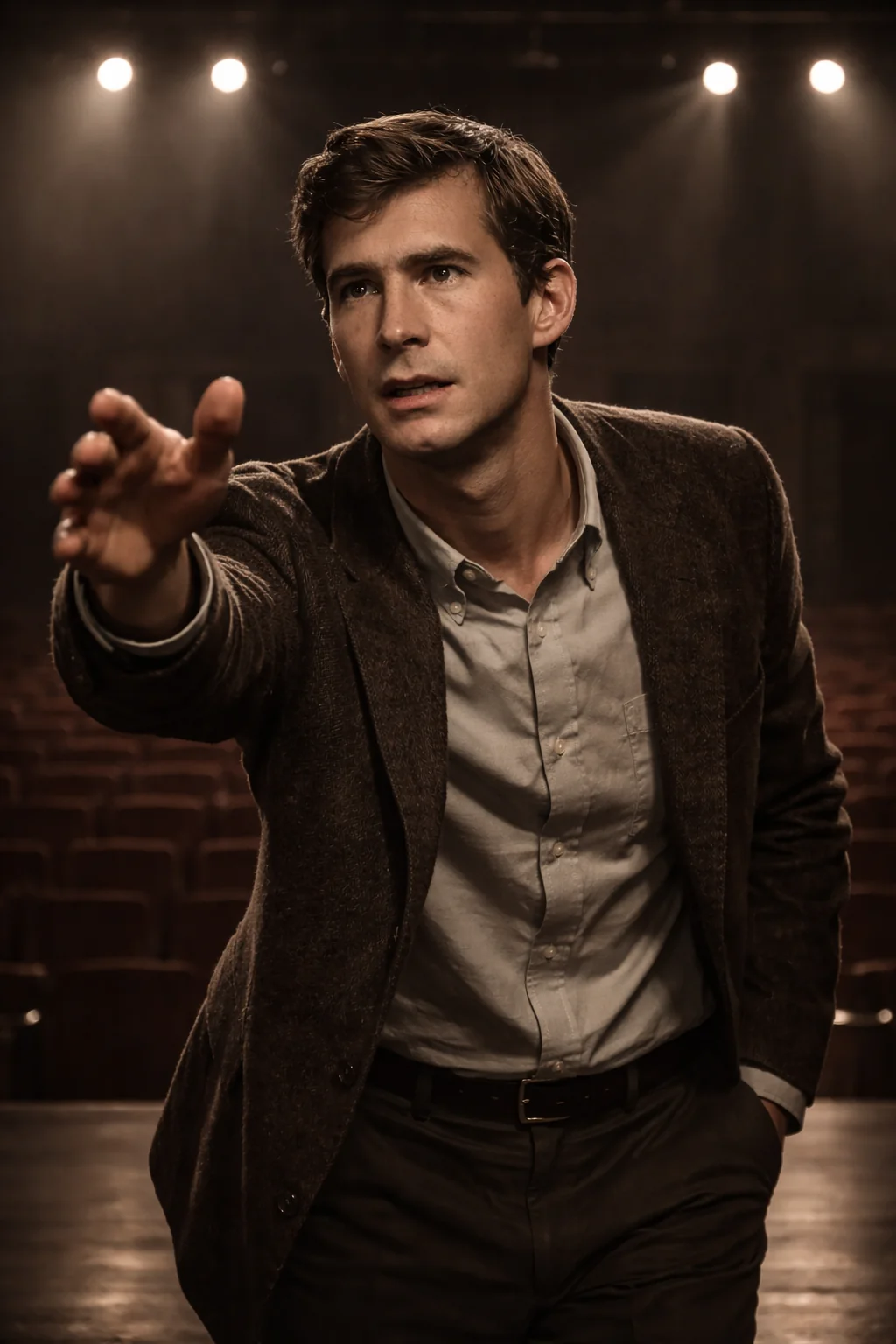
Perkins began acting in school productions and summer stock companies. He briefly attended Rollins College in Florida before transferring to Columbia University, where he studied history while continuing to work in the theater.
His film debut came in The Actress (1953), directed by George Cukor and based on Ruth Gordon’s autobiographical memories. The film did not immediately turn him into a star, but it brought him into the studio system.
In 1954, he replaced John Kerr on Broadway in Tea and Sympathy. The play concerned a student targeted because he did not conform to his community’s expectations of masculinity. During a decade marked by the institutional persecution of gay people, its subject carried meanings extending far beyond the stage.
Perkins never publicly defined his sexual orientation in clear terms. Biographies, testimony, and memoirs by people who knew him document relationships with men, particularly during his youth. Labeling him from the present as gay or bisexual may simplify a life he did not publicly define himself. What can be established is that he lived within an industry in which disclosure could have ended his career.
The Nomination That Came Before the Terror
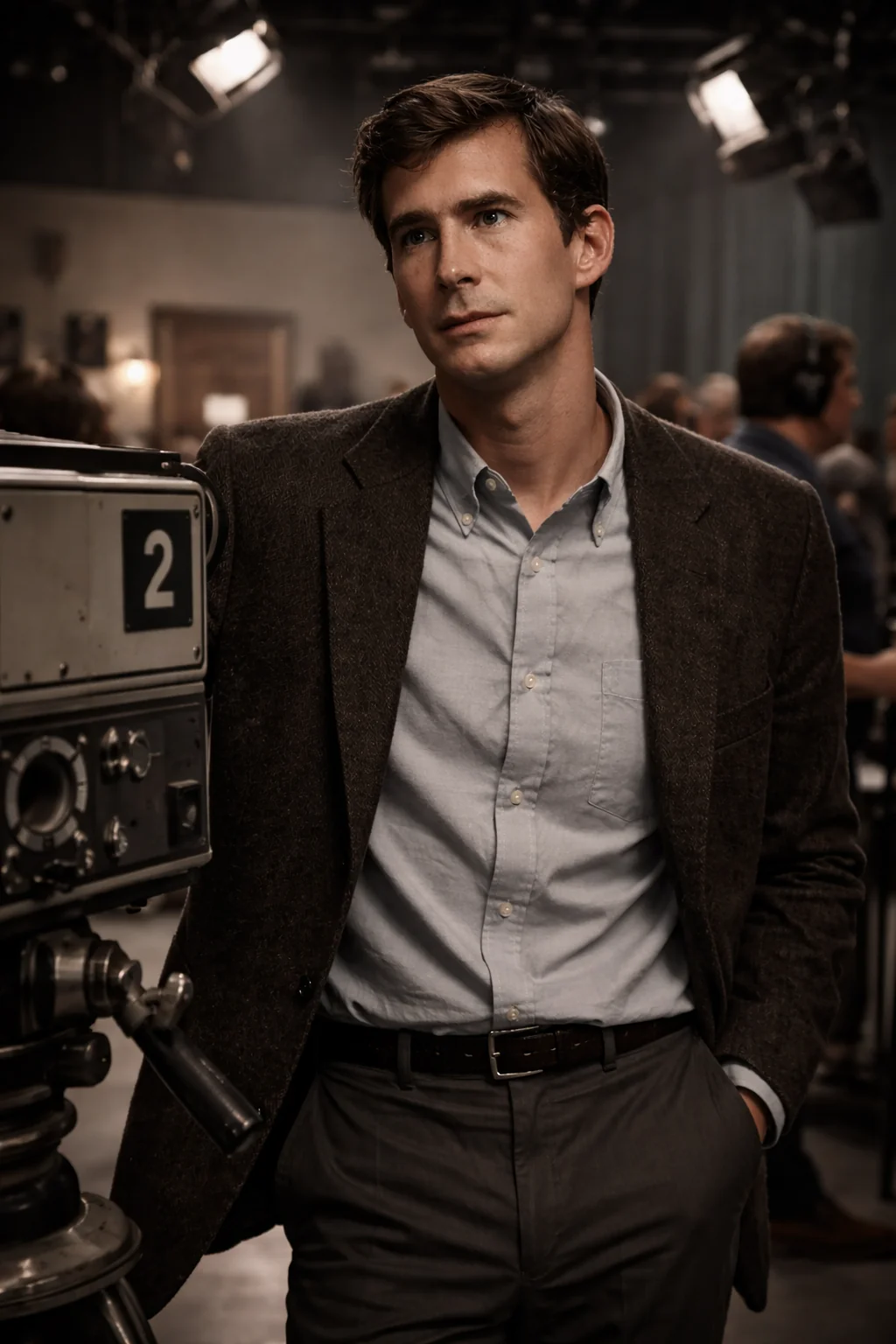
His major opportunity arrived with William Wyler’s Friendly Persuasion (1956). He played Josh Birdwell, the son of a Quaker family forced to decide whether to participate in the American Civil War despite his community’s pacifism.
Perkins communicated the character’s internal division without grand speeches. His youthful appearance, uncertain movements, and restrained voice allowed audiences to see a man attempting to discover what kind of courage he possessed.
The performance earned him an Academy Award nomination for Best Supporting Actor in 1957. It was his career’s only Oscar nomination, although several later performances became much more widely remembered (Academy of Motion Picture Arts and Sciences, 1957).
Paramount placed him under contract and attempted to present him as a sensitive alternative to conventional masculine heroes. In Fear Strikes Out (1957), he portrayed baseball player Jimmy Piersall, who had experienced a mental breakdown. Perkins delivered a physical, anguished performance demonstrating his ability to portray vulnerability without reducing it to weakness.
He also appeared in The Tin Star (1957), Desire Under the Elms (1958), The Matchmaker (1958), Green Mansions (1959), and On the Beach (1959). In the last of these, he played a young naval officer confronting humanity’s extinction after nuclear war. Before Norman Bates, his specialty was not horror. It was the moral fragility of men trapped between duty and fear.
Tony Perkins, Popular Singer
The lesser-known fact about Perkins’s career is that he was also a professional singer. Performing as Tony Perkins, he recorded for Epic and RCA Victor and released several albums and singles during the second half of the 1950s.
His voice was light and intimate, closer to that of a ballad singer than a rock-and-roll star. In 1957, “Moon-Light Swim” entered the American charts and reached approximately number 24 on Billboard’s ranking.
This was not merely a promotional campaign arranged after his film success. Perkins studied piano, was interested in jazz, and had sung on television. In a 1957 interview, he even expressed a desire to perform jazz professionally (The New Yorker, 1957).
Popular memory places him inside a motel during a rainstorm, but for a brief period, American radio audiences could also hear him singing youthful love songs.
A Relationship Hollywood Could Not Show

During his early years of fame, Perkins had a relationship with Tab Hunter, one of the great teenage idols of the 1950s. Hunter later confirmed it in his memoir and the documentary Tab Hunter Confidential.
The two met in Hollywood in 1956 and remained together for approximately three years. They could not appear publicly as a couple. Studios arranged Hunter’s dates with actresses, and magazines reproduced carefully constructed romances. Perkins faced similar pressures.
Homosexuality could result in canceled contracts, police harassment, and the destruction of a leading man’s image. Their relationship had to develop through discreet meetings, private trips, and outings with women who protected the appearance demanded by the system (Hunter & Muller, 2005).
Their breakup has been attributed to professional and personal tensions, including Perkins’s appearance in the film adaptation of Fear Strikes Out, a story Hunter had previously performed on television. The exact reasons belong to those who lived the relationship. What matters historically is that two of Hollywood’s most visible male faces were required to behave publicly as emotional strangers.
Hitchcock Discovers Norman Bates
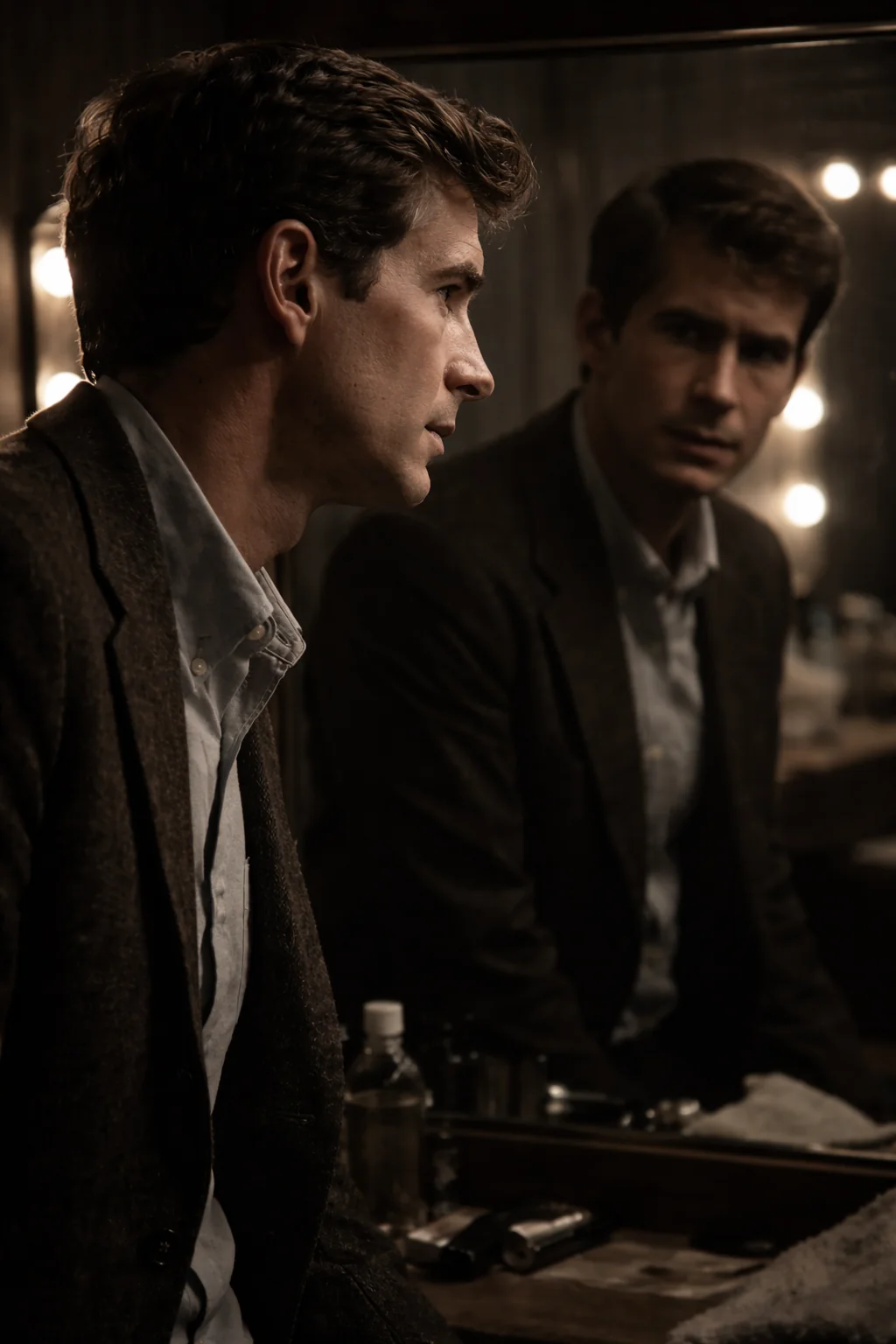
In late 1959, Alfred Hitchcock was preparing a relatively low-budget film based on Robert Bloch’s novel Psycho. The director had quietly purchased the rights and attempted to prevent audiences from learning its plot.
In the novel, Norman Bates was an older, overweight, unpleasant man. Hitchcock transformed him. By casting Perkins, he turned Norman into an attractive, shy, apparently harmless young man. Horror would no longer announce itself with a monstrous face. It could politely welcome a traveler, prepare sandwiches, and speak nervously about its mother.
That decision was essential to the film’s effect. Perkins did not play Norman as an obvious villain. He filled the character with small gestures: a smile arriving slightly too late, an uncomfortable laugh, restrained movements, and sudden changes in his gaze.
During his conversation with Marion Crane, played by Janet Leigh, Norman inspires sympathy before he provokes suspicion. The audience recognizes his loneliness and may conclude that he is another victim of his mother. When the truth emerges, that initial sympathy becomes unsettling.
The film became an enormous success and transformed horror cinema. It also made Perkins an international figure. Yet the Academy did not nominate him for a performance now regarded as one of the most influential in American cinema (American Film Institute, n.d.).
The Character and Mental Illness
Psycho used psychiatric explanations belonging to its time and combined trauma, identity, sexuality, and violence in ways that do not correspond with current clinical knowledge. Norman Bates is a fictional character, not a reliable medical representation.
The overwhelming majority of people living with mental disorders are not violent. Gender identity, sexual orientation, or wearing clothing associated with another gender should not be confused with criminal predisposition.
Perkins was not responsible for every later interpretation of the character. His work as an actor was to construct a complex human presence within the screenplay he received. That is precisely why Norman remains so disturbing: he appears not as a clinical category but as a person capable of generating tenderness and fear almost simultaneously.
Europe as an Escape Route
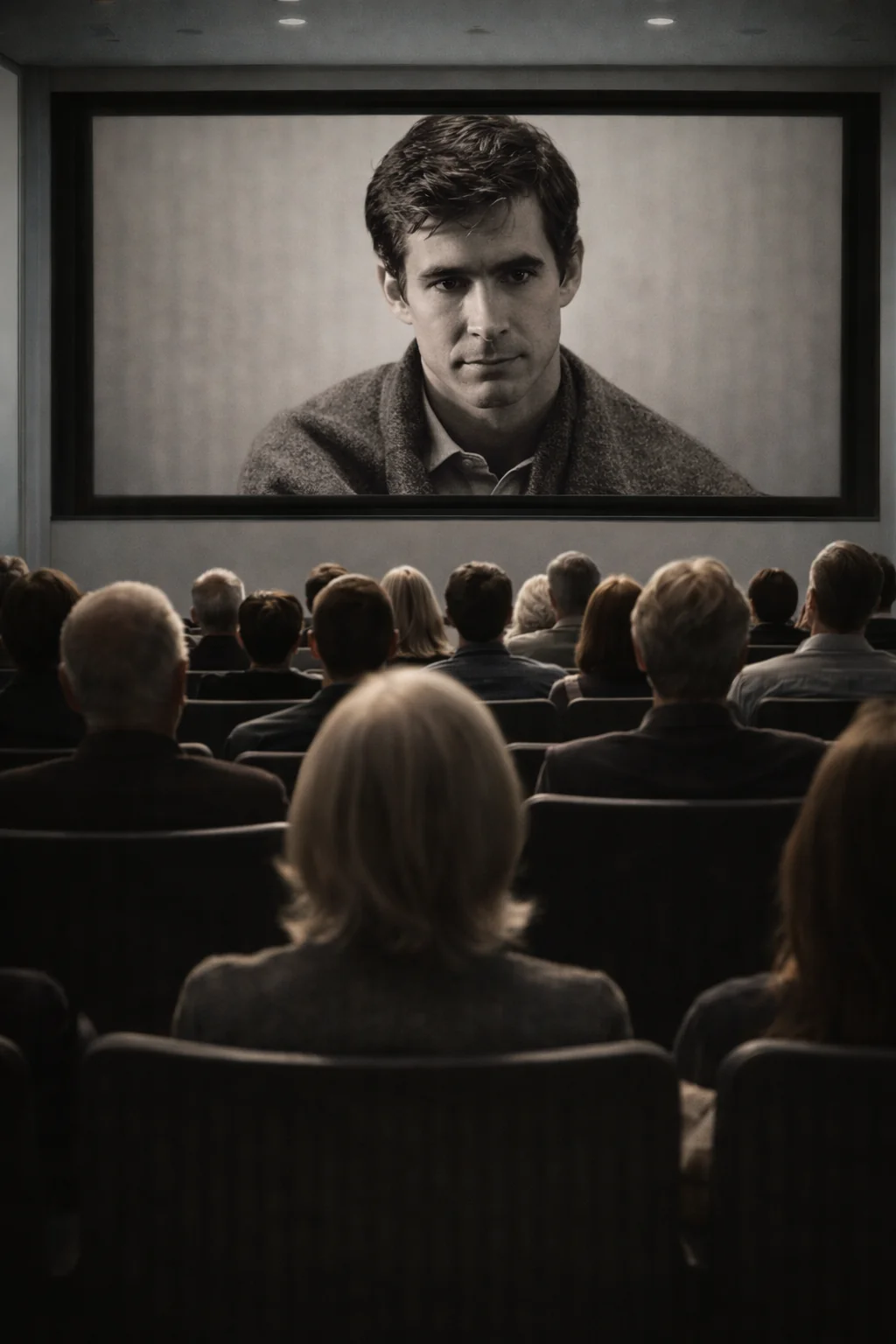
After Psycho, Hollywood began offering Perkins variations on the nervous, dangerous, or psychologically unstable young man. To escape typecasting, he worked in Europe for several years.
In Goodbye Again, also released as Aimez-vous Brahms? (1961), he played a young American in love with an older woman portrayed by Ingrid Bergman. The performance won him Best Actor at the 1961 Cannes Film Festival (Festival de Cannes, 1961).
He then worked with Orson Welles in The Trial (1962), an adaptation of Kafka. As Josef K., Perkins transformed his natural anxiety into the energy of a man pursued by an accusation he can never understand. Welles came to regard the film as one of his most personal works.
Perkins also appeared in Phaedra (1962), opposite Melina Mercouri, and Five Miles to Midnight (1962), with Sophia Loren. Those films demonstrated his ability to work in romantic, literary, and tragic registers. None, however, displaced the image of Norman Bates.
Returning Without Escaping
Perkins gradually returned to American cinema. He appeared in Catch-22 (1970), The Life and Times of Judge Roy Bean (1972), Murder on the Orient Express (1974), and Mahogany (1975).
One of his best later performances came in Pretty Poison (1968), opposite Tuesday Weld. The film reverses the expectations created by Psycho: Perkins appears to be the unstable and potentially dangerous young man, but the woman he tries to impress proves far more unpredictable.
In 1973, he married photographer and actress Berry Berenson. An interview she conducted for Interview magazine was part of their growing connection. They had two sons: Osgood, known as Oz Perkins, who became an actor and director, and Elvis Perkins, a musician.
The marriage does not erase his earlier relationships with men or allow outsiders to define his entire identity. Family testimony describes a loving bond and a genuine domestic life. Human experience does not always conform to the simple categories demanded by the studio system.
In 1983, he agreed to return fully to the role he had tried to transcend. Psycho II imagined Norman released after years of treatment and attempting to rebuild his life. Perkins gave the character a sadness that had not existed in quite the same way in the original.
He returned in Psycho III (1986), which he also directed. The film gave him control over Norman’s staging for the first time, although it did not match the cultural significance of Hitchcock’s work. He played the character again in Psycho IV: The Beginning (1990).
Returning to Norman may have appeared to be a surrender to typecasting, but it was also a way of reclaiming what Hollywood had never stopped demanding from him.
The Diagnosis Kept Secret
In the early 1990s, Perkins learned that he was living with HIV. His wife later explained that he kept the diagnosis secret for approximately two years because he feared he would no longer receive work.
That fear must be understood within the context of the epidemic. People living with HIV and AIDS faced employment discrimination, family rejection, humiliating headlines, and the false belief that the disease could be transmitted through ordinary contact.
Some accounts claim that a tabloid obtained or tested a sample of his blood without authorization before the actor formally knew the result. Berry Berenson expressed that suspicion, but the details were never independently established. It should therefore not be repeated as confirmed fact.
Perkins entered hospitals under assumed names and continued working while receiving care. Only those closest to him knew his condition. His silence was not evidence of indifference. It was the response of someone who had spent his entire professional life learning how much Hollywood could charge for a private truth.
A Death Surrounded by Stigma
Anthony Perkins died at his Los Angeles home on September 12, 1992, from AIDS-related complications. He was sixty. Berry and their sons were with him (Los Angeles Times, 1992).
In a statement prepared before his death, Perkins said that the people he had encountered through his experience with AIDS had taught him more about love, generosity, and human understanding than the competitive world in which he had spent his career.
The statement did not erase decades of secrecy, but it ensured that his final public words did not belong to Norman Bates or to the tabloids. They belonged to him.
Berry Berenson subsequently defended her husband’s memory and spoke about the love they had shared. Nine years later, she died as a passenger aboard American Airlines Flight 11 during the September 11, 2001, attacks. Their sons were left connected by two extraordinary public losses separated by almost exactly nine years.
The Smile That Changed Its Meaning
Anthony Perkins shone too brightly too soon and became trapped inside the intensity of his greatest success. He was twenty-seven during the filming of Psycho and twenty-eight when it premiered. From then on, every nervous gesture appeared to conceal a knife, and every shy character recalled the Bates Motel’s manager.
His career was far broader. He was a stage actor, singer, Cannes prizewinner, Orson Welles collaborator, and director. He could portray the innocence of a young Quaker, the anxiety of Josef K., the tenderness of a lover, and the exhaustion of a man pursued by his own cinematic history.
His private life was also more complicated than the labels applied after his death. He loved men, built a family with a woman, and lived through an era that punished every identity that did not conform to the image sold to the public.
Norman Bates gave him immortality, but Anthony Perkins spent the rest of his life trying to remind us that an actor existed behind that smile.
References
- Academy of Motion Picture Arts and Sciences. (1957). The 29th Academy Awards. View source
- American Film Institute. (n.d.). Psycho (1960). AFI Catalog. View source
- Festival de Cannes. (1961). Awards 1961. View source
- Hunter, T., & Muller, E. (2005). Tab Hunter confidential: The making of a movie star. Algonquin Books.
- Los Angeles Times. (1992, September 13). Anthony Perkins, 60, dies; star of “Psycho” had AIDS. View source
- The New Yorker. (1957, December 28). Stage-struck. View source
- Truffaut, F. (1985). Hitchcock. Simon & Schuster.
- Winecoff, C. (1996). Split image: The life of Anthony Perkins. Dutton.