In this storyOpen index
Nicolaus Copernicus: The Man Who Moved the Earth Without a Telescope
Between geometry and his duties in Warmia, he imagined a moving Earth and opened a new way to understand the heavens.
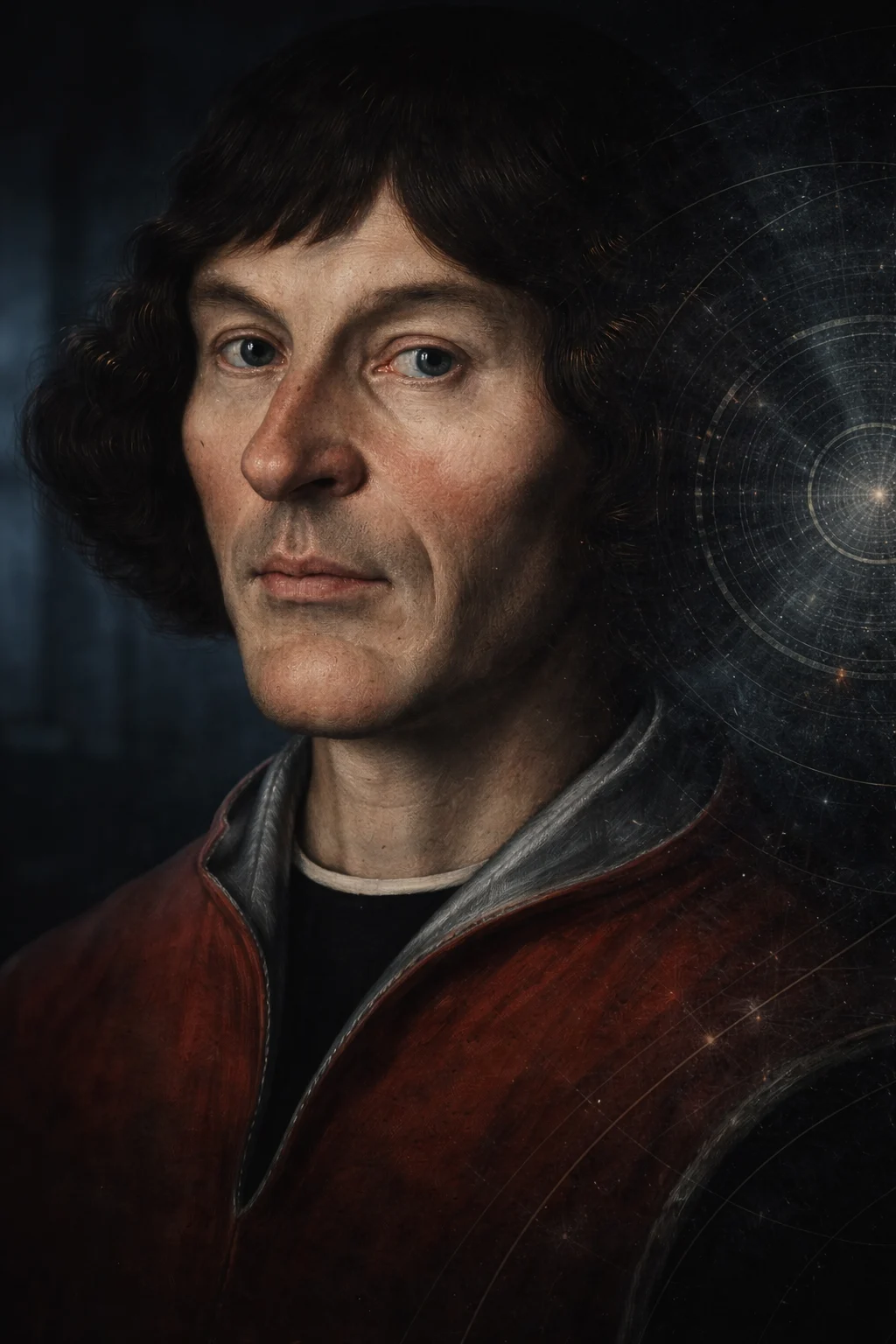
For centuries, Earth had remained motionless at the center of the universe. The Sun, planets, and stars appeared to revolve around it, exactly as human senses suggested. Nicolaus Copernicus dared to imagine the opposite: perhaps the sky was not moving as it appeared; perhaps we were the ones traveling without feeling it.
He was not the first person to suggest that Earth might move. Aristarchus of Samos had proposed a heliocentric arrangement in antiquity. Copernicus’s revolutionary contribution was to construct a comprehensive mathematical model that organized the planets around the Sun and explained their motions from a new perspective.
His revolution began without telescopes, photographs, or modern observatories. Copernicus saw the invisible because he learned to distrust the obvious.
Copernicus: An Earth in Motion
A Life Told Through Calculations, Observations, and a Revolution
The Manuscript of De revolutionibus
The Jagiellonian Library in Kraków preserves the autograph manuscript of De revolutionibus libri sex, catalogued as Ms 10000. Its pages offer a view of the text Copernicus developed before the printed edition of 1543. The link opens the institution’s digital reproduction; this card’s image is a reconstruction and does not reproduce the document.
AI-generated visual reconstruction; not a historical document.
A Man Between Two Worlds
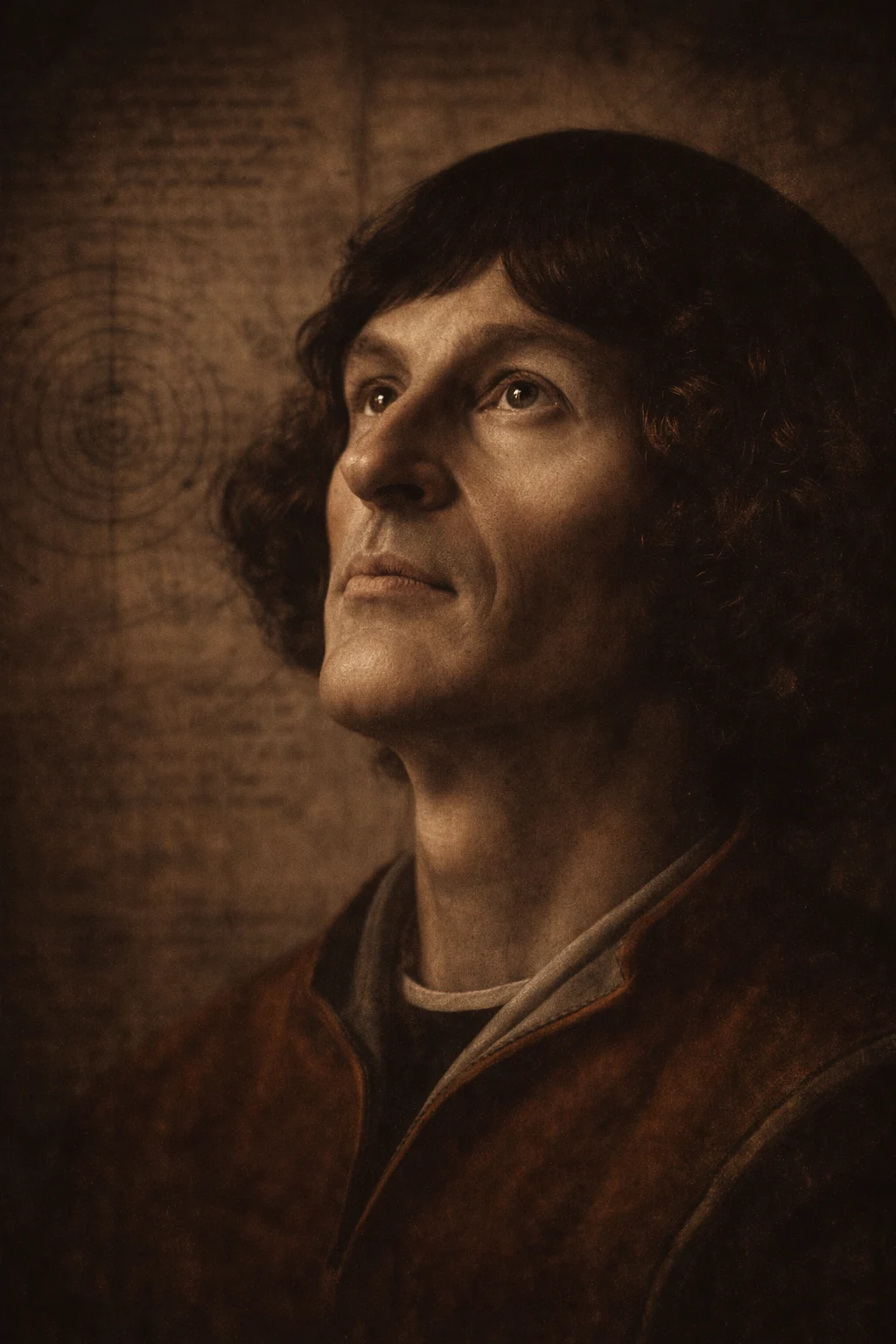
Nicolaus Copernicus was born on February 19, 1473, in Toruń, a commercial city beside the Vistula River. Toruń then belonged to Royal Prussia, a territory incorporated into the Kingdom of Poland. His family belonged to a culturally German community, but Copernicus was a subject of the Polish Crown.
Modern disputes over whether he was “Polish” or “German” therefore simplify an identity formed before the emergence of contemporary nation-states. He lived among different languages, jurisdictions, and cultural traditions (Goddu, 2010).
His father, a prosperous merchant, died when Nicolaus was still a child. His maternal uncle, Lucas Watzenrode, assumed responsibility for his education and later became bishop of Warmia. Through his protection, Copernicus received an extensive education and secured a position within the Church.
He entered the University of Kraków in 1491, studying mathematics, astronomy, astrology, and other subjects. He later traveled to Italy, where he studied canon law at Bologna and medicine at Padua. In 1503, he received a doctorate in canon law from the University of Ferrara (Rabin, 2023).
Copernicus became a canon of Frombork Cathedral, but that does not necessarily mean he was a priest. Canons administered property and performed official responsibilities within ecclesiastical institutions. No conclusive evidence has been found that Copernicus was ordained.
The distinction matters because his daily existence resembled that of a Renaissance administrator more than that of a contemplative clergyman.
The Astronomer Who Did Not Earn His Living from Astronomy
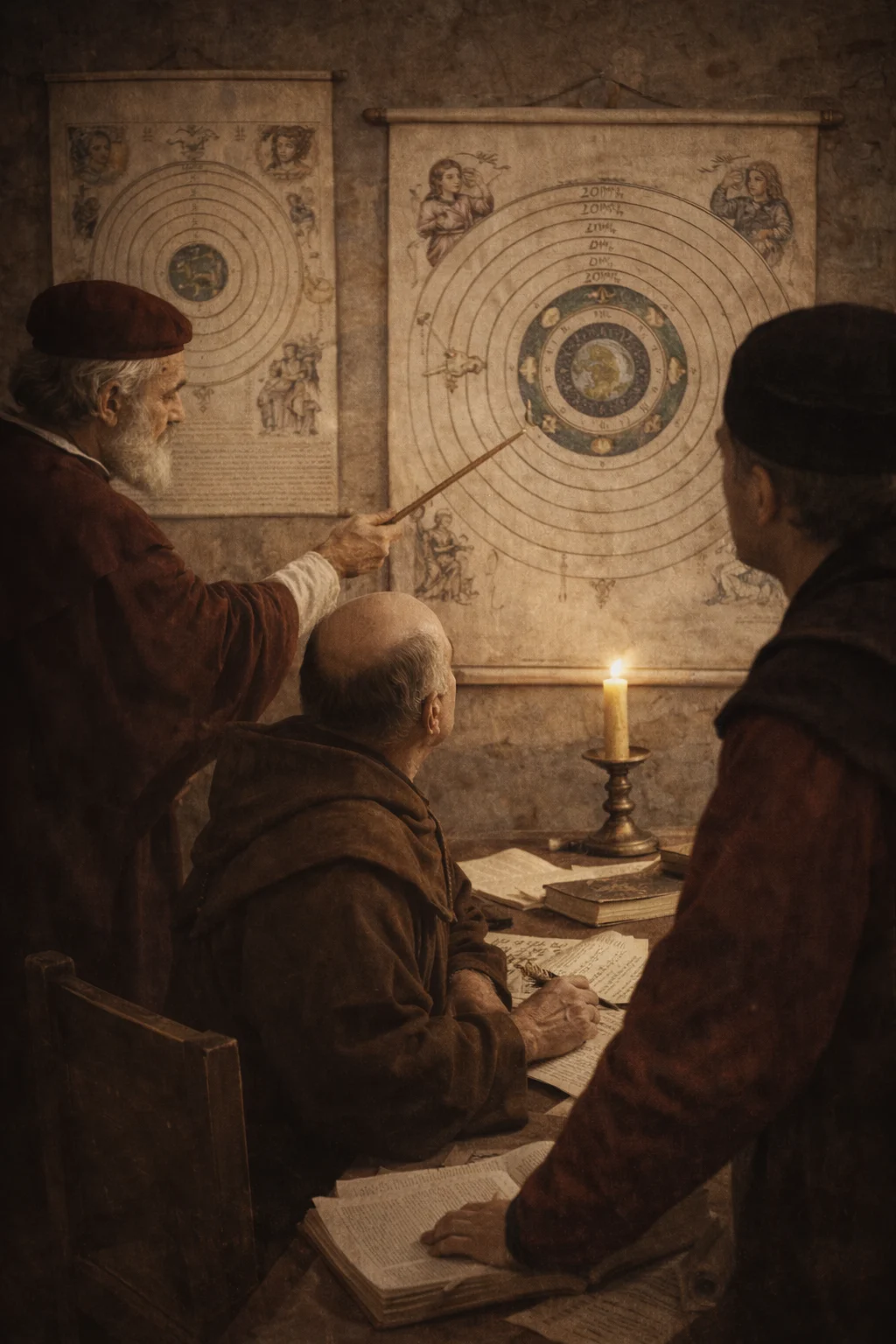
Copernicus worked as an official, physician, diplomat, legal specialist, estate administrator, and economic adviser. He treated patients, settled disputes, inspected properties, and participated in the political administration of Warmia.
During the conflict between Poland and the Teutonic Order, he organized the defense of Olsztyn in 1520–1521 when an attack appeared imminent. He gathered provisions, requested reinforcements, and supervised the fortress’s security. He was not a battlefield commander in the conventional sense, but he assumed military responsibilities as a regional administrator (Goddu, 2010).
This is among the lesser-known elements of his life: the man who transformed the universe also had to concern himself with grain, taxation, currency, walls, and soldiers.
Copernicus received no salary for working as an astronomer. Astronomy was an intellectual pursuit conducted among numerous administrative obligations. Much of the surviving documentation written in his hand concerns territorial and economic matters rather than planets.
He even composed a monetary treatise, Monetae cudendae ratio, examining how debased currency could drive higher-quality coins out of circulation. The principle would later become widely known through a formulation associated with Thomas Gresham: “bad money” tends to drive “good money” from circulation (Fukś, 2012).
The Problem of the Perfect Heavens
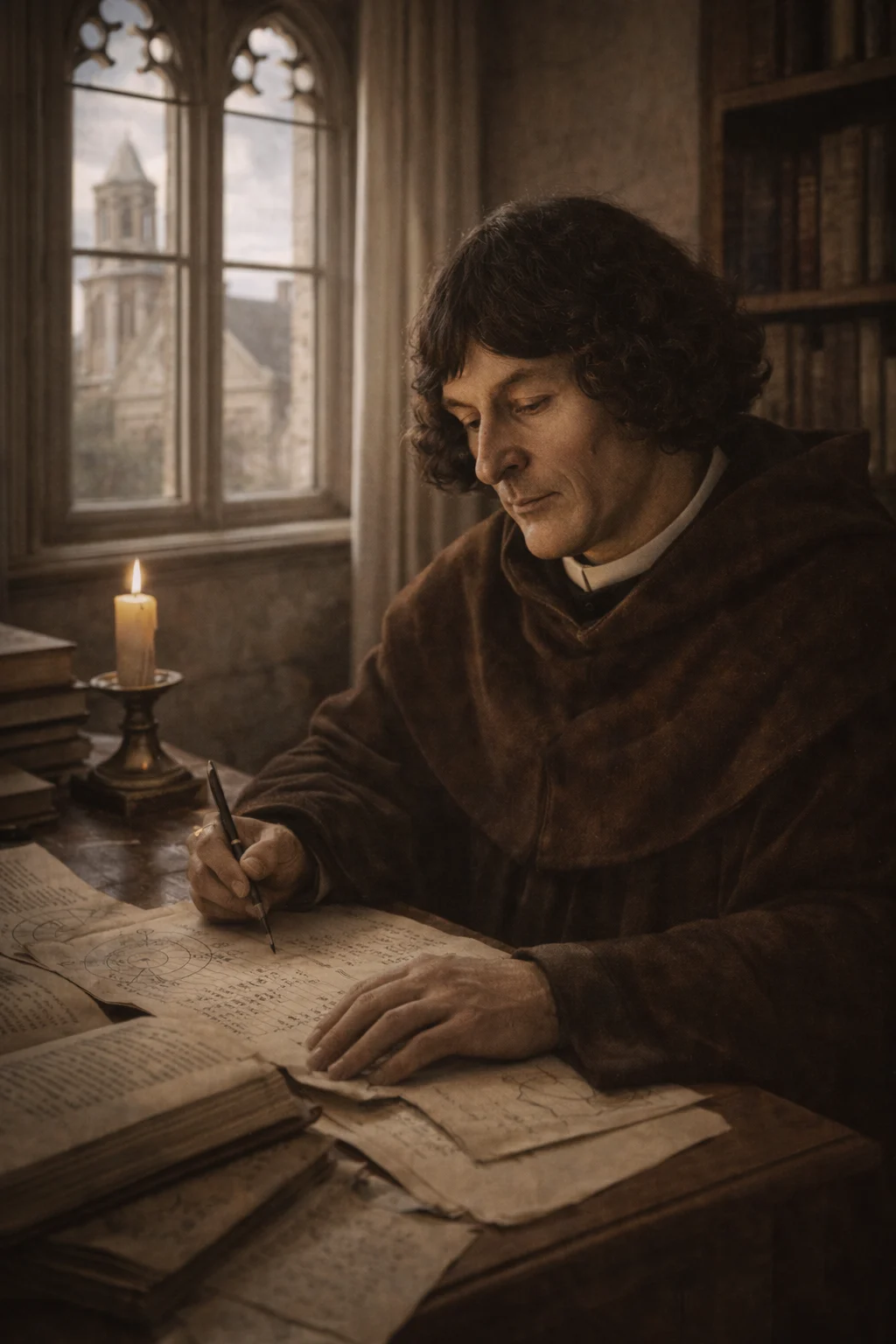
European astronomy in Copernicus’s time was dominated by the geocentric system developed from the ideas of Aristotle and Claudius Ptolemy. Earth occupied the center, while celestial bodies moved through combinations of circles.
The system could predict planetary positions with considerable effectiveness, but it required complicated mathematical devices. One of the most puzzling phenomena was retrograde motion. At certain times, planets such as Mars seemed to stop, move backward against the stars, and then resume their usual direction.
Ptolemy explained these variations through deferents, epicycles, and a mathematical point called the equant. Copernicus believed that the equant violated the ideal of uniform circular movement in the heavens.
Sometime before 1514, he wrote a short manuscript now known as the Commentariolus. In it, he summarized the fundamental propositions of his new system: Earth was not the center of all celestial motions; it rotated daily on its axis and completed an annual orbit around the Sun.
Mars’s apparent reversal was no longer an actual change in the planet’s direction. It was an effect of perspective produced when Earth, traveling along a faster inner orbit, overtook Mars. Copernicus understood that the observer was also part of the observed system (Rosen, 1959).
What Copernicus Got Right—and What He Could Not Yet Know
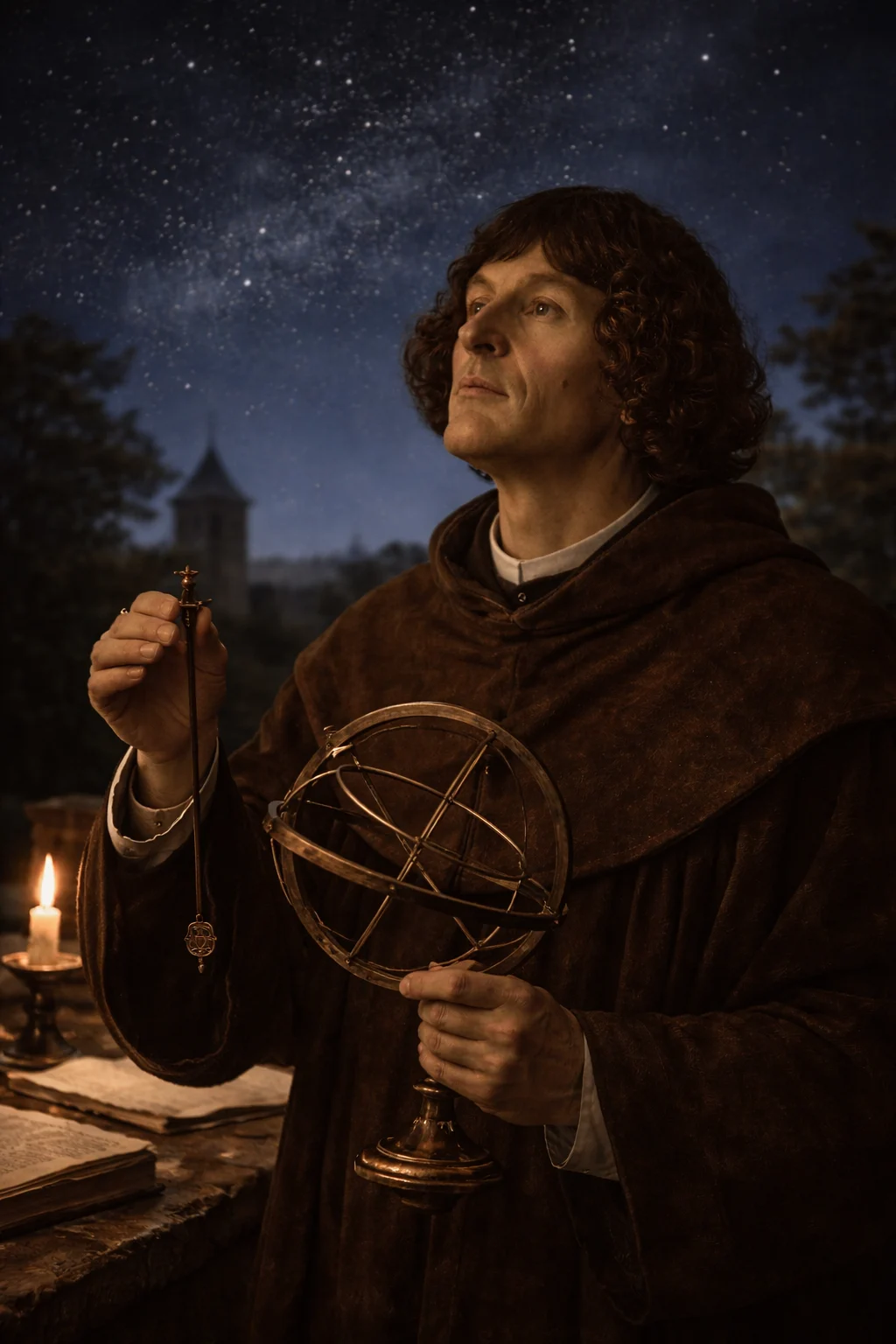
His model is often portrayed as an early, nearly complete version of the modern solar system. In reality, it contained significant errors.
Copernicus continued to believe that celestial motions had to be constructed from perfect circles. He consequently retained epicycles and other geometric combinations. The Sun did not occupy the exact center of every orbit in his calculations. His system was not necessarily simpler in every detail, nor did it initially produce predictions dramatically more accurate than existing geocentric tables.
His decisive contribution was different: he reorganized the universe.
By placing Earth among the planets, Copernicus could relate their order to the length of their orbital periods. Mercury and Venus were located inside Earth’s orbit; Mars, Jupiter, and Saturn lay beyond it. The system explained in a unified way why Mercury and Venus never appeared far from the Sun and why the outer planets exhibited retrograde motion (Rabin, 2023).
Copernicus did not discover elliptical orbits. Johannes Kepler would make that correction decades later. Nor did Copernicus possess the telescopic evidence Galileo would employ during the seventeenth century or the theory of gravity Isaac Newton would use to explain planetary motion.
He made it possible, however, to ask those questions within a different universe.
The Young Man Who Persuaded Him to Publish
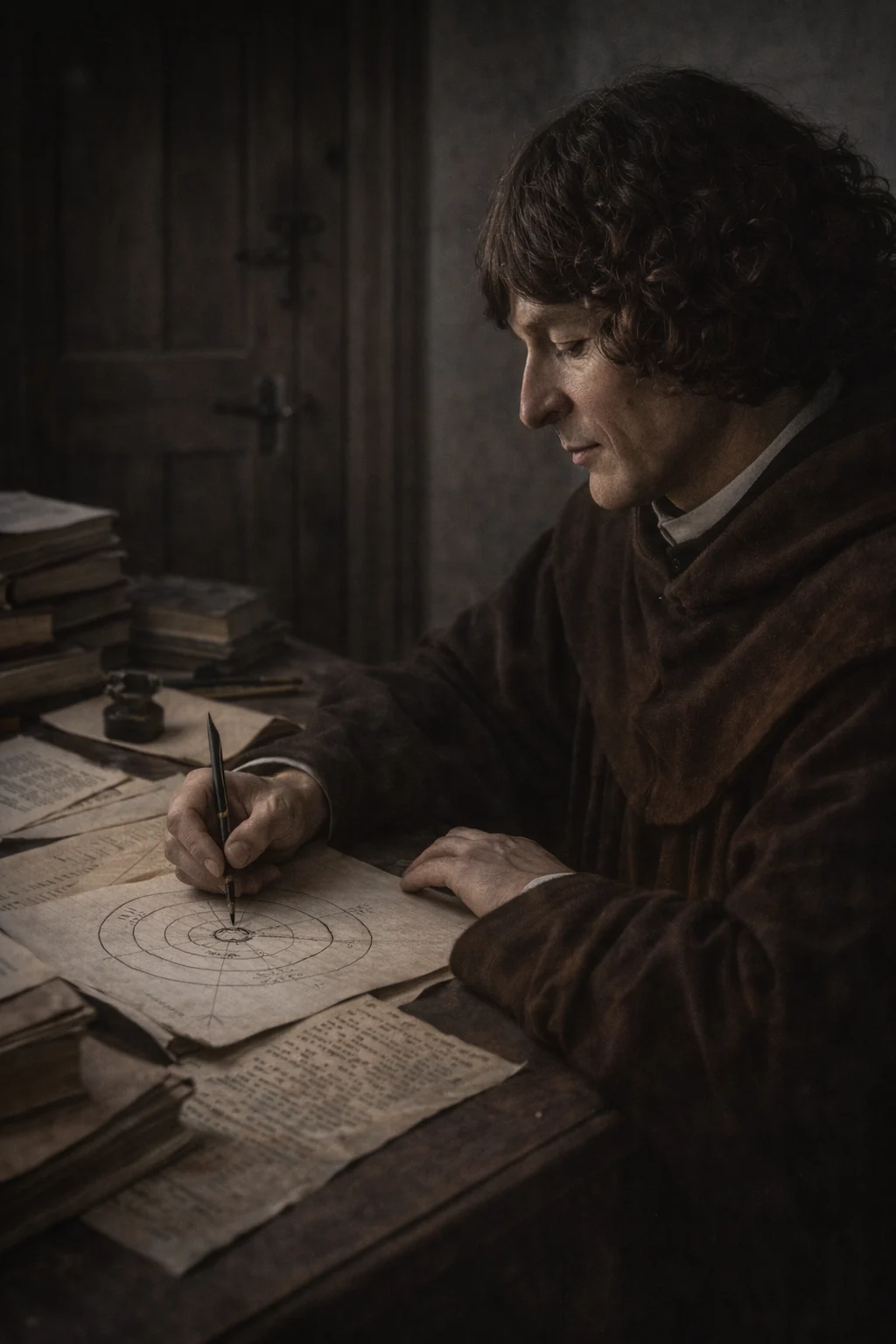
For years, Copernicus developed his great work without sending it to a printer. Some of his ideas circulated among mathematicians, astronomers, and Church officials, so he was not working in complete secrecy. Nevertheless, he hesitated to publish a treatise that could expose him to philosophical, religious, and mathematical criticism. The delay cannot be explained solely by religious fear: unfinished proofs, difficult observations, administrative duties, and distance from specialist printing centers also mattered (Rabin, 2023).
In 1539, Georg Joachim Rheticus, a young mathematics professor from the University of Wittenberg, arrived in Frombork. Rheticus was a Protestant, while Copernicus belonged to a Catholic institution, but their scientific interest temporarily overcame that religious division.
Rheticus studied with him for approximately two years and became the first public defender of his system. In 1540, he published the Narratio prima, the first printed account of Copernican astronomy. Its favorable reception helped persuade the elderly astronomer to permit the publication of his complete work (Gingerich, 2004).
Without Rheticus, De revolutionibus orbium coelestium might never have reached the printing press.
The Preface Copernicus Did Not Write
Rheticus carried the manuscript to Nuremberg but had to leave before printing was completed. Supervision passed to the Protestant theologian Andreas Osiander.
Fearing that the book would provoke opposition, Osiander anonymously inserted a preface presenting Earth’s motion as a useful mathematical hypothesis for calculation, not necessarily as a true description of the universe.
Copernicus neither wrote nor authorized that preface. His text defended the heliocentric structure as a representation of the cosmos’s actual order, not merely as a calculating device. Osiander’s intervention may have reduced the book’s immediate danger, but it also misrepresented its author’s intentions (Gingerich, 2004).
Copernicus himself dedicated the work to Pope Paul III. In the dedication, he acknowledged that his claims might appear absurd but argued that specialists should judge them mathematically.
He was neither prosecuted by the Inquisition nor condemned during his lifetime for publishing heliocentrism. De revolutionibus appeared in 1543 and circulated for more than seventy years before the Catholic Church suspended it in 1616 pending corrections to certain passages. It remained on the Index of Prohibited Books until the nineteenth century.
Did He Receive the Book on the Day He Died?
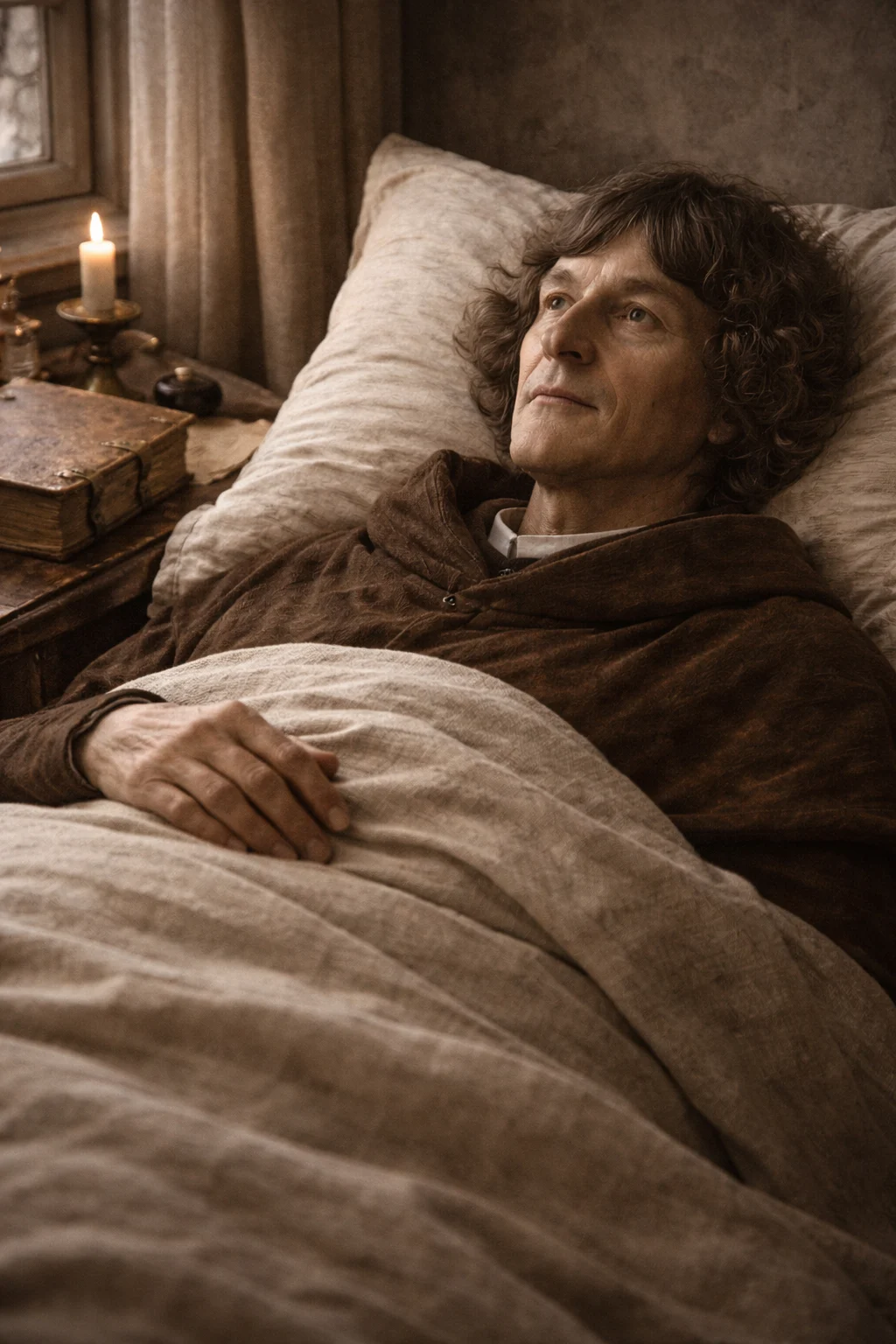
Copernicus suffered a cerebral hemorrhage or stroke late in 1542 and became gravely ill. He died in Frombork on May 24, 1543, at the age of seventy.
According to a letter written shortly afterward by his friend Tiedemann Giese, Copernicus saw the completed book on the last day of his life. Over time, the scene acquired dramatic embellishments: the astronomer supposedly awakened, held the volume in his hands, and died peacefully after contemplating his life’s work.
Giese’s testimony suggests that a copy did reach him. Copernicus was probably severely incapacitated, however, and may not have been fully conscious. We cannot know whether he recognized the volume or understood that it had finally been published (Gingerich, 2004).
The story requires no embellishment. It is powerful enough to imagine a work developed over decades arriving when its author could no longer defend it.
A Revolution That Did Not Happen Overnight
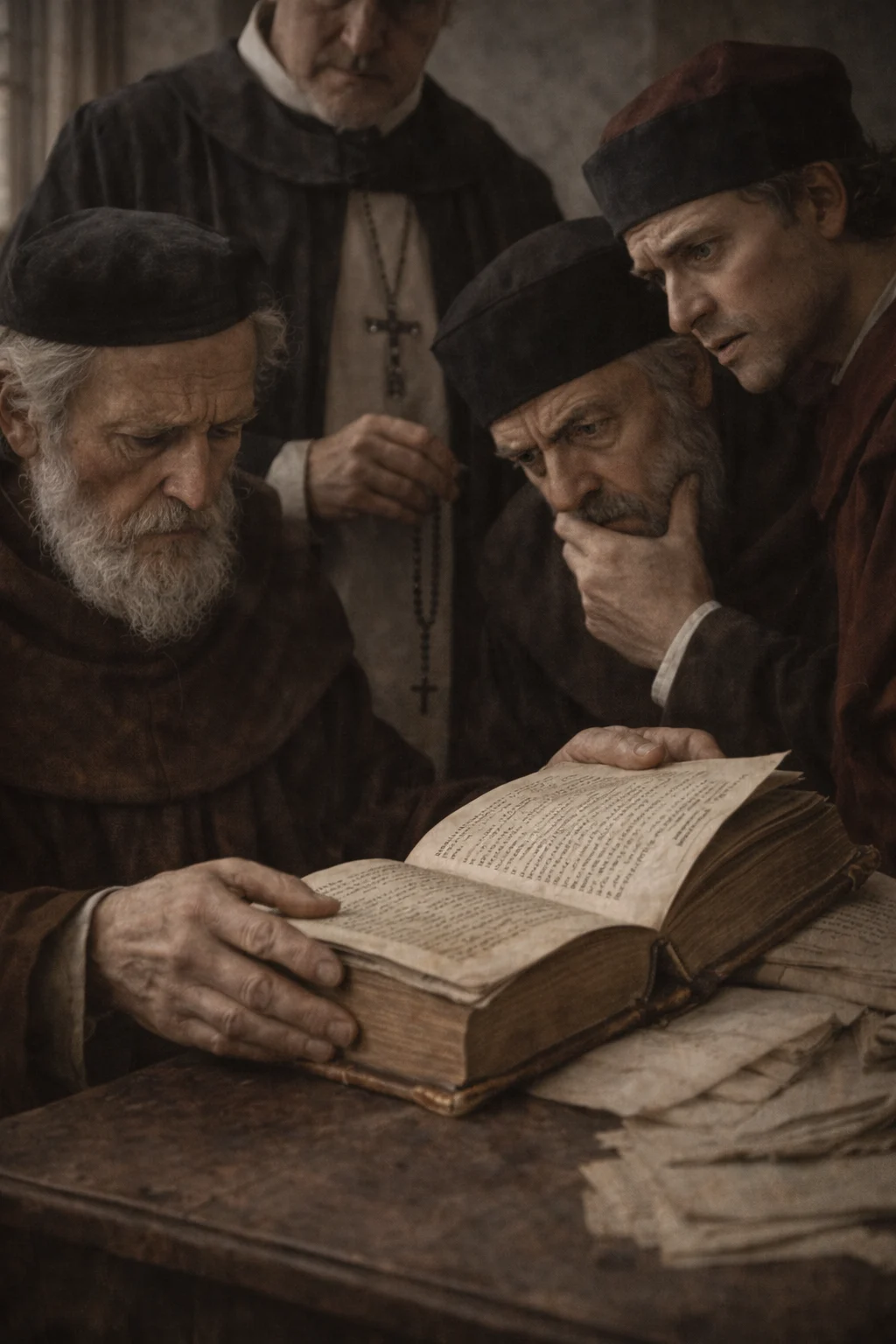
The publication of De revolutionibus did not cause Europe to accept a moving Earth immediately. Many astronomers used Copernicus’s calculations without believing that Earth physically traveled through space. Others rejected his model because it appeared to conflict with Aristotelian physics and certain biblical passages.
Furthermore, if Earth orbited the Sun, observers should detect an annual shift in the apparent position of the stars, a phenomenon known as stellar parallax. Sixteenth-century instruments could not measure it. Copernicus replied that the stars were immensely distant—farther away than anyone had previously imagined.
He was correct, but he could not yet prove it.
The Copernican Revolution required generations. Tycho Brahe produced extraordinarily precise observations, although he never accepted that Earth orbited the Sun. Kepler replaced circles with ellipses. Galileo discovered new telescopic evidence. Newton explained planetary motion through gravity.
Copernicus did not complete the new astronomy. He opened the door through which others could enter.
The Man Who Removed Humanity from the Center
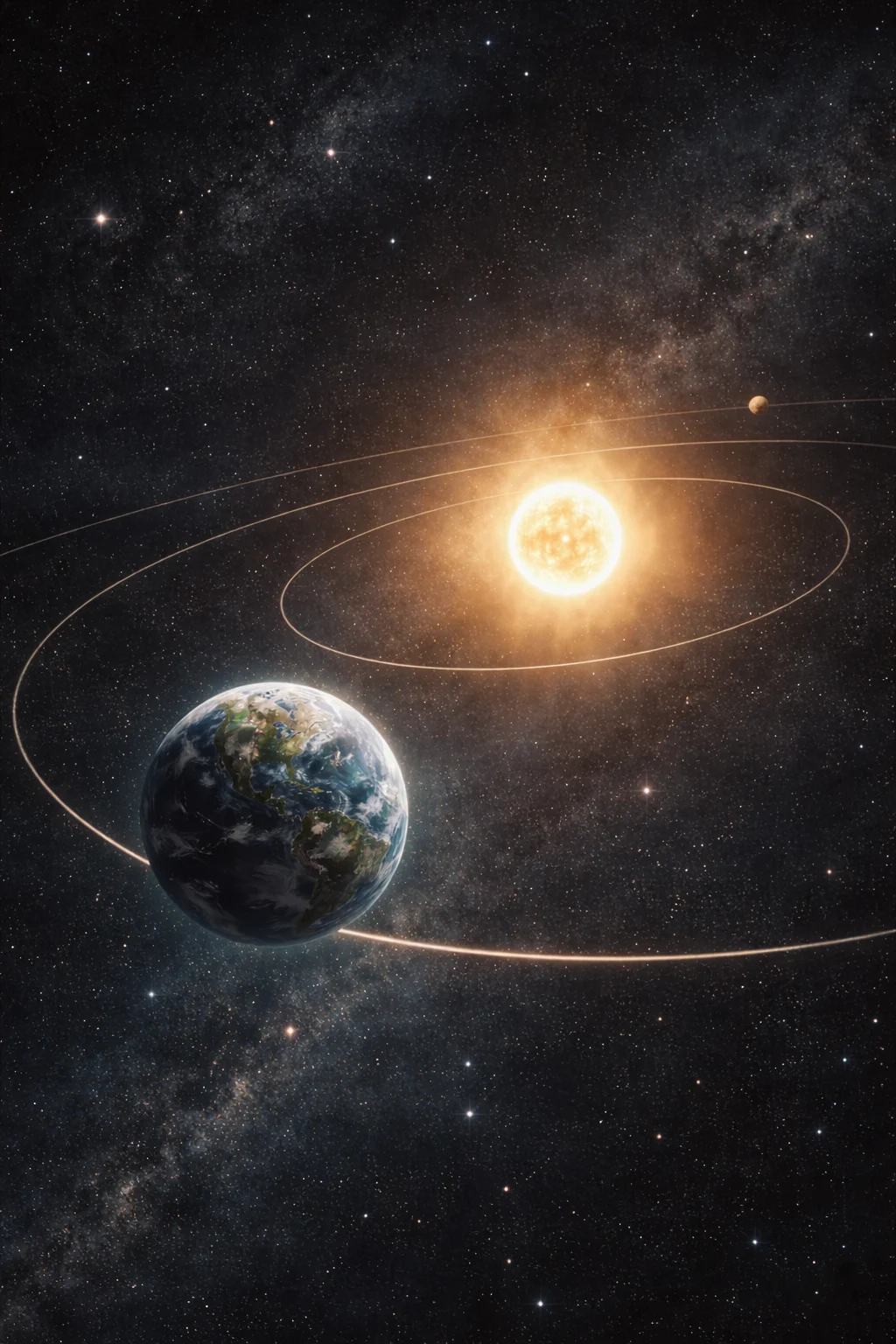
Copernicus’s importance extends beyond the arrangement of the planets. His model changed humanity’s symbolic position. Earth ceased to be the stationary stage around which the entire creation seemed to revolve and became a moving world.
He never viewed Earth from space. He could not feel its speed or watch its orbit. He reached his conclusion through geometry, imperfect observations, and a radical question: what if the motion we attribute to the heavens actually belongs to the observer?
That change in perspective is his greatest legacy. Copernicus did more than place the Sun somewhere else. He demonstrated that the senses can present a coherent picture that is nevertheless profoundly mistaken.
He saw a world turning while everyone experienced it as still. By moving Earth, he permanently displaced the way humanity understood itself.
References
- Copernicus, N. (1992). On the revolutions (E. Rosen, Trans.). Johns Hopkins University Press. (Original work published 1543). View source
- Fukś, H. (2012). Mathematics on coins, part I: The tale of two queens and two towering figures. The Canadian Numismatic Journal, 57(5), 304–315. arXiv version deposited in 2016. View source
- Gingerich, O. (2004). The book nobody read: Chasing the revolutions of Nicolaus Copernicus. Walker & Company. View source
- Goddu, A. (2010). Copernicus and the Aristotelian tradition: Education, reading, and philosophy in Copernicus’s path to heliocentrism. Brill. View source
- Rabin, S. (2023). Nicolaus Copernicus. The Stanford encyclopedia of philosophy. Stanford University. View source
- Rosen, E. (Ed. & Trans.). (1959). Three Copernican treatises: The Commentariolus of Copernicus, the Letter against Werner, and the Narratio prima of Rheticus (2nd ed.). Dover Publications. View source
- Jagiellonian Library. (n.d.). De revolutionibus libri sex (autograph manuscript; Ms 10000). Jagiellonian Digital Library. View source
- Museum of Warmia and Masuria. (n.d.). Castle of the Chapter of Warmia Bishopric in Olsztyn. View source
More from this collection
Isaac Newton: The Man Who Turned the Universe’s Invisible Forces Into Mathematical Laws
Read story →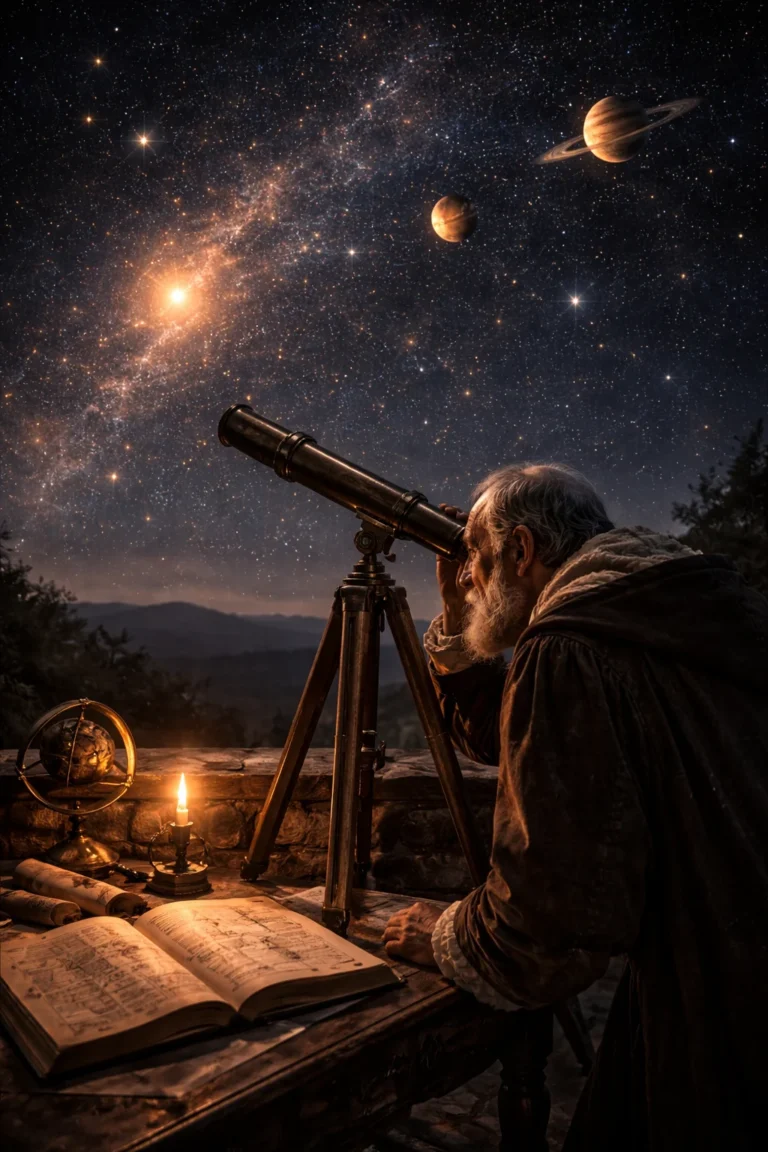
Galileo Galilei: The Man Who Pointed a Military Instrument at the Sky
Read story →