In this storyOpen index
Celestine V: The Hermit Who Escaped the Throne but Not Its Power
A five-month papacy, a voluntary resignation and the captivity that followed: evidence and legend in the life of Pietro da Morrone.

For almost his entire life, he searched for a cave where no one could find him. When people finally did, they made him pope.
Celestine V governed the Church for only five months in 1294. He reached the papal throne preceded by a reputation for holiness, resigned voluntarily after realizing that he could not control the political machinery surrounding him and ended his life as the prisoner of his successor.
His story is usually presented as that of a humble man who rejected power. Behind that image, however, lies a more disturbing question: can anyone truly escape power after possessing it?
Pope Celestine V
The hermit and the burden of power
The resignation in a sixteenth-century woodcut
Yale’s Lillian Goldman Law Library presents a woodcut from a 1514 Venetian edition of the Liber Sextus. Its imagery links Celestine V and Boniface VIII to later accusations about the resignation. It is evidence of how that story was represented centuries afterward, not proof that the alleged deception occurred. The accompanying AI illustration is symbolic and does not reproduce the woodcut.
The man who chose the mountain

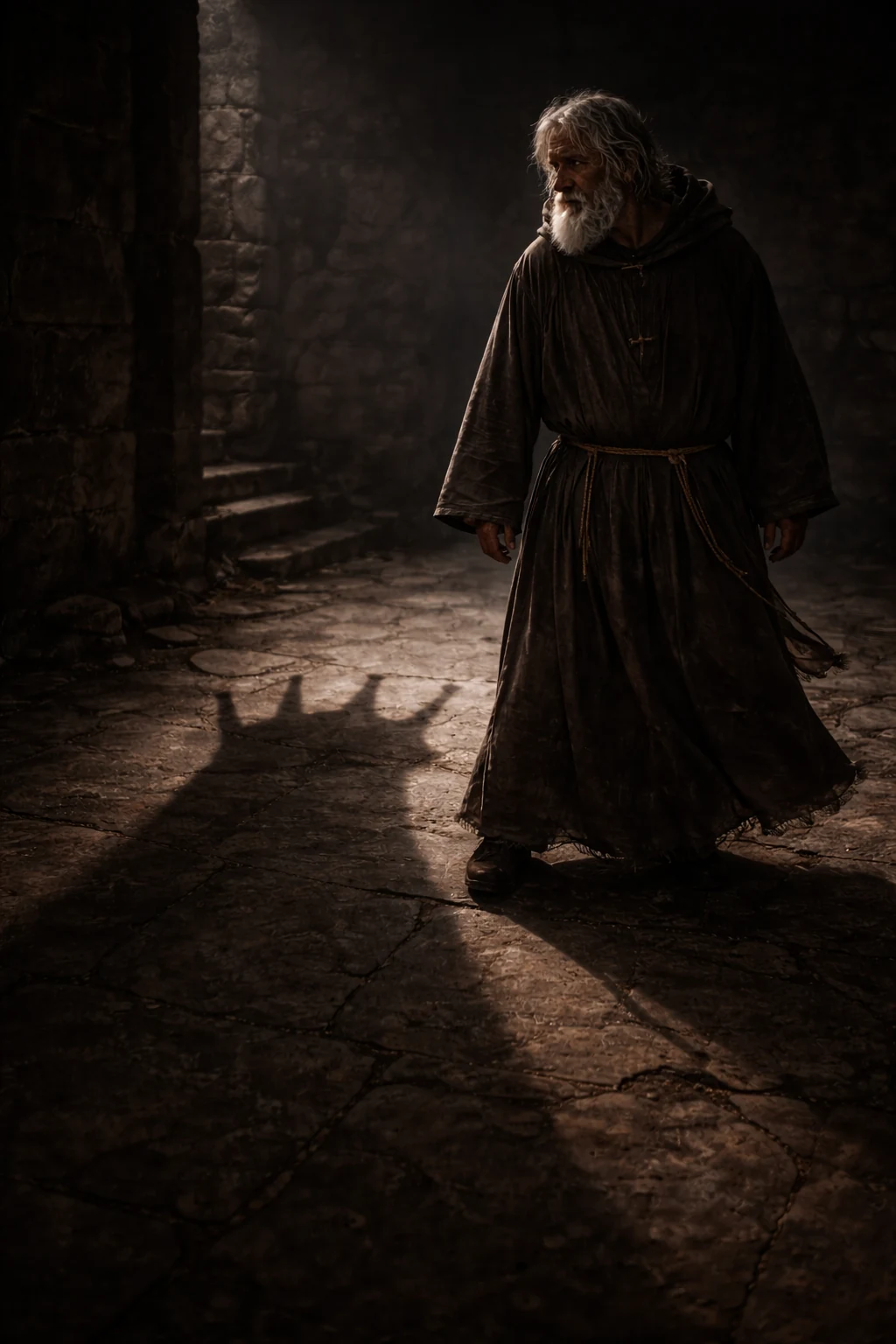
The future Celestine V was born Pietro Angelerio—also known as Pietro da Morrone—around 1209–1210, in the Italian region of Molise. Disagreement over the precise year and place of his birth is common in medieval biographies.
He came from a large peasant family. As a young man, he entered religious life, but soon found that even a monastery seemed too noisy. He desired a harsher discipline and a relationship with God removed from human distractions.
He withdrew first to Mount Morrone in the Abruzzi and later to even more remote areas of the Maiella mountains. He lived in caves and small hermitages, subjecting himself to fasting, vigils and long periods of prayer. The severity of this existence increased his reputation. Those who visited him saw not simply a monk, but a man who appeared to have conquered the needs of the world.
Paradoxically, his withdrawal attracted followers. A monastic community formed around Pietro, was incorporated into the Benedictine tradition and later became known as the Celestine Order. The hermit who wished to remain alone became the founder and spiritual guide of other monks (Herde, 2000).
An election born from failure
When Pope Nicholas IV died in April 1292, the cardinals gathered to elect his successor. Rivalries between powerful families, political divisions and competing French and Italian interests prevented an agreement.
The papal throne remained vacant for more than two years.
Pietro, already elderly and troubled by the condition of the Church, sent a letter to the cardinals. According to medieval sources, he warned that divine punishment might fall upon them if they continued delaying the election. His letter did not propose his own candidacy. Nevertheless, Cardinal Latino Malabranca offered his name as a possible solution.
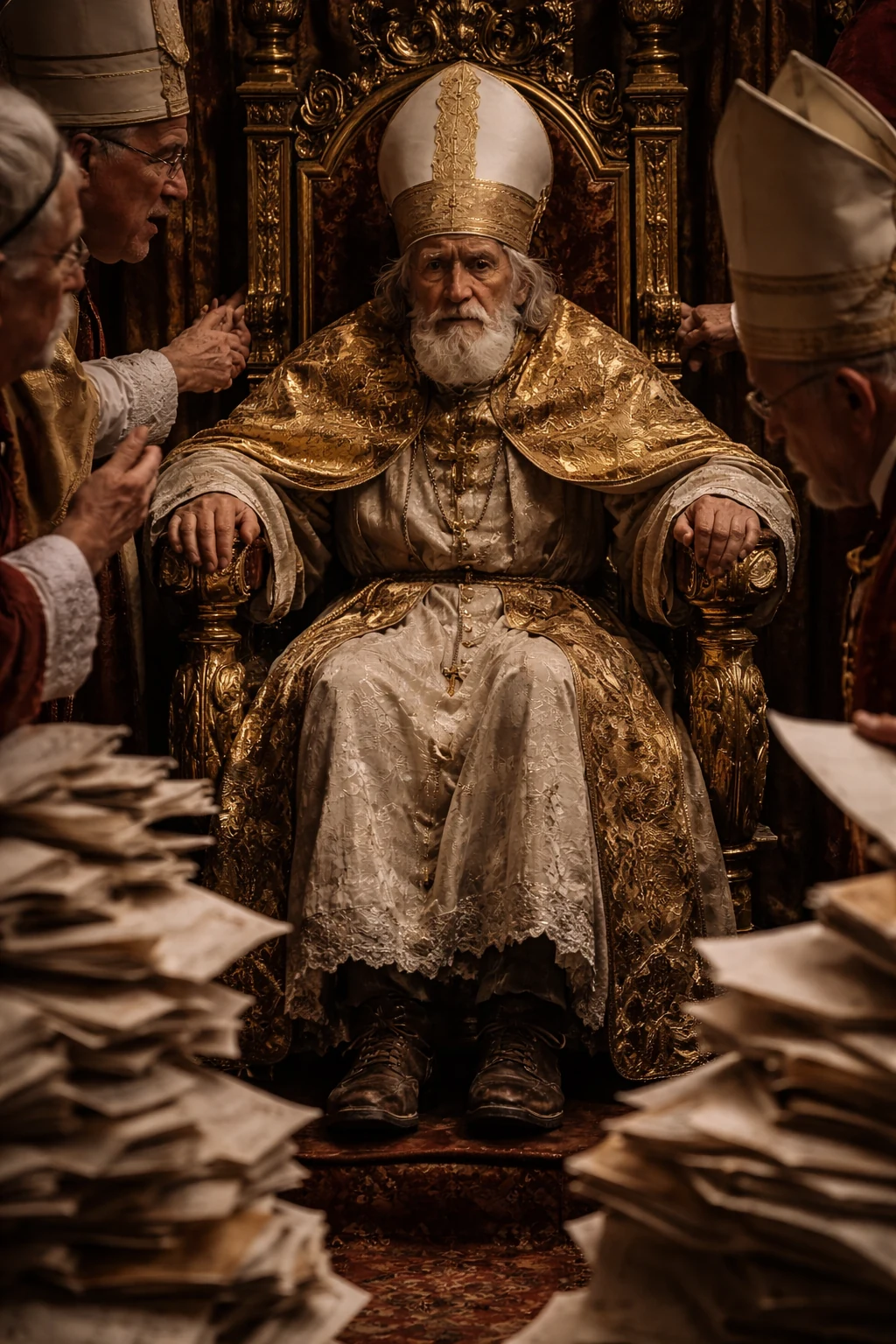
On July 5, 1294, the cardinals unanimously elected the hermit.
The choice had a spiritual dimension, but it was also politically convenient. Pietro did not belong to the great Roman families, had no diplomatic experience and appeared to stand above the factions. Some hoped that a man regarded as holy could restore the papacy’s moral authority. Others probably imagined that he would be easy to influence (Herde, 2000).
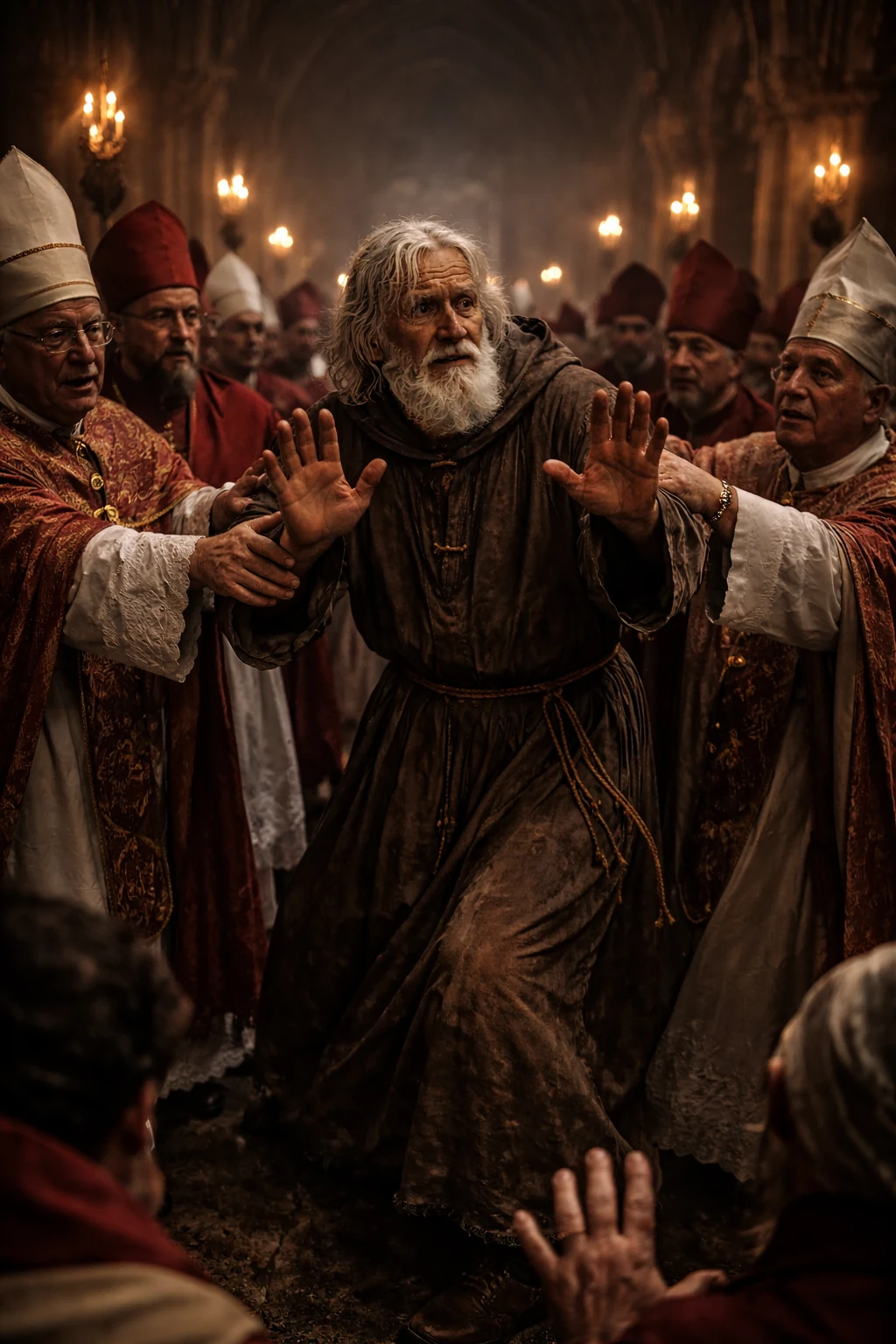
When the news reached him at the hermitage of Sant’Onofrio, Pietro resisted. Later accounts claimed that he attempted to flee, although tradition embellished the details. He eventually accepted, believing that refusing the election might mean opposing the will of God.
He took the name Celestine V.
A pope riding a donkey
Instead of immediately traveling to Rome, Celestine was crowned on August 29, 1294, at the Basilica of Santa Maria di Collemaggio in L’Aquila. His arrival was surrounded by imagery seemingly drawn from the Gospels: the former hermit rode a donkey while King Charles II of Naples and his son accompanied him.
The scene projected humility, but it also revealed who stood closest to the new pontiff.
Charles II quickly realized that he could exercise enormous influence over a pope with no administrative knowledge. He persuaded Celestine to establish the papal court in Naples, within his kingdom, rather than in Rome. The elderly man found himself surrounded by officials, lawyers and courtiers whose experience greatly exceeded his own.
Celestine understood penance, silence and monastic life. He did not understand papal finance, canon law, international diplomacy or the disputes between Roman families. He granted conflicting favors, signed documents presented by his advisers and struggled to distinguish religious requests from political interests.
During his brief pontificate, he appointed twelve cardinals, many of them French or connected to the Kingdom of Naples. The decision strengthened Charles II’s influence within the College of Cardinals (Herde, 2000).
Personal holiness had not prepared Celestine to govern. Being morally admired was not the same as knowing how to exercise power.
The small enclosure inside the palace
One of the most revealing episodes of his papacy occurred at Castel Nuovo, the Neapolitan fortress where the court had settled. Unable to endure the palace’s constant activity, Celestine ordered a small wooden cell to be constructed inside his apartments.
He wished to continue living as a hermit within the papal court.
The image summarizes his entire tragedy: a man voluntarily enclosed in a cell while, beyond its walls, others administered the power attached to his name. Celestine wanted to preserve the purity of seclusion without yet abandoning the responsibilities of the papacy. Government, however, could not be conducted from an imitation cave.
During Advent, he even attempted to delegate the government temporarily to three cardinals so that he could devote himself to fasting and prayer. The proposal was legally problematic and demonstrated how little he understood the nature of his office.
He began asking whether a pope could resign.
The forgiveness that outlived his papacy
Before leaving office, Celestine made a little-known decision that remains alive today.
Through the bull Inter sanctorum solemnia, he granted a plenary indulgence to repentant believers who had confessed and visited the Basilica of Santa Maria di Collemaggio between the evening of August 28 and the evening of August 29. The privilege was not reserved for kings, nobles or those able to finance a distant pilgrimage. Poor and marginalized people could receive it as well.
The observance became the Celestinian Forgiveness, an annual tradition of reconciliation that is still celebrated in L’Aquila. In 2019, it was inscribed on UNESCO’s Representative List of the Intangible Cultural Heritage of Humanity (UNESCO, 2019).
This is one of the lesser-known facts of Celestine’s life: the pope remembered primarily for resigning also created a celebration of forgiveness that has survived for more than seven centuries.
The resignation he first had to make possible
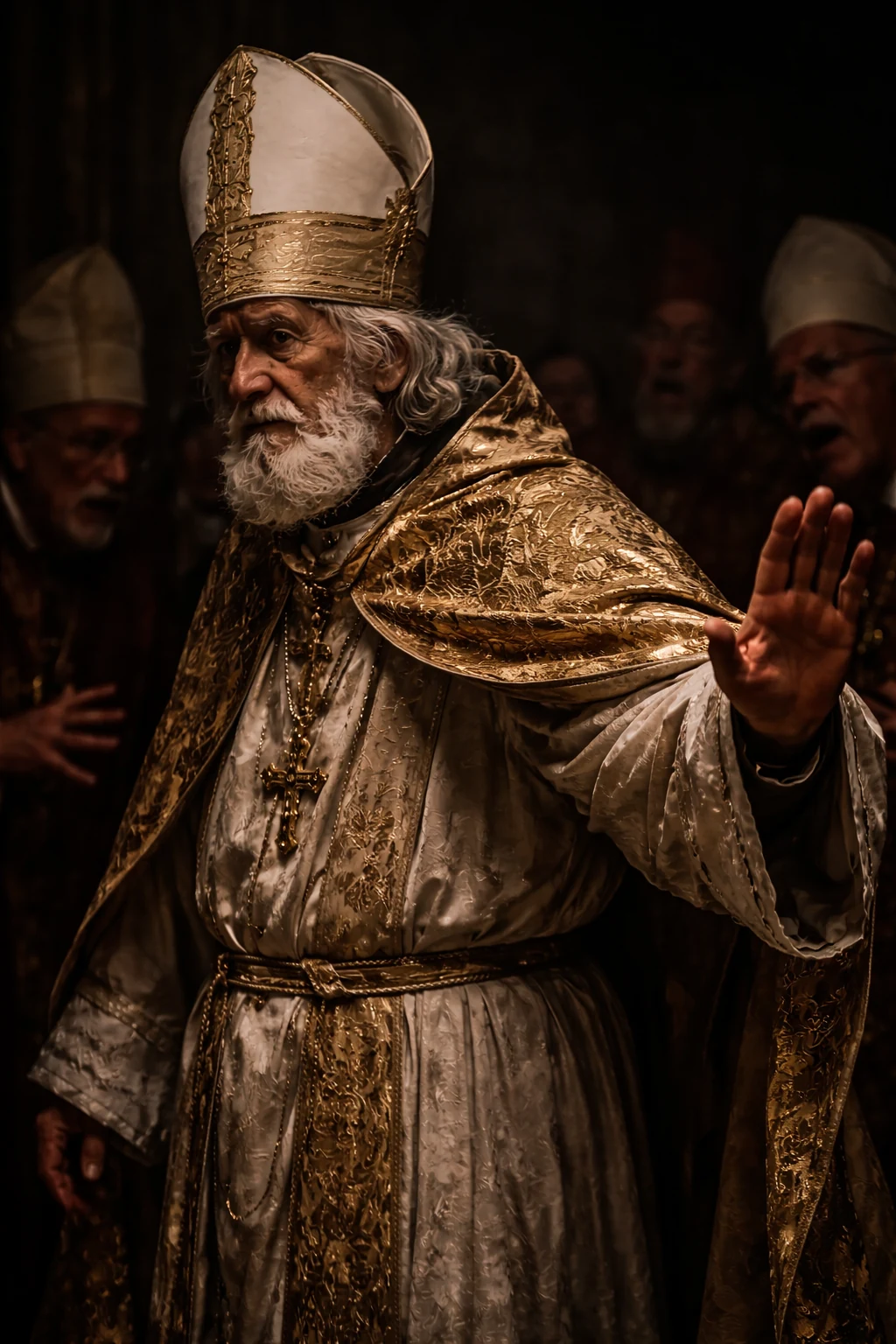
Thirteenth-century canon law contained no ordinary, universally understood procedure for a papal resignation. Earlier pontiffs had abandoned the office or been forced from it, but Celestine’s situation presented a particular difficulty: if the pope was the Church’s highest legal authority, who could accept his resignation?
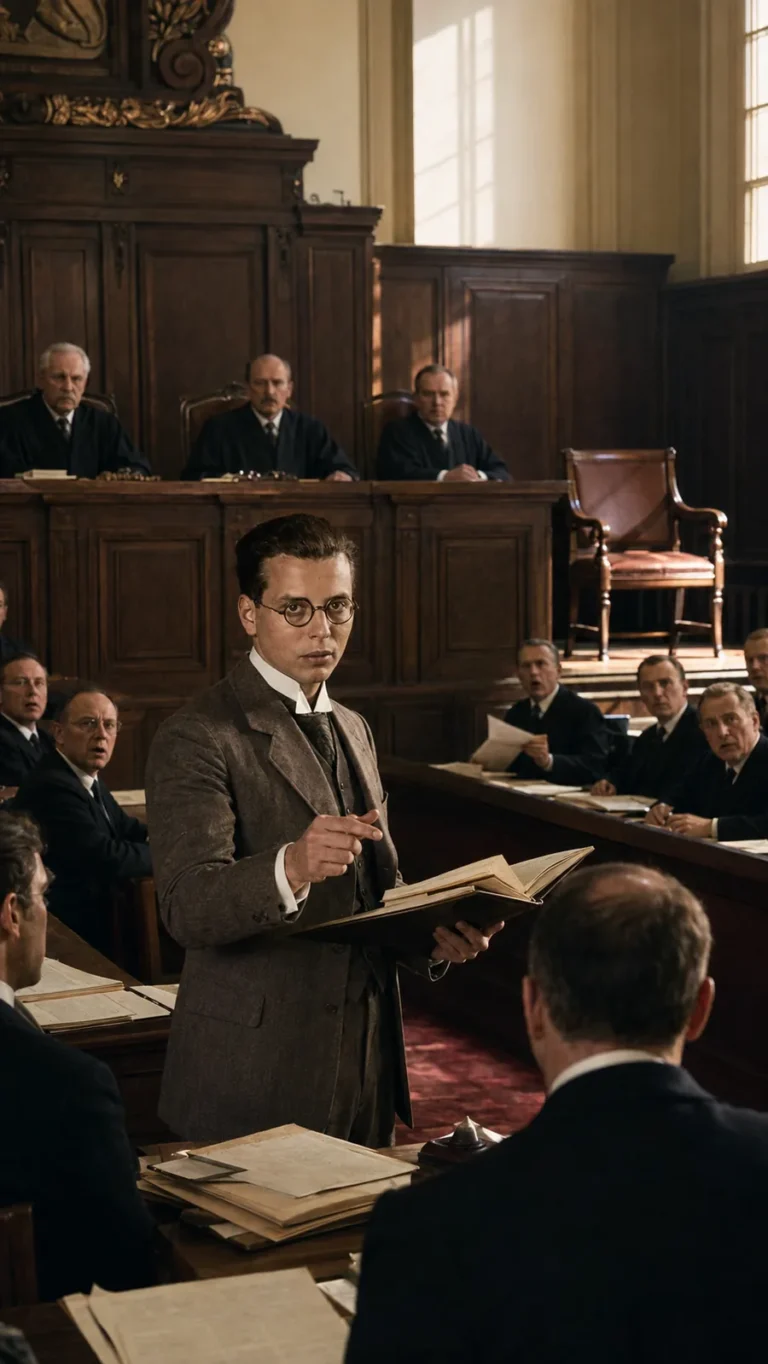
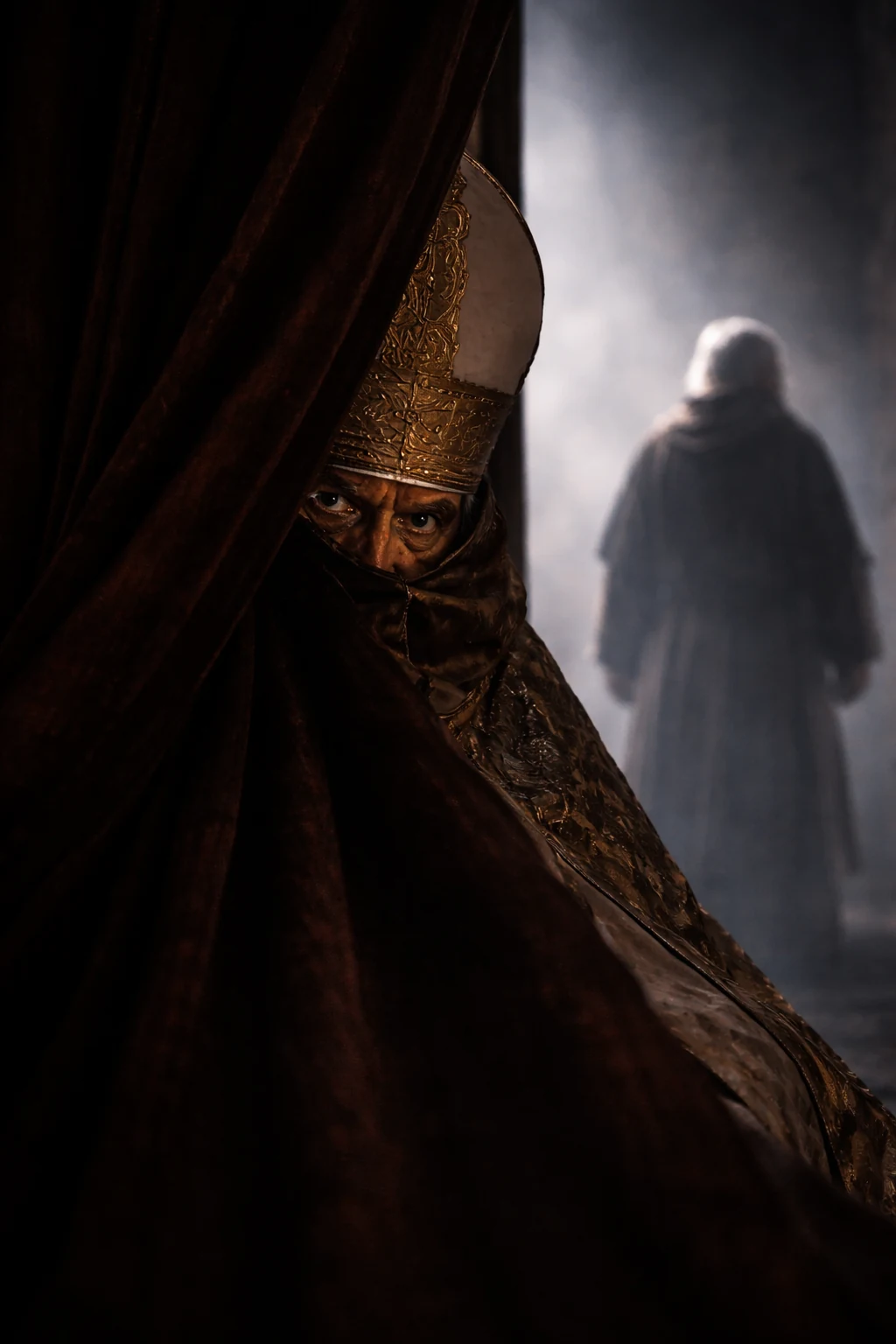
Cardinal Benedetto Caetani, one of the court’s most accomplished canon lawyers, participated in examining the question. A later legend claimed that Caetani deceived the elderly pope by installing an opening in his room and pretending to be the voice of God commanding him to resign. No solid historical evidence supports that story.
What is documented is that Celestine issued a constitution explicitly affirming a pope’s right to resign. On December 13, 1294, he appeared before the cardinals in Naples, read a declaration and listed his reasons: humility, physical weakness, lack of knowledge, difficulties in governing and a desire to recover the peace of his former life.
He then removed the papal insignia and once again became Pietro da Morrone.
His pontificate had lasted little more than five months. The resignation appears to have been genuinely his decision, although it occurred in an environment filled with pressure and competing interests. Caetani may have helped establish its legal foundation, but the claim that he forced Celestine to resign through a supernatural deception belongs to legend (Herde, 2000; Widener, 2013).
The successor who could not leave him free
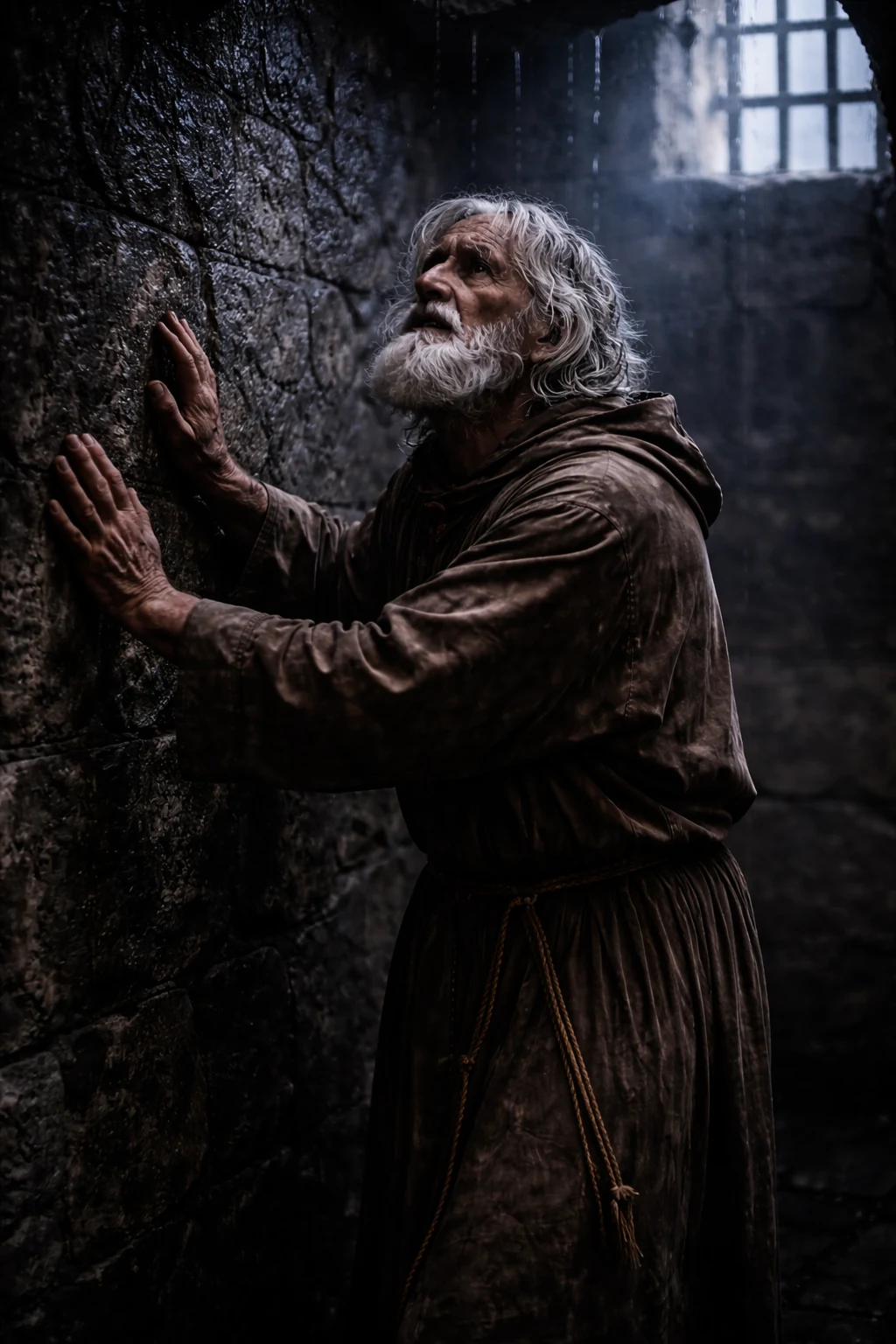
Eleven days later, the cardinals elected Benedetto Caetani himself. He became Pope Boniface VIII.
Celestine believed that he could return to the mountains and disappear. Boniface saw the problem differently. As long as the former pope remained alive and free, the new pontiff’s enemies could declare the resignation invalid, recognize Celestine as the true pope or use him to produce a schism.
Pietro did not need to desire the restoration of his power. It was enough for others to desire power in his name.
Boniface ordered him kept under supervision. Pietro escaped and hid in the forests for a time. He later attempted to cross the Adriatic and seek refuge in Dalmatia, but a storm forced the boat back to the Italian coast. He was captured there.
The man who had resigned to recover his freedom became a prisoner of the institution he had once led.
He was confined in the castle of Fumone, southeast of Rome. He was allowed a few religious companions and could continue his prayers, but he could not leave the fortress. Boniface justified the measure as protection against schism. Pietro’s supporters regarded it as the persecution of a saint by an ambitious pope.
The hole in the skull

Pietro died at Fumone on May 19, 1296, after approximately ten months in captivity. He was probably more than eighty years old. Sources associated with his canonization described his physical decline and illness, but accusations of murder soon appeared.
Centuries later, during an examination of his remains in 1630, a square opening was noticed in his skull. The existence of a nail that supposedly fitted the hole inspired a macabre account: Boniface VIII had ordered his predecessor murdered by having a nail driven into his head.
The legend was powerful because it seemed to give physical form to the cruelty of power. Modern forensic research, however, does not support this conclusion. A study published in 2021 determined that the opening had been produced after death, and was not an injury suffered during Celestine’s lifetime (Ventura, 2021).
There is no firm evidence that Boniface ordered him killed. There is certainty that he kept him imprisoned. The documented reality is less sensational than the nail, but no less unsettling: the new pope considered the freedom of a defenseless old man a political danger.
The man Dante may not have forgiven
In the third canto of the Inferno, Dante describes a shade associated with the person who made “the great refusal” through cowardice. The poet never gives his name. Since the earliest commentators, many readers have identified this figure as Celestine V.
The identification is probable, but not entirely certain. Other candidates, including Pontius Pilate, have been proposed. From Dante’s perspective, Celestine’s resignation had enabled the election of Boniface VIII, whom the poet despised for both political and religious reasons. Viewed in that light, leaving office was not an act of humility but a refusal to fulfill the responsibility history demanded (Alighieri, ca. 1321/2006; Hollander, 2000–2007).
Others reached precisely the opposite conclusion. Francesco Petrarch defended the resignation as an act of spiritual freedom and greatness. Where Dante may have seen cowardice, Petrarch saw a man capable of recognizing his limitations.
Celestine was canonized in 1313 by Pope Clement V. The Church recognized his personal holiness, not necessarily the effectiveness of his government.
The ghost that returned in 2013
For centuries, Celestine’s resignation seemed like a medieval anomaly. In April 2009, Benedict XVI visited L’Aquila after the devastating earthquake that struck the region. At Celestine V’s tomb, he left the pallium he had received at the beginning of his own pontificate—a gesture that attracted little notice at the time.
In 2010, Benedict returned to the region and emphasized Celestine’s inner silence, search for God and spiritual legacy (Benedict XVI, 2010).
Three years later, Benedict XVI announced his own resignation.
It cannot be stated that the 2009 gesture was a secret announcement of a decision already made. In retrospect, however, it demonstrates that Benedict had reflected deeply on the medieval hermit’s precedent. Celestine ceased to be a remote anomaly and once again became central to understanding that the papacy could be surrendered voluntarily.
The power that follows even those who reject it
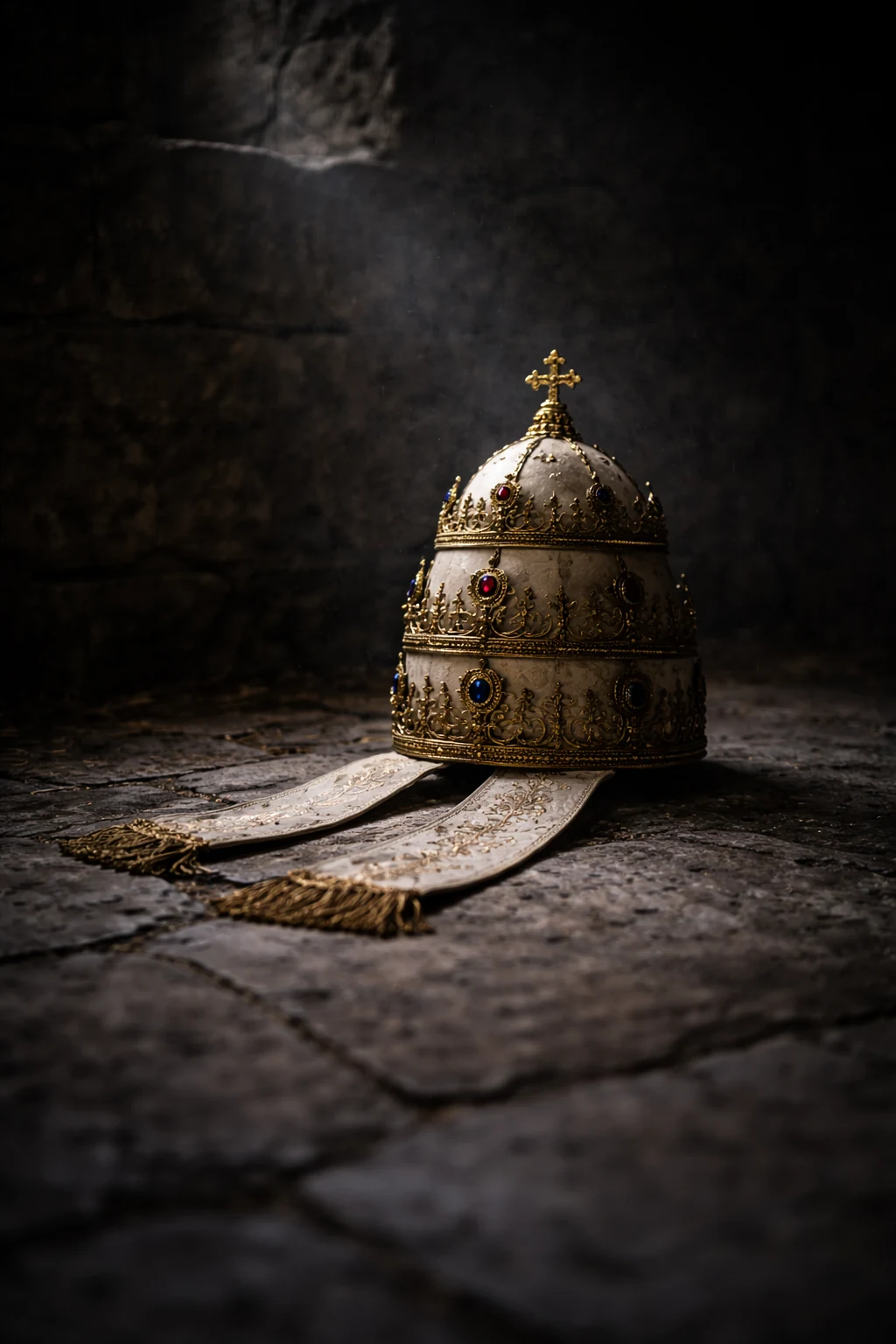
Celestine V believed that resigning would be enough to become the man who had once lived in the mountains. He failed to understand that power also transforms those who attempt to leave it behind.
As pope, he was vulnerable to those who wished to use his authority. As a former pope, he became dangerous to those who feared that authority might be revived. First he was a prisoner of the papal crown; afterward, he was imprisoned by the fear his existence inspired.
His political failure should not be concealed beneath religious admiration. His inexperience permitted interference, disorderly decisions and a dangerous dependence upon Charles II of Naples. Yet his resignation should not be reduced to a cowardly escape. Celestine recognized that he lacked the abilities required to govern and created a legal path allowing him to step aside.
The hermit succeeded in leaving the throne, but he never escaped its shadow.
References
- Herde, P. (2000). Celestino V, santo. En Enciclopedia dei Papi. Istituto della Enciclopedia Italiana. View source
- Ventura, L. (2021). The mysterious hole in the skull of Pope Celestin V. Forensic Science, Medicine and Pathology, 17, 529–533. View source
- Widener, M. (2013, February 18). Papal resignations: The case of Celestine V. Lillian Goldman Law Library, Yale University. View source
- UNESCO. (2019). Celestinian forgiveness celebration. Representative List of the Intangible Cultural Heritage of Humanity. View source
- Benedict XVI. (2010, July 4). Eucharistic concelebration in Garibaldi Square, Sulmona. The Holy See. View source
- Alighieri, D. (2006). Inferno (R. Hollander & J. Hollander, Trans.). Anchor Books. (Original work composed ca. 1321).
- Hollander, R. (2000–2007). Commentary on Dante’s Inferno, III, 58–60. Princeton Dante Project.