
In this storyOpen index
Willis Carrier: The Man Who Tried to Control Humidity and Ended Up Changing the Map of the World
From a Brooklyn printing plant to the climate of our cities: the engineering that transformed everyday life.
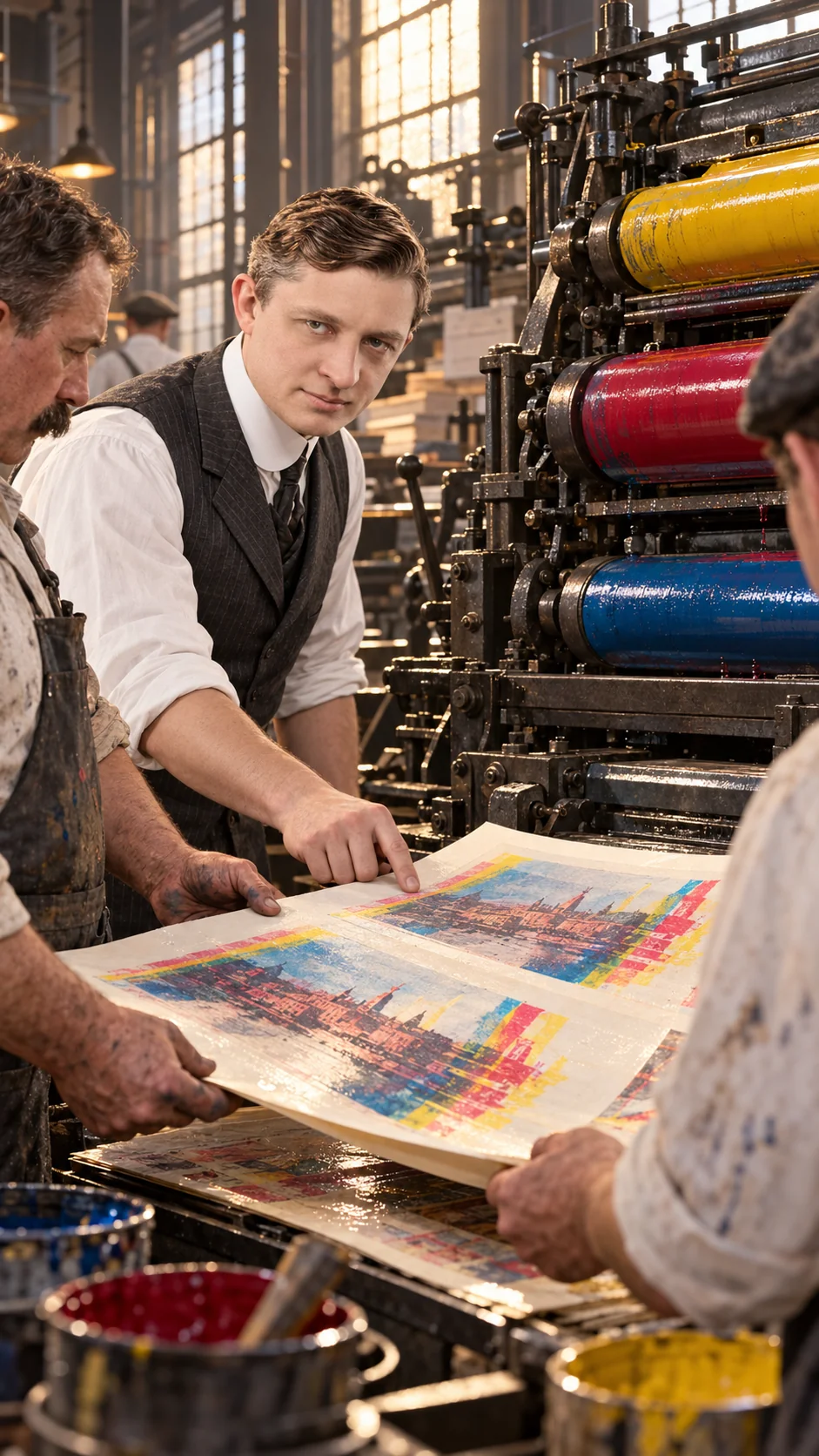
Willis Carrier was not trying to help anyone sleep through the summer. Nor was he thinking about offices, automobiles, or homes. In 1902, his problem was far less spectacular: a Brooklyn printing plant could not align its colors correctly because the paper changed size with the humidity.
To correct that industrial defect, he designed a system capable of controlling both temperature and the amount of water vapor in the air. Without directly intending to do so, he established the foundations of modern air conditioning.
His invention made it possible to manufacture medicines, preserve food, produce motion pictures, build computers, and inhabit regions where heat had limited work and urban growth. It also encouraged sealed buildings dependent on a continuous supply of energy and contributed to the warming of the planet.
Carrier did not invent cold. He invented the ability to control the climate inside a room.
Willis Carrier
A life told between humidity and ingenuity
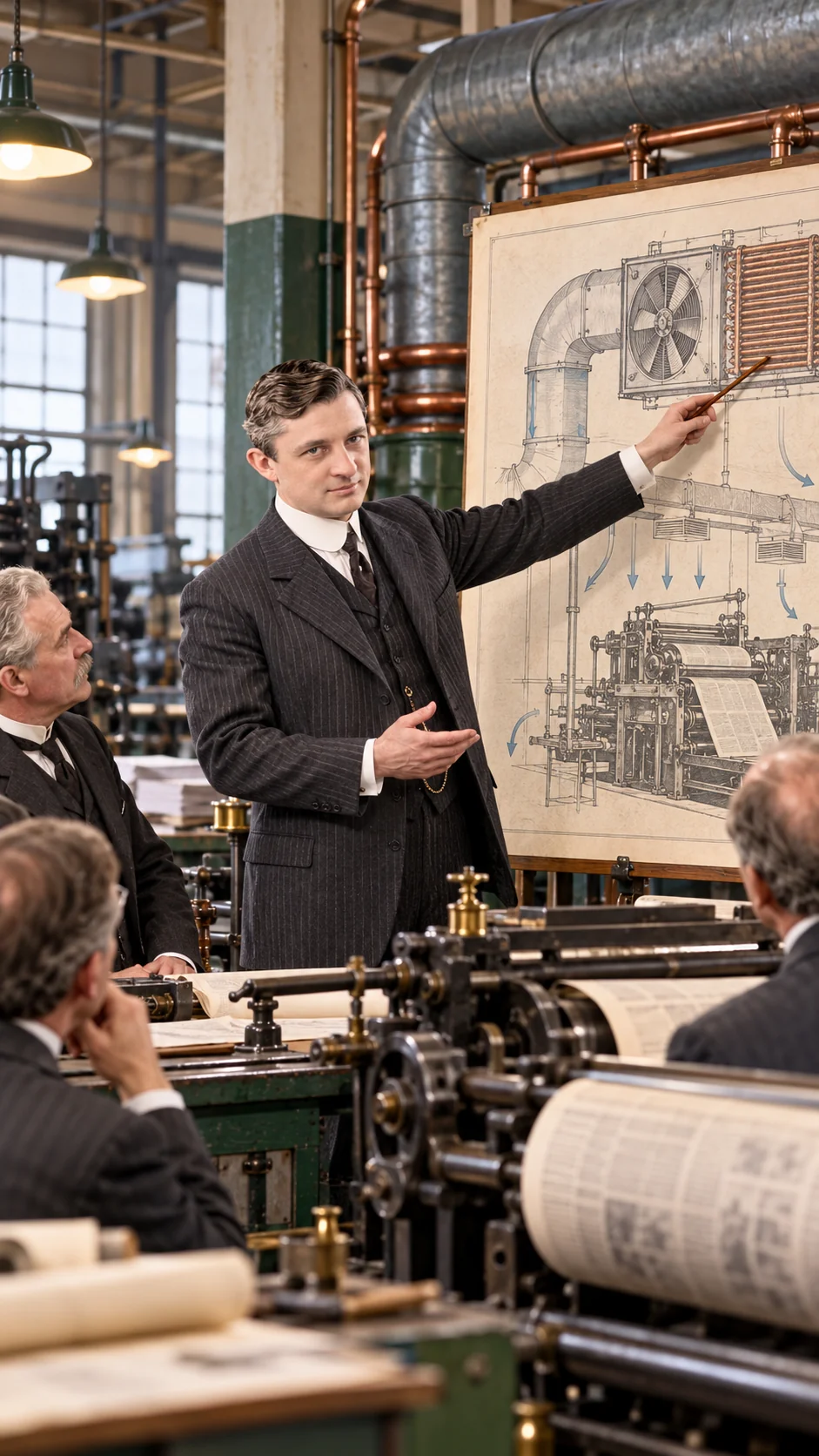
The drawing for Patent 808,897
The National Archives preserve the drawing submitted for the apparatus for treating air, patented on January 2, 1906. The link opens that historical document. This card uses an AI reconstruction, not a reproduction of the patent.
AI-generated illustration; an artistic representation, not a historical document.
The child who divided problems into small parts
Willis Haviland Carrier was born on November 26, 1876, in Angola, a small community in New York State. He grew up on a farm in a family that valued practical work and the repair of tools.
As a child, he struggled to understand certain mathematical fractions. As he later recalled, his mother cut apples into halves, quarters, and eighths so that he could physically observe the numerical relationships. The experience taught him a way of confronting problems: divide them into simple parts until their connections become visible (Ingels, 1952).
That approach would become central to his work as an engineer. Carrier did not regard heat, cold, and humidity as isolated phenomena. He understood them as variables that could be measured, calculated, and controlled together.
He studied mechanical engineering at Cornell University on a scholarship and graduated in 1901. Soon afterward, he began working for the Buffalo Forge Company, a manufacturer of fans, heaters, and systems for moving air through industrial buildings.
His initial salary was modest, but his ability to turn physical observations into precise calculations quickly attracted the company’s attention.
The printing plant that could not control its colors

In 1902, the Sackett & Wilhelms Lithographing and Publishing Company had a problem at its Brooklyn plant. The company used multicolor printing, applying different inks in successive passes. To create a sharp image, every color had to align exactly with the preceding ones.
Paper, however, absorbs moisture. When the air became humid, the sheets expanded; when it dried, they contracted. Even a slight variation could cause the colors to fall out of register, distort the edges, and jam the presses.
J. Irvine Lyle, an engineer and salesman for Buffalo Forge, assigned the problem to Carrier, who was only 25 and approximately one year out of university.
Carrier understood that merely cooling the printing plant would not be enough. He needed to stabilize the relative humidity. He designed a system that forced air across cold coils. When the air’s temperature fell below its dew point, some of its water vapor condensed and could be removed. The air could then be adjusted until the required factory conditions were reached.
The system was installed during the summer of 1902. Its primary purpose was not the workers’ comfort but preventing the paper from changing shape and ruining the color registration. One side effect, however, was impossible to overlook: the room also became cooler.
That installation is regarded as the starting point of modern air conditioning because it could act upon several properties of air: temperature, humidity, cleanliness, and circulation.
It was not the first attempt to produce cold
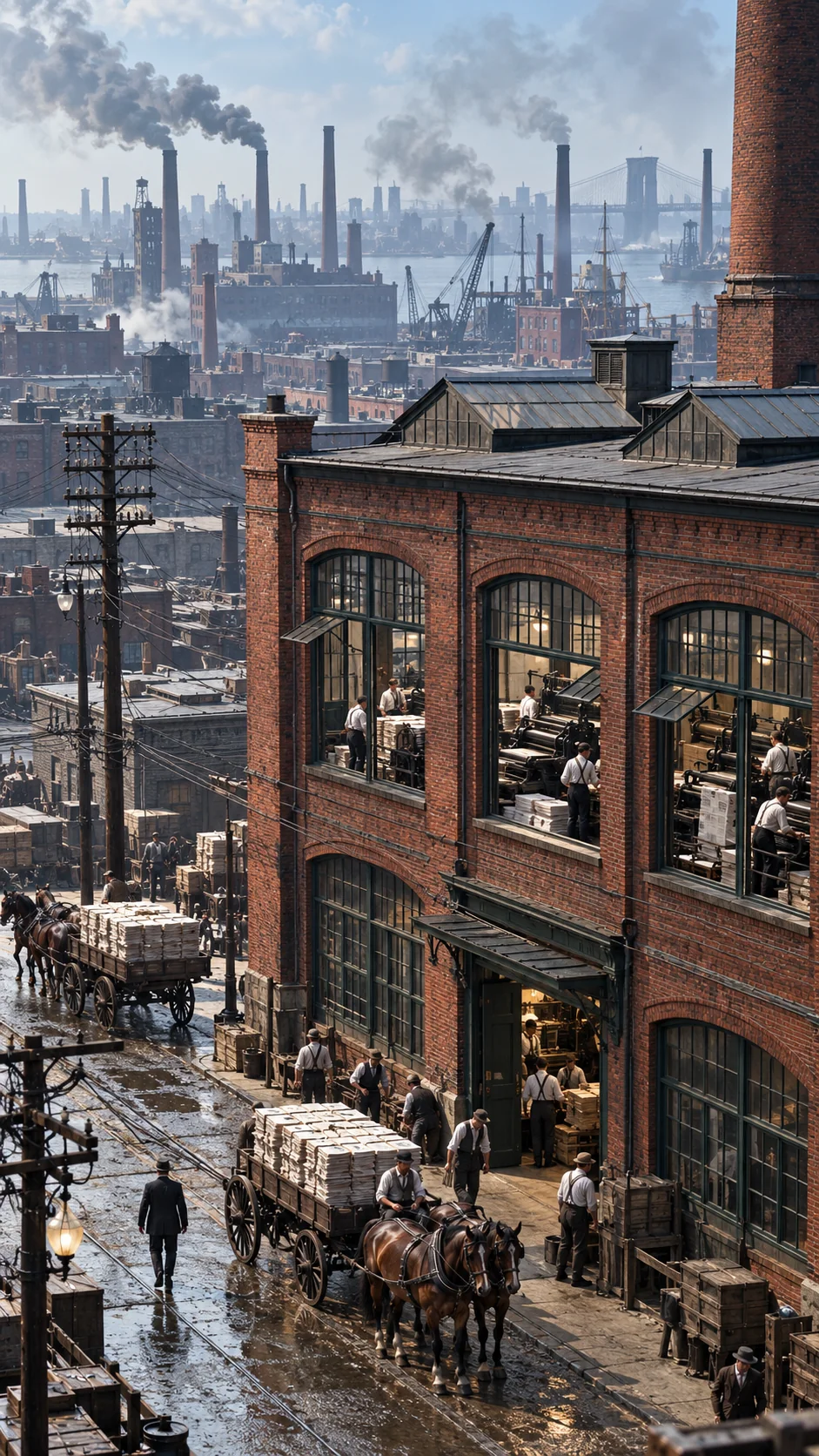
People had searched for ways to cool indoor spaces long before Carrier. Buildings had been designed to capture air currents, and societies had employed evaporative systems, fans, blocks of ice, and mechanical refrigeration machinery.
During the nineteenth century, some theaters and public buildings used ice and blowers. Other engineers developed refrigeration installations for hospitals, factories, and specialized spaces. It would therefore be historically inaccurate to say that Carrier “invented cold air.”
His decisive contribution was to combine existing knowledge within a controllable system and scientifically apply it to the complete condition of the air. The objective was not simply to lower the temperature but to maintain predictable values throughout an industrial process (Cooper, 1998).
Carrier did not invent the expression air conditioning, either. The term was used in 1906 by textile engineer Stuart W. Cramer, who was developing methods of adding moisture to factory air to improve the behavior of yarn. Carrier and his company subsequently adopted the name.
The patent that could dry or humidify

In 1904, Carrier applied for a patent for his “Apparatus for Treating Air.” United States Patent No. 808,897 was granted on January 2, 1906.
The apparatus used sprays of water to treat the air and could produce different effects depending on the liquid’s temperature. It could clean the air, add moisture, or remove it. This flexibility made it a fundamental component in the development of later industrial systems.
Its earliest applications were far removed from private homes. Textile mills needed stable humidity to prevent threads from breaking. Candy and pasta manufacturers required precise conditions to keep their products from absorbing water or sticking together. Pharmaceutical, tobacco, and motion-picture companies also depended on materials sensitive to atmospheric conditions.
Air conditioning first emerged as a production tool. Human comfort became a business later.
The foggy night that became a formula
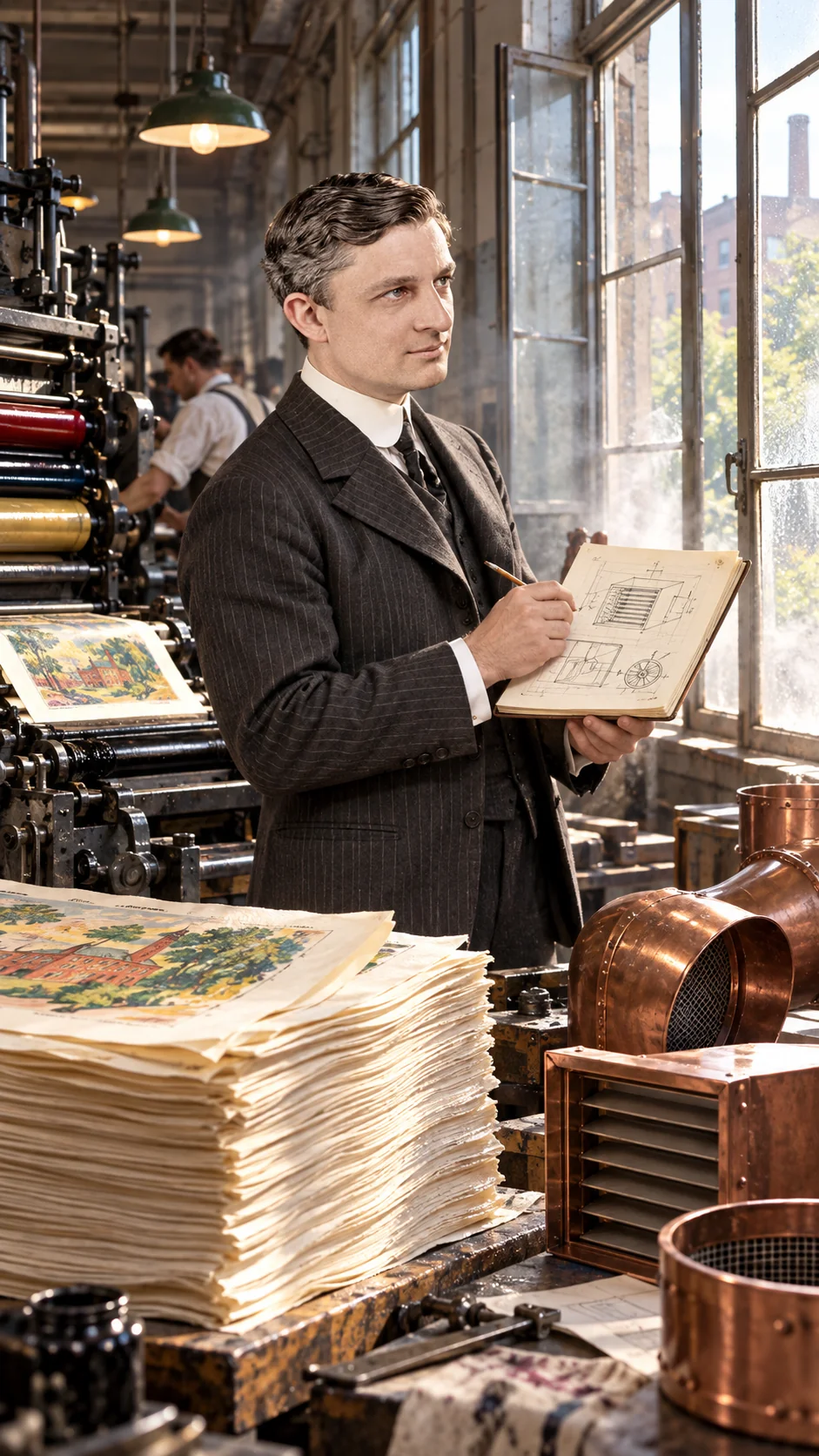
Carrier recalled that one night in 1902, while waiting for a train on a fog-covered platform, he began thinking about the relationship among temperature, humidity, and dew point. The sight of the fog helped him organize concepts he would later apply to his calculations.
The scene has acquired an almost legendary quality and comes mainly from later corporate and biographical accounts. It should not be understood as a magical moment in which the complete invention suddenly appeared. The system resulted from measurements, experiments, and corrections conducted over years.
His most important scientific contribution came in 1911, when he presented Rational Psychrometric Formulae to the American Society of Mechanical Engineers. The paper established mathematical relationships for calculating the behavior of moist air.
Psychrometrics is the study of the properties of air-and-water-vapor mixtures. Carrier provided engineers with a foundation for determining variables such as relative humidity, absolute humidity, dew point, and wet-bulb temperature. What had often depended on approximation could now become reproducible engineering design (Carrier, 1911).
The paper has been described as a kind of “Magna Carta” of air conditioning. Its principles remain embedded in calculations used by climate-control engineers. The Library of Congress recognizes those formulas as one of the industry’s technical foundations.
Seven engineers against a nonexistent industry
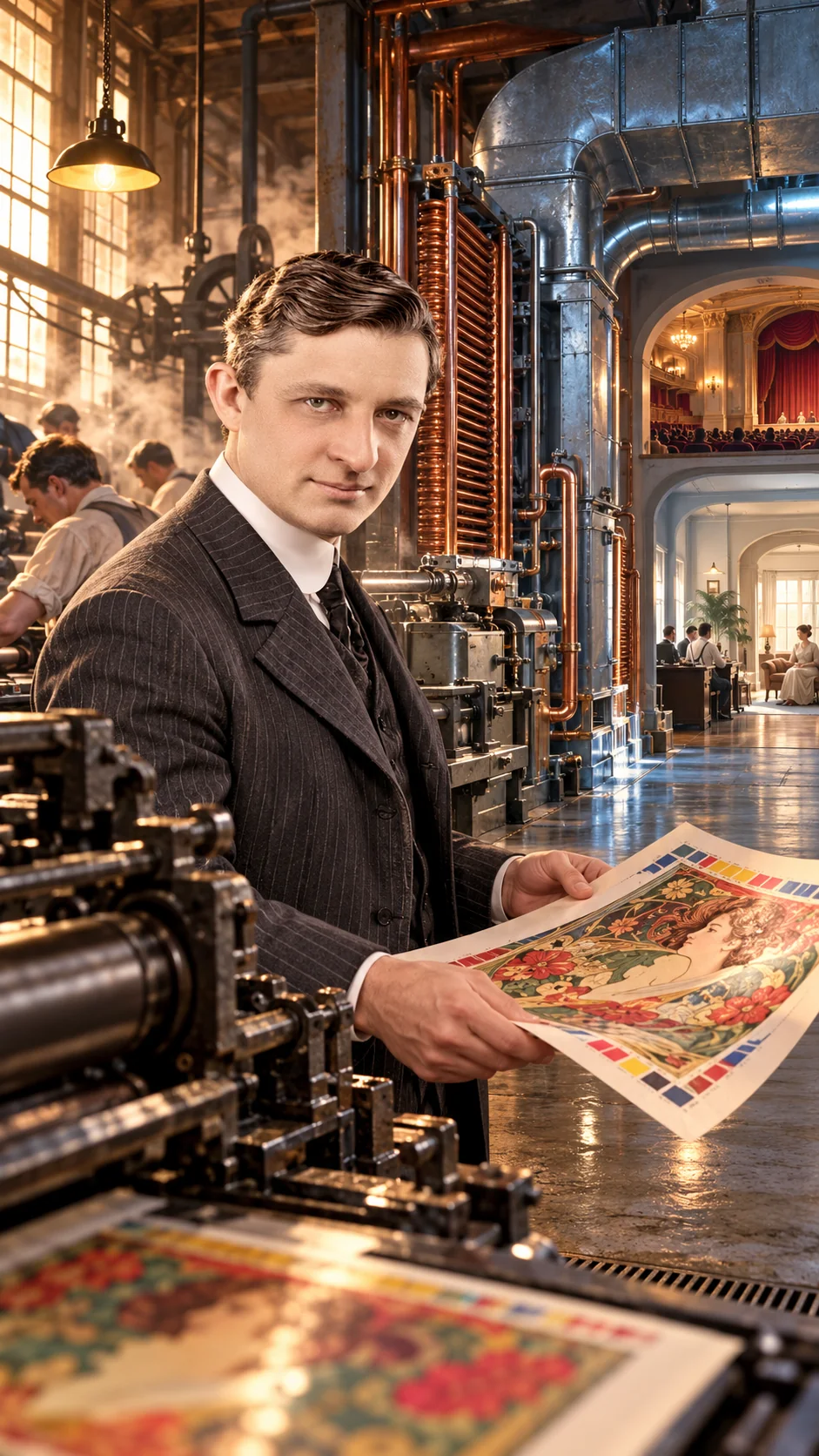
In 1915, Buffalo Forge decided to reduce its engineering activities because of economic conditions connected with the First World War. Carrier, J. Irvine Lyle, and five other engineers assembled the capital to establish the Carrier Engineering Corporation.
The company began with approximately $32,600 and an enormous challenge: selling an expensive technology that solved problems many factory owners did not yet realize they could control.
Carrier became president, but the company was not the creation of one man alone. Lyle played a crucial role in its commercial organization, while the other engineers worked on installations, calculations, and new equipment. The history of air conditioning usually concentrates on the Carrier name, although the technology’s growth depended on an entire team.
During its early years, the company offered solutions designed individually for each customer. The systems were large, complex, and far too expensive for the average home.
The machine that cooled enormous buildings
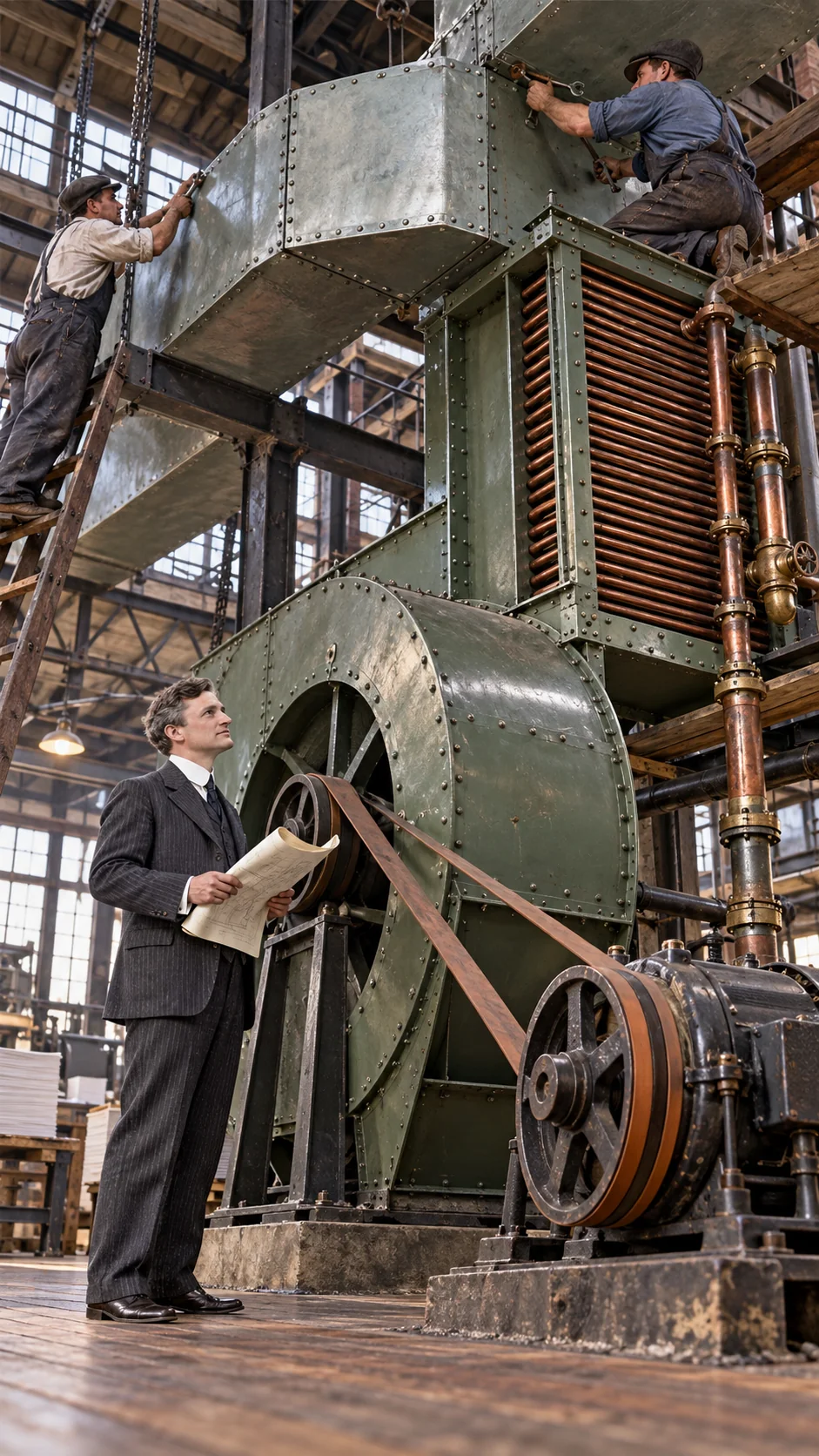
One of the greatest obstacles was compressor size. Traditional systems worked for certain installations but became impractical when engineers attempted to cool very large spaces.
In 1922, Carrier introduced a centrifugal refrigeration machine. Instead of relying on large reciprocating piston compressors, it used a rotating impeller to compress the refrigerant. The design could provide substantial capacity with fewer moving components and helped expand climate control into commercial buildings.
The innovation made it possible to cool department stores, offices, hotels, and entertainment venues. It did not immediately turn air conditioning into a household product, but it made the technology viable in places where thousands of people could gather (Ackermann, 2002).
The theaters that changed summer
During the early twentieth century, many theaters and movie houses closed during the hottest months. Buildings crowded with spectators, lights, and stagnant air could become unbearable.
In 1925, a Carrier system was installed at New York’s Rivoli Theatre. It was neither the first refrigerated building nor the first cooled movie theater in history, but the experience helped demonstrate that climate control could become a commercial attraction.
Advertisements began promising clean, cool air. Audiences entered not only to watch a motion picture but also to escape the heat. Studios discovered that they could release major productions during summer, previously considered an unfavorable season.
The expression summer blockbuster did not arise exclusively because of air conditioning, but cooled theaters helped create the economic environment that made major summer movie seasons possible (Ackermann, 2002).
From industrial luxury to everyday necessity
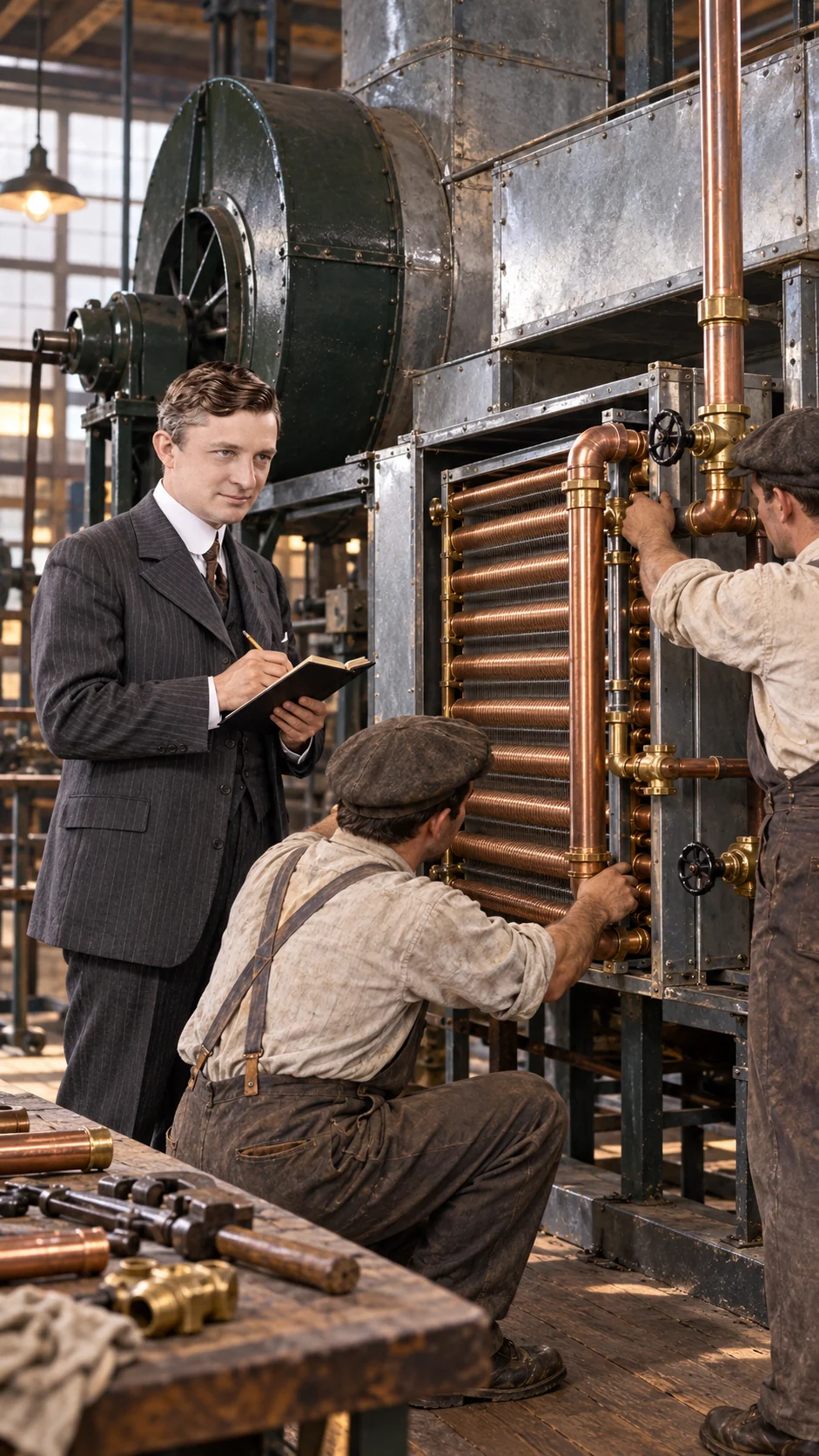
Domestic air conditioning took much longer to spread. Early systems were bulky, expensive, and consumed large amounts of energy. During the Great Depression and the Second World War, residential adoption remained limited.
After the war, mass production, window units, and suburban growth accelerated its entry into American homes. Houses could be designed with less cross-ventilation, office buildings could have sealed windows, and factories could operate more consistently through the summer.
Climate control also encouraged the economic and demographic growth of hot regions. Cities in the American South and Southwest could attract industries, offices, and new residents on a scale that had previously been difficult to sustain. Air conditioning was not the sole cause of this transformation—highways, employment, housing, and tax policies also mattered—but it provided essential infrastructure (Cooper, 1998).
The technology even changed architecture. Wide porches, high ceilings, shutters, courtyards, and other passive solutions became less important as buildings were sealed and made dependent on machinery to maintain their interior climate.
An invention that also created dependence
Carrier died on October 7, 1950, before witnessing the full worldwide expansion of his technology. By then, air conditioning had already ceased to be an industrial curiosity.
Its benefits are difficult to overstate. Climate control protects vulnerable people during extreme temperatures, permits the management of hospital environments, helps preserve food and medicine, and makes data centers, laboratories, and highly sensitive electronic processes possible.
Its legacy, however, contains a paradox. Cooling systems consume enormous quantities of electricity. Some refrigerants used during the twentieth century damaged the ozone layer, while others possess a high global-warming potential. The machines also expel heat outdoors and can intensify urban temperatures.
On an increasingly hot planet, more people need cooling to survive; at the same time, producing that cooling can increase the emissions that worsen global warming. The contemporary challenge is not to return to a world without climate control but to manufacture more efficient equipment, use less damaging refrigerants, and recover architectural principles that reduce energy demand.
The man whose invention became invisible
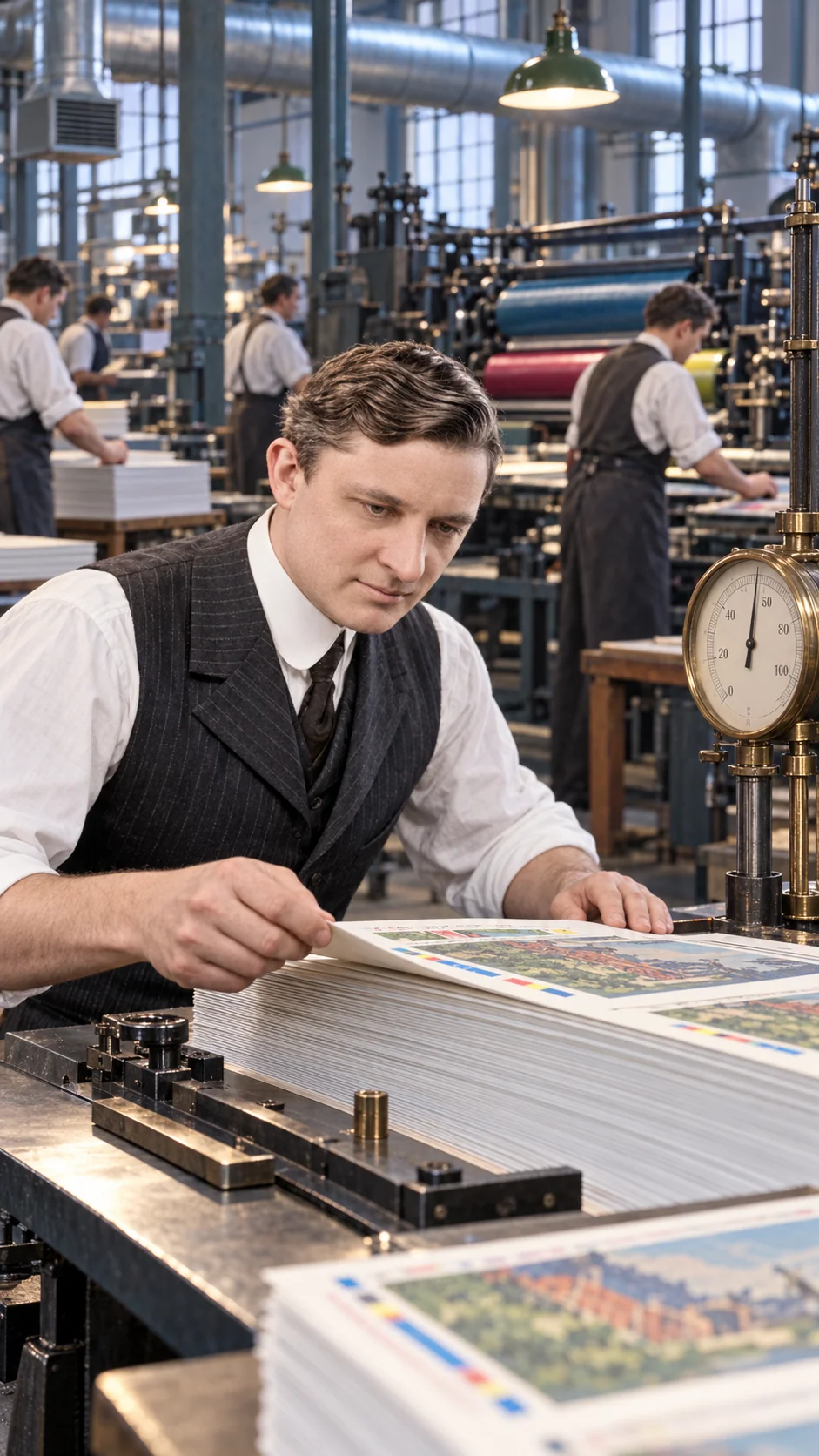
The greatest evidence of Carrier’s success is that almost no one thinks about his work upon entering a cool building. Air conditioning became a silent element of the environment, like electric lighting or running water.
His story began with distorted paper and colors that would not align. It did not begin with a grand vision of desert cities or a desire to transform domestic life.
Carrier observed a precise problem, separated its variables, and discovered a way to govern something that had seemed dependent upon the weather. Society then built factories, cinemas, hospitals, offices, and cities around that possibility.
He neither invented summer nor defeated it. He did something more enduring: he made it possible for the outdoor climate to lose the final word when someone closed a door.
References
- Ackermann, M. E. (2002). Cool comfort: America’s romance with air-conditioning. Smithsonian Institution Press. View source
- Carrier, W. H. (1911). Rational psychrometric formulae. Transactions of the American Society of Mechanical Engineers, 33, 1005–1053. View source
- Cooper, G. (1998). Air-conditioning America: Engineers and the controlled environment, 1900–1960. Johns Hopkins University Press. View source
- Ingels, M. (1952). Willis Haviland Carrier: Father of air conditioning. Country Life Press. View source
- Library of Congress. (n.d.). Patent for the air conditioner issued to Willis H. Carrier. Research Guides. View source
- Nagengast, B. A. (1999). A history of comfort cooling using ice. ASHRAE Journal, 41(2), 49–57. View source
- National Archives Foundation. (n.d.). Patent Drawing of Willis H. Carrier’s Apparatus for Treating Air. DocsTeach. View source
More from this collection

Garrett Morgan: The Inventor Who Had to Hide His Face to Save Lives
Read story →
Mary Anderson: The Woman Who Invented the Windshield Wiper and Watched Her Patent Expire Before the Automobile Needed It
Read story →