
In this storyOpen index
Alexander Wood: The Doctor Who Opened a Direct Door Beneath the Skin
The story of the hypodermic syringe: Wood’s contribution, fellow inventors, mistaken ideas, and a legend that was not true.
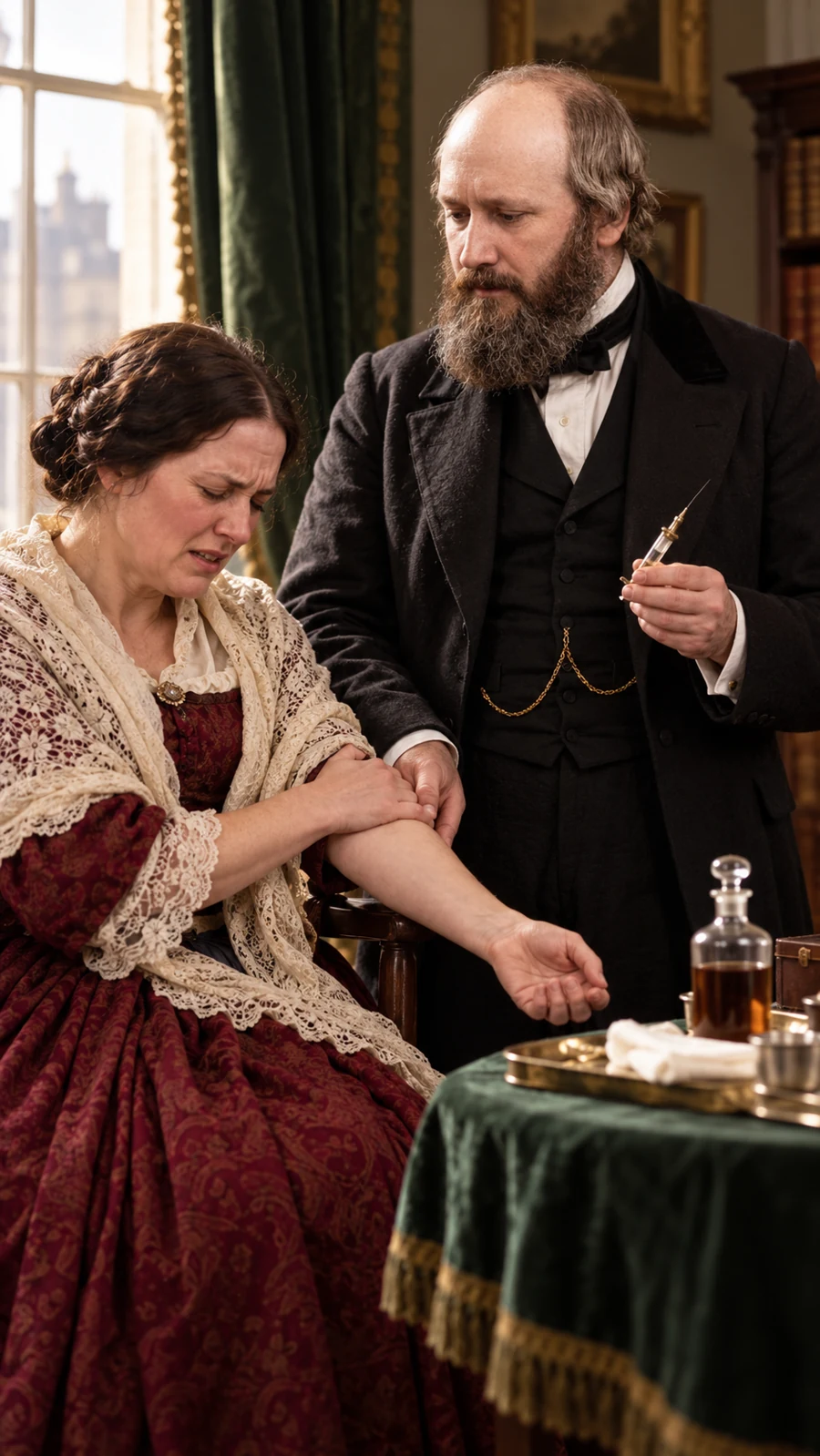
For centuries, physicians possessed medicines capable of relieving pain but lacked a rapid and precise way to introduce them beneath the skin. In 1853, a Scottish doctor combined a syringe with a hollow needle and administered morphine close to the place where his patient was suffering.
The procedure seemed almost perfect: the medicine acted quickly, did not first have to pass through the stomach and could be delivered in controlled quantities.
Yet the instrument that made it possible to relieve unbearable pain also opened a new route toward dependency and overdose.
Alexander Wood helped transform medical practice with a device that now appears ordinary. He was not, however, the only person involved in its creation. He did not fully understand how the medicine circulated through the body, and he did not turn his wife into the first morphine addict, as a persistent legend claims.
The true history of the hypodermic syringe is more complicated than the story of a single inventor.
Alexander Wood
A door beneath the skin
The syringe preserved in the archive
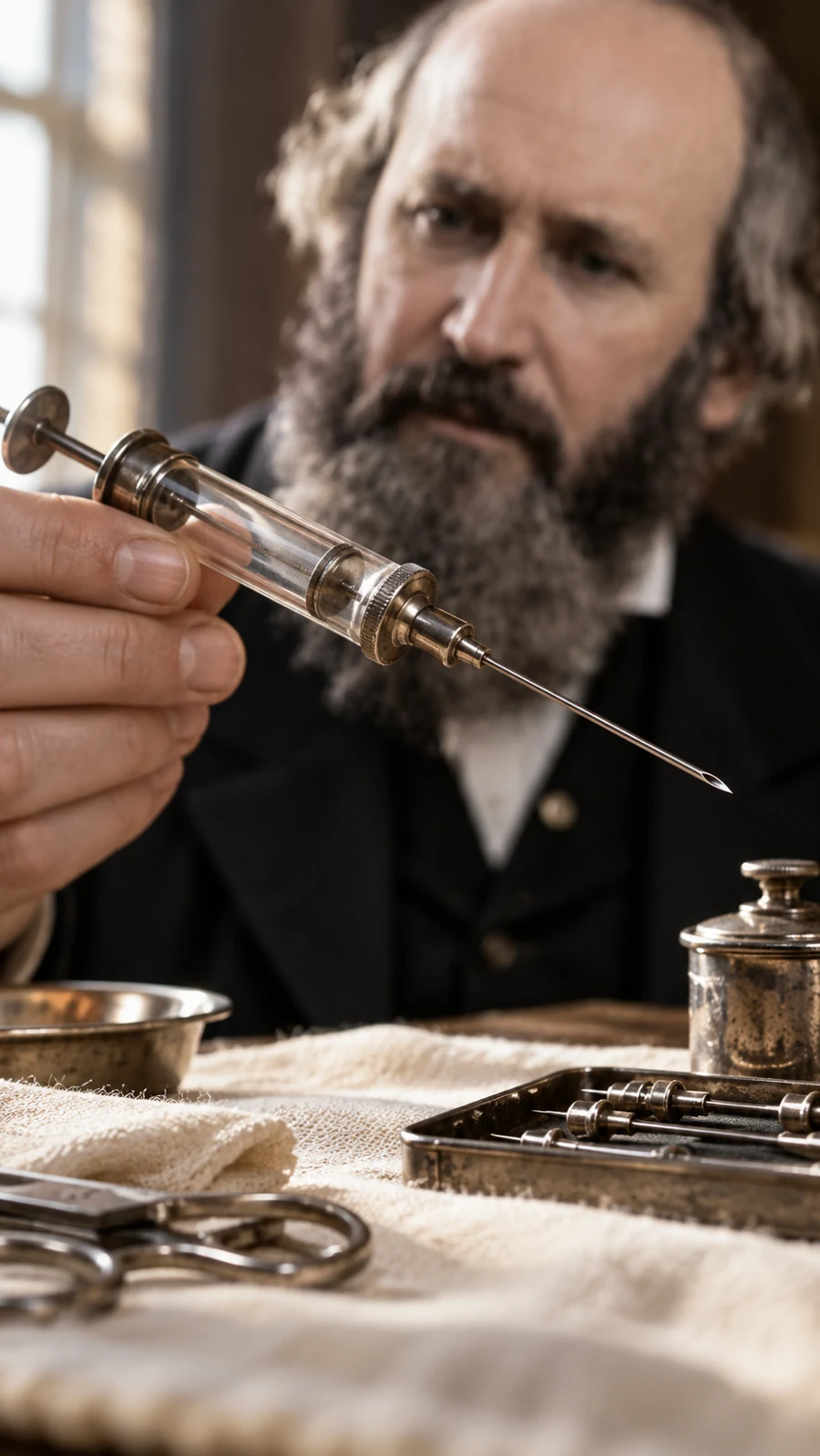
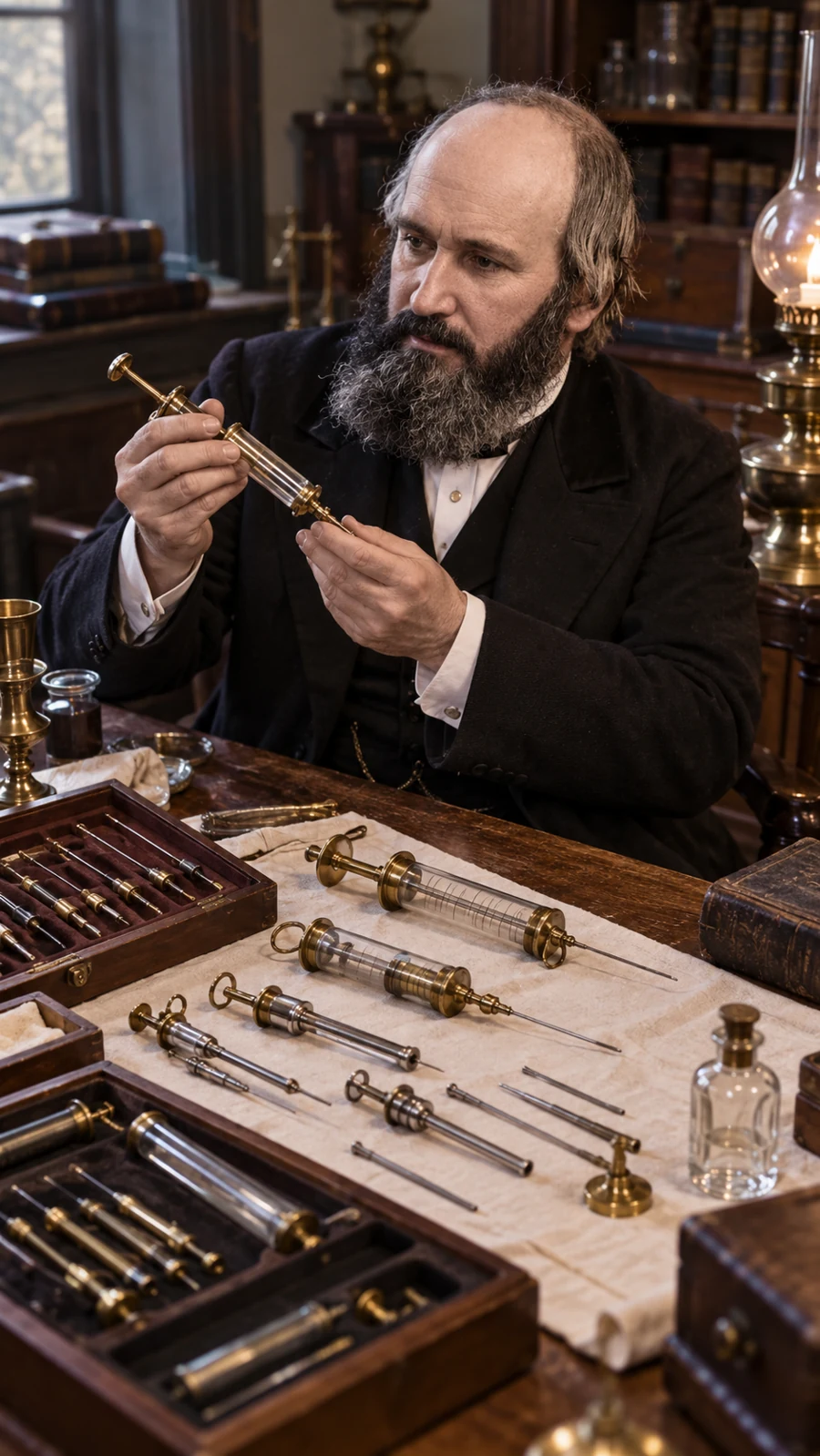
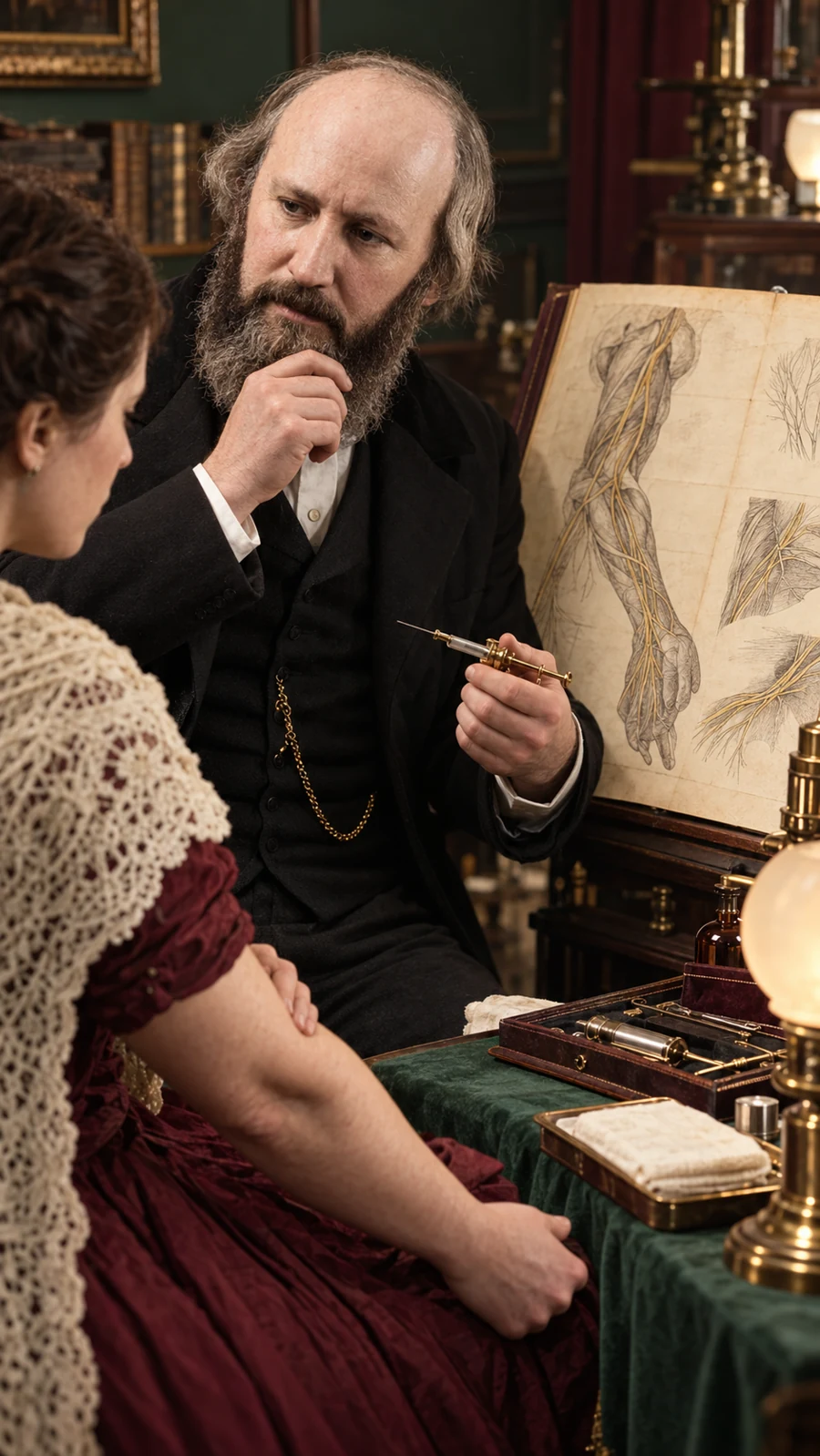
Wellcome Collection holds a visual record titled “Hypodermic syringe, 1853”, described in its catalogue as a syringe used by Alexander Wood. The record offers a way to examine the instrument and distinguish historical evidence from modern recreations. Its catalogue entry is a starting point for exploring how a small device transformed the administration of medicine. The image accompanying this block is an AI illustration, not a reproduction of the catalogued object.
A doctor raised among doctors
Alexander Wood was born on December 10, 1817, in Cupar, Fife, Scotland. He was the son of a physician and grew up in a household in which medicine formed part of family life.
During his childhood, the family moved to Edinburgh. Wood attended Edinburgh Academy and later entered the University of Edinburgh, one of Europe’s leading medical institutions. He received his medical degree in 1839, when he was twenty-one.
He worked at the Stockbridge Dispensary, treating patients who could not always afford private care. He also began teaching medicine. This combination of clinical practice and instruction proved important: Wood was not merely interested in theories but in solutions that could be applied to actual patients (Royal College of Physicians of Edinburgh, n.d.).
In 1842 he married Rebecca Massey. They remained together for more than four decades.
The problem of pain before the needle
Morphine had been isolated from opium early in the nineteenth century and offered more powerful and predictable pain relief than many traditional preparations. It was still administered mainly by mouth or through methods that were slow, imprecise or irritating.
To treat localized pain, some physicians removed the outer layer of skin and placed opium over the exposed area. Others used ointments, plasters or substances applied to a deliberately created blister.
The treatment itself could be painful, and its effects were difficult to control.
Wood became particularly interested in neuralgia, an intense pain that follows the path of a nerve. His patients could experience sudden, disabling attacks for which the available treatments offered little relief.
The anesthetic experiments of James Young Simpson, the Scottish physician associated with introducing chloroform into obstetric practice, strengthened Wood’s interest in finding a more effective method of controlling pain.
His question was straightforward: what if medicine could be placed directly beneath the skin, exactly where the pain was located?
The needle did not begin with Alexander Wood
Syringes existed long before the nineteenth century. For centuries, instruments with tubes and plungers had been used to irrigate wounds, remove fluids or introduce substances into body cavities. The central problem was penetrating the skin in a controlled manner.
In 1844, the Irish physician Francis Rynd used a hollow needle to administer a sedative beneath the skin of a patient suffering from neuralgia. His instrument depended on gravity and did not operate like the plunger syringes familiar today.
Rynd therefore occupies an essential place in the story. He demonstrated that a hollow needle could introduce medicine into subcutaneous tissue several years before Wood’s experiments (National Museums Scotland, n.d.).
Alexander Wood did not invent either the syringe or the hollow needle from nothing. His contribution was to combine and adapt existing technologies into a practical instrument containing a fine needle, reservoir and plunger capable of forcing medicine beneath the skin.
That distinction does not diminish his importance. It more accurately identifies what changed.
The 1853 experiment
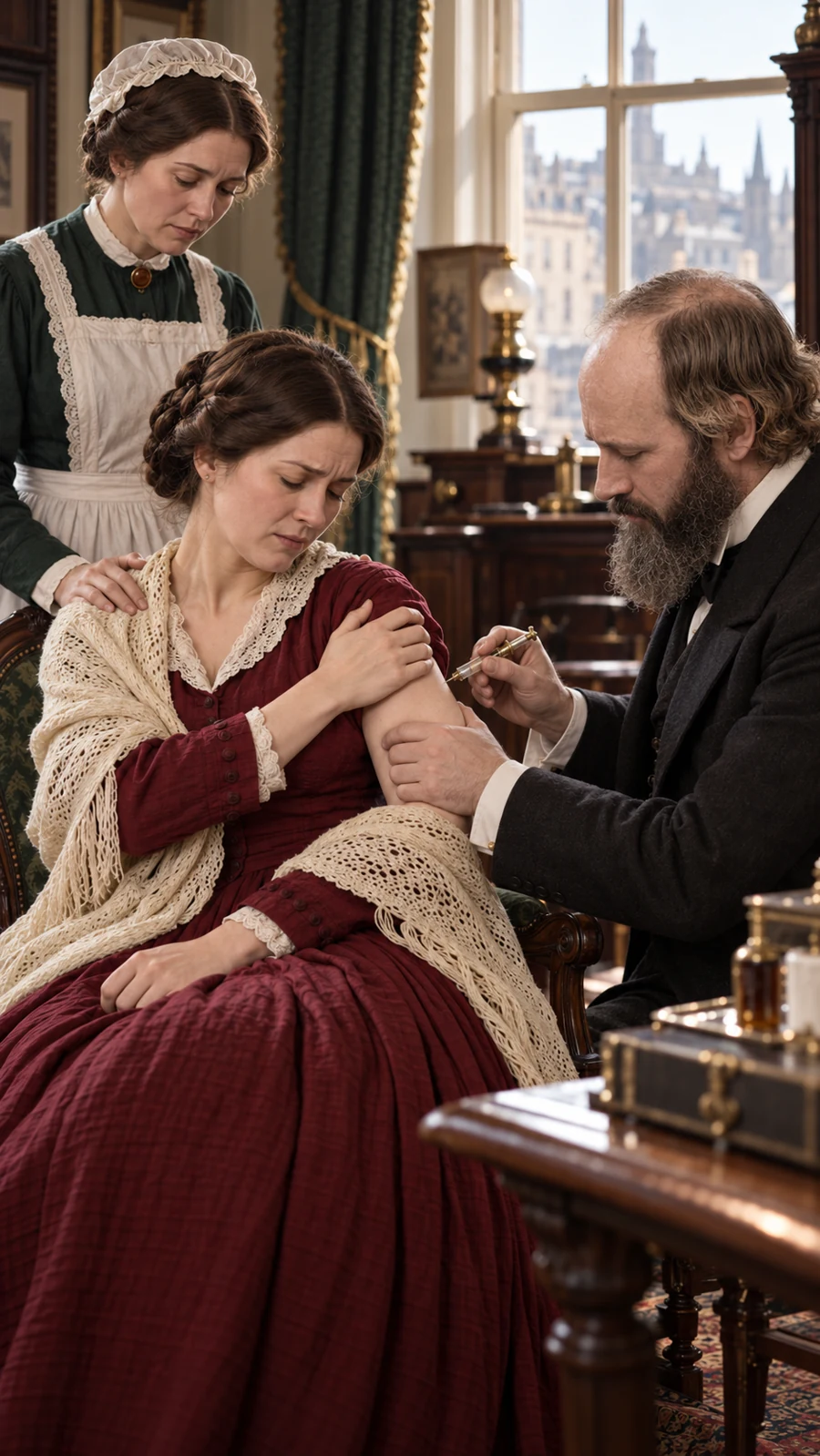
In 1853, Wood treated a patient of approximately eighty who was suffering from severe neuralgia. He used a syringe made by the instrument manufacturer Daniel Ferguson, attached a hollow needle and introduced a morphine solution beneath the skin close to the painful area.
The relief came quickly.
Wood repeated the procedure with other patients and observed that small quantities could produce powerful effects. His syringe incorporated a transparent barrel, allowing the physician to see its contents and exercise greater control over the amount administered.
This was not yet an intravenous injection. Wood introduced the medicine into the tissue beneath the skin rather than directly into a vein. He therefore referred to the procedure as “subcutaneous injection.”
The distinction matters. Describing his experiments as the first intravenous injections of morphine would be historically incorrect.
In 1855, he published his observations under the title New Method of Treating Neuralgia by the Direct Application of Opiates to the Painful Points. He presented the cases he had treated and suggested that the procedure could eventually be used with medicines other than narcotics (Wood, 1855).
Another inventor was working in France
While Wood developed his method in Scotland, the French surgeon Charles-Gabriel Pravaz was working on a similar instrument.
Pravaz hoped to treat aneurysms by introducing substances that would cause clotting. He designed a small metal syringe with a screw mechanism that could administer liquid slowly and in controlled amounts.
Wood and Pravaz worked independently and pursued different clinical objectives. Both developments occurred around 1853, which is why credit for the “first modern hypodermic syringe” continues to depend on how the instrument is defined.
Pravaz contributed to the mechanical design of a penetrating syringe. Wood was instrumental in demonstrating its usefulness for administering medicines, especially morphine, to human patients.
The most historically responsible account recognizes a cumulative and shared invention: Rynd developed an earlier hollow needle; Pravaz created a penetrating syringe for treating aneurysms; Wood transformed subcutaneous medication into a reproducible clinical procedure (National Museums Scotland, n.d.).
The right idea accompanied by the wrong explanation
Wood achieved genuine results but misunderstood part of what was happening.
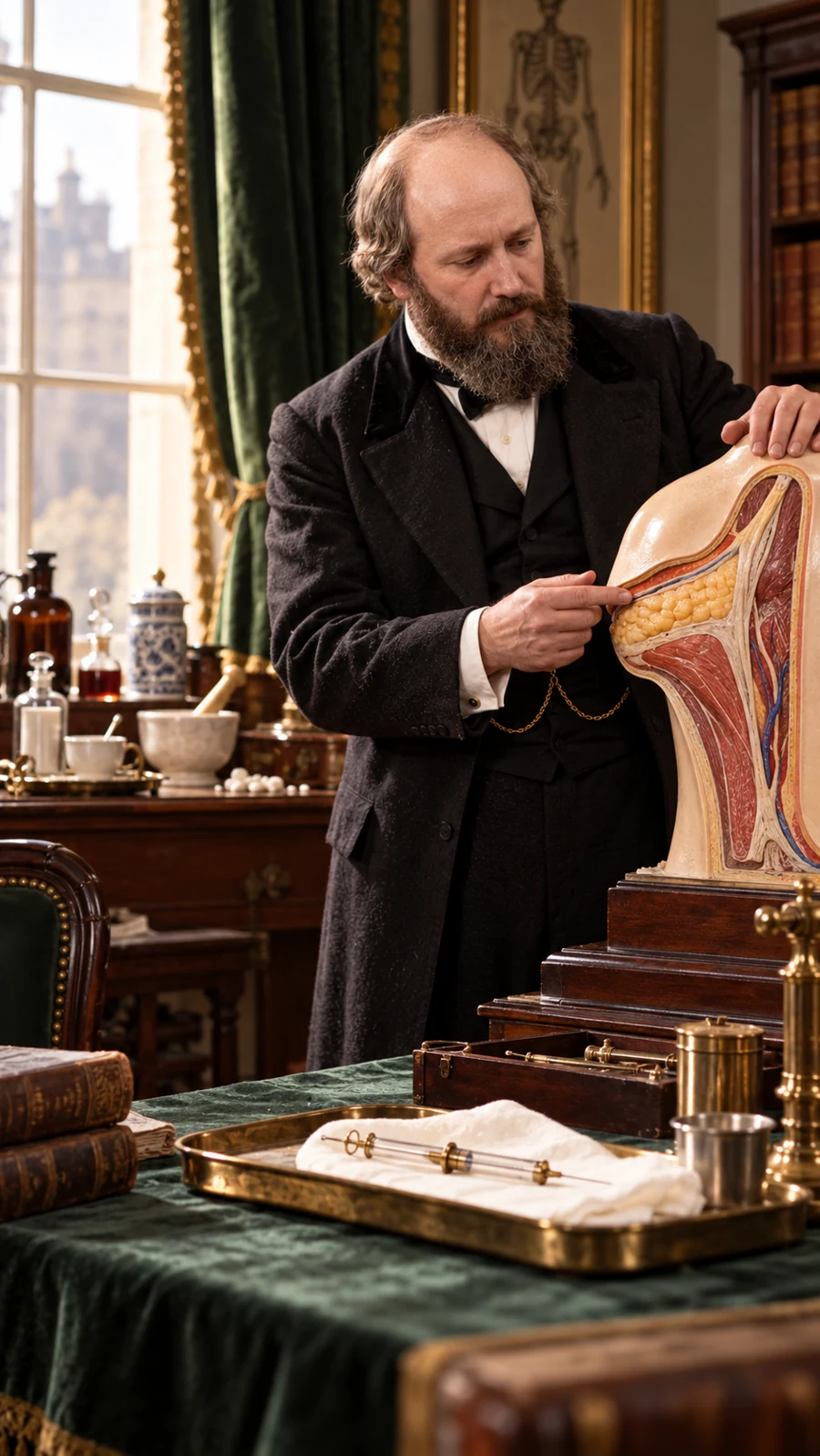
He believed that morphine acted primarily at the local level when deposited near the painful nerve. He therefore insisted that it should be injected at the specific point where the patient experienced pain.
The English physician Charles Hunter began using the method differently. When some injection sites became irritated or developed abscesses, he administered the medicine away from the painful area. His patients continued to experience relief.
Hunter concluded that the drug did not need to be placed beside the affected nerve. It was absorbed and produced a general effect after circulating through the body. He also popularized the word “hypodermic,” derived from Greek terms meaning “beneath the skin.”
The disagreement produced a bitter dispute. Wood accused Hunter of improperly claiming credit for the procedure, while Hunter maintained that he had transformed a local application into a general therapeutic method (Brunton, 2000).
Hunter’s explanation was closer to modern understanding of the systemic action of injected medicines.
Wood had created a method that worked, but he did not entirely understand why it worked.
A revolution small enough to fit inside a case
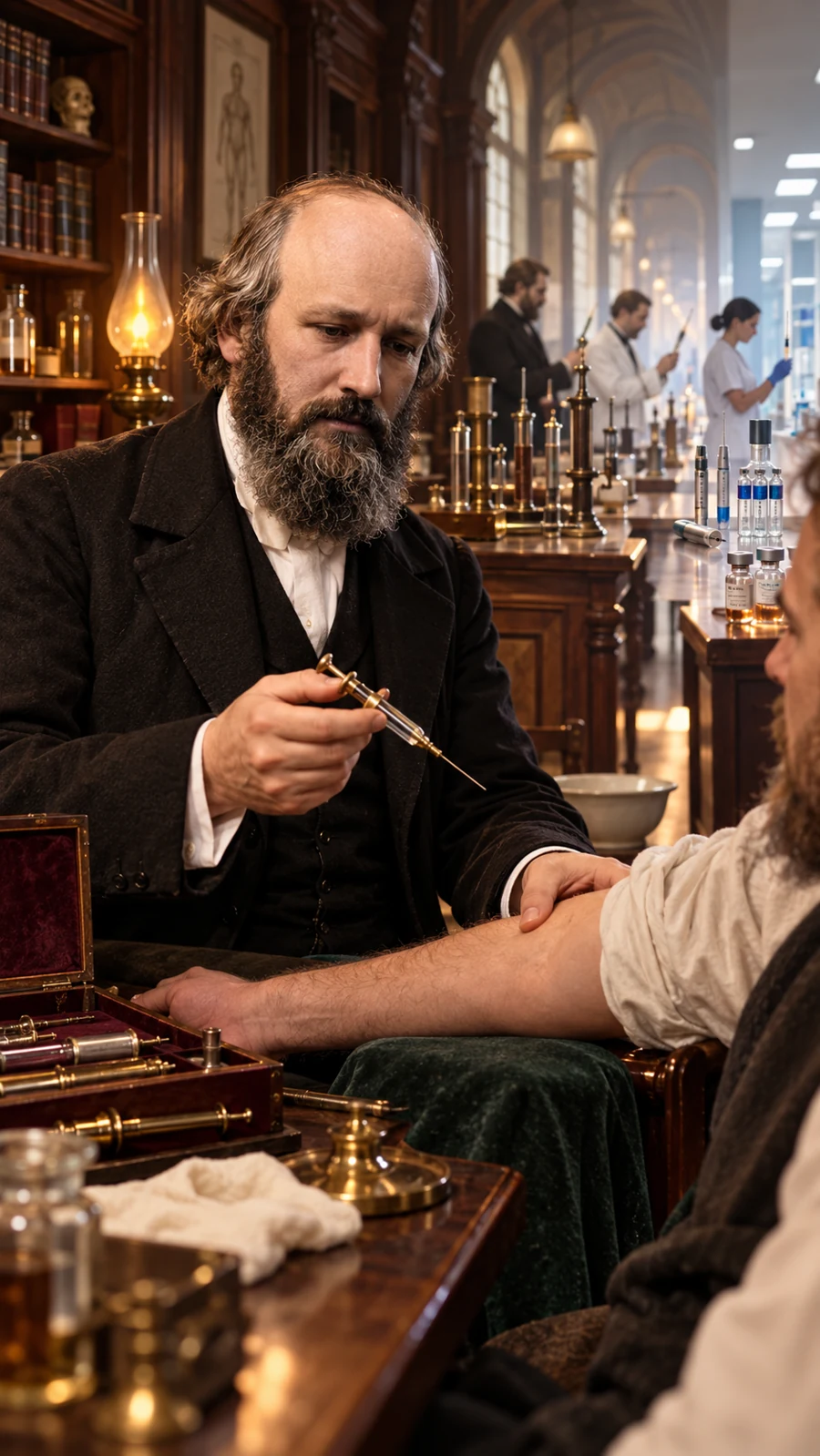
The hypodermic syringe spread rapidly during the second half of the nineteenth century. Manufacturers produced small cases containing the instrument, needles and bottles of medicine.
For physicians, it represented a transformation. They could administer substances without relying on a patient’s ability to swallow and obtain a response much faster than through oral medication. Transparent barrels and the graduated markings added later also allowed doses to be measured with increasing precision.
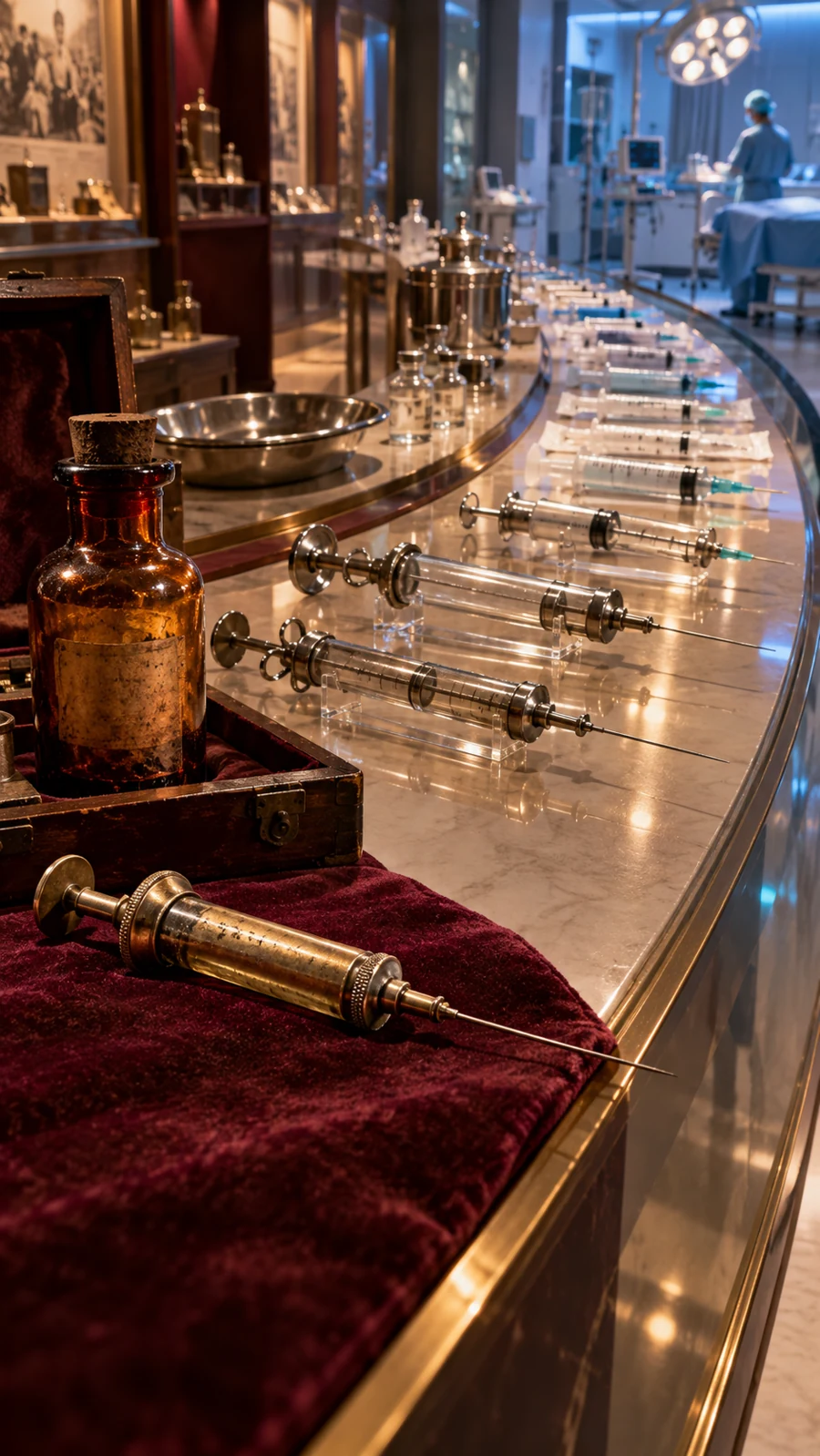
Over time, injections would be used to deliver anesthetics, vaccines, hormones, antibiotics, insulin and numerous emergency treatments. The basic combination of reservoir, plunger and hollow needle remains recognizable in modern syringes.
The first hypodermic syringes, however, were reusable. They were made from glass and metal. Systematic sterilization developed later as the danger of infection became better understood. Disposable plastic versions did not become widespread until the twentieth century.
Wood therefore did not invent the modern disposable syringe. He helped establish the clinical principle and functional design from which it evolved.
The other side of speed
The new method of administration also multiplied certain dangers.
Injected morphine could act more rapidly and intensely than morphine taken by mouth. Nineteenth-century physicians still understood little about opioid tolerance, dependency and safe dosing.
Some doctors even believed that injection would prevent addiction because the medicine did not enter through the stomach. The assumption was false. Dependency did not disappear when the route of administration changed; under some circumstances, the rapid effect could increase the danger.
Sterilization was also imperfect, and knowledge about microorganisms had not yet become firmly established. Reused needles could cause infections, abscesses and disease transmission.
The instrument was not morally good or bad. It increased the power of the person using it: a syringe could relieve unbearable pain, administer a vaccine or deliver a dangerous dose with unprecedented speed.
That ambiguity still accompanies the needle.
The wife who did not die from his invention
One of the most frequently repeated stories about Alexander Wood claims that his wife, Rebecca Massey, became the first person addicted to injected morphine and died from an overdose delivered with her husband’s syringe.
The story contains every element of a perfect tragedy: an inventor creates a revolutionary instrument, and the invention destroys the person he loves most.
It is not true.
Alexander Wood died on February 26, 1884. Rebecca outlived him. The University of Edinburgh identifies as false the rumour that she became the first morphine addict through her husband’s invention (University of Edinburgh, 2024).
The legend probably survived because it seemed to offer a moral warning too powerful to verify. It also confused the creation of a technology with the social consequences that later followed.
This lesser-known fact demonstrates why historical verification matters: a compelling story does not become true merely because it seems poetically appropriate.
More than a needle
The syringe has overshadowed other parts of Wood’s career.
He served as president of the Royal College of Physicians of Edinburgh from 1858 to 1861 and represented the institution on the General Medical Council. He participated in debates concerning professional regulation, pharmacy, sanitation, the registration of births and marriages and medical assistance for the poor.
He also worked with organizations intended to improve conditions for unemployed people. His concern for medicine extended beyond the consulting room: he understood that health was connected to poverty, urban hygiene and the operation of public institutions (University of Edinburgh, 2026).
Wood died in Edinburgh at the age of sixty-six. He was buried in Dean Cemetery, where Rebecca would be laid to rest years later.
The inventor who did not work alone
Describing Alexander Wood as “the inventor of the hypodermic syringe” is understandable but incomplete.
The modern syringe did not appear at a single moment. It emerged from a chain that included ancient instruments, experiments with fluids, Francis Rynd’s hollow needle, Charles Pravaz’s mechanism, Wood’s clinical applications and Charles Hunter’s understanding of systemic action.
Wood holds a central place because he demonstrated that a syringe fitted with a needle could practically deliver medicines beneath the skin. He published his results and helped transform an experimental possibility into a medical technique.
He was also mistaken in believing that morphine acted mainly at the injection site. That error does not erase his achievement. It reminds us that science advances through useful instruments, incomplete hypotheses and later corrections.
In 1853, a fine needle changed the distance between medicine and the human body.
Since then, injections have prevented disease, controlled pain, delivered insulin, provided anesthesia and responded to emergencies. They have also created risks requiring training, hygiene and responsibility.
Alexander Wood did not single-handedly invent everything represented by a modern syringe.
He did, however, help open one of medicine’s smallest and most consequential doors: a direct entrance beneath the skin.
References
- Brunton, D. (2000). A question of priority: Alexander Wood, Charles Hunter and the hypodermic method. Proceedings of the Royal College of Physicians of Edinburgh, 30(4), 349–351. View source
- Royal College of Physicians of Edinburgh. (n.d.). Alexander Wood. View source
- National Museums Scotland. (n.d.). The story of syringes. View source
- University of Edinburgh. (2024, October 28). Alexander Wood (1817–1884). View source
- University of Edinburgh. (2026, March 18). Alexander Wood. 300 Faces of Edinburgh Medical School. View source
- Wood, A. (1855). New method of treating neuralgia by the direct application of opiates to the painful points. The Edinburgh Medical and Surgical Journal, 82(203), 265–281. View source
- Wellcome Collection. (n.d.). Hypodermic syringe, 1853. View source
More from this collection

Willis Carrier: The Man Who Tried to Control Humidity and Ended Up Changing the Map of the World
Read story →
Garrett Morgan: The Inventor Who Had to Hide His Face to Save Lives
Read story →