In this storyOpen index
Louis Le Prince: The Inventor Who Filmed the Future and Vanished Before Showing It
The images of 1888, a pioneering camera, and the disappearance that left its inventor’s final journey unanswered.
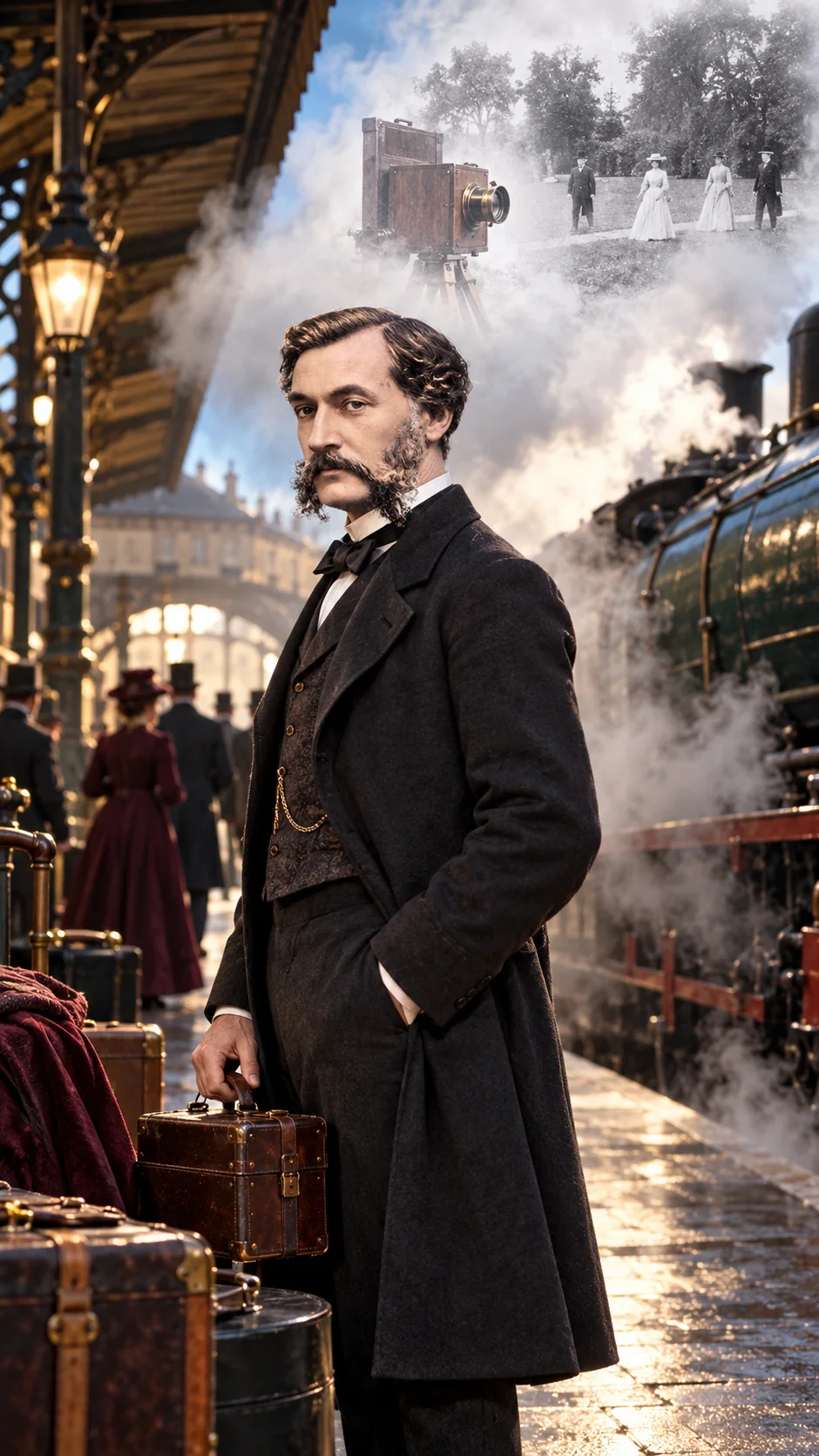
Four people in a garden were enough to open a window onto the future. Louis Le Prince recorded motion before cinema captivated the public. His disappearance interrupted the demonstration that might have changed his fate.
Louis Le Prince
Moving images before cinema
The single-lens camera of 1888
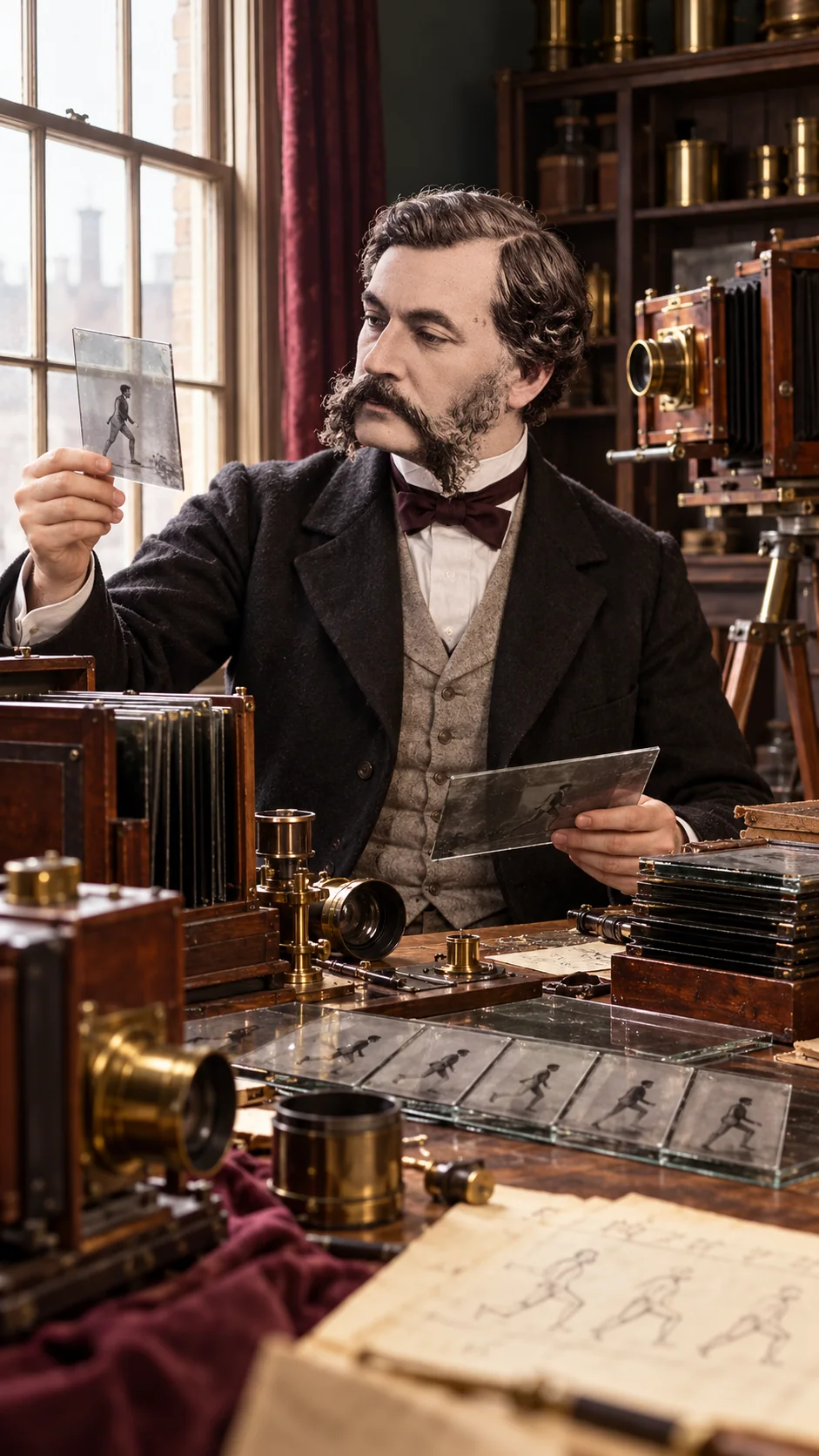
The Science Museum Group preserves the Leeds-built apparatus that connects Le Prince with the early Roundhay and Leeds Bridge images. Its catalogue provides photographs of the object and technical details. This card’s illustration is a workshop reconstruction, not a photograph of the surviving camera (Science Museum Group, n.d.).
1. A Few Steps in a Garden
Four people walk in a circle through a garden in Roundhay, Leeds. Their movements look uncertain, almost playful, as they perform before a machine whose significance they could scarcely have imagined. There is no plot, scenery, or professional cast. The scene lasts only a few seconds, yet it contains something astonishing: people from the nineteenth century who still move before our eyes.
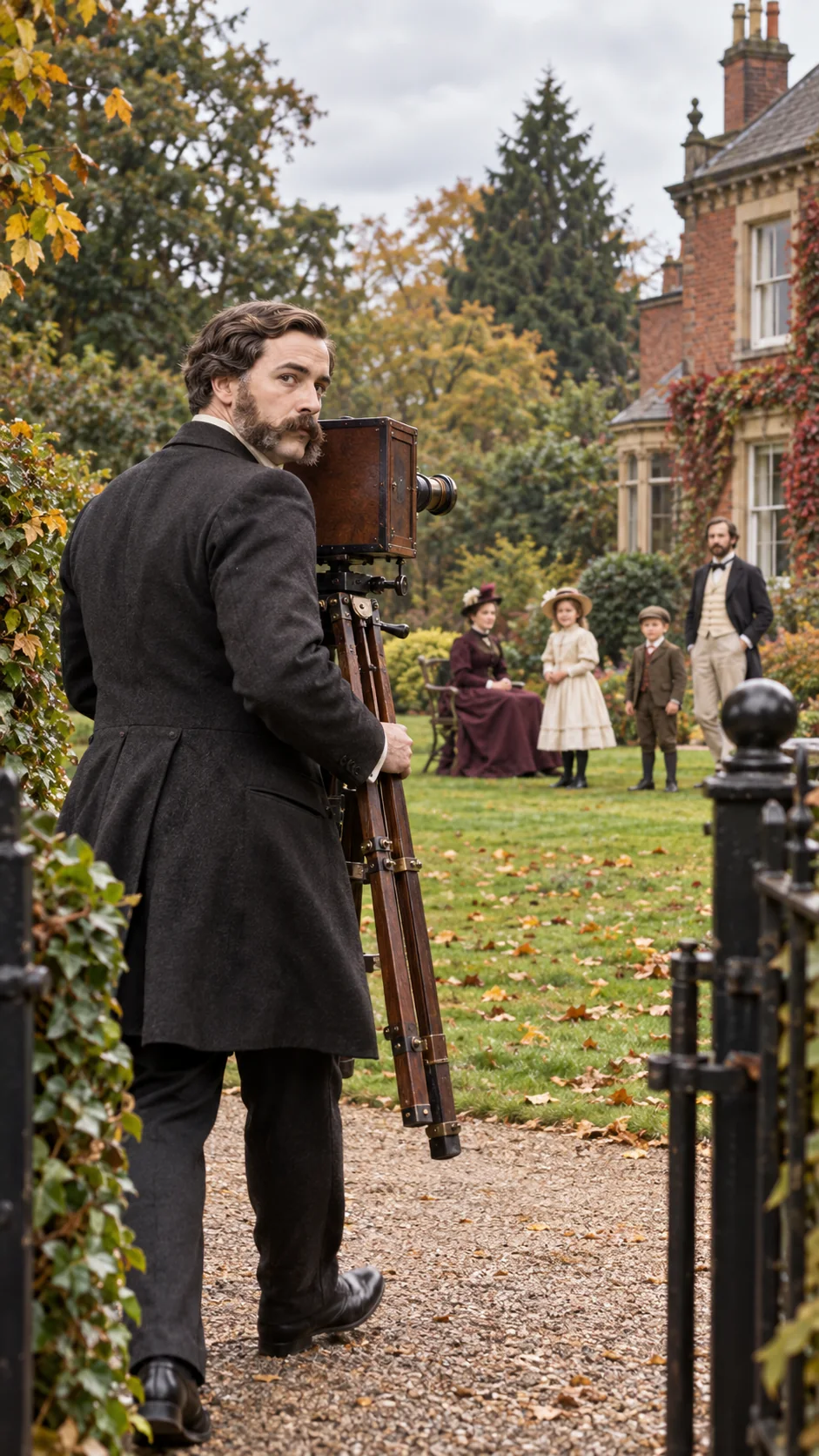
Louis Le Prince recorded those images on October 14, 1888, using a single-lens motion-picture camera built in his Leeds workshop. Known as the Roundhay Garden Scene, the sequence is generally regarded as the oldest surviving film. It predates by several years the commercial motion-picture systems associated with Thomas Edison and the Lumière brothers (Science Museum Group, n.d.).
Le Prince had found a way to trap time. Yet, just as he prepared to demonstrate his invention publicly, he disappeared without a trace.
2. Between Science and Art
Louis Aimé Augustin Le Prince was born in Metz, France, on August 28, 1841, although some older sources give 1842. His education brought together disciplines that were often treated separately: he studied painting in Paris and chemistry in Leipzig. That combination mattered because motion pictures required more than a mechanical apparatus. Their development also depended upon light, chemical emulsions, visual composition, and a sophisticated understanding of movement (University of Leeds Library, n.d.).
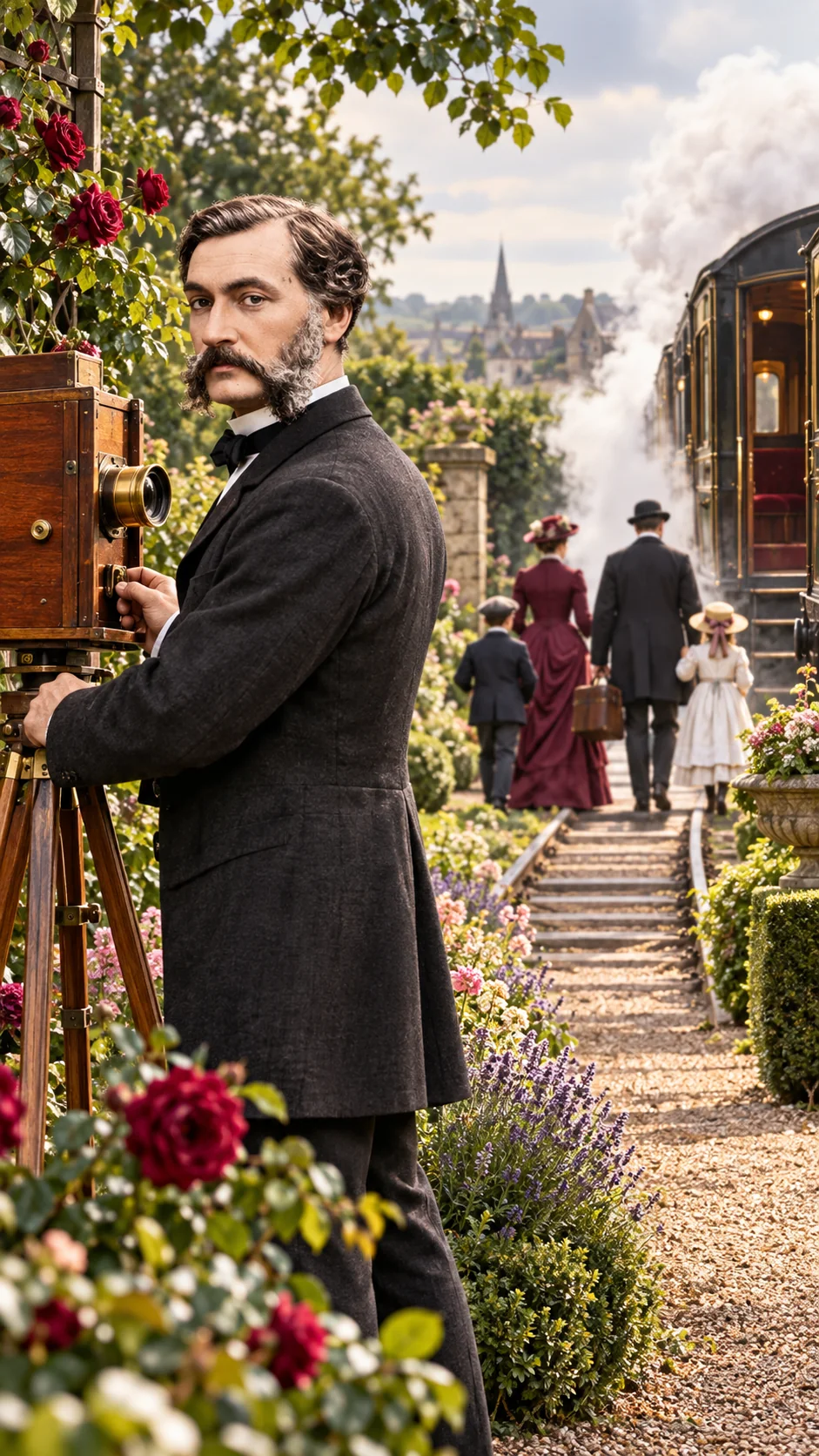
Family accounts maintained that Le Prince’s father knew the photographic pioneer Louis Daguerre and that the young Louis spent time in Daguerre’s studio. Some details of that relationship are difficult to verify independently, but Le Prince undoubtedly developed an early fascination with photography.
While studying in Leipzig, he met John Whitley, an Englishman whose family operated an engineering and metalworking business in Leeds. At Whitley’s invitation, Le Prince moved to England in 1866 and joined Whitley Partners, a brass-founding company. The work gave him practical experience with mechanisms, industrial materials, and manufacturing.
3. A Creative Partnership
In 1869, Le Prince married John’s sister, Sarah Elizabeth “Lizzie” Whitley, a talented artist trained in decorative techniques. Lizzie was not merely the inventor’s supportive wife. She became his artistic and professional collaborator. Together they founded a school of applied art in Leeds and developed methods for fixing colored photographic images onto metal, glass, and ceramics (Leeds Museums and Galleries, n.d.).
Their work earned considerable recognition. Enamel portraits of Queen Victoria and Prime Minister William Gladstone produced by the couple were placed inside a time capsule beneath Cleopatra’s Needle when the Egyptian obelisk was erected on the Thames Embankment in 1878 (University of Leeds Library, n.d.).
This little-known episode neatly anticipates Le Prince’s later achievement: before he created some of the earliest surviving moving images, he had already helped bury images intended for the future.
Artistic success did not guarantee financial security, however. Le Prince and Lizzie had a large family to support, and in 1881 they moved to the United States. There he worked on artistic commissions, interior decoration, and large panoramic displays. At the same time, he pursued a question that occupied inventors on both sides of the Atlantic: could photography capture and reproduce continuous movement?
4. The Problem of Making Pictures Move
Optical toys, sequential photography, and the experiments of figures such as Eadweard Muybridge and Étienne-Jules Marey had already shown that motion could be divided into individual images. Producing a continuous photographic sequence and projecting it convincingly, however, remained an immense technical challenge.
Le Prince initially designed an apparatus with sixteen lenses. Each lens recorded a slightly different stage of an action. The system was ingenious but cumbersome, and the shifting viewpoints made stable reproduction difficult. He filed a United States patent application on November 2, 1886, and received Patent No. 376,247 on January 10, 1888. It described a “receiver,” or camera, and a “deliverer,” or projector, intended to reproduce photographs in their original sequence (Le Prince, 1888).
The American patent was primarily associated with the multiple-lens arrangement. His British patent, accepted on November 16, 1888, also covered single-lens apparatuses, bringing it considerably closer to the central operating principle of later motion-picture cameras (Kilburn Scott, 1931).
5. The Workshop Where a Camera Was Born
After returning to Leeds, Le Prince established a workshop at 160 Woodhouse Lane. He worked there with mechanics and assistants, including James William Longley and Frederick Mason. Popular history prefers the image of a lone genius, but complicated machines rarely emerge from complete isolation. Surviving correspondence offers a glimpse of this collaborative work: in an 1898 letter to Adolphe, Longley described Le Prince’s technical solutions, including a glass tank and siphon to address the problem of celluloid film catching fire (Longley, 1898).
The surviving camera held by the Science Museum Group was made in Leeds in 1888. It is a bulky box constructed from wood, metal, glass, and brass, weighing approximately 16.8 kilograms. It used 2⅜-inch-wide unperforated film carried between two spools. A flat brass plate held the film motionless during exposure, while a rotating slotted shutter controlled the light (Science Museum Group, n.d.).
Le Prince called the camera a “receiver.” The term reveals something about his conception of the device: it did not create movement but received it, divided it into photographs, and preserved it.
6. The First Leeds Films
On October 14, 1888, Le Prince carried his camera into the garden of Oakwood Grange, his in-laws’ home in Roundhay. Joseph and Sarah Whitley, Le Prince’s son Adolphe, and family friend Annie Hartley walked before the lens. The original duration cannot be established with certainty because only a small number of frames survive, and modern reconstructions play those frames at varying speeds.
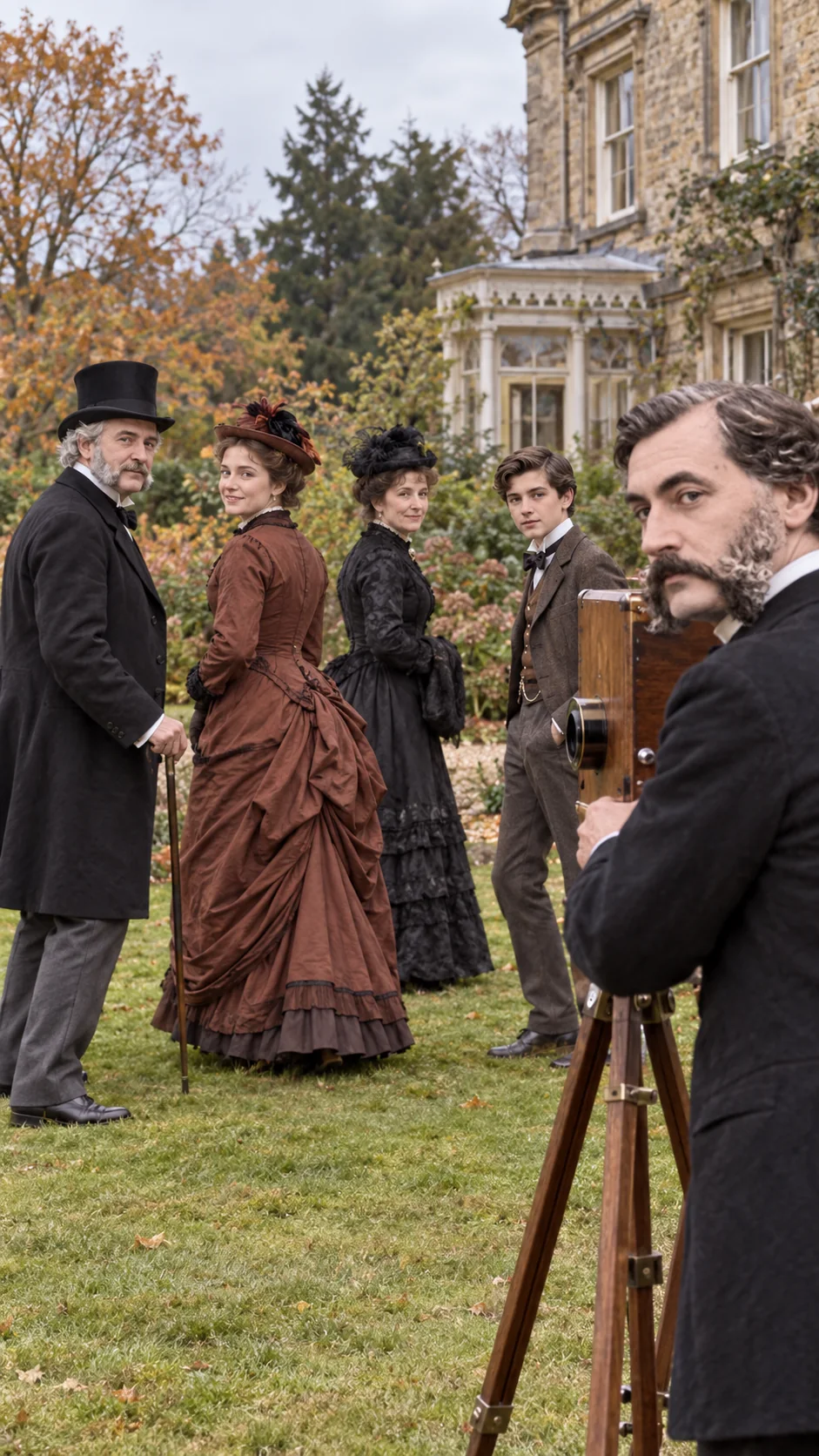
Sarah Whitley died on October 24, only ten days later. Her presence provides unusually strong evidence that the scene was photographed before that date, preventing the film from being plausibly assigned to a later year (Leeds Philosophical and Literary Society, 2015).
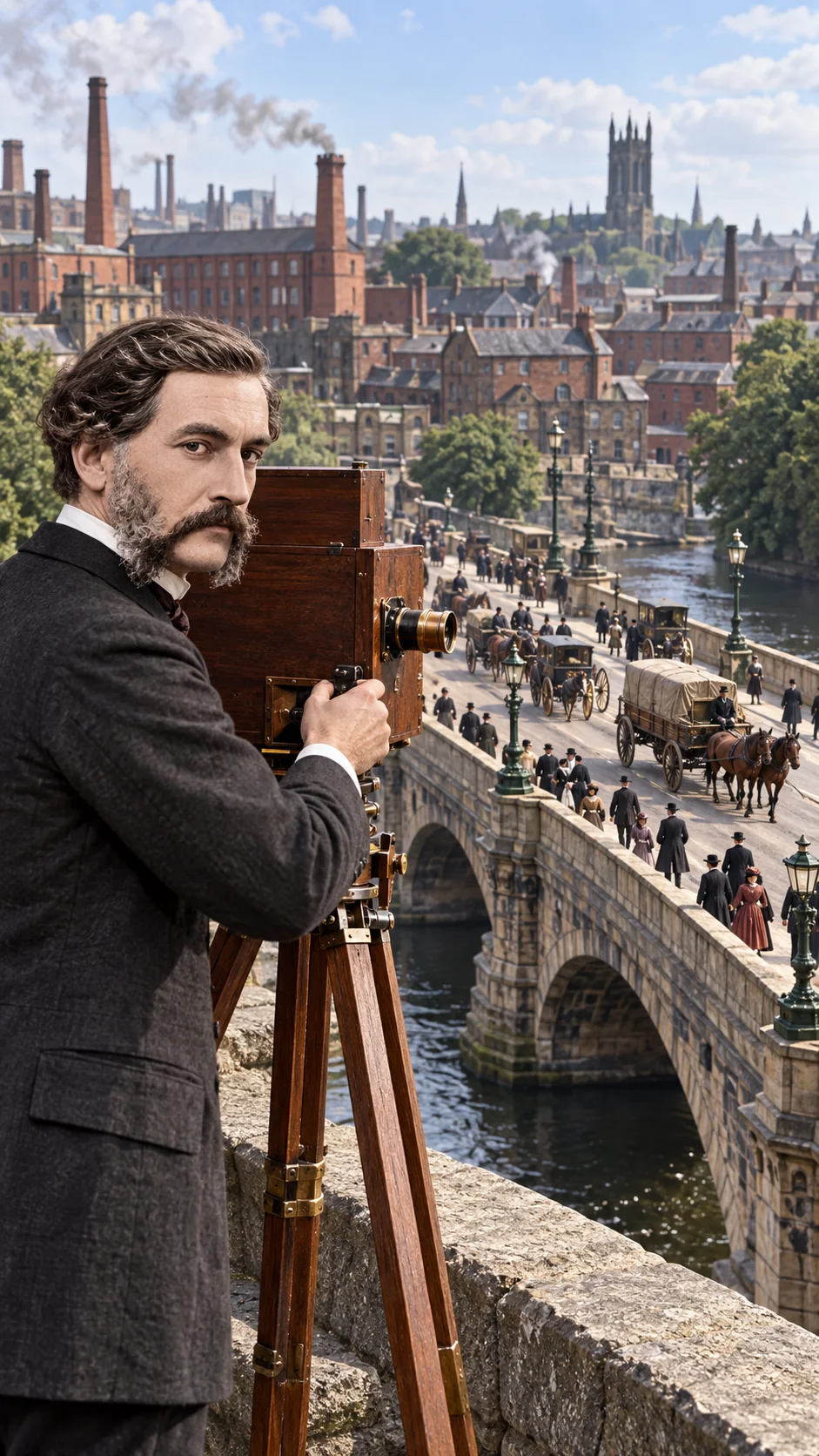
Le Prince also filmed Adolphe playing an accordion. Later that month, he positioned his camera above Leeds Bridge and photographed pedestrians, horses, and carriages moving through the city. Traffic Crossing Leeds Bridge presented a greater technical test than the controlled garden scene because its subjects moved spontaneously in different directions and at different distances. The surviving frames demonstrate that his apparatus could record successive phases of ordinary urban life (Howells, 2006).
A distinction is nevertheless necessary. Capturing sequential photographs, reanimating surviving frames with modern technology, and proving that the images were projected publicly at the time are not identical achievements. Later witnesses stated that Le Prince conducted private projection experiments, but no evidence establishes a commercial public screening comparable to those of the following decade. It is therefore more accurate to call him a major pioneer of cinematography than to declare, without qualification, that he was the sole inventor of cinema.
7. The Demonstration That Never Happened
During 1889 and 1890, Le Prince continued experimenting with cameras, projectors, and different film materials. Lizzie and the children were living in New York, where preparations were reportedly being made for a public presentation. Such a demonstration might have transformed a workshop invention into a recognized historical event.
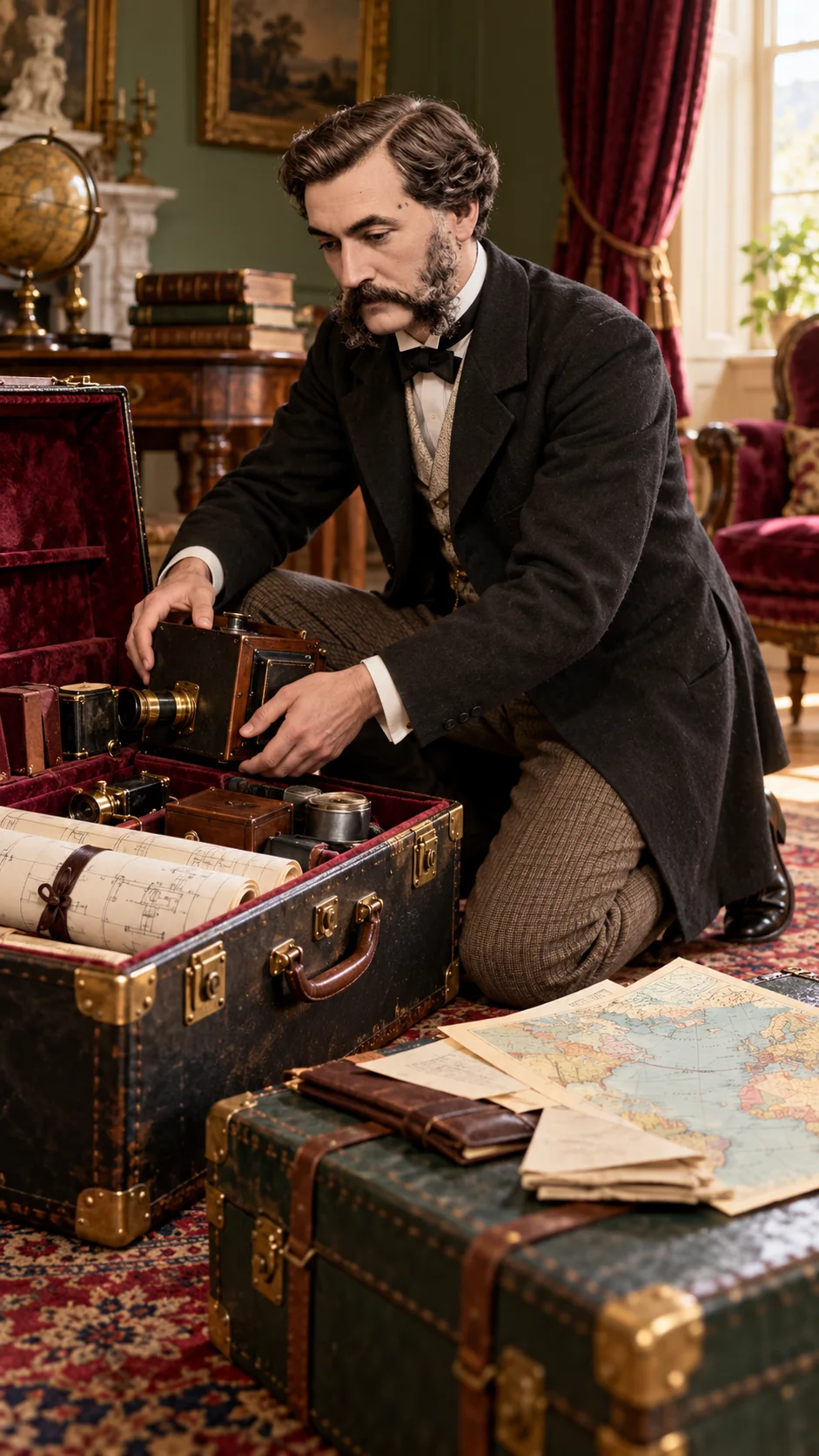
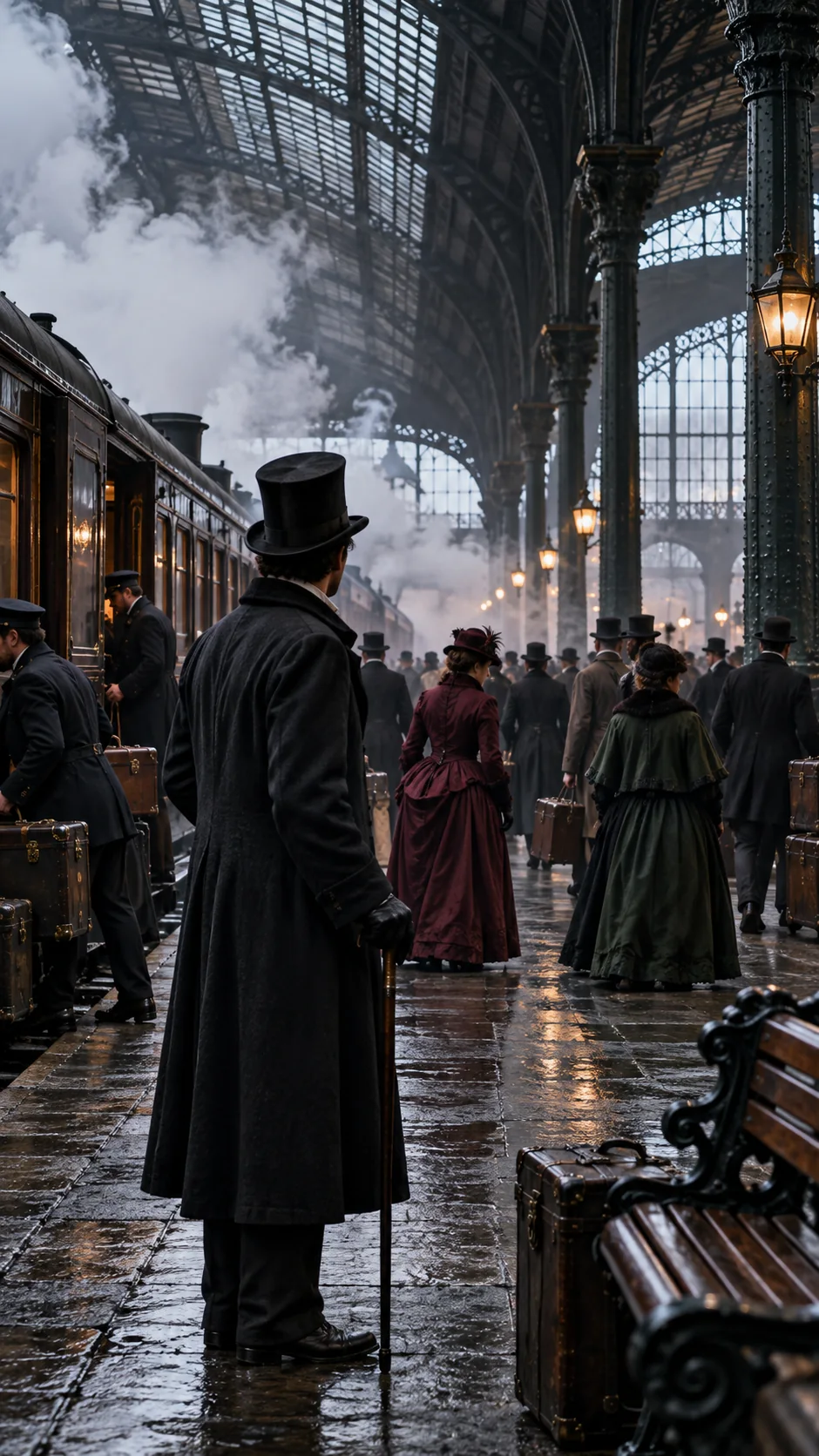
Before crossing the Atlantic, Le Prince traveled in France. He visited friends and relatives and stayed with his brother Albert in Dijon. According to the generally accepted account, on September 16, 1890, he boarded a train bound for Paris. He did not meet the people expecting him there. No body, luggage, or personal possessions were ever conclusively recovered (Historic England, 2019).
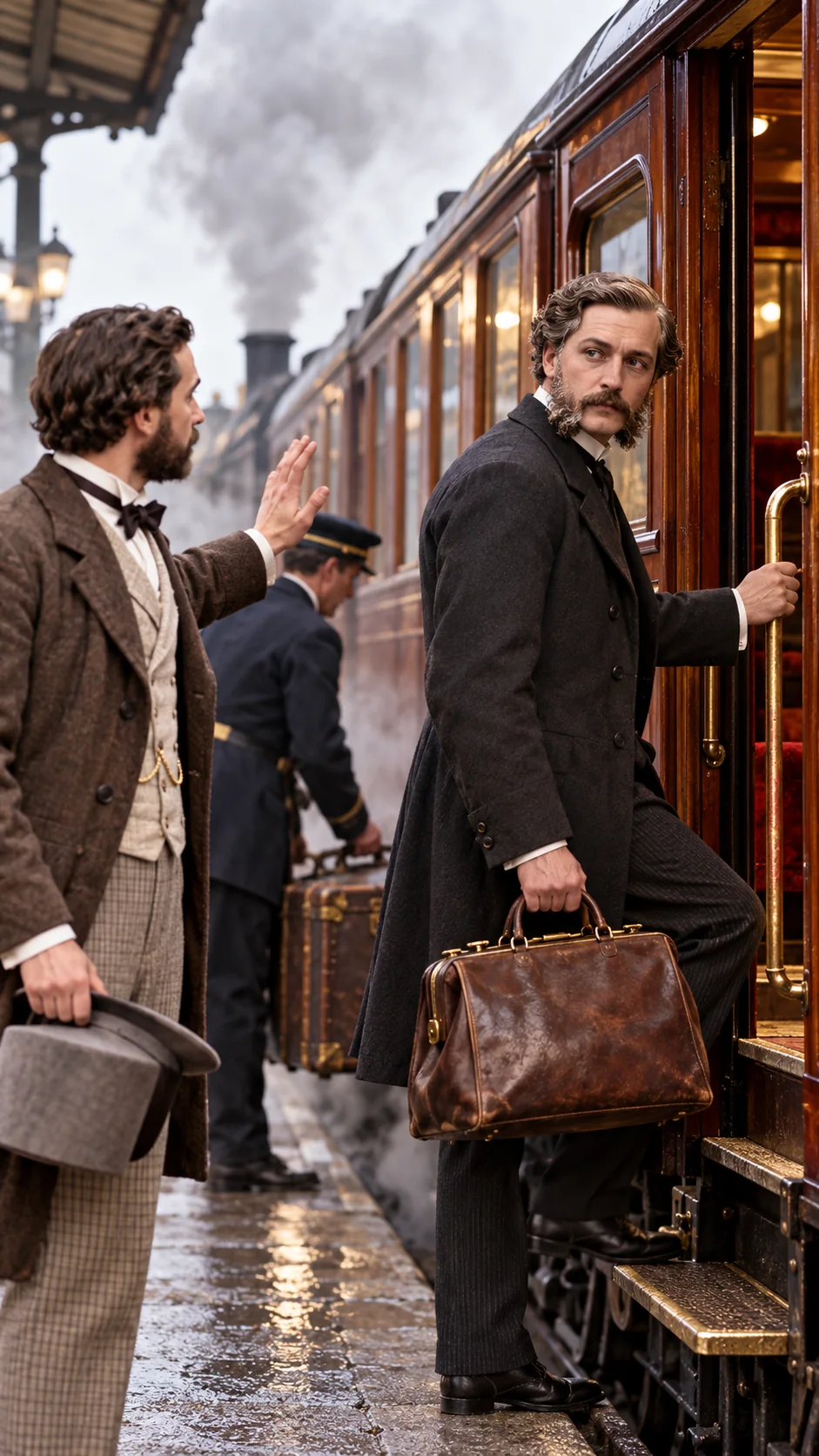
French police, Scotland Yard, and members of the family investigated, but none found a definitive answer. Because there was no body, Le Prince was not legally declared dead until 1897, seven years after he vanished (Leeds Museums and Galleries, n.d.).
8. A Mystery Transformed into Legend
Explanations have multiplied ever since: suicide caused by financial difficulties, an accident, voluntary disappearance, murder connected with a family inheritance, or assassination by commercial rivals seeking control of motion-picture technology.
None has been proved.
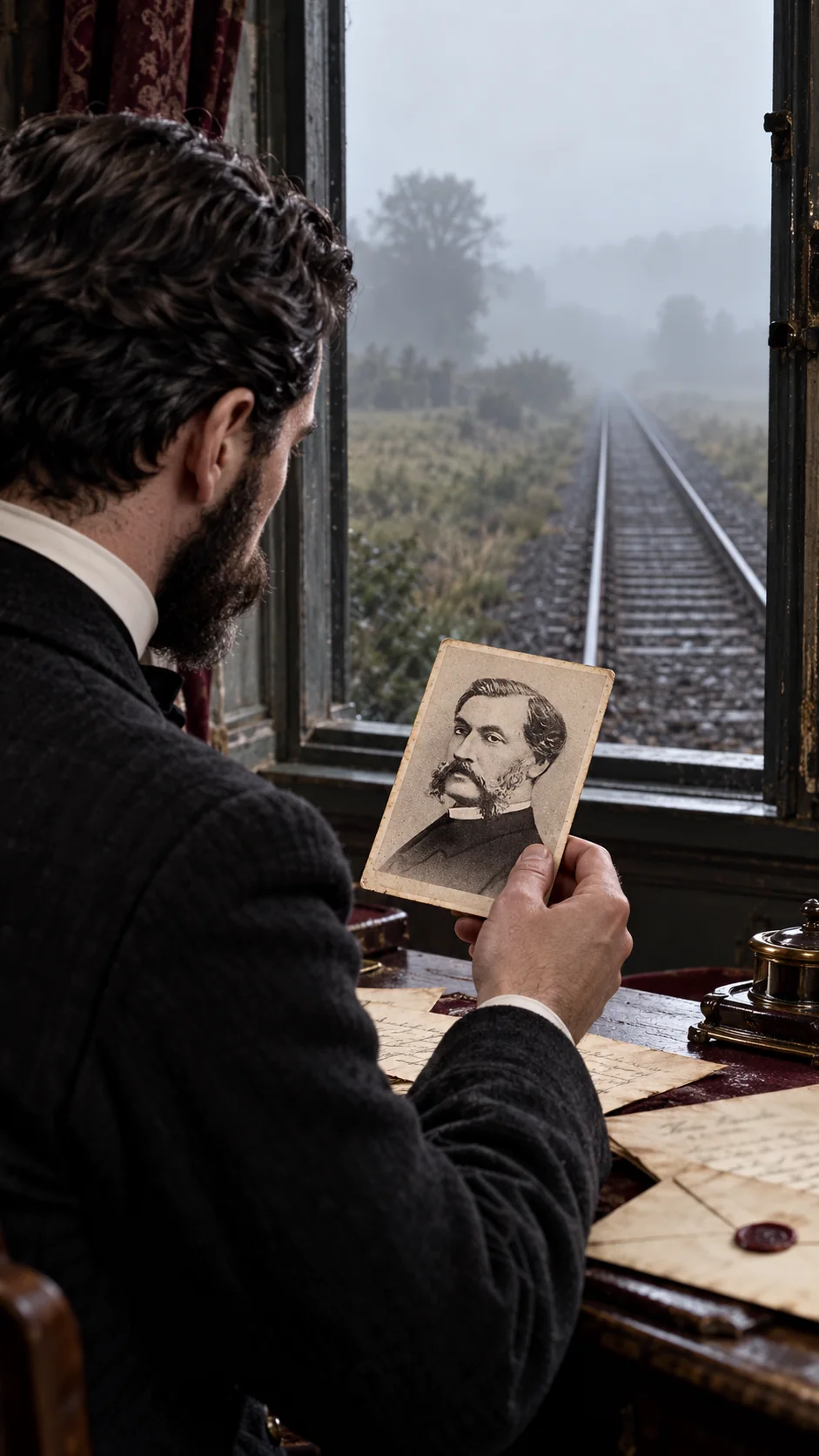
A photograph later identified in French police archives shows an unidentified man whose body was recovered from the Seine in 1890 and whose face resembles Le Prince’s. The image has strengthened theories involving suicide or accidental death, but visual similarity is not a forensic identification. Nor is there reliable evidence that Edison ordered Le Prince’s murder. The timing of the disappearance makes the accusation dramatically appealing, but coincidence and commercial rivalry do not constitute proof.
Historical discipline requires separating the mystery from the evidence. What can be established is that Le Prince disappeared in September 1890 while preparing to promote his apparatus. Precisely how and why he vanished remains unknown.
9. The Battle for Recognition
The disappearance prevented Le Prince from personally completing, patenting, and demonstrating his latest machines. Edison and his employees subsequently developed the Kinetograph and Kinetoscope, while the Lumière brothers publicly presented their Cinématographe. These inventors had commercial organizations, laboratories, publicity networks, and—most importantly—a visible public presence.
In the late 1890s, Le Prince’s son Adolphe supplied testimony and information about his father’s experiments during litigation between Edison and the American Mutoscope Company. The family hoped the evidence would establish Le Prince’s priority, but the proceedings did not make him the recognized beneficiary of the new industry. His fate demonstrates that invention alone does not determine historical credit. Financing, enforceable patents, repeatable demonstrations, publicity, and an organization capable of defending a claim also matter (Howells, 2006).
Modern historians generally avoid attributing the birth of cinema to one heroic individual. Motion pictures emerged through the combined work of photographers, chemists, mechanics, film manufacturers, exhibitors, and entrepreneurs. Within that larger constellation, however, Le Prince’s surviving images from 1888 occupy an undeniably early and important position.
10. The Man Left Outside His Own Film
Louis Le Prince changed everyday life without living to witness the full transformation. People now record birthdays, streets, journeys, disasters, protests, and casual gestures with devices small enough to carry in a pocket. Moving images shape memory, news, entertainment, evidence, and even personal identity.
Cinema did not spring fully formed from the Roundhay garden, but one of its earliest breaths was preserved there. Le Prince’s camera transformed an ordinary family gathering into a window that has remained open for more than a century.
He disappeared before securing the place in history he sought. Yet the awkwardly moving figures in his garden still accomplish what he intended: they continue to move after their moment has died. We do not know what happened on his final journey, but his images reached the future.
Timeline
| Year | Event |
|---|---|
| 1841 | Born in Metz. |
| 1866 | Moves to Leeds. |
| 1869 | Marries Lizzie Whitley. |
| 1878 | His portraits enter the Cleopatra’s Needle time capsule. |
| 1881 | Moves to the United States. |
| 1886 | Applies for his U.S. patent. |
| 1888 | Receives the patent and films Roundhay and Leeds Bridge. |
| 1890 | Disappears during his journey in France. |
| 1897 | Is declared legally dead. |
Sources
- Historic England. (2019). Gravestone of Joseph and Sarah Whitley: List entry 1460284.
- Howells, R. (2006). Louis Le Prince: The body of evidence. Screen, 47(2), 179–200.
- Kilburn Scott, E. (1931). Career of L. A. A. Le Prince. Journal of the Society of Motion Picture Engineers, 17(1).
- Leeds Museums and Galleries. (n.d.). The life, mystery and legacy of Louis Le Prince.
- Leeds Philosophical and Literary Society. (2015). Annual review 2015: The Louis Le Prince archive.
- Le Prince, A. (1888). Method of and apparatus for producing animated pictures of natural scenery and life (U.S. Patent No. 376,247).
- Longley, J. W. (1898, November 20). Letter from James W. Longley to Adolphe Le Prince. University of Leeds Library, MS/DEP/2015/2/9.
- Science Museum Group. (n.d.). Single-lens cine camera by Louis Le Prince.
- University of Leeds Library. (n.d.). Louis Le Prince Collection.
More from this collection
Hedy Lamarr: The Star Who Imagined How to Protect a Signal
Read story →
Alexander Wood: The Doctor Who Opened a Direct Door Beneath the Skin
Read story →