
In this storyOpen index
Artemisia Gentileschi: The Painter Who Made Women the Protagonists of Their Own Stories
An artist who placed women at the physical and psychological heart of their own stories.
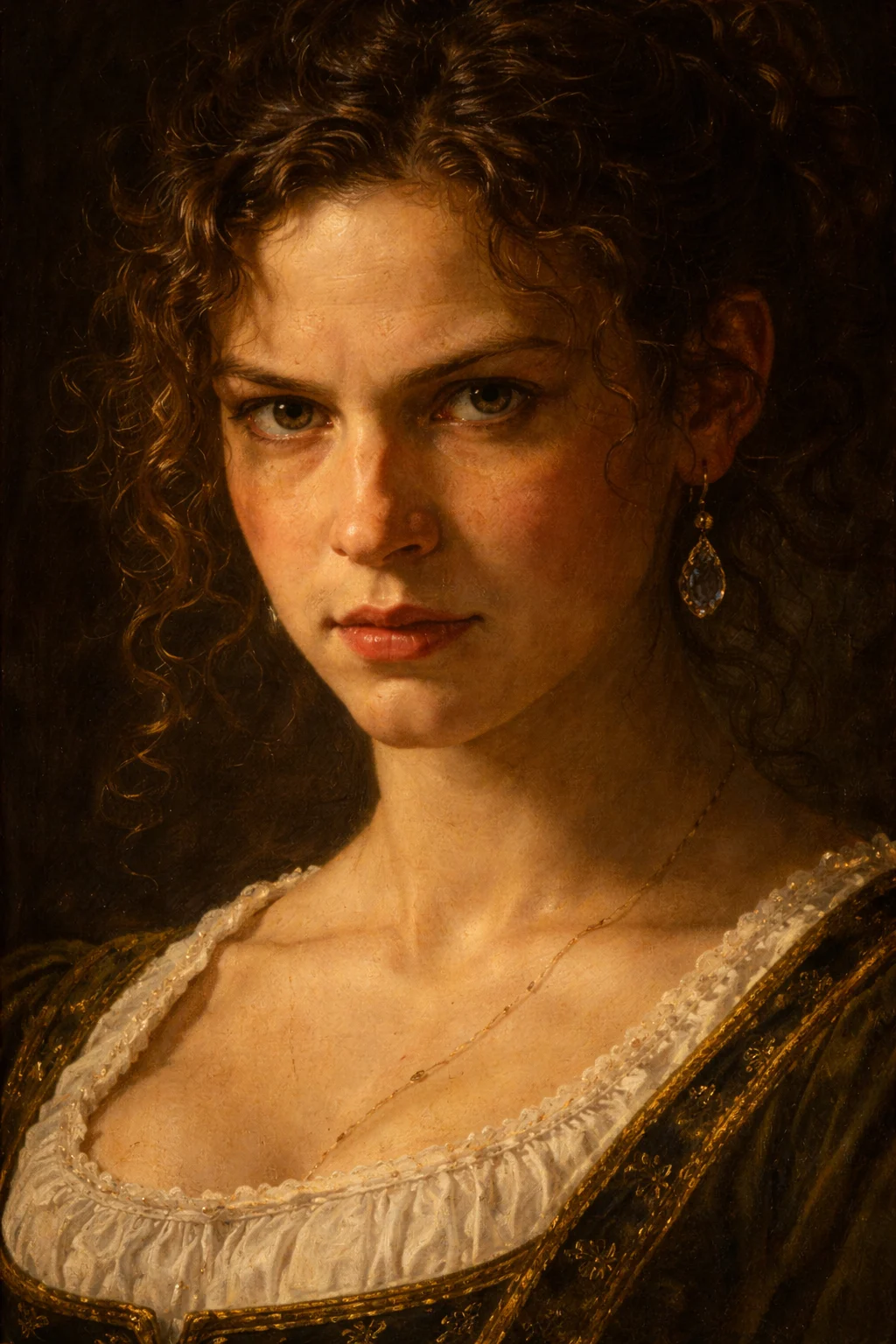
For centuries, women appeared in Western painting as bodies to be observed, silent victims, or rewards within stories centered on men. Artemisia Gentileschi changed the point of view. In her paintings, Susanna feels the intrusion of those watching her, Judith grips a sword with determination, and Lucretia appears trapped in the moment of deciding what to do with her own life.
Artemisia did not invent these stories. They came from the Bible, mythology, and classical tradition and had been represented countless times. What she transformed was the emotional position from which viewers were required to see them.
Her biography includes violence, prejudice, and an extraordinarily well-documented criminal trial. Yet reducing all her paintings to the consequences of an assault takes something away from her again: her professional intelligence, ambition, artistic decisions, and the extensive career she built across several European courts.
Before she became a symbol, Artemisia was a painter who had to earn her living through talent.
Artemisia Gentileschi
A Life Told Through Art and Determination
Self-Portrait as the Allegory of Painting
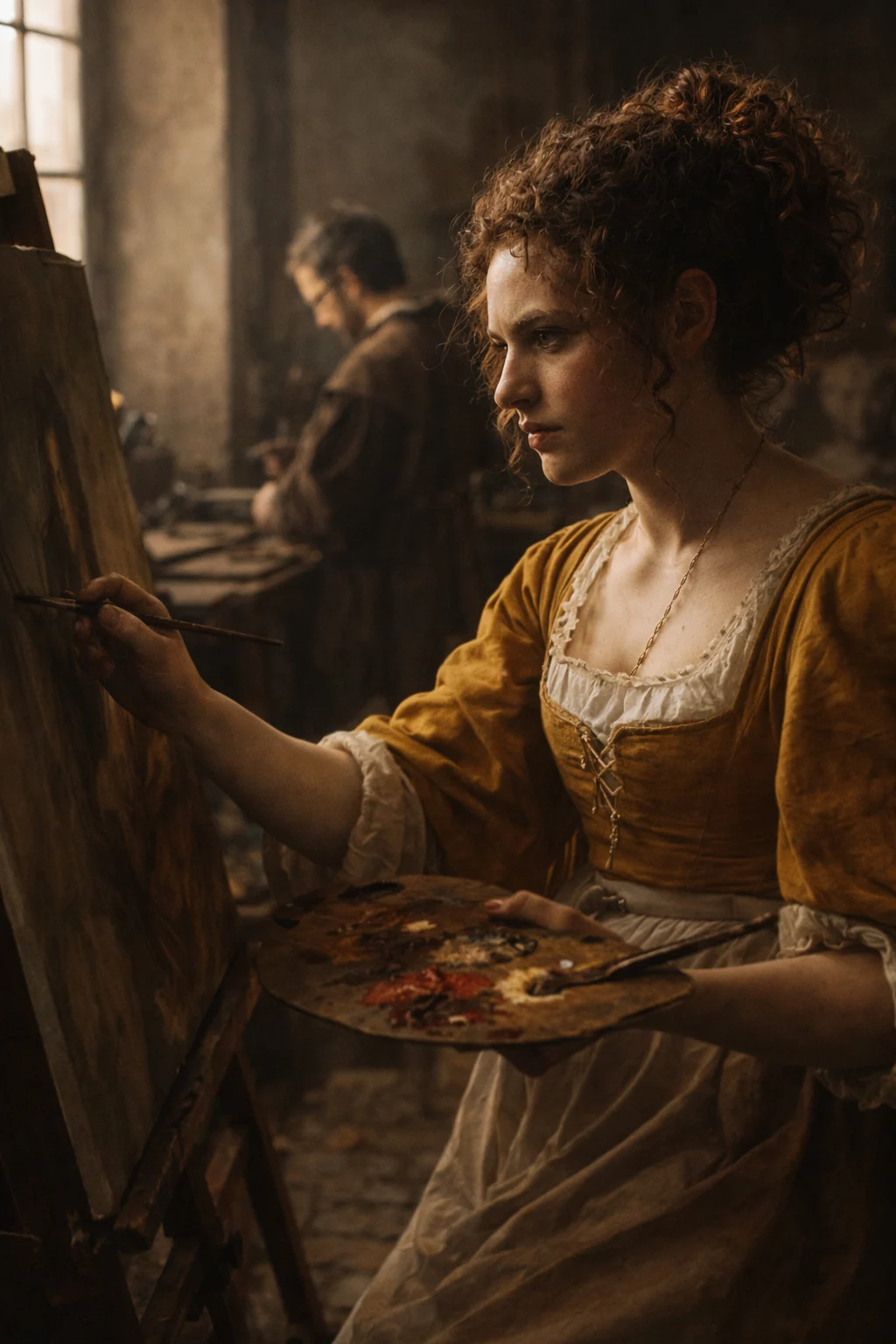
Artemisia Gentileschi becomes Painting itself in this work, dated c. 1638–9 and held in the Royal Collection. The link opens the official museum record. The image shown here is an AI reconstruction of the artist, not a reproduction of the painting.
AI-generated visual reconstruction; not a historical document.
A Girl Inside the Workshop
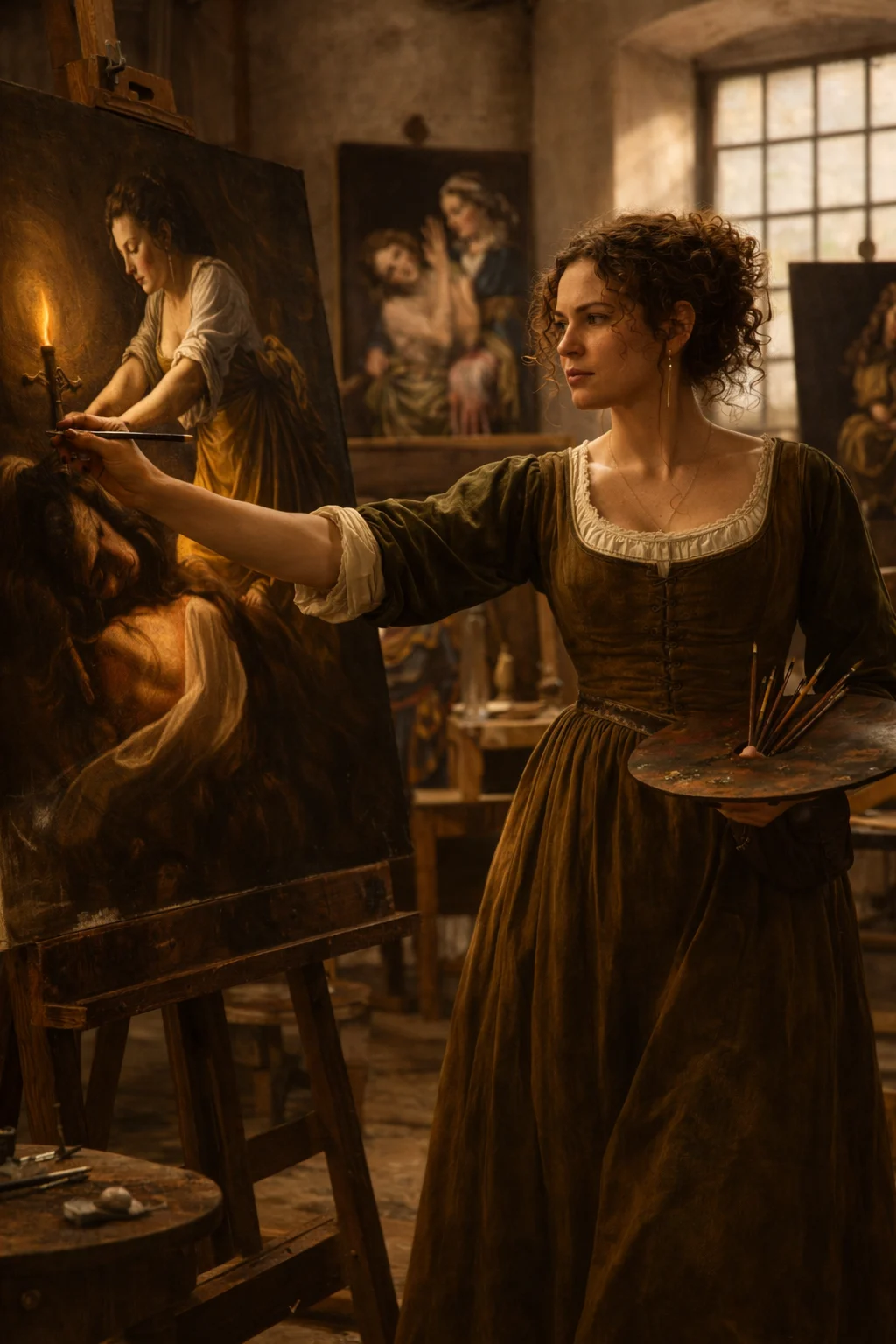
Artemisia Gentileschi was born in Rome on July 8, 1593. She was the daughter of painter Orazio Gentileschi and Prudenzia di Ottaviano Montoni. Her mother died in 1605, when Artemisia was approximately twelve, leaving Orazio responsible for their children.
Her father’s workshop became her school. Women had extremely limited access to academies, anatomical study, and practice with nude models. Artemisia learned by preparing pigments, observing her father’s commissions, and working directly with materials available at home.
Orazio had been influenced by Caravaggio and adopted his dramatic lighting, ordinary-looking figures, and ability to place sacred scenes close to the viewer. Artemisia absorbed that language while developing an energy of her own: solid bodies, intensely colored fabrics, and actions suspended at their moment of greatest tension (Christiansen & Mann, 2001).
In 1610, she signed and dated Susanna and the Elders. She was around seventeen. The painting is so accomplished that some scholars long doubted whether such a young woman could have created it and attributed decisive participation to her father.
Modern scholarship widely accepts Artemisia’s authorship. The work also represents an early declaration of her distinctive viewpoint. Other painters had used Susanna’s biblical story to display a nude woman for the audience’s pleasure. Artemisia showed a young woman twisting her body, turning her head away, and attempting to escape two men invading her space.
The center of the scene is not the pleasure of looking. It is the discomfort of being watched.
The Assault and the Trial of 1612
Orazio worked with Agostino Tassi, a painter specializing in perspective and architectural decoration. Because Artemisia could not attend an academy freely, Tassi entered the Gentileschi household to teach her perspective.
In 1611, Tassi raped her in the family home. During the following months, he continued having relations with her while promising marriage. Within the legal and social framework of the period, that promise was crucial because marriage could supposedly restore family honor. Tassi, however, was already married.
In March 1612, Orazio filed a formal complaint. The case was not structured according to the modern understanding of sexual violence, nor did it focus exclusively on the harm inflicted upon Artemisia. The law also treated the loss of her virginity as an offense against her father’s honor and interests.
The court records preserved her testimony in extraordinary detail. Artemisia described the assault, endured hostile questioning, and maintained her accusation throughout proceedings lasting several months.
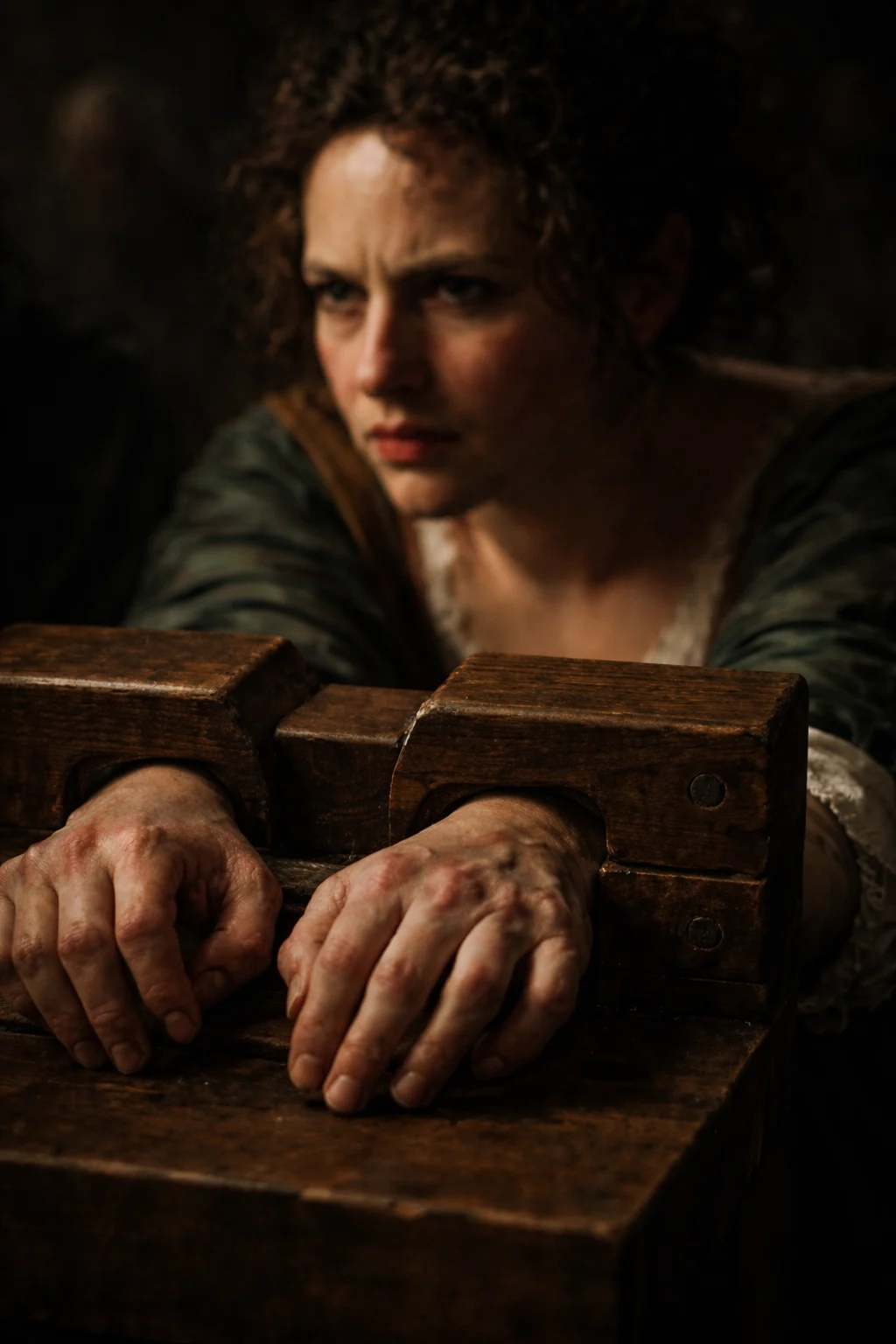
To “verify” her testimony, the authorities subjected her to the sibille, a form of torture in which cords were tightened around her fingers. The procedure could damage the very hands she needed to paint. While being tortured, Artemisia reaffirmed her account (Cohen, 2000).
This ordeal should not be described as if she had been required to prove her innocence according to modern standards. It belonged to a judicial system that distrusted women’s testimony and could torture even the person reporting an offense.
Tassi was convicted and sentenced to banishment from Rome. The punishment was never meaningfully enforced.
Life After the Trial

The trial is often presented as the event that defined her entire existence. For Artemisia, however, 1612 was not an ending.
Soon afterward, she married the Florentine painter Pierantonio Stiattesi and moved to Florence. The marriage enabled her to leave Rome and begin a new professional period, although the couple accumulated financial problems and eventually lived apart.
In Florence, she received commissions from the court of Cosimo II de’ Medici and Maria Maddalena of Austria. She formed relationships with writers, collectors, and scientists, corresponded with Galileo Galilei, and received praise from intellectuals who recognized both her talent and the exceptional nature of her career.
In 1616, she became the first woman admitted to Florence’s Accademia delle Arti del Disegno. Membership was not merely a symbolic honor. It gave her professional recognition, valuable connections, and greater ability to sign contracts and conduct business without complete dependence upon her husband (Barker, 2022).
This achievement is one of the most important, yet less dramatically exploited, events in her life. Artemisia did not merely survive. She entered a professional institution created and controlled by men.
Judith Was Not Simply Revenge
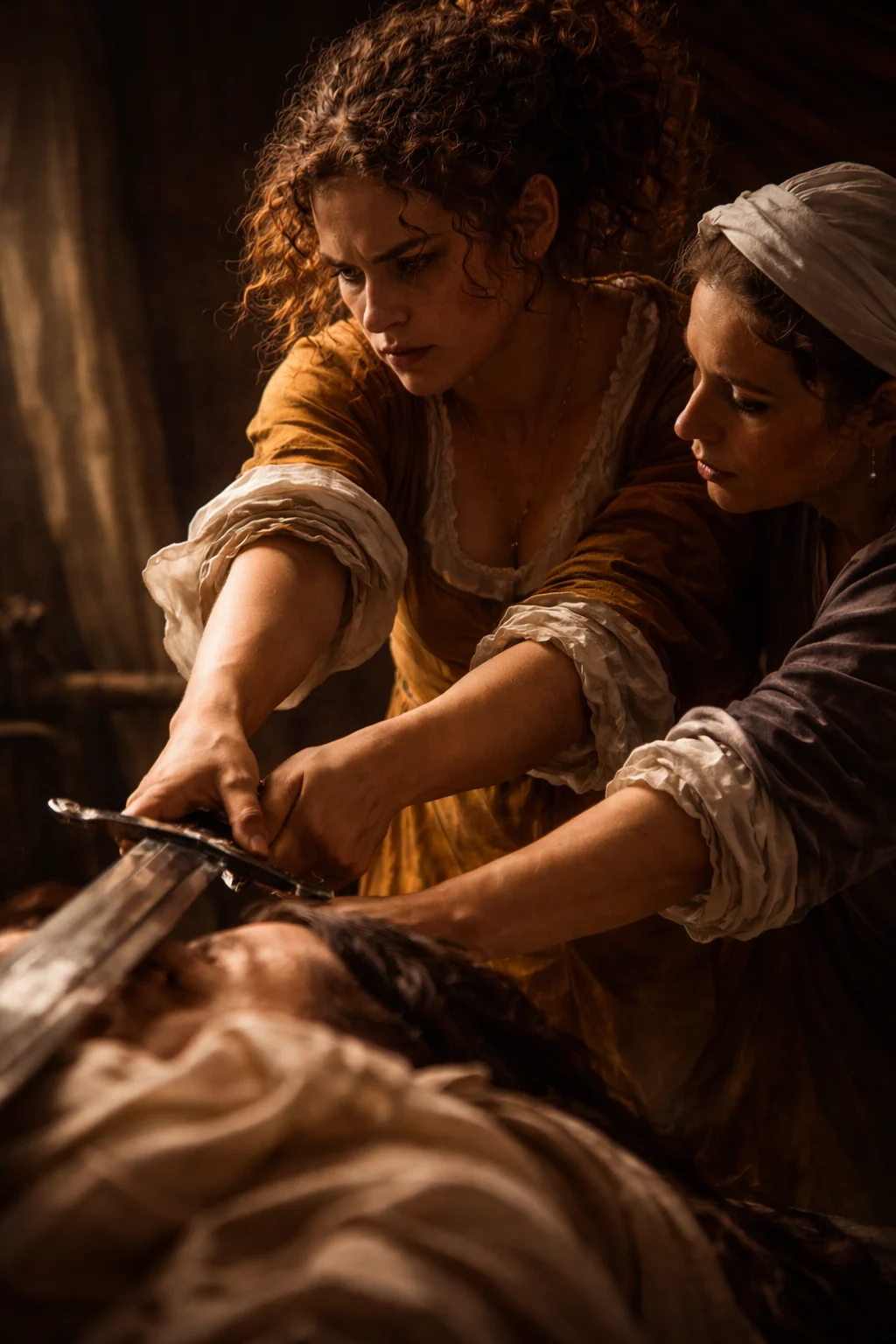
Her best-known works include two versions of Judith Beheading Holofernes. In them, Judith and her servant Abra hold the Assyrian general down while a sword cuts through his neck. There is no elegant distance or softened violence. The women use physical strength, coordinate their movements, and perform a difficult action.
The version now in the Uffizi was probably painted in Florence around 1620. Blood crosses the composition with an intensity influenced by Caravaggio, whose treatment of the subject Artemisia likely knew through Rome’s artistic culture.
Since her modern rediscovery, the image has frequently been interpreted as a revenge fantasy directed against Tassi. The association is understandable, but it cannot be established as the painting’s sole explanation.
Judith was a popular Baroque subject, representing virtue, courage, political liberation, and victory over tyranny. Artemisia worked for patrons who understood those meanings and expected to sell her paintings. She also returned to the subject at different stages of her career, just as she revisited other successful compositions (Bissell, 1999).
Her experience may have shaped her sensitivity toward endangered women. Treating every sword as a substitute for Tassi’s body, however, reduces a complex work to a psychological diagnosis.
Artemisia did not paint only what she had suffered. She painted what she could imagine, negotiate, and transform into art desired by her patrons.
A Servant Who Also Takes Action
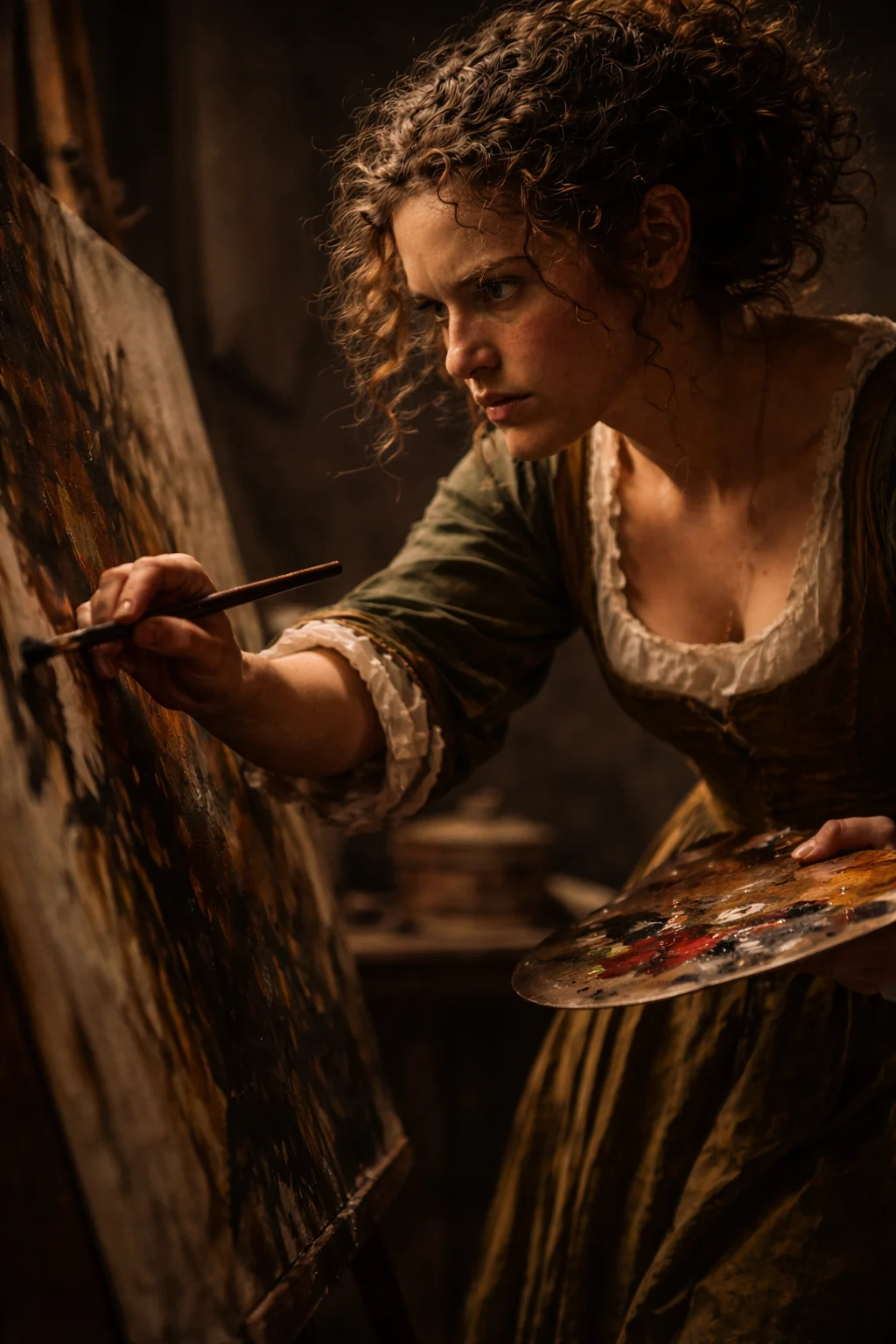
One of Artemisia’s innovations can be found in the roles given to secondary women. In many earlier images of Judith, the servant is elderly, passive, or waits at a distance holding a sack. In Artemisia’s versions, Abra is young, strong, and directly involved.
In Judith and Her Maidservant with the Head of Holofernes, the two women listen in the darkness after the killing. Judith raises one hand as a signal for silence while candlelight throws shadows across their faces. The violence has ended, but danger continues beyond the canvas.
Artemisia understood how to produce suspense through glances, hands, and the direction of light. Her paintings are not significant merely because they contain powerful women. They also demonstrate exceptional control of visual narrative.
In Jael and Sisera, another woman defeats a male enemy. In Esther Before Ahasuerus, the heroine risks death by approaching the king without permission. Artemisia represents the moment in which Esther faints and is supported by her attendants while the king gradually abandons his rigid posture. The scale and complexity of this work demonstrate the magnitude of Artemisia’s professional ambition.
Her Heroines Could Also Be Vulnerable
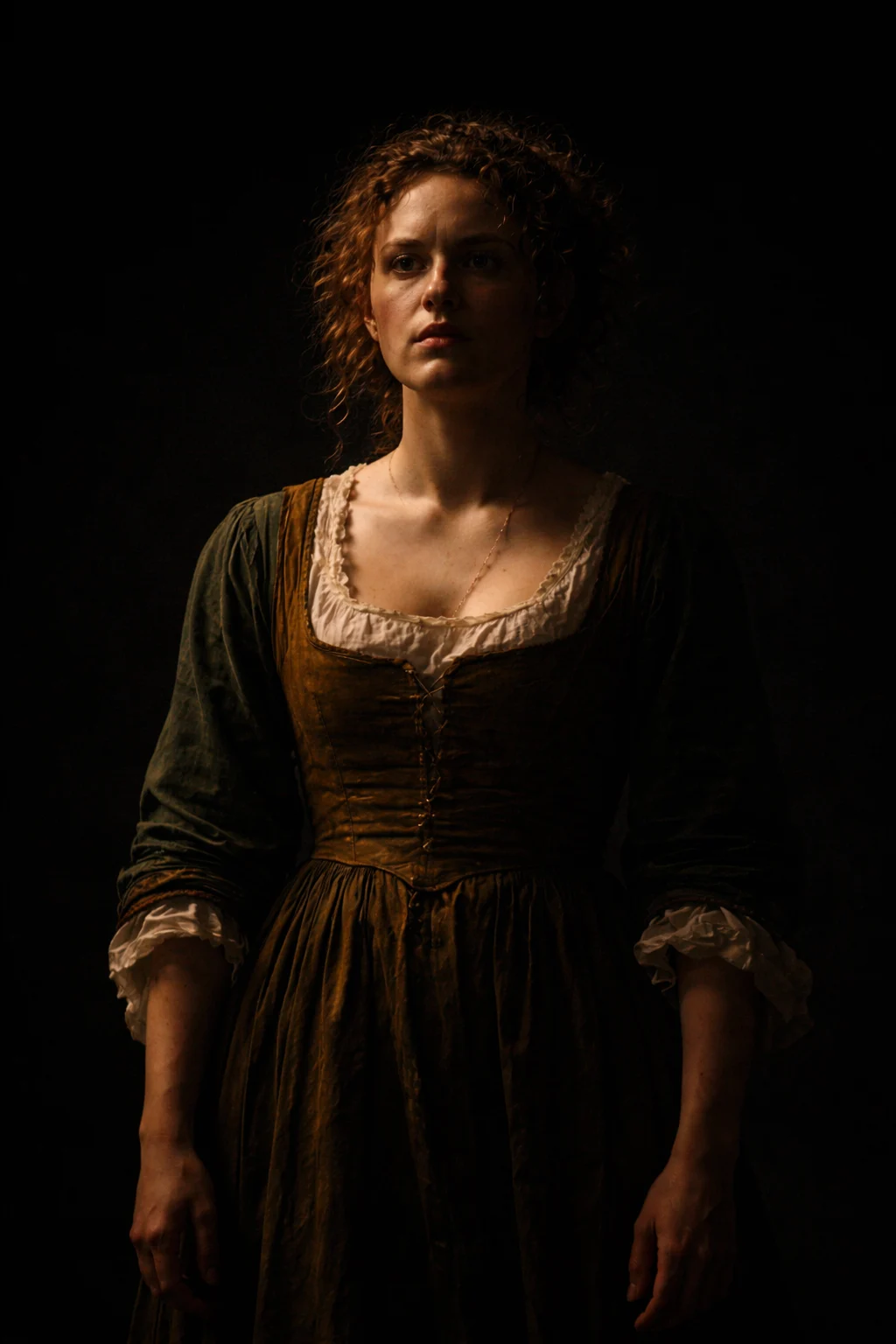
Not all her women are defeating an enemy. Artemisia painted Mary Magdalene in ecstasy, Cleopatra in her final moments, and Lucretia contemplating a fatal decision.
Her figures could be strong while also experiencing fear, exhaustion, or doubt. This combination prevents us from treating her simply as a creator of invincible heroines.
In Lucretia, the protagonist holds a weapon against her own body after being raped. Roman history had often been used to create a sensual scene. Artemisia concentrated instead on the woman’s internal conflict.
Connecting Lucretia directly with Artemisia’s personal experience is tempting, and the association may enrich interpretation. Yet the painting also engages with Titian, Veronese, Caravaggio, and the visual traditions she studied. Her art did not emerge in isolation from trauma; it participated in a highly sophisticated artistic conversation.
A Painter Who Managed Her Own Fame

Artemisia returned to Rome around 1620 and later worked in Venice. By approximately 1630, she had settled in Naples, one of Europe’s largest cities and an important artistic center under Spanish rule.
There she directed a workshop, negotiated with patrons, and collaborated with other painters to complete large compositions. Collaboration was common in Baroque painting and should not automatically be interpreted as diminishing her authorship.
Her letters reveal a professional acutely aware of her work’s value. She demanded payment, discussed dimensions, promised quality, and defended her prices. In a letter to the collector Antonio Ruffo, she essentially promised to demonstrate what a woman could accomplish—a statement revealing how clearly she understood her patrons’ prejudices and how effectively she could use them to her advantage (Garrard, 2001).
She also signed some letters “Artemisia Lomi,” using a surname connected to her father’s family that carried prestige in Tuscany. Her professional identity was carefully constructed.
She was not an isolated artist painting only to release private emotions. She was an entrepreneur within the Baroque art market.
The Painter Who Could Become Painting
Between 1638 and 1640, Artemisia traveled to London, where her father was working for King Charles I. Orazio died in 1639, but Artemisia remained long enough to receive court commissions before returning to Naples.
Her Self-Portrait as the Allegory of Painting, now in the Royal Collection, is commonly associated with this period. Its exact identification and date have produced debate, but the traditional interpretation sees Artemisia portraying herself as Painting personified.
The concept was extraordinary. According to Cesare Ripa’s iconography, Painting had to be represented as a woman. A male artist could paint either the allegory or his own self-portrait, but he could not embody both simultaneously. Artemisia could.
She leans toward the canvas, her hair loose and her sleeves pulled back. She does not gaze elegantly at the audience in a ceremonial pose. She is working, and her entire body participates in the act.
She did not portray herself beside Painting. She became Painting.
The Mystery of Her Final Years

Artemisia returned to Naples and continued working with assistance from her studio. Her daughter Prudenzia also received artistic training, although very little is known about any works she may have produced.
The exact date of Artemisia’s death remains uncertain. Documents establish that she continued working after 1650 and probably lived at least until 1654. Some accounts place her death during the Naples plague of 1656, but no conclusive evidence survives.
This uncertainty demonstrates how even a woman recognized during her lifetime could disappear from the historical record.
After her death, several paintings were attributed to Orazio, Caravaggio, or other male artists. In 1916, Roberto Longhi played a decisive role in restoring her importance, although some of his remarks still judged her through gender stereotypes. Beginning in the 1970s, feminist art history produced a far more extensive reassessment (Garrard, 1989).
That recovery was necessary, but it also created a new danger: transforming Artemisia exclusively into “the raped woman who painted her revenge.”
Changing the Way We See
Artemisia Gentileschi was not the only woman painter of the Baroque period, nor did she work entirely outside the conventions of her age. She depended upon patrons, used familiar subjects, and participated in a market controlled primarily by men.
Her greatness lies in what she accomplished within those conditions.
She understood that a story changes when the position from which it is observed changes. Susanna ceases to be a pleasing nude when we feel her discomfort. Judith ceases to be an abstract symbol when we perceive the weight of the sword. Esther ceases to be decorative when we recognize the danger of entering the king’s presence.
Artemisia changed painting because she allowed biblical and classical women to occupy the physical and psychological center of their own stories.
She survived an assault and a brutal trial, but she was far more than a survivor. She was an academy member, court painter, workshop director, negotiator, and creator of images that still compel us to look differently.
For centuries, people examined her paintings while doubting that a woman could have made them. We now understand that it was precisely a woman who had seen what other painters could not—or would not—see.
References
- Barker, S. (2022). Artemisia Gentileschi. Getty Publications. View source
- Bissell, R. W. (1999). Artemisia Gentileschi and the authority of art: Critical reading and catalogue raisonné. Pennsylvania State University Press. View source
- Christiansen, K., & Mann, J. W. (Eds.). (2001). Orazio and Artemisia Gentileschi. Metropolitan Museum of Art & Yale University Press. View source
- Cohen, E. S. (2000). The trials of Artemisia Gentileschi: A rape as history. The Sixteenth Century Journal, 31(1), 47–75. View source
- Garrard, M. D. (1989). Artemisia Gentileschi: The image of the female hero in Italian Baroque art. Princeton University Press. View source
- Garrard, M. D. (2001). Artemisia Gentileschi around 1622: The shaping and reshaping of an artistic identity. University of California Press. View source
- Royal Collection Trust. (n.d.). Self-Portrait as the Allegory of Painting (La Pittura), c. 1638–9. RCIN 405551. View source
- The National Gallery. (n.d.). Artemisia Gentileschi. View source
More from this collection
Pablo Picasso: The Man Who Shattered the Way We See
Read story →
Henri Matisse: The Painter Who Liberated Color and Ended Up Drawing with Scissors
Read story →