In this storyOpen index
Pablo Picasso: The Man Who Shattered the Way We See
From the Blue Period to Cubism and Guernica, Picasso challenged the rules of representation and changed how we look at art.
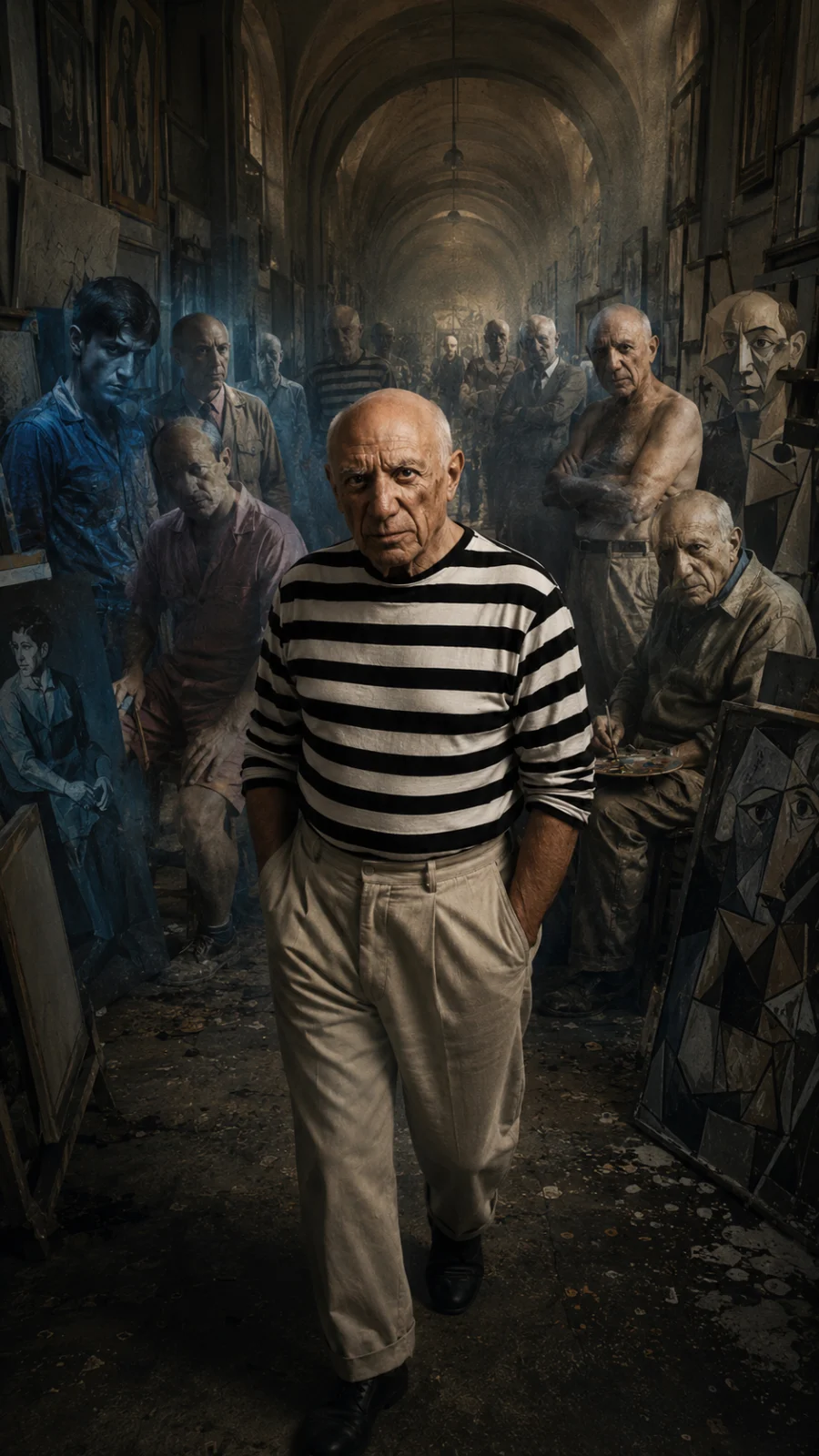
Pablo Picasso did not single-handedly invent modern art, but he made it impossible to look at painting in quite the same way after him. He dismantled faces, displaced eyes, presented objects from several angles at once, and transformed the canvas into a space where reality could be broken apart and reconstructed.
His career spanned more than seven decades, two world wars, the Spanish Civil War, and nearly every major artistic transformation of the twentieth century. He was a painter, sculptor, printmaker, ceramicist, stage designer, and creator of assemblages. He changed styles so often that every formula devised to define him eventually proved inadequate.
Picasso also constructed a powerful legend around himself. His extraordinary creative ability coexisted with possessiveness, destructive relationships, and a constant need to dominate both his work and the people around him. Understanding Picasso requires confronting both realities: the artistic revolution and the human price that many people close to him paid.
Pablo Picasso: taking the world apart to see it anew
A life between Málaga, Paris and a revolution in vision
Enter the archive
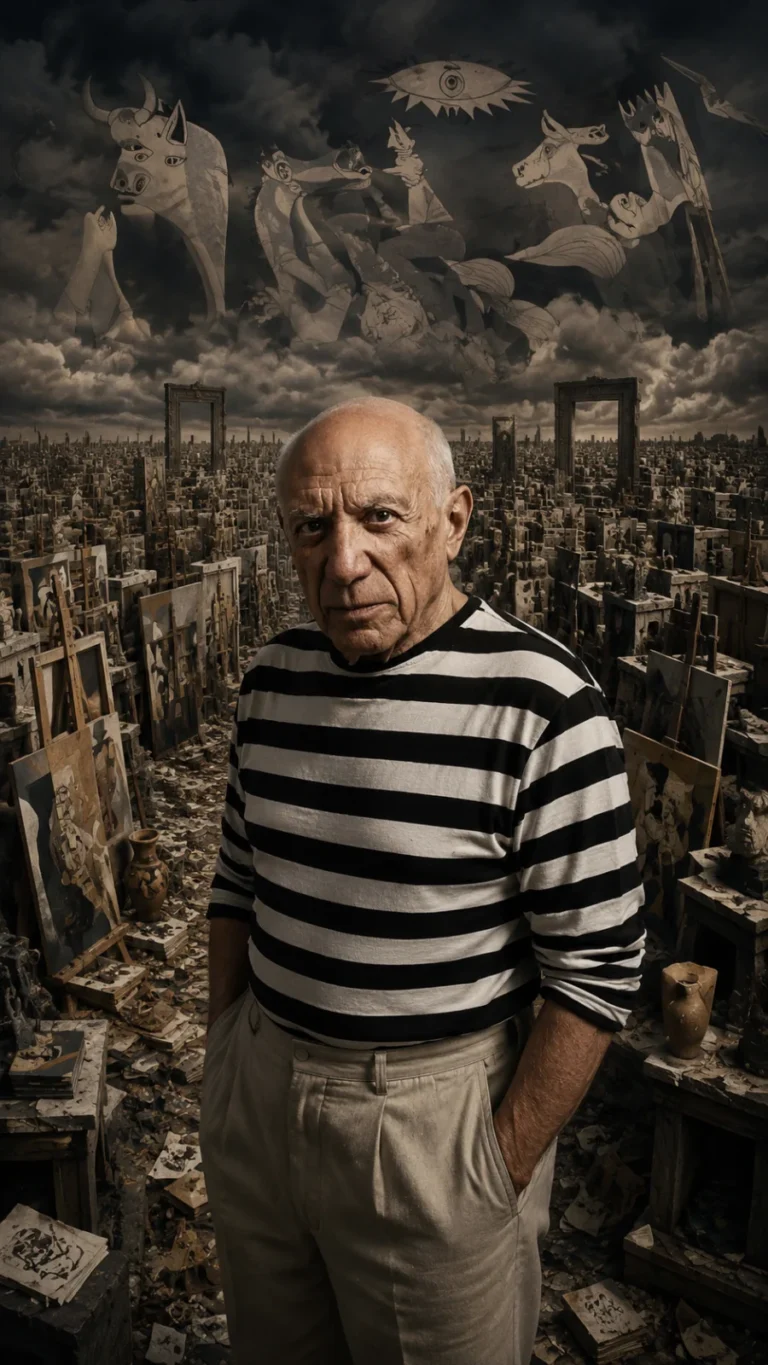
The Museo Reina Sofía holds Guernica and documents its creation and return to Spain. The image here is a visual reconstruction, not a reproduction of the painting.
AI-generated visual reconstruction; not a historical photograph or a reproduction of the artwork.
The Child Who Learned to Paint Before He Learned to Live
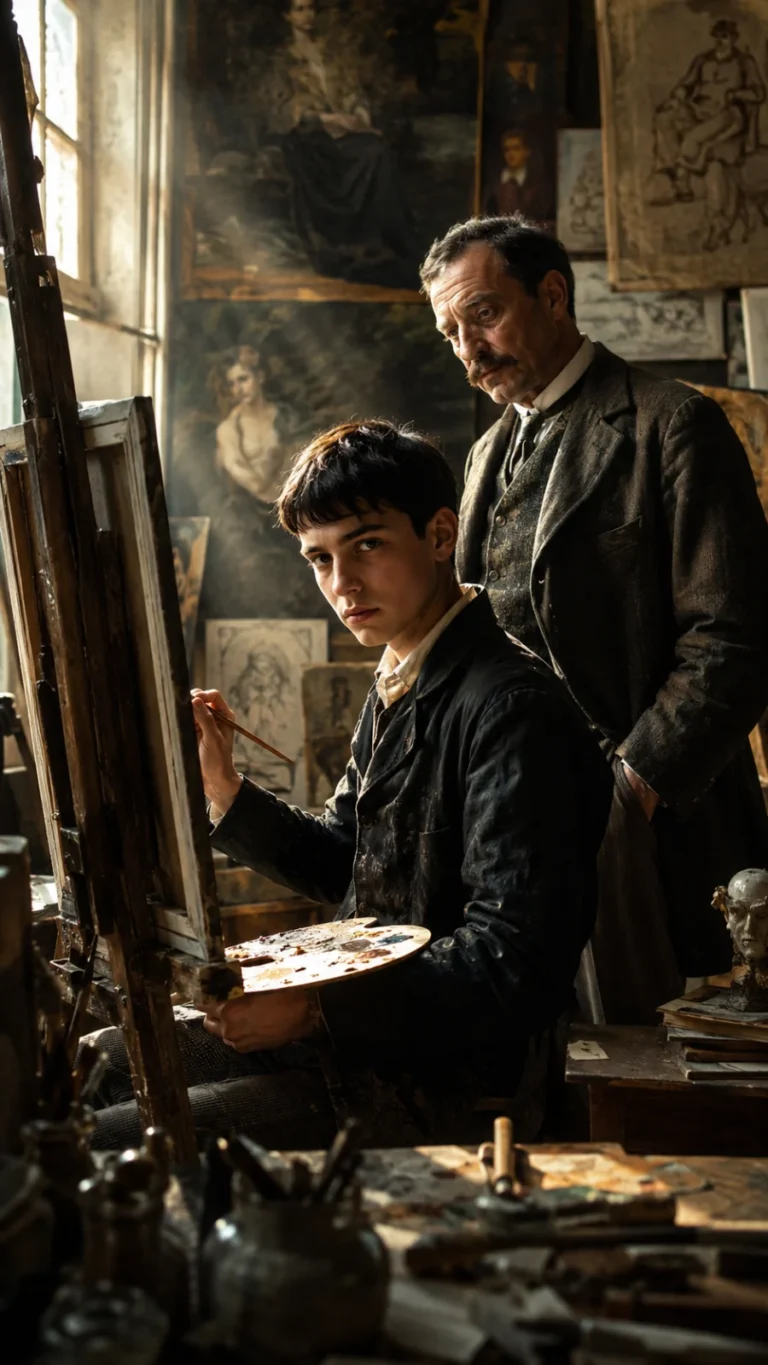
Pablo Ruiz Picasso was born in Málaga on October 25, 1881. He was the first child of María Picasso López and José Ruiz Blasco, a painter, drawing instructor, and museum curator. The family moved first to A Coruña and then, in 1895, to Barcelona, where the young artist entered the La Llotja School of Fine Arts (Museu Picasso de Barcelona, n.d.-a).
The popular image of Picasso as a genius who could draw perfectly almost from infancy was encouraged by the artist himself and by some of his biographers. What can be firmly established is that he received unusually early academic training and developed exceptional skill in figurative drawing. Juvenile works such as Science and Charity, painted in 1897, demonstrate that he mastered traditional representation before choosing to depart from it.
This distinction matters. Picasso did not distort figures because he could not reproduce them accurately. He distorted them after acquiring an intimate knowledge of the rules he intended to break.
In Barcelona, he frequented Els Quatre Gats, a meeting place for artists, writers, and bohemians. He held one of his first solo exhibitions there in 1900. That same year, he traveled to Paris for the first time and encountered the work of Toulouse-Lautrec, Van Gogh, Degas, and other artists who were transforming Europe’s visual language (Museu Picasso de Barcelona, n.d.-b).
Blue as the Color of Poverty
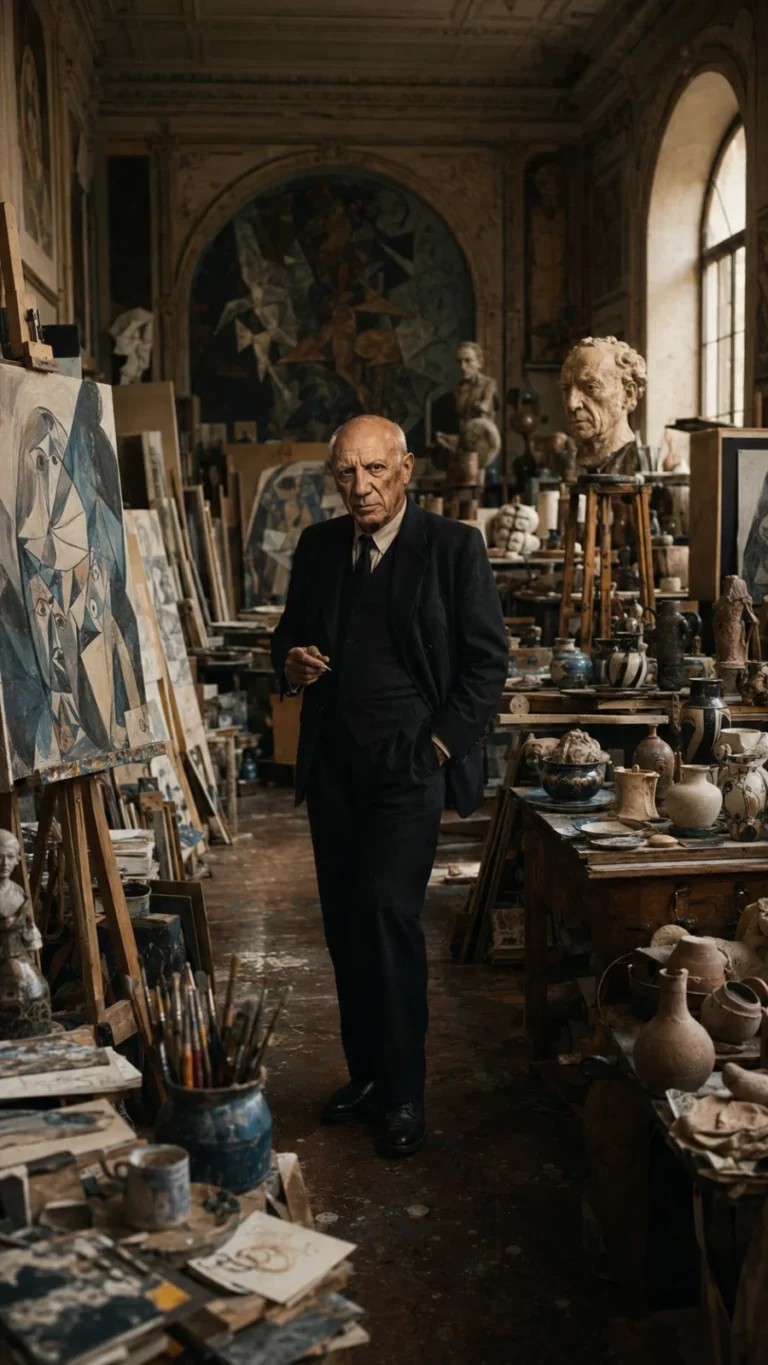
In February 1901, the poet and painter Carles Casagemas, one of Picasso’s closest friends, died by suicide in Paris. His death deeply affected the artist and is generally regarded as one of the catalysts for Picasso’s Blue Period.
From approximately 1901 to 1904, Picasso painted beggars, prisoners, impoverished mothers, elderly people, and isolated figures in a palette dominated by cold blues and greens. This was more than an aesthetic choice. The subjects reflected the poverty he observed in Barcelona and Paris, as well as his personal experiences of grief and insecurity (Voorhies, 2004).
The melancholy of these paintings has encouraged viewers to interpret the entire period as an autobiographical confession. Picasso, however, was also constructing carefully composed images for an art market interested in marginalized lives. The pain was real, but it also became a visual language.
In 1904, he settled permanently in Paris, living in the dilapidated studio building known as the Bateau-Lavoir. There he began a relationship with Fernande Olivier, while his palette gradually shifted toward pink and ochre. Harlequins, acrobats, and circus families slowly replaced the beggars of the Blue Period.
The Painting Almost No One Understood
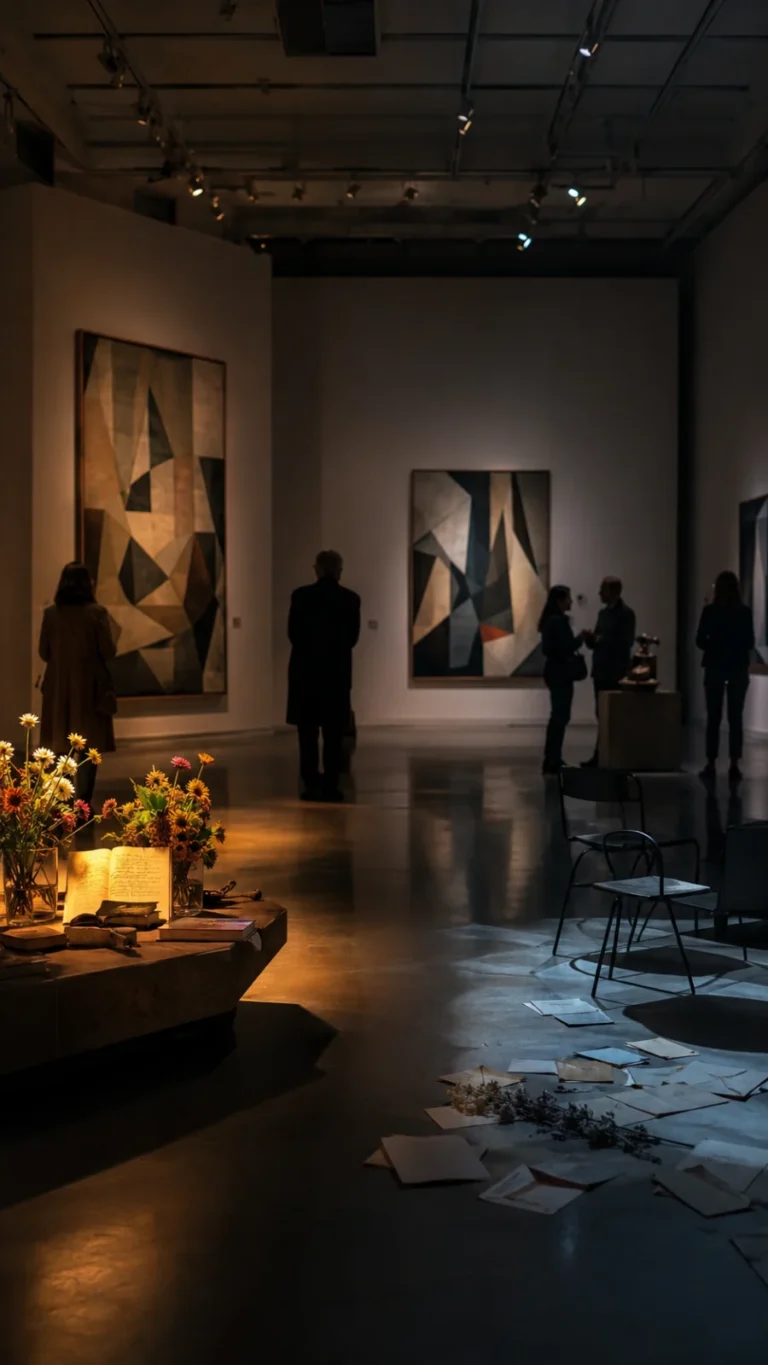
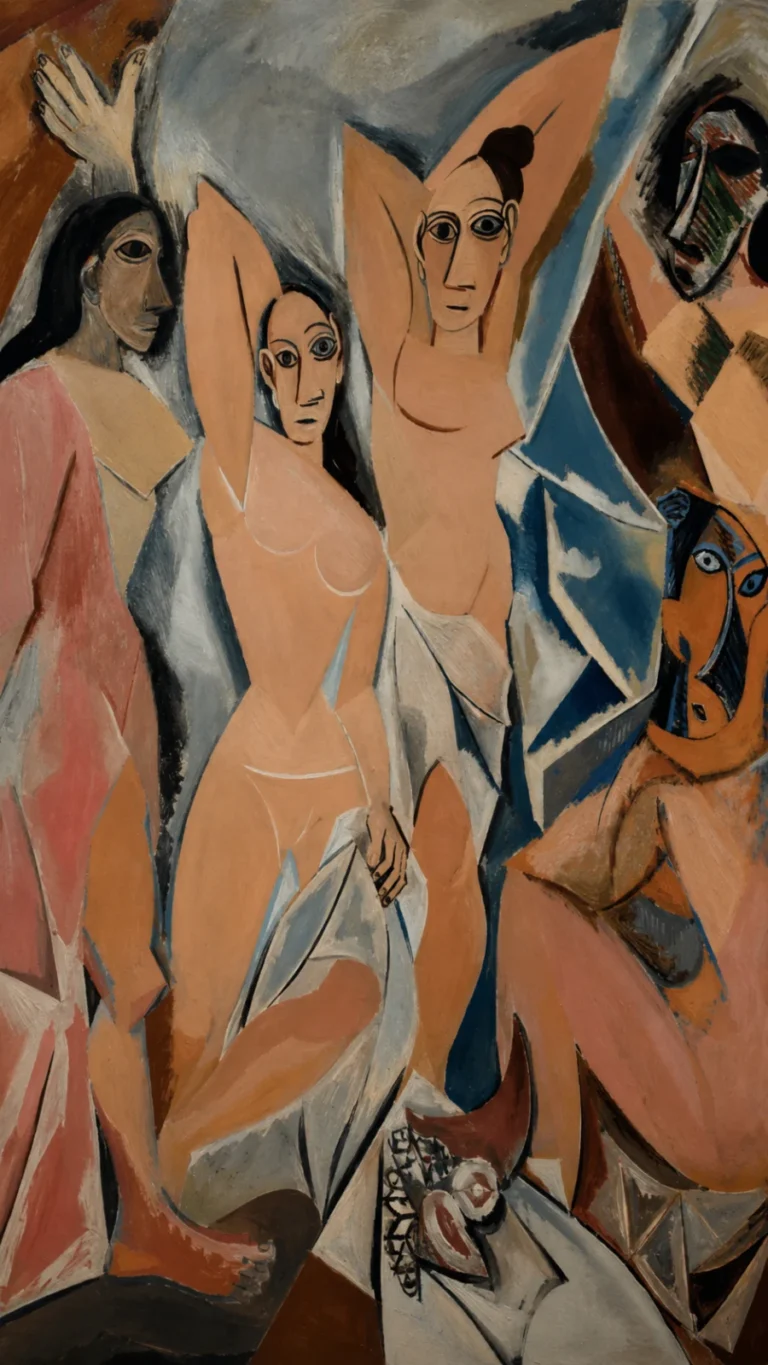
In 1907, at the age of twenty-five, Picasso completed Les Demoiselles d’Avignon. Five women appear as angular bodies with dislocated faces, surrounded by a space that seems to fracture around them.
The title did not refer to the French city of Avignon. It was suggested later by the writer André Salmon and alluded to Barcelona’s Carrer d’Avinyó, a street then associated with brothels. Picasso produced hundreds of preparatory drawings and radically altered the composition, removing two male figures who appeared in earlier studies (Museum of Modern Art, n.d.-a).
The painting drew upon Iberian sculpture, Cézanne, and artistic objects from Africa. For many years, Western art history described these influences as a purely formal “discovery.” Today, it is necessary to remember that numerous African objects entered Europe through colonial systems that stripped them of their cultural and religious functions.
Les Demoiselles d’Avignon was not publicly exhibited until 1916. The familiar story that it immediately caused a large public scandal is therefore misleading. In 1907, it was seen primarily by a small circle of artists and friends in Picasso’s studio. Even some of them responded with bewilderment or rejection (Museum of Modern Art, n.d.-b).
Picasso, Braque, and a Shared Invention
Picasso met Georges Braque in 1907. During the following years, the two artists worked so closely that Braque later compared them to mountaineers tied together by a rope.
Inspired partly by Paul Cézanne’s method of reducing nature to underlying geometric structures, Picasso and Braque began fragmenting objects and figures. Rather than depicting a guitar or face from one fixed viewpoint, they combined different perspectives on a single surface.
Cubism emerged from this collaboration, developed primarily between 1907 and 1914. Claiming that Picasso invented it entirely by himself erases Braque’s essential contribution. During the phase known as Analytical Cubism, the two produced paintings so similar that it can sometimes be difficult to distinguish their authorship without checking signatures or provenance (Voorhies, 2004; Metropolitan Museum of Art, n.d.).
They later introduced letters, wallpaper, newspaper, and pieces of everyday material. In 1912, Picasso attached a section of printed oilcloth to Still Life with Chair Caning. A painting no longer had to represent the physical world exclusively; it could contain an actual piece of it.
The Theft of the Mona Lisa and a Story Picasso Wanted Hidden
In August 1911, the Mona Lisa disappeared from the Louvre. The theft caused an international sensation and unexpectedly drew Picasso into the investigation.
Guillaume Apollinaire, a poet close to the artist, knew Honoré Joseph Géry Pieret, an adventurer who had stolen small Iberian sculptures from the Louvre. Some of those objects had ended up in Picasso’s possession and served as references during a decisive stage of his artistic development.
When police connected Apollinaire to Pieret, the poet was arrested. Picasso was questioned and, frightened that he might be expelled from France, initially denied knowing his friend. Neither man had stolen the Mona Lisa, but the investigation revealed that Picasso had retained objects taken from the museum. He was ultimately not prosecuted (Richardson, 1996).
The painting was recovered in Italy in 1913. The actual thief was Vincenzo Peruggia, a former Louvre employee with no connection to Picasso. This episode, far less famous than the artist’s visual revolutions, reveals a young man willing to protect his career even at the cost of momentarily betraying a friendship.
Returning to the Figure Without Abandoning Rupture
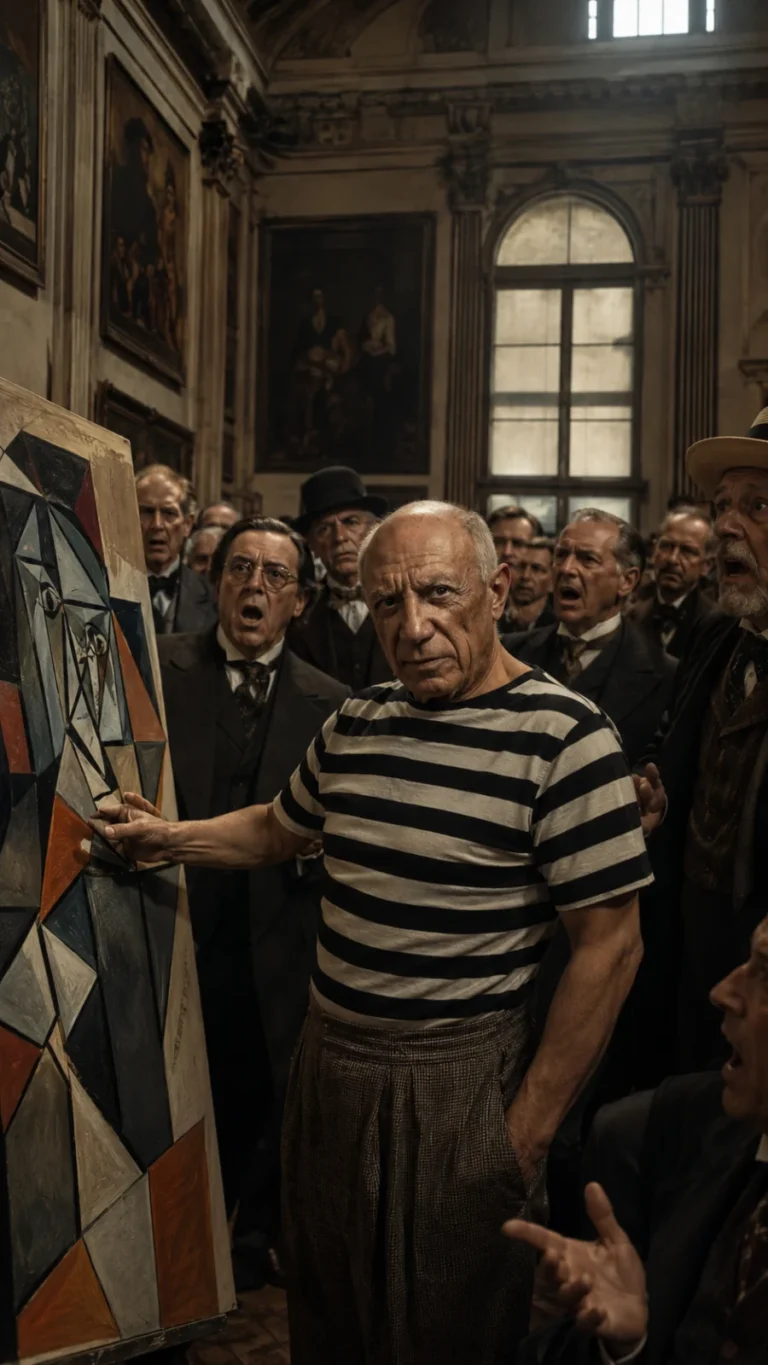
The First World War separated Picasso from Braque and several other collaborators. After the conflict, Picasso surprised observers by returning to monumental figures with a classical appearance. He did not abandon Cubism; instead, he began using different visual languages simultaneously.
He could paint a figure with proportions inspired by antiquity and then construct another from fragmented planes. He also designed sets and costumes for the Ballets Russes. Through that work, he met the dancer Olga Khokhlova, whom he married in 1918.
Picasso rejected the idea that art should advance along an orderly line. For him, styles were not steps to be left behind but instruments that remained available. This freedom to change, quote, and contradict himself became one of his greatest influences on later artists.
Guernica: War Without a Battle Scene
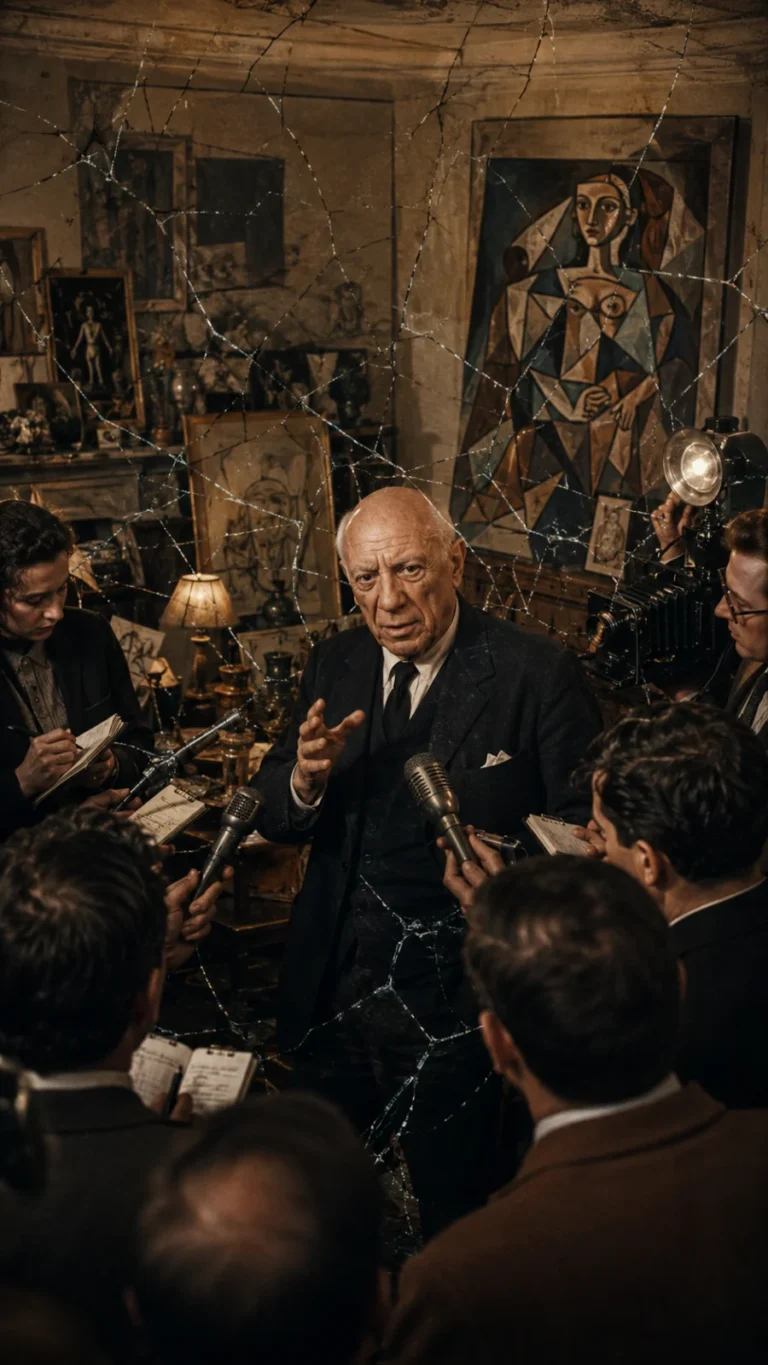
In January 1937, the government of the Spanish Republic commissioned Picasso to create a large work for its pavilion at the Paris International Exhibition. At first, the artist struggled to find a subject capable of sustaining the project.
On April 26, aircraft from Nazi Germany’s Condor Legion and Fascist Italy’s Legionary Air Force bombed the Basque town of Guernica in support of Franco’s forces. News reports and photographs of the destruction led Picasso to transform the commission.
Between May and June, he painted an enormous composition in black, white, and gray. He did not depict airplanes, uniforms, or an identifiable military event. Instead, he presented a mother holding her dead child, a wounded horse, a bull, a figure trapped in flames, and fragmented bodies. Dora Maar photographed successive stages of the process, creating an exceptional record of the composition’s evolution (Museo Nacional Centro de Arte Reina Sofía, n.d.-a).
Guernica was unveiled in the Spanish Pavilion in 1937 and later traveled to raise support for Spanish Republican refugees. Picasso stipulated that it should remain at New York’s Museum of Modern Art until public liberties had been restored in Spain. The painting finally arrived in Madrid in 1981, eight years after Picasso’s death and six years after the death of Francisco Franco (Museo Nacional Centro de Arte Reina Sofía, n.d.-b).
A famous story claims that a German officer pointed to a reproduction of Guernica and asked Picasso, “Did you do this?” Picasso supposedly replied, “No, you did.” Although the exchange perfectly suits the painting’s symbolism, no conclusive documentation proves that it occurred exactly as retold.
Creating Under Occupation
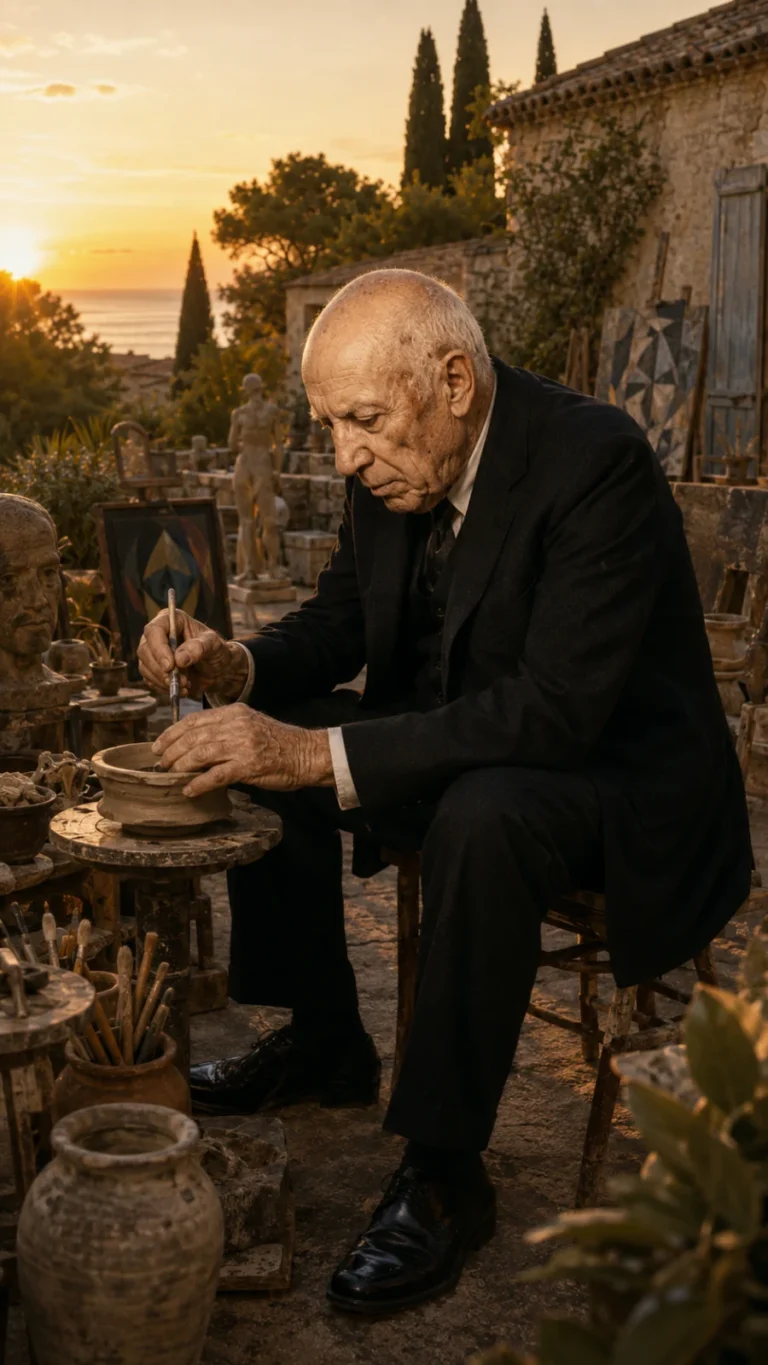
Picasso remained in Paris during the German occupation in the Second World War. Nazi ideology classified his work as degenerate, and it could not be freely exhibited, but his international fame offered him a degree of protection.
He continued working in his studio on the rue des Grands-Augustins, producing paintings, drawings, sculptures, and the surrealist play Desire Caught by the Tail. Picasso was not an active member of the French Resistance, despite what some heroic accounts have implied. His decision to remain in Paris carried considerable symbolic meaning, but it should not be confused with documented underground activity.
He joined the French Communist Party in 1944. His political commitments appeared in later works concerning war, peace, and violence, although his relationship with the party contained many contradictions. Picasso publicly supported collective causes while exercising almost absolute control over his private circle.
The Women Behind the Myth
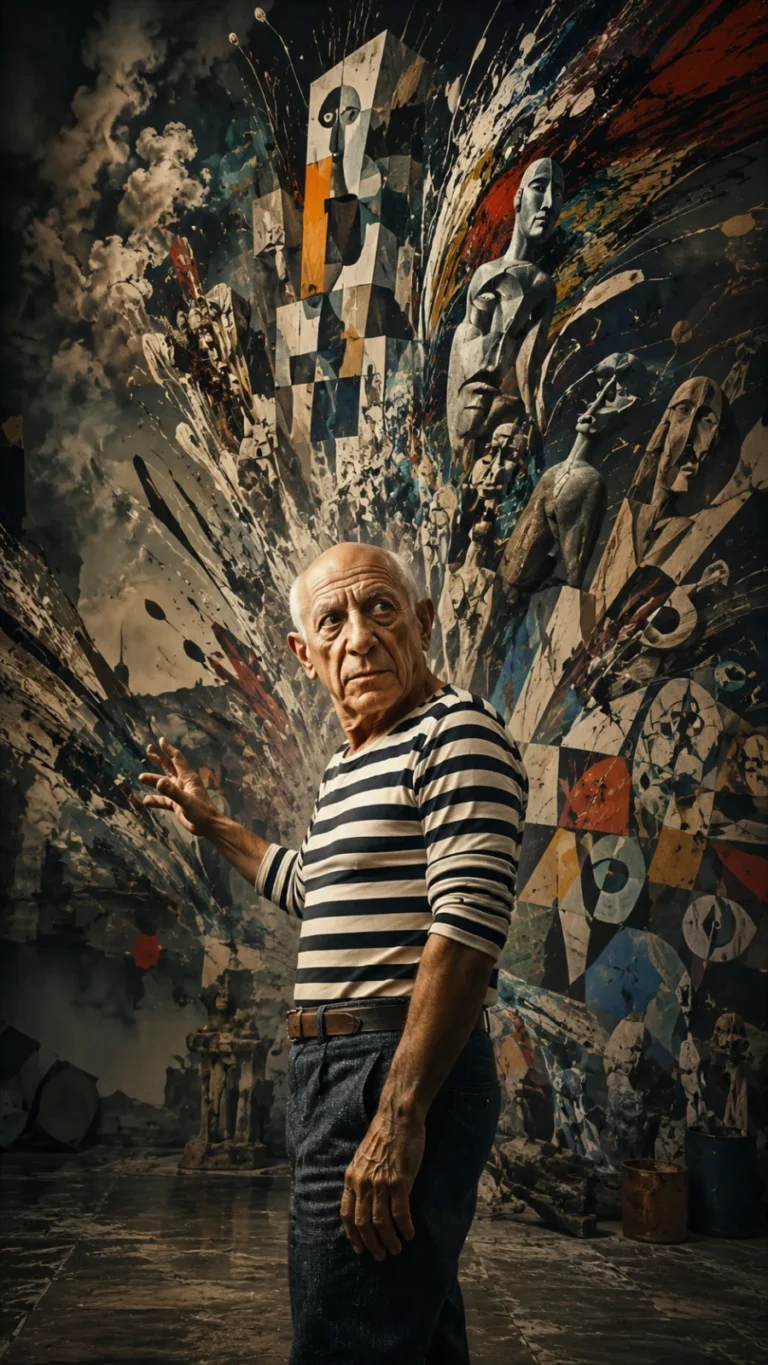
Fernande Olivier, Olga Khokhlova, Marie-Thérèse Walter, Dora Maar, Françoise Gilot, and Jacqueline Roque occupied essential places in Picasso’s life and art. Art history too often reduced them to “muses,” as though they existed only to inspire him.
Dora Maar was an accomplished photographer and artist before beginning her relationship with Picasso. Françoise Gilot was also a painter and became one of the few women who chose to leave him. In her memoir, she described a relationship shaped by intellectual fascination but also by control and emotional cruelty (Gilot & Lake, 1964).
It is unnecessary to treat every portrait as a literal confession or to diagnose Picasso from a distance. It is necessary, however, to prevent genius from becoming an excuse. Several women in his life endured humiliation, infidelity, and conflicts that he deliberately encouraged. Acknowledging this does not diminish the historical importance of his art; it prevents artistic admiration from erasing the people who lived in his shadow.
The Artist Who Never Stopped Beginning Again
Picasso spent his final decades in southern France. He continued working in painting, printmaking, sculpture, and ceramics with astonishing productivity. He reinterpreted works by Velázquez, Delacroix, and Manet—not as copies, but as confrontations with the masters of the past.
He died on April 8, 1973, in Mougins, France, at the age of ninety-one. He left tens of thousands of works and an estate so extensive that settling it became extraordinarily complicated. Because Picasso left no will, the distribution of his property continued for years.
His legacy cannot be reduced to one invention. Picasso helped develop Cubism, brought ordinary materials into painting, expanded the possibilities of collage and assemblage, transformed found objects, and demonstrated that an artist could move through seemingly incompatible styles without becoming trapped by any of them.
Before Picasso, a painting could still be understood primarily as a window opening onto an ordered scene. After him, it could also be an object, a fractured surface, a combination of different moments, or a struggle among several ways of seeing.
Picasso did not merely paint the world. He dismantled it before our eyes and forced us to accept that reality never possesses only one face.
References
- Gilot, F., & Lake, C. (1964). Life with Picasso. McGraw-Hill.
- Metropolitan Museum of Art. (n.d.). Cubism. https://www.metmuseum.org/toah/hd/cube/hd_cube.htm
- Museo Nacional Centro de Arte Reina Sofía. (n.d.-a). Rethinking Guernica: Picasso’s twentieth-century work-icon close up. https://guernica.museoreinasofia.es/en
- Museo Nacional Centro de Arte Reina Sofía. (n.d.-b). Guernica. https://www.museoreinasofia.es/en/collections/artwork/guernica/
- Museu Picasso de Barcelona. (n.d.-a). Origins and chronology. https://museupicassobcn.cat/en/picasso-and-barcelona/origin-and-chronology
- Museu Picasso de Barcelona. (n.d.-b). Picasso’s connection with Barcelona. https://museupicassobcn.cat/en/picasso-and-barcelona/picasso-connection-with-barcelona
- Museum of Modern Art. (n.d.-a). Pablo Picasso: Les Demoiselles d’Avignon. https://www.moma.org/collection/works/79766
- Museum of Modern Art. (n.d.-b). Picasso’s Demoiselles d’Avignon at 100. https://www.moma.org/calendar/exhibitions/40
- Richardson, J. (1996). A life of Picasso: Volume II, 1907–1917. Random House.
- Voorhies, J. (2004). Pablo Picasso (1881–1973). In Heilbrunn timeline of art history. The Metropolitan Museum of Art. https://www.metmuseum.org/toah/hd/pica/hd_pica.htm
More from this collection
Artemisia Gentileschi: The Painter Who Made Women the Protagonists of Their Own Stories
Read story →
Henri Matisse: The Painter Who Liberated Color and Ended Up Drawing with Scissors
Read story →