In this storyOpen index
Antoine de Saint-Exupéry: The Writer Who Crossed Deserts, Wars, and Skies Until He Disappeared Into His Own Legend
An aviator who turned deserts, airmail, and war into literature, and whose final flight left an unanswered question.

He took off from Corsica on the morning of July 31, 1944. His aircraft carried no weapons. It carried cameras intended to photograph military positions before the Allied invasion of southern France.
Antoine de Saint-Exupéry was forty-four years old, carried numerous injuries from earlier crashes, and was in physical condition that had led some superiors to consider him unfit for further operational flying. He had nevertheless insisted until he was allowed back into a cockpit.
He never returned.
For more than half a century, no one knew where he had fallen. His disappearance transformed the author of The Little Prince into an extension of his own character: a traveler lost somewhere between the sky, the sea, and the stars.
The reality was less delicate and more human. Saint-Exupéry was not simply a writer who flew airplanes. He was a professional aviator who transformed into literature the exhaustion, fear, and responsibility of people who entered places where a single error could eliminate every possibility of returning.
Saint-Exupéry: the writer who vanished into the sky
A life told through deserts, books, and skies
The manuscript of The Little Prince
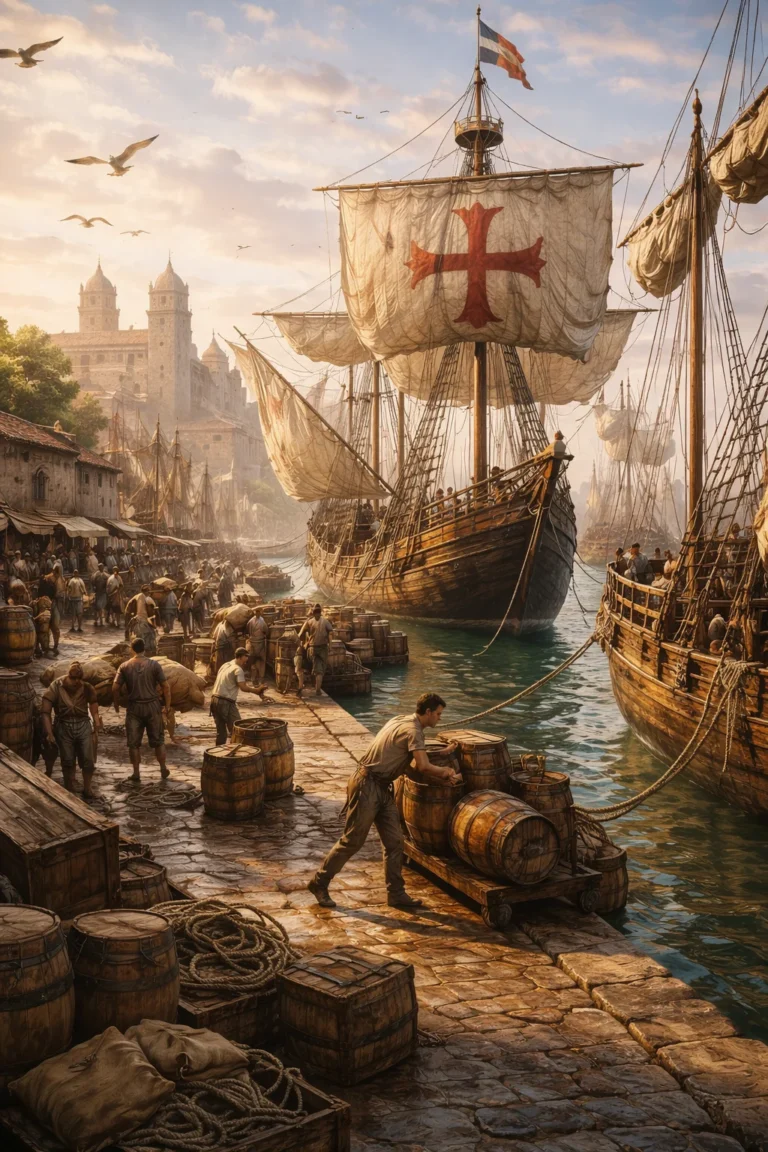
The Morgan Library & Museum preserves the original manuscript and preparatory drawings for The Little Prince, acquired from Silvia Hamilton in 1968. Its revisions reveal the writer’s work before publication in 1943. Follow the link to view the collection documents; the image in this article is a reconstruction and does not reproduce the manuscript.
AI-generated visual reconstruction; not a historical document.
The Child Who Wanted to Build a Flying Machine

Antoine Marie Jean-Baptiste Roger de Saint-Exupéry was born in Lyon on June 29, 1900, into an aristocratic family of diminishing means. His father died before Antoine turned four, leaving his mother, Marie de Fonscolombe, to raise five children.
Part of his childhood was spent at the Château de Saint-Maurice-de-Rémens, which belonged to an aunt. Its gardens, rooms, and memories would later nourish his fascination with childhood as a lost country.
As a boy, he drew, wrote poems, and showed great interest in machines. In 1912, he took one of his first flights as a passenger at the Ambérieu airfield. The experience was later surrounded by anecdotes, but aviation undeniably became a lasting obsession (Schiff, 1994).
He was not an exceptional student and did not follow a straightforward academic path. He failed the entrance examination for the Naval Academy and studied architecture without completing the program. His life began acquiring direction during military service, when he trained as a pilot.
In 1921, he began flight instruction in Strasbourg. Aviation was still a dangerous occupation. Aircraft lacked many modern instruments, and mechanical failure could force a pilot to descend onto a field, a mountain, or the sea.
Saint-Exupéry did not choose a literary symbol. He chose a profession capable of killing him.
Carrying the Mail Across Places Without Runways
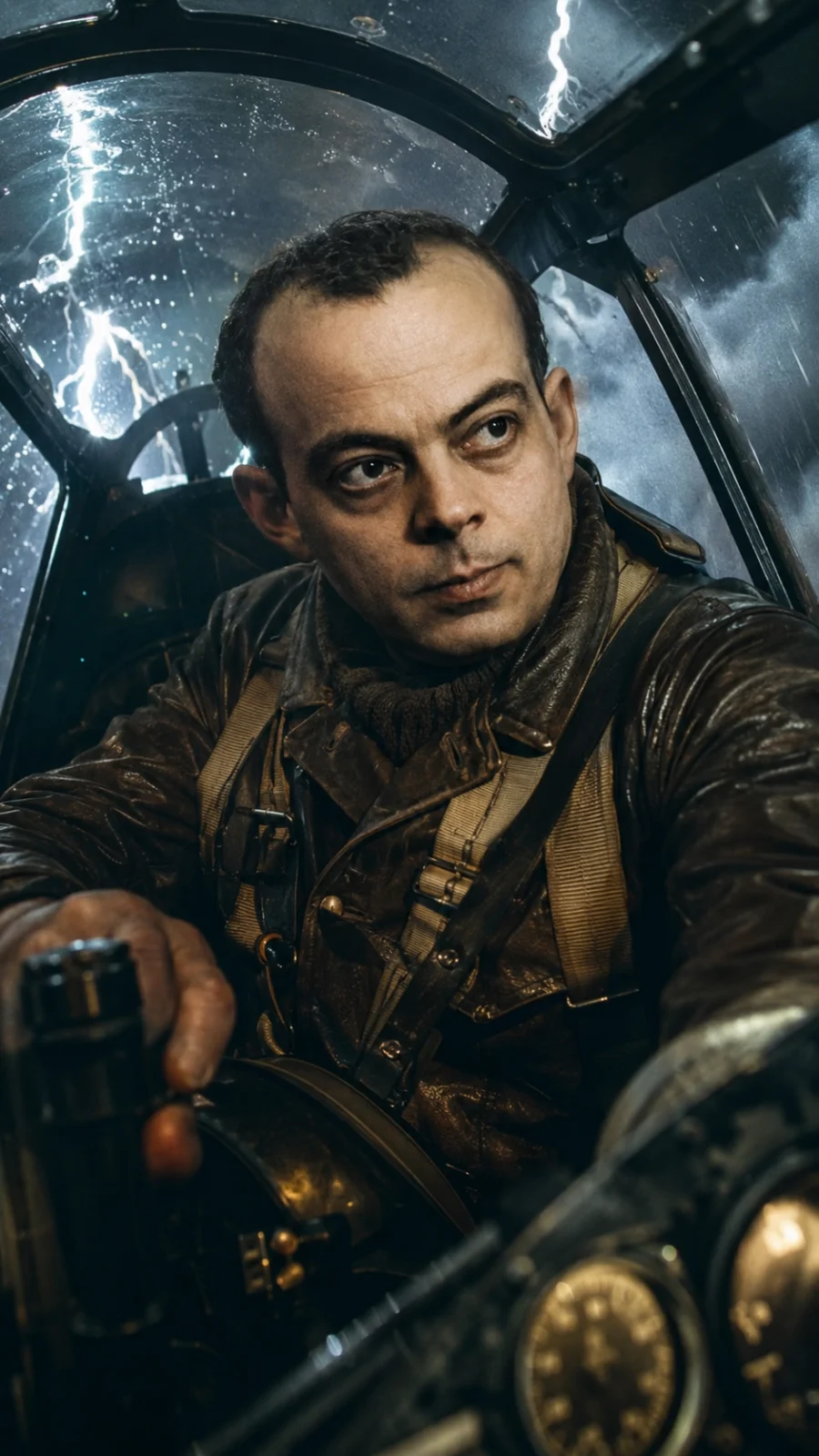
In 1926, Saint-Exupéry began working for Latécoère, an airline that transported mail between France, Spain, and North Africa. The company would later become the celebrated Aéropostale.
Its pilots flew fragile aircraft with limited weather information and few means of communication. They crossed mountains, storms, and desert regions where a forced landing could leave them isolated for days.
In 1927, Saint-Exupéry became station manager at Cape Juby on the Atlantic coast of present-day Morocco. He coordinated operations, assisted downed pilots, and negotiated the release of airmen captured by local groups.
The experience transformed his understanding of responsibility. The mail was not merely correspondence. It represented a promise between strangers, maintained by workers willing to continue even when conditions seemed absurd.
At Cape Juby, he wrote much of Southern Mail, published in 1929. The desert gave him an exterior landscape and a method of thought. In its isolation, he discovered that life could be reduced to a handful of essential questions.
Aviation nourished his literature, but literature was also beginning to construct the pilot’s legend.
Patagonia, Darkness, and Responsibility
In 1929, Saint-Exupéry was sent to Argentina as operations director of Aeroposta Argentina. He helped organize routes toward Paraguay, Chile, Patagonia, and Tierra del Fuego. He flew to survey routes and locate possible landing grounds.
In Buenos Aires, he met Consuelo Suncín, a Salvadoran writer and artist. They married in 1931. Their relationship was intense, unstable, and marked by separations, reconciliations, and infidelities. Consuelo would be transformed into the rose in The Little Prince, although reducing the character entirely to her oversimplifies a more complex literary creation (Schiff, 1994).
That same year, Night Flight, a novel inspired by South American airmail operations, appeared. It received the Prix Femina and established Saint-Exupéry as an important writer.
The book did not present the pilot simply as an adventurer. It examined the conflict between individual life and collective purpose. The mail had to arrive, but every flight could demand a human sacrifice.
That idea—responsibility as the force that gives meaning while also consuming the individual—would run through his entire body of work.
The Desert That Nearly Made Him Disappear Nine Years Earlier

On December 29, 1935, Saint-Exupéry left Paris with mechanic and navigator André Prévot. They were attempting to establish a record on the Paris–Saigon route and win a cash prize.
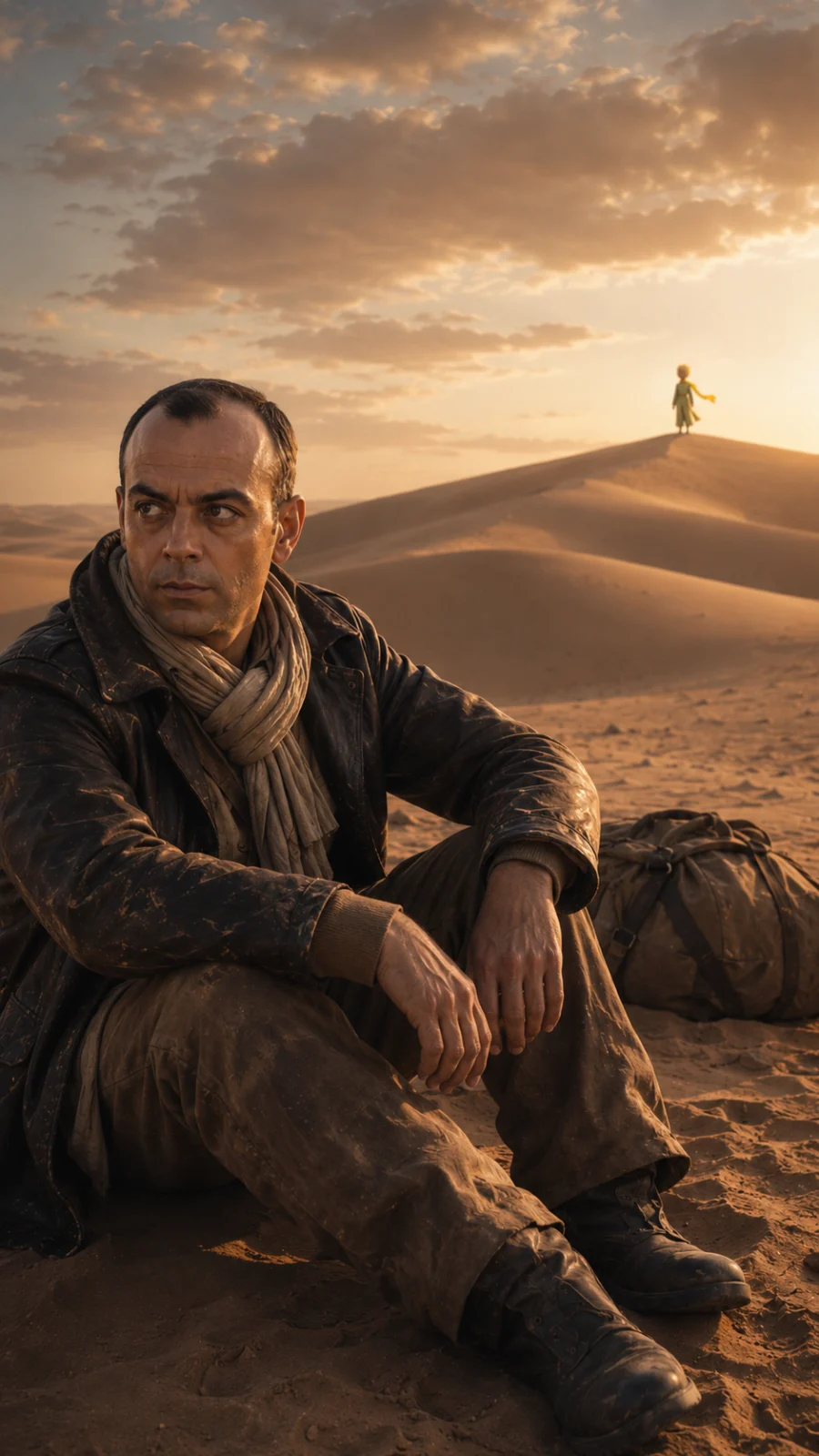
During the early hours of December 30, the aircraft crashed in the desert, probably within the Egyptian Sahara. Both men survived the impact, but they carried very little water and did not know their exact location.
They walked for days under extreme temperatures. Dehydration produced weakness, confusion, and hallucinations. Bedouins eventually found and rescued them.
Saint-Exupéry described the experience in Wind, Sand and Stars, published in 1939. The crash also provides the most obvious precedent for the opening of The Little Prince: an aviator stranded in the Sahara after an aircraft failure encounters a reality that overturns his usual explanations (Saint-Exupéry, 1939/2000).
Autobiography should not be confused with exact equivalence. No child from another planet appeared during the actual crash. What emerged there was a way of seeing: deprived of comfort and certainty, a person discovers which relationships keep him alive.
Saint-Exupéry had nearly disappeared in 1935. Nine years later, fate would repeat the scene without granting him a rescue.
A Pilot Whose Body Accumulated Crashes

The Sahara was not his only accident.
In 1938, he attempted another long-distance flight, this time between New York and Tierra del Fuego. His aircraft crashed during takeoff in Guatemala. Saint-Exupéry suffered fractures and severe internal injuries requiring a long recovery.
The effects never entirely disappeared. He had restricted movement in one shoulder, suffered chronic pain, and struggled to enter and leave certain aircraft. His history also included other incidents and problematic landings.
The romantic image of the aviator suggests complete mastery over the machine. Saint-Exupéry, however, was not considered a flawless pilot by all his colleagues. He could be absent-minded, inconsistent, and inattentive to particular procedures. His courage coexisted with a tendency to approach the limit too closely (Webster, 1993).
That is precisely why his books do not portray flight as a clean conquest. He understood the fragility of the body and how easily a machine could stop obeying.
War and a Divided France
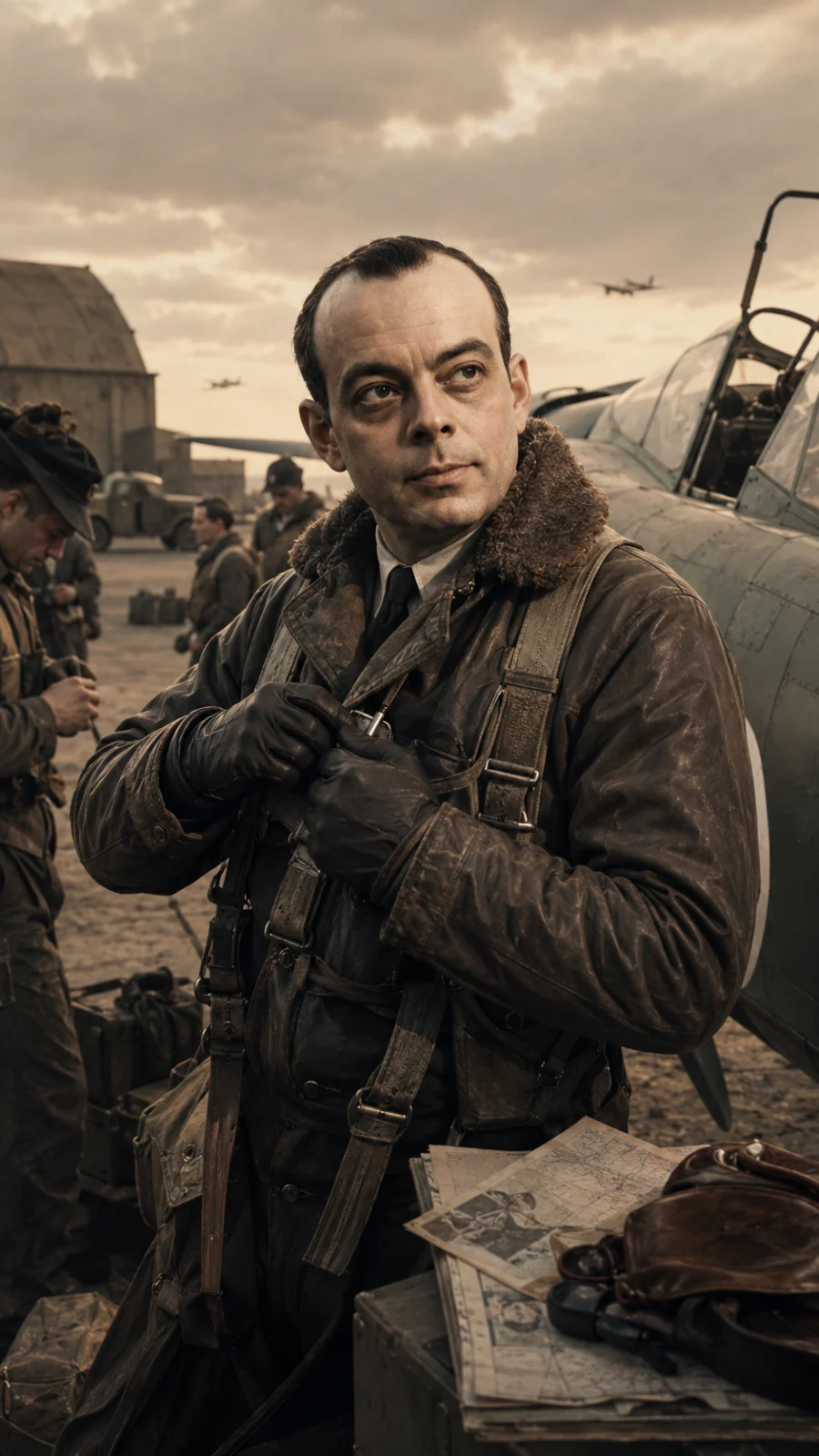
When the Second World War began, Saint-Exupéry was mobilized and assigned to Reconnaissance Group II/33. He flew observation missions during the German offensive of 1940.
Reconnaissance aircraft entered enemy-controlled territory to obtain photographs and intelligence. Their task was not to seek aerial combat, but they flew exposed to fighters and antiaircraft fire.
The experience inspired Flight to Arras, published in 1942. The book describes an apparently useless mission during France’s collapse while defending the dignity of people who perform their duty even when the military situation is already lost.
After the armistice, Saint-Exupéry traveled to the United States. There he argued for France’s liberation but refused to identify fully with Charles de Gaulle or any single political faction. He appealed for unity among French people, a position that eventually left him isolated and distrusted by rival groups (Schiff, 1994).
His political position requires nuance. In 1941, he publicly rejected an appointment to Vichy’s National Council made without his consent, yet for part of that period he still defended the armistice and believed Pétain might prevent worse suffering. At the same time, he urged American intervention against Nazism and rejected de Gaulle’s political authority. These contradictions intensified the conflict among French exiles; they should not be erased to create an uncomplicated hero (Succession Antoine de Saint-Exupéry, n.d.).
While asking others to unite, he became increasingly alone.
The Little Prince Was Born in New York, Not France

During his stay in the United States, Saint-Exupéry wrote and illustrated The Little Prince. It was first published in New York on April 6, 1943, simultaneously in French and English. It did not appear in France until 1946, two years after its author disappeared (Succession Antoine de Saint-Exupéry, n.d.).
This is one of the lesser-known facts about one of the best-known French books of the twentieth century: it was created in exile, and its first readers were in the United States.
Saint-Exupéry painted the watercolors himself. The manuscript preserved by the Morgan Library & Museum contains revisions, alternative passages, and deleted episodes. The book was neither a simple improvisation nor a fable written exclusively for children.
The aviator, the desert, the rose, the fox, and the planets condensed experiences accumulated over many years. The story explored friendship, responsibility, loss, and the adult inability to recognize what cannot be measured.
On April 2, 1943, four days before publication, Saint-Exupéry left the United States to rejoin French forces in North Africa. He never witnessed the book’s worldwide destiny.
The Writer Too Old for the Aircraft He Wanted to Fly

Saint-Exupéry wanted to return to combat, but he faced several obstacles. At forty-three, he was older than most operational pilots. His body retained the injuries suffered in Guatemala, and he struggled with the complex procedures of the Lockheed P-38 used for photographic reconnaissance.
Through personal contacts, requests, and relentless insistence, he returned to Reconnaissance Group II/33. He would fly a reconnaissance version of the P-38 fitted with cameras and carrying no weapons.
In July 1943, he completed an initial mission over France. Soon afterward, a landing accident caused him to be removed from operations. For months, he pressed to have his flight status restored.
He finally returned to the unit in 1944 with authorization for a limited number of missions. Some colleagues believed his experience remained valuable. Others feared that his physical and emotional condition made him a risk.
Saint-Exupéry knew that he could serve France by writing. That was not enough. He needed to fly in order to feel that his words remained connected to the responsibility they defended.
He had transformed action into such a powerful moral requirement that remaining safely on the ground began to resemble betrayal.
The Final Flight

On the morning of July 31, 1944, Saint-Exupéry took off from the Borgo airfield near Bastia, Corsica. His assignment was to photograph areas of the Rhône Valley, Annecy, and Provence, gathering intelligence for the Allied invasion of southern France.
The aircraft was expected back several hours later. It never returned.
No final communication capable of explaining what happened was received. Saint-Exupéry and his aircraft were declared missing. France officially recognized him as Mort pour la France—one who died for France.
Different hypotheses circulated for decades: mechanical failure, lack of fuel, disorientation, attack by a German fighter, and even suicide. None could be confirmed because neither the aircraft nor the pilot’s body had been found.
His disappearance seemed to resemble his literature too perfectly. That made it easy to replace investigation with metaphor.
The Bracelet Found in a Fishing Net
On September 7, 1998, Marseille fisherman Jean-Claude Bianco found a silver identity bracelet in his nets. It bore Saint-Exupéry’s name and references connected with Consuelo and his American publisher.
The discovery was startling because it occurred off Marseille, far from some of the areas where investigators had assumed his aircraft might have fallen. It initially provoked skepticism and accusations of fraud.
The bracelet nevertheless encouraged new searches. In 2000, diver Luc Vanrell located wreckage from a P-38 near the island of Riou at a depth of approximately eighty-five meters.
Authorities took time to authorize the recovery of material. In 2003, fragments were raised, and a serial marking on one component allowed the aircraft to be identified as Saint-Exupéry’s missing plane. The French Ministry of Culture officially recognizes the wreckage as belonging to the P-38 lost on July 31, 1944.
After nearly sixty years, the aircraft’s resting place was known. The reason for its fall remained unknown.
The German Pilot’s Confession That Did Not Solve the Mystery
In 2008, former German pilot Horst Rippert claimed that he had shot down a P-38 in the area on the day Saint-Exupéry disappeared. According to his account, only much later did he realize that he might have killed a writer he admired.
The story offered a perfect conclusion: a German reader had unknowingly shot down the French author of his favorite books.
His testimony, however, has not conclusively established that he shot down Saint-Exupéry’s aircraft. His claim emerged more than sixty years after the event and could not be conclusively connected to the recovered wreckage.
The fragments examined do not establish with certainty whether the aircraft was hit by gunfire. Much of the plane remains destroyed or scattered across the seabed.
It is therefore inaccurate to claim that Saint-Exupéry’s killer has been identified. Rippert’s account is a hypothesis, not a demonstrated solution. The aircraft may have suffered mechanical failure, an accident, enemy action, or a combination of factors.
The crash site has been identified. Its cause remains unknown.
Neither a Proven Suicide nor a Secret Farewell
Saint-Exupéry’s emotional condition during his final years has supported another theory: that he deliberately caused his disappearance.
He felt old, injured, and politically isolated. Some letters expressed exhaustion and pessimism, and he knew that his operational flying career was probably nearing its end.
There is, however, no conclusive evidence of suicide. Turning his final flight into a voluntary death requires interpreting his sadness retrospectively as a decision already made.
Nor should The Little Prince automatically be read as a suicide note. The story contains separation and symbolic death, but it also speaks about return, responsibility, and survival through human bonds. Its publication preceded his disappearance by more than a year.
The writer left no final explanation. The silence surrounding his death belongs to the absence of evidence, not to poetic certainty.
The Man Who Went Too Far
Saint-Exupéry wrote that the airplane was a tool, like the plow. He did not worship machinery for its own sake. He cared about what it revealed in the person operating it.
Flight exposed the smallness of the individual before the storm and the desert. It also demonstrated that life could acquire meaning when someone accepted responsibility for others.
That conviction produced his finest pages, but it also repeatedly pushed him toward danger. He survived the Sahara, Guatemala, and the collapse of France. When age and injury suggested that he should remain on the ground, he fought to fly again.
He went too far not because he ignored the danger, but because he understood it and decided that a life protected from all responsibility was unbearable.
His aircraft rests off the French coast. His body was never recovered. The cause of the crash remains unresolved.
The child in his book returned to his planet, leaving the aviator beneath the stars. Saint-Exupéry disappeared into the Mediterranean, leaving his readers beneath another sky—one in which every light appears to hold a question that no investigation has completely answered.
References
- Cate, C. (1970). Antoine de Saint-Exupéry: His life and times. G. P. Putnam’s Sons. View source
- French Ministry of Culture. (n.d.). The P-38 flown by Saint-Exupéry. Department of Underwater Archaeological Research. View source
- Saint-Exupéry, A. de. (1942). Pilote de guerre. Gallimard.
- Saint-Exupéry, A. de. (1943). Le Petit Prince. Reynal & Hitchcock. View source
- Saint-Exupéry, A. de. (2000). Terre des hommes. Gallimard. (Original work published 1939). View source
- Schiff, S. (1994). Saint-Exupéry: A biography. Alfred A. Knopf. View source
- Webster, P. (1993). Antoine de Saint-Exupéry: The life and death of the Little Prince. Macmillan. View source
- Succession Antoine de Saint-Exupéry. (n.d.). Les dates importantes. View source
- Succession Antoine de Saint-Exupéry. (n.d.). Le Petit Prince (1943). View source
- The Morgan Library & Museum. (n.d.). The Little Prince: Manuscript and drawings. View source
More from this collection

Amelia Earhart: The Woman Who Tried to Measure the World From the Air and Vanished at Her Final Frontier
Read story →
Ibn Battuta: The Traveler Who Left for Mecca and Took Almost Thirty Years to Return
Read story →