In this storyOpen index
Roscoe “Fatty” Arbuckle: The Face Hollywood Condemned After Justice Acquitted Him
A pivotal silent film star was acquitted after three trials, yet his work remained overshadowed by scandal and Virginia Rappe’s death.
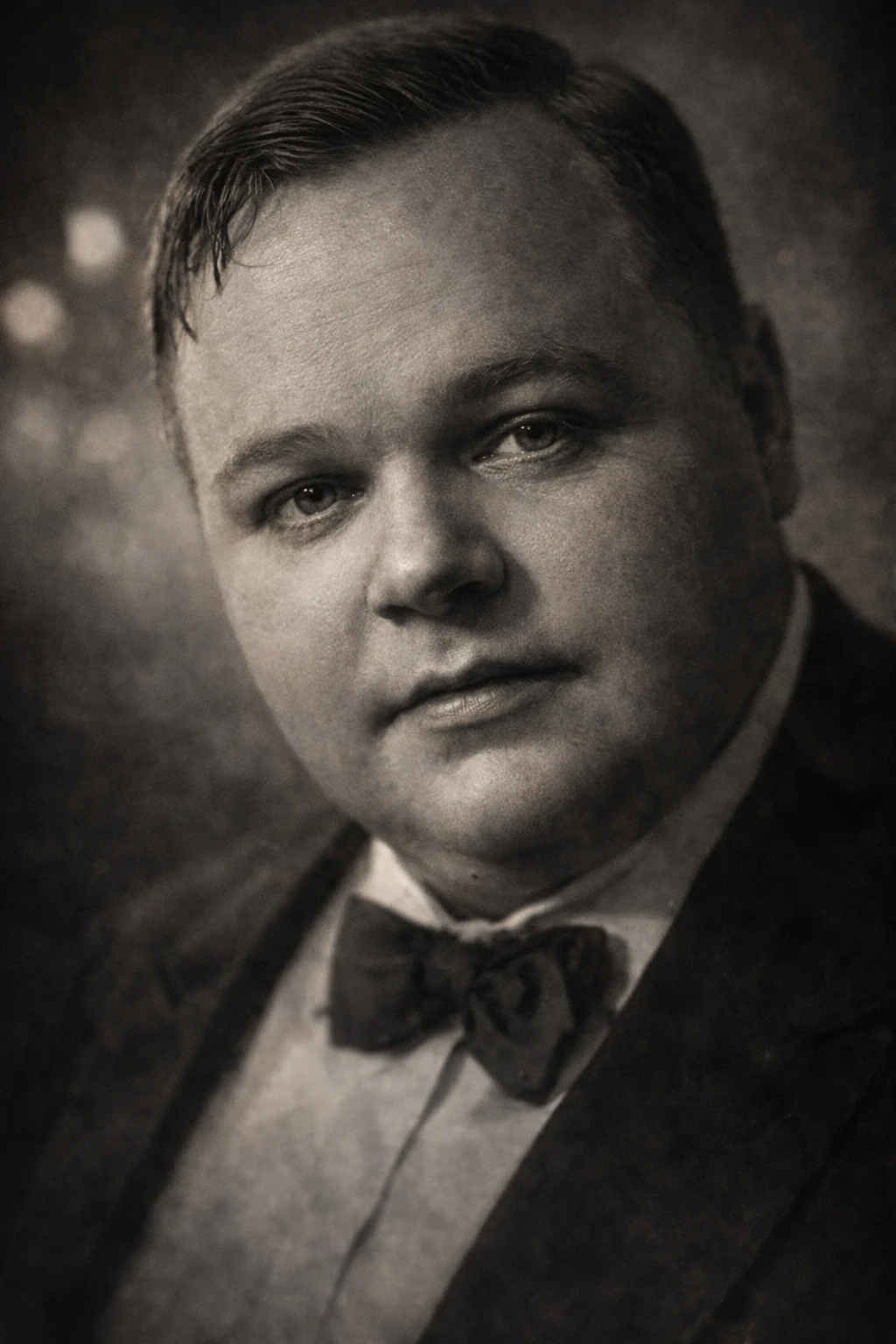
Before Charlie Chaplin and Buster Keaton became universal symbols of silent cinema, Roscoe Arbuckle was already one of the most recognizable and highly paid figures on the American screen. He could turn a kitchen into a battlefield, throw a pie with impossible precision, and move his large body with the lightness of a dancer.
His fall did not begin with a film but with a party held in San Francisco in September 1921. A young woman became ill and died days later. Arbuckle was accused, tried three times, and ultimately acquitted. The final jury declared that a grave injustice had been done to him.
The courts exonerated him. Hollywood did not.
For decades, the scandal overshadowed his films, distorted the death of Virginia Rappe, and transformed a case filled with contradictions into a legend presented as fact. Recovering Arbuckle’s history requires two forms of care: acknowledging his importance in the birth of screen comedy and refusing to use a legal acquittal as an excuse to erase the woman who died.
Roscoe Arbuckle: the filmmaker behind the scandal
A life between the stage, the camera, and the courts
Enter the archive
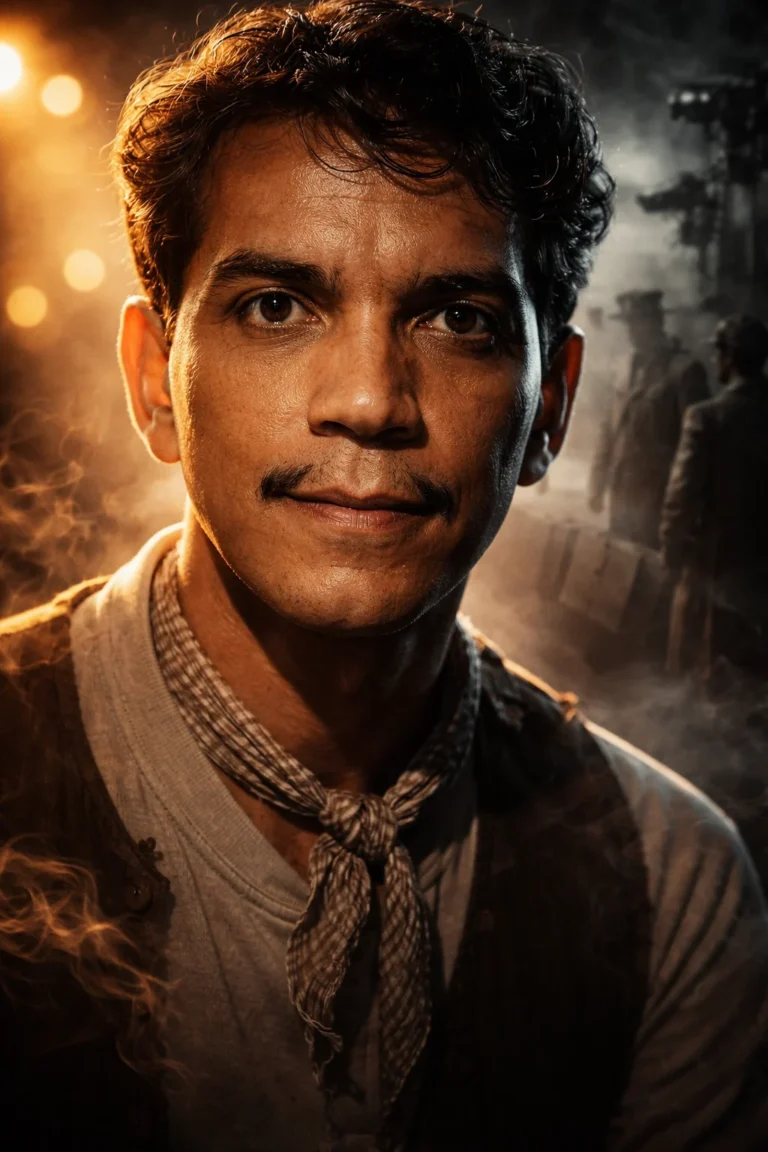
The Library of Congress holds an essay on Fatty’s Tintype Tangle (1915), directed by and starring Arbuckle and selected for the National Film Registry. This feature image is a reconstruction, not a frame from the film.
AI-generated visual reconstruction; not a film still or historical document.
A Child Turned into an Object of Ridicule
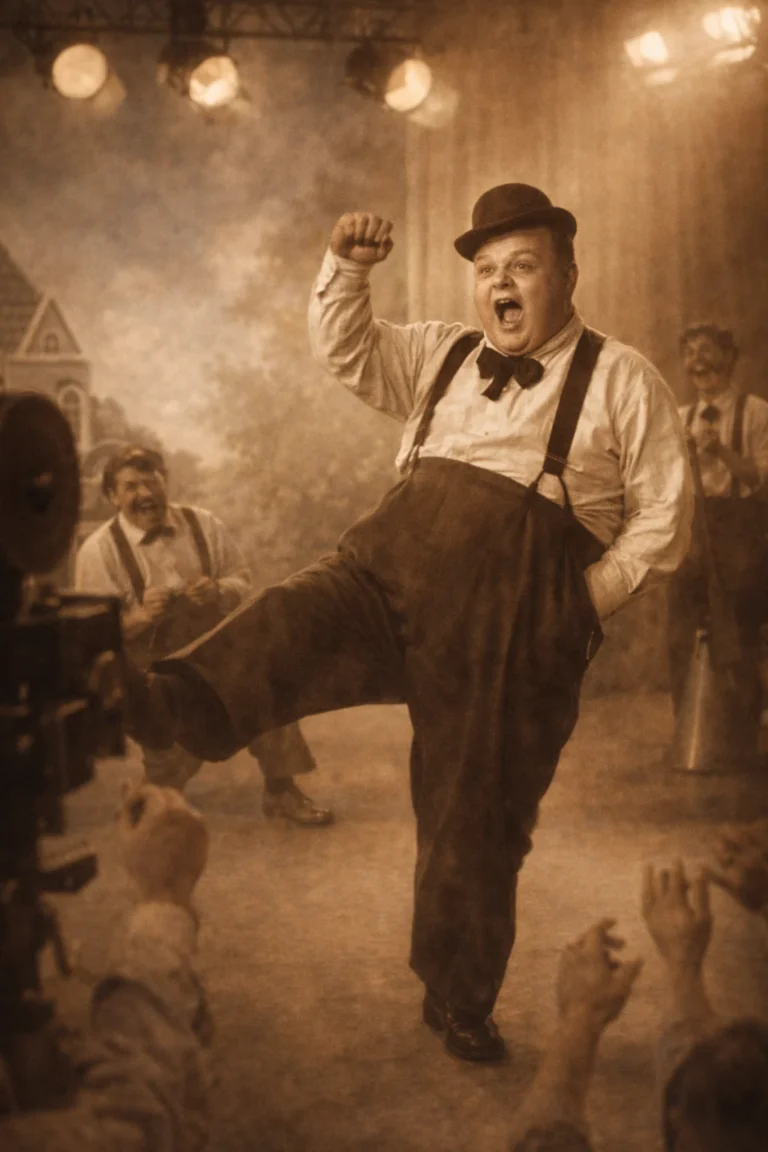
Roscoe Conkling Arbuckle was born on March 24, 1887, in Smith Center, Kansas. He was one of nine children born to Mary Gordon and William Goodrich Arbuckle. His father apparently doubted that Roscoe was his son and, according to later biographical accounts, treated him harshly during childhood (Oderman, 1994).
Roscoe was a heavy child. His weight quickly became the characteristic through which other people attempted to define him. After his mother died when he was about twelve, he left school and worked at various jobs. He also began appearing in amateur shows and vaudeville companies.
The stage allowed him to transform the source of ridicule into a comic instrument. He could sing, dance, and perform acrobatics. His size made his agile movements unexpected to audiences, but Arbuckle did not base his comedy solely upon his weight. He possessed remarkable rhythm, physical control, and a surprisingly delicate range of facial expression.
The nickname “Fatty” became part of his professional identity. Heavy comedians were frequently assigned that name in vaudeville and early cinema. Arbuckle accepted its use in film titles because it helped sell his pictures, but he disliked being addressed that way in private. His friends called him Roscoe.
Keystone and the Birth of a Star
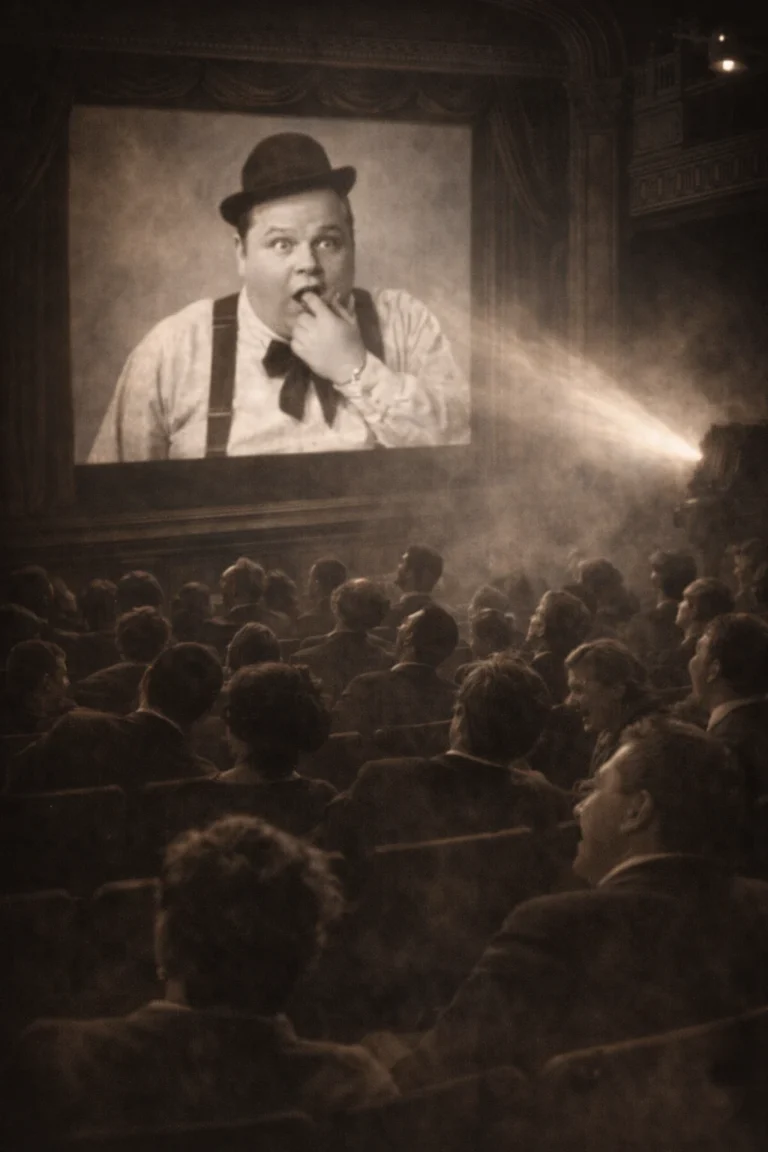
After working for several film companies, Arbuckle joined Mack Sennett’s Keystone Studios in 1913. Keystone was developing a new comic language based on chases, falls, incompetent policemen, flying objects, and increasingly rapid editing.
There he shared the screen with Mabel Normand, Ford Sterling, and a young Charlie Chaplin. Arbuckle and Normand became one of the period’s most popular comedy teams. She was not merely his supporting actress: Normand was a performer, director, and one of early cinema’s first major female comedy stars.
In films such as Mabel and Fatty’s Married Life and Fatty and Mabel Adrift, Arbuckle developed a remarkably gentle screen character. Rather than presenting a heavy man as naturally brutal or clumsy, he often played someone shy, playful, and capable of resolving chaos through unexpected agility.
Fatty’s Tintype Tangle, made in 1915, demonstrates his command of comic construction. The film begins with relatively simple domestic conflicts and builds toward an increasingly frantic chase organized through precise framing and cutting. Arbuckle was not merely the face in front of the camera; he was also directing and understood how a visual joke had to be structured (Stans, n.d.).
The Man Who Opened the Door for Buster Keaton
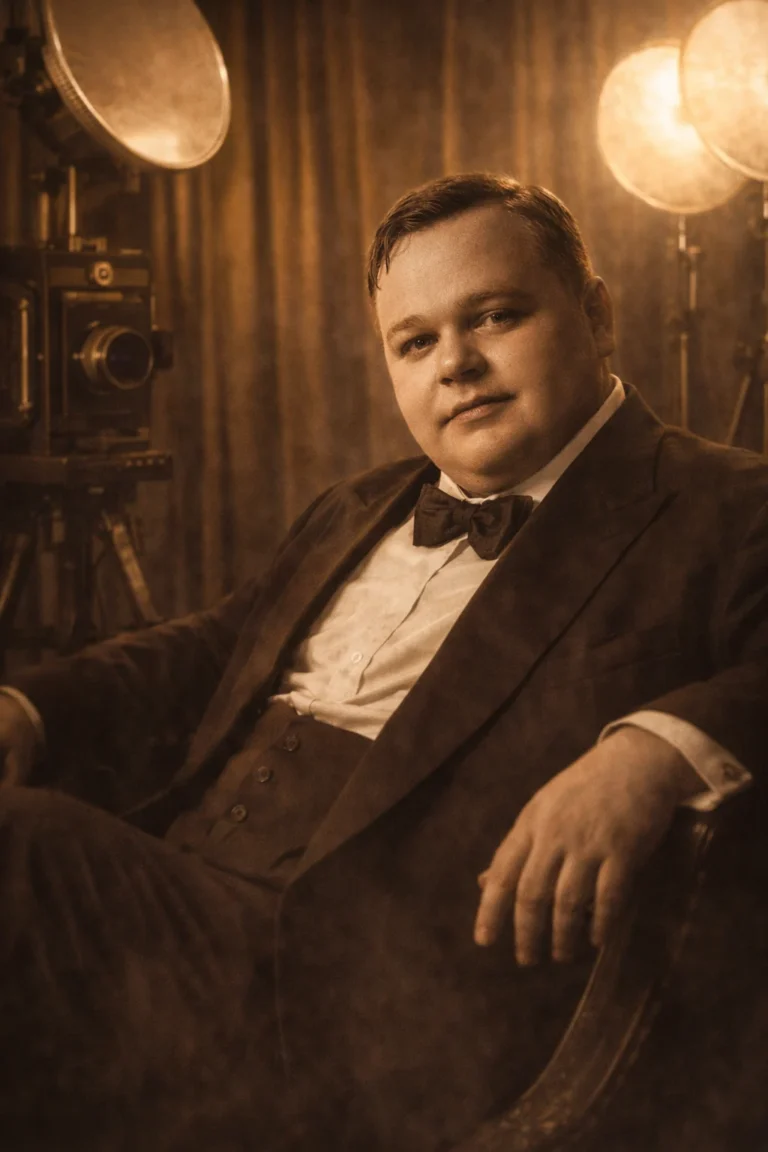
In 1917, Arbuckle established his own production unit within the Comique Film Corporation. That year he met a young vaudeville performer named Buster Keaton.
Keaton made his first film appearance in The Butcher Boy, starring and directed by Arbuckle. According to Keaton’s recollections, Arbuckle allowed him to take apart a movie camera to understand how it worked and taught him the differences between performing for a theater audience and acting before the lens.
They made several short films together. Arbuckle gave Keaton room to experiment with falls, machinery, and visual composition. Keaton would later develop his own more geometric and impassive style, but he never forgot the assistance he received. When Arbuckle fell from public favor, Keaton remained among the colleagues who continued to support him (Meade, 1995).
Their relationship is an essential part of Arbuckle’s legacy. He was not simply a star who came before Keaton; he participated in the cinematic education of one of history’s greatest directors and comedians.
One of Hollywood’s Most Valuable Men
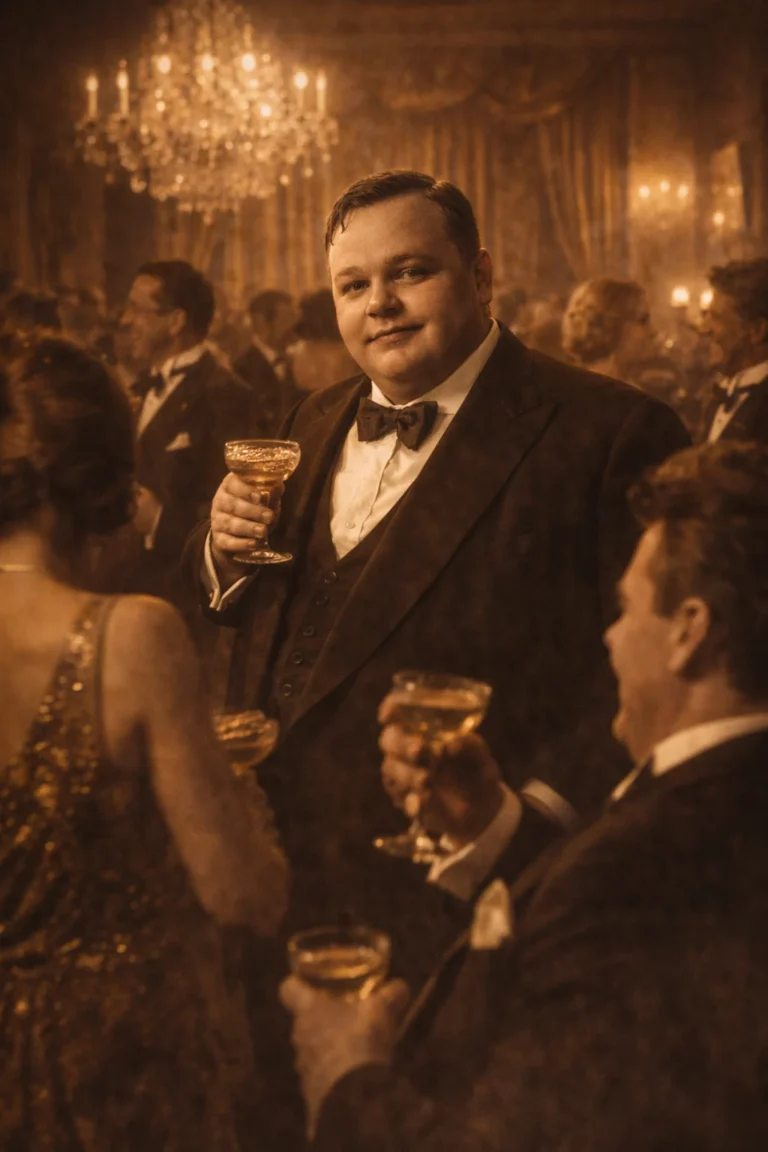
By the end of the 1910s, Arbuckle had achieved enormous popularity. In 1918, he signed with Paramount and moved from short comedies into feature-length productions. By 1921, he had received a contract valued at approximately three million dollars over three years, an extraordinary sum for the period (Merritt, 2013).
His success demonstrated that film comedy could become as important commercially as drama. Arbuckle possessed creative control, international recognition, and a proven ability to attract audiences.
His personal life, however, was less stable. His marriage to actress Minta Durfee had deteriorated, and the couple lived separately, although she would publicly defend him during the later scandal. Arbuckle worked intensely, experienced health problems, and participated in the party culture surrounding Hollywood’s new wealth.
In September 1921, he appeared to be at the summit of his career. Within days, his name would no longer be associated primarily with laughter.
The Party at the St. Francis Hotel
During the 1921 Labor Day weekend, Arbuckle traveled to San Francisco with his friends Lowell Sherman and Fred Fishback. They occupied several rooms at the St. Francis Hotel and held an informal gathering on September 5 attended by various guests.
Among them was Virginia Rappe, a twenty-six-year-old model and actress. During the party, Rappe began experiencing severe pain and behaved in ways that those present interpreted differently. She was moved first to another hotel room and later to a sanitarium.
She died on September 9. An autopsy determined that she had suffered peritonitis caused by a ruptured bladder.
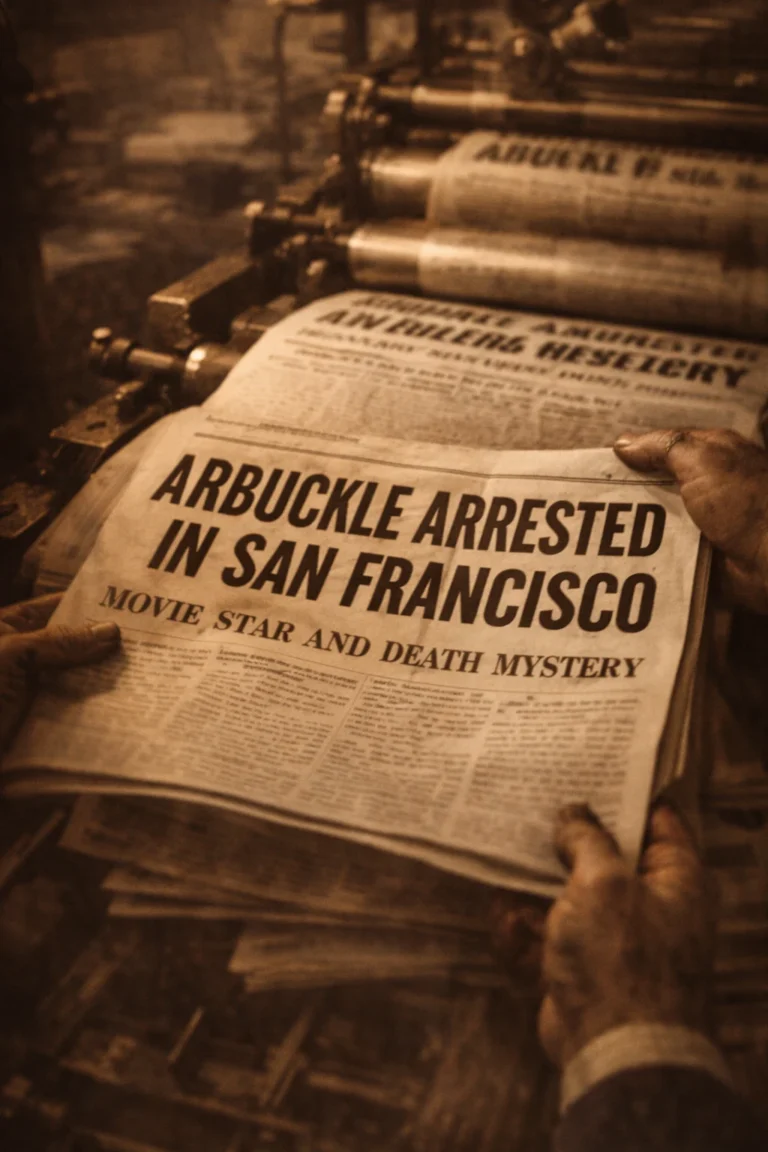
Maude Delmont, who had accompanied Rappe to the party, accused Arbuckle of sexually assaulting her and causing the fatal injuries. Police arrested the actor. Authorities initially considered a murder charge, but after the preliminary hearing the case proceeded as involuntary manslaughter.
Newspapers transformed the incident into a national spectacle before the first trial began. They published incompatible versions, rumors about objects allegedly used during an assault, and lurid descriptions unsupported by evidence presented in court. Some of these stories are still repeated as facts even though they originated in rumor or sensational journalism (Merritt, 2013).
What Could—and Could Not—Be Established
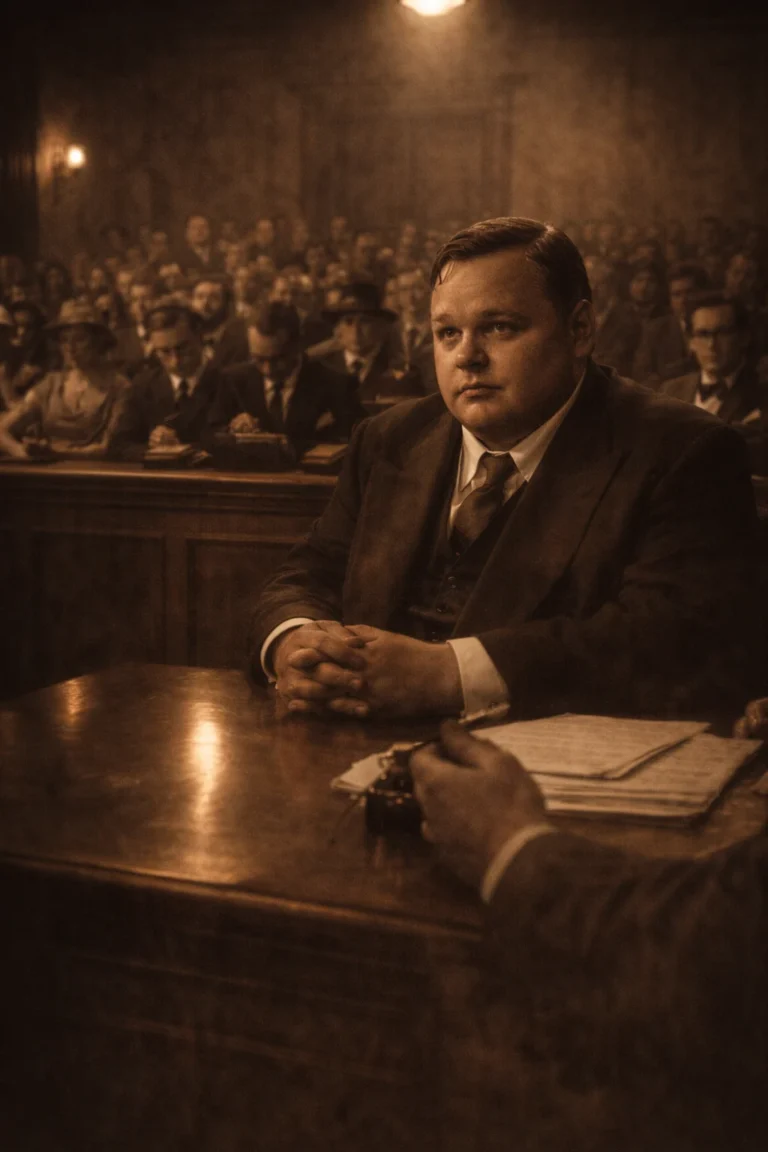
Arbuckle testified that he found Rappe ill in the bathroom, helped her to a bed, and sought assistance. He denied attacking her. Other guests gave conflicting accounts of what occurred before and after she became ill.
The prosecution argued that Arbuckle had caused Rappe’s bladder to rupture during an assault. The defense contended that she had previous medical problems and that the rupture could have occurred spontaneously. Medical witnesses did not provide an entirely consistent explanation.
Maude Delmont, the source of the most serious accusation, did not testify before any of the three juries. Her credibility presented significant problems, and prosecutors probably feared that cross-examination would damage their case. Other witnesses changed important portions of their statements and reported pressure from investigators.
None of this justifies a retrospective assault on Virginia Rappe’s character. During the trials, the defense and the press used her private life to discredit her, a common tactic against women associated with sexual cases. Rappe died following a genuine medical emergency. What could not be proven was that Arbuckle had criminally caused her injury.
The distinction is essential: respecting the dead woman does not require declaring an acquitted man guilty, and recognizing his acquittal does not require defaming the victim.
Three Trials and an Extraordinary Acquittal
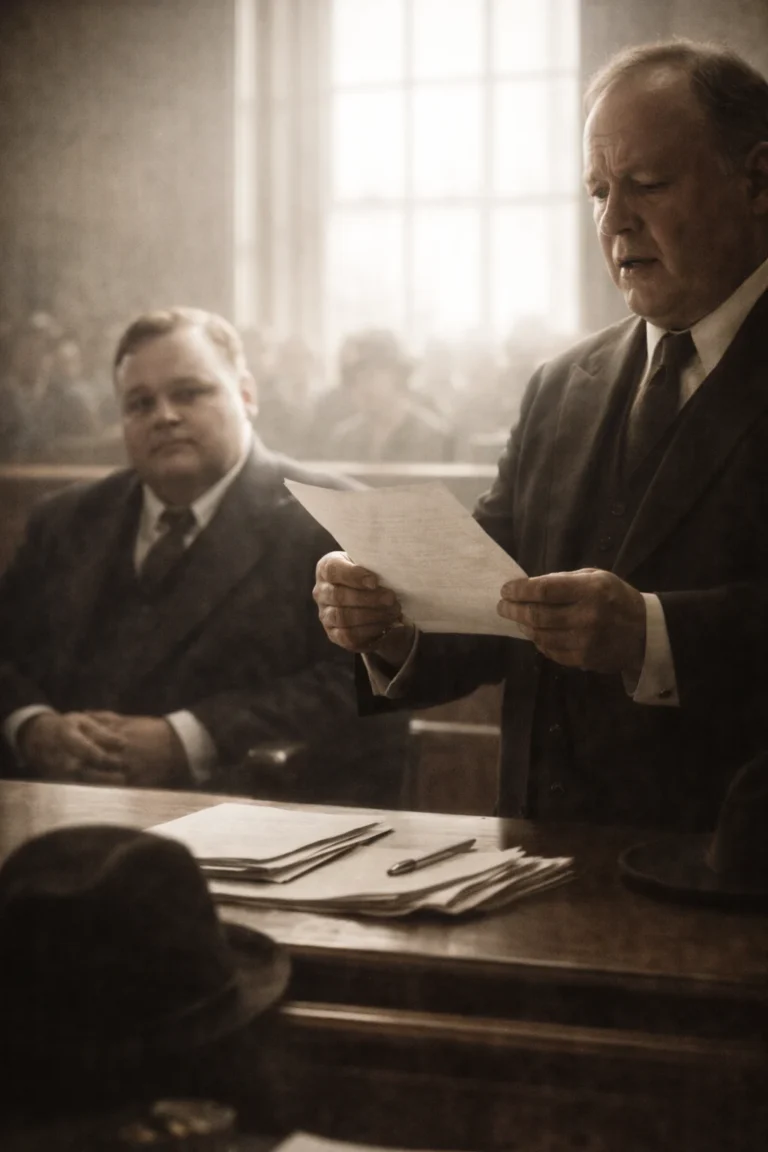
The first trial began in November 1921. Arbuckle testified in his own defense. The jury failed to reach a verdict: eleven members favored acquittal and one favored conviction.
The second trial began in January 1922. The defense chose not to put Arbuckle on the stand, and the result was another deadlocked jury, this time with a majority favoring conviction.
A third trial began in March. The defense more effectively examined contradictions in the testimony and again presented Arbuckle to the jury. On April 12, 1922, he was found not guilty after only a few minutes of deliberation.
The jurors went further and issued a written statement. They said that acquittal was not enough, that Arbuckle had suffered a grave injustice, and that not the slightest proof had been presented connecting him with the commission of a crime (San Francisco Bar Association, 2019).
It was an exceptional public exoneration. But it came after months during which his name had been presented internationally as synonymous with corruption, violence, and excess.
Hollywood Needed a Culprit
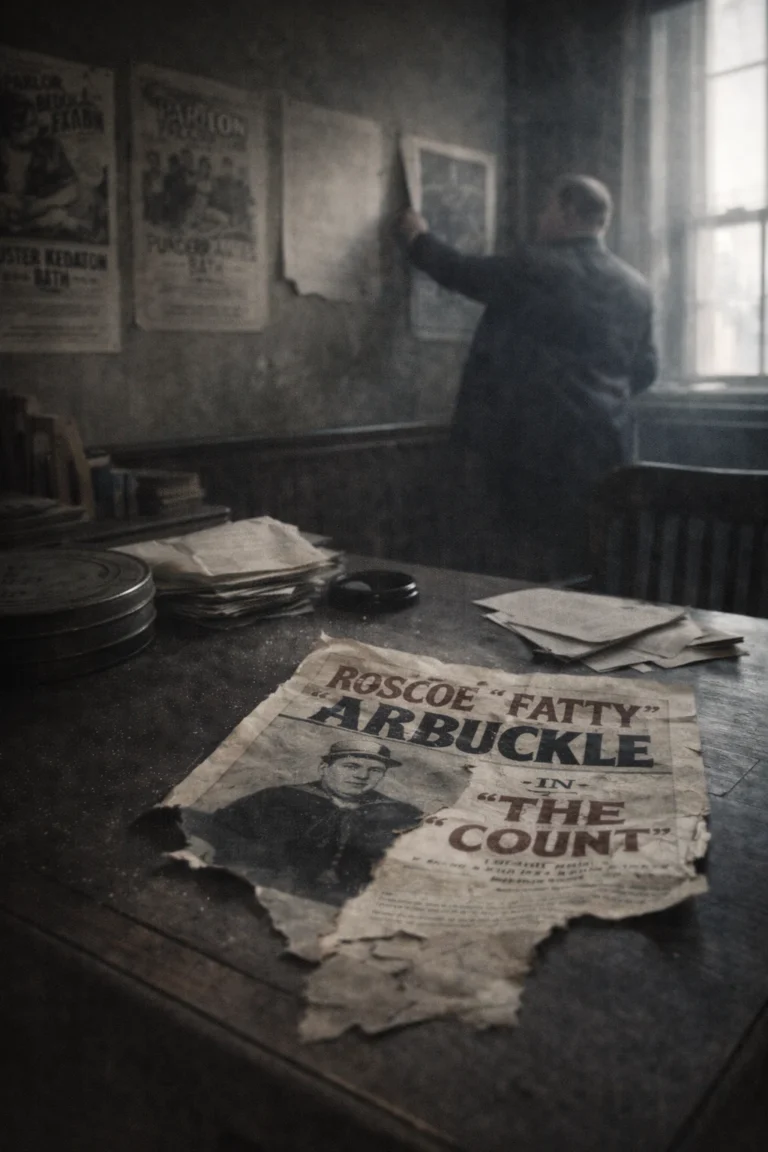
The motion-picture industry was facing growing political and moral pressure. A series of scandals fueled demands for federal censorship. The studios responded by creating a self-regulatory organization led by Will H. Hays.
Six days after Arbuckle’s acquittal, Hays banned the exhibition of his films and declared that the actor should not work in the industry. This was not a judicial sentence. It was a business decision intended to demonstrate that Hollywood could discipline its own stars.
The prohibition was lifted in December 1922, but the damage was already profound. Theater owners feared protests, studios refused to risk their investments, and many of Arbuckle’s films remained out of circulation.
The industry used his case as a symbolic sacrifice. Hollywood could present itself as morally responsible without accepting the result that the courts had already delivered.
Directing Without His Own Name
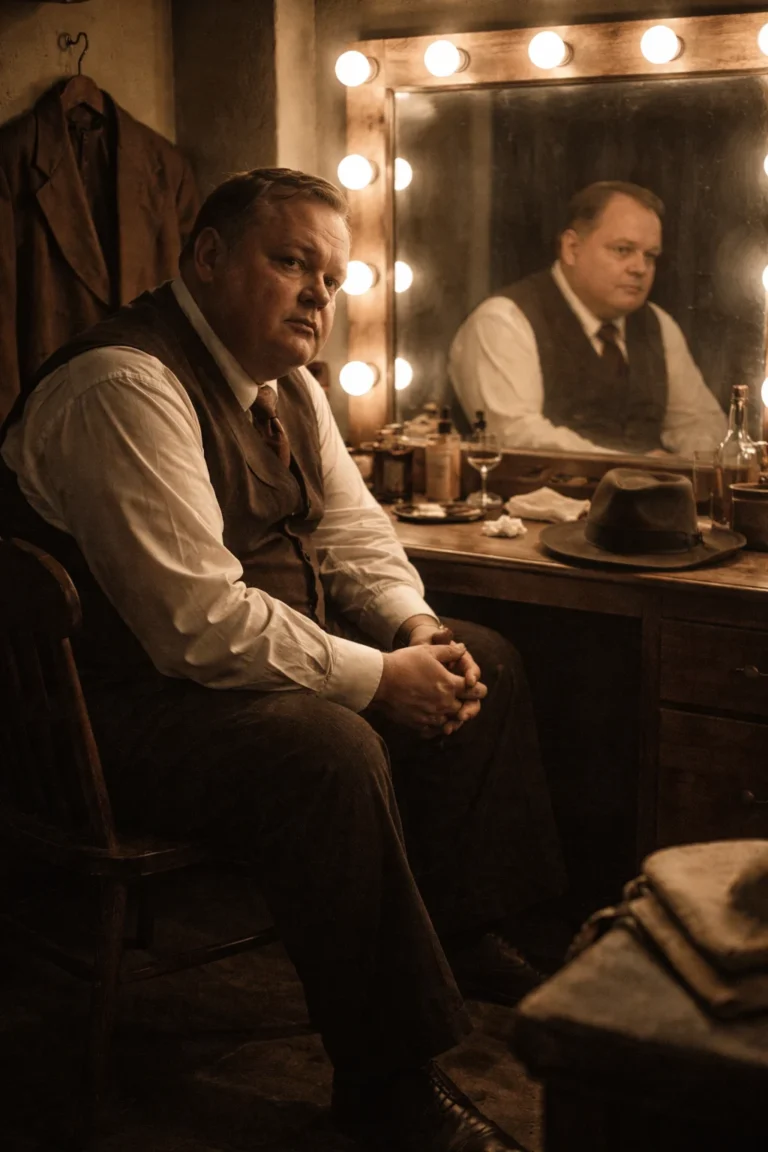
Arbuckle attempted to return to acting, but protest campaigns and producers’ fears made an immediate recovery nearly impossible. He found a way to continue working behind the camera.
Using the name William Goodrich, he directed comedies for other performers. The pseudonym probably referred to his father’s middle name and played upon the phrase “Will B. Good.” A man who had once possessed one of the world’s most famous faces now had to disappear from the credits to remain employed.
He directed short films and features during the 1920s. His experience was still valuable, but his participation had to be kept away from publicity. Friends such as Buster Keaton helped him obtain work and financial support.
The situation was particularly cruel because Arbuckle had helped create Hollywood’s comic language. He was now permitted to help build films only if audiences did not know he was behind them.
A Comeback That Lasted Too Briefly
In the early 1930s, after sound cinema had become firmly established, Arbuckle began appearing on camera again. Educational Pictures produced a series of talking shorts distributed by Warner Bros.
His voice worked well, his comic timing remained intact, and the films received a sufficiently positive response to suggest that audiences might accept his return. On June 28, 1933, he celebrated signing a contract to star in a feature film.
That night, he went to sleep in a New York hotel room. He died in his sleep during the early hours of June 29, apparently from a heart attack. He was forty-six years old (Oderman, 1994).
The contract that was supposed to complete his professional comeback had been signed only hours before his death.
The Filmmaker Behind the Scandal
For decades, Arbuckle was remembered primarily for a crime of which he was acquitted. Many of his films were lost, withdrawn, or kept out of circulation, allowing the scandal to replace the work.
Surviving prints reveal a filmmaker with an advanced understanding of space, editing, and movement. His character could be gentle, clever, and athletic. As a director, he knew how to make an ordinary situation expand into carefully organized chaos.
He also helped create the conditions in which Buster Keaton learned filmmaking. He worked with Mabel Normand at a time when women still held decisive roles in front of and behind the camera. He proved that a comedian could simultaneously function as performer, director, and economic center of his own production.
His history does not require turning him into a saint or blaming Virginia Rappe for his downfall. It demands something more difficult: accepting that a woman died, that the medical cause of her death was real, that the evidence did not prove Arbuckle committed a crime, and that the industry chose to punish him even after his acquittal.
Roscoe Arbuckle helped invent screen comedy. Hollywood then discovered another form of spectacle: the public trial of a celebrity. The second eventually consumed the first.
References
- Library of Congress. (n.d.). Fatty Arbuckle: Topics in Chronicling America. https://guides.loc.gov/chronicling-america-fatty-arbuckle
- Meade, M. (1995). Cut to the chase: The life and times of Buster Keaton. HarperCollins.
- Merritt, G. (2013). Room 1219: The life of Fatty Arbuckle, the mysterious death of Virginia Rappe, and the scandal that changed Hollywood. Chicago Review Press.
- Oderman, S. (1994). Roscoe “Fatty” Arbuckle: A biography of the silent film comedian, 1887–1933. McFarland.
- San Francisco Bar Association. (2019). The many trials of Fatty Arbuckle. https://www.sfbar.org/blog/sfam-the-many-trials-of-fatty-arbuckle/
- Stans, L. (n.d.). Fatty’s Tintype Tangle. National Film Preservation Board, Library of Congress. https://www.loc.gov/static/programs/national-film-preservation-board/documents/Fattys-Tinytype-Tangle_Stans.pdf
More from this collection
Lillian Gish: The Face That Taught Cinema to Think in Silence
Read story →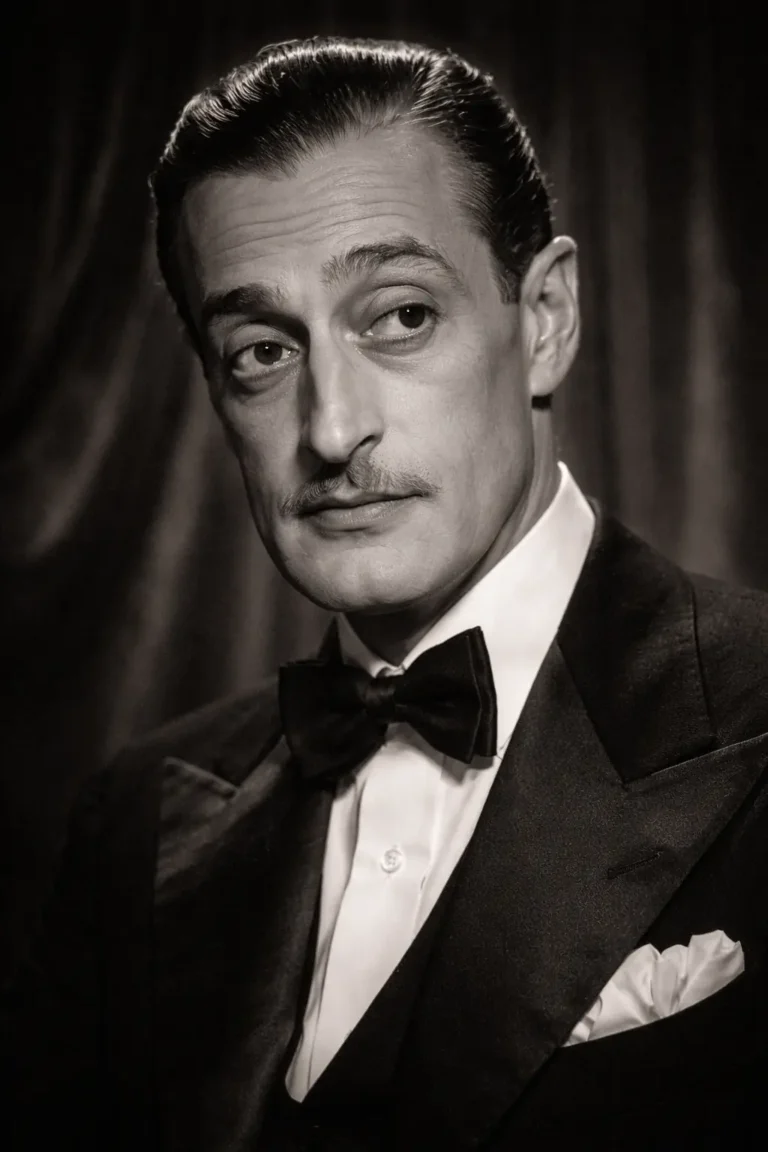
Totò: The Prince of Laughter Who Kept Acting When He Could Barely See
Read story →