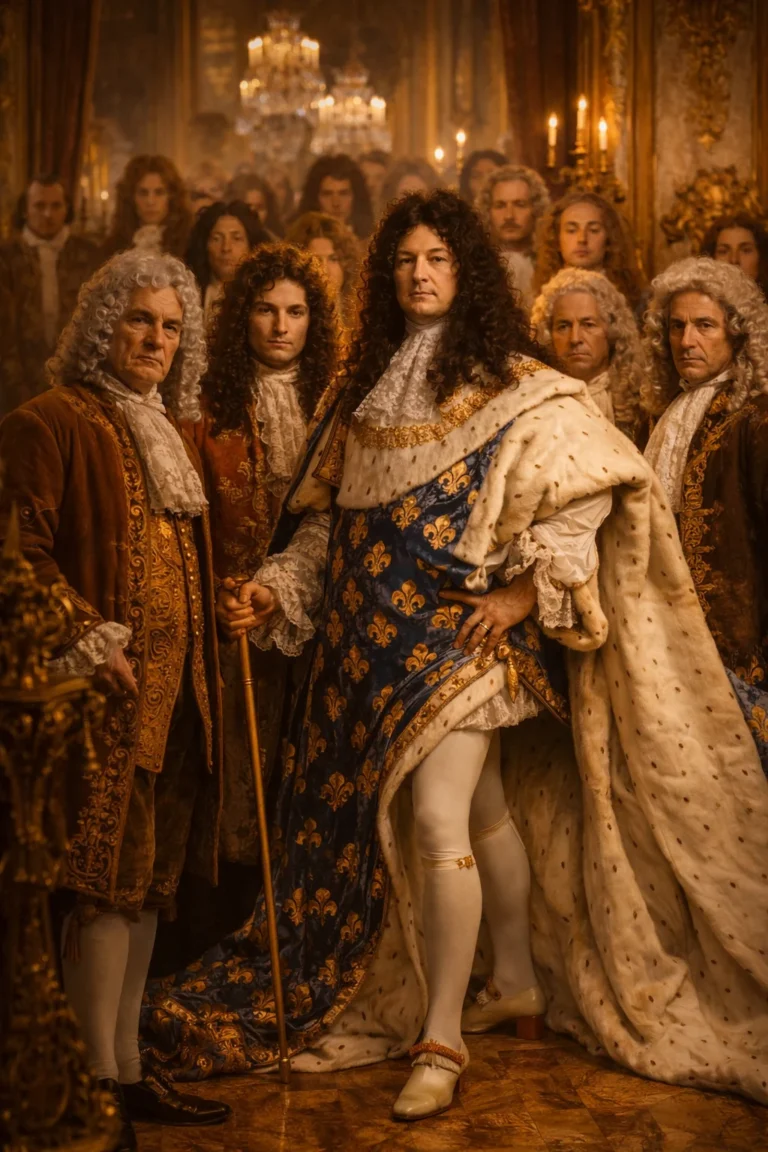
In this storyOpen index
Peter the Great: The Tsar Who Rebuilt Russia Without Asking What It Would Cost
Peter the Great transformed Russia into a European power through fierce determination, sweeping reforms, and a human cost his subjects could not refuse.
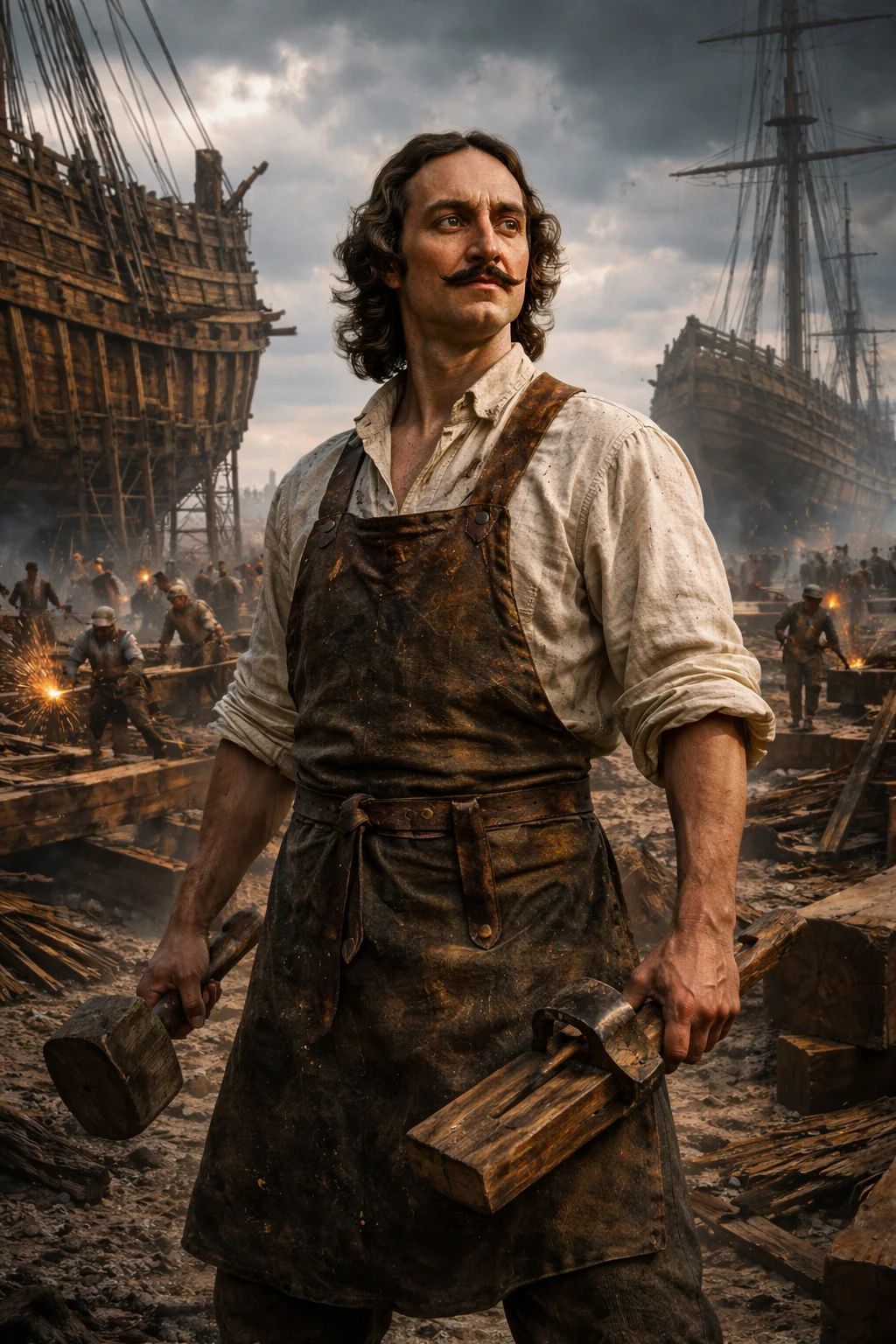
Featured historical fact: Peter I acquired knowledge of dentistry through his contacts with European specialists and personally extracted teeth from courtiers, servants, and soldiers. The collection of the Kunstkamera in St. Petersburg preserves dozens of teeth traditionally associated with those procedures. To the tsar, governing, constructing ships, and pulling a tooth belonged to the same obsession: personally understanding and mastering the mechanisms of the world (Hughes, 2002).
He wanted to transform an entire empire with the impatience of a man repairing a machine.
Peter the Great created a navy, reformed the army, subordinated the Church to the state, promoted technical schools, and shifted Russia’s political center toward the Baltic Sea. He also imposed exhausting labor, crushed rebellions with extreme brutality, and permitted his own son to be tortured during a treason investigation.
Under him, Russia became a major European power.
The price was paid by those who could not refuse.
Peter the Great: The Tsar Who Rebuilt Russia Without Asking What It Would Cost
Discover this story on our YouTube channel.
A life told through places and turning points

Enter the archive
An authentic object preserved by a cultural institution brings us closer to the world behind this life.
- Collection
- Wikimedia Commons
- Rights
- Public domain
https://www.dorotheum.com/en/auctions/current-auctions/kataloge/list-lots-detail/auktion/10661-old-master-paintings/lotID/104/lot/1714780-anton-schoonjans.html
A Child Surrounded by a Struggle for Power
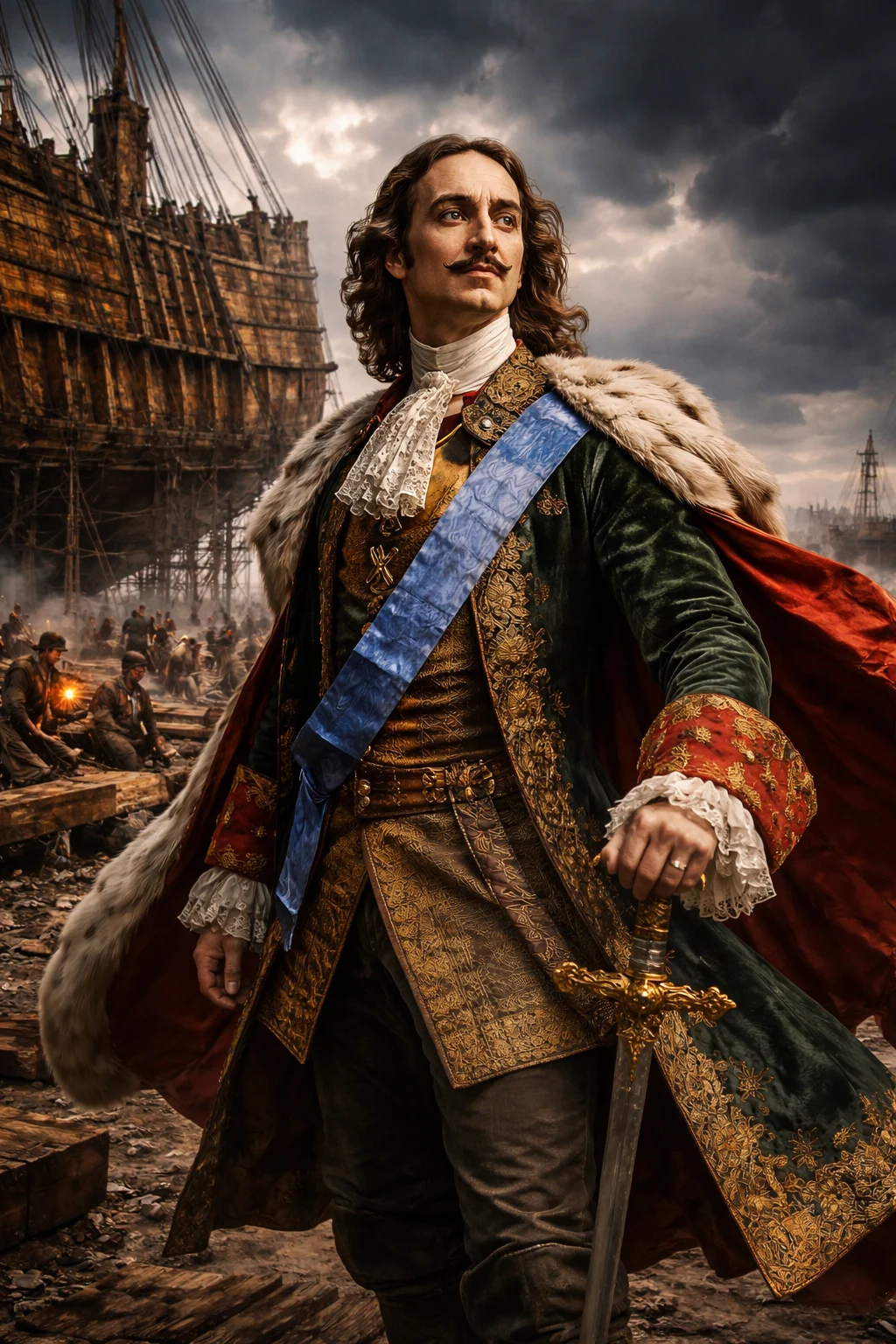
Peter Alexeyevich was born in Moscow on June 9, 1672, according to the Gregorian calendar. He was the son of Tsar Alexis I and his second wife, Natalia Naryshkina.
The death of his half-brother, Tsar Feodor III, in 1682 produced a dangerous succession dispute. Two court families supported different candidates: the Miloslavskys backed Ivan, Peter’s half-brother, while the Naryshkins protected the young Peter.
The conflict provoked a rebellion by the streltsy, military corps stationed in Moscow. During the unrest, several relatives and allies of the Naryshkins were murdered. Ten-year-old Peter witnessed part of the violence, an experience that probably contributed to his later distrust of the streltsy and the factions surrounding the court (Bushkovitch, 2001).
The political solution was to crown Ivan V and Peter I simultaneously. Because both were young and Ivan’s health was fragile, their sister Sophia Alexeyevna assumed the regency.
Peter possessed a crown, but he did not yet govern.
Armies Built as Games
For much of his adolescence, Peter remained away from the center of power on estates outside Moscow. There, he organized groups of young noblemen, servants, and companions to practice military exercises.
Those so-called “play regiments” gradually ceased to be entertainment. They became the Preobrazhensky and Semyonovsky regiments, which later formed the core of his new imperial guard and played a major role in imperial politics (Massie, 1980).
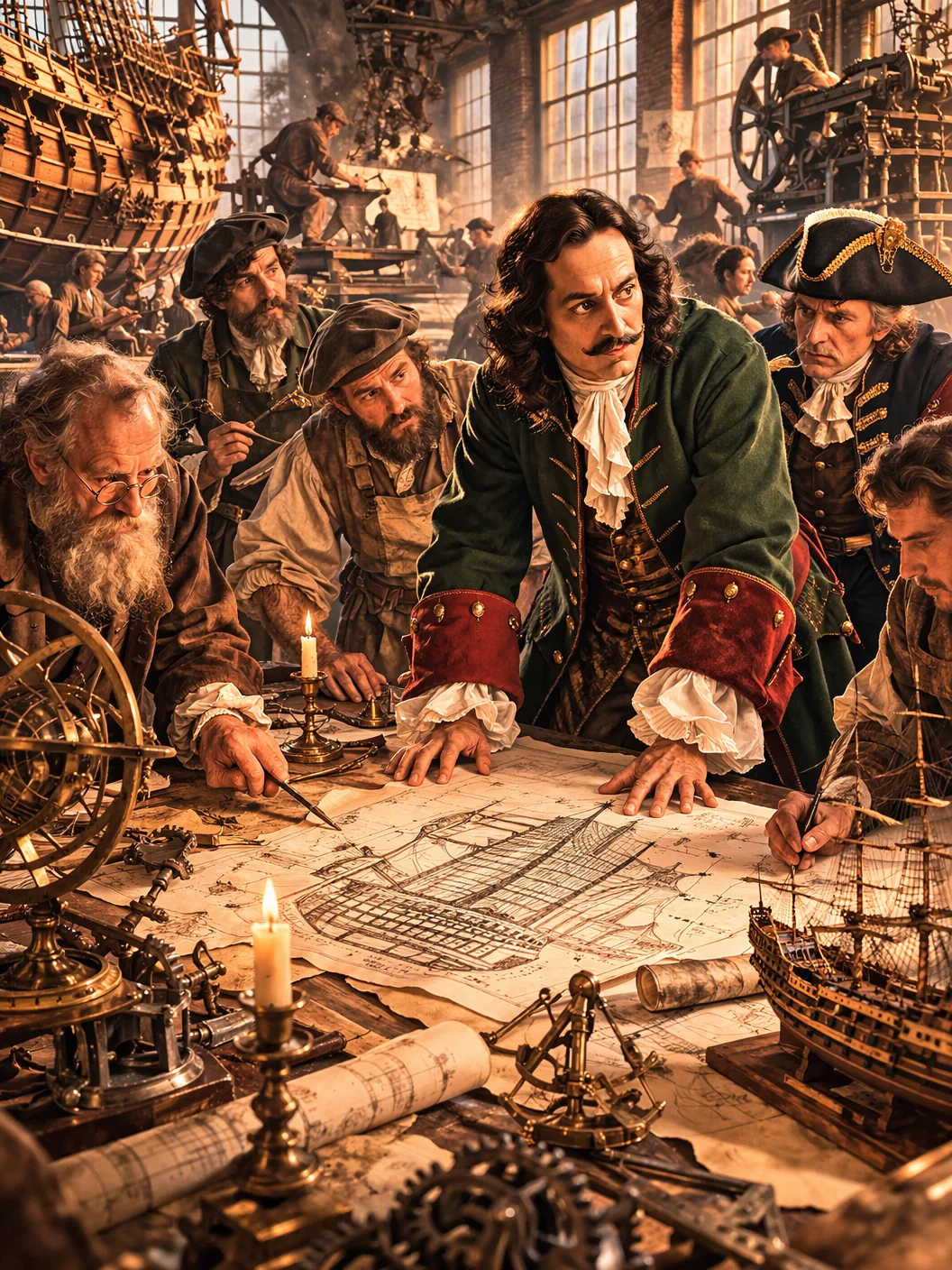
Peter was fascinated by artillery, navigation, carpentry, and machinery. He preferred shipyards and workshops to court ceremonies. His formal education was irregular, but he compensated for its deficiencies through extraordinary practical curiosity.
In 1689, another political crisis ended Sophia’s rule. Peter began controlling the government, although he formally shared the title of tsar with Ivan V until Ivan’s death in 1696.
At twenty-four, Peter became the sole ruler.
The Ruler Who Travelled Under Another Name
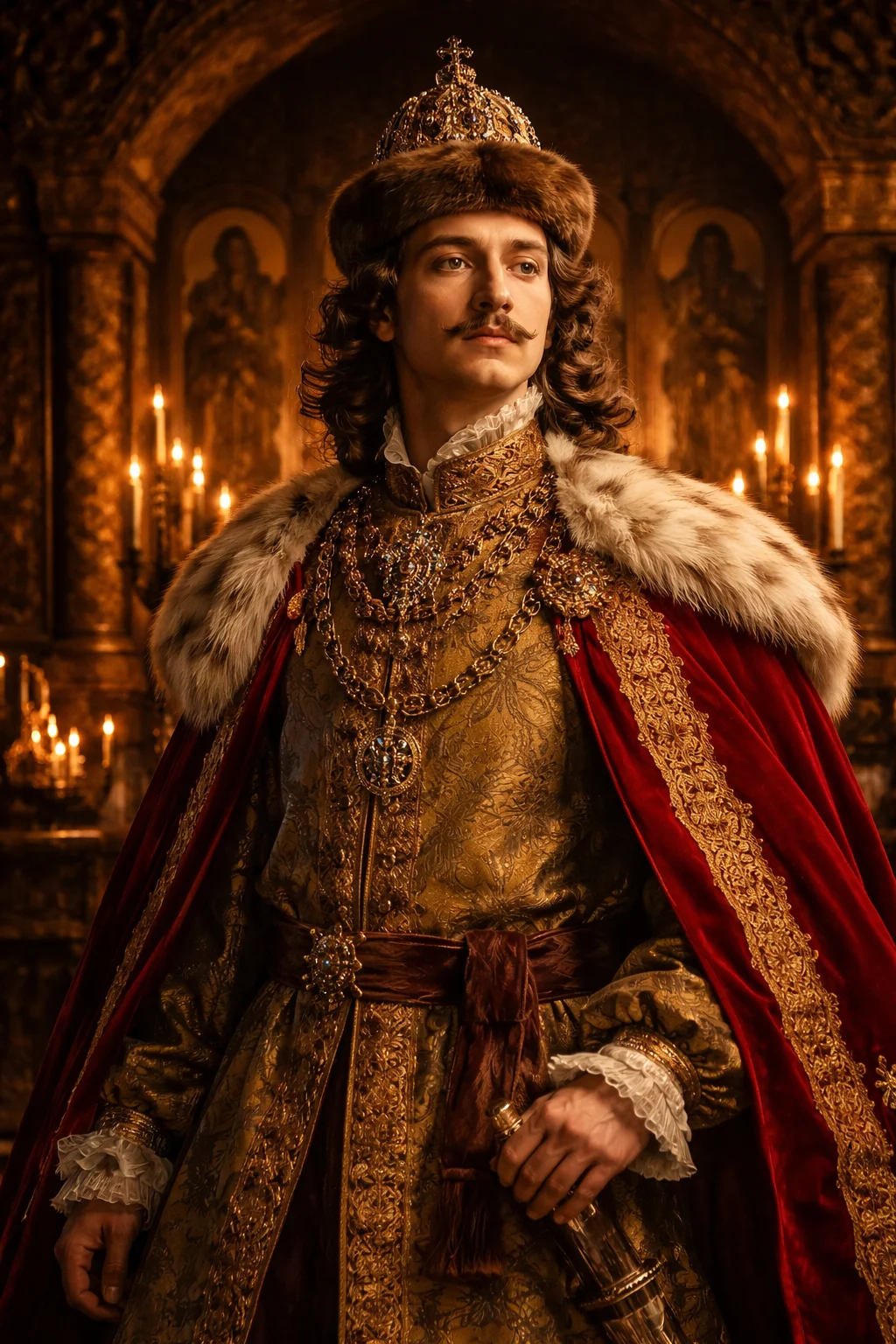
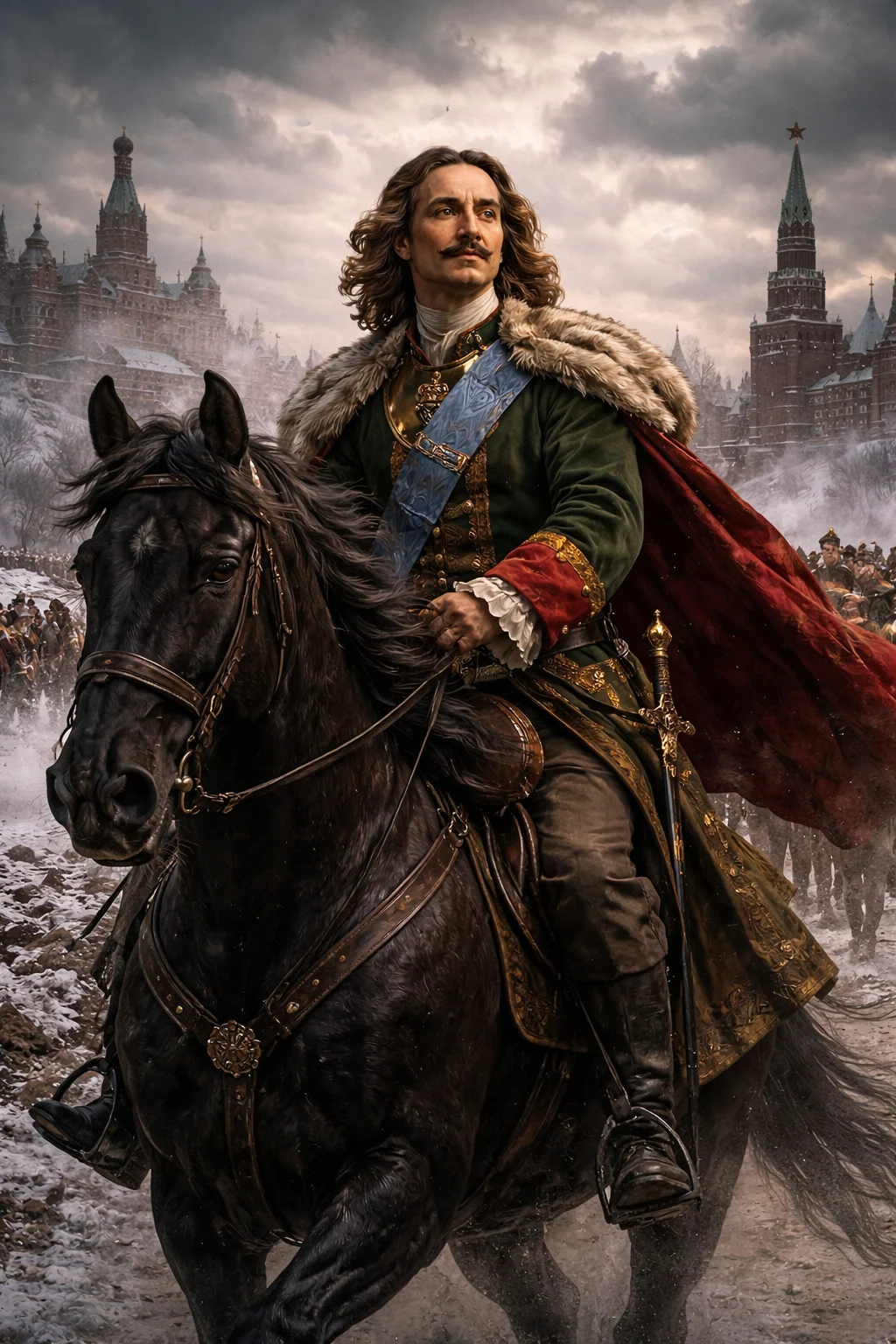
In 1697, Peter began the Grand Embassy, a diplomatic mission that travelled through several European territories. He journeyed under the name “Peter Mikhailov,” although his identity was difficult to conceal: he stood more than two meters tall and occupied too important a position within the delegation.
The journey had several purposes. He sought allies against the Ottoman Empire, needed to recruit specialists, and wanted to study Western European naval, military, and industrial techniques.
In the Netherlands, he worked in environments connected with shipbuilding. He later spent several months in England, where he visited dockyards, arsenals, factories, hospitals, observatories, and scientific collections. He also recruited engineers, physicians, navigators, and craftsmen willing to work in Russia (Hughes, 2002).
The military alliance he wanted never materialized. He returned, however, with something equally important: a vision of how European techniques might be used to strengthen the Russian state.
Peter did not intend to copy Western culture in its entirety. He wanted to appropriate the knowledge that enabled states to construct ships, manufacture weapons, organize permanent armies, and administer enormous territories.
The Rebellion That Interrupted the Journey
The Grand Embassy ended earlier than planned when Peter received news of another streltsy rebellion in 1698. The uprising had already been suppressed by the time he returned, but the tsar ordered a new investigation.
Hundreds of soldiers were interrogated, tortured, and executed. Others were sent into exile. Peter participated personally in the atmosphere of reprisal and permitted the executions to become a public demonstration of the crown’s power (Hughes, 1998).
The episode exposes one of the central contradictions of his reign. The man returning from the study of European science and technology simultaneously employed punishments intended to produce terror.
Modernization did not soften his power. It made that power more efficient.
Beards Cut and Calendars Changed
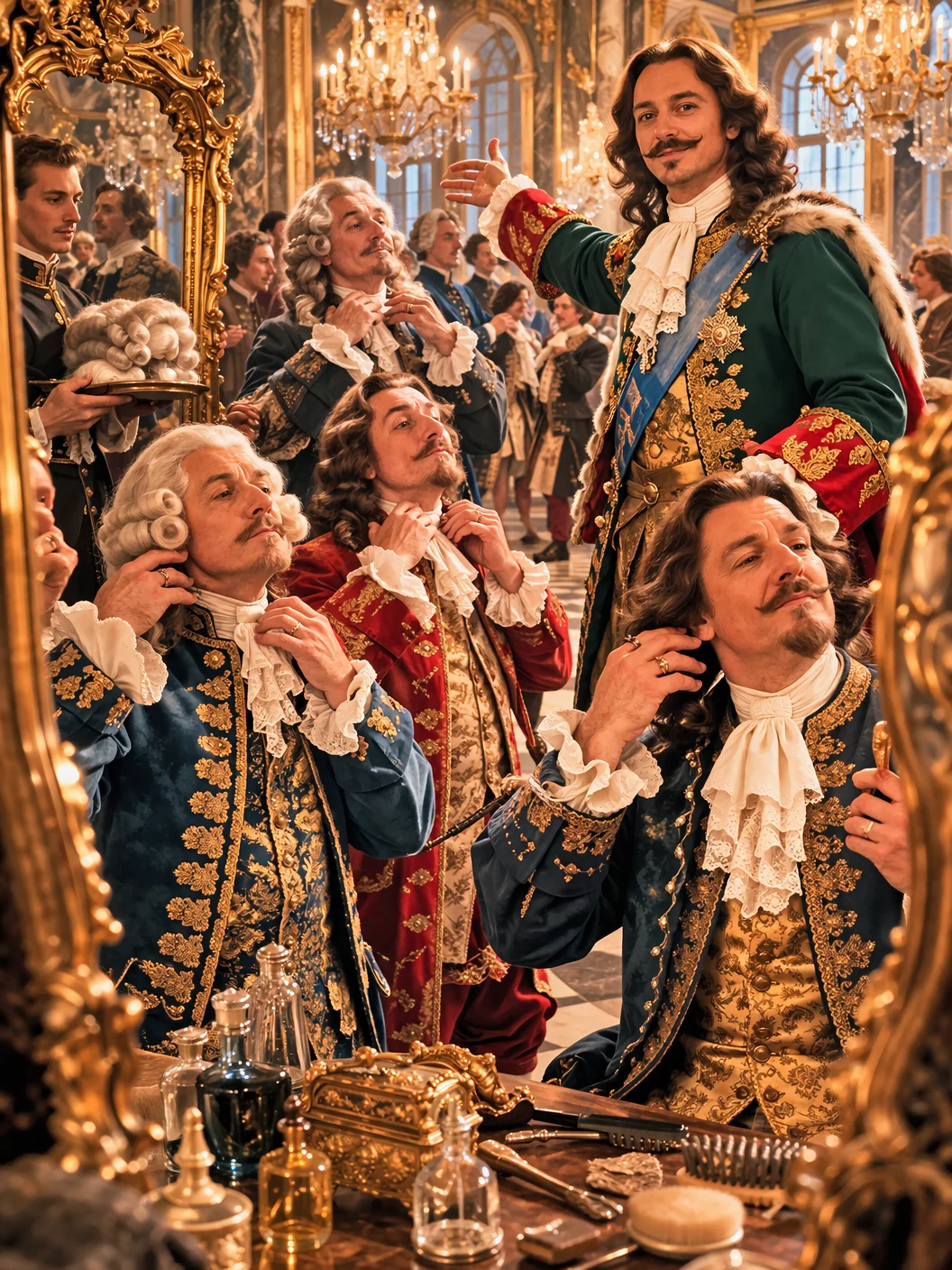
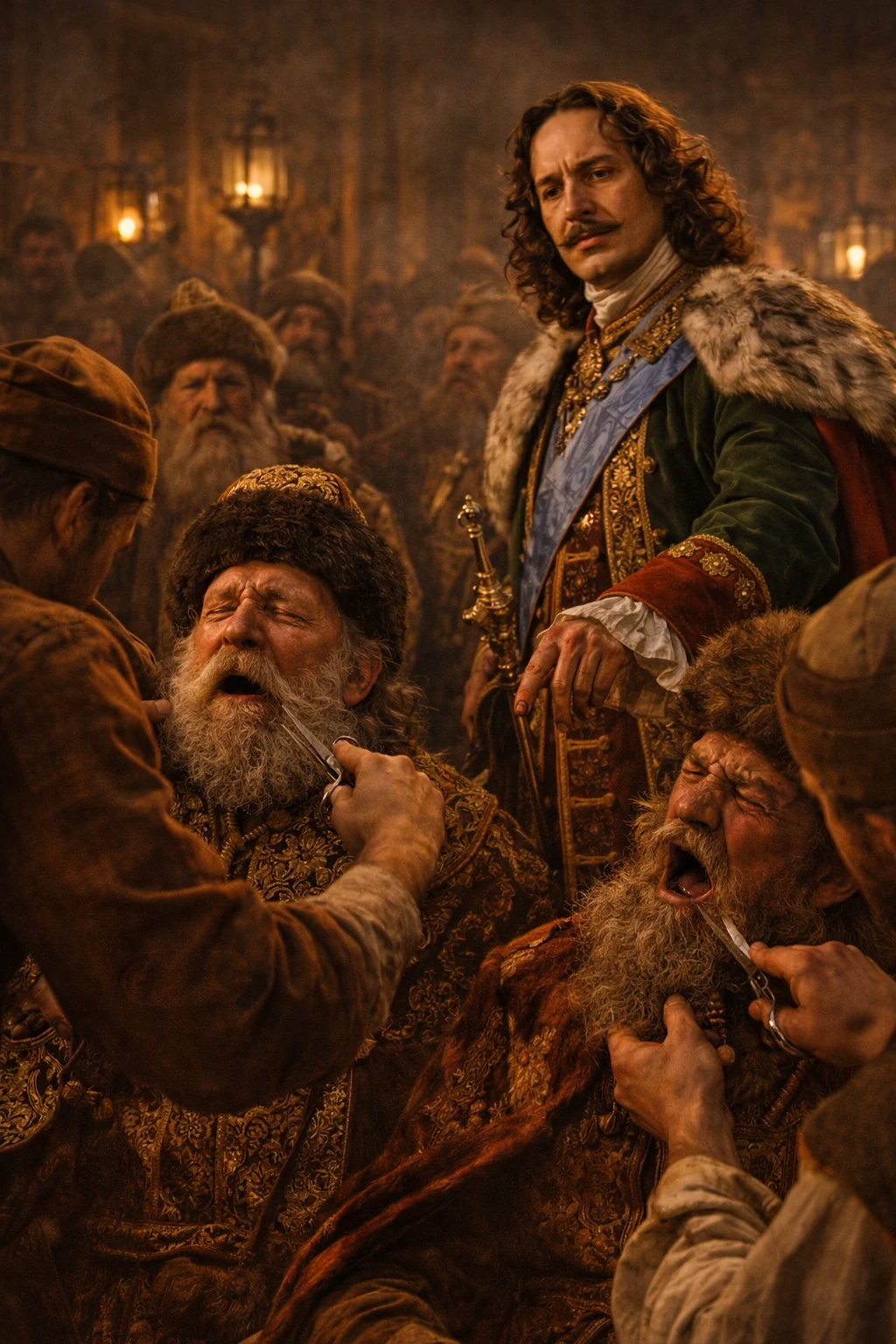
The most familiar image of his reforms is the campaign against traditional beards. Peter required many members of the elite to adopt Western-style clothing and imposed a tax on men who wished to retain their beards. Taxpayers could receive metal tokens proving that they had paid.
For many Russians, a beard was not a trivial detail. It was connected with religious tradition, masculinity, and Orthodox identity. Cutting it demonstrated that the state could intervene even in the faces of its subjects (Cracraft, 2003).
Peter also changed the civil calendar, promoted new forms of court sociability, and required noblewomen to attend social gatherings from which they had previously remained excluded.
These measures are often described as opening Russia to Europe. They also constituted a form of cultural discipline. Peter’s modernization offered no choice: it was imposed from above and could reach clothing, hair, customs, and family life.
The Defeat That Forced Him to Learn
In 1700, Russia entered the Great Northern War against the Swedish Empire of Charles XII. Peter wanted secure access to the Baltic Sea and an end to Swedish dominance in the region.
The beginning was disastrous.
At the Battle of Narva, Swedish forces defeated a much larger but poorly organized Russian army. For another ruler, the humiliation might have ended the war. For Peter, it became a lesson.
He reorganized the army, expanded recruitment, developed the artillery, and created industries capable of producing weapons, uniforms, and supplies. The war forced the state to demand more taxes, workers, and soldiers from a population with little ability to resist (Hughes, 1998).
In 1709, the Russian victory at Poltava destroyed Charles XII’s main invading force and transformed the political balance of northern Europe.
The war ended in 1721 with the Treaty of Nystad, which confirmed important Russian conquests along the Baltic. Peter then adopted the title of emperor of all Russia.
The tsar defeated at Narva had turned failure into the school of an empire.
A Capital Raised Against the Land
In 1703, during the war, Peter founded St. Petersburg on territory captured from Sweden near the mouth of the Neva River.
The location was wet, marshy, and difficult to supply. Its position, however, allowed Russia to face the Baltic and connect with European maritime routes. The new city would not merely be a capital; it would be a political declaration constructed in stone.
Thousands of peasants, soldiers, craftsmen, and prisoners were sent to work on fortifications, canals, buildings, and shipyards. Disease, cold, food shortages, and harsh labor conditions caused numerous deaths.
The extreme figures repeated in later accounts—tens or even hundreds of thousands of dead—cannot be established reliably. The absence of a secure total does not erase the documented suffering or the compulsory nature of much of the labor (Hughes, 1998).
Peter forced nobles and officials to establish residences in the new city. During certain periods, he also restricted stone construction elsewhere so that masons and materials would be directed toward St. Petersburg.
The city became his “window to Europe,” but that window was opened through commands that few could refuse.
Reforming the State to Feed the War
Many of Peter’s reforms served a specific necessity: maintaining the army and collecting the resources required to sustain it.
He established a Governing Senate, reorganized administrative departments into colleges, and changed the taxation system. A household tax was replaced by a poll tax imposed upon males from taxable classes. The change increased revenue and allowed the state to exercise more direct control over the population (Bushkovitch, 2001).
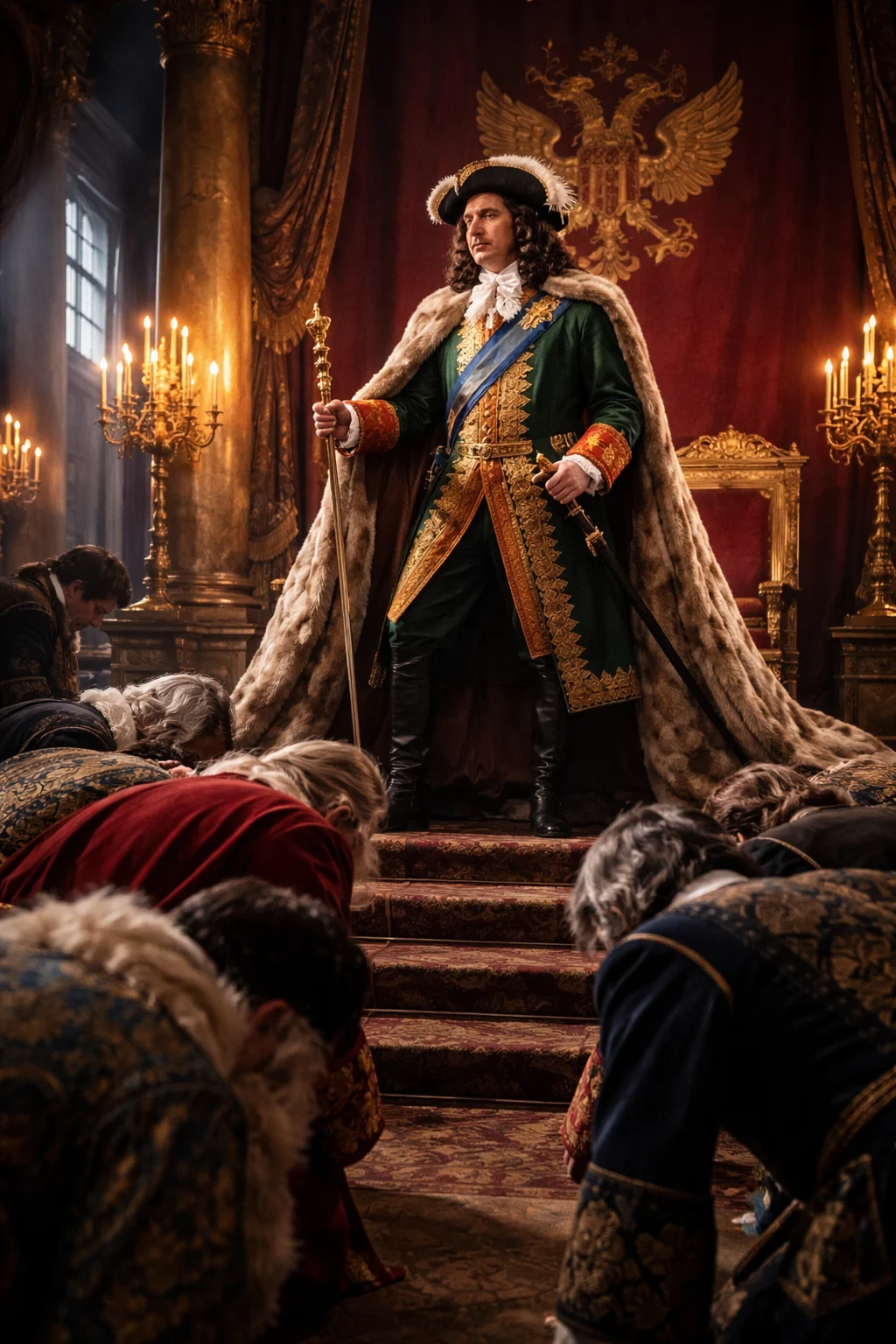
In 1722, Peter introduced the Table of Ranks, which organized military, civil, and court service into fourteen grades. In theory, it permitted advancement through service to the state rather than through birth alone. In practice, the nobility retained enormous advantages but became obligated to serve within a hierarchy controlled by the sovereign (Cracraft, 2003).
Peter also promoted schools of navigation, engineering, artillery, and medicine. He introduced a simplified civil typeface for nonreligious publications, encouraged the translation of technical manuals, and supported the establishment of an Academy of Sciences, inaugurated shortly after his death.
He did not pursue knowledge from a belief in equality. He needed people capable of administering, supplying, and defending the empire he was building.
The Church Beneath the Crown
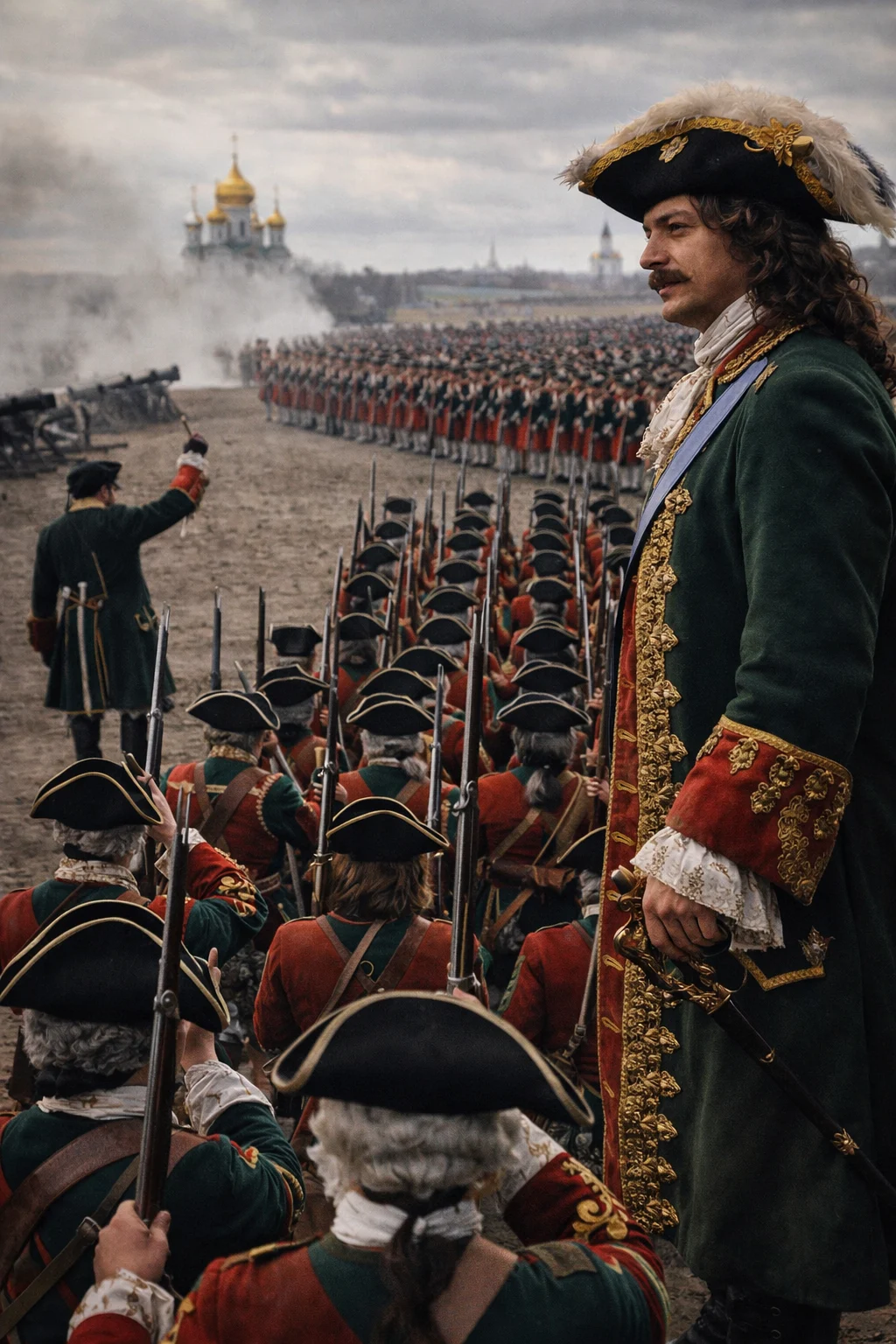
After the death of Patriarch Adrian in 1700, Peter prevented the election of a successor with full powers. He eventually replaced the patriarchate with the Governing Holy Synod in 1721.
The Orthodox Church was placed under an institution supervised by the state. The emperor no longer faced a single ecclesiastical authority capable of acting as a counterweight (Cracraft, 2003).
The reform reveals the central principle of his project: no important structure could remain outside the service of the state.
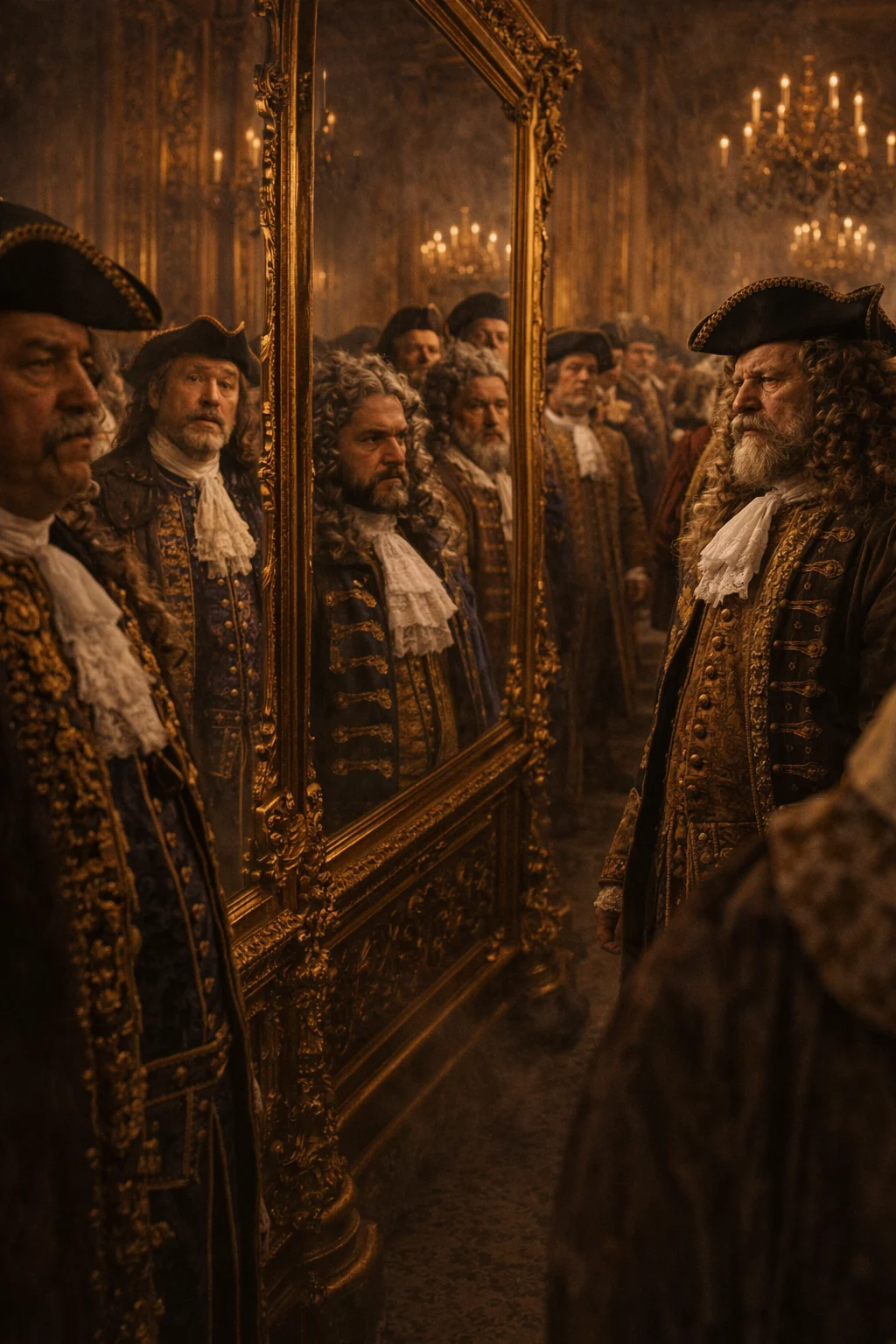
His interest in science and collections belonged to the same transformation. He founded the Kunstkamera to gather natural specimens, instruments, anatomical preparations, and curiosities. He intended to challenge superstition by showing that unusual phenomena could be observed and classified rationally.
His method of spreading knowledge, however, retained the defining characteristic of his other reforms: the country was to be enlightened by imperial command.
The Son Who Did Not Want to Resemble Him
The darkest episode of Peter’s family life was his conflict with his eldest son, Tsarevich Alexei Petrovich, born during his first marriage to Eudoxia Lopukhina.
Alexei resisted many of his father’s military and political demands. He preferred a more traditional environment and maintained relationships with people dissatisfied with the reforms. Peter interpreted this resistance as a threat to the survival of his project.
In 1716, Alexei fled to Habsburg territory. The tsar’s representatives persuaded him to return to Russia under promises of mercy. Once there, he was forced to renounce his succession rights, arrested, and interrogated.
A commission found him guilty of treason and sentenced him to death. During the investigation, he was tortured for information about his contacts and possible conspirators (Bushkovitch, 2001).
Alexei died in prison on June 26, 1718, before the sentence could be publicly carried out. The sources indicate that he had undergone another session of torture shortly before his death (Hughes, 2002).
Peter had demanded that his son choose between serving his project and renouncing the succession. In the end, he allowed the state he was building to destroy his own heir.
The crown did not merely weigh more than Alexei’s life.
It weighed more than fatherhood.
An Emperor Without a Designated Successor
In 1722, Peter established that the sovereign could freely select a successor rather than automatically follow the traditional principle of primogeniture.
The policy was intended to prevent an incapable ruler—or one opposed to the reforms—from inheriting the empire. Peter, however, died without leaving an undisputed nomination.
During his final years, he suffered serious urinary problems. His health deteriorated in late 1724, and he died in St. Petersburg on February 8, 1725, according to the Gregorian calendar (Hughes, 2002).
One tradition claims that he attempted to write a final command beginning with the words “Leave everything to…” before losing the ability to continue. The episode is not sufficiently authenticated and should not be treated as historical certainty.
After his death, court factions and the guards supported the accession of his wife, Catherine I.
The man who had attempted to regulate every structure within his empire left unresolved the most dangerous question facing a monarchy: who should occupy the throne after him?
Greatness and Its Bill
Peter the Great changed Russia’s position in the world. He gained access to the Baltic, created a navy, reformed institutions, and placed state service at the center of noble life. St. Petersburg embodied his determination to redirect the empire.
Modernization, however, does not necessarily mean freedom.
His reforms expanded the power of the state far more than the rights of its inhabitants. Taxation increased, serfdom became more firmly entrenched, and entire communities were compelled to provide men, resources, and labor (Hughes, 1998).
Peter could construct a ship with his hands, extract a tooth, and converse with foreign craftsmen. Such practical curiosity distinguished him from many monarchs. He was also convinced that Russia was material to be cut, moved, and reconstructed according to his will.
History called him “the Great” because of the power he left behind.
To understand the true weight of his crown, we must also look at those trapped beneath it.
References
Bushkovitch, P. (2001). Peter the Great: The struggle for power, 1671–1725. Cambridge University Press.
Cracraft, J. (2003). The Revolution of Peter the Great. Harvard University Press.
Hughes, L. (1998). Russia in the age of Peter the Great. Yale University Press.
Hughes, L. (2002). Peter the Great: A biography. Yale University Press.
Massie, R. K. (1980). Peter the Great: His life and world. Alfred A. Knopf.
More from this collection
Genghis Khan: The Man Who Conquered the World but Could Not Govern His Own Legend
Read story →
Catherine the Great: The Foreign Empress Who Conquered Russia and Was Condemned by an Obscene Lie
Read story →