In this storyOpen index
Amelia Earhart: The Woman Who Tried to Measure the World From the Air and Vanished at Her Final Frontier
Amelia Earhart and Fred Noonan vanished while searching for tiny Howland Island in the Pacific.

On July 2, 1937, a silver airplane was searching for an island that barely rose above the Pacific Ocean. Amelia Earhart and navigator Fred Noonan were inside. They had been in the air for nearly eighteen hours and were approaching Howland, a strip of land little more than two kilometers long. Nearby, the United States Coast Guard cutter Itasca waited to guide them.
The ship could hear Amelia’s transmissions, but she apparently could not receive its replies. Her voice arrived with increasing strength, suggesting that the airplane was close, although no one could see it. She reported that their fuel was running low. Later, she said they were flying along a position line of 157 to 337 degrees and would continue searching north and south.
It was the last clearly identified message.
Amelia Earhart was thirty-nine years old. She had already crossed the Atlantic twice, established speed and altitude records and flown alone over routes no other pilot—male or female—had completed before. Yet that flight did not end only with her disappearance. It also created one of the twentieth century’s greatest mysteries.
Behind the legend, however, was a far more complex woman than the smiling adventurer seen in photographs. Amelia turned her celebrity into an instrument for challenging the restrictions placed on women, even when doing so led her increasingly close to the limit.
Amelia Earhart’s final flight
A life told through places and decisive moments
Enter the archive
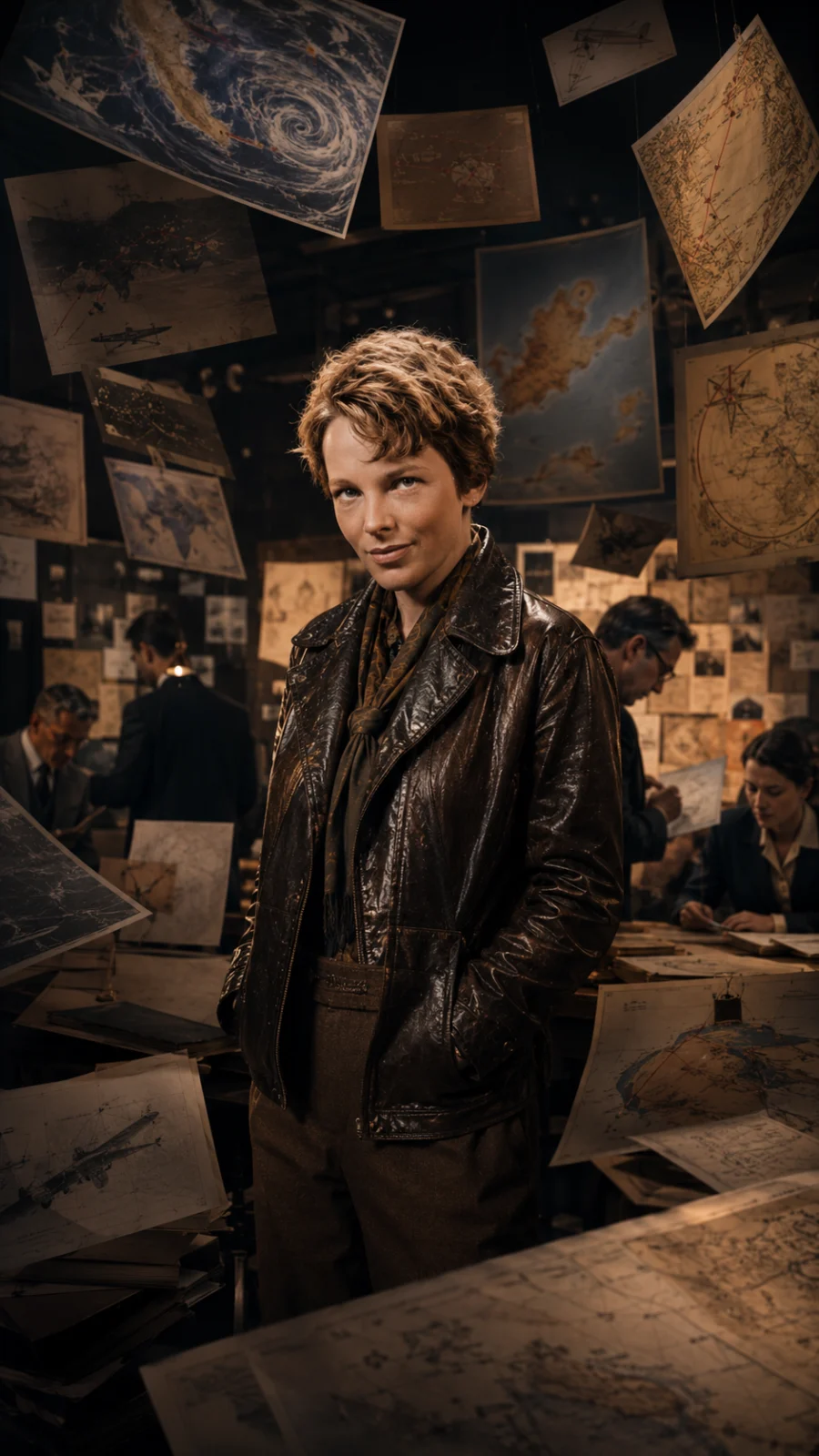
The U.S. National Archives preserves the Coast Guard cutter Itasca’s radio log of the last identified contacts with Earhart’s aircraft on July 2, 1937. The image in this card is a reconstruction, not the original document.
AI-generated visual reconstruction; not a historical document.
A Childhood Without an Instruction Manual

Amelia Mary Earhart was born on July 24, 1897, in Atchison, Kansas. Her childhood was shaped by frequent moves, her family’s financial difficulties and her father’s alcoholism. She attended six high schools in four years before graduating in Chicago in 1915 (Purdue University Libraries, n.d.).
From an early age, she showed little interest in the model of femininity expected of her. She collected newspaper clippings about women working in professions dominated by men and preferred exploring, climbing and repairing things to behaving like a conventional young lady.
During World War I, she worked as a nurse’s aide in Toronto, caring for wounded and ill soldiers. An airfield stood near the hospital. Watching those still-fragile and dangerous airplanes awakened her curiosity, although the decisive moment came after she moved to California.
In December 1920, she took a short passenger flight with pilot Frank Hawks. The experience lasted only a few minutes, but it changed her life. She began taking lessons from Neta Snook, one of the few female flight instructors in the United States, and worked several jobs to pay for them.
In 1921, she bought a small yellow Kinner Airster that she named The Canary. The following year, she climbed to approximately 14,000 feet and set a women’s altitude record. She was not yet a celebrity. She was a young pilot trying to remain in the air in an expensive, dangerous and almost entirely male activity (Rich, 1989).
The Flight That Made Her Famous Without Letting Her Fly
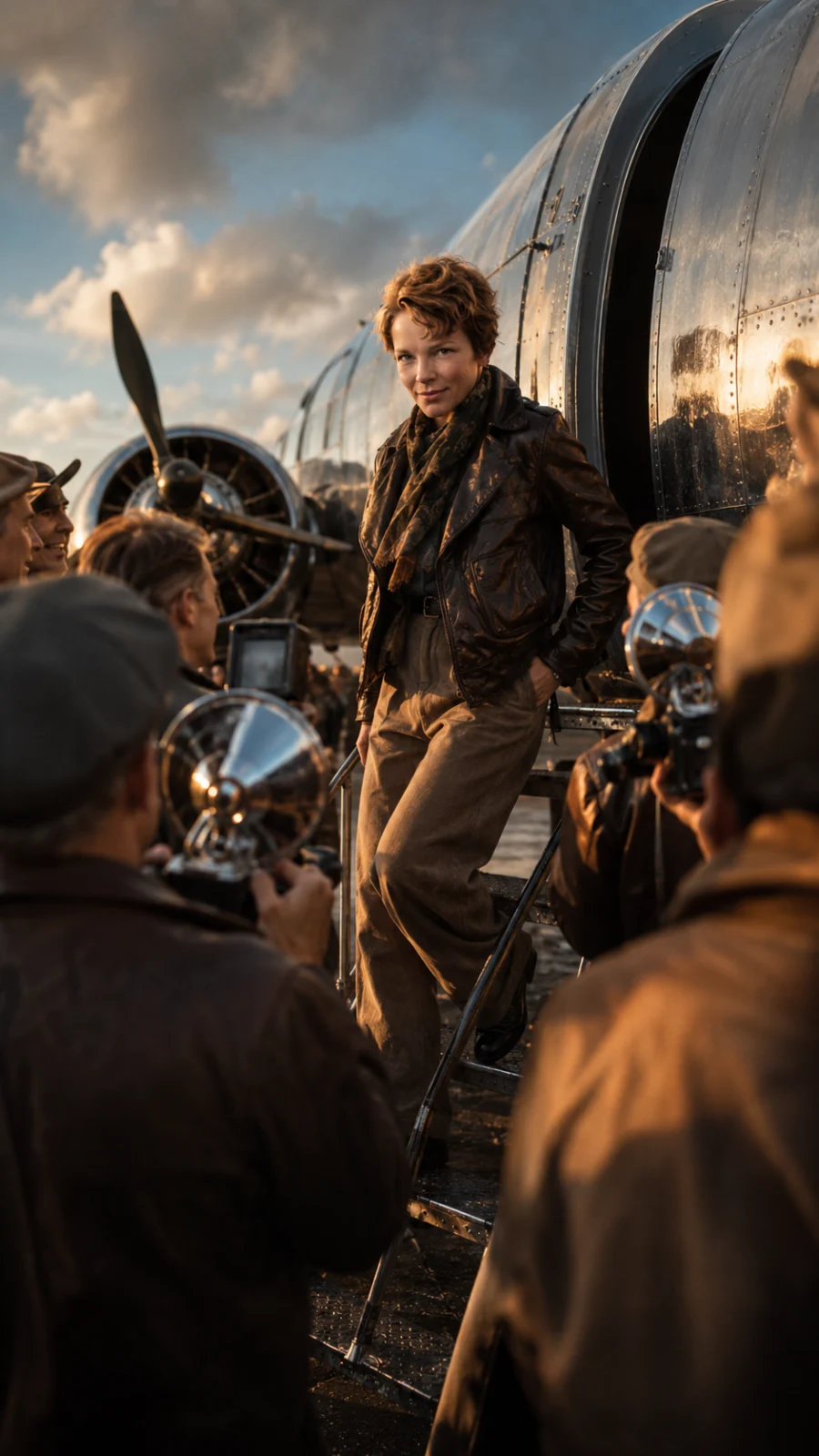
In 1928, American heiress Amy Phipps Guest wanted to finance the first transatlantic flight by a woman. She originally intended to participate herself, but her family objected. The organizers therefore began searching for a woman with flying experience and an image suitable for the press.
Amelia received an unexpected telephone call. She was offered a place aboard the trimotor Friendship, but Wilmer Stultz would control the aircraft, assisted by mechanic and copilot Louis Gordon. Amelia would be part of the crew without piloting during the main crossing.
The airplane departed Newfoundland on June 17, 1928, and reached Wales the following day. Amelia became the first woman to cross the Atlantic by airplane, but she refused to exaggerate her role. She said that during the journey she had been little more than baggage, “like a sack of potatoes” (Smithsonian National Air and Space Museum, n.d.).
The press nevertheless found her irresistible. Her physical resemblance to Charles Lindbergh allowed reporters to present her as a female version of the national hero. Publisher George Palmer Putnam arranged lectures, publications and public appearances. Amelia quickly understood that fame might appear superficial, but it could also finance new flights and create opportunities for other women.
Instead of accepting a record that others had obtained while carrying her as a passenger, she began preparing to cross the ocean on her own terms.
Five Years After Lindbergh
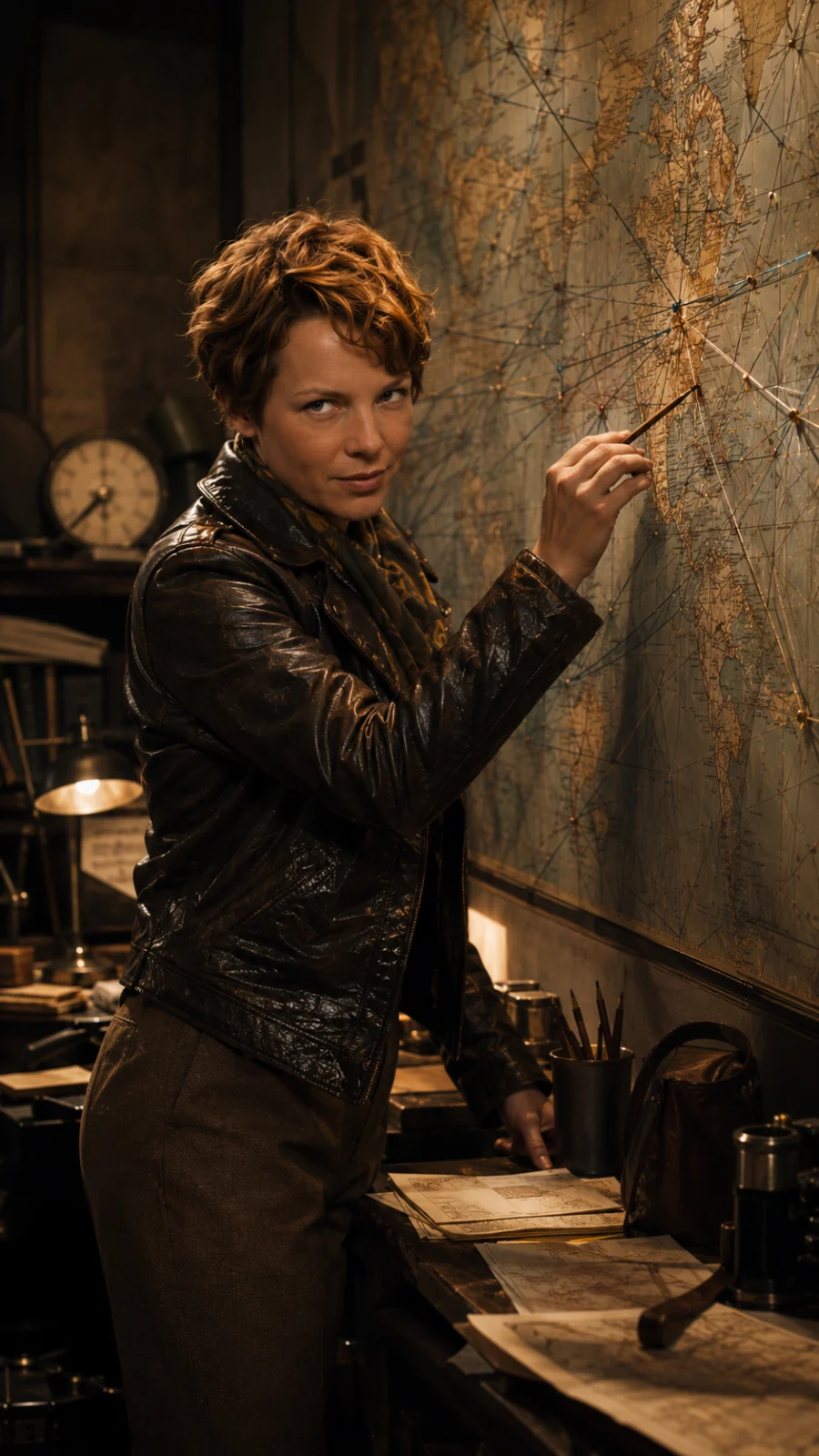
On May 20, 1932, exactly five years after Charles Lindbergh’s historic departure, Amelia took off alone from Harbour Grace, Newfoundland, in her red Lockheed Vega. She intended to reach Paris, but bad weather, ice on the wings, mechanical problems and a fuel leak made the original plan impossible.
After nearly fifteen hours, she landed in a field near Culmore, Northern Ireland. A worker approached and asked where she had come from. Her answer—“America”—summarized the magnitude of what had happened.
Amelia became the first woman and the second person, after Lindbergh, to cross the Atlantic alone and nonstop. She received the United States Distinguished Flying Cross and the French Legion of Honor. The flight proved that she was not simply the publicity figure of the 1928 expedition: she could pilot, navigate, improvise and survive without assistance (Butler, 1997).
She continued setting records. In 1932, she crossed the United States alone and nonstop. In January 1935, she became the first person to fly solo from Hawaii to the continental United States, following a route that had already killed other pilots. That same year, she flew from Los Angeles to Mexico City and from Mexico to New York.
Each achievement increased her prestige, but it also compelled her to seek a greater challenge.
More Than a Woman Inside an Airplane

Amelia understood that her public image carried political value. She openly argued that women should be able to work, compete and make decisions about their own lives. She helped establish The Ninety-Nines, an organization of female pilots named for its ninety-nine charter members, and in 1931 she became its first president (The Ninety-Nines, n.d.).
She also designed practical clothing for women and wrote books and articles about aviation. These activities were part of her business, but they also belonged to her cultural project: demonstrating that a woman could be modern, independent and professional without asking for authorization.
Beginning in 1935, she worked at Purdue University as a consultant on careers for women and as a technical adviser to the Department of Aeronautics. There she spoke with students about professions from which women had traditionally been excluded. Purdue also participated in financing the Lockheed Electra 10E she would use in her attempt to circle the world (Purdue University Archives and Special Collections, n.d.).
The pilot understood the tension between her principles and the publicity machinery surrounding her. George Putnam, who became her representative, promoter and eventually her husband, helped construct her public persona. Amelia nevertheless fought to retain control of her name, work and freedom.
The Little-Known Fact: The Letter She Delivered Before Her Wedding

Before marrying George Palmer Putnam on February 7, 1931, Amelia handed him an extraordinary letter. She had rejected his proposals several times and accepted only after explaining in writing the conditions under which she understood marriage.
She stated that she would not abandon her work or submit to traditional rules of fidelity and possession. She also requested that, if they were unhappy after a year, they should be able to separate without deception. The letter survives in the archives of Purdue University (Earhart, 1931).
In 1932, she also wrote to The New York Times to protest the newspaper’s habit of calling her “Mrs. George P. Putnam.” She intended to remain publicly known as Amelia Earhart, not disappear beneath her husband’s name.
These documents reveal a less familiar dimension of her defiance. Amelia did not seek freedom only inside an airplane. She also tried to build a relationship in which marriage did not mean obedience or the loss of identity. Her ideas were radical in 1931 and remain among the clearest expressions of her independence.
The World Flight That Began Twice
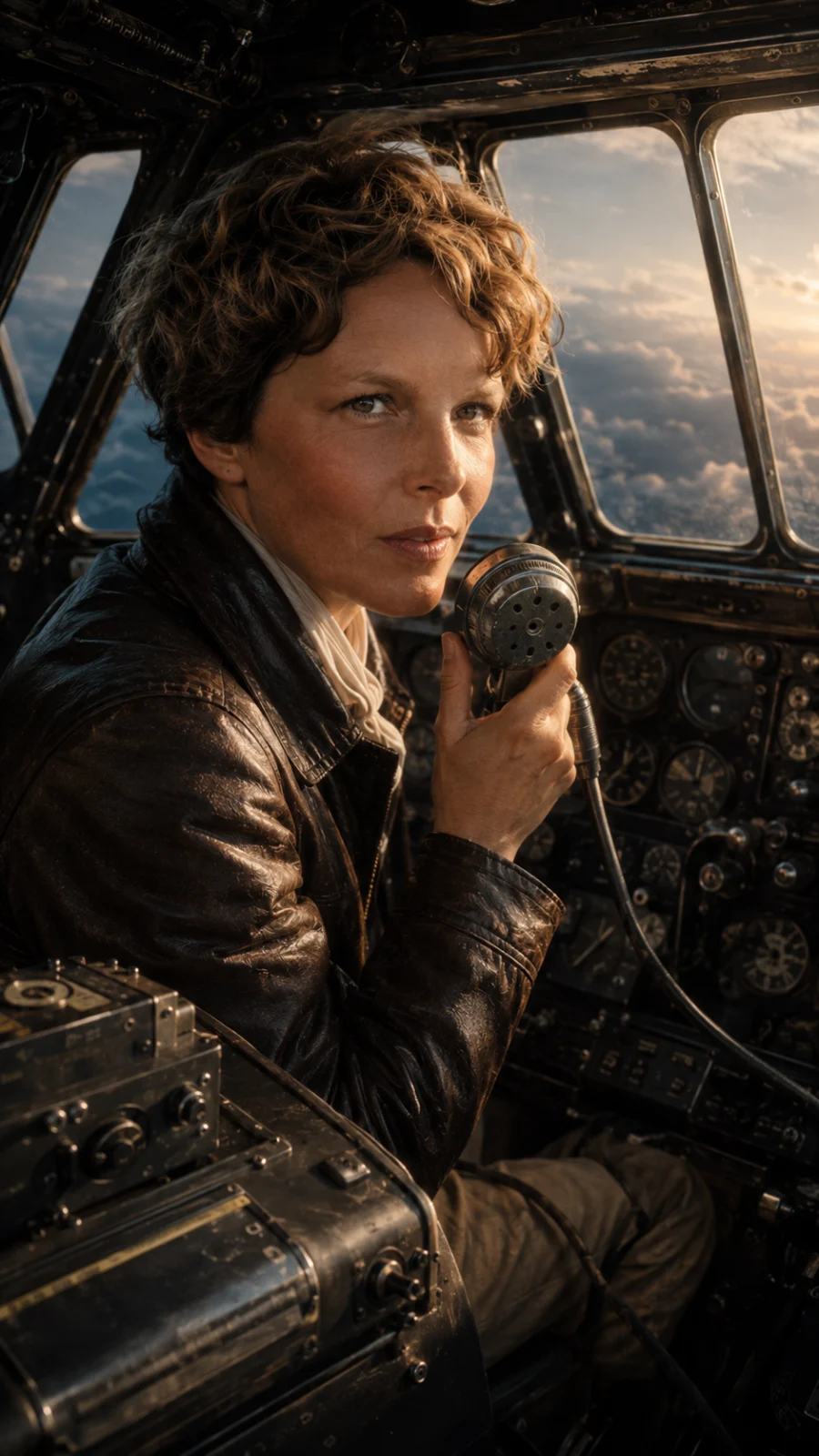
Amelia wanted to circumnavigate the globe along a route close to the equator, longer and more demanding than previous world flights. Her Lockheed Electra was modified with additional fuel tanks. Fred Noonan, a former Pan American Airways navigator with extensive experience in oceanic navigation, joined the project.
The first attempt began in March 1937 and headed west. After reaching Hawaii, the Electra was badly damaged during takeoff at Luke Field. No one was killed, but the aircraft had to be shipped back to California for repairs.
The second attempt began in May and proceeded eastward. Amelia and Noonan crossed the United States, South America, Africa, India and Southeast Asia. By the time they reached Lae, New Guinea, they had completed approximately 35,000 kilometers. Only the Pacific remained.
Their next destination was Howland, a tiny island about 4,000 kilometers from Lae. Finding it required extremely precise navigation. Noonan could calculate their position by observing the stars and sun, but clouds interfered with those observations. Radio guidance was supposed to provide additional help; problems involving frequencies, coordination and reception, however, prevented effective two-way communication with the Itasca (Smithsonian National Air and Space Museum, 2025).
The Morning They Could Hear Her but Could Not Find Her
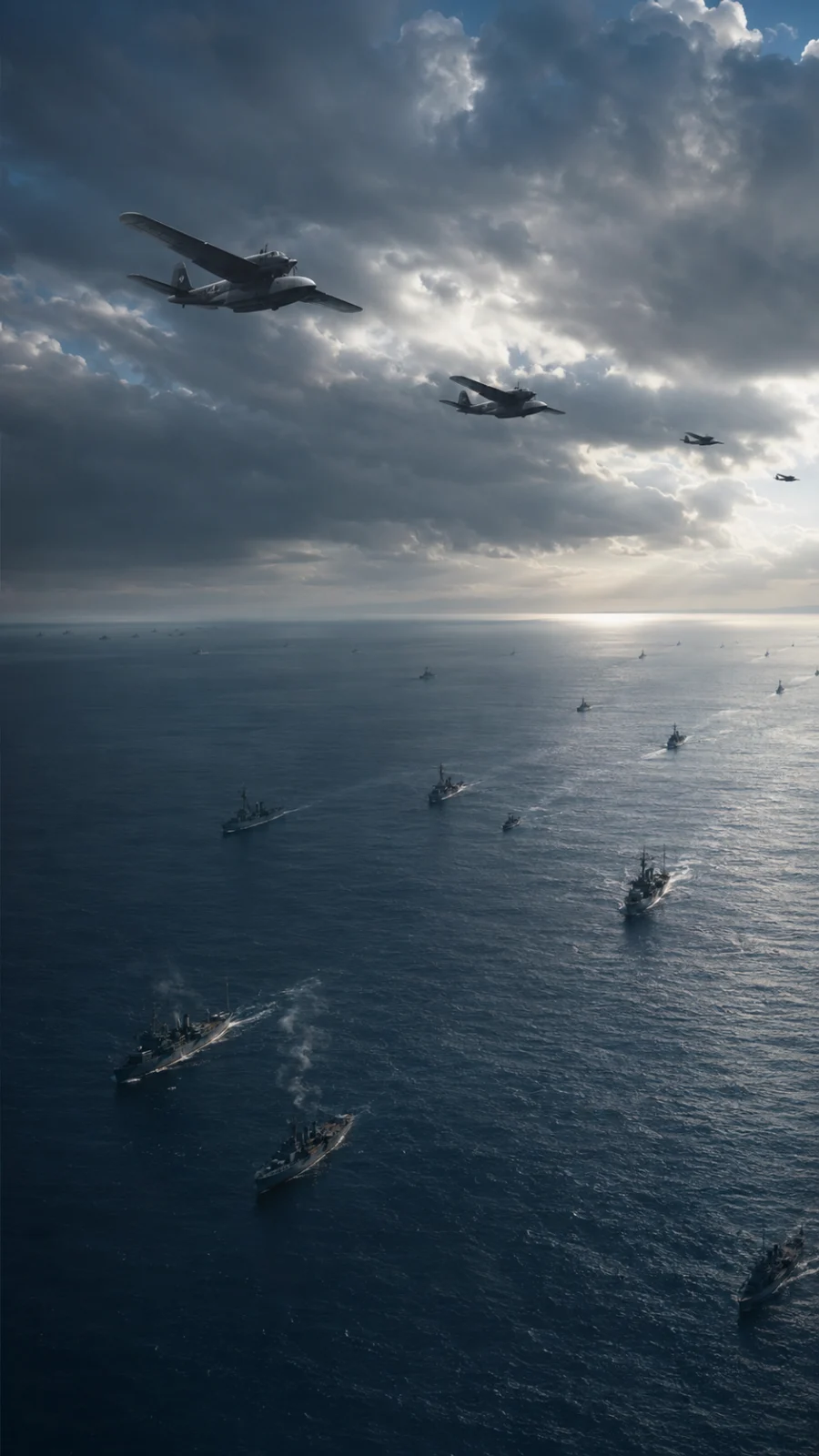
Amelia and Noonan departed Lae on July 2, 1937. As they approached Howland, the Itasca transmitted signals and produced a column of smoke to make the island easier to locate.
The surviving radio log records an increasingly urgent situation. Amelia reported that she expected to be over the ship but could not see it and that fuel was running low. The Itasca crew heard her voice with great strength, but Amelia did not respond to the instructions they attempted to send.
At 8:43 a.m., according to the ship’s local time, she reported being on the 157-337 line and said they were running north and south. That line may have passed close to Howland, but it did not reveal where along it the airplane was located. The Electra then disappeared from the verifiable record (National Archives and Records Administration, 1937/2024).
The United States Navy and Coast Guard organized an extraordinary search involving ships and aircraft. Hundreds of thousands of square kilometers were examined without finding confirmed wreckage, fuel, luggage or evidence of the occupants. The official search ended in July. Amelia was legally declared dead on January 5, 1939.
What We Know and What We Only Imagine
The most widely accepted explanation is that Earhart and Noonan failed to locate Howland, exhausted their fuel and crashed into the ocean near the island. This interpretation is consistent with their final transmissions, but the airplane has never been found.
Another hypothesis argues that they followed the position line southeast and reached Nikumaroro, then known as Gardner Island, where they may have survived temporarily as castaways. Objects and archaeological remains recovered from the island have been associated with Amelia by some investigators, but none conclusively proves that the Electra landed there.
Stories also emerged claiming that she had been captured by Japanese forces, executed or used as a spy by the United States government. Decades of documentary investigation have produced no solid evidence for these accounts. Government records released thus far contain search reports, communications and later rumors, but no secret proof that solves the case (National Archives and Records Administration, 2025).
No theory should therefore be presented as a definitive solution. Until identifiable wreckage or equivalent evidence is discovered, the disappearance of Amelia Earhart and Fred Noonan remains unresolved.
The Woman Behind the Mystery

The mystery eventually consumed part of her biography. Amelia is often remembered for the place she failed to reach rather than for all the places she successfully reached.
She was not the first woman to fly an airplane, nor was she the most technically experienced female aviator of her generation. She also participated actively in constructing her own celebrity. Acknowledging these facts does not diminish her achievements. Instead, it reveals her real ability: she used public attention to finance expeditions, advocate for women in aviation and transform what a woman could imagine for her future.
Her final flight was dangerous, and its preparation had limitations. But Amelia did not fly merely to become a legend. She wanted to demonstrate that the boundaries assigned to women were not natural laws, but conventions that could be crossed.
She went too far because the next horizon always seemed more important than the previous one. The Pacific concealed her fate, but it could not erase the question she left suspended in the air: How many limits are real, and how many remain only because no one has yet dared to cross them?
References
- Butler, S. (1997). East to the dawn: The life of Amelia Earhart. Da Capo Press.
- Earhart, A. (1931, February 7). Letter to George Palmer Putnam [Letter]. George Palmer Putnam Collection of Amelia Earhart Papers, Purdue University Archives and Special Collections. https://earchives.lib.purdue.edu/digital/collection/earhart/id/2988/
- National Archives and Records Administration. (2024). Radio log of the last communications of Amelia Earhart [Original work recorded in 1937]. https://www.archives.gov/college-park/highlights/earhart-log
- National Archives and Records Administration. (2025). Records related to Amelia Earhart. https://www.archives.gov/research/ameliaearhart
- Purdue University Archives and Special Collections. (n.d.). Amelia Earhart at Purdue papers. https://archives.lib.purdue.edu/repositories/2/resources/8
- Purdue University Libraries. (n.d.). Amelia Earhart biographical sketch. https://collections.lib.purdue.edu/aearhart/biography.php
- Rich, D. L. (1989). Amelia Earhart: A biography. Smithsonian Institution Press.
- Smithsonian National Air and Space Museum. (2025, May 19). Answering your questions about Earhart’s disappearance—except the big one. https://airandspace.si.edu/stories/editorial/answering-your-questions-about-earharts-disappearance-except-big-one
- Smithsonian National Air and Space Museum. (n.d.). Amelia Earhart. https://airandspace.si.edu/collection-objects/amelia-earhart/nasm_A19500108000
- The Ninety-Nines. (n.d.). About us. https://ninety-nines.org/about-us/
More from this collection

Antoine de Saint-Exupéry: The Writer Who Crossed Deserts, Wars, and Skies Until He Disappeared Into His Own Legend
Read story →
Ibn Battuta: The Traveler Who Left for Mecca and Took Almost Thirty Years to Return
Read story →