
In this storyOpen index
Sylvia Plath: The Poet Who Lived Beneath a Bell Jar and Hid Spring Inside Her Final Poems
Sylvia Plath’s original Ariel manuscript ended with bees returning in spring.
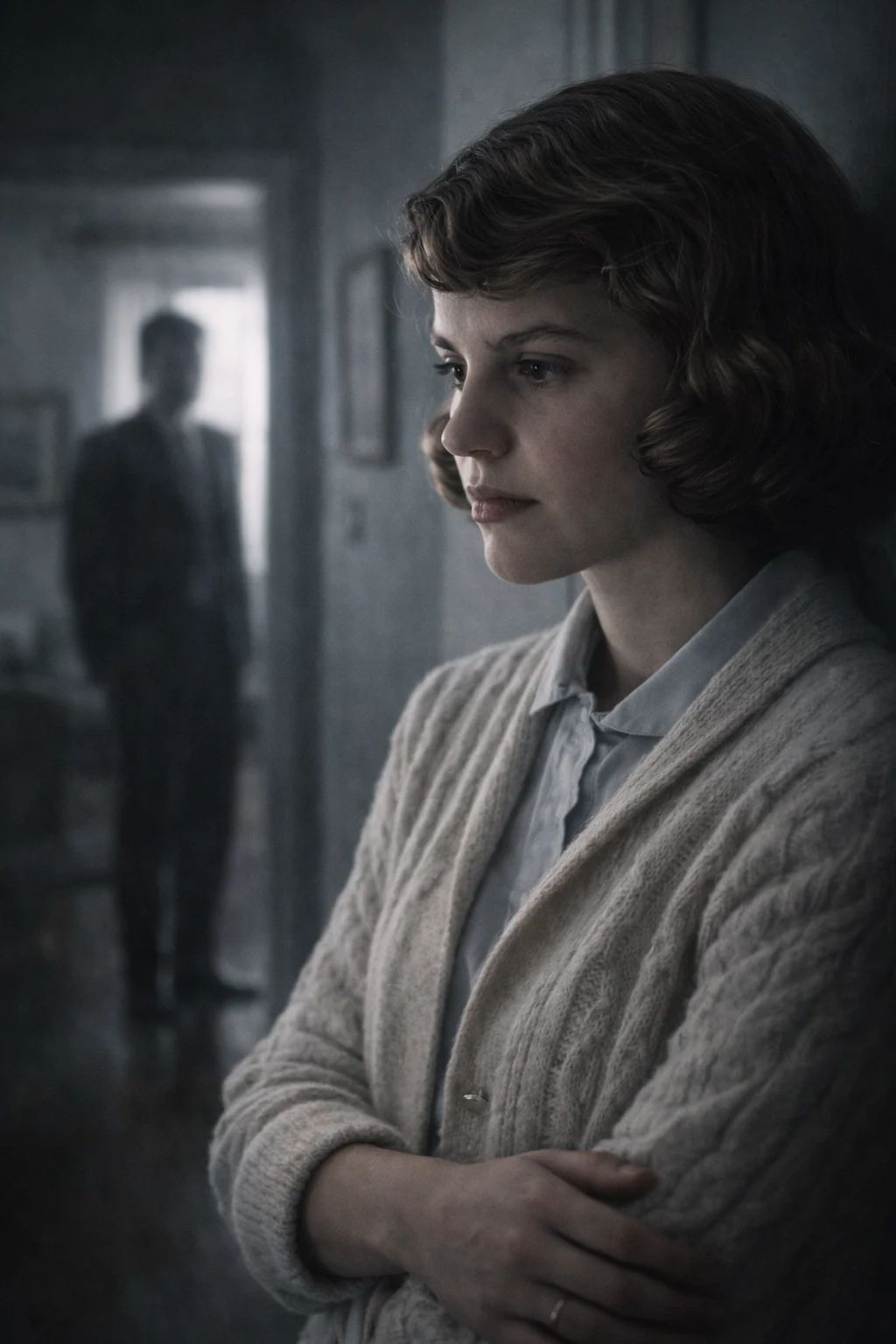
For years, Sylvia Plath wrote as if every word might open an escape route. She wrote to break free from the image of the perfect daughter, brilliant student, exemplary wife and tireless mother that the world expected her to become. Yet the more she tried to shed those identities, the more deeply she entered her own consciousness.
Her work emerged from that confrontation. In her poems, domestic life could become a prison, the body a political territory, marriage an unequal contract and family memory a force capable of speaking from the grave. Nothing remained stable: a kitchen, mirror, beehive or vase of tulips could become either a threat or a promise of rebirth.
For many years, her life was read backward, as though everything she had written had inevitably led to her death. That interpretation turned an extraordinarily disciplined author into a figure defined almost entirely by suffering. Sylvia Plath experienced severe depressive illness and died by suicide at thirty, but she did not write only about death. She also wrote about ambition, motherhood, the desire for independence and the stubborn need to begin again.
Even the book that established her legend was rearranged after her death. In the manuscript she prepared, the final poems did not end in darkness: they ended with bees surviving the winter and flying out again toward spring.
Sylvia Plath: the voice behind the bell jar
A life told through places and decisive moments
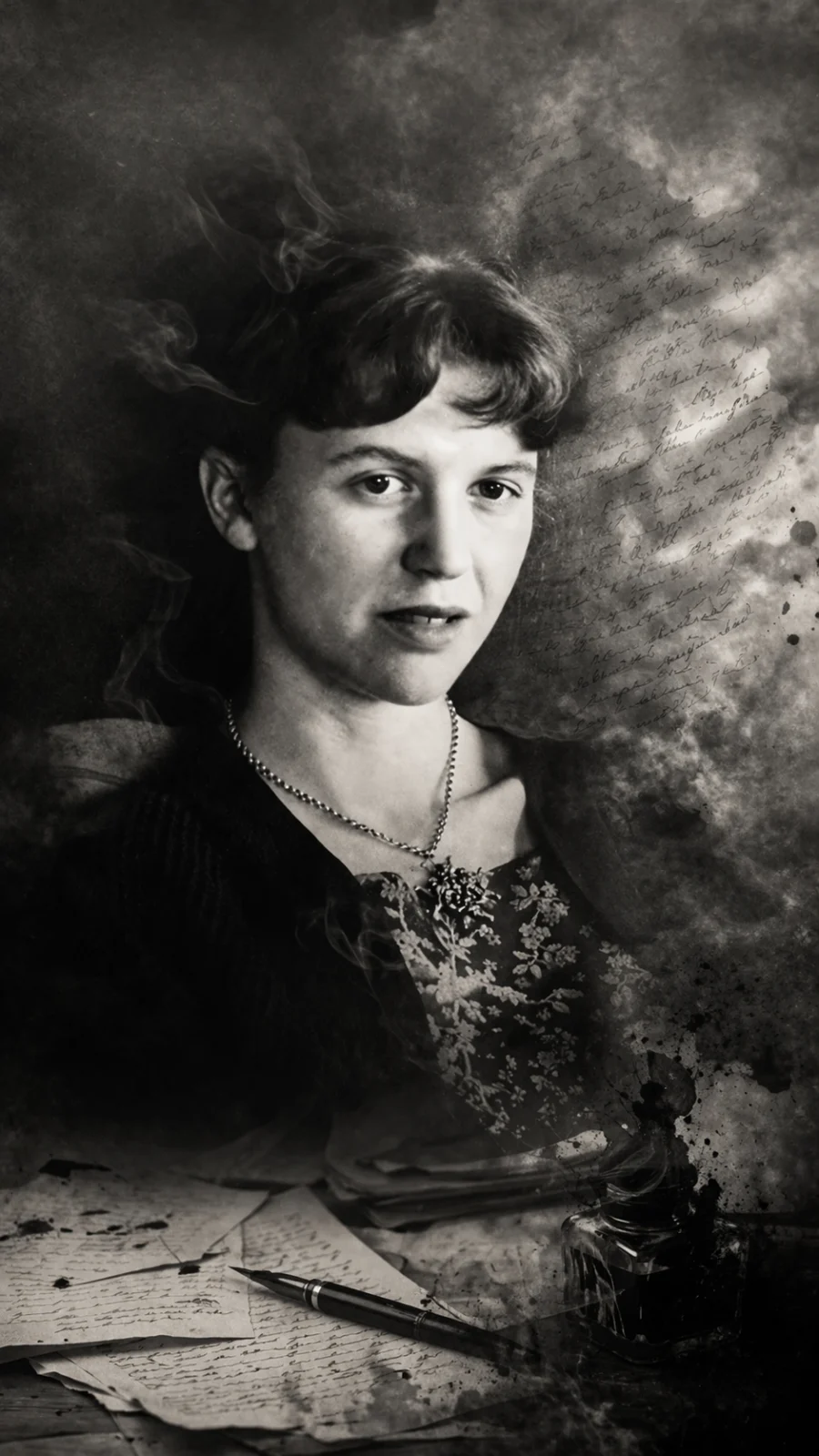
Enter the archive
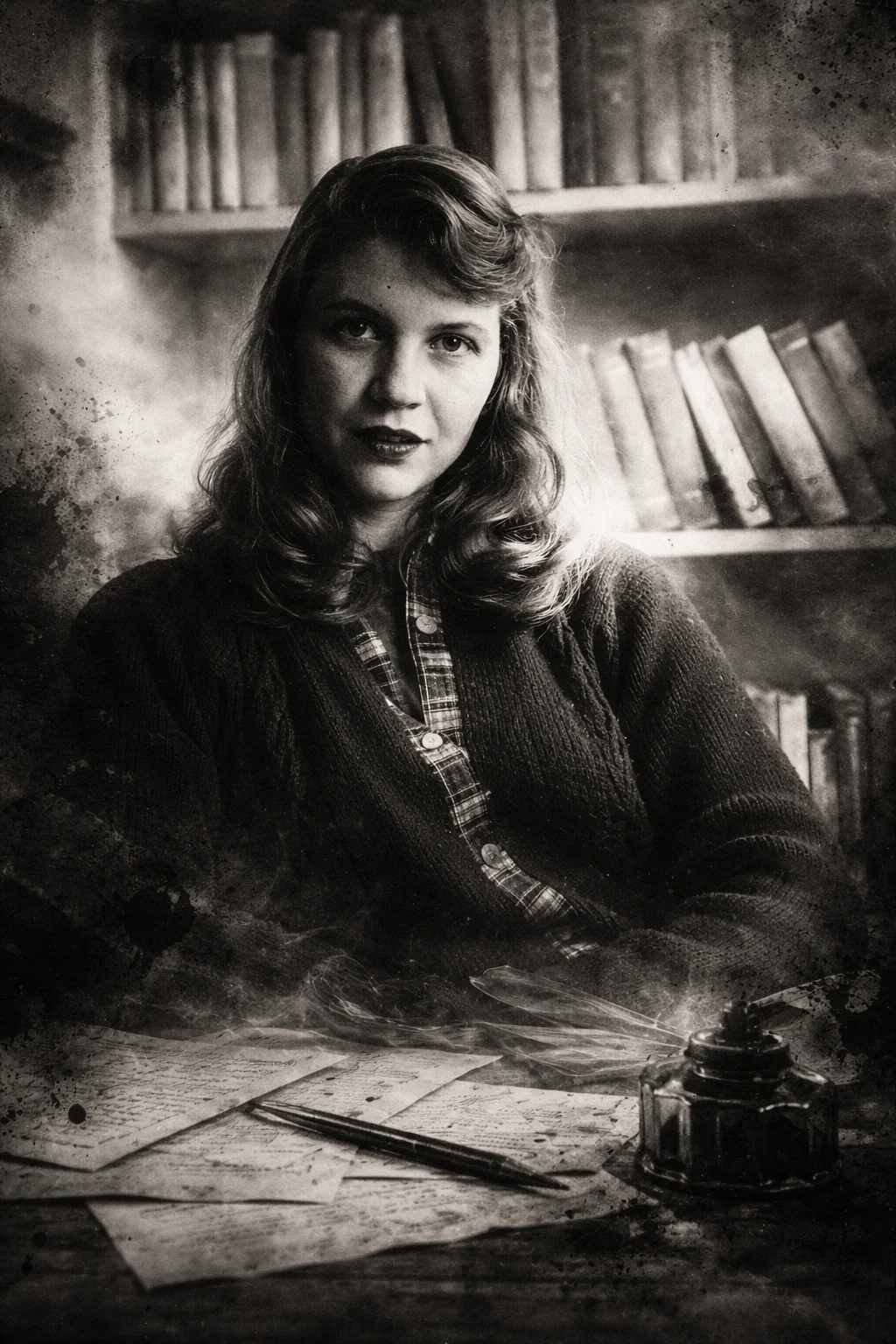
Smith College preserves Sylvia Plath materials and documents the restored edition of Ariel, which recovered her original selection and order. The image in this card is a reconstruction, not the original document.
AI-generated visual reconstruction; not a historical document.
A Girl Raised to Be Exceptional

Sylvia Plath was born on October 27, 1932, in Boston, Massachusetts. Her mother, Aurelia Schober Plath, was the daughter of Austrian immigrants and had worked as a teacher. Her father, Otto Plath, was born in Germany and became a college professor, entomologist and specialist in bees.
From an early age, Sylvia was praised for her intelligence. She published her first poem at eight and grew up believing that she needed to excel at everything she attempted. She drew, wrote stories, kept journals and accumulated academic prizes. Behind that productivity lay an intense need for approval and an equally powerful fear of failure (Clark, 2020).
Otto Plath became ill after spending years convinced that he had incurable cancer. He actually had diabetes, a condition that could then be treated with insulin. When he finally went to a hospital, an infection in his leg was too advanced. He died in November 1940, shortly after the leg was amputated. Sylvia was eight years old.
The loss became one of the central wounds of her imagination. In time, the father figure would appear in her writing as a giant, statue, god, enemy and absence. Her poems, however, should not be treated as simple transcriptions of her biography. Plath transformed personal experience into deliberate literary constructions filled with exaggeration, irony, masks and symbols.
The Cost of Appearing Perfect

In 1950, she entered Smith College on a scholarship. She earned outstanding grades, published poems and stories and cultivated the appearance of an impeccable student. She also discovered the exhaustion of trying to satisfy the academic, social and romantic expectations of the 1950s simultaneously.
Plath wanted to become an important writer, but she lived in a culture that still presented marriage and motherhood as women’s essential destiny. She struggled to imagine how she could write, work, love and have a family without sacrificing some part of herself. That internal division later appeared in The Bell Jar, whose protagonist imagines her future as a fig tree filled with possibilities and fears that choosing one will cause all the others to disappear.
In the summer of 1953, Plath was selected as a guest editor at Mademoiselle magazine in New York. The experience appeared to be a triumph but was marked by exhaustion, pressure and a growing sense of disconnection. After returning home, she entered a severe depression. She received electroconvulsive treatment that was administered without appropriate preparation and later attempted to take her own life.
She was hospitalized at McLean Hospital, partly through the financial support of writer and benefactor Olive Higgins Prouty. There she received psychotherapy and more carefully managed treatment. With the help of psychiatrist Ruth Beuscher, she began a recovery that allowed her to return to Smith and graduate with honors in 1955 (Clark, 2020).
Treating that episode as a rehearsal for her later death distorts what happened. Plath survived, completed her degree and continued writing for almost another decade. Her life did not proceed in a straight line toward an inevitable conclusion.
Two Poets Attempting to Build a Life Together

After receiving a Fulbright scholarship, Sylvia traveled to England to study at Newnham College, Cambridge. In February 1956, she met British poet Ted Hughes at a literary party. Their attraction was immediate and turbulent. They married in June, only four months after meeting.
The relationship was literary as well as romantic. They read and criticized each other’s poems, shared ambitions and tried to support themselves through teaching and writing. Sylvia returned to the United States with Hughes, taught at Smith College and attended Robert Lowell’s seminars in Boston, where she met Anne Sexton.
In that environment, she encountered poetry that spoke more directly about mental illness, family and personal experience. Even so, her own work was never unprocessed confession. Plath revised her writing intensely and constructed voices that should not automatically be confused with their author.
Her first poetry collection, The Colossus and Other Poems, appeared in 1960. By then she had returned to England and given birth to her first child, Frieda. Her son, Nicholas, was born in 1962.
Motherhood did not stop her work. Plath wrote early in the morning, cared for the children, managed the household and submitted poems, stories and radio scripts to editors. The image of a woman who wrote only during moments of desperate inspiration conceals a far more demanding reality: she was a methodical professional who understood literary markets and needed publication income (Plath, 2017–2018).
The Novel Signed by Another Woman
During 1961, she wrote much of The Bell Jar, drawing on the crisis she had experienced eight years earlier. The novel follows Esther Greenwood, a brilliant young woman who begins to feel trapped beneath an imaginary bell jar that contaminates the air around her.
Plath used real experiences but reorganized them through fiction, satire and dark humor—qualities that sometimes disappear from interpretations focused exclusively on illness. The novel challenges the psychiatric treatments of its era, sexual double standards and the limited futures offered to talented women.
The Bell Jar was published in England on January 14, 1963, under the pseudonym Victoria Lucas (Smith College Libraries, 1963). Plath wanted to protect people who might recognize themselves in certain characters and feared that the work would be regarded as excessively autobiographical. She also hoped that a future American edition might appear under her real name.
The book received modest reviews and did not immediately achieve the recognition it would later acquire. Its pseudonymous publication created one of the most painful ironies of her career: Sylvia Plath’s only novel appeared during her lifetime, but the public did not yet know that it belonged to her.
The Autumn When She Found a New Voice

In 1961, Sylvia and Ted Hughes moved into Court Green, an old house in Devon. They cultivated the garden and began keeping bees. By 1962, however, their marriage was deteriorating following Hughes’s relationship with Assia Wevill.
During the autumn of that year, emotionally separated from her husband and facing an uncertain future with two small children, Plath entered the most intense creative period of her life. She rose before dawn and wrote before her children awakened.
Within weeks, she produced poems including “Ariel,” “Lady Lazarus,” “Daddy,” “The Applicant” and “Fever 103°.” The new work possessed a speed, verbal violence and assurance markedly different from her earlier poetry. Plath used extreme characters and disturbing historical references to represent psychological, sexual and familial conflicts. The poetic voice could sound intimate, but it was also theatrical, sarcastic and consciously constructed.
By the end of 1962, she had arranged many of those poems into a manuscript titled Ariel. It was not a disordered notebook or a collection of final notes. It was a book organized by its author, with a deliberate sequence and trajectory (Plath, 2004).
The Little-Known Fact: The True Ending of Ariel Was Filled With Bees

Sylvia’s father had devoted his scientific career to insects and published Bumblebees and Their Ways in 1934. When Sylvia was a child, beehives were part of the family landscape. Decades later, she began keeping bees herself in Devon.
Between October 3 and 9, 1962, she wrote five poems connected with beekeeping: “The Bee Meeting,” “The Arrival of the Bee Box,” “Stings,” “The Swarm” and “Wintering.” In them, the hive became a representation of family, the female body, artistic creation and the possibility of survival (Pollard, 2012).
Plath placed this sequence at the end of her Ariel manuscript. Its final poem, “Wintering,” depicts a hive enduring the coldest months. Its closing movement does not lead toward disappearance but toward the bees returning with the spring.
After Sylvia’s death, Ted Hughes prepared a different version of Ariel, published in 1965. He removed certain poems, added others written later and changed their order. In that edition, the bee sequence no longer formed the book’s conclusion.
Hughes explained that he had made the changes to present what he considered Plath’s strongest work and to protect people mentioned in certain poems. The rearrangement nevertheless altered the trajectory conceived by the author. The published book appeared to move more directly toward death, while Plath’s original manuscript ended with resistance, renewal and spring (Academy of American Poets, n.d.).
In 2004, Ariel: The Restored Edition appeared with a foreword by Frieda Hughes. For the first time, many readers could examine Sylvia’s own selection and arrangement. That discovery transformed an essential question: if Plath intended to construct a book devoted only to darkness, why did she choose to end it with a hive that survived the winter?
The Final Winter
At the end of 1962, Sylvia moved with her children to a London flat. The winter of 1962–1963 was among the coldest recorded in Britain. Pipes froze, the children became ill and she confronted financial difficulties, isolation and worsening mental health.
Despite those conditions, she continued writing and seeking medical assistance. Her physician, John Horder, visited regularly, prescribed antidepressants and tried to arrange hospitalization and domestic help. The medication required time to take effect while her depression was worsening rapidly (Clark, 2020).
Sylvia Plath died by suicide in London on February 11, 1963. Before her death, she took steps intended to protect her children. Acknowledging that care does not make her death rational or romantic; it shows that she was experiencing a devastating psychiatric crisis while remaining concerned for them.
She left no final note that definitively explained her reasons. No single cause—her marriage, childhood, fame, motherhood or writing—can therefore explain her death by itself. It resulted from a severe illness within a context of separation, exhaustion, isolation and medical care insufficient for the urgency of that moment.
The Writer Who Survived Her Own Legend
After her death, Ariel established Sylvia Plath as a central figure in twentieth-century poetry. The Bell Jar appeared under her name and became a defining work for generations of young readers. In 1982, The Collected Poems, edited by Ted Hughes, received the Pulitzer Prize for Poetry, making her the first person to receive that prize posthumously (The Pulitzer Prizes, 1982).
Celebrity, however, also enclosed her inside another bell jar. Her death was used to interpret every line she wrote, while her relationship with Hughes became a battleground that frequently obscured the complexity of her writing.
Reading Plath only as a victim would repeat one of the limitations she struggled against. She was an ambitious, technically rigorous, ironic writer who understood her own power. She transformed domestic life, depression, memory and anger into a language that changed contemporary poetry.
She could not completely escape her illness or the contradictions she carried within herself. But neither did she remain silent. She left behind a body of work that continues to break the bell jar from the inside.
And in the ending she had chosen for Ariel, after fear, loss and winter, the bees were still flying.
References
- Academy of American Poets. (n.d.). Laying blame: The legacy of Sylvia Plath. https://poets.org/text/laying-blame-legacy-sylvia-plath
- Clark, H. (2020). Red comet: The short life and blazing art of Sylvia Plath. Alfred A. Knopf.
- Plath, S. (2000). The unabridged journals of Sylvia Plath, 1950–1962 (K. V. Kukil, Ed.). Anchor Books.
- Plath, S. (2004). Ariel: The restored edition—A facsimile of Plath’s manuscript, reinstating her original selection and arrangement (F. Hughes, Foreword). HarperCollins.
- Plath, S. (2017–2018). The letters of Sylvia Plath (P. K. Steinberg & K. V. Kukil, Eds.; Vols. 1–2). Faber & Faber.
- Pollard, N. (2012). “Here is my honey-machine”: Sylvia Plath and the mereology of the beehive. The Review of English Studies, 63(259), 293–310. https://doi.org/10.1093/res/hgr106
- Smith College Libraries. (1963). The Bell Jar: Sylvia Plath. Mortimer Rare Book Collection. https://www.smith.edu/libraries/libs/rarebook/exhibitions/conway/belljar.htm
- Smith College Libraries. (n.d.). Sylvia Plath Special Collections resources. https://libguides.smith.edu/scsc-plath
- The Pulitzer Prizes. (1982). The Collected Poems, by Sylvia Plath. https://www.pulitzer.org/winners/sylvia-plath
More from this collection
Miguel Hernández: The Poet Whose Voice Survived Prison
Read story →
Federico García Lorca: The Poet Whose Murder Was Recorded in a Secret Report
Read story →