
In this storyOpen index
Mary Anderson: The Woman Who Invented the Windshield Wiper and Watched Her Patent Expire Before the Automobile Needed It
An idea born during a storm solved a problem the automobile industry was not yet ready to recognize.
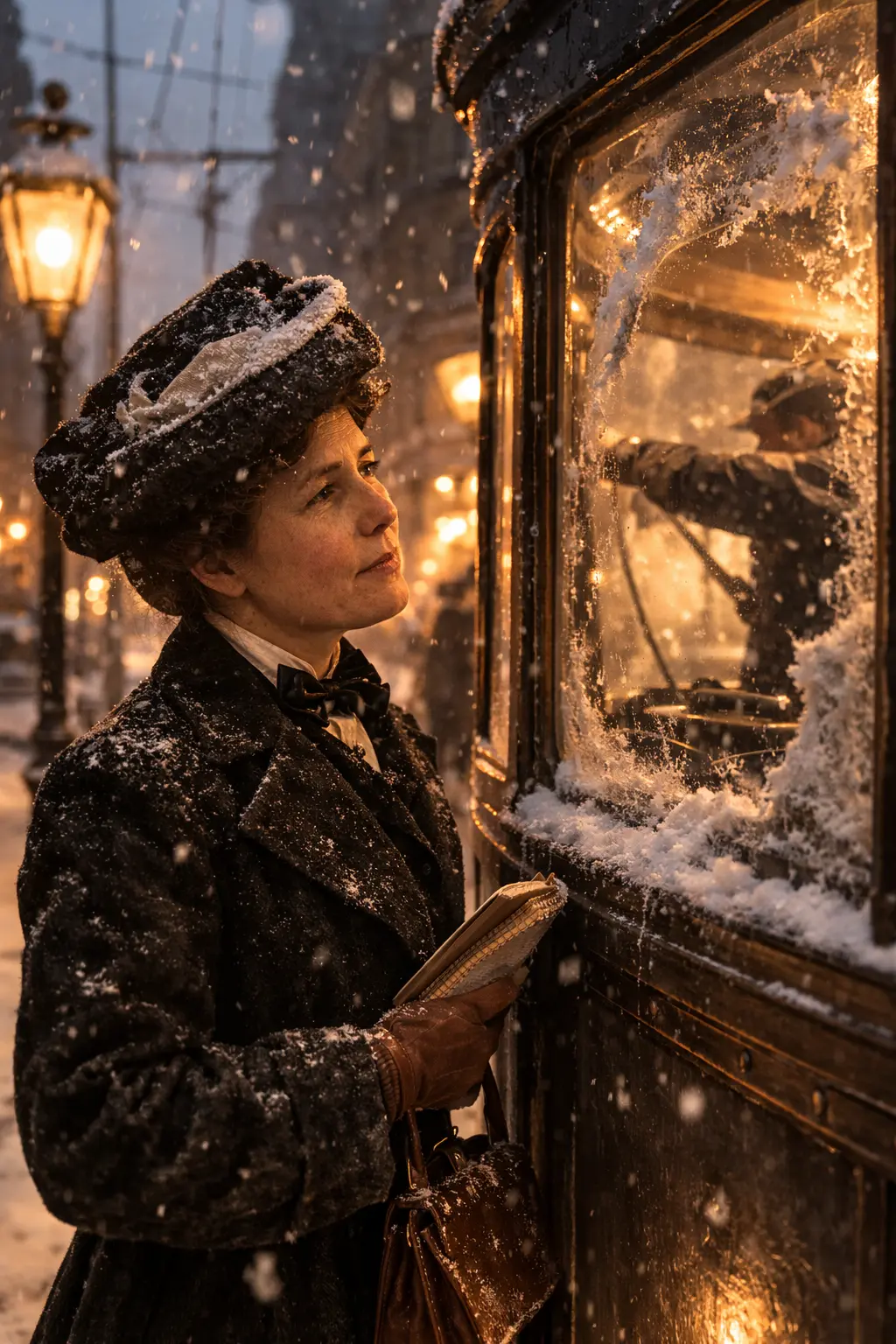
In the earliest vehicles, driving through rain or snow could force a driver to stop, open a window, or put his head outside simply to see the road. The solution appeared so simple that when a woman proposed moving a rubber blade from inside the vehicle, one company decided that her idea lacked sufficient commercial value.
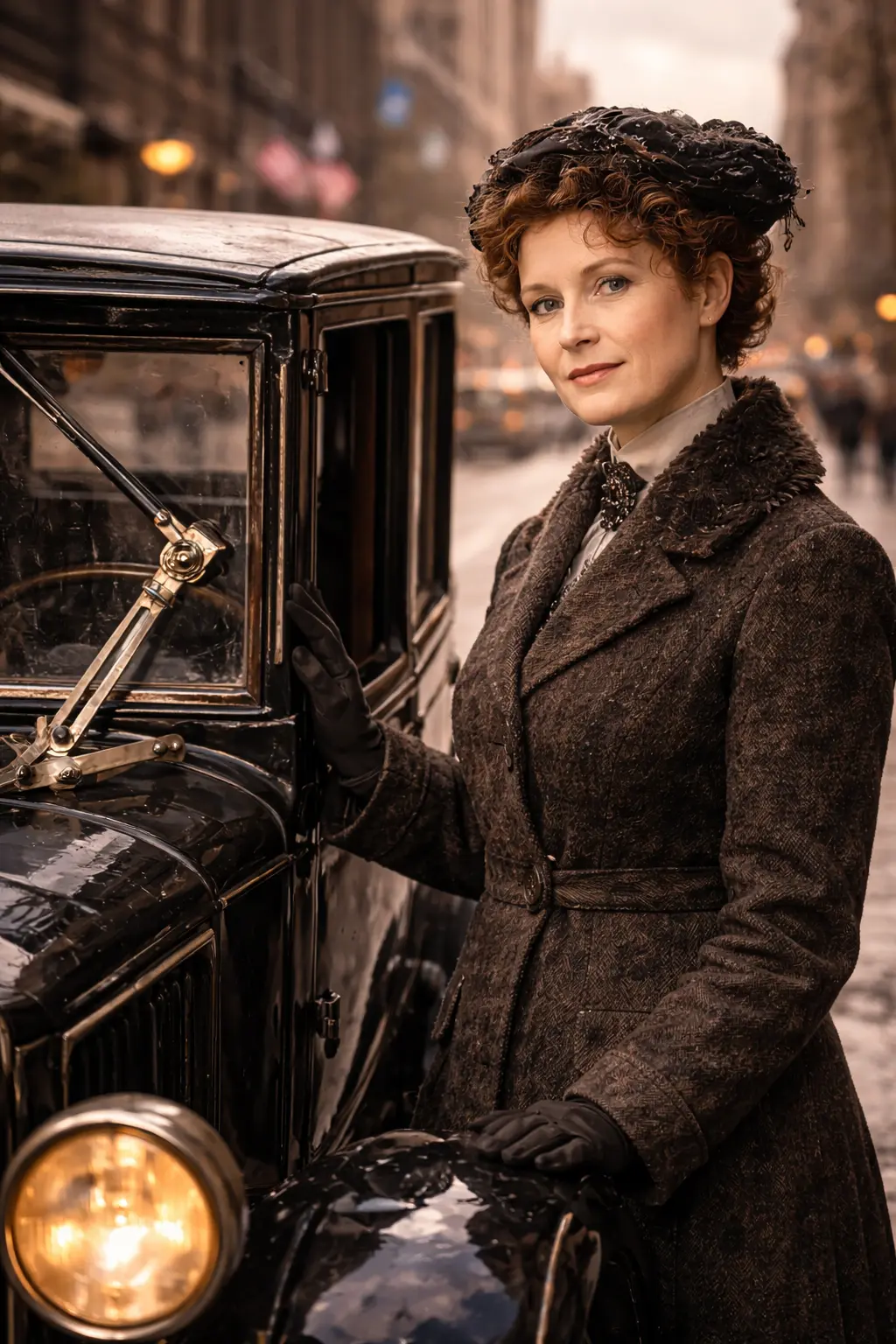
That woman was Mary Anderson. Her device did not make her wealthy and was never manufactured while her patent protected it. Yet the principle she designed in 1903 would eventually become part of almost every automobile in the world.
Her story is not merely that of a forgotten inventor. It also reveals one of innovation’s cruelest problems: being correct before the market is prepared to admit it.
Mary Anderson on video
Discover this story on our YouTube channel.
A life told through places and decisive moments
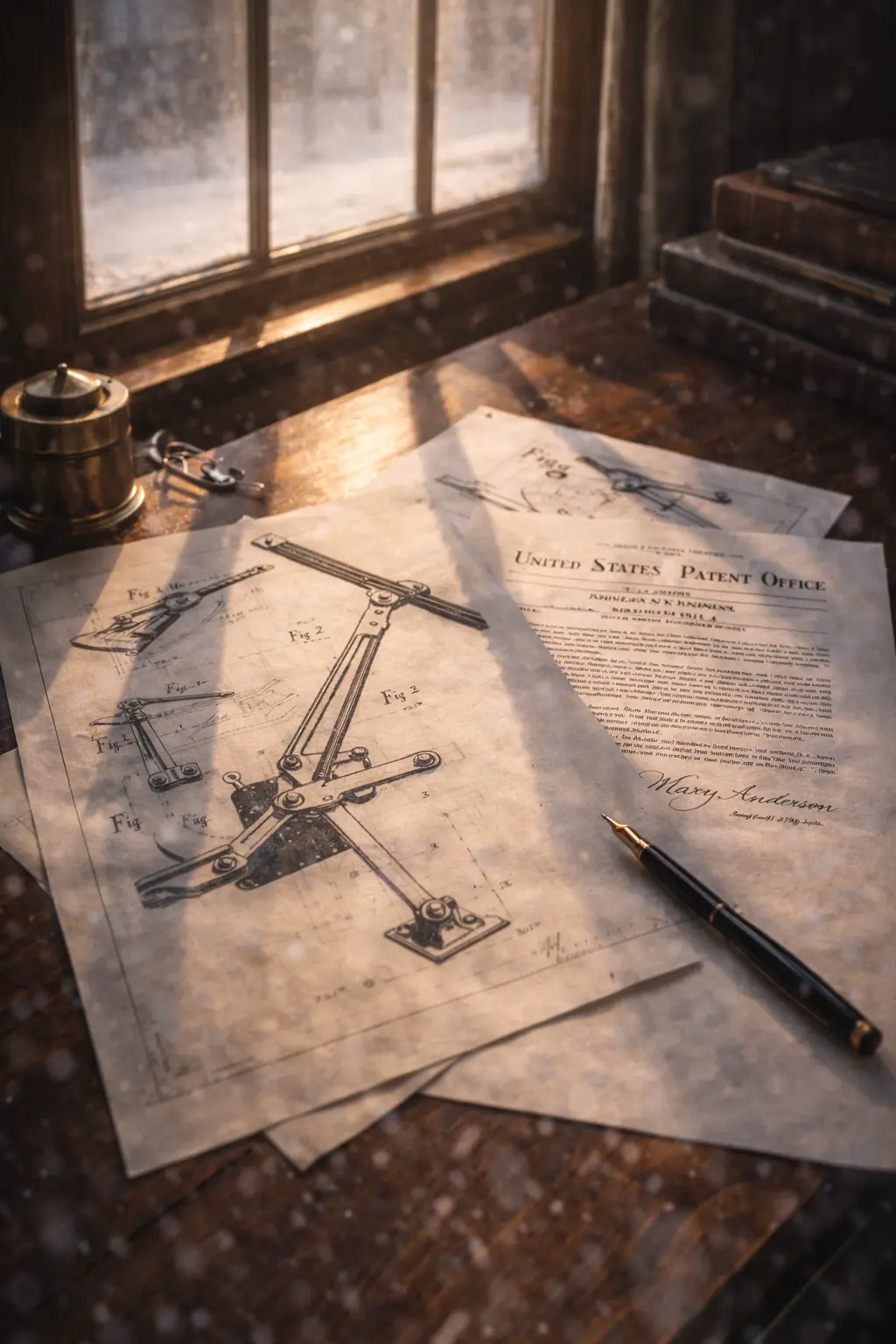
Enter the archive
The original patent preserves the drawings and technical description of Anderson’s hand-operated mechanism for clearing rain, snow and sleet from inside the vehicle.
- Collection
- United States Patents
- Institution
- United States Patent Office
Digital record of patent US743801A.
A Businesswoman Before She Became an Inventor
Mary Elizabeth Anderson was born on February 19, 1866, in Greene County, Alabama, only months after the end of the American Civil War. She was the daughter of John C. Anderson and Rebecca Hargrave Anderson. Her father died when she was young, and she grew up with her mother and her older sister, Fannie (Encyclopedia of Alabama, 2010).
In 1889, the three women moved to Birmingham. The city was expanding rapidly because of its iron and steel industries. The family participated in that development by constructing the Fairmont apartment building on Highland Avenue. Mary was neither an engineer nor an employee of an automobile company. She was a woman experienced in property, management, and commercial ventures.
In the early 1890s, she moved to Fresno, California, where she managed a cattle ranch and vineyard. She later returned to Birmingham to help care for an ailing aunt. The aunt left the family a collection of jewelry and other property that enabled them to travel and maintain a degree of financial independence (Encyclopedia of Alabama, 2010).
Anderson’s life challenges the traditional image of an inventor isolated in a laboratory. Her ability to identify problems came from managing property, traveling, and observing how things worked in real situations.
The Journey That Changed the Windshield
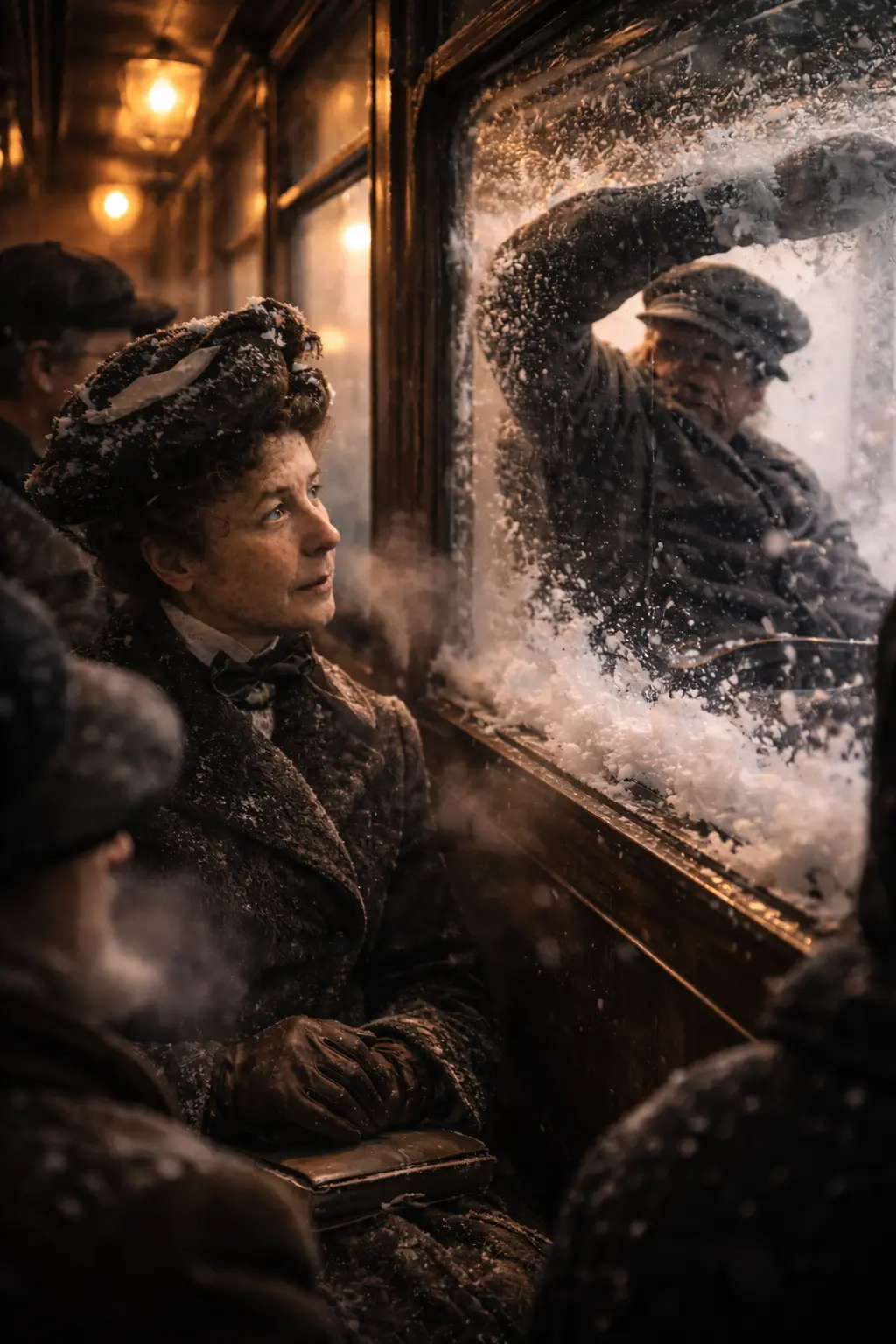
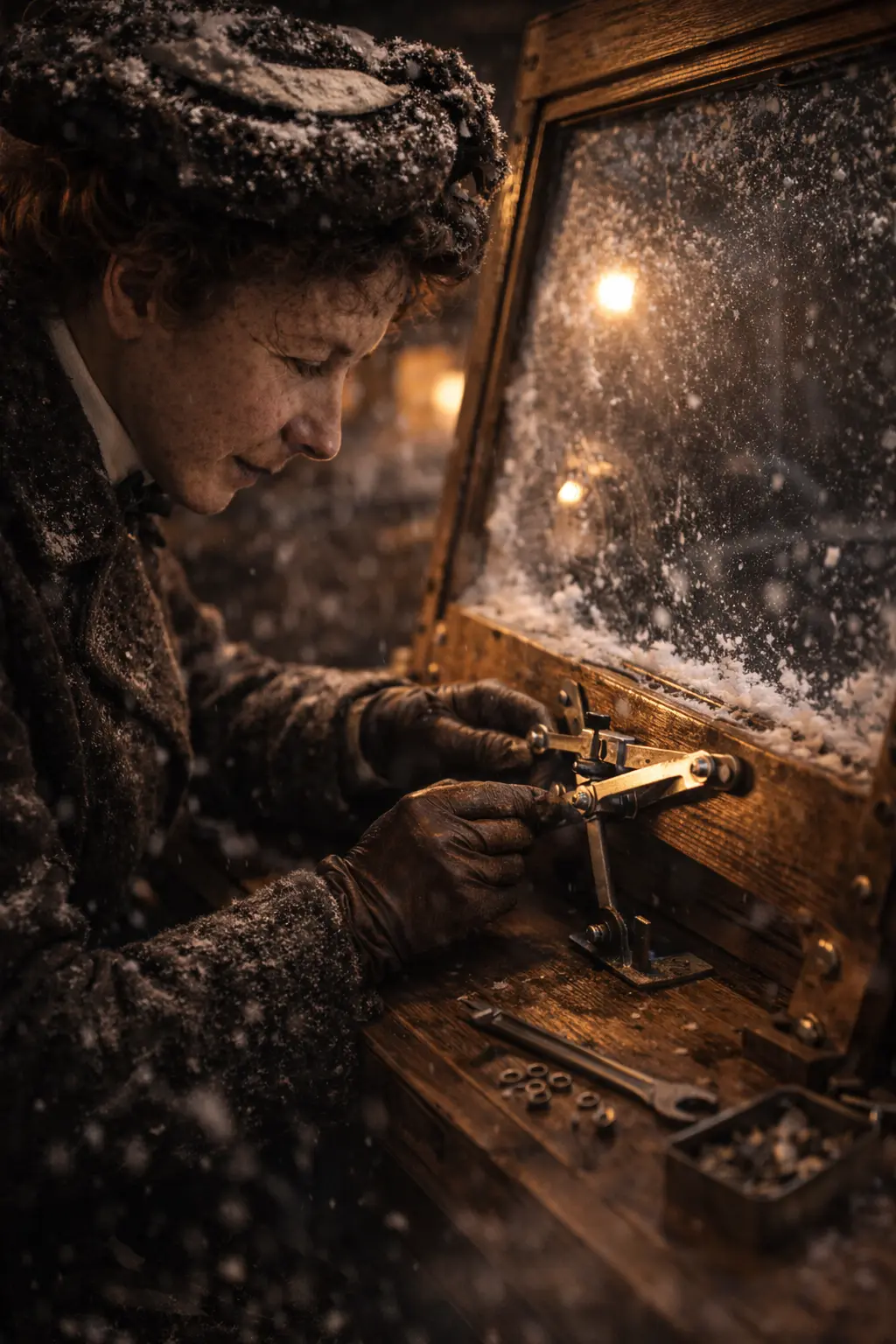
During a visit to New York in the winter of 1902, Anderson was riding in a streetcar while snow or sleet fell. She noticed that the driver was having difficulty seeing through the front window. Vehicles of the period had no effective method for cleaning a windshield from inside. The driver might open sections of the window, lean outside, or stop the streetcar to remove the accumulation manually (National Inventors Hall of Fame, 2026).
The scene contained a seemingly small but dangerous problem: to restore his visibility, the driver had to expose himself to the cold or divert his attention from traffic.
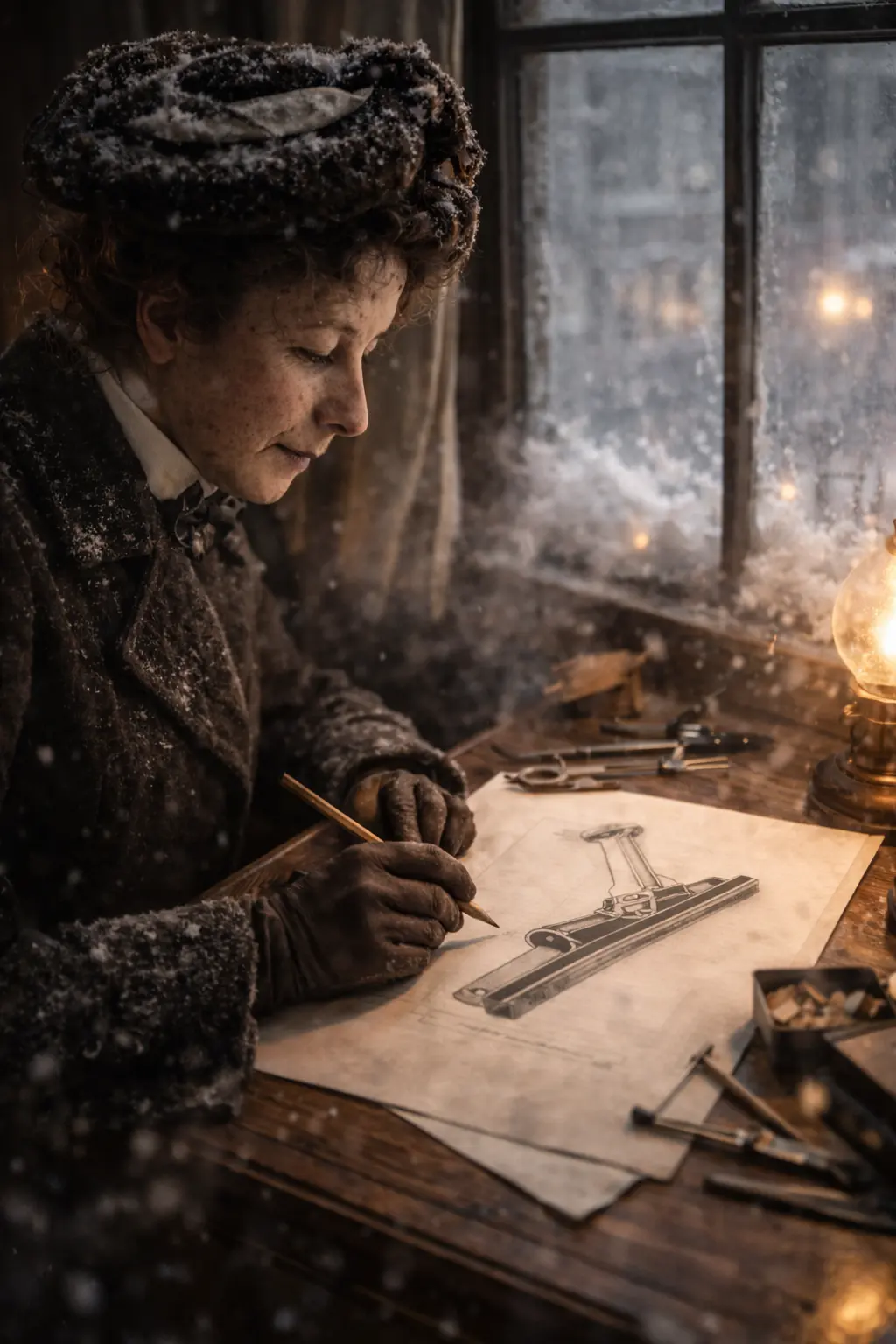
Anderson imagined a solution that could be operated without leaving the driver’s seat. After returning to Alabama, she produced drawings and hired a designer to construct a model. The mechanism consisted of an arm mounted outside the glass and fitted with a flexible rubber blade. A lever inside the vehicle allowed the arm to move across the windshield and remove rain, snow, or sleet.
Her design also included a spring that maintained even pressure against the glass. The device could be removed when it was not needed, leaving the vehicle’s appearance unaffected during fair weather (Anderson, 1903).
What now seems obvious required someone to notice a problem that manufacturers and drivers had learned to tolerate.
A Patent Ahead of Its Market
Anderson filed her application on June 18, 1903. On November 10 of that year, she received U.S. Patent No. 743,801 for a “window-cleaning device.” The document specifically stated that it could be used on electric streetcars and other vehicles and operated from inside (Anderson, 1903).
She was not the only person experimenting with systems for cleaning vehicle windows during those years. The importance of her patent lies in its description of one of the earliest operational swinging-arm mechanisms, controlled by the driver and equipped with a cleaning surface held against the glass. Its basic principle is clearly recognizable in later windshield wipers (Encyclopedia of Alabama, 2010).
In 1903, however, the automobile remained a relatively new product. Paved roads were scarce, many vehicles lacked fully enclosed passenger compartments, and manufacturers had not yet adopted uniform windshield designs.
Mary Anderson had devised a solution for an industry that did not yet understand how badly it would need it.
The Rejection Did Not Come From Henry Ford
A frequently repeated story claims that Henry Ford personally rejected Anderson’s invention. There is no solid historical documentation proving that such a meeting occurred. The documented rejection came from the Canadian firm Dinning and Eckenstein, to which Anderson attempted to sell her patent rights in 1905.
The company replied that it did not consider the device commercially valuable enough to justify purchasing it (Lemelson-MIT Program, n.d.).
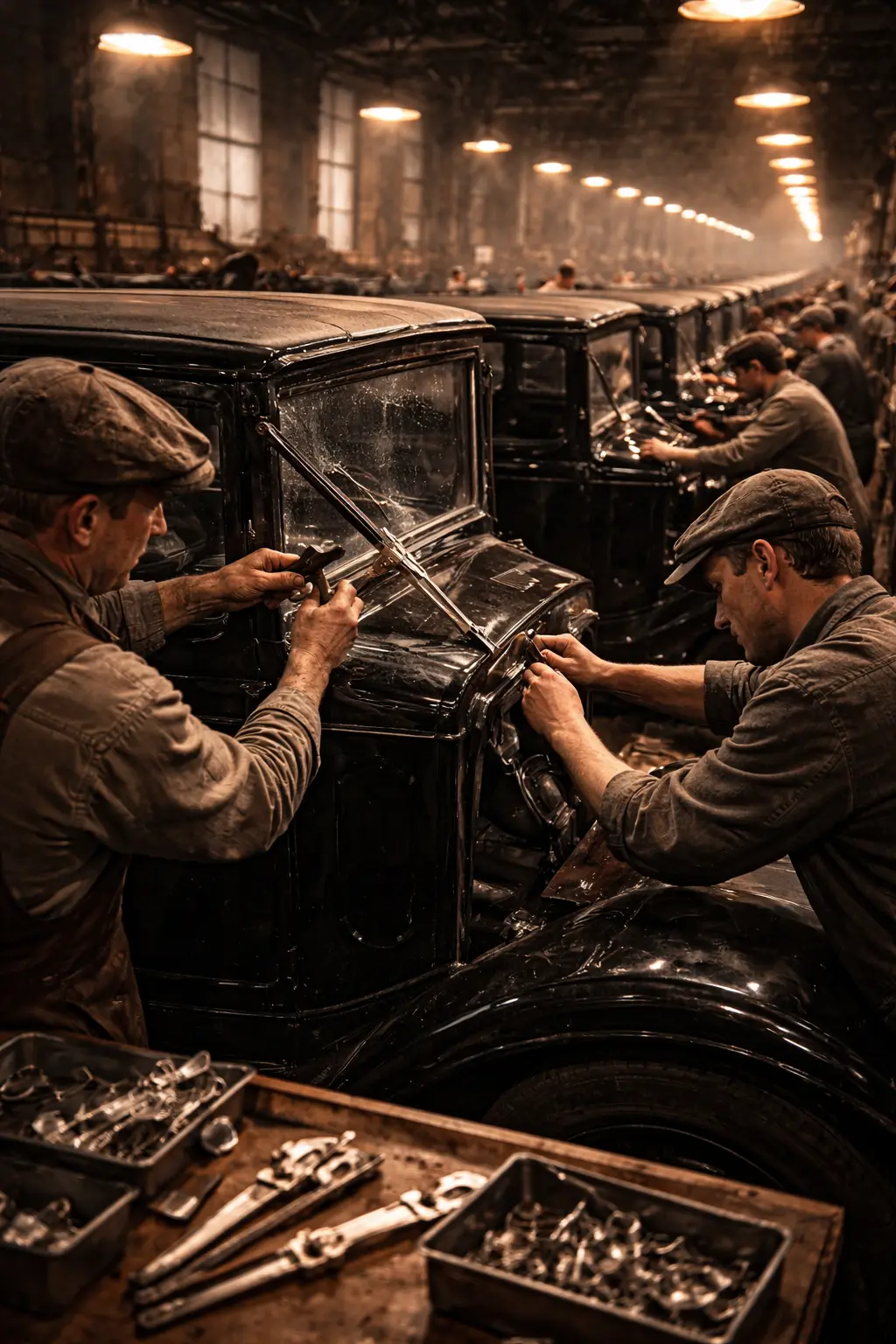
The decision appears absurd from a modern perspective, but it reflects the conditions of the time. Installing the mechanism added parts and expense to vehicles still marketed as machines for adventurous drivers. Some observers even worried that an arm moving across the glass might distract the person driving.
Anderson failed to find a manufacturer willing to produce her device on a large scale. Nor is there evidence that she received significant payments from its use.
The market did not declare her invention impossible. It simply concluded that it was not worthwhile.

A Little-Known Fact: Her Patent Expired Just as Windshield Wipers Were Becoming Essential
U.S. patents issued at the time normally provided protection for seventeen years. Mary Anderson’s patent expired in 1920. By then, the automobile industry had changed dramatically.
Enclosed vehicles were becoming increasingly common, speeds were rising, and driving in adverse weather made the need for a clear windshield impossible to ignore. During the early 1920s, windshield wipers began appearing more frequently on automobiles. Cadillac adopted them as standard equipment in 1922, two years after Anderson’s patent expired (National Inventors Hall of Fame, 2026).
This timing determined the financial outcome of her invention. By the time the industry fully recognized the wiper’s usefulness, Anderson no longer legally controlled the principle protected in 1903.
There is no conclusive proof that any single company directly copied her model, and it would be inaccurate to credit her with every later version of the windshield wiper. Other inventors developed automatic, electric, and intermittent mechanisms. Charlotte Bridgwood, for example, patented an automatic roller-driven system in 1917.
Anderson’s contribution was earlier and fundamental: she demonstrated that a windshield could be cleaned by a moving arm operated from inside the vehicle. Later developments refined that principle but did not erase her precedence.

Invention Did Not Guarantee Access to Industry
Anderson’s experience also reflects the barriers faced by women inventors in the early twentieth century. An American woman could legally register a patent in her own name. Turning it into a product, however, required capital, manufacturers, commercial networks, and access to industries dominated by men.
Anderson possessed entrepreneurial initiative and sufficient resources to develop a prototype, but she controlled no factory and did not belong to the emerging circle of automobile manufacturers. A patent could establish authorship of an idea; it could not force industry to produce it or guarantee that its creator would profit when the market changed.
Her case should not be reduced to the idea that no one listened solely because she was a woman. The immaturity of the automobile market and the technical limitations of the period also mattered. Even so, it is difficult to ignore that she had to persuade manufacturers who probably did not expect an automotive innovation to come from an Alabama businesswoman with no formal mechanical training.
The product was judged alongside the person presenting it.
A Life That Continued Away From the Automobile
After her efforts to market the device failed, Mary Anderson did not begin a prolonged battle against automobile companies. She continued managing property and attending to family matters in Birmingham. She remained unmarried and lived a relatively private life.
She died on June 27, 1953, in Monteagle, Tennessee, at the age of eighty-seven. By then, windshield wipers were indispensable automotive components, yet her name was not widely known (Encyclopedia of Alabama, 2010).
That silence helped reduce her to a minor figure in an automotive history dominated by industrialists and manufacturers. Traditional accounts remembered those who produced millions of vehicles, not necessarily those who solved the practical problems that made driving them safely possible.
Institutional recognition came much later. In 2011, Mary Anderson was inducted into the National Inventors Hall of Fame for her windshield-cleaning device (National Inventors Hall of Fame, 2026).
One hundred and eight years had passed since her patent was granted.

The Invention That Became Invisible
The inventions most fully integrated into everyday life tend to disappear from our attention. No one thinks about their origins each time a lever sets two arms moving across a windshield. Only when they fail do we understand how necessary they are.
The windshield wiper expanded the possibility of driving through rain and snow, improved visibility, and helped transform the automobile into transportation that could be used throughout the year. Its modern operation depends on motors, sensors, and electronic controls, but it preserves Anderson’s essential insight: a flexible surface must travel across the glass to clear the driver’s view.
Mary Anderson did not manufacture automobiles or establish a major company. Nor did she receive the fortune her idea might have generated only a few years later. What she did was observe an ordinary scene and refuse to accept that inconvenience and danger were inevitable.
Her invention arrived too early to make her rich, but just in time to change the way the world would drive.
References
Anderson, M. (1903). Window-cleaning device (U.S. Patent No. 743,801). United States Patent Office.
Encyclopedia of Alabama. (2010). Mary Anderson. Alabama Humanities Alliance.
Lemelson-MIT Program. (n.d.). Mary Anderson. Massachusetts Institute of Technology.
National Inventors Hall of Fame. (2026). Mary Anderson: Windshield wiper. National Inventors Hall of Fame.
More from this collection
Willis Carrier: The Man Who Tried to Control Humidity and Ended Up Changing the Map of the World
Read story →
Garrett Morgan: The Inventor Who Had to Hide His Face to Save Lives
Read story →