In this storyOpen index
Philo Farnsworth: The Teenager Who Drew Television Before He Could Build It
In 1957, Philo Farnsworth appeared as the mystery guest on the television game show I’ve Got a Secret. None of the panelists recognized the man who had conducted one of the first successful demonstrations of fully electronic television. For concealing his identity, he received $80 and a carton of cigarettes.

Millions of people knew the invention, but almost no one recognized the inventor.
Three decades before that television appearance, Philo Farnsworth had transmitted a simple glowing line between two rooms in a San Francisco laboratory. The image was rudimentary, but the method used to produce it helped transform television: it contained none of the rotating discs employed by the earliest mechanical systems.
The image had been converted into a signal by electrons.
Farnsworth was not television’s only inventor. No individual could honestly claim that title. He did, however, develop one of its decisive components and demonstrate that a completely electronic system could work.
The inventor who made electronic television possible
Discover Philo Farnsworth’s story and the idea that forever changed how the world sees itself.
A life told through places and turning points
Enter the archive
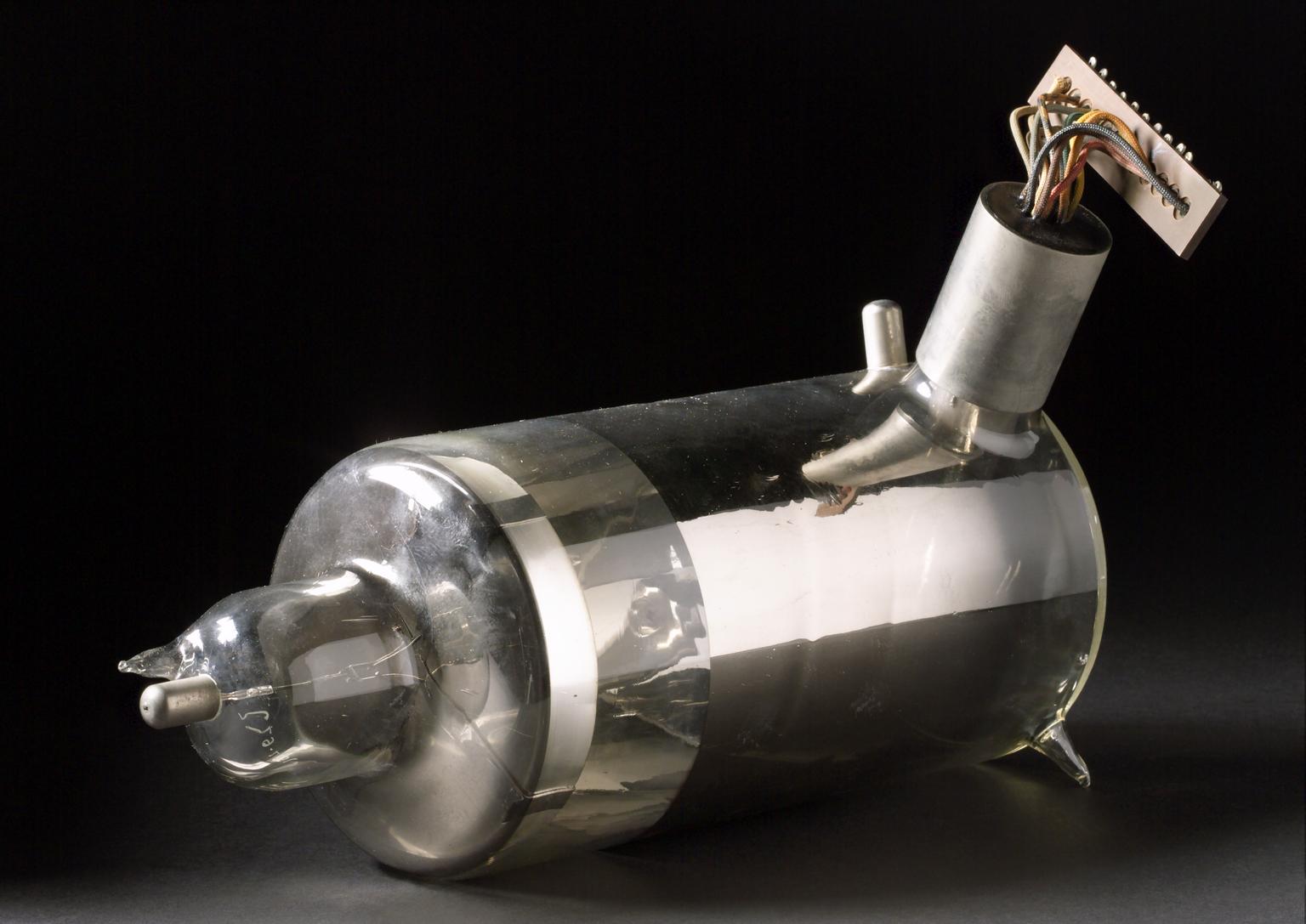
An authentic object preserved by a cultural institution brings us closer to the world behind this life.
- Collection
- Science Museum Group Collection
- Rights
- CC BY-NC-SA 4.0 · © The Board of Trustees of the Science Museum
Science Museum Group Collection · Object 1937-672 · Credit: Baird Television Ltd.
An Idea Born Among Furrows

Philo Taylor Farnsworth was born on August 19, 1906, near Beaver, Utah, into a farming family (Godfrey, 2001; Schwartz, 2002). For years during his childhood, his home had no electricity. That did not prevent him from becoming fascinated by machines.
When his family moved to a farm near Rigby, Idaho, the boy discovered technical magazines and manuals that had belonged to the previous owner. He also found an electrical generator installed on the property. He learned to operate it and began repairing motors and household devices.
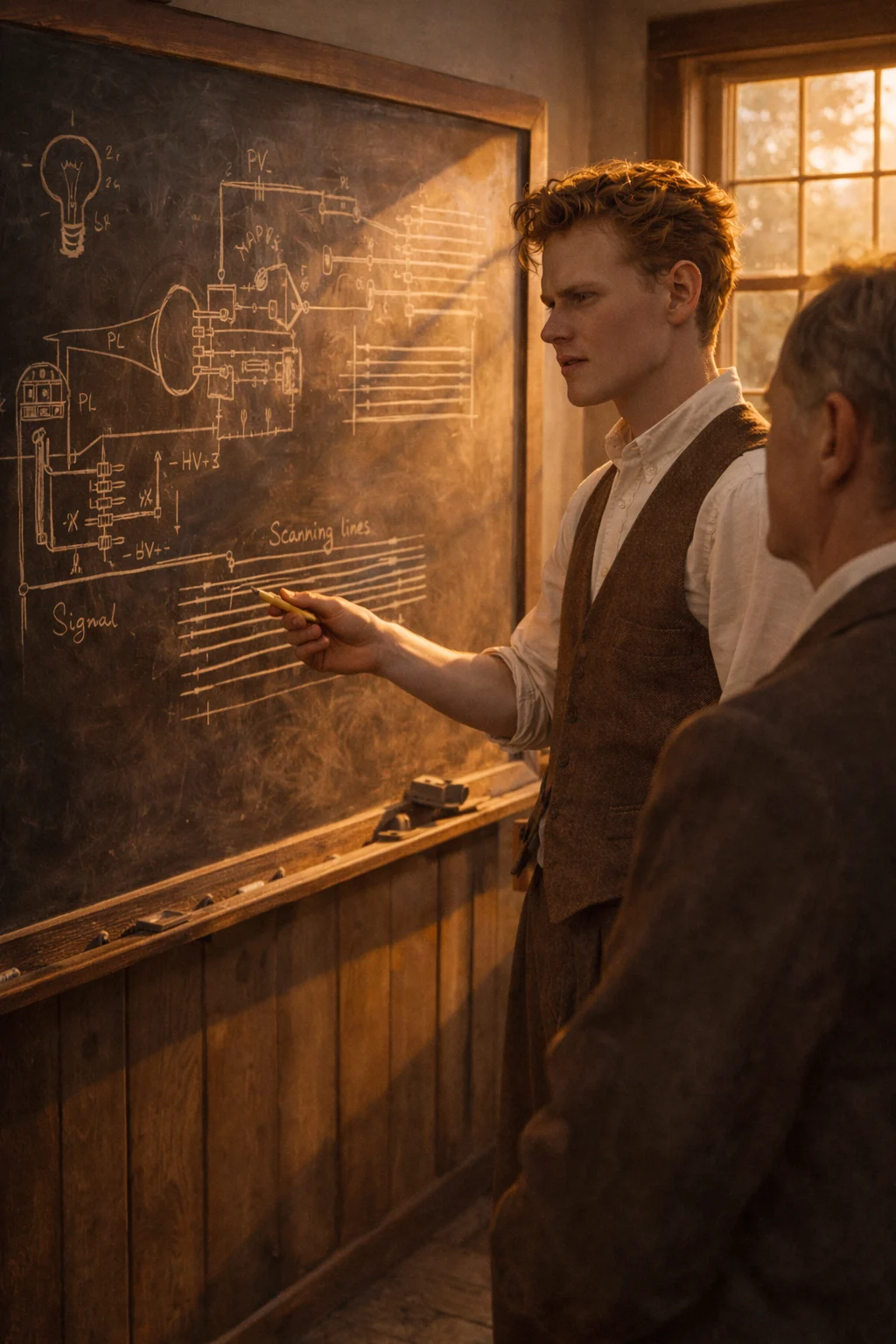
Around 1921, when he was fourteen, he imagined a method of dividing an image into lines and transmitting them in sequence (Farnsworth, 1990; Schwartz, 2002). According to the account preserved by his family, the idea came while he was plowing a field: the parallel furrows suggested that an image could also be scanned one line at a time.
The story may appear almost too perfect, but there is significant evidence that the idea was an early one. Farnsworth explained the design to his science teacher, Justin Tolman, and drew a diagram of the system for him. Years later, that teacher would recall the drawing during a patent dispute.
A teenager had sketched on a school blackboard the principle of a technology he was not yet capable of building.
Television Before Farnsworth

The dream of transmitting images across distances existed before Farnsworth. From the late nineteenth century onward, scientists and inventors in several countries proposed mechanisms for breaking down an image, sending it as a signal, and reconstructing it elsewhere.
Paul Nipkow patented a perforated scanning disc in 1884. John Logie Baird, Charles Francis Jenkins, and other pioneers later developed systems that used rotating discs, mirrors, and mechanical components.
Those experiments proved that television was possible, but they had serious limitations. Their images were small, unstable, and low in resolution. Moving components made it difficult to increase scanning speed and picture quality.
Other researchers were also searching for an electronic solution. Russian-American engineer Vladimir Zworykin was working on camera and receiver tubes that would become fundamental to television’s commercial development.
The history should therefore not be presented as a race with one winner. Television emerged through accumulated advances. Farnsworth’s particular contribution was to build and demonstrate a system that captured and reproduced images electronically without relying on mechanical scanning (Abramson, 1987).
Building What He Had Imagined
Farnsworth could not complete a conventional university education. Financial difficulties and his father’s death forced him to assume family responsibilities. Nevertheless, he continued developing his idea.
In 1926, he secured the support of George Everson and Leslie Gorrell, two investors who, despite having no expertise in television, agreed to finance his experiments (Schwartz, 2002). Farnsworth moved to California with his wife, Elma Gardner, known as Pem, and established a small laboratory in San Francisco.
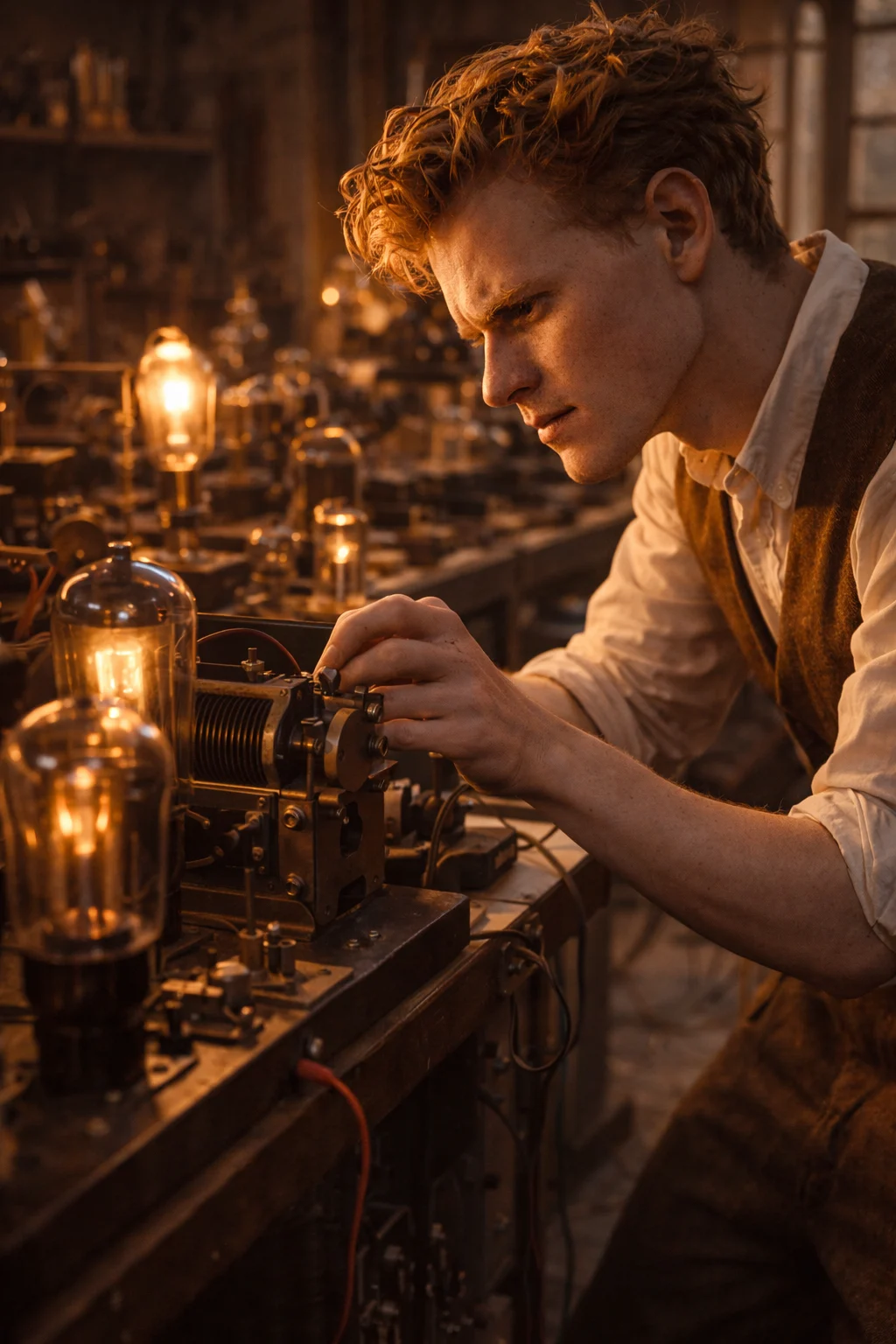
He was twenty years old and needed to transform a youthful diagram into a system of tubes, circuits, and controllable signals.
The central component was his image dissector. The tube received light from a scene and converted it into a sequence of electrical signals. A receiver tube reconstructed those signals as a visible image.
On September 7, 1927, his team transmitted a glowing straight line from one room to another (Godfrey, 2001; Schwartz, 2002). The image offered neither information nor entertainment, but it answered an essential technical question: a completely electronic television system could work.
When his investors asked when they would begin seeing money from their investment, Farnsworth responded during a later demonstration by transmitting the image of a dollar sign.
Pem’s Face Enters the Screen
In 1929, Farnsworth succeeded in transmitting human images. One of the first people captured by his system was his wife, Pem, who played an active role throughout the years of uncertainty and experimentation.
The picture was only a few inches wide and required extremely intense lighting because the tube had limited sensitivity. It did not yet resemble the television that would enter millions of homes. Its essential principles, however, were already present: electronic capture, signal transmission, and reconstruction on a screen.
Farnsworth had applied for a patent on his system in January 1927. U.S. Patent No. 1,773,980, covering his television system, was granted in August 1930 (U.S. Patent and Trademark Office, 1930).
By then, a vastly more powerful corporation was already seeking control over the medium’s future.
The Young Inventor Against RCA
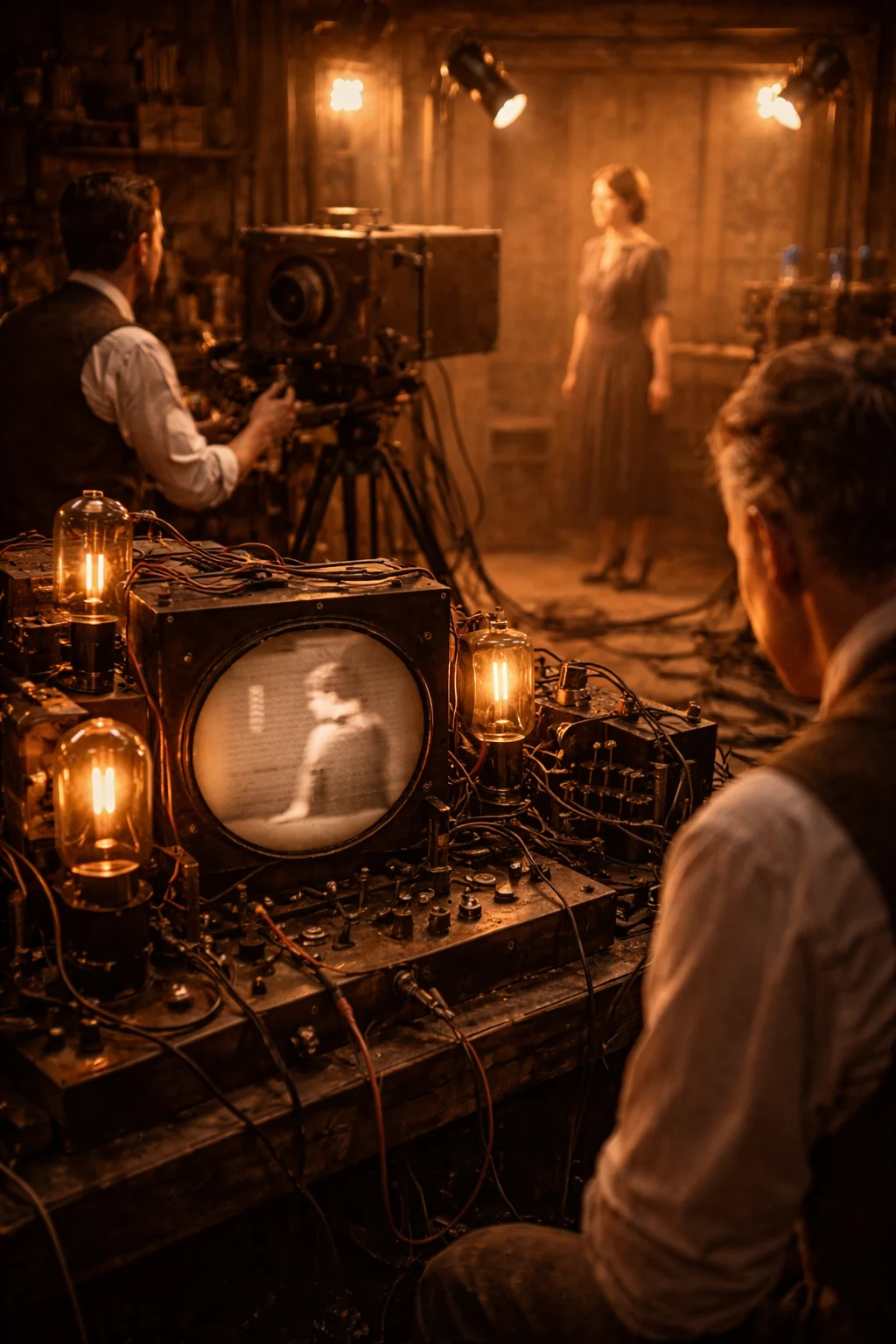
The Radio Corporation of America, led by David Sarnoff, dominated much of the American radio industry and intended to occupy a similar position in television. RCA possessed laboratories, lawyers, capital, and the work of Vladimir Zworykin.
Zworykin visited Farnsworth’s laboratory in 1930 and examined his equipment. A lengthy confrontation over priority in electronic-television patents soon followed.
RCA argued that Zworykin’s earlier research invalidated or preceded Farnsworth’s claims. To defend himself, the young inventor needed to demonstrate that he had conceived his system before the dates claimed by the corporation.
That was when the drawing from the Idaho classroom reappeared.
Justin Tolman, his former teacher, testified about the diagram Farnsworth had shown him as a teenager. His testimony helped persuade the Patent Office to recognize Farnsworth’s priority over fundamental aspects of the design.
RCA continued challenging the decision but eventually entered a licensing agreement in 1939 (Schwartz, 2002). It was an extraordinary victory for an independent inventor confronting one of the most powerful technology corporations in the United States.
Winning a patent dispute, however, did not mean controlling the emerging industry.
Owning the Patent Without Owning the Market
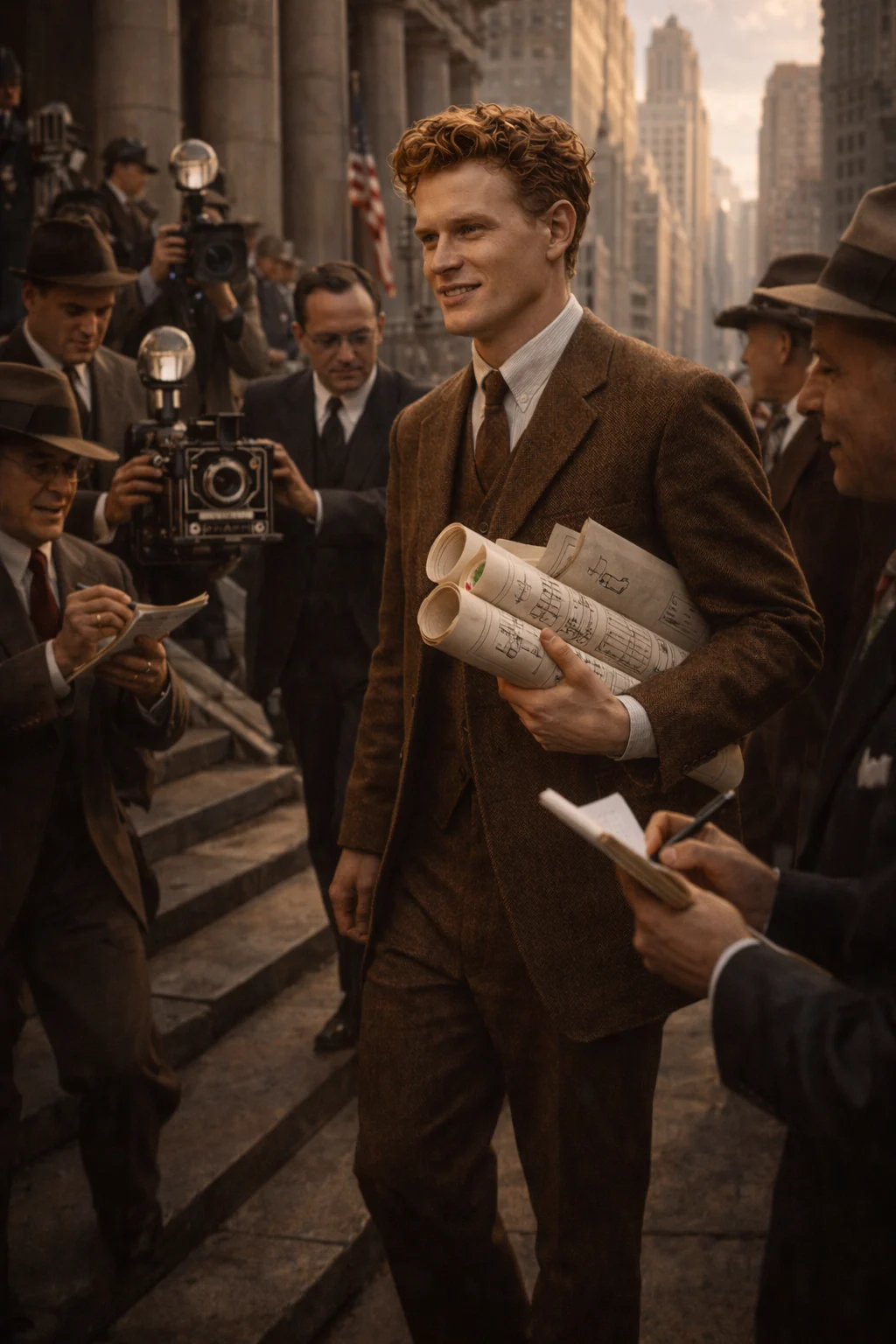
Commercial television required far more than a correct idea. It needed transmitting stations, distribution networks, factories, technical standards, programming, and enormous investment.
Farnsworth founded companies and continued improving cameras, receivers, and electronic tubes. In 1934, he publicly demonstrated his system at Philadelphia’s Franklin Institute. His company subsequently manufactured radio and television equipment.
RCA, however, possessed the resources needed to develop infrastructure and dominate the market. Farnsworth’s image dissector also required intense illumination, while other camera tubes proved more sensitive and practical for commercial broadcasting.
The Second World War temporarily interrupted television’s civilian expansion. When the market grew explosively after the war, some of Farnsworth’s fundamental patents were already approaching expiration or had expired.
His technology had helped open the door, but others passed through it with far greater industrial power.
The Contradiction of Seeing His Invention Everywhere
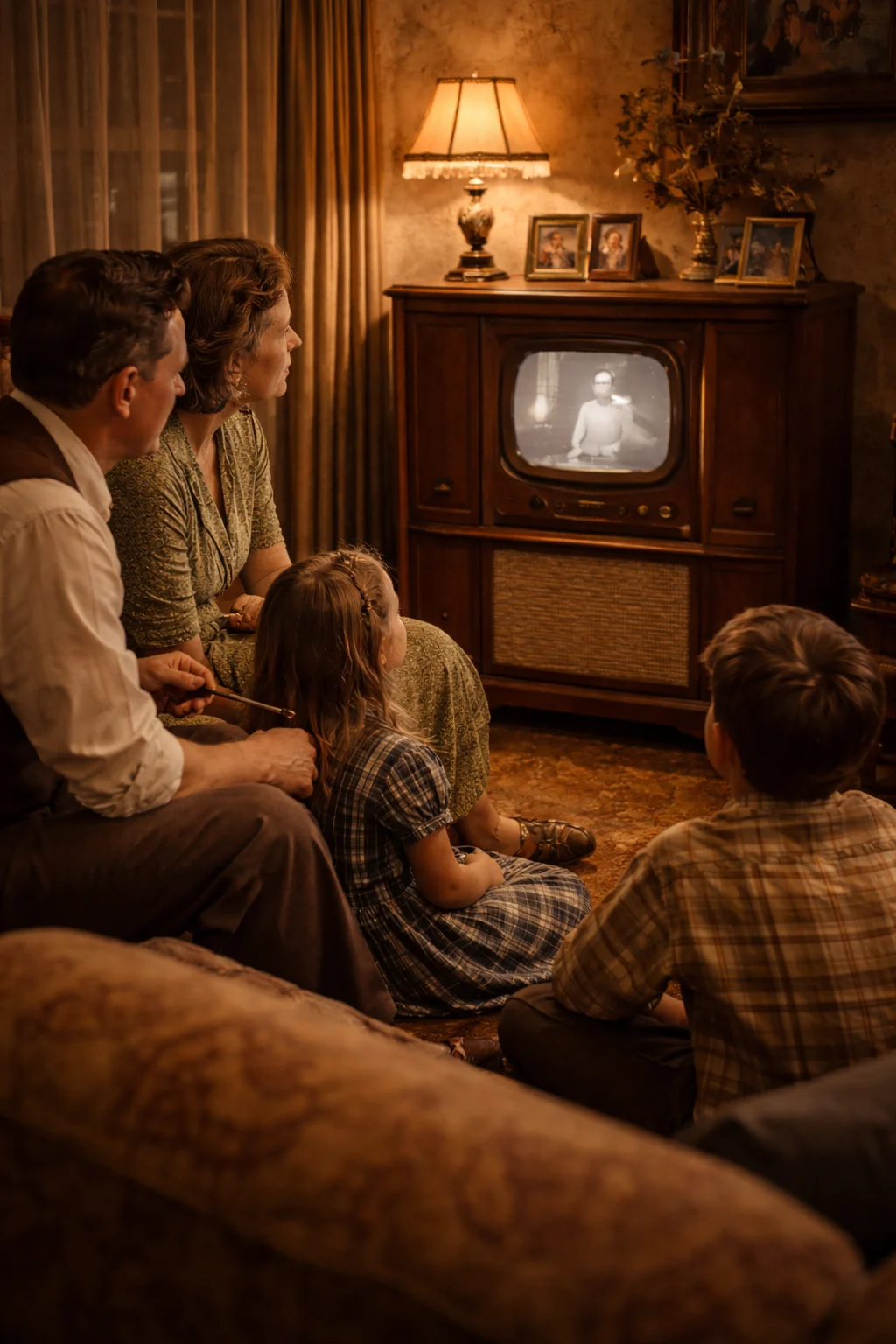
Farnsworth continued conducting research in several fields. He worked on radar, detection systems, electronic tubes, and defense-related equipment. During his later years, he devoted much of his effort to controlled nuclear fusion.
One of his best-known projects was the fusor, a device that uses electrical fields to accelerate ions and produce fusion reactions. It did not solve the problem of producing commercial electricity through fusion, but variations of the device are still used in research and as neutron sources.
His relationship with television became more troubled. He watched the medium he had helped create fill with advertising and programming he did not always respect. According to family accounts, he even limited the amount of television his children were allowed to watch.
There was, however, a moment when he appeared reconciled with it. After watching the televised Moon landing in 1969, he reportedly concluded that the event made the medium worthwhile. The precise statement survives through family recollections and should be regarded as testimony rather than a directly recorded declaration.
The Inventor No One Recognized
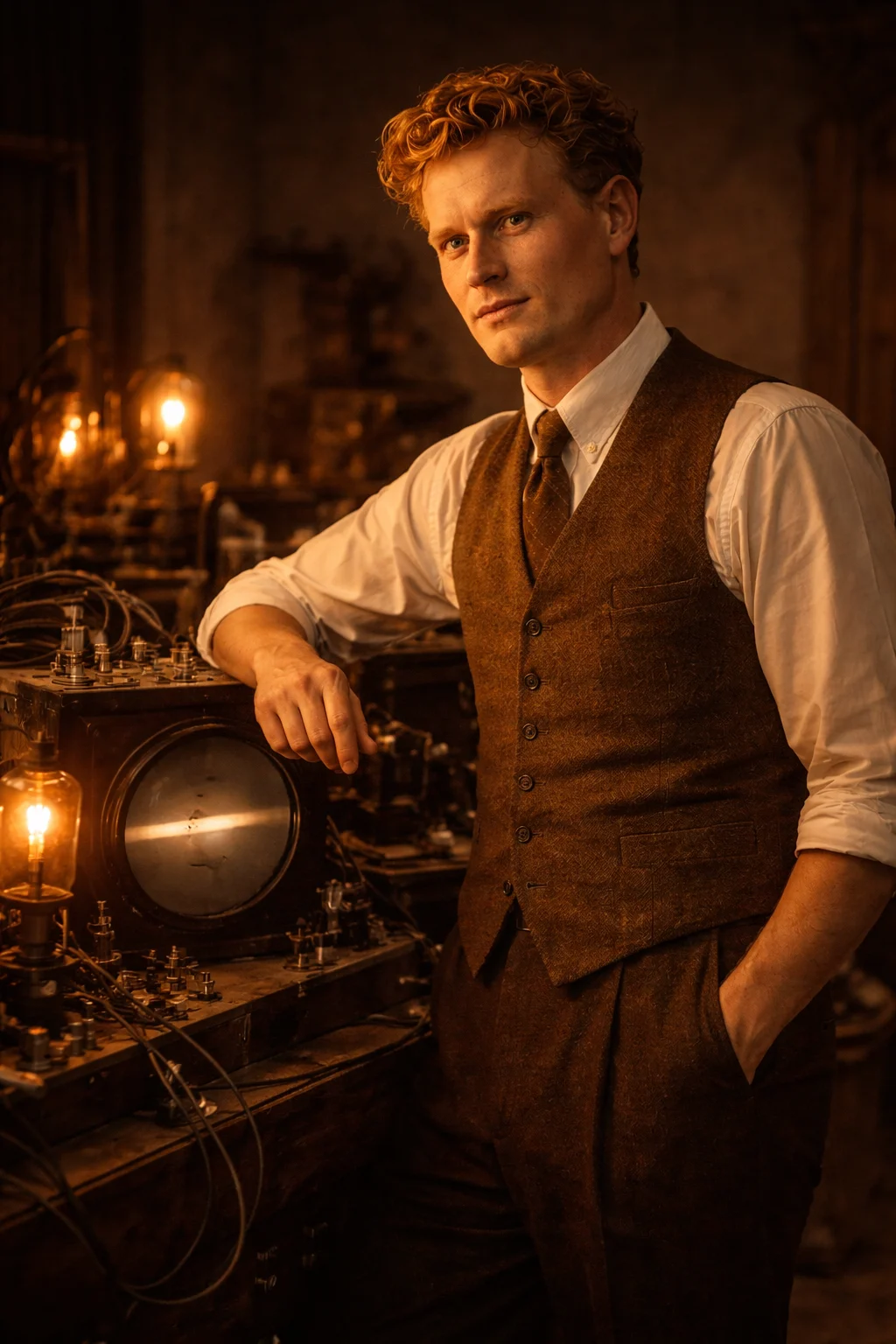
Farnsworth’s appearance on I’ve Got a Secret on July 3, 1957, captured the central irony of his career (Godfrey, 2001).
The panelists asked questions in an attempt to discover his identity. His secret was simple: he had invented electronic television. None of them identified him.
His reward was $80 and a carton of cigarettes—an especially dark detail because Farnsworth, a longtime smoker, died of pneumonia in 1971 after suffering serious health problems associated with alcohol and tobacco.
Viewers could recognize the stars who appeared on their screens every day, but not the man who had helped make those images possible.
Inventor of an Essential Part, Not the Whole

Calling Philo Farnsworth “the inventor of television” is understandable but incomplete. Television resulted from the work of scientists and engineers including Nipkow, Baird, Jenkins, Zworykin, Farnsworth, and many others.
His importance requires no exaggeration.
As a teenager, Farnsworth conceived an electronic scanning system. He built a working device, transmitted images without rotating mechanisms, and defended his priority against a corporation with incomparably greater resources.
Television changed politics, advertising, education, entertainment, and family life. Digital screens, video calls, and internet streaming followed—technologies very different from his early tubes, but descendants of the same aspiration: turning an image into information capable of travelling.
Philo Farnsworth did not single-handedly invent everything that would appear on our screens.
He helped invent the possibility that it could appear.
Sources and further reading
Sources and further reading
Abramson, A. (1987). The history of television, 1880 to 1941. McFarland.
Farnsworth, E. (1990). Distant vision: Romance and discovery on an invisible frontier. PemberlyKent.
Godfrey, D. G. (2001). Philo T. Farnsworth: The father of television. University of Utah Press.
Schatzkin, P. (2002). The boy who invented television: A story of inspiration, persistence and quiet passion. TeamCom Books.
Schwartz, E. I. (2002). The last lone inventor: A tale of genius, deceit, and the birth of television. HarperCollins.
U.S. Patent and Trademark Office. (1930). Television system (U.S. Patent No. 1,773,980). https://patents.google.com/patent/US1773980A/en
More from this collection
Willis Carrier: The Man Who Tried to Control Humidity and Ended Up Changing the Map of the World
Read story →
Garrett Morgan: The Inventor Who Had to Hide His Face to Save Lives
Read story →