In this storyOpen index
William Mumler: The Photographer Who Turned Grief into Ghosts
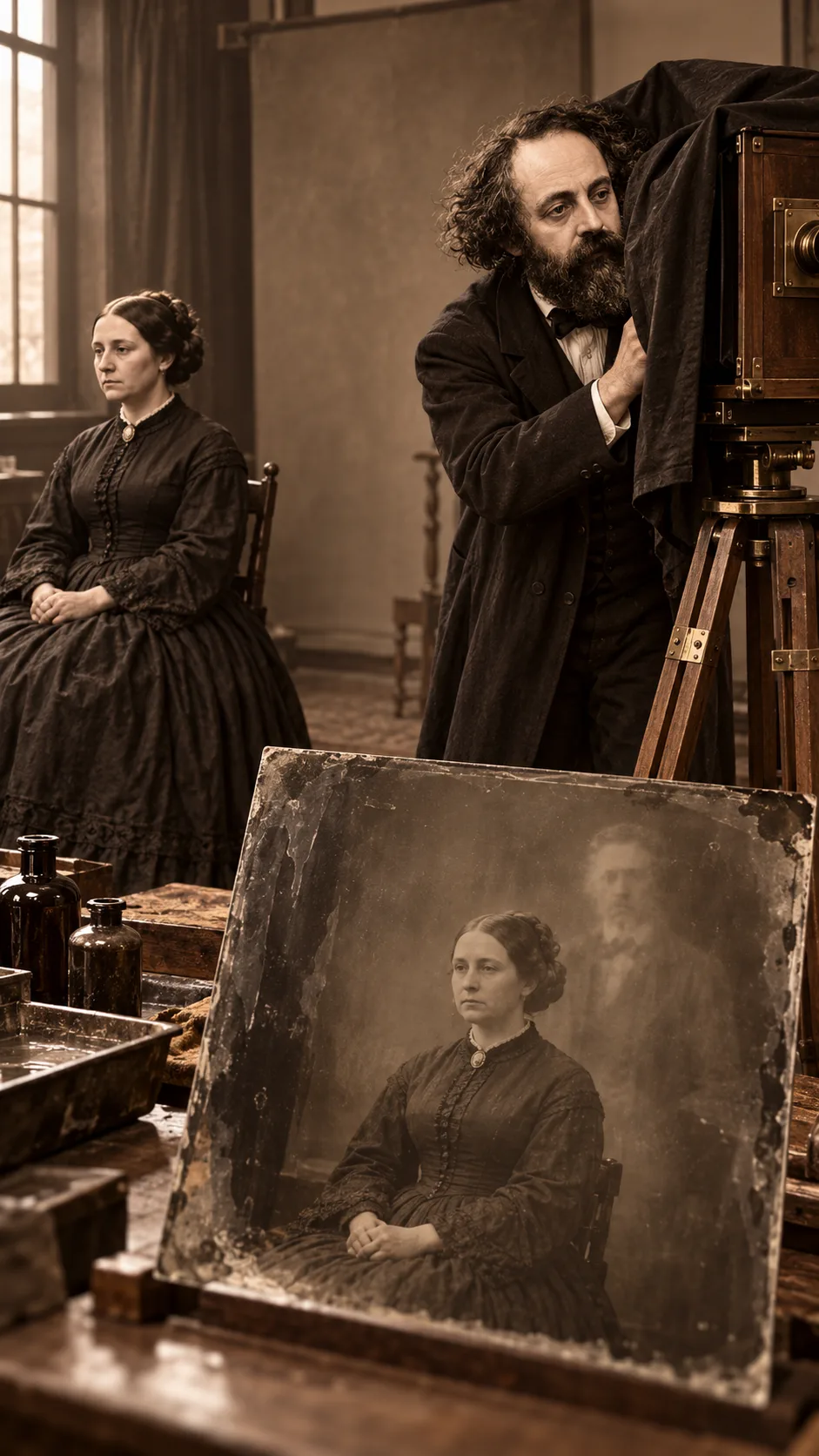
In a photograph made in Boston during the early 1860s, William H. Mumler sits beside a table. Behind him is the pale outline of a woman. Her body appears translucent, as though she were entering the room from another world.
William Mumler
Explore beyond the video
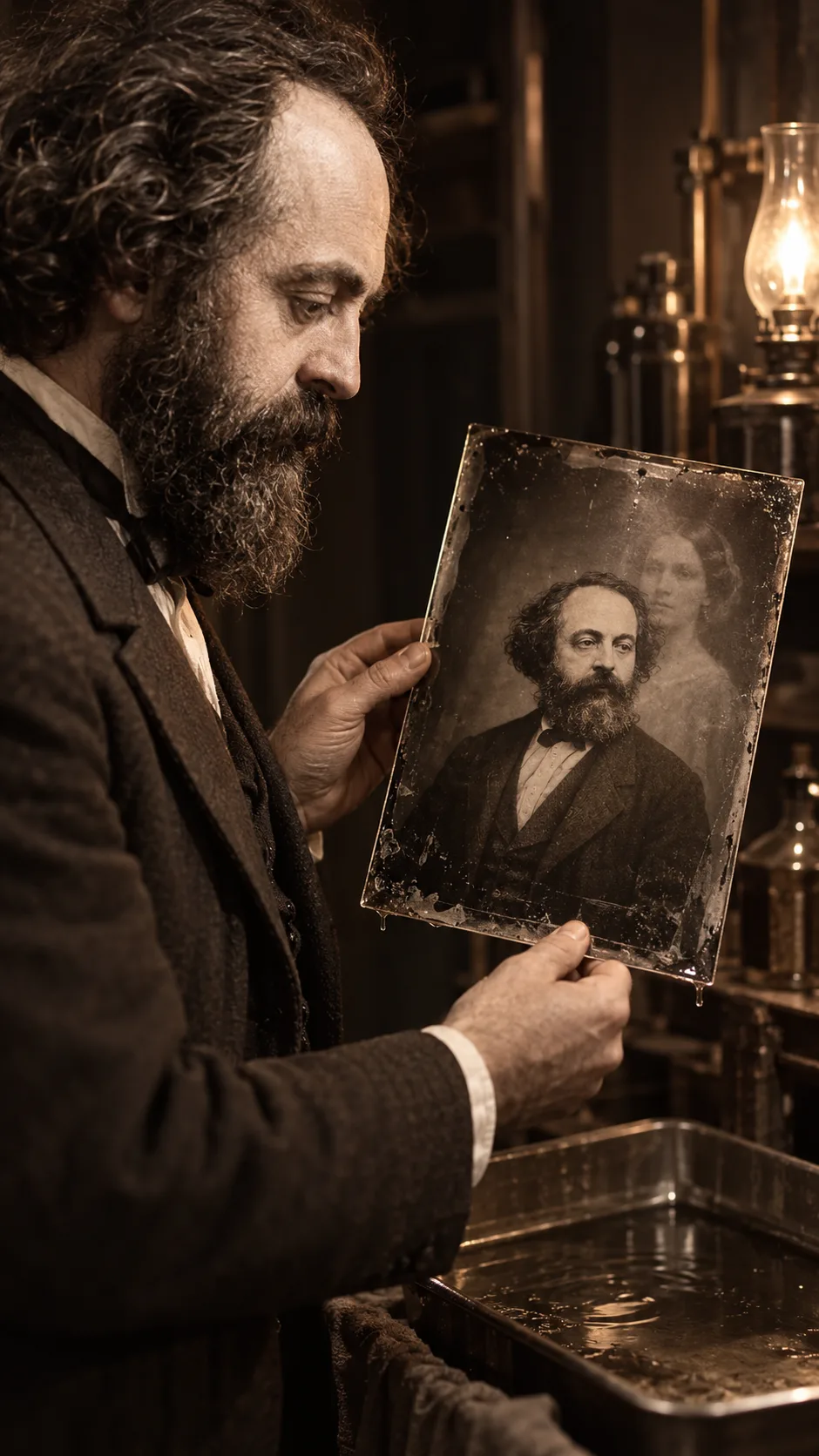
A seated woman and a second figure
The museum identifies the seated woman as an unknown sitter. A second figure appears beside her, the effect Mumler marketed to his clients as a spirit portrait (Metropolitan Museum of Art, n.d.).
The Figure That Appeared Behind Him
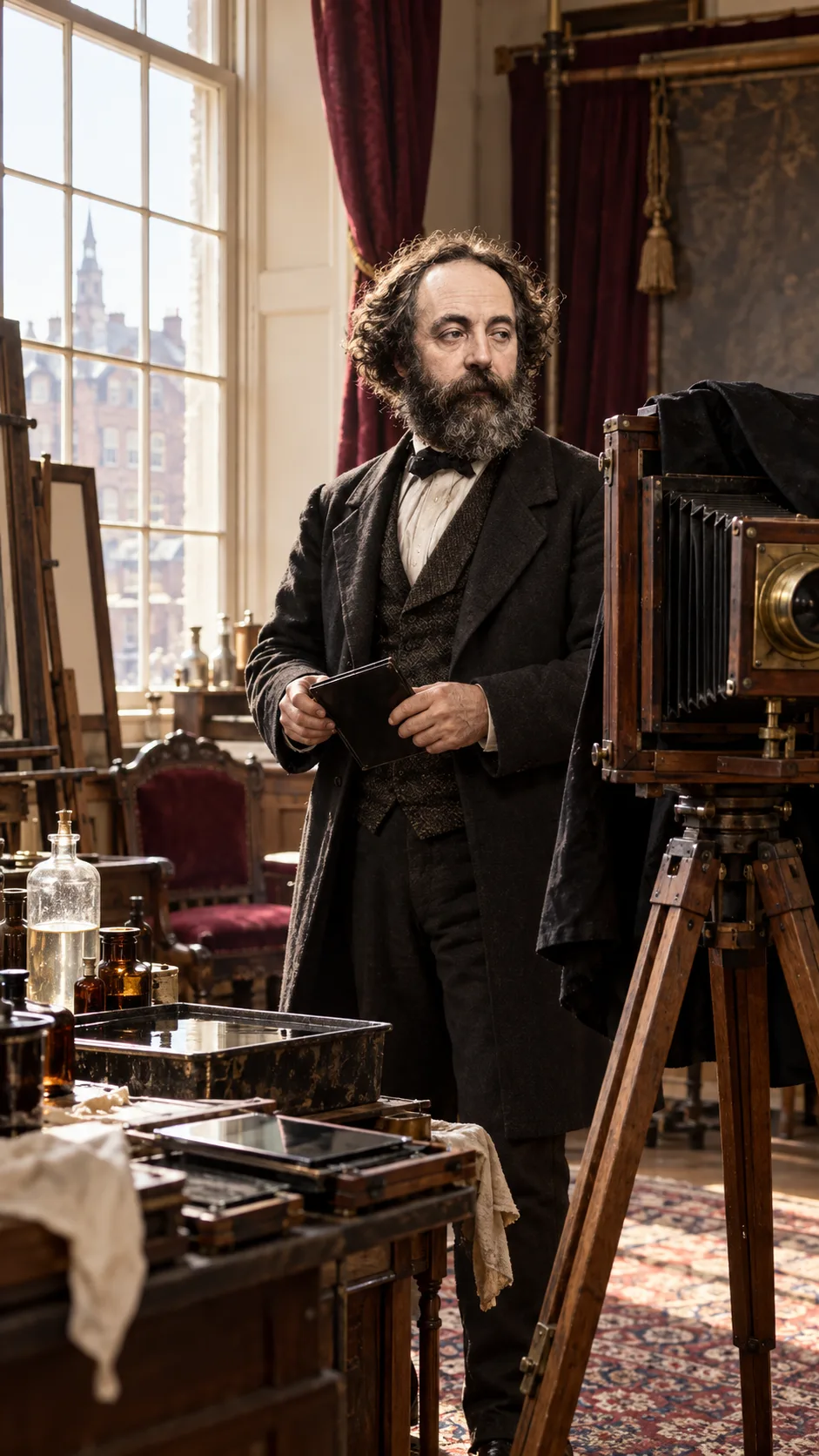
Mumler claimed that the second figure had not been present when he opened the camera’s shutter. According to his account, she was a cousin who had died years earlier. What first circulated as a curiosity eventually became alleged evidence that a camera could reveal what the human eye could not see.
American spirit photography was born: portraits in which a living sitter appeared beside the hazy image of someone presumed dead.
The technical explanation was less supernatural. A previously used plate, a combined negative, or a double exposure could produce a transparent figure. Yet ordinary photography still seemed mysterious to much of the public. The camera appeared not to interpret reality but to record it objectively.
Mumler discovered that he could sell this appearance of truth to those who most desperately needed to believe (American Philosophical Society, n.d.).
An Engraver Enters the Darkroom
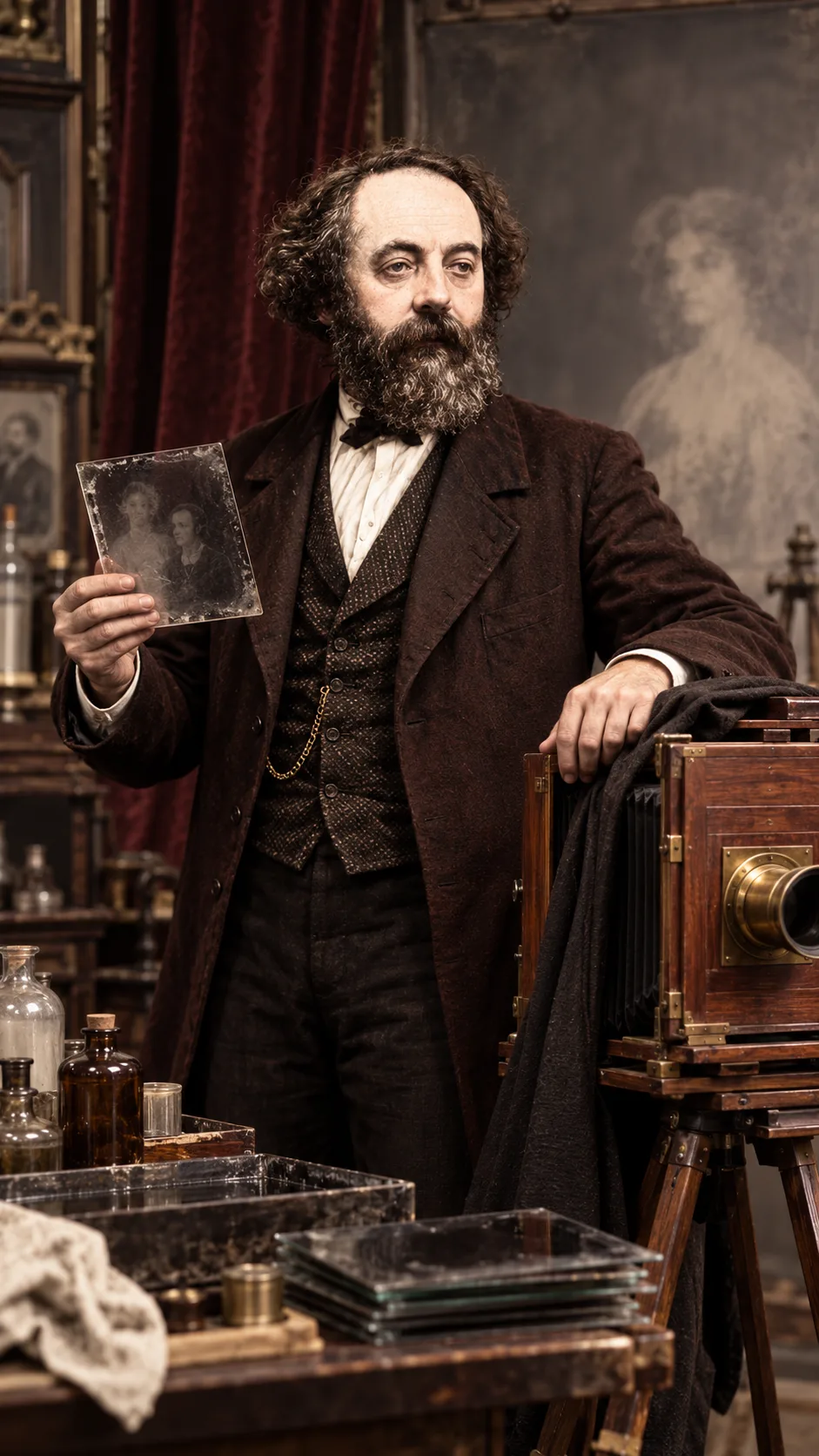
William Howard Mumler was born in 1832 and worked in Boston as a jewelry engraver. He did not begin his professional life as a medium or photographer. He experimented with cameras and chemicals in his spare time at a studio associated with Helen F. Stuart.
The traditional account states that Mumler was attempting a self-portrait when an unexpected form appeared on the plate. He showed the result to acquaintances connected with Spiritualism, and the picture was circulated or discussed in the movement’s publications. Publicity transformed a possible laboratory accident into a religious and commercial phenomenon (Kaplan, 2008).
The story gradually accumulated more dramatic details. Mumler’s arm supposedly became numb during sessions, while contact with the spirit world exhausted him so severely that he could make only a few photographs each day. Such claims suggested that he was not performing a trick but paying a physical price for opening a passage between the living and the dead.
Mumler gradually left engraving to produce spirit portraits. Clients sat before an ordinary background, but when they received the finished print, a face, pair of hands, or white-clothed figure appeared behind them.
A Nation Filled with Absence
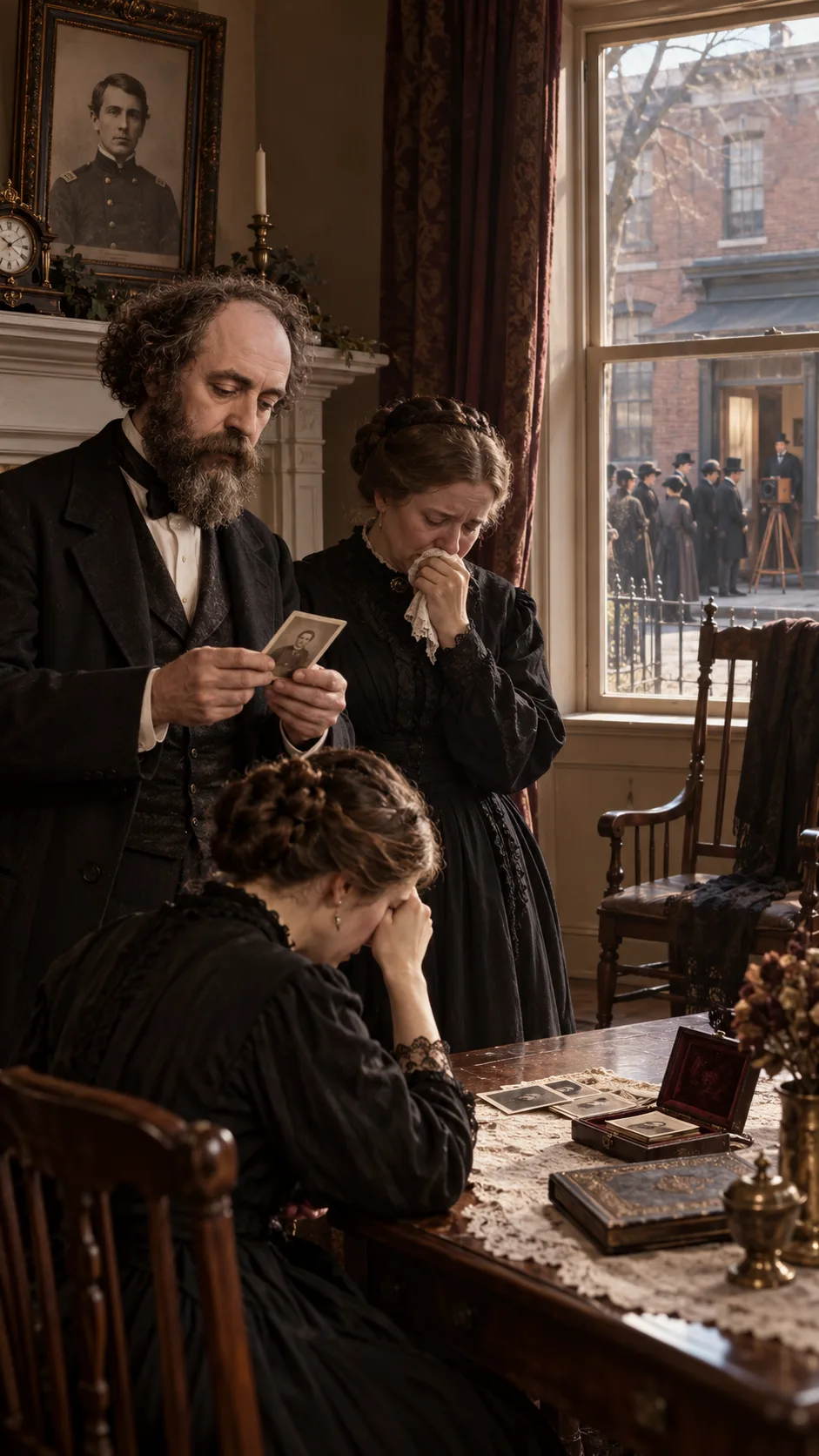
Mumler’s success cannot be separated from the American Civil War. Between 1861 and 1865, hundreds of thousands of soldiers died. Many families never recovered the bodies of sons, husbands, or brothers. Death could arrive through an official letter without providing a corpse, a nearby grave, or a final farewell.
At the same time, Spiritualism was spreading throughout the United States. Its adherents believed that personality survived physical death and that the deceased could communicate through knocks, moving tables, automatic writing, mediums, and private séances.
Photography seemed to offer something more persuasive than a voice in darkness. A picture was a physical object that could be preserved, touched, and shown to others. American families were already using postmortem portraits to retain an image of the dead. Mumler’s pictures adapted that mourning culture by symbolically reuniting the survivor with the absent person rather than photographing a corpse (Jacob, 2025).
Some clients claimed to recognize relatives immediately. Others discovered a resemblance only after prolonged examination. The forms’ vagueness encouraged interpretation: a shadow could acquire precisely the features a grieving person hoped to find (Library of Congress, 2011).
The Business of Photographing the Afterlife
Mumler initially charged several dollars per sitting, but his price eventually reached approximately ten dollars—far above the ordinary cost of a photographic portrait. He did not promise that a spirit would always appear or guarantee the figure’s identity. That uncertainty favored him: failure could be blamed on unfavorable spiritual conditions.
His wife, Hannah Frances Green Mumler, participated in the enterprise and was described as a medium or clairvoyant healer. During sittings, she could help establish an atmosphere of spiritual concentration while William controlled the camera and development.
The portraits followed a recognizable composition. The paying client appeared sharply in the foreground, while a lighter, blurred, partially transparent figure emerged behind. Sometimes the “spirit” placed its hands on the sitter’s shoulders or leaned toward the living person protectively.
To believers, the lack of definition confirmed that the photographed body belonged to another plane. To experienced photographers, it displayed effects associated with successive exposures, reused negatives, or combined images.
Mumler never publicly admitted to a fraudulent method. Nevertheless, the availability of period techniques capable of producing equivalent results removes any need to attribute the photographs to supernatural intervention (Waldorf, 2024).
Dead People Who Were Still Alive
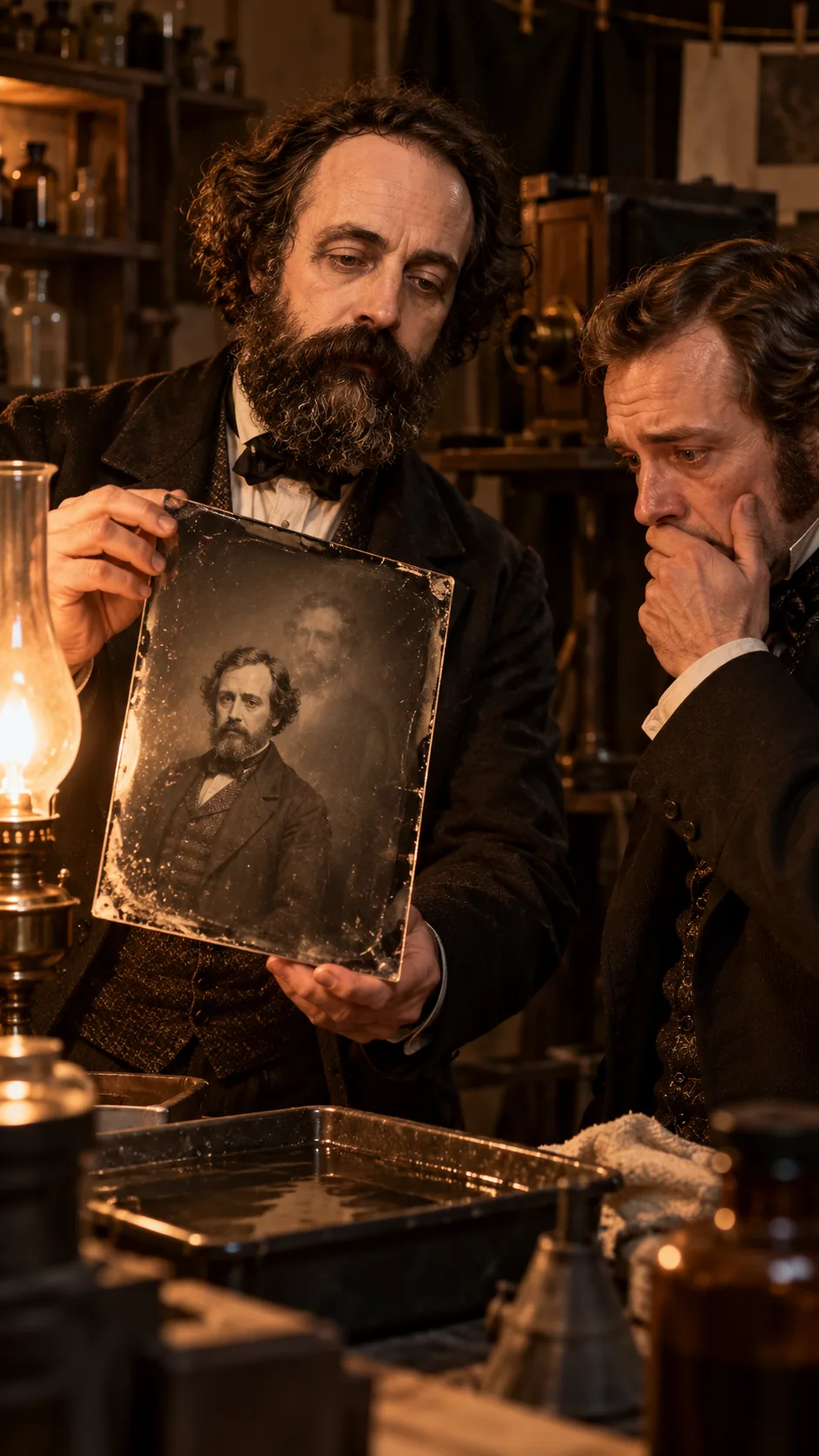
Suspicion intensified when observers recognized supposed spirits as Boston residents who were still alive. In one case, a visitor identified an apparition as a woman who had previously sat for a portrait in the same studio. The incident suggested that stored images could reappear on later plates (Metropolitan Museum of Art, n.d.).
The problem was not merely technical. If Mumler reused earlier portraits without permission and presented them as dead relatives, he was exploiting both his clients’ memories and their grief.
Professional photographers knew several ways to create apparitions: partially exposing a person before photographing the principal sitter, combining negatives, positioning an image within the scene, or using a plate retaining traces of an earlier exposure. During photography’s early decades, “ghosts” could also appear accidentally when plates were inadequately cleaned.
Mumler and his supporters replied that observers had inspected his cameras, plates, and chemicals without detecting manipulation. Yet failing to discover a trick during a session controlled by the photographer did not establish the presence of spirits. It demonstrated only that his exact procedure remained concealed.
New York and the Fall
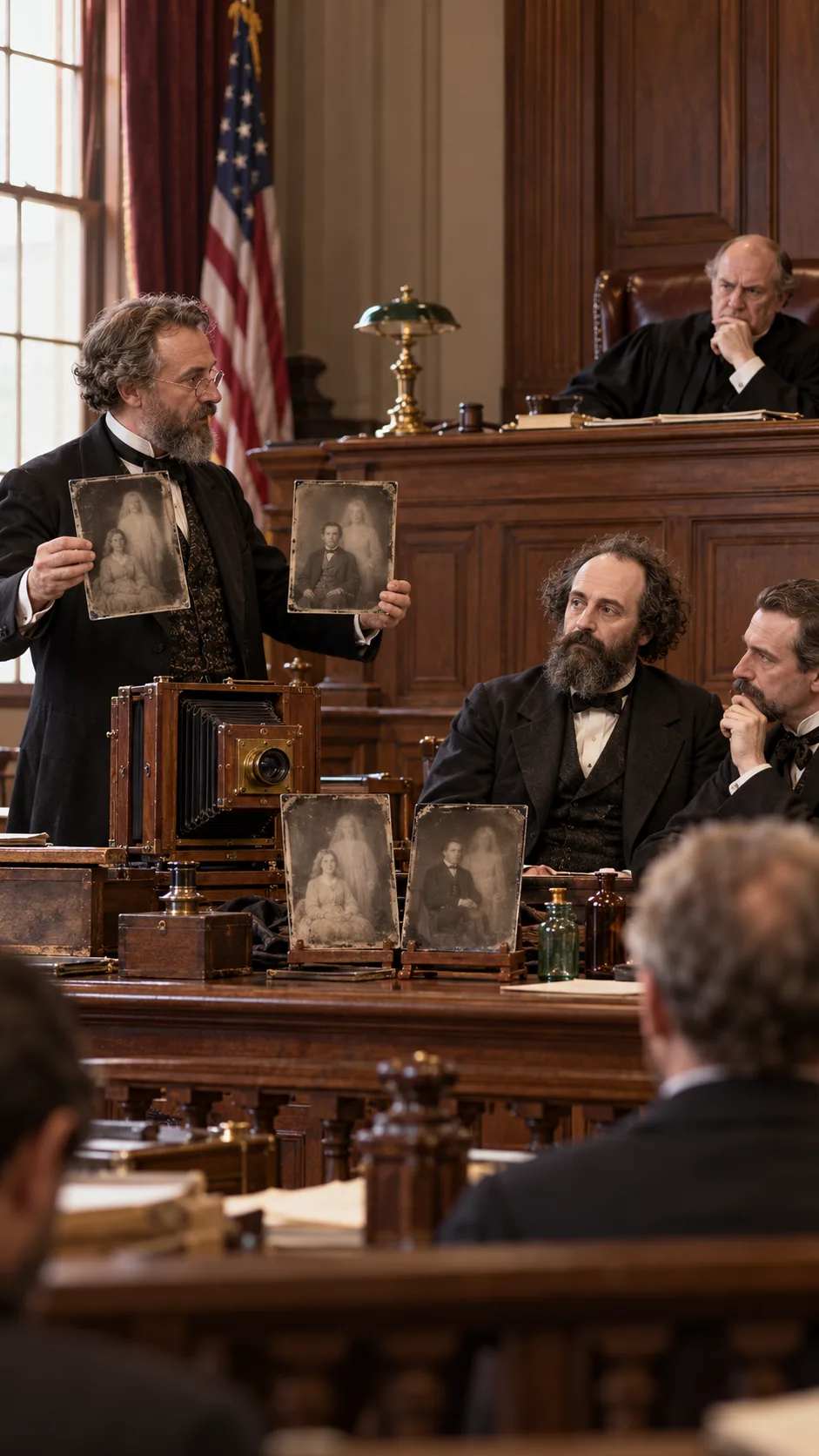
When his reputation deteriorated in Boston, Mumler transferred his business to New York. He opened a studio at 630 Broadway, where he again attracted clients, investigators, and journalists.
In 1869, authorities arranged a sitting with an undercover investigator. After Mumler delivered photographs containing alleged apparitions, he was arrested and charged with obtaining money by false pretenses, common-law cheating, and larceny by trick.
What is frequently called “Mumler’s trial” was technically a preliminary examination before Justice Joseph Dowling at the Tombs Police Court. Its purpose was to determine whether sufficient cause existed to send the case to a grand jury, not to reach a final verdict through a conventional criminal trial (Gerry, 1869).
Photographers, Spiritualists, journalists, curious citizens, and public figures crowded the proceedings. The controversy was no longer limited to whether one man had fraudulently obtained ten dollars. The authority of photography itself was being examined: could a picture function as evidence when most viewers did not understand how easily it could be manipulated?
P. T. Barnum Against the Ghosts
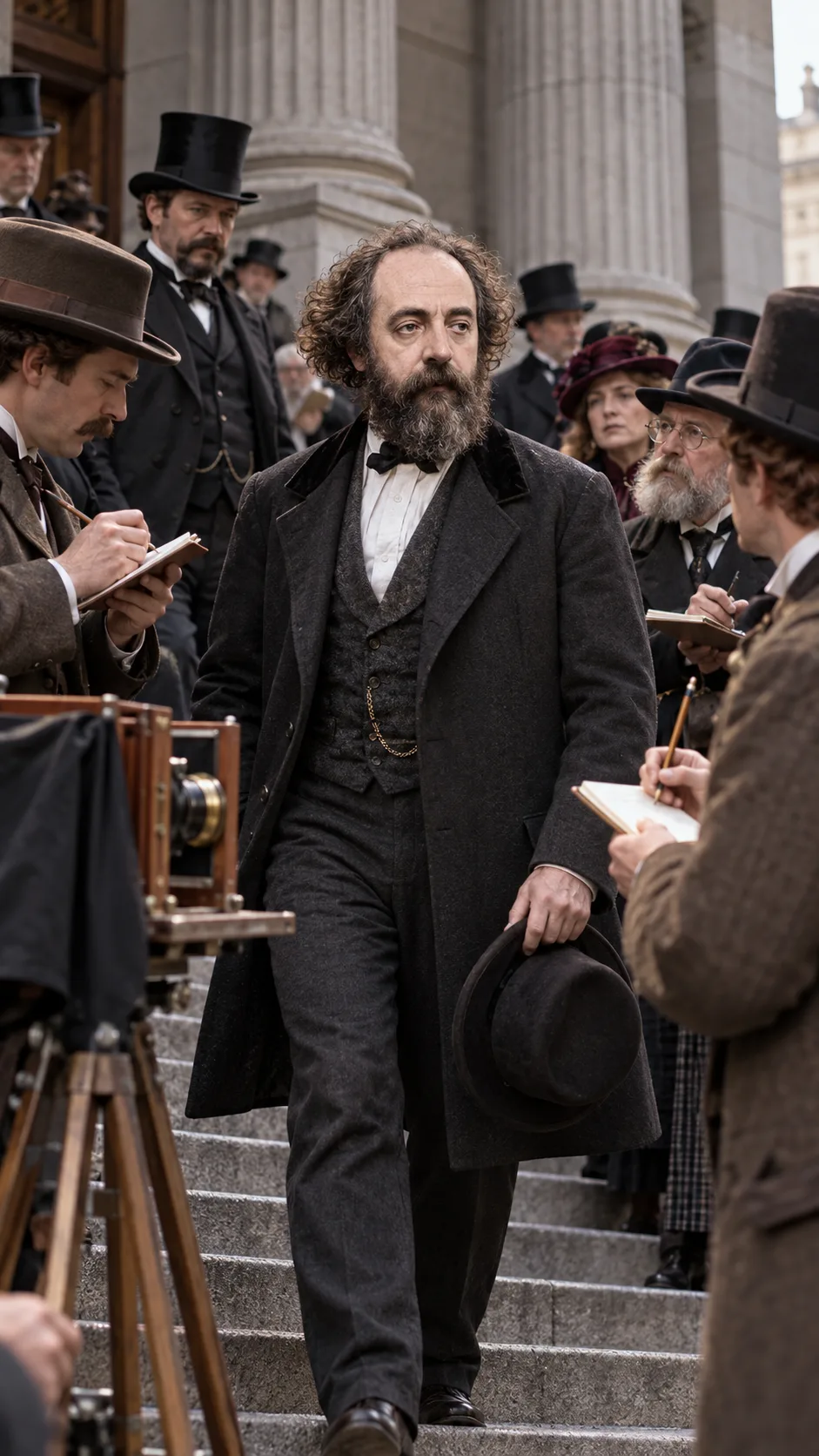
The proceedings’ most famous witness was showman P. T. Barnum, who had built a fortune exhibiting curiosities, spectacles, and acknowledged deceptions. Barnum believed that Mumler had crossed a different line. He was not selling a theatrical illusion but an alleged encounter with a customer’s dead family.
To demonstrate how easily the effect could be reproduced, Barnum commissioned photographer Abraham Bogardus to create a picture showing Barnum accompanied by the “ghost” of Abraham Lincoln. The resulting image imitated the general appearance of Mumler’s portraits without requiring assistance from the spirit world.
The prosecution called experts who described various possible methods. Demonstrating that a photograph could be falsified, however, was not identical to proving precisely how Mumler had created the pictures sold to the investigator. No witness had caught him substituting a plate or combining negatives.
Justice Dowling expressed strong moral suspicion but found that the prosecution had not sufficiently established the specific fraud. The charges were dismissed, and Mumler was released (Kaplan, 2008).
The decision did not certify that his ghosts were genuine. It meant that the state had failed to reach the evidentiary threshold required to continue the prosecution.
Mary Todd Lincoln Before the Camera
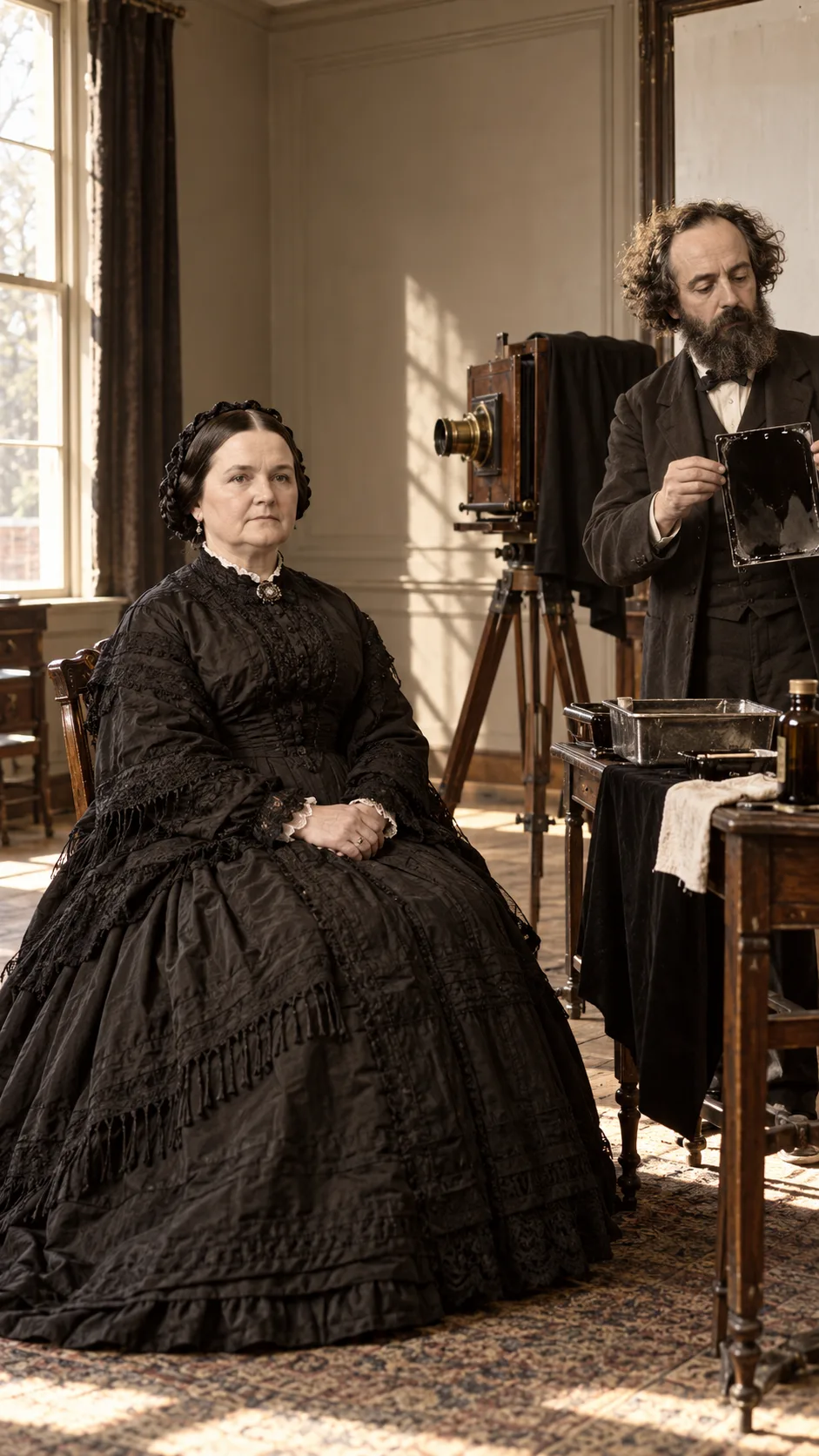
After the hearing, Mumler returned to Boston. There he produced the most famous image of his career: a portrait identified as Mary Todd Lincoln, widow of President Abraham Lincoln.
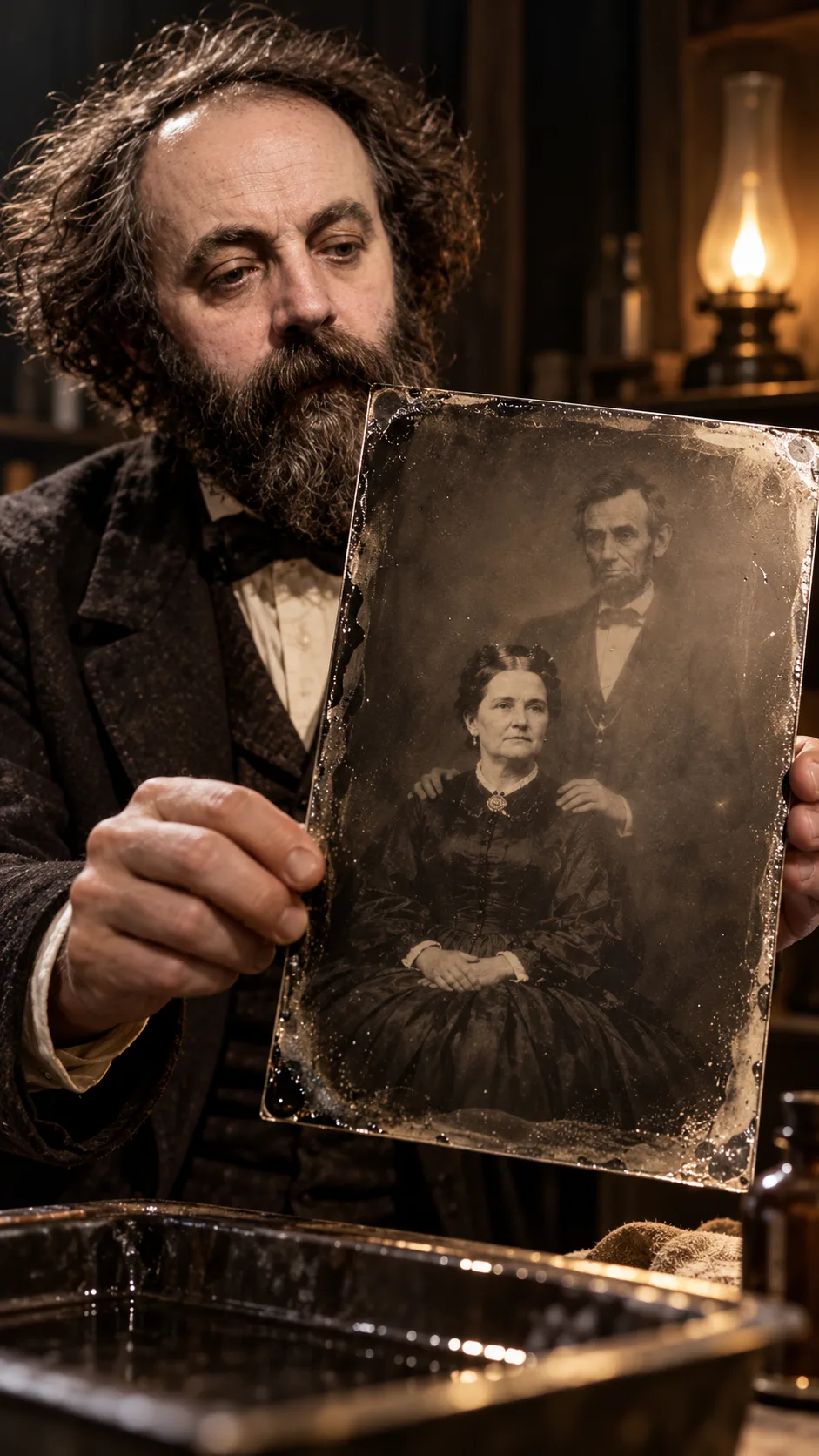
Mary had lost her husband to assassination in 1865 and had also endured the deaths of several children. She participated in séances and sought signs of her family. In Mumler’s photograph, she sits dressed in mourning while a recognizable figure of Abraham Lincoln rises behind her, its hands hovering near her shoulders.
The image is usually dated to approximately 1872, although sources propose slightly different years. Major institutions, including the National Park Service, accept the sitter’s identification as Mary Lincoln while classifying the spirit image as a hoax (National Park Service, n.d.).
Later accounts claim that Mary used an assumed name and concealed herself with a veil, preventing Mumler from recognizing her. That detail is difficult to verify independently and may have enlarged the legend.
The picture does not prove that Mumler was ignorant of his client’s identity or that a spirit appeared spontaneously. It does demonstrate the emotional power of visually reuniting two people whom death had separated.
The Little-Known Fact: The Pioneer May Have Been a Woman
The traditional history identifies Mumler as spirit photography’s solitary inventor. Recent scholarship has challenged that account.
The first portrait emerged in a studio owned by or associated with Helen F. Stuart. Hannah Frances Green, who later married Mumler, worked as a medium and collaborator. Researcher Felicity Tsering Chödron Hamer found evidence suggesting that Helen Stuart and Hannah Green may have been the same person or may have used different professional identities (Hamer, 2018).
If that interpretation is correct, the woman remembered as an assistant may have managed the studio, understood its photographic processes, participated in the sittings, and contributed directly to the genre’s creation.
The available evidence does not permit every step to be reconstructed with complete certainty. It does show, however, that assigning the entire achievement to Mumler reproduces a familiar historical pattern: a man occupies the center of the story while a woman’s technical, commercial, or spiritual labor becomes a footnote.
The most important mystery may not be how the first ghost appeared, but who actually prepared the conditions that produced it.
The Man Who Understood That Images Could Lie
Mumler’s spirit business eventually declined, but he continued working with photographic processes. He developed a photo-electrotype method that converted images into relief printing plates, allowing them to be printed alongside movable type and reducing some of the manual engraving required for illustrated publications. The so-called Mumler Process demonstrated considerable knowledge of chemistry, engraving, and image manipulation (Hamer, 2015).
He died in 1884. Accounts maintain that he destroyed his negatives, making it impossible to establish precisely what source materials he reused or how every composition was created. His photographs survive in museums and archives, no longer as persuasive evidence of an afterlife but as documents of nineteenth-century grief, Spiritualism, and technological credulity.
His story does not belong only to the past. Mumler understood something that remains dangerous: people trust an image when it appears to confirm what they already hope or fear. A photograph could present a construction as fact, while its mechanical appearance granted it greater authority than an ordinary story.
Not everyone needed to believe. It was enough for a mother to recognize her son in a stain, for a widow to find her husband in a silhouette, or for grief to complete the features the camera barely suggested.
William Mumler crossed the boundary between consolation and exploitation, experiment and fraud, manufactured image and emotional truth. His ghosts were almost certainly never standing before the camera. The suffering of the people who paid to see them was entirely real.
Timeline
| Year | Event |
|---|---|
| 1860–1865 | Early spirit photographs in Boston |
| 1869 | Preliminary hearing in New York |
| 1875 | Publication of his memoirs |
Sources
- American Philosophical Society. (n.d.). Spirit photography: William H. Mumler and photographic fraud.
- Gerry, E. T. (1869). The Mumler “spirit” photograph case: Argument before Justice Dowling in the preliminary examination of William H. Mumler. Baker, Voorhis. Cornell University Law Library.
- Hamer, F. T. C. (2015). The medium in the mirror: The photography of William Mumler and the reconfiguration of identity. Concordia University.
- Hamer, F. T. C. (2018). Helen F. Stuart and Hannah Frances Green: The original spirit photographer. History of Photography, 42(2), 146–167.
- Jacob, J. P. (2025). Spirit portraiture: Rethinking William Mumler through memorial portraiture and psychical experimentation. American Art, 39(1), 100–129.
- Kaplan, L. (2008). The strange case of William Mumler, spirit photographer. University of Minnesota Press.
- Library of Congress. (2011). A ghostly image: Spirit photographs.
- Metropolitan Museum of Art. (n.d.). William Mumler: Unidentified woman seated with a female spirit.
- National Park Service. (n.d.). First Lady Mary Todd Lincoln. Ford’s Theatre National Historic Site.
- Waldorf, S. (2024). The man who photographed ghosts. J. Paul Getty Museum.
More from this collection
Nostradamus: The Man Who Turned Fear into Prophecy
Read story →
Helen Peters Nosworthy: The Woman Who Named the Ouija and Later Called It a Liar
Read story →