In this storyOpen index
Helen Peters Nosworthy: The Woman Who Named the Ouija and Later Called It a Liar
The woman behind the Ouija name: patents, family memories and the psychology of a game that became a cultural myth.
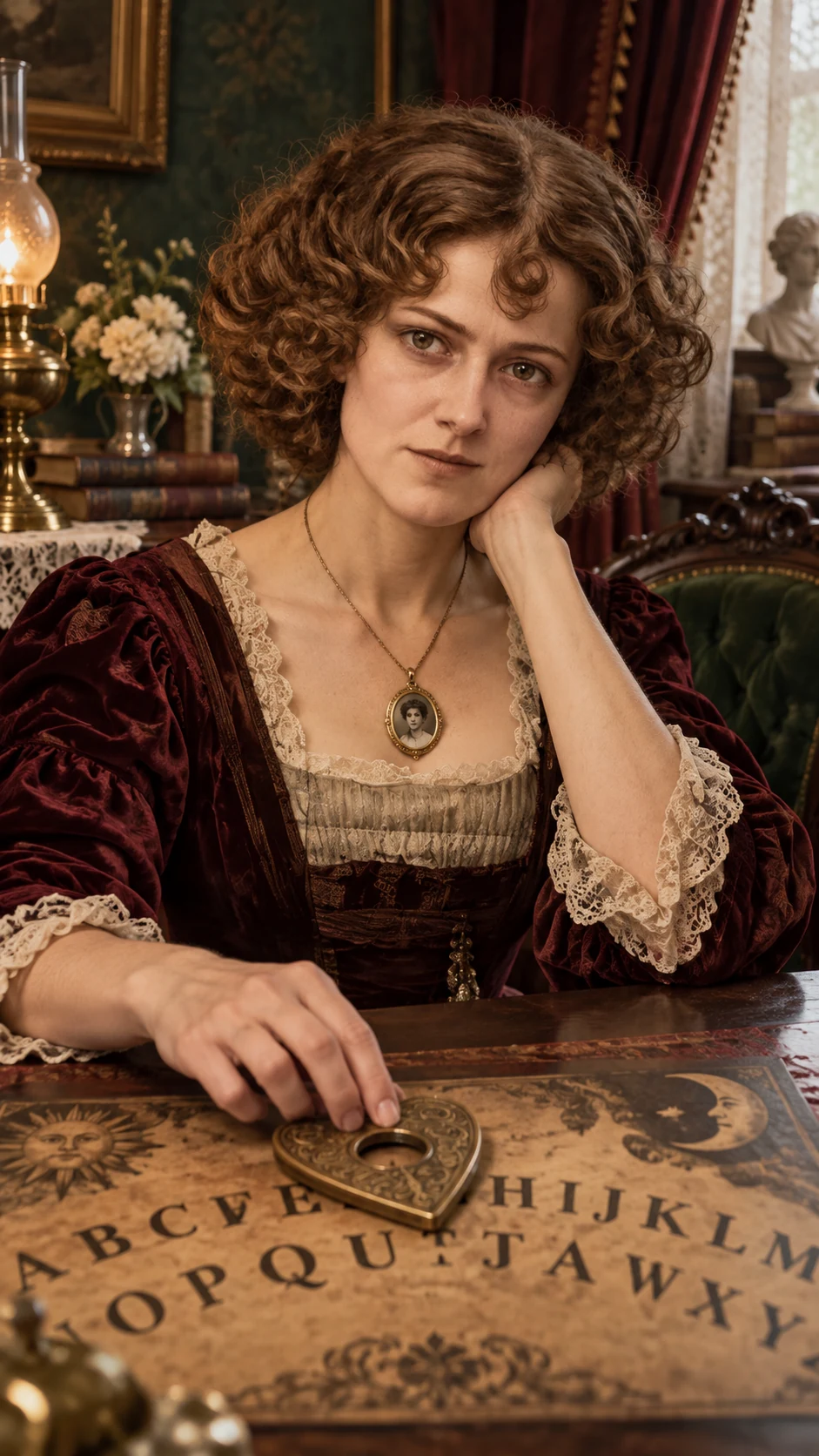
One night in 1890, a woman placed her fingers on a wooden pointer and asked what the object beneath her hands wished to be called. The board answered with five letters: O-U-I-J-A.
At least, that was what the men who commercialized the device later claimed.
The woman was Helen Peters, an amateur medium from Baltimore whose participation helped transform an unnamed talking board into one of the most recognizable trademarks in popular culture. According to later accounts, she also helped demonstrate the device during the patent process and became an early shareholder in the company that manufactured it.
Her name nevertheless disappeared from the story while others built fortunes and legends around the object she had named. Stranger still, according to an account preserved by her descendants, Helen eventually rejected the Ouija after one of its answers caused a rupture within her own family.
The woman who helped give the board a voice ended by warning others not to believe everything it said.
Helen Peters Nosworthy
Between history and belief
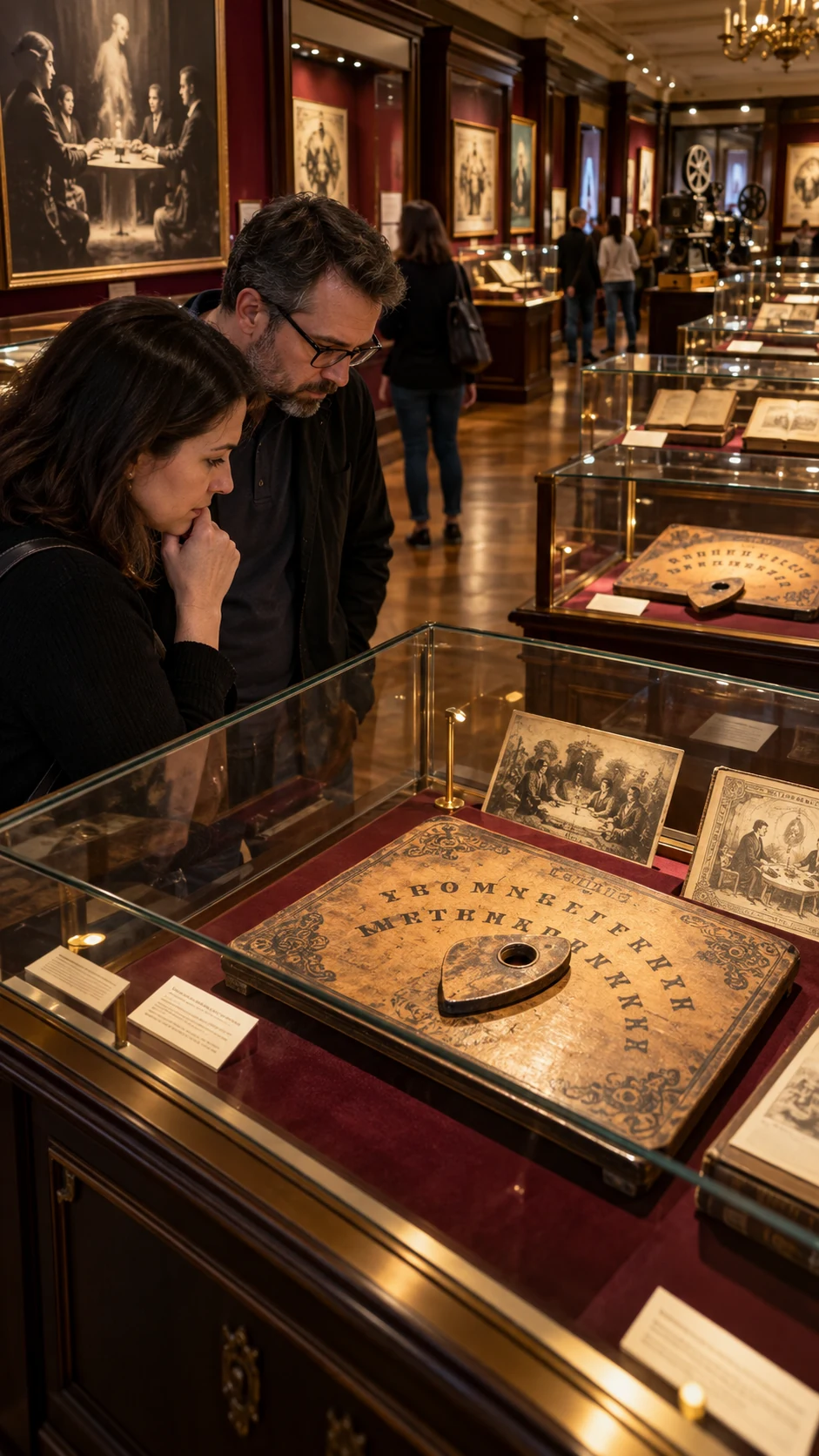
Ouija in the archives of play
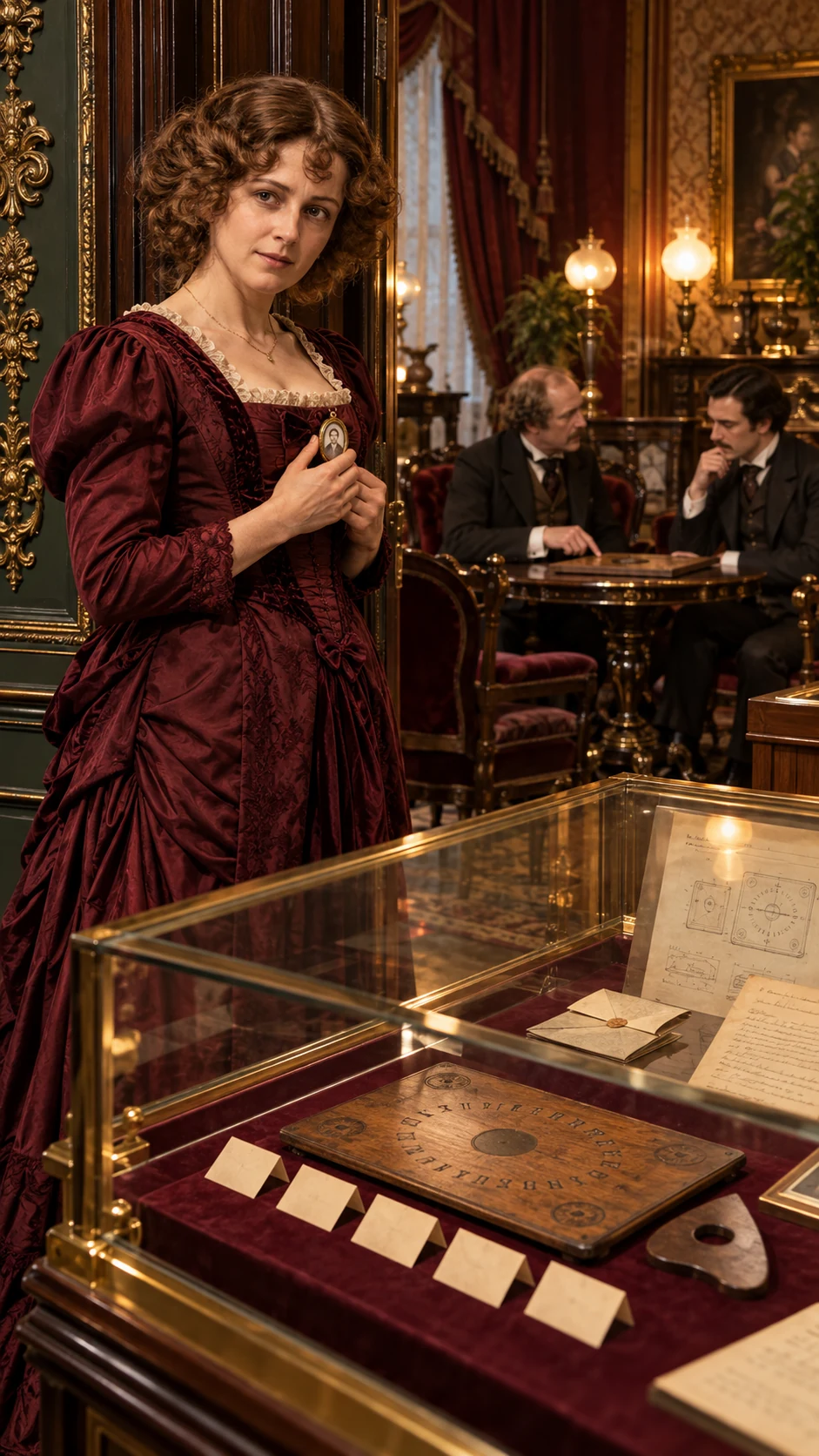
The Strong National Museum of Play preserves advertisements and commercial records that reveal how talking boards were marketed. Dorian Cole’s archival research compares a 1908 advertisement with Parker Brothers catalogs from 1971 and 1972, showing the distance between the product’s advertising and its supernatural reputation. These documents help place Helen’s story within the history of toys and commerce. The accompanying AI image is an imagined display, not a photograph of the museum or its collection.
A life hidden behind a word
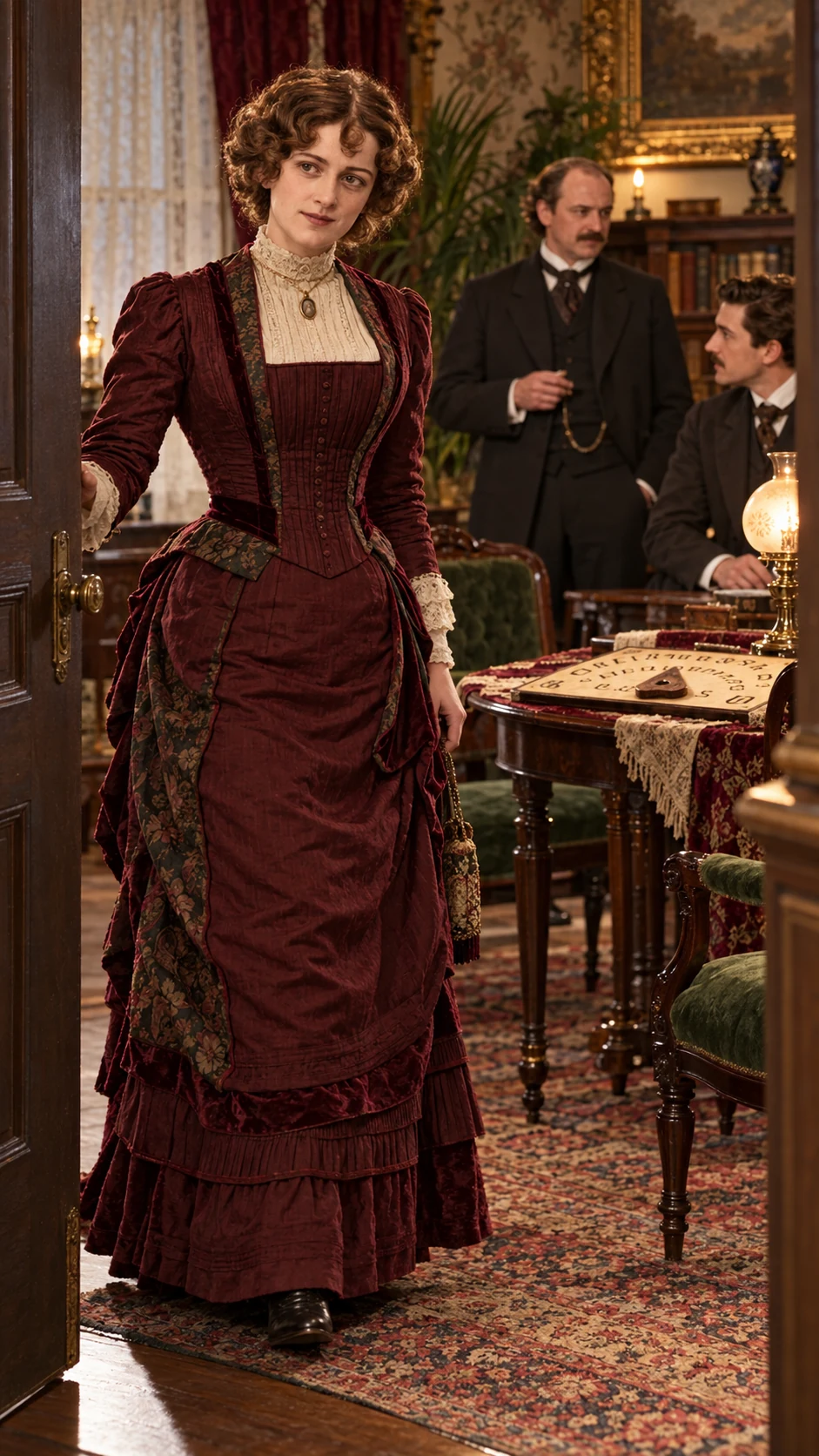
Helen Augusta Peters was born in Baltimore, Maryland, on September 19, 1851. She belonged to a prosperous family with Southern roots. Although she would later be described as a medium, she did not operate a Spiritualist church or make her living by conducting supernatural séances.
The description used by her brother-in-law Elijah Bond was more specific: Helen was a “strong medium.” In the language of the late nineteenth century, this meant that participants in private gatherings believed she possessed a special sensitivity for producing messages through tables, automatic writing or other practices associated with Spiritualism.
For decades, very little was known about her. She did not appear as the inventor on the patent, and commercial histories of the Ouija eventually concentrated on men such as Charles Kennard, Elijah Bond and William Fuld. Her contribution was reconstructed much later through newspaper articles, public letters written by the founders, genealogical records and family testimony located by researcher Robert Murch (Talking Board Historical Society, 2018).
The difficulty of reconstructing her biography matters. Some parts are documented by patents and newspapers; others come from memories passed down within the family. Presenting everything as certain would turn a fascinating history into yet another legend.
When speaking to the dead became entertainment
The Ouija did not appear from nowhere. During the nineteenth century, Spiritualism spread across the United States and Europe. Wars, epidemics and high mortality left millions of people grieving. Mediums offered the possibility of receiving messages from dead relatives through raps on walls, turning tables, automatic writing and séances held in dark rooms.
Talking boards emerged from that environment, but they also answered a practical problem: waiting for a spirit to communicate through a long sequence of knocks could be exhausting. A board printed with letters and equipped with a moving pointer produced supposed messages much more quickly.
By 1886, American newspapers were already reporting similar boards in use in Ohio. Charles Kennard and his partners therefore did not invent the universal idea of communicating through an alphabet. What they developed, patented, manufactured and promoted was a particular commercial version (Rodriguez McRobbie, 2024).
In 1890, Kennard assembled several investors in Baltimore to establish the Kennard Novelty Company. They included attorney and inventor Elijah Jefferson Bond and surveyor Washington Bowie. Helen Peters, Bond’s sister-in-law, also became an early shareholder—an unusual position for an American woman of her time.
The object was ready. It lacked an identity.
The night the board named itself
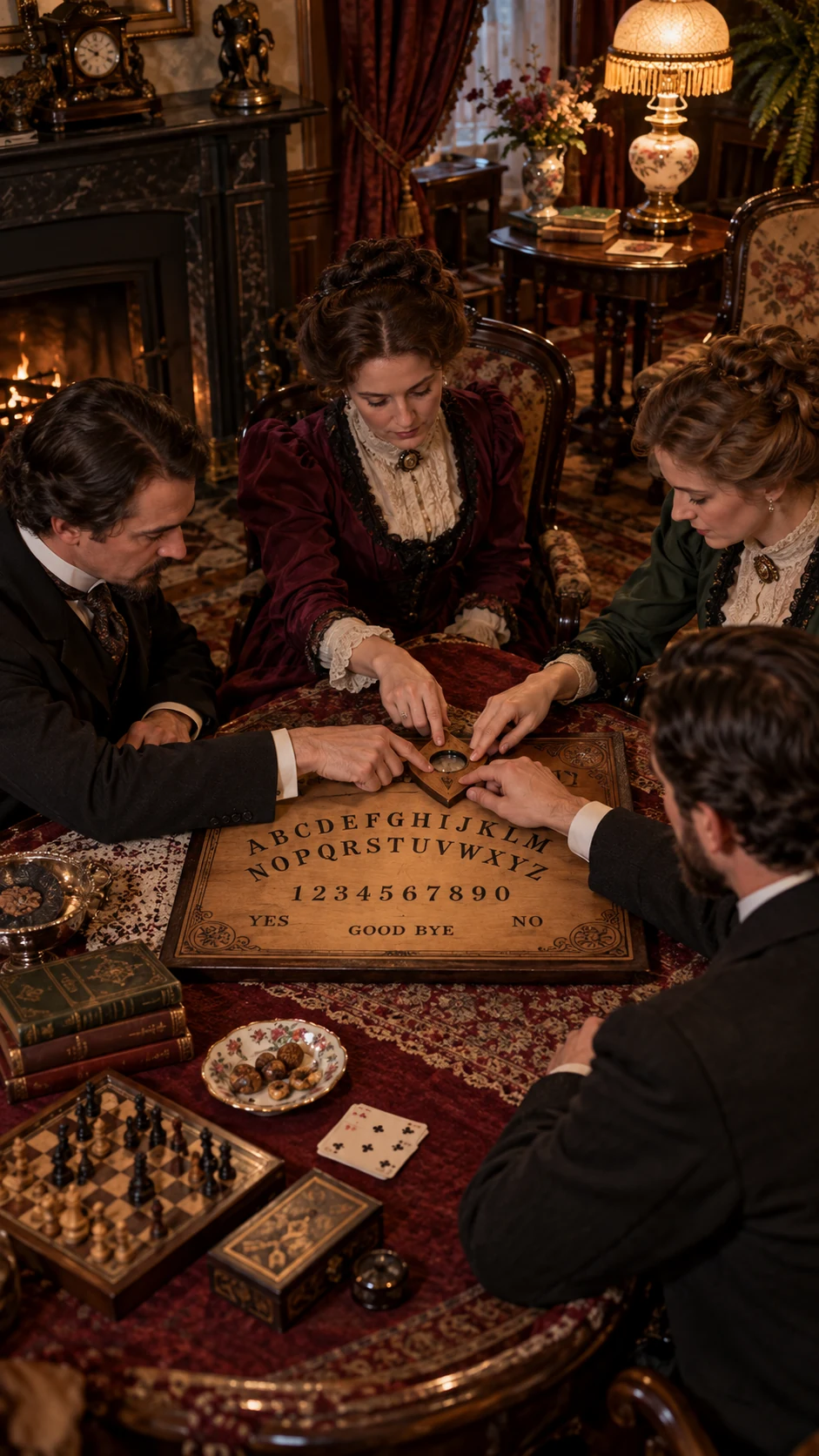
According to the account attributed to Charles Kennard and partially supported by later statements from Elijah Bond, the event occurred on April 25, 1890, at a boarding house located at 529 North Charles Street in Baltimore.
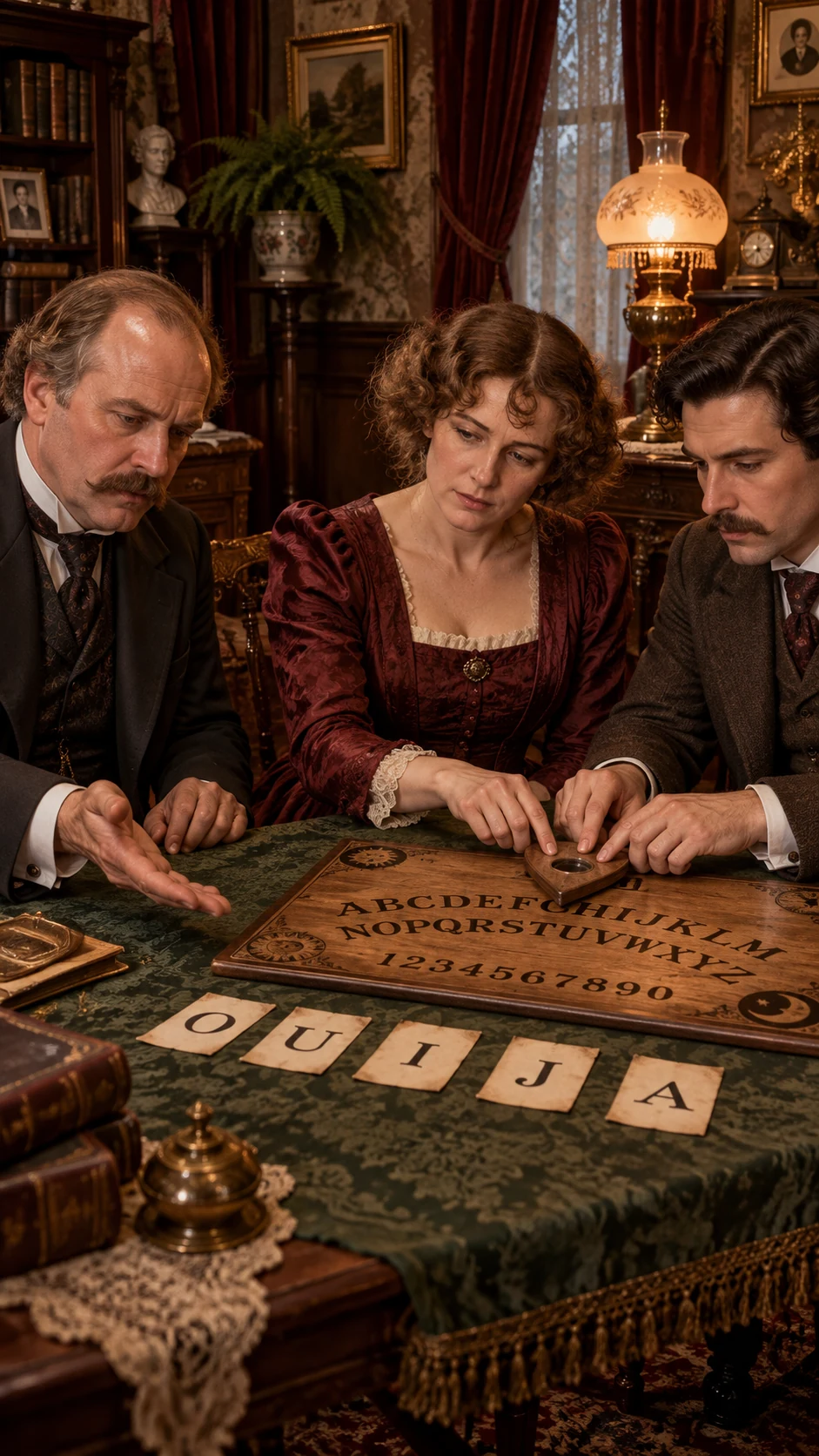
Kennard, Bond and Helen Peters sat at the board. Someone asked what the device wished to be called. Beneath their hands, the pointer traveled across the letters and formed the word OUIJA.
When they asked what the name meant, the board supposedly answered, “Good luck.”
This episode is often repeated as if a notarized transcript of the séance existed. It does not. The story appeared years later in statements and newspaper disputes involving men associated with the company. Helen’s presence and contribution have reasonable documentary support; the claim that a supernatural force moved the pointer cannot be historically demonstrated.
There is also a detail that makes the scene more intriguing.
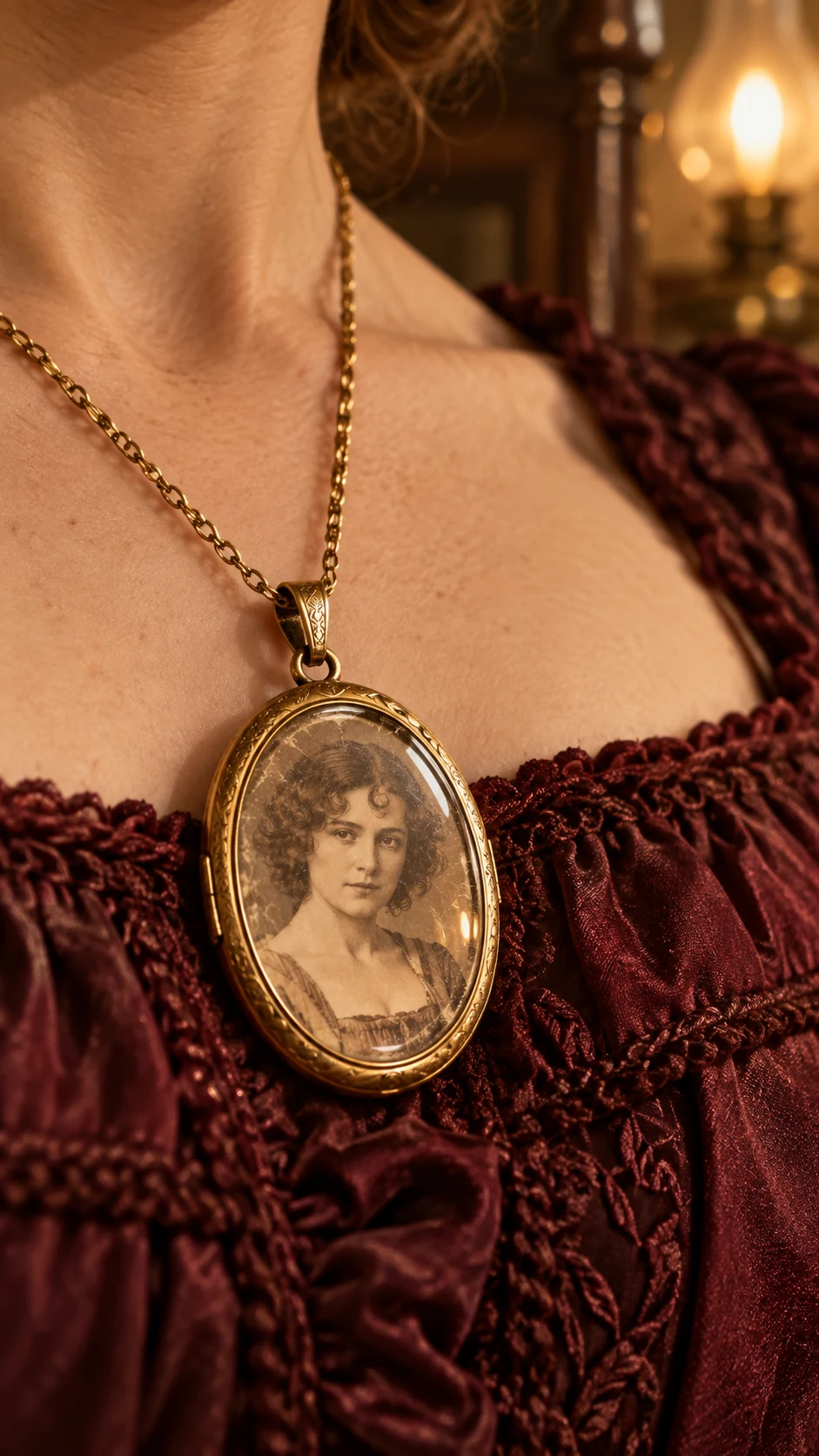
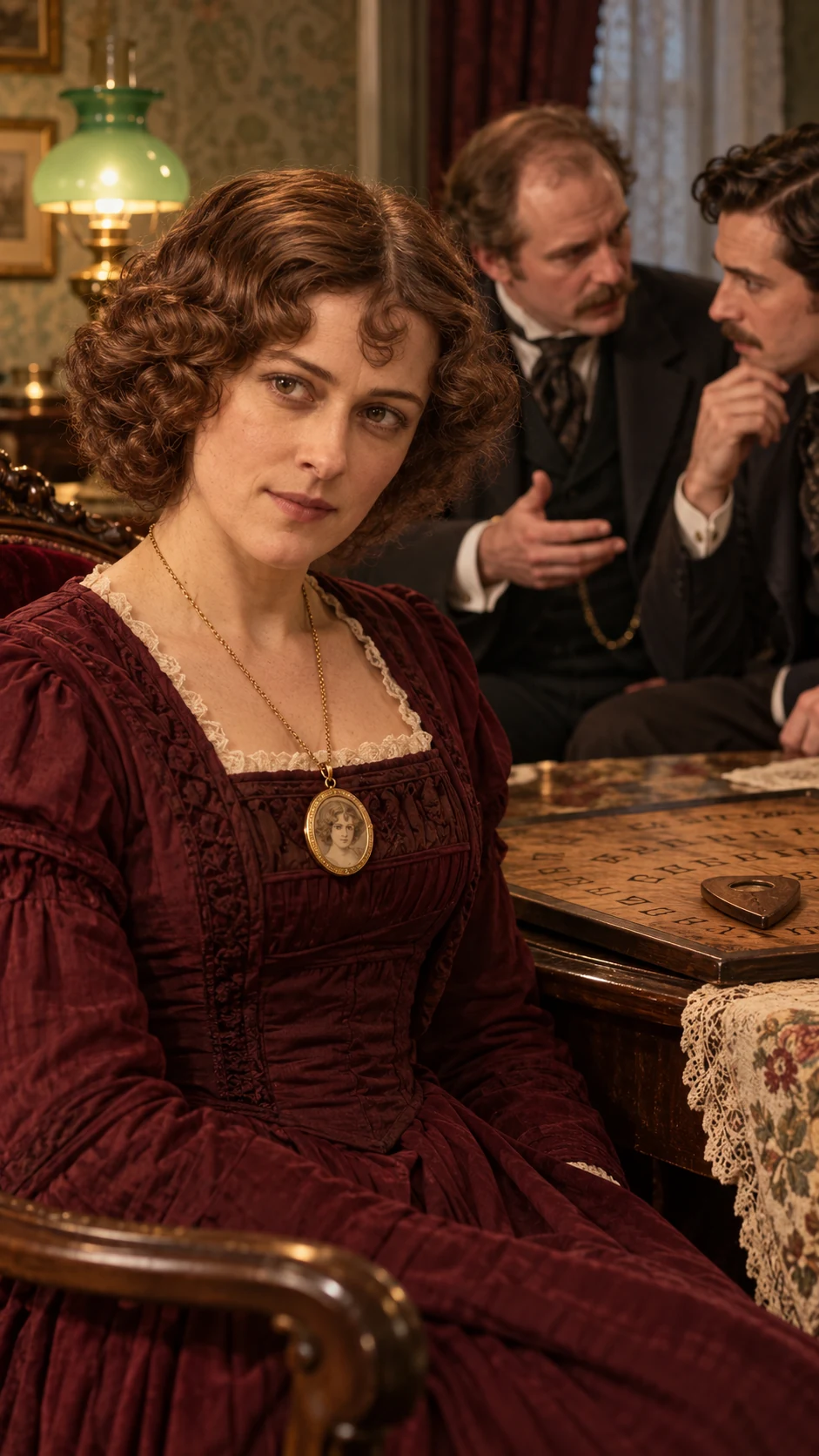
Helen was wearing a locket containing the portrait of a woman and a word that apparently resembled “Ouija.” One possible explanation is that the portrait represented British novelist Maria Louise Ramé, known by the pen name Ouida, a writer admired by many women of the period. Her name may have been misread or imperfectly remembered while the participants unconsciously moved the pointer (Rodriguez McRobbie, 2024).
There are consequently at least three possible explanations:
– The board mysteriously supplied its own name. – “Ouija” emerged from information already present in Helen’s mind when she saw the locket. – The participants created or embellished the story to give the product a memorable origin.
The familiar explanation that “Ouija” combines oui, the French word for “yes,” and ja, its German equivalent, was promoted later by William Fuld. It does not appear to have been the name’s original source.
The Patent Office challenge
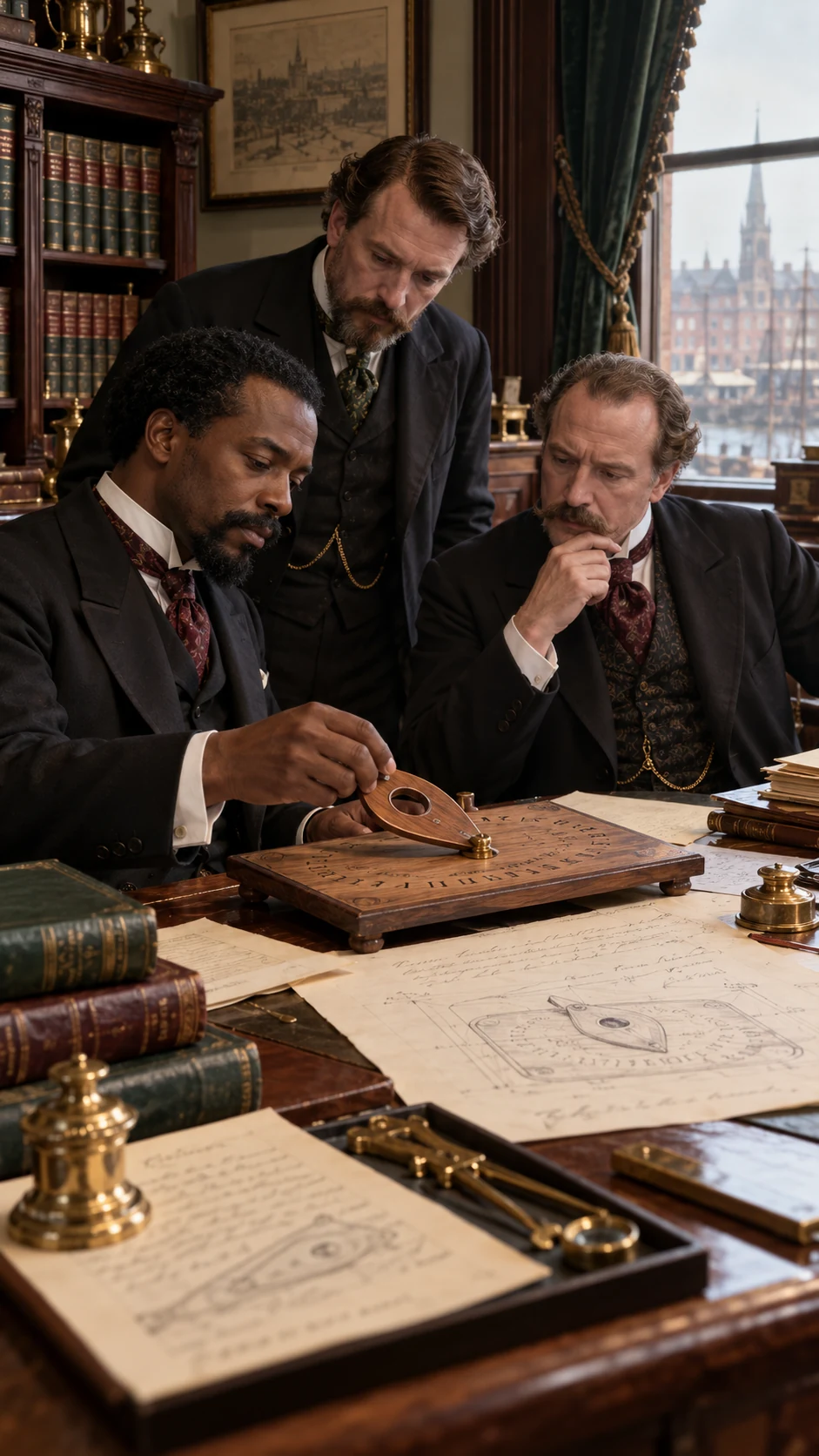
Elijah Bond filed the patent application on May 28, 1890. The document described the apparatus as a “toy or game” and called it an “Ouija or Egyptian luck-board.” It consisted of a board containing letters, numbers and the words “Yes” and “No,” together with a small hand-operated pointing table (Bond, 1891).
The patent proves that the name Ouija was already established in 1890. It also shows that the object was legally presented as a game, not as a religious instrument capable of proving that the dead existed.
Family tradition holds that patent examiners demanded a demonstration before approving the application. Bond supposedly traveled to Washington with Helen. After several officials declined to take responsibility, a senior examiner proposed a test: he would allow the patent if the board could spell his surname, which the visitors supposedly did not know.
Helen and Bond placed their hands on the pointer. The board produced the correct name. The official, either impressed or frightened, reportedly kept his promise.
The patent was granted to Elijah Bond on February 10, 1891, as United States Patent No. 446,054. That fact is verifiable. The test involving the examiner’s name comes from later testimony and is not described in the patent itself. It must therefore be treated as a later account associated with the process, not as a scene proven in every detail.
There is also a less supernatural possibility: Bond was a patent attorney and may have known the official’s identity, consciously or otherwise. The pointer could then have moved without Helen feeling that she controlled it.
The hands that move without knowing
Science offers an explanation for the apparent operation of talking boards: the ideomotor effect.
When someone expects, imagines or anticipates an action, the muscles can produce tiny movements without a conscious sense of decision. If two people place their hands on the same pointer, each may attribute its motion to the other person or to an outside force.
The phenomenon does not necessarily involve fraud. Participants can sincerely believe that they are not pushing. Expectation, suggestion and shared movements combine to create the powerful impression that the object possesses a will of its own.
Experimental research suggests that ideomotor movements can reflect associations, expectations and even information that a person cannot readily express consciously. This does not demonstrate communication with spirits; it shows that the mind can influence the body without producing a clear sense of authorship (Gauchou et al., 2012).
During the 1890 session, Helen’s locket may have supplied a visual cue. Her hands and those of the others may have converted that information into movement without anyone feeling that they were deliberately selecting letters.
The mystery does not disappear entirely. It merely changes location: it leaves the board and enters the human mind.
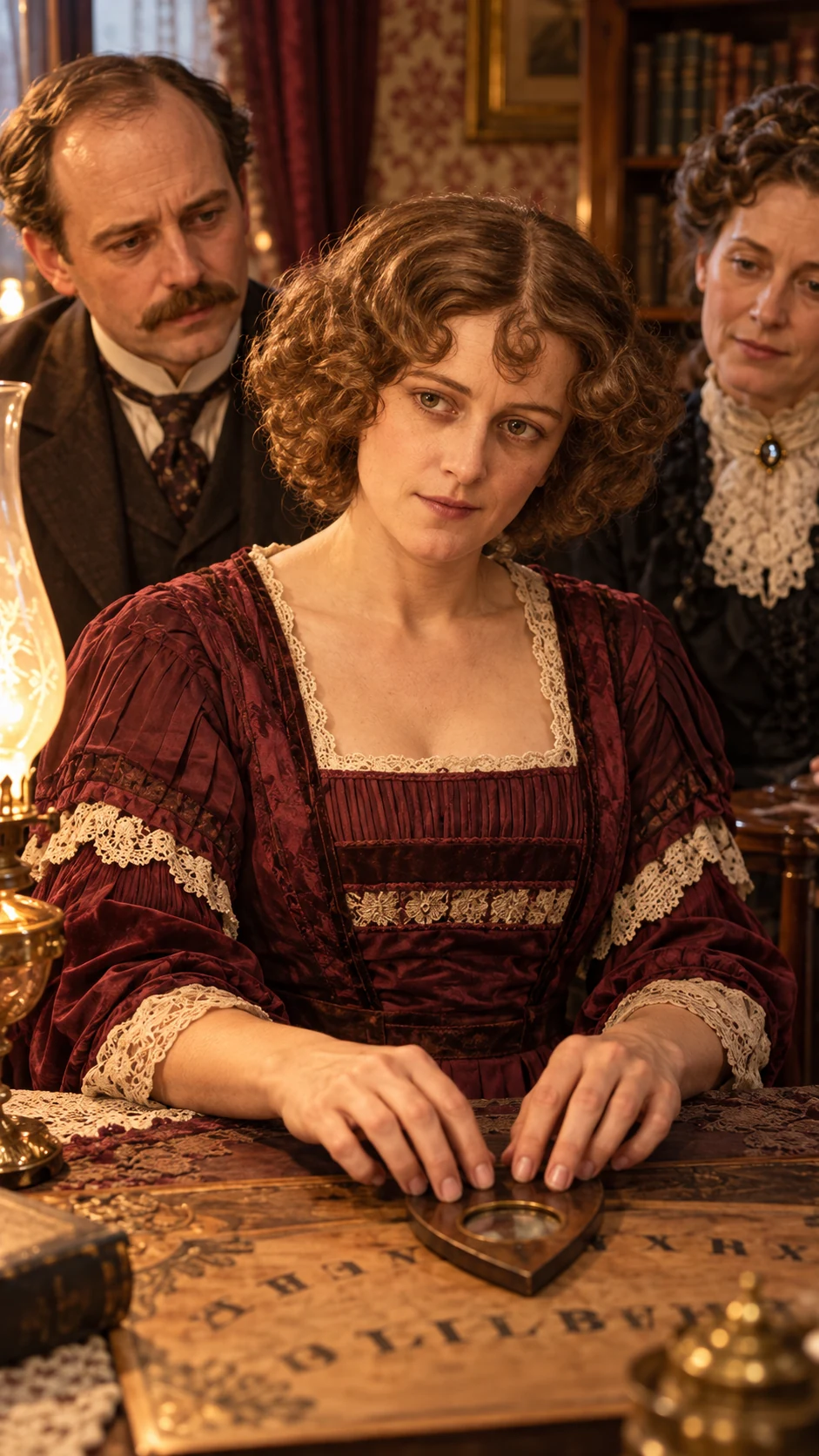
A woman who became a shareholder
Helen did more than participate in a séance. Records reconstructed by Ouija historians indicate that she was an early shareholder in the Kennard Novelty Company.
That was significant. In 1890, American women still lacked a constitutional right to vote, and many faced legal and social barriers to controlling property, investments and businesses. Helen participated in the product’s commercial birth, helped name it and took part in the episode connected with obtaining its patent.
Her name, however, was not printed on the board.
The patent was granted to Bond and assigned to Kennard and William H. A. Maupin. Later business disputes involved Kennard, Bond, William Fuld and other manufacturers. Fuld eventually became the man most publicly associated with the Ouija, although he had not created the underlying concept or participated in the original naming session.
The woman who had supplied the business’s most valuable word became a historical footnote.
The board accused someone in her family
According to oral history preserved by her descendants, Helen and her siblings possessed a collection of military buttons gathered after a Civil War battle fought near family property. The buttons came from soldiers’ uniforms and carried historical and emotional value for the family.
One day, they disappeared.
Family members consulted the Ouija to discover what had happened. The board identified one of their relatives as the thief. Part of the family believed the accusation; the rest rejected it. Helen sided with those who considered the answer false.
The dispute caused a serious family rupture. Helen reportedly declared that the board lied and warned relatives never to trust it.
The sources cited here provide no contemporary documentation establishing every detail of this event. The account comes from Nosworthy family memory and must be identified as such. Yet it corresponds to a genuine psychological danger: a message produced without an identifiable author can acquire destructive authority when it confirms existing suspicions.
The horror required no demon. It needed only a family willing to believe that the board knew the truth.
Leaving Baltimore
In 1891, Helen married Ernest Nosworthy, a Shakespearean actor and artist who later worked as a traveling salesman. A drawing made by Ernest around the period when the Ouija received its name is among the few known depictions of Helen as a young woman.
The couple left Baltimore and eventually settled in Denver, Colorado. Family tradition connected her departure with the argument over the buttons, although personal and professional circumstances may also have influenced the move.
Helen did not participate in the brand’s later expansion. While she built a life far from Baltimore, William Fuld transformed the Ouija into an enormously successful product. It was marketed simultaneously as a family game, a mysterious oracle and a means of reaching the unknown.
Following the First World War, mass bereavement produced another wave of interest in Spiritualism. Thousands wanted to believe that communication with the dead was possible. The Ouija perfectly served that need: it was inexpensive, reusable and allowed anyone to conduct a séance without hiring a medium.
The commercial machine eventually replaced women such as Helen. A “strong medium” was no longer necessary. Consumers could open a box and manufacture mystery in their own homes.
From household game to gateway of horror
The Ouija was not always regarded as a demonic object. For much of its history, it was sold as domestic entertainment. Advertisements depicted couples, families and groups of friends gathered around the board.
The Fuld family manufactured it for decades. In 1966, they sold the rights to Parker Brothers, the company known for games such as Monopoly. Sales rose rapidly and the Ouija became a mass-market phenomenon (Cole, 2024).
Its decisive cultural transformation came with William Peter Blatty’s 1971 novel The Exorcist and especially the 1973 film adaptation. In the story, a child initiates contact with the entity that will possess her by using a Ouija board.
For millions of people, the board changed from ambiguous amusement into a possible gateway to evil. The film did not document any proven property of the device, but its visual power redefined the way popular culture interpreted it.
Helen Peters had been dead for more than thirty years when that image took hold.
A grave without a name
Ernest Nosworthy died in 1937. Helen died in Denver on November 8, 1940, at the age of eighty-nine. She was buried in Fairmount Cemetery, but her grave remained without an adequate marker for more than seven decades.
While the word she helped create appeared on millions of boards, in films and throughout popular literature, her own burial place did not display her name.
Her identity began to reemerge through Robert Murch’s research and the work of the Talking Board Historical Society. In 2015, a plaque was installed in Baltimore near the location where researchers believe the 1890 naming session occurred. In 2018, with permission from her descendants, a monument was dedicated at her Denver grave recognizing her part in Ouija history (Talking Board Historical Society, 2018).
Recovering Helen’s story does not prove that she spoke to spirits or that the board truly named itself. It demonstrates something more tangible: a woman was present at a decisive moment, contributed the name that transformed an object into a brand and was erased from the commercial narrative for decades.
The true ghost of the Ouija
Helen Peters Nosworthy lived at the precise intersection of Spiritualism, psychology and business.
She was described as a medium, but her most enduring contribution was not a message from the afterlife. It was a word. That word acquired a power greater than any of the people involved in creating it.
The Ouija promised answers without revealing who moved the pointer. That absence of responsibility was its greatest attraction and its greatest danger. When it offered comfort, it could appear to console. When it accused a family member, it could destroy trust among the living.
Helen may have learned that difference too late.
The board never needed to prove that the dead could speak. It needed only to persuade the living that its answers did not originate within themselves.
Perhaps the Ouija’s true ghost was not a spirit hiding behind its letters, but the woman whose hand helped name it and whose own name remained buried for almost a century.
References
- Bond, E. J. (1891). Toy or game (U.S. Patent No. 446,054). United States Patent Office. View source
- Cole, D. (2024, June 14). S-T-R-O-N-G: Investigating the history of the Ouija board at The Strong Museum. The Strong National Museum of Play. View source
- Gauchou, H. L., Rensink, R. A., & Fels, S. (2012). Expression of nonconscious knowledge via ideomotor actions. Consciousness and Cognition, 21(2), 976–982. View source
- Murch, R. (n.d.). Helen Peters Nosworthy’s gravestone. View source
- Rodriguez McRobbie, L. (2024, October 30). The Ouija board can’t connect us to paranormal forces—but it can tell us a lot about psychology, grief and uncertainty (E. Wexler, update; originally published October 27, 2013). Smithsonian Magazine. View source
- Talking Board Historical Society. (2018). Helen Peters Nosworthy gravestone dedication. View source
- Museum of Denver. (n.d.). Denver’s connection to the Ouija board. View source
More from this collection
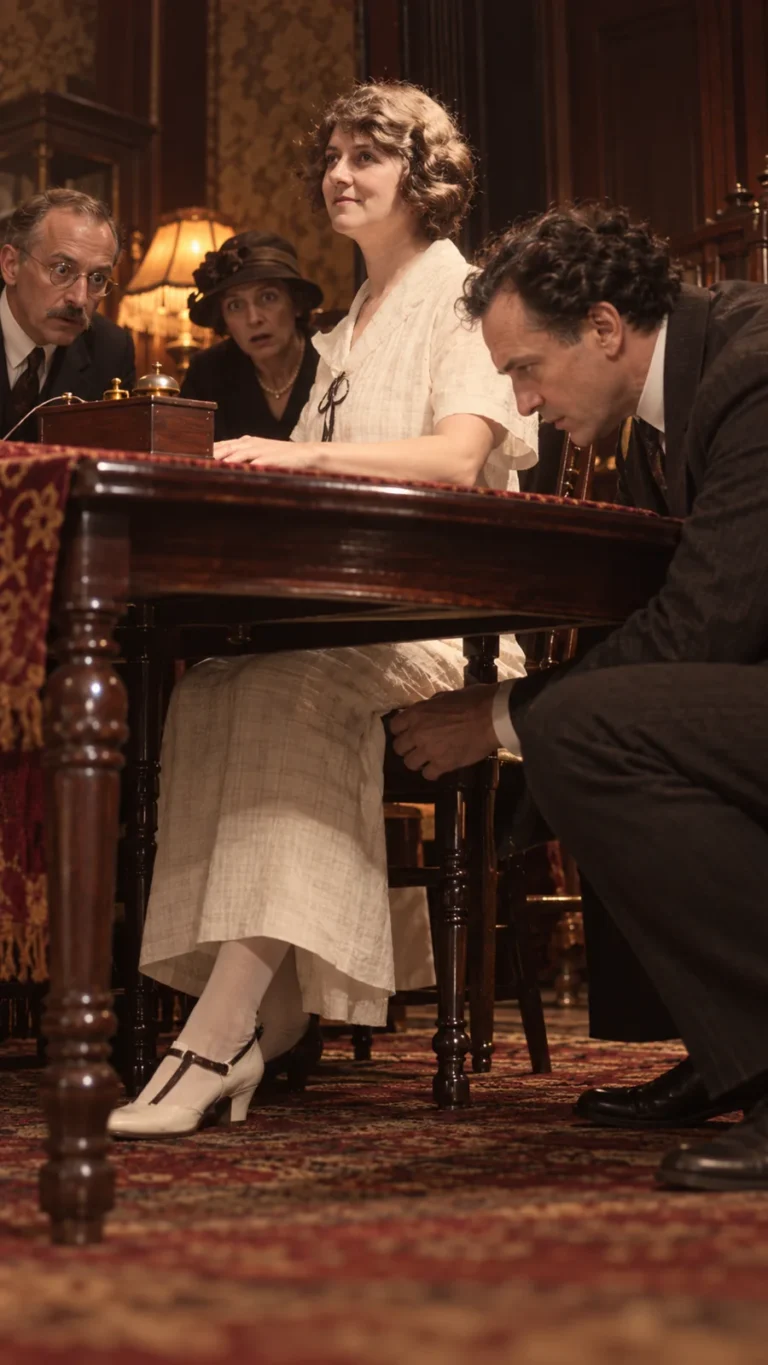
Mina “Margery” Crandon: The Medium Who Made Science Tremble from a Darkened Room
Read story →
Vlad the Impaler: The Prince Who Turned Terror Into Propaganda and Lent His Name to Dracula
Read story →