In this storyOpen index
Amedeo Modigliani: Empty Eyes, Illness and the Legend of the Cursed Artist
Portraits, sculpture, illness and Jeanne Hébuterne: the documented life behind the myth of the cursed artist.
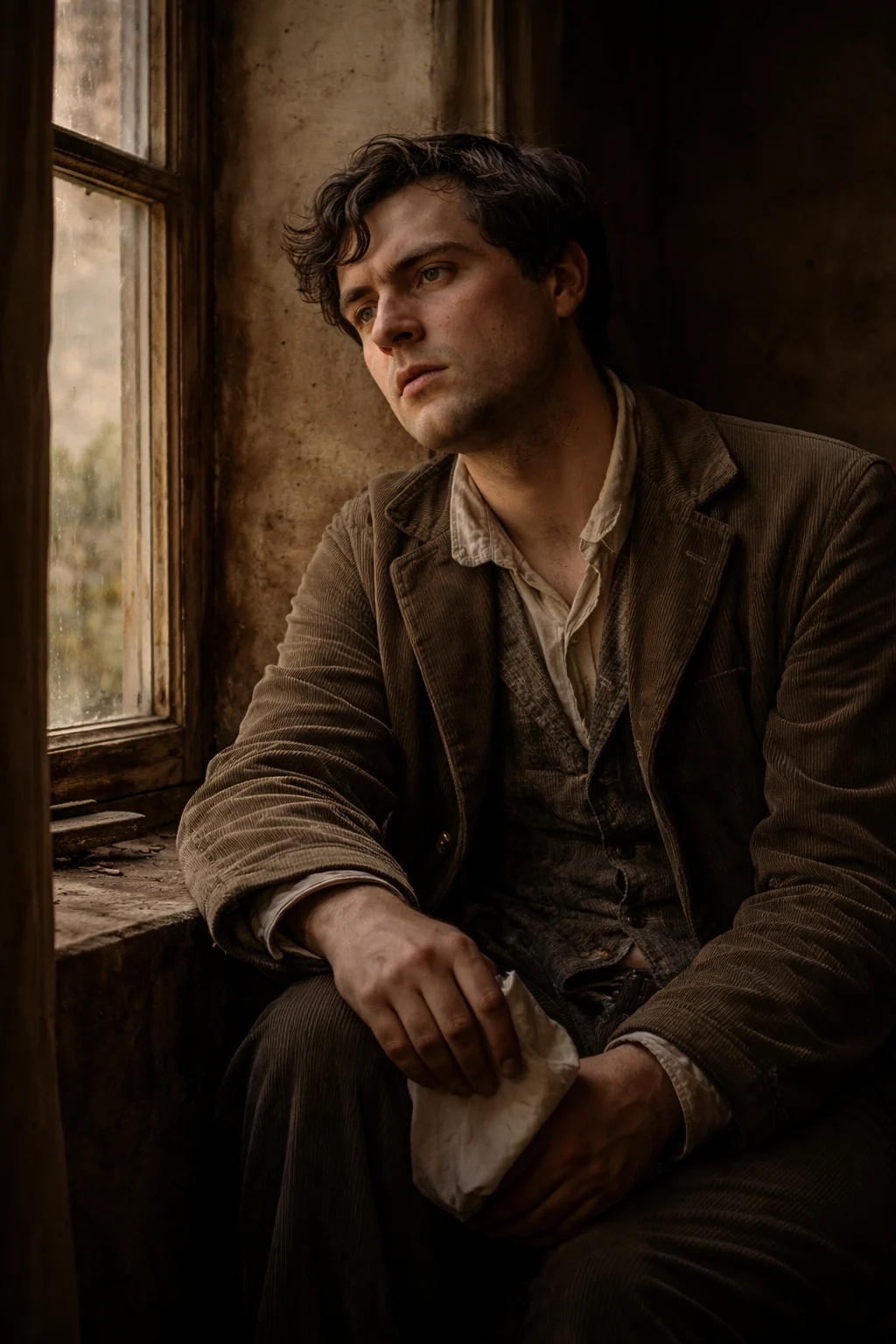
He painted dozens of faces with empty eyes, yet spent much of his life trying to prevent anyone from looking too deeply into him.
Amedeo Modigliani arrived in Paris determined to become a sculptor. He ultimately created some of the twentieth century’s most recognizable portraits: elongated necks, tilted heads, narrow noses and eyes that sometimes seem to contain a presence and at other times only an absence.
He died at thirty-five, sick and nearly penniless. Two days later, his pregnant companion Jeanne Hébuterne died by suicide. The tragedy transformed Modigliani into the perfect artiste maudit: handsome, diseased, alcoholic, misunderstood and destroyed by Paris.
The legend, however, has obscured both the painter and the people who suffered around him. His life was not merely a romantic sequence of cafés, drugs and genius. It was also the history of tuberculosis that, according to some biographers, he tried to conceal, disciplined artistic ambition and a young female artist whose identity became trapped inside the myth of the man she loved.
Amedeo Modigliani
Art beyond the legend
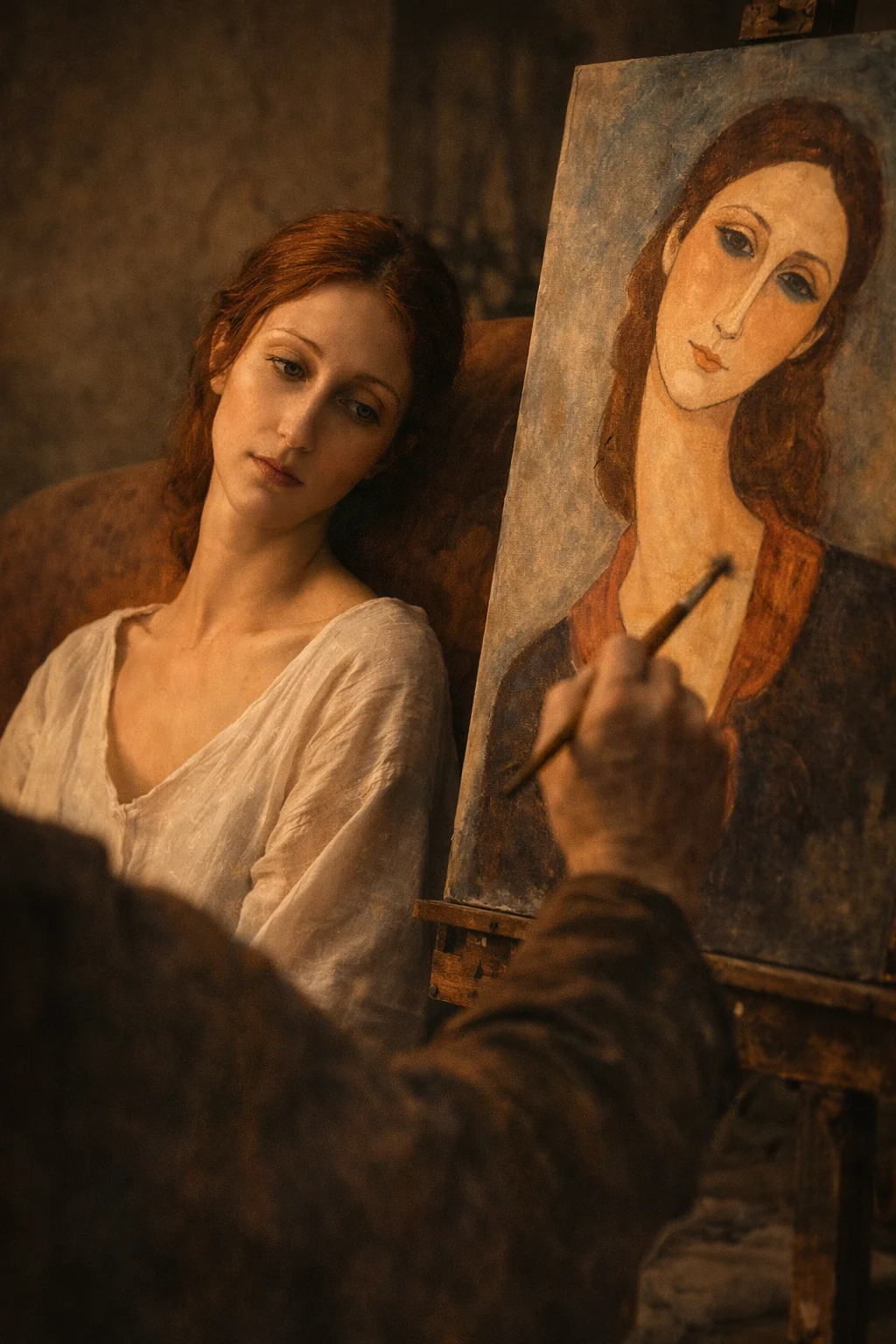
Jeanne Hébuterne · 1919
The Metropolitan Museum of Art preserves a 1919 portrait of Jeanne Hébuterne, painted in oil on canvas. The tilted head, elongated figure and asymmetrical arrangement connect Modigliani’s modern portraiture with Italian Mannerism. The museum record includes dimensions, provenance and bibliography, offering a concrete work to compare with the stories surrounding the artist. Jeanne was an artist herself, not merely a recurring sitter. The accompanying AI illustration is symbolic and does not reproduce the painting held by The Met.
Born while creditors emptied the house
Amedeo Clemente Modigliani was born on July 12, 1884, in Livorno, a Tuscan port city. He was the youngest of four children born to Flaminio Modigliani and Eugénie Garsin, both members of Sephardic Jewish families.
His birth coincided with the collapse of the family’s finances. The agricultural and mining businesses managed by his father were bankrupt, and creditors had begun seizing property from the household.
According to family history recounted by his biographers, a legal protection prevented officials from removing the bed of a woman in labor. When the bailiffs arrived, the Modiglianis piled some of their remaining valuables onto Eugénie’s bed to keep them from being confiscated (Secrest, 2011).
This little-known episode appears almost designed to foreshadow his life: Modigliani was born beneath the last possessions of a ruined family, temporarily protected by a legal exception.
His mother became the household’s principal economic and intellectual support. She operated a school, taught lessons, translated literature and wrote criticism. She was also the first to recognize Amedeo’s artistic sensitivity and encourage his studies.
The illness before the bohemian life
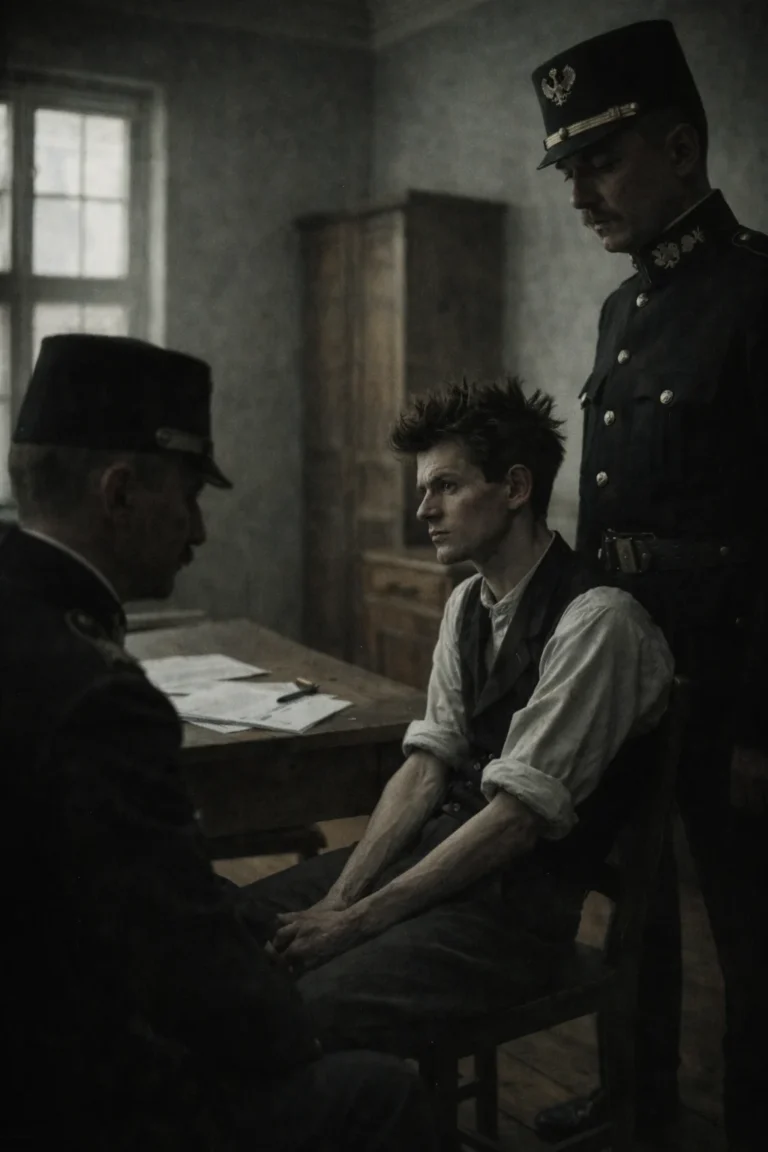
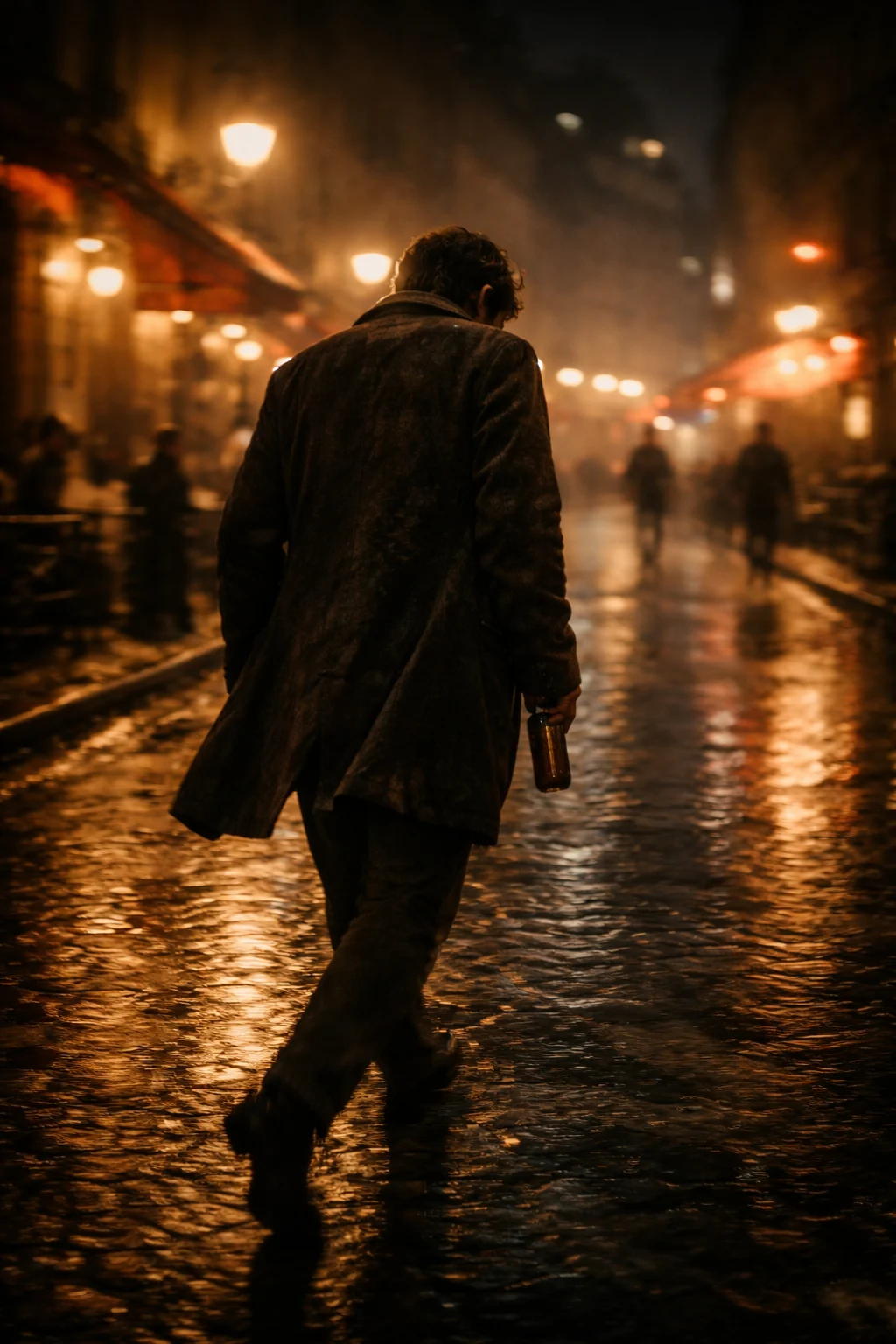
Physical weakness appeared long before alcohol and drugs. During adolescence, Modigliani suffered pleurisy, typhoid fever and tuberculosis. The last illness, diagnosed around the age of sixteen, remained with him until his death.
Before antibiotics, tuberculosis was frequently fatal and heavily stigmatized. It suggested poverty, contagion and physical deterioration. Openly acknowledging the disease could drive away models, buyers, friends and potential partners.
Following one serious attack, Eugénie traveled with him through southern Italy. They visited Naples, Capri, Rome, Florence and Venice. The sick young man encountered works he had previously known only through reproductions and descriptions: Renaissance paintings, classical sculpture and the elongated figures of Mannerism.
He studied under Guglielmo Micheli in Livorno and later attended academies in Florence and Venice. There he received conventional training in life drawing while also encountering modern artistic movements and imagining a career beyond Italy.
In 1906, at the age of twenty-one, he moved to Paris.
The elegant Italian who dismantled his appearance
Paris was drawing artists from across Europe. Picasso, Brancusi, Chagall, Soutine, Lipchitz and many others belonged to the immigrant community later called the School of Paris.
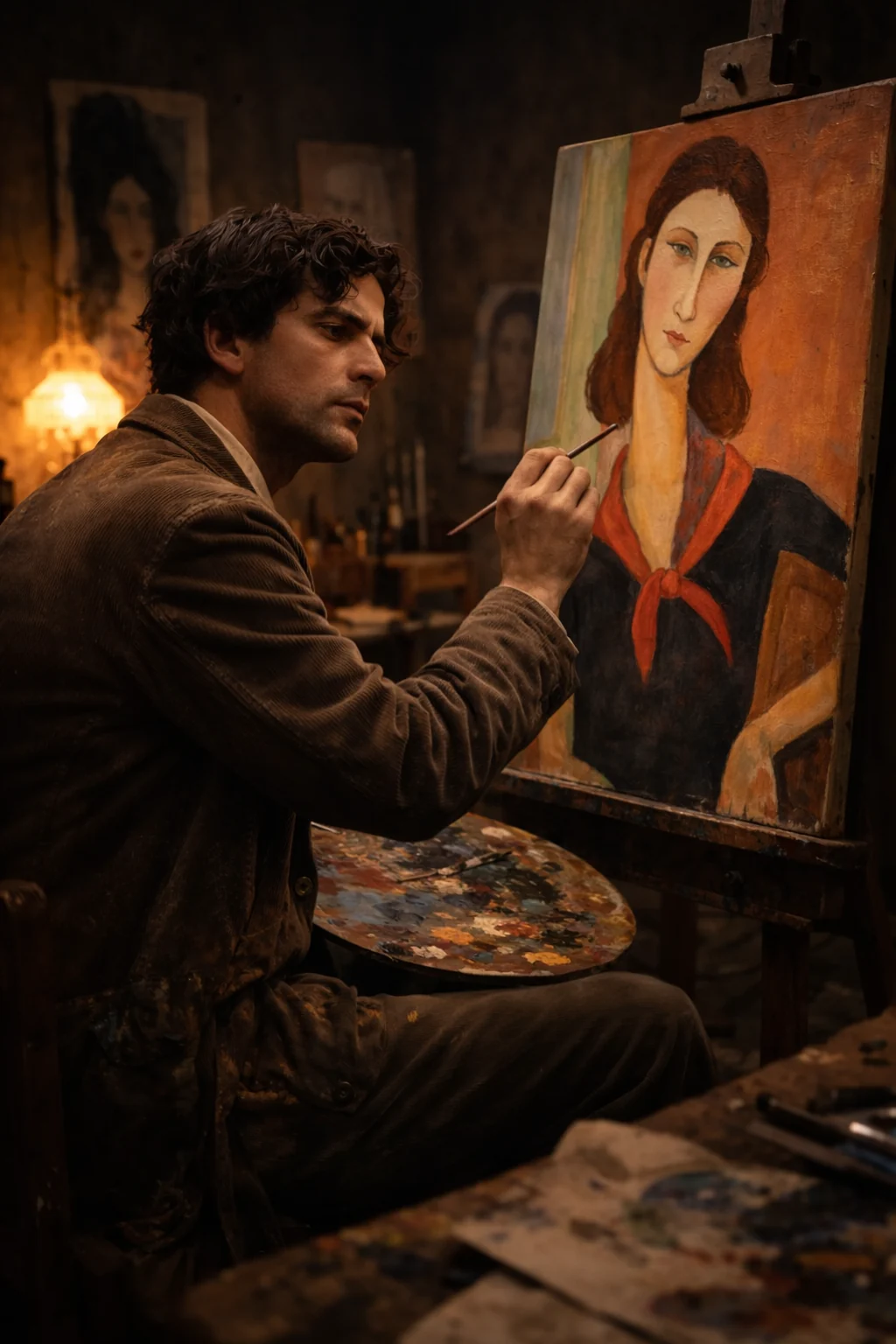
Modigliani arrived with carefully chosen clothes, books and the manners of a cultured bourgeois family. He soon transformed his appearance. He grew his hair, wore increasingly shabby clothing and entered the bohemian worlds of Montmartre and later Montparnasse.
Friends called him “Modì,” an abbreviation of his surname that sounded like maudit—“cursed”—in French.
He drank heavily and used hashish; some accounts also mention other drugs. He could be charming, cultured and generous, but alcohol sometimes made him aggressive, unpredictable and destructive. The romantic image of the bohemian artist should not conceal the damage he caused or make personal collapse seem necessary for creativity.
Some biographers have proposed that he exaggerated or tolerated his reputation as a drunk to conceal the symptoms of tuberculosis. If he collapsed, coughed or behaved strangely, observers could blame alcohol instead of recognizing a contagious disease (Perciaccante et al., 2018).
This is a biographical interpretation, not a proven explanation for each of his behaviors. His difficulties with alcohol were real. Distinguishing illness, substance use and personal decisions avoids replacing one romantic myth with another.
The sculptor who breathed dust
Although remembered primarily as a painter, Modigliani intended to become a sculptor.
Around 1909, he met Constantin Brancusi, whose practice of carving directly into stone strongly influenced him. Modigliani began producing stylized heads with oval faces, long noses, small mouths and narrow eyes. He also created numerous drawings of caryatids—female figures conceived as architectural supports.
His visual language combined African sculpture, Egyptian art, archaic statuary, Brancusi and Italian traditions. Like other European modernists, he encountered African objects removed from their original purposes and cultural contexts. Recognizing this appropriation does not erase his innovation, but it prevents those forms from being treated as products of his imagination alone (Metropolitan Museum of Art, n.d.).
He carved pieces of limestone obtained from building sites. The work created dust, demanded considerable physical effort and was especially dangerous for someone with pulmonary tuberculosis.
By about 1914, he had moved away from sculpture and concentrated on painting. His fragile health and the physical demands of carving help explain that change. The forms he had developed in stone did not disappear.
It entered his paintings.
Faces constructed like sculptures
Modigliani’s celebrated elongated necks were not arbitrary distortions. They preserved the verticality of his carved heads and echoed the elegance of Italian Mannerism, particularly the work of Parmigianino.
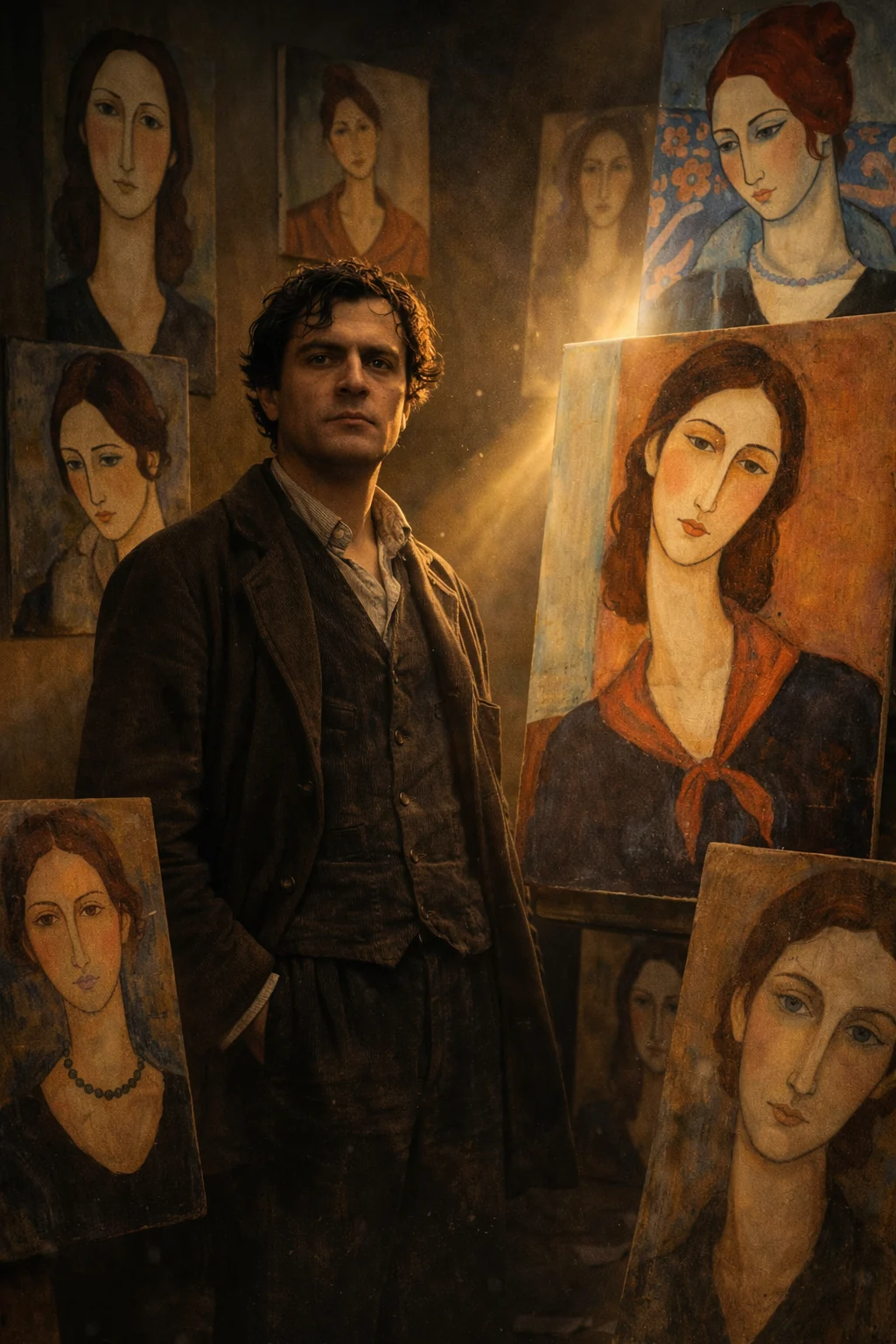
He did not attempt to reproduce his sitters photographically. He simplified faces, lengthened necks, tilted heads and adjusted proportions until he found a structure capable of expressing the person’s character.
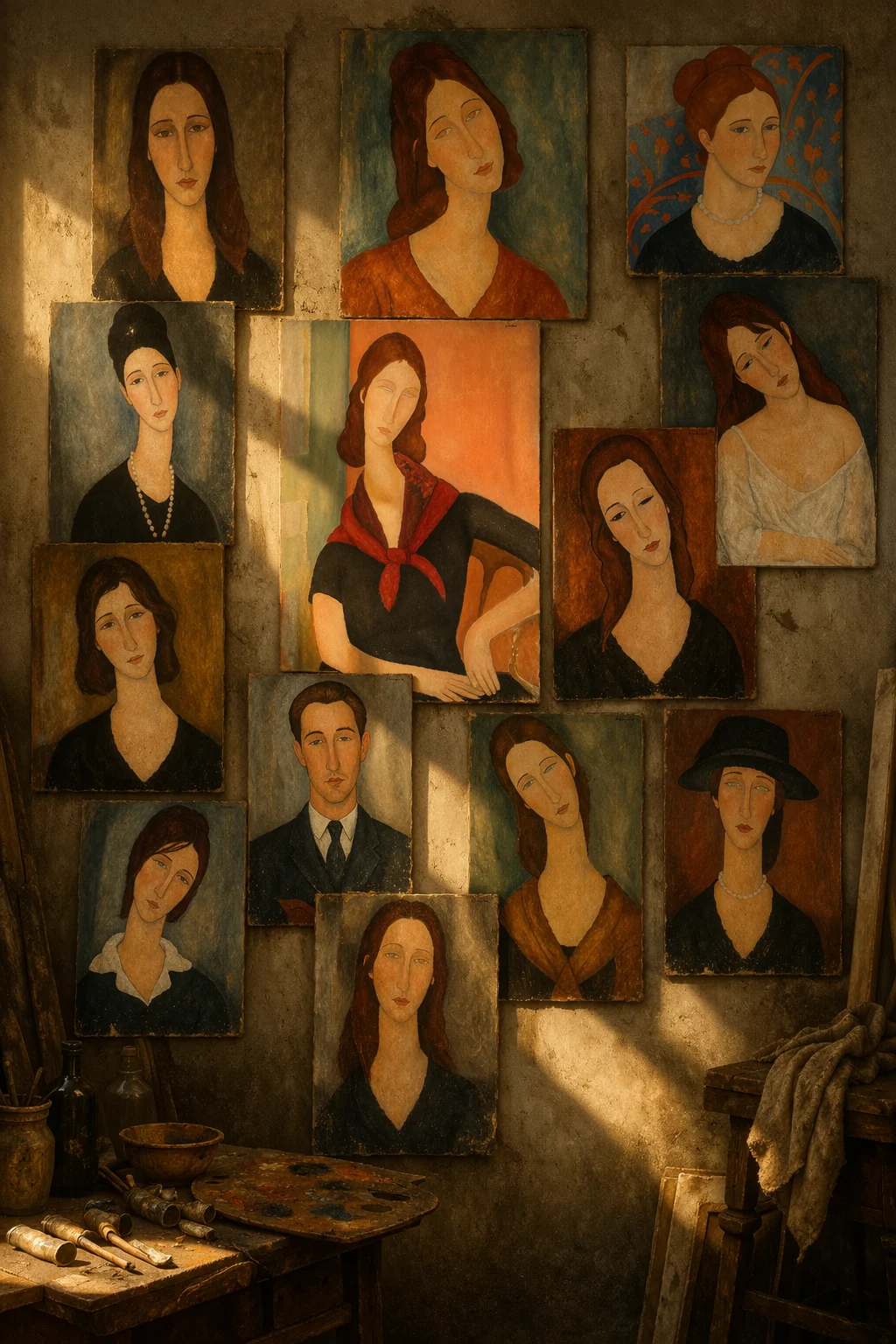
He painted friends, dealers, workers, writers and artists from the Parisian world: Chaim Soutine, Diego Rivera, Jacques Lipchitz, Jean Cocteau, Léopold Zborowski and many unidentified figures. He did not turn them all into the same person. Within a recognizable vocabulary, he preserved differences in posture, tension and temperament.
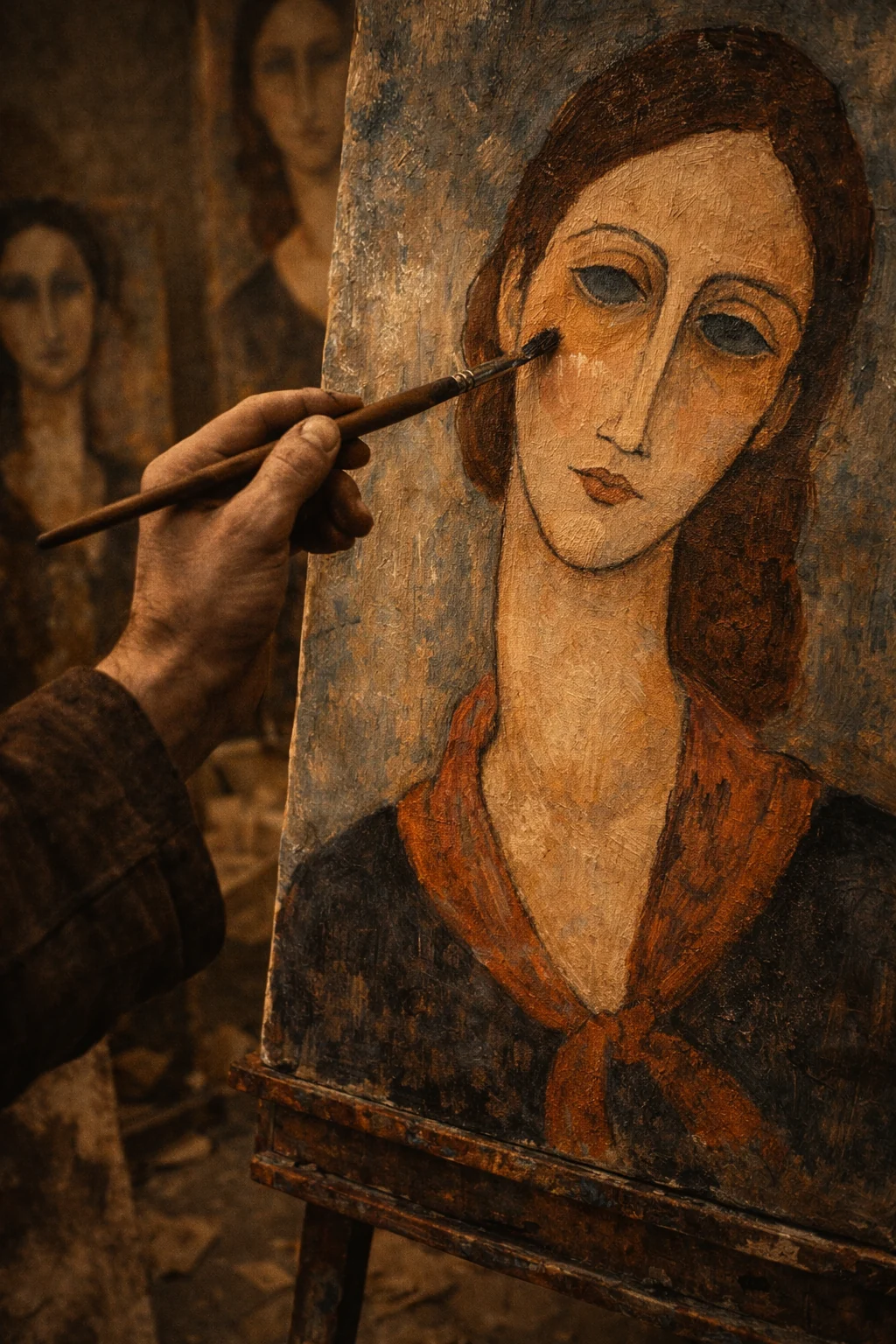
The eyes remain among his most discussed features. Some contain pupils; others are blue, gray or black surfaces. He is often credited with saying that he would paint someone’s eyes only after knowing their soul, but no reliable source confirms that he actually said this.
The empty eyes can be understood through masks, ancient sculpture and compositional decisions. They do not prove that the painter believed he was depicting incomplete souls.
Beatrice Hastings and the violence within the legend
Before meeting Jeanne Hébuterne, Modigliani had an intense relationship with British writer and journalist Beatrice Hastings. They lived together for roughly two years beginning in 1914.
Their relationship involved desire, intellectual rivalry, separation and violence. Both drank and argued; witnesses described destructive scenes that were long repeated as colorful anecdotes of bohemian Paris.
They were not colorful anecdotes.
The tendency to transform abuse, jealousy and instability into signs of passion has been one of the most persistent consequences of the Modigliani myth. His illness and financial hardship help explain his behavior but do not excuse it.
Hastings was much more than a tempestuous lover. She was a writer, critic and correspondent, yet many biographies reduced her to the woman who accompanied the painter through his wildest years.
She would not be the last.
The exhibition that scandalized the police
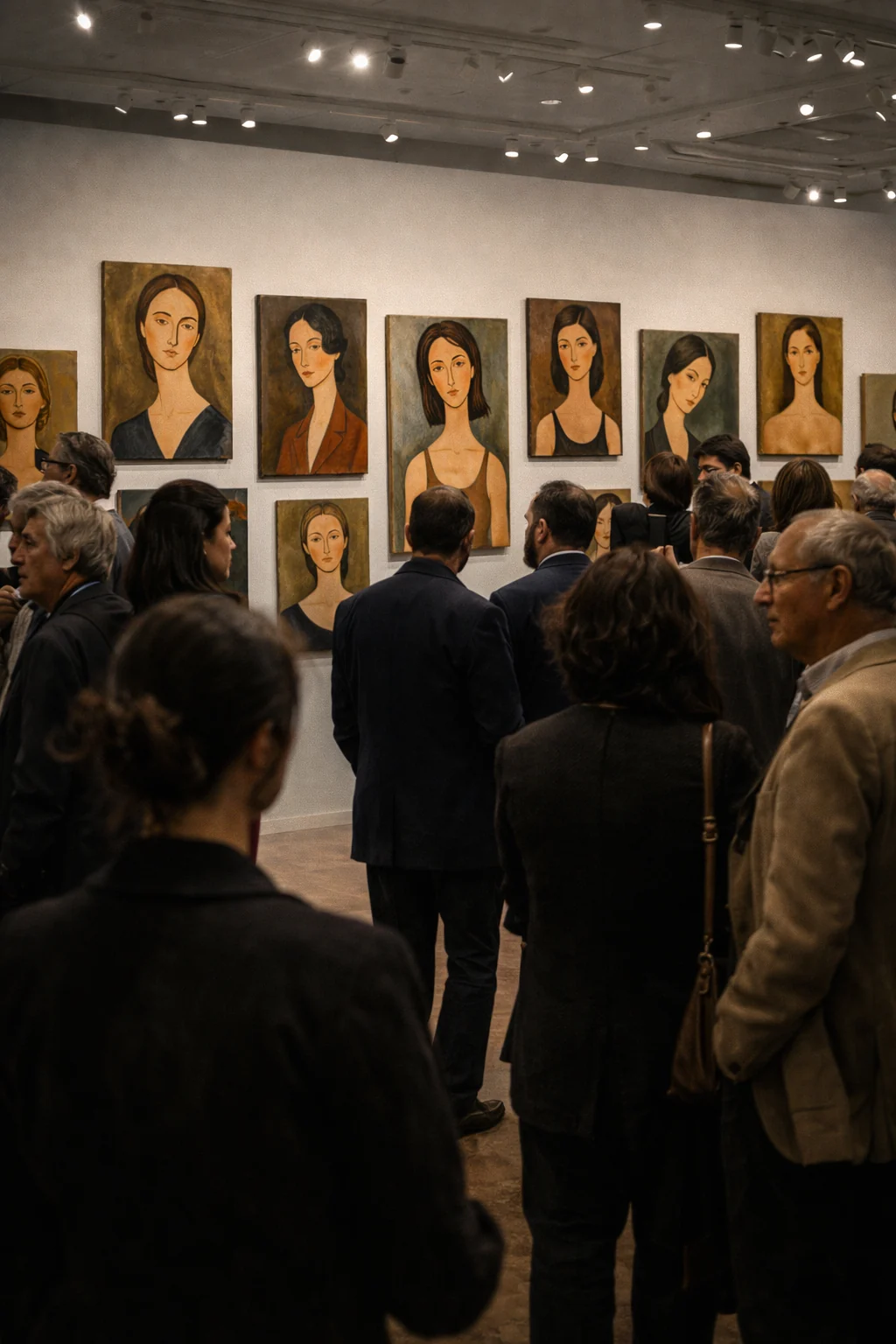
In December 1917, art dealer Berthe Weill organized the first and only solo exhibition of Modigliani’s work held during his lifetime.
Weill was one of the earliest women to operate a modern-art gallery in Paris. She supported artists including Picasso, Matisse, Derain and Utrillo, but her contribution was overshadowed for decades by wealthier dealers.
Several Modigliani nudes were placed near the window to attract buyers. The paintings showed reclining women looking directly toward the viewer. They were not presented as ancient goddesses or mythological figures whose nudity could be justified by academic convention. They were contemporary, sensual bodies with visible pubic hair, then considered scandalous in a public exhibition.
A crowd gathered outside the gallery. Police from the station across the street ordered the works visible from outside to be removed. The exhibition was not necessarily “closed forever,” as the most dramatic version claims. Weill removed the nudes from the window and the show could continue, although the incident ruined its commercial opening.
The episode is often used to prove that Paris was unprepared for Modigliani’s genius. The more precise reality is that nudity itself was common in European art; what caused the scandal was the direct and contemporary way these bodies were presented.
Almost nothing sold.
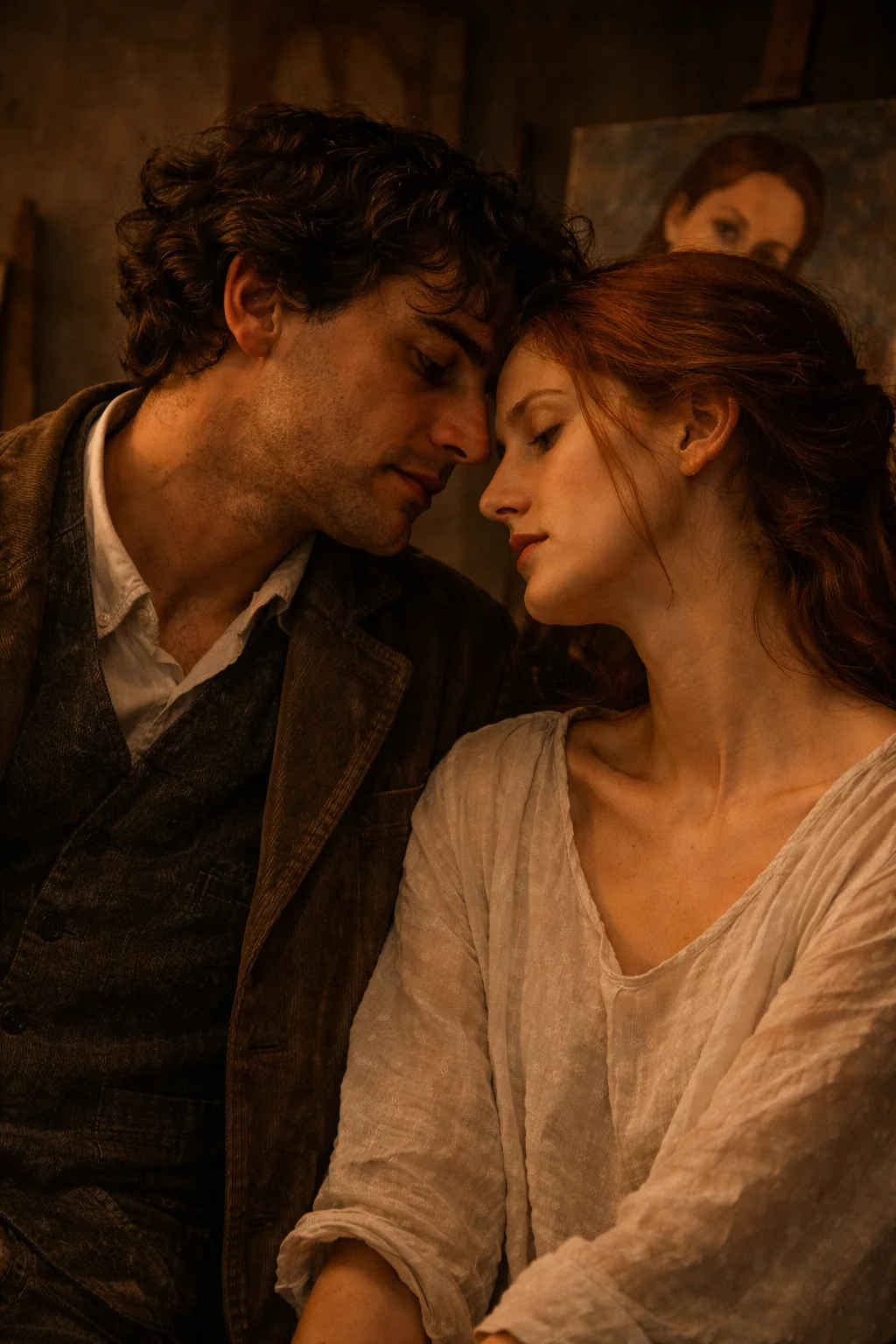
Jeanne Hébuterne was not merely his muse
In 1917, Modigliani met Jeanne Hébuterne, an art student at the Académie Colarossi. She was a young art student; he was thirty-two.
Jeanne came from a conservative Catholic family that opposed her involvement with a Jewish artist who was sick, poor and notorious for his excesses. Despite their objections, she moved in with him and became the face Modigliani painted most persistently during his final years.
She is frequently described only as his model or muse. Jeanne, however, also drew and painted. The small number of authentic works attributed to her reveal an artist with her own sensitivity, although her development was interrupted and later subordinated to Modigliani’s fame.
His portraits show her pregnant, seated, wearing a hat, seen in profile, with her hair tied back or falling over her shoulders. They suggest affection, but they do not prove that the relationship was peaceful. Testimony also records abuse and instability.
Romanticizing the couple as doomed lovers erases their age difference, economic dependency and Jeanne’s suffering.
A daughter born far from the bombs
In 1918, as Paris endured wartime bombardment and Modigliani’s health deteriorated, his dealer Léopold Zborowski arranged for the couple to move to southern France.
They lived mainly in Nice and Cagnes-sur-Mer. The warmer climate was intended to help the painter, while the presence of wealthy visitors offered possible buyers. There Modigliani broadened the range of his subjects. He painted children, adolescents, employees and local residents with a stillness different from that of his Parisian portraits.
On November 29, 1918, Jeanne gave birth to a daughter, also named Jeanne.
Modigliani and Hébuterne never legally married. In 1919, he signed a statement promising to do so, but the wedding never occurred. When they returned to Paris, Jeanne was pregnant again and the painter’s health was rapidly declining.
The final days in Paris
By late 1919, Modigliani’s health had seriously deteriorated. Biographical studies propose that his bohemian reputation concealed his illness, but this interpretation cannot establish exactly what everyone around him knew or attribute his death to a single failure to act (Perciaccante et al., 2018).
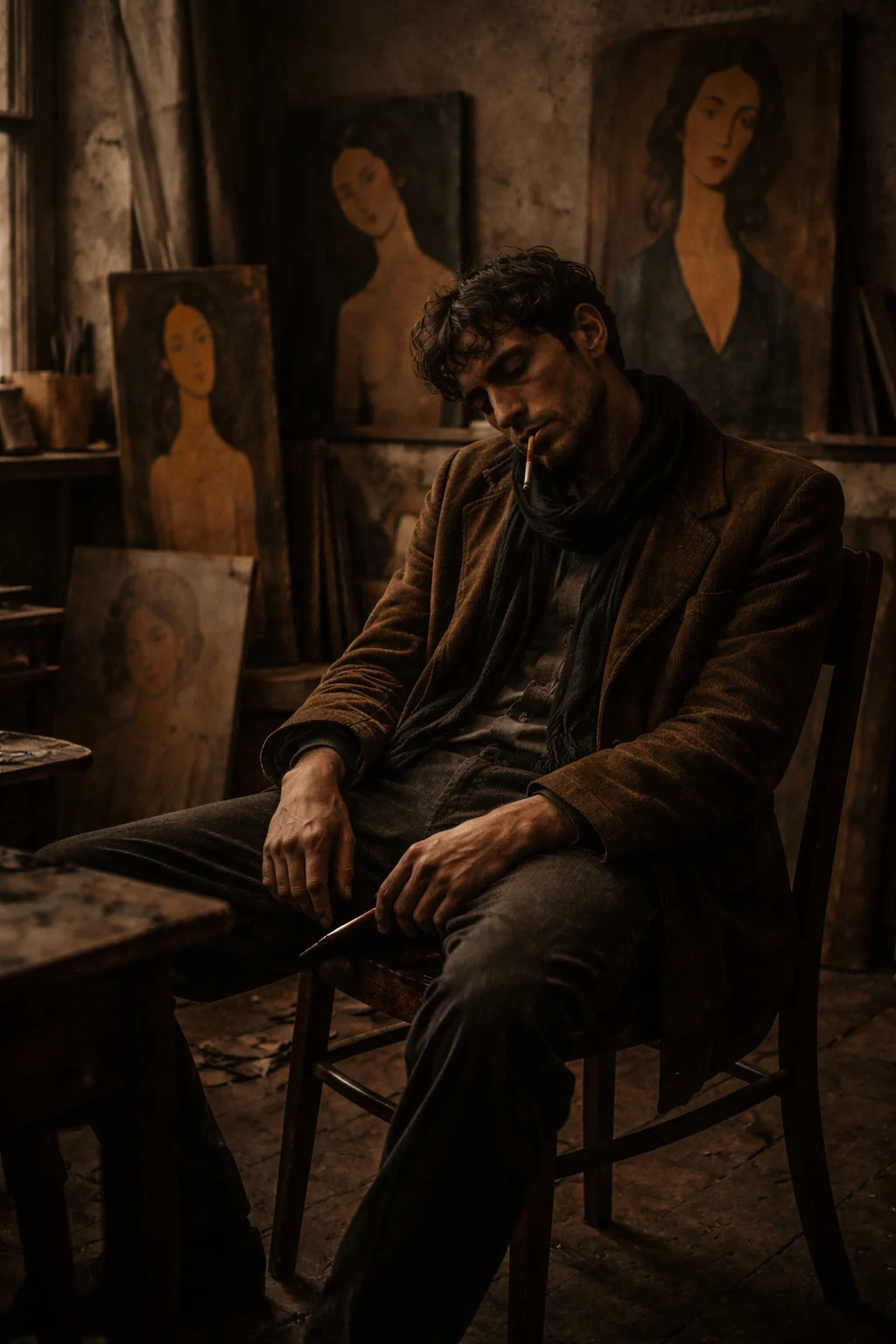
In January 1920, a neighbor found him delirious in the home he shared with Jeanne. He was taken to the Hôpital de la Charité and died from tuberculous meningitis on January 24.
He was thirty-five.
Two days later, Jeanne Hébuterne died by suicide. She was pregnant with their second child and was twenty-one years old (Metropolitan Museum of Art, n.d.).
For many years, her death was presented as the final act of an absolute love story. That description romanticizes a tragedy and obscures the complexity of suicide. We cannot retrospectively establish every circumstance of her psychological state.
Jeanne did not die to complete Modigliani’s legend. She died during a devastating crisis and deserves to be remembered as a person and artist, not as the final brushstroke in a man’s biography.
Success after the funeral
Modigliani was buried in Père-Lachaise Cemetery. Many members of the Paris art community attended his funeral. Jeanne was initially buried elsewhere because her family blamed Modigliani for the tragedy. Years later, her remains were moved beside his.
Their daughter was raised by paternal relatives in Italy. As an adult, Jeanne Modigliani researched her parents’ lives and published Modigliani: Man and Myth, a study originally titled Modigliani senza leggenda—Modigliani without legend—expressing her attempt to separate the real artist from the character created after his death (Modigliani, 1958).
The value of his paintings rose quickly. The limited number of works, the absence of effective control over his estate and the appeal of his tragic life also produced an enormous forgery industry. Modigliani became one of the most frequently forged modern artists.
The result was a final irony: while alive, he struggled to sell authentic works; after his death, the market produced countless Modiglianis that he had never painted.
What burned behind the eyes
Modigliani was not simply a martyr sacrificed by a society incapable of recognizing him. Friends, dealers and collectors supported him; he consciously developed a distinctive visual language and achieved some recognition before his death.
Nor was he merely a victim of disease. He made decisions that harmed his body and the people around him. Talent does not transform abuse into an acceptable anecdote.
What remains extraordinary is the coherence of the work created within such an unstable life. He never fully joined Cubism, Futurism or abstraction. While other artists dismantled the human figure, he continued looking at it, stretching and simplifying it until only the essential remained.
His portraits seem calm, although they were created by a man who rarely lived calmly.
Perhaps that is why the empty eyes remain unsettling. They do not precisely reveal the soul of the sitter or the painter. They are spaces into which viewers attempt to place an answer.
The hypothesis that he concealed his tuberculosis challenges the stereotype of the carefree bohemian, but cannot establish all his motives. His art deserves study without treating illness or the suffering of those around him as explanations for his talent.
References
- Albertina. (2021). Modigliani: The Primitivist revolution [Press kit]. View source
- Boddewyn, J. M. (n.d.). Modigliani’s first solo exhibition. The Modigliani Initiative. View source
- The Metropolitan Museum of Art. (n.d.). Jeanne Hébuterne: Amedeo Modigliani, 1919 (Object 56.184.2). View source
- Perciaccante, A., Coralli, A., & Appenzeller, O. (2018). Amedeo Modigliani and his “great secret”: A brief history of medical and social aspects of tuberculosis in the nineteenth and early twentieth century. Le Infezioni in Medicina, 26(3), 280–282. View source
- Modigliani, J. (1958). Modigliani: Man and myth. Orion Press.
- Secrest, M. (2011). Modigliani: A life. Alfred A. Knopf.
- Soby, J. T. (1951). Modigliani: Paintings, drawings, sculpture. Museum of Modern Art. View source
More from this collection
Frida Kahlo: The Body That Refused to Disappear
Read story →
Francisco de Goya: The Painter Who Heard the Noise of His Age After Becoming Deaf
Read story →