In this storyOpen index
Egon Schiele: The Painter Who Watched a Judge Burn His Drawing
He was imprisoned on extremely serious charges that were ultimately dropped. Before releasing him, a judge publicly burned one of his drawings for being indecent.
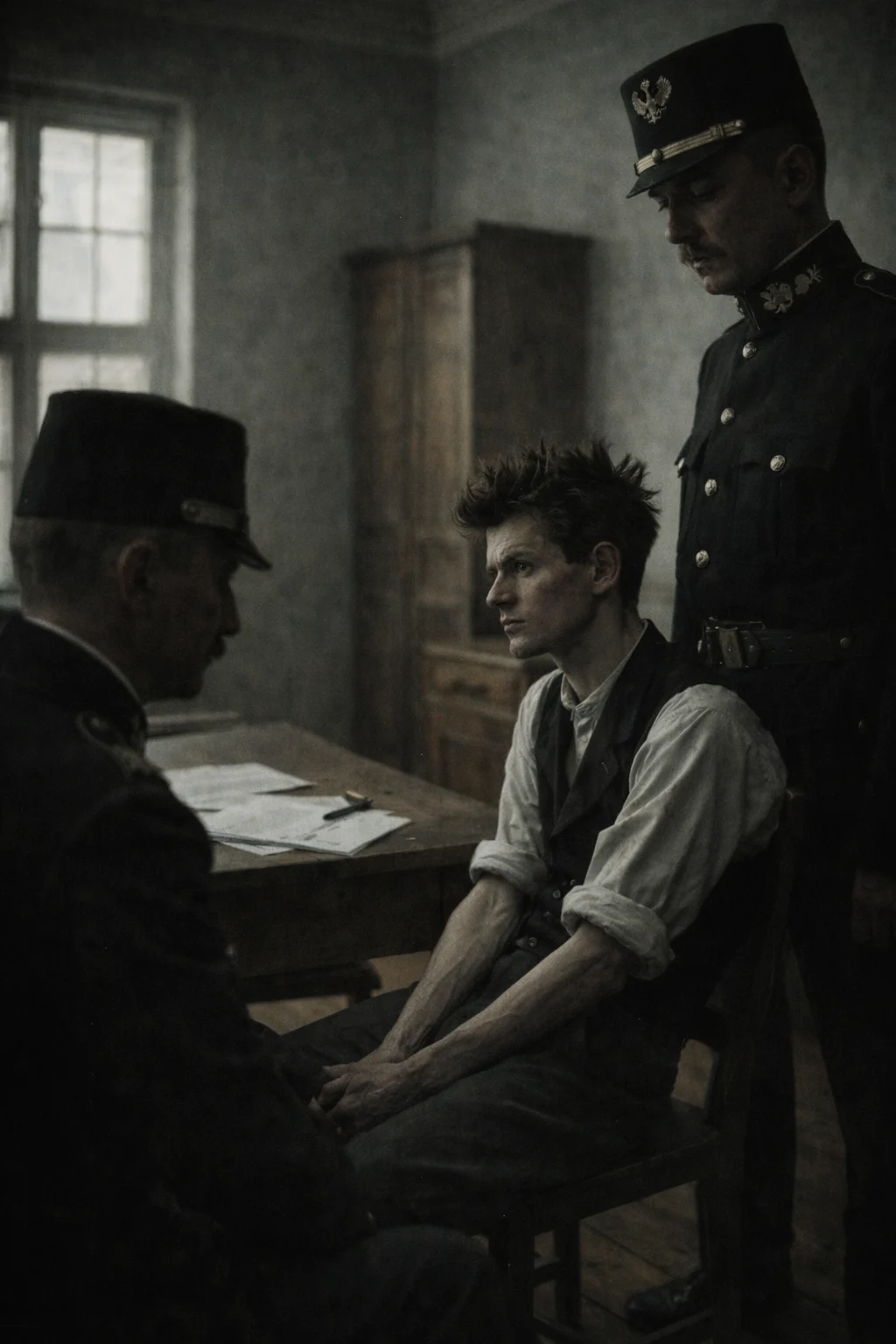
He was imprisoned on extremely serious charges that were ultimately dropped. Yet before releasing him, a judge publicly burned one of his drawings for being indecent. Egon Schiele was only 21, but the trial established a scandalous reputation that continues to distort interpretations of his work.
Egon Schiele on video
Discover this story on our YouTube channel.
A life told through places and turning points
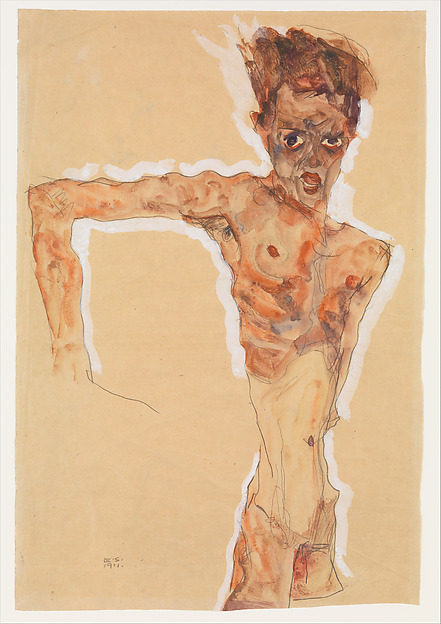
Enter the archive
An authentic object preserved by a cultural institution brings us closer to the world behind this life.
- Collection
- The Metropolitan Museum of Art
- Rights
- Public Domain / Open Access
Bequest of Scofield Thayer, 1982
The Stationmaster’s Son
Egon Leo Adolf Ludwig Schiele was born on June 12, 1890, in Tulln, a town in the Austro-Hungarian Empire on the Danube. His father, Adolf Schiele, was a railway stationmaster, while his mother, Marie Soukup, came from a family of Bohemian origin.
As a child, Schiele displayed an almost obsessive fascination with trains. He filled notebooks with locomotives and railway stations, an interest his father did not always understand. The family’s circumstances deteriorated as Adolf became seriously ill. His death in 1905 left Schiele fatherless at 14 and increased the household’s financial difficulties. Illness, loss, and the vulnerability of the body would repeatedly appear in his later work (Belvedere Museum, n.d.).
In 1906, at only 16, Schiele entered the Academy of Fine Arts in Vienna. He possessed an extraordinary facility for drawing but soon came into conflict with the conservative instruction of Christian Griepenkerl, who insisted upon traditional academic models.
The Vienna Schiele encountered outside the Academy was far more daring. The city was undergoing an artistic and intellectual transformation led by figures such as Sigmund Freud, Gustav Mahler, Arnold Schönberg, and Gustav Klimt. Beneath its imperial elegance, however, it was also a society marked by intense political, sexual, and social tensions.
Gustav Klimt Was Not His Formal Teacher
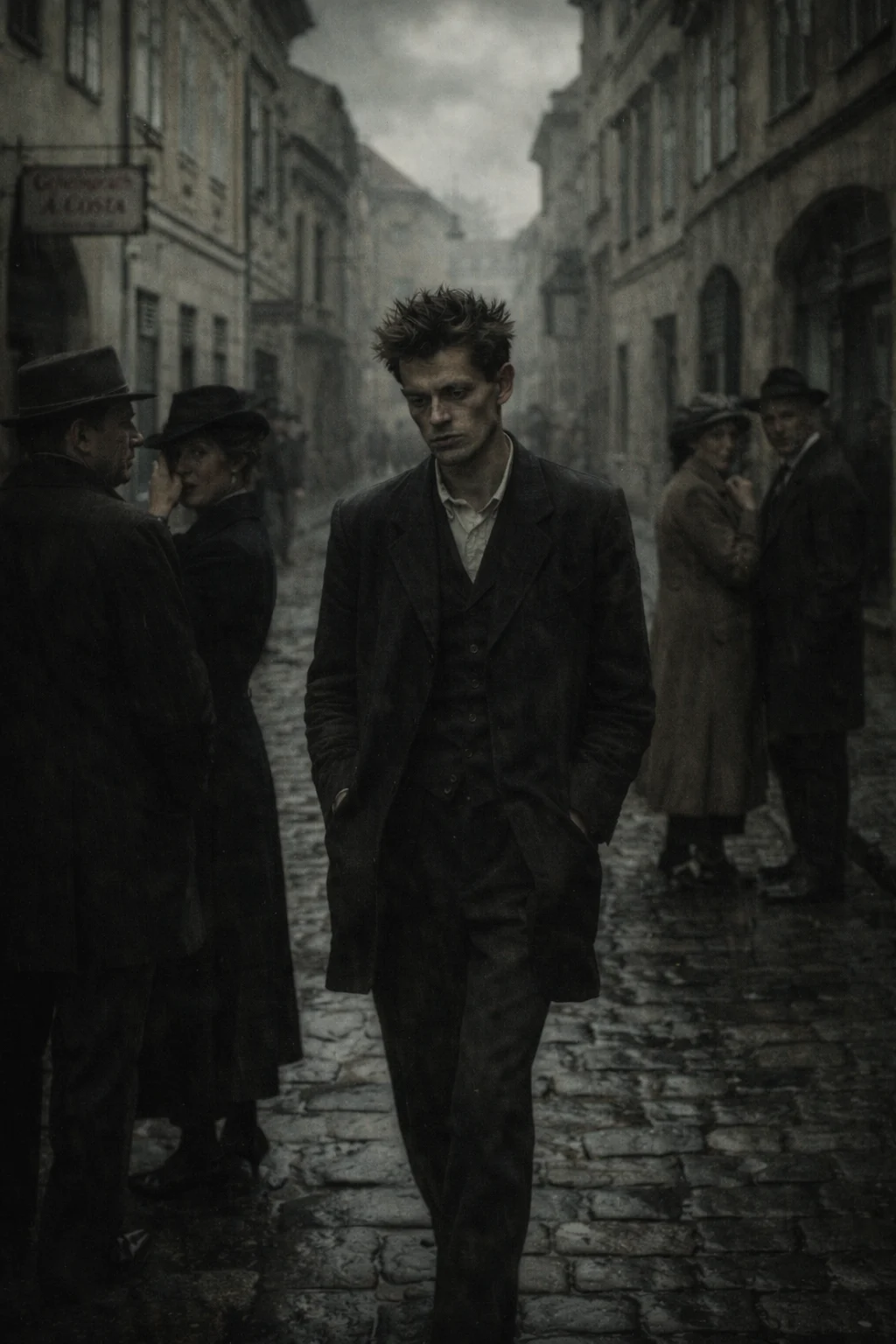
Schiele met Gustav Klimt around 1907. Although he is frequently described as Klimt’s pupil, he never formally studied in his workshop. Klimt acted as a mentor: he purchased some of Schiele’s drawings, exchanged works with him, introduced him to models and collectors, and helped him participate in important exhibitions (Museum of Modern Art, n.d.-a).
Klimt’s early influence can be seen in Schiele’s decorative lines and ornamental surfaces. The younger artist, however, quickly moved away from the elegance of the Vienna Secession. He replaced gold and decorative patterns with angular bodies, clenched hands, pale faces, and nearly empty spaces.
In 1909, he left the Academy with other students and founded the Neukunstgruppe, or New Art Group. By 1910, he had developed an unmistakable visual language. In his self-portraits, he made no attempt to beautify himself. He distorted his body, exaggerated his gestures, and presented himself as emaciated, vulnerable, or defiant.
Schiele transformed the human body into psychological territory. His models appear uncomfortable even when motionless. Broken contours, forced poses, and areas of unpainted paper produce a sense of isolation. This combination of sexuality, anxiety, and physical fragility made him one of the central figures of Austrian Expressionism (Leopold Museum, n.d.).
Wally Neuzil: Far More Than a Model
In 1911, Schiele began a relationship with Walburga “Wally” Neuzil. For decades she was described merely as his model or muse, but documentary research shows that she was also his companion, collaborator, and principal source of support during a decisive period.
Wally worked as a sales assistant, cashier, and model at a clothing store. She posed for some of Schiele’s most recognizable images and remained with him when the couple moved first to Krumau—present-day Český Krumlov—and later to Neulengbach. In both places, the frequent presence of young people in his studio and the couple’s unconventional lifestyle provoked hostility among local residents (Leopold Museum, 2015).
The context must be examined carefully. Schiele produced numerous drawings of young models, and some of his images contain sexual material that raises legitimate ethical questions today. Those questions, however, do not permit every accusation made against him in 1912 to be treated automatically as fact.
The Trial That Distorted His Reputation
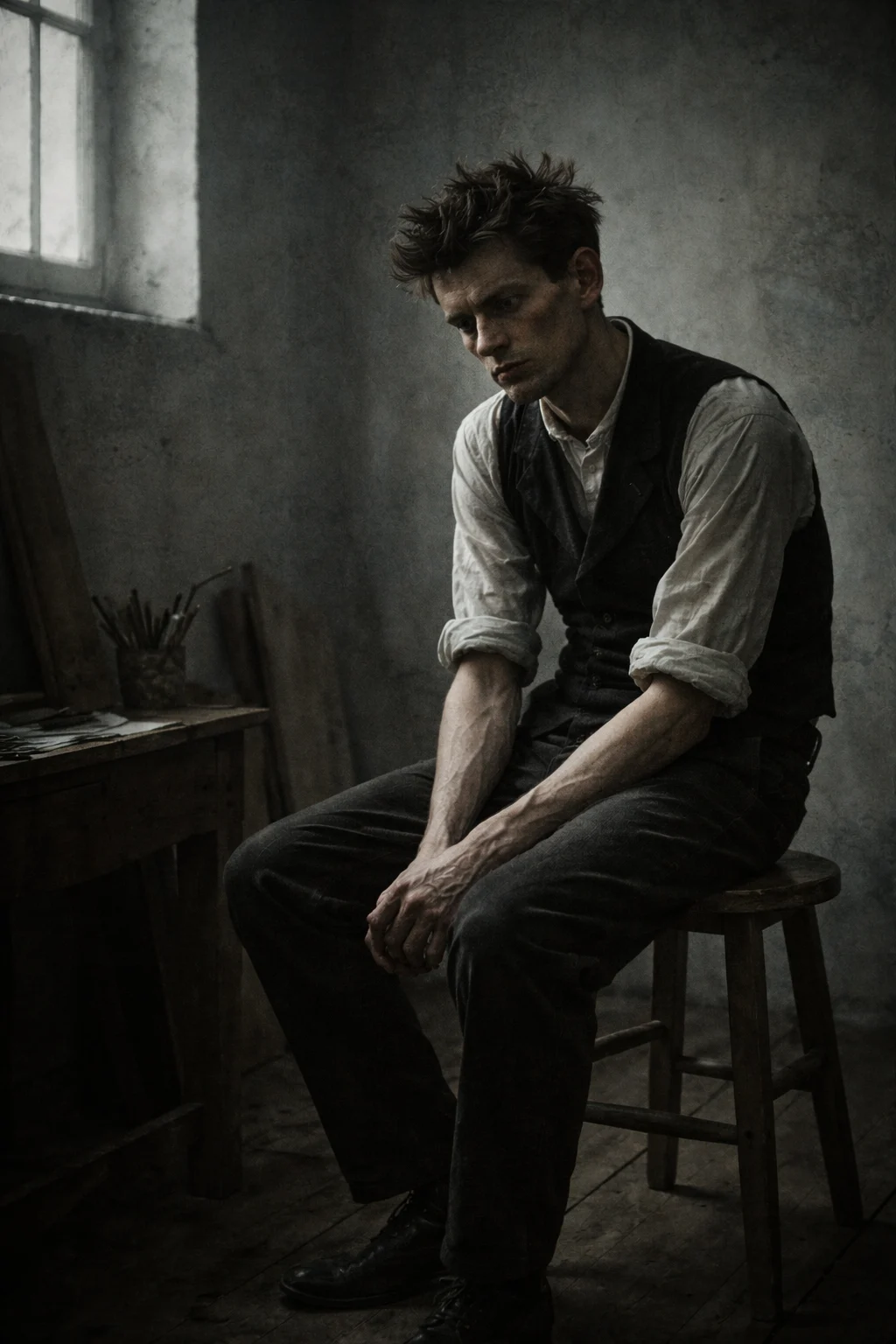
On April 13, 1912, Schiele was arrested in Neulengbach. The case began after an adolescent girl ran away from home and sought shelter with the artist and Wally. Schiele subsequently accompanied her to Vienna. Authorities accused him of abduction and sexual misconduct, while also investigating the drawings found in his studio.
The most serious charges—abduction and sexual assault of a minor—were ultimately dropped for lack of evidence. Schiele was not convicted of having sexual relations with the girl or of abducting her. His conviction concerned keeping drawings considered obscene in a place where minors could see them (Belvedere Museum, n.d.).
Schiele was deprived of his freedom for 24 days, most of that period in pretrial detention. While waiting to learn the formal charges, Wally brought him drawing materials. He produced a series of views showing his cell, the prison corridor, a locked door, and the few objects surrounding him. In one drawing, an orange appears as the only source of light within the confinement (Albertina, n.d.).
During the trial, an event occurred that turned the case into a symbol of artistic censorship. The judge held up one of the confiscated drawings and publicly burned it in the courtroom. This was not the systematic destruction of Schiele’s entire body of work, as some exaggerated accounts suggest, but the burning of a specific drawing used to represent what the court considered morally offensive (Museum of Modern Art, n.d.-b).
The trial ended, but its consequences continued. Schiele left prison without convictions on the most serious accusations, yet his name remained permanently associated with them. The distinction between a dismissed charge and an actual conviction frequently disappeared from later accounts.
War, Marriage, and the Separation From Wally
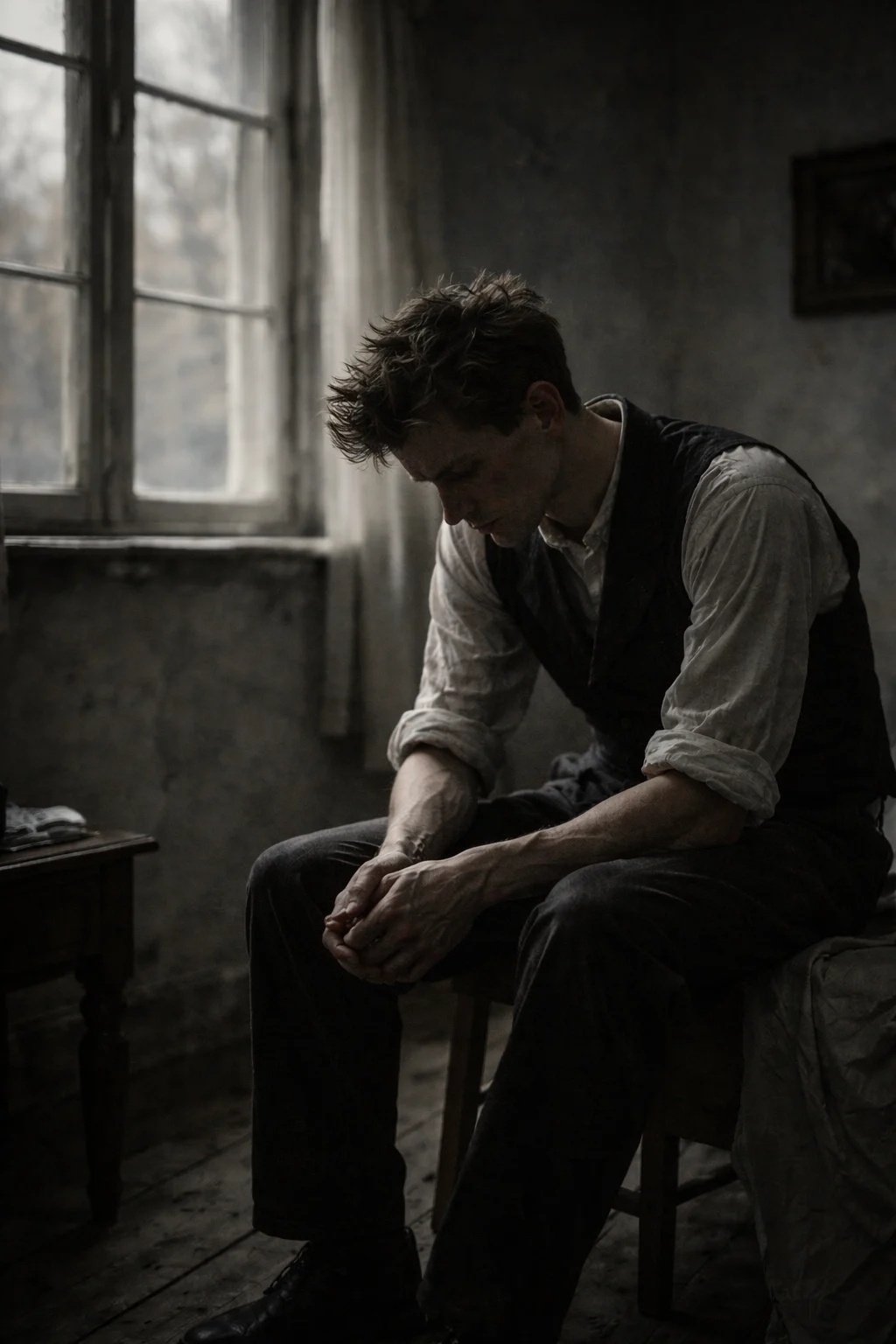
In 1915, as Europe was at war, Schiele decided to marry Edith Harms, a young woman from a middle-class family who lived across from his studio. Before the wedding, he ended his relationship with Wally. The separation was painful and appears to be evoked in Death and the Maiden, in which a couple embraces as though saying goodbye.
Wally later trained as a nurse and worked in a military hospital. She died of scarlet fever in 1917 at the age of 23. Her story demonstrates that she was not a passive presence in the painter’s biography, but a woman who constructed a life of her own after leaving him (Leopold Museum, 2015).
Schiele married Edith in June 1915 and was called into military service only days later. Because of his abilities and connections, he primarily performed administrative and guard duties, although he was also assigned to supervise prisoners of war. His obligations allowed him to continue drawing and eventually resume more regular artistic work.
His style began to change. His lines became softer, bodies acquired greater volume, and his portraits displayed a different form of empathy. The image of Schiele as an eternally adolescent artist concerned only with provocation ignores this final evolution (Leopold Museum, 2025).
Success Arrived When It Was Already Too Late
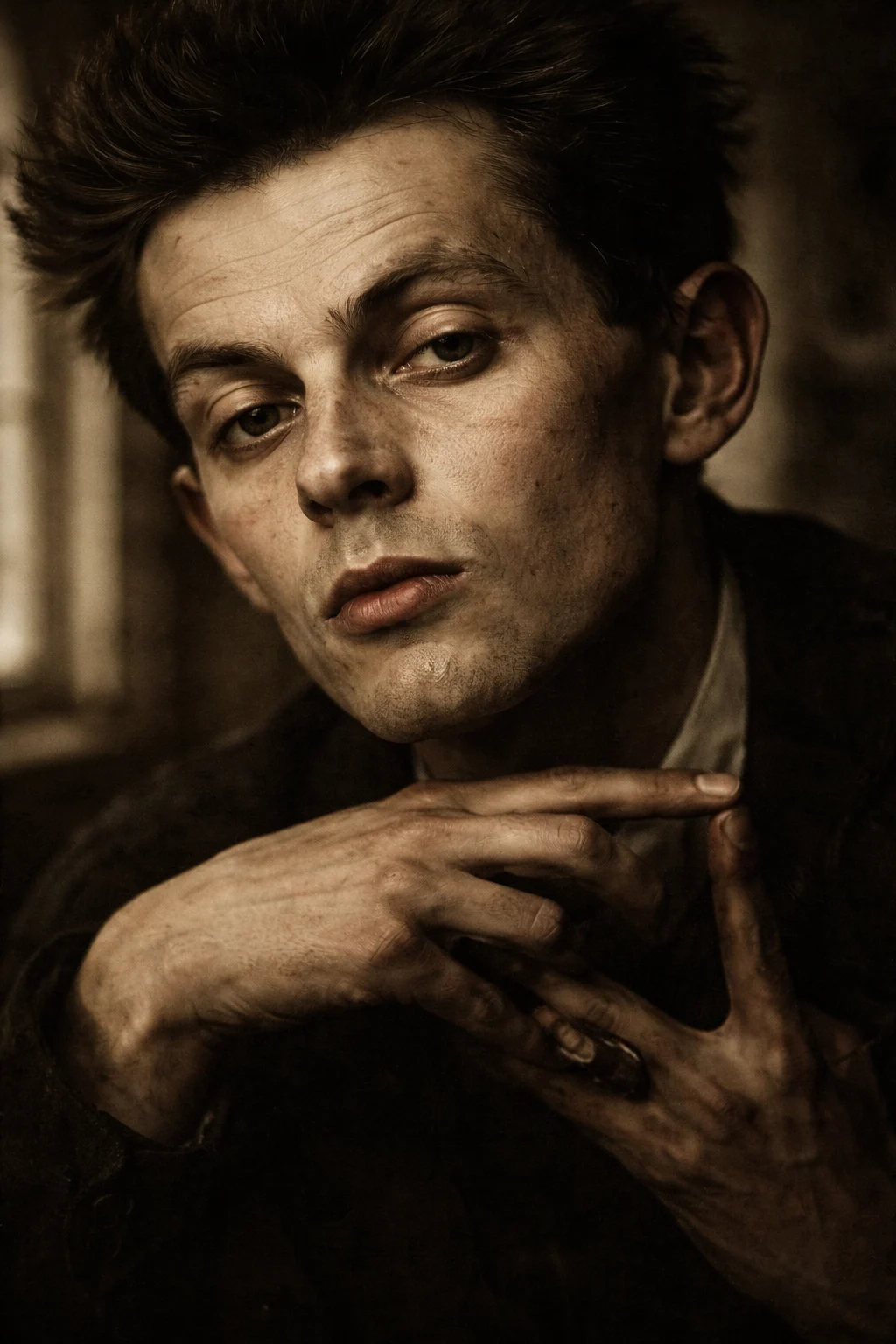
In March 1918, Schiele became the principal figure in the Vienna Secession’s 49th exhibition. He presented numerous works, designed the exhibition poster, and achieved the greatest commercial recognition of his career. Following Gustav Klimt’s death in February of that year, Schiele appeared destined to occupy a central position within Vienna’s new artistic generation.
His success, however, coincided with the end of the First World War and the spread of the 1918 influenza pandemic. Edith, approximately six months pregnant, became ill and died on October 28. Schiele drew her during her final days.
The painter also contracted the disease. He died on October 31, 1918, only three days after his wife. He was 28 years old (Leopold Museum, 2023).
During a career lasting roughly a decade, Schiele produced approximately 300 paintings and more than 3,000 works on paper. His self-portraits, landscapes, figures, and deserted towns explored a question running through the Vienna of his time: what remained of the individual when ideal beauty, social conventions, and the security of the old imperial world disappeared (Museum of Modern Art, n.d.-b).
Egon Schiele’s life cannot be separated from controversy, but neither should it be reduced to it. The 1912 trial demonstrates the danger of repeating an accusation without distinguishing it from a conviction. He was imprisoned, tried, and censored, but the most serious charges were dismissed. The drawing burned before the judge did not disappear merely as a physical object. It became a symbol of a society that believed it could destroy an image in order to control the questions that image provoked.
References
- Albertina. (n.d.). “Die eine Orange war das einzige Licht” [“The only light was an orange”].
- Belvedere Museum. (n.d.). Who was Egon Schiele?
- Leopold Museum. (2015, February 27). Wally Neuzil: Her life with Egon Schiele.
- Leopold Museum. (2023). Egon Schiele on his deathbed.
- Leopold Museum. (2025, March 31). Changing times: Egon Schiele’s last years.
- Leopold Museum. (n.d.). Egon Schiele.
- Museum of Modern Art. (n.d.-a). Egon Schiele: Artist and work.
- Museum of Modern Art. (n.d.-b). Egon Schiele: Austrian, 1890–1918.
More from this collection
Francisco de Goya: The Painter Who Heard the Noise of His Age After Becoming Deaf
Read story →
Caravaggio: The Knight Expelled Before His Own Masterpiece
Read story →