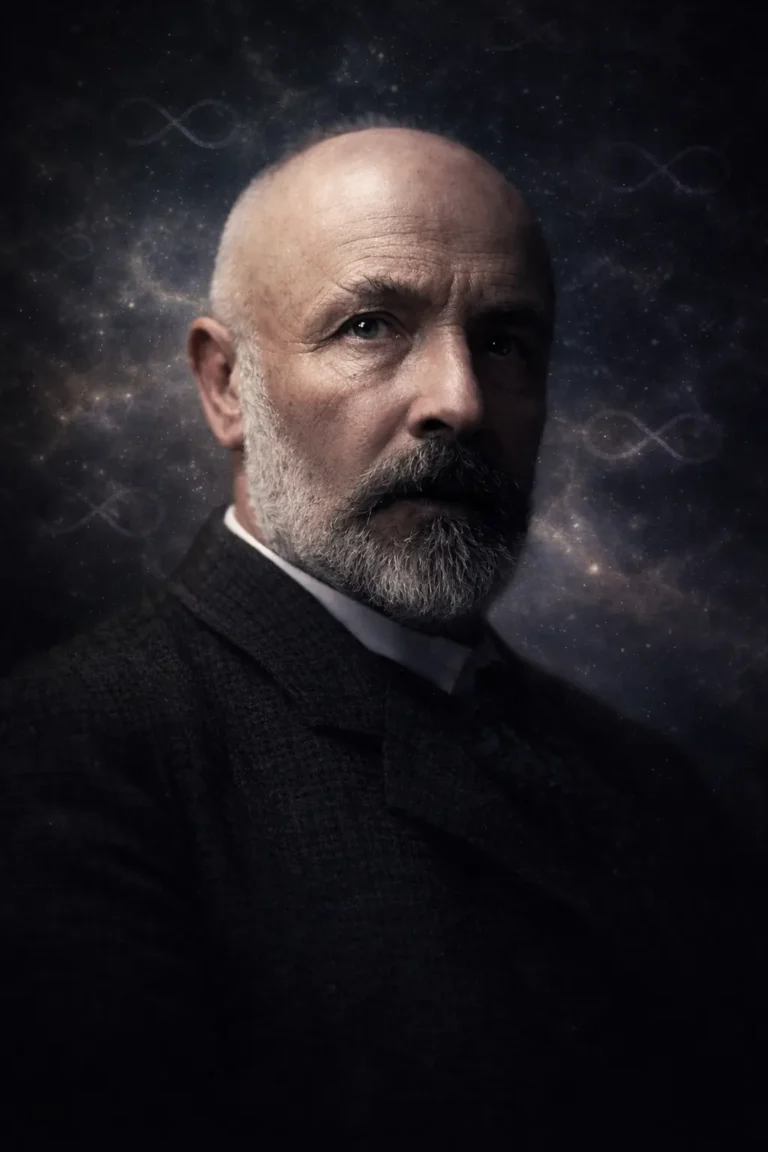
In this storyOpen index
Sofia Kovalevskaya: The Woman Who Had to Marry to Study Mathematics
A marriage to pursue an education, a doctorate behind closed university doors, and mathematics that broke through the barriers of her century.
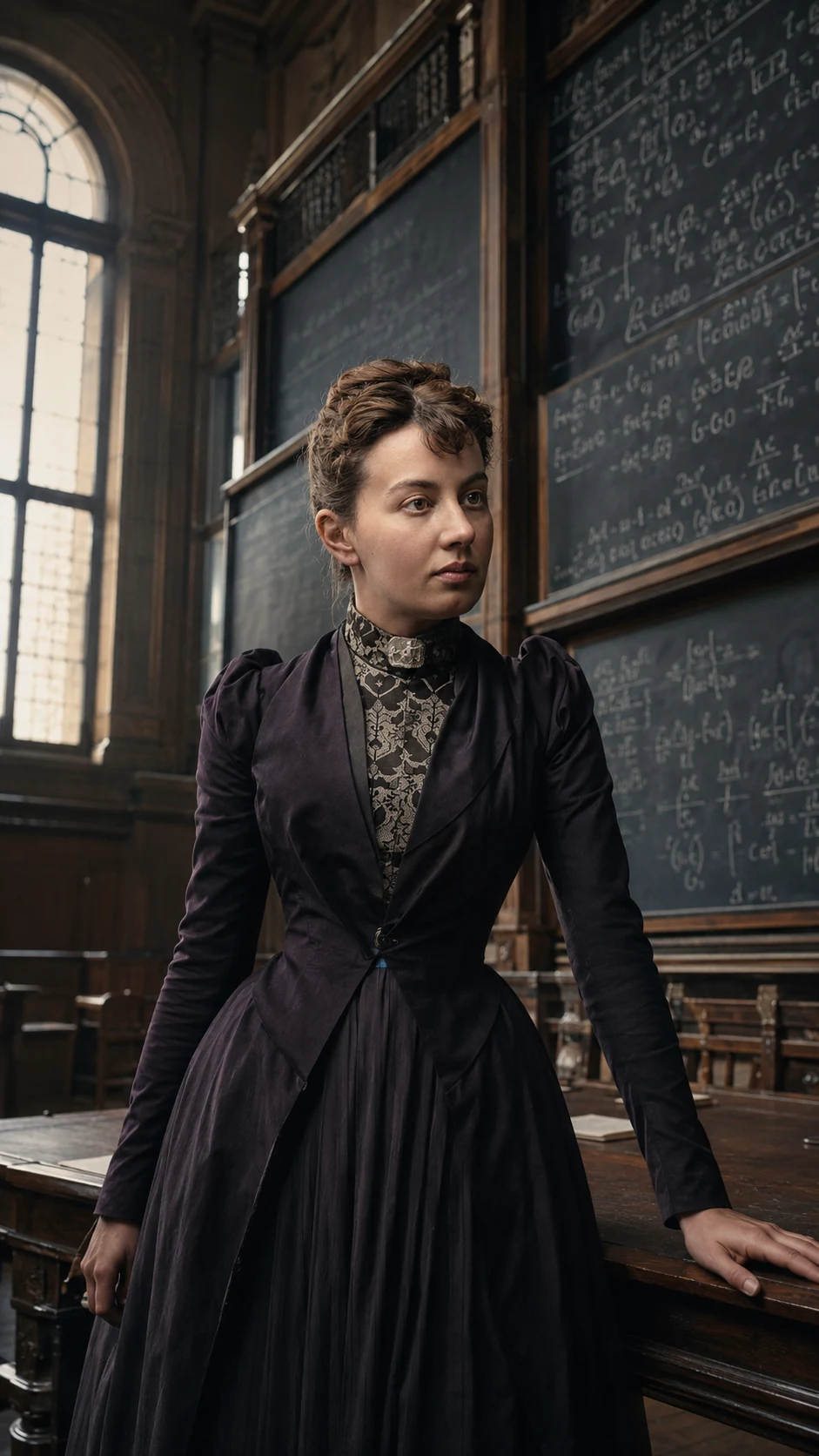
To enter a university, she had to leave her country. To leave her country, she had to marry. After obtaining one of the most remarkable doctorates of her generation, European institutions continued refusing to employ her because she was a woman.
Sofia Kovalevskaya did not struggle only against difficult equations. She confronted laws, universities and social conventions that had decided a woman might admire mathematics but could not become a mathematician.
She eventually solved a problem in mechanics that had resisted mathematicians for decades, received one of France’s major scientific prizes and obtained a professorship in Sweden. She also wrote fiction, memoirs and drama.
When she finally achieved the recognition she had pursued throughout her life, she had only two years left to live.
Sofia Kovalevskaya
The doors to mathematics
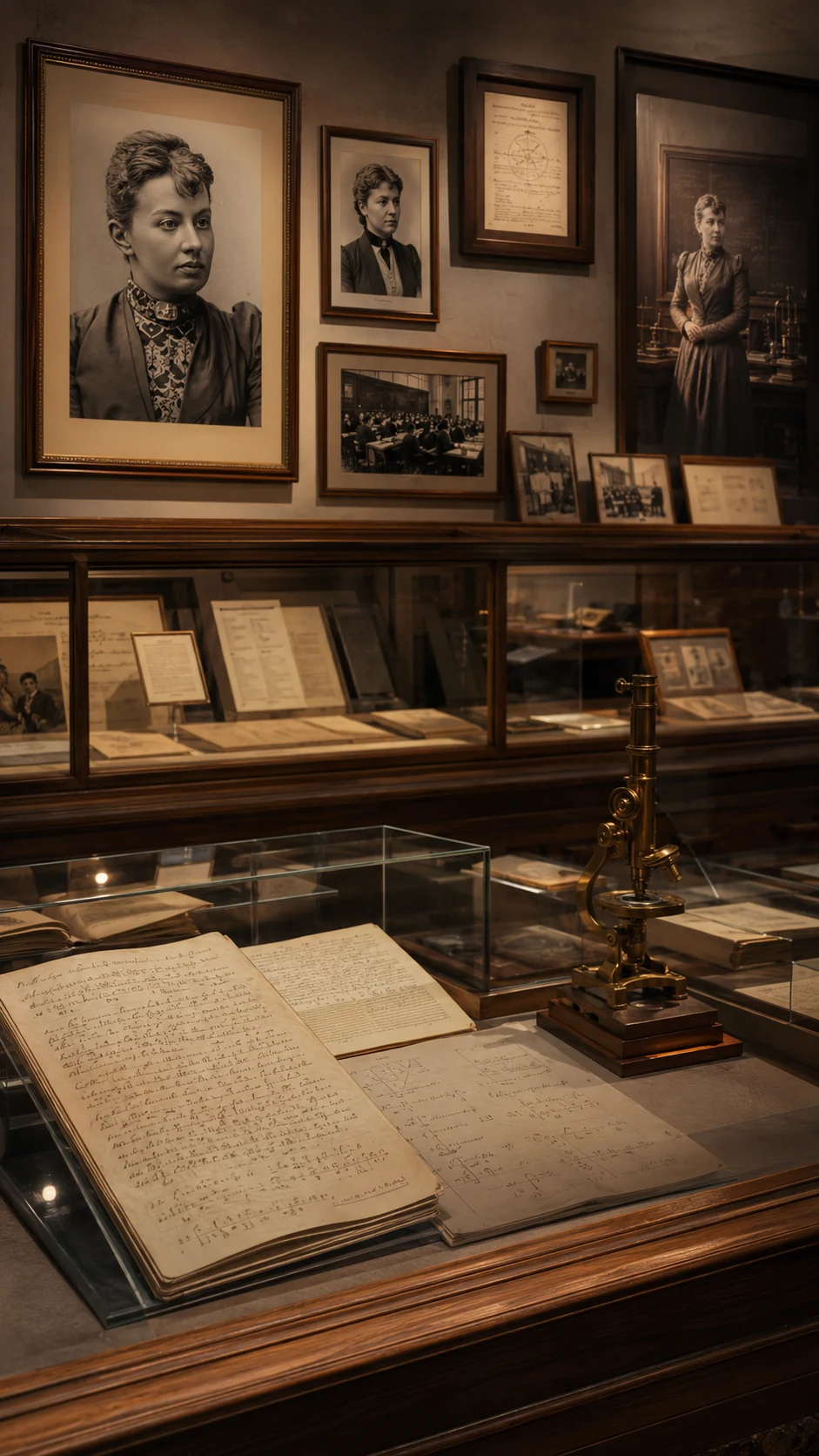
A professorship in university history
Stockholm University devotes a page of its history to Sonya Kovalevsky, another form of Sofia’s name. Its institutional account follows the path from her temporary appointment in 1884 to the full professorship in 1889, explaining why a private institution could open a door still closed elsewhere. The page brings together her scientific and literary work and offers a direct route to further reading. This block’s image is a symbolic AI recreation, not a photograph of an actual archive room.
The equations covering a wall
Sofia Vasilyevna Korvin-Krukovskaya was born in Moscow on January 15, 1850, corresponding to January 3 in the Russian calendar then in use. She was the second daughter of Vasily Korvin-Krukovsky, an artillery officer who later became a general, and Elizaveta Schubert, a descendant of a family of scientists and cartographers.
She spent part of her childhood at Palibino, the family estate. One of the best-known events of her life occurred there.
When the house was redecorated, there was not enough wallpaper to cover one of the children’s rooms. As a temporary solution, the walls were partly covered with pages from old lecture notes on differential and integral calculus associated with the mathematician Mikhail Ostrogradsky.
Sofia remembered spending long periods staring at the incomprehensible formulas and attempting to discover the pages’ correct order. Years later, when she began studying calculus, she recognized expressions that had appeared on her bedroom walls (Kovalevskaya, 1978).
The story does not come solely from a later legend; it appears in her own autobiographical recollections. The pages did not, of course, teach her calculus by themselves. They offered an early and fascinating image of a language she did not yet understand.
Before mastering mathematics, Sofia literally lived surrounded by it.

An education permitted only up to a point
Her family belonged to the nobility and could provide private tutors. Sofia demonstrated an aptitude for science, but her father feared that excessive academic interest was inappropriate for a young woman.
During adolescence, she studied with the teacher Aleksandr Strannoliubsky, who quickly recognized her unusual ability. She reportedly developed an independent understanding of certain trigonometric ideas before receiving formal instruction.
Convincing her family was not the only obstacle. Universities in the Russian Empire did not admit women, and an unmarried young woman could not freely travel abroad without permission from her father or husband.
Women associated with Russia’s radical movements sometimes entered “fictitious marriages”: legal unions intended to release them from family authority and allow them to study, travel or live independently.
Sofia needed to find a man willing to participate in such an arrangement.
The marriage that functioned as a passport
In 1868, when she was eighteen, Sofia married Vladimir Kovalevsky, a young man interested in the natural sciences and connected with progressive intellectual circles.
The marriage began primarily as an arrangement of convenience. Her new legal status as a married woman allowed Sofia to leave Russia and pursue an education in Western Europe (Koblitz, 1983).
Their relationship eventually became far more complicated than the original agreement. Sofia and Vladimir experienced periods of closeness, separation and reconciliation. They had a daughter in 1878, also named Sofia and known within the family as Fufa.
Vladimir developed an important career in paleontology and translated works by Charles Darwin, Thomas Huxley and other scientists into Russian. He also became involved in risky commercial ventures that eventually destroyed his financial security.
The marriage that released Sofia from one legal barrier did not free her from emotional and economic conflict.
Heidelberg: studying without belonging
In 1869, Sofia arrived in Heidelberg intending to study mathematics and science. The university did not formally enroll women, but she obtained permission to audit selected courses if each professor agreed.
She attended lectures by such prominent scientists as Hermann von Helmholtz, Gustav Kirchhoff and Leo Königsberger. Her teachers were impressed by her ability and encouraged her to continue.
Attending lectures, however, did not mean belonging to the university. She could not enroll under the same conditions as male students or follow an ordinary academic path.
After her time in Heidelberg, she moved to Berlin to study with Karl Weierstrass, one of the central figures in nineteenth-century mathematical analysis. The University of Berlin refused even to allow her to audit its lectures.
Weierstrass decided to determine for himself whether the young woman possessed the ability others attributed to her. He gave her a series of difficult problems, probably intending to measure the limits of her preparation.
Sofia returned with solutions that astonished him.

The university closed its door, and Weierstrass opened another
Impressed by her ability, Weierstrass began teaching her privately. For several years, he provided essentially the same material he taught to his university students.
Their relationship developed into a profound intellectual collaboration. Weierstrass did not treat her merely as a woman whose talent was remarkable for her sex. He regarded her as a mathematician capable of original research.
Kovalevskaya prepared three papers: one on partial differential equations, another on the shape of Saturn’s rings and a third on Abelian integrals.
Because Berlin would not award her a degree, Weierstrass submitted the papers to the University of Göttingen. In 1874, the university granted her a doctorate summa cum laude without requiring the customary oral examination because of the exceptional quality of her research and the strength of the academic reports supporting it (Cooke, 1984).
She became the first woman to receive a doctorate in mathematics in the modern academic sense.
The doctorate was awarded in absentia: she had not followed the usual in-person course of study at Göttingen.

The theorem bearing her name
The most important of her doctoral papers examined certain partial differential equations.
Such equations describe phenomena in which several quantities change simultaneously: the spread of heat, the movement of fluids, waves and many other physical processes. Solving one does not simply mean finding a formula. Mathematicians must first determine whether a solution exists under given initial conditions and whether it is unique.
Kovalevskaya proved that a broad class of partial differential equations has a unique local solution when the equations and initial data are analytic and the initial surface is non-characteristic.
Building on earlier work by Augustin-Louis Cauchy, the result is now known as the Cauchy-Kovalevskaya theorem.
It does not solve every differential equation or guarantee a solution under all circumstances. Its importance lies in rigorously establishing when a well-defined mathematical problem has one unique local solution within a particular category of functions.
More than a century later, the theorem remains part of advanced study in analysis and differential equations.
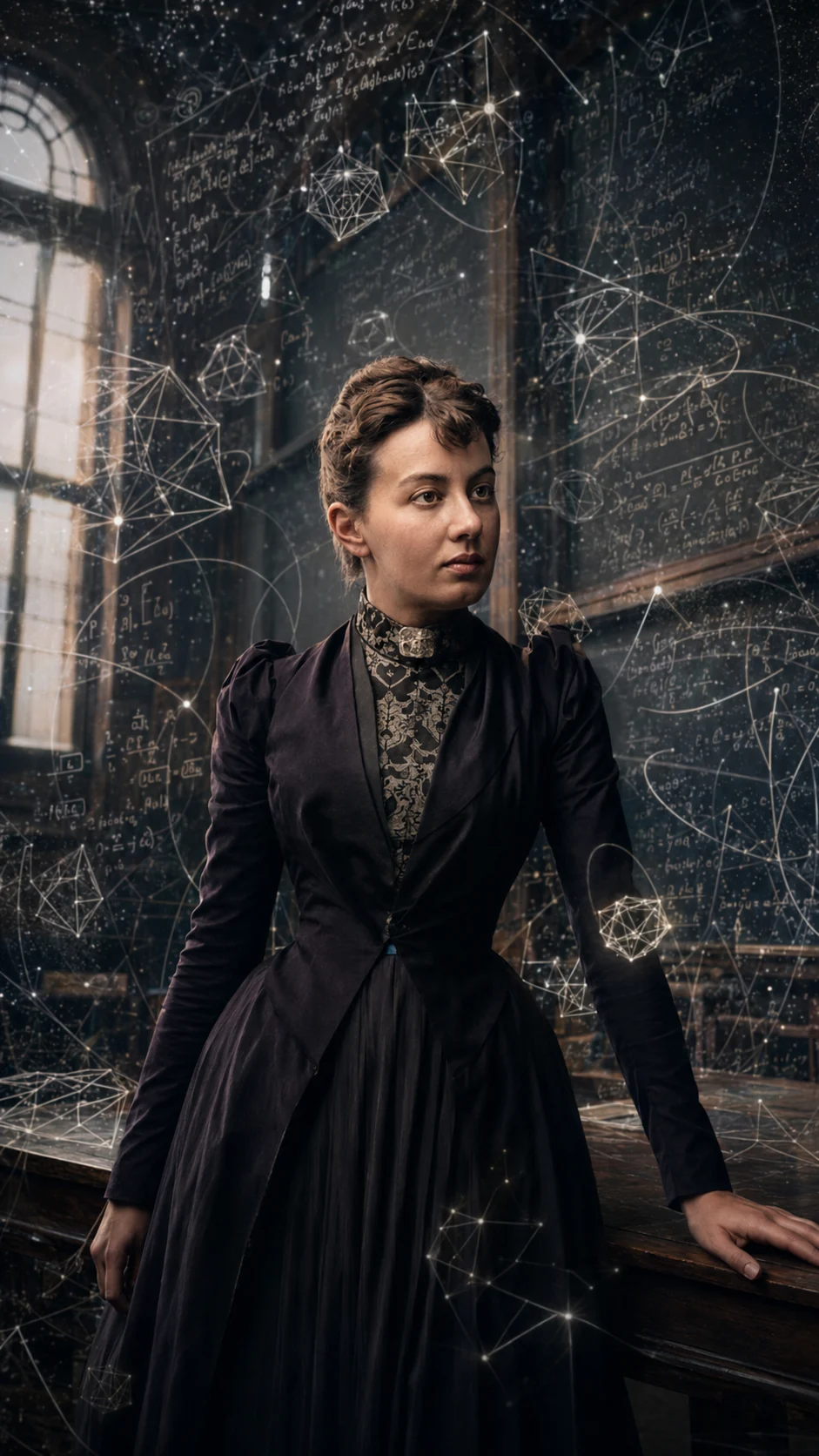
A doctorate that could not secure employment
After receiving her doctorate, Kovalevskaya returned to Russia carrying strong recommendations from Weierstrass. She expected to find a position that would allow her to teach and conduct research.
No Russian university was willing to employ her as a professor.
She could aspire to positions connected with elementary education for women but not to the kind of academic appointment corresponding to her training. She held an exceptional doctorate and was nevertheless excluded from the profession for which she had prepared.
For several years, she partly withdrew from mathematical research. She and Vladimir attempted to build a family life, became involved in business ventures and participated in the intellectual circles of Saint Petersburg.
Sofia devoted more time to literature and journalism. Writing was not a superficial diversion for her. She saw literature as another way of exploring structures, conflicts and human possibilities.
For her, mathematics and imagination were not opposing worlds.
Vladimir’s tragedy
Vladimir Kovalevsky’s business ventures became increasingly unstable. He participated in financial speculation and eventually became involved in a scandal surrounding a company.
The couple had lived apart for periods but remained emotionally and legally connected. In April 1883, overwhelmed by financial problems and the prospect of prosecution, Vladimir died by suicide.
Sofia was deeply affected. She was also left responsible for their daughter without stable financial security.
After the initial shock, she concentrated on the research she had resumed around 1880. Her return to mathematics therefore preceded Vladimir’s death; bereavement was not the beginning of that intellectual recovery (Karlsson, 2018).
Rather than ending her scientific life, that painful year preceded the opportunity she had awaited for nearly a decade.
Stockholm: the door that finally opened
The Swedish mathematician Gösta Mittag-Leffler, a former student of Weierstrass, admired Kovalevskaya’s work. Through his efforts, she received an invitation in 1883 to teach at the recently founded Stockholms Högskola, the institution that later became Stockholm University.
Her initial position was precarious, and her first lectures did not provide a regular salary. In addition to proving her mathematical ability, she had to persuade an academic community that had never seen a woman occupy such a role.
She initially lectured in German, then learned Swedish quickly enough to teach in that language.
In 1884, she received a paid five-year appointment and also became associated with Acta Mathematica, the journal founded by Mittag-Leffler. In 1889, she was appointed full professor.
She became Sweden’s first female professor and a decisive figure in women’s access to university teaching in mathematics. The private and relatively new character of the Swedish institution permitted an appointment that older universities continued to reject (Stockholm University, 2025).
Russia had produced her talent. Germany had trained her as a researcher. Sweden finally allowed her to practice her profession.
The spinning top that challenged mathematicians
One of the great problems of classical mechanics concerned describing the rotation of a rigid body around a fixed point under the influence of gravity.
Before Kovalevskaya’s work, two important integrable cases were known, associated with Leonhard Euler and Joseph-Louis Lagrange. Finding another integrable case under precise conditions was extraordinarily difficult.
Kovalevskaya found new conditions under which the equations of motion could be integrated. Her solution, now known as the “Kovalevskaya top” or the “Kovalevskaya case,” introduced complex mathematical tools and revealed a new structure within the problem.
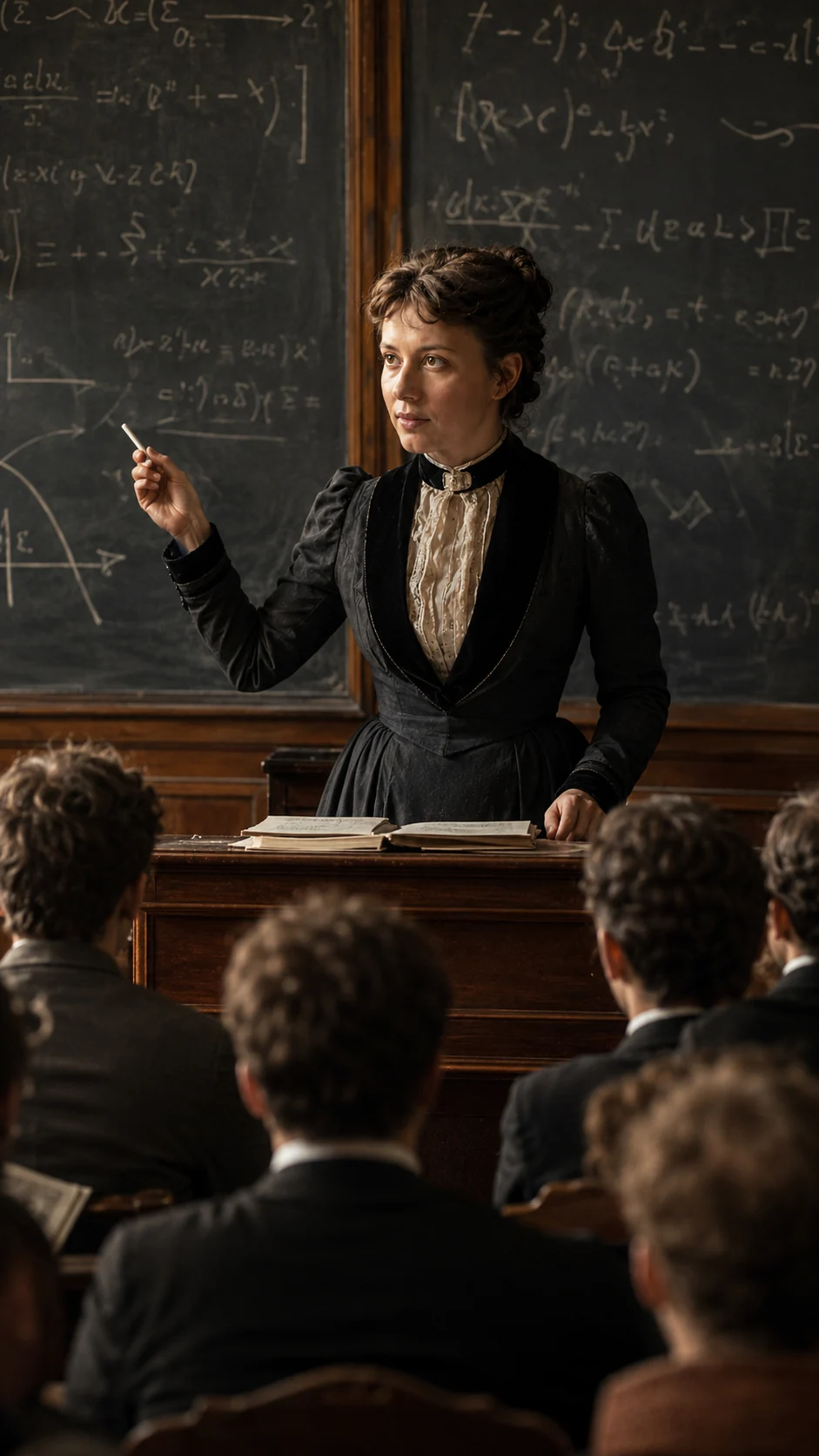
In 1888, she submitted the work to a competition organized by the French Academy of Sciences. The judges considered her paper so exceptional that they increased the value of the Prix Bordin from 3,000 to 5,000 francs.
She did not receive the award as a symbolic gesture toward a pioneering woman. She received it because some of Europe’s foremost mathematicians recognized the depth of her solution (Koblitz, 1983).
After years in which universities had debated whether a woman should enter a lecture hall, a French scientific academy decided that her work had exceeded every expectation.
Recognized in Russia but still denied a chair
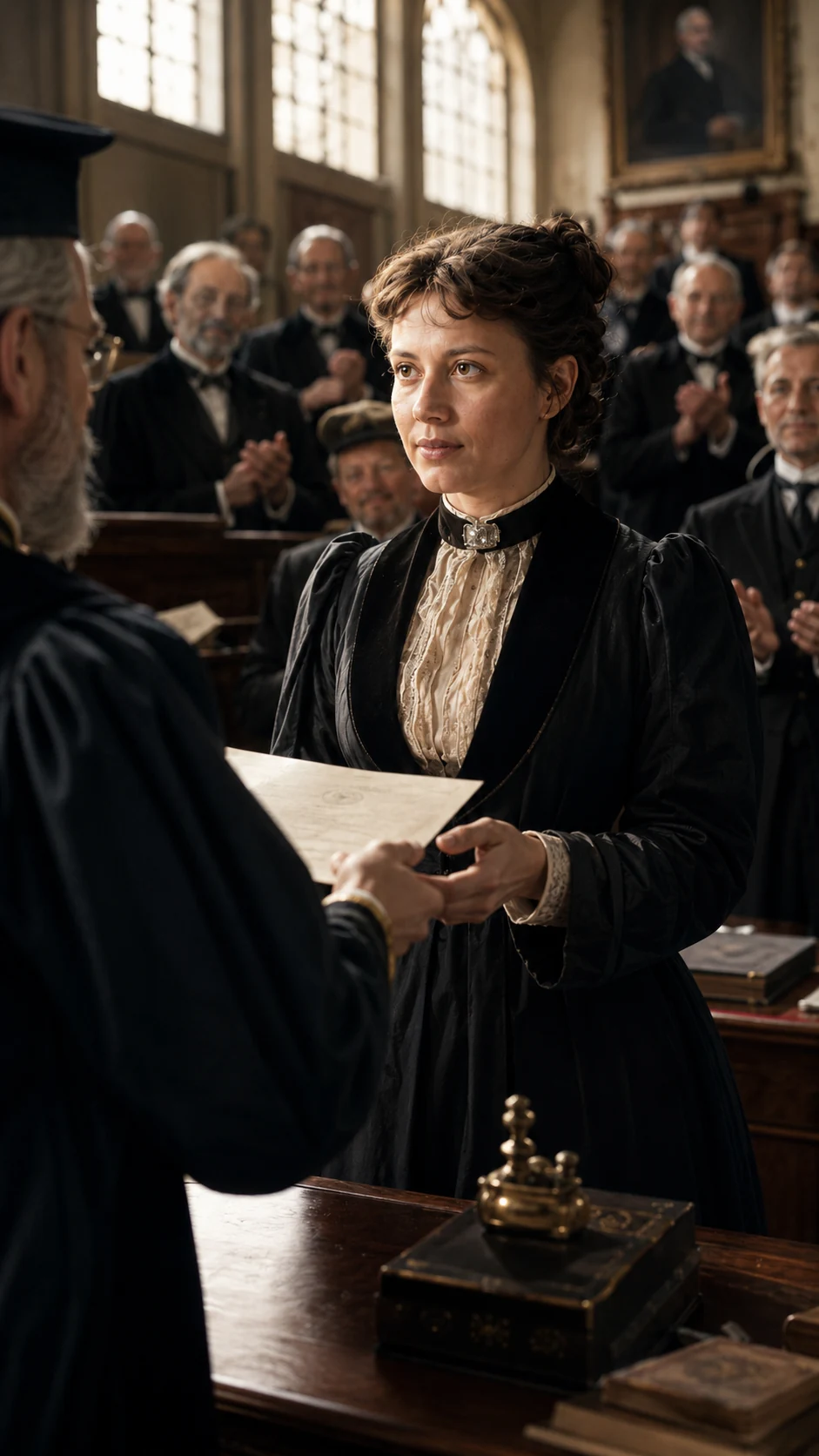
In 1889, Kovalevskaya was elected a corresponding member of the Imperial Academy of Sciences in Saint Petersburg. Restrictions limiting women’s participation had to be overcome before the appointment could be made.
It represented an important form of recognition. Russia, however, never offered her a university professorship.
The contradiction summarizes much of her life: she could be celebrated as an extraordinary exception while the structures excluding other women remained intact.
Kovalevskaya hoped to work again in her own country but had to continue building her career outside it.
The mathematician who also wrote literature
Sofia published childhood memoirs, fiction, essays and journalism. Her autobiographical work, commonly known in English as A Russian Childhood, described life inside an aristocratic family during a period of profound social transformation.
She also wrote The Nihilist Girl, inspired by women connected with Russian radical movements, and collaborated with Swedish writer Anne Charlotte Leffler on the play The Struggle for Happiness.
Her literary works explored the same themes that shaped her life: freedom, family obligations, inequality between men and women and the conflict between individual desire and social structures.
The statement that “it is impossible to be a mathematician without being a poet in soul” is often associated with her. Whatever variations arose in its transmission, it reflects a conviction evident throughout her career: discovering mathematical relationships required imagination, intuition and the ability to see what had not yet been expressed.

An ending just as everything began to fit
During the winter of 1890–1891, Kovalevskaya traveled through Europe. While returning to Stockholm, she contracted a respiratory illness described in the sources as influenza followed by a serious lung infection or pneumonia.
She died on February 10, 1891. She was forty-one.
News of her death shocked European scientific circles. She had obtained a professorship, won the Prix Bordin and achieved international recognition only during the final years of a life marked by constant obstacles.
We cannot know what problems she might have solved had she lived another three or four decades. Her death did not interrupt a fading career but one that had finally acquired stability.
The woman who transformed exclusion into motion
Sofia Kovalevskaya was not important merely because she was “the first woman” to achieve certain distinctions. Her mathematics possesses its own enduring value.
The Cauchy-Kovalevskaya theorem remains part of modern analysis. The Kovalevskaya case continues to be fundamental in the study of integrable systems and rigid-body dynamics. Her work on integrals and mechanics contributed to central nineteenth-century mathematical debates.
Yet completely separating her science from the barriers she confronted would also falsify history.
She had to use marriage as a travel document. She studied at universities without being admitted as a student. She received private lessons because Berlin closed its classrooms to her. She earned a doctorate and then spent years unable to practice her profession. Only a young institution willing to break precedent allowed her to teach under conditions corresponding to her ability.
Mathematics is often presented as a pure territory in which only the truth of a proof matters. Kovalevskaya’s life demonstrates that even truth needs an institutional door through which to enter.
She found that door after knocking on many that remained closed.
Once inside, she proved that the limit had never been her intelligence.
The limit was the world attempting to contain it.
References
- Cooke, R. (1984). The mathematics of Sonya Kovalevskaya. Springer-Verlag. View source
- Koblitz, A. H. (1983). A convergence of lives: Sofia Kovalevskaia—Scientist, writer, revolutionary. Birkhäuser. View source
- Kovalevskaya, S. (1978). A Russian childhood (B. Stillman, Trans.). Springer-Verlag. View source
- MacTutor History of Mathematics Archive. (n.d.). Sofia Vasilyevna Kovalevskaya. University of St Andrews. View source
- Stockholm University. (2025, October 16). Sonya Kovalevsky – Sweden’s first female professor. View source
- Heidelberg University. (2026). Sofya Kovalevskaya – The world’s first female professor of mathematics. View source
- Karlsson, L. (2018, March 8). Sophie (Sonja) Vasiljevna Kovalevsky. Svenskt kvinnobiografiskt lexikon. View source
More from this collection
Emmy Noether: The Woman Who Found the Laws Hidden Behind Symmetry
Read story →
Hypatia of Alexandria: The Mathematician Whose Authority Became Dangerous
Read story →