In this storyOpen index
Alfonsina Storni: The Woman Who Wrote When the World Expected Her to Remain Silent
Alfonsina Storni transformed labor, motherhood, inequality, and female desire into a literary voice that refused to remain silent.
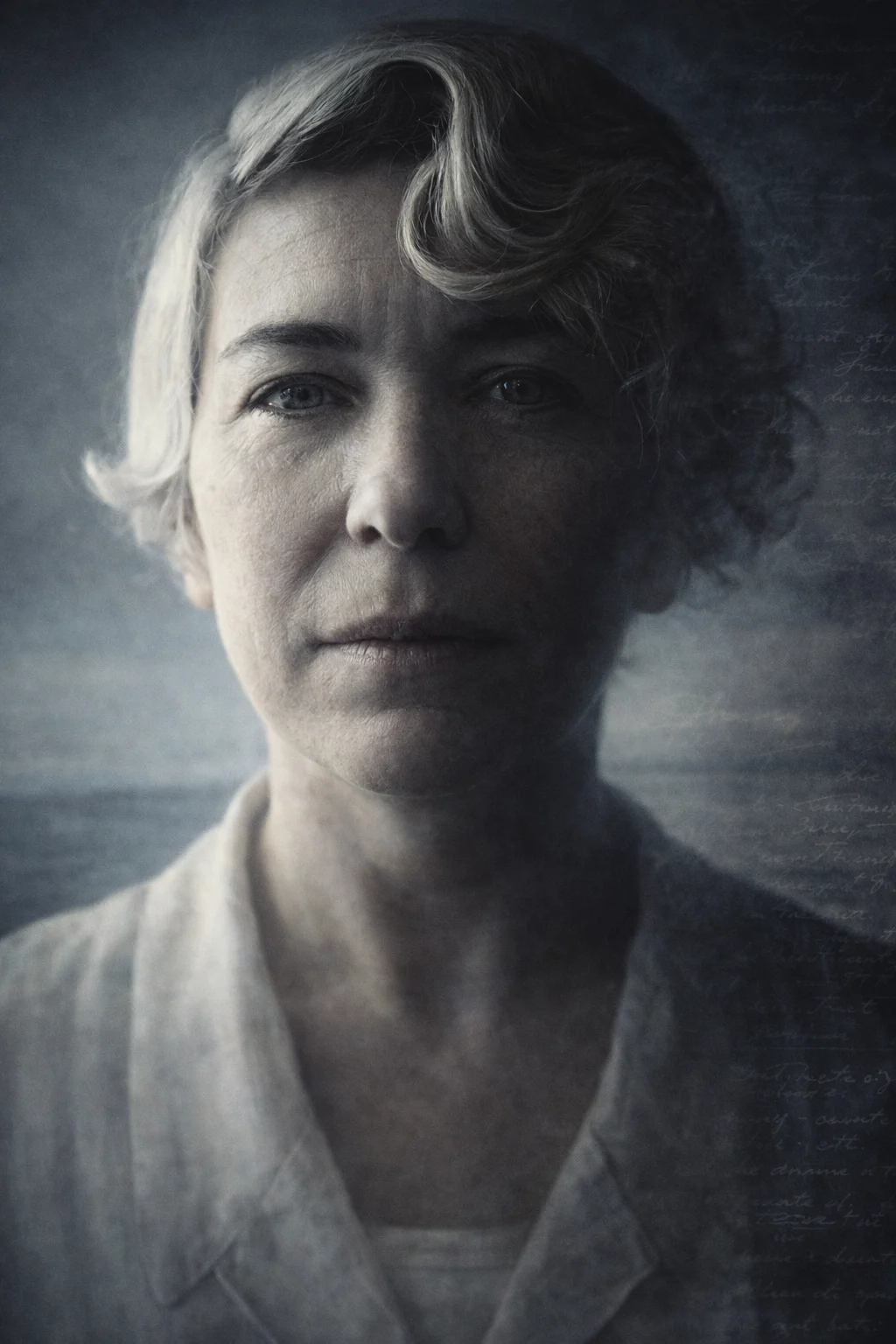
Featured historical fact: Before becoming one of the great Spanish-language poets of the Americas, Alfonsina Storni worked in a factory, toured Argentina with a theater company, taught in rural schools, and raised her son alone. She also wrote about workplace inequality and women’s rights under the pseudonym Tao Lao.
The woman who would eventually become a statue facing the sea spent much of her life trying to earn enough money to reach the end of the month.
Alfonsina Storni was a factory worker, actress, teacher, commercial employee, journalist, and single mother before receiving recognition as a poet. She wrote about female desire, exhaustion, motherhood, labor, and the hypocrisy of a society that admired sensitive women as long as they remained obedient.
Her death was later transformed into song and legend. But reducing her to the image of a woman slowly walking into the ocean means forgetting the battle she fought for decades on solid ground.
Alfonsina Storni: The Woman Who Wrote When the World Expected Her to Remain Silent
Discover this story on our YouTube channel.
A life told through places and turning points

Enter the archive
An authentic object preserved by a cultural institution brings us closer to the world behind this life.
- Collection
- Wikimedia Commons
- Rights
- Public domain
https://www.facebook.com/ArchivoGeneraldelaNacionArgentina/photos/a.141923792499512.21231.138633046161920/2248988071793063
A child born between two countries
Alfonsina Storni was born on May 29, 1892, in Sala Capriasca, a small town in Switzerland’s Italian-speaking canton of Ticino. Her parents were Swiss emigrants who had previously lived in Argentina and had temporarily returned to Europe.
In 1896, the family went back to Argentina and initially settled in San Juan. Several years later, they moved to Rosario, a rapidly growing port city.
The family’s financial situation deteriorated. Her father opened a café, but the business did not prosper and his health declined. Alfonsina began working while still very young. She helped in the family establishment and later found employment in a cap factory.
Poverty was not a literary idea. It meant long working days, low wages, and the knowledge that any illness could destroy the family’s remaining stability.
Her father died in 1906. Alfonsina was thirteen and already understood the weight of adult responsibility.
A teenager on the stage
Theater offered a means of escape. As a teenager, Storni joined a traveling company and toured several Argentine provinces, performing plays by writers including Henrik Ibsen, Benito Pérez Galdós, and Florencio Sánchez.
The experience was brief but formative. Storni learned how a voice, gesture, or silence could change the meaning of a scene. She also encountered the unstable existence of traveling performers: uncomfortable journeys, uncertain income, and unpredictable audiences.
The stage allowed her to portray other women, but it did not provide the financial security she needed. She left the company and returned to her education.
In 1909, she entered a teacher-training school in Coronda, in Santa Fe Province, to prepare as a rural educator. She graduated in 1910 and began teaching in Rosario.
Teaching was one of the few respectable professions available to an educated woman. Storni, however, already understood that female respectability came with strict conditions.
She would soon defy one of the most important.
A mother without a husband
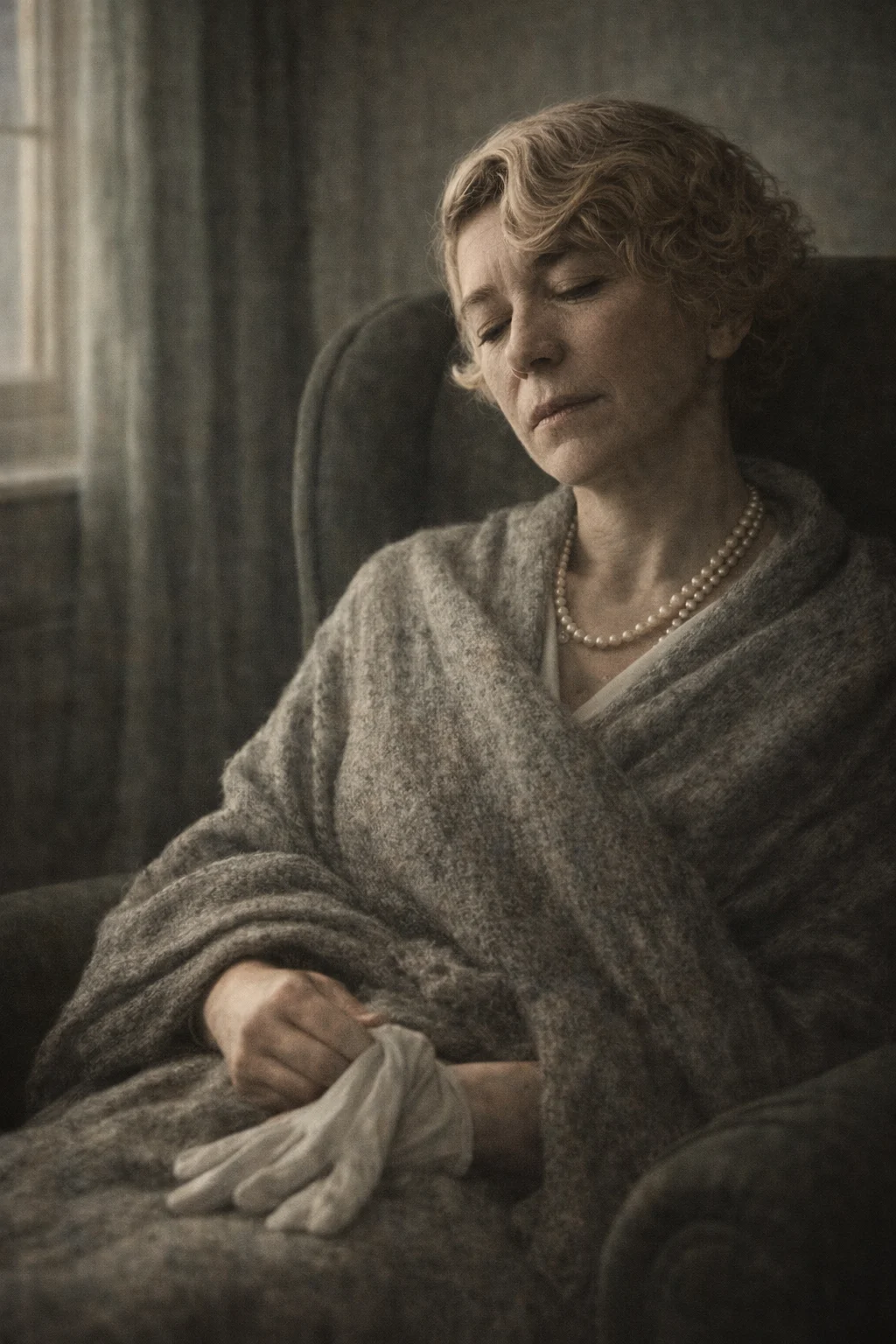
In 1911, Alfonsina moved to Buenos Aires. She was pregnant and unmarried. She never publicly revealed the father’s identity.
Her son Alejandro was born on April 21, 1912.
Being an unmarried mother in early-twentieth-century Argentina could bring family rejection, public humiliation, and professional difficulty. Society tolerated men’s relationships outside marriage while placing nearly the entire moral burden on women.
Storni chose to raise her son and support herself through her own labor. She worked as a cashier, commercial correspondent, and employee of an importing company. In some offices, she was the only woman among numerous men and received lower pay for comparable work.
That experience later appeared in her journalism about working women. Storni did not discuss female independence as an abstraction. She knew its cost: rising early, working long hours, caring for a child alone, and writing after everyone else had gone to sleep.
The book she had to finance herself
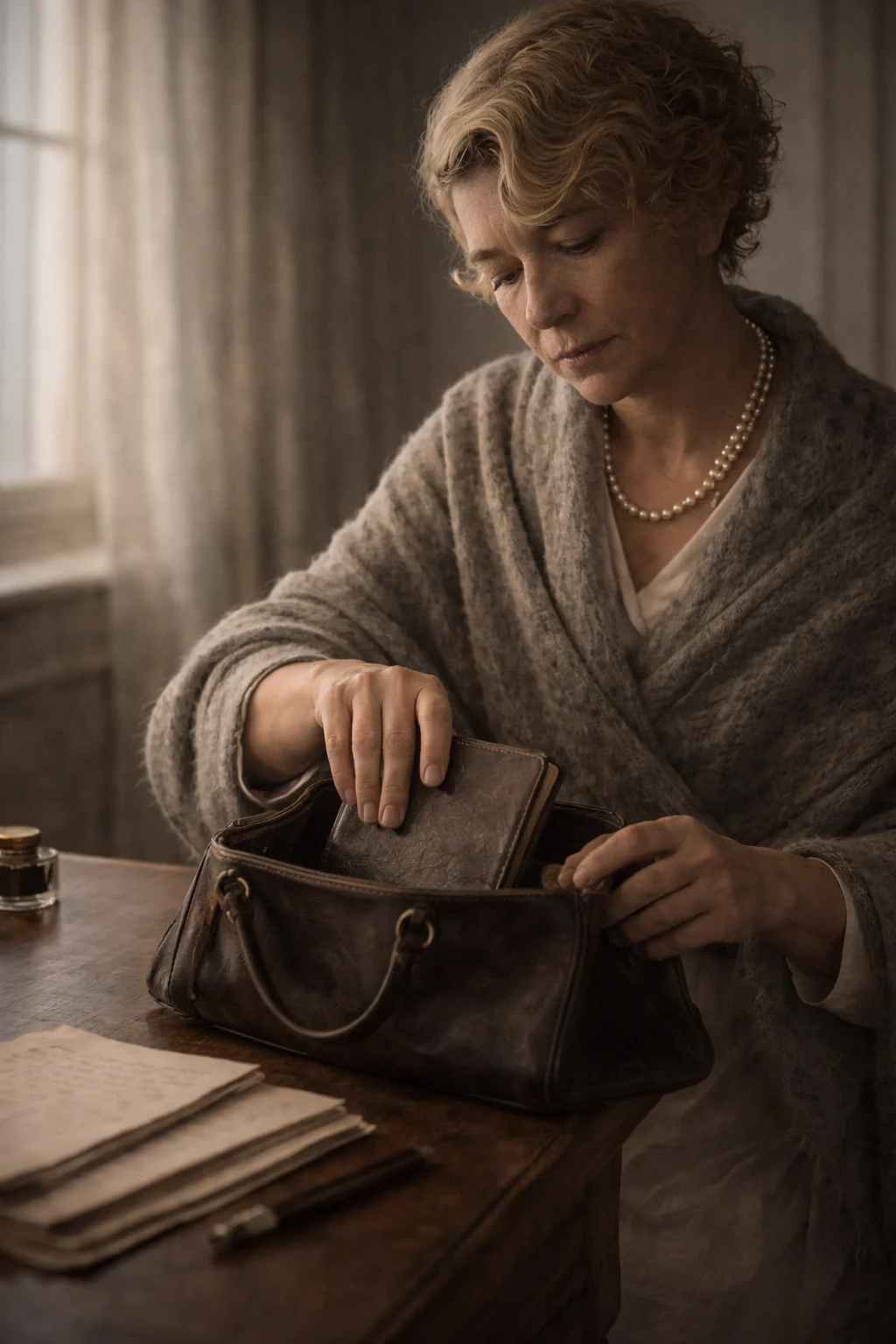
In 1916, Storni published her first poetry collection, La inquietud del rosal. She financed it with her own limited resources and went into debt to have it printed.
The book retained qualities of the sentimental modernismo common at the time, but it already contained a voice refusing to occupy the place assigned to women. Desire was not merely observed from outside. It was expressed by a woman capable of loving, demanding, growing tired, and passing judgment.
Storni carried copies with her and attempted to sell them personally. Publication did not solve her financial problems, but it allowed her to enter the literary circles of Buenos Aires.
During the following years, she published El dulce daño, Irremediablemente, and Languidez. The last of these received important municipal and national recognition in 1920.
Her name began circulating beyond Argentina. Alongside Gabriela Mistral and Juana de Ibarbourou, she came to be regarded as one of the essential female voices in Spanish American poetry of her generation.
The label “poetess,” however, could also become a prison. Many critics expected women to produce delicate, confessional love poetry. Storni initially used aspects of that language but increasingly pushed against it from within.
The she-wolf outside the flock
One of her best-known early poems was “La loba,” included in La inquietud del rosal. In it, she presented herself as a woman who had left the flock and supported her cub alone.
The figure was autobiographical but also political. She did not apologize for being an unmarried mother. She transformed what society regarded as a disgrace into a declaration of independence.
Other poems questioned the sexual double standard. “Tú me quieres blanca” addresses a man who demands female purity while freely enjoying the pleasures he condemns. “Hombre pequeñito” imagines a romantic relationship as a cage from which the woman wishes to escape.
These works are often described as feminist poems, although Storni never developed a single political doctrine or remained permanently attached to a particular organization. Her thinking grew from the contradictions she observed: men proclaimed modernity while demanding submissive wives; cities required female workers but paid them less; literature celebrated passion but punished women who expressed it.
The journalist called Tao Lao
Poetry was not her only instrument. Storni wrote essays and chronicles for magazines and newspapers including La Nota and La Nación. In some of her columns, she used the pseudonym Tao Lao.
These articles reveal an author more ironic and combative than the melancholy figure preserved by part of the literary tradition. She examined fashion, marriage, female employment, education, and urban customs.
She criticized the way women were trained to depend economically upon husbands. She also identified the contradiction within a society that incorporated female labor whenever convenient while continuing to describe the home as women’s only legitimate destiny.
Her writing did not always express a perfectly consistent position. It contained the doubts and tensions of a woman attempting to think through emancipation within a society in transition.
That is precisely what makes the work valuable. It does not speak from a victory already achieved but from within the conflict itself.
A woman in the cafés of men
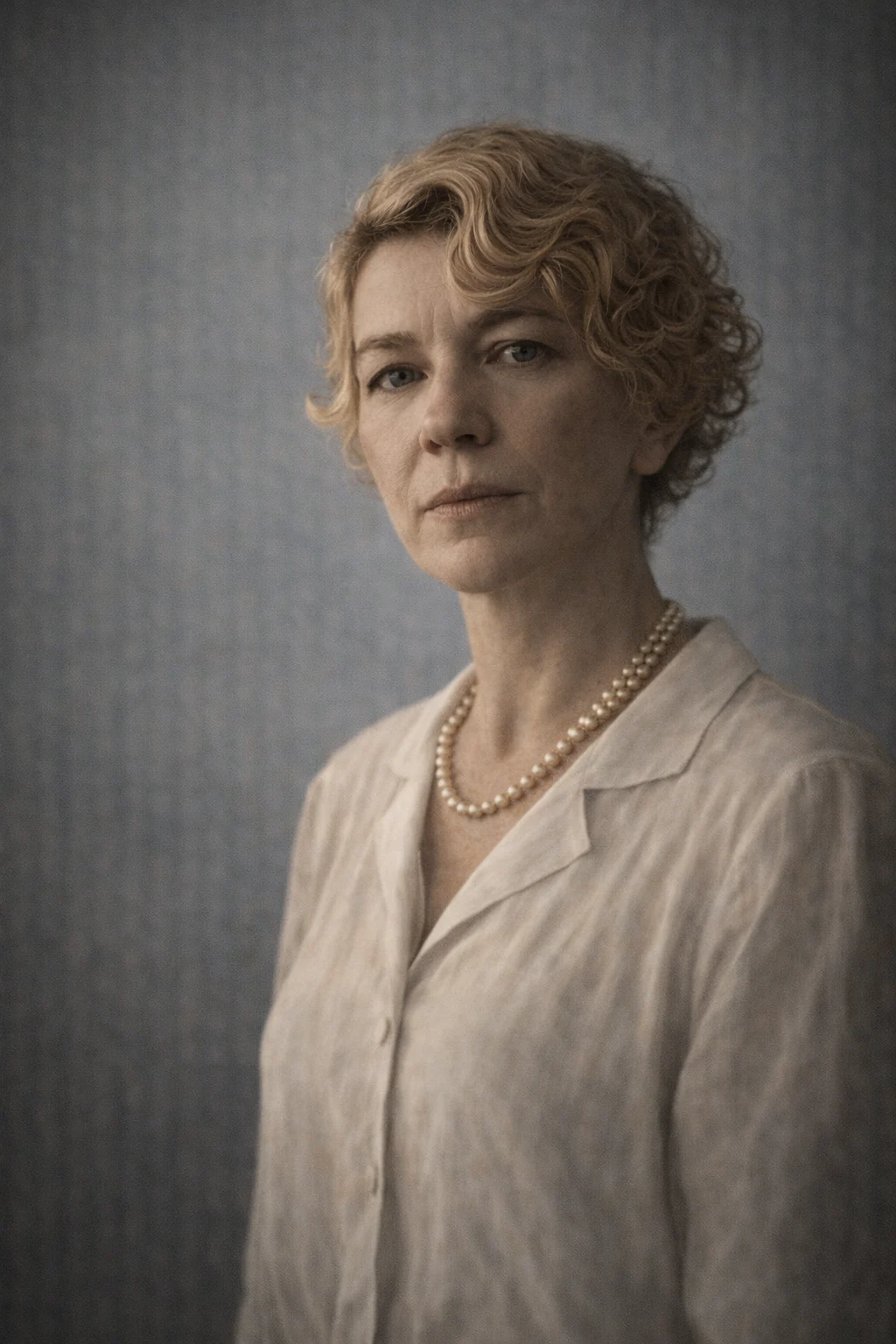
The Buenos Aires literary world was dominated by men. Cafés, editorial offices, and writers’ groups presented themselves as modern spaces, but a woman entering them without a husband’s protection became vulnerable to rumor and judgment.
Storni participated in those circles and formed friendships with writers such as Horacio Quiroga. She attended literary gatherings, delivered lectures, and taught at several institutions.
Her humor could be swift and cutting. People who knew her described both her energy and her periods of despondency. She was not the permanently sorrowful figure later constructed by legend but a sociable and contradictory woman who understood that she continually had to defend her place.
Recognition did not eliminate financial insecurity. She continued combining literature, journalism, and teaching to support herself and her son.
Being published did not mean being able to live from poetry.
The play that made audiences uncomfortable
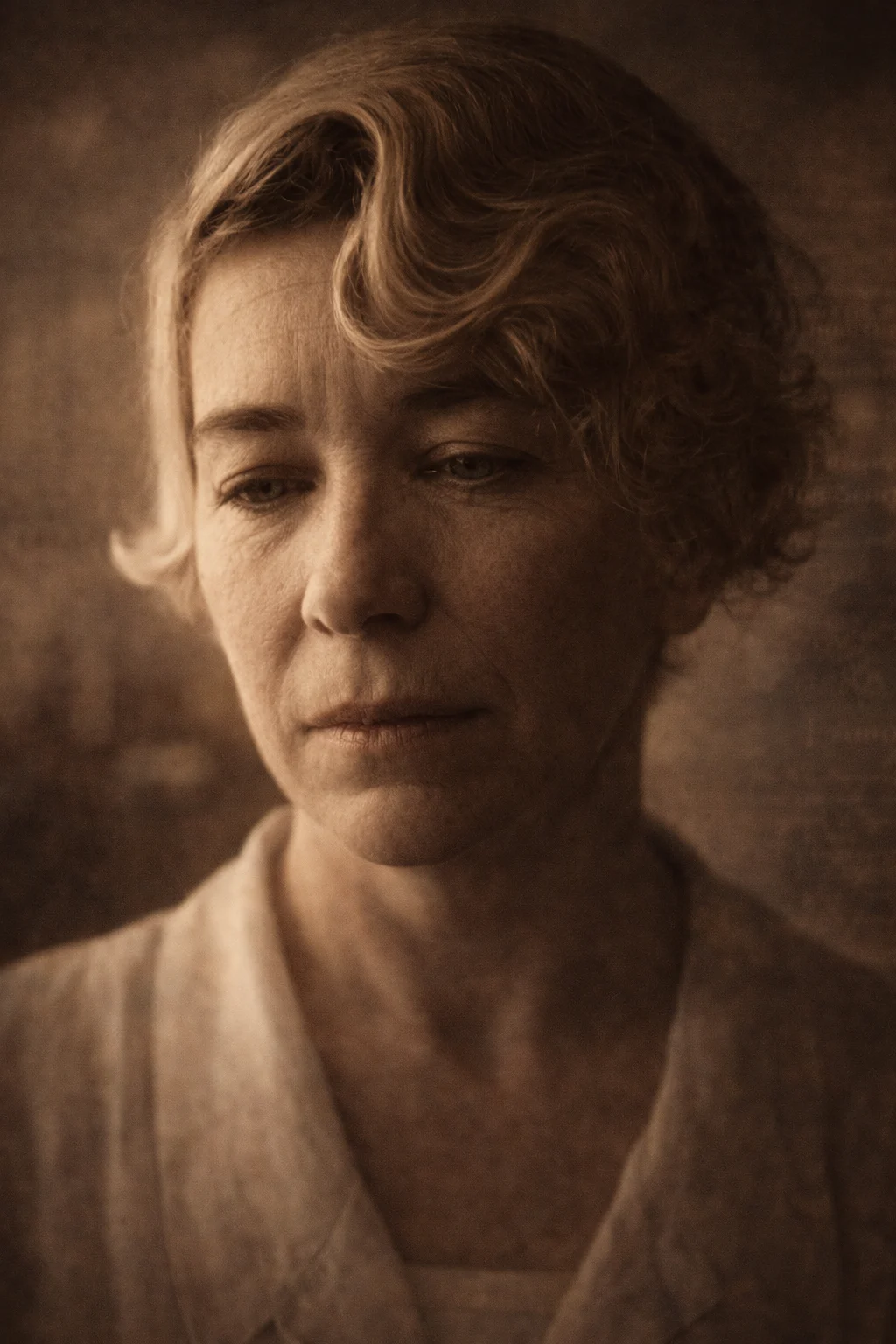
Storni also wrote for the theater. In 1927, El amo del mundo, a play centered on power between men and women, reached the stage.
Its reception was hostile, and the production was withdrawn after only a small number of performances. Some critics attacked both the work and its author, challenging her representation of male behavior and female autonomy.
The failure wounded her deeply. It was not merely a professional setback. It confirmed that the space granted to a female writer remained restricted: she might discuss romantic suffering, but publicly examining who held power inside a relationship was more dangerous.
Storni continued writing drama, particularly works for children, but El amo del mundo demonstrated the price of directly challenging her era’s expectations.
Breaking her own poetic form
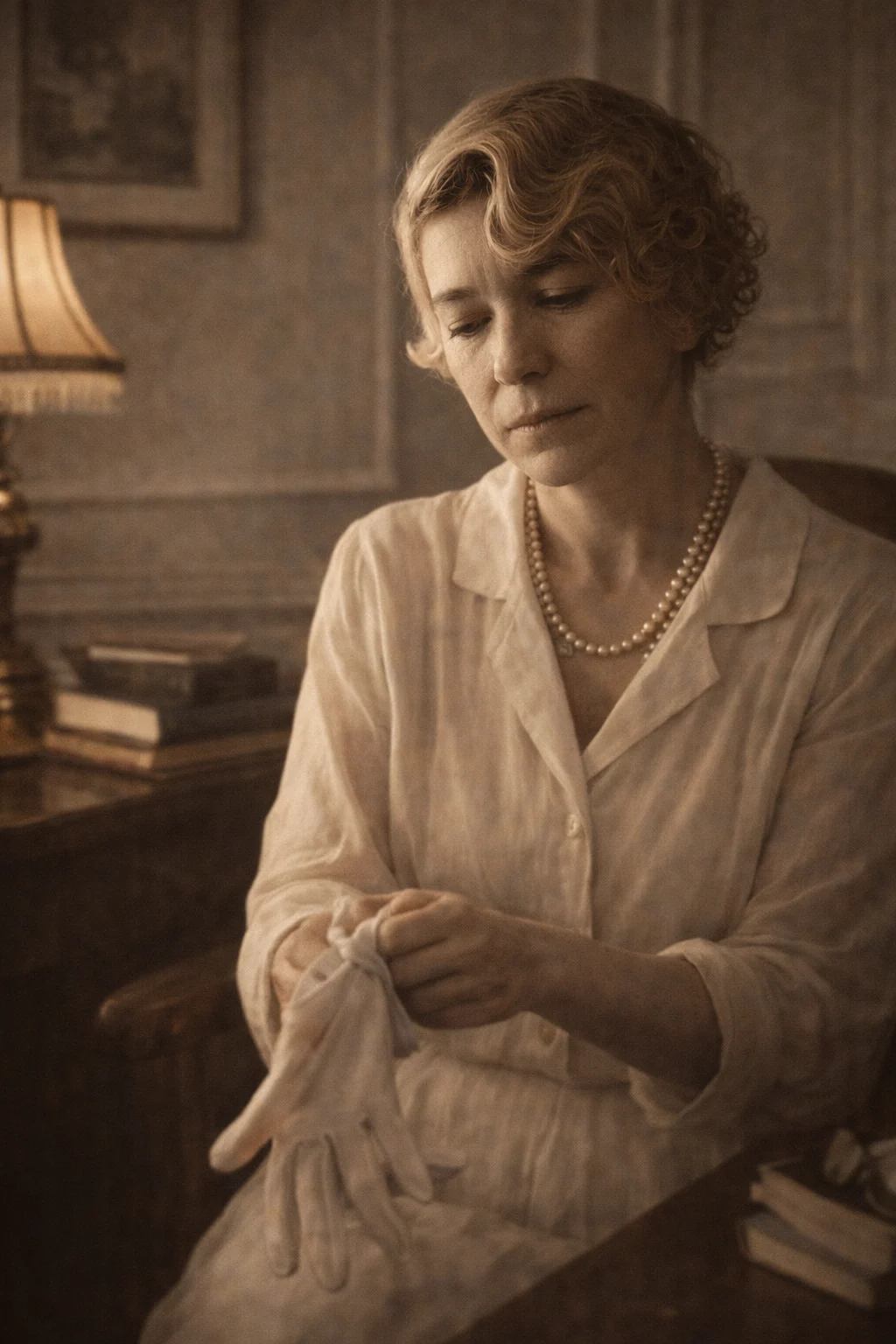
During the 1930s, Storni’s poetry changed. She moved away from the confessional tone and conventional structures that had characterized her early collections.
In Mundo de siete pozos, published in 1934, the human body and the city appear fragmented, strange, and almost mechanical. In Mascarilla y trébol, released in 1938, she experimented with what she called “antisonnets”—compositions that conversed with the traditional sonnet while breaking part of its logic.
This evolution contradicts the notion that Storni always wrote the same sentimental poetry. She understood the danger of repetition. She revised her language and searched for new methods of representing a reality that had also become increasingly unstable.
Her later poetry could be difficult, abrasive, and disorienting. She no longer wished to conform to the image critics and readers had created for her.
Even after achieving recognition, she was still fighting to avoid imprisonment within a voice that no longer belonged to her.
Illness
In 1935, Storni discovered a tumor in one of her breasts. She underwent surgery and a mastectomy.
The experience profoundly changed her relationship with her body. Cancer treatments were limited, and surgery could be physically and emotionally devastating. Storni feared the disease would return and became increasingly private about her health.
Some biographies have attempted to explain her entire final period solely through cancer. That interpretation is insufficient. Financial exhaustion, anxiety, loneliness, and accumulated personal losses also weighed upon her.
In January 1938, her friend Horacio Quiroga died by suicide after learning that he had an incurable illness. Leopoldo Lugones also died by suicide soon afterward. Storni wrote about those deaths and the unsettling proximity they appeared to establish.
That year, she participated in a gathering in Montevideo alongside prominent writers including Gabriela Mistral and Juana de Ibarbourou. There she spoke publicly about her life and literary vocation.
She was still publishing, traveling, and working. She had not abandoned the world. Her equilibrium, however, was becoming increasingly fragile.
The final room
In October 1938, Storni traveled alone to Mar del Plata and stayed at a boarding house. From there, she wrote letters and sent her final poem, “Voy a dormir,” to the newspaper La Nación.
The poem takes the form of a farewell. Its speaker asks a nursemaid to prepare a bed of earth and moss and requests that, if someone calls, they be told not to persist.
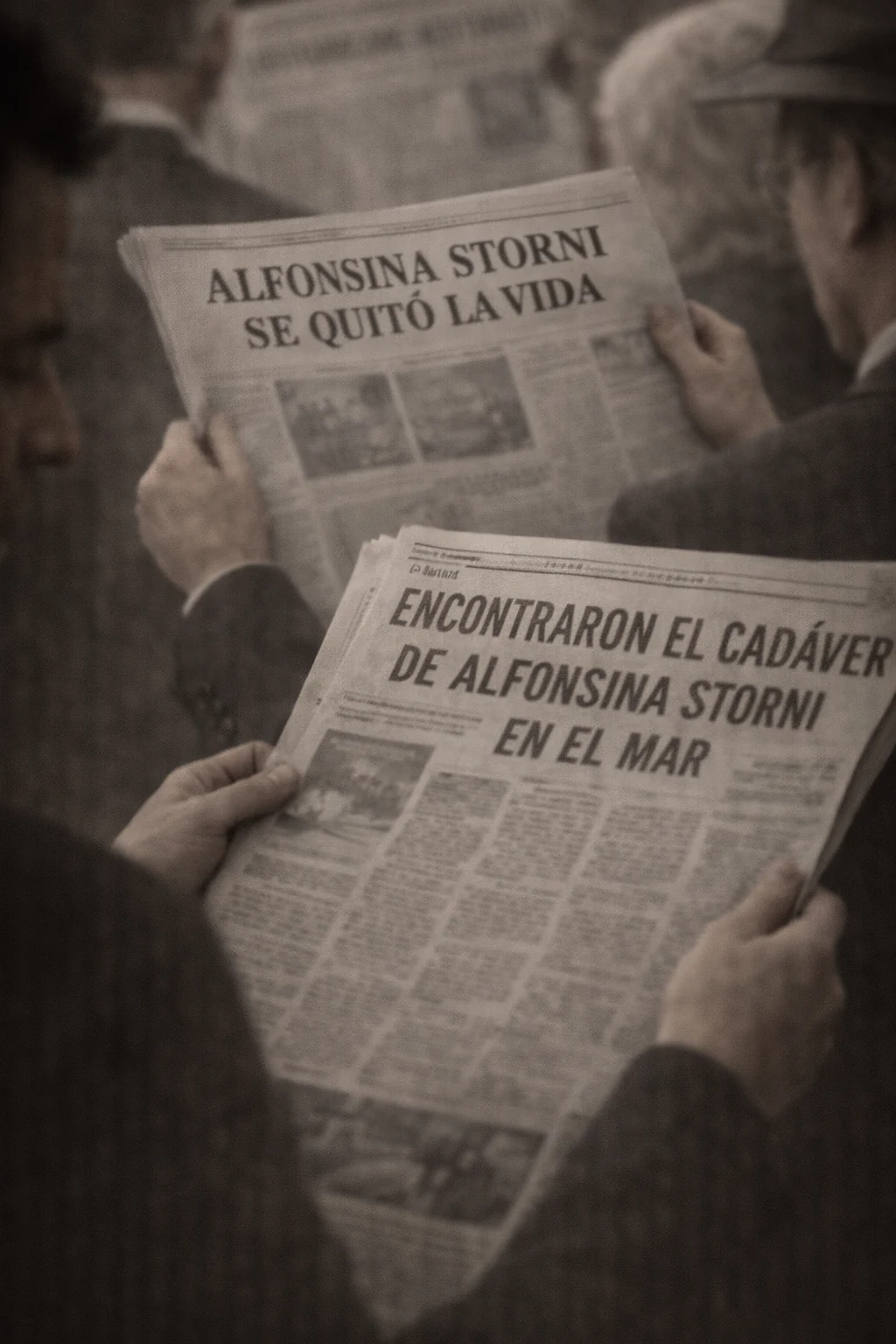
During the early hours of October 25, Storni left her lodgings. Her body was found in the sea several hours later.
She was forty-six.
The exact details of her death cannot be completely reconstructed. Contemporary reporting and later historical investigation indicate that she died by suicide, probably after entering or jumping into the water near a breakwater.
The image of a woman walking slowly into the sea largely belongs to the later poetic retelling, especially the song Alfonsina y el mar, written decades afterward by Ariel Ramírez and Félix Luna.
The song transformed her death into a beautiful and peaceful scene. The reality had been far more painful.
The woman behind the song
“Voy a dormir” was published by La Nación after her death. The proximity between the poem and her suicide led many later readers to treat her entire body of work as though it had been one long farewell.
Alfonsina Storni wrote far more than her ending.
She wrote about women working for lower wages. About women who desired without asking permission. About mothers condemned for raising children alone. About domestic life, aging, the city, and bodies subjected to the judgment of others.
She also built a career when literary institutions were designed primarily for men. She financed her first book, carried copies to sell, taught classes, and produced journalism to support her family.
She was not a passive woman carried away by the sea. For decades, she advanced against forces attempting to push her back into a smaller place.
Her poetry does not ask to be remembered only for the manner of her death. It demands recognition of how she lived: working, raising a child, teaching, and writing in an era that still debated whether a woman had the right to speak in her own voice.
The sea became part of her legend.
Her struggle on solid ground was the true story.
References
- Biblioteca Nacional Mariano Moreno. (n.d.). Alfonsina Storni: Materials and collections. National Library of the Argentine Republic. https://www.bn.gov.ar/
- Delgado, J. (2001). Alfonsina Storni: Una biografía. Planeta.
- Méndez, M. A. (2004). Alfonsina Storni: Women at work. Peter Lang.
- Phillips, R. (1975). Alfonsina Storni: From poetess to poet. Tamesis Books.
- Salomone, A. N. (2006). Alfonsina Storni: Mujeres, modernidad y literatura. Corregidor.
- Storni, A. (1999). Obras: Poesía (D. Muschietti, Ed.). Losada.
- Storni, A. (2002). Nosotras y la piel: Selección de ensayos (M. A. Méndez, P. Vallejo, & M. E. Mizraje, Eds.). Alfaguara.
More from this collection
Sara Montiel: The Woman Who Returned from Hollywood to Transform Desire in Spanish Cinema
Read story →
María Félix: The Woman Who Chose to Conquer Europe Rather Than Obey Hollywood
Read story →