In this storyOpen index
Gilles de Rais: The Marshal Who Descended from Glory into Horror
A Marshal of France who fought alongside Joan of Arc and became one of the most disturbing and disputed names of the Middle Ages.

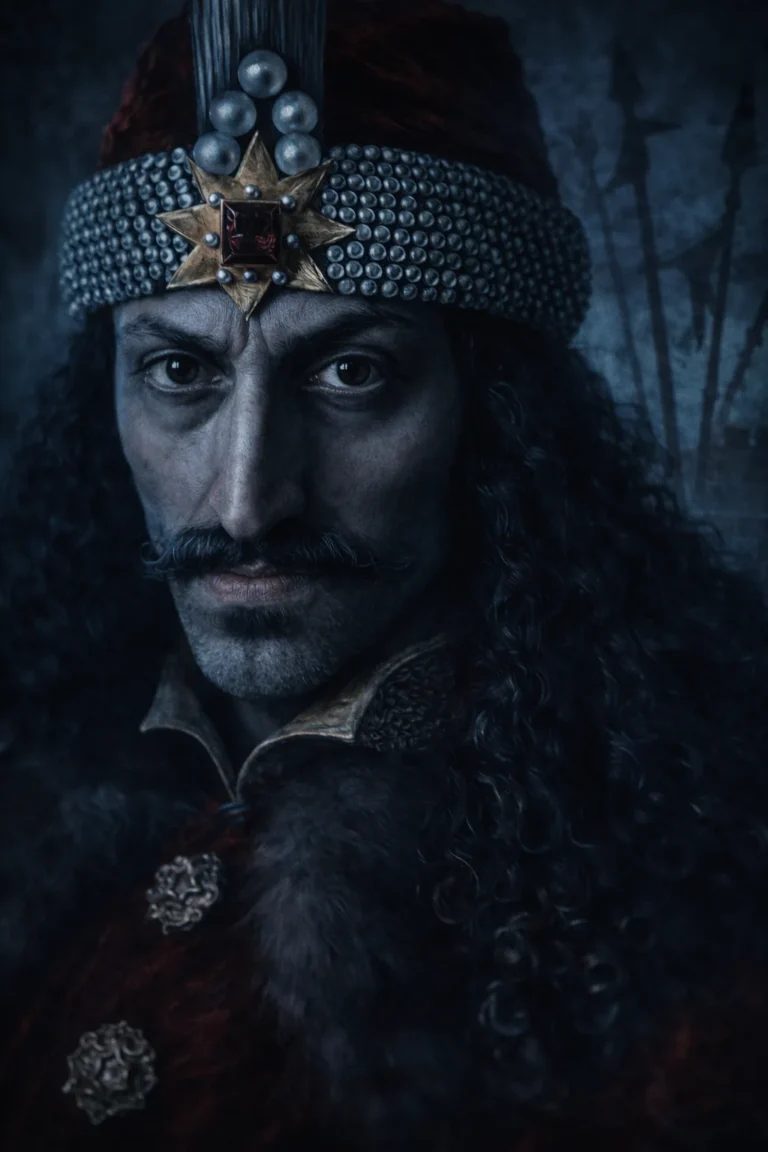
In July 1429, Gilles de Rais was in Reims as part of the company attending the coronation of Charles VII. He had fought alongside Joan of Arc and had just received the title of Marshal of France, one of the kingdom’s highest military distinctions. Eleven years later, he stood before a court accused of abducting and murdering children, summoning demons, and committing a succession of crimes whose true scale remains disputed.
Few medieval figures travelled such a bewildering distance between public glory and horror.
Gilles de Rais: The Marshal Who Descended from Glory into Horror
Discover this story on our YouTube channel.
A life told through places and turning points

Enter the archive
An authentic object preserved by a cultural institution brings us closer to the world behind this life.
- Collection
- Wikimedia Commons
- Rights
- Public domain
http://jeriwesterson.typepad.com/.shared/image.html?/photos/uncategorized/gilles_de_rais.jpg
An Heir Raised to Rule
Gilles de Montmorency-Laval, better known as Gilles de Rais, was born around 1405 at the castle of Champtocé, into a family belonging to the French high nobility (Cazacu, 2005). Orphaned during childhood, he was raised by his maternal grandfather, Jean de Craon, a powerful and ambitious man who managed his estates and negotiated his future.
Gilles inherited castles, lands, and revenues across Brittany, Anjou, Maine, and Poitou. His marriage to Catherine de Thouars in 1420—following a controversial union initially rejected on grounds of kinship—further enlarged his possessions.
He grew up in a society in which noblemen could maintain private armies, impose their authority upon peasants and servants, and settle disputes through violence. He did not exist at the margins of the feudal system. He was one of its beneficiaries.

Alongside Joan of Arc
In 1429, during a decisive phase of the Hundred Years’ War, Gilles joined the forces supporting Joan of Arc (DeVries, 1999; Pernoud & Clin, 1998). He participated in the operations that raised the siege of Orléans and in the Loire campaign that opened the road to Reims.
Later tradition transformed him into something resembling Joan’s personal protector. The surviving evidence establishes only that they served in the same army and shared several important moments of the campaign. There is no proof of an intimate friendship or that Joan knew of any criminal conduct on his part.
After the coronation of Charles VII, Gilles received the title of Marshal of France (Cazacu, 2005). He was only in his twenties and appeared destined for an honoured place in French history.
The Spectacle That Consumed a Fortune
Following Joan’s capture in 1430 and her execution the next year, Gilles gradually withdrew from military affairs. He retained his titles but began spending extraordinary amounts on servants, musicians, priests, banquets, and religious ceremonies.
One of the lesser-known episodes of his life was his involvement in a performance known as The Mystery of the Siege of Orléans, an enormous theatrical spectacle recreating the liberation of the city. The production required numerous performers, elaborate costumes, scenery, and food. Gilles paid a considerable part of its expenses.
He also established a private chapel dedicated to the Holy Innocents, complete with singers, clergy, and valuable liturgical objects. The choice of name appears disturbing in light of the later accusations, although it proves no hidden intention by itself.
His spending became so excessive that he began selling castles and estates (Cazacu, 2005). In 1435, his family persuaded Charles VII to prohibit further sales of his lands. The royal order failed to stop the complete erosion of his fortune.
Gilles also turned to alchemists and supposed practitioners of occult knowledge, hoping to obtain gold or recover his wealth. One of them was an Italian named Francesco Prelati, who claimed that he could communicate with an entity called Barron. During the trial of 1440, these experiments would be presented as evidence of heresy and demonic dealings.

The Children Who Disappeared
During these years, rumours began circulating around Gilles’s castles. Poor families reported children missing after they had been seen near his residences or enticed with promises of food, clothing, or employment.
Most of these families possessed no political influence. In fifteenth-century society, the disappearance of a peasant child did not necessarily mobilize the authorities, particularly when suspicion pointed toward a powerful lord.
The trial documents contain statements from parents and servants, together with confessions made by several of Gilles’s associates (Bataille, 1991; Bossard, 1886). Their accounts describe a prolonged pattern of abduction and murder. The exact number of victims, however, cannot be established. Figures of 140, 200, or even more children, frequently repeated in later works, derive from estimates, imprecise statements, and subsequent elaborations rather than a verifiable list.
Calling Gilles a “serial killer” may help a modern reader understand the nature of the accusations, but the term belongs to a period and a system of criminology that did not exist in the fifteenth century.
The Incident That Set Justice in Motion
Gilles was not initially arrested because of one family’s complaint.
The event that precipitated his downfall occurred in May 1440, when he entered the church of Saint-Étienne-de-Mer-Morte with armed men and seized the cleric Jean Le Ferron during a dispute over a castle he had sold (Cazacu, 2005). The action violated ecclesiastical immunity and challenged the authority of both the Church and Duke John V of Brittany.
This is one of the case’s most revealing details: rumours about missing children had circulated for some time, but the political and judicial machinery moved decisively only after Gilles attacked the rights, property, and authority of powerful men.
Jean de Malestroit, bishop of Nantes, opened an ecclesiastical investigation. At the same time, the authorities of the Duchy of Brittany began a secular proceeding. Gilles was arrested in September 1440 and taken to Nantes.

A Trial of Evidence, Interests, and Coercion
The case was heard under two jurisdictions. The ecclesiastical court considered accusations of heresy, demonic invocation, and sexual crimes; the secular court dealt primarily with abduction and murder.
Gilles initially denied the charges, challenged the authority of the judges, and insulted them. He was excommunicated. Later, when threatened with torture, he agreed to confess. Torture was apparently not formally applied before the confession, but the threat itself was a powerful means of coercion.
His servants Henriet Griart and Étienne Corillaut, known as Poitou, gave detailed testimony. Relatives of missing children also appeared before the judges. Gilles eventually acknowledged numerous crimes in public and asked forgiveness from God and the victims’ families.
The proceedings fell far short of modern standards of justice. The judges combined verifiable offences with beliefs concerning demons and magic; confessions were obtained under threat; and both the Duke of Brittany and other figures connected with the trial had economic interests in the accused man’s estates.
Yet those interests do not automatically invalidate all the evidence. The convergence of numerous statements, the testimony of Gilles’s own associates, the pattern of disappearances, and his confession have led most historians to regard the central accusations as credible, while rejecting inflated victim totals and remaining cautious about particular details.
Death and Public Repentance
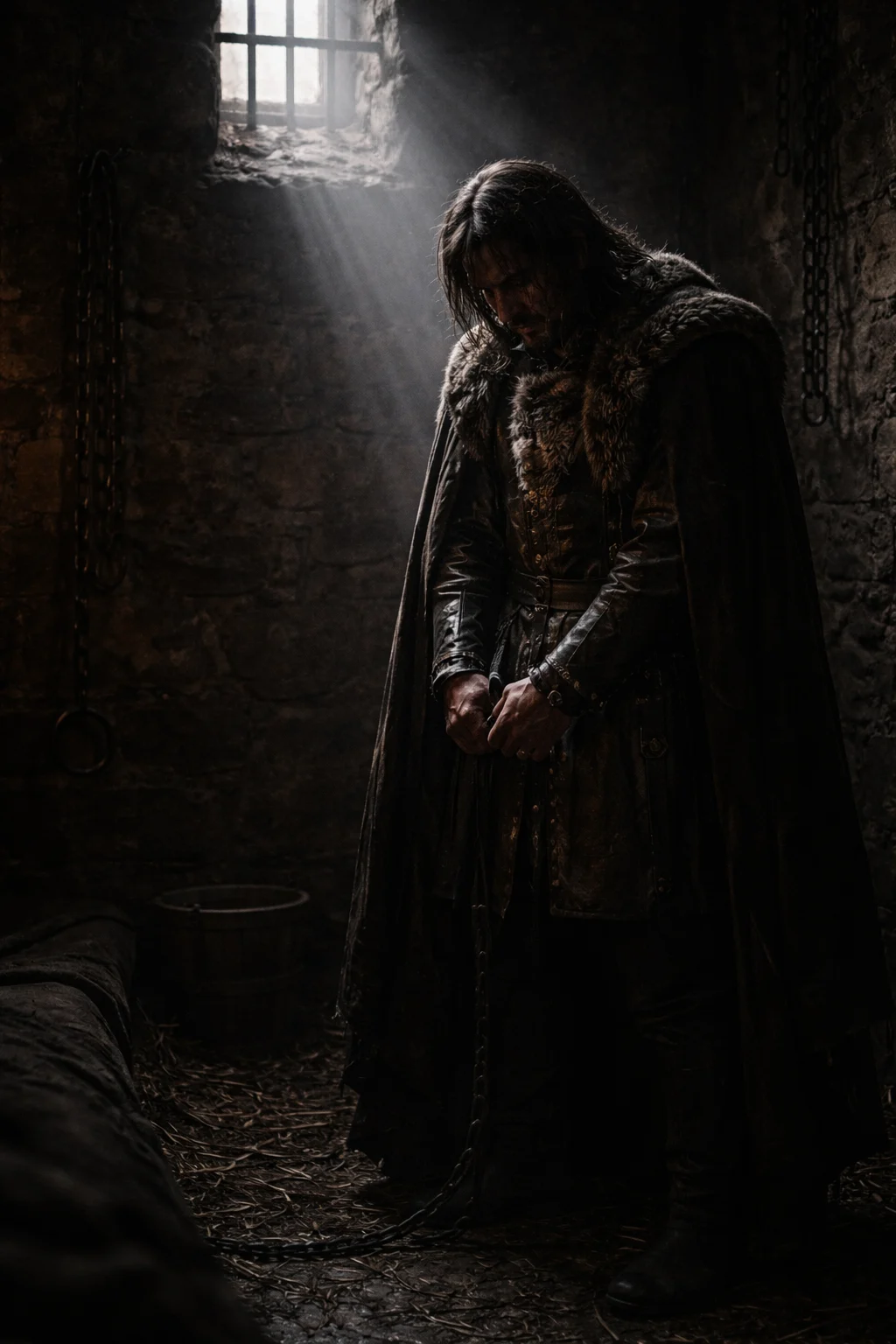
Gilles de Rais was condemned to death along with two of his servants (Bataille, 1991). On October 26, 1440, he was hanged in Nantes. His body was placed upon a fire, although contemporary accounts indicate that it was removed before being completely consumed and released for burial.
Before his execution, he expressed repentance and asked the assembled crowd to pray for him. That carefully staged religious ending did not erase the accusations, but it added a final contradiction to his story: the man portrayed as a monster died appealing to Christian mercy.
Guilty—or the Victim of a Conspiracy?
Beginning in the twentieth century, several writers attempted to rehabilitate Gilles. In 1992, a group of authors, lawyers, and specialists organized a symbolic “retrial” in France and declared him innocent. It was not an official court, and its conclusion carried no legal authority.
Gilles’s defenders point to procedural irregularities, the threat of torture, and the territorial gains made by his enemies. These are legitimate objections when evaluating the case. Claiming that the entire prosecution was a conspiracy, however, requires dismissing a substantial body of testimony from people with no apparent interest in acquiring his property.
The most cautious conclusion is neither to accept every detail of the medieval prosecution nor to absolve him completely. It is to recognize that a succession of serious crimes probably occurred under the protection of his rank, while his prosecution was also influenced by political, religious, and economic interests.
The False Bluebeard
It is frequently claimed that Gilles de Rais directly inspired Bluebeard, the tale published by Charles Perrault in 1697. There is no solid evidence to support that assertion (Cazacu, 2005; Perrault, 1697).
Perrault’s character murders his wives, whereas Gilles was accused of murdering children. The identification of the two developed much later, particularly during the nineteenth century, when Breton folklore, Romantic literature, and a fascination with crime transformed the marshal into a historical incarnation of Bluebeard.
That association demonstrates how myth operates: it takes a real figure, strips away uncertainty, and converts the person into an easily recognizable symbol.
The Privilege That Concealed the Horror
Gilles de Rais remains disturbing not only because of the crimes attributed to him, but also because of the world that allowed silence to surround them.
He was a soldier, marshal, patron, owner of castles, and the campaign companion of a saint. His prestige does not contradict the horror; it may have been precisely what protected him for years. Most of the victims belonged to poor families, while the suspect stood behind the material and legal walls of aristocratic privilege.
His history requires us to separate three elements: the documented man, the accused reconstructed through a medieval trial, and the monster created by centuries of legend. Between them lies an uncomfortable certainty: when power determines who deserves to be heard, some disappearances take far too long to become crimes.


Sources and further reading
References
Bataille, G. (1991). The trial of Gilles de Rais. Amok Books.
Bossard, E. (1886). Gilles de Rais, maréchal de France, dit Barbe-Bleue (1404–1440), d’après des documents inédits. Honoré Champion.
Cazacu, M. (2005). Gilles de Rais. Tallandier.
DeVries, K. (1999). Joan of Arc: A military leader. Sutton Publishing.
Pernoud, R., & Clin, M.-V. (1998). Joan of Arc: Her story (J. duQuesnay Adams, Trans.). St. Martin’s Press.
Perrault, C. (1697). Histoires ou contes du temps passé. Claude Barbin.