In this storyOpen index
Paul Cézanne: The Painter Who Broke Perspective to Teach Us Another Way of Seeing
His tilted tables and unstable apples were not mistakes: they were opening a doorway into modern art.
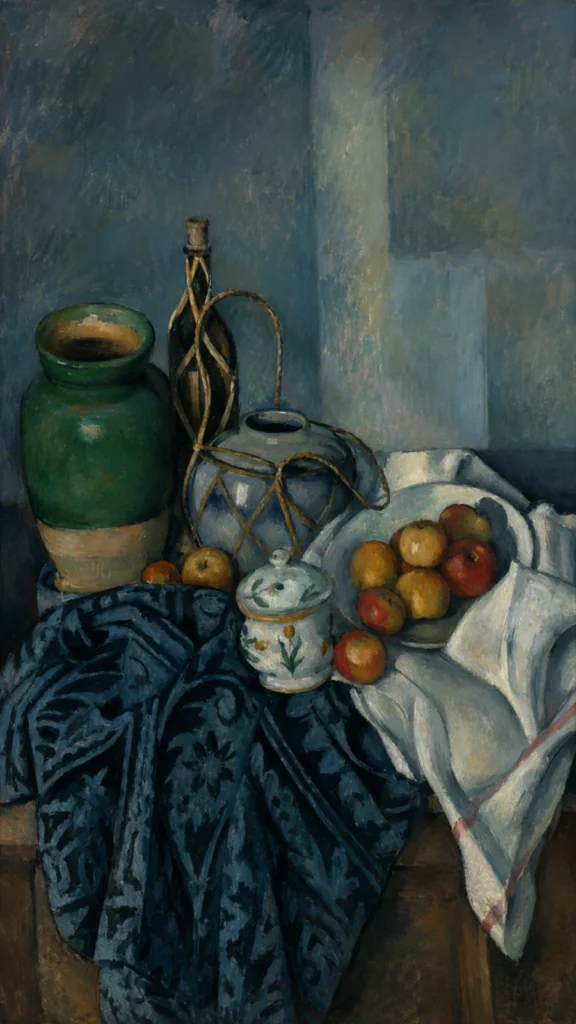
Paul Cézanne’s tables appear to tilt. Fruit seems ready to roll away, the edges of tablecloths fail to align, and some objects are viewed from above while others face the observer directly.
For years, these irregularities were interpreted as mistakes made by a painter unable to master perspective. Cézanne, however, knew what he was doing. He did not want to represent the world as a camera would from a single fixed position. He was attempting to show how the eyes actually explore it: moving, comparing, and accumulating different impressions within one image.
By breaking traditional perspective, he transformed a table covered with apples into one of the entrances to modern art.
Yet the man who changed painting spent much of his life being dismissed as clumsy, eccentric, and almost incomprehensible.
Paul Cézanne: another way of seeing
Discover this story on our YouTube channel.
A life told through places and turning points
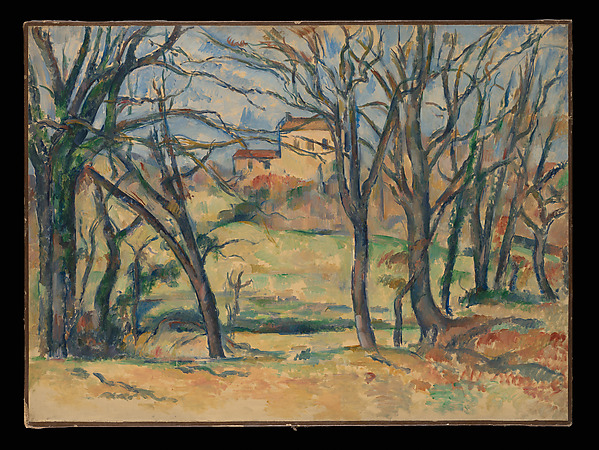
Enter the archive
An authentic object preserved by a cultural institution brings us closer to the world behind this life.
- Collection
- The Metropolitan Museum of Art
- Rights
- Public Domain / Open Access
Robert Lehman Collection, 1975
Three Friends Who Dreamed of Escaping
Paul Cézanne was born on January 19, 1839, in Aix-en-Provence in southern France. His father, Louis-Auguste Cézanne, had begun as a hat maker and merchant before becoming a banker. He expected his son to pursue a respectable and secure profession.
During his school years, Cézanne formed a close friendship with Émile Zola and Jean-Baptistin Baille. The three young men walked through the Provençal countryside, swam, discussed literature, and dreamed of escaping provincial life.
Zola moved to Paris and repeatedly encouraged Cézanne to follow him. The future painter, still under his father’s authority, began studying law in Aix while also attending drawing classes.
He finally abandoned his legal studies and traveled to Paris in 1861. There, he discovered that the artistic world he had imagined was not prepared to welcome him.
The École des Beaux-Arts rejected his application. His paintings were repeatedly excluded from the official Salon. Cézanne temporarily returned to Aix and worked at his father’s bank, but he could not surrender painting.
He went back to Paris determined to continue, even if almost no one understood what he was attempting.
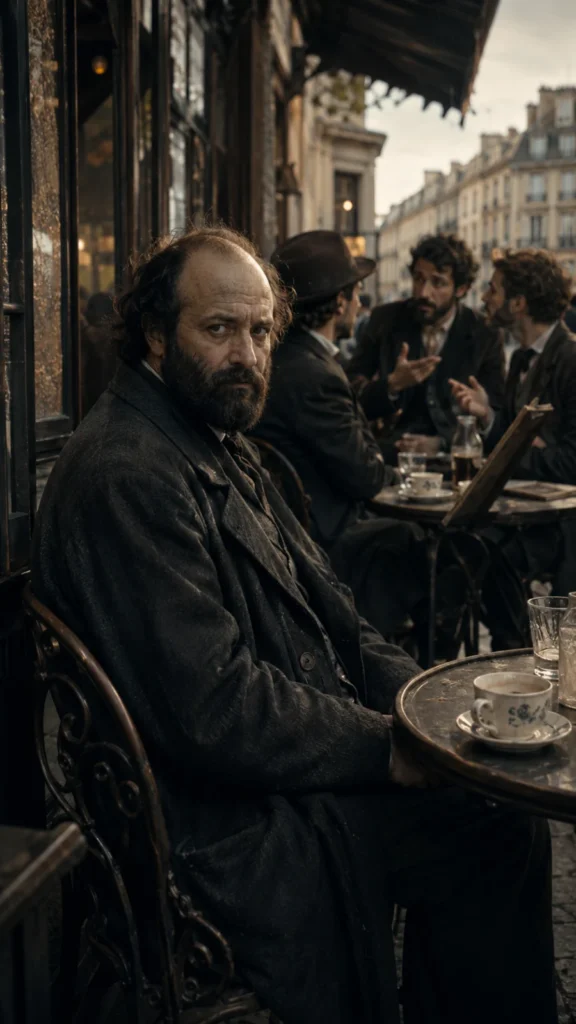
A Violent and Dark Kind of Painting
Cézanne’s early works were very different from the luminous landscapes for which he later became known. He used dark colors, applied paint in heavy layers, and depicted dramatic, erotic, or disturbing scenes.
His brushwork possessed an almost aggressive energy. He even used a provocative expression to describe this manner of painting. Critics considered it crude and uncontrolled.
In Paris, he met Camille Pissarro, who became a decisive influence. Pissarro encouraged him to work directly before the landscape, lighten his palette, and observe relationships between colors carefully.
Cézanne participated in the first Impressionist exhibition in 1874 and again in 1877. He never completely belonged to the movement, however. He shared the Impressionists’ interest in direct observation and atmospheric effects, but he was searching for something different.
Monet wanted to capture fleeting changes in light. Cézanne wanted to uncover a stable structure beneath those changes.
He hoped to make the immediate experience of Impressionism solid and enduring.
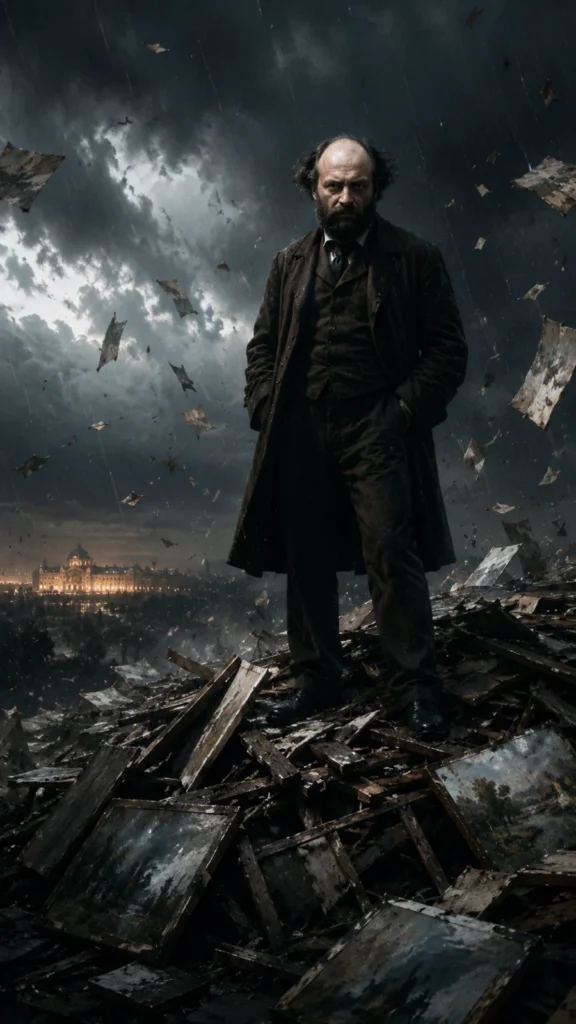
Hortense, the Hidden Son, and a Double Life
In the late 1860s, Cézanne met Hortense Fiquet, a young bookbinder who also worked as a model. They began a relationship, and their son Paul was born in 1872.
For years, Cézanne concealed the existence of Hortense and the child from his father, fearing the loss of his family allowance. The couple experienced financial hardship and frequent separations while the painter moved between Paris and Provence.
Hortense appears in numerous portraits, usually serious and motionless. Cézanne was not trying to capture a passing emotion or flatter his sitter. He studied the head, body, and clothing as structures created through color.
Their relationship was complicated. They married in 1886, shortly before the death of Cézanne’s father. The family inheritance finally gave the artist financial independence. He no longer had to sell paintings to survive, allowing him to work with extraordinary slowness and obsession.
He could spend months on a portrait and abandon the canvas if he believed he had failed to achieve the necessary balance.
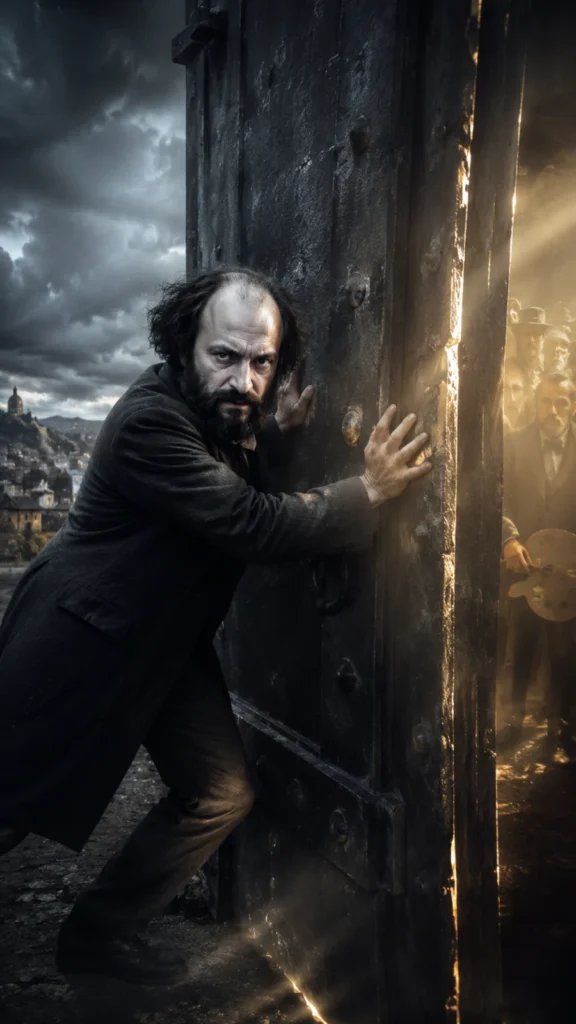
The Novel That May Have Destroyed a Friendship
That same year, Émile Zola published The Masterpiece, a novel about Claude Lantier, a painter who struggles to create a masterpiece, fails, and eventually kills himself.
It was long claimed that Cézanne recognized himself in the character and immediately ended his friendship with Zola. A brief, formal letter thanking the writer for sending the novel is often presented as evidence. It is the last surviving correspondence between them.
The story, however, is not completely certain.
Their relationship had already cooled because of distance, social differences, and their diverging careers. The novel’s protagonist also combined traits drawn from several artists. No surviving letter contains an explicit declaration from Cézanne that he felt betrayed or that The Masterpiece was the sole reason for their separation.
The contrast between the two men was nevertheless unmistakable. Zola had become a celebrated writer, while his old friend was still widely regarded as a failed painter. The novel transformed that fear into fiction: the artist who could never complete what he was seeking.
Cézanne continued working for another twenty years, as though answering with paintings.
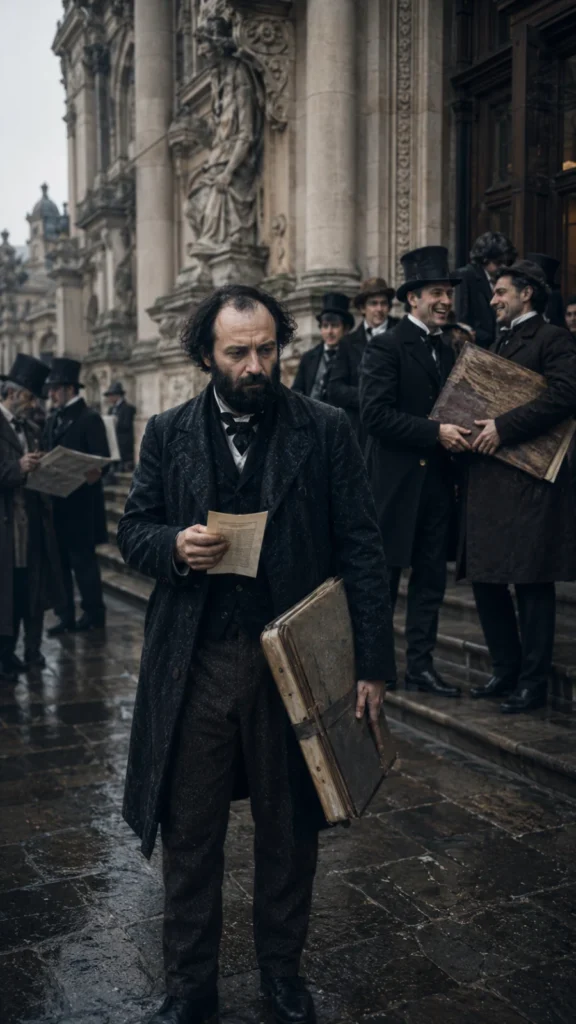
The Table That Could Not Exist
In his still lifes, Cézanne used simple objects: apples, pears, bottles, plates, pitchers, and tablecloths. He arranged these elements for long periods and continually changed their positions.
Fruit was particularly useful because it did not move like a person. Even so, it sometimes rotted before he completed the painting.
When Cézanne painted a table, he did not remain perfectly motionless. He looked at a bottle, then an apple, and then the edge of a plate. His head shifted slightly, and each object was observed from a different angle.
Instead of hiding those variations to create mathematically perfect perspective, he preserved them.
Some plates consequently appear to be viewed from above while bottles remain frontal. The lines of a table may fail to meet correctly, and the two sides of a pitcher may seem to belong to different viewpoints.
These were not merely errors. Cézanne was replacing the single viewpoint inherited from Renaissance perspective with a cumulative form of vision. Painting no longer pretended to be a stationary window onto the world. It displayed the process of looking.
Years later, Pablo Picasso and Georges Braque carried this idea much further. In Cubism, a face, guitar, or table could be seen simultaneously from several angles.
Cézanne’s fruit had begun to move the ground beneath European painting.
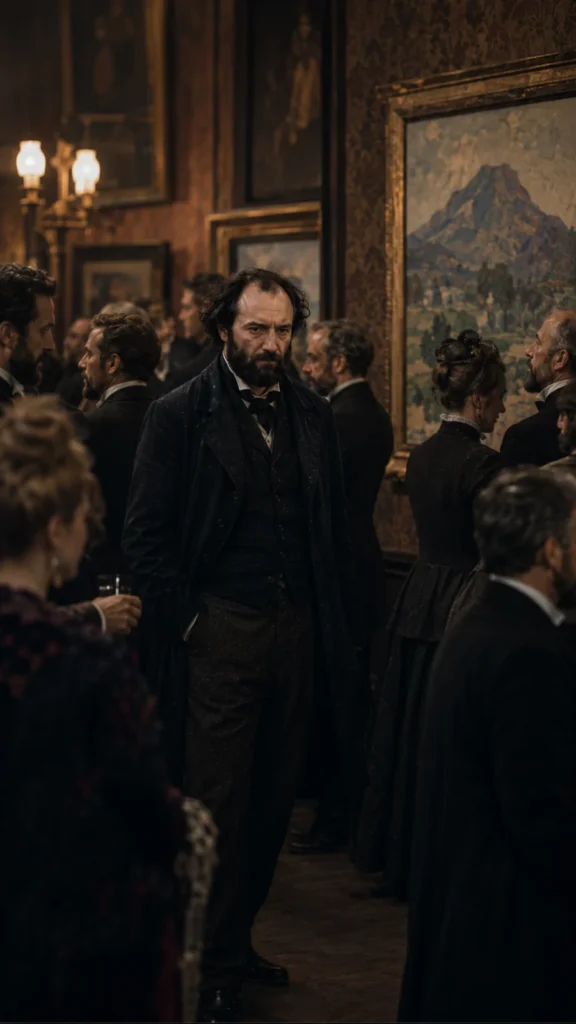
Building with Color
Cézanne did not always draw a closed outline and then fill it with paint. He constructed forms through small strokes of color placed beside one another.
A blue tone could make one area recede. An ocher or green could push another forward. Depth emerged through chromatic relationships rather than exclusively through traditional rules of perspective.
In a 1904 letter, Cézanne advised the young painter Émile Bernard to treat nature through the cylinder, sphere, and cone. The statement did not mean that everything should literally be reduced to geometric figures. It expressed his search for an elementary structure within nature.
That investigation is clearly visible in his many representations of Mont Sainte-Victoire, seen from the countryside surrounding Aix. Cézanne painted the mountain from different locations and in different media. It was not merely a landscape but a problem he never finished solving.
Each version reorganized the relationship among trees, houses, sky, rock, and distance.
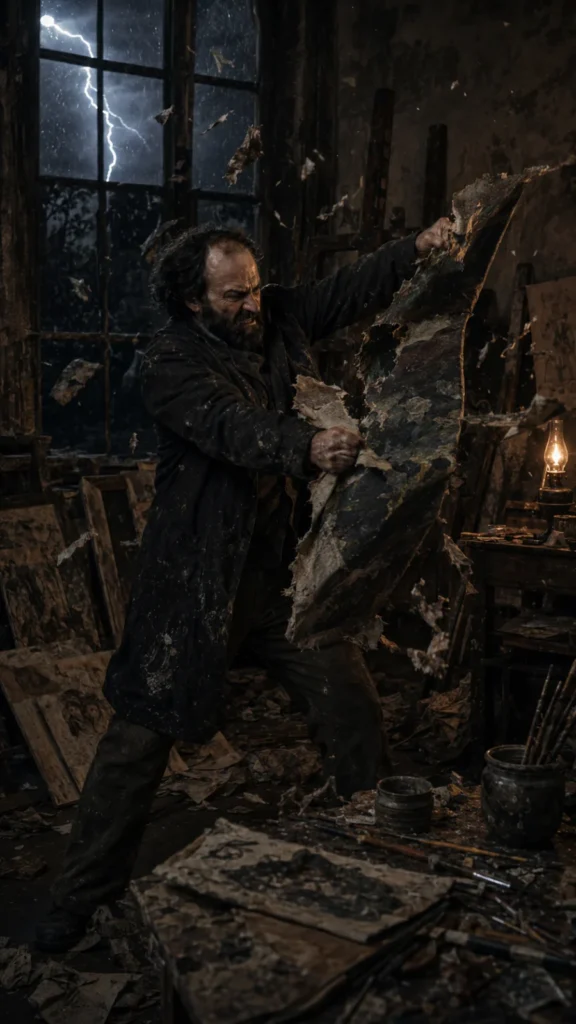
More Than One Hundred Sittings—and Still Unfinished
In 1895, the dealer Ambroise Vollard organized Cézanne’s first major solo exhibition in Paris. The show allowed a younger generation to discover his paintings and began transforming his reputation.
Vollard also sat for a portrait. He later claimed that he endured more than one hundred sessions, remaining so still that Cézanne once reprimanded him for slightly changing position.
When the painter finally stopped working, he still considered portions of the canvas incomplete. The anecdote comes from Vollard’s memoirs and may contain some exaggeration, but it reflects the extreme slowness of Cézanne’s method.
He was not merely pursuing a physical likeness. He wanted every part of the canvas to achieve equilibrium. A small alteration could force him to reconsider the entire composition.
The painting was not finished when the sitter had been represented correctly. It was finished only when all its colors supported one another.
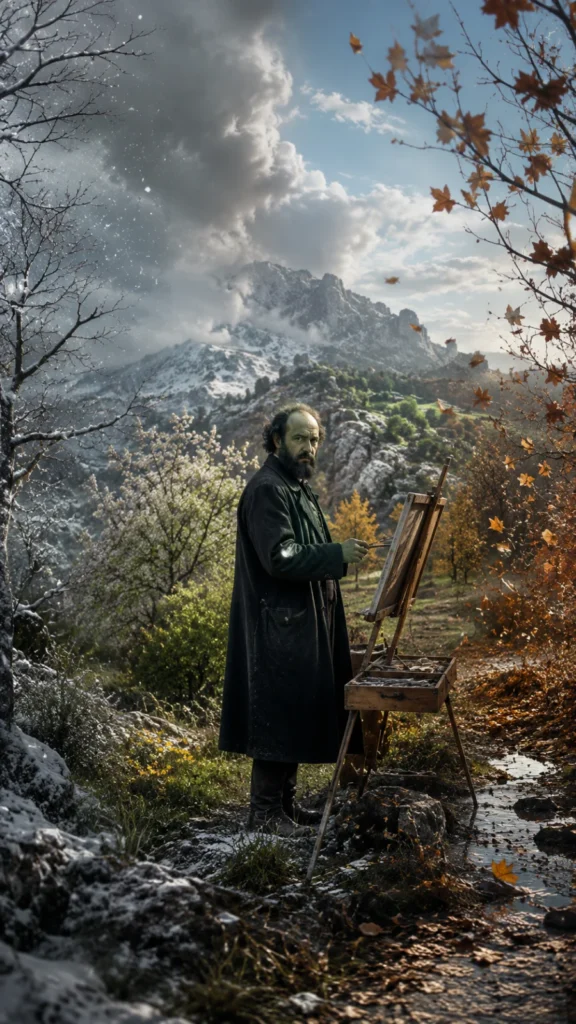
The Bathers Who Anticipated Another Century
During his final years, Cézanne worked on large compositions of bathers. He did not use nude models posing directly before him but relied on memories, earlier drawings, and reproductions of older artworks.
The figures did not always conform to naturalistic anatomy. They bent and merged with the trees until they became part of the landscape’s architecture. In paintings such as The Large Bathers, bodies, tree trunks, and sky form an almost geometric construction.
These works became crucial to Picasso, Henri Matisse, and Georges Braque. Cézanne showed that a painting could retain a connection to the visible world while freely reorganizing it.
An artist no longer had to choose between representation and abstraction. A painting could exist in the space between them.
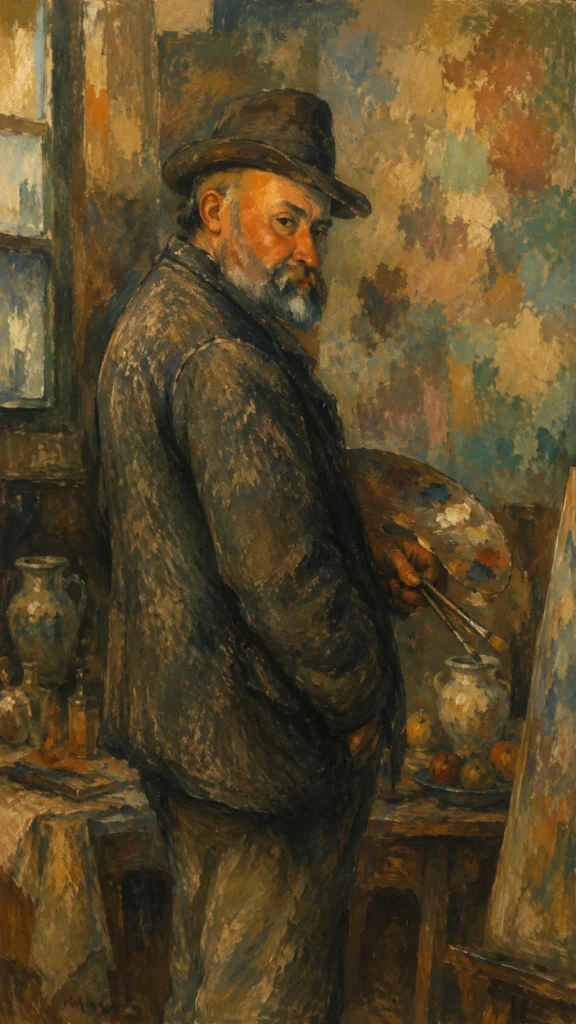
Dying While Still Looking
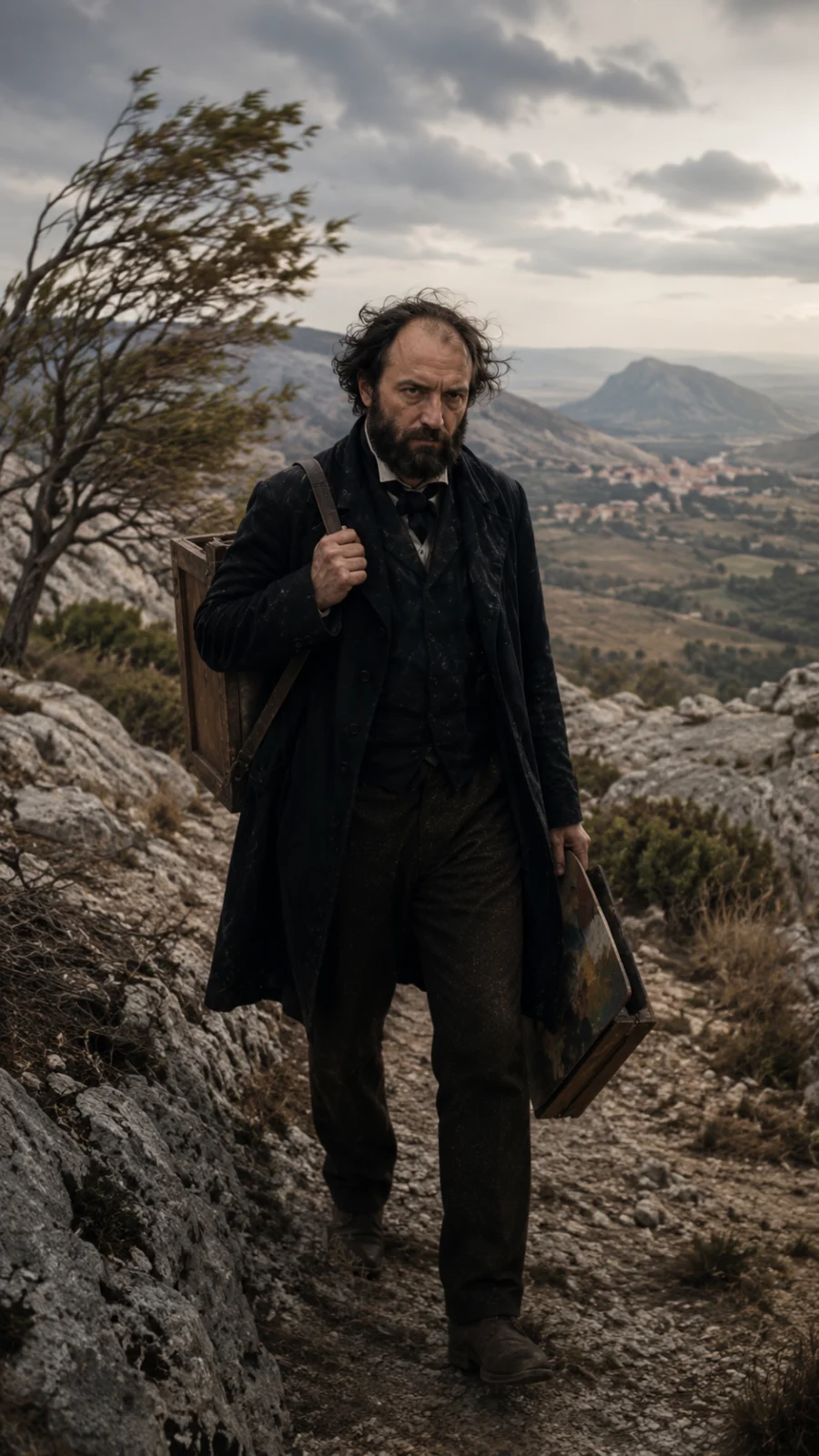
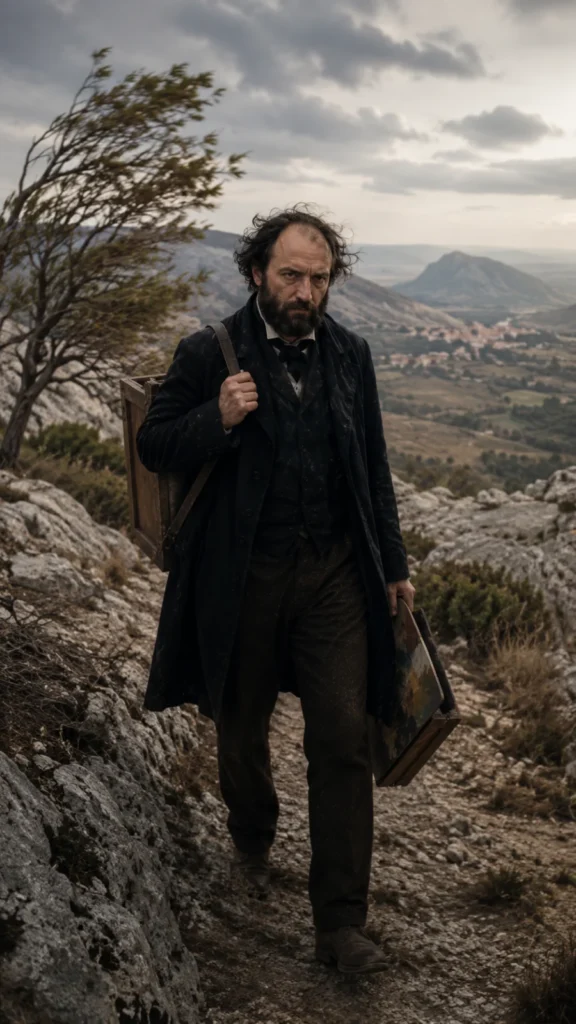
Cézanne continued working outdoors after the age of sixty. In October 1906, he was caught in a storm while painting near Aix. He remained in the rain for hours and eventually collapsed.
He was taken back to the city, but his health deteriorated. He died on October 22, 1906.
He was sixty-seven and still considered his investigation incomplete.
After his death, the large retrospective organized in Paris in 1907 deeply affected the new generation. The apparent clumsiness that critics had ridiculed began to be understood as a series of revolutionary decisions.
Cézanne did not destroy reality and replace it with geometry. He demonstrated that seeing reality already required reconstructing it.
His tilted tables, unstable apples, and repeated mountains revealed that vision never remains still. Every object contains more than one angle, more than one instant, and more than one possible form.
For years, people believed he did not know how to paint correctly.
In reality, he was teaching the next century how to see differently.
References
- Elderfield, J. (2017). Cézanne portraits. National Portrait Gallery.
- Fénéon, F. (2007). Paul Cézanne. Parkstone International.
- Metropolitan Museum of Art. (2004). Paul Cézanne (1839–1906). Heilbrunn Timeline of Art History. metmuseum.org
- National Gallery of Art. (n.d.). Paul Cézanne. nga.gov
- Rewald, J. (1986). Cézanne: A biography. Harry N. Abrams.
- Smith, P. (1996). Interpreting Cézanne. Tate Publishing.
- Vollard, A. (1984). Recollections of a picture dealer. Dover Publications.
More from this collection
Artemisia Gentileschi: The Painter Who Made Women the Protagonists of Their Own Stories
Read story →
Pablo Picasso: The Man Who Shattered the Way We See
Read story →