In this storyOpen index
Celia Cruz: The Voice That Left Cuba and Could Never Return
She lost the right to return to Cuba, yet transformed exile, discrimination, and sorrow into a public celebration of life.
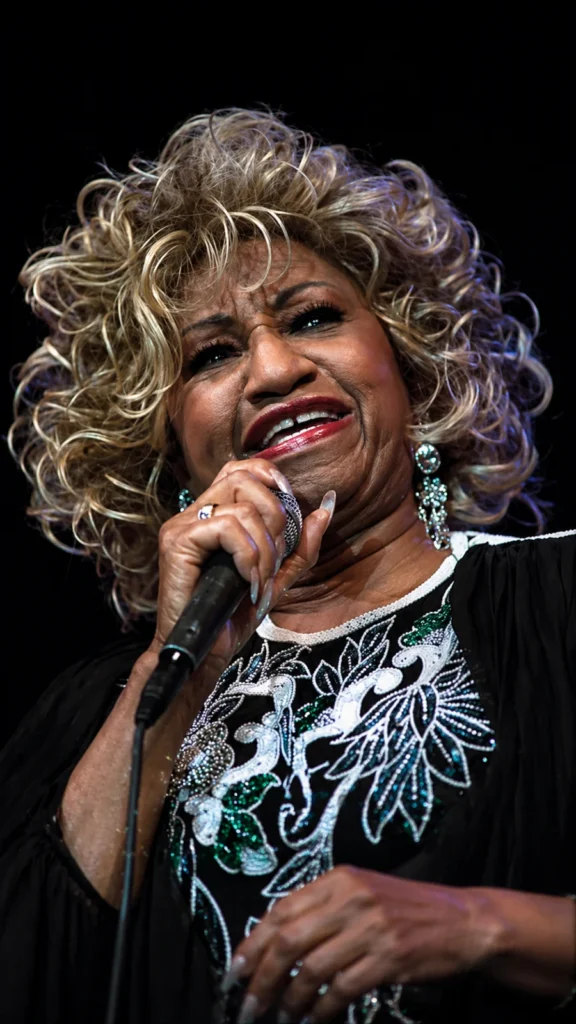
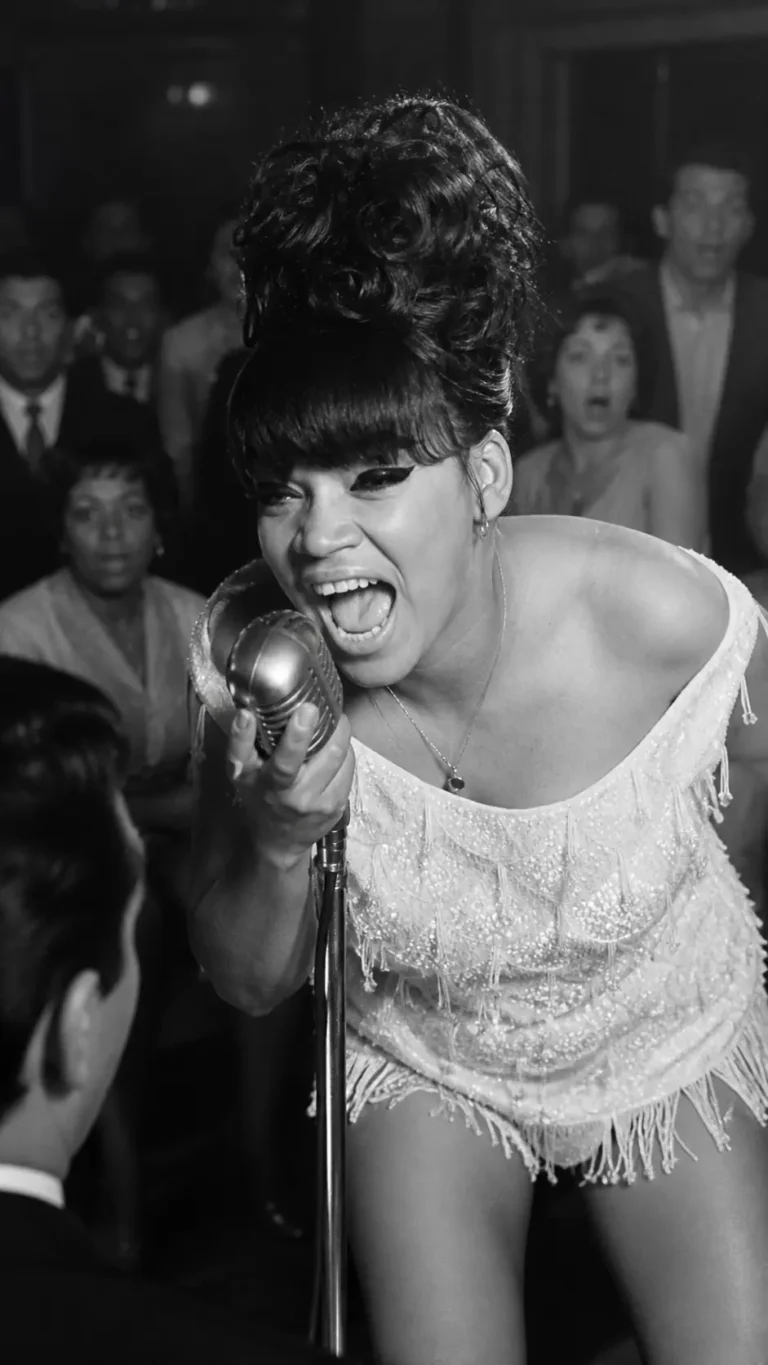
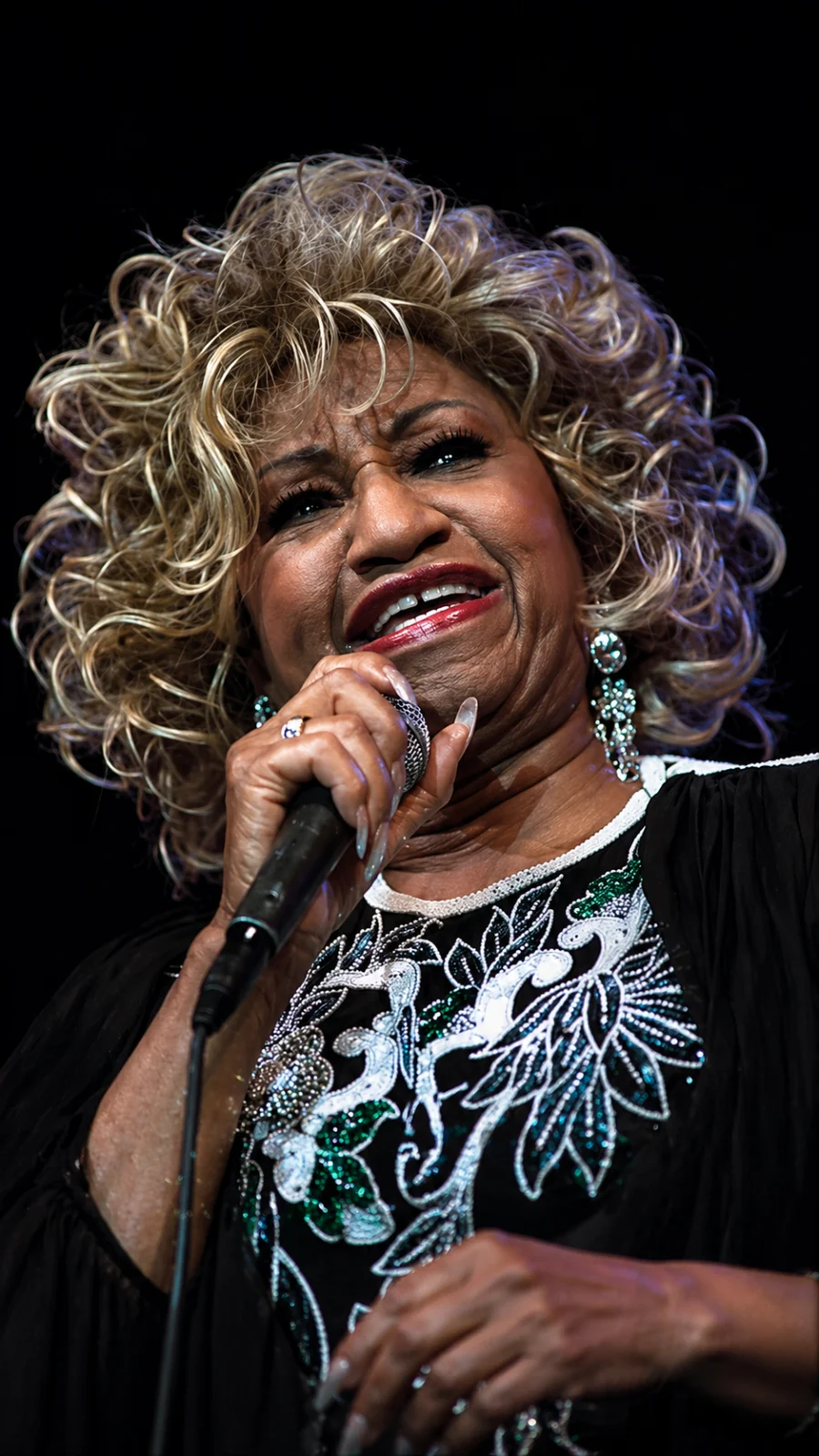
The woman who would one day sing before enormous crowds was initially met with suspicion when she joined the orchestra that was supposed to make her a star. Part of the audience wanted the previous singer to return. Some doubted the young Black woman with the deep voice and commanding presence who was trying to find a place in an industry dominated by men.
Celia Cruz had to earn even the right to be heard.
Years later, when her voice already represented Cuba on stages throughout the world, her country’s government denied her permission to return. She could not go home to say goodbye to her dying mother. She died without walking again through the streets where she had learned to sing.
Her story is not simply that of an entertainer who became famous. It is the story of a woman who lost her country without surrendering her identity and transformed exile, discrimination, and sorrow into a public celebration of life.
Celia Cruz: a Cuban voice no border could silence
Exile, the struggle to be heard, and joy transformed into resistance.
A life told through places and turning points
The Girl Who Sang Others to Sleep
Celia Caridad Cruz Alfonso was born in Havana on October 21, 1925, although some publications long placed her birth in 1924. She grew up in the Santos Suárez neighborhood in a large extended family and in a household filled with children, music, and constant movement.
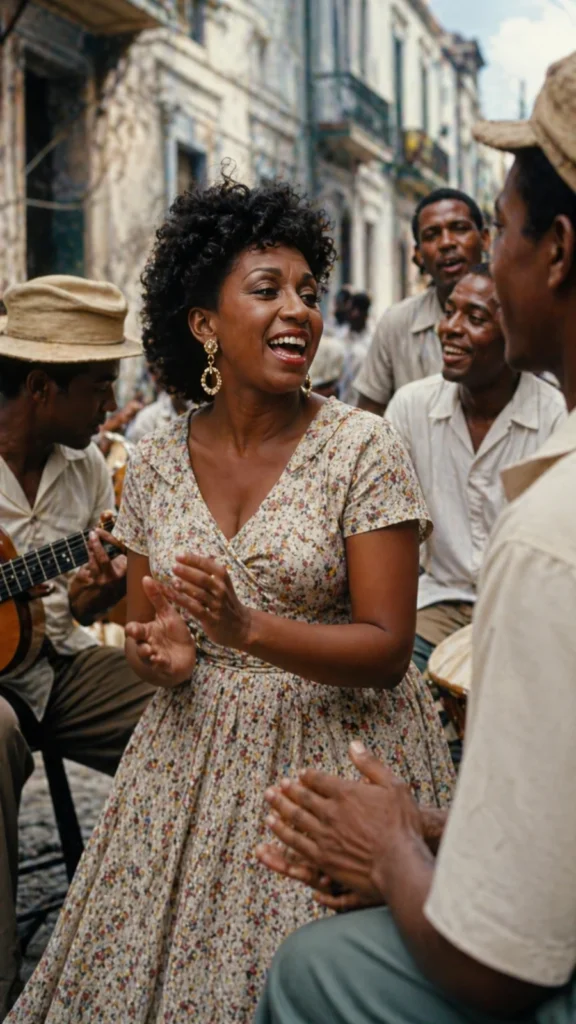
As a girl, she sang to help her siblings, cousins, and neighborhood children fall asleep. The songs she heard on Havana’s radio stations and streets became her first musical education. Son, rumba, guaracha, bolero, and Afro-Cuban traditions began to meet within her voice.
Her father, Simón Cruz, wanted her to pursue a profession considered safer and more respectable. Celia studied to become a teacher and came close to following that career. One of her teachers, however, reportedly pointed out that her voice could earn in a single day what a schoolteacher made in several weeks.
Leaving her studies was not a simple decision for a young Cuban woman from a working-class family. Professional singing meant entering nightclubs, traveling without family protection, and confronting racial and social prejudice. Celia chose to do it anyway.
She studied music at Havana’s National Conservatory and began appearing in radio competitions. She also sang with groups including Las Mulatas de Fuego, with whom she made some of her earliest international appearances.
Her decisive opportunity arrived in 1950.

The Singer the Audience Did Not Want
La Sonora Matancera was one of Cuba’s most important musical ensembles. When its popular vocalist Myrta Silva left the group, Celia was chosen to replace her. She made her debut with the orchestra on August 3, 1950.
Her initial reception was not entirely favorable. Some listeners were accustomed to Silva and rejected the new singer. The record company also appeared uncertain that Celia could sell enough records.
Rogelio Martínez, the director of La Sonora Matancera, decided to keep her.
Celia responded by working. She did not try to become a copy of her predecessor. Her low register, rhythmic command, and ability to turn every syllable into percussion gave her an unmistakable identity. Songs such as «Cao cao, maní picao», «Burundanga», and «Yerbero moderno» established her popularity.
During fifteen years with La Sonora Matancera, she recorded dozens of songs and toured numerous countries. At a time when the major tropical orchestras were overwhelmingly led by men, Celia did not appear as a decorative figure. She was the central voice, the presence that commanded the stage.
The young woman some listeners had resisted became known as the Guarachera de Cuba—the Guaracha Singer of Cuba.
The Journey That Became Exile
Following the Cuban Revolution of 1959, the new government began transforming the country’s institutions, businesses, and cultural life. La Sonora Matancera left Cuba for Mexico on July 15, 1960, to fulfill professional engagements.
Celia did not know with certainty that her departure would be permanent.
Relations between the singer and the revolutionary government deteriorated. Celia refused to identify herself with the new political order and remained outside the island. Cuban authorities eventually prevented her from returning.
The prohibition became especially painful when her mother fell ill. Celia requested permission to visit her, but her entry was denied. Catalina Alfonso died in 1962. Her daughter had to endure the loss from a distance.
That experience remained with Celia for the rest of her life. She could perform in Europe, Africa, Latin America, and the United States, yet she could not enter the country of her birth.
In 1962, she married Pedro Knight, a trumpet player with La Sonora Matancera. Knight eventually left the orchestra to become her manager, musical director, and inseparable companion. They had no children, but built an artistic and personal partnership that lasted more than four decades.
Starting Over After Becoming Famous
Exile did not guarantee success. Celia had been a star in Cuba, but in the United States she had to find a new place within a rapidly changing music industry.
After ending her years with La Sonora Matancera in 1965, she recorded with Tito Puente. Their collaboration produced important albums and songs such as «Bemba colorá», but for several years her record sales did not match her artistic reputation. Latin audiences were changing, and record companies were searching for new sounds.
During the 1970s, New York’s music scene brought Cuban, Puerto Rican, and other Caribbean rhythms together under an increasingly powerful commercial and cultural term: salsa.
Celia had not begun her career as a salsa singer. She had been trained in the Afro-Cuban traditions that helped create the movement. Her entrance into the world of Fania was not the discovery of a new kind of music. It was recognition that her voice belonged to its deepest roots.
In 1974, she recorded the album Celia & Johnny with Johnny Pacheco. «Quimbara» became one of her defining performances. As a member of the Fania All-Stars, Celia appeared on international stages otherwise occupied almost entirely by male musicians.
That same year, she traveled to Kinshasa, Zaire—now the Democratic Republic of the Congo—for the music festival organized around the boxing match between Muhammad Ali and George Foreman. For Celia, the performance also represented a reunion between Afro-Cuban music and the African continent from which many of its rhythmic and spiritual traditions had emerged.
«¡Azúcar!»: A Word Transformed into Refuge
Over time, one expression became inseparable from Celia Cruz: «¡Azúcar!»—«Sugar!»
Celia told different anecdotes about its origin, including an exchange in a restaurant where she answered that she wanted sugar in her coffee. More important than identifying a single first use is understanding what the cry eventually became.
«¡Azúcar!» expressed celebration, energy, and intimacy with her audience. It also carried a deeply Cuban memory: sweetness, labor, sugar plantations, and a history shaped by African slavery. Spoken by a Black woman who had conquered international stages, the word could function as a declaration of identity.
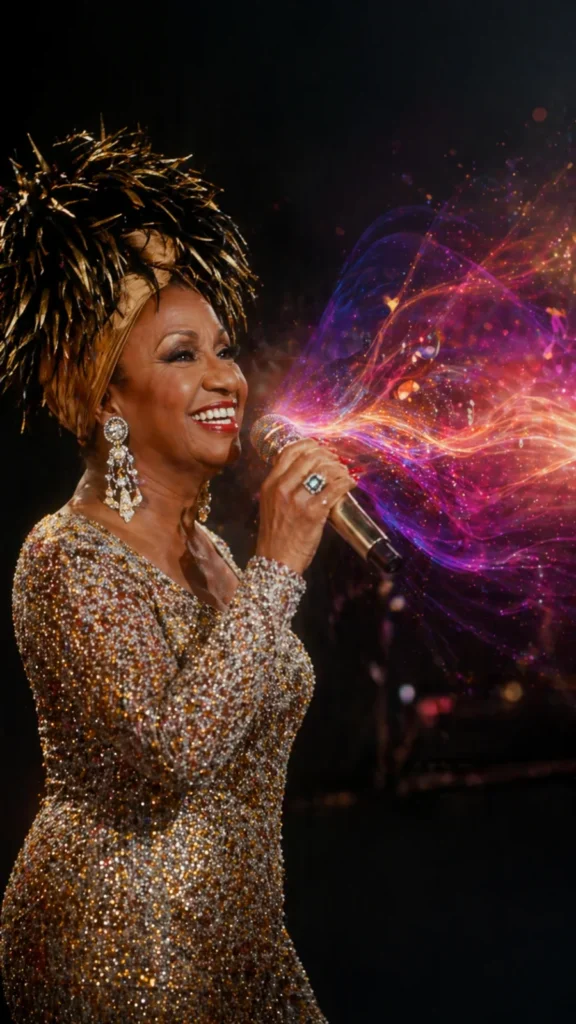
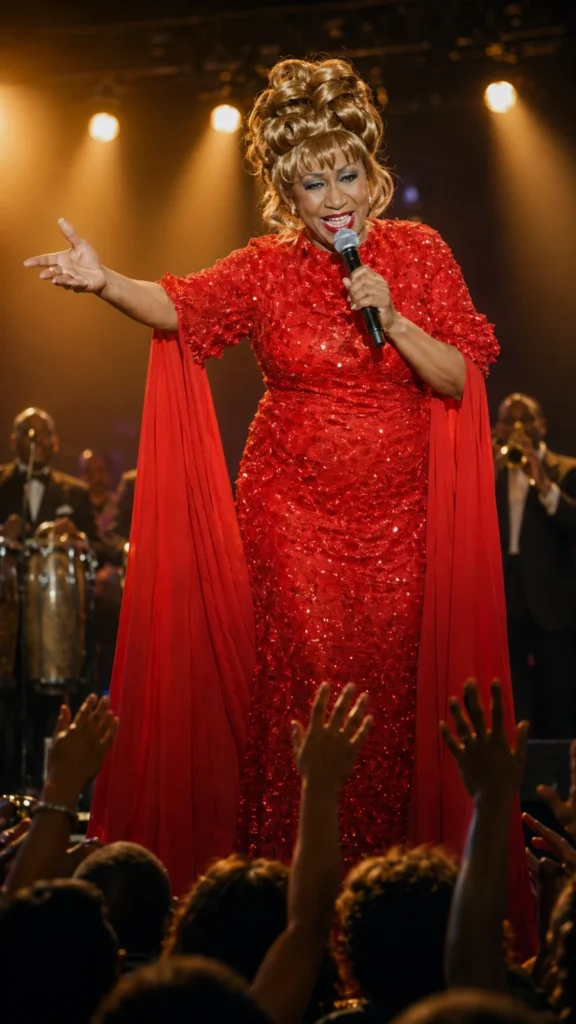
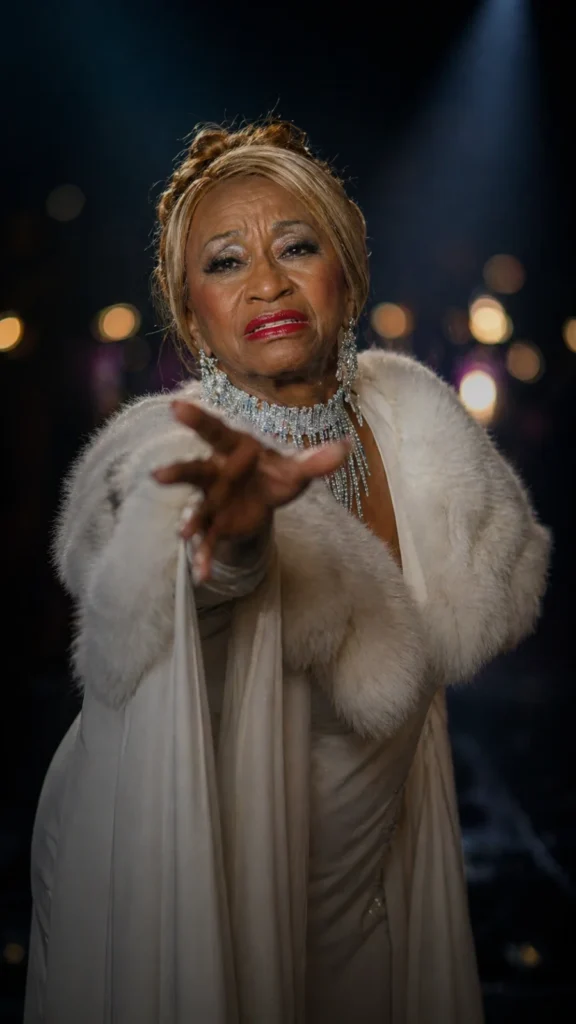
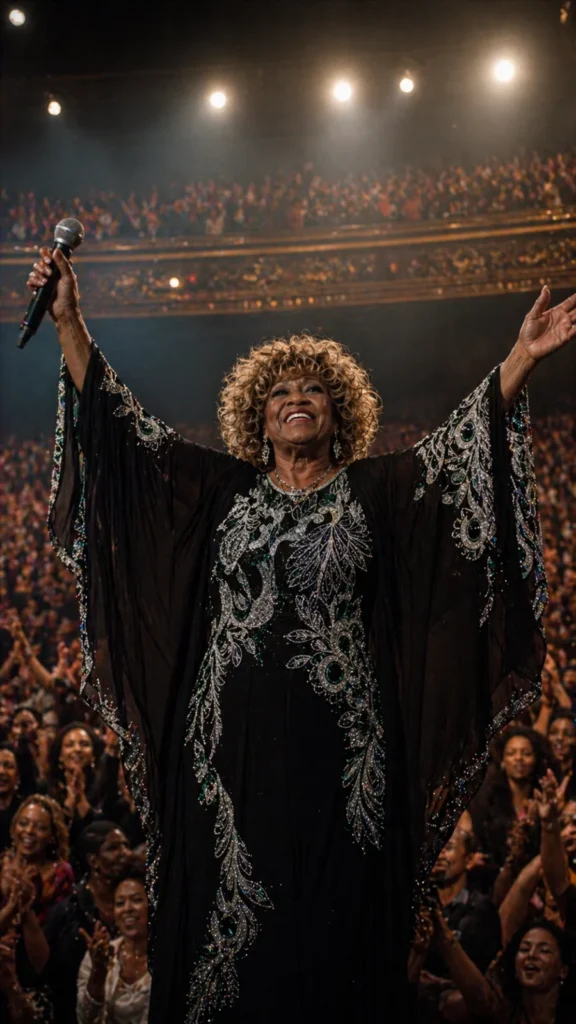
Her clothing completed that declaration. The colorful wigs, glittering dresses, and specially designed shoes were not mere eccentricities. Celia created an image that challenged the expectations imposed on older women. While other performers were pushed aside as they aged, she became more visible, more luminous, and freer onstage.
She did not allow maturity to make her disappear. She turned it into spectacle.
The Singer Who Refused to Remain in the Past
Celia could have become a nostalgic figure valued only by listeners who remembered Cuba before 1959. Instead, she continued collaborating with younger generations and adapting without surrendering her identity.
In 1987, she appeared in the film Salsa. During the 1990s, she participated in projects such as The Mambo Kings and worked with performers from different generations. Songs such as «La vida es un carnaval», released in 1998, brought her voice to audiences who had never experienced the era of La Sonora Matancera or the birth of Fania.
Her performance did not deny suffering. It passed through it. When she sang that life was a carnival, she was not speaking from innocence. She had lost her parents, her country, and the possibility of returning home. Her joy was not the absence of pain; it was a response to it.
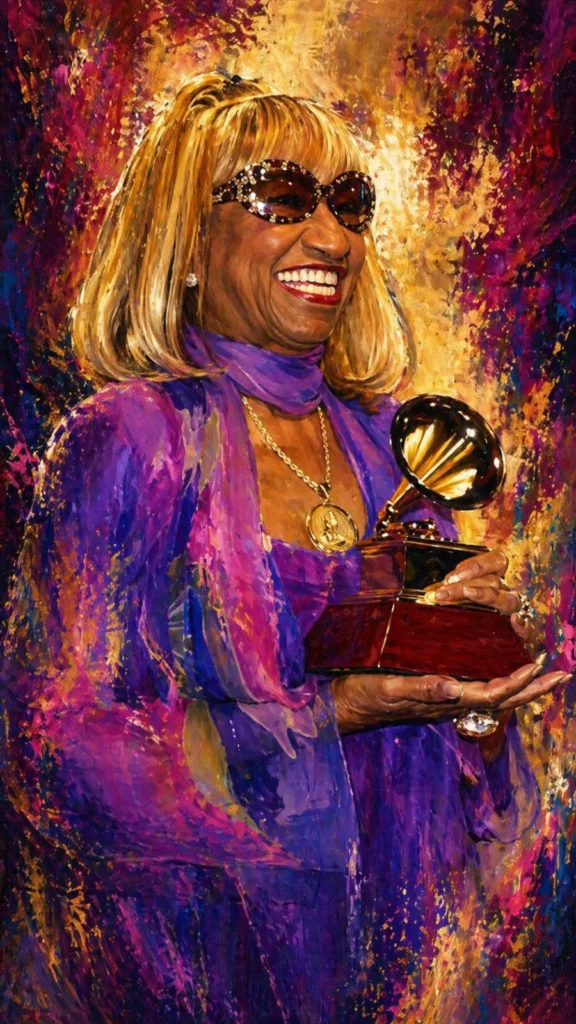
She received Grammy and Latin Grammy Awards, the United States National Medal of Arts, and numerous international honors. Her influence, however, extended beyond any list of prizes. Celia helped make an Afro-Latina woman with a deep voice and an unmistakable Cuban accent a central figure in international popular culture.
The Final Song
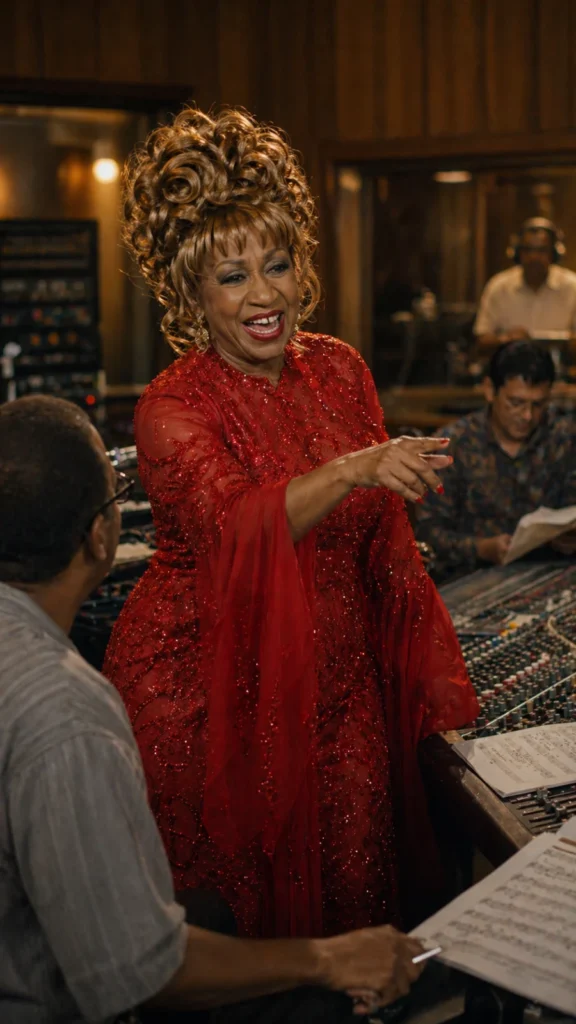
In 2002, while preparing another album, Celia was diagnosed with a brain tumor. She underwent surgery and returned to the recording studio. The album Regalo del alma appeared shortly afterward and received posthumous recognition.
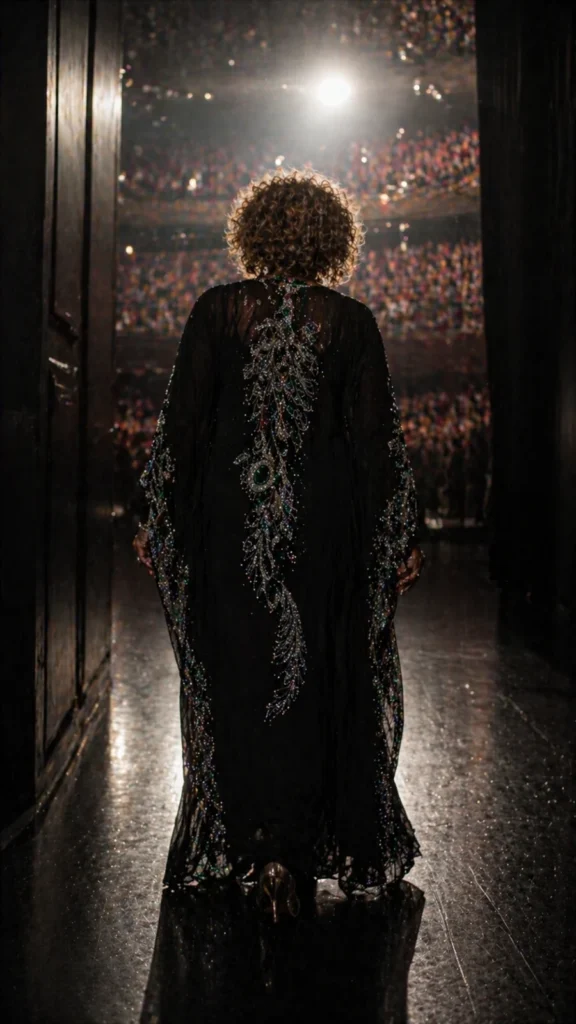
Celia Cruz died on July 16, 2003, at her home in Fort Lee, New Jersey. She was seventy-seven. Thousands gathered to say farewell in Miami and New York.
She never returned to live in Cuba. Cuba, however, remained inside her voice until the end—in her language, her rhythms, and her ability to transform every stage into an imagined extension of the island.
The government that prevented her return could close a border, but it could not separate her voice from Cuban memory.
Celia Cruz sang against many shadows: racism, exile, loss, a male-dominated industry, and the silence others tried to impose upon her. She did so without abandoning joy, because she understood that celebration could also become an act of resistance.
They prohibited her from returning to her homeland.
She made her homeland travel with her.
References
- Aparicio, F. R. (1998). Listening to salsa: Gender, Latin popular music, and Puerto Rican cultures. Wesleyan University Press.
- Cruz, C., & Reymundo, A. C. (2004). Celia: Mi vida. Rayo.
- Fania Records. (2019). Celia Cruz, La Sonora Matancera: Canta Celia Cruz. https://fania.com/record/canta-celia-cruz/
- National Museum of African American History and Culture. (n.d.). Celia Cruz. Smithsonian Institution. https://nmaahc.si.edu/explore/stories/celia-cruz
- National Museum of American History. (2012). Celia Cruz: Queen of salsa. Smithsonian Institution. https://americanhistory.si.edu/explore/stories/celia-cruz-queen-salsa
- Rondón, C. M. (2008). The book of salsa: A chronicle of urban music from the Caribbean to New York City. University of North Carolina Press.
- Smithsonian Latino Center. (n.d.). Celia Cruz: The Queen of Salsa. Smithsonian Institution. https://latino.si.edu/learn/teaching-and-learning-resources/celia-cruz-queen-salsa.
More from this collection
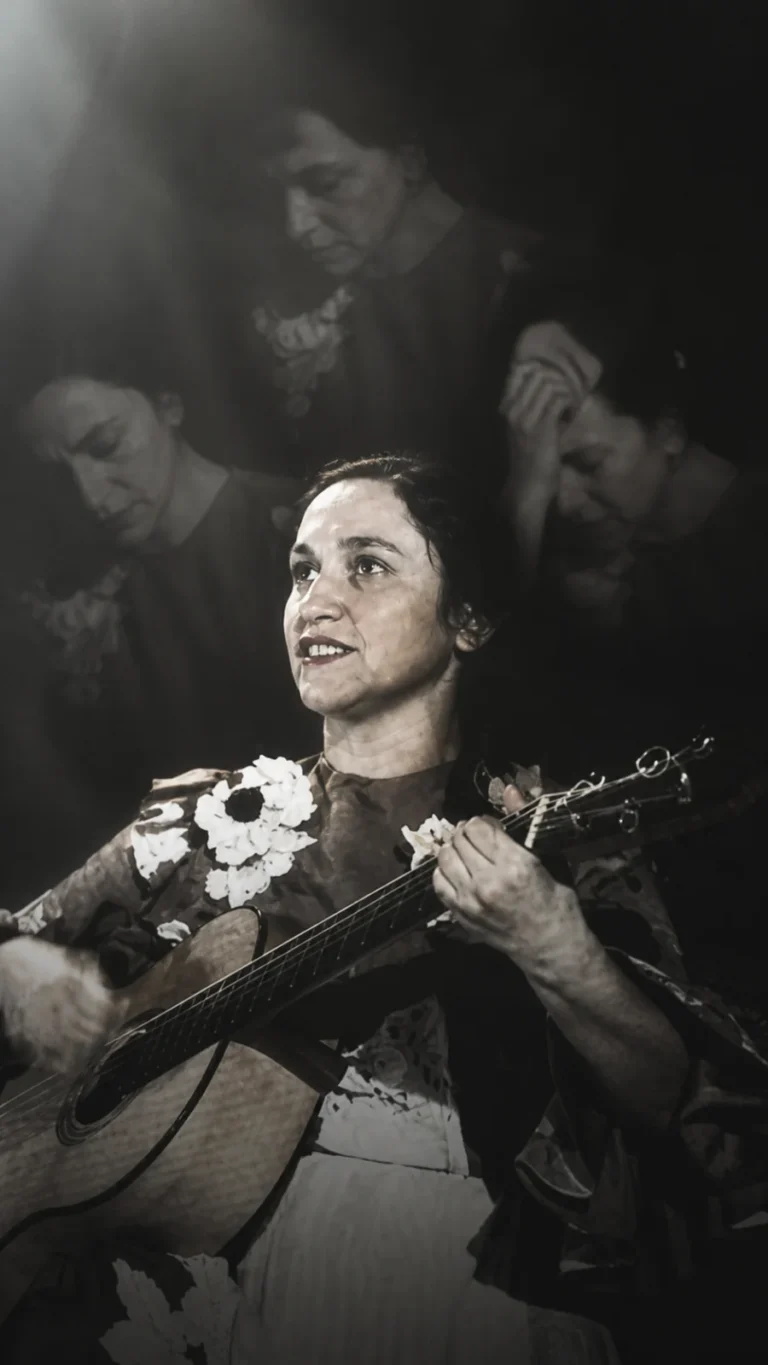
Violeta Parra: The Woman Who Traveled Across Chile to Return Its Vanishing Songs to the People
Read story →
Chavela Vargas: The Woman Who Turned Her Wounds Into a Form of Freedom
Read story →