
In this storyOpen index
Hedy Lamarr: The Star Who Imagined How to Protect a Signal
Actress and inventor: the patent Hedy Lamarr developed with George Antheil and its place in the history of wireless communication.
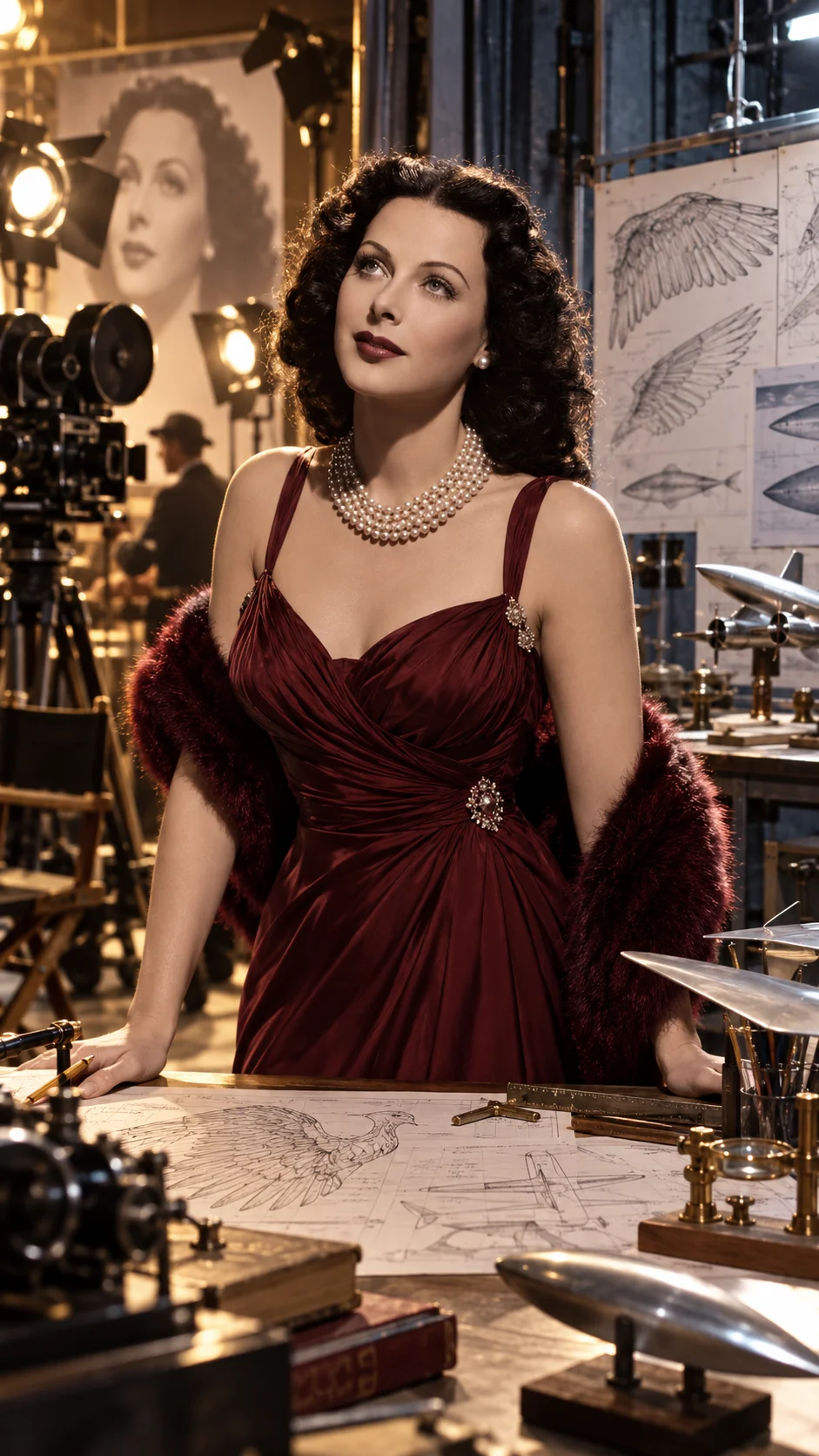
Hollywood presented her as one of the most beautiful women in the world. While the studios illuminated her face, Hedy Lamarr filled pages with diagrams, dismantled ideas, and imagined systems designed to make radio signals harder to jam.
She did not invent Wi-Fi or Bluetooth, as simplified accounts often claim. Nor did she single-handedly construct a modern communications system. What she accomplished with composer George Antheil was historically important and extraordinary enough without exaggeration: they designed and patented a frequency-hopping method intended to prevent an enemy from jamming communications with radio-controlled torpedoes.
The United States Navy did not employ it during the Second World War. The patent expired without earning them money. Decades later, the principle they had explored became an important part of the history of wireless communication.
For most of her life, the world admired Hedy Lamarr’s face without asking what was happening behind it.
Hedy Lamarr
A life told between the spotlight and invention
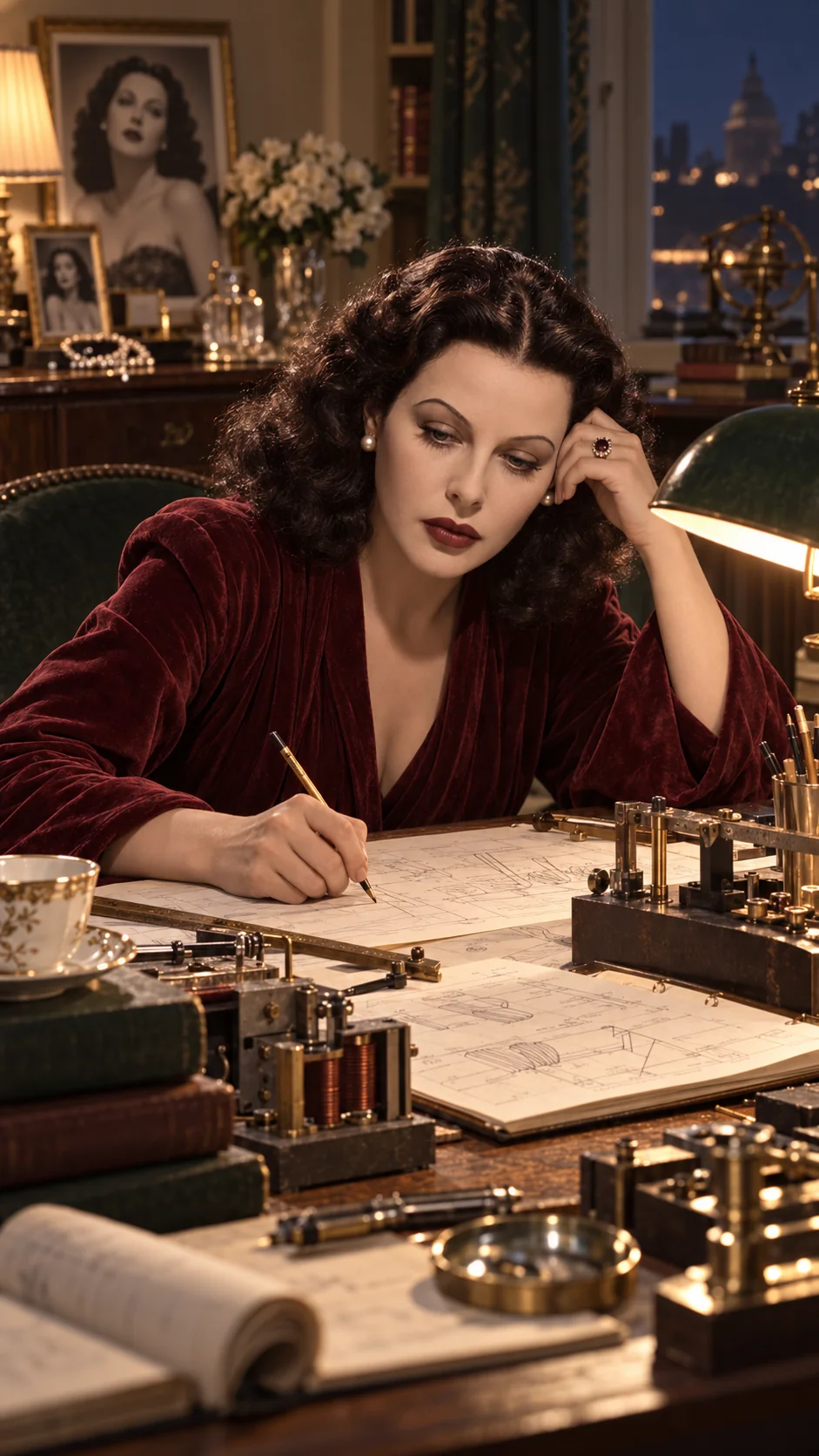
Patent 2,292,387: an idea signed by Lamarr and Antheil
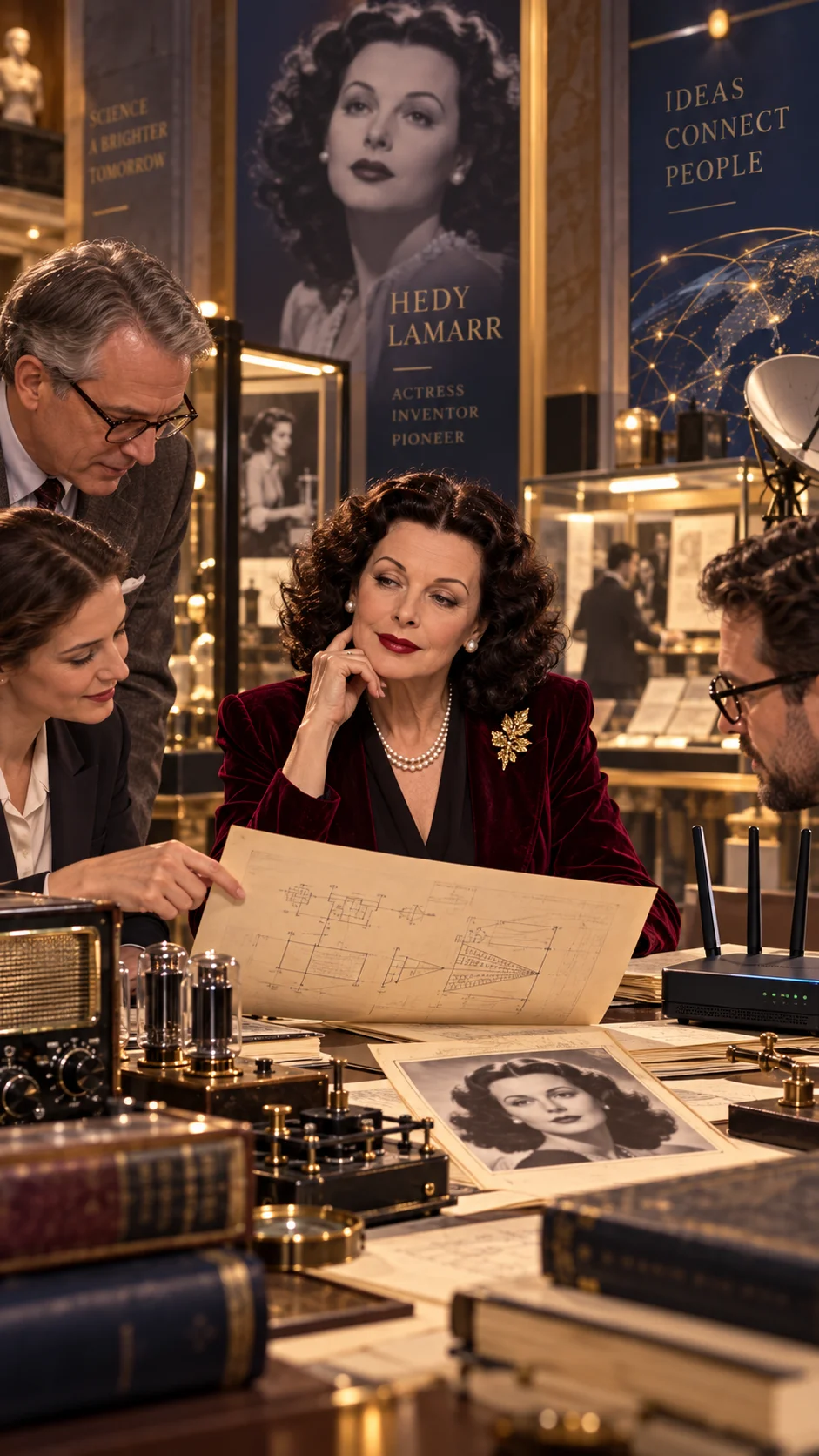
The Secret Communication System document records Hedwig Kiesler Markey and George Antheil’s proposal to coordinate frequency changes in a transmitter and receiver, making their communications harder to jam. Filed on 10 June 1941, the patent was granted on 11 August 1942. The link provides the original text, drawings and bibliographic record. This card’s image is an artistic recreation, not a patent drawing or documentary photograph.
The Girl Who Wanted to Understand Machines
She was born Hedwig Eva Maria Kiesler in Vienna on 9 November 1914. She was the only child of Emil Kiesler, a bank director, and Gertrud Lichtwitz, a trained pianist. Her family had Jewish roots.
Her father encouraged her technical curiosity. During walks through Vienna, he explained how machines, streetcars, printing presses, and other urban mechanisms worked. She took objects apart to understand them and developed a remarkable ability to imagine connections between apparently unrelated problems (Rhodes, 2011).
Acting, however, became her first profession. As a teenager, she began working in European cinema and began developing her acting career. In 1933, she starred in the Czechoslovak film Ecstasy, directed by Gustav Machatý.
The depiction of intimacy and nudity in Ecstasy provoked censorship and controversy. That notoriety followed the actress for years and shaped the way the film industry presented her image (Barton, 2010).
The Marriage She Had to Escape
That same year, she married Friedrich “Fritz” Mandl, a powerful Austrian arms manufacturer. Mandl maintained commercial relationships with various authoritarian European governments and entertained military officers, politicians, and industrialists.
Hedy accompanied her husband to dinners and meetings where weapons, munitions, and control systems were discussed. She was not a military engineer and did not formally participate in Mandl’s companies, but these conversations may have introduced her to the problems involved in guiding weapons through radio signals and the ease with which those signals could be jammed (Rhodes, 2011).
The marriage was possessive and profoundly unhappy. Lamarr later claimed that Mandl attempted to control her career and purchase every print of Ecstasy. In her autobiography, she described a spectacular escape while disguised as a maid and carrying jewels sewn into her clothes.
The story is cinematic but cannot be accepted in full as historical documentation. Ecstasy and Me was produced with hired writers, and Lamarr later said that it contained fabrications and distortions. Records establish that she left continental Europe in 1937 and travelled first to London; the precise details of her departure remain disputed (Shearer, 2010).
In London, she met Louis B. Mayer, head of Metro-Goldwyn-Mayer, who was returning to the United States after searching for European talent. She negotiated a contract during the transatlantic voyage and arrived in Hollywood with a new identity.
Hedwig Kiesler became Hedy Lamarr.
Hollywood Turned Her into an Image
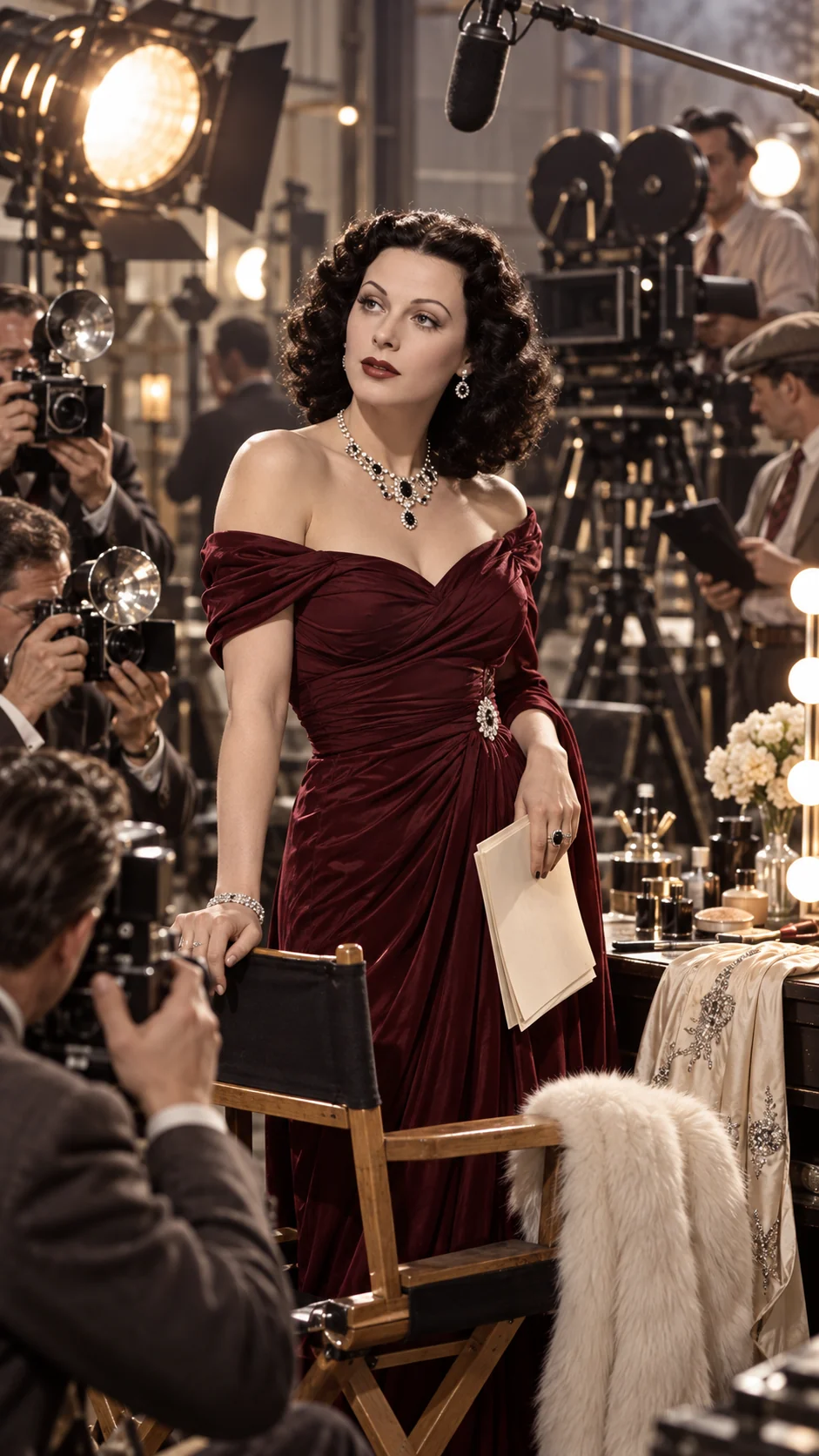
Mayer selected the surname Lamarr in tribute to silent-film actress Barbara La Marr. MGM promoted Hedy as a mysterious and sophisticated European beauty. Her first major American film was Algiers in 1938, opposite Charles Boyer.
The camera appeared fascinated by her face. Her dark hair, centre part, and defined eyebrows were widely imitated. Over the following years, she appeared in films including Boom Town, Comrade X, Ziegfeld Girl, and The Strange Woman.
Her greatest commercial success was Cecil B. DeMille’s Samson and Delilah, released in 1949. The film confirmed her stardom but also reinforced her confinement within a particular image: Hollywood trusted her visual presence more readily than her intelligence.
Lamarr became bored during the long periods of waiting between scenes. At home, she maintained a workspace with books, tools, and materials. She had no university education in engineering but practised a continual form of informal invention: identifying problems, sketching solutions, and finding collaborators capable of turning ideas into mechanisms (Rhodes, 2011).
War Changes the Question
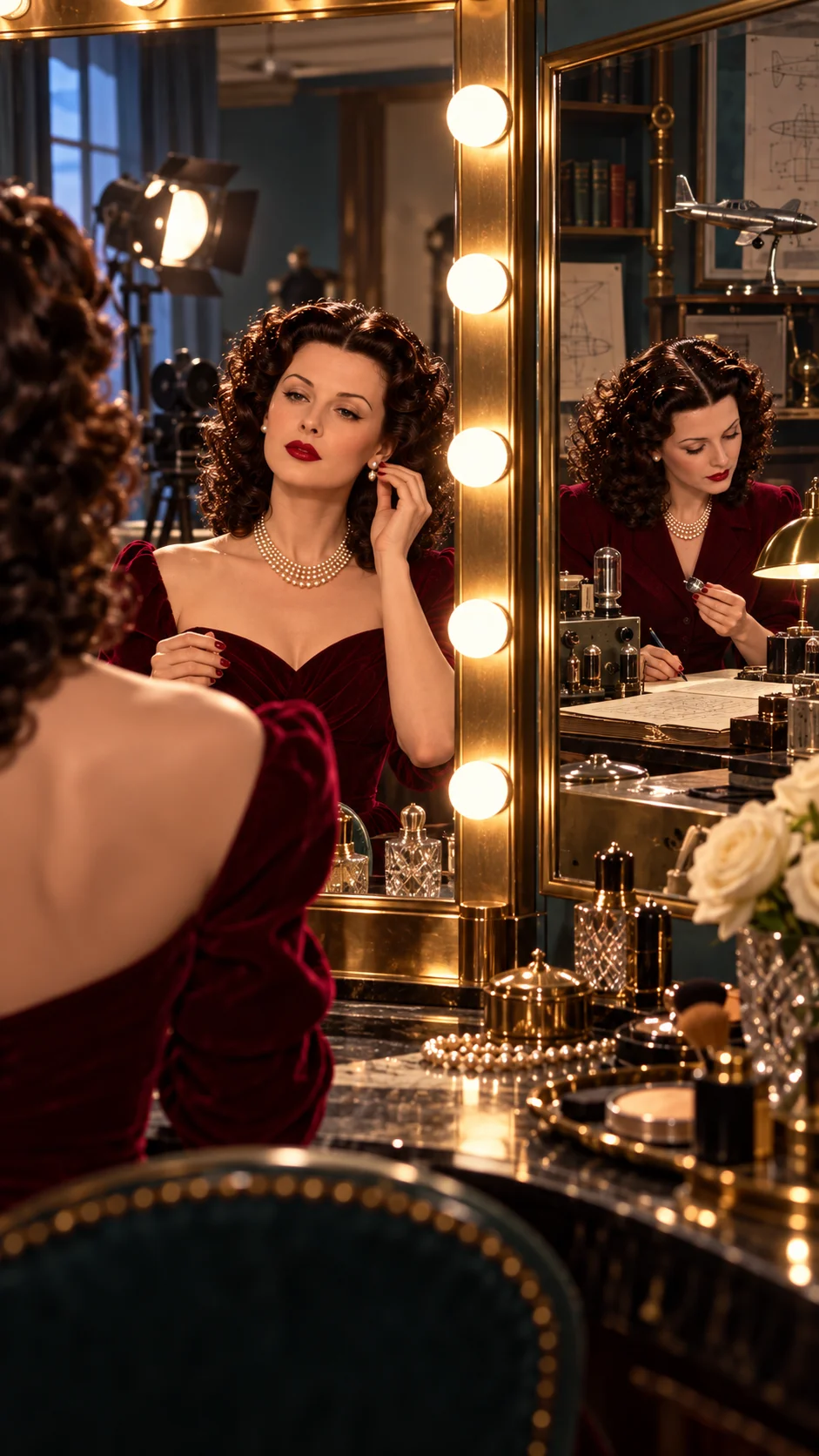
When Europe entered the war, Lamarr had personal reasons to follow events closely. Her mother remained on a continent increasingly dominated by Nazism, and her Jewish origins made the danger immediate.
Radio-controlled torpedoes offered a possible military advantage but presented a serious weakness. If the transmitter and receiver used a fixed frequency, the enemy could detect and jam the signal. The torpedo would then lose communication with its controller.
Lamarr imagined that the signal should not remain on a single frequency. If transmitter and receiver switched simultaneously among multiple frequencies according to a shared sequence, an enemy would have much greater difficulty locating and blocking the communication.
The idea required synchronisation. To develop it, she turned to George Antheil, an American composer known for experimental music.
The Composer and the Mechanical Pianos
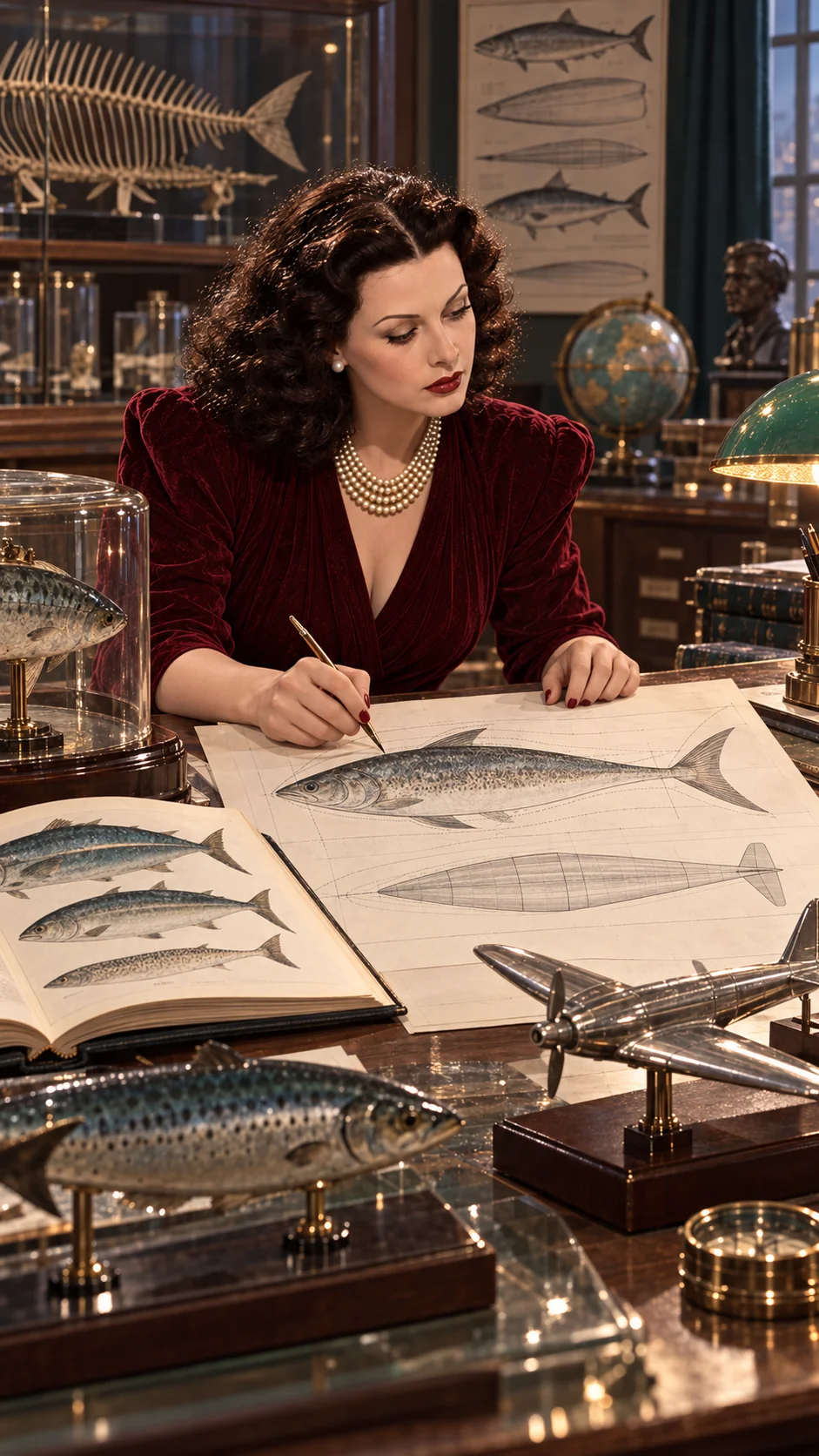
Antheil had created Ballet Mécanique, an avant-garde work originally conceived for several player pianos, percussion instruments, bells, and other devices. He understood the mechanisms of perforated rolls that enabled a player piano to coordinate notes automatically.
Lamarr and Antheil combined knowledge from apparently incompatible worlds: military technology, radio, and mechanical music. Their proposal employed two synchronised perforated rolls—one in the transmitter and one in the receiver—to change frequencies according to the same pattern.
The patent described the possibility of using eighty-eight frequencies, taking the eighty-eight positions of a player-piano roll as its reference. Although the roll-based mechanism was difficult to install inside a torpedo, the central principle was clearly expressed: transmitter and receiver would jump together among channels to reduce vulnerability to interference (Kiesler Markey & Antheil, 1942).
They filed their application on 10 June 1941. United States Patent No. 2,292,387, titled Secret Communication System, was granted on 11 August 1942 to Hedwig Kiesler Markey—Lamarr’s legal name during one of her marriages—and George Antheil.
They offered the system to the United States authorities to contribute to the war effort.
An Invention the Navy Set Aside
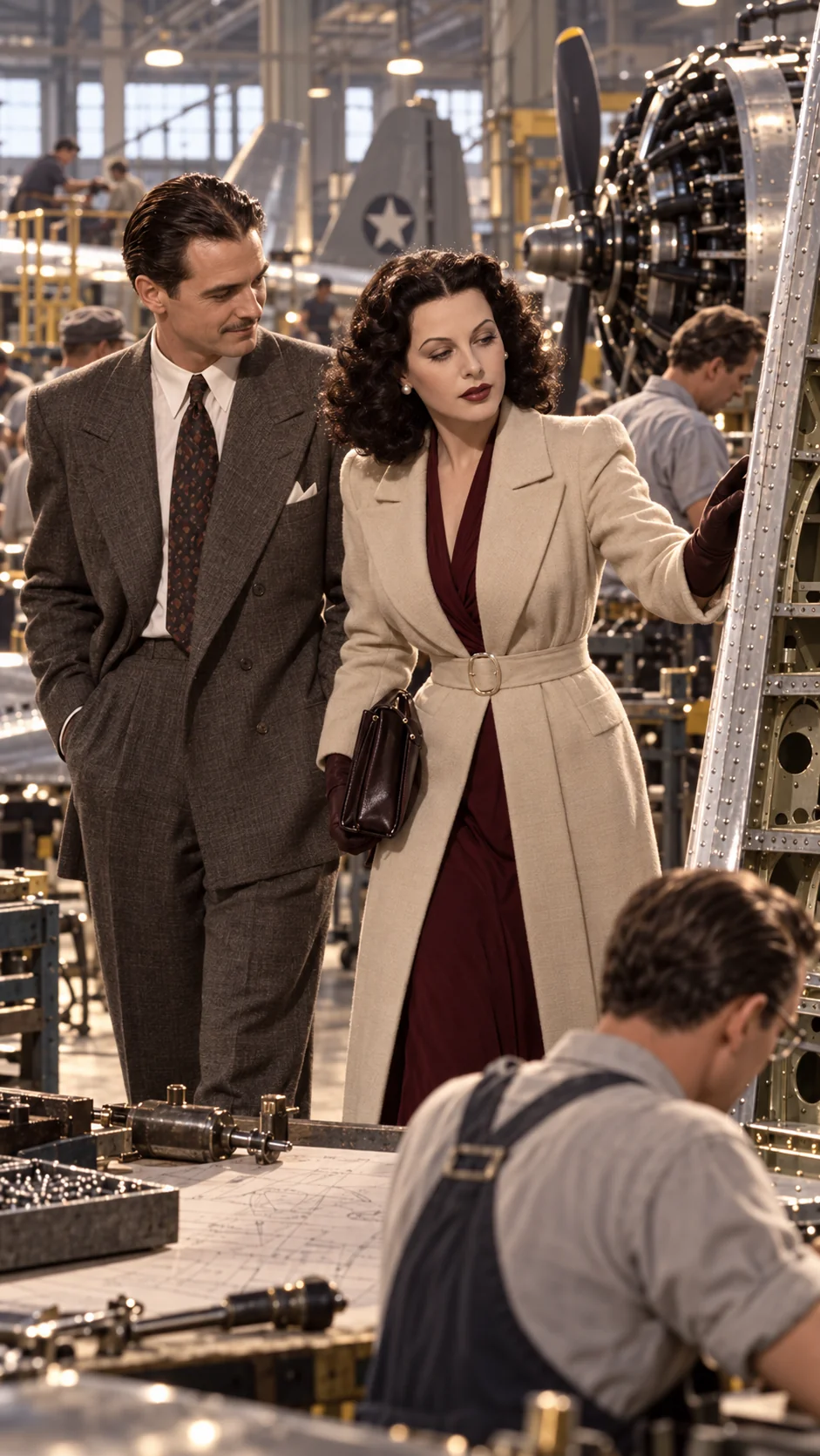
The proposal reached the National Inventors Council, which assessed potentially useful wartime ideas. The United States Navy did not turn it into an operational system. Mechanical synchronisation through rolls was difficult to adapt to the limited space and conditions inside a torpedo, and military officials did not consider the design practical.
Lamarr was encouraged to contribute through her celebrity instead. She participated in war bond campaigns, made public appearances, and helped raise millions of dollars. Hollywood knew how to use her face; the authorities found no equally immediate use for her patent (Rhodes, 2011).
It is sometimes claimed that the Navy rejected the idea solely because Lamarr was a woman or an actress. The prejudices of the period matter, but that explanation alone leaves out the mechanism’s technical difficulties. The proposal was imaginative, yet implementing it with the available technology remained unresolved.
The patent received no wartime military application and expired in 1959. Lamarr and Antheil earned no royalties.
What Modern Communications Actually Inherited
In later decades, engineers developed far more sophisticated electronic frequency-hopping and spread-spectrum systems. Such technologies distribute signals across frequencies to resist interference, improve coexistence among devices, or increase communications security.
Lamarr and Antheil’s work belongs within that conceptual history. Saying that Hedy Lamarr “invented Wi-Fi,” however, implies a direct relationship that did not exist.
Bluetooth uses a form of frequency hopping and therefore has a clear conceptual relationship to their patented principle. Early wireless-network standards also incorporated spread-spectrum techniques, but contemporary Wi-Fi uses technologies such as OFDM and is not a simple implementation of the perforated rolls proposed in 1942.
Lamarr did not design digital protocols, wireless chips, routers, or the Internet. Her achievement was to conceive, with Antheil, an interference-resistant communications strategy before electronics made it comparatively easy to implement (National Inventors Hall of Fame, n.d.).
Defining the limits of her contribution does not diminish it. It makes the history accurate.
Other Inventions Left on the Table
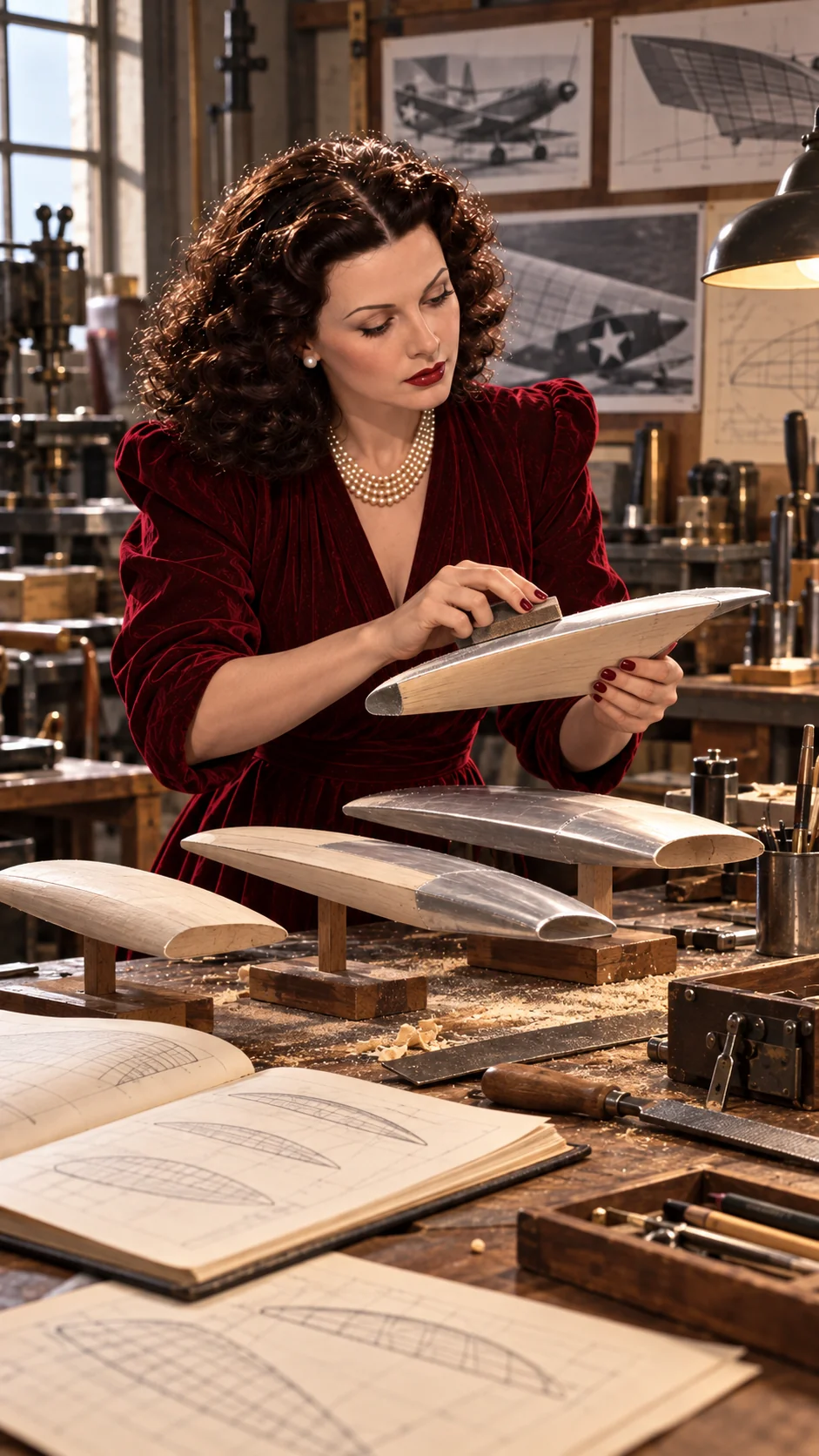
Lamarr continued imagining practical solutions. She developed ideas for improved traffic signals and experimented with an effervescent tablet intended to produce a soft-drink-like beverage. She later admitted that the drink did not taste very good.
She also discussed aerodynamics with Howard Hughes, who gave her access to engineers and equipment. Lamarr studied the forms of birds and fish and suggested less rectangular, more efficient aircraft wings. There is no evidence that she independently designed a revolutionary aeroplane, but the episode demonstrates the breadth of her curiosity (Dean, 2017).
Inventing was not an occasional publicity exercise. It was a regular way of occupying her mind.
Recognition Arrived Too Late
Lamarr’s film career declined during the 1950s. She attempted to produce her own pictures and experienced six marriages, financial disputes, and increasingly cruel public scrutiny. During her later years, she withdrew from Hollywood and lived privately in Florida.
Meanwhile, technology began catching up with some of the principles she and Antheil had patented. For decades, their names appeared only rarely in histories of telecommunications.
In 1997, the Electronic Frontier Foundation presented them with its Pioneer Award. Lamarr, already in poor health and avoiding public appearances, responded by telephone. According to the widely repeated recollection, she received the news with the dry observation: “It’s about time.”
That year, she also became the first woman to receive the BULBIE Gnass Spirit of Achievement Award for inventors. In 2014, fourteen years after her death, Lamarr and Antheil were inducted into the National Inventors Hall of Fame for their secret communications system (National Inventors Hall of Fame, n.d.).
A Lesser-Known Fact: She Never Earned Money from the Patent
Hedy Lamarr made no money from the invention that now dominates her legacy. The design did not become an operational wartime system, and its patent expired in 1959 without earning them royalties.
By the time she finally received recognition, the wireless communications industry was generating sums its 1941 inventors could scarcely have imagined. An expired patent did not provide them with royalties from later uses, and not every subsequent technology can be shown to have descended directly from their design.
The paradox is unmistakable: Hollywood paid her to appear extraordinary but not to think extraordinarily.
The Woman Behind the Image
Hedy Lamarr died on 19 January 2000 in Casselberry, Florida, at the age of eighty-five. At her request, part of her ashes was taken to Austria and scattered in the Vienna Woods. Years later, she also received a memorial grave in Vienna’s Central Cemetery.
She belongs among the inventors who changed everyday life not because she directly built the devices we connect today, but because she helped formulate a principle whose importance grew once technology was ready.
Her story also reveals how memory operates. For decades, she was remembered through the lighting of her face in black-and-white films. Only later did the world begin recognising the mind working outside the frame.
Hedy Lamarr did not need to stop being an actress in order to be an inventor. She was both at once. The failure belonged to a society unable to imagine beauty and intelligence occupying the same close-up.
References
- Barton, R. (2010). Hedy Lamarr: The most beautiful woman in film. University Press of Kentucky.
- Dean, A. (Director). (2017). Bombshell: The Hedy Lamarr story [Documentary]. Reframed Pictures.
- Electronic Frontier Foundation. (1997). EFF Pioneer Awards 1997.
- Kiesler Markey, H., & Antheil, G. (1942). Secret communication system (U.S. Patent No. 2,292,387). United States Patent Office. View source
- National Inventors Hall of Fame. (n.d.). Hedy Lamarr. View source
- Rhodes, R. (2011). Hedy’s folly: The life and breakthrough inventions of Hedy Lamarr, the most beautiful woman in the world. Doubleday.
- Shearer, S. M. (2010). Beautiful: The life of Hedy Lamarr. Thomas Dunne Books.
More from this collection
Alexander Wood: The Doctor Who Opened a Direct Door Beneath the Skin
Read story →
Willis Carrier: The Man Who Tried to Control Humidity and Ended Up Changing the Map of the World
Read story →