In this storyOpen index
Niccolò Paganini: The Violinist Europe Mistook for the Devil
Paganini’s virtuosity, the legend of a demonic pact and his burial dispute: a life between admiration and fear.
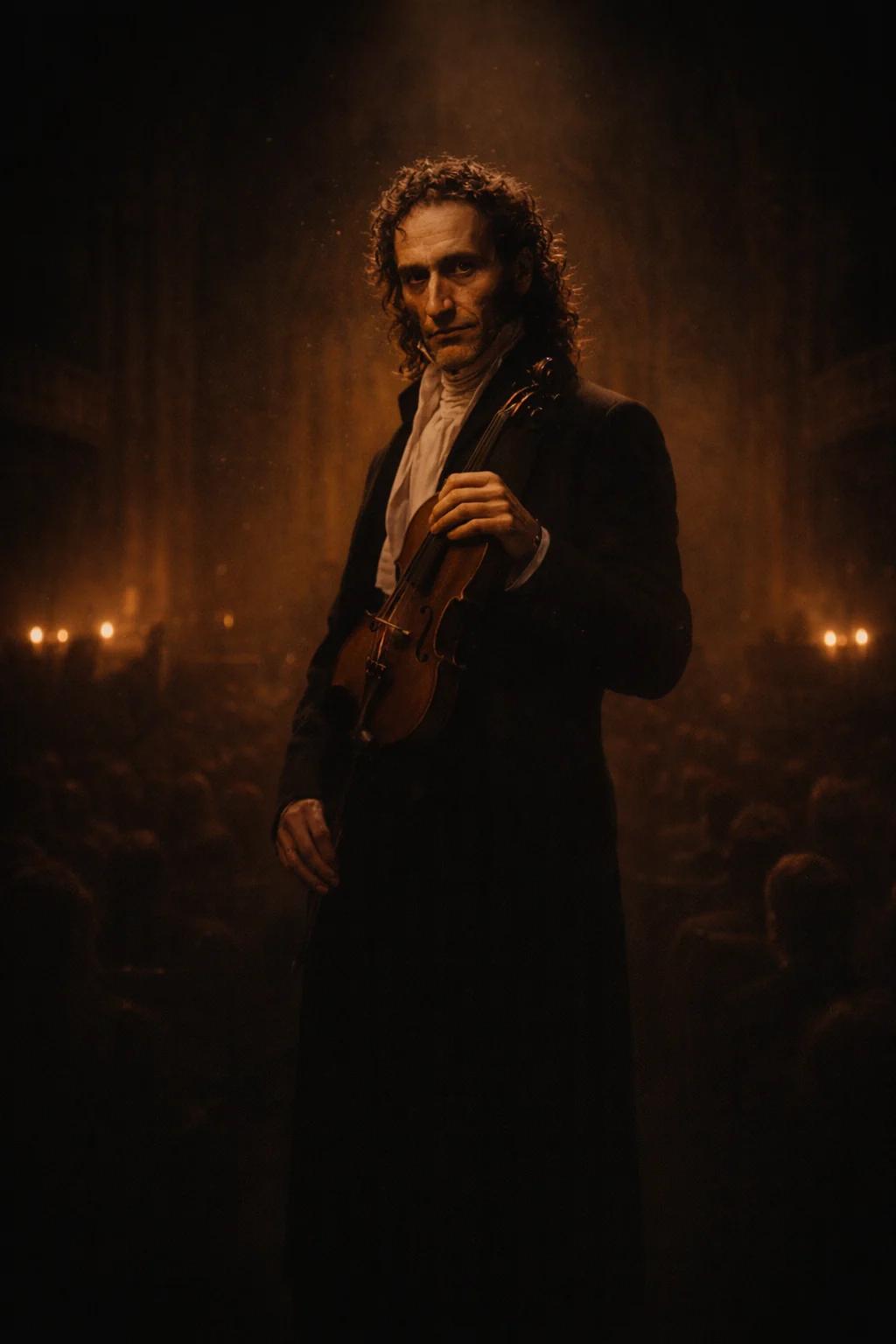
When Niccolò Paganini walked onto a stage, some spectators searched the shadows for the figure of the devil. Others claimed to have seen a supernatural presence guiding his bow. His extremely thin body, pale angular face, dark clothing, and a style of playing that appeared to violate the instrument’s physical limits completed the spectacle.
There was no infernal pact. There was talent, hard work, extraordinary technical ability, and an almost modern understanding of how to turn a performer into a legend. Paganini also endured prolonged illness, destructive medical treatments, scandals, financial losses, and a reputation so dark that, after his death, he was initially denied burial in consecrated ground.
The musician who had conquered Europe’s stages spent years unable to find rest beneath the ground.
Niccolò Paganini
A life told through virtuosity and legend
Il Cannone: Paganini’s voice preserved in Genoa
Palazzo Tursi preserves the violin made by Giuseppe Guarneri ‘del Gesù’ in Cremona in 1743 and bequeathed by Paganini to his native city. It retains its principal parts and traces of the musician’s use, when he played without a chinrest. The official record explores the instrument’s history and preservation. This card’s image is an artistic recreation, not a photograph or documentary reproduction of Il Cannone.
The Boy Forced to Become a Prodigy
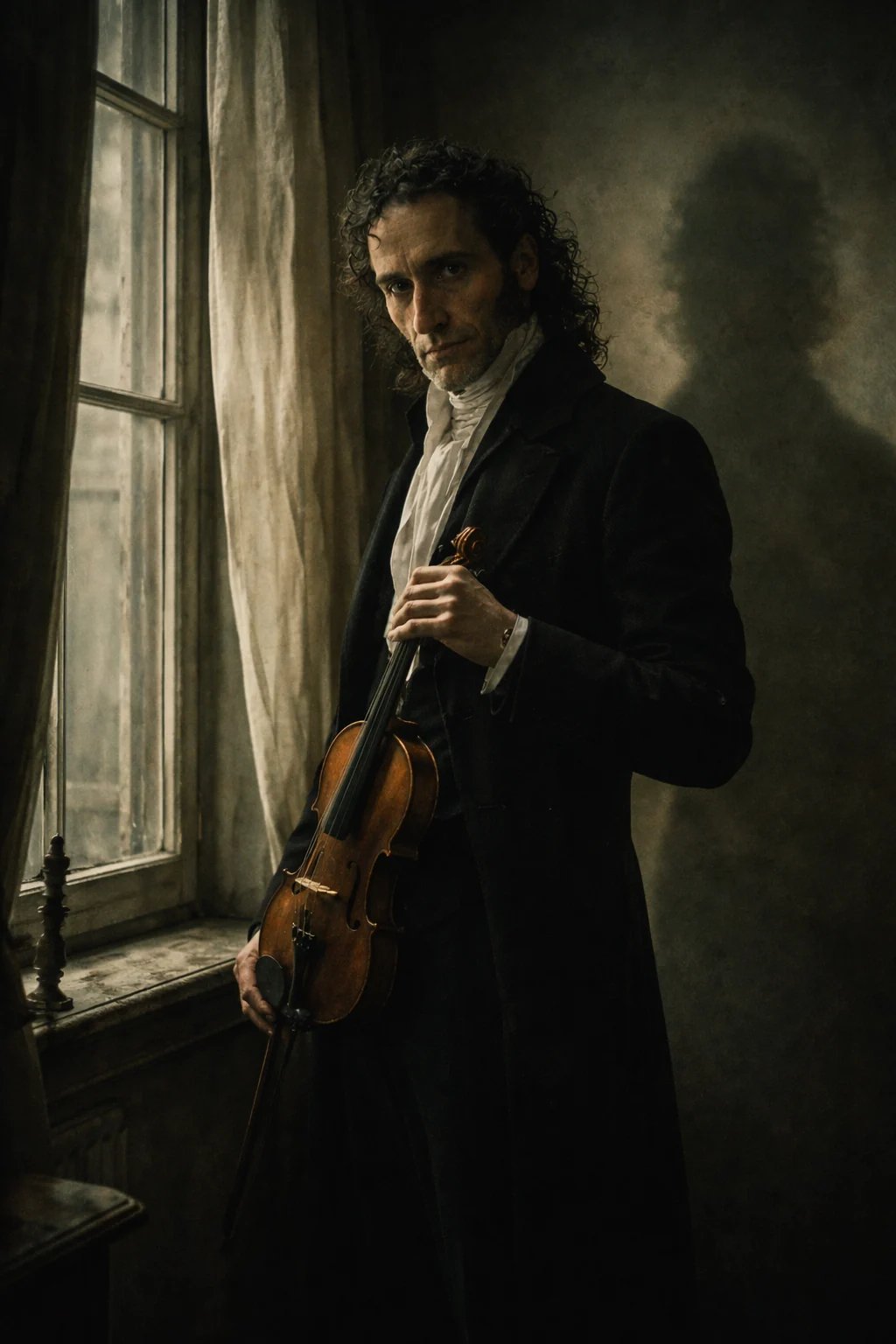
Niccolò Paganini was born in Genoa on 27 October 1782. His father, Antonio, worked in commercial activities connected with the port and was an amateur musician. He recognised his son’s abilities early and began by teaching him the mandolin before directing him toward the violin.
The training was rigorous and, according to later accounts, severe. Antonio hoped to transform the boy into a source of prestige and income for the family. Paganini studied for exhausting periods and received lessons from Genoese musicians before travelling to Parma to improve under teachers such as Alessandro Rolla, Ferdinando Paer, and Gaspare Ghiretti (Library of Congress, n.d.).
The story that Rolla refused to teach him because the boy already knew too much may contain biographical embellishment. What can be established is that Paganini absorbed knowledge from violinists and composers and began developing a personal musical language at an early age.
In 1794, when he was eleven, he gave one of his earliest documented public performances at Genoa’s Oratory of San Filippo. He soon began playing concerts outside his native city. The child prodigy was learning not only how to perform, but how to astonish.
A Technique That Appeared Impossible
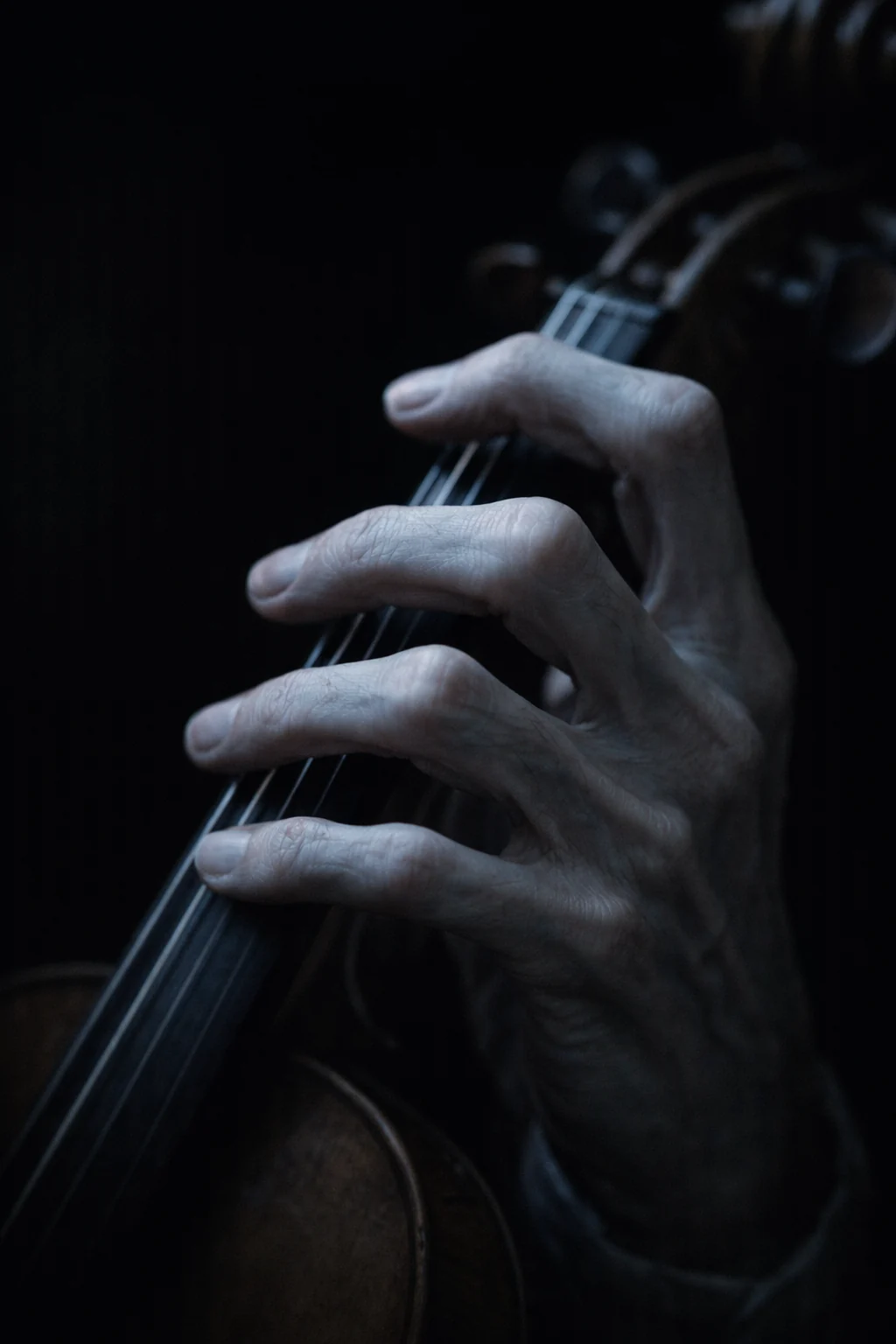
Paganini possessed exceptional dexterity, but his art did not depend on speed alone. He expanded the violin’s sonic possibilities through harmonics, multiple stops, enormous leaps between positions, left-hand pizzicato, and passages in which the bow and fingers appeared to perform independent tasks.
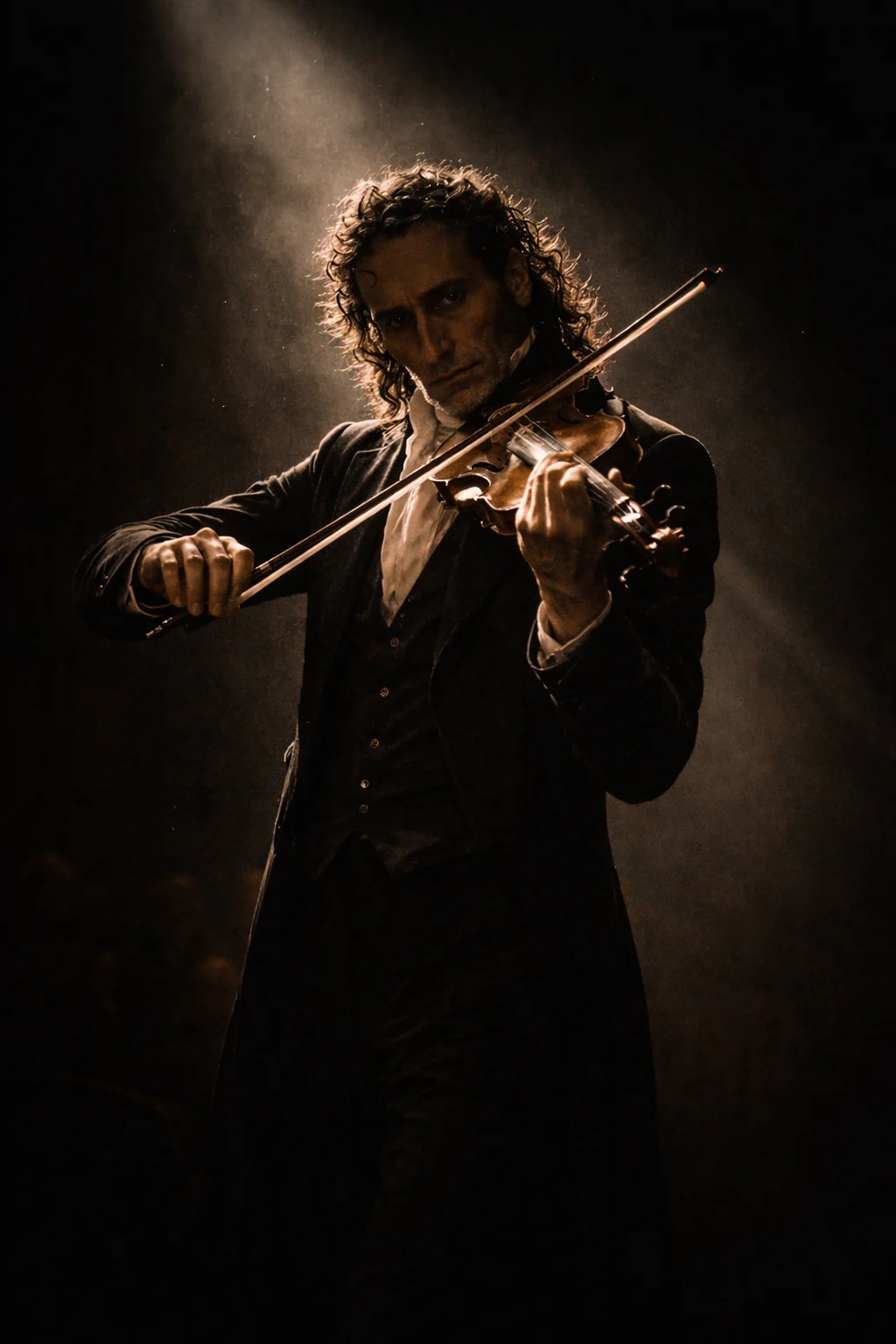
He also employed scordatura—tunings different from the standard arrangement. He could increase the strings’ tension to create a brighter sound or alter the tuning to facilitate effects audiences found inexplicable. He became particularly famous for performing entire passages on a single string, usually the fourth or G string.
His 24 Caprices for Solo Violin, probably composed during the early nineteenth century and published in 1820, turned these possibilities into an encyclopaedia of difficulty. Each piece presents particular challenges: rapid arpeggios, double stops, trills, swift changes of position, and complex combinations of articulation (McCurdy, 2021).
Yet reducing his music to acrobatics would be a mistake. Paganini understood that technical difficulty acquired value only when it produced an emotional effect. He could imitate voices, laughter, sighs, and other instruments. His violin seemed to speak precisely because the audience could not understand how he made it happen.
The Real Prison and the Invented One
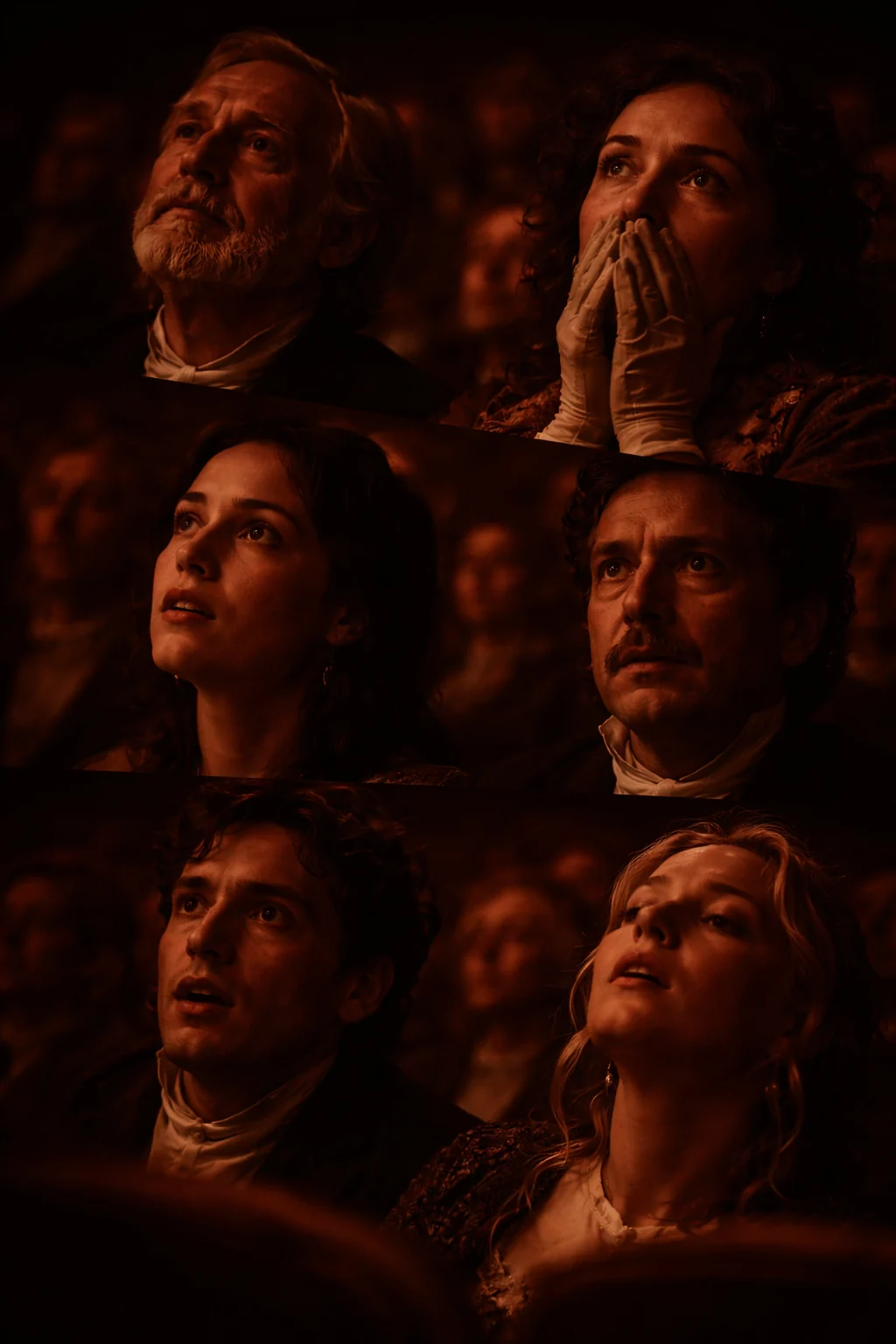
For years, stories claimed that Paganini had spent a long period in prison for murdering a mistress. In some versions, he learned to play on a single string because the others had broken inside his cell. The story strengthened his image as a mysterious criminal, but events did not occur that way.
Paganini was briefly jailed in Genoa in May 1815, although not for murder. He had been involved with Angiolina Cavanna, a twenty-year-old woman who had not reached the legal age of majority, then twenty-one. The couple fled to Parma, she became pregnant, and her father filed a complaint against the musician. Paganini remained in custody for only a few days while the case was investigated (Premio Paganini, n.d.).
Rumour transformed those days in prison into years and a charge related to the relationship into a bloody crime. Paganini attempted to deny the stories, but they were too useful to concert promoters, caricaturists, and audiences.
Falsehood became more profitable than truth.
The Birth of the Supernatural Musician
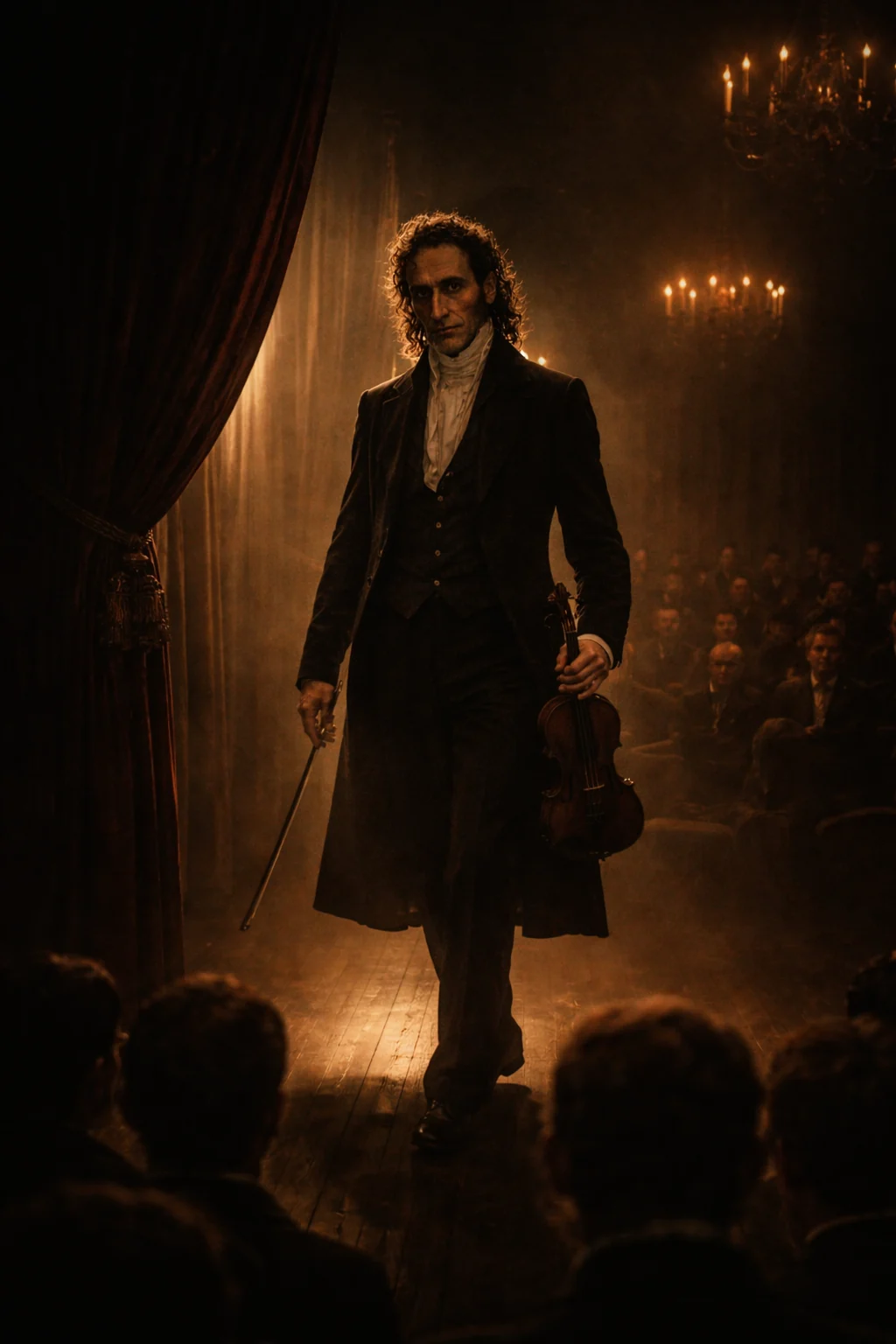
A series of performances at La Scala in Milan in 1813 consolidated Paganini’s reputation in Italy. His international transformation, however, began in Vienna in 1828. He was forty-five when he embarked on the great European tour that later carried him through Germany, France, Britain, and other territories.
His arrival generated excitement comparable to that surrounding rock stars centuries later. Concerts were advertised weeks in advance, tickets could command extraordinary prices, and caricatures portrayed him surrounded by demons. Paganini carefully managed his contracts, travel, and public image. His celebrity was not an accident: it was also a business construction (Sommerfeld, 2021).
His appearance supported the legend. He was exceptionally thin, with hollow cheeks, a prominent nose, long hair, and hands that seemed capable of abnormal extension. He frequently dressed in black and entered the stage with calculated solemnity.
While playing, he lowered the violin and used movements that could appear violent. In a society fascinated by Gothic stories, magnetism, apparitions, and the supernatural, it was easy to transform incomprehensible skill into witchcraft.
Did an Illness Enable Him to Play That Way?
Several doctors and historians have proposed that Paganini may have had Marfan syndrome or a form of Ehlers-Danlos syndrome. Both conditions may involve long extremities or unusually mobile joints, characteristics that could have facilitated certain extensions of the left hand.
Portraits and contemporary descriptions indicate exceptional flexibility. A cast of his right hand has even been studied for anatomical evidence (Pedrazzini et al., 2015).
No retrospective diagnosis, however, can be considered definitive. There is no genetic evidence or modern clinical examination, and artistic images may exaggerate his appearance. Possible hypermobility also cannot explain his virtuosity by itself. Without hearing, discipline, memory, creativity, and thousands of hours of practice, flexible fingers would not have produced the same phenomenon.
An illness, if present, may have provided certain physical conditions. Paganini created the musician.
The Violin Called Il Cannone
The instrument most closely associated with Paganini was a violin made in Cremona by Giuseppe Guarneri “del Gesù” in 1743. Paganini received it early in his career, possibly from an admirer after losing another instrument.
He called it Il Cannone—“The Cannon”—because of the power and resonance of its sound. It was not an interchangeable accessory: Paganini developed a close relationship with the violin and used it throughout much of his career.
In his will, he left it to Genoa on the condition that it be preserved permanently. The instrument still belongs to the city and is displayed in the Palazzo Tursi. It is periodically examined and played to preserve its musical condition (Musei di Genova, n.d.).
While Paganini’s body would be rejected and moved for decades, the violin was destined for his native city, which received it in 1851.
Money, Gambling, and Contradictions
Paganini earned enormous sums. He was a meticulous negotiator, recorded income and expenses, and participated directly in organising his tours. He also developed a reputation as a gambler and seducer. His relationships, betting, and problematic investments fed both his genuine difficulties and the legends surrounding him.
His most disastrous investment involved the Casino Paganini in Paris, a gambling and entertainment establishment that used his name. The venture failed, producing lawsuits and substantial losses. The carefully constructed image of a virtuoso capable of mastering everything began to fracture.
His emotional life was similarly unstable. He had a long relationship with the singer Antonia Bianchi, who gave birth to his only acknowledged son, Achille, in 1825. The couple separated, but the boy remained with Paganini and became his companion, interpreter, and principal source of support during his final years.
The Generous Man Behind the Character
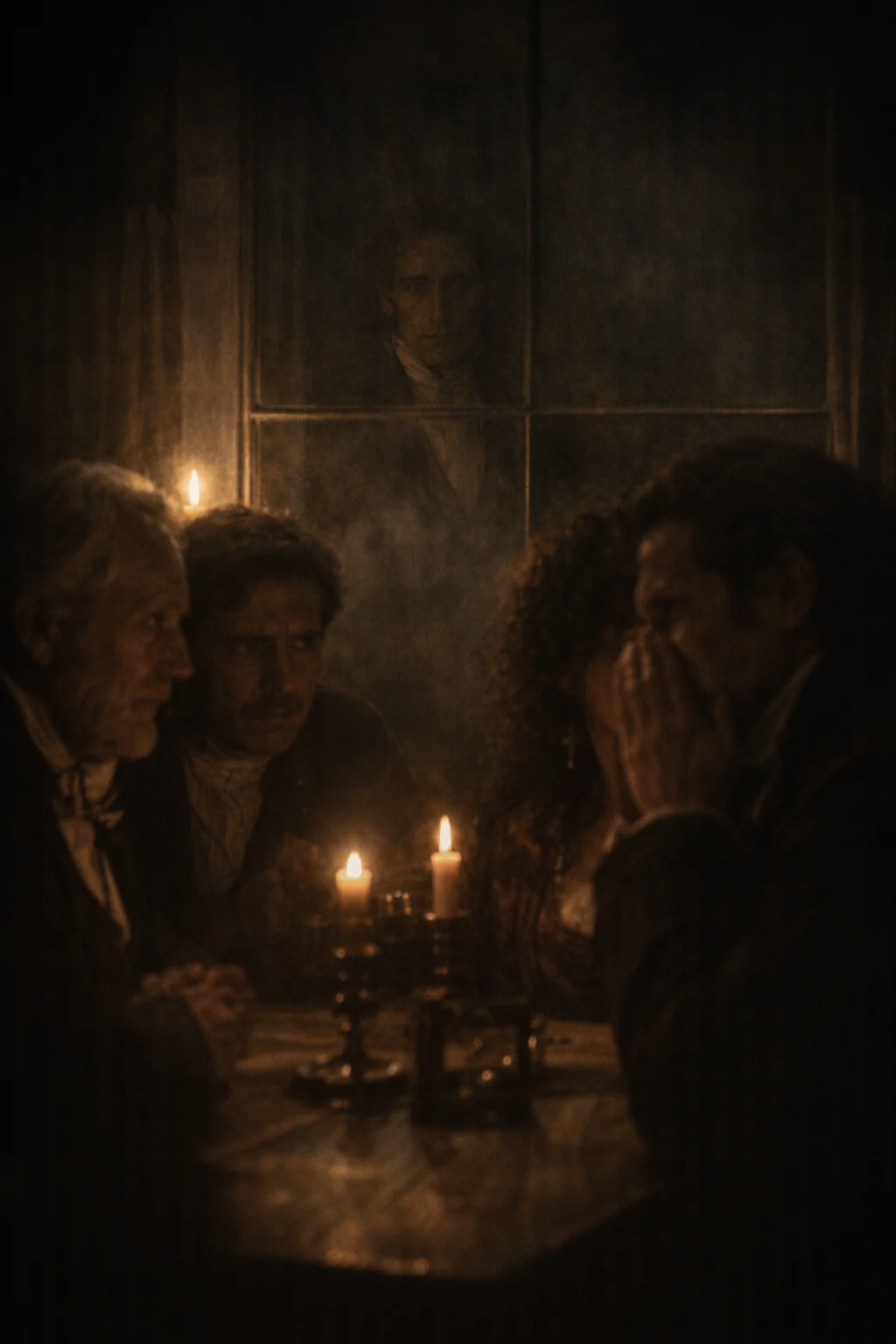
In 1834, Paganini commissioned Hector Berlioz to compose a work in which he could display a Stradivari viola he had acquired. Berlioz wrote Harold in Italy, but Paganini decided the solo part did not give him enough continuous prominence and did not perform its premiere.
Years later, in December 1838, he heard the complete work. Illness had almost entirely taken away his voice, so Achille communicated his words. Profoundly moved, Paganini knelt before Berlioz and kissed his hand.
Two days later, he gave the composer twenty thousand francs—an extraordinary sum—accompanied by a message proclaiming him Beethoven’s musical heir. The money allowed Berlioz to reduce his financial worries and concentrate on composing Roméo et Juliette (Del Mar, 2023).
The gesture contradicts the caricature of Paganini as entirely selfish and miserly. He carefully protected his secrets and income, but he could also recognise another person’s genius publicly and generously.
A Body Destroyed by Illness and Treatment
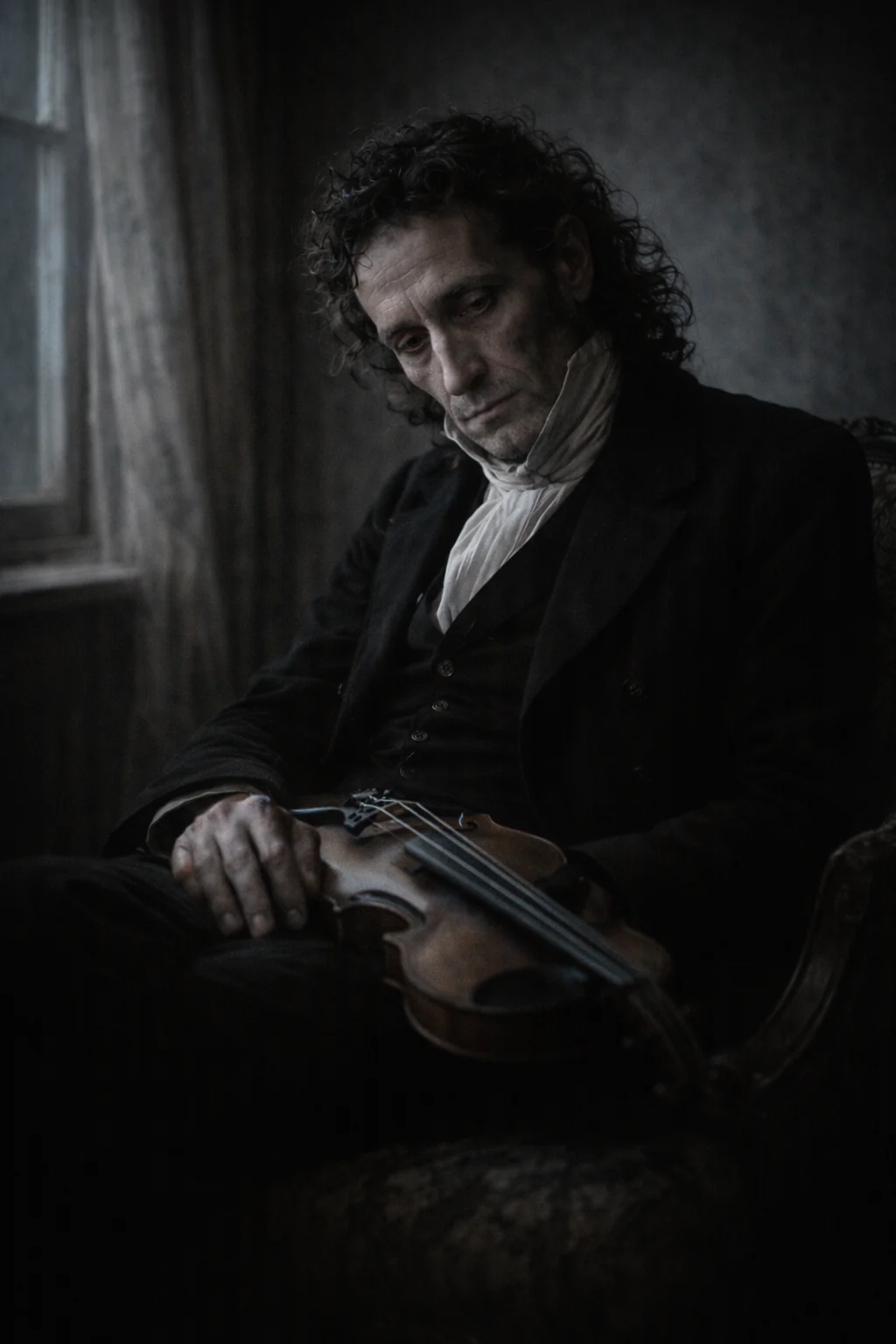
Paganini’s health deteriorated over several decades. He experienced a chronic cough, digestive problems, lesions of the jaw, tooth loss, and eventually a severe disorder of the voice. Doctors suspected tuberculosis and syphilis, although the documentation does not conclusively establish every illness attributed to him.
He was treated with mercury, then commonly employed against syphilis. It could cause excessive salivation, oral lesions, neurological symptoms, kidney damage, and tooth loss. Later analysis of hairs attributed to Paganini found elevated mercury concentrations, supporting the possibility of substantial medical poisoning (Kijewski et al., 2012).
The medicine intended to cure him may have accelerated his physical destruction.
Near the end of his life, he could barely speak. Achille communicated with him by reading his lips and served as his intermediary. The artist who had made the violin “speak” lost his own voice.
A Lesser-Known Fact: Thirty-Six Years to Reach the Villetta
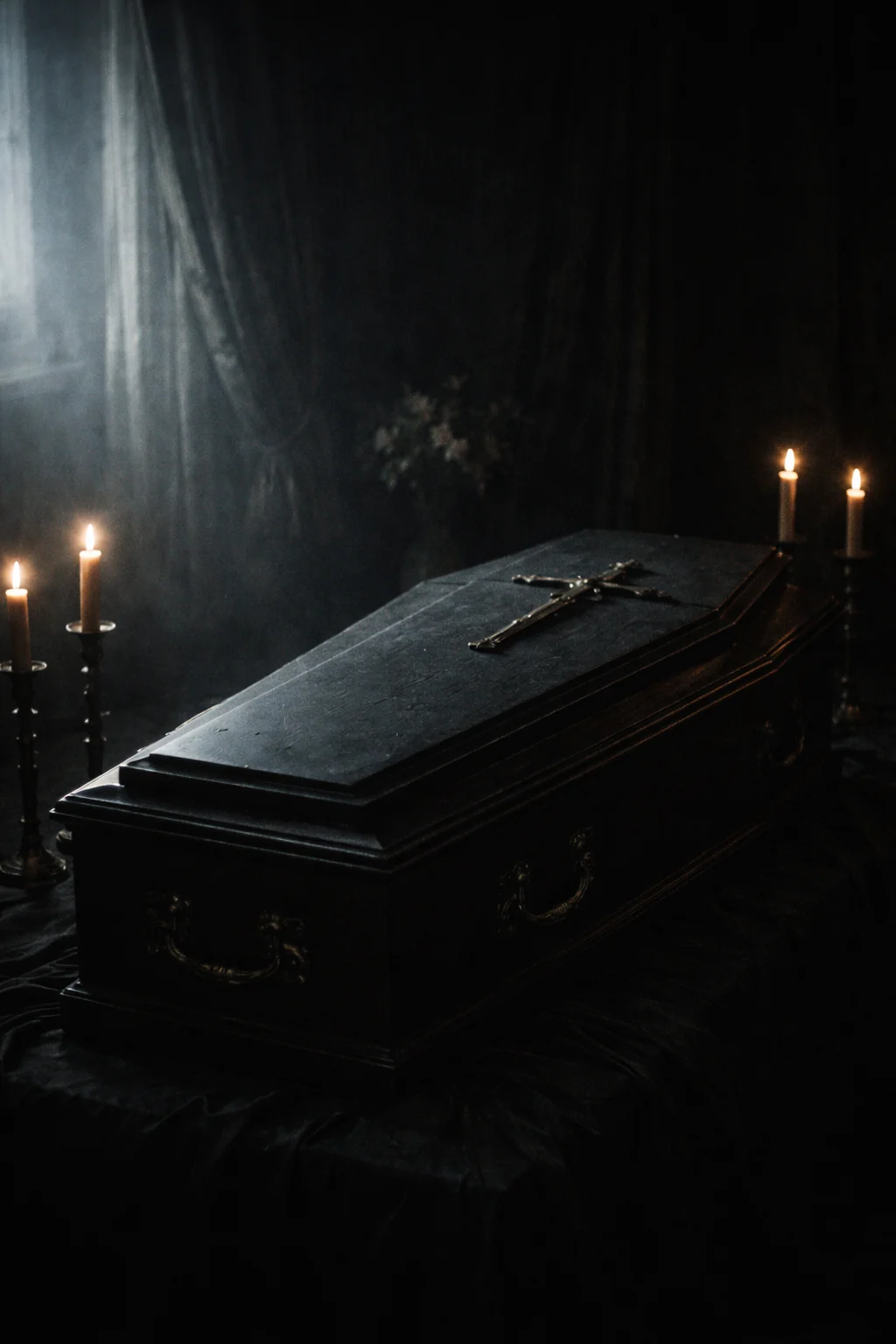
Paganini died in Nice on 27 May 1840 at the age of fifty-seven. When a priest came to administer the last sacraments, the musician apparently believed he was not yet dying or could not clearly communicate his intentions because he had lost his voice. He died before the situation could be resolved.
The bishop of Nice interpreted the encounter as a refusal of the sacraments and prohibited burial in consecrated ground. Stories of the demonic pact and Paganini’s scandalous life influenced the atmosphere surrounding the decision (Dellaborra et al., 2025).
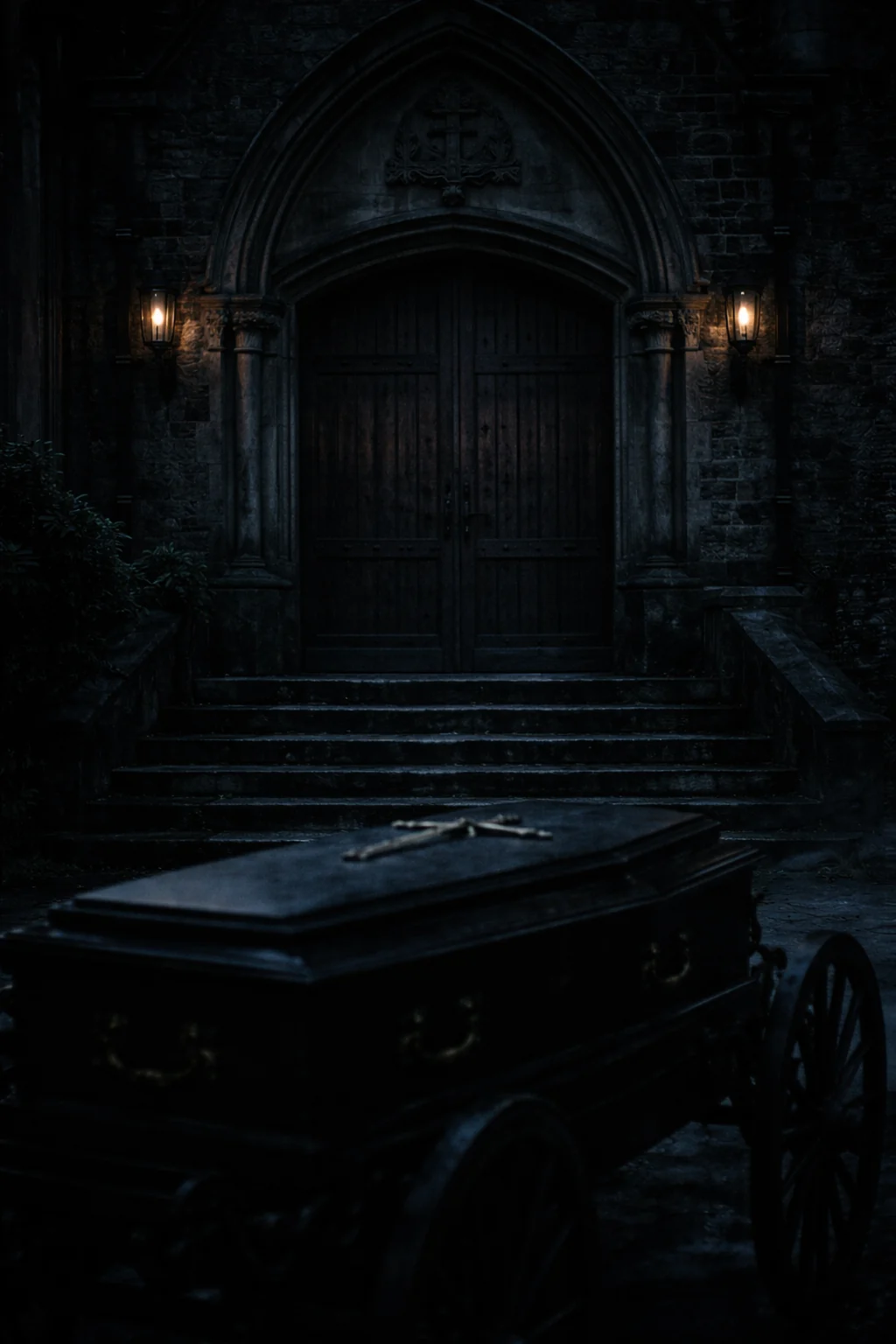
His body was embalmed and remained in temporary locations for years while Achille and Paganini’s friends appealed to ecclesiastical authorities. A religious funeral was eventually authorised in 1844, but local opposition prolonged the dispute. The remains were buried in consecrated ground near Parma in 1853 and moved to the Villetta Cemetery in 1876.
Thirty-six years had passed between his death and that transfer. This does not mean that he remained unburied for thirty-six years: earlier burials and temporary resting places preceded it.
The legend that filled theatres contributed to the atmosphere of distrust surrounding the burial dispute. The demonic character had proved so convincing that it survived the man.
The Price of Appearing Impossible
Paganini belongs among the musicians on the edge of the abyss because he built his triumph on the boundary between admiration and fear, discipline and exploitation, celebrity and public distortion.
He transformed violin technique and inspired composers including Liszt, Schumann, Brahms, and Rachmaninoff. He also anticipated the modern cult of the virtuoso: the artist whose personality, appearance, and private life become inseparable from the performance.
His success carried a price. Europe heard something it could not explain and decided to attribute it to the devil. Paganini partly exploited the mystery but eventually became its prisoner.
Audiences believed he had sold his soul to play as no one else could. The truth was more human and more terrible: he had surrendered his childhood, his body, and almost his entire life to the instrument. When he finally fell silent, the legend continued playing for him.
References
- Dellaborra, M., Iovino, R., Olivieri, N., & Prefumo, D. (Eds.). (2025). L’affaire Paganini: La vicenda post-mortem. Società Editrice di Musicologia. View source
- Del Mar, J. (2023). Orchestral masterpieces under the microscope. Boydell Press. View source
- Kawabata, M. (2007). Virtuosity, the violin, the devil… What really made Paganini ‘demonic’? Current Musicology, 83, 85–108. View source
- Kijewski, H., Beck, J., & Reus, U. (2012). Illness and death of the violin virtuoso Nicolò Paganini—Interpretation based on new hair investigations. Archiv für Kriminologie, 229(1–2), 11–24. View source
- Library of Congress. (n.d.). Gertrude Clarke Whittall Foundation Collection on Nicolò Paganini. View source
- McCurdy, B. (2021, January 7). Song stories: The Paganini legacy. Library of Congress. View source
- Musei di Genova. (n.d.). Il Cannone. View source
- Pedrazzini, A., Martelli, A., & Tocco, S. (2015). Niccolò Paganini: The hands of a genius. Acta Biomedica, 86(1), 27–31. View source
- Premio Paganini. (n.d.). Niccolò Paganini. View source
- Sommerfeld, P. (2021, December 6). Nicolò Paganini: Virtuosic rock star of the 19th century. Library of Congress. View source
More from this collection
Georges Bizet: The Man Who Died Before Hearing Carmen Triumph
Read story →
Antonio Lucio Vivaldi: The Red Priest Who Made Storms Resound and Died in Silence
Read story →