
In this storyOpen index
Benazir Bhutto: Democracy, Dynasty and the Limits of Power
Two terms as prime minister, a political dynasty and an assassination: her achievements, contradictions and the findings of the UN inquiry.
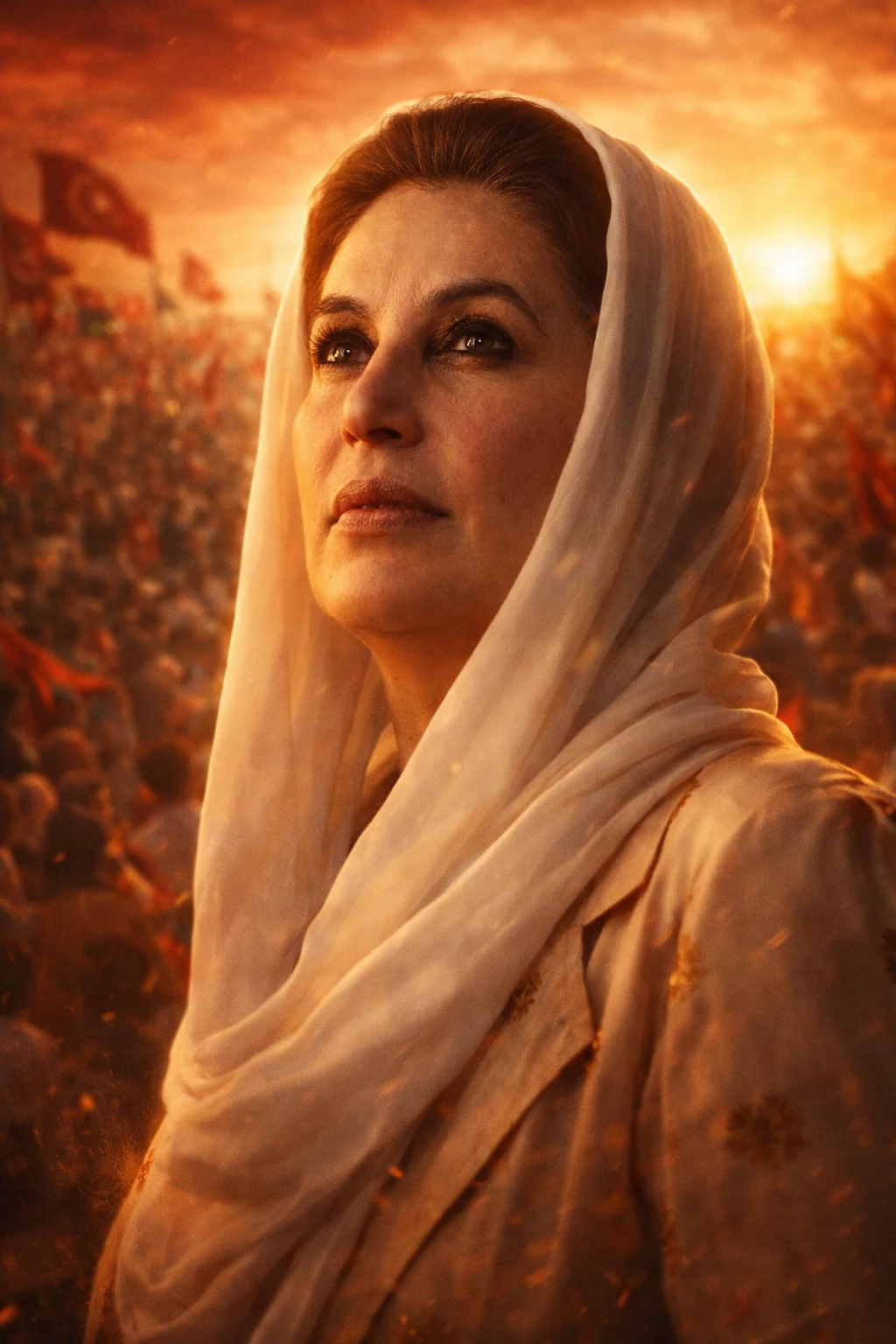
Her father was overthrown and hanged. Two of her brothers died violently or under mysterious circumstances. She was imprisoned, exiled, elected prime minister twice and assassinated after returning to a country she knew might kill her.
Benazir Bhutto broke a barrier that had seemed impossible: in 1988, she became the first woman elected to lead the government of a Muslim-majority country. Her victory transformed Pakistan’s political history and made her an international symbol. Yet her career was also surrounded by corruption allegations, family conflicts, negotiations with military rulers and questions that still persist about her assassination.
She was a victim of power, but also an heir to and participant in a political structure dominated by dynasties. Understanding her requires resisting two equally incomplete portraits: the flawless democratic saint and the opportunist interested only in regaining office.
Benazir Bhutto
Democracy and dynasty
Before government: president of the Oxford Union
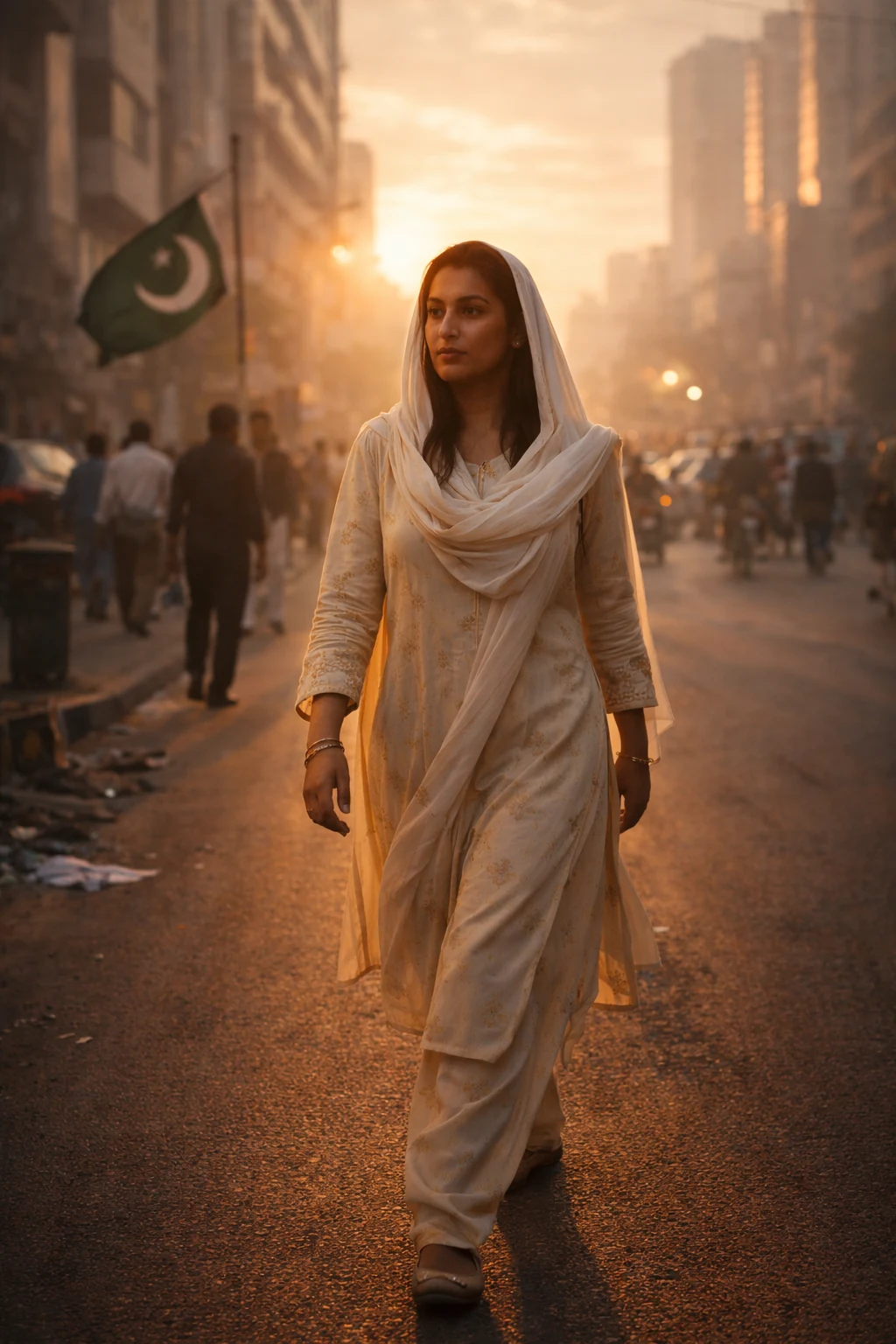
The Oxford Union archive preserves the original programme for Hilary term 1977, naming Benazir Bhutto as president. Its debates and events document an early stage of her public life, before imprisonment, exile and government. This is a contemporary institutional record, rather than a later recollection. The accompanying AI illustration is symbolic and does not depict the Oxford Union or reproduce the document.
The daughter intended for another future
Benazir Bhutto was born in Karachi on June 21, 1953. She was the eldest daughter of Zulfikar Ali Bhutto, founder of the Pakistan Peoples Party—the PPP—and future president and prime minister, and Nusrat Bhutto, who came from an Iranian Kurdish family.
She grew up within one of Sindh’s most powerful landowning families. Her childhood brought privileges unavailable to most Pakistani women. She attended Catholic schools in Karachi and Rawalpindi and traveled to the United States at sixteen to study at Radcliffe College and Harvard.
She continued her education at the University of Oxford, where she studied Philosophy, Politics and Economics and pursued postgraduate work related to law and diplomacy. She was elected president of the Oxford Union in 1976 and served during Hilary term 1977, as the society’s original term programme records (Oxford Union, 1977).
Her father expected her to enter the diplomatic service. Benazir appeared destined to represent Pakistan at international receptions, not to endure prisons, election campaigns and assassination attempts.
Everything changed only days after she returned home in 1977.
The coup that destroyed the family
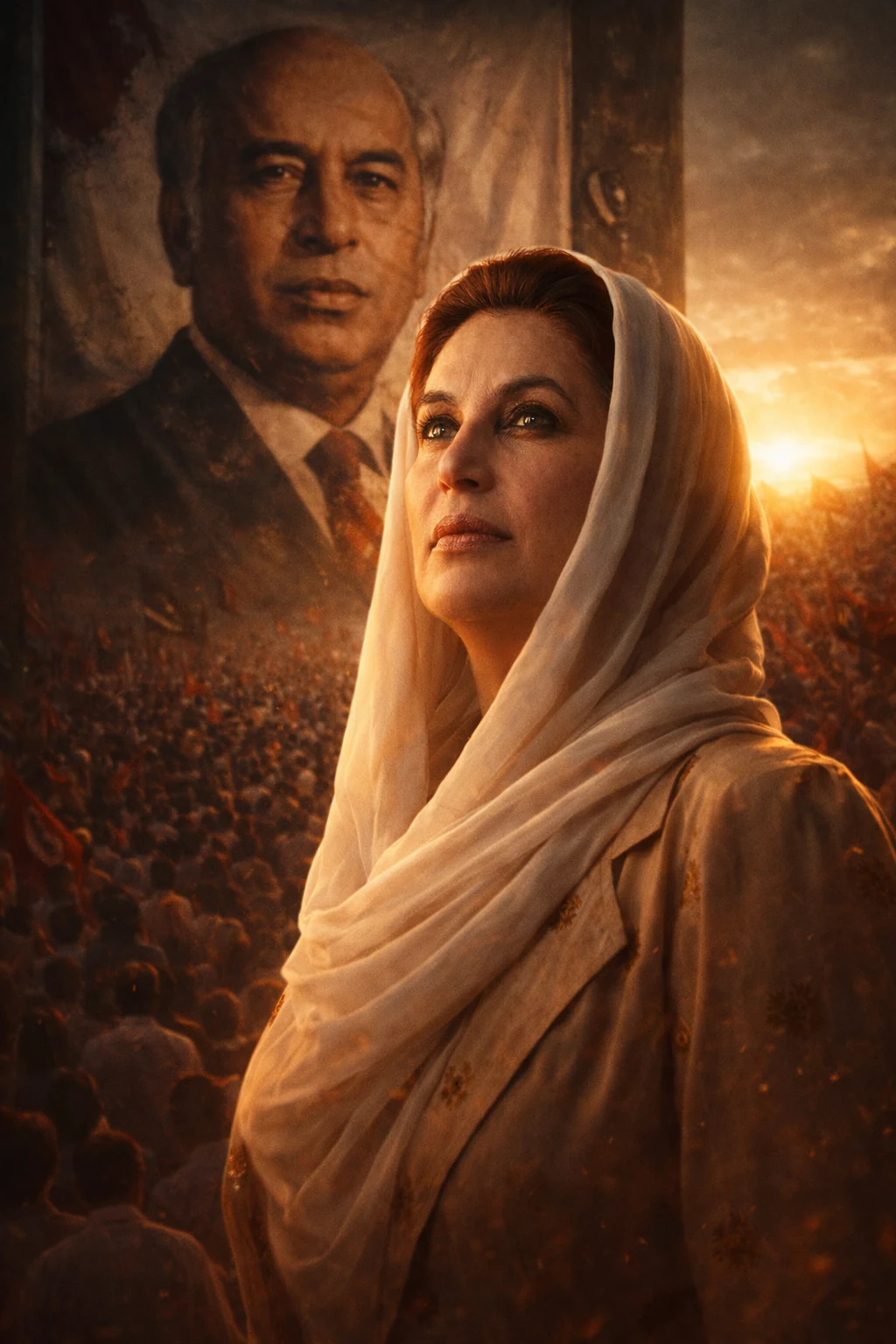
On July 5, 1977, General Muhammad Zia-ul-Haq overthrew Zulfikar Ali Bhutto’s government. Zia had been appointed army chief by the prime minister himself, who believed him to be a manageable and loyal officer.
Zulfikar was accused of participating in a conspiracy to murder a political opponent’s father. The trial was surrounded by allegations of political pressure and serious irregularities. The Supreme Court upheld the death sentence by the narrow margin of four votes to three.
He was hanged on April 4, 1979.
Benazir, then twenty-five, visited her father for the last time before the execution but was not allowed to attend his burial. Over the following years, she repeatedly endured imprisonment, solitary confinement and house arrest. The military authorities hoped to prevent the Bhutto name from becoming the center of opposition.
The result was the opposite. Imprisonment transformed the Western-educated young woman into her father’s political heir.
In 1984, she was allowed to travel abroad for medical treatment and settled in London. From there, she helped lead the Movement for the Restoration of Democracy against Zia’s dictatorship. When she returned to Lahore in April 1986, an immense crowd welcomed her. Her arrival demonstrated that the regime had managed to imprison her, but not to eliminate her family’s symbolic power.
A family pursued by death
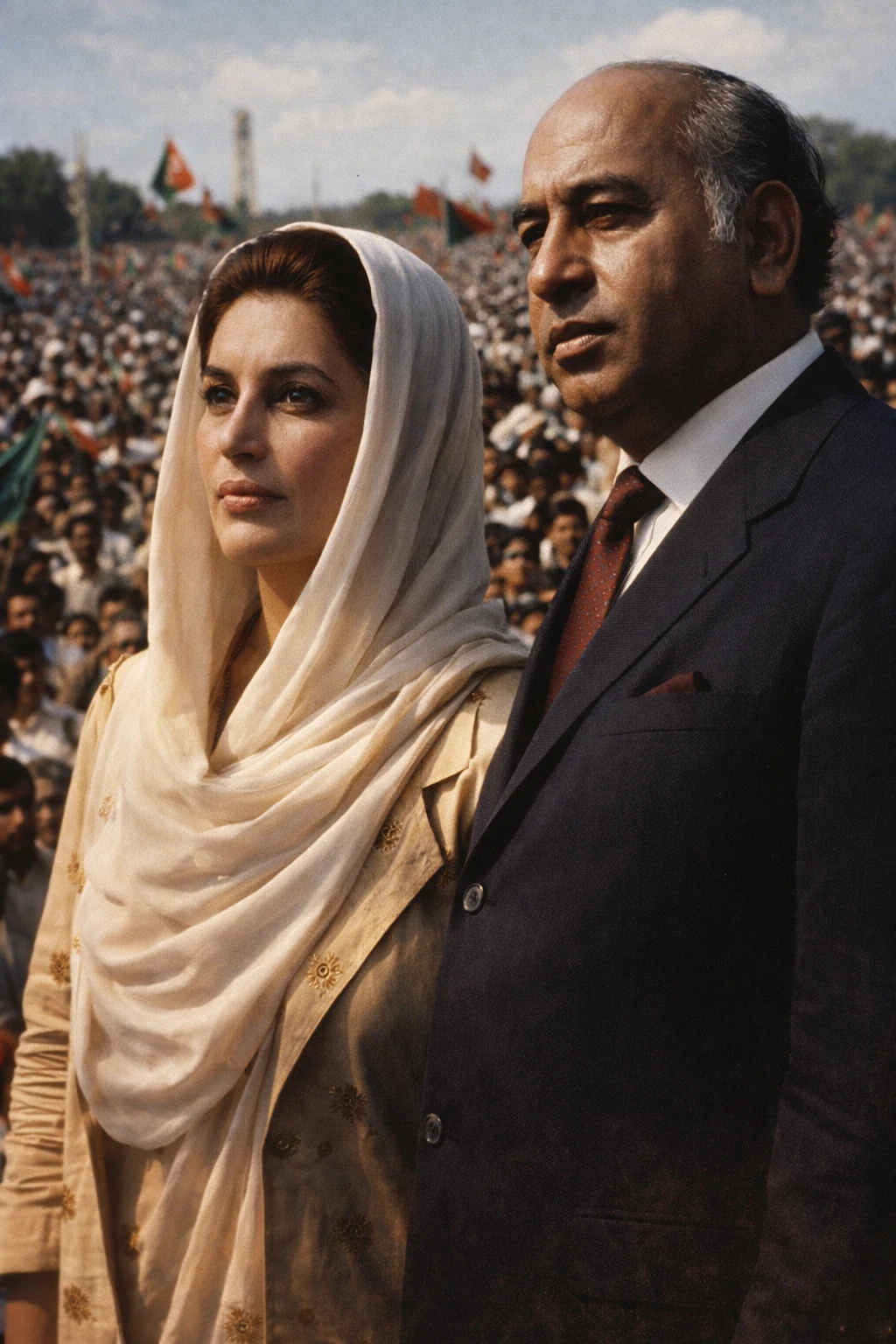
Political power in the Bhutto family was always accompanied by tragedy.
In July 1985, Benazir’s younger brother Shahnawaz was found dead in an apartment in Cannes, France. The circumstances were never satisfactorily explained. His wife was investigated and later released. The family suspected poisoning, but no conspiracy by the Pakistani regime was proved.
Her other brother, Mir Murtaza Bhutto, had chosen a more radical form of resistance against Zia and was associated with the armed organization Al-Zulfikar. Years later, he returned to Pakistan and challenged Benazir’s leadership within both the family and the PPP.
The Bhuttos’ history was not only that of a family persecuted from outside. It was also the history of a dynasty torn apart by its own struggles.
The marriage that became a political liability
In December 1987, Benazir married Asif Ali Zardari. The match was arranged with the participation of both families, although she accepted it and explained that marriage would make political life easier in a conservative society.
Zardari became inseparable from her public career. To supporters, he was the husband of a leader subjected to constant attack. To opponents, he embodied nepotism and the private exploitation of government. The press eventually called him “Mr. Ten Percent,” referring to alleged commissions collected from official contracts.
Many accusations against the couple were used for political purposes, and some cases were overturned or failed to produce final convictions. Nevertheless, repeated investigations, Zardari’s business activities and a lack of transparency deeply damaged Benazir’s credibility.
It would be naïve to deny that political persecution existed. It would be equally simplistic to claim that every suspicion was invented.
The victory that broke a barrier
General Zia died in an airplane crash in August 1988. In that year’s elections, the PPP won the largest number of seats in the National Assembly. On December 2, Benazir Bhutto took the oath as prime minister.
She was thirty-five years old.
Her rise was historic. In a nation where some religious leaders insisted that a woman should not govern men, Benazir headed a government chosen at the ballot box. Her victory challenged the argument that female political leadership was incompatible with a Muslim society.
The office she received, however, was much weaker than it appeared. The president retained constitutional authority to dismiss the government. The military controlled crucial areas such as national security, Afghanistan and nuclear policy. Intelligence agencies remained enormously influential, while Nawaz Sharif’s opposition controlled Punjab, the country’s most populous province.
Benazir was prime minister, but she did not fully control the state.
Her administration attempted to expand press freedom, release political prisoners and increase women’s presence in public institutions. Conflicts with the president, the opposition and the military obstructed many initiatives. In August 1990, President Ghulam Ishaq Khan dismissed her government, citing corruption, nepotism and mismanagement.
The allegations were serious, but the dismissal also reflected a constitutional structure that allowed a president supported by unelected powers to reverse an election’s outcome.
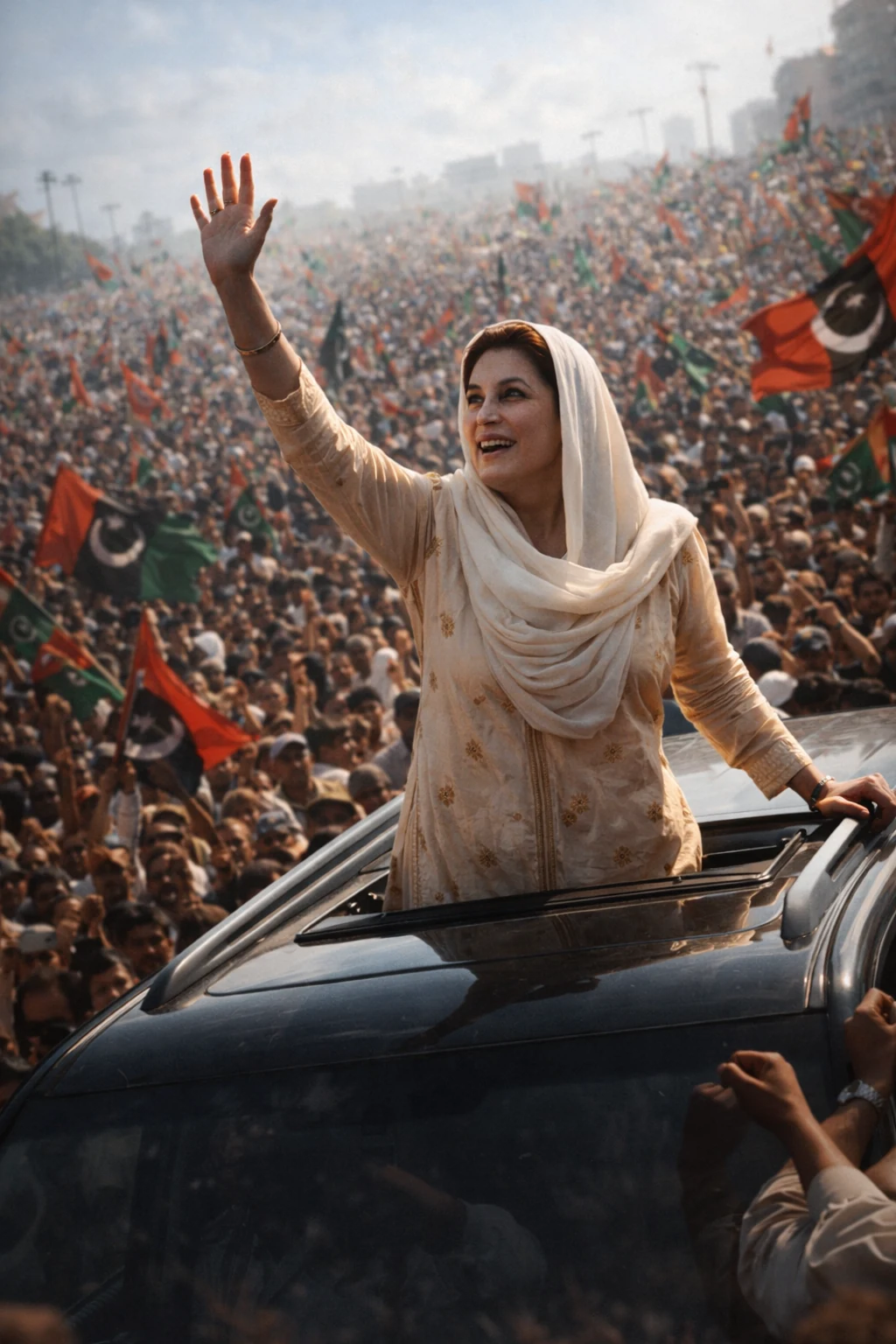
Governing and giving birth
During her first term, Benazir faced an unprecedented experience for an elected leader in the modern era.
On January 25, 1990, she gave birth to her daughter Bakhtawar by Caesarean section. She thereby became the first elected head of government in the modern era to give birth while holding office. Contemporary reporting documented the birth (United Press International, 1990).
This event, often overshadowed by the more tragic episodes of her life, demonstrated that her body itself had become a political battleground. No male prime minister would have been required to prove that fatherhood did not make him incapable of governing.
The second government and incomplete promises
Benazir returned to office on October 19, 1993, after the PPP secured a parliamentary plurality. Her second administration was more experienced but remained constrained by institutional conflict, ethnic and sectarian violence, economic difficulties and corruption allegations.
One of her most enduring legacies was the National Programme for Family Planning and Primary Health Care, commonly known as the Lady Health Workers Programme, launched in 1994. It trained women from local communities to provide basic medical services, vaccination assistance, health education and family-planning support, particularly in rural areas with limited access to health care (Hafeez et al., 2011).
The program survived her government and eventually deployed tens of thousands of women. It was less dramatic than her international speeches, but it directly affected the everyday lives of millions.
At the same time, her administration was criticized for failing to stop police abuse and extrajudicial killings during security operations in Karachi. Benazir’s democratic image coexisted with state practices that were difficult to defend.
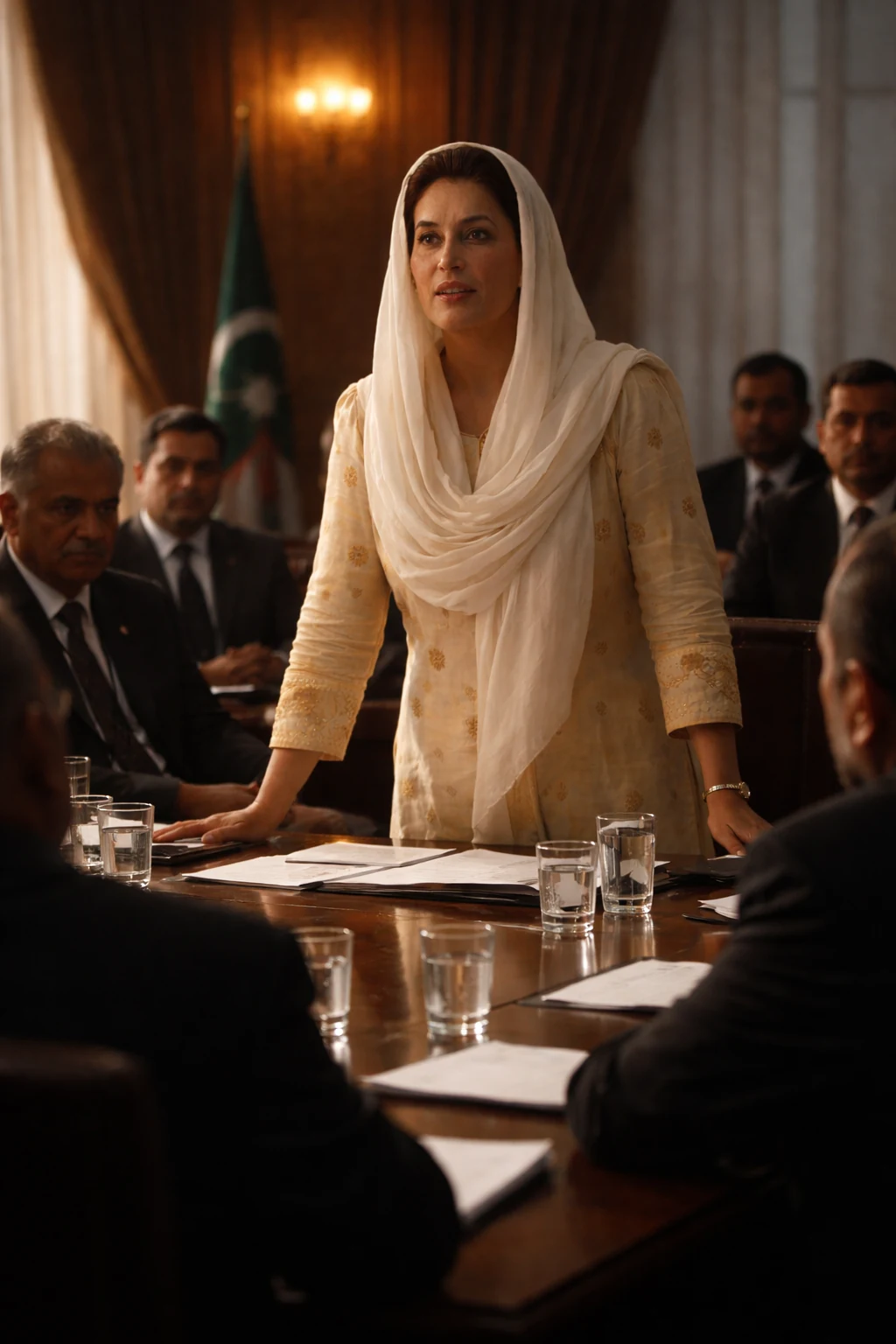
The brother killed near the family home
On September 20, 1996, Mir Murtaza Bhutto and several of his supporters were killed during a confrontation with police near the family residence in Karachi.
The circumstances immediately generated suspicion. Murtaza was a rival of Asif Ali Zardari and publicly challenged Benazir. His supporters accused the government of responsibility, while Benazir argued that the killing was intended to destroy her administration and permanently divide the family.
It has never been proved that she ordered Murtaza’s death. Yet the fact that her brother was killed by police while she served as prime minister was politically devastating.
Her own mother, Nusrat, had sided with Murtaza in the family dispute. Grief ceased to be private and became a political weapon.
Six weeks later, President Farooq Leghari dismissed Benazir’s government. He cited corruption, economic mismanagement and government responsibility for police abuses, including the Murtaza case. Her second term ended on November 5, 1996 (National Assembly of Pakistan, n.d.).
Exile and negotiations with a general
Benazir left Pakistan in 1999, before Pervez Musharraf’s October coup. Amid numerous court cases, she spent years between Dubai and London. From exile, she continued leading the PPP and presenting herself as a democratic alternative to both military government and Islamist extremism.
By 2007, Musharraf faced a deep political crisis. Under international mediation and pressure, representatives of the two leaders negotiated a possible transition. The National Reconciliation Ordinance withdrew certain corruption proceedings against Benazir, Zardari and other politicians.
To her supporters, the agreement opened a path toward civilian elections. To her critics, it demonstrated that Benazir was prepared to bargain with a dictator in order to regain power.
Reality contained both elements. She needed guarantees before returning; Musharraf needed civilian legitimacy. They were not natural allies but adversaries who believed they could use one another.
The first attack
Benazir returned to Karachi on October 18, 2007, after nearly nine years abroad. A vast crowd accompanied her armored vehicle through the streets.
During the night, two explosions struck the procession. More than 130 people were killed and hundreds injured. Benazir survived because she was inside the vehicle’s protected compartment.
The bombing confirmed that the threats were real. Militants linked to Al Qaeda and the Pakistani Taliban regarded her as an enemy because of her public defense of democracy, her identity as a female leader and her willingness to cooperate with Western governments.
Benazir also suspected figures connected to the state apparatus and requested stronger protection, specialized vehicles and electronic jamming equipment. Not all her requests were adequately fulfilled (United Nations Commission of Inquiry, 2010).
She could have left Pakistan again. She chose to continue campaigning.
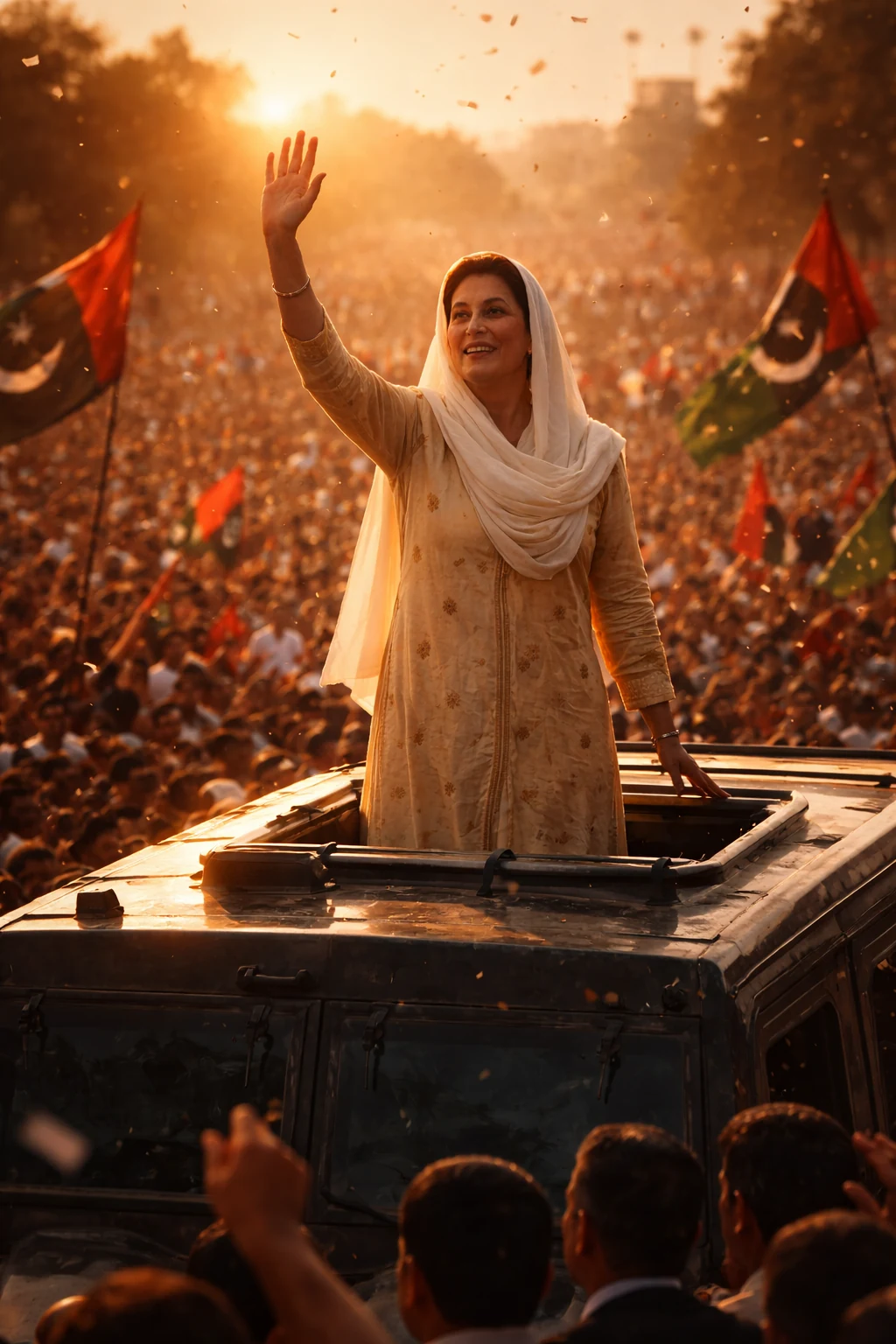
The final rally
On December 27, 2007, she attended an election rally at Liaquat Bagh in Rawalpindi. After the event, she entered her armored vehicle but rose through its roof hatch to wave to supporters.
An attacker approached, fired several shots and then detonated explosives. Benazir suffered a fatal head injury and was taken to a hospital, where she was declared dead.
Official accounts of the precise cause changed, from gunfire to an injury caused by impact with the hatch after the blast. No autopsy was performed. The UN found that police had a duty to request one without needing family permission and rejected shifting responsibility for the omission onto Zardari. The missing examination limited the forensic conclusions.
More disturbing was what happened at the site: police hosed down the crime scene shortly after the explosion, destroying blood, fragments and other potential evidence.
The government quickly blamed Pakistani Taliban commander Baitullah Mehsud. A British investigation supported the conclusion that her fatal head injury resulted from the explosion and impact with the hatch, but it did not determine who organized the assassination.

What the United Nations actually concluded
The United Nations Commission of Inquiry, which issued its report in 2010, did not definitively identify the intellectual authors of the assassination. It concluded that the killing could have been prevented if Musharraf’s government, local authorities and the PPP’s own leadership had taken adequate security measures.
The report also found that the police investigation had been deliberately obstructed. Washing the crime scene caused irreparable damage, evidence collection was inadequate and intelligence agencies restricted investigators’ ability to pursue the case.
The commission discussed the possible participation of jihadist networks but warned that the operation probably required a broader structure than the suicide attacker alone. It also noted that various figures within Pakistan’s establishment could have felt threatened by Benazir’s return.
The report did not establish that Musharraf, the military or a particular agency ordered the crime. Nor did it treat the initial attribution to the Taliban as a solved case: criminal investigation of those who conceived, ordered and carried it out remained the responsibility of Pakistani authorities (United Nations Commission of Inquiry, 2010).
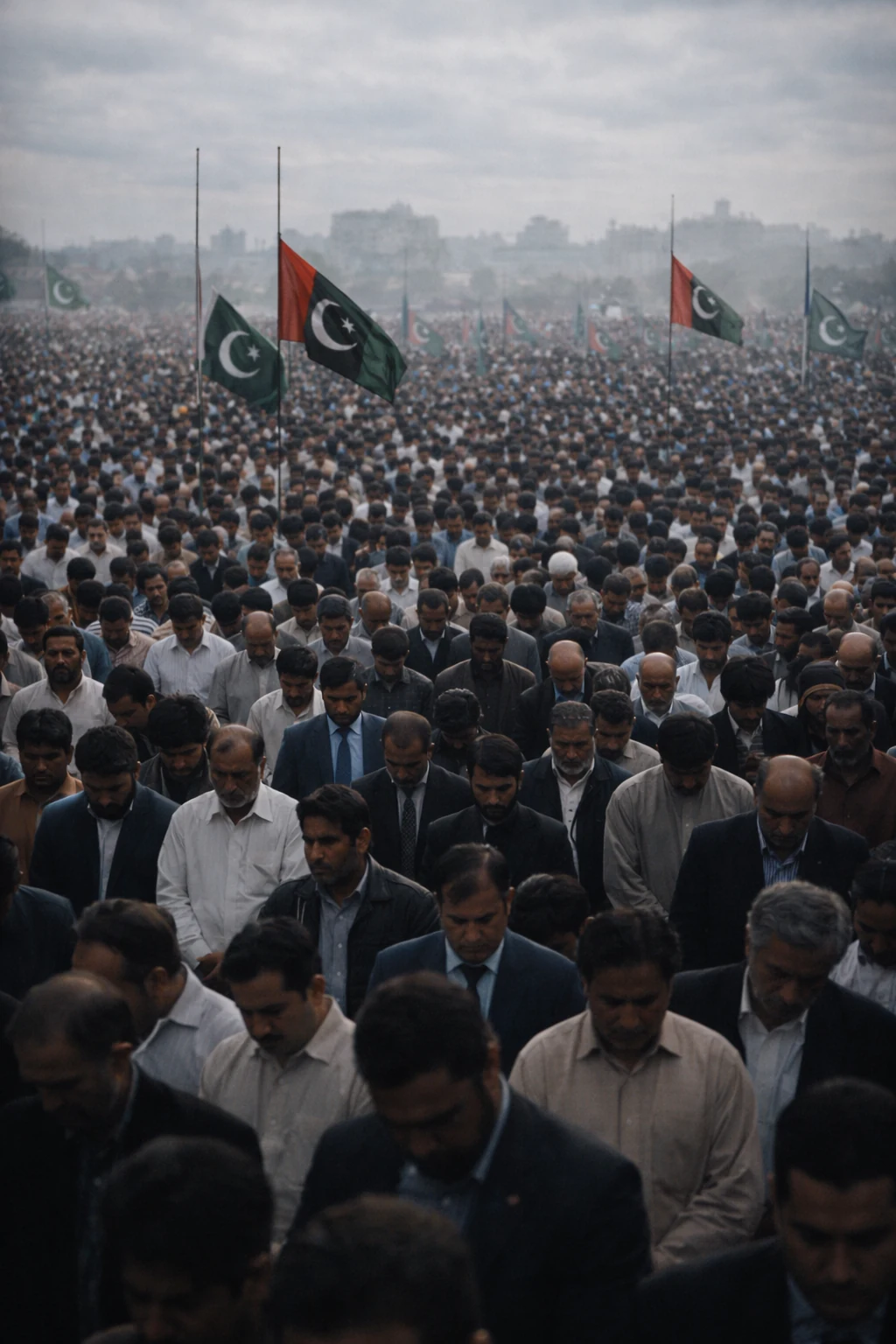
The woman and the dynasty
Benazir Bhutto was a democratic leader who confronted a dictatorship and paid for that resistance with years of imprisonment. She was also the heir of a powerful landowning family and led a party in which a surname functioned as a source of authority.
She opened political space for women, defended elections and challenged religious extremists. Yet her governments did not eliminate patronage, remained surrounded by corruption allegations and tolerated serious abuses by security forces.
Her death strengthened the dynasty further. Asif Ali Zardari assumed control of the PPP and later became president. Their son, Bilawal Bhutto Zardari, inherited the party’s leadership.
The woman who fought to make governments answer to voters never fully liberated her own movement from family succession.
Benazir returned to Pakistan despite the threats. Her career reveals the distance between winning an election and controlling the institutions meant to protect it. She broke a historic barrier for women but could not dismantle the networks of power that constrained her governments and surrounded her death.
References
- Bhutto, B. (1988). Daughter of the East: An autobiography. Hamish Hamilton.
- Oxford Union. (1977). Hilary term 1977: President Benazir Bhutto. Oxford Union Library and Archives. View source
- National Assembly of Pakistan. (n.d.). Prime ministers. View source
- United Nations Commission of Inquiry. (2010). Report into the facts and circumstances of the assassination of former Pakistani Prime Minister Mohtarma Benazir Bhutto (S/2010/191). United Nations. View source
- Hafeez, A., Mohamud, B. K., Shiekh, M. R., Shah, S. A. I., & Jooma, R. (2011). Lady health workers programme in Pakistan: Challenges, achievements and the way forward. Journal of the Pakistan Medical Association, 61(3), 210–215. View source
- United Press International. (1990, January 25). Bhutto gives birth to girl. View source
- Muñoz, H. (2013). Getting away with murder: Benazir Bhutto’s assassination and the politics of Pakistan. W. W. Norton.
More from this collection

Celestine V: The Hermit Who Escaped the Throne but Not Its Power
Read story →
Hans Litten: The Lawyer Who Forced Hitler to Answer to the Law
Read story →