In this storyOpen index
Federico García Lorca: The Poet Whose Murder Was Recorded in a Secret Report
For decades, the dictatorship concealed a police report describing his arrest, execution, and clandestine burial.
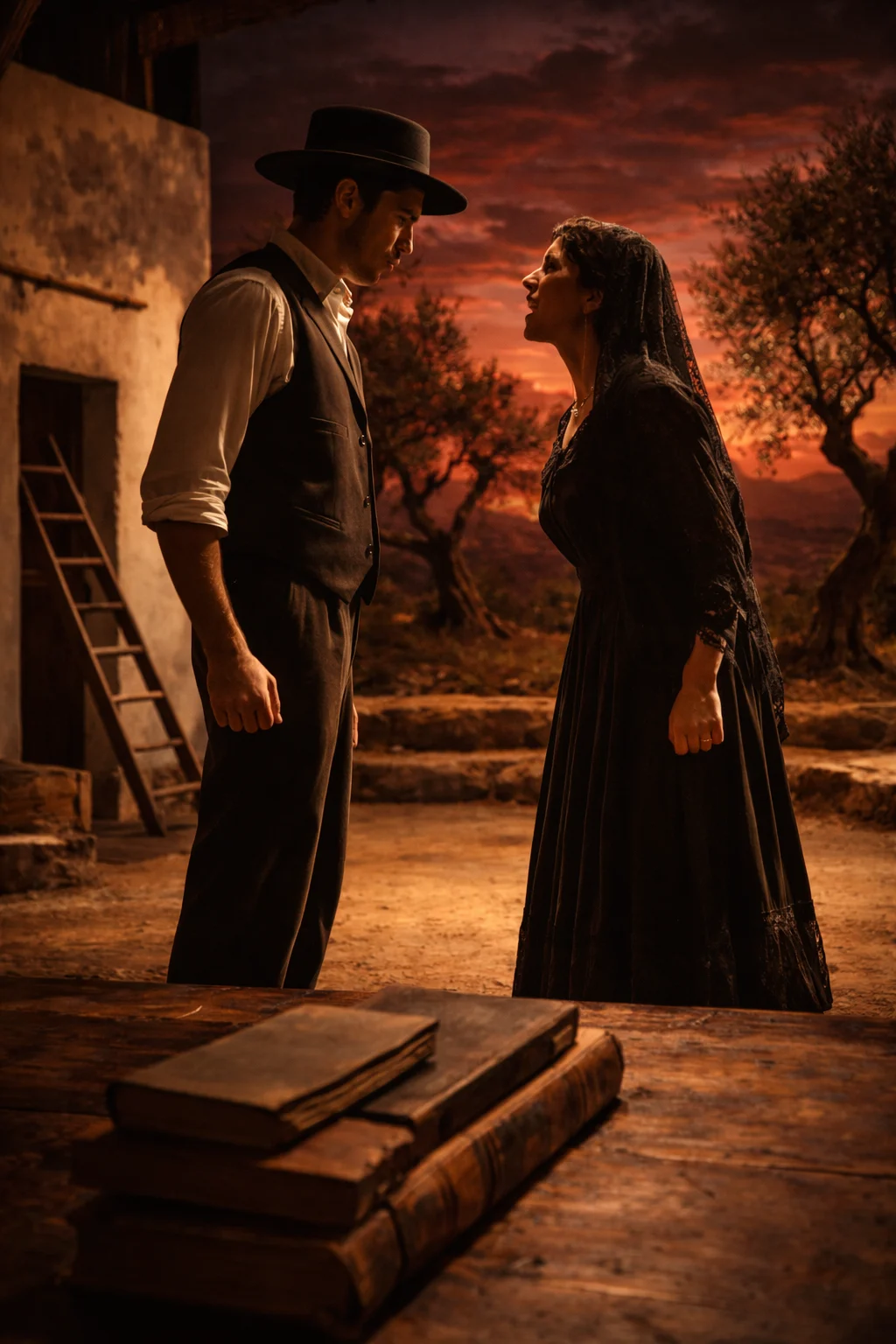
In July 1965, nearly twenty-nine years after Federico García Lorca’s murder, Francoist police prepared a confidential report about his death. The document acknowledged that the poet had been arrested by the authorities, taken to the area around Fuente Grande, shot, and buried in a shallow grave.
The report was not intended for the public. It had been prepared after French writer Marcelle Auclair requested information for her research on Lorca, but she never received an answer. The document remained concealed for decades.
The dictatorship that avoided officially recognizing its responsibility had preserved an account of the crime within its own archives.
Federico García Lorca on video
Discover this story on our YouTube channel.
A life told through places and turning points

Enter the archive
An authentic object preserved by a cultural institution brings us closer to the world behind this life.
- Collection
- Wikimedia Commons
- Rights
- Public domain
Martul, Luís; Luna, Carmen e Golán, María (2002). Xavier Bóveda. Belezas locais, bohemia e aventura emigrante CCG. ISBN 84-95415-60-7.
A poet who first wanted to be a musician
Federico del Sagrado Corazón de Jesús García Lorca was born on June 5, 1898, in Fuente Vaqueros, a village in the province of Granada. From childhood, he displayed a special sensitivity to music. He studied piano and for a time appeared more interested in becoming a composer than a writer.
Music never disappeared from his work. It remained in the rhythms of his poetry, his use of traditional songs, and the importance he assigned to sound in the theater. Lorca did not merely write the words of a play: he imagined how they should sound, move, and occupy the stage.
In 1915, he began studying law, philosophy, and literature at the University of Granada. Academic journeys through Spain introduced him to landscapes, monuments, and communities that inspired his first book, Impressions and Landscapes, published in 1918 (Instituto Cervantes, 2019).
A year later, he moved to Madrid and entered the Residencia de Estudiantes, one of the most important intellectual centers in Spain at the time. There he lived alongside or befriended artists such as Salvador Dalí, Luis Buñuel, and Rafael Alberti. Poetry, theater, painting, cinema, and new European movements circulated through its rooms as parts of the same conversation.
The success that also became a cage
His first theatrical experiences were difficult. The Butterfly’s Evil Spell, staged in 1920, was poorly received. Lorca nevertheless continued experimenting with poetry, puppetry, music, and theater.
The publication of Gypsy Ballads in 1928 brought him enormous popularity. The collection combined traditional forms with avant-garde imagery and transformed the Andalusian landscape into a territory of desire, persecution, and death.
Success also trapped him inside a label. Part of the public began to see him only as a folkloric poet or the literary representative of a picturesque Andalusia. Lorca rejected that simplification. His Gypsy figures were not intended as quaint social portraits; within his poetic universe, they embodied the conflict between individual desire and the forces attempting to suppress it.
In 1929, Lorca traveled to New York. He arrived a few months before the Wall Street crash and encountered a city of skyscrapers, crowds, inequality, and solitude. The experience transformed his language. The poems produced by the journey abandoned much of the recognizable musicality of Gypsy Ballads and embraced violent, surreal, and urban imagery.
Poet in New York did not appear during his lifetime. It was published in 1940, four years after his murder (Instituto Cervantes, 2019). The city that symbolized modern progress became, in his poems, a place where money, dehumanization, and racism threatened the individual.
After New York, Lorca traveled to Cuba. There he delivered lectures, worked on new texts, and found an immediate connection with the island’s music and culture. His stay was brief, but it left a visible mark on poems such as “Son de negros en Cuba.”
The theater that traveled to the villages
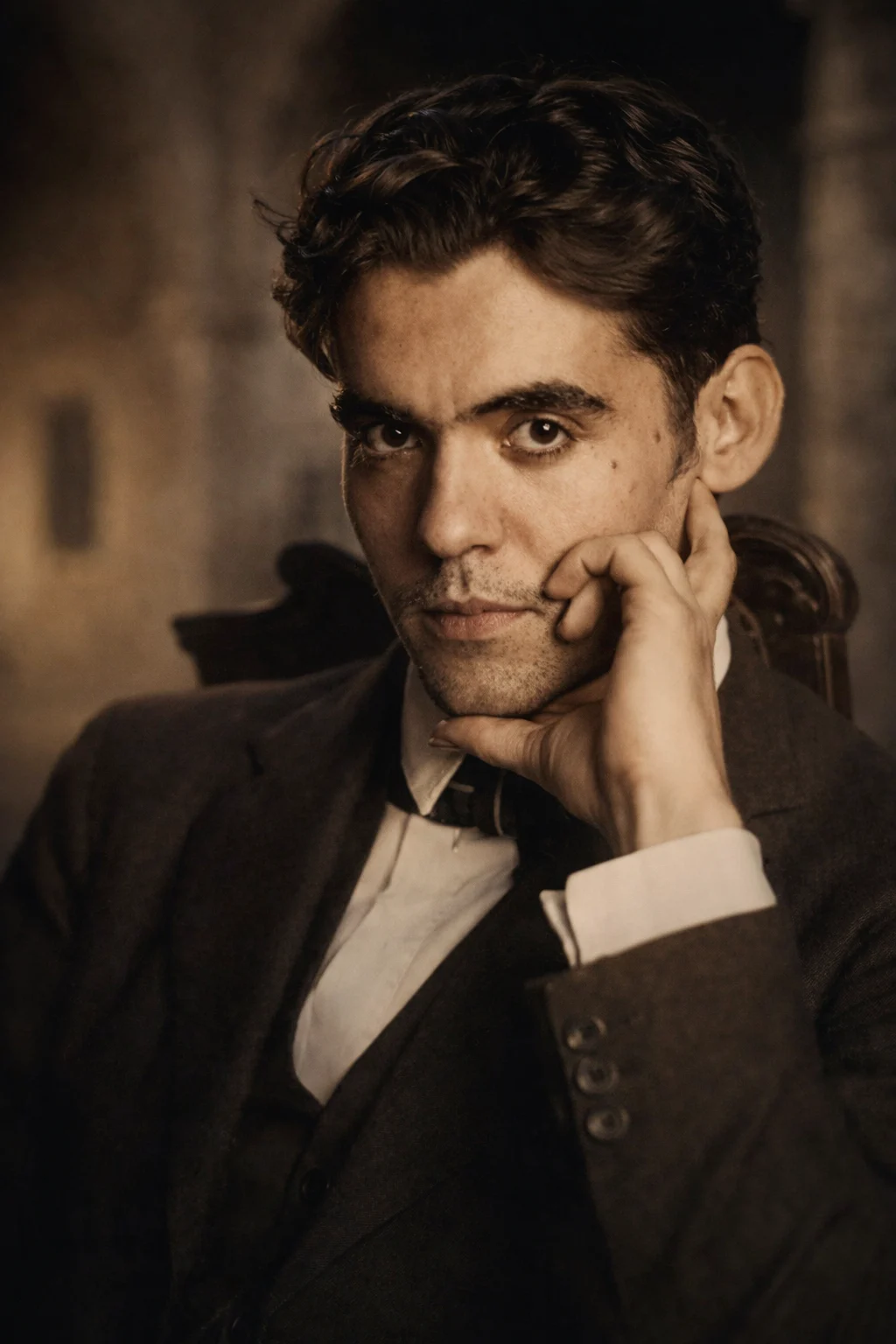
One of the less frequently remembered chapters of his life began during Spain’s Second Republic. In 1931, Lorca and Eduardo Ugarte directed La Barraca, a traveling university theater company created to bring classical Spanish drama to communities that ordinarily had no access to it.
Its members traveled with portable stages, costumes, and sets. They performed works by Cervantes, Lope de Vega, and Calderón de la Barca in public squares and improvised spaces. Lorca did not participate as a distant literary celebrity writing for selected audiences. He helped direct, adapt, organize, and perform.
La Barraca formed part of a broader educational project: to bring Spain’s cultural heritage to rural communities and treat theater as a public good. Its existence also closely associated Lorca with the Republic’s cultural initiatives (Acción Cultural Española, n.d.).
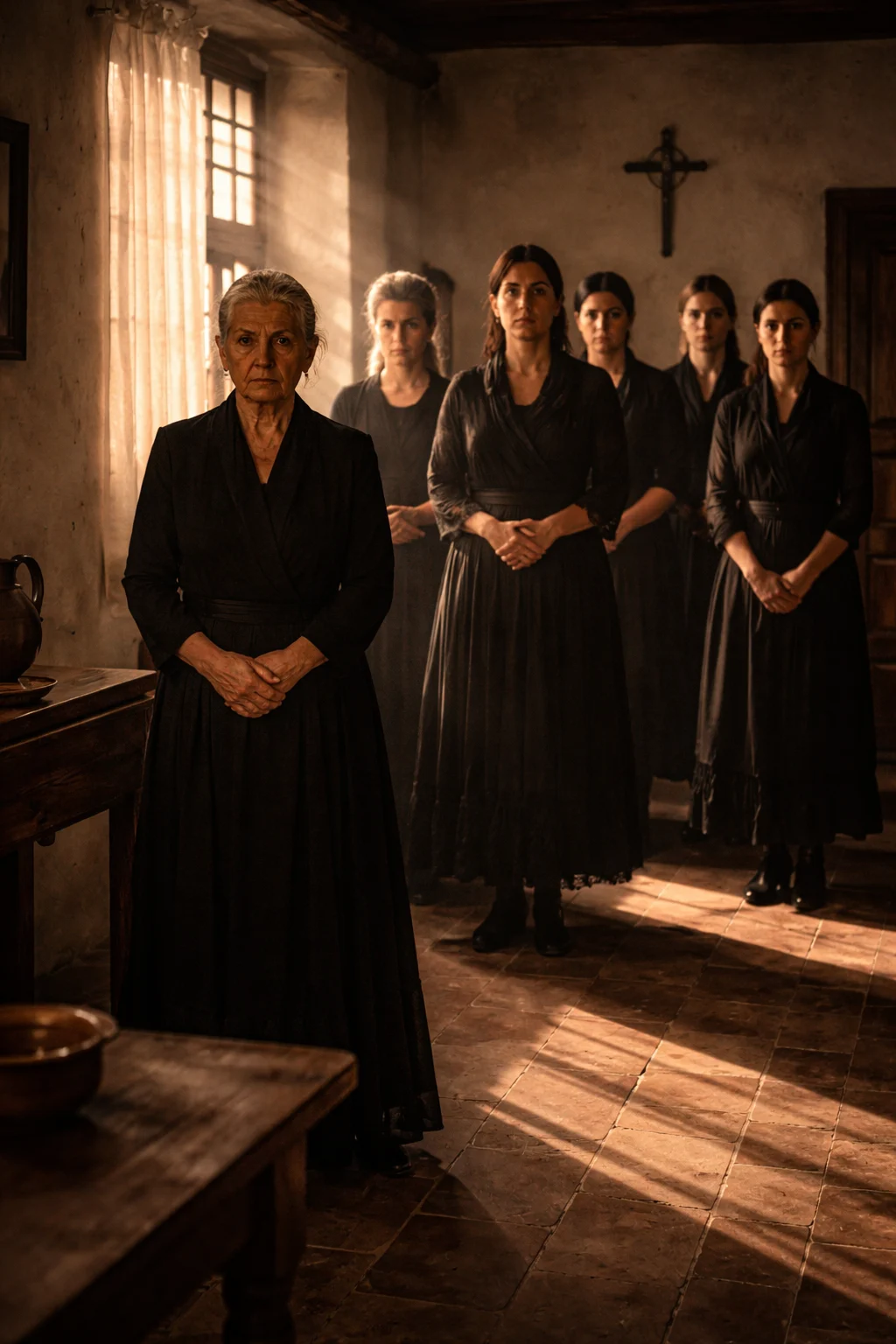
While he traveled through Spain with the company, his own theater reached international maturity. Blood Wedding, Yerma, and The House of Bernarda Alba explored societies in which honor, tradition, and collective surveillance suffocate private desires.
His protagonists do not struggle against fantastic monsters. They struggle against enclosed houses, imposed marriages, rumors, hierarchies, and rules that appear unavoidable. In this sense, repression is not merely a political theme in Lorca’s work. It is an intimate force that invades the body, the family, and language itself.
The identity he was forced to conceal
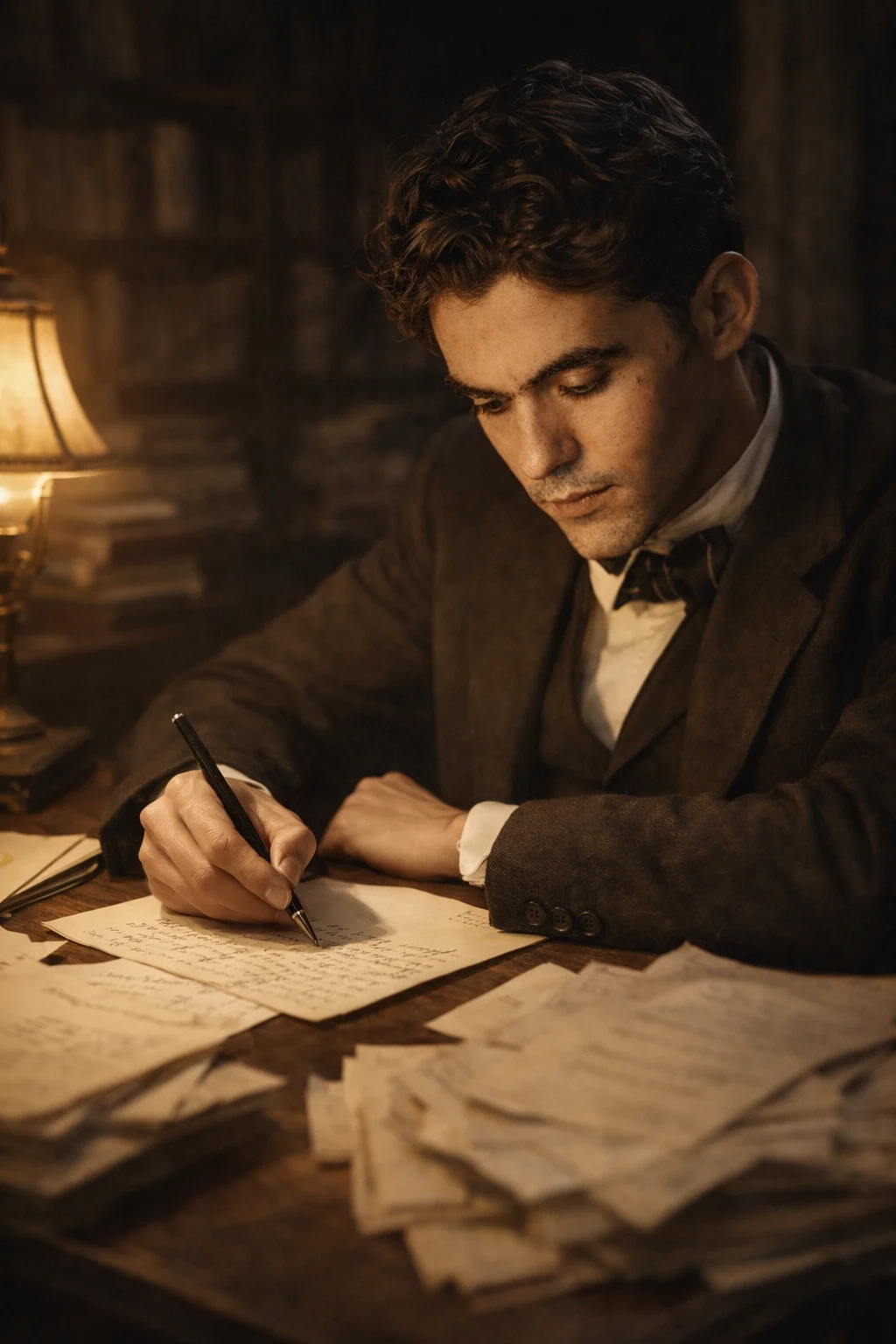
Lorca was gay in a society where living openly with that identity could result in rejection, humiliation, or persecution. His sexuality should not be turned into the sole explanation for his work, but neither should it be erased from his life.
Some of his most explicit love poetry remained unpublished for years. The Sonnets of Dark Love, written during his final years, were not officially published as a complete collection until nearly half a century after his death. That delay reveals the extent to which the poet’s public image continued to be controlled even after his murder.
During the 1930s, Lorca achieved substantial theatrical success, particularly following his time in Buenos Aires. He did not belong to a political party or hold government office, but he publicly defended culture, expressed liberal views, befriended figures associated with the left, and became a symbol of the Republic’s cultural energy.
In the polarized Spain of 1936, those associations could be enough to make him a target.
Granada, August 1936
The military uprising against the Republic began in July 1936. Lorca was then in Granada, a city that rapidly fell under insurgent control. His family was harassed and their residence searched. Fearing for his safety, he took refuge in the home of the Rosales brothers, personal friends of his who were known members of the Falange.
Their protection failed.
Lorca was arrested in mid-August. The Rosales family attempted to intervene, but the poet remained in the authorities’ custody. Shortly afterward, he was transported toward the area between Víznar and Alfacar and executed without trial. His death is generally placed during the night of August 18–19, although some details remain disputed.
Nor can the crime be attributed to one cause with absolute certainty. His proximity to the Republic, his family connections, old local rivalries, his celebrity, and the persecution of his homosexuality may all have contributed to the decision to kill him. Reducing the murder to a single motive would oversimplify a repressive operation for which no signed execution order has been found.
The document that broke the silence
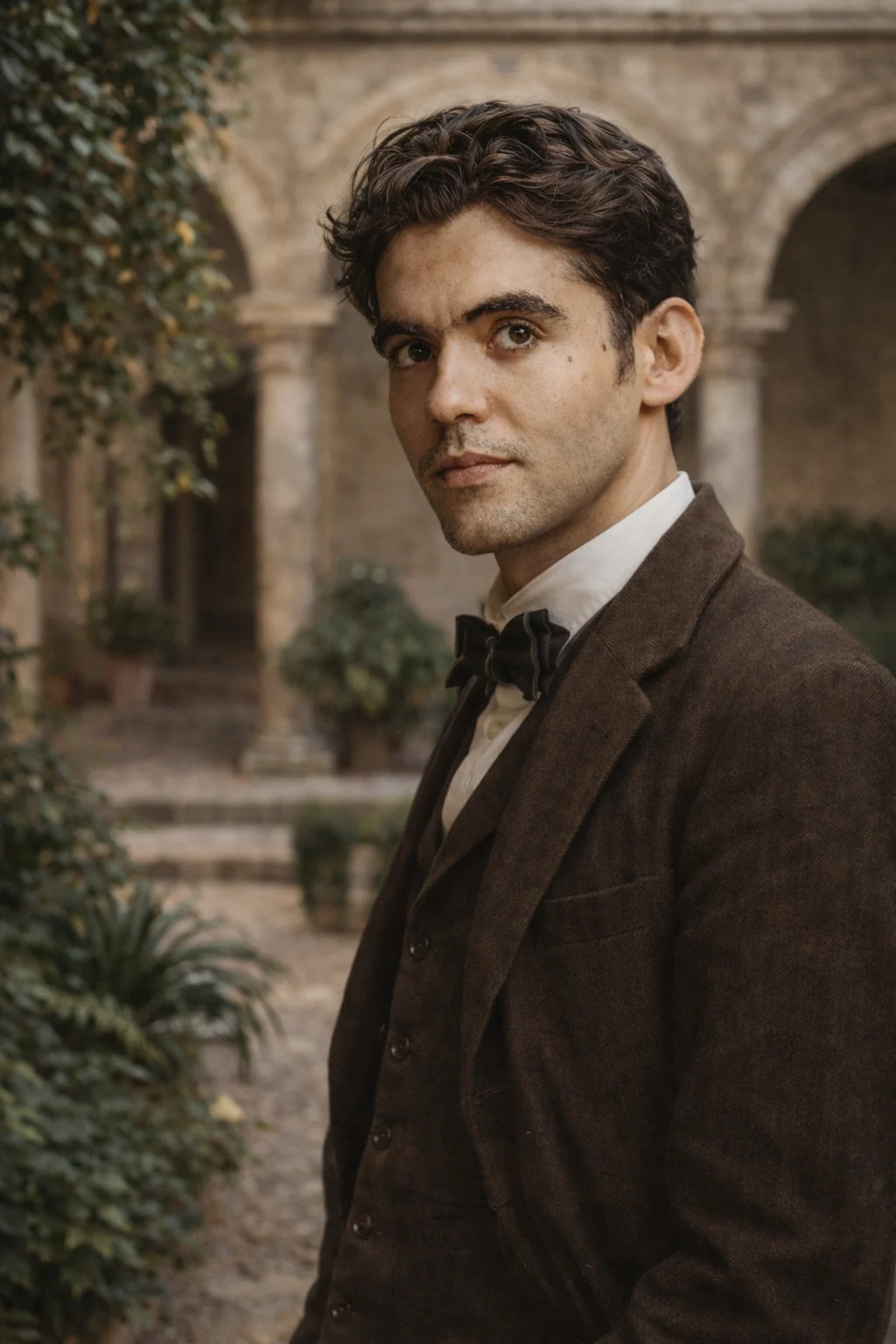
The 1965 police report described Lorca through the ideological and homophobic accusations typical of the regime. It labeled him a socialist and Freemason and condemned his sexuality as “abnormal.” Some of its allegations, including his supposed membership in a Masonic lodge, have never been demonstrated.
The report must therefore not be treated as a neutral source. Its prejudices are obvious. Its significance lies elsewhere: it acknowledges that the arrest was organized, that Lorca was transported by the authorities, and that he was subsequently shot and secretly buried (Constenla, 2015).
The document itself admitted that information about the burial place was confused. It placed the grave in a ravine near Fuente Grande, at a point described as extremely difficult to locate. Subsequent searches have failed to identify his remains conclusively.
Lorca thus became one of the best-known victims of the Spanish Civil War and, at the same time, one of its thousands of missing people.
What they could not bury
Federico García Lorca was thirty-eight when he was murdered. He had completed The House of Bernarda Alba only weeks earlier but never saw it performed. The drama premiered in Buenos Aires in 1945, starring Margarita Xirgu, while his works continued to encounter censorship in Spain.
His body has not been identified. There is no confirmed grave where admirers can leave flowers. Yet the attempt to erase him produced the opposite result.
His manuscripts, his characters, and the theater he had carried into public squares survived. So did the question running through much of his work: What happens when a society forces people to conceal what they truly are?
The secret report of 1965 was intended to keep information confined within the dictatorship’s archives. Today it serves as evidence of what the regime attempted to silence. Lorca was murdered and hidden in an unknown grave, but his voice ultimately proved far more difficult to bury than his body.
References
- Acción Cultural Española. (n.d.). La Barraca: Teatro y Universidad. Ayer y hoy de una utopía.
- Biblioteca Nacional de España. (n.d.). García Lorca, Federico.
- Constenla, T. (2015, April 23). Lorca murdered after “confessing,” says Franco-era police report. El País.
- Instituto Cervantes. (2019, March 27). Federico García Lorca: Biografía.
- Instituto Cervantes. (2019). Bibliografía de Federico García Lorca.
More from this collection
Miguel Hernández: The Poet Whose Voice Survived Prison
Read story →
Sylvia Plath: The Poet Who Lived Beneath a Bell Jar and Hid Spring Inside Her Final Poems
Read story →