
In this storyOpen index
Samuel Morse: The Painter Who Taught Electricity to Write
Before changing global communications, Samuel Morse hoped to transform American painting. Then he taught electricity to write.
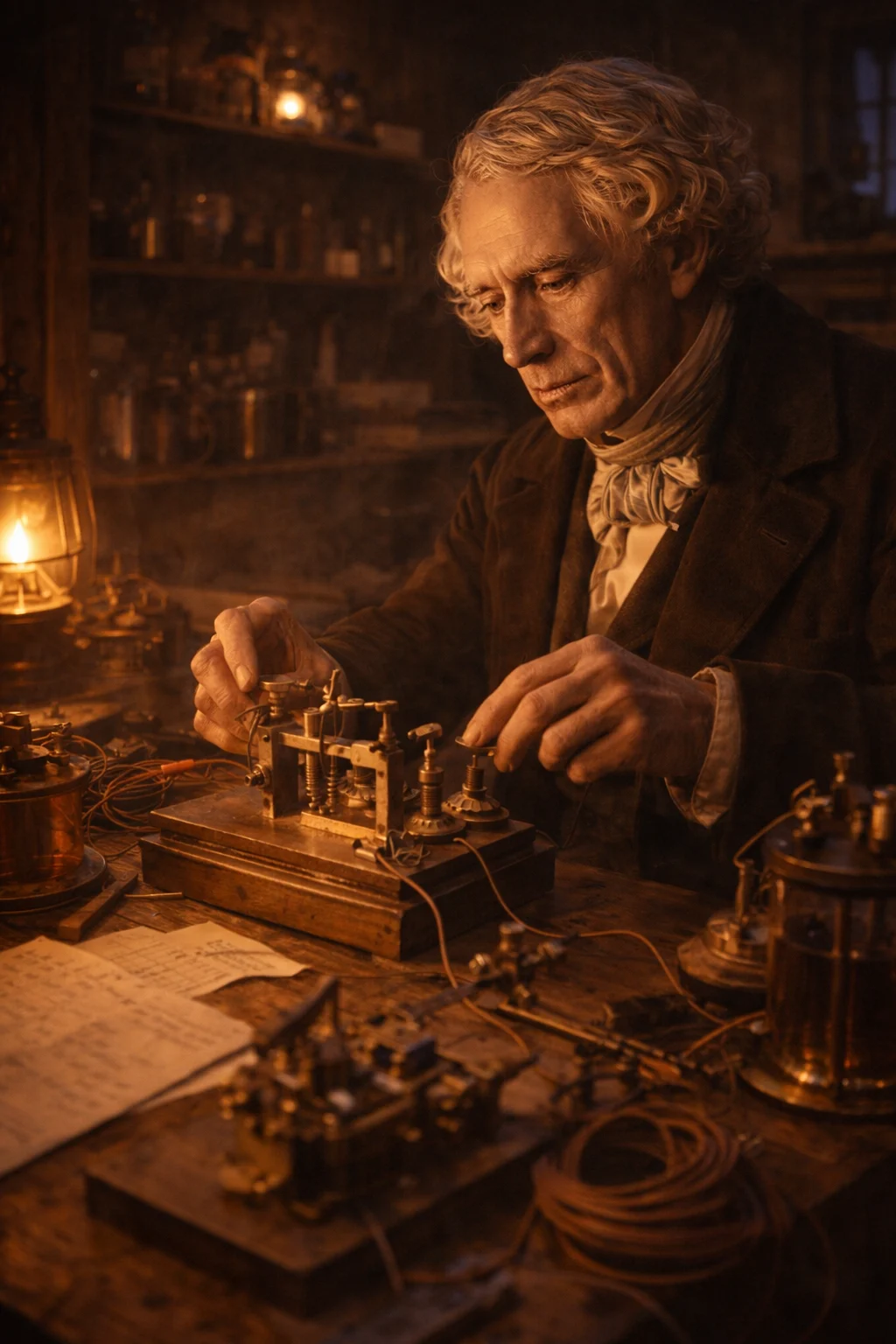
Featured historical fact: The system known as “Morse code” was not solely the work of Samuel Morse. His associate Alfred Vail made essential improvements to the apparatus and probably played a decisive role in developing the alphabetical system of dots and dashes. The exact division of credit remains debated by historians.
Before changing global communications, Samuel Morse hoped to change American painting.
For much of his life, he was neither an inventor, an engineer, nor a professional scientist. He earned his living by painting portraits, founded an artistic institution, and traveled to Europe to study the great masters. The idea that ultimately defined him appeared after he had turned forty, while returning from France aboard a ship.
Morse realized that if an electrical signal could travel almost instantly through a wire, it might also carry words.
The proposal appeared simple. Turning it into a practical technology required more than a decade of experiments, debt, disputes, and collaborations that were later partly hidden behind a single surname.
Samuel Morse: the painter who taught electricity to write
Discover this story on our YouTube channel.
A life told through places and turning points
![[Portrait of a Young Man]](https://images.metmuseum.org/CRDImages/ph/web-large/DP-45355-001.jpg)
Enter the archive
An authentic object preserved by a cultural institution brings us closer to the world behind this life.
- Collection
- The Metropolitan Museum of Art
- Rights
- Public Domain / Open Access
Gilman Collection, Gift of The Howard Gilman Foundation, 2005

A young man divided between art and electricity
Samuel Finley Breese Morse was born on April 27, 1791, in Charlestown, Massachusetts. His father, Jedidiah Morse, was a Congregational minister, geographer, and defender of a deeply religious vision of society. His mother, Elizabeth Ann Finley Breese, encouraged his artistic inclinations.
Morse attended Yale College, where he was not an exceptional student. He became interested in lectures on electricity presented by professors such as Benjamin Silliman and Jeremiah Day, but at the time regarded the phenomenon as a scientific curiosity rather than a profession.
What he truly wanted was to paint.
After graduating in 1810, he traveled to England to study art with Washington Allston. In London, he received an academic education based on anatomy, classical history, and large-scale compositions. His work The Dying Hercules attracted recognition and encouraged his ambition to become a history painter.
When he returned to the United States, however, he discovered that few patrons wanted to pay for enormous mythological scenes. Portraits offered a more reliable way to survive. Morse began traveling between cities, painting politicians, merchants, and prosperous families.
His sitters included former president John Adams and the Marquis de Lafayette. His talent was genuine, although he never achieved the artistic fame he desired.
The news that arrived too late
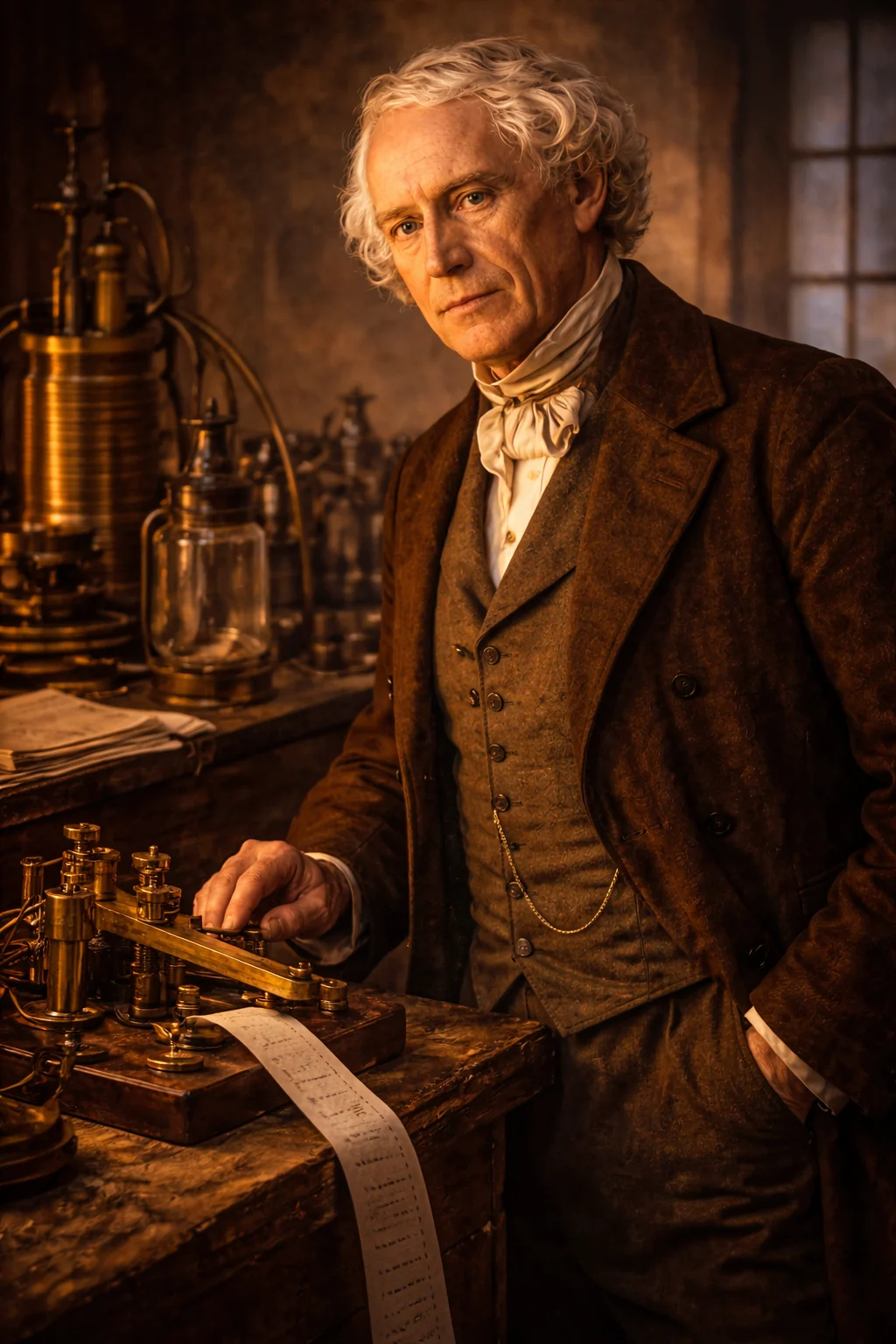
In 1825, Morse was in Washington working on a portrait of Lafayette when he received a letter from his father. His wife, Lucretia Pickering Walker, had suddenly become seriously ill after giving birth.
Before Morse could return to New Haven, another message arrived: Lucretia was dead. By the time he reached home, she had already been buried.
This tragedy is frequently presented as the precise moment Morse decided to invent instantaneous communication. It is a powerful story, but it simplifies the chronology. There is insufficient evidence to claim that he immediately began designing the telegraph because of his wife’s death.
The episode does demonstrate the ordinary slowness of communication at the time. News traveled by messenger, horse, stagecoach, or ship. A person could die, be buried, and disappear before a relative only a few hundred miles away received the first warning.
Morse remained committed to art for several more years. The telegraph had not yet truly entered his life.
The founder of an artistic institution
Morse was not a failed painter who quickly abandoned his brushes. He occupied an important position in the development of American art.
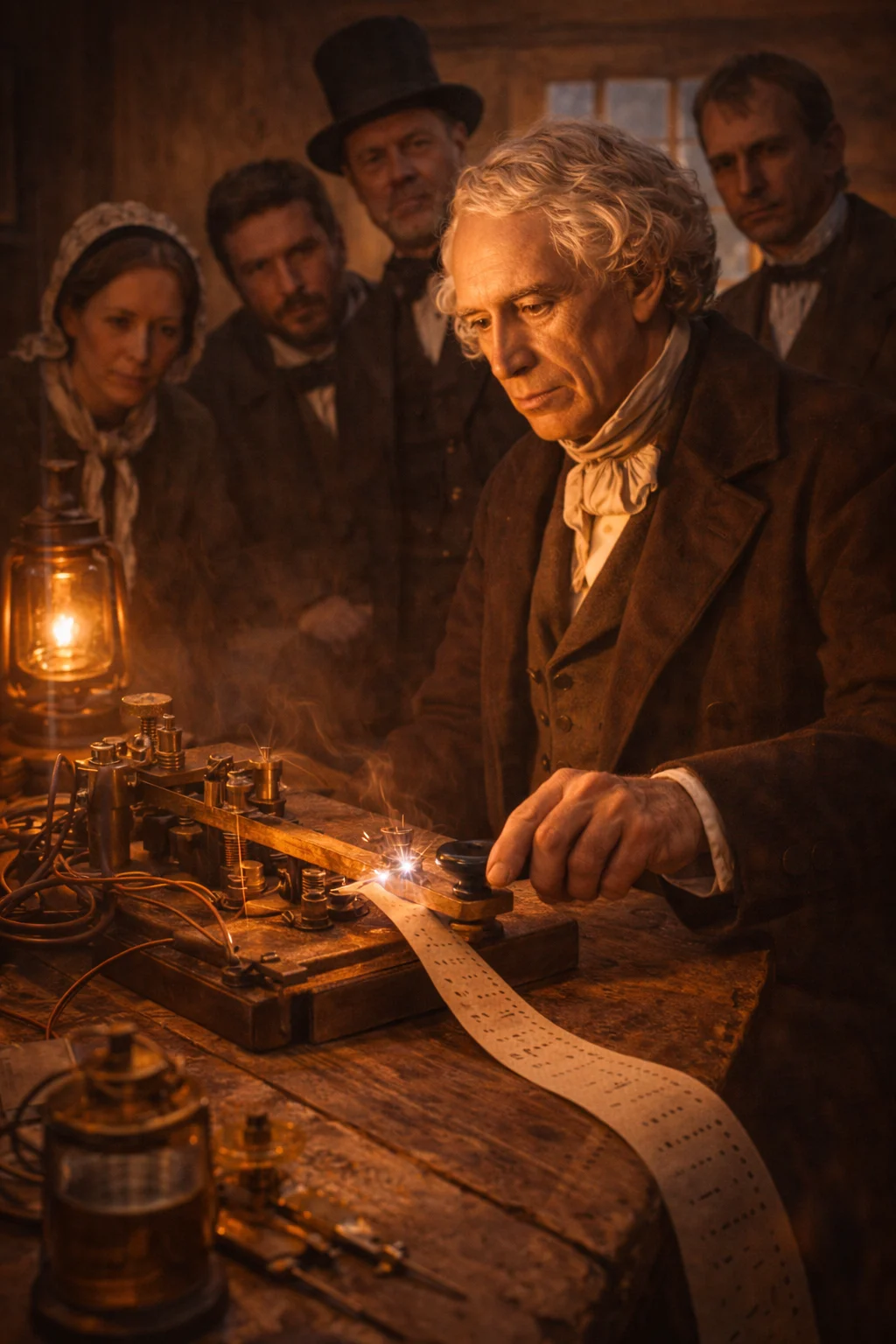
In 1826, he helped establish the National Academy of Design in New York and became its first president. He remained associated with the institution for decades and argued that American artists should control their own education and exhibition spaces.
Between 1831 and 1832, he worked in Paris on one of his most ambitious paintings, Gallery of the Louvre. The canvas brought miniature reproductions of numerous masterpieces from the museum together inside a single imaginary room. It functioned as a portable museum intended to introduce European art to American viewers.
The project demanded enormous labor but did not achieve the expected financial success. Decades later, it would be recognized as one of Morse’s most important paintings.
It was during his return voyage from Europe that his life moved in another direction.
A conversation in the middle of the Atlantic
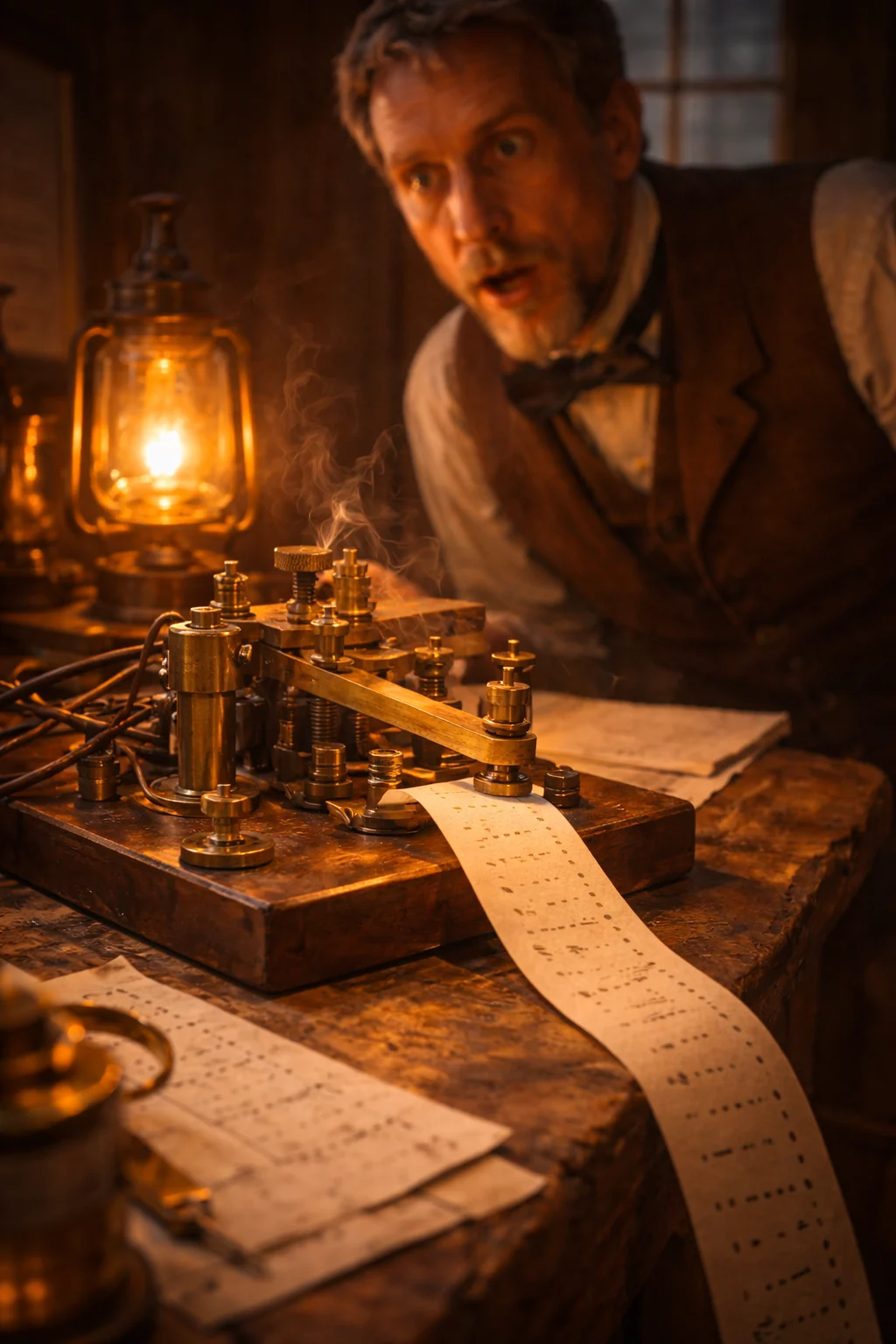
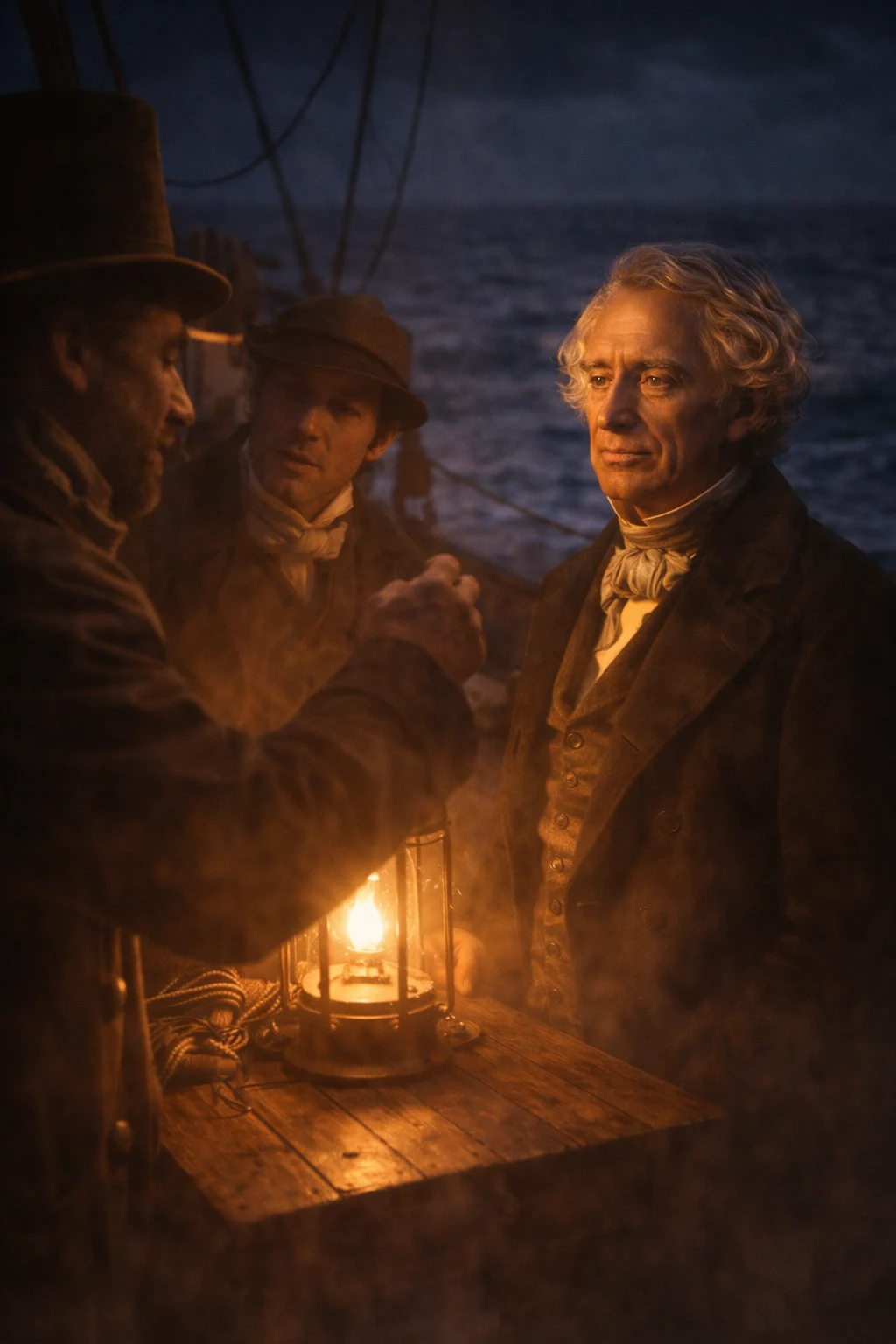
In October 1832, Morse sailed home aboard the ship Sully. During the voyage, passengers discussed European experiments involving electricity and electromagnetism.
Morse understood that an electrical current appeared to move extremely rapidly through a conductor. According to his later recollections, he began wondering whether the presence and absence of that current could be organized to represent information.
Before disembarking, he made sketches for a possible telegraph.
He was not the first person to imagine electrical communication. European scientists and inventors had already constructed different devices, and during the same decade William Fothergill Cooke and Charles Wheatstone would develop a commercial system in Britain.
Morse’s contribution was his pursuit of a relatively simple arrangement: a circuit, a principal wire, an electromagnet, and coded signals capable of traveling over great distances.
An idea, however, was not yet a functioning network.
The collaborators behind the inventor
Morse built his first devices while working as a professor of art and design at the University of the City of New York, later known as New York University. He had little money, limited technical knowledge, and serious difficulty making the signal operate across long distances.
Professor Leonard Gale helped him understand physicist Joseph Henry’s advances in electromagnetism. Using this knowledge, Morse increased the range of his experiments.
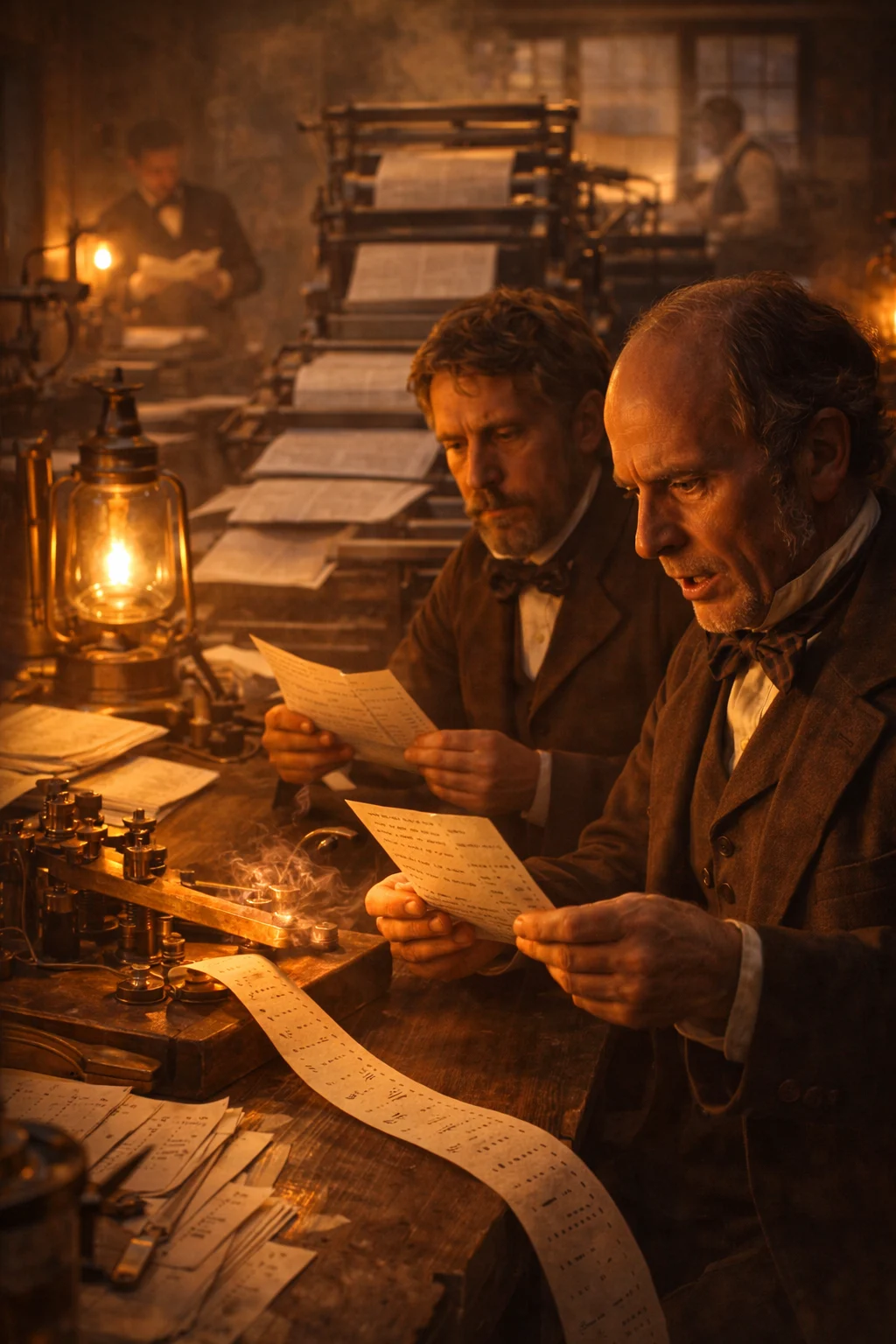
In 1837, he met Alfred Vail, a young man with mechanical experience whose family owned the Speedwell Ironworks in New Jersey. Vail contributed money, technical ability, and a workshop in which more precise instruments could be constructed.
His role was fundamental. Vail improved the telegraph key, receiver, and other parts of the system. Evidence also suggests that he played an important part in transforming Morse’s original code.
Morse’s initial plan used numbers that had to be located in a dictionary to identify the corresponding words. The later system assigned combinations of short and long signals directly to letters and numbers. This structure became the foundation of American telegraph code.
Not enough documentation survives to determine precisely what each man created. Some historians assign Vail a decisive influence; others credit Morse with the central concept and regard Vail’s contributions as improvements made within their joint project.
Morse’s name ultimately identified both the machine and the code. Vail’s was left much closer to a footnote.
The cable that failed underground
Morse applied for patents and conducted demonstrations, but he needed funding to construct a sufficiently long line. For years, he attempted to persuade politicians and investors that his system had practical value.
In 1843, the United States Congress finally approved an appropriation of $30,000 to build an experimental line between Washington and Baltimore.
The project began with a failure. The wires were placed underground inside pipes, but the insulation was inadequate and the signals deteriorated. Part of the budget disappeared without producing a reliable system.
Ezra Cornell, who would later establish Cornell University, was working on the project as the contractor responsible for placing the pipes. He recommended abandoning the underground method and suspending the wires from poles.
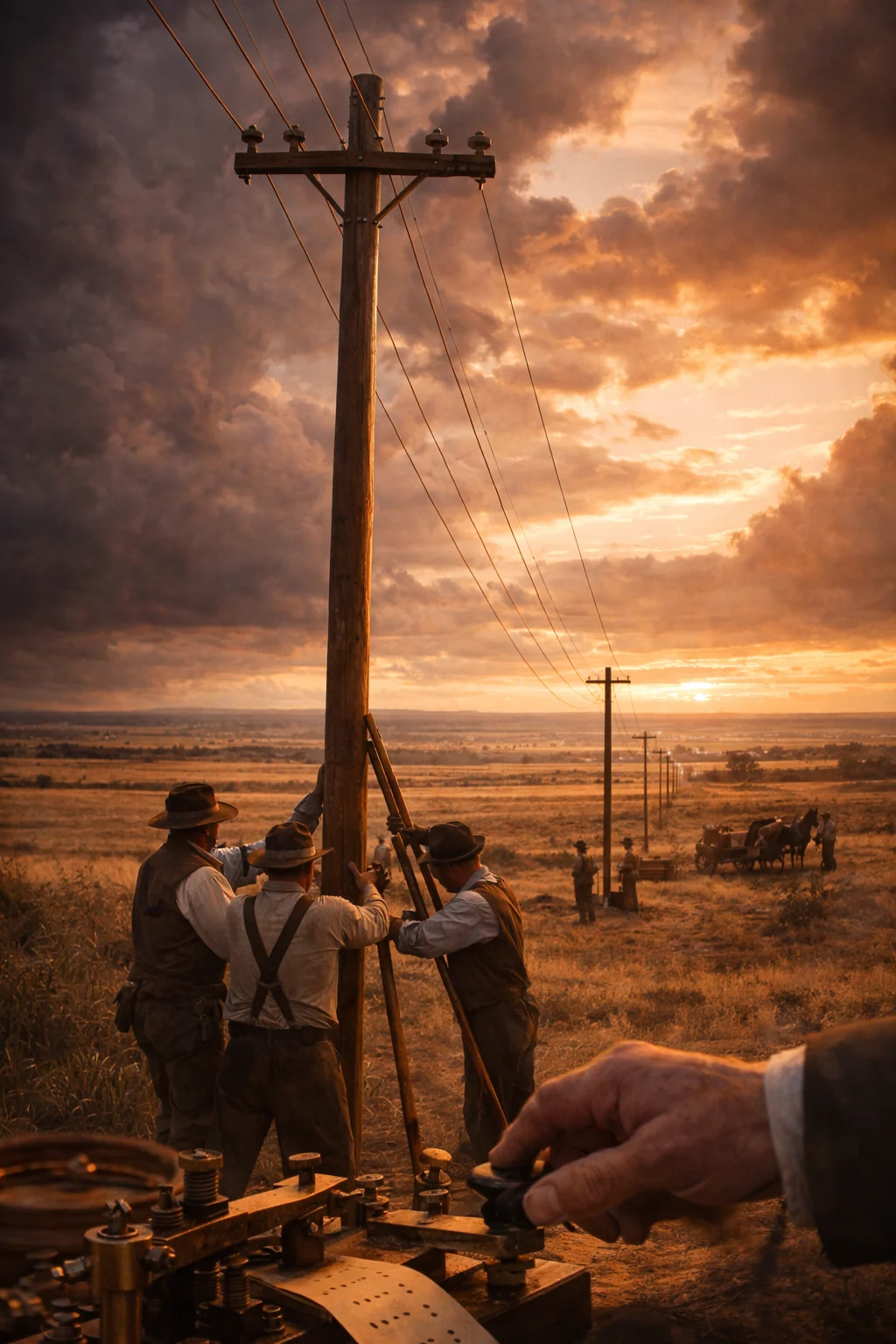
The solution was cheaper, more visible, and exposed to the weather, but it worked. Poles and wires began spreading across the American landscape beside roads and railway lines.
Electrical communication was about to leave the laboratory.
“What Hath God Wrought”
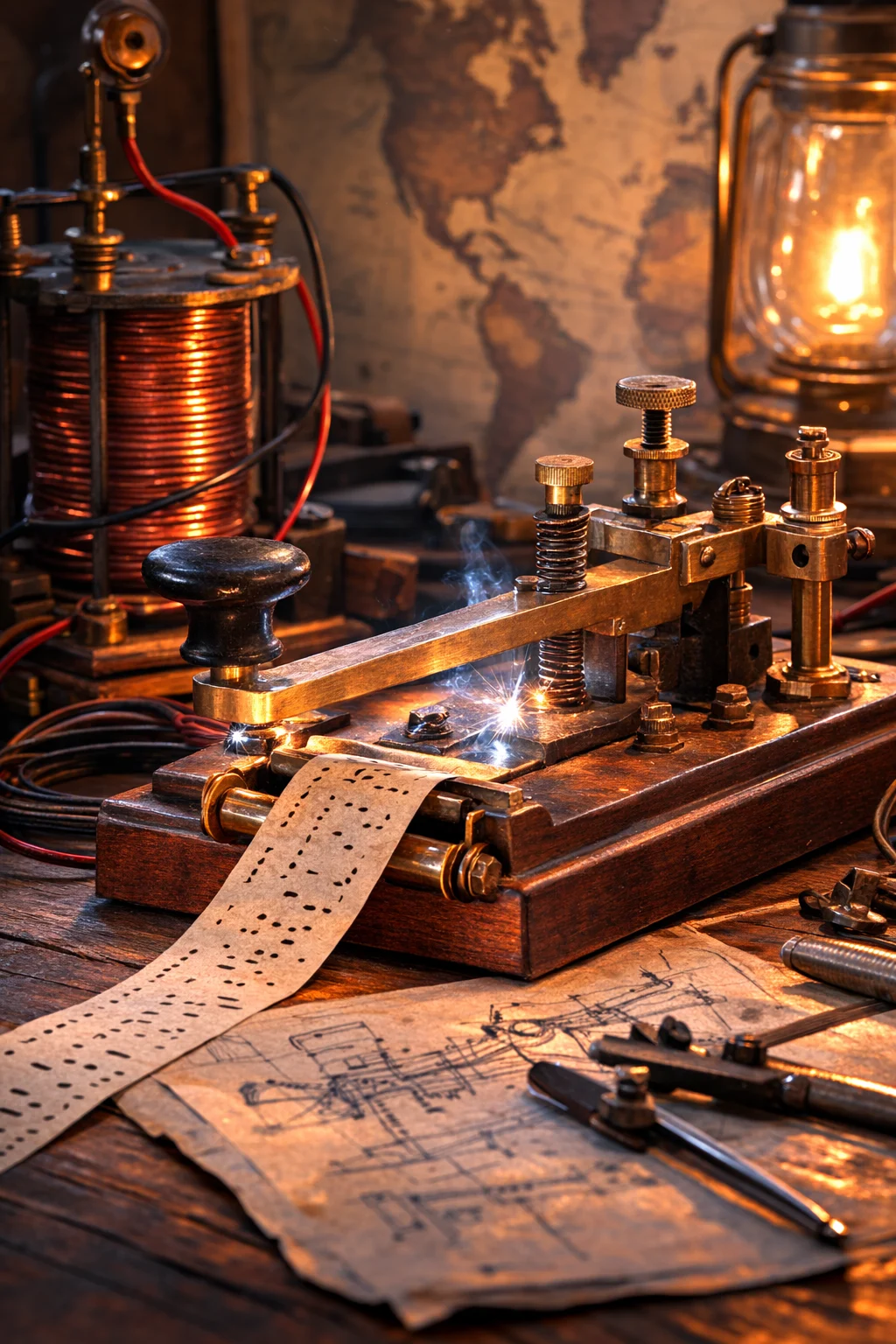
On May 24, 1844, Morse stood inside a room at the United States Capitol in Washington. Alfred Vail waited in Baltimore.
Annie Ellsworth, the young daughter of federal patent commissioner Henry Leavitt Ellsworth, had suggested a phrase from the Book of Numbers: “What hath God wrought.”
Morse transmitted the words through electrical impulses. Vail received them in Baltimore and sent them back to Washington.
It was not the first electrical message in history or the first demonstration of Morse’s device. It became, however, the symbolic moment when the telegraph publicly demonstrated its ability to connect two cities almost immediately.
Until then, the speed of information depended on the speed of a person, horse, train, or ship. For the first time, the telegraph broke that relationship.
A message could arrive before its messenger.
The nervous system of a new society
Telegraph networks expanded rapidly. Companies installed thousands of miles of wire connecting cities, railway stations, commercial offices, and newspapers.
Railroads used the telegraph to coordinate trains and reduce the danger of collisions. Merchants could learn distant prices before shipping goods. Newspapers received reports at previously impossible speeds, encouraging the growth of organizations such as the Associated Press.
The telegraph also changed the everyday experience of time. To coordinate railway schedules and transmissions, communities gradually moved toward more uniform timekeeping. Information no longer belonged only to the location where an event occurred.
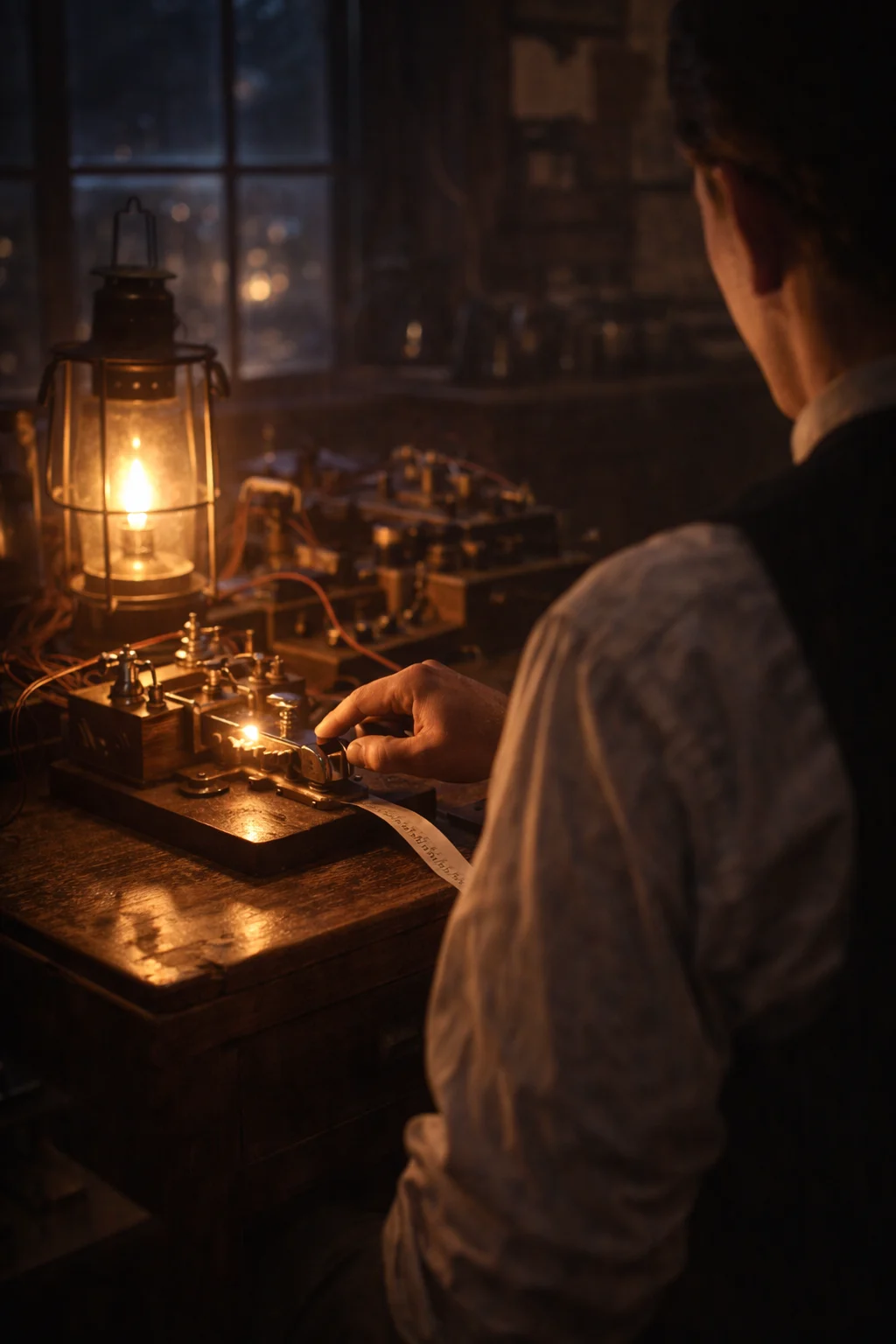
The dot-and-dash code made it possible to transmit messages using relatively simple equipment. Expert operators stopped depending on the paper strips produced by the receiver and learned to recognize letters directly from the sound of the mechanism.
Although the later International Morse code differed from the original American system, the essential idea survived for generations. It was used by railroads, ships, military forces, aircraft, and emergency services.
The distress signal SOS—selected for the clarity of its pattern rather than as an abbreviation for a particular phrase—became one of the most recognizable combinations in the world.
Patents, lawsuits, and recognition
Success produced conflict. Morse spent years defending his patents and claiming priority over competing inventors and businesses. The telegraph incorporated scientific and technical contributions from many people, making it difficult to determine where one discovery ended and another began.
In 1854, the United States Supreme Court upheld several of his claims to the system. It also rejected his broadest attempt to control every use of electromagnetism for transmitting characters over a distance.
Morse achieved wealth and prestige. European governments presented him with honors, and in 1858 several nations jointly granted him a financial reward in recognition of his contribution to telegraphy.
By then, wires were transforming the planet. Submarine cables would soon attempt to cross oceans and connect continents.
The painter who had struggled to sell his canvases had become a symbol of a new technological age.
The uncomfortable beliefs of a celebrated man
Recognizing Morse’s importance does not require concealing his politics.
During the 1830s, he participated in nativist and anti-Catholic movements. He unsuccessfully ran for mayor of New York with the support of a party opposed to immigration and published writings portraying Catholic influence as a foreign threat.
Morse also defended slavery and attacked the abolitionist movement. In his writings, he argued that slavery could be part of a social order established by God.
These positions were neither irrelevant details nor unavoidable reflections of his time. Morse actively participated in those disputes and used his reputation to promote ideas that harmed immigrants, Catholics, and enslaved people.
The man who helped bring distant places closer together maintained profound barriers against many of his contemporaries.
More than a famous surname
Samuel Morse died of pneumonia in New York on April 2, 1872. He was eighty years old.
By then, the telegraph had reduced distances, accelerated markets, transformed journalism, and changed how governments and citizens responded to events. It had also created new monopolies, new forms of surveillance, and a technological dependence that anticipated later problems.
Morse deserves an essential place within that history, but not as an isolated genius. His system emerged from earlier investigations and required the work of Leonard Gale, Alfred Vail, Joseph Henry, Ezra Cornell, and countless mechanics, operators, and investors.
His true achievement was assembling scattered knowledge, persisting when the equipment failed, and understanding that electricity could become a language.
He did not invent the human need to communicate. Nor was he the only person to imagine the telegraph.
But he helped create the moment when a word stopped traveling at the speed of a body and began moving through a wire.
References
- Library of Congress. (n.d.). Samuel F. B. Morse papers at the Library of Congress, 1793–1919. https://www.loc.gov/collections/samuel-morse-papers/
- Morse, E. L. (Ed.). (1914). Samuel F. B. Morse: His letters and journals (Vols. 1–2). Houghton Mifflin.
- National Museum of American History. (n.d.). Morse-Vail telegraph register. Smithsonian Institution. https://americanhistory.si.edu/collections/object/nmah_713485
- Silverman, K. (2003). Lightning man: The accursed life of Samuel F. B. Morse. Alfred A. Knopf.
- Standage, T. (1998). The Victorian Internet: The remarkable story of the telegraph and the nineteenth century’s online pioneers. Walker Publishing Company.
- Staiti, P. J. (1989). Samuel F. B. Morse. Cambridge University Press.
More from this collection
Willis Carrier: The Man Who Tried to Control Humidity and Ended Up Changing the Map of the World
Read story →
Garrett Morgan: The Inventor Who Had to Hide His Face to Save Lives
Read story →