
In this storyOpen index
Sor Juana Inés de la Cruz: The Woman Who Defended Her Right to Know and Ended Surrounded by Silence
When others tried to separate her from books, she turned the story of her life into a defense of women’s right to think.
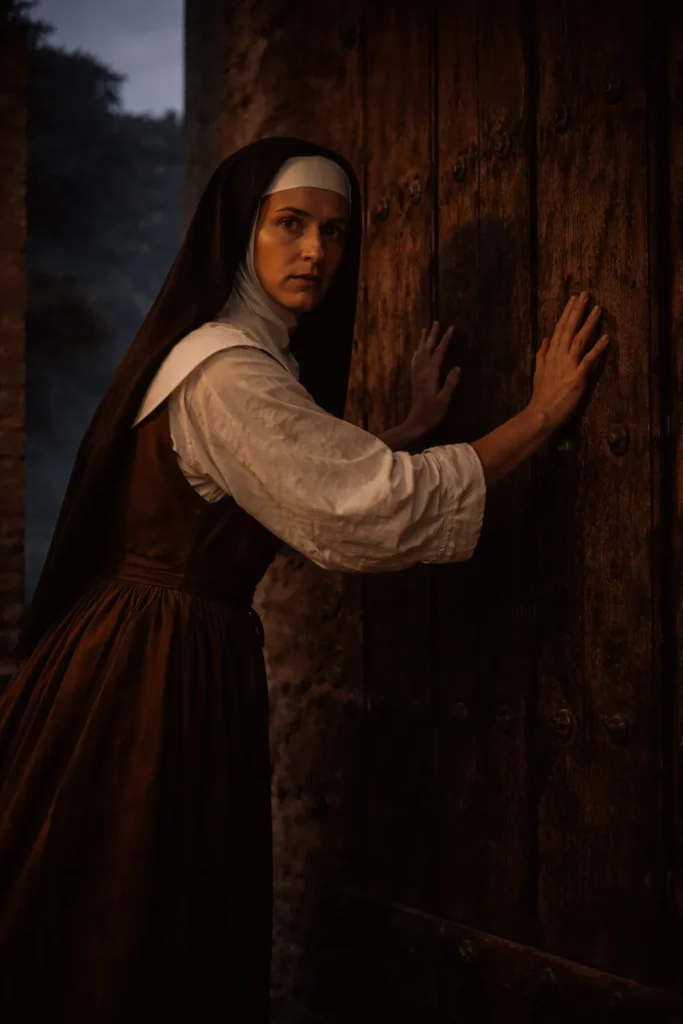
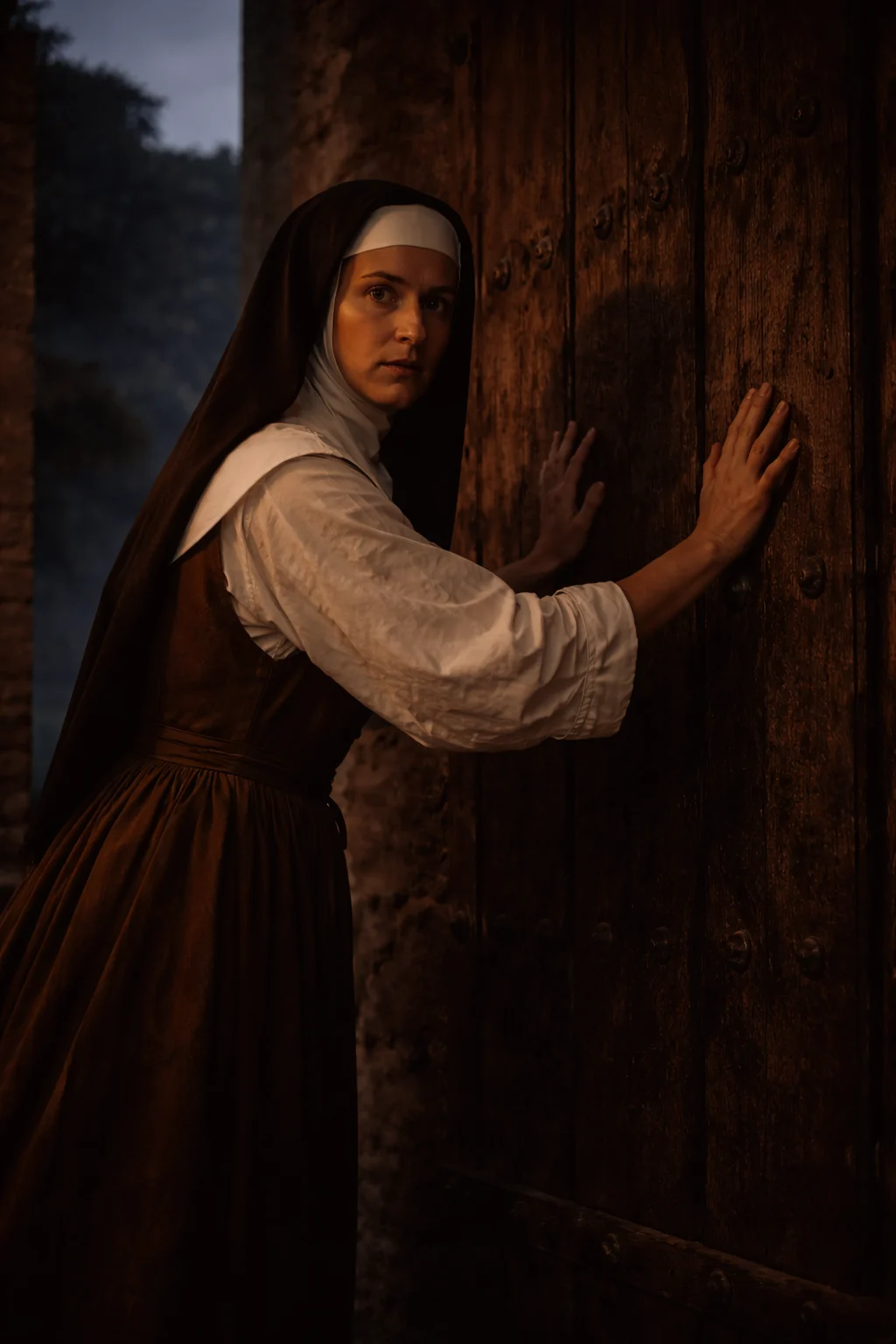
A bishop published a private text by Sor Juana Inés de la Cruz without asking her permission. He then adopted the name of an imaginary woman to advise her to abandon intellectual disputes and devote her talent to religious matters.
She responded by telling the story of her entire life.
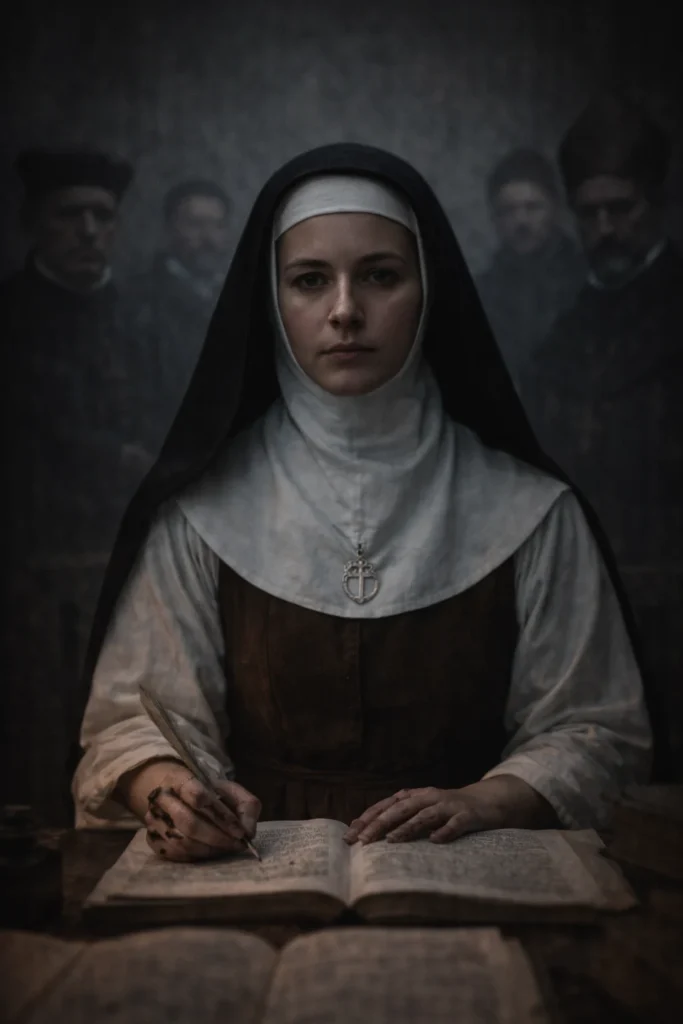
She explained how she had learned to read, why she entered a convent, and how often others had attempted to separate her from books. Her Reply to Sister Philothea, written in 1691, was not merely a personal defense. It became one of the foundational texts concerning women’s right to study, think, and participate in intellectual life.
Yet only a few years later, Sor Juana stopped publishing, relinquished much of her library, and signed penitential documents with a painful phrase: “I, the worst of all.”
We do not know precisely how much of that silence was chosen and how much was imposed.
That uncertainty forms part of her wound.
Sor Juana: defending the right to know
Discover this story on our YouTube channel.
A life told through places and turning points
.jpg)
Enter the archive
An authentic object preserved by a cultural institution brings us closer to the world behind this life.
- Collection
- Wikimedia Commons
- Rights
- Public domain
http://www.mecd.gob.es/museodeamerica/coleccion2/seleccion-de-piezas2/colonial/sorjuanaines.html
A Girl Before a Forbidden Library
Juana Inés de Asbaje y Ramírez was born in San Miguel Nepantla in New Spain, within present-day Mexico. Her birth year remains disputed: many scholars accept 1648, while other documents have led some to propose 1651.
She was born outside marriage to Isabel Ramírez and Pedro Manuel de Asbaje. She grew up primarily on properties belonging to her mother’s family near Amecameca.
According to the account she later provided in her Reply to Sister Philothea, she learned to read when she was very young by accompanying an older sister to lessons. At her grandfather’s estate, she discovered a library that became the true center of her childhood.
She read everything she could reach. She studied Latin and claimed to have learned it in approximately twenty lessons. She also became interested in philosophy, theology, poetry, music, mathematics, and the natural sciences.
In another autobiographical anecdote, she explained that she cut off part of her hair whenever she failed to learn a subject within the time she had assigned herself. She considered it absurd for her head to be decorated if it remained empty of knowledge.
She wanted to attend a university and even asked to be allowed to dress as a boy so she could enter. The request was refused.
In the seventeenth century, women might receive domestic or religious instruction, but systematic access to advanced learning was reserved almost entirely for men. Juana was unwilling to accept that her intelligence should stop at the boundary imposed upon her sex.

The Young Woman Examined by Scholars
While still an adolescent, Juana moved to Mexico City and entered the viceregal court. She became a lady-in-waiting to Vicereine Leonor Carreto, Marchioness of Mancera, who supported her intellectual and literary activity.
The court offered access to books, cultivated conversation, and people capable of appreciating her talent. It also turned the young woman into a curiosity: a female intellect mastering subjects that many considered outside her proper sphere.
An early account of her life states that Viceroy Antonio Sebastián de Toledo assembled dozens of theologians, philosophers, mathematicians, and humanists to examine her. Juana answered their questions and astonished those present.
The story comes primarily from her first biographer, Diego Calleja, and may have been embellished. It nevertheless reflects the intellectual reputation Sor Juana acquired at a young age.
Her intelligence had to be publicly tested because it belonged to a woman.
The Convent as a Space of Freedom
Juana had few options if she wanted to preserve any independence. Marriage would have placed her life, possessions, and time under a husband’s authority. Female singleness outside family or religious structures was difficult to sustain.
In 1667, she entered a convent of Discalced Carmelites, but the order’s severity damaged her health, and she left after several months. In 1669, she joined the Convent of San Jerónimo and adopted the name Sor Juana Inés de la Cruz.
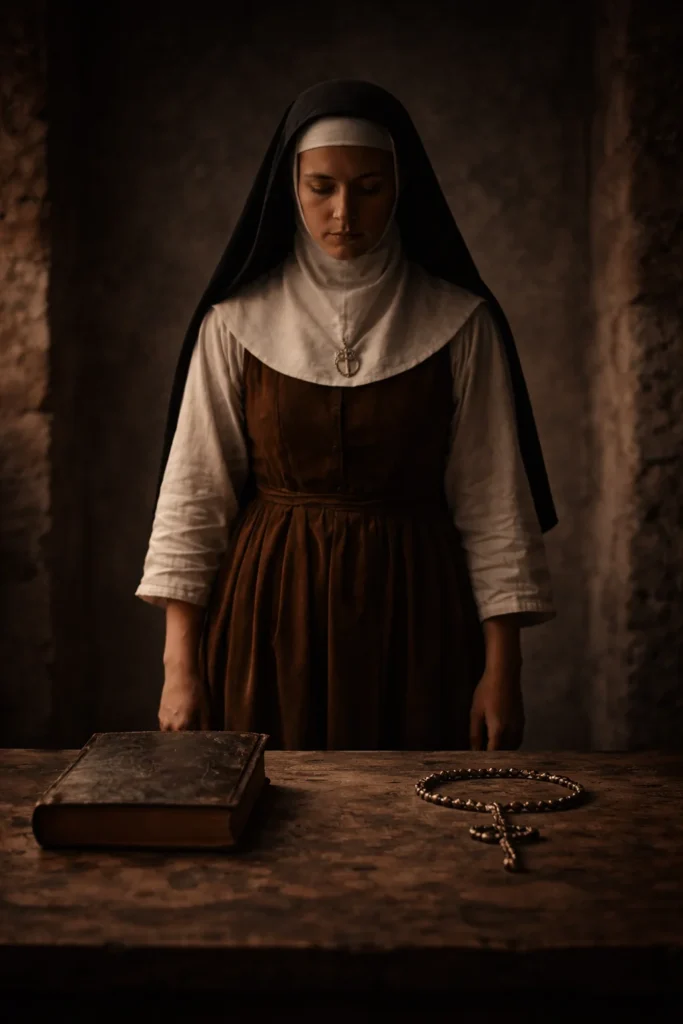
The convent was not solely a place of confinement. For a woman of her time, it could also provide a room of her own, some financial autonomy, and time to study. Sor Juana assembled an important library, musical instruments, and scientific objects. She received visitors in the convent parlor, maintained correspondence, and participated in the intellectual networks of New Spain.
She performed administrative duties within the community and earned income through literary commissions. She wrote poetry, plays, songs for religious celebrations, courtly works, and scholarly texts that have since been lost.
The religious habit did not eliminate her voice. For more than twenty years, it gave her the space from which she could develop it.
Loving, Thinking, and Contradicting
Sor Juana mastered the complex forms of Baroque literature, but she did not write solely to demonstrate erudition. Her poems explored desire, jealousy, absence, intelligence, and the contradictions between appearance and reality.
In “Foolish Men Who Accuse,” she exposed the masculine double standard that demanded purity from women while pressuring them to behave otherwise. The poem does not employ the political language of modern feminism, but it precisely describes a structure of inequality that remains recognizable.
She also wrote comedies such as The Trials of a Noble House and love poetry addressed to women of the viceregal court. Baroque literary conventions do not permit those poems to be read automatically as autobiography, but they demonstrate the range with which she could explore affection and desire.
Her most ambitious poem, First Dream, depicts the soul attempting to rise during the night and understand the universe. Knowledge stretches before it, but human capacity cannot encompass it completely.
It is not a poem about possessing truth.
It is a poem about the endless desire to reach it.
The Critique That Was Not Meant for Publication
Around 1690, Sor Juana wrote an analysis of an earlier sermon by the influential Portuguese Jesuit António Vieira. The text considered what constituted Christ’s greatest demonstration of love and challenged some of the celebrated preacher’s arguments.
Sor Juana later stated that she had written it at another person’s request and had not intended to publish it.
Manuel Fernández de Santa Cruz, bishop of Puebla, decided to print the essay under the title Athenagoric Letter. He accompanied it with a letter signed by “Sister Philothea of the Cross,” an invented female identity assumed by the bishop himself.
The letter praised Sor Juana’s abilities but also admonished her. It advised her to concentrate on Scripture, cultivate more humble obedience, and withdraw from certain secular studies and writings.
The gesture was full of contradictions. The bishop publicized Sor Juana’s theological intelligence while reminding her of the limits within which she was expected to exercise it. He used a female voice to correct publicly a woman whose work he had published without authorization.
Fernández de Santa Cruz’s motives remain debated. He may have genuinely admired her, attempted to protect her, or used her critique within ecclesiastical rivalries. Reducing him to a simple enemy does not explain the episode’s full complexity.
Sor Juana nevertheless understood that she had to answer.
A Woman’s Right to Knowledge
The Reply to Sister Philothea of the Cross, dated March 1691, is simultaneously an autobiography, a theological argument, and an intellectual defense.
Sor Juana presents herself with the humility expected of a nun, but within that obedience she constructs a powerful reply. She explains that her desire to learn did not arise from vanity but from an inclination she could not extinguish.
She recounts that even when forbidden to study books, she continued learning. While cooking, she observed how ingredients reacted. When watching a spinning top, a figure, or the movement of water, she encountered questions of geometry and physics.
The entire world became a school.
She also recalled learned women from biblical and classical traditions to demonstrate that female knowledge was not contrary to either history or religion. She particularly defended the idea that educated women should teach other women, thereby avoiding situations that society itself considered morally problematic.
She did not openly demand political equality in the modern sense. She wrote within the religious and rhetorical limits of her time. Nevertheless, she exposed the central contradiction of a system that admired her intelligence while trying to control its use.
Her greatest offense was not knowing too much.
It was demonstrating that a woman could think without apologizing.
The Mystery of the Silence
After the Reply, Sor Juana’s public literary production diminished. Around 1693 and 1694, she renewed her religious vows, reconciled with her former confessor Antonio Núñez de Miranda, and signed penitential declarations.
She also relinquished books, musical instruments, and scientific objects. According to accounts close to her own time, the possessions were sold and the proceeds distributed to the poor.
For many years, this conclusion was told as a simple story: ecclesiastical authorities forced her to abandon learning and confiscated her library. The documentary reality is less clear.
Sor Juana undoubtedly lived under religious and institutional pressure. Archbishop Francisco de Aguiar y Seijas distrusted theater and certain forms of female autonomy. The theological controversy had publicly exposed her, while her political protection had weakened.
No direct order forbidding her to write has survived, however, and a personal spiritual transformation cannot be entirely excluded. Scholars have also proposed economic and political factors connected to the crises affecting New Spain during those years.
Her silence may have contained obedience, exhaustion, pressure, and religious conviction simultaneously.
Presenting her solely as a victim without agency would be as reductive as claiming she withdrew freely without facing coercion.

Dying While Caring for Others
In 1695, an epidemic spread through the Convent of San Jerónimo. Sor Juana cared for the sick nuns and eventually became ill herself.
She died on April 17, 1695. She was approximately forty-six if the 1648 birth date is accepted.
Her death did not erase her books. A substantial part of her work had been published in Spain through the support of aristocratic women, particularly María Luisa Manrique de Lara, Countess of Paredes and former vicereine of New Spain. That circulation allowed her poetry, plays, and prose to survive beyond the convent.
Sor Juana wrote from a wound that was not merely personal. It was the wound of possessing an intelligence celebrated as a marvel but watched as a danger. The court admired her knowledge. The Church benefited from her talent. Readers praised her poetry. Yet every recognition contained a warning about the limits she must not cross.
She crossed them anyway.
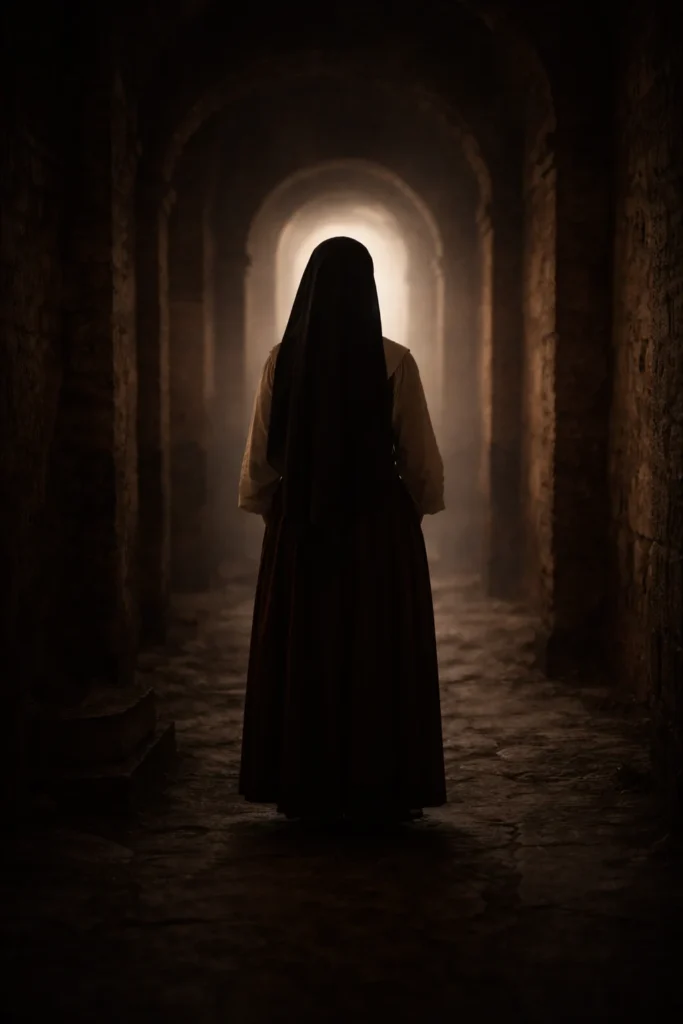
When others attempted to reduce her to silence, she had already written her defense.
She did not ask permission to possess a mind.
She explained why no one had the right to force her to empty it.
References
- Arenal, E., & Powell, A. (Eds. & Trans.). (2009). The answer/La respuesta: Including Sor Filotea’s letter and new selected poems (Expanded ed.). The Feminist Press.
- Bergmann, E. L., & Schlau, S. (Eds.). (2017). The Routledge research companion to the works of Sor Juana Inés de la Cruz. Routledge.
- Cruz, Sor Juana Inés de la. (1951–1957). Obras completas (A. Méndez Plancarte & A. G. Salceda, Eds.). Fondo de Cultura Económica.
- Glantz, M. (1995). Sor Juana Inés de la Cruz: ¿Hagiografía o autobiografía? Grijalbo.
- Merrim, S. M. (1999). Early modern women’s writing and Sor Juana Inés de la Cruz. Vanderbilt University Press.
- Paz, O. (1988). Sor Juana Inés de la Cruz, o las trampas de la fe. Fondo de Cultura Económica.
- Project Vox. (n.d.). Sor Juana (1648–1695). Duke University. projectvox.org
- Universidad Nacional Autónoma de México. (2023). La Carta atenagórica de Sor Juana: Textos inéditos de una polémica. Instituto de Investigaciones Bibliográficas. libros.iib.unam.mx
More from this collection
Arthur Conan Doyle: The Man Who Invented Reason and Sought Comfort in the Invisible
Read story →
William Shakespeare: The Man Who Turned the Human Wound into Words
Read story →