In this storyOpen index
The Andrée Expedition: Three Men Suspended Above the End of the World
The flight lasted 65 hours. It took 33 years for the diaries and photographs to reveal what happened on the ice.
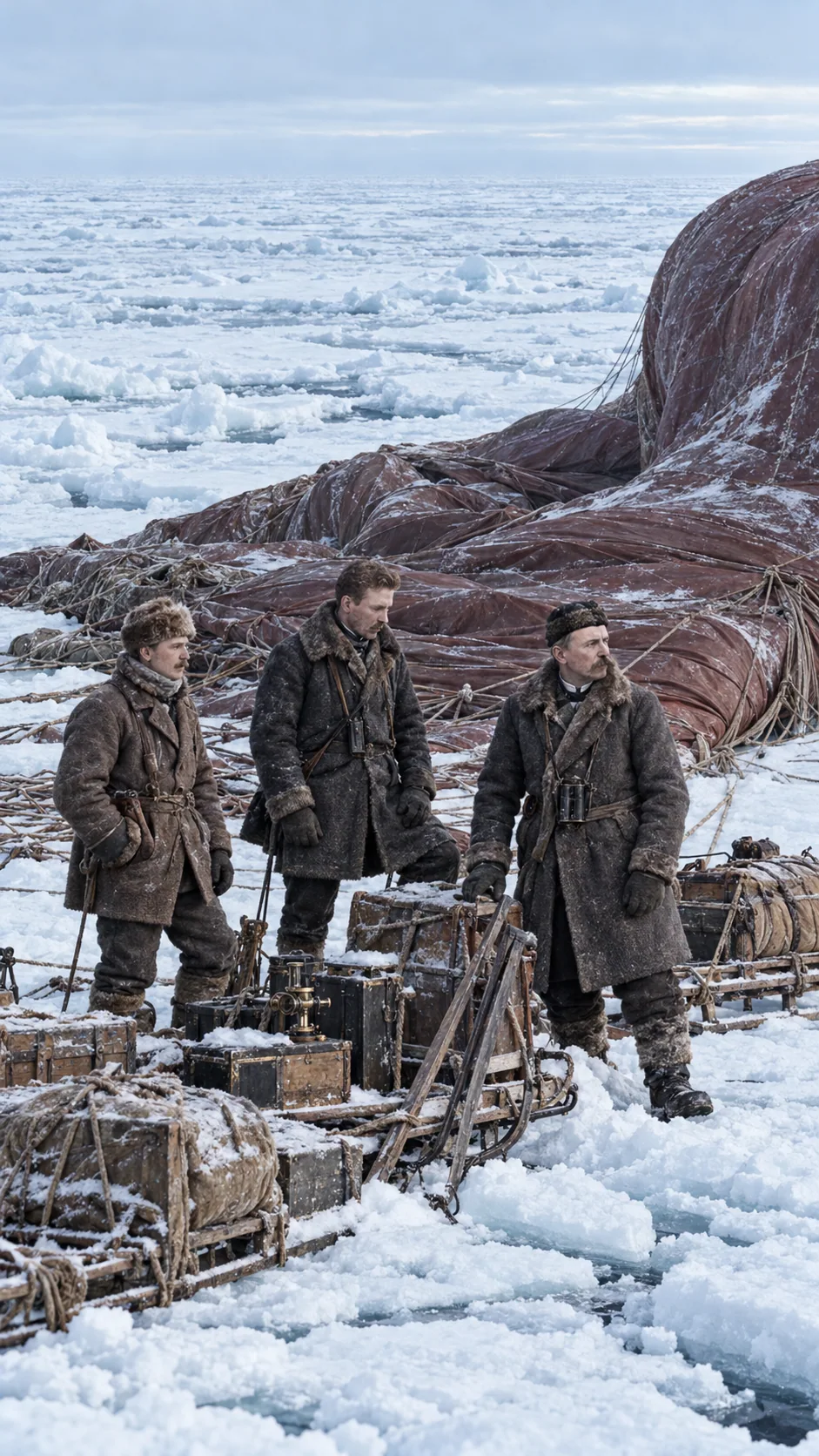
On July 11, 1897, a hydrogen balloon named Örnen—The Eagle—rose from Danes Island in the Svalbard archipelago. Its basket carried three Swedish men: engineer Salomon August Andrée, physicist and photographer Nils Strindberg, and engineer Knut Frænkel. They intended to reach the North Pole by crossing the Arctic through the air.
Örnen
From launch to the final camp
The diaries recovered on Kvitøya
The 1930 edition brings together Andrée’s diaries, Strindberg’s flight notes and his shorthand letters. The Smithsonian catalogue identifies these documents in the volume’s contents.
A balloon bound for the North Pole
The proposal appeared to offer an elegant solution to a problem that had defeated numerous explorers. Instead of hauling sledges for months or attempting to force a ship through the pack ice, the expedition would fly above every obstacle. Air currents would carry the men northward, and after crossing the polar region, they would land somewhere in Russia, Canada or Alaska.
The journey was celebrated as a demonstration of modern engineering and scientific courage. It was also sustained by Swedish national pride. Yet Örnen had never completed a full test flight before departing for one of the most hostile places on Earth (Lantz, 2024).
The man who claimed he could steer a balloon
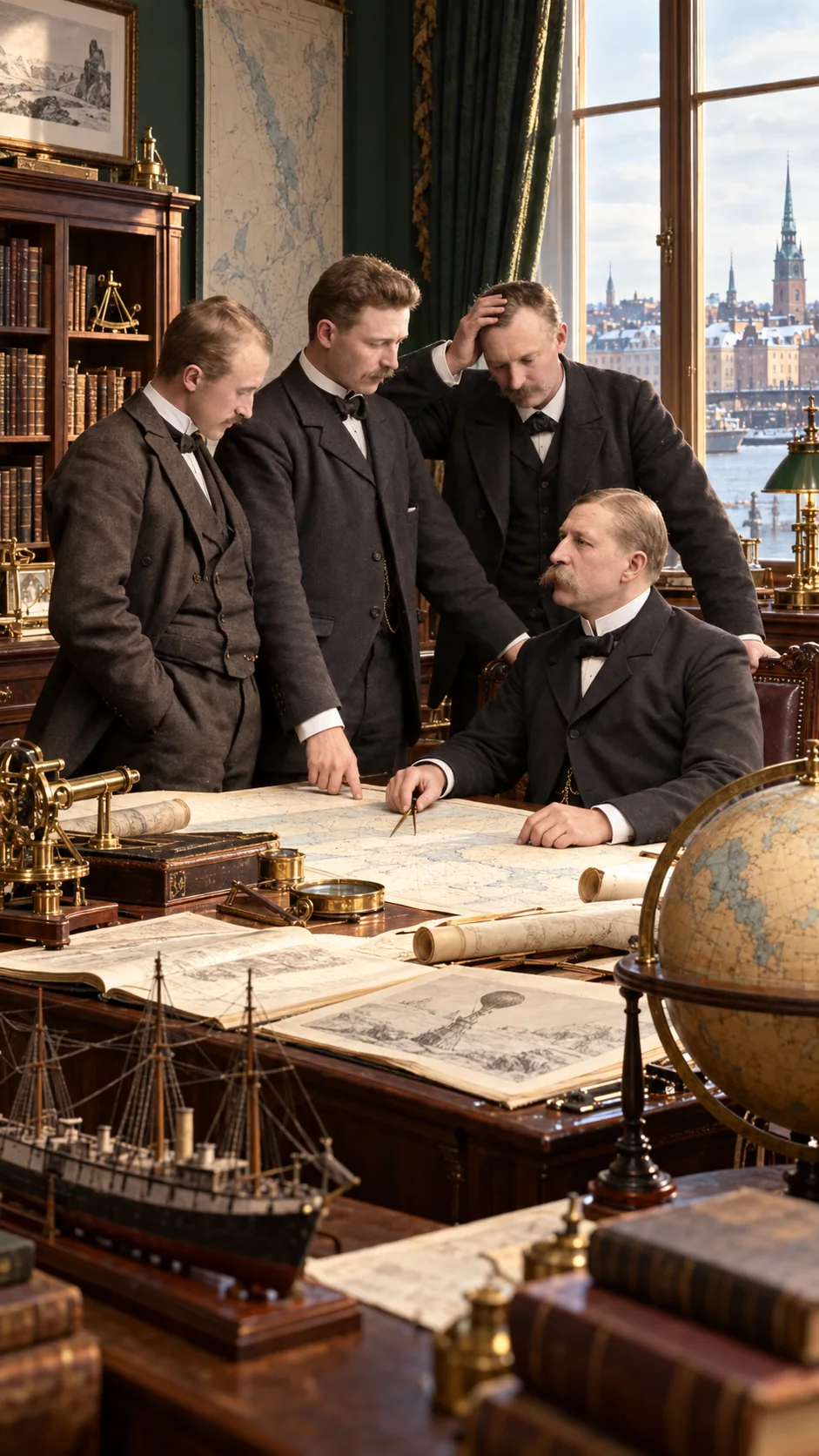
Salomon August Andrée was not an inexperienced adventurer. He was an engineer, worked at the Swedish patent office and had experience as an aeronaut. During the 1890s, he completed several flights in a balloon called Svea, using those journeys to conduct meteorological observations.
His polar plan depended upon a controversial innovation. Three long guide ropes would hang from Örnen and drag across the surface below. In theory, their friction would reduce the balloon’s speed relative to the wind. Combined with sails attached to the balloon, this would make it possible to alter the direction of travel slightly.
The system could not steer a balloon as a rudder steers a ship. At best, Andrée hoped to change its course by several degrees and exercise limited control over its movement. Other aeronauts expressed doubts, while preparations revealed signs that the balloon was losing hydrogen too rapidly.
Nevertheless, the project received financial and political support. Its sponsors included King Oscar II and Alfred Nobel. Public confidence grew until withdrawal became extremely difficult without appearing to constitute a national failure.
A first attempt that should have served as a warning
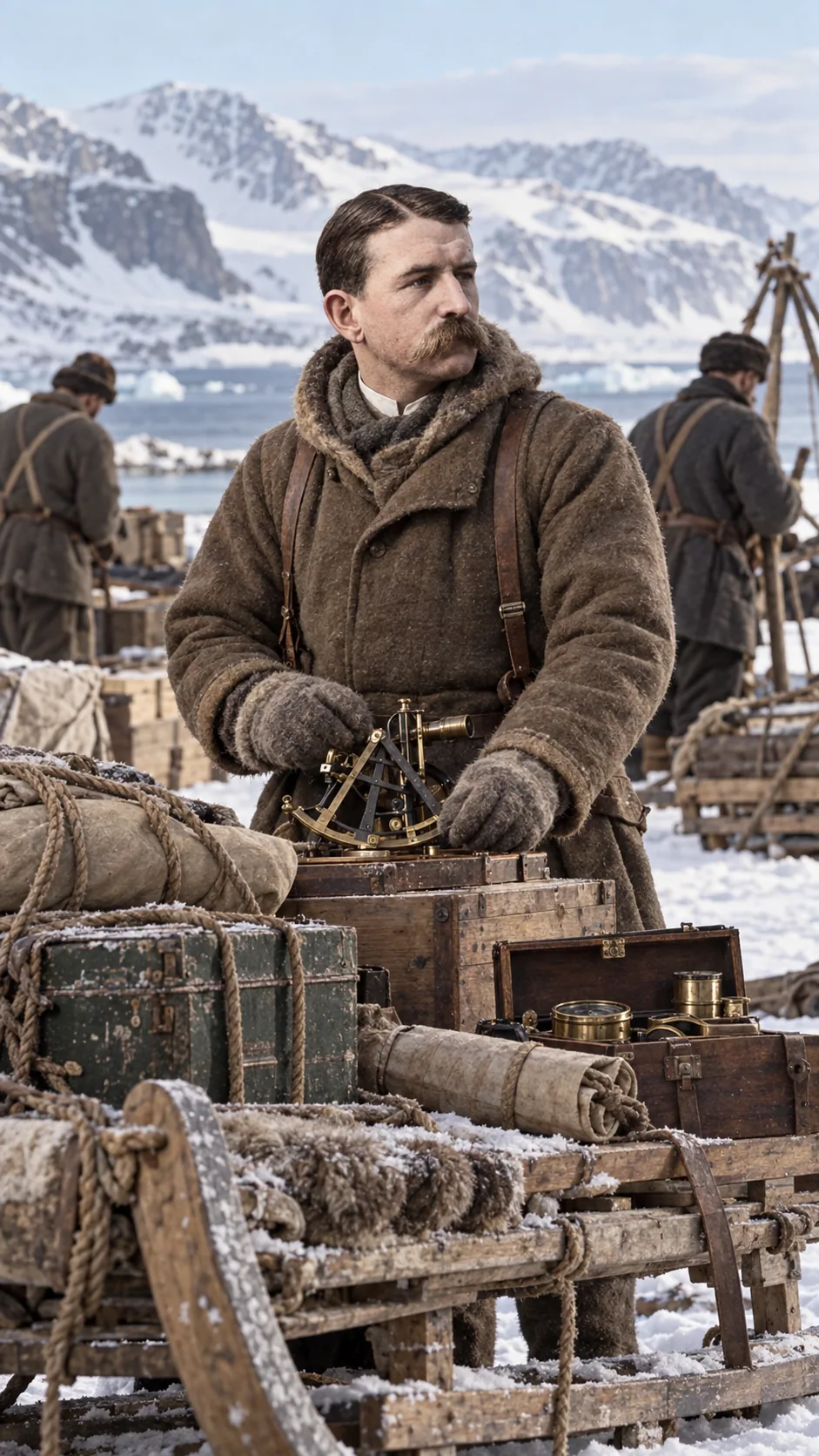
The expedition reached Svalbard in 1896 and constructed an enormous wooden hangar to protect the balloon while its members waited for suitable weather. The plan required a sustained southerly wind that would drive Örnen towards the Pole.
The necessary wind never arrived. After weeks of waiting, Andrée cancelled the flight and returned to Sweden. One original expedition member, meteorologist Nils Gustaf Ekholm, had taken measurements that convinced him the balloon leaked too much gas to remain aloft for the necessary period. He withdrew before the second attempt.
His replacement was Knut Frænkel, a young engineer responsible for meteorological observations and positional calculations. Nils Strindberg, besides being a physicist, would document the journey using a specially adapted camera.
They returned to the hangar in 1897. Andrée knew that another cancellation could destroy the expedition. That pressure does not prove that he acted with suicidal recklessness, but it helps explain why he accepted risks that now appear alarming.
Ten minutes that doomed the plan
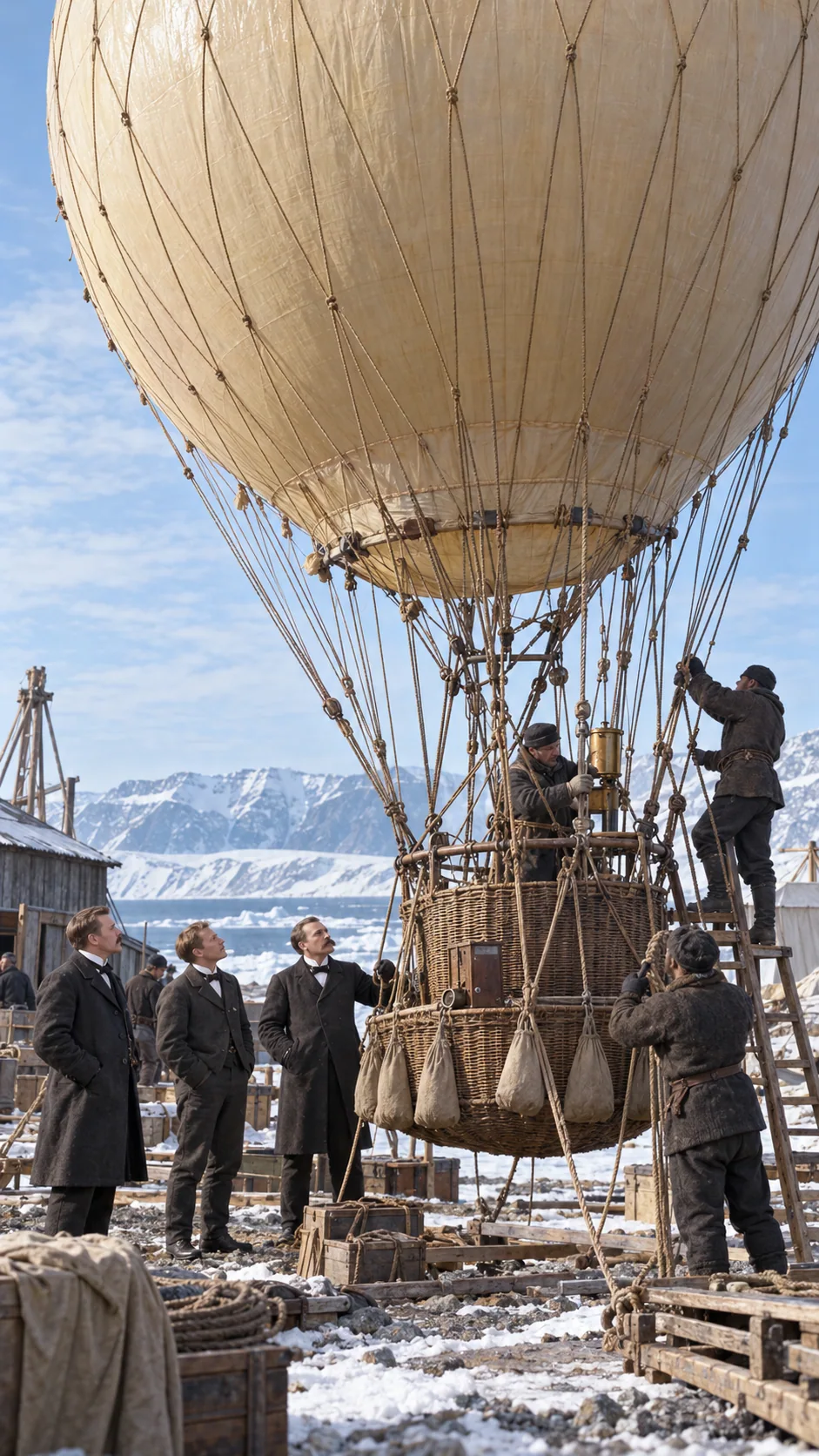
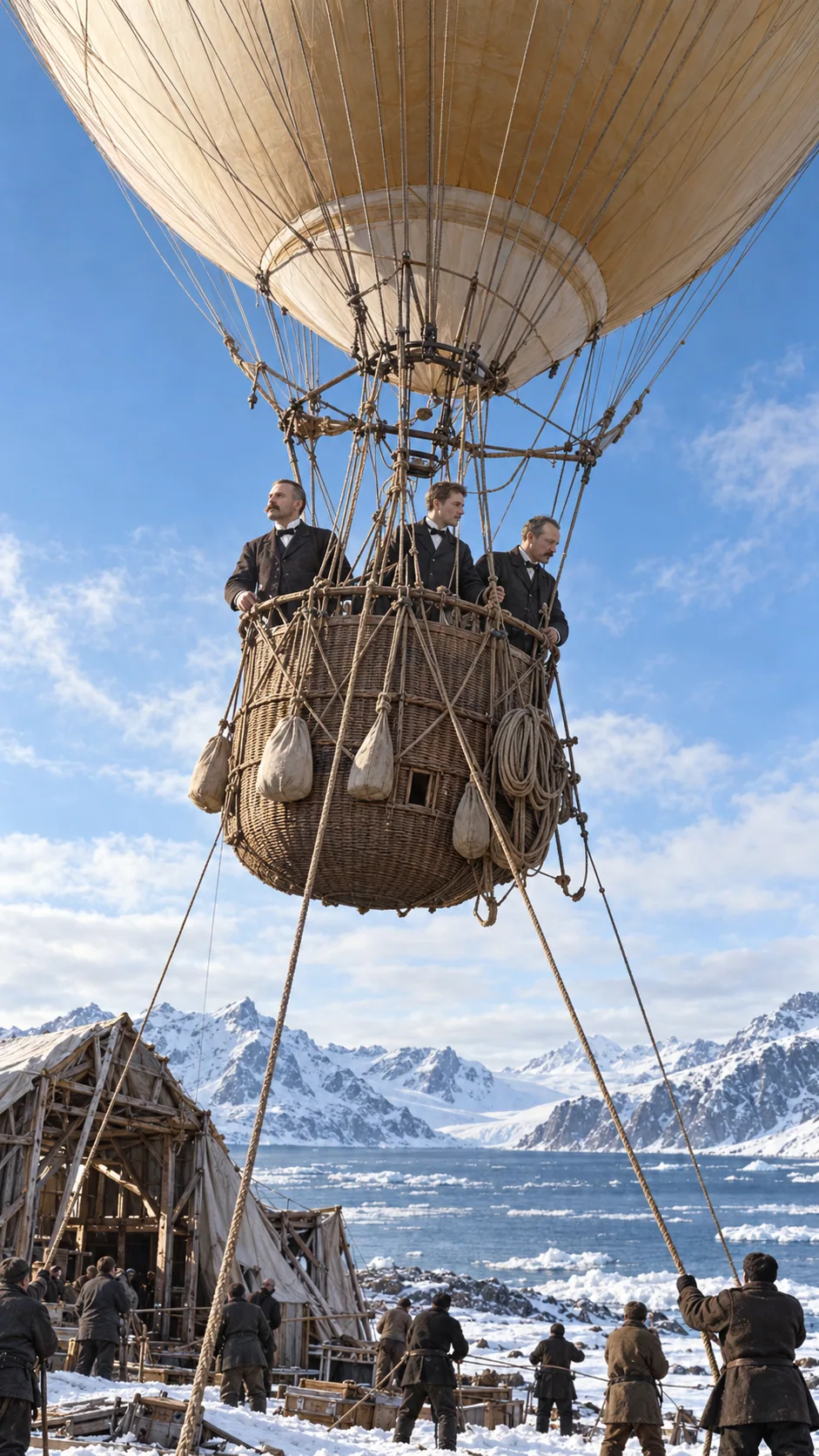
Örnen lifted off at 1:46 p.m. on July 11. Almost immediately, its basket was dragged across the water. To regain altitude, the men threw out a considerable quantity of ballast.
The decisive failure then occurred. The lower sections of all three guide ropes detached. They had not simply snapped by accident: the ropes incorporated safety couplings designed to separate if they became trapped. During the violent launch, those connections released, and the balloon lost hundreds of metres of rope.
Only ten minutes after leaving Danes Island, the expedition no longer possessed the system with which Andrée had promised to steer the craft. Örnen had become a free balloon, entirely subject to the wind (Lantz, 2024).
The men continued. A return was practically impossible. Ahead of them lay only ice, cloud and a course they could no longer control.
Sixty-five hours in the air
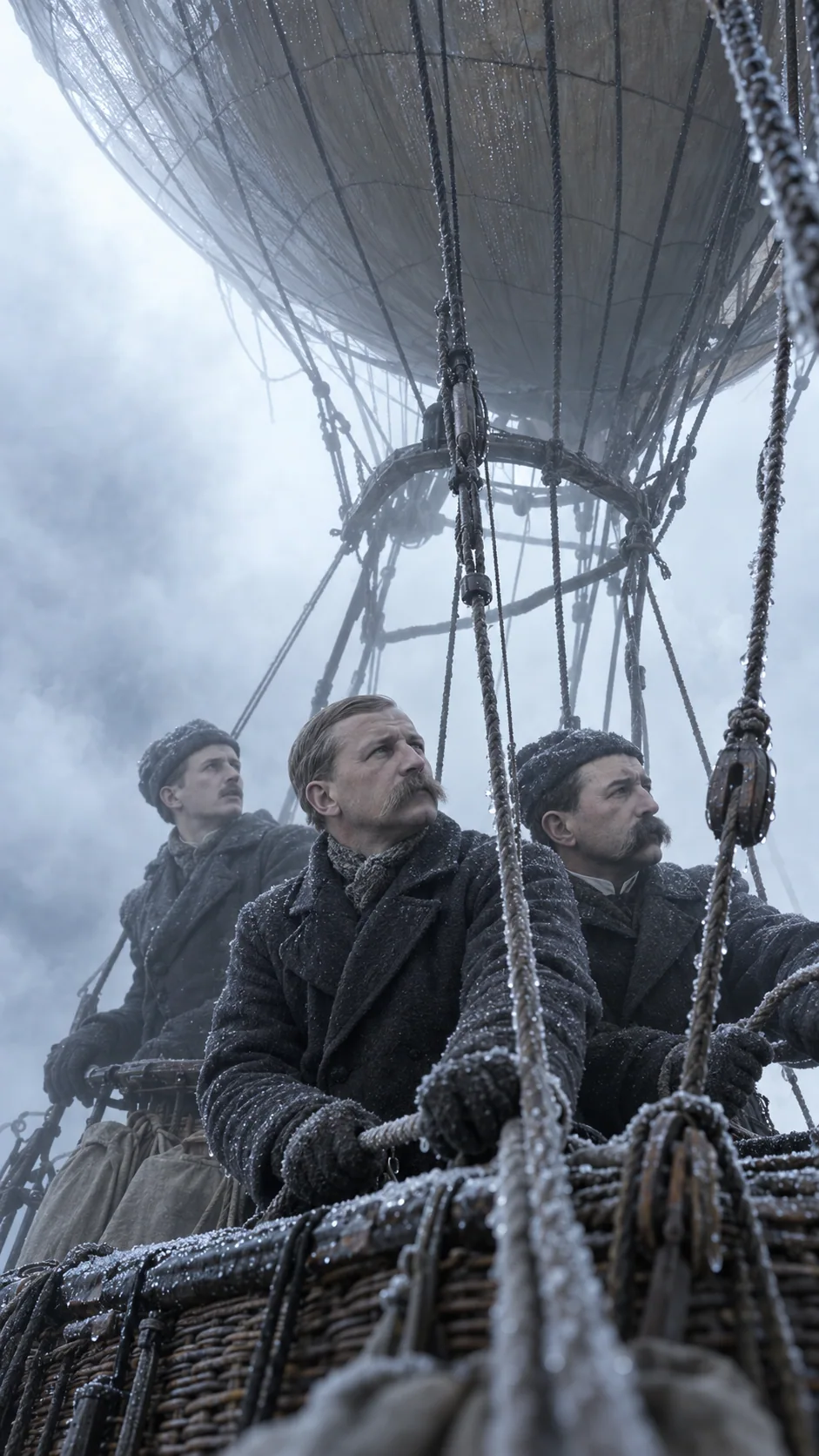
During the flight, fog, rain and low temperatures covered the balloon envelope with moisture and ice. The additional weight reduced its lift, while the continuing loss of hydrogen made the situation worse.
The basket descended repeatedly, striking the ice before rising again. The three men endured hours of violent impacts, cold and dampness. They tried to reduce the weight, but each item thrown away also diminished the resources available for their survival after landing.
On July 14, following approximately sixty-five hours of travel—only part of that time spent fully airborne—they made a controlled descent onto the pack ice, less than five hundred kilometres from their point of departure. The North Pole remained far away (Svalbard Museum, n.d.).
The airborne expedition had ended, but all three men were alive. They possessed food, firearms, a collapsible boat, sledges, scientific instruments and clothing. The balloon’s failure now became an overland retreat for which they were only imperfectly equipped.
Walking upon ground that was also moving
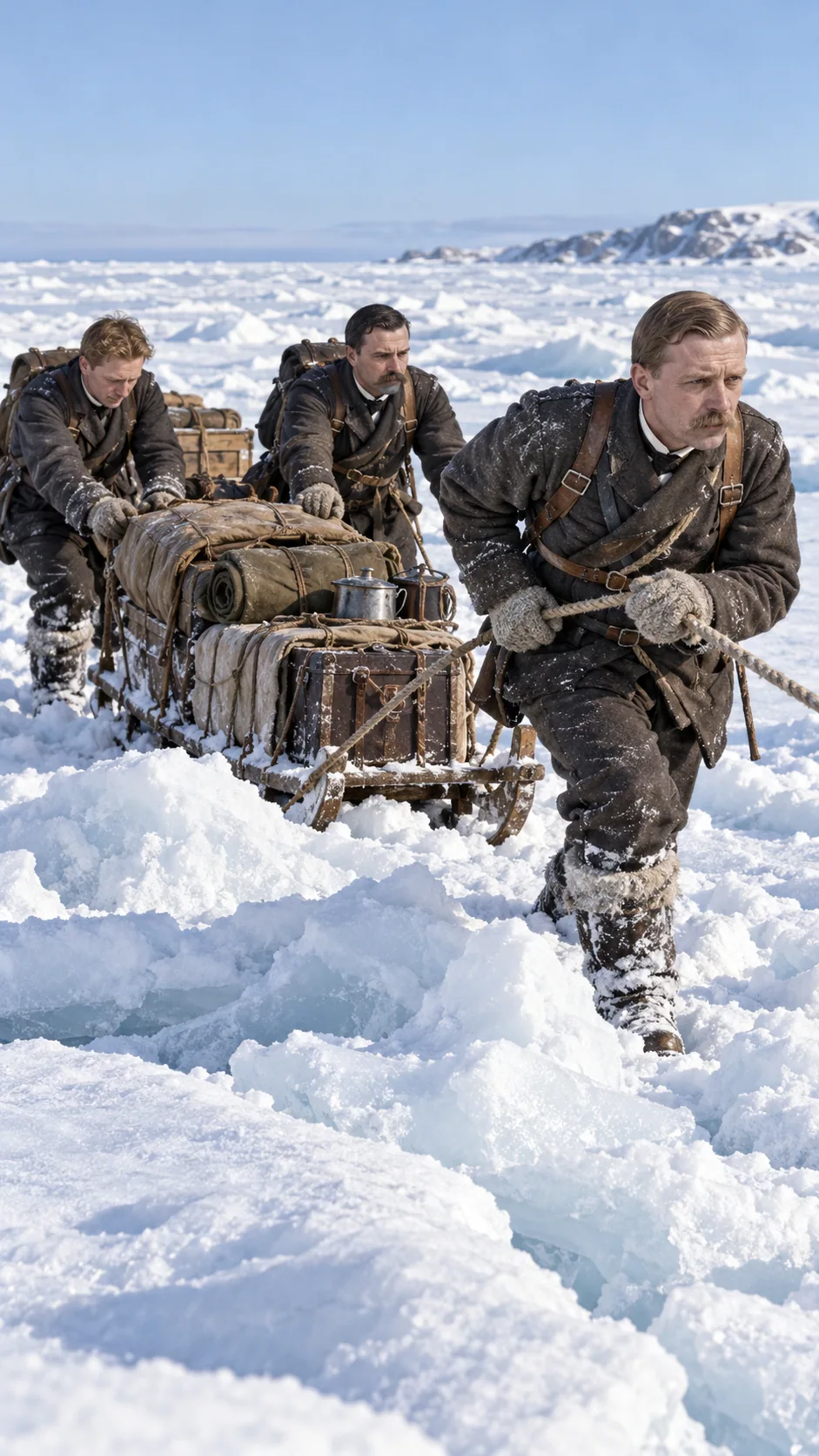
After remaining near the balloon for several days, they organised their supplies and began marching towards Cape Flora in Franz Josef Land, where a food depot had been established. Their sledges, however, were severely overloaded and had not been designed for the broken surface of Arctic pack ice.
Every day required them to cross ridges, cracks and channels of water. They reduced their loads, repaired equipment and hunted seals and polar bears to supplement their provisions. Strindberg continued taking photographs, while their journals preserved meteorological measurements, astronomical positions and details of daily life.
The greatest cruelty lay beneath their feet: the floating ice was drifting. As they walked southeast, the pack moved westward quickly enough to cancel part of their progress. When they changed their objective and turned towards the Seven Islands, the drift again worked against them by shifting in another direction (Lantz, 2019).
They could walk for hours and finish farther from their destination than when they had begun.
A home built upon the ice
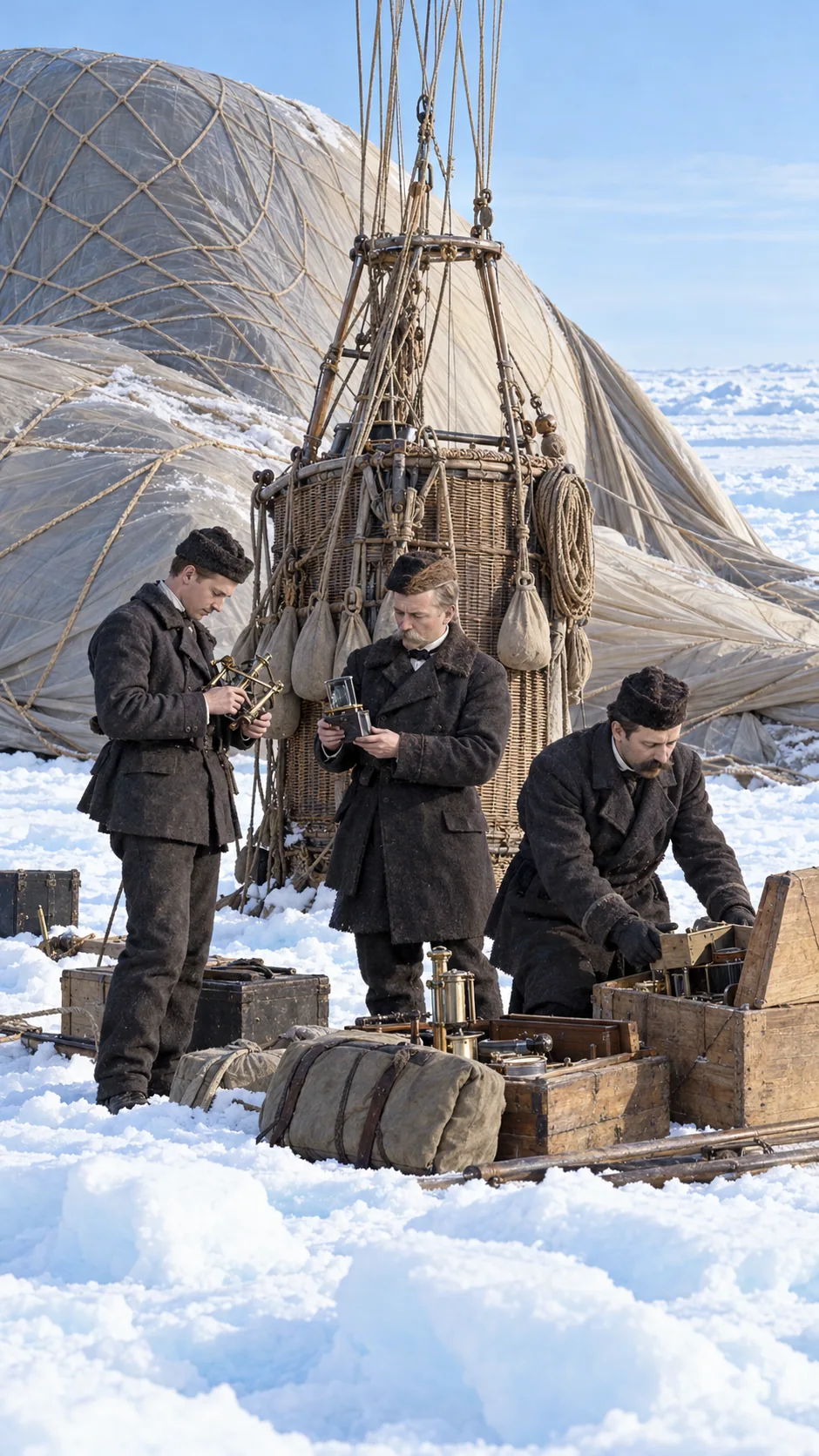
By September, the men understood that they would not reach land before winter. They constructed a shelter on a large ice floe and called it “The Home.” Blocks of snow and material from the silk balloon became part of the structure. They intended to wait while the pack carried them southward.
The decision was reasonable, but their platform began breaking apart. On October 2, they were forced to abandon the shelter and move their possessions once again. Soon afterwards, they reached Kvitøya—White Island—a landmass almost entirely covered by ice east of Svalbard.
The island gave them the stability that the pack had denied them. After nearly three months of struggle, they were no longer standing on a surface moving beneath their feet. They had, however, arrived exhausted, wearing damp clothing, suffering digestive complaints and facing the approach of the polar winter.
Andrée made the last dated entry in his main diary on October 5. The narrative then breaks off.
The mystery of the final camp
All three men died shortly after reaching White Island. The precise cause remains unresolved. For decades, the most widely repeated explanation was trichinosis contracted from inadequately cooked polar-bear meat. Other proposed causes include carbon-monoxide poisoning, botulism, prolonged exposure, dehydration, exhaustion and vitamin A toxicity.
More recent research has raised the possibility of a polar-bear attack. Yet no hypothesis conclusively explains every position of the remains, the arrangement of objects and the abrupt ending of the diaries.
The men still possessed ammunition and a quantity of food. Consequently, it is unlikely that all three simply starved. They had also demonstrated their ability to survive for weeks on the ice. Something may have happened quickly after they landed, but the surviving evidence cannot establish the sequence with certainty (Grenna Museum, n.d.).
Presenting any single explanation as proven fact would turn an enduring mystery into a certainty unsupported by the historical record.
Thirty-three years of silence
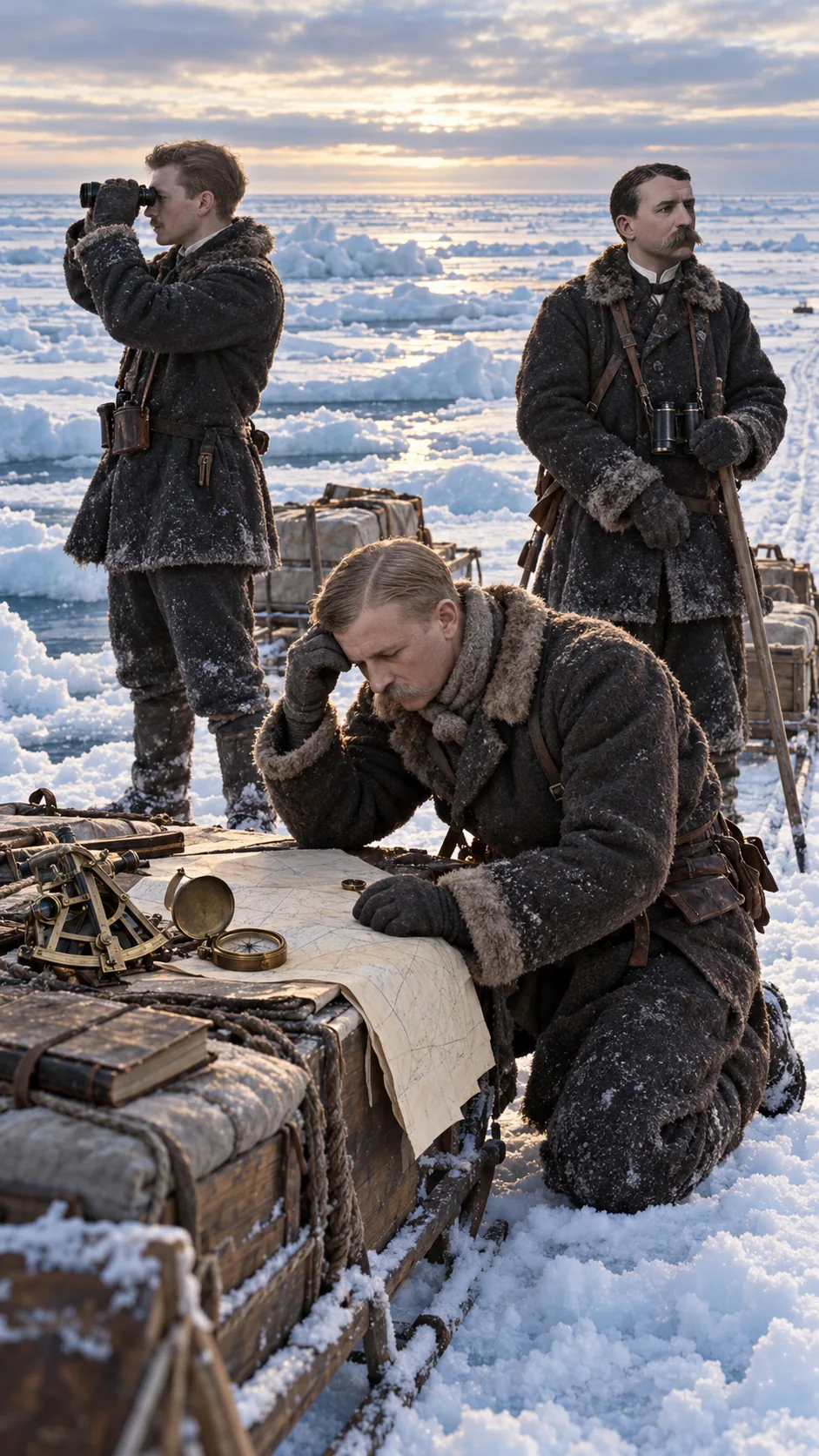
After communication from the expedition ceased, searches were organised and rumours circulated about sightings in Greenland, Siberia and Alaska. No reliable trace emerged. As the years passed, Andrée, Strindberg and Frænkel became almost legendary figures.
In August 1930, the Norwegian sealing vessel Bratvaag reached White Island. Unusually light ice conditions allowed members of its crew to land. They discovered a boat, instruments, diaries, human remains and objects belonging to the expedition.
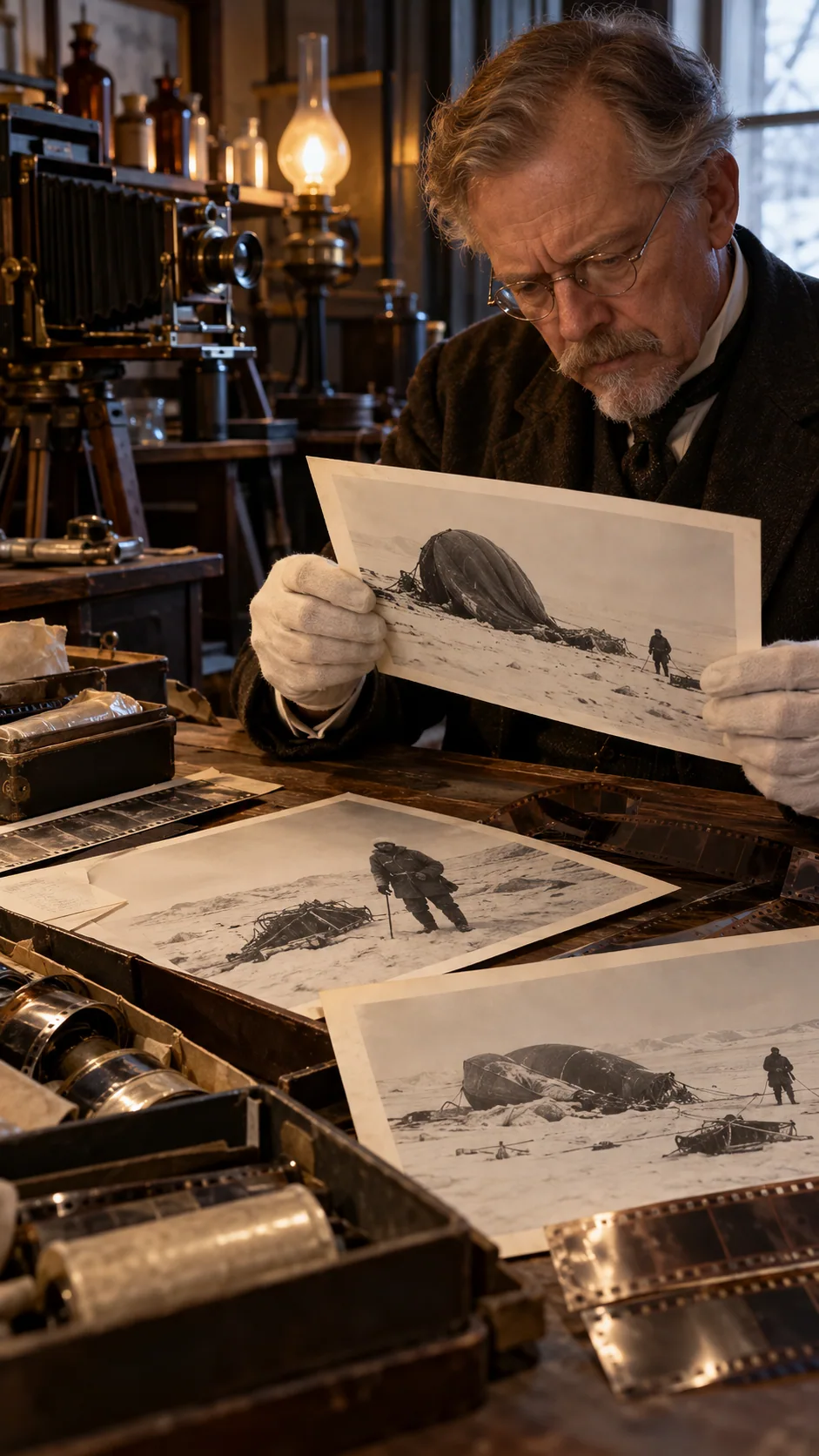
The most extraordinary discovery was Nils Strindberg’s photographic film. It had remained in the Arctic for thirty-three years. Photographer John Hertzberg managed to develop a portion of the images, revealing the fallen balloon, sledges, camps and the explorers during their retreat (Svalbard Museum, n.d.).
The camera preserved what none of the three men survived to describe. The public did not receive images of a conquest but the visual record of a slow defeat.
Heroism, pressure and an untested machine
Sweden received the explorers’ remains with a solemn public ceremony in 1930. For many years, the men were remembered primarily as heroes who had sacrificed themselves for science. Later research produced a more uncomfortable interpretation.
Andrée had launched in a balloon that leaked gas, equipped with an inadequately tested steering system, without submitting the complete craft to a trial flight. The project depended on limited weather forecasting and on numerous favourable conditions occurring together. Public pressure and national pride probably made cancellation more difficult.
This does not reduce his companions to mere victims of a fantasy. All three demonstrated discipline, endurance and adaptability after landing. They collected scientific observations, maintained their records and survived for almost three months in extreme conditions.
The little-known fact that captures the tragedy is that the mechanism intended to protect the guide ropes caused them to detach during the opening minutes. The expedition was not defeated by the Arctic alone. It was also defeated by confidence in a technical solution that disappeared almost before the journey had begun.
They intended to fly over the end of the world. Instead, they walked across an ocean moving in the opposite direction.
Timeline
| Year | Event |
|---|---|
| 1896 | Unfavourable winds prevent the first launch. |
| 11 July 1897 | Örnen lifts off from Danskøya. |
| 14 July 1897 | The balloon lands on the pack ice. |
| October 1897 | The three men reach Kvitøya. |
| 1930 | The camp, diaries and photographic film are found. |
Sources
- Grenna Museum. (n.d.). The Andrée Expedition.
- Lantz, B. (2024). The Lost Message of Nils Strindberg: Re-examining an 1897 Andrée Balloon Expedition Mystery.
- Lantz, B. (2019). Ice drift during the 1897 Andrée balloon expedition.
- Svalbard Museum. (n.d.). The Andrée Expedition.
- Svenska Sällskapet för Antropologi och Geografi. (1930). Andrée’s story: The complete record of his polar flight, 1897.
- Svenska Sällskapet för Antropologi och Geografi. (n.d.). History.
More from this collection

Harry Houdini: The Man Who Escaped Everything Except His Own Limit
Read story →
Michael Rockefeller: The Heir Who Vanished at the Edge of New Guinea
Read story →