In this storyOpen index
Marie Antoinette: The Queen Blamed for a World That Was Collapsing
A queen caught between propaganda, the monarchy’s crisis, and letters that survived the silence.
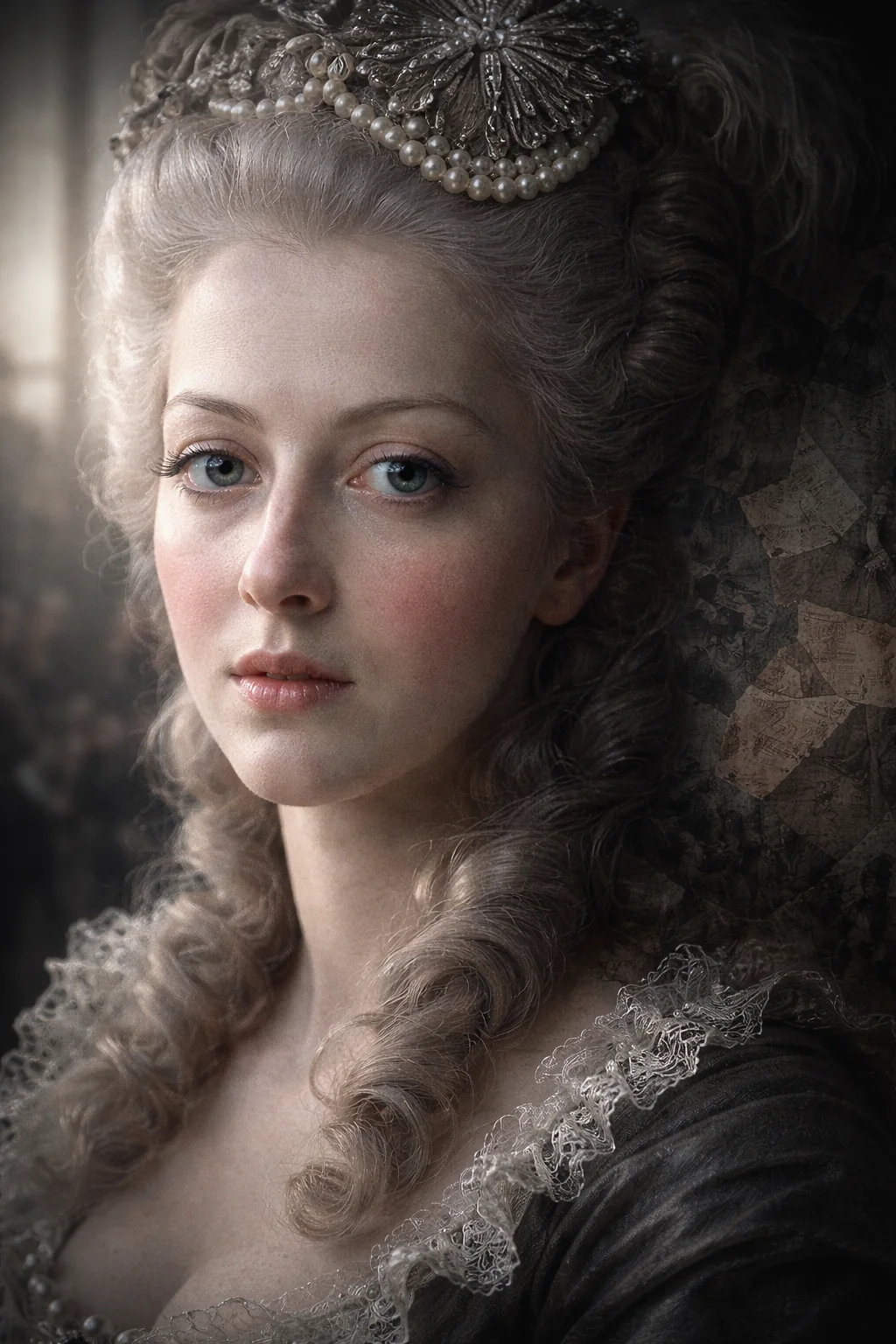
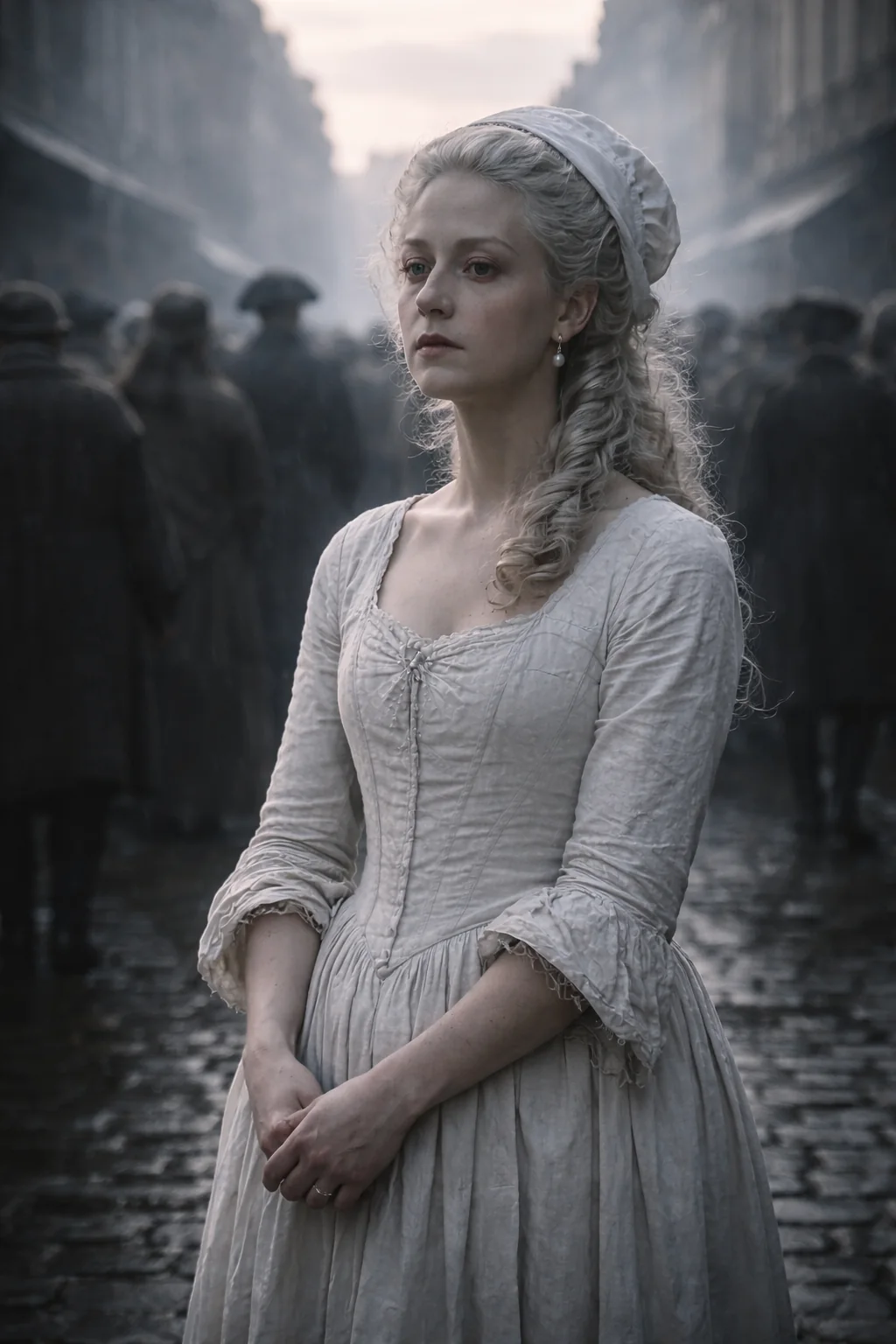
On the morning of October 16, 1793, a cart moved slowly through the streets of Paris. Inside sat a thirty-seven-year-old woman dressed in white, her hair cut short and her hands bound. She was no longer officially presented as the queen of France but as “the Widow Capet.” (Ministère de la Justice, 2024)
Marie Antoinette
Between the queen and the legend
The censored letters to Fersen
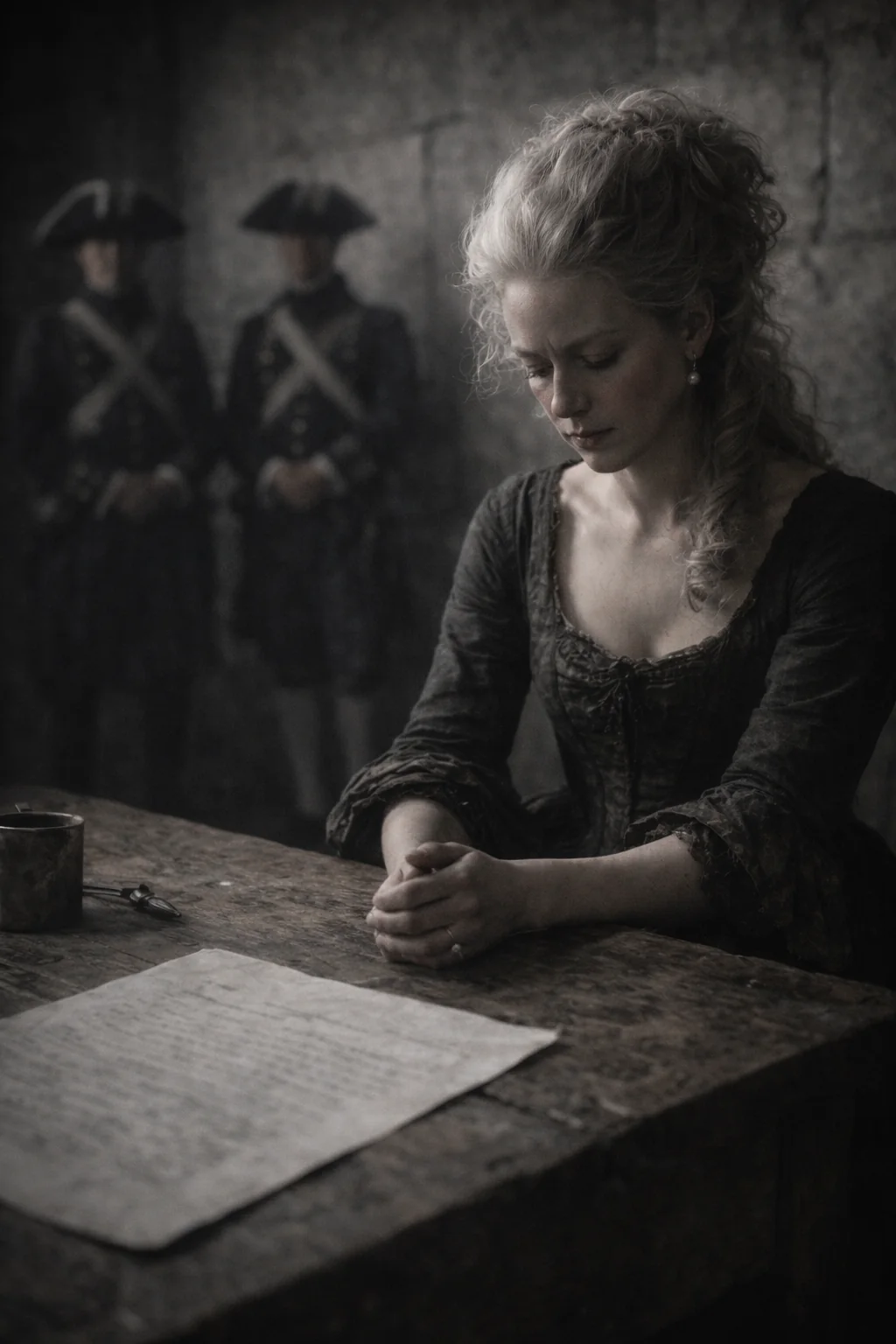
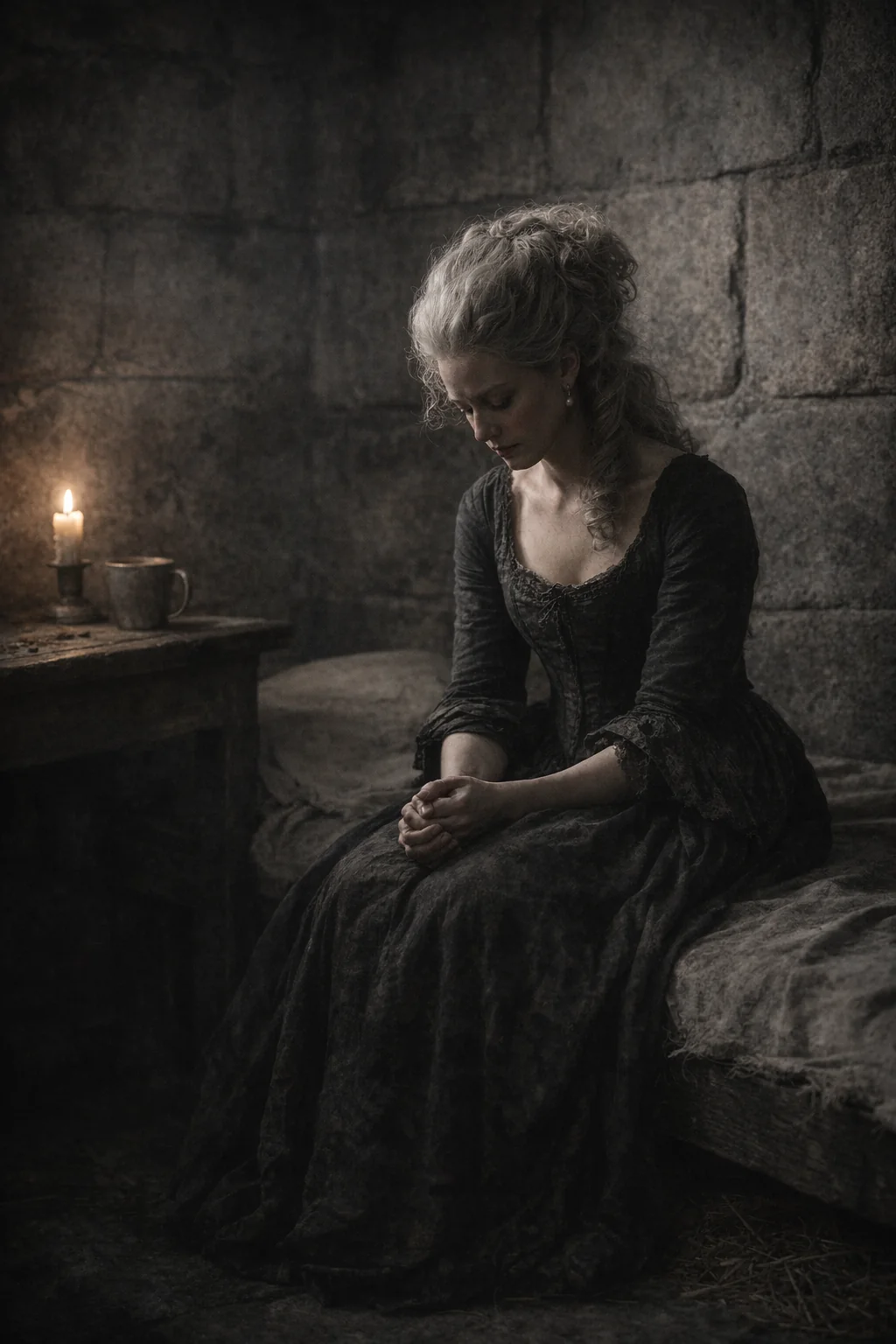
Letters preserved by the French National Archives reveal personal ties as well as political concerns. Research published in 2021 recovered passages covered by ink without damaging the originals. This card uses a symbolic illustration; the link leads to the document reproduced by the institution. (Archives nationales, n.d.)
1. A Queen Before the Scaffold
For years, she had been portrayed as a foreign conspirator and frivolous woman who consumed the national treasury while ordinary people starved. Her name became a simple explanation for a crisis produced by war, government debt, fiscal privilege, poor harvests, political conflict, and the failure to reform an exhausted monarchy. (George Mason University, n.d.-a)
Marie Antoinette was not an entirely passive victim. She made damaging decisions, defended royal authority, and engaged in secret communications with foreign powers during the Revolution. Neither, however, was she the monster manufactured by hostile pamphlets. Her history lies in the uncomfortable space between the propaganda that condemned her and the romantic legend that later attempted to absolve her of everything.
2. A Teenager Given to France
Maria Antonia Josepha Johanna was born in Vienna on November 2, 1755. She was the daughter of Holy Roman Emperor Francis I and Maria Theresa, ruler of the Habsburg domains. Diplomacy shaped her childhood: Maria Theresa used her children’s marriages to strengthen alliances.
France and Austria had been enemies for centuries, but Europe’s changing diplomatic structure made a dynastic marriage politically useful. In 1770, at fourteen, Maria Antonia was sent to France to marry Louis Auguste, grandson of Louis XV and heir to the throne.
At the border, she was required to surrender her clothes, attendants, and almost every possession associated with Austria. The ritual represented the abandonment of her previous identity. Renamed Marie Antoinette, she entered a court where every gesture was regulated and where her foreign origin would never be forgotten (Château de Versailles, n.d.-b).
Versailles was not merely a palace. It was a political machine built upon ceremony, hierarchy, and access to the monarch. The young dauphine, raised in the comparatively less formal Austrian court, found its rules suffocating. (Château de Versailles, n.d.-b)
3. A Queen Watched by Everyone
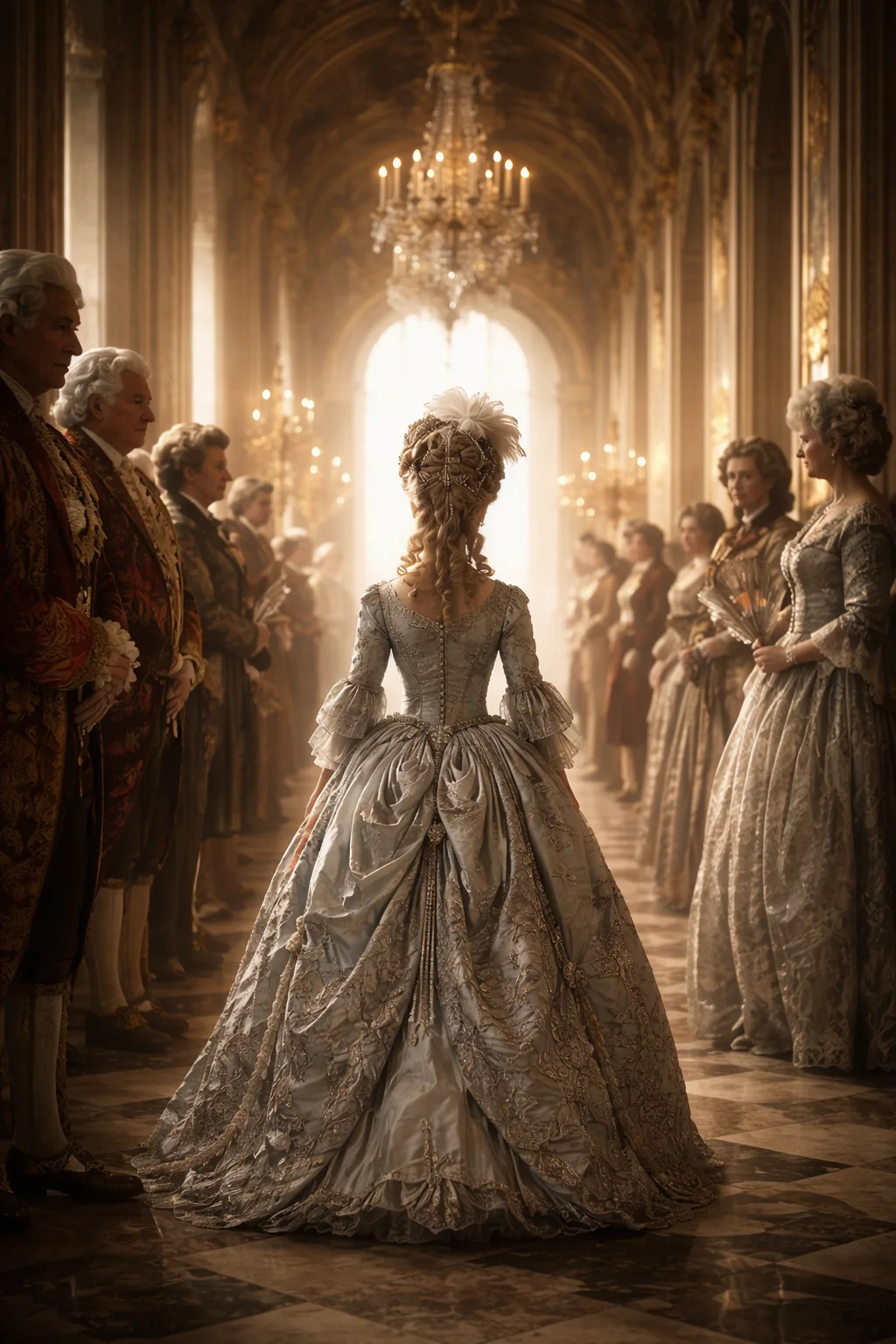
When Louis XV died in 1774, Louis XVI was nineteen, and Marie Antoinette had not yet turned nineteen. The young couple initially represented hope for renewal. The queen, however, began resisting some of the court’s traditions.
She preferred balls, theatrical performances, music, horse races, and gatherings with a personally chosen circle. She played the harp and harpsichord, sang, and supported composers including Gluck, Grétry, and Sacchini. She also patronized Élisabeth Vigée Le Brun, who produced approximately thirty portraits of her (Château de Versailles, n.d.-b).
Her interest in clothing and monumental hairstyles made her a celebrity but also a target. Rose Bertin, her dressmaker, was mockingly called the “Minister of Fashion.” Her gowns and gambling were expensive, and her brother Joseph II visited Versailles in 1777 partly because he was concerned about her spending and marriage.
Nevertheless, blaming France’s bankruptcy on her wardrobe is historically indefensible. Her expenditures contributed to an image of waste, but the fiscal crisis had far greater causes, including warfare, debt service, and a tax system that protected many privileged groups. She became the visible symbol of a financial structure she had not created. (George Mason University, n.d.-a)
4. Privacy That Looked Like an Insult
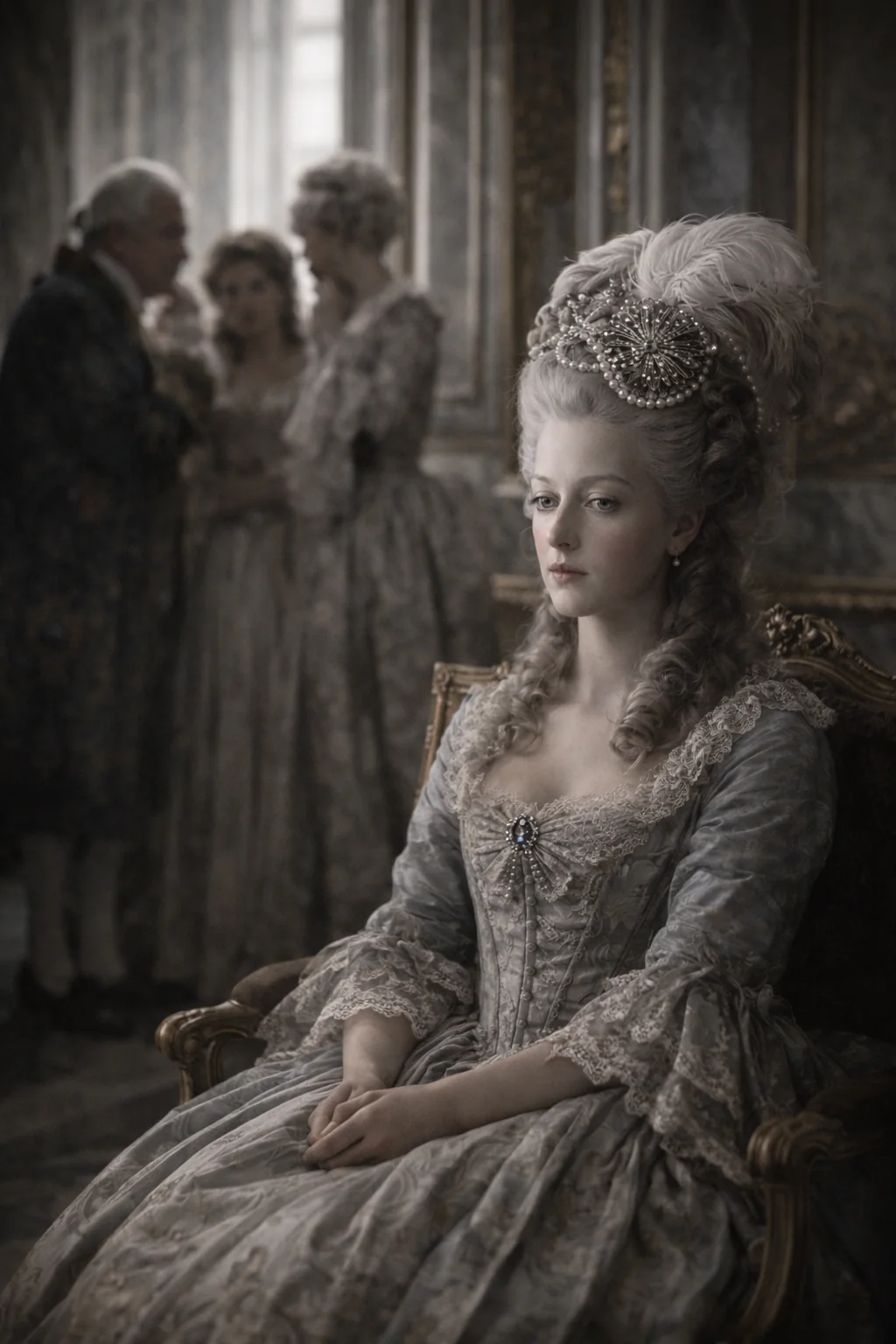
Louis XVI gave Marie Antoinette the Petit Trianon, a small residence within the Versailles estate. There she attempted to escape public ritual and control who could enter her surroundings. She later commissioned the Hameau de la Reine, an ornamental village of picturesque cottages.
The image of a queen playing peasant while actual peasants suffered became a powerful accusation. Yet the site was not simply a theatrical stage on which she pretended to be poor. It contained gardens, a dairy, and working agricultural facilities, although everything reflected an aristocratic and idealized vision of rural life.
The deeper problem was political. In a monarchy built upon the sovereign’s visibility, withdrawing from court excluded nobles who depended on access to preserve their influence. Her search for privacy was interpreted as favoritism, contempt, and conspiracy.
The more she attempted to protect a private existence, the greater the suspicions became. The space that provided personal freedom also helped isolate her politically. (Château de Versailles, n.d.-d)
5. “Let Them Eat Cake”: Words She Never Spoke
The most famous statement attributed to Marie Antoinette is almost certainly false. According to the legend, she responded to news that the people had no bread by saying, “Let them eat cake.” The French phrase associated with the story is Qu’ils mangent de la brioche, referring to enriched bread rather than modern cake.
Jean-Jacques Rousseau included a similar remark in his Confessions, vaguely attributing it to “a great princess.” He drafted the passage while Marie Antoinette was still a child and before she arrived in France. No reliable contemporary witness recorded her speaking those words (Plackett, 2021). (History.com Staff, 2025)
The myth’s survival is more revealing than the quotation itself. It retrospectively summarizes the character built around her: a foreign queen who was indifferent, foolish, and disconnected from popular hunger. Its falsity did not prevent it from expressing an emotional truth for later audiences who understood the past as a conflict between luxury and hunger.
6. The Necklace She Never Bought
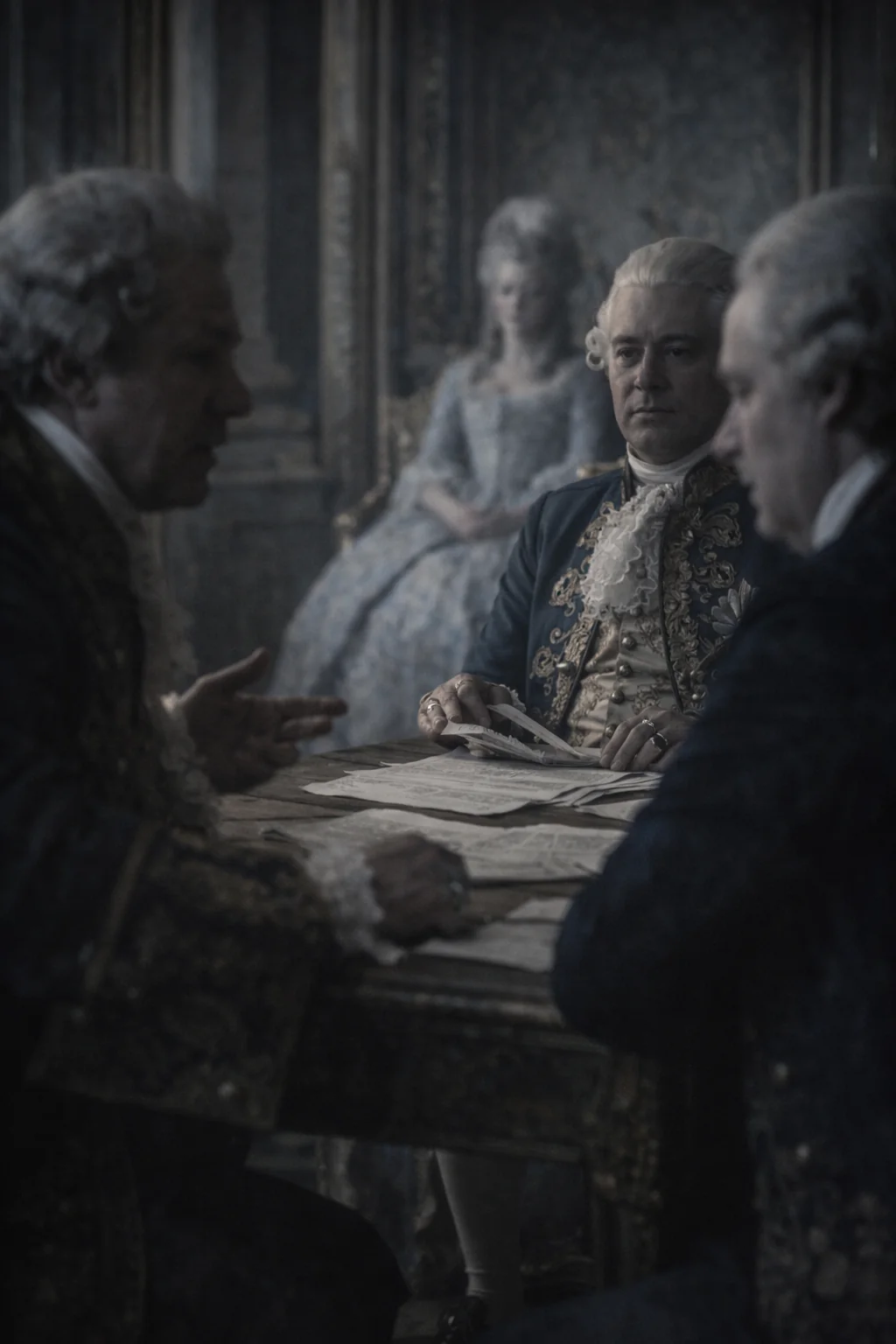
In 1785, the Affair of the Diamond Necklace erupted. Jewelers Boehmer and Bassenge had created an extraordinarily expensive necklace they originally hoped to sell to Madame du Barry, Louis XV’s former mistress. After the king’s death, they offered it to Marie Antoinette, but she rejected it.
Jeanne de La Motte, a confidence trickster who claimed access to the queen, persuaded Cardinal de Rohan that she could restore him to royal favor. La Motte arranged forged letters and a nighttime meeting with a woman impersonating Marie Antoinette. Rohan agreed to acquire the necklace in the queen’s name and delivered it to La Motte’s intermediaries, who dismantled it and began selling the diamonds.
The queen had neither requested nor received the jewel. She was a victim of the fraud. Nevertheless, the trial damaged her more severely than the swindlers because much of the public believed that a story involving luxury, deception, and corruption suited her character (Château de Versailles, n.d.-c).
The scandal demonstrated that her reputation had already collapsed: even her innocence could be interpreted as evidence of guilt. (Château de Versailles, n.d.-c)
7. Motherhood, Propaganda, and Revolution
After eight years of marriage, Marie Antoinette gave birth to Marie-Thérèse Charlotte in 1778. Louis-Joseph, Louis-Charles, and Sophie-Béatrice followed. Sophie died before her first birthday, while Louis-Joseph died in June 1789, as the political crisis approached its breaking point. Family evidence presents a devoted mother deeply affected by these losses (Château de Versailles, n.d.-b).
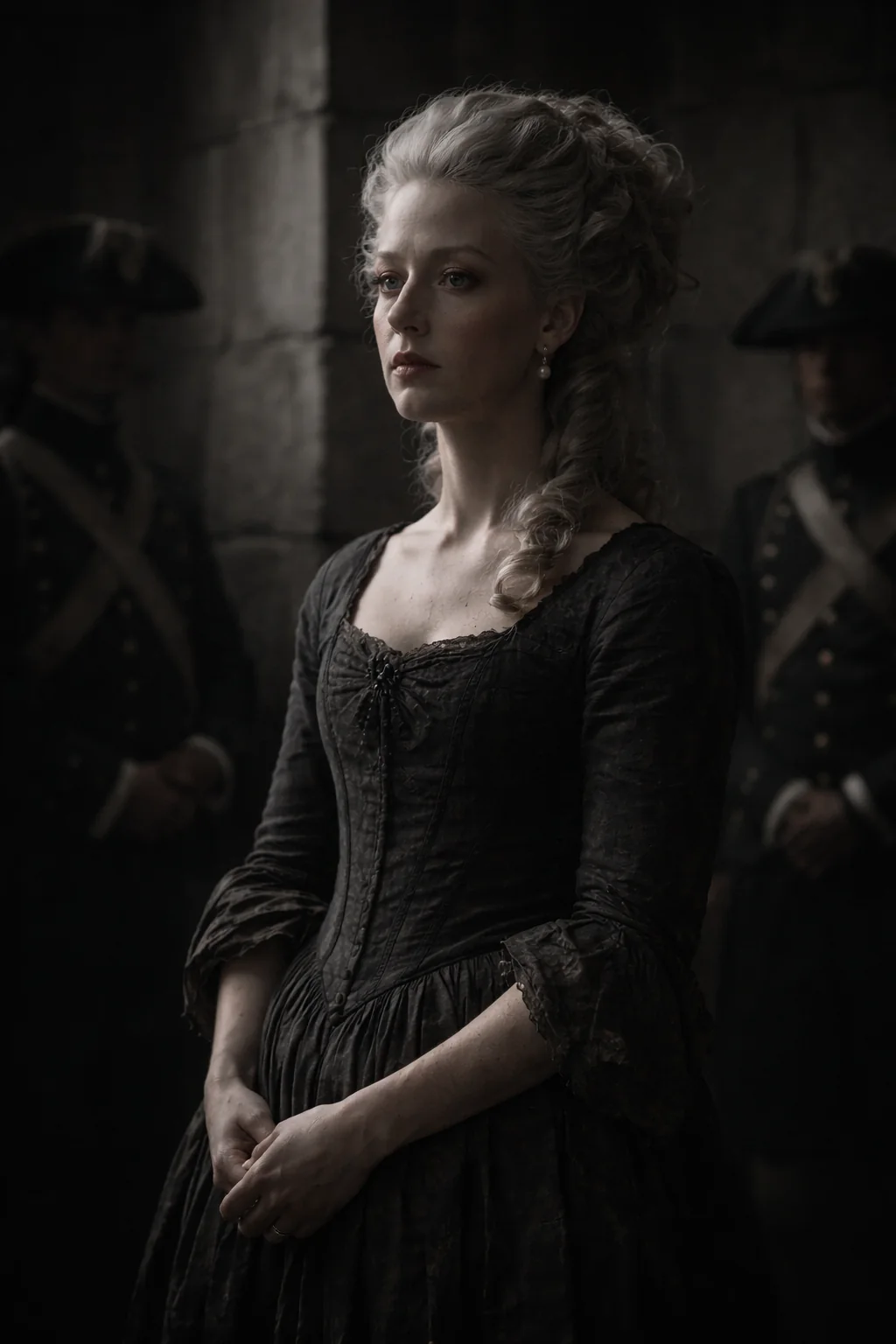
Motherhood did not protect her from propaganda. Underground pamphlets portrayed her as adulterous, sexually predatory, disloyal, and corrupting. They attacked her not only as a queen but as a politically influential woman violating accepted boundaries of gender.
In October 1789, crowds from Paris marched to Versailles amid a bread shortage. Some demonstrators entered the palace and killed royal guards. The royal family was compelled to move to the Tuileries Palace in Paris, where it lived under increasingly restrictive surveillance.
Marie Antoinette’s political importance grew as the monarchy weakened. The frivolous queen of hostile caricature was becoming a determined—if inconsistent—political actor. (Château de Versailles, n.d.-a)
8. Varennes and the Collapse of Trust
In June 1791, the royal family attempted to leave Paris. The plan, supported by the Swedish count Axel von Fersen and other royalists, aimed to reach a protected area near the eastern frontier. From there, the Crown might negotiate with greater freedom or organize resistance.
The family traveled in disguise inside a large carriage, but the journey suffered repeated delays. Louis XVI was recognized, and local authorities stopped the party at Varennes. Guards escorted them back to Paris (George Mason University, n.d.-b).
The attempted escape destroyed the trust of many citizens who still supported a constitutional monarchy. It appeared to prove that the king and queen had never genuinely accepted the new political order.
Marie Antoinette secretly negotiated with revolutionary figures such as Mirabeau and Barnave, but she also communicated with Fersen, her Habsburg relatives, and representatives of foreign monarchies. The correspondence reveals a queen who was no longer merely decorative. She attempted to influence policy and preserve the monarchy, including by seeking assistance beyond France (Centre de recherche du château de Versailles, 2023).
9. The Little-Known Fact: Letters Hidden Beneath Ink
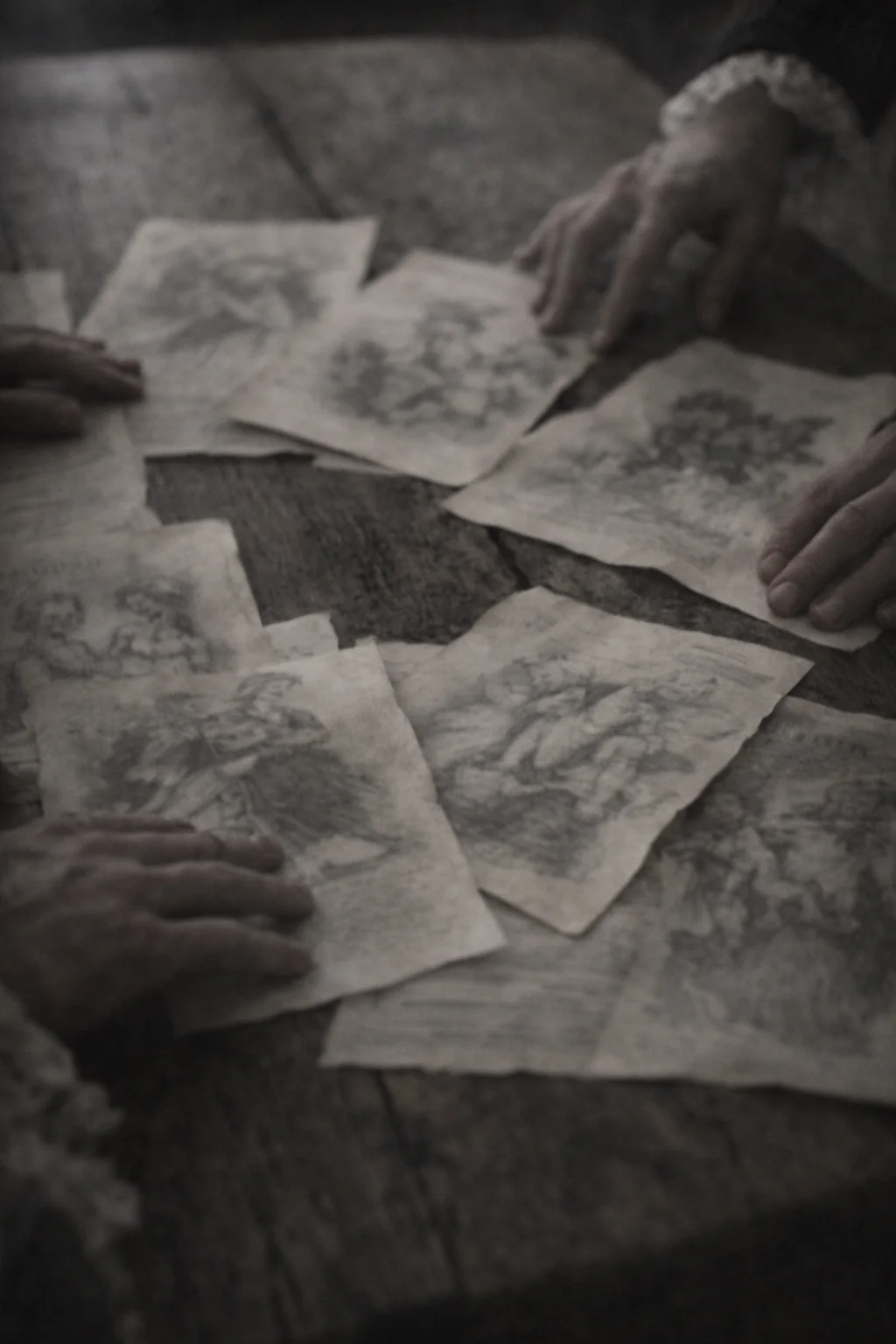
For generations, several letters exchanged by Marie Antoinette and Axel von Fersen contained sentences obscured with ink. Scholars suspected that the passages concealed political information or intimate expressions, but removing the covering ink would have destroyed the documents.
In 2021, researchers associated with the French National Archives used X-ray fluorescence spectroscopy to distinguish the chemical composition of the different inks. They recovered portions of the censored writing without damaging the paper.
The revealed expressions demonstrate an emotionally intense relationship. They do not, however, conclusively prove every claim made about a physical love affair, and much of the correspondence concerned politics. Researchers also determined that Fersen himself had redacted some passages (Michelin et al., 2021).
The discovery allowed a voice buried for more than two centuries to become partially audible: not the queen of caricature, but a prisoner writing in code while trying to preserve personal and political connections. (Archives nationales, n.d.)
10. Trial, Death, and Memory
The insurrection of August 10, 1792, overthrew royal power in practice; the monarchy was formally abolished in September. The royal family was imprisoned in the Temple, and Louis XVI was executed in January 1793. Marie Antoinette was separated from her children and later transferred to the Conciergerie.
Her trial opened on October 14, 1793. Court-appointed attorneys received little time to prepare a defense. She was accused of exhausting the treasury, conspiring with foreign enemies, and participating in plots against the Republic. Some charges involved genuine political actions; others were weak or deliberately degrading.
The most infamous allegation accused her of incest with her son. Marie Antoinette initially refused to answer, then appealed to every mother present. Even some women hostile to the former queen were reportedly moved. It made no difference. The outcome was already decided. Convicted of high treason, she was executed on October 16 (Ministère de la Justice, 2024).
The judicial record establishes her sentence and execution, but it does not make every subsequently repeated anecdote a verified fact. Her documented responses during the trial should therefore be distinguished from the alleged last words attributed to her by later tradition.
Marie Antoinette did not single-handedly cause the French Revolution. Neither was she politically innocent. She defended a threatened monarchy and pursued foreign assistance while France moved toward war and republican government. Yet she was also condemned through rumor, misogyny, xenophobia, and a collective desire to place every sin of the Old Regime upon one recognizable face.
The crown given to her as an adolescent ultimately weighed more than death itself. After the guillotine, she continued to exist as two irreconcilable women: the indifferent tyrant of revolutionary propaganda and the flawless martyr of royalist nostalgia. The real Marie Antoinette remains between them—more human, more contradictory, and far more unsettling. (Ministère de la Justice, 2024)
Timeline
| Year | Event |
|---|---|
| 1755 | Born in Vienna. |
| 1770 | Marries the future Louis XVI. |
| 1774 | Becomes queen of France. |
| 1785 | The necklace scandal breaks. |
| 1789 | The royal family is moved to Paris. |
| 1791 | The flight ends at Varennes. |
| 1792 | Royal power falls and the monarchy is abolished. |
| 1793 | Trial and execution on October 16. |
| 2021 | Results of the letters’ analysis are published. |
Sources
- Archives nationales. (n.d.). Marie-Antoinette’s correspondence under X-ray.
- Centre de recherche du château de Versailles. (2023). Lettres de Marie-Antoinette (LMA) (2023…).
- Château de Versailles. (n.d.-a). Departure of the King, 1789.
- Château de Versailles. (n.d.-b). Marie Antoinette.
- Château de Versailles. (n.d.-c). The affair of the diamond necklace, 1784–1785.
- Château de Versailles. (n.d.-d). The Queen’s Hamlet.
- George Mason University. (n.d.-a). Monarchy falls.
- George Mason University. (n.d.-b). The flight to Varennes (21–23 June 1791).
- History.com Staff. (2025, July 14). Did Marie-Antoinette really say “Let them eat cake”?. HISTORY.
- Michelin, A., Pottier, F., & Andraud, C. (2021). 2D macro-XRF to reveal redacted sections of French queen Marie-Antoinette secret correspondence with Swedish count Axel von Fersen. Science Advances, 7(40), eabg4266.
- Ministère de la Justice. (2024, July 16). Le procès de Marie-Antoinette.
- Plackett, B. (2021, April 11). Did Marie Antoinette really say “Let them eat cake”?. Live Science.
More from this collection
Tutankhamun: The Boy King Who Reached Eternity by Accident
Read story →
Nicholas II of Russia: The Man Who Mistook Duty for Refusing to Change
Read story →