In this storyOpen index
Antonio Canova: The Sculptor Who Made Marble Breathe and Recovered the Art Taken by Napoleon
Neoclassical beauty, workshop craftsmanship, and a mission to recover Rome’s artistic heritage.
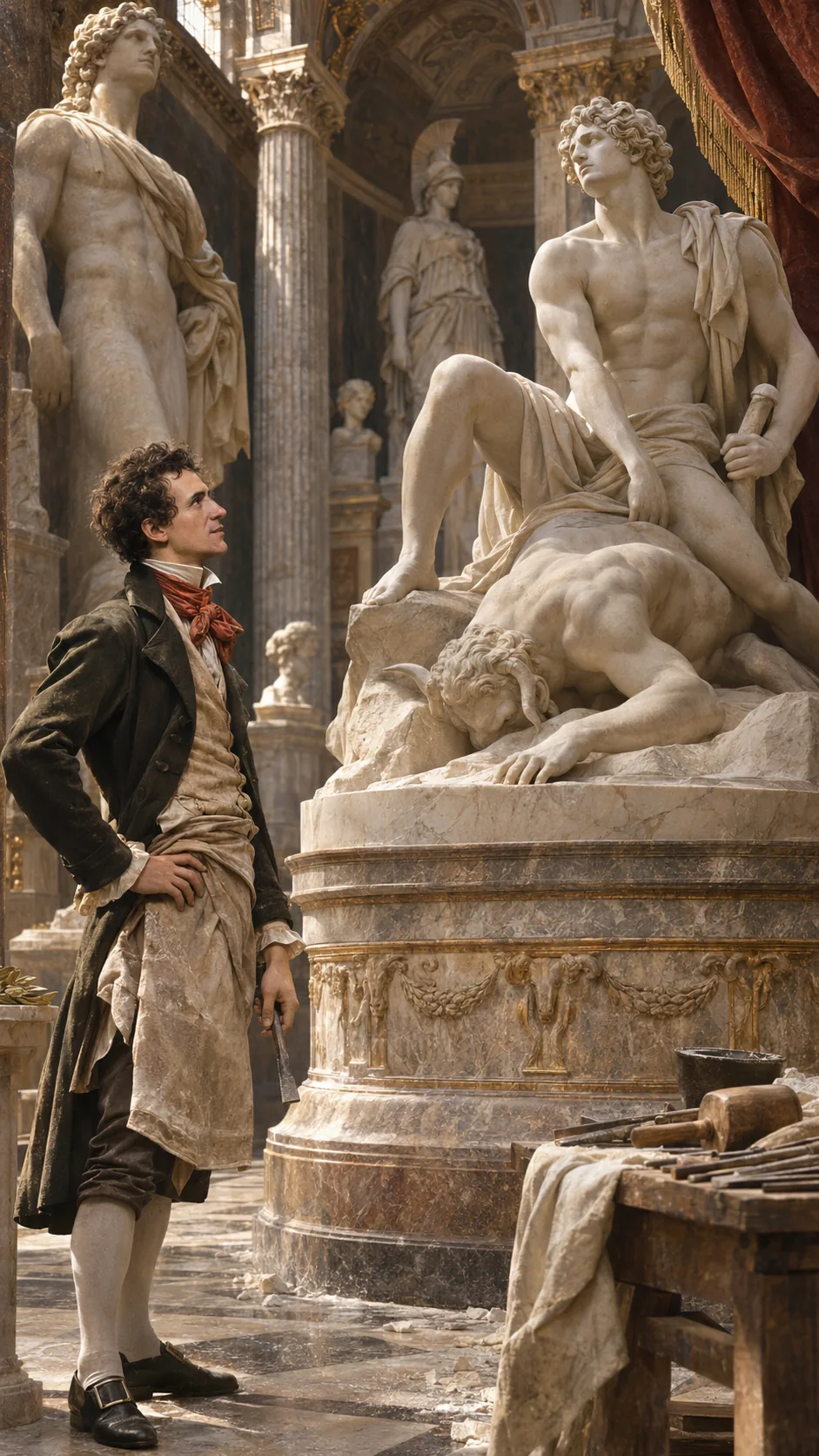
Canova’s marble seems soft, but his career unfolded among demanding workshops and rival powers. His sculptures reinvented ancient beauty; his mission in 1815 helped recover a cultural heritage dispersed by war.
Antonio Canova
A life told through marble, beauty, and power
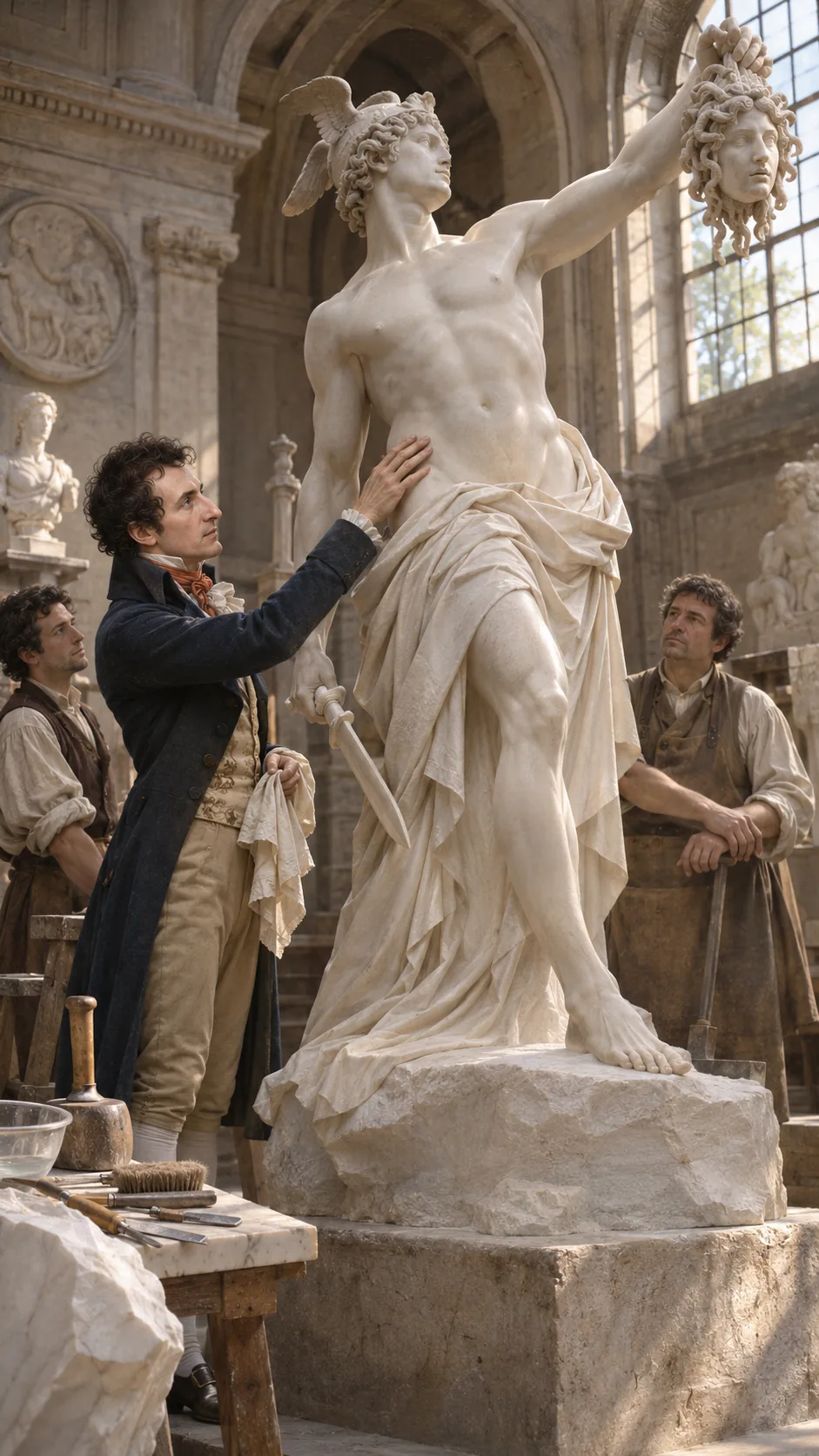
Perseus Triumphant: a modern response to antiquity
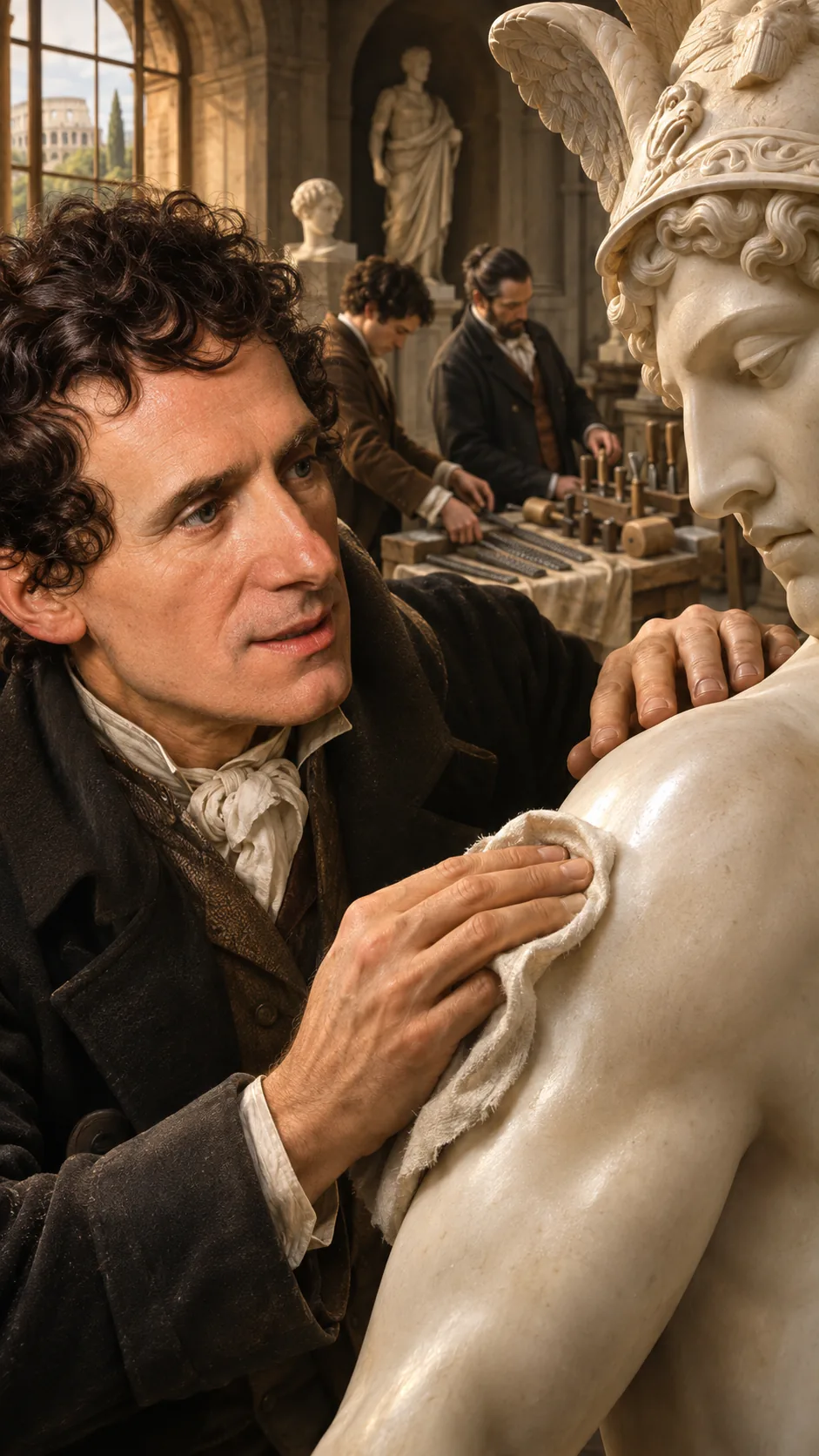
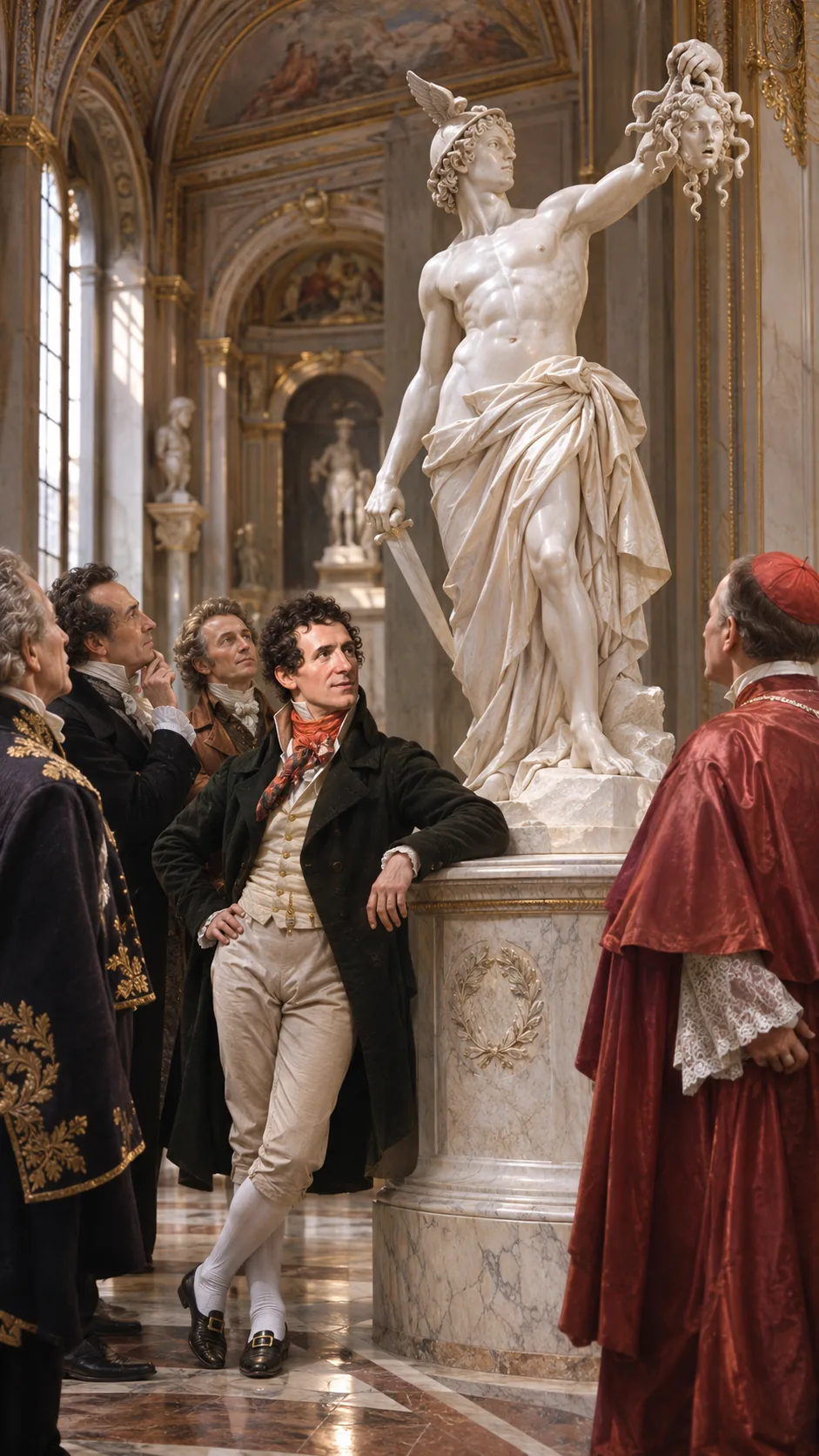
The Vatican Museums preserve the sculpture made in 1800–1801. This image recreates its workshop; the link opens the museum record and photographs of the actual artwork.
1. The Man Sent to Recover Italy’s Memory
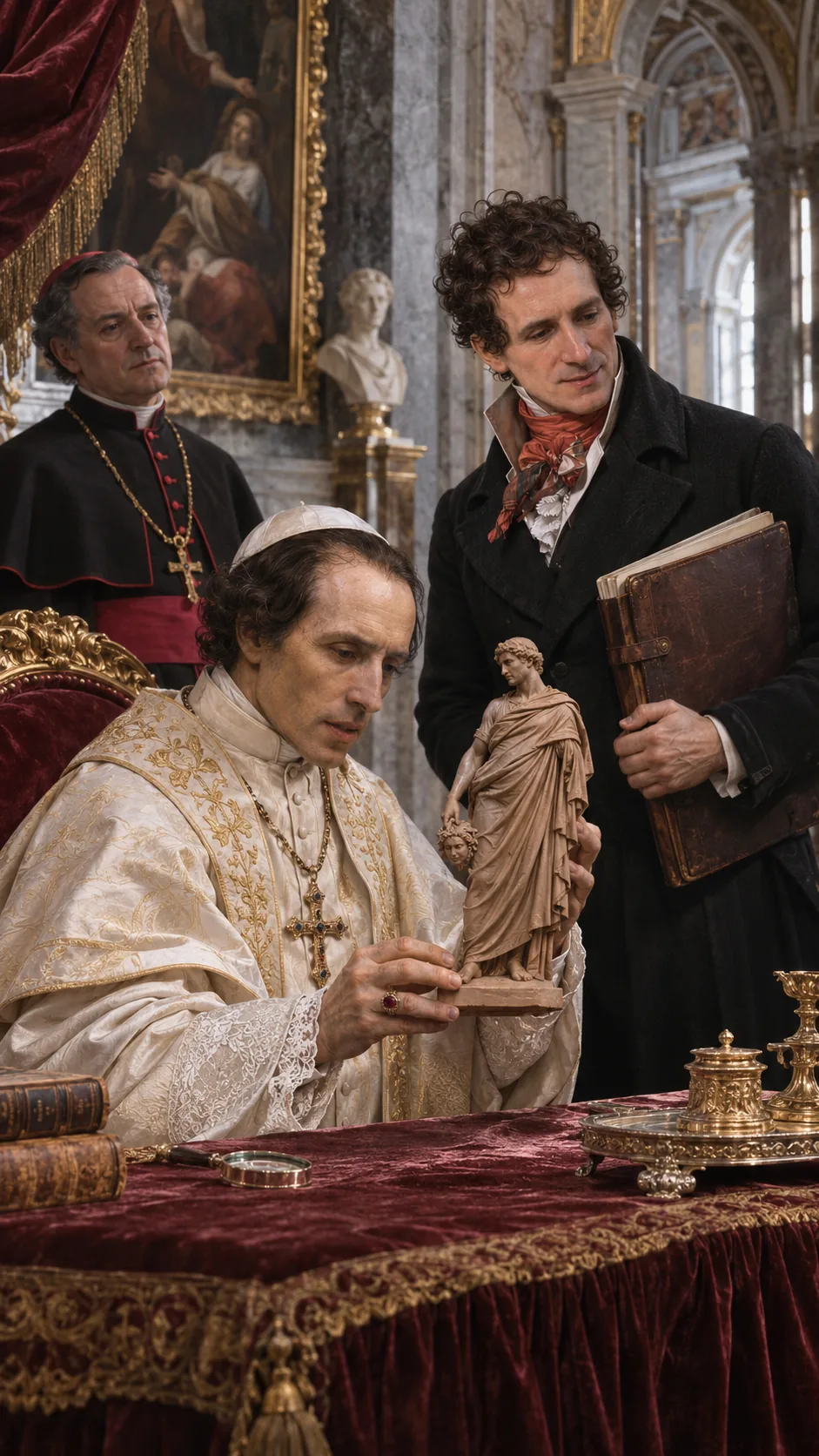
In 1815, as Europe attempted to rebuild after Napoleon’s final defeat, Antonio Canova arrived in Paris with a seemingly impossible mission. He did not come as a sculptor of emperors or a guest of the aristocracy. Pope Pius VII had sent him to recover paintings and sculptures transferred from Rome by French armies during the Napoleonic campaigns.
They included some of the most valuable objects in the papal collections. France regarded them as trophies acquired under legal treaties; Italian representatives demanded their return. Respected throughout Europe, Canova used his diplomatic connections and secured British assistance to transport numerous treasures back to Italy (Musei Vaticani, n.d.-a; Museo Gypsotheca Antonio Canova, n.d.-a).
2. A Child Raised Among Stones
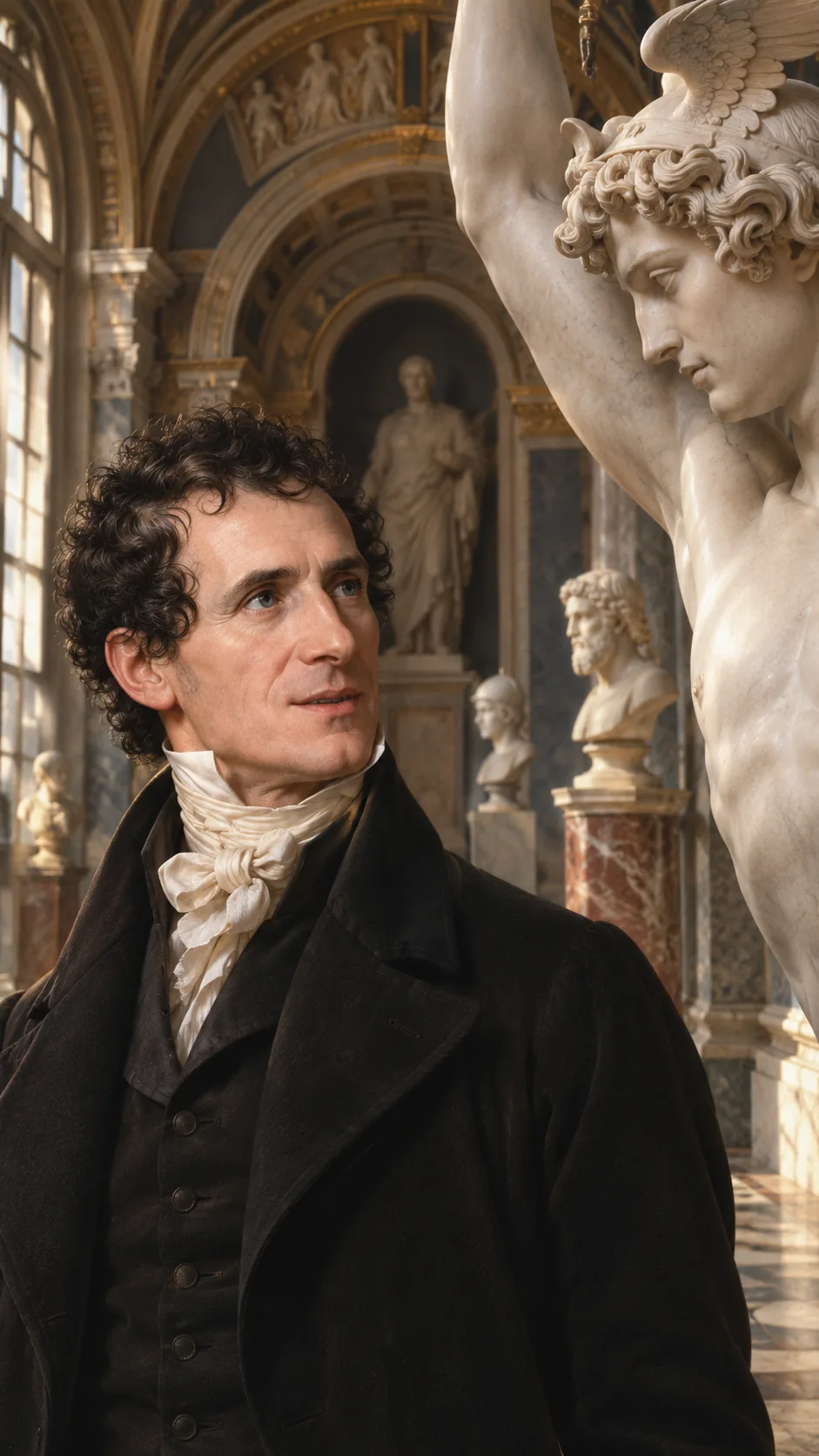
Antonio Canova was born on November 1, 1757, in Possagno, a small town in the Republic of Venice. His father, Pietro, died before Antonio reached the age of four. His mother remarried, and the boy remained with his paternal grandfather, Pasino Canova, a local stonecutter and sculptor.
Pasino introduced him to drawing, modeling, and carving. The boy grew up watching blocks of stone become altars, religious figures, and architectural ornaments. His ability persuaded his grandfather to place him in the workshop of Giuseppe Bernardi, known as Torretti.
In 1779, while still in his early twenties, Canova was admitted to the Venetian academy. That same year he traveled to Rome, the city that permanently transformed his understanding of sculpture (Museo Gypsotheca Antonio Canova, n.d.-a; Victoria and Albert Museum, 2024).
3. Rome and the Discovery of Antiquity
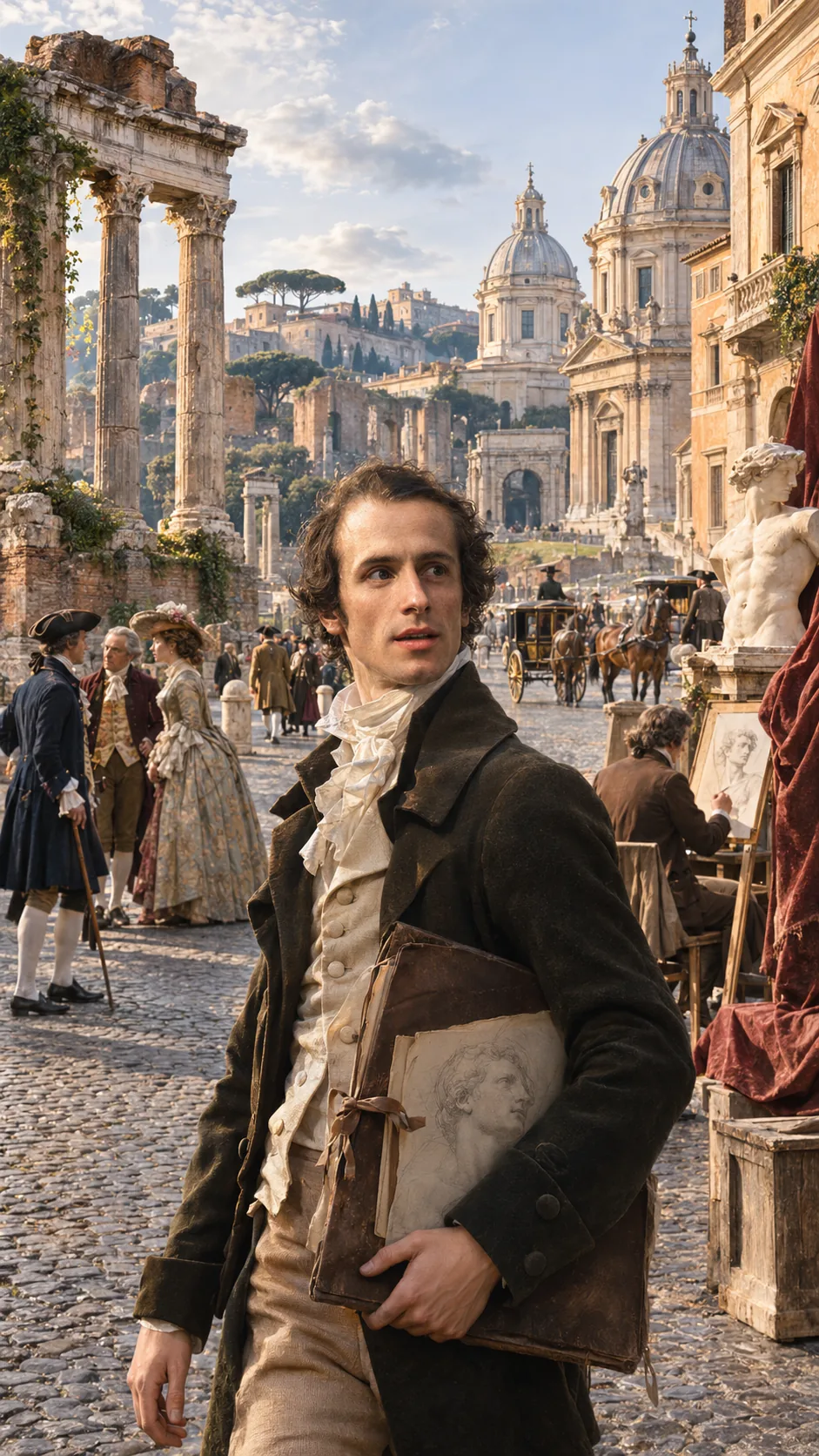
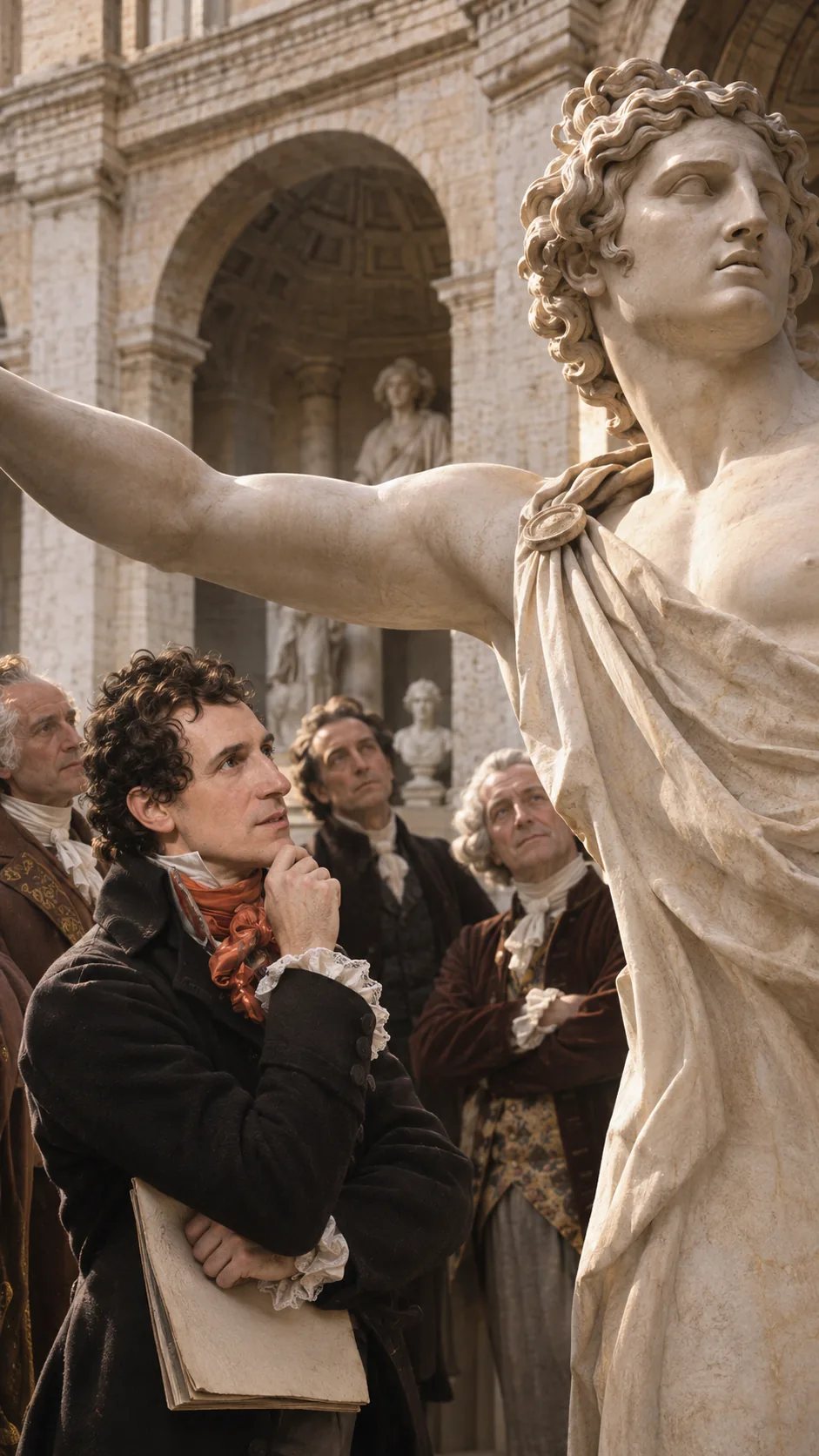
Canova studied ancient sculpture, but he did not want merely to copy it. He sought to recover its formal clarity while giving his figures emotions belonging to the present.
His group Theseus and the Minotaur, carved between 1781 and 1783, marked a departure from the late Baroque. Instead of depicting the battle, Canova showed Theseus after his victory, seated upon the defeated monster. The violence had already occurred. What mattered was the silence afterward—the hero’s control and reflection.
The work helped establish Canova as the leading representative of the new Neoclassical sculpture. In 1781, he settled permanently in Rome and opened a studio near the Tiber, a location that facilitated the delivery of massive Carrara marble blocks.
In Perseus Triumphant, carved in 1800–1801, he responded to the Apollo Belvedere. Pius VII purchased the figure and placed it on the pedestal of the Apollo, which had been taken to France. Modern sculpture thus occupied the space left by an absent ancient masterpiece (Musei Vaticani, n.d.-b).
4. The Secret Behind a Perfect Surface
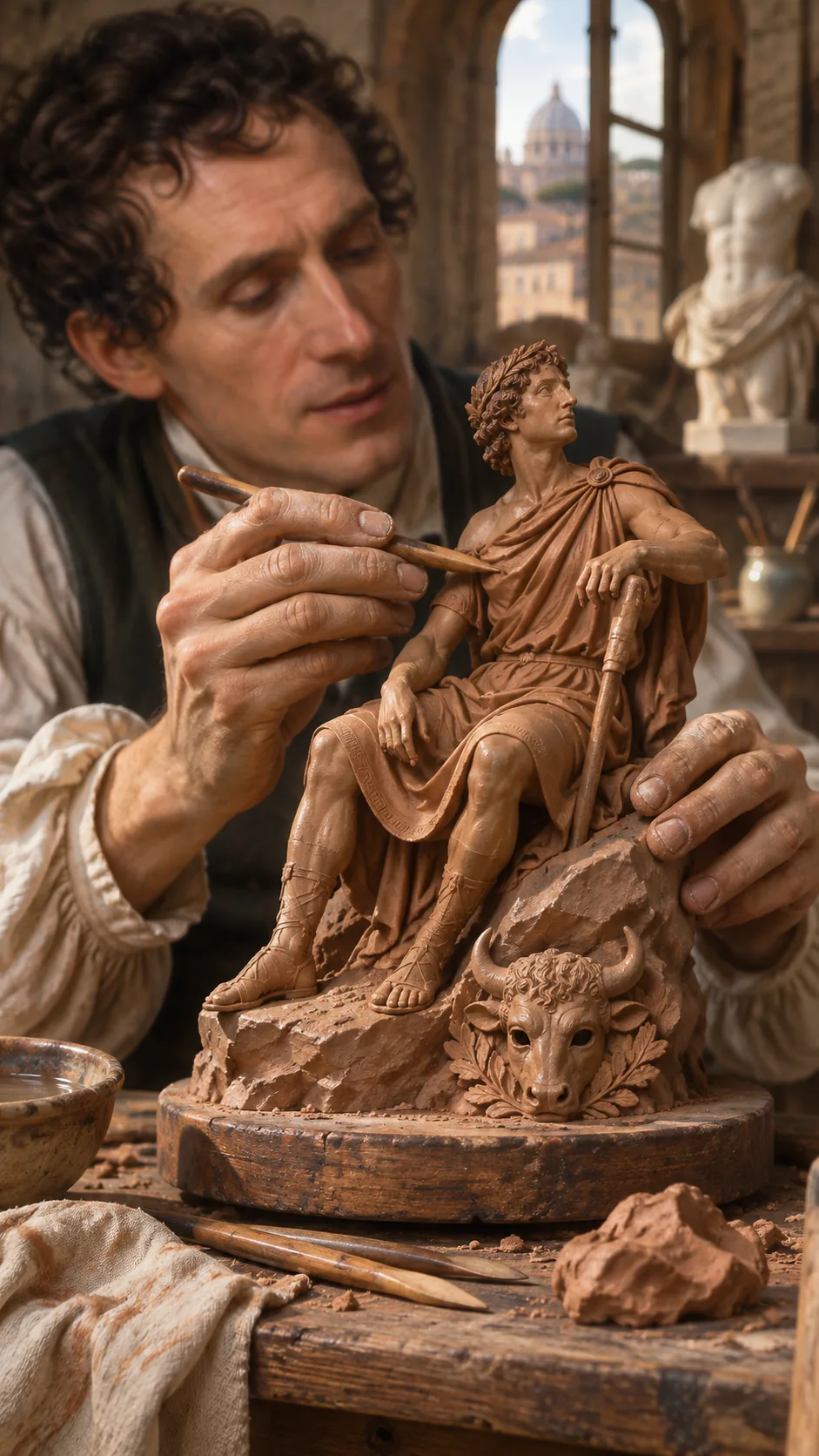
The sculptor began with small clay sketches called bozzetti. He then created larger models, refined the composition, and produced a full-size version that was cast in plaster. Using a pointing system, plumb lines, and calipers, assistants transferred measurements from the plaster to the marble block.
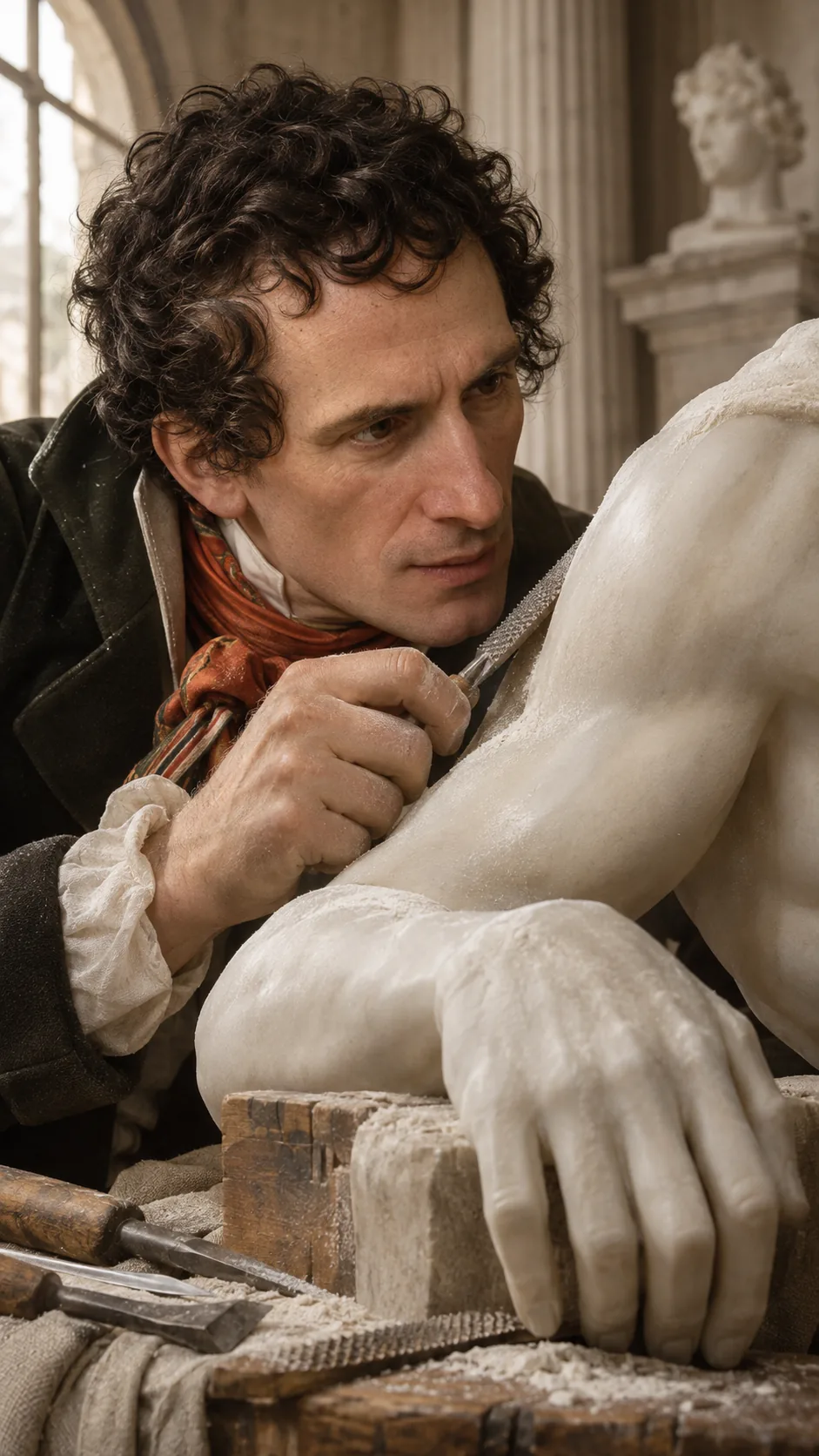
The assistants removed much of the stone, but Canova reserved the ultima mano, or “last hand,” for himself: the final modeling, details, and polishing that established the work’s expression. He also applied a mixture of wax and other substances to reduce the marble’s cold shine and suggest the softness of human skin (Museo Gypsotheca Antonio Canova, n.d.-c; National Gallery of Art, 2023).
5. Psyche, Cupid, and the Instant Before Movement
In Psyche Revived by Cupid’s Kiss, Canova depicted Cupid supporting Psyche as she awakens. The figures’ arms form a circle around their faces, while their wings, legs, and bodies create diagonals that compel viewers to move around the sculpture.
The work has no single privileged viewpoint. Every angle reveals a different relationship among embrace, desire, vulnerability, and balance. The marble appears to suspend an action that will continue immediately.
In The Three Graces, the figures are joined by arms, drapery, and exchanged glances. Canova transformed an ancient mythological subject into a celebration of physical closeness. The stone appears to yield beneath the pressure of fingers and acquire the temperature of a living body (Musée du Louvre, n.d.; Victoria and Albert Museum, 2024).
6. Pauline Borghese and Scandal Carved in Marble
Between 1804 and 1808, Canova portrayed Napoleon’s sister Pauline Bonaparte Borghese as Venus Victrix. She reclines upon a couch, partially unclothed, holding the apple awarded to Venus in the judgment of Paris.
The work combined portraiture, mythological idealization, and social provocation. Pauline belonged to a newly established imperial dynasty, yet Canova presented her as an ancient goddess. Her face preserves recognizable features, while the body conforms to a carefully constructed ideal.
The sculpture remains at the Galleria Borghese. The museum documents Camillo Borghese’s commission and its completion in 1808. Its staging turns an individual portrait into an image of dynastic prestige (Galleria Borghese, n.d.).
7. The Artist Napoleon Could Not Control
Canova accepted commissions from the Bonaparte family, but his relationship with Napoleonic power remained ambivalent. In 1802, he traveled to Paris to model a portrait of the first consul. The project eventually produced the colossal Napoleon as Mars the Peacemaker.
Completed in 1806, the statue reached Paris in 1811. Napoleon rejected its heroic nudity and idealized physique. In 1816, after Waterloo, Britain’s Prince Regent presented it to the Duke of Wellington. The emperor’s image ended up at Apsley House, the London home of one of his conquerors. English Heritage documents that journey: an artwork intended to glorify power changed both ownership and meaning (English Heritage, n.d.).
8. The Sculptor Turned Diplomat
Canova did not work only for rulers. In 1802, he became inspector general of Antiquities and Fine Arts of the Papal States. He supervised museums, archaeological excavations, and the export of art from Rome.
After Napoleon’s downfall, Pius VII used Canova’s international reputation and sent him to Paris. Restitution was far from guaranteed. France argued that many objects had been legally transferred under the 1797 Treaty of Tolentino.
Canova negotiated with diplomats and Allied powers. With British assistance, he obtained the resources necessary to pack and transport numerous works. Almost all the ancient sculptures removed from the Vatican collections returned to Rome, although other Italian works remained in France (Musei Vaticani, n.d.-a).
9. The Little-Known Fact: The Temple He Never Saw Completed
Canova devoted part of his fortune to a monumental church in Possagno. Its design combined a colonnade recalling the Parthenon, a circular body related to the Pantheon, and an apse drawing on Christian tradition. The foundation stone was laid on July 11, 1819.
He died in Venice on October 13, 1822. His half-brother Giovanni Battista Sartori was entrusted with completing the building, which was consecrated on May 7, 1832. Local people contributed materials and labor. His legacy also depended on those who continued building after his death (Museo Gypsotheca Antonio Canova, n.d.-b).
10. The Artist Who Taught Viewers to See Skin Within Stone
Canova did not merely imitate antiquity. He used its forms to create a modern experience of looking. He required viewers to circle his figures, follow their diagonals, and doubt the hardness of the material.
He changed the way people saw because he made an impossible contradiction visible: heavy marble could appear weightless; stone could suggest warmth; an immobile body could remain suspended between two movements.
And when Europe treated art as the spoils of war, the sculptor left his studio to defend the principle that an artwork also belongs to the history surrounding it.
Sources
- Museo Gypsotheca Antonio Canova. (n.d.-a). Antonio Canova’s biography.
- Victoria and Albert Museum. (2024). Antonio Canova – an introduction.
- Museo Gypsotheca Antonio Canova. (n.d.-c). Antonio Canova’s opera.
- National Gallery of Art. (2023). Canova: Sketching in Clay.
- Musée du Louvre. (n.d.). L’Amour et Psyché à demi couchée.
- Galleria Borghese. (n.d.). Paolina Borghese come Venere vincitrice.
- English Heritage. (n.d.). Apsley House Collection Highlights.
- Musei Vaticani. (n.d.-a). Chiaramonti Museum.
- Museo Gypsotheca Antonio Canova. (n.d.-b). Antonio Canova’s lands.
- Musei Vaticani. (n.d.-b). Perseus Triumphant.
More from this collection
John Everett Millais: The Rebel Who Ended Up Inside the Palace
Read story →
Hieronymus Bosch: The Painter Who Turned Sin into a Universe
Read story →