In this storyOpen index
Guy de Maupassant: The Writer Who Saw His Own Ghost Approaching
From the success of Boule de Suif to the mystery of The Horla: a life between precise observation and the fragility of consciousness.

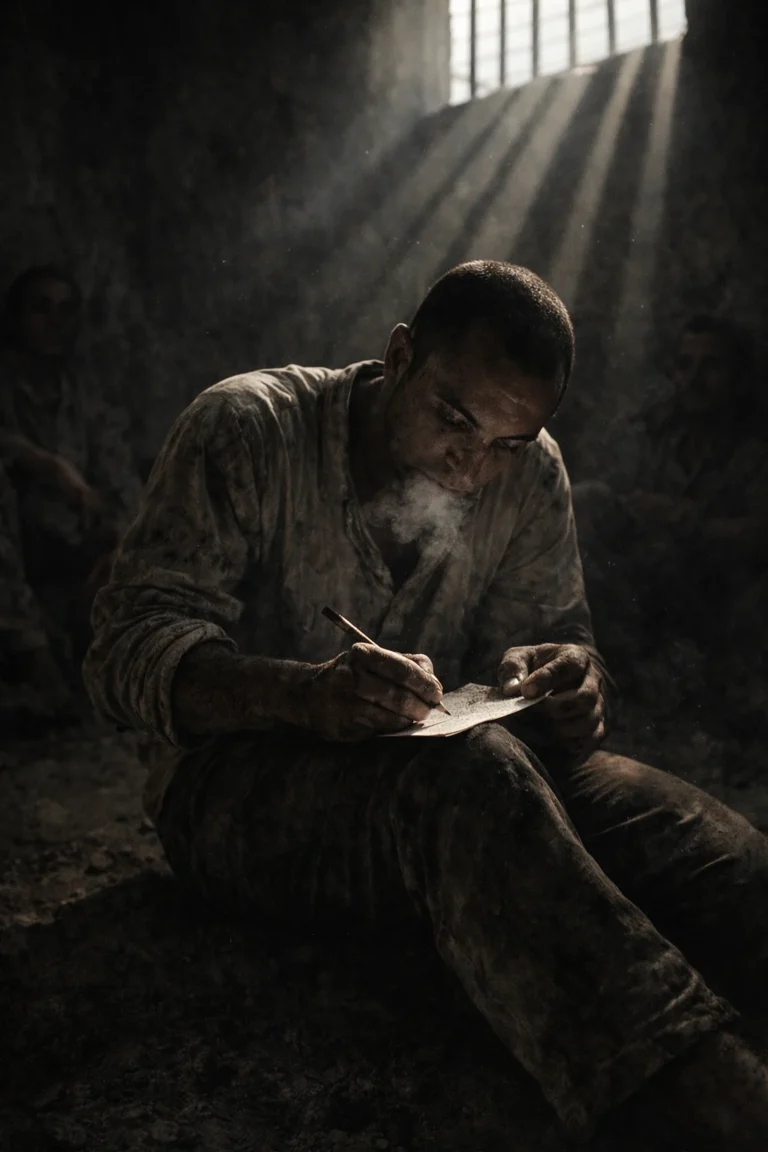
A man begins to sense that an invisible presence enters his home, drinks his water, and controls his will. He tries to convince himself that everything is happening inside his mind, but the more carefully he reasons, the less certain he becomes that he still owns himself.
When Guy de Maupassant published The Horla in 1887, he turned the fear of losing control of the mind into literature. He already had health problems; his later decline invites a new reading of the story, but does not make it a prophecy or a transcription of his illness.
Maupassant described peasants, soldiers, clerks, and members of the bourgeoisie with almost surgical detachment. Beneath his realism, however, ran another current: the fear that identity was fragile, that the body could betray consciousness, and that every person carried something within from which escape might be impossible.
Guy de Maupassant
A life told through manuscripts, journeys, and mirrors
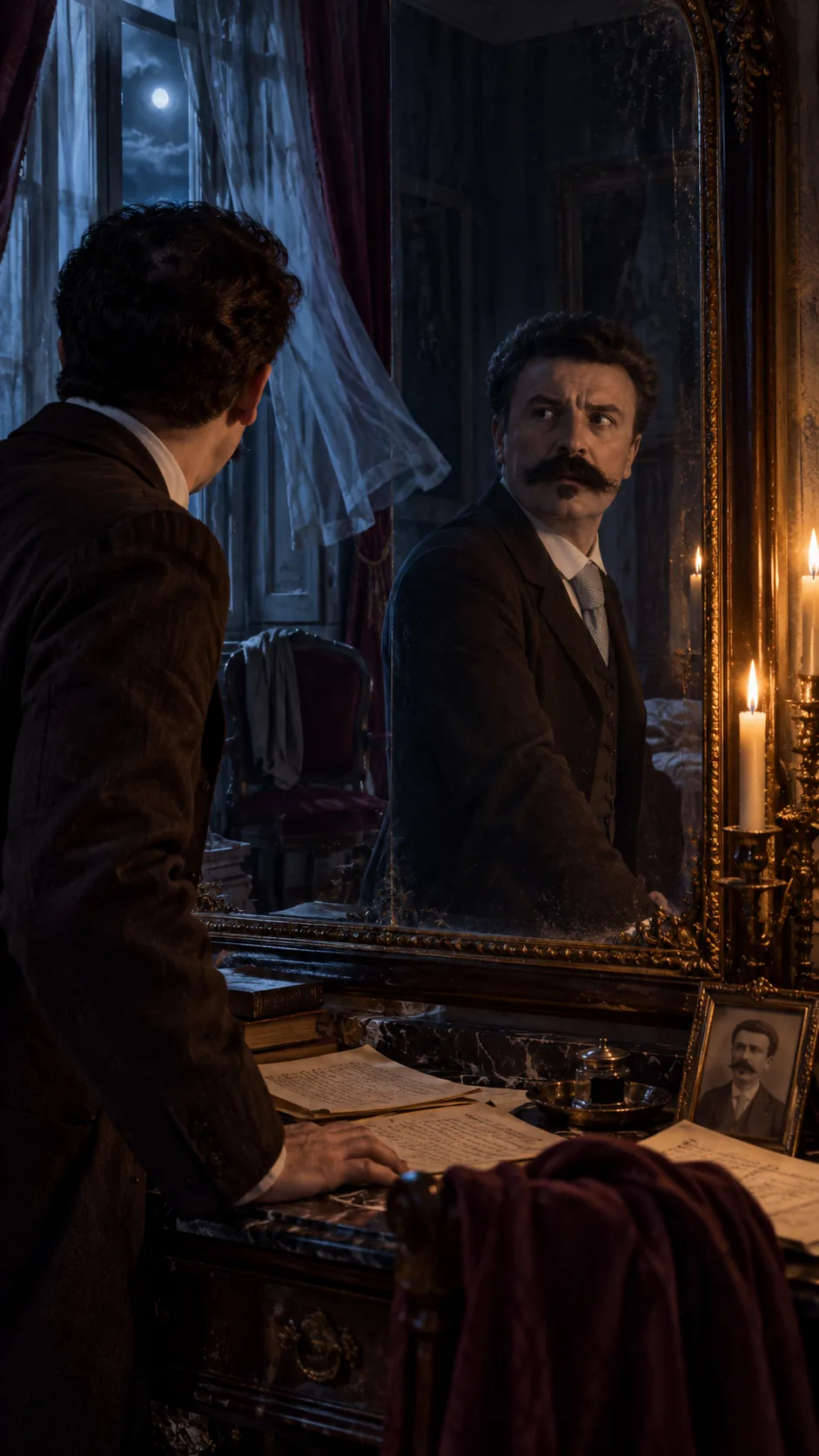
Le Horla, 1887
The BnF records the first edition published by Paul Ollendorff. This image interprets the story; the link opens the bibliographic record, where the publisher, date, and volume details can be checked.
A Childhood Beside the Sea

Henri-René-Albert-Guy de Maupassant was born on August 5, 1850, near Tourville-sur-Arques in Normandy. His mother, Laure Le Poittevin, was a highly educated woman and a childhood friend of Gustave Flaubert. His father, Gustave de Maupassant, came from a family that had received recognition of noble status.
The marriage was unhappy. After their parents separated, Guy and his younger brother Hervé remained primarily with their mother. They grew up amid rural Normandy and the coast around Étretat, landscapes that would return repeatedly in his writing.
His time at a seminary ended badly. He detested religious discipline and was expelled. He later studied at the lycée in Rouen, where the poet Louis Bouilhet encouraged his writing. After Bouilhet’s death, Flaubert gradually assumed the role of literary mentor.
The War That Destroyed Illusions
The Franco-Prussian War began in 1870. Maupassant entered military service and witnessed France’s defeat, the occupation of Normandy, and the disorganization of a nation that had regarded itself as powerful.
After the conflict, he settled in Paris and worked as a clerk in the ministries of Marine and Public Instruction. The employment provided stability but bored him. He observed the minor rituals of bureaucracy from within: absurd hierarchies, petty ambitions, and officials measuring their lives through promotions.
To escape the routine, he rowed and sailed along the Seine. Water represented freedom, sensuality, and motion, although in his fiction it could also become a place of isolation and menace.
Flaubert: The Master Who Taught Him to Erase
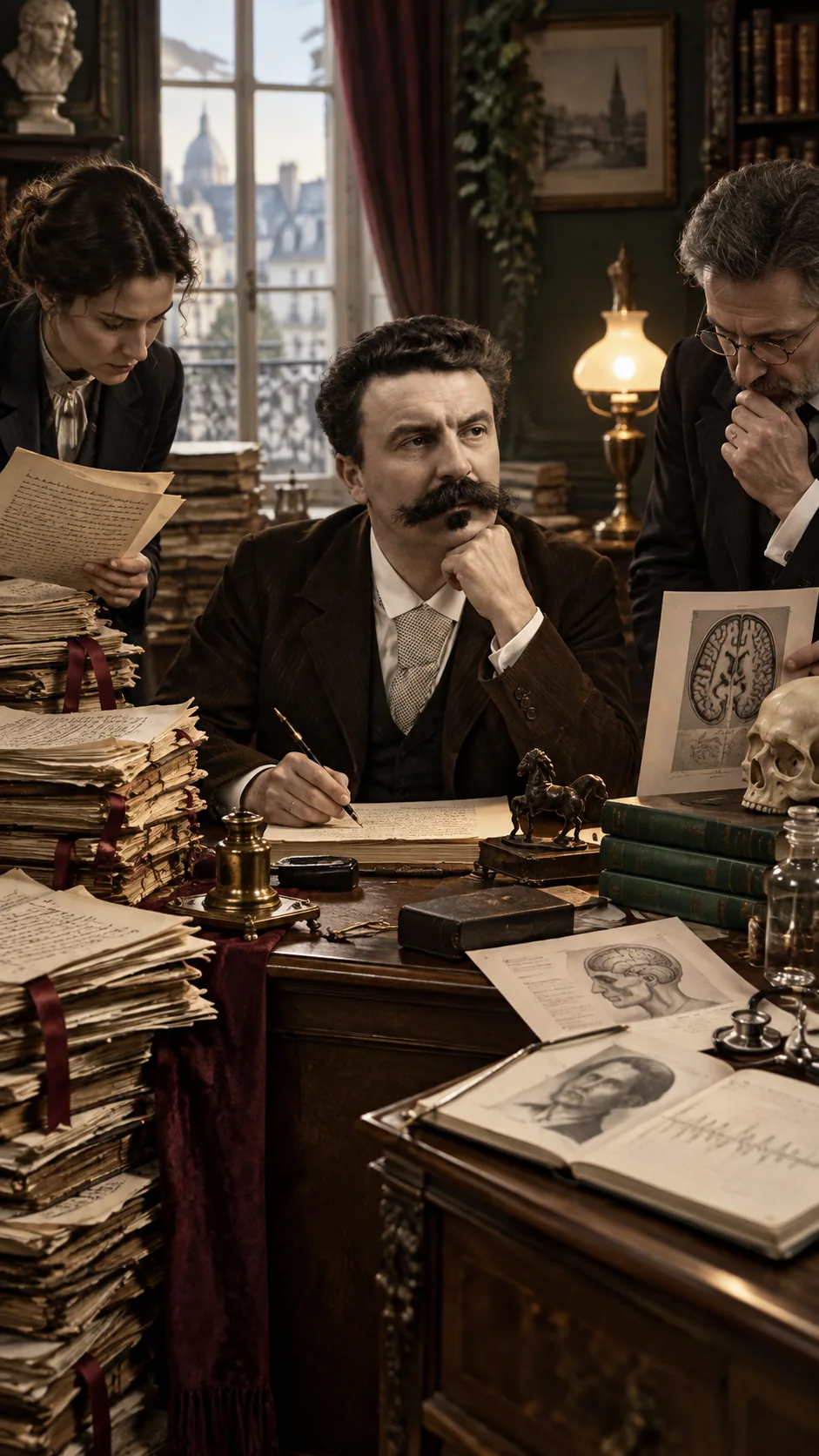
Gustave Flaubert did more than introduce Maupassant to other writers. For years, he read the younger man’s exercises and demanded precision. He taught him to seek the detail that distinguished a person or object from every other one—and to remove everything unnecessary.
Maupassant wrote poetry, articles, and plays, but Flaubert advised him to wait. The long apprenticeship proved decisive. When his major opportunity finally arrived, the result did not resemble the uncertain work of a beginner.
The Despised Woman Who Made Him Famous

In 1880, Les Soirées de Médan, a collective volume of stories related to the war, was published. Maupassant contributed Boule de Suif.
The story follows a group of French travelers fleeing Rouen by stagecoach during the Prussian occupation. Among them is Élisabeth Rousset, a sex worker nicknamed Boule de Suif. Her respectable companions accept her food and later pressure her to submit to an enemy officer. When she sacrifices herself so the group can continue, they return to treating her with contempt.
The story transforms social hypocrisy into a perfect structure: those who consider themselves honorable exploit the woman they condemn as immoral and then punish her for doing what they demanded.
Success arrived beside loss. Flaubert died only weeks later. Maupassant had found his public voice just as the man who had done the most to shape it disappeared.
Ten Years of Writing as If Time Were Ending
In little more than a decade, Maupassant built a body of work encompassing around three hundred stories, six novels, journalism, travel writing, poetry, and plays. Newspapers offered a crucial outlet for his short fiction.
A Woman’s Life examined the disappointments of a woman trapped by marriage. Bel-Ami followed the rise of Georges Duroy, an attractive man who uses journalism and relationships with women to conquer Paris. Pierre and Jean transformed a suspicion of illegitimacy into a family crisis. In stories such as The Necklace, The Piece of String, and Two Friends, a seemingly minor object or decision could destroy a life.
The Man Who Turned a Literary Success into a Boat
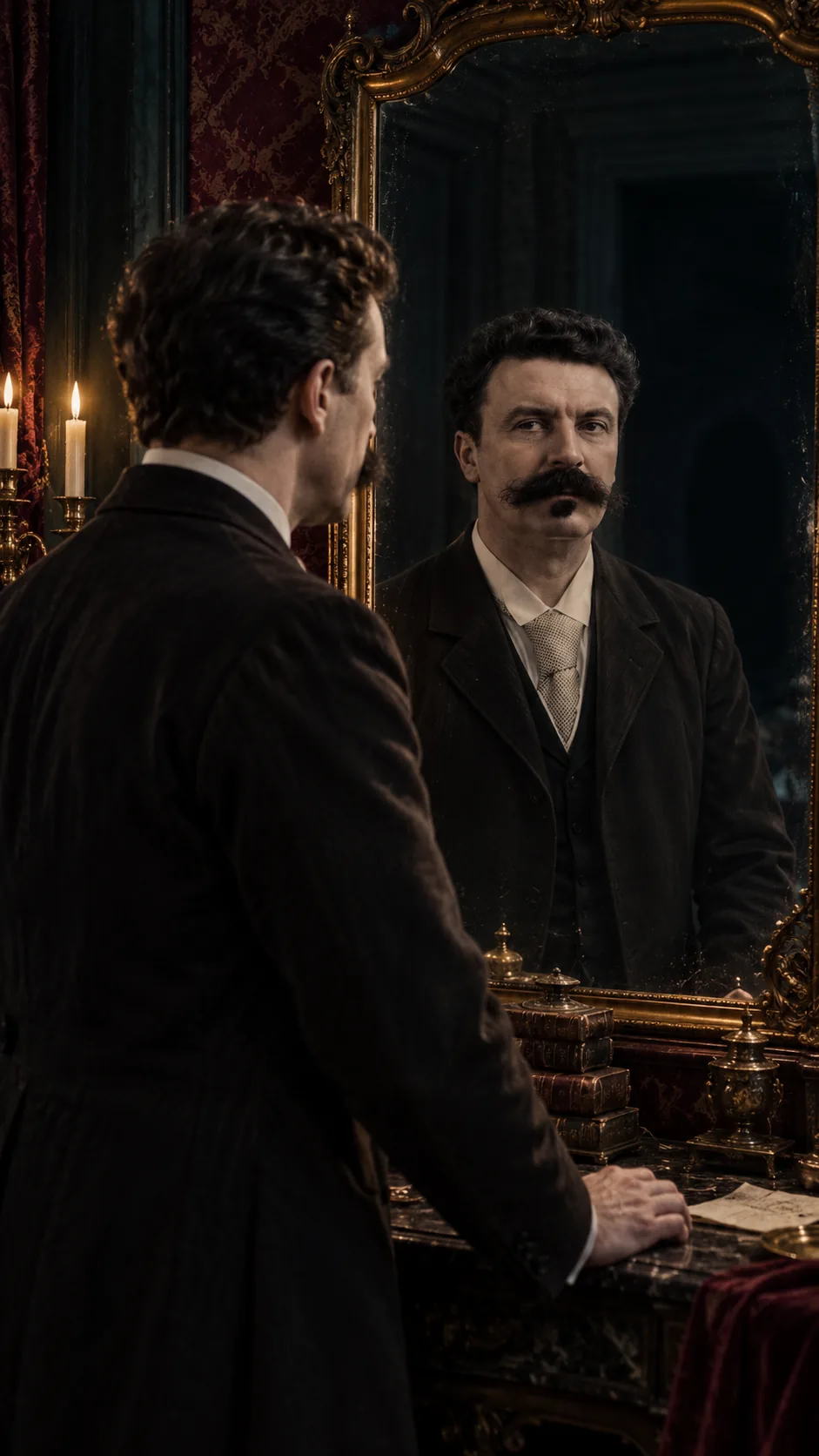
His success allowed him to travel around the Mediterranean and purchase boats. One of the lesser-known facts about his life is that he named his yachts Bel-Ami, after his own novel.
In 1889, he acquired another vessel, originally called Zingara, and renamed it the second Bel-Ami. He sailed along the French and Italian coasts and transformed those experiences into travel writing.
The Illness Behind the Speed

For years, he continued to work, travel, and pursue an intense sexual life. Severe migraines, visual problems, insomnia, impaired concentration, and episodes of anxiety gradually appeared. He sought relief at spas and consulted numerous physicians.
His final decline is generally attributed to neurosyphilis. Marlo Johnston’s chronology documents a syphilis diagnosis in 1877 and subsequent consultations and treatments. It does not establish that every experience in his fiction was a personal symptom.
The disease alone does not explain his fantastic fiction. Maupassant wrote about doubles, hallucinations, and threatening presences before his decline became evident. Treating The Horla merely as a clinical record would diminish a work built through imagination, scientific reading, and narrative control.
The Horla and the Terror of No Longer Being Oneself
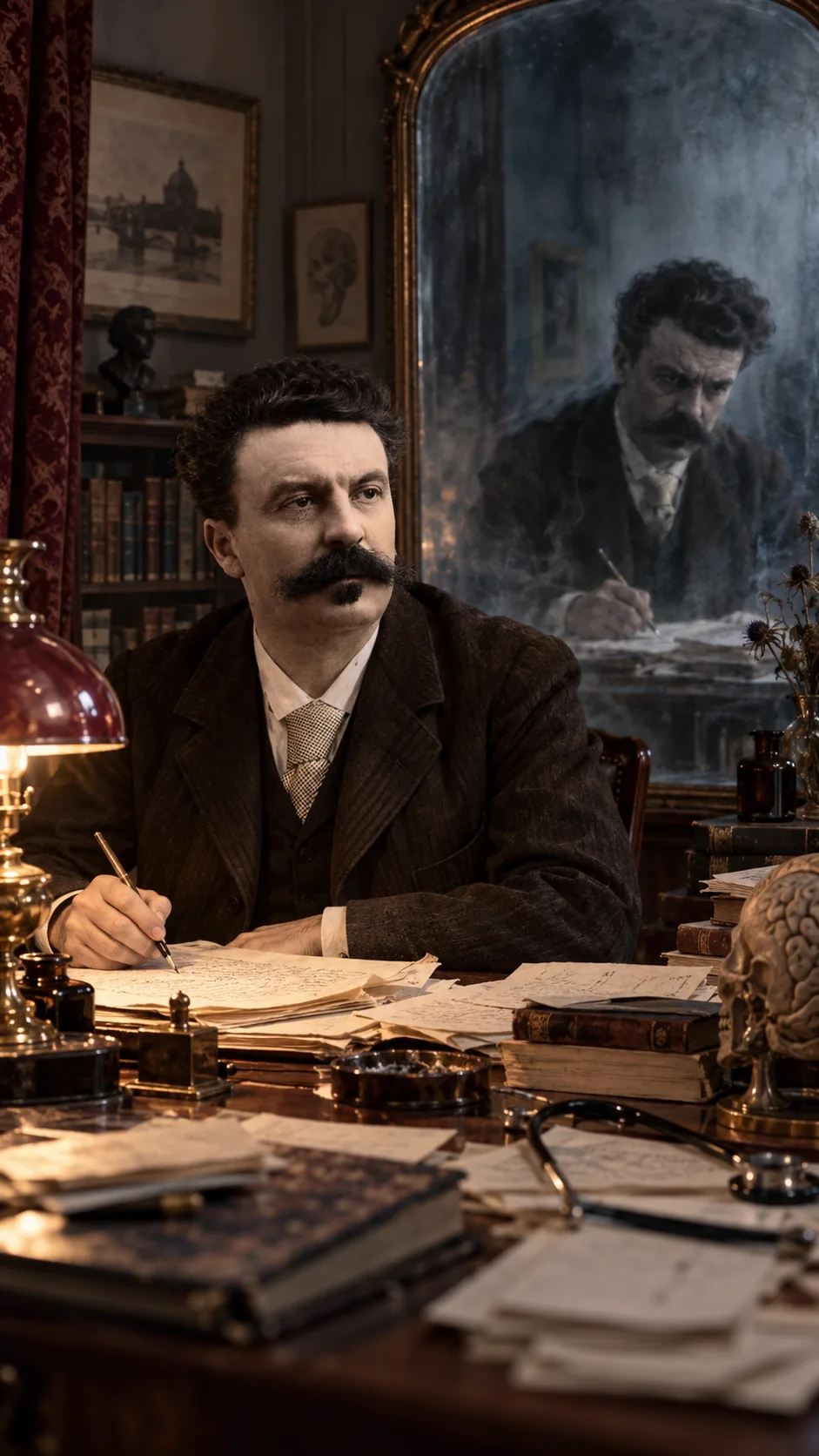
Maupassant published two versions of The Horla, one in 1886 and a more developed version in 1887. The second takes the form of a diary.
Its narrator senses an invisible being that appears to consume food, move objects, and dominate his will. The reader never receives a definitive answer: an unknown creature may exist, or the man may be losing his sanity.
The story’s power comes from that inability to decide. The narrator observes, experiments, and searches for rational explanations, but every test increases his fear. The mind employed to investigate becomes the place where the threat may be hiding.
Neurologist Luis-Carlos Alvaro (2005) examined unusual perceptions and autoscopic phenomena in his stories. He found comparable motifs in early works, when the writer was considered healthy: a reason not to equate fantastic imagination automatically with advanced illness.
His Brother Hervé’s Illness
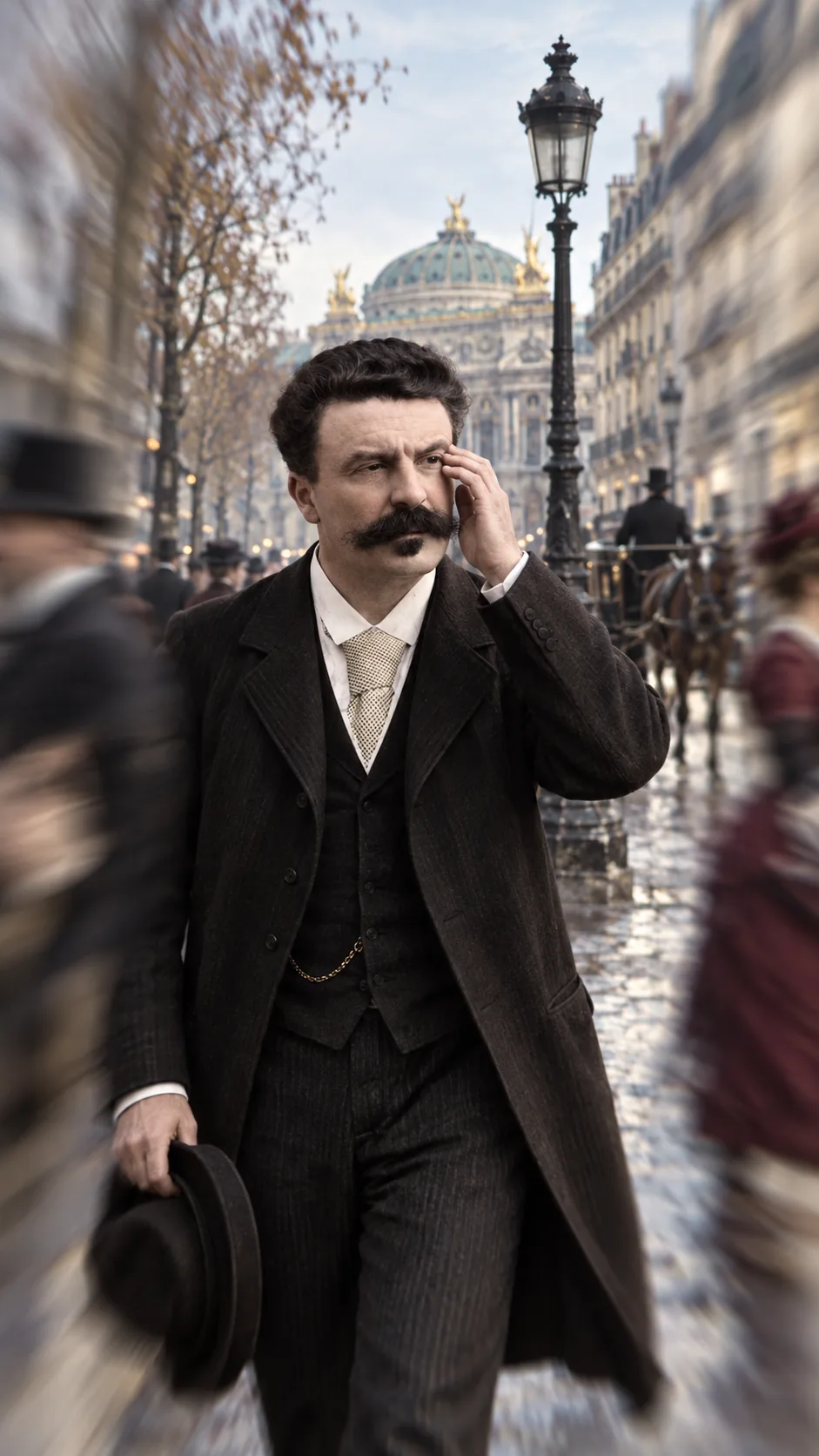
In 1889, the writer’s younger brother, Hervé de Maupassant, experienced severe mental deterioration and was committed to the asylum at Bron. Guy traveled to see him and was present during the period preceding Hervé’s death that November.
Hervé’s illness interrupted his projects and prompted journeys to visit him. Guy later left novels unfinished. Documents trace this erosion of his working life, but cannot reconstruct every private thought with certainty.
The Final Room
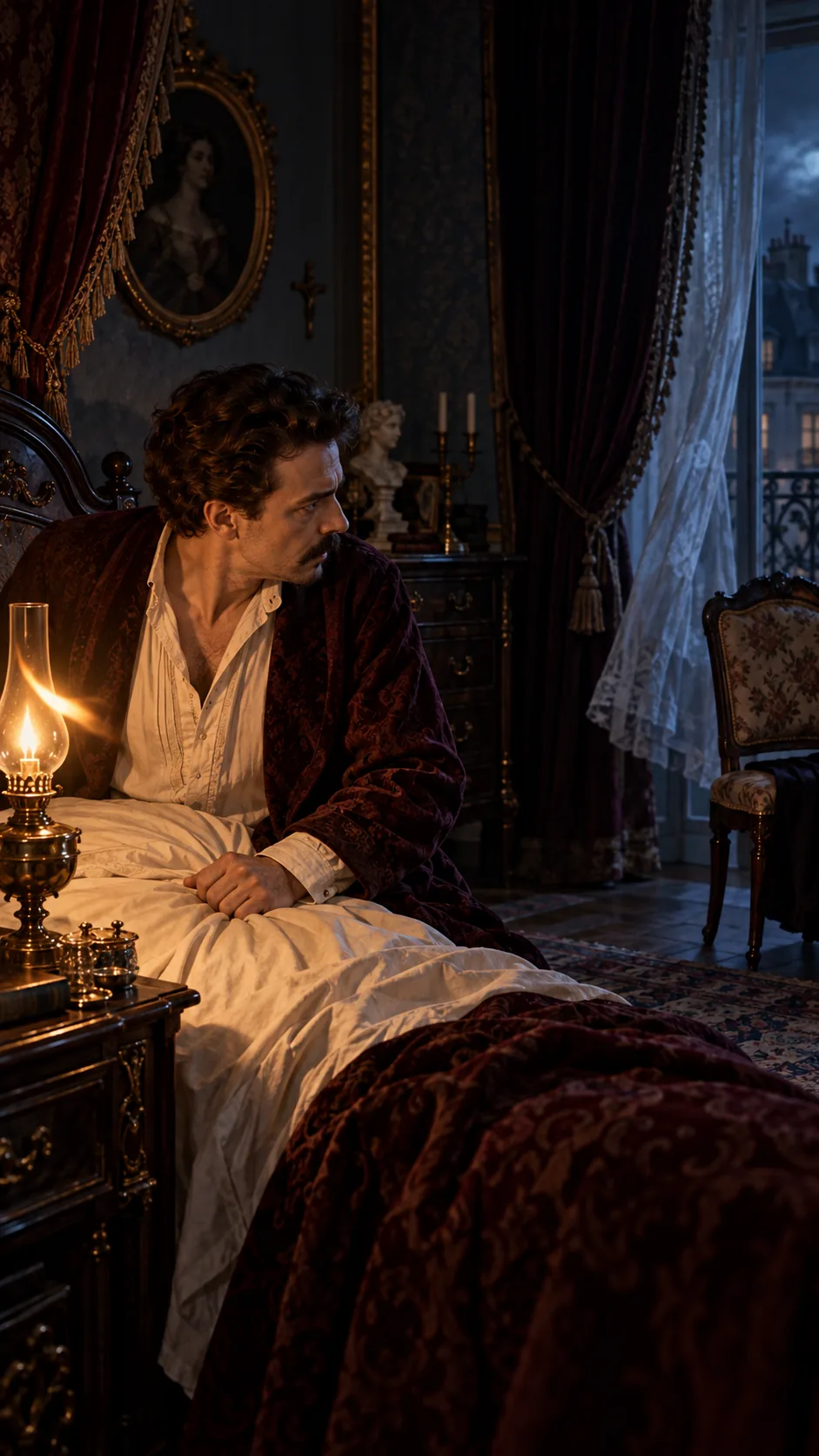
In early January 1892, gravely ill in Cannes, Maupassant attempted to take his own life. Accounts disagree on some details. The episode preceded his transfer to a medical institution.
Several days later, he was transported to Dr. Émile Blanche’s clinic in Passy, near Paris. He entered on January 7 and remained there for the final eighteen months of his life. He never again produced a literary work.
He died on July 6, 1893, shortly before his forty-third birthday, and was buried in Montparnasse Cemetery.
The Writer Who Could Not Abandon His Shadow
One of his central themes was the impossibility of escaping oneself. His characters flee poverty, shame, marriage, war, or memory. They often discover that what pursues them was already inside.
The Horla did not drive him to madness, nor did madness write the story for him. Between them stood an extraordinary consciousness capable of transforming private fear into a narrative form that still compels readers to look behind themselves.
Sources
- Johnston, M. (n.d.). Biographie de Guy de Maupassant. Les Amis de Flaubert et de Maupassant.
- Bibliothèque nationale de France. (n.d.). Le Horla [Work record]. Catalogue général.
- Bibliothèque nationale de France. (n.d.). Le Horla en feuilleton. Gallica.
- Maupassant, G. de. (1887). Le Horla. Paul Ollendorff. First edition catalogued by the BnF.
- Alvaro, L.-C. (2005). Hallucinations and pathological visual perceptions in Maupassant’s fantastical short stories—A neurological approach. Journal of the History of the Neurosciences, 14(2), 100–115. https://doi.org/10.1080/096470490523399.
More from this collection
Gérard de Nerval: The Writer Who Could Not Escape His Own Mind
Read story →
Franz Kafka: The Man Who Asked to Be Erased and Ended Up Naming a Way of Existing
Read story →